Search:air max 97

Styles
All
  • 1
Air Max '97 - Psyllium / Eat The Rich

Air Max '97

Psyllium / Eat The Rich

12inchTIMEDANCE024
Timedance
20.09.2021

Following up on his Timedance debut in 2019, Sydney based wunderkind Air Max '97 signs his return in style with a double dose of hi-detail club warpers.

Without sacrificing any of his grimy and sub-loaded tendencies, the New-Zealand born producer expands his intricate and futuristic palette further with his most trance-inducing production to date.

Mastered by Beau Thomas at Ten Eight Seven.

Artwork by Butt Studio.

out of Stock

Order now and we will order the item for you at our supplier.

8,36

Last In: 4 years ago
Air Max 97 - Nacre

Air Max 97

Nacre

12inchDECISIONS10
DECISIONS
05.06.2018

Rugged and lustrous, Nacre is Air Max '97's first full-length release. Written between Melbourne and Berlin and mixed in Mexico City, the album bears traces of fleeting yet profound geographic and emotional immersions. Air Max '97's signature baroque momentum is suffused anew with pungent and labile tonal atmospheres, through which organic sonic events and incomprehensibly abstracted vocals wreathe. The record's disposition spans the darkly playful arpeggios of Veneer to the dirge-like Kermes and paranoiac Karyon. Fiendishly twisting tracks are interspersed with more tender moments such as Queriensteiger, Nacre and Gousse (formerly released on Stoscha's 2017 Klink compilation). The totality is uncompromising and affective, yielding a broader spectrum of Air Max '97 sonics than ever before. Nacre will be released on 12' vinyl and digital on 1 June 2018. Air Max '97 will tour a new live show in support of the release.

out of Stock

Order now and we will order the item for you at our supplier.

15,08

Last In: 7 years ago
Various - PRIMARY FOREST 03

Various

PRIMARY FOREST 03

12inchCEEXYZ05
CEE
03.06.2025

AN ATLAS OF LOSS

Do minerals dream of becoming semiconductors? Do they yearn to carry charges, amplify, switch, and convert energy into emotions comprehensible to humans? And what if, from the darkness of the underground, they had been listening to us sing in caves before the emergence of the first flute? Could they have guided us, through the course of history, to find them, extract them, and create new sounds through sinusoidal waves, to form valves and bend circuits?

If so, minerals would transition from what philosopher Eugene Thacker defines as the ‘planet’—that virginal and unreachable realm for humans that we study through geology, paleontology, and environmental sciences—to the ‘world,’ the space we inhabit, interpret, and synthesise in our daily lives. Sadly, we only remember the world when it erupts violently, through climate catastrophes or when a new virus emerges. Sometimes a tsunami collides with a nuclear plant, or viruses are cultivated as biological weapons in high-security laboratories, provoking a deep biological anxiety, hard to quell, which we all feel beneath our skin.

There exists a third realm, disconnected from both the world and the planet: the ‘earth’, an immense, dense rock floating in space alongside other planets, situated in the cosmological dimension. Relating to the earth is so complex that we only do so through theoretical speculations of a scientific nature or through science fiction, interweaving until one becomes the prophecy of the other, in an infinite, pendular dance. Beyond the darkness of space and Lovecraft’s cosmic horror, the fantasy of human extinction is the most recurrent: to reach a collapse so devastating that we do not survive it, even though the earth does, without us.

In a world where we quantify everything through body sensors, financial algorithms, nanometre-scale robots, and surveillance drones—a world in which everything that can be domesticated and controlled can also be commodified—a superior artificial intelligence would survive the collapse of the species (some speculate it might even cause it) and learn from our mistakes, thanks to our obsessive gathering of data.

Long after our voices fade, minerals will persist in the darkness of screens, in the silicon of chips, and in their pure form, still unexploited underground. Over the millennia, this intelligence might piece together fragments of our reasoning, as if an alien civilization finally connected with one of our spacecrafts loaded with messages cast into the void. It would sort through endless streams of data, unable to grasp the depths of emotion behind what it quantified, recreating simulations of our past, stripped of the nuance that once defined us and conducting experiments in sandboxes.

Some remnants of our existence—faint echoes of forgotten beauty—would be pieced together in an atlas of loss, buried beneath layers of numbers, decayed bots, and corroded hard drives. What will follow? Perhaps bison will once again roam—trotting to the strange pulse of techno, their ancient forms framed by the ruins of our cities.

Buildings will crumble, slowly dissolving under the soft touch of ambient music, and a thousand flowers will bloom with that ancient music created through electrical signals and computation. 7 songs for a future both improbable and inevitable—a final message from a world lost to itself, from planet Earth to planet Earth.

Alfons Pich, 2025

In Stock

On Stock and ready to ship

23,95
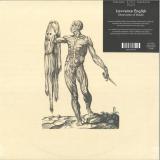
Lawrence English - Observation of Breath

Do you remember the last time you were breathing consciously? Either way, you are likely doing it now. On his new album Observation of Breath« for the Swiss-based Hallow Ground label, Lawrence English worked exclusively with an organ for four compositions that are exercises in »maximal minimalism,« as their creator himself notes in a nod to Charlemagne Palestine, who coined this term. While it seems somewhat fitting that those four pieces based on a steady flow of air were conceived and recorded in a situation of accelerated standstill caused by a respiratory disease, the Room40 founder is not so much concerned with capturing the zeitgeist than rather incorporating the spirit of time itself. »It is a record about presence and patience,« he explains. Exploring the unique sonic affordances of a singular instrument, »Observation of Breath« is not only devoted to the durability of sound but also to its density. That it marks his debut on Hallow Ground after having shaped its sound by mastering most of the label’s releases in recent years is just as fitting then as its release following albums by Kali Malone and FUJI|||||||||||TA, whose innovative work with organ instruments have facilitated a rediscovery of their possibilities.English’s compositions however are neither directly indebted nor responding to these musicians. His exploration of the organ’s many facets started a decade ago when the composer was given access to an instrument built in 1889 that is presently housed at The Old Museum in Brisbane. After it had already played a crucial role on his seminal albums »Wilderness Of Mirrors« and »Cruel Optimism,« last year’s self-released »Lassitude« was the first record that English entirely composed and recorded with that instrument. »During the soft lockdowns, I spent many days playing to an empty concert hall, recording the pieces that became ›Lassitude‹ and then, this album,« says English in regards to an unfortunate situation that fortunately provided him with time and space—two major themes but also key qualities of the four new compositions. In this sense, he goes on, »Observation of Breath« resolves a number of the questions originally raised by »Lassitude.

out of Stock

Order now and we will order the item for you at our supplier.

24,16

Last In: 58 days ago
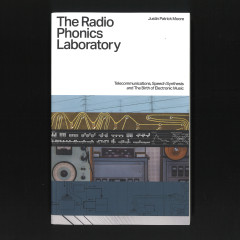
Justin Moore - The Radio Phonics Laboratory - Telecommunications, Speech Synthesis, and the Birth of Electronic Mus

The Radio Phonics Laboratory by Justin Patrick Moore is the story of how electronic music came to be, told through the lens of the telecommunications scientists and composers who helped give birth to the bleeps and blips that have captured the imagination of musicians and dedicated listeners around the world.

Featuring the likes of Leon Theremin, Hedy Lamarr, Max Matthews, Hal 9000, Robert Moog, Wendy Carlos, Claude Shannon, Halim El-Dabh, Pierre Schaeffer, Pierre Henry, Francois Bayle, Karlheinz Stockhausen, Vladimir Ussachevsky, Milton Babbitt, Daphne Oram, Delia Derbyshire, Edgar Varese & Laurie Spiegel.

Quotes
“From telegraphy to the airwaves, by way of Hedy Lamarr and Doctor Who, listening to Hal 9000 sing to us whilst a Clockwork Orange unravels the past and present, Moore spirits us on an expansive trip across the twentieth century of sonic discovery. The joys of electrical discovery are unravelled page by page.”
Robin Rimbaud aka Scanner

“Embark on an odyssey through the harmonious realms of Justin Patrick Moore’s Radio Phonics Laboratory echoing the resonances of innovation and discovery. Witness the mesmerising fusion of telecommunications and musical evolution as it weaves a sonic tapestry, a testament to the boundless creativity within the electronic realm. A compelling pilgrimage for those attuned to the avant-garde rhythms of technological alchemy.”
Nigel Ayers (Nocturnal Emissions)

“In this captivating exploration of electronic music, Justin Patrick Moore unveils its evolution as guided by telecommunication technology, spotlighting the enigmatic laboratories of early experimenters who shaped the sound of 20th century music. A must-read for electronic musicians & sound artists alike—this book will undoubtedly find a prominent place on their bookshelves.”
Kim Cascone

out of Stock

Order now and we will order the item for you at our supplier.

17,61

Last In: 10 months ago
OMNITRONIC Mixer - TRM-422 4-Kanal Rotary-Mixer

4-channel rotary mixer with 3-band frequency isolator and filter section for DJs

OMNITRONIC TRM-422: THE ROTARY MIXER ON A NEW LEVEL
The desired child

Omnitronic's popular TRM series has been expanded: the TRM-422 combines all the proven features of the previous models, but additionally offers functions that numerous fans had wished for. During the development of the mixer, the focus was on the demands and suggestions of the community.

FULL CONTROL
Each of the 4 input channels has 2 line inputs, one of which can become a phono input at the touch of a button. The channels are each equipped with a volume as well as a gain control. In addition to the master isolator (bass, mid & high), the DJ has the option to activate a filter with HPF, BPF, LPF, resonance and sweep controls in each of the 4 input channels.
The master output is available to the DJ in both XLR and RCA versions.

EFFECT WAYS
The use of external effect devices is possible through an FX-In and FX-Out via 6.3 mm jack. The mixer's master insert is also equipped with a send & return (unbalanced) path. This allows additional external effects to be looped into the mixer.


DVS INTEGRATION
The mixer's timecode outputs allow easy integration of a DVS system (Digital Vinyl System) such as Traktor or Serato.

MONITOR SECTION
The booth output of the TRM-422 is provided with one XLR and one RCA connector. The signal of the booth output can be easily adjusted to the conditions in the DJ booth with the help of an EQ (High & Low).


MICROPHONE INPUTS
The TRM-422 offers 2 microphone inputs. The first mic input gives the DJ the ability to modify the mic signal with EQ (high & low).

BACKUP SOURCE
With the help of the AUX input on the front panel, players such as smartphones, tablets or MP3 players can easily be connected via mini-jack (3.5 mm) and thus serve as a backup solution.


ACTIVATABLE CROSSFADER
If you don't want to do without a crossfader during your DJ set, you have the option to assign each of the 4 channels to the integrated crossfader. If the crossfader is not used, it can easily be switched off.

SET RECORDING
The RCA record-out makes it easy to record your own DJ set.

FEATURES
4-channel rotary mixer with 3-band frequency isolator and filter section for DJs

3-band master frequency isolator with vintage ALPS potentiometers (Blue Velvet RK27)
Kill cut feature allows DJs to completely remove low, mid and high frequencies for amazing mixing
Filter section with HPF, BPF, LPF, resonance and sweep control for creative sound shaping
4 stereo input channels with gain control, clip LED, 3-way equalizer and phono/line switching
2 microphone input channels with gain control, 2-way equalizer on air switch
High-grade components ensure long life and excellent sound quality
16-digit stereo LED level meter, switchable between master and booth outputs
Booth output with separate 2-way equalizer and level control
PFL section with 16-digit stereo LED level meter, level control, PFL/master mix control and cue mix/split option
Fully assignable VCA crossfader with adjustable curve
2 effects send/return paths
4 direct outputs for Timecode applications
Inputs: 8 x line and 4 x phono (RCA L/R), 1 x front aux (mini jack)
Outputs: master and booth (XLR/RCA L/R), record (RCA L/R), master insert send/return (RCA L/R), FX in/out (stereo jack)
483 mm rack installation possible with supplied mounting brackets
Desktop console housing

TECHNICAL SPECIFICATIONS
Power supply: 100-240 V AC, 50/60 Hz
Power consumption: 24 W
Protection class: Class I
Power connection: Mains input IEC connector (M) mounting version Power supply cord with safety plug (provided)
Frequency range: Microphone 20 - 20000 Hz
Line 20 - 20000 Hz
Phono 40 - 18000 Hz
S/N ratio: >97,2 dB line
>91,7 dB Microphone
THD: Line -68 dB
Control elements: Power switch, source selector, Crossfader, Crossfader selector switch, Crossfade curve switch; Cue mix split function, EQ controls
Status LED: Power, master level meter, clip, CUE
Connections: Input: 4 x line via stereo RCA
Input: 4 x line/phono via stereo RCA
Input: 2 x Microphone via 3-pin XLR
Output: 1 x headphones via 6.3 mm jack socket (stereo) mounting version
Output: 1 x headphones via 3.5 mm jack (stereo) mounting version
Output: 1 x rec. via stereo RCA
Output: 2 x booth via 3-pin XLR
Output: 1 x booth via stereo RCA
Output: 2 x master via 3-pin XLR
Output: 1 x master via stereo RCA
Output: 1 x AUX sends via 6.3 mm jack socket (stereo) mounting version
Output: 1 x AUX returns via 6.3 mm jack socket (stereo) mounting version
Chanals: Input chanel: 4 x stereo with Line-Line/Phono switch via RCA, channel control via Rotary, 3-band tone control EQ, source selector, gain control, CUE switch, FX routing switch, Crossfader selector switch,
Microphon chanal: 2 x mono via XLR, channel control via Rotary dial, ON AIR switch,
Master output: 2 x stereo via XLR, channel control via Rotary
Booth output: 2 x stereo via XLR, channel control via Rotary
Rec. output: 1 x stereo via RCA
Headphones output: 1 x stereo via Plug 6,3mm/3,5mm (Jack), channel control via Rotary dial, Cue mix split function,
Max. level: Output: +18 dBu
Material: Metal
Housing design: Desktop console housing
Dimensions: Width: 41 cm
Depth: 28,5 cm
Height: 10,5 cm
Weight: 5,74 kg

out of Stock

Order now and we will order the item for you at our supplier.

651,26

Last In: 2 years ago
LUCID EXPRESS - LUCID EXPRESS

Lucid Express is five young dreamers who create a stunning airy blend of shoegaze and indie pop amongst the skyscrapers, mountains, and packed alleyways of Hong Kong. The name itself a modest mission statement of the band's intent: lucid in the poetic sense of something bright and radiant. The group formed as teens in the winter of 2014 in the turbulent weeks just prior to the Umbrella Movement. Vocalist/synth player Kim says "at that time it felt like we have a need to hold on to something more beautiful than before. Like close friendships, the band, our creation." Listening to their blissful, dreamy compositions, it may come as no surprise that these songs carry the mood of their times of inception. With all members of the band working late-night shifts, this led to a rehearsal and recording schedule that found the band playing between midnight and 4am and then crashing together on the studio floor before returning to work early in the AM. Debut album Lucid Express was given an extra sparkle thanks to the creative mixing of Max Bloom (Yuck), operates as the service to take the listener on a journey through the band's color-soaked sounds.

out of Stock

Order now and we will order the item for you at our supplier.

25,92

Last In: 4 years ago
Rotary ECT - Cutting Them All Off

Documented during peak isolation times in Los Angeles, between December 2020 and January 2021. These pieces were performed as Live AV pieces from 2017-2019, at Coaxial Arts, Zebulon and Desert Daze 2019, but not documented in a release until later. Signal processing and sequencing frameworks built in Max 8 with signals generated from Prophet '08, a broken AW16G, 0-coast, Max, and a MC-909. With the context of the electromagnetic medium, the absence of live performance and moving visuals and the new "spirit" of the pestilent times, "Cutting Them All Off" should barely be represented as reworks of the originally performed pieces. What was once pulsing and blasting out of PA speakers live is now referenced as a distant past document. These pieces (for better or for worse) have been removed and cut-off from their contextual source and can only be presented in their displaced/liberated state. Like a fish out of water gasping for air, or the only drunk survivor of a car crash that was his fault.

Christopher Reid Martin started Rotary ECT in 2016. The project focuses on highly active signal processes on synchronized Audio -> Visual signals, with many signals being constructed to self-generate. Much like a rotary machine's rotation, the process is consistent and signalled when turned on. Much like electroconvulsive therapy, a human need to be there to actively monitor and attend to the process and generation of the signals being emitted.

Christopher currently works for Cycling '74, is a curatorial/programmer at Coaxial Arts Foundation and ⅓ of curators (alongside J.Prey and J. Rivera) behind the ephemeral stream Cathode TV/Cathode Cinema. Christopher continues to show gallery works, both virtual and physical, digital and video works and performs in other numerous events and projects such as Bailouts, CGRSM (with Gabie Strong), Shelter Death, Gate (with Michael Morley) and Via Injection. He has performed and collaborated with artists Joseph Hammer, Bryce Loy (RIP), Tetuzi Akiyama, Christopher Thompson, James Roemer, Andrew Scott, Gabie Strong, Michael Morley, Lev Abramov and many others.

pre-order now18.06.2021

expected to be published on 18.06.2021

8,36

Last In: 2026 years ago
METAMORFOSI - “...e Fu Il Sesto Giorno

If you mention the name of Metamorfosi in front of any fan of Italian progressive rock, you get a unique effect: awe, wonder, united to the memory of the masterpiece that firmly established them as fundamental exponents of the genre. We are obviously talking of "Inferno", published in January 1973 and inspired by the eponymous first poem of the Divine Comedy by Dante Alighieri.

But the musical maturity of "Inferno" had not come immediately, at least not in discographic terms, as it happened for example in the case of Alphataurus, Biglietto per l’Inferno and Campo di Marte, typical meteors of Italian prog that made their debut with a bang and then dissolved into thin air for decades. In fact, Metamorfosi debuted with a work that was indeed less complete, but not negligible.

“...e fu il sesto giorno” is born after two years of gestation, since the singer Jimmy Spitaleri joined the band I Frammenti in 1970. It is the period of maximum splendour for the music which at the time was called ‘avant-garde pop’ and that only later would be labeled as ‘progressive rock’, a music scene in which the Metamorfosi of the beginning just partially fit in as they were partly still anchored to old beat styles, and as they engaged in the exaltation of the Catholic faith at the textual level. The religious content of the album is substantially unequivocal from the cover, in which Jimmy Spitaleri is portrayed in a symbolic laying on of hands to the rest of the band, his disciples and fellow adventurers.

If it is true that the weakness of the Italian prog scene has always been found in the singing, Spitaleri is a notable exception, who does not show any shortcoming throughout the disc. In addition, some elements - the guitar solos, the interventions of flute and keyboards, a solid rhythmic base, a sometimes unpredictable song structure - anticipate what will come from there after a few months. "...e fu il sesto giorno" is, therefore, contrary to what is often said, a major premise, a flower waiting to bloom and show everyone its own beauty.

pre-order now30.05.2021

expected to be published on 30.05.2021

31,89

Last In: 2026 years ago
Various - Impulse Records: Music, Message And The Moment
 
25

Orange and black. Fire and ebony. Fury and pride. Wearing its signature colors proudly and raising its exclamation point high, Impulse! Records was the go-to label for music that harnessed the searching and political stand-taking of the Sixties. Launched in 1961, Impulse grew to become an inherent part of the era’s velocity as well as its volume, pulling jazz into the age of Black Power, Afrocentricity, and Spiritual Expansion. In its balance of tradition and transition, it bridged the golden age of jazz, that brief window from the late Fifties to the Seventies when players representing every jazz era were alive and active—from Louis Armstrong to Albert Ayler, from the legends of lore to a new generation of energy players. Impulse treated all its musicians as innovators, revolutionaries even—from swing and bebop, to free and Afrofuturist. The performances on Impulse Records: Music, Message and the Moment draw their staying power from a wide embrace of styles and sounds, as well as a tight focus on a historic moment when the promise of change was in the air and the message of racial harmony was in the music. Today that music has lost none of its relevance: the promise still deferred, the message still on time.

pre-order now14.05.2021

expected to be published on 14.05.2021

157,52

Last In: 2026 years ago
David Helbock - The New Cool

David Helbock

The New Cool

12inchACTLP9927
ACT
26.03.2021

“It was my wish to cool things down a bit,” says David Helbock. The
Austrian-born pianist has formed a new trio with guitarist Arne
Jansen and trumpeter Sebastian Studnitzky and it is clear when he
talks about it how far he has already moved on since his previous
group: “In the Random Control Trio we had a lot of instruments on
the stage, there was a lot of changing from one instrument to
another… and a lot of notes.” And the new group? “It is more about
emotions. And emotions are the most important thing in music.”
There are other differences too. Whereas Helbock’s previous groups
have consisted of musicians from his native Austria, he has now lived
in Berlin for five years, and ‘The New Cool’ presents his first group
formed with players who have also adopted Berlin as their home city.
With Arne Jansen, originally from Kiel, what appeals to Helbock is
that “he is such an unselfish player, very centred and very calm - and
subtle too. With him it’s all about the music.” Studnitzky is originally
from the Black Forest and Helbock liked “his style of playing with that
very airy sound” and the fact the range of timbres and moods he
creates with just one effects device. And how does it work in the
trio? “All three of us are melody players, but we are all capable of
holding back and giving space to the others.”
It would be wrong, however, to see the elegiac feel of much of this
album as a response to the pandemic. Helbock and producer Siggi
Loch were having “a productive and fruitful discussion” about these
ideas a full year before the recording sessions took place at the Emil
Berliner studios in August 2020. Loch has a fascination for the way
cool jazz “turned the wheel around” to connect with a wide audience
and references and connections with the cool jazz movement are
scattered throughout this album. It is also the very first time that
Helbock has included a tune by his teacher for over a decade,
American pianist Peter Madsen, who toured extensively with Stan
Getz and also taught Maria Schneider.
Helbock has been inspired by the innovations and concepts of Lennie
Tristano and his sense of affinity with the Chicago-born genius runs
deep. Tristano once decreed that “the jazz musician’s function is to
feel.” Helbock, Jansen and Studnitzky have taken that maxim to their
hearts.
LP pressed on 180g vinyl with digital download included.

pre-order now26.03.2021

expected to be published on 26.03.2021

24,33

Last In: 2026 years ago
  • 1
Items per Page:
N/ABPM
Vinyl