Поиск:alain pierre

Стили
Все
Jean-Claude Vannier - La Bête Noire

With a discography held in such high esteem amongst fans of conceptual French pop and soundtrack composition, the likelihood of finding an unturned stone amongst maestro Jean-Claude Vannier’s fertile psychedelic rockery falls somewhere between slim and skeletal. Even the most intrepid explorers of the most fearless and fastidious nature should naturally expect to encounter one or two shadowy characters when braving the oblique corners of the Vannier vault, but few lost souls cast a darker silhouette than the cinematic obscurity known only as La Bête Noire (The Black Beast).

Lost and presumed missing for decades the soundtrack tapes to this lesser-known 1983 French thriller (featuring a cast culled from films such as Alphaville, The Modern Couple and Sweet Movie) captures the revered composer and arranger of Serge Gainsbourg’s Histoire De Melody Nelson embarking on a darker exploration of free jazz, frenzied batucadas and cyclic carousel psychedelia. Counting key players of the French jazz scene within its ranks, The Insolitudes group comprises a crack team of Palm/Futura/Actuel/Saravah regulars such as saxophonist Philippe Mate´ (Acting Trio/Mate´-Vallancien/Tacet) alongside drummer Bernard Labat (Mad Ducks) and legendary Arpadys/Voyage rhythm masters Marc Chantereau and Pierre-Alain Dahan (Brutus Drums) all of whom alongside Michel Zanlonghi (Ensemble De Percussion De Paris) make up this thunderous, tumultuous, four-headed rhythm machine bridging an authentic gap between The Jef Gilson Groups and France’s signature “cosmic” revolution. Naturally these previously unheard compositions are spearheaded by lead pianist and composer Vannier and for devotee’s of his 1972 concept album L’Enfant Assassin Des Mouche there is much to admire and cross-reference herein.

Having been the most loyal and long-running guardians of Jean-Claude’s monster archive over the past two decades Finders Keepers Records are proud to present this first catch of newfound vintage Vannier discoveries on this limited and unlikely free jazz 45 single (which should find a perfect home between coveted Euro jazz 7”s by Krzysztof Komeda, Franc¸ois Tusques and Brussels Art Quintet). Almost 15 years since Finders Keepers once liberated the Mouches it is now time to set free another Black Beast amongst discerning listeners.

нет на складе

Закажите сейчас, и мы закажем товар для вас у нашего поставщика.

11,30

Последний логин: 7 г. назад
Fabriano Fuzion - Cosmik Sindinka

" I used to live in rue de Clignancourt, and remember as a kid going to the 14th of July West Indian ball organized by my father rue André Del Sartre in Montmartre every year. There I would meet, among others, saxophonist Robert Mavounzy. Sticking to the area, my older brother had a band and often played at the famous venue La Cigale, where even Henri Salvador joined him for a jam from time to time."Since childhood Serge Fabriano bathed in music, to-ing and fro-ing between his native Guadeloupe and Paris where he grew up. He attended the music conservatory, learnt how to play bass, met and played with many musicians and was ultimately angling for a career as a music teacher. But Serge had wanderlust; he lived to meet new people and was passionate about travel.Thus, it was in a squat located rue de Flandres in the 19th district of Paris that Serge Fabriano met by chance zarb player Djamchid Chemirami, one of Iran's greatest percussionists, who invited him to the Arts Festival of Shiraz-Persepolis. After a month-long motorcycle journey, he and his guitar teacher, Roger Bénichou, arrived in Tehran. Sadly their guitars didn't survive the journey. It was there that he met, among others, Woody Shaw, Max Roach and his wife Abbey Lincoln. Serge also formed a friendship with saxophonist Gary Bartz and stayed on a month playing with the cream of the musicians who'd attended to the Festival.During the mid-70's, he alternated between teaching classes and live gigs, and performed in Germany with a funk band comprised of ex-GIs from the US Army. He also met the members of Chick Corea's group, Return to Forever, and especially Stanley Clarke who became a great source of inspiration to him.From 1978 onwards, Serge Fabriano put aside teaching and devoted more time to music. He became a musician's musician, doing studio recordings with rock bands. He also played with members of the Caribbean diaspora, which included the great drummer Marcel Lollia (known as Velo), Patrick Jean-Marie, Guy Conquette, Winston Berkley, Mino CineluDuring the "Ayatollah Comédie" musical comedy tour organized by the Journal Liberation, Serge met actor Pierre Clémenti (Il Gattopardo, Belle De Jour, The Conformist). This was a game-changer : "I was trying to record my first record. Clémenti suggested the Studio Beaubourg in Paris. "The group Fabriano Fuzion - Fabriano Unit Zion - was born.The band brought together some of the Caribbean's most inspired musicians: Martinican-born Mario Canonge on the piano (his first appearance on an album), Alain-Jean Marie on the synthesizer, Edouard and Pierre Labor on saxophones, Claude Vamur (Kassav ') on the drums, singer/percussionists Marie-Reine Lamoureux and Marie-Céline Lafontaine, percussionists Roger Raspail, Sully Cally and Hector Ficadière (Tumblack, Vent Levé) on Ka percussions.It is precisely the Gwo Ka - this ancestral 'root' music deeply embedded in the heart of the Guadeloupe musician - which constitutes the rhythmic backbone of this first opus. The Gwo Ka, the jazz, the poetry and the spiritual vibe are gathered here to form a splendid album; one of the true masterpieces to emerge from the French West Indies.Rarely will a band have borne its name so well than Fabriano Fuzion - its music is a multiple and collective work in which each element brings its identity and its richness, conferring to this major work a truly fusional dimension.

нет на складе

Закажите сейчас, и мы закажем товар для вас у нашего поставщика.

32,73

Последний логин: 6 г. назад
Eric Demarsan - Le Cercle Rouge

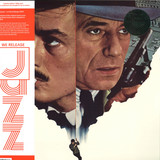
Original Soundtrack - Super Deluxe Version, (including 4 tracks never released on vinyl before, this feature is exclusive to this edition, see the tracklisting), 180g vinyl, mastered at half speed, heavy cardboard old Stoughton tip-on sleeve, obi, gold sticker Info We Release Jazz is delighted to present the official reissue of the original soundtrack of Jean-Pierre Melville's 1970 film noir classic Le Cercle Rouge (starring Alain Delon, Bourvil, Gian Maria Volontè, and Yves Montand) composed by French soundtrack master Eric Demarsan, available on limited edition 180g vinyl LP mastered at half speed and including 4 bonus tracks not available on previous pressings of the album. Eric Demarsan's compositions for Le Cercle Rouge draw from the orchestral spirit of the Modern Jazz Quartet (as requested by Melville who loved John Lewis' work), abstraction and minimalism to create a suspenseful and hypnotizing audio landscape which elegantly underlines the tense atmosphere of unavoidable fate that shrouds the movie and the doleful beauty of its characters. Simply put, it's the finest combination of underworld existentialism, coldblooded chic, and crime jazz! Le Cercle Rouge boasts the participation of celebrated jazz players Guy Pedersen (bass), Daniel Humair (drums), Georges Arvanitas (piano), and Bernard Lubat (vibraphone). Starting as a collaborator of François de Roubaix and Michel Magne in the 60s, Eric Demarsan went on to become a mainstay of French cinema soundtracks, composing for directors such as Jean-Pierre Mocky, Costa-Gavras, and Patrice Leconte among others. He also recorded the cult album Pop Symphony (for Pierre Cardin in 1970) under the Jason Havelock pseudonym.

нет на складе

Закажите сейчас, и мы закажем товар для вас у нашего поставщика.

21,39

Последний логин: 6 г. назад
Bernard Baschet, Michel Deneuve & Alain Dumont - 4 Espaces Sonores

Transversales Disques present a reissue of Bernard Baschet and Michel Deneuve's 4 Espaces Sonores, originally released in 1982. Rare 1979 recording of Bernard Baschet performing on his Sound Sculptures.The Baschet brothers are known worldwide as creators of Sound Sculptures, fantastic shapes of moulded metal and glass, which combine the visual arts with music.François Baschet had always been fascinated by acoustics, by the relationships between the shape and material of an intrument and the beauty of its sound.Bernard Baschet was passionately interested in contemporary music and firmly believed that such instruments were the proper tools for modern music, for they offered to the artist and performer a personal means of expression denied by electronic devices.Together the brothers began to design and produce Sound Sculptures, which could also be regarded as musical instruments.Circa 1965, Bernard worked alongside Pierre Schaeffer as a member of the GRM (Musical Research Group) on the elaboration of what was to become Schaeffer's "Traité des objets musicaux" (Treatise on Musical Objects).The Baschet brothers also created structures and instruments of all sizes, including bell towers, windmills and fountains, using the natural elements of wind and water to make music. Bernard Baschet was especially proud of his pedagogical work amongst deprived and handicapped children, with the instrumentaium made up of fourteen pieces.

нет на складе

Закажите сейчас, и мы закажем товар для вас у нашего поставщика.

20,97

Последний логин: 8 г. назад
Zanov - Green Ray

Zanov

Green Ray

12inchLPS206
WAH WAH RECORDS
31.01.2018

Under the alias of Zanov we find the works of French electronic pioneer Pierre Salkazanov, who had started playing guitar in the 1960s in a Shadows styled band, Les Ambassadors. Instrumental rock was not enough for Salkazanov, he was always looking for evolution, so when a meeting with French synth player Serge Ramses (of "Secret" fame) got him into the world of synthesizers he just dived deep into the bourgeoning world of electronic music. He got himself his first syths and started producing works into a 4-track Teac tape machine. French music was at its best, it was the time of Jean Michel Jarre, Didier Bocquet, Richard Pinhas and Heldon, Alain Meunier... Even Gong's Tim Blake was living in France at that time. And so Zanov soon caught the attention of Polydor, who released Green Ray in 1976. It is a work made with minimal equipment if compared to other French sythetists, not to mention their German peers, he worked on the EMS VCS3 synth and used a 4-track Teac and a Revox A77 Mk IV reel to reel tape recorders obtaining huge sound results. You can appreciate an influence from the Berlin school, Green Ray walks the same path of what artists like Tangerine Dream and the likes were producing at the time, Zanov had felt under the spell of Ricochet, but his head was boiling with ideas which gave the recordings a very personal, unique touch.

Zanov's three albums met with unanimous critical acclaim for the sound quality as well as for the originality of this very personal universe.

Сделать предзаказ31.01.2018

он должен быть опубликован на 31.01.2018

24,41
Zanov - Moebius 256 301

Under the alias of Zanov we find the works of French electronic pioneer Pierre Salkazanov, who had started playing guitar in the 1960s in a Shadows styled band, Les Ambassadors. Instrumental rock was not enough for Salkazanov, he was always looking for evolution, so when a meeting with French synth player Serge Ramses (of "Secret" fame) got him into the world of synthesizers he just dived deep into the bourgeoning world of electronic music. He got himself an EMS VCS3 and started producing works into a 4-track Teac tape machine. French music was at its best, it was the time of Jean Michel Jarre, Didier Bocquet, Richard Pinhas and Heldon, Alain Meunier... Even Gong's Tim Blake was living in France at that time. By the time of his second LP, Moebius 256 301, issued also on Polydor in 1977, Zanov had already gathered a small collection of gear, including an ARP 2600 and an ARP sequencer, his old VCS3, an RMI Harmonic and a PS 3300. Again under the influence of both first and second generation of Berlin school musicians the LP will appeal to fans of Klaus Schulze or Tangerine Dream, but they will also find a big deal of Zanov's own personal sound on it, since as the musician himself reckons he had little contact with other peers of his generation, so besides a general love for the electronic gear used and the sounds you could make out of them the creative ideas behind his works were all his own. On his second album a richer sound is found, not only due to the use of the new gear, since some of its tracks where recorded using only his old EMS, but also due to his won experience after having taken his works to the life stages in the Golf Drouot boite, the Lase Olympia venue (on the basement of the famous Olympia), the Paris Planetarium or those for planned one month tour (of which in the end only four dates were accomplished).

Zanov's three albums met with unanimous critical acclaim for the sound quality as well as for the originality of this very personal universe.

Сделать предзаказ31.01.2018

он должен быть опубликован на 31.01.2018

24,16
Chebran - French Boogie 1981-1985
 
6

This is France in the Mitterrand years: fashions fleet as fast as governments. In the early eighties, the happy-go-lucky gather the nectar of each and every new release.
Believing in a bright future for videotex, and loosened up by the sexy talks broadcasted on the budding pirate radios, the new generation dreams of dance floors and holiday clubs. French Boogie, which preserves the spirit of these years of boodle and bunkum, is the ideal soundtrack to their dreams.

What the web now refers to as French Boogie is some synthetic funk reflecting the spirit of those days when nothing was impossible, or so it seemed. Its syncopated flow heralded the dawning of French rap. Often considered as some kind of post-disco, inspired as much by black music as by new wave, this carefree pop music with bawdy lyrics indulged in simple pleasures: holidays, swank and sun were recurrent themes. Totally in tune with its time, it incidentally glorified luxury, success, and a certain consumerism embodied, for instance, in Bernard Tapie.

In popular clubs such as La Main Bleue in Montreuil, or L'Echappatoire in Clichy-sous-Bois - where Micky Milan could be seen behind the decks - an enthusiastic audience discovered this new sonic wave, influenced as much by French pop as by Sugar Hill Gang or Kurtis Blow. The artists who first launched the movement engaged in it wholeheartedly, but as often the case with new music trends in France, humour and casualness quickly became a decoy to impose a new style. This explosive mixture, in which startling and typically Frenchy French lyrics go along New-York-style tunes, is sometimes reminiscent of the kinky comedies directed by Max Pécas or Claude Zidi. On this prolific scene, partly originating from the Jewish community, everybody was looking for success, trying to hit the jackpot with what was to hand. Famous media personalities, one-hit wonders or John Does in quest of fame, all had a go at French Boogie - more or less successfully. Apart from « Vacances j'oublie tout » by Elégance, « Un fait divers et rien de plus » by Le Club, or « Chacun fait ce qui lui plaît » by Chagrin d'amour (produced by Patrick Bruel), very few songs became hits: the story of funk in France is that of a half-baked robbery.

In this myriad of new musicians, the very young François Feldman and Phil Barney pioneered a fresh and hybrid style. Other well-known artists like Gérard Blanc from Martin Circus (Attaché Case), Richard de Bordeaux (Ich), or Jean-Pierre Massiera (Anisette, Pirate Scratch Band, Mandrake, Scratch Man...) added an eccentric touch to this sound-wave, making it often entertaining, and sometimes showy.

Capture d'écran 2015-10-26 à 12.55.43Singers like Agathe (the author of 'La Fourmi' and of the hit song 'Je ne veux pas rentrer chez moi seule') were far more than just window dressing. They even tried to give an ironic and subversive twist to this rather harmless genre. The very vindictive rebel Gérard Vincent shared in this spirit, but as a whole, French Boogie became associated with nonchalance and sauciness. Thus, Stéphane Collaro, Gérard Jugnot, Alain Gillot Pétré and other TV clowns would clumsily contribute to this French variation on funky sounds. In a few but intense years, French Boogie gave all the tips to party with style.

If some hits made it possible for the happy few to get a real house under truly exotic palm trees, the wave actually ebbed away very quickly, leaving quite a few musicians stranded on the shore. Whether they were sincerely motivated, or simply opportunistic, they had failed. In 1984, French Boogie was already breathless, and got merged with other genres: on the one hand, rap and breakdance adapted its flow to a more urban world, especially with Sydney's show, H.I.P.H.O.P, and Dee Nasty's broadcasts on Radio Nova; on the other, italo, new beat and house began to rule over dance floors, even more strongly asserting the will to develop music for clubs.

Squeezed in between the age of disco and that of modern electronic music, French Boogie was a transitional phase, but it remains an amazingly refreshing testimony to the intermingling of pop and underground cultures. The genre was hastily categorized as anecdotal in spite of its pioneering synthetic groove and matchless bass lines. An attentive ear will discover the poetry of the ephemeral beyond the eccentricities of the genre, as well as a certain unexpected avant-gardism. At the origin of major music trends, always cheerful and catchy, French Boogie is what you need to party.

нет на складе

Закажите сейчас, и мы закажем товар для вас у нашего поставщика.

23,11

Последний логин: 10 г. назад
Продуктов на странице:
N/ABPM
Vinyl