Nicolás Ibarburu is a prominent figure in Uruguayan music. Renowned for his exceptional guitar skills since his teenage years, he has also established himself as a talented songwriter. In La Ruta de la Seda, he showcases a unique blend of personal songwriting, Latin fusion rhythms, pop sensibility, and deep-rooted Uruguayan musical influences. From his teenage years, Nicolás Ibarburu has become a prominent figure in Uruguayan music. Renowned for his exceptional guitar skills, he quickly gained recognition, performing alongside his brothers, Martín and Andrés, in various projects. Ibarburu's mastery of the guitar has led to collaborations with legendary figures from both Argentina and Uruguay, including the iconic Luis Alberto Spinetta, Jaime Roos, Fito Páez, and Rubén Rada. As his career evolved, Ibarburu expanded his influence beyond performance, establishing himself as a talented songwriter with a captivating solo career. His latest album, La Ruta de la Seda, showcases his unique blend of personal songwriting, Latin fusionrhythms, pop sensibility, and deeprooted Uruguayan musical influences. With his signature guitar sound and lyrics that explore the magic of artistic creation and the poetic depths of the subconscious, Ibarburu continues to push the boundaries of his artistry.
Поиск:alan t
Все
When we did the first ever vinyl reissue of this 1972 masterpiece back in 2012 it sold out so fast and so many lost the chance to grab a copy has translated into continuous messages asking us to do a repressing of this marvel - which we did and, again, it sold like hot bread. So here is a new edition of this UK jazz masterpiece, this time with a twist :
- Silk-screened cover art : we respect the original design, but have upgraded the printing from regular offset to silk screen to give it an artistic touch!
- In adition to the limited black vinyl edition (400 copies), we offer an ultra limited clear vinyl version (100 copies-only!)
One of the big names in UK Jazz, Neil Ardley was offered the leadership of the seminal New Jazz Orchestra in 1964. Under his direction the Orchestra moved though different styles and changes of personnel, bringing in musicians such as Mike Gibbs (trombone), Harry Beckett andHenry Lowther (trumpets) or even Jack Bruce (bass), some of them also contributed with the writing of some original compositions, making the NJO the root from which the UK's 70's jazz scene was to blossom.
By 1972 the NJO was already defunct, but his legacy remained in the works of its members. Ardley's 'A Symphony Of Amaranths' is a perfect example of what was boiling in the UK jazz scene. It was Ardleys tribute to his idols Duke Ellington and Gil Evans, and featured the skills of some great musicians of the scene including Don Rendell,Stan Tracey, Henry Lowther, Harry Beckett, Jeff Clyne & Jon Hiseman. Side B is inspired by the words of Edward Lear, W. B. Yeats, James Joyce and Lewis Carroll that are musicated by Ardley and feature, among other highlights, Ivor Cutler's narration of 'The Dong With A Luminous Nose' and Norma Winstone's vocals on 'Will You Walk A Little Faster'.
Musicians that participated in the recording session :
- Derek Watkins, Nigel Carter, Henry Lowther, Harold Beckett (trumpets)
- Derek Wadsworth, Ray Premru (trombones)
- Dick Hart (tuba)
- Barbara Thompson, Dave Gelly, Don Rendell, Dick Heckstall-Smith (woodwind, saxes)
- John Clementson (oboe)
- Bunny Gould (bassoon)
- Dave Gelly (glockenspiel)
- Neil Ardley (prepared piano)
- David Snell, Sidonie Goossens (harp)
- Stan Tracey (piano, celeste)
- Karl Jenkins (electric piano)
- Alan Branscombe (harpsichord)
- Frank Ricotti (vibraphone, percussion)
- Chris Laurence, Jeff Clyne (bass)
- Jon Hiseman (drums, percussion)
- Eric Gruenberg, Jack Rothstein, Kelly Isaacs (violin)
- Ken Essex (viola)
- Charles Tunnell, Francis Gabarro (cello)
- Ivor Cutler (narrator)
- Norma Winstone (vocal)
- Jack Rothstein, Neil Ardley (conductors)
When they performed a handful of concerts as a duo in the summer of 1998, Kristen Noguès and John Surman had already worked a lot on the interweaving of genres: Noguès had confronted traditional Breton music with contemporary music and Surman had changed his jazz into atmospheric numbers that would be amongst the finest recording on the ECM label. As a duo, the harpist and the saxophonist would go on to invent something different: free folk, traditional ambient, modal ‘fest- noz’ … it is difficult to label, because the duo Noguès / Surman is one of a kind.
Diriaou, means “Thursday” in Breton. It is also the title of the first piece that Kristen Noguès and John Surman played together in 1991. Noguès learned the Breton language as a child, at the same time as the Celtic harp, – taking lessons with Denise Mégevand, who would go on to teach others, notably Alan Stivell. At the beginning of the 1970s, Noguès discovered Breton singing (soniou and gwerziou) At the beginning of the 1970s, she discovered the Breton song tradition (soniou and gwerziou) and became involved in Névénoé, a cooperative of traditional expression founded by Gérard Delahaye and Patrick Ewen. She recorded a single with the two musicians in 1974, then her first album, two years later.
Everyone who has listened to Kristen Noguès debut Marc’h Gouez, is now aware of her mysterious plucked strings. Her art, leaving Brittany, would go on to take in all landscapes and folklores, in the same as that of John Surman, conceived a little further north including vernacular jazz, international fusion with Chris McGregor or Miroslav Vitouš, and exploring more personal territory. Remember the Cornish landscapes in one of the best albums on the ECM label : Road To Saint Ives.
Kristen Noguès and John Surman thus shared an ‘extra-Celtic’ inspiration infused with free improvisation. On this recording, made in 1998 by Tanguy Le Doré at the Dre Ar Wenojenn festival, the duo uses original compositions which refer back to traditional songs (Maro Pontkalek, Le Scorff). The musicians then create fantastic impressions: Baz Valan, on which Noguès and Surman have a heavenly exchange; Kernow, on which the shared theme slowing disappears into the mist; Maro Pontkalek and Diriaou which move from the storm to the calm. Elsewhere, there is singing, first with Surman (Kleier) and then moving on to Noguès (Kerzhadenn and her signature song Berceuse). On a canvas of traditional music, the two musicians weave countless memorable landscapes.
- Ida Red
- Glory In The Meetinghouse
- Flowery Girls
- I Had A Good Father And Mother
- Shady Grove
- Pretty Fair Maid
- Billy Button
- Puncheon Camps
- The Queen Of Rocky Ripple
- Boatsman
SEAWEED GREEN VINYL[22,27 €]
Old-time and traditional music stay exciting for their contrasts. Exacting instrumentation honed through mentorships and late-night jams at fiddler's conventions tangles with a community-sourced inventiveness that influences variants and new sounds. Joseph Decosimo is a master of this genre for this very reason, blending deep technique with an openness and curiosity that keep his music crackling with life. A "marvelous fiddler" (No Depression) and banjo player who braids "exultation and veneration" (INDY Week) into his music, on his third solo album Fiery Gizzard Decosimo gathers a close-knit ensemble of friends from his musical career to infuse his interpretations of fiddle and banjo pieces with a contagious communal joy. As an artist working with traditional music from the South and Appalachia, Decosimo chooses songs based not only on historical significance and lineage but also his own sensory approach. For Fiery Gizzard, his ear was tuned to otherworldly tones and mystery, sourcing from field recordings such as Virginia fiddler Luther Davis' hypnotic version of "Shady Grove" while amping up the music's psychedelic potential. On the middle Tennessee banjo composition "Flowery Girls," a VHS of bluesman Abner Jay inspired Decosimo to rig up a pickup inside a fretless banjo and play it thr ough a tube amp to capture some of Jay's edge and funkiness. But to round out the sound and keep it kinetic meant galvanizing a genre-eschewing crew to jam out - and not in a "spaced-out drooly" kind of way, he laughs, but as a sort of "responsive conversation." Decosimo has always been a community-minded artist. He began playing as a seventh graderin Tennessee, fostering relationships with older players at jams and in homes, a learning mode natural to his inquisitive nature and desire for musical connection. A folklorist by intuition, he later became one by profession, studying with old-time legend Clyde Davenport, teaching in East Tennessee State University's renowned bluegrass program, and receiving his PhD at the University of North Carolina with a dissertation titled "Catching the `Wild Note': Listening, Learning, and Connoisseurship in Old-Time Music." In North Carolina, Decosimo kicked about in the verdant environment of Durham and Chapel Hill's folk and indie scenes, collaborating with artists including Alice Gerrard, Hiss Golden Messenger, and Jake Xerxes Fussell. This community has influenced his own music, including his "sublime and strangely heartening" (Bandcamp Daily) 2022 release While You Were Slumbering and Beehive Cathedral, Decosimo's 2024 "Appalachian mountain music treasury" (New Commute) trio album with Luke Richardson and Cleek Schrey for Dear Life Records. Continuing on this path, Fiery Gizzard is home base for a loose outfit of mostly Tarheel-based musicians from within and beyond traditional music. Inspired by a tour with fiddler Stephanie Coleman (Nora Brown), guitarist Jay Hammond, and synth builder and multi-instrumentalist Matthew O'Connell, Decosimo assembled studiomates based on close friendships and comfort. Coleman, O'Connell, and Hammond contribute to Fiery Gizzard, along with bassist and producer Andy Stack (Helado Negro, Wye Oak), horn player Kelly Pratt (Beirut, David Byrne), Mipso and Fust's Libby Rodenbough, Joseph O'Connell (Elephant Micah), andtrad/experimental artist Cleek Schrey. Decosimo's fiddle and banjo work is virtuosic, intricate and simple simultaneously, a testament to his many years of study. On some tracks, his playing or lovely, plain-hearted singing is the centerpiece, such as on his interpretations of Texan street preacher Washington Phillips' 1929 recording "I Had a Good Father and Mother" or the Eastern Kentucky fiddle barn-burner "Glory in the Meetinghouse," famously played by Luther Strong for Alan Lomax. But there's also a trusting open-door policy, like where Southern Appalachian tune "Ida Red" relaxes into Coleman's sweet, confident fiddling and Hammond's loping guitar. As a bandleader, Decosimo's confidence and enthusiasm for the music reveal the heart of traditional music and how it can come to life through community. Fiery Gizzard is Joseph Decosimo as a powerful champion of traditional music - a sponge who soaks up as much as he squeezes out, a responsive artist who makes his genre accessible, and a magnet who can bring musicians of all sorts into his orbit with his same passion.
- Fate Is
- Billboard
- Love Has No Pride (Condemned)
- Underneath
- November
- Maura
- Coyote
- Revenge Of The Lawn
Banana Stand vinyl. I Was Trying to Describe You to Someone is Wednesday's second fulllength album & first as a full band. The Asheville, NC quintet (guitarist/ vocalist Karly Hartzman, lead guitarist Daniel Gorham, pedal steel guitarist Xandy Chelmis, bassist Margo Schultz & drummer Alan Miller) maximizes the dark dissonance of a three guitar attack to highlight the emotionality of Hartzman's bell-clear vocals & wisps of half-recalled memories & literary references that make up her lyrics. I Was Trying to Describe You to Someone's eight songs meld elements of shoegaze, grunge, indie pop & southern American culture into a uniquely personal style of modern rock music that resonates with power & tenderness. The ever-darkening & deepening of Wednesdays' sound on I Was Trying to Describe You to Someone owes a debt of influence to The Swirlies, Arthur Russell, Red House Painters, Tenniscoats, Ana Roxanne, Acetone, & their continued collaboration with MJ Lenderman (who lends backing vocals to the songs "Billboard" & "November"). I Was Trying to Describe You to Someone was recorded at Hartzman's home with engineering assistance from her roommate Colin Miller. The depth & clarity of the recordings balance the distorted volume of Wednesday's live performances with the intimacy of Hartzman's voice. Her words hold the center of the chaos, unobscured by the power of the band. Hartzman describes her lyrics as "attempts to access old personal memories & do them justice through prose, with inspiration from the writings of Richard Brautigan, Flannery O'Connor, David Berman & Tom Robbins, & movies like Steel Magnolias."
Rise Against melden sich mit ihrer bisher kraftvollsten und belebendsten Musik zurück. Ricochet, das am
15. August bei Loma Vista Recordings erscheint, ist das erste Album der Rockband seit vier Jahren –
und es kommt in einer Welt voller Reizüberflutung, in der Algorithmen uns wütend machen wollen: wie
ein Haufen Murmeln, der hart getroffen wird und unkontrolliert auseinanderfliegt, immer weiter, immer
schneller.
Doch über die zwölf Songs hinweg, produziert von GRAMMY®-Gewinnerin Catherine Marks (Boygenius,
Foals, Manchester Orchestra, St. Vincent) und gemixt von Alan Moulder (Nine Inch Nails, Paramore,
Queens of the Stone Age, The Killers), stellen Rise Against die Frage: Wer profitiert eigentlich von dieser
kollektiven Spaltung und Unzufriedenheit? Sie fordern dazu auf, nicht blind zu handeln, sondern die Konsequenzen unseres Handelns füreinander zu bedenken – während die Machtstrukturen, die uns lenken,
unangetastet bleiben.
Ricochet wurzelt in der Idee von Zusammenhalt – ein Album mit wuchtigem Sound, das sich auf die
kleinen Bewegungen im Inneren konzentriert, die den größten Wandel auslösen können. Alles beginnt bei
einem selbst. Und mit der explosiven ersten Single „I Want It All“ zünden Rise Against den Motor und
starten eine Mission der Selbstbestimmung – leidenschaftlich, ambitioniert und kompromisslos.
- A1: Danger By Klaus Back + Tini Beier
- A2: Electrolysis By Eric Stone
- A3: Endurance Test By David Beast
- A4: Industrial Espionage By Peter Hunt
- A5: Interferences By Klaus Back + Tini Beier
- A6: Koan By Louis Reede
- B1: Middle Ages By Peter Janda + Fritz Koberl
- B2: Powers Of Darkness By David Beast
- B3: Racial Riots By David Beast
- B4: Resonances By Louis Reede
- B5: Submerged Cultures By Klaus Back + Tini Beier
- B6: Tinguely By Silvia Sommer
Featuring waves of neon synths, pristine machine funk, scorched ambient drones, gnarled bass lines, playful radiophonics & industrial percussion, this thrilling selection of obscure 1980's electronica is compiled by Zyklus (Alan Gubby / Revbjelde) and presented on 10" white vinyl. "On a teaching placement during the pandemic, I found a dusty cupboard above our college theatre holding 200+ library music CDs. Most of the discs were from the Arcadia Cosmos library, a prolific production house active during the late 1980s and early 1990s. I spent the next few weeks working through the discs and found several interesting electronic pieces although, pseudonym or not, I didn't recognise any of the composers involved. Further research kept leading to dead ends with Arcadia's owners having long vacated their last known address and web links either broken or abandoned. So more questions than answers remain about the library's provenance. For instance, who was / is the brilliantly named David Beast? Did Kraftwerk engage trans-european lawyers after hearing Endurance Test? Was Sylvia Sommer deliberately channelling vintage 1960's radiophonics by John Baker? What studio gear was used to create the distinctive Arcadia sound? And, for what appears to have been a UK-based company, why are so many of the album titles, tracks and composer names distinctly Germanic? If anyone has the answers please get in touch." Zyklus / Winter 2024
- 1: Tugboat
- 2: Oblivious
- 3: Parking Lot
- 4: Don't Let Our Youth Go To Waste
- 5: Pictures
- 6: Flowers
- 7: It's Getting Late
- 8: Temperature's Rising
Color Vinyl[28,15 €]
After a storied first year as a band releasing and touring behind their critically acclaimed debut album Today, Galaxie 500 closed out 1988 with a quintessential performance at New York City’s famed CBGB with every bit of their signature intimacy and autumnal bombast on display. The unusual bill which also included Sonic Youth, B.A.L.L. and Unsane was a benefit show for the zine shop See Hear.
Captured here in a raw but inspired board mix by Kramer and restored and mastered from the analog source by Alan Douches at West West Side Music, CBGB 12.13.88 is a live snapshot of a Galaxie fully formed, punctuating the end of their first chapter while poised to step into their next with On Fire the following year.
After a storied first year as a band releasing and touring behind their critically acclaimed debut album Today, Galaxie 500 closed out 1988 with a quintessential performance at New York City’s famed CBGB with every bit of their signature intimacy and autumnal bombast on display. The unusual bill which also included Sonic Youth, B.A.L.L. and Unsane was a benefit show for the zine shop See Hear.
Captured here in a raw but inspired board mix by Kramer and restored and mastered from the analog source by Alan Douches at West West Side Music, CBGB 12.13.88 is a live snapshot of a Galaxie fully formed, punctuating the end of their first chapter while poised to step into their next with On Fire the following year.
118 pages * no ads * Pure Prince Content! - new High Quality paper version. (Originally printed in 2018)
Wax Poetics Issue 67 contains interviews and write-ups on a slew of Prince's albums, including 1978's For You, 1986's Parade, 1987's Sign "O" the Times, 1988's Lovesexy, 1991's Diamonds and Pearls, and 1995's The Gold Experience—with interviews from engineer Chris Moon, manager Owen Husney, engineer Susan Rogers, producer/engineer David Z, poet Ingrid Chavez, tour manager Alan Leeds, dancer Cat Glover, saxophonist Eric Leeds, guitarist and bandleader Levi Seacer Jr., engineer Michael Koppelman, trombonist Michael B. Nelson, and keyboardist Tommy Barbarella.
Issue 67 also includes standalone interviews with Jill Jones, Andre Cymone, and members of the Revolution: Doctor Fink, Bobby Z., Brown Mark, and Wendy & Lisa.
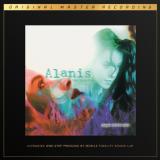
Alanis Morissette Delivers the Equivalent of a Spiritual Awakening on Supposed Former Infatuation Junkie:
Introspective Themes and Compassionate Emotions on Eastern-Tinged Album Have Grown More Relevant
1998 Smash Plays with Enhanced Detail, Rich Textures, and Sharp Focus on Mobile Fidelity’s 180g 33RPM 2LP Set:
First-Ever Audiophile Edition Strictly Limited to 3,000 Numbered Copies
1/2" / 30 IPS analogue master to DSD 256 to analogue console to lathe
Alanis Morissette refuses to adhere to convention on Supposed Former Infatuation Junkie. While most artists follow-up their breakthrough with an album that closely parallels the approaches that helped make them famous, the maverick singer-songwriter stayed true to herself and drew inspiration from travel to India before she began the recording sessions. As much as the preceding Jagged Little Pill put her on the global radar, Supposed Former Infatuation Junkie confirmed her role as a vital generational voice — and proved her blockbuster success was no fluke. Having set a mark for most sales of an LP in its debut week by a female artist, the 1998 smash remains a pop-rock staple.
Sourced from the original master tapes, strictly limited to 3,000 numbered copies, housed in a Stoughton jacket, and pressed at Fidelity Record Pressing, Mobile Fidelity’s 180g 33RPM 2LP set of Supposed Former Infatuation Junkie presents the triple-platinum LP in audiophile sound for the first time. Benefitting from defined grooves that befit the album’s nearly 72-minute length, this pressing plays with enhanced detail, refined clarity, sharper focus, and broader dynamics than prior versions.
Those traits are key given Morissette’s use of more textured and atmospheric soundscapes, not to mention her evolution into a more nuanced and controlled singer. Similarly, the scale and reach of David Campbell’s string arrangements come across as orchestrations should. Ditto the synth-based architecture shaped by producer and principal Morissette collaborator Glen Ballard. All in all, Mobile Fidelity’s collectible edition simply delivers more information via transparent means.
Notable for its balance, sophistication, and richness, Supposed Former Infatuation Junkie at heart finds Morissette pausing, taking a breath, and learning how to navigate life in a healthy manner after enduring one of the most exhausting and rocket-to-fame stretches any musician ever experienced. It’s the sonic equivalent of a spiritual awakening, a call to betterment, a brave assessment of the self and humanity as a whole. As such, the tunes on her second international (and fourth Canadian) release teem with gratitude, compassion, love, empathy — emotions that lend themselves to the largely mellow, contoured scope and Eastern-tinged melodies of the songs themselves.
“How ‘bout how good it feels to finally forgive you,” Morissette sings on the lead single “Thank U.” “How ‘bout grieving it all one at a time.” Those sentiments, and the vocalist’s embrace of concepts such as divinity and acceptance, not only provide a foundation on which Supposed Former Infatuation Junkie rests. They also reflect the personal maturation she gained from her embrace of Buddhist culture in India and a mindset bent toward notions of reconciliation, peace, and sensuality that were nearly absent in popular music in the late ‘90s.
Those themes continue on “That I Would Be Good,” a confident reflection that takes stock of one’s mental, physical, and emotional state in the face of both changing and unpleasant circumstances — and concludes with Morissette performing a flute solo, further exposing the raw intimacy of the introspective tune. She channels relatable simplicity and joy on “So Pure,” with her invocations of “dance” and “freestyle” speaking to the freedom of expression that courses throughout Supposed Former Infatuation Junkie. And perhaps no song finds Morissette showcasing her refreshed attitude toward life and opening up more than the relationship-themed “Unsent,” whose unconventional structures and lack of a chorus only add to its directness.
Akin to many albums that were ahead of their time, and despite the critical and commercial accolades afforded it upon release, Supposed Former Infatuation Junkie attracted new appreciation and perspective as it got older. Issued during an era where its ideas of serenity, absolution, tranquility, and contentment seemed largely alien, the record — akin to the ways its predecessor foreshadowed a movement — now functions as a visionary beacon that foretells of way to maintain sanity, dignity, and goodness amid a contemporary landscape filled with constant distractions, polarizing views, and incessant calls to purchase, promote, and produce without questioning the what-for purpose.
Supposed Former Infatuation Junkie dares to ask the questions and, at its best, supplies meaningful answers and alternatives that lead to longed-for enlightenment, healing, and laughter. For these reasons alone, it’s a record that never goes out of style.
- A1: Design - Premonition
- A2: Vision - Lucifer’s Friend
- A3: Richard Bone - Alien Girl
- A4: John Howard - I Tune Into You
- A5: Ian North - We’re Not Lonely
- A6: Selwin Image - The Unknown
- B1: Harry Kakoulli - I’m On A Rocket
- B2: Rich Wilde - The Lady Wants To Be Alone
- B3: Billy London - Woman
- B4: Alan Burnham - Science Fiction
- B5: The Microbes - Computer
- B6: The Goo-Q - I’m A Computer
- C1: Gerry & The Holograms - Gerry & The Holograms
- C2: The Warlord - The Ultimate Warlord
- C3: Die Marinas - Fred From Jupiter
- C4: Dee Jay Bert & Eagle - I Am Your Master
- C5: Peta Lily & Michael Process - I Am A Time Bomb
- C6: Sole Sister - It’s Not What You Are But How
- D1: Alasdair Riddell - Do You Read Me?
- D2: Karel Fialka - Armband (The Mystery Song)
- D3: John Springate - My Life
- D4: Idncandescent Luminaire - Famous Names
- D5: Disco Volante - No Motion
- D6: Dream Unit - A Drop In The Ocean
Compiled by Philip King
“And then came the rise of synth pop : blokes with dodgy haircuts hunched over keyboard-operated
machines stuffed with wires and do-it-yourself tone oscillators making sounds like a brood of geese
passing gas in a wind tunnel. Whoopee! This is the way the ‘70s ended : not with a blood-curdling bang
bang but with a cheap, synthesized, emasculating whimper.”
NICK KENT, NME.
All The Young Droids: Junkshop Synth Pop 1978-1985 is a new compilation that charts the
underbelly of the epoch-defining sound of the synthesiser in 80s popular music. Compiled by Philip
King (previously seen compiling All The Young Droogs, Glitterbest and Boobs - The Junkshop
Glam Discotheque), the music here connects the dots between DIY synth enthusiasts grappling with
new, cheap synthesisers at the tail-end of punk and wannabe, jobbing songwriters enthral to the new
music pioneered by Gary Numan, Depeche Mode and Daniel Miller’s Mute Records. Featuring rare
tracks of auto-didactic progressive pop music, proto-techno punk, shoot-for-the-stars-land-in-the-gutter
chart flops and heralded, underground synth classics, School Daze paints a picture of beautiful failure.
Complete with extensive sleeve notes written by King and never before seen imagery, all 24 tracks
were remastered by RPM in-house engineer Simon Murphy, many from vinyl copies due to lost master
tapes. The story told on All The Young Droids is one of the dawning opportunity presented by both the
emergence to the market of cheaper analog synthesisers and the distribution networks plus indie labels
that exploded with the advent of punk music in 1976. While the music that sprouted out all over the
globe in the wake of these factors was decried as fake, plastic, a refutation of punk’s guitar-led
revolution, it’s telling that much of the music on All The Young Droids.. was created in bedrooms,
ramshackle studios and home-made set ups with often borrowed equipment. In the era of record labels
jumping to capitalise on the success of The Sex Pistols, The Clash (both on major labels, of course)
these artists struggled to stand out from a new gold-rush with next to no budget or PR team. With radio
and labels desperate for the new Yazoo, what resulted was a testament to necessity being the mother
of invention.
At the time, the synthesiser was the music of the future, a shiny new machine that could paint like an
orchestra with a single finger and a 4-track. In the hands of Manchester avant-pranksters Gerry & The
Holograms it’s a pulsing, sardonic weapon.. the only instrument on the Messthetics classic lampooning
of New Wave fashion. In Hamburg, a 16 year old Andreas Dorau used it to write and record (with his
female classmates on vocals) a global smash in Fred Vom Jupiter (later licensed to Mute Records).
The hard-to-find English version (Fred From Jupiter, natch) is included here. Many artists with alreadystoried careers caught the bug and recorded synthesiser-fuelled peons to space, computers, the future
and, of course, love-interests. Harry Kakoulli, late of Squeeze, recorded a solo album in 1979 that
included the incredible power-synth-pop smash-that-never-smashed I’m On A Rocket. Similarly, Ian
North of Neo and American Power Pop stalwarts Milk ’n’ Cookies bought a Korg MS20 and used a
tape machine to record We’re Not Lonely, an absolute lost-classic of minimal synth pop. We’re Not
Lonely also features on the Junkshop Synth Pop sampler 7” twinned with John Howard unreleased
track You Will See, released April 12th 2025.
There are plenty of compilation debuts in evidence. Sole Sister were a mysterious trio who were
featured on the Scaling Triangles compilation of female-fronted, queer-adjacent post-punk /
underground music that also featured The Petticoats. Selwin Image were from San Francisco and
featured members of the recently defunct power pop/punk group The Pushups. Their stupidly catchy
The Unknown fizzes with New Wave energy - think XTC to Sparks but remains unreleased until now.
Dream Unit’s A Drop In The Ocean is an early synth wave cut, positively teaming with Joy Division
instrumentation, previously only released on a long-forgotten and super rare, self-released EP.
Incandescent Luminaire’s Famous Names belies an archetypal struggle of a small-town trying to
make it in a cruel industry but is a thrilling New Romantic-Synth Wave cross over with a OMD
gloominess that’s a joy to hear. Feminist Minimal Wave track I Am A Time Bomb by performance artist
Peta Lilly and Michael Chance is a revelation destined for new found cult status. It was released on 7”
and lost until now.
The flipside to the subterranean, never-made-it synth pop mentioned above are the ambitious, even
fruity attempts at success that have a perennial elegance to their confidence. New Jersey-ite Billy
London (real name Ed Barth) tried to cash in on the synth boom with Woman, released by a major
label, a lurching new wave track built on the Louie Louie rhythm and a wonderfully camp Lou Reedstyle sleazy vocal before exploding in the synthesised chorus. The song bombed but with a chorus like
this, you have to wonder why? Ex-Glitter Band member John Springate’s My Life is truly epic, with
doomed chord progressions and massive sounding drums turning into at least 3 different songs in the
course of the track. Before you wonder what’s going on the song resolves with a glorious return to the
main refrain.
The dry-ice-dressed dance floor is well catered for too. Design’s Premonition and Vision’s Lucifer’s
Friend are stone-cold minimal synth bangers, well loved but given a new lease of life here. The
Warlord’s The Ultimate Warlord was released in 1978, a homespun proto Hi NRG banger that was
later re-recorded by The Immortals in Canada who had a club hit with it. One-man- band Disco
Volante’s No Motion was re-issued by Synth wave label Medical in 2012 but makes its first vinyl
compilation appearance here. Close your eyes and you can imagine what Lawrence of Felt would have
sounded like with some cheap Korgs a little earlier in his career. Gibraltar-based trio The Microbes
imagined a computer programming people to dance - how prescient - and ended up with a propulsive,
robo-funk track with splendid rubbery bass playing over a tectonic drum machine. Previously picked up
by Belgian label Stroom TV, Dee Jay Bert & Eagle’s heavily Euro-accented I Am Your Master
demands the listener to “come to paradise!” In a frankly terrifying manner.
All The Young Droids is the first compilation to peel away from the narrative that dour, Minimal Synth
and Cold Wave were the only musical children of the first rush of synth pop. Philip King and School
Daze Records describe a much more complicated world: along with the austere, Brutalist children of
Daniel Miller (who produced Alan Burnham’s Bowie-Low-influenced Science Fiction here) was a
plethora of desperate cash-ins, accidental mainstream hits, ambitious pop dramas and major label
punts that went nowhere. Crucially, the compilation blurs the line between junk and treasure. What if the
two things are interchangeable. What if it’s all science fiction?
- A1: Design - Premonition
- A2: Vision - Lucifer’s Friend
- A3: Richard Bone - Alien Girl
- A4: John Howard - I Tune Into You
- A5: Ian North - We’re Not Lonely
- A6: Selwin | Image - The Unknown
- B1: Harry Kakoulli - I’m On A Rocket
- B2: Rich Wilde - The Lady Wants To Be Alone
- B3: Billy London - Woman
- B4: Alan Burnham - Science Fiction
- B5: The Microbes - Computer
- B6: The Goo-Q - I’m A Computer
- C1: Gerry & The Holograms - Gerry & The Holograms
- C2: The Warlord - The Ultimate Warlord
- C3: Die Marinas - Fred From Jupiter
- C4: Dee Jay Bert & Eagle - I Am Your Master
- C5: Peta Lily & Michael Process - I Am A Time Bomb
- C6: Sole Sister - It’s Not What You Are But How
- D1: Alasdair Riddell - Do You Read Me?
- D2: Karel Fialka - Armband (The Mystery Song)
- D3: John Springate - My Life
- D4: Incandescent Luminaire - Famous Names
- D5: Disco Volante - No Motion
- D6: Dream Unit - A Drop In The Ocean
Black Vinyl[27,69 €]
LTD Trans Pink Vinyl[32,82 €]
LTD Trans Pink Vinyl[27,69 €]
Compiled by Philip King
“And then came the rise of synth pop : blokes with dodgy haircuts hunched over keyboard-operated
machines stuffed with wires and do-it-yourself tone oscillators making sounds like a brood of geese
passing gas in a wind tunnel. Whoopee! This is the way the ‘70s ended : not with a blood-curdling bang
bang but with a cheap, synthesized, emasculating whimper.”
NICK KENT, NME.
All The Young Droids: Junkshop Synth Pop 1978-1985 is a new compilation that charts the
underbelly of the epoch-defining sound of the synthesiser in 80s popular music. Compiled by Philip
King (previously seen compiling All The Young Droogs, Glitterbest and Boobs - The Junkshop
Glam Discotheque), the music here connects the dots between DIY synth enthusiasts grappling with
new, cheap synthesisers at the tail-end of punk and wannabe, jobbing songwriters enthral to the new
music pioneered by Gary Numan, Depeche Mode and Daniel Miller’s Mute Records. Featuring rare
tracks of auto-didactic progressive pop music, proto-techno punk, shoot-for-the-stars-land-in-the-gutter
chart flops and heralded, underground synth classics, School Daze paints a picture of beautiful failure.
Complete with extensive sleeve notes written by King and never before seen imagery, all 24 tracks
were remastered by RPM in-house engineer Simon Murphy, many from vinyl copies due to lost master
tapes. The story told on All The Young Droids is one of the dawning opportunity presented by both the
emergence to the market of cheaper analog synthesisers and the distribution networks plus indie labels
that exploded with the advent of punk music in 1976. While the music that sprouted out all over the
globe in the wake of these factors was decried as fake, plastic, a refutation of punk’s guitar-led
revolution, it’s telling that much of the music on All The Young Droids.. was created in bedrooms,
ramshackle studios and home-made set ups with often borrowed equipment. In the era of record labels
jumping to capitalise on the success of The Sex Pistols, The Clash (both on major labels, of course)
these artists struggled to stand out from a new gold-rush with next to no budget or PR team. With radio
and labels desperate for the new Yazoo, what resulted was a testament to necessity being the mother
of invention.
At the time, the synthesiser was the music of the future, a shiny new machine that could paint like an
orchestra with a single finger and a 4-track. In the hands of Manchester avant-pranksters Gerry & The
Holograms it’s a pulsing, sardonic weapon.. the only instrument on the Messthetics classic lampooning
of New Wave fashion. In Hamburg, a 16 year old Andreas Dorau used it to write and record (with his
female classmates on vocals) a global smash in Fred Vom Jupiter (later licensed to Mute Records).
The hard-to-find English version (Fred From Jupiter, natch) is included here. Many artists with alreadystoried careers caught the bug and recorded synthesiser-fuelled peons to space, computers, the future
and, of course, love-interests. Harry Kakoulli, late of Squeeze, recorded a solo album in 1979 that
included the incredible power-synth-pop smash-that-never-smashed I’m On A Rocket. Similarly, Ian
North of Neo and American Power Pop stalwarts Milk ’n’ Cookies bought a Korg MS20 and used a
tape machine to record We’re Not Lonely, an absolute lost-classic of minimal synth pop. We’re Not
Lonely also features on the Junkshop Synth Pop sampler 7” twinned with John Howard unreleased
track You Will See, released April 12th 2025.
There are plenty of compilation debuts in evidence. Sole Sister were a mysterious trio who were
featured on the Scaling Triangles compilation of female-fronted, queer-adjacent post-punk /
underground music that also featured The Petticoats. Selwin Image were from San Francisco and
featured members of the recently defunct power pop/punk group The Pushups. Their stupidly catchy
The Unknown fizzes with New Wave energy - think XTC to Sparks but remains unreleased until now.
Dream Unit’s A Drop In The Ocean is an early synth wave cut, positively teaming with Joy Division
instrumentation, previously only released on a long-forgotten and super rare, self-released EP.
Incandescent Luminaire’s Famous Names belies an archetypal struggle of a small-town trying to
make it in a cruel industry but is a thrilling New Romantic-Synth Wave cross over with a OMD
gloominess that’s a joy to hear. Feminist Minimal Wave track I Am A Time Bomb by performance artist
Peta Lilly and Michael Chance is a revelation destined for new found cult status. It was released on 7”
and lost until now.
The flipside to the subterranean, never-made-it synth pop mentioned above are the ambitious, even
fruity attempts at success that have a perennial elegance to their confidence. New Jersey-ite Billy
London (real name Ed Barth) tried to cash in on the synth boom with Woman, released by a major
label, a lurching new wave track built on the Louie Louie rhythm and a wonderfully camp Lou Reedstyle sleazy vocal before exploding in the synthesised chorus. The song bombed but with a chorus like
this, you have to wonder why? Ex-Glitter Band member John Springate’s My Life is truly epic, with
doomed chord progressions and massive sounding drums turning into at least 3 different songs in the
course of the track. Before you wonder what’s going on the song resolves with a glorious return to the
main refrain.
The dry-ice-dressed dance floor is well catered for too. Design’s Premonition and Vision’s Lucifer’s
Friend are stone-cold minimal synth bangers, well loved but given a new lease of life here. The
Warlord’s The Ultimate Warlord was released in 1978, a homespun proto Hi NRG banger that was
later re-recorded by The Immortals in Canada who had a club hit with it. One-man- band Disco
Volante’s No Motion was re-issued by Synth wave label Medical in 2012 but makes its first vinyl
compilation appearance here. Close your eyes and you can imagine what Lawrence of Felt would have
sounded like with some cheap Korgs a little earlier in his career. Gibraltar-based trio The Microbes
imagined a computer programming people to dance - how prescient - and ended up with a propulsive,
robo-funk track with splendid rubbery bass playing over a tectonic drum machine. Previously picked up
by Belgian label Stroom TV, Dee Jay Bert & Eagle’s heavily Euro-accented I Am Your Master
demands the listener to “come to paradise!” In a frankly terrifying manner.
All The Young Droids is the first compilation to peel away from the narrative that dour, Minimal Synth
and Cold Wave were the only musical children of the first rush of synth pop. Philip King and School
Daze Records describe a much more complicated world: along with the austere, Brutalist children of
Daniel Miller (who produced Alan Burnham’s Bowie-Low-influenced Science Fiction here) was a
plethora of desperate cash-ins, accidental mainstream hits, ambitious pop dramas and major label
punts that went nowhere. Crucially, the compilation blurs the line between junk and treasure. What if the
two things are interchangeable. What if it’s all science fiction?
- A1: Crossfire
- A2: And My Old Rocking Horse
- A3: Down And Out
- A4: She’s Innocent
- A5: Road To Glory
- B1: Stealing My Thunder
- B2: Beauty Queen
- B3: Mister Westwood
- B4: Rag A Bone Joe
- B5: Bare Lady
Pluto, although not necessarily one of those bands who spring immediately to mind as having been a seminal influence on the weaving of rock music’s tapestry, remain an excellent, if little-known and much underrated band.
The band’s only album Pluto (originally released on the Dawn label back in November 1971) has, during the latter half of the ‘90s, become a much sought-after item in the ever-expanding underground/progressive sector of the record collectors’ market. Conceived
initially by guitarist Paul Gardner and taking their name from the Disney cartoon character, they were formed in North London in 1970. The key members were Gardner and Alan Warner, two highly experienced campaigners from widely disparate musical backgrounds.
The album is a nice mix of hard rock, progressive rock and blues rock elements. The song writing is pretty solid and there are no fillers included. This lone Pluto LP is easy to recommend for those who like the early 70’s hard rock bands.
Pluto is available as a limited numbered edition of 750 copies on translucent magenta coloured vinyl
Manchester’s sferic label return with a debut from ungoogleable Greco-Canadian anomaly Anastasia Patellis, aka Any, featuring additional instrumentation and co-production from Klein/Lolina cohort LA Timpa. It's a set of "squat pop" experiments that thread nocturnal soundscaping and pop hooks through hallucinated outlines written on harp and broken synth.
Greco-Canadian artist Any was bedding down in a Cretan squat when the album's title, μέγα ελεός in Greek, boomed from loudspeakers next to a bonfire, courtesy of a midnight Orthodox church sermon. Moving to the sunny, ancient island had provided her with an escape from big city burnout, but she ended staying far longer than expected - years rather than months. It’s this prolonged sense of suspension that provides the album with its wandering spirit, using harp as an emotional core.
Listening to Breton music made on the Celtic harp from artists like Kristen Noguès and Alan Stivell, Any sketched out song outlines that were then tweaked by Lagos-born, Toronto-raised journeyman LA Timpa, who flew out to Crete last summer to put his idiosyncratic stamp on the record. Like the dusty songs on Astrid Sonne's 'Great Doubt, ‘MEGA MERCY' sounds as if its drum line was duped on dictaphone from an old beat tape, then spliced with field recordings and vocals.
Half sung, half spoken, she murmurs around the beat, not exactly over it, adding circuitous, boss-tuned harp twangs when necessary. It's music that's spartan rather than lo-fi; a sort of bare-bones reaction to electroacoustic experimentation and outsider folk. It makes perfect sense that an artist as thematically on-point as LA Timpa is involved - Any's instrumental vamps are roughly pasted around pinprick boom-bap snaps and crunchy foley denouements, eventually cooled into contemplative Nala Sinephro-esque meditations.
Sections bring to mind Tirzah's most psychedelic early excursions, with dry asides set against a slurping, off-axis beatbox loop and distant, barely-audible synths. The record is tied up on 'WEATHER LIKE TIDE', an instrumental callback to the opener, book-ending the album with a melancholy, humid kinda ambient folk, purposefully melting the timeline.
Tracks include unearthed fragments of BLADDER FLASK, circa ’80s by Richard Rupenus, a founding member of THE NEW BLOCKADERS.
STEVEN STAPLETON, ANDREW LILES, RICHARD RUPENUS.
New studio album “Backside” on vinyl by Nurse With Wound, includes unearthed fragments of Bladder Flask by Richard Rupenus, circa ’80s, also released on Cd in 2024 (there is also a DIY “lathe cut”).
Cover art by Babs Santini.
The paths of Nurse With Wound and Bladder Flask first crossed in 1980 and the following year Bladder Flask’s debut album One Day I Was So Sad That The Corners Of My Mouth Met & Everybody Thought I Was Whistling (Orgel Fesper Music) was distributed by United Dairies.
Following the aborted project for a second Bladder Flask album, scheduled for 1981, some forty years later, Richard Rupenus approached Steven Stapleton to use fragments of old recordings he’d unearthed from “Bladder Flask”, an invitation that Stapleton accepted, and rather than simply remixing or reworking existing Bladder Flask tracks, Steven Stapleton and Andrew Liles have succeeded in reinforcing Nurse With Wound and Bladder Flask’s sense of the absurd in this new opus “Backside”.
“As the closest release style-wise to classic old NWW in decades, the album’s opening track ‘Backside’ could almost be a relic of the early 1980s, full of squeaky and crunchy noises, big plate reverbs, lots of plunderphonics meets musique concrete type cut-up work, bizarre vocals and all sorts of unfathomable sonic elements. It’s quite an intense listen, but totally enjoyable. ‘Chernobyl Picnic’ feels more like ‘Cooloorta’-era NWW, as it involves more use of extended tones, with lots of liberally chopped-up and totally messed about sounds, much of it fried and modulated in the most fascinating ways, a kind of harsher and more multi-faceted ‘Soliloquy For Lilith.’ An excellent release, especially for jaded old NWW fans who want more in the style of ‘the good old days’ (Alan Freeman)”.
- All I Really Want
- You Oughta Know
- Perfect
- Hand In My Pocket
- Right Through You
- Forgiven
- You Learn
- Head Over Feet
- Mary Jane
- Ironic
- Not The Doctor
- Wake Up
When Alanis Morissette took direct aim at an ex who wronged her on the eviscerating “You Oughta Know” in 1995, everything about the Top 10 song communicated it wasn’t the usual narrative about love gone south. Or the typical wounded singer wallowing in self pity. Morissette, and both the lead single from and her entire American major-label debut — the profoundly personal Jagged Little Pill — represented a sea change. They kickstarted a movement, one whose impact continues to echo throughout the mainstream nearly three decades later.
Ranked the 69th Greatest Album of All Time by Rolling Stone, included on the Rock and Roll Hall of Fame’s list of 200 Definitive Albums, and featured in several books about essential albums, Jagged Little Pill remains more than a blockbuster that has sold more than 17 million copies in the U.S. and 33 million units worldwide. It’s a statement, an attitude, a soundtrack for anyone seeking inspiration, an outlet, or permission to be themselves.
Sourced from the original master tapes, pressed at Fidelity Record Pressing on MoFi SuperVinyl, and strictly limited to 4,000 numbered copies, Mobile Fidelity’s UltraDisc One-Step 180g 45RPM 2LP box set of Jagged Little Pill presents the landmark effort in audiophile-grade sound for the first time. A key part of the record’s appeal and accessibility — Glen Ballard’s smooth production, touches that help Morissette’s exposed-nerve fare seem more accessible and melodic — comes through on this special 30th anniversary edition with an openness, presence, and dynamic explosiveness that make the vocalist’s songs that much more real and visceral.
The singer’s distinctive mezzo-soprano deliveries — the octave-rippling highs, dark-hued lows, dramatic crescendos, belted choruses, wispy reflections, occasional yodels — resonate with full-range ardor and depth. As crucial as anything on the record, Morissette’s confessional words take center stage like never before. Ditto the instrumentation and atmospherics that form the magnetic backgrounds of the songs. Key in on the contributions from Red Hot Chili Peppers Dave Navarro and Flea on “You Oughta Know” to Tom Petty & the Heartbreakers' co-founder Benmont Tench’s organ playing on six tracks.
The deluxe packaging of Mobile Fidelity’s Jagged Little Pill UD1S set underscores the work’s distinguished status. Housed in a slipcase, the LPs come in special foil-stamped jackets with faithful-to-the-original graphics that illuminate the splendor of the recording. Benefitting from an ultra-low noise floor, superior groove definition, and dead-quiet surfaces, this UD1S reissue is for listeners who prize sound quality and desire to engage themselves in everything involved with the album, including the now-iconic cover art that juxtaposes two portraits of the then-21-year-old singer-songwriter and features typewriter font.
That script — which suggests a raw, blood-on-the-floor document created without modern aids like spell check or language correction — hints at the heightened level of unvarnished intimacy, honesty, and catharsis Morissette offers throughout Jagged Little Pill. Named after a phrase uttered on the astute “You Learn,” the album explores the frank emotions, inherent contradictions, and wishful desires people feel everyday but are often too afraid to express. Morissette displays no such fear or shyness.
Akin to a woman reading from a diary, Morissette leaves nothing to the imagination as she skewers hypocrisy during the poignant “Forgiven,” seeks recompense on the vengeful “You Oughta Know,” and spills her guts on the soul-purging “All I Really Want.” For all the anger and bile ascribed to the singer and record, Jagged Little Pill is incredibly healthy and upbeat. Morissette uses the catchy pop-rock frameworks and moody ambience to suss out situations, to learn, to give hope. There’s the clever yearning of “Hand in My Pocket”; wry contrarianism of “Ironic”; kind-heartedness of “Hand over Feet”; the live-and-let-live spirit of “You Learn” – all positive and amiable.
Throughout Jagged Little Pill, the ever-approachable Morissette connects with listeners who recognize themselves in her — and has an intelligent conversation with anyone who wants to participate. It seemed almost everyone did. In addition to the mammoth sales that make the effort the 17th-best-selling album in American history, Jagged Little Pill collected four Grammy Awards, two American Music Awards, three Billboard Music Awards, and eight Juno Awards. In 2018, the record became the basis for a musical that netted 15 Tony nominations on Broadway.
Ironic? Anything but. Jagged Little Pill transcends generations, gender, and trends. As Morissette sings on the opening “All I Really Want,”, the album represents “deliverance” — “a place to find common ground.”
- A1: Gregory Moore - Excursions
- A2: Talee - Makes Me Wonder
- A3: Cantor Feat New Hook - Achtung! Achtung!
- A4: World Wild Web Feat Rasp Thorne - Scavengers
- A5: H L.m. - Fronde
- A6: New Hook - Unity
- B1: Montessori Feat Vongold - Ad Libitum
- B2: Sx2 - Buttons
- B3: Cantor - Hannett’s Dream (Modular Project Rework)
- B4: Aimes - Carissima
Underground Pacific is back with a new double vinyl compilation titled ‘The Only Good Wave is a Dead One’ that confirms, once again, its uncompromising taste for bold electronic music, psychedelic textures, and raw, electrified rock ‘n roll. This release brings together a varied group of artists, each of them adding something special to the journey.
The trip begins with “Excursions” by Gregory Moore, a piece that floats into a humid sonic world, between the nostalgic tones of vintage video game soundtracks, the Fourth World atmospheres of Jon Hassell, and the shimmering calm of ’90s Japanese ambient à la Takashi Kokubo.
Next comes Talee, the Rotterdam-based regular of the label, with “Makes Me Wonder”. Here, grunge-soaked vocals meet a tight dark disco groove, pierced by crystalline guitar chords that shimmer at the track’s heart. A song with its soul in the past and its feet in the club.
Label founder Cantor teams up once again with German duo New Hook on “Achtung! Achtung!”, an homage to the eponymous track by Italian producer Black Saagan. Fueled by vintage drum machines, punk-infused vocals, and melodies echoing the krautrock minimalism of Cluster, the track channels pure Cold War disco energy.
On “Scavengers”, Berlin based World Wild Web and Rasp Thorne deliver a pure mix of electro-rock noir – Suicide by way of David Lynch. Picture a never seen before episode of the series where Martin Rev and Alan Vega are playing live at the Roadhouse in Twin Peaks, while Laura Palmer slowly moves her head to the music, with a devilish smile on her face.
All the way from Grenoble to Berlin, H.L.M. deliver a dirty bass-driven anthem called ‘Fronde’. French spoken vocals spitfire over layers of distorted drones and hypnotic rhythms. The result is rough, hypnotic, and brings to mind the grooves of Death in Vegas.
New Hook return, this time solo, with ‘Unity’: a blend of groovy downtempo percussions, melancholic guitar riffs, and their signature brand of spoken word, a style that’s quickly become their sonic fingerprint.
Then it’s the turn of mexican-wave exponents Montessori featuring Vongold on “Ad Libitum”: a techy sunrise piece with soft pads, subtle build-ups, and an ecstatic sense of endlessness. After-party music for vast, open spaces.
Next up are SX2 from Ireland with their ‘Buttons’, offering a rolling tech-house banger laced with desert guitars. Psychedelic FX’s and whispered vocals drenched in delay slow the pace in a breakdown full of tension, preparing the floor to an euphoric release.
A dream from the pandemic era reappears: Cantor’s “Hannett’s Dream”, originally released in 2020 by Modular’s Project’s imprint ‘Nothing Is Real’ together with their own reworked version present also in two very limited vinyl-collector editions released by Underground Pacific. The introspection and hypnotic structure of the original cut here is replaced by a more stripped down arrangement, with a four-to-the-floor groove that is perfectly crafted for peak-time ignition.
Closing out the release is “Carissima” by the man behind iconic label Wonder Stories, Aimes – a Moroder-esque bassline and sensual vocals play on top of a warm groove that suddenly fractures into jazz-tinged, breakbeat mood, in the style of early Warp Records, just in time to get back into its disco-ish swing.
Contrary to what the title of this release might suggest, the wave isn’t dead at all. It’s well alive in the underground, reanimated by labels like Underground Pacific who are always ready to welcome artists who aren’t afraid to crash genres together and, above all, who are driven by the desire to make free-form, inspired pieces of music.
- A1: The Mystic Moods-Cosmic Sea (1973)
- A2: Life - Cats Eyes (1973)
- A3: Alan Bown - Moanin (1975)
- A4: Red Parish Group - Dynomite (1975)
- A5: André Brasseur - Saturnus (1974)
- A6: Black Buster - Bump The Bump (Part Ii) (1975)
- B1: Bil Tze - Wu Ying Chiao (1976)
- B2: The People Next Door - Husband And Wife (1974)
- B3: Diabolic Man - Diabolic Man (1974)
- B4: Performance - Red Bullet (1975)
- B5: Dance Machine - Virgin Ballet (1978)
- B6: Pharaoh - Ramses (Part I) (1975)
Yellow Vinyl
'70s Disco Music wan’t just Abba or Studio 54. In the same way that punk or glam rock were evolving at the same time, the "disco" phenomenon generated a plethora of obscure and bizarre studio projects which remained unknown for decades, despite often being more inspired and creative than the few ones that reached stardom and sold millions of copies. 45 rpm singles that remained unsold, sitting in junkshops all over the world for decades hide forgotten gems, revealing genius and avant-garde only guilty of not being at the right place at the right time. Whether it's Moroder-oriented proto synth-wave, groovy space-disco or acid afro funk, volume 1 of the Cosmic Discotheque series is all about rediscovering those forgotten treasures while setting your dancefloor on fire!