Berlin based Japanese industrial synth duo group A make their debut on Mannequin Records with a killer 3-tracks self titled EP.
.
Tommi Tokyo (synth, drum machine, vocals) and Sayaka Botanic (violin, tapes and sampler) released 2 studio albums and 1 live album in Tokyo, before to move in Berlin in 2016. With their mixture of dark minimal synth, avant-noise, striking visuals and performance art, the duo still carries on the very breath of early industrial pioneers such as Throbbing Gristle, Die Form, Klinik, Cabaret Voltaire.
The EP was recorded in Tommi's bedroom and later mixed together with Mannequin Records head Alessandro Adriani in his own studio in Berlin. The first two tracks of the EP, 'T.O.P.' and 'Ketabali' represents the duo personal reaction against the current economy, an up yours to capitalism, news and politics, all permeated by industrial rhytmic-noises and words with no meaning.
The B2 'Alibi' instead was inspired by an autobiography of Hi-Red Centre(Japanese avant-grade art group in the 60-70's) written by one of the members, Genpei Akasegawa. Tommi found the word "Alibi" in the book and she just started singing about the group. As she never wrote lyrics for that, during their live performances they are always improvised, so changing and mutating every time.
Поиск:alessandro f
Все
- A1: Death Rides A Horse
- A2: Guitar Nocturne
- A3: Death Rides A Horse (Version 2)
- A4: Monody For Guitar
- A5: Ghost
- A6: Death Rides A Horse (Version 3)
- A7: Alone In The Night
- A8: Mystic And Severe
- B1: Monody For Guitar (Version 2)
- B2: A Man And A Whistle
- B3: Anger And Sorrow
- B4: Death Rides A Horse (Version 4)
- B5: Monody For Guitar (Version 3)
- B6: Death Rides A Horse (Version 5)
- C1: Mystic And Severe (Version 2)
- C2: Alone In The Night (Version 2)
- C3: Anger And Sorrow (Version 2)
- C4: Alone In The Night (Version 3)
- C5: Mystic And Severe (Version 3)
- C6: Death Rides A Horse (Vocal Version)
- D1: Death Rides A Horse (Stereo Mix)
- D2: Monody For Guitar (Stereo Mix)
- D3: A Man And A Whistle (Stereo Mix)
- D4: Anger And Sorrow (Stereo Mix)
- D5: Death Rides A Horse (Version 2 - Stereo Mix)
The soundtrack for this epic western movie featuring the great Lee Van Cleef bears the signature of Ennio Morricone: Guitars, flute, piano, timpani, drums and a Native-American choir style make this motion picture a kind of original masterpiece in the maestro's oeuvre. I Cantori Moderni di Alessandroni perform here in their own unique way with Alessandro Alessandroni on evidence with his original whistling. The main musical theme was employed by Quentin Tarantino in Kill Bill vol.1 and in Inglourious Bastards!
- FIRST TIME COMPLETE EDITION ON DOUBLE VINYL LIMITED EDITION OF 500 COPIES ON COLORED VINYL
- CONTAINS INSERT WITH TRACKLIST AND ORIGINAL MOVIE PHOTOS
...and in the end, not a great deal is known about the Spanish duo Futuro. The saga begins with the discovery of a cache of test pressings deep within the shelves of a very dusty record shop near the Plaza Del Toros De Valencia. As is the case with these things there was no promo sheet or any other information outside of three clues etched into the run-out groove: Futuro, Jollyman, MCMLXXXVII. Through deduction and reasoning it was soon realised that Jollyman was a short lived Italian record label that closed it's doors in 1987. There were rumours for a while that Jollyman was a mafia wedding gift to a music enthused female family member, but as the journey continued it became slightly more likely that this was a tax write-off for it's owners, as the label itself was never very successful, and was more likely an afterthought rather than a full on passion project. That is not to say that there were not gems hidden within it's small catalogue, most notably from noted library musician, composer and arranger Alessandro Signoretti, without whose help this release would not be presently in front of you. Alessandro's assistance led us to the infamous Hafenklang Studio in Hamburg, Germany. The very same studio used by Boytronic to record their classic LP 'The Continental' (some of the same DX presets can easily be heard on both albums) and despite the insane amounts of musicians that have passed through those doors the owner clearly remembered the duo and finally the mysterious Futuro had names: Javier C Rayón and Raúl Láynez.Too late for the Italo boom, and too early for the Sonido De Valencia craze, the recordings of Futuro have sat on master tapes since 1987 finally awaiting their much deserved audience. Bordello A Parigi are more than proud to present this lost Late slow-mo synthesizer Italo masterpiece onto the world.
The first chapter of Piero Scattini's acclaimed movie trilogy, whose soundtracks were all entrusted into Piero Umiliani's expert hands.
The sumptuous orchestrations, the guests and the prestigious friends who took part in the recordings: Alessandro Alessandroni, Edda Dell'Orso, Franco D'Andrea, Gianni Basso, Oscar Valdambrini and Angelo Baroncini, thus explaining the excellence of the final result, lingering between orchestral and pop music. 'Easy listening', as they used to say, but of extraordinary quality.
Two generations of Italian music history come together on this split 7. Milan meets Rome, Fred Ventura meets Alessandro Adriani. For this occasion Adriani and Ventura covered the 82' evergreen 'Changing' by Bill Bruce. The perfect combination to pay homage to this monumental piece of music. On the flip side Fred's early 80's new wave band State Of Art got the remix treatment by Alessandro's moniker Newclear Waves. Another unique match of these two key figures preserving the 80's underground sound of Italy.
Avian's 16th release is coming from Alessandro Cortini under the name Skarn. Best known for his work with Trent Reznor both in Nine Inch Nails and How To Destroy Angels, the Italian producer just recently made his debut on Hospital Productions with the hugely acclaimed 'Sonno' LP.
His new project Skarn sees Cortini take a turn into more technoid driving soundscapes, which makes Shifted's Avian label the perfect fit for it. The EP features three tube driven noise workouts with a precise minimalism and a hypnotic drum pattern, which leads the way through the release.
During the '70s, work days at Umiliani's Sound Workshop Studios were hectic; thousands of sessions were held in order to keep up with a very busy Italian movie industry: Hundreds of soundtracks alongside with music library were recorded and released on vinyl in very limited quantities for TV and film production use only. Those LPs are now proper collectors' items, extremely hard to find.
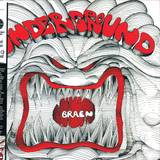
Filled with hypnotic bass lines, heavy drums and screaming fuzz guitars "Underground", the first LP of the fictitious group known as Braen's Machine, is one of the rarest and the most expensive of them all, always "reaching" sky high prices throughout the second hand vinyl market. A fast-beat jam with hammond scales and a twin lead guitar theme ("Flying") opens the A Side soon followed by "Imphormal", a classicfunk-beat-meetsfender- rhodes-and-psychedelic-guitar number. The music then switch to "thriller territories" with "Murder" which is based on prepared piano swells and a deeply hypnotic walking bass, reminiscent of the best Morricone's soundtracks for Dario Argento's movies. Two highly percussive songs complete the A Side: "Gap" is an improvised song with guitar and keyboards dwelling over an infectious drum rhythm while a marching snare and a vibraslap effect are the special features on "Militar Police".
The mood relaxes slightly on the opening of the B Side with a lazy jazz groove on "New Experience" but the rock influences are soon brought back on the following track "Fall Out". "Obstinacy" is all about keyboards with syncopated rhodes themes and distorted hammond sustained notes whilst the fuzz guitar is back again screaming through the left channel on the last song of the album, "Description". We could happly say that that was the golden age of the Italian music library. But who's behind the name "Braen's Machine" On the original cover the songs are credited to the composers Braen and Gisteri. Braen was a pseudonym often used by Alessandro Alessandroni, an extremely skilled and versatile musician, and one of Umiliani's closestcollaborators. He could write, conduct and arrange, he could sing (ever heard "Mah Na Mah Na"), he could whistle (ever heard Morricone's "For a fistful of dollars") and he could play almost anything: guitar, bass tuba, accordion, sitar and the list grows..... His first album "Alessandro Alessandroni e il suo complesso" (Sermi, 1969), had transformed the Italian library music from orchestral sound beds into the psychedelia we all love; the extremely fuzzy guitars are very "present" on "Underground" too. For a long time Gisteri's real identity was rather mysterious; often wrongly attributed to Umiliani. Gisteri was the pseudonym of Oronzo De Filippi, art name of Rino De Filippi, music supervisor to the Italian public broadcast company (RAI) between the '60s and the '70s. De Filippi composed other notable pieces such as "Riflessi" (Edipan, 1975) and "Nel mondo del lavoro" (Sermi, 1972).
De Filippi passed away few years ago but we were able to contact Alessandroni to talk about this LP. Remembering "Underground" recording session as one of the thousands he took part of, Alessandroni told us that this record was produced very quickly, in two days maximum. This was made possible by a team of wonderfully capable session musicians and the creative genius behind the mixing desk; this incredible combination helped to focus on the mood of each track even more. Unfortunately there are no liner notes but Alessandroni's memories and speculations, based on other music tracked in the same period at Soundworkshop by resident engineer Claudio Batussi, led us to identify this as the most probable lineup: Munari on drums, Majorana on bass, Vannucchi on keyboards and Alessandroni himself on guitar. For this reissue the sound has been restored and the cover art reproduced exactly as it was.