Suche:algorithmic

Styles
Alle
Martina Bertoni - Electroacoustic Works for Halldorophone LP 2x12"

For her new and most radical album »Electroacoustic Works for Halldorophone«, Martina Bertoni used the electronic instrument at EMS Stockholm to create four pieces that are massive in scale and incredibly intimate, sonically restrained and emotionally overwhelming—almost ambient and always demanding your full attention.

Martina Bertoni returns to Karlrecords with »Electroacoustic Works for Halldorophone,« her most radical album yet. The foundation for the four electroacoustic pieces was laid during a residency at Stockholm’s legendary Elektronmusikstudion (EMS) that the Berlin-based cellist and composer used to explore the curious instrument, originally designed by Halldór Úlfarsson in 2008, as an algorithmic system in order to examine tunings and the mathematical relationships between Aiming to analyse and understand their interaction beyond the composer’s control, Bertoni sought to engage more deeply with the concepts of time, tuning, and, most importantly, control. Accordingly, her four »Electroacoustic Works for Halldorophone« seem both massive in scale and incredibly intimate, sonically restrained and emotionally overwhelming— almost ambient and always demanding your full attention.

While the halldorophone—famously used by Hildur Guðnadóttir for her »Joker« score—roughly resembles a cello and can be played like one, it is an electronic instrument. The vibration of its strings is being picked up, amplified, and then routed through a speaker. This creates a feedback loop that becomes increasingly complex depending on how much gain is added to individual strings. Úlfarsson gave Bertoni a carte blanche for how to handle the instrument, but she stresses that she relied on »minimal interventions—some string strumming and plucking« that set the interactions of different sounds and frequencies into motion. »I decided to not approach it like a cellist would,« she explains. »Instead I used it as a kind of generative organ by turning it into a feedback machine, with tuned feedback triggering more feedback depending on the tuning, which was based on tetraphonic scales that I could apply on the four main strings as well as the sympathetic group of strings.«

Bertoni recorded the material in the EMS studio, later composing and arranging the four complex pieces in her home in Berlin, after which they were mixed and mastered by Ciaran O’Shea. While this can be considered a compositional abstraction process, traces of her concrete work as a performer are firmly ingrained in the music. »The halldorophone doesn’t have a line output, just a double set of speakers, which is why I recorded all sounds with two microphones in the EMS studio,« she explains. »That’s why there’s plenty of breathing sounds here and there—label owner Thomas Herbst and I jokingly refer to the album as my ›chamber music record‹.« And indeed, there is a striking sense of intimacy to these four pieces throughout which individual sounds, harmonic frequencies, and even subtle rhythmic figures seem to move both on their own accord but also according to a underlying vision that steers their interplay.

Indeed, »Electroacoustic Works for Halldorophone« is an album built on and marked by contrasts. The soothing polylogue of single sounds in the higher register on opener »Omen in G« is counterpointed by massive bass drones, while the second piece, »Nominal in D,« plays a cunning game of repetition and difference by combining thick textures with all kinds of rhythmic elements. »Fades in C«—the longest of the four pieces, clocking in at 17 minutes—unlocks the emotional potentials of the sonic qualities of the halldorophone, sounding at once serene and anthemic, and »Organon in D« closes the album by underscoring how Bertoni’s unconventional approach allows her to seamlessly transform simple, quiet tones into complex, towering walls of sound.

vorbestellen20.04.2026

erscheint voraussichtlich am 20.04.2026

23,11
Protocol SyseX - Geometria Virtual

Protocolo SysEx aka Fabio Vinuesa lanza este EP en su sello con cuatro pelotazos originales y dos remixes de Boris Divider y Heinrich Mueller.

GEOMETRÍA VIRTUAL documents a scenario in which mechanisms of control cease to function as external layers and instead become the very foundation of the system. The album does not propose a future dystopia, but rather a reality in which decision-making is automated and artificial intelligence is established as a structure of social control.Protocolo SysEx, a project by Fabio Vinuesa, is conceived as a narrative and sonic framework from which to examine the political and philosophical implications of a world governed by artificial intelligence. The release includes reinterpretations by Boris Divider and Heinrich Mueller and constitutes the first chapter of a trilogy focused on the progressive normalization of algorithmic control.

Geometría Virtual EP – Distrito 91 15

a A1 - Geometría Virtual Part I
[b] A2 - Geometría Virtual [Part II]

vorbestellen21.04.2026

erscheint voraussichtlich am 21.04.2026

17,61
Funk Assault - Soft Power

In Soft Power, Funk Assault turns their surgical precision toward the invisible forces that shape modern life - control not through force, but through aesthetics, etiquette, and algorithms. Across five tightly woven tracks, the duo dissects how obedience is engineered through desire, conformity, and digital seduction.

From the sterile luxury of Aesthetics of Desire to the algorithmic exhibitionism of Like Me, Watch Me, and the chilling calm of Obedience Spa, this EP is a reflection on how control has evolved -smoother, quieter, but no less powerful. Soft Power invites listeners to dance, reflect, and perhaps notice the strings they didn't know were there.

Auf Lager

Bei uns am Lager und sofort versandfertig

12,90
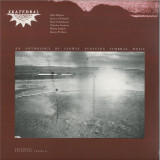
Various - XKatedral Anthology Series II 2x12"

XKatedral Anthology Series II (An Anthology Of Slowly Evolving Timbral Music), featuring exclusive music from Kali Malone, Jessica Ekomane, Mats Erlandsson, Theodor Kentros, Wilma Hultén, and Maria W Horn.

"XKatedral Anthology II is the second instalment in a series of archival releases dedicated to presenting music by composers affiliated with XKatedral working within the realm of slowly evolving harmonic and timbral music. This double-vinyl set contains an array of pieces dating from 2018 - 2020. This collection of pieces focuses on the use of synthetic sound and algorithmic composition languages as tools for precise work within the realm of spectral exploration. In addition to this, the electronic instrumentation in many of the pieces is augmented by acoustic instruments.

The first piece on side A is Kali Malone’s Music for Low Quartet. This piece is an adaptation of the composition “Rose Wreath Crown” originally released on The Sacrificial Code in 2019. In this iteration, the music is scored for two double basses played by Vilhelm Bromander and Zach Rowden, and sine tone electronics performed by Malone herself. The recording of this piece was made at EMS in 2019.

Closing side A is Jessica Ekomane’s ‘First Light’. This computer music piece focuses exclusively on digital sound, layering razor sharp synthetic textures into an otherworldly dynamic weave. The music heard here is a reworked version of a piece originally commissioned by Semibreve in 2020.

Side B contains the work ‘Hands Melt In The Sun’ by Mats Erlandsson. This composition is built from electronically processed tuned zithers and synthetically generated tones arranged in a series of chordal inversions over a sustained fundamental tone. This music, written as a love-letter to the localized drone tradition of Stockholm in the years 2008-2012, was composed and recorded in seven days while in residence at Ställbergs Gruva in Bergslagen, in the summer of 2018.

Opening the second half of the collection is Rough Draft v.7 by Theodor Kentros. Kentros’ compositional practice usually combines acoustic and electronic source material and in this piece he molds the sound of the Buchla 200 and a collection of recorded wind instruments into a molten mass of sound. In its original form, this music was presented as a multichannel immersive work and even in the current stereo configuration it retains some of that enveloping sense of depth.

The second piece on side B, Inertia, is by Wilma Hultén, who makes her debut on record here. An exclusively synthetic piece, Inertia utilizes internal digital feedback in a sealed synthetic system to manifest a harmonic field that swells and abates throughout the length of the piece, interspersed by small gestural elements.

Closing Anthology II is Maria W Horn's work ‘Dies Irae’ for female vocal quartet, pitched glass and synthesis. ‘Dies Irae’ uses a modified form of traditional tonal harmonic language to invoke an uncanny and restless middle ground between the classical western polyphonic vocal tradition and contemporary electronic music. The version heard here is a live recording from Eric Ericssonhallen in Stockholm on May 30th 2020. Performing the piece here are the vocalists Katarina Henryson, Lisa Holmgren, Vilma Ogenblad and Paula Wegmann, as well as Maria herself on glass and electronics."

vorbestellen24.04.2026

erscheint voraussichtlich am 24.04.2026

33,57

Last In: vor 2 Jahren
Starlito & Bandplay - Not The Country You Know LP2x12"

In the evolving landscape of modern Southern hip-hop, the pairing of Starlito and Bandplay stands out as a unique bridge between street-level authenticity and refined, calculated musicality. Their collaborative project, Not The Country You Know, functions less like a standard release and more as a manifesto—a masterclass in the chemistry between a seasoned, introspective lyricist and a producer who possesses an intuitive grasp of the region's pulse. It is an exploration of legacy and adaptation, capturing the tension between where they came from and where the culture is currently headed.

Bandplay, long recognized for sculpting the sonic identity of Memphis icons, brings his signature, trunk-rattling 808s to the project, yet he manages to pivot here. The production feels remarkably expansive, masterfully blending the raw, stripped-back aesthetics of classic Tennessee rap with forward-thinking textures that refuse to be confined to a single sub-genre. Complementing this, Starlito operates with his trademark mix of cynical observation and genuine vulnerability. He navigates these beats with the weary grace of an artist who has weathered the music industry's relentless cycles, treating every bar like a necessary piece of a larger, ongoing story.

The album’s title serves as a direct commentary on these shifting tides. Across the tracklist, the duo investigates the growing disparity between the romanticized South and the cold realities of the streets, alongside the inevitable evolution of the music business itself. There is no frantic chasing of streaming-era trends or algorithmic bait here; instead, the project remains a stubborn, confident assertion of artistic identity. By weaving together Starlito’s "voice-of-reason" flow and Bandplay’s evolving, genre-bending sound, Not The Country You Know challenges the listener to abandon their preconceived notions of the region, offering instead a complex, urgent vision of a South that is as haunting as it is vibrant.

vorbestellen12.06.2026

erscheint voraussichtlich am 12.06.2026

27,52
YHWH NAILGUN - 45 POUNDS

YHWH NAILGUN

45 POUNDS

12inchWHYT099LP
AD 93
23.01.2026

*Repressed on yellow vinyl

45 Pounds is a record of thrilling cacophony: whirring drums meet the sound of instruments which have been twisted and bent into new shapes, all of which are paired with the arresting growls of Zack Borzone. Across the record the four-piece re-imagine what is possible within the confines of a band set up, creating music that perfectly encapsulates the information overload of our times.

The band have become known for their stellar live performances and now with 45 Pounds they have set that electrifying feeling to record. With 45 Pounds YHWH Nailgun have created a statement that is short to cut through the modern day post-algorithmic sludge. Stay tuned for more news.

Auf Lager

Bei uns am Lager und sofort versandfertig

20,59
Random Alias - Parallax

Parallax explores the shifting boundary between human intuition and algorithmic logic, a space where two perspectives converge and blur until the center is lost. Composed through a hybrid system of voltage-controlled hardware and digital manipulation, the five tracks apply FM synthesis, granular processing, and bit-level degradation to rigid electro structures. Sequences are shaped by modulation instability and clock drift, gradually disrupting pattern integrity and simulating a loss of systemic control. Precise yet disrupted grooves hint at a deeper malfunction, as if something is corrupting the system from within. Parallax is the gap between the human who creates and the algorithm that imitates.

Auf Lager

Bei uns am Lager und sofort versandfertig

13,24
phase space - Degrees of Freedom LP

Gwenan Spearing, known for her perceptive, groove-oriented DJ sets, and more recently as a live performer working with hardware improvisation, launches a new imprint, Phase Space, with Degrees of Freedom, a debut album diving deep into generative electronics, modular systems, and real-time response. Composed and recorded in 2019-2020, the album treats constraint as creative fuel, floating between ambient,
sonic sculpture, and improvisation, mapping Gwenan’s path from rural Wales to Berlin’s outer zones of experimental sound.
Sync opens with a theme on a slow triangle wave, expanding the space as it evolves. Some Pluck explores generative counterpoint using LFOs and Euclidean rhythms. Generator I unfolds in an oscillating time where keyboard and bass circuits cross-modulate. Sleep Pressure is a lullaby for grown-ups, capturing that eerie threshold before sleep, followed by Loper, where time flows fluid and unstable. The closer, Generator II, holds machine heartbeats in delicate equilibrium before unraveling into graceful decay, a soft farewell. (That’s the Universe waving.) Degrees of Freedom is algorithmic music with a pulse: visceral, hand-wired, and built for deep listening.

Auf Lager

Bei uns am Lager und sofort versandfertig

27,31
Groof - Simulation (Oscar Mulero Remix)

This is a highly limited pressing, please order your desired quantity and we’ll see what we can supply.

We are pleased to be back with the talented Groof, the experienced producer from Madrid’s legendary electronic music scene, who is responsible for our eighth release and his debut on Kontralamakina.

We welcome you to “Simulation.” This EP/LP consists of a collection of 5 tracks that explore repetition and dynamism, with structures generated by various noise sources and algorithmic sequencing with a raw and forceful sound. It consists of excellently stomping techno rawness exercises.

Plus 1 remix by the techno legend Oscar Mulero Remix; Outstanding mind bending tools, Expertly careful Drone treatments, Stunning, deep, atmospheric but energetic Techno voyage.

vorbestellen

Der Artikel ist noch nicht erschienen. Du kannst den Artikel jetzt vorbestellen, dieser ist nach Wareneingang für dich versandbereit.

17,44
Dave N.A. - Echoes EP

Dave N.A.

Echoes EP

12inchNOID004
no•id
Release unknown

The Armenian electronic underground has been quietly brewing something visceral. After years navigating the labyrinth of electronic production from his Yerevan studio, Dave N.A. strips away the excess to reveal six raw, uncompromising cuts that pulse with quiet intensity. Not the manufactured urgency of algorithmic dance floors, but the honest tension of someone who’s spent years refining his craft while the scene evolved around him.

Following his debut ‘Altura EP’ on no•id, where collaborations with freq444 showcased his ability to merge Armenia’s electronic scene with Brussels’ underground pulse, Dave N.A. returns with ‘Echoes EP’ after the label’s necessary creative hibernation. This isn’t about comebacks or grand statements. It’s about persistence. About the kind of restless creativity that emerges when you’ve been grinding in relative obscurity, releasing on labels like Uppers and Downers, Typeless, and Elicit Records, slowly building a sound that refuses easy categorization.

The EP opens hard and unexpectedly with “BLINK,” delivering a throat-cutting and all-consuming bassline. “ECHOES” builds around atmospheric sounds and percussive elements, driven by a straightforward yet effective drum sequence. “SHADO” ventures into darker and faster territory with sparse drum programming and heavy sub-bass emphasis. Both “RUSH” and “ORB” unleash torrents of unrelenting breaks, each percussive hit landing with surgical precision as sub-bass currents pull everything forward into hypnotic repetition. “HUNTER” closes the journey, stalking into frame with predatory low-end and razor-sharp hi-hats slicing through dense atmospheric fog.

The no•id ship continues to chart its course through Brussels’ underground, prioritizing artists who value craft over hype. With Dave N.A.’s return, the label reinforces its commitment to electronic music that functions on multiple levels: cerebral yet visceral, local yet universal.

vorbestellen

Der Artikel ist noch nicht erschienen. Du kannst den Artikel jetzt vorbestellen, dieser ist nach Wareneingang für dich versandbereit.

14,50
Finetune - Impulse 2x12"

Finetune

Impulse 2x12"

exclSNGWAXLP03
SENGILEY RECORDING
Release unknown

Finetune — Impulse LP

Singeley Wax presents the third installment of the Russian Series — Finetune's "Impulse" album by electronic musician and media artist Mikhail Komisarov (Michael Dop), co-founder of Slowdance Records.

__About the Music

Finetune is a project through which Mikhail explores and experiments with a sonic palette encompassing ambient, electronic music with elements of jazz and neoclassical. His medium combines modular synthesis, acoustic instruments, field recordings, and deliberately crafted effect chains. He creates distinctive compositions that guide listeners through various emotional states.

The "Impulse" album brings together ten tracks of experimental electronica: hypnotic synthesizer sequences, polyrhythmic structures, cinematic textures, and subtly shifting modulations blend into sonic landscapes where time becomes relative.

__Art Concept

The album's visual identity is based on the multidisciplinary neuro-performance "Impulse," created at the intersection of art and neurotechnology in collaboration with neurovisualization pioneers NeuroLab, digital art studio STAIN (working with algorithmic abstraction since 2009), and physical theatre project "Dancing in the Dark" — Russia's only company featuring visually impaired artists.

During the performance, the brain activity of visually impaired dancers was captured in real-time via neurointerface and transformed into generative graphics. This visual content, born from electrical impulses of consciousness in moments of musical perception, became the foundation for the album's artwork — both static and motion graphics.

vorbestellen

Der Artikel ist noch nicht erschienen. Du kannst den Artikel jetzt vorbestellen, dieser ist nach Wareneingang für dich versandbereit.

24,33
Grischa Lichtenberger - Ostranenie LP

LIMITED VINYL COMES IN CARDBOARD SLEEVE WITH BOOKLET!
OSTRANENIE is a collection of digitally manipulated, impressionistic piano miniatures — each named after blockbuster films and TV series. Improvised late at night as a reaction against passive media consumption, these pieces function as both homage and critique, navigating the space between classical impressionism and contemporary digital manipulation. They don’t just deconstruct traditional piano expression; they interrogate the emotional stakes of sound in an era where immersion culture flattens meaning and algorithmic logic erodes agency.

The album’s title references the Russian formalist Viktor Shklovsky’s concept of “ostranenie” (ɐstrɐˈnjenjɪj, estrangement/defamiliarization), a term he introduced in the early 1920s to describe art’s role in resisting the indifference of habitual perception.

“And so, held accountable for nothing, life fades into nothingness. Automation eats away at things, at clothes, at furniture, at our wives, and at our fear of war.”
—Viktor Shklovsky, Theory of Prose (1925)

Shklovsky saw art as a way to break through the anesthetizing effects of routine, stripping away the layers of habit that dull our senses. By making the familiar strange, art reclaims perception from the mechanical and the automatic. His argument wasn’t just a theoretical exercise — it was a response to a world rapidly consumed by industrialization, war machines, and the alienation of a technologically dominated modern life. In this context, he positioned artistic technique as something autonomous, distinct from mere social criticism or psychological reflection. Art seeks to remove “...the crust that the world of things deposits on our senses, with routine’s unending murder of the real.” Ben Ehrenreich on Serena Vitale’s Making Strange (The Nation, 2013)

This tension—between revolutionary/artistic and industrial technologies—defined the 20th century, and it continues to resonate today. The mechanization and automation that fueled the First World War’s devastation, alongside the social and economic turbulence of the 1920s, became central to the era’s self-conception. But just as technology was a source of alienation, it was also positioned as an agent of radical change. As the shock of modernity disrupted the human condition, it also became the driving force behind an ideological utopia — one that ultimately deformed into political totalitarianism — a paradox that remains unresolved.

OSTRANENIE plays within this contradiction. The music shifts seamlessly between an uncanny black MIDI dismantling of traditional piano virtuosity and moments of raw, fragile intimacy. The result is a work that resists automatic anonymity while questioning what it means to create in an era where the technological mediation of sound — and experience itself — is unavoidable: Art in the age of its technological constructedness.

Auf Lager

Bei uns am Lager und sofort versandfertig

30,05
LNS & DJ Sotofett - Globus Trax

Lns&Dj Sotofett

Globus Trax

12inchTRESOR375
Tresor
06.06.2025

Tresor resident DJs LNS and DJ Sotofett have for some years been developing a style at the club‘s Globus floor, and their new EP is a die cut of exactly the classic techno, electro, and house music they play.
Here are no productions drenched in reverb, no hi-fi obsessions or generic algorithmic patterns – this is Globus Trax, the duo's third release on Tresor Records, four tracks consisting of real TR-909 workouts, rude and driving basslines, live runs through the mixing desk, and a Blake Baxter cover version with LNS on vocals.
LNS & DJ Sotofett programmed an EP to perfectly fit their warehouse style of DJing, bringing out colour and variation in a spectrum more similar to a club compilation than a dogmatically reduced concept. With a single repeated vocal sample, Globus Trax opens bombastically with ClickClickClick, a dub -infused UK garage house track anyone in the world can easily describe in the course of a second.
Following this comes Gearbox which is a hefty slab of big room electro featuring a centerpiece arpeggio and the warmest harmonic pads on the EP's four tracks, which not-so-subtly makes reference to the pioneering band that shares a name with Globus and Tresor's home, the Kraftwerk.
The house vibe returns on Destination 909, which is nothing but a manifesto for the TR-909, where the beloved drum machine's jacking beats meet galactic strings and synthetic bass, only to be ripped apart in a slamming break that sees the machine take centre stage as it cuts in-and-out of the mix, again a clear nod to the duo’s sets in the club.
LNS steps up on vocal duties and DJ Sotofett keeps the 909 running for their final cut, taking a deeper dive into the realms of classic techno and paying tribute to “The Prince of Techno” Blake Baxter by covering his Reach Out originally released on Tresor Records in 1995.
The 12” was cut by DJ Sotofett himself at Manmade Mastering, where he resurrects the lost art of late-90s loud cuts with sonic presence and punch, optimal for the club-focused 12” format, and is the first to come in the new Tresor Sleeve, boasting an embossed logo on either side.

Auf Lager

Bei uns am Lager und sofort versandfertig

8,82
James Tenney - Postal Pieces

Since its founding back in 2014, Blume has carved a unique place in cultural landscape, issuing free-standing works, spanning the historical and contemporary, that represent singular gestures of creativity within the field of experimental sound. Joining their broad efforts in building networks of context and understanding that already includes the works by Werner Durand, Sarah Hennies, Bruce Nauman, John Butcher, Jocy de Oliveira, Mary Jane Leach, Valentina Magaletti, Alvin Curran, Julius Eastman, Alvin Lucier, and others, Blume return with the first ever vinyl release to attend to James Tenney’s legendary “Postal Pieces”, Marking the first ever appearance of five of the suite’s works - “Maximusic, for Max Neuhaus” (1965), “Having Never Written a Note for Percussion, for John Bergamo” (1971), “FFor Percussion Perhaps, or... Night, for Harold Budd” (1971), “Cellogram, for Joel Krosnick” (1971), and “Beast, for Buell Neidlinger” (1971) - on vinyl, drawing upon recordings made in 2003, by the Amsterdam based ensemble, The Barton Workshop, under the direction of James Fulkerson. Among the most important and highly regarded efforts in Tenney’s canon of compositions, as well as within the history of 20th Century music, these five pieces represent a crucial bridge between Fluxus-oriented conceptualism, minimalism, and the microtonal complexities that would emerge in their wakes. Issued in a highly limited vinyl edition of 300 copies, it includes exact replicas of the original postcard graphic scores, and features newly commissioned liner notes by Bradford Bailey, Blume’s brand new edition takes great steps to centring Tenney at the eye the storm during some of experimental music’s most important years.

A student of composition under Carl Ruggles, John Cage, Harry Partch, and Edgard Varèse - remaining close to all of them, and later performing in both Cage and Partch’s ensembles - as well as acoustics, information theory, and tape music composition under Lejaren Hiller, James Tenney carved a wide path within the contexts of experimental and avant-garde music during the second half of the 20th Century. Not only was he a tangible bridge between the generations of composer’s who laid much of the groundwork and the later movements of Fluxus, Minimalism, and the broader practices of experimental music, but Tenney is credited as having contributed one of the earliest applications of gestalt theory and cognitive science to music in 1961, before helping to pioneer the field of computer music at Bell Labs, during the following years.

Over the course of his career, Tenney produced music of such complexity and sophistication - paying little mind to the seductions of taste or dominant tropes of its own moment - that his work and legacy have largely remained under-recognised by the broader publics that have attended to most of his peers. Perhaps more pertinently, the body of work he produced can be perceived as too varied and complex to fit neatly within standard creative histories or critical frameworks, comprising harmonically complex works for acoustic instrumentation, musique concrète, the groundbreaking 1961 “plunderphonic” composition, “Collage No.1 (Blue Suede) (for tape)” - sampling and manipulating a recording of Elvis Presley - as well as algorithmic and computer synthesized music. Even here, within this single decade, a clear image of Tenney’s endeavours remains elusive. In addition to penning important theoretical texts, he collaborated and / or played with Max Neuhaus, La Monte Young, Steve Reich, Philip Glass, Michael Snow, Terry Riley, and numerous others; was an active member of Fluxus; starred in and composed music for Stan Brackage’s films; regularly worked with the Judson Dance Theater; co-founded and played in the ensemble, Tone Roads, with Malcolm Goldstein and Philip Corner; was a vocal advocate of the works of Conlon Nancarrow and Charles Ives, playing a significant part in the revival of both of their legacies; and regularly collaborated as a composer, musician, and actor with his then-partner, the artist Carolee Schneemann, notably co-starring in her film, “Fuses” (1965) and her legendary 1964 performance, “Meat Joy”, as well as creating sound collages for her films “Viet Flakes” (1965) and “Snows” (1970). Curiously, for a relatively absent figure in the historical and critical narratives, Tenney seems to have been the thread that bound multiple generations and disciplines of avant-garde practice in New York during this period.

Tenney was deeply invested in the quality and perception of sound. By 1970, this led him back to composing exclusively for acoustic instrumentation (though sometimes processed with tape delay) - in most cases utilising non-well tempered tuning systems to explore harmonic perception - a practice that he would remain steadfast to for the remainder of his life. This development roughly corresponded with his relocation to California, at the outset of the 1970s, following an invitation to teach at the newly founded music department at California Institute of the Arts (CalArts) in Valencia. Finding himself in regular contact with the harpist Susan Allen and the artist Allison Knowles, as well as at a great distance from many of his friends, in 1971 he completed (with the assistance of Knowles and Marie McRoy) “The Postal Pieces”, a project he had begun in 1965.

A suite of eleven compositions, “The Postal Pieces”, stands among Tenney’s well known and celebrated compositions, and illuminates the dualities embraced by the composer, notably his use of sound to develop consciousness in and of others, and his willingness to draw on elements and observations of everyday life; citing his strong dislike of writing letters as being the primary inspiration for their inception. In lieu, he conceived to send his friends - John Bergamo, Allison Knowles, Pauline Oliveros, La Monte Young, Harold Budd, Philip Corner, Joel Krosnick, Buell Neidlinger, Susan Allen, Max Neuhaus, and Malcolm Goldstein - short scores on the back of postcards. The suite is composed around three themes: Tenney’s concept of swell form (utilizing repetition and progressing through a structurally symmetrical arch), intonation, and the desire to produce “meditative perceptual states”.

A hugely important addition to Blume’s ever expanding efforts in context building and networks of creative practice, James Tenney’s “Post Pieces” is issued in a highly limited vinyl edition of 300 copies, which includes a exact replicas of the original postcard graphic scores, and features newly commissioned liner notes by Bradford Bailey.

Auf Lager

Bei uns am Lager und sofort versandfertig

19,96
Versalife - Technofeudalism

Versalife

Technofeudalism

12inchTRUST046
Trust Records
31.05.2024

One of the most prolific electro artists of his generation, Boris Bunnik aka Versalife, returns to TRUST with an exceptional soundtrack for the algorithmic hellscape we live in. As neofeudalist power structures solidify around us, Versalife's tracks remain in constant flux. Subtle tonal shifts and undulating synth currents create tension and beauty while crisp machine beats provide the clockwork rhythm for humanity's march into the singularity.

Auf Lager

Bei uns am Lager und sofort versandfertig

12,56
Various - Breaking Standards

Renegade Methodz presents its various artists 'Breaking Standards' series.

Making its debut with the first edition the four track release is serving as a reflection of modern techno by introducing tracks from artists that are appearing in the label for the very first time as well as a familiar contributor that is making his return.

The Breaking Standards series aims directly at the dance-floor, curated carefully to keep the music quality high and showcase the work of new and established artists that with their style are keeping the genre modern and fresh without losing the essence of what makes this music timeless.

Auf Lager

Bei uns am Lager und sofort versandfertig

13,03
Tacit Group - Tacit Group 2X12"

Tacit Group

Tacit Group 2X12"

2x12inchWESA001
Wesa
24.06.2022

Clear Vinyl

Tacit Group is an audio-visual group founded in 2008 with a vision of creating new art for the 21st century. Based in Seoul but working globally, the group comprises composer Jaeho Chang and electronic musician Gazaebal(Lee Jinwon).

With audio-visual art as its core content, Tacit Group has expanded in a contemporary and experimental way in multimedia performances, interactive installations, and music installations. Representative works such as ‘Hun-Min-Jeong-Ak,’ ‘Game Over,’ ‘Morse ㅋung ㅋung,’ combine a systematic worldview weaved through intuitive materials and technology inspired by normal everyday activities such as games and text chatting. In particular, works that utilize the beauty and communica- tion power of characters are among their most striking.

“It’s like wind chimes,” says Tacit Group’s Jeaho Chang. “The creator makes the pipes, but the wind makes the music.” He’s talking about the algorithmic music that Tacit Group creates. Jaeho and Gazaebal create audio/visual systems using code that the pair work within to unleash their utterly compelling AV performances, each show, each track, as unique as a snowflake. The pair met at Korea National University of Arts in 2006. Jaeho Chang was a media installation artist and composer who’d studied classical composition in Korea and electronic music at Den Haag’s Conservatoire. Gazaebal, who’d moved to the US as a teen, had worked at the renowned Quad group studios as a sound engineer, recording acts including Rage Against The Machine, Wu Tang and Janet Jackson. Returning to Korea, he had found success as a K-Pop producer, (founding the act Banana Girl, and writing their No.1 Korean hit ‘Shake Your Ass’) and DJing under the moniker Gazaebal, before deciding to go ‘back to school’ to learn to create more challenging music.
The quiet and reserved Jae and the more outgoing Gazaebal bonded over a shared vision, forming Tacit Group in 2008. And until recently, everything they have done has been through the medium of their globally acclaimed live shows, playing all over the world from Lincoln Center in NY, the Museum of Contemporary Art in Chicago, MMCA (National Museum of Modern and Contemporary Art) and Nam June Paik Art Center in Korea, Aarhus Festival in Denmark, Stereolux in France and NYU Abu Dhabi.

Each show an utterly unique and compelling event, a synthesis of music and visual art that has echoes of the concept of synesthesia: “we love the idea that the audience can ‘see’ the music.” says Gazaebal, “the way that you can hear a painting like Edvard Munch’s ‘The Scream’.” The frameworks and systems are created in advance using code such as C++ and max/M- SP(sometimes combined with analog and modular synthesizers), often growing out a of a simple idea (one of their first composi- tions, ‘Game Over’ explored the idea of a Tetris gameplay as a musical score) while on stage the pair react to the audience, creating new inputs and variables that can lead the performance in ways that are unexpected and even self sustaining - some of their installations could in theory continue to evolve and run on into infinity.

For Tacit Group, the process is as important as the outcome, and every bit as fascinating for the audience, who’ve been known to react like the crowd at a rock band gig to tracks / installations like ‘Hun-Min-Jeong-Ak’ which sees abstract geometric shapes based on the Korean alphabet evolve (through the process of live text interchanges between the pair) to become almost an immersive call and response.With that in mind, the duo have long been reluctant to commit to the idea of releasing via a ‘fixed medium’ it was actually the release of an acclaimed (and beautifully designed) book Tacit.print0_Anthology that convinced them to share their work more widely through an album.

Auf Lager

Bei uns am Lager und sofort versandfertig

20,13
Metamethod - Earthshock Ep

NTD005 adds a new artist to the collective - Metamethod aka Simon Haynes.From Adelaide, Australia, Metamethod (Undefined Recordings) returns from a long hiatus with a new EP.
The product of much time refining sounds and ideas, both tracks on the EP are essential synthesis. Sounds primarily sculpted from scratch, resulting in biochemical rhythms and algorithmic loops.
A must have record for anyone wanting to add some raw energy to their collection.

Auf Lager

Bei uns am Lager und sofort versandfertig

8,61
Signal Preist - The Marginal And Unconventional EP

DFR is back with a rather mysterious alias first appearance. Signal Priest delivers four dance-floor workouts that intersect between techno, trance and electro with admirable sense. TIP

vorbestellen

Der Artikel ist noch nicht erschienen. Du kannst den Artikel jetzt vorbestellen, dieser ist nach Wareneingang für dich versandbereit.

13,24
IADI - Under My Skin

IADI

Under My Skin

12inchNEOLIFE003
Neo Life
03.04.2026out soon

Between flesh and silicon. “Under My Skin” (2026) is the first album by IADI, released by Neo Life. A record like few
others, highly conceptual, cover art included. Its essence lies in the folds of the increasingly ambiguous relationship
between man and machine, where the former designs the latter and, perhaps without fully realizing it, is gradually
destined to adapt and be reprogrammed by it. Each track of “Under My Skin” is, in fact, a sort of interface, connector, or
any other imaginative point of contact between two creative phases, amid emotional impulses and binary calculations.
The sonic architecture oscillates between analog warmth and algorithmic coldness, constructing landscapes in which
pulsating synthesizers and mechanical rhythms seem to question each other. There's no linear narrative, but rather a
progressive immersion in a zone of near-friction, where the comfort of technology coexists with more than a faint
musical uneasiness, like a background noise that never ceases to remind you who's truly in charge. In “Under My Skin”,
the machine is neither an enemy nor a simple instrument: it's a real presence, intimate, even tactile, amplifying desires,
fears, and dreams of dawns beyond the digital realm. Intelligent dance music. Less noise, more sensations. Electronic,
but profoundly human.
The final result, then, is a music project that speaks to the present, yet sounds like an X-ray of the future, capturing that
fragile moment when humanity and technology stop observing each other from afar and begin to merge, track after
track. It's no coincidence that IADI's album opens with “Impulse”, an immediate expression of an electrical impulse, for
both humans and machines, which is also the language of the nervous system, as fast as it is vital—pure energy and
rhythm, a track as intense as it is irregular. And after this introduction, it's the turn of the equally erratic “Axon”, whose
title describes the neuron that transmits the signal over distance, telling the listener to sit back and relax for a new
journey through the notes toward the more melodic “Cortex”. The cerebral cortex, the ultimate seat of thought and
memory, becomes the source from which the musical flow of the first part of the work is drawn.
Then, suddenly, an automatic, or instinctive, response to the constant succession of impulses: “Reflex”, or zerotemperature techno, with a fragmented pace, featuring vocal samples, breaks, and restarts. In the producer's
imagination, the subsequent, and conversely placid, “Neuron” represents the emotional core of the second part of the
work, providing a kind of respite from the seething vibrations. While the neuron is the basic unit of the nervous system,
the synapse is the functional connection point between one neuron and another effector cell, essential for the
transmission of nerve impulses and communication in the nervous system, enabling functions such as learning and
movement. Likewise, a track like “Synapse” once again illuminates the path traced by IADI. The more experimental and
streamlined “Static” instead suggests true ordered chaos. “Dreamstate” is the conclusion suspended in the void, relating
to that dreamlike state between waking and sleeping, where consciousness fades toward infinity and visions begin. Pure
fading into the subconscious. Eternal return to where it all began. Dancing is a form of consciousness. Every beat is a
question. IADI, however, holds all the answers you need.

vorbestellen

Der Artikel ist noch nicht erschienen. Du kannst den Artikel jetzt vorbestellen, dieser ist nach Wareneingang für dich versandbereit.

21,81
Artikel pro Seite:
N/ABPM
Vinyl