Longtime Daptone Hammond ace, Adam Scone was seduced when his travelling performances brought him from Brooklyn, New York to Brooklin, Brasil, where he found a trove of new love and music. Produced by Bosco Mann, and featuring Jimmy James (True-Loves, Delvon Lamarr Organ Trio) on guitar and Neal Sugarman (Sugarman 3, Sharon Jones and the Dap-Kings) on tenor sax the group took this newfound inspiration into the studio and tracked some of the freshest soulful music we've heard in some time.
With help from his intergalactic choir, the opening track, "Cold 40's", leaps out of the speakers with the screaming organ sound that has put Scone on the short list of goto organ players. The Hammond then gives way to a dreamy, funky groove that's perfectly seasoned with ethereal background vocals that will transport you to a place where summer is on repeat. "Brooklyn to Brooklin” brings you deep into a fever-dream of tropical rhythms and seductive flourishes of psychedelia, sure to delight dancers and dreamers alike. Come take a trip!
Tracklisting
Search:ali king
Eric Clapton, one of music’s most influential and successful recording artists, joined Reprise Records in 1983, launching a prolific period that spans 30 years and encompasses some of his most celebrated work. This limited edition, 12-LP boxed set revisits Clapton’s first six albums for Reprise along with an LP exclusive to this collection that features rarities from the era, including a previously unreleased remix of “Pilgrim” by co-writer and long-time Clapton producer Simon Climie.
The Complete Reprise Studio Albums – Volume I contains newly remastered versions of six studio albums pressed on 180-gram vinyl: Money and Cigarettes (1983) as a single LP, and Behind the Sun (1985), August (1986), Journeyman (1989), From the Cradle (1994), and Pilgrim (1998) as double-LPs. Behind The Sun and August were originally released as single LPs; both are now 3-sided double albums to avoid long LP sides and to maximize the audio quality.
The final LP in the collection, Rarities (1983-1998) brings together eight rare recordings from this era, including live versions of “White Room” and “Crossroads” that were both featured on the B-side on the 1987 single “Behind The Mask.” Another B-side, “Theme From A Movie That Never Happened” (Orchestral), appeared in 1998 on the Grammy winning single, “My Father’s Eyes.”, and a cover of Albert King’s “Born Under A Bad Sign” (an outtake from Grammy winning album From The Cradle).
All the music included in this collection was mastered by Bob Ludwig at Gateway Mastering and the lacquers for the LPs were cut by Chris Bellman at Bernie Grundman Mastering.
Volume I spans 15 years and touches on some of Clapton’s biggest studio albums. It begins with Money and Cigarettes, the guitarist’s eighth solo studio album, which he co-produced with Atlantic Records’ legend Tom Dowd. Released in 1983, it reached the Top 20 in the U.S. and the U.K. and introduced the hit single “I’ve Got A Rock ’n’ Roll Heart.”
Clapton worked with Phil Collins to produce his next album, Behind the Sun, which peaked at #8 in the U.K. The album would earn platinum-certification in the U.S. thanks to hits like “Forever Man” and “She’s Waiting.” Collins returned to co-produce the next album, August, as well. Certified gold in the U.S., it featured a trio of Top 10 singles – “Miss You,” “Tearing Us Apart,” (a duet with Tina Turner) and the #1 smash, “It’s In The Way That You Use It.” Clapton co-wrote the latter with Robbie Robertson and co-produced the track with Dowd. The song was also featured in The Color of Money, the 1986 blockbuster film starring Paul Newman and Tom Cruise.
Journeyman, Clapton’s 1989 follow-up, reached #2 in the U.K. where it was certified platinum. An international sensation, the record was certified platinum in Canada and gold in Argentina, Australia, France, Japan, Netherlands, New Zealand, Spain, Sweden, and Switzerland. The album was certified double platinum in the U.S., scoring #1 hits on the Mainstream Rock charts with “Pretending” and the Grammy winning single “Bad Love.” The album had two more Top 10 hits in America with “Before You Accuse Me” (#9) and “No Alibis” (#4).
Following the runaway success of his 1992 live album Unplugged, Clapton returned in 1994 with From The Cradle. A blues covers album, it featured his versions of songs recorded by some of the bluesmen who influenced him, including Robert Johnson, Howlin’ Wolf, Muddy Waters, Freddie King and more. The album was certified triple-platinum in the U.S., where it topped the Billboard 200. It also reached #1 in the U.K., making it his only #1 album in the U.K. to date. In addition, From The Cradle won the Grammy Award for Best Traditional Blues Album.
The final release on VOLUME I is Pilgrim, Clapton’s 1998 Grammy Award winning 13th solo studio album. It reached the Top 10 in more than 20 countries, including the U.S. (#4) and the U.K. (#3). A passion project for Clapton, the album was certified platinum in America thanks to hit singles like, “My Father’s Eyes,” “Circus,” “Born In Time” (penned by Bob Dylan) and the title track.
Money and Cigarettes (1983)
• Everybody Oughta Make A Change
• The Shape You’re In
• Ain’t Going Down
• I’ve Got A Rock ’n’ Roll Heart
• Man Overboard
• Pretty Girl
• Man In Love
• Crosscut Saw
• Slow Down Linda
• Crazy Country Hop
Behind the Sun (1985)
• She’s Waiting
• See What Love Can Do
• Same Old Blues
• Knock On Wood
• Something’s Happening
• Forever Man
• It All Depends
• Tangled In Love
• Never Make You Cry
• Just Like A Prisoner
• Behind The Sun
August (1986)
• It’s In The Way That You Use It
• Run
• Tearing Us Apart
• Bad Influence
• Walk Away
• Hung Up On Your Love
• Take A Chance
• Hold On
• Miss You
• Holy Mother
• Behind the Mask
Journeyman (1989)
• Pretending
• Anything For Your Love
• Bad Love
• Running On Faith
• Hard Times
• Hound Dog
• No Alibis
• Run So Far
• Old Love
• Breaking Point
• Lead Me On
• Before You Accuse Me
From the Cradle (1994)
• Blues Before Sunrise
• Third Degree
• Reconsider Baby
• Hoochie Coochie Man
• Five Long Years
• I’m Tore Down
• How Long Blues
• Goin’ Away Baby
• Blues Leave Me Alone
• Sinner’s Prayer
• Motherless Child
• It Hurts Me Too
• Someday After A While
• Standin’ Round Crying
• Driftin’
• Groaning The Blues
Pilgrim (1998)
• My Father’s Eyes
• River Of Tears
• Pilgrim
• Broken Hearted
• One Chance
• Circus
• Goin’ Down Slow
• Fall Like Rain
• Born In Time
• Sick And Tired
• Needs His Woman
• She’s Gone
• You Were There
• Inside Of Me
Rarities Vol. 1 (2022)
• Stone Free
• Crossroads – Live
• White Room – Live
• Theme From A Movie That Never Happened (Orchestral)
• Pilgrim – Remix *
• 32-20 Blues – Live
• County Jail Blues – Live
• Born Under A Bad Sign*
* previously unreleased
- 1: Selah Sue - This World
- 2: Jordan Rakei - Say Something
- 3: Anaiis & Azekel - Learn To Love
- 4: Sarah Mccoy - Beautiful Stranger
- 5: Al Jarreau - Lean On Me
- 6: Greyboy & Quantic Feat. Sharon Jones - Got To Be A Love
- 7: Gil Scott-Heron - Lady Day And John Coltrane
- 8: Alice Russell & Tm Juke - Hurry On Now
- 9: Mysie - In My Mind
- 10: Marvin Gaye - (I'm Afraid) The Masquerade Is Over
- 11: T Om Misch - It Runs Through Me (Feat. De La Soul)
- 12: Júníus Meyvant - Beat Silent Need
- 13: Aloe Blacc & King Most - With My Friends
- 14: Terry Callier - Running Around (Fug City Mix)
- 15: Otis Junior & Dr.dundiff - The
- 16: Kimberose - I'm Sorry
- 17: Aaron Neville - Hercules
- 18: Jamie Lidell - Another Day
- 19: Sam Cooke - (What A) Wonderful World
- 20: Normanton Street - Take A Walk With Me
- 21: Moonchild - Cure
- 22: Asa - The Beginning
- 1: The King For A 000 Years
- 2: The Invisible Man
- 3: Born On Judgment Day
- 4: Pleasure Drone
- 5: Mrs. God
- 6: Silent Rain
- 7: Occasion Avenue
- 8: Light The Universe
- 9: Do You Know What You Are Fighting For
- 10: Come Alive
- 11: The Shade In The Shadow
- 12: Get It Up
- 13: My Life For One More Day
- 14: Run (The Name Of Your Enemy)
- 15: Revolution
red orange/white marbled vinyl[32,73 €]
After the release of their highly successful self-titled album in summer 2021 (#1 in Germany and Spain etc.), HELLOWEEN -- one of the most respectable German metal exports and pioneers of German melodic speed metal -- are finally bringing their new anthems to the packed arenas, leading them all around the globe with their »United Forces« tour. The creators of the albums »Keeper Of The Seven Keys, Pt. I & II« (87‘/88‘), which are considered to be among the most successful German metal records of all time and are reckoned internationally as absolute milestones of power metal, haven’t only cemented but even expanded their status as giants of the scene. Caused by the pumpkinheads‘ aforementioned triumphant wave of success, the group’s back catalogue albums are also more in demand than ever which is why Atomic Fire are now set to release a series of brand new vinyl editions including the following hot HELLOWEEN records: »The Dark Ride« (2000), »Rabbit Don’t Come Easy« (2003), »Keeper Of The Seven Keys - The Legacy« (2005), »Gambling With The Devil« (2007), »Straight Out Of Hell« (2013), »My God-Given Right« (2015), and last but not least their latest offering »Helloween« (2021).
There’s no escaping the motherlode - that eternal continuum of high drama and overheated amp stacks fit to raise the pulse and revivify the spirits. It’s merely an unmistakable band chemistry that transforms base hard rock into gemstones, and this process is an increasingly rare phenomenon in the here and now. Luckily for Stockholm’s alchemists LUGNET, they are one of the few. Here in these steamrollering grooves and strident anthems is just the kind of swagger and bravado on which rock built its foundations in the ‘70s, yet without any of the cliches or the bloated self-importance. The roots of LUGNET may be visible to see, and the primal stomp of early Deep Purple, the apocalyptic sermonising of Black Sabbath and the cinematic majesty of Rainbow can easily be detected in the almighty sturm-und-drang. Yet this sound is delivered with charisma and maverick energy that effortlessly summons fresh vibrant life to a classic form. The spark that lit LUGNET originates in 2009, when Fredrik Jansson-Punkka (also drummer of Angel Witch, and whose storied history includes stints in Witchcraft, Abramis Brama and Count Raven) met bassist Lennart ‘Z’ Zethzon at Sweden Rock Festival and the two first discussed getting together to jam. Three years later this finally came to fruition and guitarists Bonden Jansson and Mackan Holten joined the fray, alongside vocalist Roger Solander. An original plan to play ‘70s blues-rock with Swedish lyrics was ultimately warped and transformed into the monumental attack of 2016’s self-titled debut proper on Pride & Joy Music. The road to ‘Nightwalker’ saw changes afoot in the band, as Solander was replaced by the soulful pipes of Johan Fahlberg, who matches the swashbuckling charm of the Dio/Coverdale tradition with flourishes and personality all his own, whilst Bonden Jansson made way for wunderkind new guitarist Matti Norlin. This was a quantum leap on from the debut, replete with fiery interplay and incisive song writing, from the slow Zeppelin-esque catharsis of ‘Death Laughs At You’ to the monstrous ‘Stargazer’-esque grandeur of the mellotron-assisted finale ‘Kill Us All’. The aftermath saw Lugnet traverse from strength to strength, a notable highlight being packing out their tent at Sweden Rock Festival in 2018 even whilst a certain Birmingham-birthed Prince Of Darkness himself occupied the main stage across the field. Michael Linder (formerly of Troubled Horse) soon replaced Mackan Holten, and this line-up has subsequently amassed enough material for two albums, with all members throwing their hat into the ring song writing-wise. One of these ‘Tales From The Great Beyond’ has already been recorded at SolnaSound Recording with the dream-team of Simon Johansson (Wolf/ Soilwork) and Mike Wead (King Diamond/ Mercyful Fate) at the helm / mixed by Marcus Jidell (Avatarium/ Candlemass). Just like for the debut album, the front cover artwork was designed by Vance Kelly. Whatever the future holds for Lugnet, only a fool would bet on the result not being a spectacular explosion of righteousness. This machine is firing on all cylinders, and rockers of all persuasions would be well advised to get on board or get out of the way. Track listing: Still A Sinner; In Harvest Time; Another World; Out Of My System; Svarv; Eaten Alive; Pale Design; I Can’t Wait; Black Sails; Tåsjö Kyrkmarsch
- A1: Rock This Mother
- A2: Talk To Me Girl
- A3: You Can Find Me
- A4: Check This Out
- A5: Jesus Going To Clean House
- A6: Hope You Understood
- A7: Is It What You Want
- A8: Love Is Everlasting
- A9: This Is Hip-Hop Art
- A10: Opposite Of Love
- A11: Do You Know What I Mean
- B1: Saving All My Love For You
- B2: Look Out Here I Come
- B3: Girl You Always Talking
- B4: Have A Great Day
- B5: Take My Hand
- B6: I Need Your Love
- B7: Your Town
- B8: Talk Around Town
- B9: Booty Head/Take A Little Walk
- B10: I Love My Mama
- B11: I Never Found Anyone Like You
Cassette[11,72 €]
As the sun sets on a quaint East Nashville house, a young man bares a piece of his soul. Facing the camera, sporting a silky suit jacket/shirt/slacks/fingerless gloves ensemble that announces "singer" before he's even opened his mouth, Lee Tracy Johnson settles onto his stage, the front yard. He sways to the dirge-like drum machine pulse of a synth-soaked slow jam, extends his arms as if gaining his balance, and croons in affecting, fragile earnest, "I need your love… oh baby…"
Dogs in the yard next door begin barking. A mysterious cardboard robot figure, beamed in from galaxies unknown and affixed to a tree, is less vocal. Lee doesn't acknowledge either's presence. He's busy feeling it, arms and hands gesticulating. His voice rises in falsetto over the now-quiet dogs, over the ambient noise from the street that seeps into the handheld camcorder's microphone, over the recording of his own voice played back from a boombox off-camera. After six minutes the single, continuous shot ends. In this intimate creative universe there are no re-takes. There are many more music videos to shoot, and as Lee later puts it, "The first time you do it is actually the best. Because you can never get that again. You expressing yourself from within."
"I Need Your Love" dates from a lost heyday. From some time in the '80s or early '90s, when Lee Tracy (as he was known in performance) and his music partner/producer/manager Isaac Manning committed hours upon hours of their sonic and visual ideas to tape. Embracing drum machines and synthesizers – electronics that made their personal futurism palpable – they recorded exclusively at home, live in a room into a simple cassette deck. Soul, funk, electro and new wave informed their songs, yet Lee and Isaac eschewed the confinement of conventional categories and genres, preferring to let experimentation guide them.
"Anytime somebody put out a new record they had the same instruments or the same sound," explains Isaac. "So I basically wanted to find something that's really gonna stand out away from all of the rest of 'em." Their ethos meant that every idea they came up with was at least worth trying: echoed out half-rapped exhortations over frantic techno-style beats, gospel synth soul, modal electro-funk, oddball pop reinterpretations, emo AOR balladry, nods to Prince and the Fat Boys, or arrangements that might collapse mid-song into a mess of arcade game-ish blips before rallying to reach the finish line. All of it conjoined by consistent tape hiss, and most vitally, Lee's chameleonic voice, which managed to wildly shape shift and still evoke something sincere – whether toggling between falsetto and tenor exalting Jesus's return, or punctuating a melismatic romantic adlib with a succinct, "We all know how it feels to be alone."
"People think we went to a studio," says Isaac derisively. "We never went to no studio. We didn't have the money to go to no studio! We did this stuff at home. I shot videos in my front yard with whatever we could to get things together." Sometimes Isaac would just put on an instrumental record, be it "Planet Rock" or "Don't Cry For Me Argentina" (from Evita), press "record," and let Lee improvise over it, yielding peculiar love songs, would-be patriotic anthems, or Elvis Presley or Marilyn Monroe tributes. Technical limitations and a lack of professional polish never dissuaded them. They believed they were onto something.
"That struggle," Isaac says, "made that sound sound good to me."
In the parlance of modern music criticism Lee and Isaac's dizzying DIY efforts would inevitably be described as "outsider." But "outsider" carries the burden of untold additional layers of meaning if you're Black and from the South, creating on a budget, and trying to get someone, anyone within the country music capital of the world to take your vision seriously. "What category should we put it in?" Isaac asks rhetorically. "I don't know. All I know is feeling. I ain't gonna name it nothing. It's music. If it grabs your soul and touch your heart that's what it basically is supposed to do."
=
Born in 1963, the baby boy of nine siblings, Lee Tracy spent his earliest years living amidst the shotgun houses on Nashville's south side. "We was poor, man!" he says, recalling the outhouse his family used for a bathroom and the blocks of ice they kept in the kitchen to chill perishables. "But I actually don't think I really realized I was in poverty until I got grown and started thinking about it." Lee's mom worked at the Holiday Inn; his dad did whatever he had to do, from selling fruit from a horse drawn cart to bootlegging. "We didn't have much," Lee continues, "but my mother and my father got us the things we needed, the clothes on our back." By the end of the decade with the city's urban renewal programs razing entire neighborhoods to accommodate construction of the Interstate, the family moved to Edgehill Projects. Lee remembers music and art as a constant source of inspiration for he and his brothers and sisters – especially after seeing the Jackson 5 perform on Ed Sullivan. "As a small child I just knew that was what I wanted to do."
His older brother Don began musically mentoring him, introducing Lee to a variety of instruments and sounds. "He would never play one particular type of music, like R&B," says Lee. "I was surrounded by jazz, hard rock and roll, easy listening, gospel, reggae, country music; I mean I was a sponge absorbing all of that." Lee taught himself to play drums by beating on cardboard boxes, gaining a rep around the way for his timekeeping, and his singing voice. Emulating his favorites, Earth Wind & Fire and Cameo, he formed groups with other kids with era-evocative band names like Concept and TNT Connection, and emerged as the leader of disciplined rehearsals. "I made them practice," says Lee. "We practiced and practiced and practiced. Because I wanted that perfection." By high school the most accomplished of these bands would take top prize in a prominent local talent show. It was a big moment for Lee, and he felt ready to take things to the next level. But his band-mates had other ideas.
"I don't know what happened," he says, still miffed at the memory. "It must have blew they mind after we won and people started showing notice, because it's like everybody quit! I was like, where the hell did everybody go?" Lee had always made a point of interrogating prospective musicians about their intentions before joining his groups: were they really serious or just looking for a way to pick up girls? Now he understood even more the importance of finding a collaborator just as committed to the music as he was.
=
Isaac Manning had spent much of his life immersed in music and the arts – singing in the church choir with his family on Nashville's north side, writing, painting, dancing, and working various gigs within the entertainment industry. After serving in the armed forces, in the early '70s he ran The Teenage Place, a music and performance venue that catered to the local youth. But he was forced out of town when word of one of his recreational routines created a stir beyond the safe haven of his bohemian circles.
"I was growing marijuana," Isaac explains. "It wasn't no business, I was smoking it myself… I would put marijuana in scrambled eggs, cornbread and stuff." His weed use originated as a form of self-medication to combat severe tooth pain. But when he began sharing it with some of the other young people he hung out with, some of who just so happened to be the kids of Nashville politicians, the cops came calling. "When I got busted," he remembers, "they were talking about how they were gonna get rid of me because they didn't want me saying nothing about they children because of the politics and stuff. So I got my family, took two raggedy cars, and left Nashville and went to Vegas."
Out in the desert, Isaac happened to meet Chubby Checker of "The Twist" fame while the singer was gigging at The Flamingo. Impressed by Isaac's zeal, Checker invited him to go on the road with him as his tour manager/roadie/valet. The experience gave Isaac a window into a part of the entertainment world he'd never encountered – a glimpse of what a true pop act's audience looked like. "Chubby Checker, none of his shows were played for Black folks," he remembers. "All his gigs were done at high-class white people areas." Returning home after a few years with Chubby, Isaac was properly motivated to make it in Music City. He began writing songs and scouting around Nashville for local talent anywhere he could find it with an expressed goal: "Find someone who can deliver your songs the way you want 'em delivered and make people feel what you want them to feel."
One day while walking through Edgehill Projects Isaac heard someone playing the drums in a way that made him stop and take notice. "The music was so tight, just the drums made me feel like, oh I'm-a find this person," he recalls. "So I circled through the projects until I found who it was.
"That's how I met him – Lee Tracy. When I found him and he started singing and stuff, I said, ohhh, this is somebody different."
=
Theirs was a true complementary partnership: young Lee possessed the raw talent, the older Isaac the belief. "He's really the only one besides my brother and my family that really seen the potential in me," says Lee. "He made me see that I could do it."
Isaac long being a night owl, his house also made for a fertile collaborative environment – a space where there always seemed to be a new piece of his visual art on display: paintings, illustrations, and dolls and figures (including an enigmatic cardboard robot). Lee and Issac would hang out together and talk, listen to music, conjure ideas, and smoke the herb Isaac had resumed growing in his yard. "It got to where I could trust him, he could trust me," Isaac says of their bond. They also worked together for hours on drawings, spreading larges rolls of paper on the walls and sketching faces with abstract patterns and imagery: alien-like beings, tri-horned horse heads, inverted Janus-like characters where one visage blurred into the other.
Soon it became apparent that they didn't need other collaborators; self-sufficiency was the natural way forward. At Isaac's behest Lee, already fed up with dealing with band musicians, began playing around with a poly-sonic Yamaha keyboard at the local music store. "It had everything on it – trumpet, bass, drums, organ," remembers Lee. "And that's when I started recording my own stuff."
The technology afforded Lee the flexibility and independence he craved, setting him on a path other bedroom musicians and producers around the world were simultaneously following through the '80s into the early '90s. Saving up money from day jobs, he eventually supplemented the Yamaha Isaac had gotten him with Roland and Casio drum machines and a Moog. Lee was living in an apartment in Hillside at that point caring for his dad, who'd been partially paralyzed since early in life. In the evenings up in his second floor room, the music put him in a zone where he could tune out everything and lose himself in his ideas.
"Oh I loved it," he recalls. "I would really experiment with the instruments and use a lot of different sound effects. I was looking for something nobody else had. I wanted something totally different. And once I found the sound I was looking for, I would just smoke me a good joint and just let it go, hit the record button." More potent a creative stimulant than even Isaac's weed was the holistic flow and spontaneity of recording. Between sessions at Isaac's place and Lee's apartment, their volume of output quickly ballooned.
"We was always recording," says Lee. "That's why we have so much music. Even when I went to Isaac's and we start creating, I get home, my mind is racing, I gotta start creating, creating, creating. I remember there were times when I took a 90-minute tape from front to back and just filled it up."
"We never practiced," says Isaac. "See, that was just so odd about the whole thing. I could relate to him, and tell him about the songs I had ideas for and everything and stuff. And then he would bring it back or whatever, and we'd get together and put it down." Once the taskmaster hell bent on rehearsing, Lee had flipped a full 180. Perfection was no longer an aspiration, but the enemy of inspiration.
"I seen where practicing and practicing got me," says Lee. "A lot of musicians you get to playing and they gotta stop, they have to analyze the music. But while you analyzing you losing a lot of the greatness of what you creating. Stop analyzing what you play, just play! And it'll all take shape."
=
"I hope you understood the beginning of the record because this was invented from a dream I had today… (You tell me, I'll tell you, we'll figure it out together)" – Lee Tracy and Isaac Manning, "Hope You Understand"
Lee lets loose a maniacal cackle when he acknowledges that the material that he and Isaac recorded was by anyone's estimation pretty out there. It's the same laugh that commences "Hope You Understand" – a chaotic transmission that encapsulates the duality at the heart of their music: a stated desire to reach people and a compulsion to go as leftfield as they saw fit.
"We just did it," says Lee. "We cut the music on and cut loose. I don't sit around and write. I do it by listening, get a feeling, play the music, and the lyrics and stuff just come out of me."
The approach proved adaptable to interpreting other artists' material. While recording a cover of Whitney Houston's pop ballad "Saving All My Love For You," Lee played Whitney's version in his headphones as he laid down his own vocals – partially following the lyrics, partially using them as a departure point. The end result is barely recognizable compared with the original, Lee and Isaac having switched up the time signature and reinvented the melody along the way towards morphing a slick mainstream radio standard into something that sounds solely their own.
"I really used that song to get me started," says Lee. "Then I said, well I need something else, something is missing. Something just came over me. That's when I came up with 'Is It What You Want.'"
The song would become the centerpiece of Lee and Isaac's repertoire. Pushed along by a percolating metronomic Rhythm King style beat somewhere between a military march and a samba, "Is It What You Want" finds Lee pleading the sincerity of his commitment to a potential love interest embellished by vocal tics and hiccups subtlely reminiscent of his childhood hero MJ. Absent chord changes, only synth riffs gliding in and out like apparitions, the song achieves a lingering lo-fi power that leaves you feeling like it's still playing, somewhere, even after the fade out.
"I don't know, it's like a real spiritual song," Lee reflects. "But it's not just spiritual. To me the more I listen to it it's like about everything that you do in your everyday life, period. Is it what you want? Do you want a car or you don't want a car? Do you want Jesus or do you want the Devil? It's basically asking you the question. Can't nobody answer the question but you yourself."
In 1989 Lee won a lawsuit stemming from injuries sustained from a fight he'd gotten into. He took part of the settlement money and with Isaac pressed up "Saving All My Love For You" b/w "Is It What You Want" as a 45 single. Isaac christened the label One Chance Records. "Because that's all we wanted," he says with a laugh, "one chance."
Isaac sent the record out to radio stations and major labels, hoping for it to make enough noise to get picked up nationally. But the response he and Lee were hoping for never materialized. According to Isaac the closest the single got to getting played on the radio is when a disk jock from a local station made a highly unusual announcement on air: "The dude said on the radio, 107.5 – 'We are not gonna play 'Is It What You Want.' We cracked up! Wow, that's deep.
"It was a whole racist thing that was going on," he reflects. "So we just looked over and kept on going. That was it. That was about the way it goes… If you were Black and you were living in Nashville and stuff, that's the way you got treated." Isaac already knew as much from all the times he'd brought he and Lee's tapes (even their cache of country music tunes) over to Music Row to try to drum up interest to no avail.
"Isaac, he really worked his ass off," says Lee. "He probably been to every record place down on Music Row." Nashville's famed recording and music business corridor wasn't but a few blocks from where Lee grew up. Close enough, he remembers, for him to ride his bike along its back alleys and stumble upon the occasional random treasure, like a discarded box of harmonicas. Getting in through the front door, however, still felt a world away.
"I just don't think at the time our music fell into a category for them," he concedes. "It was before its time."
=
Lee stopped making music some time in the latter part of the '90s, around the time his mom passed away and life became increasingly tough to manage. "When my mother died I had a nervous breakdown," he says, "So I shut down for a long time. I was in such a sadness frame of mind. That's why nobody seen me. I had just disappeared off the map." He fell out of touch with Isaac, and in an indication of just how bad things had gotten for him, lost track of all the recordings they'd made together. Music became a distant memory.
Fortunately, Isaac kept the faith. In a self-published collection of his poetry – paeans to some of his favorite entertainment and public figures entitled Friends and Dick Clark – he'd written that he believed "music has a life of its own." But his prescience and presence of mind were truly manifested in the fact that he kept an archive of he and Lee's work. As perfectly imperfect as "Is It What You Want" now sounds in a post-Personal Space world, Lee and Isaac's lone official release was in fact just a taste. The bulk of the Is It What You Want album is culled from the pair's essentially unheard home recordings – complete songs, half-realized experiments, Isaac's blue monologues and pronouncements et al – compiled, mixed and programmed in the loose and impulsive creative spirit of their regular get-togethers from decades ago. The rest of us, it seems, may have finally caught up to them.
On the prospect of at long last reaching a wider audience, Isaac says simply, "I been trying for a long time, it feels good." Ever the survivor, he adds, "The only way I know how to make it to the top is to keep climbing. If one leg break on the ladder, hey, you gotta fix it and keep on going… That's where I be at. I'll kill death to make it out there."
For Lee it all feels akin to a personal resurrection: "It's like I was in a tomb and the tomb was opened and I'm back… Man, it feels so great. I feel like I'm gonna jump out of my skin." Success at this stage of his life, he realizes, probably means something different than what it did back when he was singing and dancing in Isaac's front yard. "What I really mean by 'making it,'" he explains isn't just the music being heard but, "the story being told."
Occasionally Lee will pull up "Is It What You Want" on YouTube on his phone, put on his headphones, and listen. He remembers the first time he heard his recorded voice. How surreal it was, how he thought to himself, "Is that really me?" What would he say to that younger version of himself now?
"I would probably tell myself, hang in there, don't give up. Keep striving for the goal. And everything will work out."
Despite what's printed on the record label, sometimes you do get more than one chance.
Daptone Records is proud to present Brooklyn to Brooklin, the Scone Cash Players inaugural release on Daptone Records. Longtime Daptone Hammond ace, Adam Scone was seduced when his traveling performances brought him from Brooklyn, New York to Brooklin, Brasil, where he found a trove of new love and music. Produced by Bosco Mann, and featuring Jimmy James (True-Loves, Delvon Lamarr Organ Trio) on guitar and Neal Sugarman (Sugarman 3, Sharon Jones and the Dap-Kings) on tenor sax the group took this newfound inspiration into the studio and tracked some of the freshest soulful music we've heard in some time.
With help from his intergalactic choir, the opening track, "Cold 40's", leaps out of the speakers with the screaming organ sound that has put Scone on the short list of goto organ players. The Hammond then gives way to a dreamy, funky groove that's perfectly seasoned with ethereal background vocals that will transport you to a place where summer is on repeat. "Brooklyn to Brooklin” brings you deep into a fever-dream of tropical rhythms and seductive flourishes of psychedelia, sure to delight dancers and dreamers alike. Come take a trip!
Daptone Records is proud to present Brooklyn to Brooklin, the Scone Cash Players inaugural release on Daptone Records. Longtime Daptone Hammond ace, Adam Scone was seduced when his traveling performances brought him from Brooklyn, New York to Brooklin, Brasil, where he found a trove of new love and music. Produced by Bosco Mann, and featuring Jimmy James (True-Loves, Delvon Lamarr Organ Trio) on guitar and Neal Sugarman (Sugarman 3, Sharon Jones and the Dap-Kings) on tenor sax the group took this newfound inspiration into the studio and tracked some of the freshest soulful music we've heard in some time.
With help from his intergalactic choir, the opening track, "Cold 40's", leaps out of the speakers with the screaming organ sound that has put Scone on the short list of goto organ players. The Hammond then gives way to a dreamy, funky groove that's perfectly seasoned with ethereal background vocals that will transport you to a place where summer is on repeat. "Brooklyn to Brooklin” brings you deep into a fever-dream of tropical rhythms and seductive flourishes of psychedelia, sure to delight dancers and dreamers alike. Come take a trip!
Boogie Angst is proud to announce Boogie Beats Volume 3; the third installment in their critically acclaimed,club-orientatedcompilation series. Known for showcasing fresh new talent as well as industry titans, Boogie Beats has become a well-lovedshowcasefor both dance floors and home playlists alike.
Kraak & Smaak - Fittipaldi
Opening track Fittipaldi is the previously released Euro heater by label heads Kraak & Smaak. Magnificent Clavinet parts sway hand-in-hand against the diced wall of electronic goodness. Classic sounds brought into the present-day. Named after the famous Brazilian 70s F1 driver, Fittipaldi is a nostalgic, nu-disco groover ready to bridge the classic-to-modern gap in any club this summer.
Steven Kimber - I Wanna Be The One (Drop Out Orchestra Remix)
Next up is a Steven Kimber song, by way of a gorgeous Drop Out Orchestra remix. Drop Out Orchestra are the reigning edit kings of the soulful disco scene. Taking on the Birmingham-based vocalist and producer Steven Kimber's I Wanna Be The One,they managed to turn it into a brilliant yacht-house infused bouncer. Beach-proof from the get go, we wouldn't be surprised to hear this one tear up some island clubs this summer.
King Mutapa - Gimme That Funk
Third in line for Boogie Beats Volume 3 is South-African producer King Mutapa with the ever so shiny Gimme That Funk. Heavily influenced by 70s Disco, Funk and Boom Bap, King Mutapa expertly sprinkles funk chops over the shiniest groove we've heard in ages. Moving through several parts of the song, it's clear to hear that Mutapa's the King of bounce and will steadily continue this trajectory into his fresh career.
Pontchartrain - Cheap Plants
Detroit-based producer Pontchartrain (of Kolours LTD., Delusions of Grandeur, Whiskey Disco, Toy-Tonics and Razor-n-Tape fame a.o.) rain steps up to the plate with Cheap Plants; a bouncy and classy house number which could only have come out of the Motor City. Exuberating percussion parts sway ear-to-ear, whilst the mesmerizing piano stabs stay ever present, providing a steady backbone for the menagerie of lively synth swirls.
FUTVRST - The Feeling
New, mysterious Californian indie-vibed and post-disco duo FUTVRST light up the night with The Feeling. Swirling disco chops under laid with an infectious bassline, all dancing around an irresistible arpeggio sequence. FUTVRST takes us back to the blog house days with this one, and we can't wait to hear what's next for them.
The five songs are rounded off with the longer, original mix of Fittipaldi, plus an extended version of the I Wanna Be The One remix—all set to suit your DJ needs.
Listening through the featured tracks it's clear to hear that the compilations are always a brilliant indicator of the label's variety and broad scope in the electronic music scene, whilst always being undeniably funky and danceable. With exciting times ahead for the Netherlands-based label, the Boogie Beats series always feel like a little homecoming.
'Various Artists – Boogie Beats Vol. 3' is out via Boogie Angst on all digital platforms on April 8, with a limited edition vinyl 12" coming soon after.
- A1: That Day (Feat Kamohelo) 03 03
- A2: Deep (Feat Aggi) 04 03
- A3: Brappo 02 18
- A4: Inside (Feat Aggi) 02 30
- A5: Tell Me (Feat Yosa Peit) 02 30
- A6: Ghost 03 12
- B1: The Call (Feat Nora Lilith) 02 07
- B2: Rx5 02 03
- B3: Ghostin‘ 01 44
- B4: Café Metropol (Feat Gal Go) 03 01
- B5: Snap Out (Feat Melody Blessing) 02 41
- B6: Sunshine (Feat Treasure Bloom) 04 15
Glenn Astro and Hulk Hodn (to some known as mighty Hodini) release their new full-length record “Ghosts” via Kommerz Records on August 26th.
Producers Astro & Hodn‘s first joint album “Turquoise Tortoise” in 2018 combined uptempo beats, hiphop and spaced out lo-fi slow jams effortlessly. On “Ghosts” the duo develops their exploration of new
aesthetics even further through synthesized soundscapes and numerous collaborations with young talent from all over the world. Artists such as Danish neo soul discovery AGGi, King Krule collaborator Gal Go, Kamohelo from Studio Barnhus band Off The Meds, Berlin-based voice experimentalist Yosa Peit and many more deep dived into the collaboration and transformed the album into a sonic multiverse.
New Release Information
Glenn Astro and Hulk Hodn are connected through a long lasting musical friendship. With their Detroitinspired house releases they gained wider recognition by critics and listeners alike. Nevertheless,
they’ve never been one dimensional artists. Berlin-based Glenn Astro‘s diversified approach to production as showcased on labels such as Ninja Tune and Tartelet bridges the gaps between ambient, hip-hop, techno and bass.
Meanwhile Cologne‘s Hulk Hodn gained the status of a German underground hip-hop legend. Through his records and shows with rapper Retrogott he gathered a cult-like following besides dropping high quality projects with other beat makers such as Hubert Daviz and Twit One and rappers such as Eloquent. Most recently he dropped the instrumental LP “Sparklez” on Sichtexot sub Casual Low Grind.
Available on trans blue vinyl with gatefold sleeve. Following the UK chart success & critical acclaim of their last full-length studio album ‘In Vino Veritas’ this new album is another incendiary, 111% proof, guitar-fuelled, alcohol-soaked adrenalin shot. Tyla’s trademark songs of hope & heartache, demons & debauchery and conflict & chaos are taken to new heights by a band in full flow. Big choruses are delivered with power. Tender hearted lyrics with emotion. Track listing: Tree Bridge Cross; Journey to the Centre of the Soul; Stole my Love Away; God Only Knows; Angel Lane; Buried Alive; Raining Fire; Powder Dry; Moth to the Flame; Ghosts - CD Disc 2: Tree Bridge Cross (Acoustic); Journey to the Centre of the Soul (Acoustic); Stole my Love Away (Acoustic with Spike); Angel Lane (Acoustic); Buried Alive (Acoustic); Raining Fire (Acoustic); Powder Dry (Acoustic); Moth to the Flame (Acoustic); Ghosts (Acoustic)
Madfish are extremely proud to present:
LAURA NYRO - AMERICAN DREAMER
An 8LP Deluxe Vinyl Box Set housing 7 of Laura’s breathtaking original albums - More Than A New Discovery, Eli And The Thirteenth Confession, New York Tendaberry, Christmas And The Beads Of Sweat, Gonna Take A Miracle, Smile & Nested, alongside an original LP of Rarities & Live Recordings.
During the singer/songwriter movement in the late ‘60s and early ‘70s, Laura Nyro was one of the most celebrated tunesmiths of her day. She penned soulful, literate songs that took the folky introspection of her peers and infused it with elements of soul, R&B, jazz, and gospel, giving them an emotional heat that set her apart. Nyro was a hugely respected recording artist, whose confident piano work and rich, expressive vocals made other sonic trailblazers such as Miles Davis and Alice Coltrane navigate towards her. She has influenced the greatest of songwriters - Bob Dylan, Joni Mitchell, Elton John, Neil Young, Carole King, Kate Bush and Elvis Costello among them. That influence continues today being heard in the works of Alicia Keys, Tori Amos, Suzanne Vega, Jenny Lewis and more. Nyro’s wonderfully
expressive and poetic songs – of which many became major hits by other artists, most notably The 5th Dimension, Three Dog Night and Barbra Streisand – remain hallmarks of outstanding quality. ‘Eli’s Comin’, ‘Gibsom Street’, ‘Wedding Bell Blues’, ‘And When I Die’, ‘Stoned Soul Picnic’, ‘Map To The Treasure’, ‘Sweet Blindness’ and ‘Stoney End’ are magnificent examples. Nyro was 18 years old when
she signed her first recording contract and wrote the songs for which she is likely to be best remembered. By the time she was 22, she had become one of the most successful composers in American popular music. But at the age of just 24, she drew back from her creativity and fame, battered and drained by the sheer energy and nerve required to sustain her career. Fortunately for those of us who loved her music, that was not the end of the story. She returned briefly to the fray for three turbulent years in the mid-to-late 1970s, and then enjoyed a final decade of artistic achievement and public acclaim, before illness took her from us at the tragically early age of 49 in 1997. Nyro found her early fame challenging yet despite living under an unrelenting spotlight, she was able to create this series of utterly beautiful
and stunningly unique albums.
- A1: Nothing To Declare
- A2: Totally Spies (Feat Lafawndah)
- A3: Nightflame (Feat Orion Sun)
- A4: Anthology
- A5: Discipline
- A6: Blessgrips
- A7: Easy Jet
- A8: Candace Parker (Feat Muqata'a)
- B1: No More Kings
- B2: Capitol (Feat Alli Logout)
- B3: Sixteen
- B4: Spirit Airlines
- B5: Crown
- B6: More Victories (Feat M Tellez)
- B7: Seven
- B8: Lead Level 15 (Feat Ase Manual)
The LP version is limited to 1000 copies, pressed on blue vinyl, in a high grade spot-varnished gatefold sleeve.
700 Bliss is the forward-thinking duo of DJ Haram and Moor Mother. Their first full length for Hyperdub is an album of noise rap that ties together the raw edges of club music and hip hop with punk energy, jazz, house-party catharsis, percussion-heavy analogue sound design, and cheeky skits, ranging from experimental rap tracks with rolling hi hats and lyrical bravado, to poetry set to noise and sound collage.
Moor Mother and DJ Haram started collaborating in 2014 and eventually formed 700 Bliss, a blistering live act in Philly's DIY scene, releasing their 2018 debut, Spa 700 on Halcyon Veil / Don Giovanni Records. Since that time, both artists have grown global followings. Moor Mother is a prolific solo artist and collaborator, writer, and member of Black Quantum Futurism while Haram has been curating and creating radio shows, DJing, and producing (including an EP for Hyperdub in 2019).
‘Nothing To Declare’ is a smart, danceable revelation, a chiseled soundscape of dive bombing bass, piercing bleeps, crunchy distortion, and wavering synth lines. Welcoming in a variety of voices from their extended, cross-genre scene, 700 Bliss also bring along a cast of collaborators, including vocalists Orion Sun, Lawfandah, Ase Manual, and Ali Logout (from the band Special Interest), plus Palestinian producer Muqata'a, and writer M Téllez who delivers a surreal sci fi monologue over a pounding kick drum on ‘More Victories’.
‘Nothing To Declare’ is a deeply layered rewriting of hip hop and electronic music that gives more with each listen. You won't hear another rap album like it in 2022.
"Alabama's native son, Early James, will release his sophomore album, Strange Time To Be Alive, on 19th August, 2022. The lyrical wordsmith conjures the ghosts of great southern gothic writers from Eudora Welty to William Faulkner, while channeling the haunted spirits of Tom Waits and Townes Van Zandt. The album evokes a timeless amalgam of forsaken blues, wistful folk, and Tin Pan Alley crooning, anchored by the singer’s unmistakable voice that sways from gravel-filled shouts to pained, forlorn whispers – and songs that tread in the waters of darkly themed broken hearts, with the wry humor of the sad clown.
On the road again since August 2021, Early James will continue touring consistently through 2022. Confirmed upcoming tour dates are with The Black Keys and The Ghost of Paul Revere. Previously, Early James has played Newport Folk and toured with The Lone Bellow, The Marcus King Band, Zachary Williams, and Shovels & Rope. "
When talking aout Ska Music one group of musicians whose name always comes to the forefront of the conversation are The Skatalites.
Formed around 1965 and named originally after the Soviet space satellite which was big news at the time.
With a little help from band member Tommy Mc Cook making a play on the characteristic 'Ska'sound made by the guitar when following the 'after beat' of the music.
The band would have a name to go with its distinctive musical style.
The time span of The Skatalites career considering their output of hundreds of tunes was a relatively short one of around two years.
We have caught a great set of tunes that the band cut at the legendary Treasure Isle Studios, built out of wood and positioned above Duke Reid's liquor store, it somehow worked in getting a great sound out of the band.
We have cherry picked a selection for your musical pleasure..
We hope you enjoy the set....
“20 Centuries Gone” is a collection of two new original songs and six cover songs that span the timeline of SPIRIT ADRIFT’s most foundational influences. Featuring artwork by Brian Mercer (Lamb of God, High on Fire, Mastodon), and mixed by Zeuss (Overkill, Crowbar, Municipal Waste), this release is a powerful journey through the past, present, and future of classic metal’s most exciting new band. SPIRIT ADRIFT mastermind Nate Garrett comments: “I always thought it would be a cool experience to record some songs by bands that are foundational to the DNA of SPIRIT ADRIFT. These choices are obvious and on the nose to me, but maybe unexpected to the fans. That made the whole thing a lot of fun. A band like Lynyrd Skynyrd might not be the first thing you think of when considering SPIRIT ADRIFT’s influences, so the task for me became figuring out how to honor these great songs, but in the distinct SPIRIT ADRIFT style. To make the whole thing even more special, I channeled these influences and wrote a couple of new songs to kick things off. There’s a lyric in ‘Sorcerer’s Fate’ that mentions ‘past and future both aligned,’ and that became the concept here. The whole thing is presented in reverse chronological order. That way, you get a sense of where SPIRIT ADRIFT is headed, but you’re also taken on a journey back in time through our most fundamental influences. Hope y’all enjoy it!” “20 Centuries Gone” is available as: LP, Standard CD Jewelcase and Digital Album
20 Centuries Gone' ist eine Sammlung von zwei neuen Originalsongs und sechs Coversongs, die die Zeitachse der wichtigsten Einflüsse von SPIRIT ADRIFT umspannen. Das von Brian Mercer (Lamb of God, High on Fire, Mastodon) optisch gestaltete und von Zeuss (Overkill, Crowbar, Municipal Waste) abgemischte Album ist eine kraftvolle Reise durch die Vergangenheit, Gegenwart und Zukunft der aufregendsten neuen Band des klassischen Metal. SPIRIT ADRIFT-Mastermind Nate Garrett kommentiert: 'Ich dachte immer, es wäre eine coole Erfahrung, einige Songs von Bands aufzunehmen, die die DNA von SPIRIT ADRIFT begründen. Diese Auswahl ist für mich offensichtlich und naheliegend, aber für die Fans vielleicht unerwartet. Das hat die ganze Sache zu einem Riesenspaß gemacht. Eine Band wie Lynyrd Skynyrd ist vielleicht nicht das erste, was einem einfällt, wenn man an die Einflüsse von SPIRIT ADRIFT denkt. Also war es meine Aufgabe, herauszufinden, wie man diese großartigen Songs ehren kann, aber im unverwechselbaren SPIRIT ADRIFT-Stil. Um die ganze Sache noch spezieller zu machen, habe ich diese Einflüsse kanalisiert und ein paar neue Songs geschrieben, um die Sache in Gang zu bringen. In 'Sorcerer's Fate' gibt es einen Text, in dem es heißt, dass 'Vergangenheit und Zukunft aufeinander abgestimmt sind', und das wurde zu dem Konzept dieses Releases. Die ganze Sache wird in umgekehrter chronologischer Reihenfolge präsentiert. Auf diese Weise bekommt man ein Gefühl dafür, wohin SPIRIT ADRIFT sich entwickelt, aber man wird auch auf eine Reise in die Vergangenheit durch unsere wichtigsten Einflüsse mitgenommen. Ich hoffe, es gefällt euch!
Lightning Bolt redefines what it means to be DIY. An utterly singular band in every way, unbridled creativity and energy propel them well past most categorical boundaries, least of which is the boundary between band and audience. Theirs is an immersive experience - a sound so huge it can swallow us all. Oblivion Hunter is a monster. Not a compilation, not concept album and more than the sum of its parts, the record is a peek into the band"s inner world on their home turf (the Hilarious Attic in Providence), collecting deep explorations into distortion, bass manipulation and its intersection with rhythm. A Limited release in 2012 sold out almost immediately. This first re-issue is a deluxe one coming with 4 different covers each matched with it"s own color vinyl. Re mastered by Josh Bonati, you can now immerse yourself in this pivotal Lightning Bolt album"s sonic oblivion and YOU are now the Oblivion Hunter. A cathartic listening experience, Oblivon Hunter finds blast-beats colliding with distorted vocals and all shapes and sizes of guitar noises, even some metallic riffage on the album closer and aptly named "World Wobbly Wide." Throughout, the sound is amped-up and free with an ear on the railroad tracks to the big sounds of industry and clamor. Bass sounds jump out of the speaker cones that conjure up ears in alien propulsion systems, nights in faraway wind tunnels. Experience this pivotal album in Lightning Bolt"s catalog like never before.
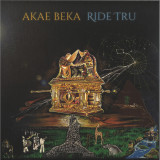
Akae Beka's inimitable style of rich, deep, multi-layered songwriting, uncompromising devotion to RasTafari and soulful healing melodies developed over decades performing with St. Croix based band Midnite and countless recordings. At the point of his untimely passing in 2019, he had released over 70LP's. He is without a doubt one of the most prolific reggae artists ever known.
The stellar production trinity that is Zion I Kings have been involved collectively and individually in creating some of the most highly regarded contributions to the vast Akae Beka catalogue. Ride Tru, originally released digitally and on CD in 2014, stood every chance disappearing into the all eclipsing shadow of the LP released by them earlier that year, Beauty for Ashes, which had been named by iTunes as the reggae album of the year. A monumental achievement for undiluted, uncompromising RasTafari roots reggae music this side of the millennium. So needless to say, the bar was high and Vaughn Benjamin and Zion I Kings must have known that, as they managed to raise it higher again.
Ride Tru continues in the same form, rootsy, soulful, refreshingly polished and authentically raw, the threads of anciency that any devout reggae lover will be looking for and the threads of modernity that keep it alive and appealing in the modern day. A uniquely regal tapestry that has become synonymous with music created from the unity of Zion I Kings and Vaughn Benjamin
Following 8 years of anxious anticipation, for the countless Akae Beka fans that are also vinyl connoisseurs, this LP is now being released on as a 12" vinyl LP courtesy of Before Zero Records. This offers the listener not only the chance to enjoy this LP in an analogue form, but also the chance to hold the artwork as a 12" square masterpiece, created by the hands of Ras Marcus, the artist who gave the powerful visual presence that became synonymous to much of the I Grade / Akae Beka works over the years.
“How does an artist follow an album considered by many to be the best reggae album of 2014?..... you get right back in the studio with the same brilliant production team and follow that album a few short months later with one that nearly eclipses it entirely.”
Midnight Raver — Worldareggae
“...remarkable for the clarity of Tippy’s mix and the contrast between the hardness of Lloyd Richards’ drums and the softness of the guitars, keyboards and brass. The woozy analogue warmth of an old Augustus Pablo production – Son of Jah Dub - for Worry Free demonstrates how well Vaughn sits on the sounds of the original masters (an avenue that should be pursued further). Another veteran guest is the late Style Scott - who beats out one of his final patterns on How I & I Carry On.”
Angus Taylor — United Reggae