quête:alien boy

Genres
Tout
Alien Boy - You Wanna Fade?

In nearly a decade, songwriter Sonia Weber’s ability to pen precise lyrics and memorable riffs has become laser-focused. As a result, the songs feel like they’ve been assembled with all the intention and care of a mixtape to a high-stakes crush. Caleb Misclevitz, A.P. Fiedler, and Derek McNeil round out the band, bringing the giant loud guitar rock feeling these songs require. The Portland outfit crafts songs big enough to fill an arena while simultaneously conjuring the emotional intimacy of making out in the bathroom of your favorite karaoke bar. Alien Boy does this by harnessing the raw power of PDX’s Wipers’ but not being afraid to embrace the pop catchiness of rock titans like Oasis or Third Eye Blind, all while crafting a tone and power distinctly their own. Whether listened to in your headphones in bed or witnessed live in person, Alien Boy leaves an emotional crater that’ll keep you coming back for more (Gem Fair)

pré-commande09.05.2025

il devrait être publié sur 09.05.2025

29,37

Last In: 2026 years ago
Keepsakes - Dystopian Euphoria LP

HAVEN co-founder Keepsakes is finally back on his own imprint with 5 fresh originals filled to the brim with warped alien sound design, driving and grooving drum rhythms, and acerbic track titles fresh out of a twisted after-hours chat. Following on from releases in recent years on KAOS/OAKS, Turbo Recordings, Perc Trax, and Boys Noize Records, this latest EP maintains his signature toughness alongside his fun and quirky sound choices while taking his sound further in to jacking and groovy territory.

The EP launches with 'Vocoding Your Nan Out Of Existence' on the A1 - full of growling and tortured alien vocoder melodic experimentation combined with driving funky drum work and organic atmospherics, this slab of freaky techno weight is aimed directly at the most debauched of dance-floors. 'Get To Know It In The Flesh' follows up on the A2 with rolling, grooving rhythms and dramatic string stabs alongside outlandish synth melodies, looping vocals and eerie creatures lurking in the background.

On the flip 'Ready2BeginWot?' gets things jacking with swinging rhythmic funk and and ear-worm repeating vocal line in a fast house-inspired slammer. 'Hollow And Suited' follows on the B2 with its tribal driving drum work and mutating resonated vocals sitting alongside debased synth melodics for the most haunted club creatures. Finally, 'Corvid House' closes out the record with its swung and grooving drum loops, bird call sound effects, vocal hooks and euphoric pad bliss to finish off another plate of dance-floor degeneracy.

pré-commande10.04.2026

il devrait être publié sur 10.04.2026

11,56

Last In: 2026 years ago
Ghettoblaster & Bad Boy Bill - Tracks From The Vault Volume 1

GETTOBLASTER and MOODY RECORDS boss BAD BOY BILL pull some familiar hooks from the 90s vault, including LIL LOUIS' infamous "I CALLED YOU" sax and a cover of JANE's "IT'S A FINE DAY" (made famous by OPUS III) on this pounding tech house 4 tracker.

En stock

Disponible en stock et prêt pour l'expédition

16,77
Time Modem - Der Mantel Der Nacht

BOY Records re-issues Time Modem - Der Mantel Der Nacht from 1991!

This special vinyl edition will include for the first time also the track called "Alien Elements" which was only available on the maxi-cd.
re-mastered and highy recommended!

En stock

Disponible en stock et prêt pour l'expédition

12,19
Dekalb Works - For Barney, Who Was A Bad Dog, But A Good Boy, And Very Much Loved. (TAPE)

Their newest release “For Barney, Who Was A Bad Dog, But A Good Boy, And Very Much Loved” comes from Brooklyn-based Dekalb Works (debut ‘Duologue’ on Where To Now? Records), the collaborative project of Austin Peru (Vision Fortune) & Daniel Creahan (Sweat Equity / Alien D).

The release summarizes a series of experimentations between live performance contexts and sample-heavy collage work. Since starting their residency on Radio alHara, Dekalb Works found themselves drawn to the act of performing, whether as a live act or DJing, and the space between these two often overly rigid modes.

“For Barney…” draws heavily on the sonic palette of American country and western music, treated through the lens of heavy studio processing and the production techniques of dub, ambient, and trip-hop. Recording hours-long live improvisations with guitar, piano, or drum machines and samplers, they pillaged these sessions as source material. Whereas previous work focused on the voice and the interaction of text, voice and music, these recordings pulled from the sounds of musicians playing together in a room. The arrangement process remains the same, chopping and manipulating small samples and momentary gestures into dense, rhythmic collages.

En stock

Disponible en stock et prêt pour l'expédition

16,39
J Hus - Beautiful and Brutal Yard LP 2x12"

J Hus is back with his highly anticipated third album ‘Beautiful And Brutal Yard’, preceded by the raucous street track ‘It’s Crazy’ which charted Top 15 and ‘Who Told You’ (featuring Drake) which debuted at #2 with the 3rd highest UK week 1 singles sales of the year and Hus’ highest single chart to date.

‘B.A.B.Y.’ is the follow-up to his chart-topping album ‘Big Conspiracy’ which earned him the Best Male Award at the Brits and his Top 10 platinum debut ‘Common Sense’ which won an NME award and was nominated for the Mercury Music Prize and Best Album at the Brits.

Fans have come to expect a range of influences and musical styles from Hus’ albums and they will not be disappointed. Across ‘B.A.B.Y’ Hus incorporates elements of afrobeats, drill, R&B and bashment, all delivered in his inimitable lyrical style. The album includes features from Drake, Burna Boy, Jorja Smith, Popcaan and Naira Marley as well as from UK up and comers CB, Villz and Boss Belly.

Having not played his own live shows since 2017 J Hus is announcing a UK Arena tour on Thursday 29th June.

En stock

Disponible en stock et prêt pour l'expédition

33,91
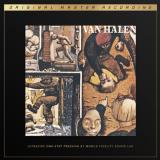
Van Halen - Fair Warning 2x12"
  • Mean Street
  • Dirty Movies
  • Sinners Swing!
  • Hear About It Later
  • Unchained
  • Push Comes To Shove
  • So This Is Love?
  • Sunday Afternoon In The Park
  • One Foot Out The Door

The song titles on Van Halen's aptly titled Fair Warning don't lie. The likes of "Unchained," "Mean Street," "Push Comes to Shove," "One Foot Out the Door," and more indicate the mood the band channels on its double-platinum 1981 record — the nastiest, darkest, and fiercest album of the group's storied career. For the fourth time in four years, Van Halen throws down the gauntlet to all challengers and emerges victorious.


Sourced from the original analog tapes, pressed on MoFi SuperVinyl at Fidelity Record Pressing, and strictly limited to 5,000 numbered copies, Mobile Fidelity's UltraDisc One-Step 180g 45RPM 2LP set plays with unfettered clarity, dynamics, and immediacy. Benefitting from superb groove definition, an ultra-low noise floor, and dead-quiet surfaces, this vinyl edition captures what went down in the studio with tremendous realism and involving presence.

Taking a more controlled approach in the studio and still completing everything in less than two weeks, Van Halen and producer Ted Templeman relied on studio amplifiers to direct the sound. Further diverging from the live-on-the-floor approach of its earlier albums, the ensemble also employed overdubs to great effect. The result: Dense, stacked architecture that underlines the hard-hitting tenor of the songs — and which comes alive like never before on this reference edition that looks as good as it sounds.

The premium packaging and gorgeous presentation befit the reissue's select status. Housed in a deluxe slipcase, it features special foil-stamped jackets and faithful-to-the-original graphics that illuminate the splendor of the recording. Aurally and visually, it is made for listeners who want to immerse themselves in everything involved with the album, including the iconic cover art adopted from William Kurelek's haunting painting, "The Maze."

Isolated frames from Kurelek's childhood-inspired work — including a man bashing his head into a brick wall, a guy pinning down an adversary as he delivers bare-fist blows to his face and others watch with apparent glee, a boy tied down on a conveyer belt and being sent through the equivalent of a meat saw — adorn the front and back covers. The sunnier visual disposition of Van Halen's prior efforts gives way to something sinister and tortured, traits reflective of the music within. The band members, too, are visually depicted not in glamorous shots but in a serious black-and-white portrait in which the quartet is clad in black leather jackets.

Tough, aggressive, stark: Fair Warning comes on like a series of bare-knuckled punches to the solar plexus and boasts lyrical narratives to match. Though not a concept record, the concise album revolves around themes of roughing it on the streets and struggling to survive amid dim prospects. Singer David Lee Roth reportedly penned many of the initial lyrics after traveling to Haiti and observing extreme poverty. The characters and situations populating Fair Warning reflect hardscrabble existence, last-chance desperation, and underlying danger.

Witness the crazies, poor folks, and hunters of “Mean Street”; the former prom queen turned pornographic actress on “Dirty Movies”; the menace and vice of “Sinners Swing!”; the streetwise hustle of “Unchained”; the isolation and alienation of “Push Comes to Shove”; the desire for escape on “One Foot Out the Door”: A carefree California beach party Fair Warning is not.

Having said he felt angry and frustrated during the sessions, guitarist Eddie Van Halen uses the forceful arrangements as a playground for his seemingly unlimited arsenal. Supported by a crack rhythm section and a hyped-up Roth, he performs with an almost impossible combination of punk-like intensity, technical finesse, lyrical fluidity, and unbridled emotion. The virtuoso was increasingly butting heads with Templeton and seeking a freedom in the studio he believed denied him.

No wonder he plays like a bat out of hell. Listen to the rapid-fire manner in which he slaps the high and low E strings on the 12th fret of his instrument on “Mean Street,” instilling the tune with funk flair and metal-spiked sharpness. For the pouty strut of “Dirty Movies,” Eddie Van Halen contributes slide guitar magic made possible after he sawed off the lower portion of a Gibson SG so he could reach further down the fretboard.

Related intensity, urgency, and daredevil momentum punctuate the surging “Sinner’s Swing!” A heavily flanged, delicately melodic introduction frames the attitudinal “Hear About It Later,” among the most creative arrangements of Van Halen’s career. And do riffs come any bigger or magnetic than those on the high-wire kick of “Unchained”? As for the out-of-left-field “Sunday in the Park,” an instrumental composed on an Electro-Harmonix micro-synthesizer: Who but Eddie Van Halen to supply creep factor in such an ingenious way?

Despite selling fewer quantities than Van Halen’s prior efforts, Fair Warning remains for many diehards the record that epitomizes all of the band’s immense strengths —Roth’s manic energy and tongue-wagging humor, Alex Van Halen’s rhythmic heartbeat-in-your-chest bombast, and Michael Anthony’s lucid bass lines included. Arriving when the New Wave of British Heavy Metal and new-wave movements were taking flight, it signaled a shot across the bow from a band determined to stay a step ahead and provide proof nobody could touch what it delivered.

More than four decades later, Fair Warning still sounds that alarm.

pré-commande

Cet article n'a pas encore été publié. Vous pouvez pré-commander le produit maintenant.

186,13

Last In: 2026 years ago
DRAB MAJESTY - CARELESS

DRAB MAJESTY

CARELESS

12inchDAISC575
Dais Records
05.09.2025

In the smoggy orange light of a new millennium, the young Deb Demure would take the bus, once a week, from his home in crumbling Hollywood to his grandmother's apartment, nestled in the pastel pristineness of Beverly Hills. During these visits, Deb couldn't help but notice the disconnect between the glow of his grandmother's temple, and the downtrodden, alienated figures that populated the seats of the mass transit that took him there. Week after week, he would observe these characters: fading B-movie starlets, leisure-suited alcoholics and forgotten civil servants. But one fateful commute home, as the twilight waned to the purple Los Angeles night, he realized these figures were not as lost as they appeared - there was a nobility in their failure, reflective of the dignity of the city's vanishing golden era. They were survivors, in need of a voice: a spokesperson for every color of hope and hopelessness, transcendent of gender and time; Drab Majesty became Deb's musical podium for this undertaking. Raised in a music-centric household, Deb would find the time to teach himself to play his father's right-handed guitar upside down and left-handed; an unorthodox fashion from where his earliest understanding of chords and harmony were conceived. Exploring the bins of discarded vinyl in his neighborhood thrift stores, his toolkit expanded with the subterranean sonic gems of the recent past. Influences range from the virtuosic arpeggiated guitar work of Felt's Maurice Deebank and the grittier pop progressions of Red Lorry Yellow Lorry's Chris Reed as well as Steve Severin from Siouxsie and The Banshees. He also studied the harmonic oscillations and utilization of the occult power of vibratory frequency present in New Age sounds of Greek artist, IASOS. In terms of orchestration, he consciously culls from the seaside maximalism of Martin Dupont and mechanized grooves of early Depeche Mode. Like a dualistic pendulum, his vocals swing from a preistly baritone to a choir boy's falsetto reflecting the sepulchral ambiance of church visits with his grandmother. Currently the drummer for Los Angeles lo-fi rock ensemble Marriages and having honed an unorthodox home recording style, Deb sources his sounds from a repository of "mid-fi" synthesizers and other lesser-quality instruments. Following the release of his debut cassette EP, "Unarian Dances", he also shared a split 12" with synth pop forefathers, Eleven Pond. During the Spring of 2015, Drab Majesty signed with Dais Records and released his first single, Unknown to the I, as a introduction for his first initial foray into the album format, romantically titled Careless. Written over the course of 2 years, "Careless" is a compendium of songs that have outlasted a malicious burglary of his studio, his struggles with substance addiction, and most recently, the death of his beloved grandmother.

pré-commande05.09.2025

il devrait être publié sur 05.09.2025

22,27

Last In: 2026 years ago
DRAB MAJESTY - CARELESS

DRAB MAJESTY

CARELESS

12inchDAISC675
Dais Records
05.09.2025

In the smoggy orange light of a new millennium, the young Deb Demure would take the bus, once a week, from his home in crumbling Hollywood to his grandmother's apartment, nestled in the pastel pristineness of Beverly Hills. During these visits, Deb couldn't help but notice the disconnect between the glow of his grandmother's temple, and the downtrodden, alienated figures that populated the seats of the mass transit that took him there. Week after week, he would observe these characters: fading B-movie starlets, leisure-suited alcoholics and forgotten civil servants. But one fateful commute home, as the twilight waned to the purple Los Angeles night, he realized these figures were not as lost as they appeared - there was a nobility in their failure, reflective of the dignity of the city's vanishing golden era. They were survivors, in need of a voice: a spokesperson for every color of hope and hopelessness, transcendent of gender and time; Drab Majesty became Deb's musical podium for this undertaking. Raised in a music-centric household, Deb would find the time to teach himself to play his father's right-handed guitar upside down and left-handed; an unorthodox fashion from where his earliest understanding of chords and harmony were conceived. Exploring the bins of discarded vinyl in his neighborhood thrift stores, his toolkit expanded with the subterranean sonic gems of the recent past. Influences range from the virtuosic arpeggiated guitar work of Felt's Maurice Deebank and the grittier pop progressions of Red Lorry Yellow Lorry's Chris Reed as well as Steve Severin from Siouxsie and The Banshees. He also studied the harmonic oscillations and utilization of the occult power of vibratory frequency present in New Age sounds of Greek artist, IASOS. In terms of orchestration, he consciously culls from the seaside maximalism of Martin Dupont and mechanized grooves of early Depeche Mode. Like a dualistic pendulum, his vocals swing from a preistly baritone to a choir boy's falsetto reflecting the sepulchral ambiance of church visits with his grandmother. Currently the drummer for Los Angeles lo-fi rock ensemble Marriages and having honed an unorthodox home recording style, Deb sources his sounds from a repository of "mid-fi" synthesizers and other lesser-quality instruments. Following the release of his debut cassette EP, "Unarian Dances", he also shared a split 12" with synth pop forefathers, Eleven Pond. During the Spring of 2015, Drab Majesty signed with Dais Records and released his first single, Unknown to the I, as a introduction for his first initial foray into the album format, romantically titled Careless. Written over the course of 2 years, "Careless" is a compendium of songs that have outlasted a malicious burglary of his studio, his struggles with substance addiction, and most recently, the death of his beloved grandmother.

pré-commande05.09.2025

il devrait être publié sur 05.09.2025

22,27

Last In: 2026 years ago
DRAB MAJESTY - CARELESS

Drab Majesty

CARELESS

12inchDAISC775
Dais Records
02.09.2025

In the smoggy orange light of a new millennium, the young Deb Demure would take the bus, once a week, from his home in crumbling Hollywood to his grandmother's apartment, nestled in the pastel pristineness of Beverly Hills. During these visits, Deb couldn't help but notice the disconnect between the glow of his grandmother's temple, and the downtrodden, alienated figures that populated the seats of the mass transit that took him there. Week after week, he would observe these characters: fading B-movie starlets, leisure-suited alcoholics and forgotten civil servants. But one fateful commute home, as the twilight waned to the purple Los Angeles night, he realized these figures were not as lost as they appeared - there was a nobility in their failure, reflective of the dignity of the city's vanishing golden era. They were survivors, in need of a voice: a spokesperson for every color of hope and hopelessness, transcendent of gender and time; Drab Majesty became Deb's musical podium for this undertaking. Raised in a music-centric household, Deb would find the time to teach himself to play his father's right-handed guitar upside down and left-handed; an unorthodox fashion from where his earliest understanding of chords and harmony were conceived. Exploring the bins of discarded vinyl in his neighborhood thrift stores, his toolkit expanded with the subterranean sonic gems of the recent past. Influences range from the virtuosic arpeggiated guitar work of Felt's Maurice Deebank and the grittier pop progressions of Red Lorry Yellow Lorry's Chris Reed as well as Steve Severin from Siouxsie and The Banshees. He also studied the harmonic oscillations and utilization of the occult power of vibratory frequency present in New Age sounds of Greek artist, IASOS. In terms of orchestration, he consciously culls from the seaside maximalism of Martin Dupont and mechanized grooves of early Depeche Mode. Like a dualistic pendulum, his vocals swing from a preistly baritone to a choir boy's falsetto reflecting the sepulchral ambiance of church visits with his grandmother. Currently the drummer for Los Angeles lo-fi rock ensemble Marriages and having honed an unorthodox home recording style, Deb sources his sounds from a repository of "mid-fi" synthesizers and other lesser-quality instruments. Following the release of his debut cassette EP, "Unarian Dances", he also shared a split 12" with synth pop forefathers, Eleven Pond. During the Spring of 2015, Drab Majesty signed with Dais Records and released his first single, Unknown to the I, as a introduction for his first initial foray into the album format, romantically titled Careless. Written over the course of 2 years, "Careless" is a compendium of songs that have outlasted a malicious burglary of his studio, his struggles with substance addiction, and most recently, the death of his beloved grandmother.

pas en stock

Commandez maintenant et nous commanderons l'article pour vous chez notre fournisseur.

22,27

Last In: 6 months ago
New York Dolls - New York Dolls
  • Personality Crisis
  • Looking For A Kiss
  • Vietnamese Baby
  • Lonely Planet Boy
  • Frankenstein (Orig.)
  • Trash
  • Bad Girl
  • Subway Train
  • Pills
  • Private World
  • Jet Boy

The extroverted blend of attitude, energy, and ostentatiousness that spills from the New York Dolls’ self-titled debut can be seen in full view on the album cover. Depicting the quintet in its hallmark flash-and-trash apparel and in drag appearance, the 1973 album scared away a considerable amount of potential listeners while capturing the attention of a sizable audience that recognized the band for what it was: zeitgeist pioneers who helped develop the punk and glam rock movements.

Named by Rolling Stone the 301st Greatest Album of All Time and by Mojo the 49th greatest album of all time, New York Dolls receives long-overdue audiophile treatment on Mobile Fidelity’s numbered-edition 180g 45RPM 2LP set. Sourced from the original master tapes, pressed at Fidelity Record Pressing in California, and housed in a Stoughton gatefold jacket, this collectible version marks the first time the group’s career-making statement is available to be experienced in audiophile quality.

Far from harboring the crude elements that became associated with the punk scene, New York Dolls benefits from keen production overseen by none other than Todd Rundgren. Though more accustomed to working far higher-caliber musicians, Rundgren — taken by the New York Dolls’ charisma and cool, if not their instrumental approach — fully understood the ensemble’s aesthetic. He captured what went down at New York City’s Record Plant with an astute blend of live-on-the-floor feel, raw authenticity, and professional acumen.

On Mobile Fidelity’s definitive-sounding reissue, you can hear those facets as well as key details, dynamics, and textures with previously unimaginable insight. Rundgren preserved generous degrees of grit, grime, and grease while bestowing the raucous music with elevated levels of separation, solidity, and impact every landmark recording deserves. His vision extends to introducing choice accents — barroom piano notes, Moog synthesizer passages, Buddy Bowser’s honking saxophones — that add to the songs’ appeal without interfering with the primary architecture.

Afforded extra groove space on this pressing, the tenor, presentation, and attack of both vocalist David Johansen and now-iconic guitarists Johnny Thunders and Sylvain Sylvain come across with stunning vibrancy and vitality. The New York Dolls often seem headed off the rails and into the red, but somehow, the strut, swagger, and sloppiness — and the associated sleaze and scruff, scrape and snarl, frenzy and feverishness those characteristics entail — remain together as a whole that shakes its collective fist at the frustrations, isolation, disarray, and disillusionment of youth chaos and urban decay.

Kicking off its debut with “Personality Crisis,” cited by Rolling Stone as one of the 500 Greatest Songs of All Time, the band makes obvious its grasp of alienation, deviance, displacement, and suburban disaffection — as well as its capacity to play hanging-by-a-thread boogie, noisy rock ‘n’ roll, and Brill Building-inspired pop. The lipstick-kissed New York Dolls possesses traits many of its harsher predecessors would overlook: joyfulness and melody, topped with a knack for knowing how and where to take a song inside of three-and-a-half minutes.

Dive and dash with the belligerent “Looking for a Kiss”; stomp your feet and clap your hands to the big choruses of “Jet Boy”; surrender to the demands and provocations of the coded “Vietnamese Baby”; decide whether “Bad Girl” yearns to explode or implode. It’s one of several tunes here that allude to the world coming to end. Of course, that doesn’t mean there isn’t time for a fling before everything burns. “There’s no place I gotta go,” yowls Johansen. And he means it.

Adorned with tonal crunch, glitter, and gristle, New York Dolls takes pride in its brashness and brattiness. The rambunctious effort, which earned the band the distinction of being voted both “Best New Group of the Year” and “Worst New Group of the Year” in the pages of Creem, displays knowing reverence for the blues without calling attention to the style. The folk-laden “Lonely Planet Boy” is nothing if not a collision of heart-on-the-sleeve emotions and the desire in the face of challenges to maintain a tough-skinned exterior. An interpretation of Bo Diddley’s “Pills,” complete with shivering harmonica and clattering rhythms, announces there’s no cure for what infects this band. It’s that contagious. And how.

His deliveries gushing with campy fun, playful irreverence, and sheer decadence, Johansen doubles as the equivalent of an open fire hydrant that spouts at will. He’s at once tender and vicious, serious and tongue-in-cheek. On arguably his finest hour on the album, Johansen’s phrasing, passion, and lyrical ambiguity alone turn “Trash” into an insistent glam-rock gem whose echoing harmonies and girl-group references stamp it a pop classic.

Too much, too soon? Only for those averse to some of the finest rock ‘n’ roll ever put on tape.

pré-commande31.07.2025

il devrait être publié sur 31.07.2025

88,19

Last In: 2026 years ago
Jay Dee - Yancey Boys Instrumentals LP 2x12"
  • A1: Timeless (Instrumental)
  • A2: We Here (Instrumental)
  • A3: R U Listenin'? (Instrumental)
  • B1: Alien Family (Instrumental)
  • B2: Strugglin (Instrumental)
  • B3: Showtime (Instrumental)
  • B4: Swagger (Instrumental)
  • C1: Dftf (Instrumental)
  • C2: All Good (Instrumental)
  • C3: Sounds Like Love (Instrumental)
  • D1: Everytime (Instrumental)
  • D2: Illasoul (Instrumental)
  • D3: Air Signs (Instrumental)

Shortly after Jay Dee’s younger brother Illa J’s solo debut was issued on Delicious Vinyl, the label and the artist knew the next step in honouring Jay Dee’s legacy was to issue the complete instrumentals from Yancey Boys as a stand-alone release. This mother lode of previously untouched (at the time) beats dates as far back as Jay Dee’s time working on the Pharcyde’s sophomore album, 1995’s Labcabincalifornia. As Delicious Vinyl owner Michael Ross explains, “From ‘95 through ’98 Jay Dee was my go-to guy for hot beats and remixes. He was always making beats, always. So there was a select amount of tracks that he composed for me during that time, tracks as good as anything he’d done, only they never got used.” Once these beats were used for Illa J’s Yancey Boys they were presented to the public on Yancey Boys Instrumentals.

pré-commande30.06.2025

il devrait être publié sur 30.06.2025

37,77

Last In: 2026 years ago
Corbin - Crisis Kid LP

Corbin (FKA Spooky Black) makes captivating, honest, and raw music that harkens back to the days when the singer-songwriter’s artistic vision prioritized vulnerability over image. The St. Paul, Minnesota native came to prominence during the rise of the SoundCloud gold rush, helping to influence the new generation of Gen Z songwriters. Songs such as the haunting portrait of addiction “Diazepam”, and his battle with insecurity and instability in relationships “ICE BOY”, showed off his ability to connect with the plight of modern adolescence. But it was the internet-breaking, classic ballad of yearning “Without You”, that inspired a generation of disaffected and abandoned adolescents, serving as a soundtrack to make the alienated feel a little less alone. He’s attracted some of the biggest names in music, featuring on songs with Chief Keef, Trippie Redd, and The Kid Laroi, among others. With his latest record, Crisis Kid, Corbin dials back the angst in favor of an intimate vocal style that sounds like he’s reading his diary from a candlelit cabin. A more polished and refined version of Corbin resurfaces as he contemplates collective suffering, generational trauma, and the quest to find hope during the bleakest timeline, offering a voice for the voiceless.

pas en stock

Commandez maintenant et nous commanderons l'article pour vous chez notre fournisseur.

26,68

Last In: 9 months ago
The Funeral Portrait - Greetings From Suffocate City – From Beyond The Abyss LP 2x12"
  • A1: Suffocate City Feat. Spencer Charnas Of Ice Nine Kills (3:33)
  • A2: Holy Water (Feat. Ivan Moody Of Five Finger Death Punch) (3:01)
  • A3: Blood Mother (3:17)
  • A4: Doom And Gloom (3:18)
  • A5: Dark Thoughts (4:01)
  • A6: You’re So Ugly When You Cry Feat. Bert Mccracken Of The Used (3:23)
  • B1: Chernobyl (3:21)
  • B2: Dopamine (3:44)
  • B3: Voodoo Doll (3:57)
  • B4: Happier Than You (3:10)
  • B5: Alien (4:10)
  • C1: Generation Psycho (3:51)
  • C2: Stay Weird (3:29)
  • C3: Hearse For Two (Feat. Lilith Czar) (3:28)
  • C4: Evergreen (3:23)
  • C5: Skinny Lies (3:21)
  • D1: Lost Boy
  • D2: Stay Weird (Beyond The Abyss) (3:42)
  • D3: Suffocate City (Live) (4:47)
  • D4: Alien (Demo) / Friends Like These

After securing the number 1 spot on Billboard’s Mainstream Rock Airplay chart with their song Suffocate City (feat. Spencer Charnas), The Funeral Portrait will release a deluxe edition of their critically acclaimed second album, Greetings From Suffocate City on June 13th! The deluxe collection includes “Holy Water” feat. Ivan Moody, “Hearse for Two” feat. Lilith Czar and three brand new songs, “Skinny Lies,” “Evergreen,” and “Lost Boy.” Enjoy a total of 24 songs on the digital deluxe album, or choose between the CD or double vinyl that includes the exclusive track “Friends Like These”!


[l] C1 Generation Psycho (3:51) [EXPLICIT]
[m] C2 Stay Weird (3:29) [EXPLICIT] /

[o] C4 Evergreen (3:23) [EXPLICIT]

[q] D1 Lost Boy [EXPLICIT]
[r] D2 Stay Weird (Beyond The Abyss) (3:42) [EXPLICIT]
[s] D3 Suffocate City (Live) (4:47) [EXPLICIT]

pré-commande13.06.2025

il devrait être publié sur 13.06.2025

34,41

Last In: 2026 years ago
ALIEN NOSEJOB - FORCED COMMUNAL EXISTENCE

Howdy punkè rocke fans, welcome to FORCED COMMUNAL EXISTENCE - the wonderful and frightening world of ALIEN NOSEJOB’s EP’s & singles. Anti Fade and Agitated Records are teaming together to bring you a paint stripping, mind altering, rare collection of EP and compilation tracks recorded in various Australian bedrooms and garages between 2017 and 2022. The sound of goofy obnoxiousness will soon be permeating your bedroom airwaves and perforating your eardrums. Kicking off this long player is an EP that was recorded by Billy from Anti Fade in his childhood bedroom in July 2017. The songs came to fruition while AUSMUTEANTS were on tour in Japan 2016.

There was a lot of ‘WALLABY BEAT’ / ‘MURDER PUNK’ being played in the background while seeing the sites of Mount Fuji and ‘Bar Fuck Yeah’. In between shows Jake was organising the release of DANNY GRAHAM and PLASTIC AND THE EP’S records on the label he co-ran XEROX MUSIC. Both artists played parts in the sound and ethos of the PANEL BEAT EP. The goal was to make the songs sound unapologetically Australian without pretending to be something they’re not. There’s no fake accents or songs about VB and mullets. Instead, there’s songs about every day struggles, like dealing with fickle fashion followers, having too many fucking records, playing PlayStation, resentment and manipulation.

500 copies were pressed and self released, with a photo slipped inside each copy at random. Next is THE DEATH OF THE VINYL BOOM which was self recorded in a shed in November 2017. This is the only Alien Nosejob release (besides this comp, smartarse) to feature a cover - Flyblown by Adelaidean arty weirdo band JACKSON ZUMDISH. The idea behind this EP was to incorporate the simplicity and scrappiness of the late 70’s DIY Australian sound, but give them the complicated structures of prog songs. Scum stats - 500 copies, self released. Several copies were smeared with Jake’s blood and had smashed pieces of vinyl glued to the front cover.

Now we have a cover of the DEAD KENNEDYS. The conspiracy theorist wet dream Government Flu. Recorded September 2020 during lockdown in one-man-band with a tape recorder fashion for a 20 minute unedited ‘live set’ video where all instruments were played one by one, sung and mixed in the space of a couple of hours. The HC45 7” was recorded at the same time as a disco 12” maxi, which I hear were originally meant to come out on the same day. Shit happens I guess? This EP came out in Feb 2020 and sounds somewhere between early GANG GREEN, DIE KREUZEN and the BEASTIE BOYS old bullshit. Self recorded on a 4 track with a broken pinch roller. Lyrically this thing is cynical and choc-a-bloc full of satire and hate. A year later a sequel was recorded the same way, on the same machine.

No fucking disco this time though. Cold Bare Facts is the most recent recording on this comp. Self recorded in Jake‘s bedroom 2022 It has the same mid paced tempo as DYS or SSD when they’re at their slowest (pre-Boston Curse, of course!). Both songs take a stinky shit on the Australian state police. 300 copies. Finishing the record is a cover by THE AINTS. Originally written by ED KUEPPER for THE SAINTS Eternally Yours album, but it sounded too similar to Lost and Found. Originally released on ‘ALTA’ cassette compilation during the lockdown. FORCED COMMUNAL EXISTENCE binds this mouthful of releases into one neat package from June 6th, 2025. Catch the ALIEN NOSEJOB band on tour in Europe & UK from June 13 - July 2nd, 2025.

pré-commande06.06.2025

il devrait être publié sur 06.06.2025

25,00

Last In: 2026 years ago
ALIEN NOSEJOB - FORCED COMMUNAL EXISTENCE
  • 1: Family Dinner
  • 2: Clear The Clutter
  • 3: Tired
  • 4: Guilt And Blame
  • 5: Caffeine Od
  • 6: Flyblown
  • 7: Sydney Sizzles
  • 8: Over The Bridge
  • 9: Government Flu
  • 10: I Still Call This Punk Scene My Home
  • 11: Bond Clean
  • 12: Explosives In The Headlights
  • 13: Chemical Solution
  • 14: Cabanossi
  • 15: The Scene Expands
  • 16: Opinionated Fuck
  • 17: Nothing Ever Goes Your Way
  • 18: 4 Fatal Collision
  • 19: Circular Motion
  • 20: Beyond The Pale
  • 21: The Executioner
  • 22: West Side Story
  • 23: S-O-S 75
également disponible

Black[25,00 €]


Howdy punkè rocke fans, welcome to FORCED COMMUNAL EXISTENCE - the wonderful and frightening world of ALIEN NOSEJOB’s EP’s & singles. Anti Fade and Agitated Records are teaming together to bring you a paint stripping, mind altering, rare collection of EP and compilation tracks recorded in various Australian bedrooms and garages between 2017 and 2022. The sound of goofy obnoxiousness will soon be permeating your bedroom airwaves and perforating your eardrums. Kicking off this long player is an EP that was recorded by Billy from Anti Fade in his childhood bedroom in July 2017. The songs came to fruition while AUSMUTEANTS were on tour in Japan 2016.

There was a lot of ‘WALLABY BEAT’ / ‘MURDER PUNK’ being played in the background while seeing the sites of Mount Fuji and ‘Bar Fuck Yeah’. In between shows Jake was organising the release of DANNY GRAHAM and PLASTIC AND THE EP’S records on the label he co-ran XEROX MUSIC. Both artists played parts in the sound and ethos of the PANEL BEAT EP. The goal was to make the songs sound unapologetically Australian without pretending to be something they’re not. There’s no fake accents or songs about VB and mullets. Instead, there’s songs about every day struggles, like dealing with fickle fashion followers, having too many fucking records, playing PlayStation, resentment and manipulation.

500 copies were pressed and self released, with a photo slipped inside each copy at random. Next is THE DEATH OF THE VINYL BOOM which was self recorded in a shed in November 2017. This is the only Alien Nosejob release (besides this comp, smartarse) to feature a cover - Flyblown by Adelaidean arty weirdo band JACKSON ZUMDISH. The idea behind this EP was to incorporate the simplicity and scrappiness of the late 70’s DIY Australian sound, but give them the complicated structures of prog songs. Scum stats - 500 copies, self released. Several copies were smeared with Jake’s blood and had smashed pieces of vinyl glued to the front cover.

Now we have a cover of the DEAD KENNEDYS. The conspiracy theorist wet dream Government Flu. Recorded September 2020 during lockdown in one-man-band with a tape recorder fashion for a 20 minute unedited ‘live set’ video where all instruments were played one by one, sung and mixed in the space of a couple of hours. The HC45 7” was recorded at the same time as a disco 12” maxi, which I hear were originally meant to come out on the same day. Shit happens I guess? This EP came out in Feb 2020 and sounds somewhere between early GANG GREEN, DIE KREUZEN and the BEASTIE BOYS old bullshit. Self recorded on a 4 track with a broken pinch roller. Lyrically this thing is cynical and choc-a-bloc full of satire and hate. A year later a sequel was recorded the same way, on the same machine.

No fucking disco this time though. Cold Bare Facts is the most recent recording on this comp. Self recorded in Jake‘s bedroom 2022 It has the same mid paced tempo as DYS or SSD when they’re at their slowest (pre-Boston Curse, of course!). Both songs take a stinky shit on the Australian state police. 300 copies. Finishing the record is a cover by THE AINTS. Originally written by ED KUEPPER for THE SAINTS Eternally Yours album, but it sounded too similar to Lost and Found. Originally released on ‘ALTA’ cassette compilation during the lockdown. FORCED COMMUNAL EXISTENCE binds this mouthful of releases into one neat package from June 6th, 2025. Catch the ALIEN NOSEJOB band on tour in Europe & UK from June 13 - July 2nd, 2025.

pré-commande06.06.2025

il devrait être publié sur 06.06.2025

25,00

Last In: 2026 years ago
HOLY - ALL THESE WORLDS ARE YOURS

Holy

ALL THESE WORLDS ARE YOURS

12inchPNKSLM36
PNKSLM
07.03.2025
  • Night On Earth
  • And She Breaks The Day! A Clarity
  • Ddd
  • Premonition / It Shines Through
  • Dreaming Still?
  • All These Worlds Are Yours
  • Heard Her
  • Alien Life
  • Wish
  • In Lack Of Life

HOLY first appeared in late 2014 with the Silver of Your Heart EP and soon followed it with the debut album Stabs to praise from Stereogum, Wondering Sound, The Line of Best Fit, Anton Newcombe and more. After touring the album throughout 2015, including a run in the UK around Liverpool Psych Fest, Hannes Ferm retreated to Studio Cobra in Stockholm to record the follow-up. Over 15 months between April 2016 and May 2017 he recorded All These Worlds Are Yours together with co-producer Martin Ehrencrona (Les Big Byrd, Viagra Boys), and it's a huge step forward. Leaving behind the garage pop leanings of Stabs in favour of a sound infused by the early '70s, melding Ziggy Stardust era David Bowie with Brian Eno-esque art pop and more modern psych pop in the vein Ariel Pink, it's a truly standout record. A first taste arrived with the "premonition" 7" in September, alongside a short run of UK dates. HOLY will be touring the UK in February again alongside European showcase festivals and headlines shows throughout the spring.

pré-commande07.03.2025

il devrait être publié sur 07.03.2025

14,08

Last In: 2026 years ago
ESG - Step Off

Esg

Step Off

12inchFIRELP232C
Fire Records
07.03.2025
  • 1: Be Good To Me
  • 2: Talk It
  • 3: Its Not Me
  • 4: Six Pack
  • 5: Step Off
  • 6: Sensual Intentions
  • 7: My Street

Repressed LP on Neon Orange Vinyl. “ESG's fusion of sweet soul and punk attitude with an intuitive understanding of dance music remains.” The Guardian “This is still funk with an alien otherworldliness the likes of which George Clinton never envisioned, stripped to its barest essentials for maximum impact.” All Music “ESG are as cool as ever.” The Guardian Pumping their way out of the South Bronx of New York in the early 80s, this rhythm and dance-punk outfit made unforgettable funk that was also unusually rooted in post-punk. This powerhouse of raw and cutting edge music ultimately made them ahead of their time. ESG enjoyed success sharing stages with PiL and Gang Of Four and have been heavily sampled as many musicians including TLC, Wu-Tang Clan, Beastie Boys and Liars.

pré-commande07.03.2025

il devrait être publié sur 07.03.2025

25,84

Last In: 2026 years ago
Secret Boyfriend - Listener's Guide LP

Secret Boyfriend

Listener's Guide LP

12inchENMB-16
enmossed
Release unknown

“My introduction to “noise” came from a record shop in Lake Worth, Florida ran by a musician named Kenny 5. Kenny had left Detroit sometime in the mid nineties and had begun selling used records and CD’s from the downtown strip of this tiny southern Florida city in a humble shop sandwiched between a deli and a dog grooming business. Kenny previously was on labels like Amphetamine Reptile and timeSTEREO, and the records and videotapes that would be on repeat at his shop were a vast sonic expanse that spoke to the eclecticism of his experience as a touring musician participating and adjacent to American noise culture through the early to late 90’s. In 1998, I was eleven years old and I would order a pizza with him and watch VHS tapes of Japanese noise and deathmatch bootlegs, as well as any other sonic and subcultural rarities that far outstripped my age to comprehend (notably the RRR “Journey Into Pain” compilation and various Vanilla Tapes videos). This widecast net of information formed an introduction to a reality that did not fall deaf on me, but it took many years later for me to reorient the specific freedoms of what this dense and cathartic sound culture had imparted on my life and would continue onward to.

What does this have to do with this selection of choice recordings from the Secret Boyfriend catalog for the enmossed label? For the uninitiated, Secret Boyfriend is the long running moniker of Ryan Martin, North Carolina musician and label proprietor of the Hot Releases imprint. For over a decade from this writing I have watched Secret Boyfriend, and Hot Releases by extension as a curatorial and archival effort, embodying the multiplanal capacity that noise loosely functions from as an umbrella ideology and formalist avenue for sound creation. For anecdotal purposes, from (before) 2006 until roughly 2023 the East Coast of the United States showcased a vibrant network of eclectic regional festivals that saw wide swaths of artists addressing and negotiating the notion of what qualified “noise” from a conceptual and ideological perspective. Some festivals honed in on particularities in aesthetics and tropes, and others had a kind of “catch-all” implementation that allowed for a salvation of the sort of alienated and singular artistry that was amassing throughout these territories. While clear guidelines had been set from regional predecessors as to how noise with a capital “N” should maneuver, Secret Boyfriend is emblematic in the spirit of fluidity that was either implicitly coupled to the notion of the genre, or grew to evolve towards or devolve from.

Within Secret Boyfriend performances, I have seen and admired a mirroring from a ravenous appreciator of this culture at large back towards itself. Typical of a Secret Boyfriend set is an interchangeable narrative arc wherein blistering feedback laden scrap metal improvisations are forayed into naive ambient or “pop” songs, or skipping CDs, or mixer feedback play, or delayed Roland 707 drum workouts all at once and in a unique hegemony. Secret Boyfriend's stylistic mastery of each endeavor is at once an homage to a history of loving listening and enacting, while a brave step into the realm of actualizing the unique fluidity of his own practice. In performance and the action of network engagement, Secret Boyfriend operates a survey of that which he sought to hear and that which he cultivates around his work. His operations are mirrors, and the project (alongside his other peers) is a reflection on the ethos of his time.

Conversely his recording practice narrows in on these moments and allows for a different kind of intimacy or alienation for the non live listener. This record of selected “pop songs” (let's call them that) is particularly poignant at a time when the culture Martin mirrors is at a strange crossroads with itself. The aforementioned festival networks necessarily change and shift. The onlookers become the artists, the artists find new horizons, and the spaces for these cycles fade into locales of a distant memory. It seems, from my perspective, that audiences currently yearn for a more bottlenecked experience, searching for some ontologically vetted manifestation of an idea, of a sound and less for an experience that functions in opposition to our collective banalities. This makes sense in the face of general global catastrophism that plagues us. We need certainty of what something is somewhere, don’t we? Noise as an idea has expanded and contracted to so many iterations of itself it is hard to tell what it even is, and it is particularly difficult to identify in the absence of solid network activations a moment to reflect on its own complexities and nuances. In the face of so much change, I argue that the language of noise culture at large has on one hand become increasingly didactic and predictable, and laughably inclusive and non linear on the other. Probably has always been this way, but now we are in the midst of a moment of extreme access and indexicality, which somehow cauterizes expansion and naivety and chance.

This record highlights the Secret Boyfriend that obscures didacticism by highlighting output that opens up for more challenging catharsis and emotive signal processing. It provides an entry to the materialism of a cultural field full of ecstatic complexity and beautiful inconsistency. In these muted moments Secret Boyfriend has given us over his career we have an argument for evolving languages that further challenge our notions of what is supposed to happen and how it is supposed to be presented. In his more song oriented expansiveness, we can punctuate the ability to think in new modalities. Listening to these recordings reminds me of the polarity of sitting in the record store as a kid and understanding that His Name Is Alive is on 4AD and (gasp!) timeSTEREO. This trite early impression that nothing is really as different as our imaginations might want them to be, and that we can do whatever we want mostly within the creative realms we work through is an important filter to look through Secret Boyfriend as a project and a vessel. If we can achieve abandon and vulnerability through our artistic endeavors, then we have a sound model for, maybe, new potentialities. If that’s too much projection, or just complete liberal bullshit, I am fine with that. Secret Boyfriend's oeuvre at best offers us moments of reprieve to ponder these complexities, or at least a moment to zone out on a drive through North Carolina Highway 54.

You have one pocket of life that you must do whatever you want to inside of. Secret Boyfriend does it affectionately, in a variety of forms, and always with deep sentimentality. These recordings are a wonderful set of songs to begin further investigation from. Thank you Ryan for allowing as many avenues as possible to continue a broad cultural exchange and conversation that intersect and refract while being the kind of artist that is brave enough to not phone in the effort.”

- Nick Klein , May 2024

pré-commande

Cet article n'a pas encore été publié. Vous pouvez pré-commander le produit maintenant.

27,31

Last In: 2026 years ago
Essential Logic - Rekalibrated LP
  • A1: Prayer For Peace (Daybreakers Remix)
  • A2: Alien Boys (Dave Audé Remix)
  • A3: Mother Earth (Youth Remix)
  • A4: Never Know (Skylab Remix)
  • A5: Charming Every Cupid (Govinda Sky Remix)
  • B1: Land Of Kali (Adamski Remix) B2. Serious (Bis Remix)
  • B3: Fallible Soldiers (Gully Remix)
  • B4: Sy Rocket (Lord And Master Remix)
  • B5: Beyond (303 Dreams Remix)

Limited Edition Pressing of 200 Copies on Neon Yellow Vinyl. 2022's "Land of Kali" album was the first under the Essential Logic moniker for over 40 years and was released alongside a career-spanning boxset "Logically Yours".

Now Essential Logic head honcho and former X-Ray Spex member Lora Logic has compiled an eclectic and ambitious remixed version of "Land of Kali" entitled "Rekalibrated" featuring reinterpretations from noted artists across a multitude of genres and styles including Grammy award winners, living legends and UK Singles Chart toppers. Lora's work with Essential Logic and X-Ray Spex while Punk in DNA and spirit has always pushed at boundaries. Rule-breaking from the start by bringing the sax into Punk while the jerky, irresistible post-Punk Funk of Essential Logic's "Beat Rhythm News" and Lora's solo album "Pedigree Charm" sit comfortably alongside more contemporary records with one ear on the cerebral and the other on the dancefloor. "Rekalibrated" highlights the many strands that intertwine to make Essential Logic and how they may be unfurled. The lead single will be "Alien Boys" remixed by Dave Audé. Dave is a Grammy Award winning remixer and producer, famed for having more number ones than any other producer on the Billboard Dance Club Songs chart. He is responsible for a staggering 132 No.1 remixes on this chart and has worked with artists as varied as U2, Beyonce, Yoko Ono, Faith No More and Madonna among many others. He won his Grammy for his remix of "Uptown Funk" by Mark Ronson and Bruno Mars. Youth, legendary bassist of Killing Joke and producer of The Verve, Pink Floyd and The Orb lends his vastly experienced ears to "Mother Earth" while there are further interpretations from Rave-pop legend Adamski, Scottish Kandy-poppers bis and New Order/Duran Duran collaborators Daybreakers who put their own stamp on the Poly Styrene-penned "Prayer For Peace". Lora has recently been in the spotlight thanks to the recent re-release of X-Ray Spex's lost second album "Conscious Consumer" which features her trademark saxophone lines alongside typically acerbic lyricism from the dear departed Poly Styrene.

The first pressing reaches the Official Record Store Chart No.1 position over Christmas 2023 and quickly sold out. Favourable reviews in Uncut, Mojo and Record Collector alongside a Vive le Rock cover feature helped raise public awareness as well as radio features on Woman's Hour and Craig Charles' 6 Music show. Fans who missed out on the first pressing patiently wait the arrival of a repress.

pré-commande06.12.2024

il devrait être publié sur 06.12.2024

27,52

Last In: 2026 years ago
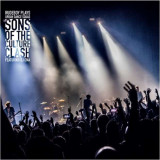
Rudeboy Plays Urban Dance Squad - Sons Of The Culture Clash

Rapper Rudeboy and DJ DNA play the work of the legendary crossover band Urban Dance Squad. The group quickly broke through with their unique mix of funk, soul, jazz, punk, rock and hip hop. Their influence extended to bands like Rage Against the Machine, while
they were like-minded peers of The Beastie Boys and Red Hot Chili Peppers.

Worldwide tours, an impressive live reputation, and recognition in the United States, including invitations from David Bowie and U2 as support, have characterized their career.

pré-commande24.05.2024

il devrait être publié sur 24.05.2024

29,83

Last In: 2026 years ago
TATYANA - It's Over LP

Tatyana

It's Over LP

12inchLYNLPC167
Sinderlyn
22.03.2024

For Fans of Robyn, Tirzah, Charli XCX, Mica Levi, Jessy Lanza, Maurice Fulton. "Don't come closer, because I might hurt you boy / You don't deserve it, I treat you like a toy." So sings 28-year-old South East London musician Tatyana on "It's Over", the sad and squelchy electro-leaning title track to her second album. Primarily written and produced over the summer of `23, It's Over follows the loose trajectory of a not-quite-relationship from the year before. But, more than that, it's an album about modern dating, alienation and the confines of existing online. If you've heard Tatyana's name before, it's probably because she released a debut album back in 2022, Treat Me Right, co-produced with Metronomy's Joe Mount, a record she describes as more of a collaboration. For It's Over, Tatyana took control of every aspect of the album's creation, from the production (she co-produced it alongside Mikko Gordon) to the artwork and the technology she used throughout. "This record made me technically proficient because I really pushed myself," says Tatyana. "I figured out a lot of things that I didn't know before. In the past, I allowed others to lead the charge and I'm not doing that any more." Born in London, before moving to Russia, Holland and Singapore in her teens, before eventually studying music at Berklee College in the USA - which she attained on full scholarship - and then back to London, Tatyana imbues her music with both haywire technical proficiency and encyclopaedic, far-flung tastes. Mostly, though, her sound originates from a pure love of the dancefloor: Robyn, Tirzah, Mica Levi, Jessy Lanza, The Knife. You can hear these dance-pop influences everywhere, from the colourful synth shapes of "Control (ft. Dave Okumu)" to the crackling analogue hiss of "Nothing is True, Everything is Possible". Lean in a little closer, too, and you might catch the shimmer of a harp on every song (she's played harp since she was a little girl, and toured extensively as a professional session harpist). "I write about love, I write about romance, these are the things that interest me," says Tatyana. "That's what this record is. It's about this relationship that broke my brain and I had to write about it."

pré-commande22.03.2024

il devrait être publié sur 22.03.2024

24,79

Last In: 2026 years ago
J. MCFARLANE REALITY GUEST - WHOOPEE LP

From out of nowhere - if nowhere is the febrile, warped and twilit imagination of Julia McFarlane - comes Whoopee, the second album by J.McFarlane’s Reality Guest. Whoopee is an esoteric, kaleidoscopic movie in music form directed by Julia McFarlane and co-conspirator Thomas Kernot. Full of life, breakbeats and smokey vignettes on the fragile nature of interpersonal relationships, Whoopee is a stylistic evolution from everything McFarlane has done before. Surreal, beautiful in parts and replete with the aching wisdom McFarlane’s songwriting has always promised, this Reality Guest pulls back the curtain on a whole scene of naked truth. Recorded in Melbourne in bursts since the release of 2019’s Ta Da, Whoopee features a new sound palette and band member in Kernot. The duo dive deep into electronic pop tropes, mining digital synths, samples, breakbeats and deep bass grooves, largely dispensing with live instrumentation. If Ta Da took twists and turns with your expectations, offering a Dada-ist, monochromatic take on pop music, Whoopee is McFarlane’s subterranean love-sick pinks, reds, greens, purples and blues. Becoming something of a tradition, the album starts with an instrumental intro pilfered from a 90s’ spy film or cinema intro music, puffing up the listener for the heart-squeezing bathos of Full Stops. Over a bleary backdrop of walking bass lines, jazz- inflected keys and smoked-out atmosphere, McFarlane’s poetry narrates the fragile state of a relationship: “You put a full stop where I thought there’d be a comma, I want the story to continue even with all the drama.” Over a palpable pain, the narrator is revelling in the drama of a relationship, addicted to tumult and heightened emotion. On Sensory, a space age bachelor lounge pad ballad, the converse state of the previous song is explored, here the narrator is battling the numbness of being out of the drama, stuck in a sensory-deprivation tank, anaesthesized and battling to emerge from the fog. Wrong Planet explores an otherworldly pop music, hewing a bright hook out of a sense of confusion. A bona-fide, sing-along chorus bursts out of the narrator musing on the absurdity of existing in this reality. It speaks of one of Julia McFarlane’s main talents, her knack of inspecting human relationships and states with a clear perspective, like an alien visiting Earth and realising everything we are is really, really strange. Whoopee is both more accessible than previous Reality Guest work and somehow more obfuscated. Where the production on Ta Da was dry, sharp and strange, this Reality Guest is blurred, almost smeared with the effluvium of 90s+00s culture and existence. Through it all, it’s hard to deny the undeniable pull of the songs. Precious Boy carries on the lounge theme with a whole sampler of cut up sounds fading in and out of the haze as McFarlane’s voice is right up to the speaker cooing and free- associating, maybe in love or maybe in confusion... maybe they’re the same thing? Sometimes the listener is invited to just bathe in the tone of the vocal, as on Apocalypse, where the texture and timbre of the vocal is luxurious, bathing in piano tinkles and double bass throb. On lead single Slinky, a cut up beat reminiscent of Washingtonian Go-Go drum patterns leads, the song slipping through your fingers, elusive and presenting sound as pure pleasure. Closer Caviar jumps back into the broken breakbeats of a surreal funk, fuelled by the sensory pleasure of the music, a hedonistic whirl in rapture, the narrator now living life to the fullest in all its giddy heights and deep troughs. This is the album’s main character fully-actualised and in the terrible, beautiful moment.

pas en stock

Commandez maintenant et nous commanderons l'article pour vous chez notre fournisseur.

20,97

Last In: 2 years ago
VUNDABAR - GAWK LP

Vundabar

GAWK LP

12inchGAWKLP42
Gawk Records
10.11.2023

Gawk, released in 2015 on the band's own Gawk Records, was the highly anticipated follow up to the band's debut album Antics. The album received widespread praise from critics and fans and quickly became the band's breakout album. Pitchfork called Gawk a "a charming, chaotic pile-up of surf-, math-, and art-rock."

pré-commande10.11.2023

il devrait être publié sur 10.11.2023

25,00

Last In: 2026 years ago
WILL BUTLER + SISTER SQUARES - WILL BUTLER + SISTER SQUARES LP

Sara Dobbs and Jenny Shore used to work summer stock theater in St. Louis, Missouri. They'd do the hand jive with TV stars past and future; they'd get coldly corrected by the ancient, legendary choreographer Gemze de Lappe. Sara went on to Broadway, including a run as Anybodys in West Side Story. Jenny went on to choreograph in the independent dance scene of early 2000s Chicago. Julie Shore is Jenny's sister. She's always made music_playing Chopin, writing songs, making bands with her friends. She's had the archetypal Millennial journey of entering adulthood in the '08 financial crisis and figuring out what stupid series of jobs you have to take to pay rent while keeping an artistic life alive. Miles Francis grew up in New York City with Backstreet Boys posters covering their walls. An extraordinary drummer since youth, Miles thrives in collaboration_ whether producing artists in their West Village studio, performing with artists like Angelique Kidjo, or powering protests with a big marching drum. These four_Miles, Julie, Jenny, and Sara_are Sister Squares. What made them a musical unit was working with Grammy winner and Oscar nominee Will Butler. They've all just finished a new record together: Will Butler + Sister Squares. "After Generations, I considered making a weird solo record. Me alone in the basement, etc., etc. Mostly I realized that what I wanted was the opposite," says Will. He increasingly turned to the band for feedback on lyrics and song structures. He asked Miles if they'd produce the record. The band played a run of shows in August 2022, airing out studio ideas in live rooms. After coming home, the band regrouped at Figure 8 Studios in Brooklyn. "I had quit my band Arcade Fire very recently, after 20 years_maybe the most complex decision of my life. I had spent the preceding two years at home with my three children. I was 39 years old. I was waking up every morning and reading Emily Dickinson, until I had read every Emily Dickinson poem. I was listening to Morrissey, to Shostakovich, to the Spotify top 50. I had unformed questions with inchoate answers," says Will. "But, honestly, I was feeling great about the record." The album projects widescreen emotional landscapes. Lead-off single "Long Grass" is like a Harry Styles song with 20 more years of life behind it. Standout track "Saturday Night" has a beat, according to Miles, "with that robot-alien-dancing-at-a-haunted- dive-bar feeling that we were going for." The back half of the album is a danceable, weird choral record with harmonies both beautiful and dissonant. Closing song "The Window" is the comedown after the party_Julie playing a Chopin Nocturne on a three-years-out-of-tune piano, slowed to half-speed on tape with Will singing over it in a voice exactly as tired as he was. It's a record with a warm, humane soul.

pré-commande22.09.2023

il devrait être publié sur 22.09.2023

24,79

Last In: 2026 years ago
WILL BUTLER + SISTER SQUARES - WILL BUTLER + SISTER SQUARES LP

Sara Dobbs and Jenny Shore used to work summer stock theater in St. Louis, Missouri. They'd do the hand jive with TV stars past and future; they'd get coldly corrected by the ancient, legendary choreographer Gemze de Lappe. Sara went on to Broadway, including a run as Anybodys in West Side Story. Jenny went on to choreograph in the independent dance scene of early 2000s Chicago. Julie Shore is Jenny's sister. She's always made music_playing Chopin, writing songs, making bands with her friends. She's had the archetypal Millennial journey of entering adulthood in the '08 financial crisis and figuring out what stupid series of jobs you have to take to pay rent while keeping an artistic life alive. Miles Francis grew up in New York City with Backstreet Boys posters covering their walls. An extraordinary drummer since youth, Miles thrives in collaboration_ whether producing artists in their West Village studio, performing with artists like Angelique Kidjo, or powering protests with a big marching drum. These four_Miles, Julie, Jenny, and Sara_are Sister Squares. What made them a musical unit was working with Grammy winner and Oscar nominee Will Butler. They've all just finished a new record together: Will Butler + Sister Squares. "After Generations, I considered making a weird solo record. Me alone in the basement, etc., etc. Mostly I realized that what I wanted was the opposite," says Will. He increasingly turned to the band for feedback on lyrics and song structures. He asked Miles if they'd produce the record. The band played a run of shows in August 2022, airing out studio ideas in live rooms. After coming home, the band regrouped at Figure 8 Studios in Brooklyn. "I had quit my band Arcade Fire very recently, after 20 years_maybe the most complex decision of my life. I had spent the preceding two years at home with my three children. I was 39 years old. I was waking up every morning and reading Emily Dickinson, until I had read every Emily Dickinson poem. I was listening to Morrissey, to Shostakovich, to the Spotify top 50. I had unformed questions with inchoate answers," says Will. "But, honestly, I was feeling great about the record." The album projects widescreen emotional landscapes. Lead-off single "Long Grass" is like a Harry Styles song with 20 more years of life behind it. Standout track "Saturday Night" has a beat, according to Miles, "with that robot-alien-dancing-at-a-haunted- dive-bar feeling that we were going for." The back half of the album is a danceable, weird choral record with harmonies both beautiful and dissonant. Closing song "The Window" is the comedown after the party_Julie playing a Chopin Nocturne on a three-years-out-of-tune piano, slowed to half-speed on tape with Will singing over it in a voice exactly as tired as he was. It's a record with a warm, humane soul.

pré-commande22.09.2023

il devrait être publié sur 22.09.2023

23,49

Last In: 2026 years ago
El Michels Affair & Black Thought - Hollow Way / I'm Still Somehow

Following up on the incredible success of El Michels & Black Thought's Glorious Game album the duo treat us to another 7" with two of the standouts from the album. The A Side "Hollow Way" is a testament to the chemistry between Leon & Thought. EMA uses his signature sound with a new approach pulling records from his collection and sampling them. The result is a gritty lofi sonic backdrop that Black Thought flexes his lyrical brilliance on weaving a tune about guns and gun violence. The beat change at the end drives the point home, leaving any samples behind and lets the band remind people why they are one of the most in demand acts out there today. The B side "I'm Still Somehow" is a deeply introspective tune that Thought rhymes about vulnerability and overcoming challenges with heavy lines like "a happy black boy is like an alien" and "one crown, who was run down, somehow still standing tall". Michels again takes his ear and sensibility to the sampler, chopping up an old 45 that makes the perfect backdrop for this powerful and timeless song.

pré-commande31.08.2023

il devrait être publié sur 31.08.2023

11,72

Last In: 2026 years ago
RADIORAMA - Four Years After LP

Radiorama

Four Years After LP

12inchZYX23047-1
Zyx Music
24.08.2023

Radiorama were one of the most successful Italo disco projects in the 1980s.

With hits like „Chance To Desire“, „Aliens“ and „Vampires“, the Italians conquered all European charts.
The album „Four Years After“ from 1989 is now remastered available on CD and vinyl.

pas en stock

Commandez maintenant et nous commanderons l'article pour vous chez notre fournisseur.

13,87

Last In: 2 years ago
J Hus - Beautiful and Brutal Yard LP 2x12"

J Hus

Beautiful and Brutal Yard LP 2x12"

2x12inch196588301711
Sony UK
18.08.2023

J Hus is back with his highly anticipated third album ‘Beautiful And Brutal Yard’, preceded by the raucous street track ‘It’s Crazy’ which charted Top 15 and ‘Who Told You’ (featuring Drake) which debuted at #2 with the 3rd highest UK week 1 singles sales of the year and Hus’ highest single chart to date.

‘B.A.B.Y.’ is the follow-up to his chart-topping album ‘Big Conspiracy’ which earned him the Best Male Award at the Brits and his Top 10 platinum debut ‘Common Sense’ which won an NME award and was nominated for the Mercury Music Prize and Best Album at the Brits.

Fans have come to expect a range of influences and musical styles from Hus’ albums and they will not be disappointed. Across ‘B.A.B.Y’ Hus incorporates elements of afrobeats, drill, R&B and bashment, all delivered in his inimitable lyrical style. The album includes features from Drake, Burna Boy, Jorja Smith, Popcaan and Naira Marley as well as from UK up and comers CB, Villz and Boss Belly.

Having not played his own live shows since 2017 J Hus is announcing a UK Arena tour on Thursday 29th June.

pré-commande18.08.2023

il devrait être publié sur 18.08.2023

52,90

Last In: 2026 years ago
Oliver Tree - Ugly Is Beautiful

Oliver Tree

Ugly Is Beautiful

12inch075678624964
Atlantic
21.07.2023

Ugly is Beautiful’ is the first full-length release from Gen Z’s meme-making extraordinaire Oliver Tree, who announced his early retirement in March - only to return in May with the announcement of his debut after a hacker held Oliver hostage in exchange for 1 million Instagram likes (which Oliver logged in under 24 hours).

To commemorate the digital release, Oliver partnered with Guinness World Records on his secret, longtime passion project of building the world’s largest scooter. He rode the completed 20 foot tall scooter for half a mile.

On ‘Ugly is Beautiful,’ Oliver Tree takes his millions of followers on an unpredictable roller coaster ride through a cracked world full of comic disaster. ‘Ugly is Beautiful’ then is the product of all of Oliver’s otherworldly experiences distilled into fourteen songs - the promise of his EPs, ‘Alien Boy’ and ‘Do You Feel Me?’ fulfilled. “The truth is, it’s my life’s work,” Oliver says.

pré-commande21.07.2023

il devrait être publié sur 21.07.2023

48,70

Last In: 2026 years ago
King Kashmere & Alecs DeLarge - The Album To End All Alien Abductions LP 2x12"

The adequately titled ‘The Album To End All Alien Abductions’ sees UK stalwart
King Kashmere and producer/rapper extraordinaire Alecs DeLarge unite for a 24-
track ride through an epic space age boom bap odyssey.
“F**k with your boy Judas Ascariot, who came back swinging - whipping the
super chariot” declares a triumphant King Kashmere on the album opener ‘Angel
Strike’, proving he hasn’t lost a step since his last full length rap project,
#LP4080 dropped back in 2017.
Thematically Kash’s lyrics are routed in sci-fi and Jack Kirby era comic lore,
but on cuts such as ‘Old Earth’ (an ode to his Mother and coming of age on a
North London council estate and ‘House of Cards’ (an exploration of mental
health) the Iguana Man shows a rare glimpse into the man behind the freshly
pressed super suit.
Several cuts also see Alecs stepping from behind the boards to join Kashmere
on mic duties, a pairing best displayed on the dusty bubbler ‘Most Blunted’ in
which the duo trade verses in a puff puff pass of lyrical spliff boxing.

[a] 01 - Worldwide [Intro]


[i] 09 - Inside [Skit]

[k] 11 - £££ For Beats! [Skit]

[m] 13 - Blue [Instrumental]

[o] 15 - Hollywood Feat. Fliptrix [Skit]


[r] 18 - Virus World [Instrumental]


[x] 23 - Deepspace Slime [Outro]
[y] 24 - Old Earth [Remix]

pré-commande30.06.2023

il devrait être publié sur 30.06.2023

34,03

Last In: 2026 years ago
Roxy Gordon - CRAZY HORSE NEVER DIED LP

First-ever reissue of the 1988 album. Gatefold LP includes new and restored artwork and a chapbook, featuring forty-eight pages of lyrics, essays, photographs, and Gordon's extraordinary drawings for each song. The Choctaw, Assiniboine, and Texan poet, journalist, visual artist, American Indian Movement activist, and musician Roxy Gordon (First Coyote Boy) (1945-2000) was above all a storyteller, known primarily as a writer of inimitable style and unvarnished candor, whose wide-ranging work encompassed poetry, short fiction, essays, memoirs, journalism, and criticism. Over the course of his career he recorded six albums, wrote six books, and published hundreds of shorter texts in outlets ranging from Rolling Stone and The Village Voice to the Coleman Chronicle and Democrat-Voice, in addition to founding and operating, with his wife Judy Gordon, Wowapi Press and the underground country music journal Picking Up the Tempo. Along the way he cultivated close friendships with fellow Texan songwriters such as Lubbockites Terry Allen, Butch Hancock, and Tommy X. Hancock, as well as Ray Wylie Hubbard, Billy Joe Shaver, and, most famously, Townes Van Zandt, whom he called his brother. Although his work covered a vast array of topics exploring strata personal, local, global, and cosmic alike, Gordon's primary subject as a writer, musician, and visual artist was always American Indian culture, specifically the ways it collided and coexisted with European American culture in the South and West-and within the context of his own life and braided identity. The ten songs on Crazy Horse Never Died, his first officially released and distributed album, were recorded in Dallas in 1988. "Songs" is perhaps an imprecise taxonomy for what Roxy captured on this and his other albums, all of which remain out of print or were released in instantly obscure limited editions of homebrew cassettes and CD-R's. (Paradise of Bachelors plans to reissue remastered, expanded editions of his catalog; Crazy Horse is the first.) He only occasionally attempted to sing, and his musical recordings are primarily corollaries of, and vehicles for, his poems. His sharp West Texan drawl, tinged by formative years of reservation living in Montana and unmistakable once you hear it-high, lonesome, flat, and cold-blooded as a bare rusty blade-instead patiently unfurls in skewed sheets of anecdotal verse and discursive narrative rants. Although Gordon's music at times incorporated powwow style drumming, fiddling, or unaccompanied ballad singing, the majority of it hews to an idiosyncratic spoken word style, accompanied by atmospheric, sometimes synth-damaged country-rock that skirts ambient textures and postpunk deconstructions. His songs are essentially recitations over backing tracks of finger picked guitars, rubbery washtub bass, and buzzing, oscillating keyboards. On the stark yellow and red jacket of Crazy Horse, which he designed himself, Gordon describes these recordings as innately ambivalent in terms of form, content, and identity: These are poems and/or songs about the American West, white and Indian. My life has been Indian and/or white. Maybe there's not a lot of difference-maybe. I guess that's mostly according to which white person or which Indian you're talking about. That's probably what this album's about. Crazy Horse Never Died comprises songs that span the personal and political arcs of his writing practice and the poles of his native and white ancestries.

pré-commande12.05.2023

il devrait être publié sur 12.05.2023

30,46

Last In: 2026 years ago
Bill Wells & Maher Shalal Hash Ba - Osaka Bridge

Originally released in May 2006 through the German label Karaoke Kalk, »Osaka Bridge« was an album that captured the joyful amateurism of Tori Kudo's free-spirited Japanese collective Maher Shalal Hash Baz and Bill Wells’ rich, wistful and easy sense of melody. Approaching brass band and jazz music with a knack for making playing imperfectly feel perfectly right, »Osaka Bridge« became nothing short of groundbreaking when it was released to critical acclaim, becoming an instant classic among musicians and fans alike. Coinciding with the release of the second LP of Wells’ on-going collaboration with Danielle Price on tuba, »The Sensory Illusions«, Karaoke Kalk makes this highly sought-after record available again on vinyl for the first time in 16 years.

The pairing of the prolific Scottish pianist and composer and the fluctuating collective active since the mid-1980s was an easy, natural one—a union particularly apt and complementary. But this is not to say that the 15 recordings which made up »Osaka Bridge« were in any way seamless. The horns played by these self-taught musicians strain and struggle with Wells’ luscious arrangements; each note is given all the stiff emphasis that you’d expect of a high school brass band at its first rehearsal. Songs fall in and out of rhythm, and a track like »Poxy« misses its intended swing feel by a country mile. Of course, this is all part of the magic. Maher Shalal Hash Baz take Wells’ melodies and strip them back to their emotional core, disallowing all artifice and revealing a stark, serene beauty.

Particularly affecting are »On The Beach Boys Bus«—described by colleague Jens Lekman as the »the most beautiful melody I’ve ever heard«—and »Time Takes Me So Back«, the two tracks sung by Kudo’s wife Reiko. Inspiration for both pieces came to Wells in dreams. The former was sung by a group of tanned Californians on the way to a Beach Boys convention, the latter by his grandmother shortly before she passed away. Reiko’s voice gives each song a haunting fragility that enhances their phantasmagoric character. »Cowtail Calypso«, on the other hand, was born when Wells asked Tori Kudo to sing Roger Miller’s »King Of The Road« over a syncopated, propulsive melody. Kudo’s ambiguous response (»maybe,« which according to Wells usually translated to »forget it«) resulted in a brief, idiosyncratic track that nevertheless exceeded all of Wells’ expectations.

Of the instrumental tracks, »Liquorice Tics« stands out for its rolling rhythms and circular melody, while »Family Sighs« creates a brooding atmosphere which perfectly encapsulates the conflicting feelings many people have for their immediate family. For the most part, the instrumentals are concise—a melody stated once and then dispensed with—but their brevity only heightens the impact. Even (or especially) 16 years later, »Osaka Bridge« continues to be an almost accidentally timeless document that captured fleeting moments and personal revelations at their most spontaneous and unaffected. As someone put it so aptly in a Discogs comment a few years back, »this is the album which is able to make aliens understand what humankind is about.« You better turn up the volume so that everyone can hear it everywhere.

pas en stock

Commandez maintenant et nous commanderons l'article pour vous chez notre fournisseur.

26,51

Last In: 3 years ago
Alvin Davis & Alien Dread - My Homeland’ & ‘My Homeland Dub 7"

* The 7” A side, ‘My Homeland’, is a Sax/Hornz instrumental track and features top Jamaican Hornzman, Alvin Davis. The B side has a heavyweight Dub from Alien Dread.

Alvin is also well known ref Jazz and other musical areas, as well as Reggae and has worked with many Jazz, Soul and mainstream artists including: Andy Hamilton, Rose Royce, Prince, Edwin Starr, The Foundations, Neville Staples (Specials & Fun Boy Three), Jackie Graham, Nigel Kennedy and Reggae-wise, Alton Ellis, Macka B, Maxi Priest and David Hinds (Steel Pulse) and many others.

An alternate version of A side track will be featured on the forthcoming Alvin Davis & Alien Dread album: Dreadland (Iron Sound).

pas en stock

Commandez maintenant et nous commanderons l'article pour vous chez notre fournisseur.

10,50

Last In: 2 years ago
Smegma - Glamour Girl 1941

Smegma

Glamour Girl 1941

12inchETAT019
États-Unis
25.11.2022

Los Angeles Free Music Society (LAFMS) formed in the mid-1970s as a loose-knit experimental music collective and multimedia publishing vehicle. Founded by teenage Le Forte Four members Chip Chapman, Joe Potts and Rick Potts and soon joined by Tom Recchion of Doo-Dooettes, LAFMS incorporated free improvisation, modular synthesizers, tape music, sampling, musique concrète, homemade instruments, noise, mail art and avant-rock in permissive and anarchic sessions at the Raymond Building and Poo-Bah Record Shop in old Pasadena. Inspired by The Residents, LAFMS self-released records and periodicals, organized performances and connected with fellow outsiders via post in the years before punk. Their uninhibited, egalitarian ideal of music-making and DIY distribution would influence generations of underground musicians.

Poo-Bah Records, with its import bins and backroom jam space, attracted the pseudonymous artists forming the initial incarnation of long-running collective Smegma. Early members Ju Suk Reet Meate, Dennis Duck, Cheez-it Ritz, Big Dirty, Amazon Bambiand Dr. Id contributed to various LAFMS compilations and combinations before several core members relocated to Portland, Oregon in 1975, where they recorded their debut album Glamour Girl 1941. Originally released on the LAFMS label in 1979, the LP combines rock instrumentation with tape, synthesizer, horns and voice in a tempestuous cauldron of anti-academy improv and alien noise. Beyond its roots in LAFMS, Smegma would help shape the early Portland punk scene in the late '70s alongside Wipers and Neo Boys. In more recent years, they have collaborated with Merzbow and Wolf Eyes.

This first-time vinyl reissue is limited to 500 numbered copies. Comes with insert.

pré-commande25.11.2022

il devrait être publié sur 25.11.2022

26,85

Last In: 2026 years ago
Essential Logic - Land of Kali
également disponible

Cassette[21,43 €]

Black Vinyl[24,79 €]


Standard LP is on classic black vinyl. The Land of Kali’ (co-produced by Youth), is the first new Essential Logic studio album in 43 years, and features the forthcoming new single ‘Prayer for Peace’, a re-imagining of the X-Ray Spex track from the tragically overlooked album, ‘Conscious Consumer’ (1995) on which Lora also played sax. “Poly Styrene and I were living in a Krishna community in Worcestershire in the early 80s. We came together for the first time musically after X-Ray Spex to record the original version of this song. In 2019, I decided to record my own take as a tribute to the special times we shared. I hope Poly likes this new version too.” The 7” release of ‘Prayer for Peace’ is exclusive to the 5 LP box set “Logically Yours” via The bands DTC site and features a picture of Lora and Poly together during their time living at the temple. Further tracks penned for release from the album include the dystopian, lockdown-inspired ‘Alien Boys’ and ‘Sky Rocket’, written with daughter Malini, about the fairground of life. Tracks: A1 ‘Prayer For Peace’ A2 ‘Alien Boys’ A3 ‘Mother Earth’ A4 ‘Never Know’ A5 ‘Charming Every Cupid’ B1 ‘Sky Rocket’ B2 ‘Serious’ B3 ‘Fallible Soldiers’ B4 ‘Land of Kali’ B5 ‘Beyond’… Bonus Track: Land of Kali – (Adamski's Kali-Kiss Remix) – CD only

pré-commande25.11.2022

il devrait être publié sur 25.11.2022

24,79

Last In: 2026 years ago
Essential Logic - Land of Kali
également disponible

Cassette[21,43 €]

Cassette[24,79 €]


Standard LP is on classic black vinyl. The Land of Kali’ (co-produced by Youth), is the first new Essential Logic studio album in 43 years, and features the forthcoming new single ‘Prayer for Peace’, a re-imagining of the X-Ray Spex track from the tragically overlooked album, ‘Conscious Consumer’ (1995) on which Lora also played sax. “Poly Styrene and I were living in a Krishna community in Worcestershire in the early 80s. We came together for the first time musically after X-Ray Spex to record the original version of this song. In 2019, I decided to record my own take as a tribute to the special times we shared. I hope Poly likes this new version too.” The 7” release of ‘Prayer for Peace’ is exclusive to the 5 LP box set “Logically Yours” via The bands DTC site and features a picture of Lora and Poly together during their time living at the temple. Further tracks penned for release from the album include the dystopian, lockdown-inspired ‘Alien Boys’ and ‘Sky Rocket’, written with daughter Malini, about the fairground of life. Tracks: A1 ‘Prayer For Peace’ A2 ‘Alien Boys’ A3 ‘Mother Earth’ A4 ‘Never Know’ A5 ‘Charming Every Cupid’ B1 ‘Sky Rocket’ B2 ‘Serious’ B3 ‘Fallible Soldiers’ B4 ‘Land of Kali’ B5 ‘Beyond’… Bonus Track: Land of Kali – (Adamski's Kali-Kiss Remix) – CD only

pré-commande25.11.2022

il devrait être publié sur 25.11.2022

24,79

Last In: 2026 years ago
Essential Logic - Logically Yours LP 5x12"

Exclusive to INDIE STORES: Hiss and Shake Records to release ‘Logically Yours’ – a limited edition, 5 x LP boxset of 50 essential recordings from seminal post-punk icon Lora Logic including 2 classic Essential Logic albums, early single releases, EPs, B-sides, rarities, vinyl exclusives + first new Essential Logic studio album in 43 years! Includes the classic Rough Trade Records releases ‘Beat Rhythm News (Waddle Ya Play?) + ‘Pedigree Charm’ + 2 retrospective compilations of early single releases, EPs, B-sides, rarities + vinyl exclusives ‘Aerosol Burns & Other Misdemeanours’ + ‘No More Fiction’ + new studio album ‘Land of Kali’ (first in 43 years) + 20 page booklet with introduction from Celeste Bell + Lora Logic Q+A. Susan Whitby, aka Lora Logic was one of the most distinctive talents from the post-punk era known for her intoxicating, rough-around-the-edges, yet exhilarating sax playing and haywire vocal style. Her offbeat, occasionally arresting lyrics tackled alienation, sexism, poverty and urban isolation, and with a complete disregard for convention, she carved her own path not only in her short-lived music career but also personal life. She was still in her teens when she answered an ad in Melody Maker “Looking for young punks,” and in 1976, with her friend Marion Elliot (aka Poly Styrene), she formed the punk band X-Ray Spex and acquired the pseudonym, Lora Logic. The duo soon achieved notoriety with the irresistible feminist protest single, ‘Oh Bondage Up Yours’ (1977) – Logic arguably stealing the show with her thrilling punk sax. “X-Ray Spex was my first band, I happened to be accepted, It happened to work, I happened to get famous overnight. I’d been playing sax in a cupboard in my room; I thought I better do something.” However, just prior to recording 'Germ Free Adolescents' (1978), X-Ray Spex's debut album, she found herself unexpectedly ousted from the band. With abundant enthusiasm and encouragement from Geoff Travis, founding director of Rough Trade Records, she went on to form Essential Logic, creating some of the most liberating and exciting music of the early post-punk era, not only as Essential Logic, but also as a solo artist. Hiss and Shake Records are pleased to present a limited edition boxset of 50 essential recordings from the irresistibly engaging Lora Logic archive, allowing for a new generation to become aware of her incredible creative output. Across 5 LPs, ‘Logically Yours’ includes in their entirety, the classic Rough Trade Records releases ‘Beat Rhythm News (Waddle Ya Play?) (1979) – Essential Logic’s sole studio album, and Lora’s solo album, ‘Pedigree Charm’ (1982) – her last studio album before turning her back on the music business, sad and disillusioned and fighting drug addiction, which saw her turn to a Hare Krishna lifestyle, alongside Poly Styrene, embracing a fresh new chapter. This totally absorbing and definitive collection also includes two retrospective compilations; ‘Essential Logic – ‘Aerosol Burns & Other Misdemeanours’, which comprises early single releases, B-sides and oddities including the gloriously chaotic ‘Aerosol Burns’, the essential punk/disco ‘Music Is A Better Noise’, and ‘Fanfare In the Garden’, showcasing Lora at her most pop. In addition, ‘Essential Logic – ‘No More Fiction’; contains 10 vinyl exclusives, including ‘Do You Believe in Christmas?’, recorded with the Krishna Kids Choir in 1985, alongside tracks recorded circa 1997, with Martin Muscatt, Dave Farren (Bad Manners) and Gary Valentine (Blondie), forming the basis of what would have been Essential Logic’s third studio album, ‘No More Fiction’. Having recently returned to the studio refreshed and rejuvenated, ‘Logically Yours’ also includes ‘The Land of Kali’ (co-produced by Youth), the first new Essential Logic studio album in 43 years, and features the forthcoming new single ‘Prayer for Peace’, a re-imagining of the X-Ray Spex track from the tragically overlooked album, ‘Conscious Consumer’ (1995) on which Lora also played sax. “Poly Styrene and I were living in a Krishna community in Worcestershire in the early 80s. We came together for the first time musically after X-Ray Spex to record the original version of this song. In 2019, I decided to record my own take as a tribute to the special times we shared. I hope Poly likes this new version too.” Further tracks penned for release from the album include the dystopian, lockdown-inspired ‘Alien Boys’ and ‘Sky Rocket’, written with daughter Malini, about the fairground of life. Despite her short-lived career in the music business, Lora still managed to perform and appear on releases with many artists including US experimental rock band Red Crayola between 1978 and 1981, and also appeared on recordings by The Stranglers, The Raincoats, Kollaa Kestää, Dennis Bovell, Swell Maps and later, Boy George. Undoubtedly an iconic figure of the UK post-punk scene, Lora Logic’s boldness, adventurousness and sense of fun can be seen as an influence on numerous female artists today including Karen O from Yeah Yeah Yeahs, Peaches and St. Vincent among others. Tracklisting: Essential Logic ‘Beat Rhythm News (Waddle Ya Play?)’ (1979). A1 ‘Quality Crayon Wax OK’ A2 ‘The Order Form’ A3 ‘Shabby Abbott’ A4 ‘World Friction’ B1 ‘Wake Up’ B2 ‘Albert’ B3 ‘Alkaline Loaf in the Area’ B4 ‘Collecting Dust’ B5 ‘Pop Corn Boy (Waddle Ya Do?)’…… Lora Logic – ‘Pedigree Charm’ (1982). A1 ‘Brute Fury’ A2 ‘Horrible Party’ A3 ‘Stop Halt’ A4 ‘Wonderful Offer’ A5 ‘Martian Man’ B1 ‘Hiss and Shake’ B2 ‘Pedigree Charm’B3 ‘Rat Allé’ B4 ‘Crystal Gazing’…..Essential Logic – ‘Aerosol Burns & Other Misdemeanours’. A1 ‘Aerosol Burns’ (1978) – Debut single A2 ‘World Friction’ (1978) – ‘Aerosol Burns’ B-side A3 ‘Eugene’ (1981) – Single A4 ‘Tame the Neighbours’ (1981) – ‘Eugene’ B-side A5 ‘Music Is A Better Noise’ (1981) – Single A6 ‘Moontown’ (1981) – ‘Music Is A Better Noise’ B-side B1 ‘Fanfare In the Garden’ (1981) – Single B2 ‘Stereo’ (1982) – ‘Wonderful Offer’ single B-side B3 ‘Rather Than Repeat’ (1981) – ‘Wonderful Offer’ single B-side B4 ‘The Captain’ (1979) – ‘Fanfare In The Garden’ B-side B5 ‘Soul’ (1983) – Previously unreleased on vinyl B6 ‘Stay High’ – Previously unreleased on vinyl….. Essential Logic – ‘No More Fiction’. A1 ‘Essential Logic’ (1991) – Vinyl exclusive A2 ‘On The Internet’ (1998) – Vinyl exclusive A3 ‘Under The Great City’ (1997) – Vinyl exclusive A4 ‘No More Fiction’ (1998) – Vinyl exclusive A5 ‘Love Eternal’ (1997) – Vinyl exclusive B1 ‘Barbie Be Happy’ (1998) – Vinyl exclusive B2 ‘Not Me’ (1998) – Vinyl exclusive B3 ‘The Beautiful and the Damned’ (1997) – Vinyl exclusive B4 ‘Marika’ (1997) – Vinyl exclusive B5 ‘Do You Believe in Christmas?’ (1985) with the Krishna Kids Choir – Vinyl exclusive……Essential Logic – ‘Land of Kali’ (2022). A1 ‘Prayer For Peace’ A2 ‘Alien Boys’ A3 ‘Mother Earth’ A4 ‘Never Know’ A5 ‘Charming Every Cupid’ B1 ‘Sky Rocket’ B2 ‘Serious’ B3 ‘Fallible Soldiers’ B4 ‘Land of Kali’ B5 ‘Beyond’

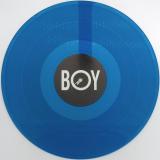
pré-commande25.11.2022

il devrait être publié sur 25.11.2022

134,41

Last In: 2026 years ago
Lee Tracy & Isaac Manning - Is it What You Want

As the sun sets on a quaint East Nashville house, a young man bares a piece of his soul. Facing the camera, sporting a silky suit jacket/shirt/slacks/fingerless gloves ensemble that announces "singer" before he's even opened his mouth, Lee Tracy Johnson settles onto his stage, the front yard. He sways to the dirge-like drum machine pulse of a synth-soaked slow jam, extends his arms as if gaining his balance, and croons in affecting, fragile earnest, "I need your love… oh baby…"

Dogs in the yard next door begin barking. A mysterious cardboard robot figure, beamed in from galaxies unknown and affixed to a tree, is less vocal. Lee doesn't acknowledge either's presence. He's busy feeling it, arms and hands gesticulating. His voice rises in falsetto over the now-quiet dogs, over the ambient noise from the street that seeps into the handheld camcorder's microphone, over the recording of his own voice played back from a boombox off-camera. After six minutes the single, continuous shot ends. In this intimate creative universe there are no re-takes. There are many more music videos to shoot, and as Lee later puts it, "The first time you do it is actually the best. Because you can never get that again. You expressing yourself from within."

"I Need Your Love" dates from a lost heyday. From some time in the '80s or early '90s, when Lee Tracy (as he was known in performance) and his music partner/producer/manager Isaac Manning committed hours upon hours of their sonic and visual ideas to tape. Embracing drum machines and synthesizers – electronics that made their personal futurism palpable – they recorded exclusively at home, live in a room into a simple cassette deck. Soul, funk, electro and new wave informed their songs, yet Lee and Isaac eschewed the confinement of conventional categories and genres, preferring to let experimentation guide them.

"Anytime somebody put out a new record they had the same instruments or the same sound," explains Isaac. "So I basically wanted to find something that's really gonna stand out away from all of the rest of 'em." Their ethos meant that every idea they came up with was at least worth trying: echoed out half-rapped exhortations over frantic techno-style beats, gospel synth soul, modal electro-funk, oddball pop reinterpretations, emo AOR balladry, nods to Prince and the Fat Boys, or arrangements that might collapse mid-song into a mess of arcade game-ish blips before rallying to reach the finish line. All of it conjoined by consistent tape hiss, and most vitally, Lee's chameleonic voice, which managed to wildly shape shift and still evoke something sincere – whether toggling between falsetto and tenor exalting Jesus's return, or punctuating a melismatic romantic adlib with a succinct, "We all know how it feels to be alone."

"People think we went to a studio," says Isaac derisively. "We never went to no studio. We didn't have the money to go to no studio! We did this stuff at home. I shot videos in my front yard with whatever we could to get things together." Sometimes Isaac would just put on an instrumental record, be it "Planet Rock" or "Don't Cry For Me Argentina" (from Evita), press "record," and let Lee improvise over it, yielding peculiar love songs, would-be patriotic anthems, or Elvis Presley or Marilyn Monroe tributes. Technical limitations and a lack of professional polish never dissuaded them. They believed they were onto something.

"That struggle," Isaac says, "made that sound sound good to me."

In the parlance of modern music criticism Lee and Isaac's dizzying DIY efforts would inevitably be described as "outsider." But "outsider" carries the burden of untold additional layers of meaning if you're Black and from the South, creating on a budget, and trying to get someone, anyone within the country music capital of the world to take your vision seriously. "What category should we put it in?" Isaac asks rhetorically. "I don't know. All I know is feeling. I ain't gonna name it nothing. It's music. If it grabs your soul and touch your heart that's what it basically is supposed to do."

=

Born in 1963, the baby boy of nine siblings, Lee Tracy spent his earliest years living amidst the shotgun houses on Nashville's south side. "We was poor, man!" he says, recalling the outhouse his family used for a bathroom and the blocks of ice they kept in the kitchen to chill perishables. "But I actually don't think I really realized I was in poverty until I got grown and started thinking about it." Lee's mom worked at the Holiday Inn; his dad did whatever he had to do, from selling fruit from a horse drawn cart to bootlegging. "We didn't have much," Lee continues, "but my mother and my father got us the things we needed, the clothes on our back." By the end of the decade with the city's urban renewal programs razing entire neighborhoods to accommodate construction of the Interstate, the family moved to Edgehill Projects. Lee remembers music and art as a constant source of inspiration for he and his brothers and sisters – especially after seeing the Jackson 5 perform on Ed Sullivan. "As a small child I just knew that was what I wanted to do."

His older brother Don began musically mentoring him, introducing Lee to a variety of instruments and sounds. "He would never play one particular type of music, like R&B," says Lee. "I was surrounded by jazz, hard rock and roll, easy listening, gospel, reggae, country music; I mean I was a sponge absorbing all of that." Lee taught himself to play drums by beating on cardboard boxes, gaining a rep around the way for his timekeeping, and his singing voice. Emulating his favorites, Earth Wind & Fire and Cameo, he formed groups with other kids with era-evocative band names like Concept and TNT Connection, and emerged as the leader of disciplined rehearsals. "I made them practice," says Lee. "We practiced and practiced and practiced. Because I wanted that perfection." By high school the most accomplished of these bands would take top prize in a prominent local talent show. It was a big moment for Lee, and he felt ready to take things to the next level. But his band-mates had other ideas.

"I don't know what happened," he says, still miffed at the memory. "It must have blew they mind after we won and people started showing notice, because it's like everybody quit! I was like, where the hell did everybody go?" Lee had always made a point of interrogating prospective musicians about their intentions before joining his groups: were they really serious or just looking for a way to pick up girls? Now he understood even more the importance of finding a collaborator just as committed to the music as he was.

=

Isaac Manning had spent much of his life immersed in music and the arts – singing in the church choir with his family on Nashville's north side, writing, painting, dancing, and working various gigs within the entertainment industry. After serving in the armed forces, in the early '70s he ran The Teenage Place, a music and performance venue that catered to the local youth. But he was forced out of town when word of one of his recreational routines created a stir beyond the safe haven of his bohemian circles.

"I was growing marijuana," Isaac explains. "It wasn't no business, I was smoking it myself… I would put marijuana in scrambled eggs, cornbread and stuff." His weed use originated as a form of self-medication to combat severe tooth pain. But when he began sharing it with some of the other young people he hung out with, some of who just so happened to be the kids of Nashville politicians, the cops came calling. "When I got busted," he remembers, "they were talking about how they were gonna get rid of me because they didn't want me saying nothing about they children because of the politics and stuff. So I got my family, took two raggedy cars, and left Nashville and went to Vegas."

Out in the desert, Isaac happened to meet Chubby Checker of "The Twist" fame while the singer was gigging at The Flamingo. Impressed by Isaac's zeal, Checker invited him to go on the road with him as his tour manager/roadie/valet. The experience gave Isaac a window into a part of the entertainment world he'd never encountered – a glimpse of what a true pop act's audience looked like. "Chubby Checker, none of his shows were played for Black folks," he remembers. "All his gigs were done at high-class white people areas." Returning home after a few years with Chubby, Isaac was properly motivated to make it in Music City. He began writing songs and scouting around Nashville for local talent anywhere he could find it with an expressed goal: "Find someone who can deliver your songs the way you want 'em delivered and make people feel what you want them to feel."

One day while walking through Edgehill Projects Isaac heard someone playing the drums in a way that made him stop and take notice. "The music was so tight, just the drums made me feel like, oh I'm-a find this person," he recalls. "So I circled through the projects until I found who it was.

"That's how I met him – Lee Tracy. When I found him and he started singing and stuff, I said, ohhh, this is somebody different."

=

Theirs was a true complementary partnership: young Lee possessed the raw talent, the older Isaac the belief. "He's really the only one besides my brother and my family that really seen the potential in me," says Lee. "He made me see that I could do it."

Isaac long being a night owl, his house also made for a fertile collaborative environment – a space where there always seemed to be a new piece of his visual art on display: paintings, illustrations, and dolls and figures (including an enigmatic cardboard robot). Lee and Issac would hang out together and talk, listen to music, conjure ideas, and smoke the herb Isaac had resumed growing in his yard. "It got to where I could trust him, he could trust me," Isaac says of their bond. They also worked together for hours on drawings, spreading larges rolls of paper on the walls and sketching faces with abstract patterns and imagery: alien-like beings, tri-horned horse heads, inverted Janus-like characters where one visage blurred into the other.

Soon it became apparent that they didn't need other collaborators; self-sufficiency was the natural way forward. At Isaac's behest Lee, already fed up with dealing with band musicians, began playing around with a poly-sonic Yamaha keyboard at the local music store. "It had everything on it – trumpet, bass, drums, organ," remembers Lee. "And that's when I started recording my own stuff."

The technology afforded Lee the flexibility and independence he craved, setting him on a path other bedroom musicians and producers around the world were simultaneously following through the '80s into the early '90s. Saving up money from day jobs, he eventually supplemented the Yamaha Isaac had gotten him with Roland and Casio drum machines and a Moog. Lee was living in an apartment in Hillside at that point caring for his dad, who'd been partially paralyzed since early in life. In the evenings up in his second floor room, the music put him in a zone where he could tune out everything and lose himself in his ideas.

"Oh I loved it," he recalls. "I would really experiment with the instruments and use a lot of different sound effects. I was looking for something nobody else had. I wanted something totally different. And once I found the sound I was looking for, I would just smoke me a good joint and just let it go, hit the record button." More potent a creative stimulant than even Isaac's weed was the holistic flow and spontaneity of recording. Between sessions at Isaac's place and Lee's apartment, their volume of output quickly ballooned.

"We was always recording," says Lee. "That's why we have so much music. Even when I went to Isaac's and we start creating, I get home, my mind is racing, I gotta start creating, creating, creating. I remember there were times when I took a 90-minute tape from front to back and just filled it up."

"We never practiced," says Isaac. "See, that was just so odd about the whole thing. I could relate to him, and tell him about the songs I had ideas for and everything and stuff. And then he would bring it back or whatever, and we'd get together and put it down." Once the taskmaster hell bent on rehearsing, Lee had flipped a full 180. Perfection was no longer an aspiration, but the enemy of inspiration.

"I seen where practicing and practicing got me," says Lee. "A lot of musicians you get to playing and they gotta stop, they have to analyze the music. But while you analyzing you losing a lot of the greatness of what you creating. Stop analyzing what you play, just play! And it'll all take shape."

=

"I hope you understood the beginning of the record because this was invented from a dream I had today… (You tell me, I'll tell you, we'll figure it out together)" – Lee Tracy and Isaac Manning, "Hope You Understand"

Lee lets loose a maniacal cackle when he acknowledges that the material that he and Isaac recorded was by anyone's estimation pretty out there. It's the same laugh that commences "Hope You Understand" – a chaotic transmission that encapsulates the duality at the heart of their music: a stated desire to reach people and a compulsion to go as leftfield as they saw fit.

"We just did it," says Lee. "We cut the music on and cut loose. I don't sit around and write. I do it by listening, get a feeling, play the music, and the lyrics and stuff just come out of me."

The approach proved adaptable to interpreting other artists' material. While recording a cover of Whitney Houston's pop ballad "Saving All My Love For You," Lee played Whitney's version in his headphones as he laid down his own vocals – partially following the lyrics, partially using them as a departure point. The end result is barely recognizable compared with the original, Lee and Isaac having switched up the time signature and reinvented the melody along the way towards morphing a slick mainstream radio standard into something that sounds solely their own.

"I really used that song to get me started," says Lee. "Then I said, well I need something else, something is missing. Something just came over me. That's when I came up with 'Is It What You Want.'"

The song would become the centerpiece of Lee and Isaac's repertoire. Pushed along by a percolating metronomic Rhythm King style beat somewhere between a military march and a samba, "Is It What You Want" finds Lee pleading the sincerity of his commitment to a potential love interest embellished by vocal tics and hiccups subtlely reminiscent of his childhood hero MJ. Absent chord changes, only synth riffs gliding in and out like apparitions, the song achieves a lingering lo-fi power that leaves you feeling like it's still playing, somewhere, even after the fade out.

"I don't know, it's like a real spiritual song," Lee reflects. "But it's not just spiritual. To me the more I listen to it it's like about everything that you do in your everyday life, period. Is it what you want? Do you want a car or you don't want a car? Do you want Jesus or do you want the Devil? It's basically asking you the question. Can't nobody answer the question but you yourself."

In 1989 Lee won a lawsuit stemming from injuries sustained from a fight he'd gotten into. He took part of the settlement money and with Isaac pressed up "Saving All My Love For You" b/w "Is It What You Want" as a 45 single. Isaac christened the label One Chance Records. "Because that's all we wanted," he says with a laugh, "one chance."

Isaac sent the record out to radio stations and major labels, hoping for it to make enough noise to get picked up nationally. But the response he and Lee were hoping for never materialized. According to Isaac the closest the single got to getting played on the radio is when a disk jock from a local station made a highly unusual announcement on air: "The dude said on the radio, 107.5 – 'We are not gonna play 'Is It What You Want.' We cracked up! Wow, that's deep.

"It was a whole racist thing that was going on," he reflects. "So we just looked over and kept on going. That was it. That was about the way it goes… If you were Black and you were living in Nashville and stuff, that's the way you got treated." Isaac already knew as much from all the times he'd brought he and Lee's tapes (even their cache of country music tunes) over to Music Row to try to drum up interest to no avail.

"Isaac, he really worked his ass off," says Lee. "He probably been to every record place down on Music Row." Nashville's famed recording and music business corridor wasn't but a few blocks from where Lee grew up. Close enough, he remembers, for him to ride his bike along its back alleys and stumble upon the occasional random treasure, like a discarded box of harmonicas. Getting in through the front door, however, still felt a world away.

"I just don't think at the time our music fell into a category for them," he concedes. "It was before its time."

=

Lee stopped making music some time in the latter part of the '90s, around the time his mom passed away and life became increasingly tough to manage. "When my mother died I had a nervous breakdown," he says, "So I shut down for a long time. I was in such a sadness frame of mind. That's why nobody seen me. I had just disappeared off the map." He fell out of touch with Isaac, and in an indication of just how bad things had gotten for him, lost track of all the recordings they'd made together. Music became a distant memory.

Fortunately, Isaac kept the faith. In a self-published collection of his poetry – paeans to some of his favorite entertainment and public figures entitled Friends and Dick Clark – he'd written that he believed "music has a life of its own." But his prescience and presence of mind were truly manifested in the fact that he kept an archive of he and Lee's work. As perfectly imperfect as "Is It What You Want" now sounds in a post-Personal Space world, Lee and Isaac's lone official release was in fact just a taste. The bulk of the Is It What You Want album is culled from the pair's essentially unheard home recordings – complete songs, half-realized experiments, Isaac's blue monologues and pronouncements et al – compiled, mixed and programmed in the loose and impulsive creative spirit of their regular get-togethers from decades ago. The rest of us, it seems, may have finally caught up to them.

On the prospect of at long last reaching a wider audience, Isaac says simply, "I been trying for a long time, it feels good." Ever the survivor, he adds, "The only way I know how to make it to the top is to keep climbing. If one leg break on the ladder, hey, you gotta fix it and keep on going… That's where I be at. I'll kill death to make it out there."

For Lee it all feels akin to a personal resurrection: "It's like I was in a tomb and the tomb was opened and I'm back… Man, it feels so great. I feel like I'm gonna jump out of my skin." Success at this stage of his life, he realizes, probably means something different than what it did back when he was singing and dancing in Isaac's front yard. "What I really mean by 'making it,'" he explains isn't just the music being heard but, "the story being told."

Occasionally Lee will pull up "Is It What You Want" on YouTube on his phone, put on his headphones, and listen. He remembers the first time he heard his recorded voice. How surreal it was, how he thought to himself, "Is that really me?" What would he say to that younger version of himself now?

"I would probably tell myself, hang in there, don't give up. Keep striving for the goal. And everything will work out."

Despite what's printed on the record label, sometimes you do get more than one chance.

pas en stock

Commandez maintenant et nous commanderons l'article pour vous chez notre fournisseur.

11,72

Last In: 3 years ago
Lee Tracy & Isaac Manning - Is it What You Want LP

As the sun sets on a quaint East Nashville house, a young man bares a piece of his soul. Facing the camera, sporting a silky suit jacket/shirt/slacks/fingerless gloves ensemble that announces "singer" before he's even opened his mouth, Lee Tracy Johnson settles onto his stage, the front yard. He sways to the dirge-like drum machine pulse of a synth-soaked slow jam, extends his arms as if gaining his balance, and croons in affecting, fragile earnest, "I need your love… oh baby…"

Dogs in the yard next door begin barking. A mysterious cardboard robot figure, beamed in from galaxies unknown and affixed to a tree, is less vocal. Lee doesn't acknowledge either's presence. He's busy feeling it, arms and hands gesticulating. His voice rises in falsetto over the now-quiet dogs, over the ambient noise from the street that seeps into the handheld camcorder's microphone, over the recording of his own voice played back from a boombox off-camera. After six minutes the single, continuous shot ends. In this intimate creative universe there are no re-takes. There are many more music videos to shoot, and as Lee later puts it, "The first time you do it is actually the best. Because you can never get that again. You expressing yourself from within."

"I Need Your Love" dates from a lost heyday. From some time in the '80s or early '90s, when Lee Tracy (as he was known in performance) and his music partner/producer/manager Isaac Manning committed hours upon hours of their sonic and visual ideas to tape. Embracing drum machines and synthesizers – electronics that made their personal futurism palpable – they recorded exclusively at home, live in a room into a simple cassette deck. Soul, funk, electro and new wave informed their songs, yet Lee and Isaac eschewed the confinement of conventional categories and genres, preferring to let experimentation guide them.

"Anytime somebody put out a new record they had the same instruments or the same sound," explains Isaac. "So I basically wanted to find something that's really gonna stand out away from all of the rest of 'em." Their ethos meant that every idea they came up with was at least worth trying: echoed out half-rapped exhortations over frantic techno-style beats, gospel synth soul, modal electro-funk, oddball pop reinterpretations, emo AOR balladry, nods to Prince and the Fat Boys, or arrangements that might collapse mid-song into a mess of arcade game-ish blips before rallying to reach the finish line. All of it conjoined by consistent tape hiss, and most vitally, Lee's chameleonic voice, which managed to wildly shape shift and still evoke something sincere – whether toggling between falsetto and tenor exalting Jesus's return, or punctuating a melismatic romantic adlib with a succinct, "We all know how it feels to be alone."

"People think we went to a studio," says Isaac derisively. "We never went to no studio. We didn't have the money to go to no studio! We did this stuff at home. I shot videos in my front yard with whatever we could to get things together." Sometimes Isaac would just put on an instrumental record, be it "Planet Rock" or "Don't Cry For Me Argentina" (from Evita), press "record," and let Lee improvise over it, yielding peculiar love songs, would-be patriotic anthems, or Elvis Presley or Marilyn Monroe tributes. Technical limitations and a lack of professional polish never dissuaded them. They believed they were onto something.

"That struggle," Isaac says, "made that sound sound good to me."

In the parlance of modern music criticism Lee and Isaac's dizzying DIY efforts would inevitably be described as "outsider." But "outsider" carries the burden of untold additional layers of meaning if you're Black and from the South, creating on a budget, and trying to get someone, anyone within the country music capital of the world to take your vision seriously. "What category should we put it in?" Isaac asks rhetorically. "I don't know. All I know is feeling. I ain't gonna name it nothing. It's music. If it grabs your soul and touch your heart that's what it basically is supposed to do."

=

Born in 1963, the baby boy of nine siblings, Lee Tracy spent his earliest years living amidst the shotgun houses on Nashville's south side. "We was poor, man!" he says, recalling the outhouse his family used for a bathroom and the blocks of ice they kept in the kitchen to chill perishables. "But I actually don't think I really realized I was in poverty until I got grown and started thinking about it." Lee's mom worked at the Holiday Inn; his dad did whatever he had to do, from selling fruit from a horse drawn cart to bootlegging. "We didn't have much," Lee continues, "but my mother and my father got us the things we needed, the clothes on our back." By the end of the decade with the city's urban renewal programs razing entire neighborhoods to accommodate construction of the Interstate, the family moved to Edgehill Projects. Lee remembers music and art as a constant source of inspiration for he and his brothers and sisters – especially after seeing the Jackson 5 perform on Ed Sullivan. "As a small child I just knew that was what I wanted to do."

His older brother Don began musically mentoring him, introducing Lee to a variety of instruments and sounds. "He would never play one particular type of music, like R&B," says Lee. "I was surrounded by jazz, hard rock and roll, easy listening, gospel, reggae, country music; I mean I was a sponge absorbing all of that." Lee taught himself to play drums by beating on cardboard boxes, gaining a rep around the way for his timekeeping, and his singing voice. Emulating his favorites, Earth Wind & Fire and Cameo, he formed groups with other kids with era-evocative band names like Concept and TNT Connection, and emerged as the leader of disciplined rehearsals. "I made them practice," says Lee. "We practiced and practiced and practiced. Because I wanted that perfection." By high school the most accomplished of these bands would take top prize in a prominent local talent show. It was a big moment for Lee, and he felt ready to take things to the next level. But his band-mates had other ideas.

"I don't know what happened," he says, still miffed at the memory. "It must have blew they mind after we won and people started showing notice, because it's like everybody quit! I was like, where the hell did everybody go?" Lee had always made a point of interrogating prospective musicians about their intentions before joining his groups: were they really serious or just looking for a way to pick up girls? Now he understood even more the importance of finding a collaborator just as committed to the music as he was.

=

Isaac Manning had spent much of his life immersed in music and the arts – singing in the church choir with his family on Nashville's north side, writing, painting, dancing, and working various gigs within the entertainment industry. After serving in the armed forces, in the early '70s he ran The Teenage Place, a music and performance venue that catered to the local youth. But he was forced out of town when word of one of his recreational routines created a stir beyond the safe haven of his bohemian circles.

"I was growing marijuana," Isaac explains. "It wasn't no business, I was smoking it myself… I would put marijuana in scrambled eggs, cornbread and stuff." His weed use originated as a form of self-medication to combat severe tooth pain. But when he began sharing it with some of the other young people he hung out with, some of who just so happened to be the kids of Nashville politicians, the cops came calling. "When I got busted," he remembers, "they were talking about how they were gonna get rid of me because they didn't want me saying nothing about they children because of the politics and stuff. So I got my family, took two raggedy cars, and left Nashville and went to Vegas."

Out in the desert, Isaac happened to meet Chubby Checker of "The Twist" fame while the singer was gigging at The Flamingo. Impressed by Isaac's zeal, Checker invited him to go on the road with him as his tour manager/roadie/valet. The experience gave Isaac a window into a part of the entertainment world he'd never encountered – a glimpse of what a true pop act's audience looked like. "Chubby Checker, none of his shows were played for Black folks," he remembers. "All his gigs were done at high-class white people areas." Returning home after a few years with Chubby, Isaac was properly motivated to make it in Music City. He began writing songs and scouting around Nashville for local talent anywhere he could find it with an expressed goal: "Find someone who can deliver your songs the way you want 'em delivered and make people feel what you want them to feel."

One day while walking through Edgehill Projects Isaac heard someone playing the drums in a way that made him stop and take notice. "The music was so tight, just the drums made me feel like, oh I'm-a find this person," he recalls. "So I circled through the projects until I found who it was.

"That's how I met him – Lee Tracy. When I found him and he started singing and stuff, I said, ohhh, this is somebody different."

=

Theirs was a true complementary partnership: young Lee possessed the raw talent, the older Isaac the belief. "He's really the only one besides my brother and my family that really seen the potential in me," says Lee. "He made me see that I could do it."

Isaac long being a night owl, his house also made for a fertile collaborative environment – a space where there always seemed to be a new piece of his visual art on display: paintings, illustrations, and dolls and figures (including an enigmatic cardboard robot). Lee and Issac would hang out together and talk, listen to music, conjure ideas, and smoke the herb Isaac had resumed growing in his yard. "It got to where I could trust him, he could trust me," Isaac says of their bond. They also worked together for hours on drawings, spreading larges rolls of paper on the walls and sketching faces with abstract patterns and imagery: alien-like beings, tri-horned horse heads, inverted Janus-like characters where one visage blurred into the other.

Soon it became apparent that they didn't need other collaborators; self-sufficiency was the natural way forward. At Isaac's behest Lee, already fed up with dealing with band musicians, began playing around with a poly-sonic Yamaha keyboard at the local music store. "It had everything on it – trumpet, bass, drums, organ," remembers Lee. "And that's when I started recording my own stuff."

The technology afforded Lee the flexibility and independence he craved, setting him on a path other bedroom musicians and producers around the world were simultaneously following through the '80s into the early '90s. Saving up money from day jobs, he eventually supplemented the Yamaha Isaac had gotten him with Roland and Casio drum machines and a Moog. Lee was living in an apartment in Hillside at that point caring for his dad, who'd been partially paralyzed since early in life. In the evenings up in his second floor room, the music put him in a zone where he could tune out everything and lose himself in his ideas.

"Oh I loved it," he recalls. "I would really experiment with the instruments and use a lot of different sound effects. I was looking for something nobody else had. I wanted something totally different. And once I found the sound I was looking for, I would just smoke me a good joint and just let it go, hit the record button." More potent a creative stimulant than even Isaac's weed was the holistic flow and spontaneity of recording. Between sessions at Isaac's place and Lee's apartment, their volume of output quickly ballooned.

"We was always recording," says Lee. "That's why we have so much music. Even when I went to Isaac's and we start creating, I get home, my mind is racing, I gotta start creating, creating, creating. I remember there were times when I took a 90-minute tape from front to back and just filled it up."

"We never practiced," says Isaac. "See, that was just so odd about the whole thing. I could relate to him, and tell him about the songs I had ideas for and everything and stuff. And then he would bring it back or whatever, and we'd get together and put it down." Once the taskmaster hell bent on rehearsing, Lee had flipped a full 180. Perfection was no longer an aspiration, but the enemy of inspiration.

"I seen where practicing and practicing got me," says Lee. "A lot of musicians you get to playing and they gotta stop, they have to analyze the music. But while you analyzing you losing a lot of the greatness of what you creating. Stop analyzing what you play, just play! And it'll all take shape."

=

"I hope you understood the beginning of the record because this was invented from a dream I had today… (You tell me, I'll tell you, we'll figure it out together)" – Lee Tracy and Isaac Manning, "Hope You Understand"

Lee lets loose a maniacal cackle when he acknowledges that the material that he and Isaac recorded was by anyone's estimation pretty out there. It's the same laugh that commences "Hope You Understand" – a chaotic transmission that encapsulates the duality at the heart of their music: a stated desire to reach people and a compulsion to go as leftfield as they saw fit.

"We just did it," says Lee. "We cut the music on and cut loose. I don't sit around and write. I do it by listening, get a feeling, play the music, and the lyrics and stuff just come out of me."

The approach proved adaptable to interpreting other artists' material. While recording a cover of Whitney Houston's pop ballad "Saving All My Love For You," Lee played Whitney's version in his headphones as he laid down his own vocals – partially following the lyrics, partially using them as a departure point. The end result is barely recognizable compared with the original, Lee and Isaac having switched up the time signature and reinvented the melody along the way towards morphing a slick mainstream radio standard into something that sounds solely their own.

"I really used that song to get me started," says Lee. "Then I said, well I need something else, something is missing. Something just came over me. That's when I came up with 'Is It What You Want.'"

The song would become the centerpiece of Lee and Isaac's repertoire. Pushed along by a percolating metronomic Rhythm King style beat somewhere between a military march and a samba, "Is It What You Want" finds Lee pleading the sincerity of his commitment to a potential love interest embellished by vocal tics and hiccups subtlely reminiscent of his childhood hero MJ. Absent chord changes, only synth riffs gliding in and out like apparitions, the song achieves a lingering lo-fi power that leaves you feeling like it's still playing, somewhere, even after the fade out.

"I don't know, it's like a real spiritual song," Lee reflects. "But it's not just spiritual. To me the more I listen to it it's like about everything that you do in your everyday life, period. Is it what you want? Do you want a car or you don't want a car? Do you want Jesus or do you want the Devil? It's basically asking you the question. Can't nobody answer the question but you yourself."

In 1989 Lee won a lawsuit stemming from injuries sustained from a fight he'd gotten into. He took part of the settlement money and with Isaac pressed up "Saving All My Love For You" b/w "Is It What You Want" as a 45 single. Isaac christened the label One Chance Records. "Because that's all we wanted," he says with a laugh, "one chance."

Isaac sent the record out to radio stations and major labels, hoping for it to make enough noise to get picked up nationally. But the response he and Lee were hoping for never materialized. According to Isaac the closest the single got to getting played on the radio is when a disk jock from a local station made a highly unusual announcement on air: "The dude said on the radio, 107.5 – 'We are not gonna play 'Is It What You Want.' We cracked up! Wow, that's deep.

"It was a whole racist thing that was going on," he reflects. "So we just looked over and kept on going. That was it. That was about the way it goes… If you were Black and you were living in Nashville and stuff, that's the way you got treated." Isaac already knew as much from all the times he'd brought he and Lee's tapes (even their cache of country music tunes) over to Music Row to try to drum up interest to no avail.

"Isaac, he really worked his ass off," says Lee. "He probably been to every record place down on Music Row." Nashville's famed recording and music business corridor wasn't but a few blocks from where Lee grew up. Close enough, he remembers, for him to ride his bike along its back alleys and stumble upon the occasional random treasure, like a discarded box of harmonicas. Getting in through the front door, however, still felt a world away.

"I just don't think at the time our music fell into a category for them," he concedes. "It was before its time."

=

Lee stopped making music some time in the latter part of the '90s, around the time his mom passed away and life became increasingly tough to manage. "When my mother died I had a nervous breakdown," he says, "So I shut down for a long time. I was in such a sadness frame of mind. That's why nobody seen me. I had just disappeared off the map." He fell out of touch with Isaac, and in an indication of just how bad things had gotten for him, lost track of all the recordings they'd made together. Music became a distant memory.

Fortunately, Isaac kept the faith. In a self-published collection of his poetry – paeans to some of his favorite entertainment and public figures entitled Friends and Dick Clark – he'd written that he believed "music has a life of its own." But his prescience and presence of mind were truly manifested in the fact that he kept an archive of he and Lee's work. As perfectly imperfect as "Is It What You Want" now sounds in a post-Personal Space world, Lee and Isaac's lone official release was in fact just a taste. The bulk of the Is It What You Want album is culled from the pair's essentially unheard home recordings – complete songs, half-realized experiments, Isaac's blue monologues and pronouncements et al – compiled, mixed and programmed in the loose and impulsive creative spirit of their regular get-togethers from decades ago. The rest of us, it seems, may have finally caught up to them.

On the prospect of at long last reaching a wider audience, Isaac says simply, "I been trying for a long time, it feels good." Ever the survivor, he adds, "The only way I know how to make it to the top is to keep climbing. If one leg break on the ladder, hey, you gotta fix it and keep on going… That's where I be at. I'll kill death to make it out there."

For Lee it all feels akin to a personal resurrection: "It's like I was in a tomb and the tomb was opened and I'm back… Man, it feels so great. I feel like I'm gonna jump out of my skin." Success at this stage of his life, he realizes, probably means something different than what it did back when he was singing and dancing in Isaac's front yard. "What I really mean by 'making it,'" he explains isn't just the music being heard but, "the story being told."

Occasionally Lee will pull up "Is It What You Want" on YouTube on his phone, put on his headphones, and listen. He remembers the first time he heard his recorded voice. How surreal it was, how he thought to himself, "Is that really me?" What would he say to that younger version of himself now?

"I would probably tell myself, hang in there, don't give up. Keep striving for the goal. And everything will work out."

Despite what's printed on the record label, sometimes you do get more than one chance.

pas en stock

Commandez maintenant et nous commanderons l'article pour vous chez notre fournisseur.

23,49

Last In: 3 years ago
Articles par page:
N/ABPM
Vinyl