Mit modernster Produktion schlägt We Got Love eine musikalische Brücke zwischen Kelly Klassikern wie
„An Angel“, „Fell in Love with an Alien“ oder „Why Why Why“, die jeder noch im Ohr hat, und neuen
Songs einer The Kelly Family wie man sie noch nie gehört hat. Neu arrangiert und neu aufgenommen
wissen The Kelly Family mit ihren Klassikern und neuen Songs auch 2017 Hysterie-Stürme auszulösen.
Die komplette Überarbeitung der Kelly-Hits war der Band ein Anliegen, dessen Prozess die Musiker auch
immer wieder selbst verblüfft hat: „‚An Angel’ zum Beispiel singt Angelo gemeinsam mit seiner 11-jährigen
Tochter Emma, die diesen Kelly-Klassiker als Special Guest absolut berührend singt. Ein Highlight! Neben
den neuen Klassikern und der Coverversion von „Stand By Me“, sind 4 weitere Neuaufnahmen auf We Got
Love zu hören. Darunter auch neue Kelly Eigenkompositionen: „‚Brothers and Sisters’ stammt von Patricia
und geht mir besonders unter die Haut“, verrät Joey. Vor dem Hintergrund, dass es tatsächlich ein kleines
Wunder ist, dass die Kelly-Geschwister sich musikalisch wiedergefunden haben, hätte auch „Miracles“, das
Duett von John und Kathy, der Name dieses Album werden können – aber für das kleine Wunder war eine
große Portion Liebe notwendig und so passt der Titel We Got Love am Ende perfekt.
2017 auf CD und nun endlich!!! kommt dieses großartige Album auf Doppel-LP im Gatefold und 180g
Vinyl daher. Mit 19 Titel + 2 Bonus-Songs ein absolutes Must Have für Vinyl-Liebhaber und Fans.
Search:alien t
Beyond the Outer Limits by Cult of the UFO is a new solo recording produced by Anthony Barker of Overlords of the UFO.
Due to Anthony being an integral contributor to the music of Overlords of the UFO, the four tracks maintain the trademark retro analogue sci-fi vibe of Overlords of the UFO, although with a more contemporary edge.
This is the 3rd release by Enlightenment Records.
On a first, careless, listen, Stockholm four-piece Melby might seem like a
charming, fun little jangle-pop band - Pay a little more attention however,
and you'll find their waters run a lot deeper than that
The band have all the flash and sparkle of your favourite indie band, but add an
ability to touch moods and feelings with a meaning beyond most of their peers.
Their guitars, drums and synths rattle, roll and flicker around each other, all held
together by the soul-shiver in Wiezell's vocals, to make immaculate little guitarpop gems, equally dusted with sadness and sugar.Finding comfort in a sea of
uncertainty might be a good way to describe Looks Like A Map, the bands second
album. The record captures Melby at a moment where they're growing as people
and as a band, expanding the reach of their sonic horizons, and taking in deeper
and heavier themes, trying to find a home in an often-alienating world. The music
they made around that has a little touch of sorcery around it, sometimes soft as
smoke, sometimes woozy and dream-blurred, sometimes crashing and explosive.
But even through all that evolution, the heart and the soul have remained the
same, and Looks Like A Map still has that Melby-feeling, of a band who put all of
themselves into everything they make and their own blend of indie, psych, pop,
rock and folk. It's a new high for the band that have toured Scandinavia, Germany
and the UK and have played festivals such as Eurosonic, Reeperbahn and
By:Larm, and one that hints at even bigger things to come.
Low Company presents Yuta Matsumura’s Red Ribbon, a sequence of introspective, lavishly melodic dream-songs and amphibian atmospheres recorded in scattered periods over 2018-21. Having played in bands like Low Life, M.O.B. and Orion, and the duo Jay & Yuta (with Jay Cruikshank), Red Ribbon is Matsumura’s first solo outing, and represents a conscious effort to move away from guitar-based songwriting. He composed its nine tracks mostly on piano - layering vocals, bass, keyboards, flute (courtesy of Maeve Parker), violin/cello (Laurence Quinn) and clacking drumbox rhythms into dynamic, dubwise avant-pop structures which are supple and spacious but fizzing with detail and vivid inner life. The laconic 4/4 pulse, heat-warped synth-tones and haunting vaporous melodica of opener ‘Box Garden’ set the tone: its surreal psychedelic patternings barely concealing a deep sting of longing and regret. The cryptic lyrics suggest chance encounters, hidden logic, missed opportunities, fatalism, serendipity. A city submerged: everyone else paused mid-movement, while you’re allowed to swim free and fish-like through the streets, over the rooftops...‘Tangled Orchid’ is a tense night-drive through dry desert heat and into the unknown, running away from your old life, chased down by dust-devils of half-baked schemes and abandoned plans, while ‘Myth Machine’ drops the tempo and something mind-altering, guiding us on a tripped-out dub-disco scuba among alien flora and fauna, a world of impossible shapes and sensations. At which point, the mood of the album decisively shifts, firstly with ‘Sake No Otoh’, sung in Japanese by Haruka Sato: an instant-classic, breathtakingly intimate lover's lament that sounds like it got lost on its way to heaven and is now doomed to orbit the earth forever. The songs that follow continue in this more confessional, imploring mode. As if the travelling's done, the baggage has been cast off, and we’ve arrived at our destination, where the real process of rebirth and repair can begin. The music’s textures become less overtly dubby and electronic, with more of an organic, earthy, chamber-pop/avant-folk feel, at once sad and hopeful-sounding. Three songs in particular bear the influence of Eno’s 70s work (and its mutant bedsit offspring Lifetones, Flaming Tunes, etc): ‘‘E. Potential’, where baroquely chorused vocals - half-agonised, half-beatific - teeter on top of simple oscillating piano loops, and the stately, dawntreading ballads ‘Tabula Rasa’ and ‘No Sleep For Birds’. The bulk of the album was made prior to lockdowns and all of that; its themes of reset, self-examination, the need to f**k it all off and take spiritual stock, are timeless. Though they perhaps have a more bittersweet resonance now the world has returned pretty much to how it was, only worse. Track list: 1. Box Garden 2. Tangled Orchid 3. Myth Machine 4. Red Ribbon 5. Soko No Ato 6. Tabula Rasa 7. E. Potential 8. No Sleep For Birds 9. Zookeeper's Trial
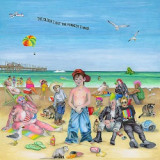
The Older I Get, the Funnier I Was, which follows Thomas’ brilliant 2020 HBO special The Golden One and his Can't Believe You're Happy Here EP released earlier this year, surveys a range of emotion and offers a broad sonic palette, moving between pop punk, electro, and the obvious influence of the singer-songwriters he grew up listening to in early childhood. It conjures the ennui of Bright Eyes alongside the barefaced storytelling of John Prine, the overstuffed lists of Fred Thomas with the lackadaisical humor of Colleen Green, among many others.
Thomas attributes the dexterity of the record to Duterte, who recorded and engineered most of it in addition to serving up plenty of encouragement when Thomas got down on the process. “As a comic, I used to test out new songs during sets to see if the funny bits were hitting, but since I wrote this in isolation I ended up writing lyrics and worrying less about making jokes,” Thomas says. That said, the album’s plenty funny. Stand-out and lead single “Rigamarole” opens with a Thomas-voiced infomercial that recalls his oft-cited lookalike Jim Carrey as the Grinch, before launching into a buoyant pop song about being depressed.
Whitmer Thomas will admit that when he traveled home to small town Gulf Shores, Alabama to record his HBO stand-up special, The Golden One, he expected to be greeted as a returning hero, a conquering king, or at minimum, a guy with a moderately successful career as an entertainer in Los Angeles. “I expected a big welcome home, open arms, but when I went back I realized: nobody fucking knows me. Nobody remembers me,” Thomas says. “In the years I’d been performing that show, I’d been romanticizing my childhood in this mythologized place, but the visit made me see that I’m not really from there anymore.”
The sense of alienation compounded when Thomas recognized how few people in town remembered his mom, to whom The Golden One is dedicated and largely about. Thomas grew up watching her perform with her twin sister at the legendary Flora-Bama Lounge, where he set the special, and still counts her as one of his musical influences. His new album, The Older I Get, the Funnier I Was, isn’t overtly about his mom, her presence is deeply felt throughout. While in Gulf Shores, Thomas discovered dozens of her old recordings, all of which had been wrecked by Katrina, but upon returning to LA, Thomas paid “a fancy place in Hollywood” to fix the tapes and hired Melina Duterte (Jay Som, Bachelor, Routine) to mix them. The two struck up a collaborative friendship, and Thomas had the sound of his mom’s voice back. “I was listening to songs she recorded when she was about my age, just these heartfelt, sweet Americana songs,” he says. “I decided then that I wanted to lose the Ian Curtis voice I always sing with; I wanted to do what came naturally, because my mom always sounded like herself, even when she was singing some cheesy reggae song about, like, Jamaica.”
Thus he went into The Older I Get, the Funnier I Was knowing it was time to retire his darkwave persona, and leaning into his natural, chirpier voice, which he says sounds “like a 12-year-old’s.” It makes sense: much of the album chronicles what Thomas calls “being a kid and feeling like you have no control and overcompensating by being annoying.” “So much of the album is about witnessing drug and alcohol addiction as a kid and seeing what it does to people, but also realizing that there's nothing you can do about it,” Thomas says. It’s familiar territory (see: “Partied to Death”) but the methodology is different this time around; true to its title, The Older I Get, the Funnier I Was isn’t always looking for laughs. Thomas might’ve left his hometown behind, but his kid self is still tagging along, a Peter Pan shadow he can’t untether himself from. The first line he sings on The Older I Get, the Funnier I Was is: “There should be a room at every party where you can just sit and watch a movie.” Find a 12-year-old who wouldn’t say the same.
'Marasma Vussa is the Brainchild of Antonio Feola a long standing figure on the London music scene, Antonio has been running the Fish Factory Studio in Willesden, North London for over two decades now. Throughout the years, he has had a major role in helping many of the current lead players of the London scene have a place to record and define their sound.
Antonio's project Masmara has existed for over 30 years and here has found its place on record. Recorded on tape over time with some of the most sought after players in London and edited during the lockdown period, Vussa is an album of mind-bending deep, cosmic mediative jazz experiments. Boasting catchy melodies and heavy, heavy jazz breaks!'
- A1: Kinky Go - I'm A Winner (Extended Version)
- A2: Jd Allen - Monkey (Vocal Version)
- A3: Brian Ice - Talking To The Night (Swedish Remix)
- A4: Body Power - Nothing
- B1: One System - Life Is Very Short
- B2: Hbo - Come With Me (Disco Version)
- B3: Webo - Miracles (Vocal Version)
- B4: Radiorama - Aliens (Swedish Remix)
- C1: Roby Rotondo - For Your Love (Dual A)
- C2: Flexi Cowboys - Domination (Extended Version)
- C3: Ken Laszlo - Hey Hey Guy (Us Remix)
- C4: Sugar Shake - In The Night (Maxi Version)
- D1: Susanne Meals - Forever (Remix)
- D2: Doctor's Cat - Watch Out (Maxi Version)
- D3: Rizzo - Hot Desire (Extended Version)
- D4: Silver Pozzoli - Pretty Baby (Extended Mix)
- A1: Rock This Mother
- A2: Talk To Me Girl
- A3: You Can Find Me
- A4: Check This Out
- A5: Jesus Going To Clean House
- A6: Hope You Understood
- A7: Is It What You Want
- A8: Love Is Everlasting
- A9: This Is Hip-Hop Art
- A10: Opposite Of Love
- A11: Do You Know What I Mean
- B1: Saving All My Love For You
- B2: Look Out Here I Come
- B3: Girl You Always Talking
- B4: Have A Great Day
- B5: Take My Hand
- B6: I Need Your Love
- B7: Your Town
- B8: Talk Around Town
- B9: Booty Head/Take A Little Walk
- B10: I Love My Mama
- B11: I Never Found Anyone Like You
Vinyl LP[23,49 €]
As the sun sets on a quaint East Nashville house, a young man bares a piece of his soul. Facing the camera, sporting a silky suit jacket/shirt/slacks/fingerless gloves ensemble that announces "singer" before he's even opened his mouth, Lee Tracy Johnson settles onto his stage, the front yard. He sways to the dirge-like drum machine pulse of a synth-soaked slow jam, extends his arms as if gaining his balance, and croons in affecting, fragile earnest, "I need your love… oh baby…"
Dogs in the yard next door begin barking. A mysterious cardboard robot figure, beamed in from galaxies unknown and affixed to a tree, is less vocal. Lee doesn't acknowledge either's presence. He's busy feeling it, arms and hands gesticulating. His voice rises in falsetto over the now-quiet dogs, over the ambient noise from the street that seeps into the handheld camcorder's microphone, over the recording of his own voice played back from a boombox off-camera. After six minutes the single, continuous shot ends. In this intimate creative universe there are no re-takes. There are many more music videos to shoot, and as Lee later puts it, "The first time you do it is actually the best. Because you can never get that again. You expressing yourself from within."
"I Need Your Love" dates from a lost heyday. From some time in the '80s or early '90s, when Lee Tracy (as he was known in performance) and his music partner/producer/manager Isaac Manning committed hours upon hours of their sonic and visual ideas to tape. Embracing drum machines and synthesizers – electronics that made their personal futurism palpable – they recorded exclusively at home, live in a room into a simple cassette deck. Soul, funk, electro and new wave informed their songs, yet Lee and Isaac eschewed the confinement of conventional categories and genres, preferring to let experimentation guide them.
"Anytime somebody put out a new record they had the same instruments or the same sound," explains Isaac. "So I basically wanted to find something that's really gonna stand out away from all of the rest of 'em." Their ethos meant that every idea they came up with was at least worth trying: echoed out half-rapped exhortations over frantic techno-style beats, gospel synth soul, modal electro-funk, oddball pop reinterpretations, emo AOR balladry, nods to Prince and the Fat Boys, or arrangements that might collapse mid-song into a mess of arcade game-ish blips before rallying to reach the finish line. All of it conjoined by consistent tape hiss, and most vitally, Lee's chameleonic voice, which managed to wildly shape shift and still evoke something sincere – whether toggling between falsetto and tenor exalting Jesus's return, or punctuating a melismatic romantic adlib with a succinct, "We all know how it feels to be alone."
"People think we went to a studio," says Isaac derisively. "We never went to no studio. We didn't have the money to go to no studio! We did this stuff at home. I shot videos in my front yard with whatever we could to get things together." Sometimes Isaac would just put on an instrumental record, be it "Planet Rock" or "Don't Cry For Me Argentina" (from Evita), press "record," and let Lee improvise over it, yielding peculiar love songs, would-be patriotic anthems, or Elvis Presley or Marilyn Monroe tributes. Technical limitations and a lack of professional polish never dissuaded them. They believed they were onto something.
"That struggle," Isaac says, "made that sound sound good to me."
In the parlance of modern music criticism Lee and Isaac's dizzying DIY efforts would inevitably be described as "outsider." But "outsider" carries the burden of untold additional layers of meaning if you're Black and from the South, creating on a budget, and trying to get someone, anyone within the country music capital of the world to take your vision seriously. "What category should we put it in?" Isaac asks rhetorically. "I don't know. All I know is feeling. I ain't gonna name it nothing. It's music. If it grabs your soul and touch your heart that's what it basically is supposed to do."
=
Born in 1963, the baby boy of nine siblings, Lee Tracy spent his earliest years living amidst the shotgun houses on Nashville's south side. "We was poor, man!" he says, recalling the outhouse his family used for a bathroom and the blocks of ice they kept in the kitchen to chill perishables. "But I actually don't think I really realized I was in poverty until I got grown and started thinking about it." Lee's mom worked at the Holiday Inn; his dad did whatever he had to do, from selling fruit from a horse drawn cart to bootlegging. "We didn't have much," Lee continues, "but my mother and my father got us the things we needed, the clothes on our back." By the end of the decade with the city's urban renewal programs razing entire neighborhoods to accommodate construction of the Interstate, the family moved to Edgehill Projects. Lee remembers music and art as a constant source of inspiration for he and his brothers and sisters – especially after seeing the Jackson 5 perform on Ed Sullivan. "As a small child I just knew that was what I wanted to do."
His older brother Don began musically mentoring him, introducing Lee to a variety of instruments and sounds. "He would never play one particular type of music, like R&B," says Lee. "I was surrounded by jazz, hard rock and roll, easy listening, gospel, reggae, country music; I mean I was a sponge absorbing all of that." Lee taught himself to play drums by beating on cardboard boxes, gaining a rep around the way for his timekeeping, and his singing voice. Emulating his favorites, Earth Wind & Fire and Cameo, he formed groups with other kids with era-evocative band names like Concept and TNT Connection, and emerged as the leader of disciplined rehearsals. "I made them practice," says Lee. "We practiced and practiced and practiced. Because I wanted that perfection." By high school the most accomplished of these bands would take top prize in a prominent local talent show. It was a big moment for Lee, and he felt ready to take things to the next level. But his band-mates had other ideas.
"I don't know what happened," he says, still miffed at the memory. "It must have blew they mind after we won and people started showing notice, because it's like everybody quit! I was like, where the hell did everybody go?" Lee had always made a point of interrogating prospective musicians about their intentions before joining his groups: were they really serious or just looking for a way to pick up girls? Now he understood even more the importance of finding a collaborator just as committed to the music as he was.
=
Isaac Manning had spent much of his life immersed in music and the arts – singing in the church choir with his family on Nashville's north side, writing, painting, dancing, and working various gigs within the entertainment industry. After serving in the armed forces, in the early '70s he ran The Teenage Place, a music and performance venue that catered to the local youth. But he was forced out of town when word of one of his recreational routines created a stir beyond the safe haven of his bohemian circles.
"I was growing marijuana," Isaac explains. "It wasn't no business, I was smoking it myself… I would put marijuana in scrambled eggs, cornbread and stuff." His weed use originated as a form of self-medication to combat severe tooth pain. But when he began sharing it with some of the other young people he hung out with, some of who just so happened to be the kids of Nashville politicians, the cops came calling. "When I got busted," he remembers, "they were talking about how they were gonna get rid of me because they didn't want me saying nothing about they children because of the politics and stuff. So I got my family, took two raggedy cars, and left Nashville and went to Vegas."
Out in the desert, Isaac happened to meet Chubby Checker of "The Twist" fame while the singer was gigging at The Flamingo. Impressed by Isaac's zeal, Checker invited him to go on the road with him as his tour manager/roadie/valet. The experience gave Isaac a window into a part of the entertainment world he'd never encountered – a glimpse of what a true pop act's audience looked like. "Chubby Checker, none of his shows were played for Black folks," he remembers. "All his gigs were done at high-class white people areas." Returning home after a few years with Chubby, Isaac was properly motivated to make it in Music City. He began writing songs and scouting around Nashville for local talent anywhere he could find it with an expressed goal: "Find someone who can deliver your songs the way you want 'em delivered and make people feel what you want them to feel."
One day while walking through Edgehill Projects Isaac heard someone playing the drums in a way that made him stop and take notice. "The music was so tight, just the drums made me feel like, oh I'm-a find this person," he recalls. "So I circled through the projects until I found who it was.
"That's how I met him – Lee Tracy. When I found him and he started singing and stuff, I said, ohhh, this is somebody different."
=
Theirs was a true complementary partnership: young Lee possessed the raw talent, the older Isaac the belief. "He's really the only one besides my brother and my family that really seen the potential in me," says Lee. "He made me see that I could do it."
Isaac long being a night owl, his house also made for a fertile collaborative environment – a space where there always seemed to be a new piece of his visual art on display: paintings, illustrations, and dolls and figures (including an enigmatic cardboard robot). Lee and Issac would hang out together and talk, listen to music, conjure ideas, and smoke the herb Isaac had resumed growing in his yard. "It got to where I could trust him, he could trust me," Isaac says of their bond. They also worked together for hours on drawings, spreading larges rolls of paper on the walls and sketching faces with abstract patterns and imagery: alien-like beings, tri-horned horse heads, inverted Janus-like characters where one visage blurred into the other.
Soon it became apparent that they didn't need other collaborators; self-sufficiency was the natural way forward. At Isaac's behest Lee, already fed up with dealing with band musicians, began playing around with a poly-sonic Yamaha keyboard at the local music store. "It had everything on it – trumpet, bass, drums, organ," remembers Lee. "And that's when I started recording my own stuff."
The technology afforded Lee the flexibility and independence he craved, setting him on a path other bedroom musicians and producers around the world were simultaneously following through the '80s into the early '90s. Saving up money from day jobs, he eventually supplemented the Yamaha Isaac had gotten him with Roland and Casio drum machines and a Moog. Lee was living in an apartment in Hillside at that point caring for his dad, who'd been partially paralyzed since early in life. In the evenings up in his second floor room, the music put him in a zone where he could tune out everything and lose himself in his ideas.
"Oh I loved it," he recalls. "I would really experiment with the instruments and use a lot of different sound effects. I was looking for something nobody else had. I wanted something totally different. And once I found the sound I was looking for, I would just smoke me a good joint and just let it go, hit the record button." More potent a creative stimulant than even Isaac's weed was the holistic flow and spontaneity of recording. Between sessions at Isaac's place and Lee's apartment, their volume of output quickly ballooned.
"We was always recording," says Lee. "That's why we have so much music. Even when I went to Isaac's and we start creating, I get home, my mind is racing, I gotta start creating, creating, creating. I remember there were times when I took a 90-minute tape from front to back and just filled it up."
"We never practiced," says Isaac. "See, that was just so odd about the whole thing. I could relate to him, and tell him about the songs I had ideas for and everything and stuff. And then he would bring it back or whatever, and we'd get together and put it down." Once the taskmaster hell bent on rehearsing, Lee had flipped a full 180. Perfection was no longer an aspiration, but the enemy of inspiration.
"I seen where practicing and practicing got me," says Lee. "A lot of musicians you get to playing and they gotta stop, they have to analyze the music. But while you analyzing you losing a lot of the greatness of what you creating. Stop analyzing what you play, just play! And it'll all take shape."
=
"I hope you understood the beginning of the record because this was invented from a dream I had today… (You tell me, I'll tell you, we'll figure it out together)" – Lee Tracy and Isaac Manning, "Hope You Understand"
Lee lets loose a maniacal cackle when he acknowledges that the material that he and Isaac recorded was by anyone's estimation pretty out there. It's the same laugh that commences "Hope You Understand" – a chaotic transmission that encapsulates the duality at the heart of their music: a stated desire to reach people and a compulsion to go as leftfield as they saw fit.
"We just did it," says Lee. "We cut the music on and cut loose. I don't sit around and write. I do it by listening, get a feeling, play the music, and the lyrics and stuff just come out of me."
The approach proved adaptable to interpreting other artists' material. While recording a cover of Whitney Houston's pop ballad "Saving All My Love For You," Lee played Whitney's version in his headphones as he laid down his own vocals – partially following the lyrics, partially using them as a departure point. The end result is barely recognizable compared with the original, Lee and Isaac having switched up the time signature and reinvented the melody along the way towards morphing a slick mainstream radio standard into something that sounds solely their own.
"I really used that song to get me started," says Lee. "Then I said, well I need something else, something is missing. Something just came over me. That's when I came up with 'Is It What You Want.'"
The song would become the centerpiece of Lee and Isaac's repertoire. Pushed along by a percolating metronomic Rhythm King style beat somewhere between a military march and a samba, "Is It What You Want" finds Lee pleading the sincerity of his commitment to a potential love interest embellished by vocal tics and hiccups subtlely reminiscent of his childhood hero MJ. Absent chord changes, only synth riffs gliding in and out like apparitions, the song achieves a lingering lo-fi power that leaves you feeling like it's still playing, somewhere, even after the fade out.
"I don't know, it's like a real spiritual song," Lee reflects. "But it's not just spiritual. To me the more I listen to it it's like about everything that you do in your everyday life, period. Is it what you want? Do you want a car or you don't want a car? Do you want Jesus or do you want the Devil? It's basically asking you the question. Can't nobody answer the question but you yourself."
In 1989 Lee won a lawsuit stemming from injuries sustained from a fight he'd gotten into. He took part of the settlement money and with Isaac pressed up "Saving All My Love For You" b/w "Is It What You Want" as a 45 single. Isaac christened the label One Chance Records. "Because that's all we wanted," he says with a laugh, "one chance."
Isaac sent the record out to radio stations and major labels, hoping for it to make enough noise to get picked up nationally. But the response he and Lee were hoping for never materialized. According to Isaac the closest the single got to getting played on the radio is when a disk jock from a local station made a highly unusual announcement on air: "The dude said on the radio, 107.5 – 'We are not gonna play 'Is It What You Want.' We cracked up! Wow, that's deep.
"It was a whole racist thing that was going on," he reflects. "So we just looked over and kept on going. That was it. That was about the way it goes… If you were Black and you were living in Nashville and stuff, that's the way you got treated." Isaac already knew as much from all the times he'd brought he and Lee's tapes (even their cache of country music tunes) over to Music Row to try to drum up interest to no avail.
"Isaac, he really worked his ass off," says Lee. "He probably been to every record place down on Music Row." Nashville's famed recording and music business corridor wasn't but a few blocks from where Lee grew up. Close enough, he remembers, for him to ride his bike along its back alleys and stumble upon the occasional random treasure, like a discarded box of harmonicas. Getting in through the front door, however, still felt a world away.
"I just don't think at the time our music fell into a category for them," he concedes. "It was before its time."
=
Lee stopped making music some time in the latter part of the '90s, around the time his mom passed away and life became increasingly tough to manage. "When my mother died I had a nervous breakdown," he says, "So I shut down for a long time. I was in such a sadness frame of mind. That's why nobody seen me. I had just disappeared off the map." He fell out of touch with Isaac, and in an indication of just how bad things had gotten for him, lost track of all the recordings they'd made together. Music became a distant memory.
Fortunately, Isaac kept the faith. In a self-published collection of his poetry – paeans to some of his favorite entertainment and public figures entitled Friends and Dick Clark – he'd written that he believed "music has a life of its own." But his prescience and presence of mind were truly manifested in the fact that he kept an archive of he and Lee's work. As perfectly imperfect as "Is It What You Want" now sounds in a post-Personal Space world, Lee and Isaac's lone official release was in fact just a taste. The bulk of the Is It What You Want album is culled from the pair's essentially unheard home recordings – complete songs, half-realized experiments, Isaac's blue monologues and pronouncements et al – compiled, mixed and programmed in the loose and impulsive creative spirit of their regular get-togethers from decades ago. The rest of us, it seems, may have finally caught up to them.
On the prospect of at long last reaching a wider audience, Isaac says simply, "I been trying for a long time, it feels good." Ever the survivor, he adds, "The only way I know how to make it to the top is to keep climbing. If one leg break on the ladder, hey, you gotta fix it and keep on going… That's where I be at. I'll kill death to make it out there."
For Lee it all feels akin to a personal resurrection: "It's like I was in a tomb and the tomb was opened and I'm back… Man, it feels so great. I feel like I'm gonna jump out of my skin." Success at this stage of his life, he realizes, probably means something different than what it did back when he was singing and dancing in Isaac's front yard. "What I really mean by 'making it,'" he explains isn't just the music being heard but, "the story being told."
Occasionally Lee will pull up "Is It What You Want" on YouTube on his phone, put on his headphones, and listen. He remembers the first time he heard his recorded voice. How surreal it was, how he thought to himself, "Is that really me?" What would he say to that younger version of himself now?
"I would probably tell myself, hang in there, don't give up. Keep striving for the goal. And everything will work out."
Despite what's printed on the record label, sometimes you do get more than one chance.
Copenhagen-via-Bulgaria producer Vixen readies her Lobster Theremin debut. Influenced by the high velocity techno sounds of the Danish capital, Vixen has been gathering momentum within her local circuit in addition to being a member of the renowned DIY collective Fast Forward, and here she delivers four cuts of big-room trance-techno.
‘Vibe Catcher’ is as ghostly as it is alien; a sonic trip through solar wastelands and otherworldly graveyards - unapologetic warehouse techno for the misfits of the underworld.
‘Maladaptive Daydreamer’ follows in a similar vein, the energy becoming a little more urgent as strobe lights flash overhead.
‘High Femme Fantasy’ is a homage to the progressive sound re-rise that has infiltrated so much of the contemporary dance music soundscape; a pulsating cut of atmospheric techno. Fun taken seriously.
Finalising the release is a remix from Danish contemporary royalty - Schacke burst onto the scene releasing on Courtesy’s Kulør label - an imprint dedicated to the sounds of the Danish underground - and an incredible release on Russian label Клуб, and the producers rendition of ‘Maladaptive Daydreamer’ is sure to be a late contender for many people’s track of the year lists.
Heady with hooks and unforgettable melodies, gliding on deeply danceable grooves, always with Air Waves’ innate compassion, concision and uncanny pop sense shining throughout. A masterpiece that’s beautifully simple, instantly accessible and entirely addictive. Featuring Cass Mccombs, Skyler Skjelset (Fleet Foxes, Beach House), Luke Temple, Brian Betancourt (Hospitality, Sam Evian), Rina Mushonga, Frankie Cosmos, Lispector, David Christian, Ethan Sass, and Ben Florencio. ‘The Dance’ has waited three years to see the light of day and it comes to us now, blinking, smiling in the widening light of 2022 feeling more needed and necessary but also more joyous than ever before. It’s both a snapshot of these songs as they were recorded but crucially, in the intervening time those songs have had additional arrangements crafted by Nicole, created remotely and virtually, with a few like-minded collaborators. The result is simultaneously Air Waves freshest, most spontaneous yet finessed album yet. Nicole Schneit released their first independent album in 2009 under the Air Waves moniker, a name inspired by a Guided By Voices song - subsequent albums like 2010’s ‘Dungeon Dots’ (which featured a guest vocal from fellow Brooklynite Sharon Van Etten), 2015’s ‘Parting Glances’ and 2017’s stunning ‘Warrior’ crystallised Schneit’s vision of loose-but-focused, convivial but startling pop. ‘The Dance’ continues that trajectory but finds Schneit opening up their music to a more fluid sense of space and movement, while keeping their lyrical eye between the personal and the political, from the specific to the universal with a haiku-like directness and suggestion. You won’t find a better soundtrack for the solidarity, strength, romance and movement we all need right now than ‘The Dance’ - Air Waves’ best album yet // “There is a rawness, both musical and emotional, proving that the simplest ways to communicate feelings are sometimes the most effective” Pitchfork // “More varied and ambitious than ever” Stereogum // Track List A1 The Roof (feat. Luke Temple & Rina Mushonga) A2 The Dance A3 Star Earring (feat. Lispector) A4 Alien (feat. Cass McCombs) B1 Black Metal Demon (feat. Frankie Cosmos & Merce Lemon) B2 Treehouse B3 Wait B4 The Light B5 Peer Peer
The 'Privacy Angels' dwell in a liminal zone, a folk magical world sprawling within some remote nodes of the digital universe. An a-chronic plane of contradictions in which the spiritual and the machinic exist in a contrast that, instead of leading to mutual annihilation or subjugation, produces weird forms of life and uncanny forms of beauty. Like flowers sprouting from glitching fluxes of data transmissions, in the corrupted memory of a heavenly landscape. It is the vision of Italian (though London-based) musician and multidisciplinary artist Nicola Tirabasso, channeled through his usual musical avatar VISIO, a dimension he came in contact with while retreating in his native Sibillini Mountains in Marche, central Italy. A type of forced hermitage dictated by the global pandemic and whose idyllic premises were constantly unbalanced and contaminated by the constant presence of the digital world. But again, it is by means of this contrast that art is born. While channeling the magic, the fables and even the superstitions the locals have imbued the region with, Tirabasso developed them into audial spirits of electronic abstraction. A juxtaposition of mystic retreat and information-age alienation that, for some brief, ineffable and baffling moments, seemed to make him able to hear the angels. The album itself is a collection of digitally broken folk songs and logarithmic chants of praise. Acoustic instruments are broken down, replicated and re-materialization, while computer-generated ghosts and synthetic tones are allowed to exist and resonate in ancient spaces. Most of the actual recordings have been in fact made at desecrated XVI church in a town near Montappone, not far from the birth place of XX century painter Osvaldo Licini, whose influence echoes all throughout the region. Licini’s idiosyncratic mix of primitivism, futurism and orphic realism similarly echoes all throughout the record, with VISIO even paying tribute to his painting ‘Angelo Ribelle’ in titling one of the tracks. Collaborations made in person and through file-swaps have traversed the album’s conception and enrich its palette by presenting different versions of reality. Haunter co-founder Daniele Guerrini (Heith) co-produced every track with Tirabasso and gave a fundamental contribution to the album’s final form. Elsewhere, City and Kenichi Iwasa evoke their own privacy angels and let them dance with VISIO’s. Be it, in the depths of the earth or in the dissolution of a digital cloud, it is just as possible to (un)know the divine. Genre: Electronic / Experimental Listen: Track list: 1. Moonchild 2. Extasi Exile 3. Youth Grows Forever 4. Untitled X 5. Blessed Mystery 6. Years Of Silence 7. angelo ribelle
- A1: Love Me As I Have Loved You
- A2: Desperado
- A3: Loud
- A4: Thoughts From A Balcony
- A5: Aliens Fighting Robots (Feat Michael Rocks)
- B1: Vitamins
- B2: Fight The Feeling (Feat Kendrick Lamar & Iman Omari)
- B3: Lucky Ass Bitch (Feat Juicy J)
- B4: The Mourning After
- C1: 1 Threw 8
- C2: Ignorant (Feat Cam'ron)
- C3: The Question (Feat Lil Wayne)
- C4: Angels (When She Shuts Her Eyes) (When She Shuts Her Eyes)
- D1: Sunlight (Feat Iman Omari)
- D2: Clarity
- D3: America (Feat Casey Veggies & Joey Bada$$)
- D4: Fuck 'Em All
Black Vinyl[30,46 €]
Deluxe-Ausgabe zum 10-jährigen Jubiläum von Mac Millers Mixtape 'Macadelic' aus dem Jahr 2012, auf silberfarbenem Doppelvinyl mit geprägtem Cover und Tourposter. Mit der Hitsingle 'Loud' und den Featuregästen Kendrick Lamar, Lil Wayne, Cam'ron, Joey Bada$$, Sir Michael Rocks, Iman Omari, Casey Veggies und Juicy J.
- A1: Love Me As I Have Loved You
- A2: Desperado
- A3: Loud
- A4: Thoughts From A Balcony
- A5: Aliens Fighting Robots (Feat Michael Rocks)
- B1: Vitamins
- B2: Fight The Feeling (Feat Kendrick Lamar & Iman Omari)
- B3: Lucky Ass Bitch (Feat Juicy J)
- B4: The Mourning After
- C1: 1 Threw 8
- C2: Ignorant (Feat Cam'ron)
- C3: The Question (Feat Lil Wayne)
- C4: Angels (When She Shuts Her Eyes) (When She Shuts Her Eyes)
- D1: Sunlight (Feat Iman Omari)
- D2: Clarity
- D3: America (Feat Casey Veggies & Joey Bada$$)
- D4: Fuck 'Em All
Silver Vinyl[36,26 €]
Deluxe-Ausgabe zum 10-jährigen Jubiläum von Mac Millers Mixtape 'Macadelic' aus dem Jahr 2012, auf silberfarbenem Doppelvinyl mit geprägtem Cover und Tourposter. Mit der Hitsingle 'Loud' und den Featuregästen Kendrick Lamar, Lil Wayne, Cam'ron, Joey Bada$$, Sir Michael Rocks, Iman Omari, Casey Veggies und Juicy J.
(REMASTERED)
Just over a decade ago, Japanese indie-pop duo Tenniscoats recorded "Papa"s Ear" (2012) and "Tan-Tan Therapy" (2007), two albums made with musical and production help from Swedish post-rock/folk trio Tape. Originally released on Häpna, they are beautiful documents of the exploratory music made by a close-knit collective of musicians, fully at ease with each other, playing songs written by Tenniscoats and arranging them in gentle and generous ways. Released during a prolific phase of collaboration for Tenniscoats - during the late "00s and early "10s, they would also collaborate with Jad Fair, The Pastels, Secai and Pastacas - they have, however, never been available on vinyl. In collaboration with Alien Transistor, Morr Music is now reissuing these albums with bonus material.
- 1: バイババビンバ / Baibaba Bimba (2022 Remaster) 04:37
- 2: 鳴咽と歓喜の名乗り歌 / Oetsu To Kanki No Nanoriuta (Given Song By Sob And Joy) (0 Remaster) 07
- 3: まあるいひと / Marui Hito / Everyone (2022 Remaster) 04:17
- 4: ワン・スワン・スイム / One Swan Swim (2022 Remaster) 06:02
- 5: ウンバレパ! / Umbarepa! (2022 Remaster) 04:03
- 6: アビ、トラベルと / Abi And Travel (2022 Remaster) 03:14
- 7: ローリン・トレイン / Rolling Train (2022 Remaster) 04:44
- 8: うたがないのに / Uta Ga Nainoni / Like No Songs (2022 Remaster) 04:51
- 9: グッド.B / Good. B (2022 Remaster) 03:24
Just over a decade ago, Japanese indie-pop duo Tenniscoats recorded »Papa's Ear« (2012) and »Tan-Tan Therapy« (2007), two albums made with musical and production help from Swedish post-rock/folk trio Tape. Originally released on Häpna, they are beautiful documents of the exploratory music made by a close-knit collective of musicians, fully at ease with each other, playing songs written by Tenniscoats and arranging them in gentle and generous ways. Released during a prolific phase of collaboration for Tenniscoats – during the late ‘00s and early ‘10s, they would also collaborate with Jad Fair, The Pastels, Secai and Pastacas – they have, however, never been available on vinyl. In collaboration with Alien Transistor, Morr Music is now reissuing these albums with bonus material.
Filled with graceful pop songs, autumnal folk tunes, and gentle yet risk-taking improvisations, »Tan-Tan Therapy« was the first Tenniscoats album to be released in Europe, after a run of albums on Japanese labels, and the excellent »Live Wanderus« (2005) on Australian imprint Chapter Music. It was also the first recorded evidence of their collaboration with the three members of Tape and that group’s extended musical family. It opens with one of Tenniscoats’ signature songs, the pop fantasia of »Baibaba Bimba«, with Tenniscoats singer Saya repeating a light-headed incantation over joyous brass. The essence of Tenniscoats is contained in »Baibaba Bimba«: uplifting melody and playful musicianship, tinged with distant echoes of winsome melancholy.
From there, »Tan-Tan Therapy« explores many hues of lustrous blue. »Oetu to kanki no Namoriuta (Given Song of Sob and Joy)« is an aquatic arbour, the musicians’ gentle performances growing together like vines and seaweed as Saya’s voice swims through the waterway. »Umbarepa!« is full of play and pleasure, sparkling with glockenspiel as snare drum tattoos push the song ever-forward. »Abi and Travel« floats past, a lovely instrumental built from shifting layers of synthesizer and pianet; »Good B.«, an extra track originally only available on the Japanese edition of »Tan-Tan Therapy«, is added to this reissue, and follows a similar thread, its humming pump and Hammond organs swirling under beautiful vocals from Saya and guest performer Kazumi Nikaido.
Throughout, you can sense the deep empathy the members of Tenniscoats and Tape have for one another. It’s a conversational, tender and, at times, fragile music that can only be created out of mutual trust and kindness, with each of the players contributing to the community of sound they’re building. There’s an element here, too, of feeling out the possibilities of what this creative meeting can achieve, something reflected in the loose-limbs sprawl of »Marui Hifo (Everyone)«, which echoes the seaside drift of Bristol post-rock group Crescent, and the following »One Swan Swim«, a dreamsong redolent of the sleepy sensorium of Robert Wyatt’s »Rock Bottom«.
The freedom and liberty at the heart of Tenniscoats is something Tape and their friends have picked up on, beautifully so, and run with during the entirety of »Tan-Tan Therapy«. This is music with its wings outstretched, wanting to take to the air, ready to fly.
RENAISSANCE is the highly anticipated new album from global icon Beyoncé. Packed with rousing anthems that resonate with everybody, RENAISSANCE is a culmination of freedom and escape that encourages unimaginable jubilation, agency, and movement with abandon. The singular intent of RENAISSANCE, a reinvention of four on the floor, is to showcase music that stirs you from the soul and encourages your dancing feet. It is a celebration of a club era when anyone who felt like an outsider sought each other and formed a community of freedom-seekers to express themselves creatively through the rhythm, which we still celebrate today.
Includes:
2 black vinyl LPs, 180 Gram, in printed jackets w/ printed inner sleeves, 36 page booklet, and folded collectable 24”x 36” poster (1 of 3 randomized) in a hard slipcase.
Hoshina Anniversary offers a new LP of fluid, alchemical dance music in the shape of Hisyochi, on Impatience. Moving well beyond the initial influence of jazz fusion, electronica and his Japanese heritage, Hoshina Anniversary continues to carve deeper into his own cosm, and Hisyochi arguably represents this prolific producer at his most singular, refined and potent yet.
With nowhere to go and little to do, Hoshina was making music at a seemingly unstoppable torrent throughout the pandemic, sometimes sketching close to 100 tracks in any given month. Opening up a session from a previous track, he would erase all but one element, using it as a starting point for a completely new experiment, lending the body of work a subtle yet tangible coherence. Hisyochi was pieced together from a swathe of productions that came out of a particularly fertile period in the first half of 2021, which also birthed his recent release on Patience, Hyakunin Isshu.
Roughly translating to “somewhere cool to relax during a hot summer” according to Hoshina, Hisyochi transcends seasons but undoubtedly runs hot. Drum patterns are crisp, varied and invariably body-moving, basslines ascend at vertigo-inducing velocity, and dimly-lit jazz-bar piano is often the only element anchoring the sound to terra firma.
Following the plaintive, palette cleansing introduction of Rakka, Irahu plots the course with a light arpeggiator over a chugging rhythm before a warbly piano line to creeps in the back door. Misebayana is a jolt of gyrating mutant dance, part video game suspense and part footwork for drums and koto, while Kokoro no Heisei (Peace Of Mind) sees Hoshina deliver a salvo to stillness over a meandering, dubby spacewalk. Roman is an invigorating cut of warped dancehall tango, while the closing title track perfectly encapsulates the essence of the record and Hoshina Anniversary in 2022 in one elegant, acidic rinse.
Hoshina Anniversary is Yoshinobu Hoshina, from Hachioji, outside of Tokyo. He’s released records as Hoshina Anniversary on ESP Institute, Alien Jams and Youth, under his Suemori moniker for Osare! Editions and as Shifting Gears for Toucan Sounds, amongst others.
Hisyochi was written, produced and mixed by Hoshina Anniversary. It was mastered by Josh Bonati in NYC, and artwork is by Luca Schenardi.
Double LP documenting a realtime collaboration between Terrence Dixon (Metroplex/Tresor/Rush Hour) and Jordan GCZ (Off Minor/Minimal Detroit/Rush Hour). Finally the full results of these special sessions see the light of day (a ltd edition 12" of exclusive tracks owas released in 2020).
BIG TIP!
"In September 2019, Motor City techno legend Terrence Dixon made a rare trip to Europe. He was introduced to Jordan Czamanski AKA Jordan GCZ, a serial collaborator and electronic music improviser best known for his work as part of Juju & Jordash and, alongside David Moufang and Gal “Juju” Aner, as Magic Mountain High.
The pair hit it off immediately, so Czamanski powered up his studio and the pair began to jam. Over the following five days, the pair improvised extensively, stopping only periodically to drink coffee and discuss music, life and much more besides. While in the studio, they barely uttered a word to each other, instead responding almost psychically to the rhythms, grooves, riffs and musical motifs the other was spinning into the mix.
The results of these surprisingly magical 2019 studio sessions are showcased on Keep In Mind, I’m Out of My Mind, the pair’s first joint album and Dixon’s most significant musical collaboration since the Detroiter’s 2018 hook-up with German techno and ambient veteran Thomas Fehlmann.
In keeping with the project’s improvised roots, the six-track set is notable for its immediacy, pleasing looseness – it was mostly created using outboard equipment including synthesizers, drum machines and effects units – and sonic fluidity. It offers a neat, symmetrical blend of the two producers’ trademark styles, with Czamanski’s attractive chords, melodies and jazz-flecked motifs rising above hypnotic, cymbal-heavy rhythms that have long been the hallmark of Detroit’s sci-fi-fuelled techno sound.
This unique and appealing, dancefloor-focused sound ripples through album opener ‘Fretless’, an ultra-deep chunk of heady liquid techno, and the breathless bustle of ‘Operation Delete’, where bubbly synthesizer motifs, cascading ambient electronics and urgent bass cluster around a killer broken techno groove.
It’s there, too, throughout the surging, deliciously percussive ‘Space Chime’, an alien-sounding concoction that sounds like it was beamed down from some distant galaxy, the warming-but-intoxicating minor key swirl of ‘Axis Mundi’ – a two-part slab of techno psychedelia full of trippy electronics, dystopian jazz riffs and intergalactic intent – and the pitched-down, mind-altering oddness of closing cut ‘Above Ground’, when the pair goes all-out in pursuit of leftfield techno perfection.
Created from scratch in a few days by two of electronic music’s most accomplished improvisers, Keep In Mind, I’m Out of My Mind is an exemplary meeting of musical minds and sonic sensibilities."
Matt Annis
Comes with insert with photographs by Atelier Fantasma (Jop Verberne).
We have the honour to welcome the Belgian duo PTTRN. Curators at the Onraad nights in Antwerp and part of the Float Records Family. PTTRN Follow up strong releases on labels like Token, MindTrip, Float, and Illegal Alien.
PTTRN drop their EP, The Perpetual Motion Process. Containing five original tracks. PTTRN serve up a neat package of rolling contemporary Techno - Dynamic and broad in terms of tone.
We are pleased to have them on the label.