This 40 year anniversary collection traces Brother Culture's career and includes some of his biggest hits, with remastered versions of these classics. The album includes his hits Jump Up Pon It (25 million streams), Supanova (15 million streams), My Selecta (2 million streams), and some of his most listened-to tracks ever released on vinyl.
A composition simply means things being put together. In music, we usually think of composition as a classical idea. But in recent years, the possibilities of what ‘composing’ can be, have dramatically increased. Based in Oslo, Norway, Deathprod (aka Helge Sten) has been making his own forms of music with no compromise since the early 90s. His specialty is a deeply atmospheric, grainy minimalism that slows time down and explores the very particles of sound itself. This music can sound forbidding and alien at first, but compared to his more brutal output, it’s an extraordinarily close and intimate experience. The first new Deathprod studio project since 2019’s OCCULTING DISK, Compositions is the result of an intense period at his legendary Audio Virus Lab studio in central Oslo. All tracks are released in chronological order – in other words, the order in which they were recorded. Helge used a personal, unique combination of obsolete digital audio processors and sound generators, combined with his own secret-sauce tuning system. Like gazing at the wonders revealed by an electron microscope with Helge compositional control directs your attention to a succession of ever more spellbinding details and textures. Helge adopted the Deathprod alias in 1991. A complex array of homemade electronics, samplers, sound processing and analogue effects – cumulatively known as the ‘Audio Virus’ – combined with obsolete samplers and playback devices, to distort and transform sounds into unrecognizable relatives of their former selves. On the new album Compositions, the virus has evolved into even more fascinating and kaleidoscopic new strains. Electronically generated sounds vibrate and tremble like undiscovered metals ringing and resonating together. Sonic forms attract or repel each other as if under the influence of a strange magnetism. None of the tracks are over four minutes, but no way are these ‘miniatures’. Each one contains its own fully-formed galaxy of tones and clusters, while all tracks audibly belong in the same universe. These are 17 compositions in search of a sonic ideal. His off-grid audio control centre created a parallel acoustic universe which he filled with mutated samples and electronic textures. Even the gaps between the tracks are part of that universe. Helge left the almost silent, twitching crackles of his snoozing analogue gear intact, ensuring a smoother transition between them. Helge is continually striving to find new parameters and possibilities for what music can be – what you can affect with the medium of sound. From the intricate homemade miniatures of Treetop Drive to the bonecrushing electronic barrage of Morals and Dogma and OCCULTING DISK, the different sides of Deathprod are all products of the same obsessive focus and self-discipline in pursuit of sonic exploration. His Compositions are private rather than public music: like introspective chamber or solo compositions instead of the more strident, outward-looking tones of a symphony. Helge is a founder of Norwegian improvising group Supersilent and has produced records by Motorpsycho, Susanna, Jenny Hval, Arve Henriksen and others. He recently composed music for Harry Partch’s legendary instruments, which can be heard on Sow Your Gold in the White Foliated Earth, released in 2022 on Smalltown Supersound.
quête:almost silent
Light Blue Vinyl 2022 Repress
Schwefelgelb is a Techno duo from Berlin, known for their raw but precise and cutting productions. Their reputation for a strikingly energetic live show brought them into clubs and festivals around the globe.
It seems almost ironic that in the midst of a pandemic their new 4 track EP "Der Rest Der Nacht" ("The Rest Of The Night") appears to be their clubbiest release ever. Massive kick drums, rave-like leads and hard-hitting impacts encapsulated in a detailed production - a sound that makes you long for dark concrete industrial clubs.
NPLX002 comes on 140 g colored vinyl and a download code and will be released 28th of May. The digital version contains a bonus remix by Randomer. (Presale starts 7th of May.) Previous releases on aufnahme+wiedergabe, Fleisch Records and Minimal Wave Records' imprint Cititrax have been frequently played by acclaimed DJs (Phase Fatale, Randomer, VTSS, Amelie Lens, Regis, Helena Hauff, Veronica Vasicka, Silent Servant to name a few).
Over the past decade, Vienna-based Florian Stöffelbauer – also known as Heap, has built a consistent reputation as a skilled DJ, producer and Neubau’s label head.
Isla is proud to present his latest effort “False Hope” which explores the intersections between industrial, electro and dark wave – all with a leftfield twist.
As diverse as it is powerful, the 7 tracks featured here almost feel like nocturnal tales, chalking out Heap’s observations wandering through the streets of a silent city, with cigarette smoke permeating the air and sirens ringing in the distance.
The cinematic essence of the release emerges from the very beginning, with the atmospheric beauty “Diall” transporting us straight into some late-80s scenery of Kraftwerkian nostalgia. In “Jetzt Oder Nie” a sharp knit of drums is placed on top of the grave frequencies of the bass: it’s indeed “now or never”, the moral imperative of the release, requiring us to take action.
Throughout the whole album, hypnotic sounds punctuate the dark space, bouncing between the polyrhythmic and uplifting energies of “Inner peace” and “No Palm Too Big”, a sneaky slow-burner with a nocturnal groove and Gayna Rose Madder’s robotic voice reciting the stream of consciousness of this urban wanderer.
“Trist” rises slowly yet powerfully thanks to its mystical synths covering the ground and preparing us for what comes next.
The title track “False Hope” holds the unique charm of a creature effortlessly floating in between dualities. As obscure as it is airy, as delicate as it is forceful, this hybrid composition is rich in details and plot twists.
At the end of this journey, “Losing time” reminds us of the urgency to take action expressed at the beginning of the album. In a rarefied canvas, an off-kilter solitary sound comes in, starting off as insistent as a car horn in rush hour, and evolving into a beautiful instrument arpeggiating the melody.
Here Heap concludes his narrative for now. We like to imagine him walking away, a shadow fading in the smoke of the city as the first lights of the day appear.
Regular collaborator with label boss zake, City of Dawn teams up with From Overseas, an aptly named producer based on Reunion Island in the Indian Ocean. The result is classic Past Inside The Present - quivering, celestial ambient music that would fit into the drone category if it weren't for the fact it's constantly, subtly changing and evolving almost imperceptibly. Utterly horizontal in attitude, utterly heavenly in realisation, this is a corker even by PITP's very high standards, with this edition arriving in limited transparent sepia vinyl LP (+ download code) form.
Folk Songs Of Black British Experience
PLEASE NOTE - LP RELEASE DATE IS 10th MARCH 2023
The Sorrow Songs: Folk Songs of Black British Experience is the
upcoming album by Cornwall-based folk singer, songwriter and multiinstrumentalist Angeline Morrison, her first record for the historic Topic
Records label
Produced by Eliza Carthy and featuring some of her beautiful, soaring
string arrangements, The Sorrow Songs was recorded in Cornwall at
Cube Studio and is a work of what she calls 're-storying'
"The traditional songs of the UK are rich with storytelling, and you can find songs
with examples of almost any kind of situation or person you can think of. But
whilst people of the African diaspora have been present in these islands since at
least Roman Times, their histories are little known - and they don't tend to appear
in the folk songs of these islands." Angeline Morrison began to wonder if she
could discover more about the lives of these ordinary and extraordinary Black
ancestors and create an album of songs in the sonic style of UK folk and
traditional music, in the hope that this silent space could then begin to be filled
with stories. With the help of Arts Council National Lottery funding, Angeline
began what became a year of research into this neglected area of Black British
history. The Sorrow Songs: Folk Songs of Black British Experience is the result.
Released to commemorate Black History Month in October, this powerful record
is intended to honour these Black ancestors who lived in these islands and to act
as a gift to the folk community.
The musicians on the album are: Cohen Braithwaite-Kilcoyne (anglo concertina,
melodeon, vocals), Clarke Camilleri (guitar, banjo, vocals), Hamilton Gross (violin,
vocals), Rosie Crow (piano, vocals), Alex Neilson (drums, vocals), Eliza Carthy
(violin, fiddlesticks, vocals), Martin Carthy (guitar) and Angeline Morrison (vocals,
autoharp, double bass).
In July 2022, Angeline Morrison became the fourth recipient of the prestigious
Christian Raphael Prize, which generously supports the development of emerging
talent in the folk genre.
il Holmström and Peter Wikström are a duo from Northern Sweden. The duo have collaborated with many artists over their almost twenty year long music career such as 4th Disciple, Dwight Trible, Carlos Niño, Fennez, Green-House, Laraaji, Lo-Fang, Masayoshi Fujita, Purl and many more.
»The Road Not Taken« is the tenth released studio album from Ecovillage and the first one released on vinyl. The album has a more sacramental and human feel to it compared to their previous work.
What is the sound of the Russian dub? There is a storied history of attempts to adapt roots music to Russian soil, but most of them can be attributed to reggae (the so-called 'northern' variety) rather than dub. Gost has a history with the town of Smolensk. It's home to Gamayun, whose great album Filterealism was released on our label last year. Now Anton, one of Gamayun's members, presents his new duo Dubovaya Kolesnitsa (The Oaken Chariot). In his words, it has no connection to his other band at all and is an attempt to go back to the roots of a genre that doesn't truly exist.
The Russian word for oak, 'dub,' looks exactly like the genre, and the chariot emerged from the name for the group's jams - 'telega' - which can be translated as a cart. All the music here is the result of live improvisations: no samples, just instruments (notably Vasiliy Shilov's bass). These recordings have been slightly edited, and even the almost indecipherable texts are freestyle. There's no place for real riddims in Russian dub: sometimes this record sounds like something akin to dub variations on underground Russian hip hop (and we mean that in the best possible way).
We should also remember that dub and reggae (and hip hop as well) all started as the voice of people. The voice of those who are always in the minority and try not to be silent. The most prominent dub producers and reggae performers were against hierarchy, imperialism, and colonialism - and their music was born out of the desire to protest against it. As Anton puts it, Oaken Chariot, the "Russian mutation of dub," is an attempt of voicing the concern. And he links this attempt to a historic Russian tradition of Foolishness for Christ, also known as yurodstvo. The "fool" in question is not naive at all; he's trying to seem lunatic on purpose. For Anton, the music of Oaken Chariot is a rebellion with a cut-off tongue. Here, illegible speech, full of inarticulate sounds, is a sign of the inability of the statement. But this inability represents a statement itself that is inevitable.
Yet, the music of Oaken Chariot is genuinely fun, free, and mesmerizing (like the happenings of holy "fools"), but we could also approach it more conceptually. Theoretician Michael E. Veal describes dub as a 'postsong', taking the form of "linguistic, formal and symbolic indeterminacy." The duo's faintly eerie compositions call back to the notion of musical hauntology. There is an attempt, without any direct references, to reconstruct the feeling of something that was never there at all. A little nostalgic and very forward-thinking at the same time, the music of Oaken Chariot is best described in its own words. In the opening track, a voice can be heard saying "eto delo v lob," which means something like "it's a straight-on thing." This is very direct, almost in the vein of folk music. This is a great - and, it must be said, successful - experiment in searching for the soul of Russian dub. Simple as that.
Originally released in 2020
In a time of made up genres and increasingly entwined music, Marcoca is not even trying to put themselves in to a specific category.
Generally they consist of four individual musicians with various tastes and backgrounds, that enjoy their differences and don't worry too much about the outcome.
Inspired by the ups and downs of everyday life, they underlay their words with a soothing combination of Jazz, Surf, Funk and Psychedelic. Whatever that is supposed to mean.
Their first project resulted of highly uncoordinated recording sessions over the course of almost two years. While some of the songs had been previously arranged, some instrumental parts developed during the recording process in order to preserve the natural flow of the music. They don't try to improve the world but hope to make it bit more bearable. And they are from Germany, in case you’re dying to know…
Merrin Karras’ 2020 foray into extended compositions combining his Berlin School tendencies and expansive ambient is finally pressed-up on cloudy transparent 12”. Remastered by Rafael Anton Irisarri and featuring revisited art by Noah M / Keep Adding.
~
Conceived and composed in two days, Silent Planet is Brendan's first attempt at a fully continuous piece of music. Normally, albums under his Merrin Karras guise take many months, if not years, to put together:
"I wanted to challenge myself to create a mini-album in a short amount of time, not to think too much about it, but just to let it flow and see what happened. Everything was created in one project, but it's comprised of six distinct sections. Several motifs and elements are re-used at various points throughout the work. It's also the first time that I've used percussion elements in a Merrin Karras work".
The mood spans from brooding to almost Balearic at points, with strong elements of Berlin School and Space Music, classic Trance, and Ambient all intertwined.
- A1: Wallpaper For The Soul
- A2: 1,000 Times
- A3: The Other Side
- A4: Separate Ways
- B1: Get Yourself Together
- B2: Happy End
- B3: Fun Fair
- B4: Sould Deep
- B5: Open Book
- C1: The Train
- C2: Don't Look Below
- C3: Memories Of The Past
- C4: Don't Misunderstand
- C5: Silently Walking
- D1: Listen
- D2: Antonelli
- D3: Aftermath
- D4: Strange Thing
- D5: Better Day Will Come
- D6: In My Arms
After the worldwide success of their first album Puzzle (1999), which sold over 200,000 copies and went gold in Japan, Xavier Boyer (vocals, guitars), Pedro Resende (bass), Médéric Gontier (guitars) & Sylvain Marchand (drums) reunited with producer Andy Chase to record the follow-up, Wallpaper for the Soul, in New York City. Starting in November 2001 at Stratosphere Sound, the prolific sessions gave birth to twenty tracks, twelve of which appeared on the original tracklist. The eight outtakes were compiled on the mini albums A Piece of Sunshine (2003) & Extra Pieces of Sunshine (2004). This new vinyl edition will be the first time all these songs appear together.
Almost 20 years on, WFTS is a tour de force of contemporary songwriting with obvious nods to the past somehow revisited in a timeless fashion. Tahiti 80’s second effort can also be seen as an alternative and more sophisticated snapshot of an era often associated with the rebirth of rock (The White Stripes, The Strokes…). This set of songs also established them as stalwarts of the Post French Touch cannon, showcasing both their ability to write catchy songs and their knack for mélanges & experimentation. 1,000 Times or The Train are unique examples of blue-eyed soul augmented with French flair (« Prefab Sprout as produced by Thomas Bangalter » suggested Uncut which listed WFTS in their Top Ten’s albums of 2003). Listen to Don’t Look Below today, and ask yourself who was mixing Destiny’s Child with My Bloody Valentine in 2001? Delicate numbers like Open Book or live favorite Better Days Will Come both demonstrate T80’s songwriting skills and their innate sense of melancholia.
Listening back to WFTS today, one cannot help but think of it as an album recorded in a state-of-the-art fashion. All four members would typically perform together in the same room. Basic takes were printed on a 24-track analog tape machine and then bounced onto a computer for editing. A fine example of this method is the title track itself. Originally written on acoustic guitar, Wallpaper … is the result of three eight minutes synthesizer jams pieced together. The Frenchmen were keen to try out multitude of ideas and had developed a taste for experimentation. The sessions also coincide with a rich outburst of creativity from a band on top of their game after several months of touring around the world.
Another typical WFTS characteristic is Richard Hewson’s orchestration. Veteran string arranger, famous for arranging The Beatles’ The Long And Winding Road or writing RAH Band’s ‘80s classic Clouds Across The Moon Hewson gave the songs a sweeping orchestral touch. Strings, Horns & woodwinds were all performed at the now defunct Olympic Studios in London. Urban Soul Orchestra, a 24-piece ensemble who played on Oasis’ or Spice Girls’ hits can be heard on five songs: the opening trilogy Wallpaper…, 1,000 Times and The Other Side, then on the Northern Soul revival Soul Deep and lastly on the album’s closer Memories Of The Past.
Rouen’s most famous four-piece, now relocated in a house on France’s North West Coast, in the quiet seaside town of Étretat, added more bells & whistles and resumed production on the songs. With one last transatlantic leap during the summer of 2002, the boys flew to Portland, Oregon to attend the mixing sessions held by sound wizard Tony Lash (Elliott Smith, The Dandy Warhols…). Suggested by Sub Pop’s craftsman Eric Matthews, also a guest on trumpet and keyboards, Lash would later become a major collaborator on Tahiti 80’s subsequent albums.
In the meantime, Laurent Fétis, the designer behind Puzzle’s iconic artwork, had started working with artist Elisabeth Arkhipoff on a set of nostalgic photographs transfigured with a soft air-bush technique. Those visuals, like their predecessors, have since become an inseparable companion to Tahiti 80’s music.
Many musical fashions and flavors of the month have come and gone, but twenty years after its release, WFTS still sounds fresh and relevant. And always forward-looking, Tahiti 80 is currently wrapping up the recording of their eighth album, to be released in early 2022.
"Free Jazz " - Ornette Coleman (as); Eric Dolphy (b-cl); Don Cherry, Freddie Hubbard (tp); Charlie Haden, Scott LaFaro (b); Billy Higgins, Ed Blackwell (dr)
The term 'free jazz' was already inexistence – but it had a quite different meaning, namely jazz without paying for an entrance ticket. The album "Free Jazz", however, was intended to lend its name to a quite different style of jazz. 'Free' playing – now this meant that no one was bound to conventions, you could let your imagination run loose. Free jazz gave one the chance to find new rules for every new composition. And it was to be the greatest boost to innovation in the world of jazz. Ornette Coleman’s album from December 1960 stands at the beginning of the free jazz era like a massive portal. Coleman thought big: he brought two quartets into the studio at the same time, both with two wind instruments and no piano, and let them play together for 36 minutes without a break – a collective improvisation. There aren’t any precise themes, although short, fanfare-like motifs do exist in which the winds come together. A continuousdense rhythmic beat underlies the music almost throughout – and the pulse is felt rather than heard. One musician after the other comes into the foreground to improvise, almost like at a jam session. First Coleman, then Dolphy, then the two trumpeters. The other winds, however, never remain silent, then make comments and support one another continually – the energy level is immense the whole time (it was cold in the studio ...). Only when it is the turn of the bass and drum players do the winds remain silent for about eleven minutes. This album is not only a historic caesura, but a truly great experience over andover again.
This Speakers Corner LP was remastered using pure analogue components only, from the master tapes through to the cutting head. More information under pure-analogue
All royalties and mechanical rights have been paid.
Recording: December 1961 in A&RStudios, New York City, by Tom Dowd
Production: Nesuhi Ertegun
Silent Room, the duo formed by Enzo Carniel and Filippo Vignato is a conversation.
Between the piano of the first and the trombone of the second, two living forces of the
European jazz scene; between France and Italy; between acoustics and electronics. A
patient dialogue initiated on the benches of the conservatory in Paris, which was nourished
by the music of German trombonist Albert Mangelsdorff (to whom the duo paid homage for a
concert at the Cité des Arts in 2014), musical moments shared as a group (Enzo Carniel's
sextet at the Jazz à la Villette festival in particular) and in pairs - for numerous concerts
given on both sides of the Alps - before perfecting their common grammar, giving birth to
their own repertoire, creating their own space.
This first album, Aria, released on the Franco-Japanese label MENACE, was recorded in the
setting of the Villa Cicaletto in Tuscany, whose Silent Room the duo made their own in
September 2019. Carniel had just released Wallsdown, the third elegiac disc of his House of
Echo project (Jazz & People, 2020) and Vignato of an intense live duo recorded with
American cellist Hank Roberts (Ghost Dance, on CamJazz in 2019).
The album is carried by simple melodies, tenuous threads on which the two improvisers who
have slowly got to know each other crisscross and let their voices express themselves. Aria
can refer to the opening of Bach's Goldberg variations, to sung opera arias, but above all to
any expressive melody that develops the imagination. Aria is also the air in Italian: the air
that comes from the breath, the air that fills the room, the air that vibrates and is transformed
into sound. The repertoire is therefore this collection of Arias composed by Enzo Carniel and
Filippo Vignato.
If the duo advocates with this album its jazz heritage - that of improvisation and
conversation, of freedom and virtuosity - and claims to be Carla and Paul Bley, Keith Jarrett,
Gary Valente, Albert Mangelsdorff, Ornette Coleman or John Surman; it also explores the
contemporary colors of electronic music, ambient and Japanese minimalism. The use of the
prepared piano, Fender Rhodes and synthesizers colors the sound space of the acoustic
piano and trombone. The eponymous composition that opens the album in acoustic, closes
it in an electronic version, illuminating the path of the duo between the two universes.
In the almost plant-like composition "In All Nilautpaula", Enzo Carniel evokes the water lily
(in Sanskrit) coming to purify the water around him. On "Babele", Filippo Vignato invokes the
great question of language: thanks to Arias, and therefore melodies, language becomes
universal through music, and only the sensory experience counts.
Born from Carniel and Vignato's desire to create a sound space that would be filled with as
many melodies as silence, a place for listening, dialogue and meditation, Aria is one of those
rare records that contain entire worlds.
Fold Unfold is the debut album by violinist Katrine Grarup Elbo from the Danish collective We like We. As a solo artist she steps out from the safety of group performance and presents a vulnerable portrait using only her classical training and analogue electronic setup.
Peaceful scenarios of natural beauty that hover like calm mist over cold streams are interrupted by spine chilling forces. Naked passages and electroacoustic electronics together create ripples in time as the pieces mold into flowers reaching for the outer edge. Elbo summons the most time stopping affairs using only the most basic of ingredients, as a true master. Clouds of uncertainty and reason echoes infinitely into the ether as she moves in and out of acoustic and manipulated sonic landscapes. Imagine Jocelyn Pook´s captivating Masked Ball piece from Kubrick´s Eyes Wide Shut with its clouds of mystery, suddenly turning unmasked and fragile, as if abruptly standing vulnerable in the shadows listening only to the reverb of the room and ones own breath.
The album was recorded and mixed at Saal 3, Funkhaus, Berlin with Antonio Pulli. In the 29 minutes runtime, we are presented with transportations through silent, almost Baroque sounding pieces towards overpowering, processed alterations of her violin that vibrates like echoes springing off the stars. A stunning debut with all its natural purity and intimacy.
Pekka Laine is leading a double life. There is his daytime persona, a longstanding journalist and maker of award-winning documentary series for radio and television. Then there is the other side to him that comes out at night: the guitar player and DIY-composer. As a driving force of The Hypnomen, a band with a cult following, Laine has explored the world of instrumental music since the 1990s. In his intrepid journeys from primitive noise art to the spheres of soulful psychedelia, he has now reached one important milestone. As a result of a series of unpredictable twists and turns, Pekka Laine’s first solo album was born. The making of the album has been a highly personal journey. It is a declaration of his undying love of the enchanted instrument that is the electric guitar and the cosmic echoes that tie together the primal 1960s space sounds, psychedelia, dub music and weird film soundtracks to form one futuristic continuum. What started as an innocent and unexpected email in last March has turned into a process mentored by Esa Pulliainen, the fearless leader of the legendary band Agents. From his seat behind the mixing console, the guitar legend captured the sound waves and created the right mood. Multi-instrumentalist and producer Toni Liimatta, a serious alchemist in the world of instrumental music, added his invaluable expertise and experience. The spirit during the sessions where Laine’s compositions were transformed from dreamy ideas into reality was free and almost childlike in zeal. No holds were barred and nothing could stop the stream of influences, associations and sounds ricocheting off the studio walls. Joe Meek, electronic space sounds, Spaghetti Westerns, experimental tape music, London, California, Moscow, Jane Birkin, library music, Björn Olsson, Link Wray, early hip hop, the Wrecking Crew, folk, Roy Anderson’s films – there was no end in sight when the party started raving about all things inspiring. The music, however, is authentic. It came straight from the composer’s own head and heart.
- A1: Arrival
- A2: Gone For A Wander
- A3: Sunshine In 1929
- A4: Water Theme (Le Chateau De Corail) (Le Chateau De Corail)
- A5: We Almost Got Lost
- A6: Falling Asleep Under Pine Trees
- B1: People On Sunday
- B2: Merry-Go-Round
- B3: Running Down The Hill
- B4: Rituals
- B5: Watching Boats Pass By
- B6: Back To Everyday Life
- B7: Everyday Life
People On Sunday is an original soundtrack to the 1930 silent film variously known as Menschen am Sonntag, Les Hommes le Dimanche and People On Sunday. The film is a key work of interwar German cinema, based on a screenplay by Billy Wilder.
Like Domenique Dumont’s earlier albums, Comme Ça and Miniatures De Auto Rhythm, People On Sunday evokes a more innocent, carefree time conjured by wistful electronics full of warmth and melody. Touching on the hazy exotica that made those two records so alluring, here Dumont draws on his love of classical music, library music and early electronic experimentation to create a timeless, optimistic sound. If his past productions possessed a certain Mediterranean quality, across these 13 new pieces Dumont’s shimmering synth-pop has an enchanting simplicity.
Part documentary, part fiction, the film People On Sunday follows a group of characters going about their business in Weimar-era Berlin over one weekend and shows normal life in Germany before dictatorship.
“The film shows people and their surroundings shortly before all of it was destroyed,” says Dumont. “Ironically, watching this movie with the eyes of today, it looks more surreal than documentary. And I can’t help but think and reflect about the times we are living in now. We might have similar desires people had a hundred years ago, but we now have a completely different approach to life.”
*People On Sunday is the third album by Domenique Dumont.
*Freshly signed to The Leaf Label, having previously released two albums on Parisian electronic/dance label Antinote.
*It follows on from the cult success of synth-pop exotica albums Comme Ça (2015) and Miniatures de Auto Rhythm (2018)The album was originally conceived as a soundtrack to the classic 1930 German silent film known variously as Menschen am Sonntag, Les Hommes le Dimanche and People on Sunday.
*It was originally performed at Les Arcs Film Festival, with plans for further film festival concerts when regulations allow.
*Watch the video for first single ‘People On Sunday’ featuring excerpts from the film.
*Artwork and design by artist Edward Carvalho-Monaghan.
*Support from Pitchfork, Resident Advisor, FACT Magazine, Gorilla vs Bear, KEXP, BBC 6 Music’s Tom Ravenscroft, Mary Anne Hobbs and NTS Radio’s Charlie Bones, among others.
*Dumont recently remixed Domino’s Jaakko Eino Kalevi, and has also reworked tracks by Cola Boyy and Mark Barrott.
*Festival appearances include Mutek Montreal, Dekmantel, Nuits Sonores, Milhões de Festa and the Venice Biennale.
Sublime, unique, sexy and peculiar unreleased scores by electronic and jazz pioneer Ron Geesin, made for the sublime, unique, sexy and peculiar films by maverick director Stephen Dwoskin. There. we’ve said it. And if you have not heard of one or either of these two dudes it doesn’t really matter. Geesin made great music and worked with Pink Floyd. Dwoskin made odd films, most of them are in the BFI permanent collection. They are great and a bit strange.
These superb unreleased soundtracks come from a fascinating, progressive and important period in British film history. They represent an intriguing collaboration between the lively Ron Geesin from Scotland and the American Stephen Dwoskin, who both met in London.
Musically they are minimal, charismatic and quite groundbreaking. Here is the story…
HISTORY:
Steve Dwoskin arrived in London in 1964, aged 25, with several 16mm films in his trunk, shot in the cold-water flats of Greenwich Village. He had been on the fringe of the Factory scene, and some of his films starred Beverly Grant, ‘the queen of the underground’. But they had scarcely been seen, and they didn’t have soundtracks. For almost a year they stayed in the trunk, and stayed silent. Then he met Ron Geesin, somewhere around Portobello Road.
‘Slept last night, completely dressed after working over 12 hours on sound tracks at Ron’s,’ wrote Dwoskin in his diary for 29 July 1965. ‘My films are not anywhere near being anything. I need more energy, more concise and positive ideas and less inhibition. And of course space, money and people.’ Dwoskin, who taught and practised graphic design by day, had recently decided to stay in London beyond the term of the Fulbright scholarship that had brought him there.
Ron, living with Frankie in a basement flat in Elgin Crescent – they would marry the next year, with Dwoskin as best man – was about to leave the Original Downtown Syncopators, the trad jazz band he had joined aged seventeen-and-a-half, and was trying to go solo. On stage he would make vigorous use of piano and banjo; at home Frankie had bought him a new kind of instrument – a tape recorder. ‘Soon I had one tape recorder, two tape recorders, three tape recorders.’
Ron, wrote Dwoskin in his unpublished autobiography, ‘loved to record, and to cut and splice the quarter-inch recording tape to make new sounds. This triggered in me the idea of getting back to my films and finishing them’. Soon he was living in a dank basement in Denbigh Road, a few minutes’ walk from Elgin Crescent. Ron’s soundtracks for Dwoskin’ films, recorded in the Geesins’ flat, encompassed Ron’s very eclectic range of styles – madcap piano and fretted banjo as well as tape manipulation.
Aside from Ron’s soundtracks, some of which belong to films that no longer exist (including Pot Boiler), Frankie would act in one of the films that Dwoskin either lost or never finished during these years. He was disabled, having contracted polio as a child, and Ron and Frankie were both carers and collaborators; Ron had met him when he was struggling into his car.
There was no London equivalent to the underground film scene that Dwoskin had known in New York, and his films remained unseen until such a scene began to come into being, in the autumn of 1966. Some of them made their debut at the Mercury Theatre, near Notting Hill Gate, that September. Dwoskin wrote that Alone, starring Zelda Nelson (from Ron Rice’s Chumlum), and Chinese Checkers, with Beverly Grant and Dwoskin’s friend Joan Adler, went over best.
Soon both Dwoskin and Geesin became involved in the nascent London Film-Makers’ Co-op, which put on screenings in Better Books on Charing Cross Road – ‘if you can call them screenings,’ Ron recalls; ‘I’d call it fifteen blokes in various stages of disarray, peering through the smoke’. One or more of the films had been ‘striped’ with magnetic audiotape; with others ‘we had no means of direct syncing to the picture, so he started the film and I started the tape recorder’.
In the same autumn, Dwoskin moved into a flat almost opposite the Geesins on Elgin Crescent. More collaborations followed, including Naissant, on which Gavin Bryars, whom Geesin had met during a stint on the northern club circuit with novelty act Dr Crock and His Crackpots, played double bass.
Around the end of 1967 Geesin released his first solo LP, A Raise of Eyebrows, and Dwoskin won recognition the Fourth Experimental Film Competition, aka EXPRMNTL 4, an occasional film festival staged at Knokke-le-Zoute in Belgium. By now the films had optical soundtracks.
It was only after this that Dwoskin completed his first ‘British’ films, including Me Myself and I, with Barbara Gladstone, an American dancer who had appeared in Barbara Rubin’s Christmas on Earth, and with whom Dwoskin and Geesin had at one point devised a stage show, never produced. For Moment, a single-shot film, Geesin provided his most experimental score yet. At the time of its debut in 1970, Dwoskin and the Geesins were sharing a house in Ladbroke Grove.
By then, Ron was working with Pink Floyd, and soon afterwards he and Frankie moved out to the country, to be replaced by Bryars both in the house and as Dwoskin’s principal collaborator.
Until now these scores have remained part of the Geesin Archive and have never been issued.
Black Vinyl Edition
The Log and the Leeway follows a 6 year journey of personal exploration and drastic change for Bram Bosteels and his singular Kaboom Karavan universe. What entails is a sound-curiosity of rare format, following a metamorphosis that goes beyond the musical.
Early in the process, Bram was struck by the word/concept of a Leeway : the gradual departure from an intented course due to external influences. Following a boyish fascination for explorers travel journals, logbooks and the far fetched corners of the world, he could not have forseen how fitting of a title he had chosen. Drastically all of a sudden one day, completely unexpectedly, Bram experienced his own father dying in front of him from a rare disease. Shocked and confused by this intense encounter, his perspectives and musical course departed from its original path. But at the same time it was an enlightenment and a necessary influence for him to realise the initial idea and finish this album, started over half a decade before.
The ones familiar with Kaboom Karavan already know that nothing really sounds quite like it. Bram’s musical (and non-musical) universe is of the rare breed that seems to be entirely his own. Self-contained, but never opaque. Quite the opposite actually. Bram never pushes us away, instead, by listening to his music we are given view to a synesthetic wunderkammer of images, places, objects and possibilities. Distant but magnetic, alien but intimately familiar, Kaboom is folk music from another dimension. Listening to The Log and the Leeway is like waking up next to a bonfire in the middle of a swamp wearing somebody else’s clothes: You may not know how you got here, but whatever is happening seems to very directly involve YOU. What will happen?
Note from Erik K Skodvin (Miasmah): All the sounds, fabrics, instrumentation and stories that binds The Log and the Leeway together go far beyond what can be touched up in this simple writeup. As someone who have followed this journey since the beginning, and seen it shift from lighthearted fun to the most crepuscular personal experience, heard the stories behind (almost) every field recording and gone through boundless amounts of clips, visual details, notes, and inspirations – I can only say that it is with great pleasure and certain nostalgia I can present this record in full through Miasmah and close this quite extraordinary chapter. Bram is without doubt the most fascinating person I know. Like I told him in April 2020 during a trying time: “If everything fails, we´ll open a Kaboom Karavan museum” - an idea that might not be as far-fetched as it sounds.
Featuring: Cover painting by John Lurie. 16 page booklet of Musical illustration / collagés by Walter Dhoogh & Erik K Skodvin that more or less connects (or confuses) the dots between the music and stories behind. Mastered by Lupo at Loop-O
Klein's offbeat singular vision continues to defy classification. Her acclaimed, self-released records – Lagata, Only and CC – along with Tommy for Hyperdub and her theatre musical Care, have allowed glimpses into Klein's uniquely spirally perspective on vocal abstraction, disarming experimentalism and pop culture wonderment. Yet these chapters have also served as masks to conceal the artist's own personal crises of self-belief, misrepresentation and belonging.
An 18-month writing process led to her new album Lifetime. It's an unexpectedly literal body of work which Klein compares to "giving someone your diary." Lifetime embraces the inevitable cycles of existence, phasing through moments of brutality, vulnerability, estrangement and unexpected fortitude. Lifetime embraces the inevitable cycles of existence, phasing through moments of brutality, vulnerability, estrangement and unexpected fortitude. Every sound in Lifetime is intentional, every influence—from 'King of Gospel Music' composer James Cleveland, to early 18th century tonalities in the b side, the work of 'race film' pioneer Spencer Williams, the residue of the religious experience is deeply personal. The 12 songs of the album are pieced together like a puzzle; seamless transitions connect each of its compositions in a reverse chronology, while every chord from every song is echoed someplace else.
What's been hinted at in Klein's live performances is now realised in full for Lifetime. Less vocal work allows her to be even more expressive, and in eschewing a tendency towards brief, truncated sketches, each song serves as its own long conversational piece, committed to realities of a lived experience. The artist who once grappled with self-doubt has set about breaking the cycle of insecurity for others like her, while mindfully chipping away at the conventions of classical music.
Like its artwork, Lifetime addresses intersecting life cycles: the inner and outer selves, hypermodernity versus history, living nightmares and dream states, while seeking the light and darkness in both. Part 1 opens with unmistakable Klein flourishes on the title track. Gusty pads, anxious, frayed-edge static arcs, and craters of deep negative space, all of which melt down to the clean slate of "Claim It," which is a tribute to embracing one's own blessings. "Listen And See As They Take" and "Silent" form their own microcosm, as the sound of crackling kindling burns backwards into imposing structures of distorted strings and disembodied marching drums, before returning to heat and ash again. "For What Worth", in collaboration with sound artist and saxophonist Matana Roberts, explores the kinship between two artists whose shared exploration of lineage leads them both toward uncharacteristically sweet clarity.
Part 2 is further steeped in black expressive styles of the past. "Enough is enough" links the Lifetime narrative to the broader diasporic black experience, inhabiting every chamber of a harmonica with ghostly notes of the present and past, as fragmented gospel chords reflect spiritual bonds between self and the divine. "We Are Almost There" begins the journey with nothing but the looped structures of multitude of voices. The drums and dischord of "Never Will I Disobey" wordlessly create the conditions for "Honour," a near 10-minute composition where crossed boundaries and crossed wires are exposed in real time, and sharp expressions of hurtfulness, accountability and corrupted expectations are rendered beautiful in representational form, via sustained synth tones which hum, jab and flit in natural disharmony. The interlude "Camelot Is Coming" draws on the choir tradition to prelude the spoken word recounts the cycles of trauma and death that form "99." Lifetime closes with the dystopian swirl of "Protect My Blood" a composition which details an excruciating rift, before blooming into serenity as it draws to a close.
Klein's Lifetime is laid bare, from the end to the beginning, and cycled over again. From her place within her family, to their place within her, to viewing the fragility of culture through the lens of memory. It's a lifetime, an embodiment of young livelihood, and an end as much it is a beginning.
Patience began as bedroom synth project for songwriter Roxanne Clifford after the break up of her acclaimed indie pop band Veronica Falls. Born out of a desire to experiment with a new sound and analogue synthesizers, the project has since grown to become an all-encompassing persona and serves as the main vehicle for the full emotional spectrum always latent in Clifford’s songwriting. From her first long-sold-out 7” singles on Night School, her knack for melodic hooks and oblique emotional stances already contained a glistening sheen of promise. ‘Dizzy Spells’ serves as an intimate portrait of Clifford’s creative adventure, almost diaristic, conceived and recorded in her home studio, as well as with collaborators Todd Edwards (Daft Punk/Uk Garage fame), Lewis Cook (Free Love/Happy Meals) and engineer Misha Hering (Virginia Wing). Dizzy Spells delivers a debut album that twists Clifford’s songwriting into new shapes and ecstasies. The album dances around melancholy, thrown to the floor like a bad dream to be circled, emerging bright-eyed into the early morning full of hope. The Girls Are Chewing Gum (produced by Todd Edwards) bursts open Dizzy Spells like fresh fruit: sweet and rich with a synth-bass line beamed down from Chicago House heaven. Exquisitely sung by Clifford, it’s a wonderful, funky, instant-classic hinting at sexuality and memories dredged from our bodies’ secrets. The bouncy production expertly renders the addictive power of our ephemeral pleasures. Living Things Don’t Last chases themes of longing and loss, opening up into a life affirming chorus that sings of transience, the passing of time and railing against inertia. It’s the perfect example of a song formula that Roxanne Clifford has almost patented: simple and cutting straight to the point. There are shades of Strawberry Switchblade or French synth pop pioneer Jacno in the happy/sad dichotomy and it is all the better for it. Dizzy Spells features all three long-sold out singles, embedded in the full depth of Patience’s soundworld they fit like pieces of a puzzle. White Of An Eye, The Church and The Pressure—all recorded in Clifford’s former home of Glasgow—crackle with razor sharp melodies and dancefloor-ready dynamics. There are exciting additions to Patience’s sonic palette, brought into sharp relief on Voices In The Sand. In this song, a plaintive Clifford enunciates a heart-torn plea to the antagonist, a mournful cascade of synths and haunting vocals evocative of AC Marias, a sepia-toned ode to anxiety, “a storm is on the way”. On No Roses, a Vince Clarkesque production belies a sunburnt sadness. Clifford defiantly sings “you would go out tonight, but there’s nowhere you like,” describing a disenchantment with her adopted city of Los Angeles, she longs for home in a singular refrain “No roses… no roses for us.” An ode to English folk singer Shirley Collins, a surprising yet innate influence throughout Clifford’s work. On Moral Damage, former Veronica Falls bandmate Marion Herbain joins Clifford on an anglo-french duet that feels instant and spontaneous, a cutting comment on emotional accountability. More than a vehicle for Roxanne Clifford’s songwriting prowess, Patience is holding our hand through the night, dancing with tears in our eyes, dizzy and spellbound.
On their debut album as DOVS, Tin Man and AAAA summon the ethereal spirit of acid. Tin Man, AKA Johannes Auvinen, has been studying the emotional potential of the Roland TB-303 for 15 years now, and AAAA (Gabo Barranco), a fixture of the Mexico City underground, might as well be his acolyte. While the coincidental similarities of their studio and live approaches make this collaboration feel natural, even expected, Silent Cities is anything but. We recognize most of the elements here—the ubiquitous acid box and hardware drum machines—yet Auvinen and Barranco arrive in new, mysterious territory this time out. Lush arpeggiation, breakbeats and atmosphere imbue tracks like 'Nostalgic Oblivion' with a widescreen grandeur. 'Rene Figures' recalls Specific Momentific-era Cristian Vogel, symphonic, melodic techno with a kick heavy enough for dark, cavernous rooms. Meanwhile, beatless cuts like 'Whining Acid' are as intricately crafted as Tin Man's well-loved classical work (Vienna Blues). But as a duo, they craft a virtuosic harmonic narrative almost solely with 303s. Tin Man and Donato Dozzy's 'Nonneo' was the first release on Acid Test, setting the tone for the label and unlocking new potential for the genre. DOVS' closer on Silent Cities, 'Diazepam Blues', is the label's new melancholic acid anthem and a statement of purpose for Tin Man and AAAA, two hardware masters who have created an album of remarkable emotional depth.
[J}] D2 - Dysphoric Fix
Creating a composition means making decisions. During times in which you virtually have all sounds that have ever been recorded at your availability, composers must choose between infinite possibilities. The duo Ellicist does not perceive this contemporary ocean of possibilities as too much choice, they are swimming in it. Ellicist are weaving thick textures from the most diverse tones and rhythms. Their tracks are placing synthetic buzzing, the croaking of frogs, low frequency billowing and humming, flutes, the droning of flies, and the whole spectrum of the digital creation of sound next to one another. This intensity of sensations is not supposed to overstrain the listener, it invites them to follow a process. This music does not have a strict structure; instead, it is breathing openness at every moment. Ellicist are incessantly oscillating between abstraction and elements of pop music. Melodies are being hinted at, and sounds are being piled up, at times tirelessly. Fragments of etheric choirs or field recordings are unfolding their associative power. The melodious Ink is a track full of touching intimacy and is in constant motion until it eventually pauses to create a silent ocean of sound. Passage People is permeated by a groove of throbbing synths. The tapestries of sound of Ponds & Graves, on the other hand, are creating the foundation for expressive percussions. Ihnen Steg is almost a dub track. During the opener Hennepin and its follower Lilei sounds of palpable corporeity are being combined with ones that are hardly tangible. Point Defects has a incredible spatiality. At one point you might believe that you are able to precisely localize the sounds in an imaginary system of coordinates. And then the whole systemization crumbles. It is an astonishing production: you can almost taste the sounds. Biographical Notes: Ellicist are Thomas Chousos & Florian Zimmer. Chousos studied composition in Greece before moving to Berlin, where he is working as a producer and sound engineer under the moniker Tadklimp. Florian Zimmer has been playing with several groups. Besides Ellicist he is a member of Saroos and Driftmachine.
ADULT. '20 years ODD.'
Over the course of the last two decades, Detroit-based duo ADULT. (Nicola Kuperus and Adam Lee Miller) have released six albums and nineteen EPs and singles across some of our favorite labels: Mute, Ghostly International, Thrill Jockey, Clone Records, Third Man Records, and their own label, the revered Ersatz Audio. November 1998 marked their first release: the five-song 12" 'Dispassionate Furniture'. This September, twenty years later, Dais Records is proud to announce ADULT.'s seventh full length album: THIS BEHAVIOR.
The album began as 23 demos written and recorded in a remote cabin in the woods of Northern Michigan during the dead of winter. In total isolation, and with a reduced amount of gear (a modified version of their live setup) on the cabin's kitchen table, the duo were completely immersed in an incessant inescapable studio of their own making - looping, repetitive analogue sequences grinding away day and night. At the end of the intense demo session, a handful of peers were enlisted by the band for the difficult task of paring down the demos into the final album.
The result is 10 tracks of uncompromising dark electronics, showcasing ADULT.'s return to aggressive and energetic dancefloor mastery. Album opener 'This Behavior' alongside the follow-up 'Violent Shakes' (which ascends into synths wailing like warning sirens over Kuperus's commanding vocals) set the stage for an on-edge listen, while the heartbreaking 'Silent Exchange' unfolds as a beautiful sad synth dirge. 'Perversions of Humankind' breaks the mood - driving the listener into a slow and low groove before the frantic album midpoint of 'Irregular Pleasure'. 'Does The Body Know' is the album's post-punk anthem, with irresistible singalong 'we're out of order - we're undefined!' The latter half of the album drives forward with 'On The Edge (You Put Me...)' and 'Lick Out The Content', refusing rest and demanding movement and response. 'Everything & Nothing' emerges slowly from sparkling synth textures, snowballing with nervous energy into an acid techno stomper before the album comes to a close on the icy landscape of 'In All The Debris', a goose-bump inducing slow electronic mantra that closes the curtain on a massive album.
Artist statement on the album's writing process:
'It's confounding how often we negate the importance of disconnecting, getting weird, getting lost. Discomfort and joy intertwined. Day to day, theatrical self-presentation set to rest in our frantic social world. Public becomes private, almost too private. Looking out into frozen woods as you deliver your vocals. For who For what Taking walks along icy shorelines as you try to overcome writer's block, as you try to overcome yourself. Not seeing anyone for days and weeks on end. Overwhelming thoughts and feelings come rushing in; anxiety, fear, purpose, banality, futility of task, power structures, power struggles, pointlessness, collapse.You're faced to face yourself. Your awareness is heightened. You are neither here nor there. You are in a liminal state As you work in this isolated cabin your windows become mirrors.'
"Are we distortions. Are we distortions, perversions of humankind.Are we distortions. Are we distortions, twisted somewhere in time."
- Silent Night
- O Come O Come Emmanuel
- We're Goin' To The Country
- Lo How A Rose E'er Blooming
- It's Christmas! Let's Be Glad!
- Holy, Holy, Etc
- Amazing Grace
- Angels We Have Heard On High
- Put The Lights On The Tree
- Come Thou Font Of Every Blessing
- I Saw Three Ships
- Only At Christmas Time
- Once In David's Royal City
- Hark! The Herald Angels Sing!
- What Child Is This Anyway?
- Bring A Torch, Jeanette, Isabella
- O Come, O Come Emmanuel
- Come On! Let's Boogey To The Elf Dance!
- We Three Kings
- O Holy Night
- That Was The Worst Christmas Ever!
- Ding! Dong!
- All The King's Horns
- The Friendly Beasts
- The Little Drummer Boy
- Away In A Manger
- Hey Guys! It's Christmas Time!
- The First Noel
- Did I Make You Cry On Christmas Day? (Well You Deserved It!)
- The Incarnation
- Joy To The World
- Once In Royal David's City
- Get Behind Me, Santa!
- Jingle Bells
- Christmas In July
- Lo! How A Rose E'er Blooming
- Jupiter Winter
- Volume 5, Side B
- Sister Winter
- O Come, O Come Emmanuel
- Star Of Wonder
- Holy, Holy, Holy
- The Winter Solstice
For over a decade and almost every Christmas, Sufjan
Stevens recorded a Christmas album that he gifted to
friends and family. The recording process took place
every December, for one week, usually at home,
provoking collaborations with friends, roommates and
musical peers. In 2006, Stevens' label, Asthmatic Kitty
Records, released 'Songs For Christmas', a CD boxset
compiling the first five of these albums, Volumes I-V.
And in 2012, the label released 'Silver & Gold', a CD
and vinyl boxset compiling of Volumes VI-X. However,
the first five volumes have never been released to
vinyl.
This holiday season, Asthmatic Kitty Records are
finally releasing 'Songs for Christmas' (Volumes I-V) as
a 5xLP vinyl boxset. The boxset includes fan favourites
like 'Sister Winter', 'That Was The Worst Christmas
Ever', 'Only At Christmas Time' and 'Put The Lights On
The Tree'.
'Hardly a straight-ahead Christmas album, then...
Whatever, it's Sufjan Stevens. He's a modern wonder,
and now he's just made Christmas better as well!' -
BBC
'The season's most thrilling holiday release.' -
Entertainment Weekly
'There are moments of quirky holiday splendour -
moments akin to some of the best material on
'Greetings From Michigan And Illinois' - that make
plowing through the entire five-EP set a pleasure.' -
Allmusic
ADULT. '20 years ODD.'
Over the course of the last two decades, Detroit-based duo ADULT. (Nicola Kuperus and Adam Lee Miller) have released six albums and nineteen EPs and singles across some of our favorite labels: Mute, Ghostly International, Thrill Jockey, Clone Records, Third Man Records, and their own label, the revered Ersatz Audio. November 1998 marked their first release: the five-song 12" 'Dispassionate Furniture'. This September, twenty years later, Dais Records is proud to announce ADULT.'s seventh full length album: THIS BEHAVIOR.
The album began as 23 demos written and recorded in a remote cabin in the woods of Northern Michigan during the dead of winter. In total isolation, and with a reduced amount of gear (a modified version of their live setup) on the cabin's kitchen table, the duo were completely immersed in an incessant inescapable studio of their own making - looping, repetitive analogue sequences grinding away day and night. At the end of the intense demo session, a handful of peers were enlisted by the band for the difficult task of paring down the demos into the final album.
The result is 10 tracks of uncompromising dark electronics, showcasing ADULT.'s return to aggressive and energetic dancefloor mastery. Album opener 'This Behavior' alongside the follow-up 'Violent Shakes' (which ascends into synths wailing like warning sirens over Kuperus's commanding vocals) set the stage for an on-edge listen, while the heartbreaking 'Silent Exchange' unfolds as a beautiful sad synth dirge. 'Perversions of Humankind' breaks the mood - driving the listener into a slow and low groove before the frantic album midpoint of 'Irregular Pleasure'. 'Does The Body Know' is the album's post-punk anthem, with irresistible singalong 'we're out of order - we're undefined!' The latter half of the album drives forward with 'On The Edge (You Put Me...)' and 'Lick Out The Content', refusing rest and demanding movement and response. 'Everything & Nothing' emerges slowly from sparkling synth textures, snowballing with nervous energy into an acid techno stomper before the album comes to a close on the icy landscape of 'In All The Debris', a goose-bump inducing slow electronic mantra that closes the curtain on a massive album.
Artist statement on the album's writing process:
'It's confounding how often we negate the importance of disconnecting, getting weird, getting lost. Discomfort and joy intertwined. Day to day, theatrical self-presentation set to rest in our frantic social world. Public becomes private, almost too private. Looking out into frozen woods as you deliver your vocals. For who For what Taking walks along icy shorelines as you try to overcome writer's block, as you try to overcome yourself. Not seeing anyone for days and weeks on end. Overwhelming thoughts and feelings come rushing in; anxiety, fear, purpose, banality, futility of task, power structures, power struggles, pointlessness, collapse.You're faced to face yourself. Your awareness is heightened. You are neither here nor there. You are in a liminal state As you work in this isolated cabin your windows become mirrors.'
"Are we distortions. Are we distortions, perversions of humankind.Are we distortions. Are we distortions, twisted somewhere in time."
*Repress*
The Future Sound of London's long and varied history stretches back almost 25 years and as such a vast amount of unrealised material exists in the FSOL Archives.
1988 to 2018 - 30 years of recorded history
Archived 9 brings further treats from the mammoth FSOL archives - this time ranging from early 90s right up to recent times.
14 unreleased tracks woven together to form over 60 mins of mind bending sound experiments
From light to darkness from forests to deserts
onwards............
Did you know - The Future Sound of London were the first band to distribute their music via the internet, in 1994
Did you know - The Future Sound of London were the first band to use ISDN technology to transmit their music via the internet and also to radio stations across the world - a system that has now been adopted by the radio industry worldwide
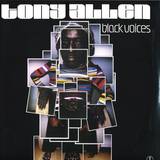
Comet presents the reissue of Black Voices (1999), featuring remastered versions and Ariya (Psyche Juju Mix)' as bonus track, which was not part of the original release.
Tony Allen completely rewrote the books on what was possible within the AfroBeat genre with his stunning 1999 album, Black Voices. When one considers exactly "what" is going on throughout Black Voices, it is quite mind boggling, as it is almost impossible to associate a minimalist, electronic feel with the massive walls of sound which Allen was known to create.
Yet these walls of sound are still very present, yet they gain an entirely new feel due to the presence of the producer, Doctor L. He takes the mesmerizing rhythms that Allen creates and he spins them into a stunningly modern sound. While Doctor L's production work throughout Black Voices is truly fantastic, it is clear that the genius behind the album lies within the mind of Tony Allen. With the absolutely mesmerizing, funky grooves that Allen creates, it comes a little surprise that the vocal collaborations are handled by members of one of the funkiest bands in history: Parliament-Funkadelic.
For almost two decades, Black Voices has remained a stunning example of the fantastic results that can occur when seemingly unrelated genres clash.
Edanticonf's music feels perfectly crafted for the brooding atmospheric venues he so often performs in. Both the aforementioned adjectives can be attributed to his style of techno too, one that places the focus less on the technical side and more onthe human one, aiming to reflect his emotions and state of being through the hazy soundscapes that draw influence from the natural scenery around him.His concise back-catalogue features releases on revered labels such as M¦REC LTD, Trolldans, Phorma and Silent Season - the imprint which released his debut LP, 'Forest Echo', in 2012. On each release, Edanticonf's work sonically varies, from the more ambient compositions present on his 'Planet' EP for Silent Season to his dub-infused techno release on Italy's M¦REC LTD, but each offering never compromises on its quality, something which sits at the core of this project.
Kicking off the EP is the title-named track, 'The Mind Power', a hypnotic techno number that blends atmospheric textures and arpeggiated synth patterns with industrial-inducing pad tones, gradually introducing further elements throughout its eight minute duration.
'Interlude' follows, a song that much like the rest of the EP focuses its attention on the refined nuances of the analogue synthesiser, blending this with more delicate synth passages and other shadowy digital effects.
Closing this excellent three-track EP is 'We Dance Together', a dazzling, almost trance-like closer that fuses these soaring atmospheric elements and delicate synths with gritty, lo-fi drums to great effect.
Inner8 is Daniele Antezza, a multi-faceted thinker and electronic music producer, member of Dadub duo, co-founder of Artefacts Mastering Studio, Dadub Studio owner and Holotone label manager, whose regular invocation of the term praxis begins to hint at his creative aims: a primary synthesis of contemplation and action that, in turn, encourages a secondary and entirely unpredictable set of syntheses dependent upon the listener's unique interpretation. Though the Inner8 moniker has been in existence for several years as a private nickname for, as Antezza puts it, his 'experimental anarchist sounds,' his recent releases are just now surfacing which will reveal just how much this project has to communicate.
Like many transplants to Berlin's pulsating sonic underground (Antezza moved there from Italy in 2009), his past work seems to communicate traces of the ecstatic with the argot of technical precision and / or scientific rigour. However, Antezza is not what one would call a 'Berlin artist' despite sharing these traits in common with the city's most visionary producers: his work gives off an impression of restless nomadism that has little to do with representing a localized scene. Rather than carrying on the territorial / parochial projects of reinforcing an arts scene's geographic boundaries (or even redefining the boundaries of a musical genre), Inner8 is more concerned with a holistic 'deconstructive approach' through which 'it's possible to reveal the paradoxes of the dominant thought, the paradoxes behind the status quo.' His fascination with concepts as diverse as asymptotes and particle physics, though often trendy among those looking for a seat at the table of the avant-garde, is a heartfelt fascination - moreover, these interests merge perfectly with his relentless theoretical questing.
Antezza's relationship with that city's Stroboscopic Artefacts techno label has been a particularly fruitful one, to the point where his sound work prior to Inner8 is almost synonymous with SA's own development. As one half of the psychonaut duo Dadub along with Marco Donnarumma, Antezza has sculpted deep and immense tracks that mesmerize with their harmonious interplay of force and ambiguity. After having co-founded and managed for years Artefacts Mastering Studio, he recently launched his brand new audio postproduction Studio (Dadub Studio), where Antezza lends his sonic signature to an eclectic variety of electronic recordings. That signature can be identified by its hyperreal sense of presence and immediacy, qualities that have become crucial to the presentation of a music that generally relies on only a few sonic elements per track to communicate its message.
Antezza also takes pride in the ritualistic quality of Inner8's live sets; a mobile laboratory of dynamic tension in which his theories manifest as massive physical vibrations (here we can also see / hear / feel just how well Daniele has absorbed the lessons of the dub 'sound system' aesthetic).
Brendon Moeller has essentially spent almost everyday of his life since 1994 in a home recording studio. Through research and practice he has evolved into a prolific producer with 10 full length albums under his belt and dozens of singles and remixes. He has performed live and DJ'ed at Fabric, Berghain and Cielo and then some. His love of a hybrid of hardware and digital resources for production shines through. His music has been championed by the likes of Francois K, Speedy J, Danny Howells, amongst others. An eclectic sensibility stemming from a love of many genres of music is always evident in Brendon's work. - - - SSX represents the Silent Season 10 Year Anniversary Compilation, a series of 12"s celebrating a decade of deeper electronic music. The series features artists whose music continues to inspire the Silent Season journey.
Espen Beranek Holm is a Norwegian musician and comedian, born 1960 and began his music career as a clarinetist. Inspired by early synthesizer bands Kraftwerk and The Residents, he began making experimental pop music. His debut single Dra te' hælvete' was released in 1981 and was immediately banned by national TV/radio channel NRK due to explicit lyrics. This gave the young artist tons of publicity, helping the single spend almost 6 months on the national charts.
Beranek returned to the Starholm Studios in Oslo from June - September 1981 to record nine new compositions. His debut album, Sound of Danger', was released on Mind Expanding Records in November 1981. Nowhere near as accessible as the previous single, the album fared poorly commercially. Withdrawing from the single's fun, kitsch pop, the album is cool and static, driven by thin rhythm boxes, cold synths, and glacial guitars. Taking heavy cues from David Bowie, all of the songs are sung in a nasally English accent, a rare occurrence in Norway at the time. The lyrics are melancholic, but tinged with paranoia. There are also upbeat tracks that evoke a prog or glam sensibility a la King Crimson, Alan Parsons, or Roxy Music.
All songs have been remastered for vinyl by George Horn at Fantasy Studios in Berkeley. Housed in the original jacket featuring red, black, and white lines that evoke a visualized Richter Scale designed by Monica Moltzau. Each copy includes a 2-sided 8x11' insert with lyrics and an autographed press photo of Beranek.
Where Are You Now is the fourth proper album from Italian widescreen dancegaze trio port-royal.
Limited Edition Clear and Cyan Vinyl w/ Download Card
It's been nearly six years since their previous full length Dying in Time (n5MD) and not counting compilation appearances, remix and rarities anthology 2011s 2000-2010: The Golden Age Of Consumerism (n5MD) and the Diamat album that port-royal architect Attilio Bruzzone orchestrated in 2013 port-royal has appeared somehow eerily silent. We now know that they've been very hard at work.
The old adage that good things come to those who wait has never been more true. Where Are You Now spans the six year gap effortlessly with the band's familiar and reoccurring themes ever looming while adding newer complimentary components to their soaring tapestries. Such elements are present in the pop shimmer of tracks like "Death of a Manifesto" and "Alma M." to the more muscular almost industrialized beat mangling included in select sections of "Karl Marx Song" and "Theodor W. Adorno".
To those that may be worried at such additions, they, in port-royal's hands, are now inseparable components with the band's already signature blend of post- rock, dream-pop and dance music.