Fracture & Neptune return to Astrophonica with their first collaborative 12” on the label since 2010.
Two epic, psychedelic, and deeply authentic tracks for both the floor and the head, carrying the unmistakable hallmarks of the duo’s classic sound — A psychedelic concoction of Jazz, Sci-Fi, Dub, and Breakbeat Choppage. Rooted in the lineage of Jungle and Drum & Bass, yet delivered in Fracture & Neptune’s unmistakably unique style.
To celebrate the release, UTILE — responsible for all Astrophonica design — have gone all out on the artwork, creating an iconic, type-based image for both tracks, presented on a full-colour, double-sided printed sleeve. Massive shout to UTILE for being as important to the label as the music.
“Erase Everything” is a journey through LA 2049 via London 1999 — as if Deckard were blasting an AWOL tape in his Spinner. Merging classic breaks and analogue saturation with soaring, cutting-edge pads and city-wide reverb, the result is both devastating and deeply thoughtful.
“Good Stuff” is inspired by a love of digging for samples across Jazz, Hip Hop, and Rock, and by a dedication to crafting kaleidoscopic soundscapes — All that good stuff, blended into one hallucinogenic trip.
Meeting at Islington Sixth Form College in 1996, Charlie (Fracture) and Nelson (Neptune) bonded over their deep love for the defining sound of London at the time — Jungle and Drum & Bass. Countless trips to Black Market Records in Soho, playing on pirate radio stations, and eventually, a makeshift bedroom studio — complete with an E-Mu ESI4000, a Mackie desk, and a few FX units — set the foundation for their journey. Their first release arrived in 2002 on Droppin’ Science, the label run by legendary Hardcore and Jungle pioneer — and fellow breakbeat manipulator — Danny Breaks. A run of mid-2000s releases on Ireland’s Bassbin, Paradox’s Outsider, and London’s Inperspective Records propelled Fracture & Neptune further into the cosmos. In 2009, they founded Astrophonica — initially as a home for their own music, but it quickly evolved into a hub for like-minded artists to experiment and explore freely. Almost 30 years on, they’re back in the studio with APHA034 — with more to come.
quête:almost
THE ALAN PARSONS PROJECT
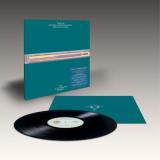
TALES OF MYSTERY AND IMAGINATION LP (2025 REMASTER)
180g Black Vinyl Half-speed Remaster by Miles Showell at Abbey Road Studios, includes a sleevenote featuring quotes from Alan Parsons & Eric Woolfson. The Alan Parsons Project debut studio album was originally released in June 1976. The lyrical and musical themes of the album are retellings of horror stories and poetry by Edgar Allan Poe. Musicians featured on the album include vocalists Arthur Brown of The Crazy World of Arthur Brown on "The Tell Tale Heart", John Miles on "The Cask of Amontillado" and "(The System of) Dr. Tarr and Professor Fether", and Terry Sylvester of The Hollies on "To One in Paradise". The complete line-up of bands Ambrosia and Pilot play on the record, along with keyboardist Francis Monkman of Curved Air and Sky. The album was a worldwide hit selling almost a million copies and achieving platinum status in a number of countries including Germany and Canada.
Info: Slow-burn funk, tribal wrong-speed chug and a boogie-disco breaker — three floor-fillers that creep, groove and bounce.
A low & loose opening with a reworking of 'Night People' – with intro and outro stretched, drum breaks extended, and percussive overdubs layered - the EP sets the tone with a warm-up tool that fills a floor almost unnoticed at 98 BPM. From there, 'Lions' prowls as a 45rpm slowed down to a hypnotic, percussive workout laced with chants and tribal drive, closing with 'Breakin’, a rogue boogie–disco hybrid bursting with bongos and breakbeats: Absolute DJ fuel.
The inimitable Richard Youngs returns to Black Truffle with this third full-length for the label, Hidden. Like CXXI and Modern Sorrow, Hidden unfolds across two side-long pieces at once eminently listenable and possessed of the ‘bloody-minded’ dedication to ‘having an idea and sticking with it’ that Youngs himself has identified as one of the key qualities of his work.
At the core of both pieces are rapid, randomised arpeggios generated with a Moog Grandmother, hypnotic patterns that wouldn’t be out of place on a Berlin School classic. Alongside these arpeggios, across the seventeen minutes of the first side-long piece Youngs builds an airy structure of shakers, synthetic handclaps and a brief, repeated sample, impossible to identify but sounding like a glitched foghorn. Over the top we hear his unmistakable voice, repeating single syllables—Ha, Ho—with a slow delay, something like a lonely one-man-band take on Anthony Moore’s Pieces from the Cloudland Ballroom or a more musical elaboration of the hypnotically overlapping delayed phonemes of Anton Bruhin’s Rotomotor. Like much of Youngs' work, the arrangement of sounds is sparse, each layer punctuated by spaces that allow others to shine through, in a way that seems to have more to do with dub or early hip-hop than high-brow models of musical reductionism.
On the flipside, the arpeggios return, now accompanied by ringing, filtered guitar chords and long flute tones. The use of a similar ground layer across the two pieces with strikingly different overdubs calls up Youngs' first solo record, the classic Advent, reminding us of how consistent ‘theme and variations’ is as an approach in his enormous body of work. Joined by handclaps and a chiming sound, the piece almost feels like it is about to achieve dance-floor lift-off at times, only for the percussion to disappear and leave the listener once again floating among the guitar and flute, now joined by occasional cut-off vocal snippets, like a radio turned quickly on and off. The suspension of these disparate elements over the steady foundation of the Moog arpeggios might remind some listeners of the free-form studio explorations of Moebius & Plank and Holger Czukay or even give a nod to Youngs’ formative encounter with Cabaret Voltaire.
Like some of Youngs’ much-loved work with Simon Wickham-Smith, Hidden approaches relatively familiar sounds and instruments from skewed angles, delighting in loose structures of interaction that border on gleeful incoherence while remaining outwardly beautiful. Coming up to almost four decades of persistent activity, like little else in contemporary music Youngs’ work beams with the simple joys of exploration and experiment.
- A1: Dread In A Earth Prince Jazzbo
- A2: Roots Man Time I Roy
- A3: Know Your Rights Delroy Wilson & Busty Brown
- A4: Too Late Twinkle Brothers
- A5: True Born African Jah Stitch & Johnny Clarke
- A6: To Be Loved Cornell Campbell
- A7: You Funny Boy Lee Perry & Aggrovators
- B1: Who Cares Delroy Wilson
- B2: On The Run I Roy & Cornell Campbell
- B3: Where Is The Love Horace Andy
- B4: Girl Of My Dreams Cornell Campbell
- B5: Times Are Dread Monty Morris
- B6: It’s Not Who You Know Twinkle Brothers
- B7: Trying To Find A Home Slim Smith
From 1968 through to the mid 1970’s the reggae beat began to slow down,some say due to the extreme heat hitting down onto Kingston Town and its surrounding enclaves. People needed something less strenuous to dance to. The Ska and Rocksteady Sounds (see 101 Orange Street KS007) that rocked Jamaica previously, had now found a slower tempo and become more ‘Dread’ lyrically to suit the times. Reggae music has always moved within the social climate it found itself in and this set here, as we ‘Return To Orange Street’ was ROOTS ROCK REGGAE TIME....
The Rastafarian message that runs through this collection of ‘Reality’, sometimes labelled ‘Sufferers’ music,is strong and works on many levels. It can come across on a heavy rhythm and vocal cut. Its example represented here by Prince Jazzbo’s ‘Dread in a Earth’ and ‘I Roy’s ‘Roots Man Time’, moving through to the popular new sounds of the DJ’s working over an old rhythm and alongside its existing vocal. As with Busty Brown working with Delroy Wilson's ‘Know Your Friend’ and Mr Jah Stitch working over Johnny Clarke’s ‘Roots Natty Roots’ to produce an even more dreader ‘True Born African’. The heartfelt lyric can also convey this message as we can see when Horace Andy laments ‘Where is the Love’ and Delroy Wilson again shows us on his ‘Who Cares’ cut. The great Twinkle Brothers also put the message across on their two cuts we have here, ’Too Late’ one of their lost classics if ever there was one and the thoughtful ‘It’s Not Who You Know’,being another prime example.
Orange Street itself is always at the heart of all reggae's musical changes and some singers also ride these waves as Mr Cornell Campbell shows us here with two cuts. The mournful ‘Too Be Loved’ and his uplifting ‘Girl of My Dreams’, which uses the same rhythm as our previously mentioned Prince Jazzbo’s 'Dread in a Earth’. Showing us that firstly you can’t keep a good rhythm down and secondly that two if not more great songs can work from the same source point. The light hearted ‘Vengeful’ lyric also worked in this period when artists spared off to each other on records to vent their frustrations. As we can hear here with Mr Lee Perry’s ‘You Funny Boy’. The song snipping back at a previous employer over what he felt were his misdoings to an under appreciated Mr Perry. We have culled these tracks together to show that the Dread Roots feel of the 1970’s came across in many guises and even in earlier songs these sentiments were also prevalent. As represented in Slim Smith’s almost bluesy feel in ‘Trying To Find a Home’, never a truer statement in Kingston's ghetto areas.
Well we hope you enjoy this musical journey and make a connection with messages portrayed here, as Mr Monty Morris points out on his contribution to this collection ‘Times Are Dread’.... Dread indeed.....
With The Whole Story, their debut album released in 2024, Astral Bakers laid the foundations for a hushed soft-grunge, somewhere between misty folk and weightless rock. Vertical Life marks a turning point: a band that, after discovering itself, has now established itself as a tight-knit collective, with each member shaping its sonic identity with equal force. Recorded in the USA with Sam Evian (Big Thief, Blonde Redhead...), the album captures the freedom and raw energy of the quartet. There"s no over-recording or over-production here: the moment takes precedence, mistakes become texture, and slight imperfections a signature. Vertical Life is a choral album, a constant dialogue between the four musicians - Ambroise, Theodora, Nico and Zoé - where each now finds a more assertive place in this shifting puzzle, where voices cross and roles interchange. Textured guitars, sometimes silky, sometimes abrasive, criss- cross and overlap like wisps of delicate fuzz. Theodora"s bass anchors the tracks in a cinematic languor, while Zoé"s supple, restrained drumming builds a nocturnal, almost vaporous groove. The vocals, both fragile and assertive, are always balanced between whisper and soar, between indie introspection and grunge energy. A record where verticality is not just an upward movement, but a vertigo, a tension between rootedness and escape.
At the beginning of the 1960s, at the Berklee College of Music, Byard Lancaster met some feisty friends: Sonny Sharrock, Dave Burrell and Ted Daniel. It is easy to see why he rapidly became involved in free jazz. Once he was settled in New York, he appeared on Sunny Murray Quintet, recorded under the leadership of the drum crazy colleague of Albert Ayler.
In 1968, the saxophonist and flutist recorded his first album under his own name: It’s Not Up To Us. The following year he came to Paris in the wake of… Sunny Murray. He would come back to France in 1971 (again with Murray) and in 1973 (without Murray for a change). This is when he met Jef Gilson, the pianist and producer who encouraged him to record under his own name again.
On Palm Records (Gilson’s label), he would release four albums: Us, Mother Africa, Exactement and Funny Funky Rib Crib.
A few months after recording “Us”, Lancaster recorded “Mother Africa” along with Clint Jackson III, a trumpeter, partner of Khan Jamal or Noah Howard on other recordings.
On march 8th, 1974, Lancaster and Jackson headed up a group composed of Jean-François Catoire (electric and double bass), Keno Speller (percussion) and Jonathan Dickinson (drums).
Together, they create an immediate impression. From the first seconds of “We The Blessed”, they develop a free jazz which rapidly abandons any virulence under the effect of blues and soul based interventions.
When Gilson’s composition “Mother Africa” begins, listeners are transported into the studio, listening to the musicians setting up: chatting and joking… Then comes the melody: a dozen or so notes of a repeated theme which is accelerated and deformed according to their whims… The jazz played by the association Byard Lancaster / Clint Jackson III is rare: creative AND recreational. “We the blessed”, is apt listening to this again today!
This CD edition contains a bonus track, the magnificent “Love Always” that was originally released on the fourth (and last) volume of the Jef Gilson Anthology series released in 1975.
Recorded on 8th March 1974, it is a beautiful 15-minute-long modal jazz piece. Four notes from the bass (the relentless Jean-François Catoire, who makes up the rhythm section alongside drummer Jonathan Dickinson and percussionist Keno Speller), and the group is up and running!
On piano, Gilson shows the subtle tact of a sideman, leaving the lions’ share of the place to the horns. This allows us to hear the trumpet of Clint Jackson III and the alto (which sometimes sounds almost flute-like) of Byard Lancaster each staking their claim in a long hallucinatory march which moves from moments of direct exaltation to profoundly sensitive collective playing.
- Mobali Nakobala (Nico – Ngoma J 5127, © Sukisa) Rumba Lingala
- Nalingi Yo Na Motema (Nico, Chantal – Ngoma J 5130 © Sukisa) Kiri-Kiri
- Mokili Makambo (Nico – Sukisa 93) Kiri-Kiri
- Ata Osali (Chantal – Ngoma Dnj 5214, © Sukisa) Rumba Lingala
- 1: Er Boeing (Kwamy – Air Congo) Merengue
- Hommage A Lumumba Patrice (Sukisa 44) Mabanga
- Bougie Ya Motema (Nico – Sukisa 47) Rumba Lingala
- Okosambuisa Ngai (Mizele – Sukisa 66) Rumba Lingala
- Sule (Nico – Sukisa 50) Rumba Lingala
- Okosuka Wapi ? (Josky – Sukisa 110) Danse Kono
- Kamungaziko (Lessa Lassan – Sukisa 114) Danse Kono
- Mokili Matata (Nico – Tcheza 10.001; © Sukisa) Rumba-Kono Lingala
- Baoulé (Lassan – Sukisa 99) Kiri-Kiri
- Beauté (Nico – Sukisa 101) Rumba Lingala
- Mansanga (Nico – Sukisa 131) Rumba Lingala
- Souzi (Sangana – Sukisa 117) Rumba Lingala
- Naboyi Koswana (Sangana – Sukisa 120) Rumba Cha Cha
- July (Julie – Sukisa 120) Madre Rumba
- Runeme Mama (Nico – Sukisa 47) Cha Cha Cha
- A Morow (Arr. Nico – Sukisa 66) Cha Cha Cha
- Apôtre Del Si Boney (Apôtre – Sukisa 73) Charanga
- A La Savana (Arr. Nico – Sukisa 62) Pachanga
- Alto Songo (Arr. Nico – Ngoma J5126, © Sukisa) Rumba Espagnol
- Para Bailar (Nico – Sukisa 50) Pachanga
- Meta Fua Mudia (Kaba – Sukisa 118) Rumba Lingala
- Exhibition Show (Nico – Sukisa 135) Instrumental
- Exhibition Dechaud (Dechaud – Sukisa 71) Instrumental
- Bolala - Ayando (Nico – Sukisa 132) Extrait Show Kasanda
- Excitation - Makwandungu - Ngombele (Nico – Sukisa 132) Extrait Show Kasanda
- Kamulangu
'In collaboration with the children of Nico Kasanda, better known as Docteur Nico, Planet Ilunga proudly presents an anthology dedicated to African Fiesta Sukisa, available as a 3LP set and a digital release with bonus songs. This release is the result of many years of preparations and was realized in close partnership with Liliane Kasanda, Nico’s eldest daughter. Marking forty years since his passing, we felt that the year 2025 was the right time to honor Docteur Nico’s legacy with this original collection.
'Almost all of the African Fiesta Sukisa songs were released on Nico’s Sukisa label which translates in Lingala for “the final accomplishment”. The music on Sukisa, crafted by Nico and legendary vocalists such as Chantal, Sangana, Apôtre, Mizele, Lessa Lassan and Josky, embodies the essence of that powerful phrase with genius, class and depth. The label ran between 1966 and 1975 and released approximately 280 songs. Ngoma also issued the group between 1967 and 1971 and, in addition, reissued material from the Sukisa label. Many of these songs have become part of the collective memory of Congolese society and are still heard, discussed, and analyzed daily across digital platforms worldwide, as well as on numerous Congolese radio and TV stations.
'The album we put together features some of Nico’s signature songs alongside never before reissued tracks from the Sukisa catalog. It furthermore contains a large booklet with song commentary, testimonial interviews from well-known musicians, journalists, fans and Nico’s entourage, besides never before published photography about his personal and musical life.
'Alastair Johnston, author of the book ‘A Discography of Docteur Nico’ and longstanding Planet Ilunga collaborator, designed a stylish booklet and cover using all our collected material. Audifax Bemba, longtime admirer, compiler and connoisseur of Nico’s music, and the author of most of the song commentary in our accompanying booklet, offers his portrait of Docteur Nico:
“After displaying technical virtuosity with African Jazz, expert and accomplished guitar with African Fiesta, which musicologist Sylvain Bemba described as a dream guitar, Nico Kasanda was consecrated ‘dieu de la guitare’ by the public in the late sixties. With his band African Fiesta Sukisa, Docteur Nico displays his wide palette of unusual sounds. While exploring the Hawaiian guitar with its clear, airy, plangent, psychedelic effluvia, he continues to replicate the piano comping technique, and adds two missing strings to his bow: a simulation of the sanza (likembé or thumb piano), whose sounds he reproduces right down to the noisemakers of the tiny tin rings, on the one hand, and the sounds of the Luba balafon on the other. The right note, in the right place, at the right time, is the triptych on which Nico Kasanda’s playing is based, a note dressed in the perfect sound. A guitar of pure emotion. With African Fiesta Sukisa, his playing takes a ‘Chopin-esque’ turn, sending out more notes in a sublime adagio. The true artist is the one who simplifies everything. Docteur Nico is a genius of our time, whose style makes him the supreme exponent of the most important guitar school in Congolese music. He is recognized by his peers as the greatest African solo guitarist of all time. Sculpting sound in a tireless quest for beauty, Nico Kasanda has sublimated the guitar throughout his career.”
[xd] Kamulangu [Outro] (Dr. Kasanda – Sukisa 135) Folklore Baluba
- 1: Raz Fresco – Who Mapped The Earth
- 2: Romderful – Maybe With You
- 3: Dowker – Call Me
- 4: Speak – Sakuraba
- 5: Cookin Soul (Feat. Ovrkast) – Flying
- 6: Demahjiae (Feat. Monster Rally) – Clooney
- 7: Mr. Scruff – Flute Boom
- 8: 645Ar – Shooting Star
- 9: Peanut Butter Wolf (Feat. Myka & Waragainstgod?) – Organic Ai
- 10: Chuck Strangers (Feat. Graymatter) – Marigold
- 11: L.a. Jay (Feat. Pigeon John) – Thank You
- 12: Dj Harrison – Applechopchutney
- 13: Homeboy Sandman (Feat. Monster Rally) – I Love You
- 14: Low Leaf – Faerie Function
- 15: Pouya (Feat. Boobie Lootaveli) – Bitch, Park Backward
- 16: Eddie Chacon (Feat. John Carroll Kirby) – Comes And Goes (Live At Isc)
- 17: Devin Morrison – Givin' Up
- 18: Suzi Analogue – King
- 19: Lee "Scratch" Perry – Morning Star
- 20: Dayytona Fox – Woooaaah
- 21: Rvyo (Feat. Bombay) – Kflex
- 22: Crimeapple (Feat. Don Leisure) – Vic Damone
- 23: Huey Briss – Don't Clap When I Win
- 24: Ncy Milky Band (Feat. Quelle Chris) – High Speed Clouds
- 27: Swum (Feat. Big Lordy) – Shinto
- 28: Xavier Wulf – 2 Can Wulf
- 29: Tommy Wright Iii – Chrome Thang
- 30: Yvain – Metta
- 25: Mr. Mumblz (Feat. Daniel Son) – Snake Eyes
- 26: Girl Talk (Feat. Freeway & Waka Flocka Flame) – Tolerated (Remixed By Mikey The Magician)
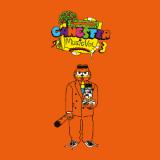
Imagine curating a dream lineup of MCs and producers from every corner of the rap world—sounds impossible, right? Not for artist and illustrator Gangster Doodles, who has been bringing this vision to life for the past decade. Now, with “Gangster Music Vol.3”, the trilogy reaches its grand finale, and it’s bigger, bolder, and more unpredictable than ever before. Gangster Doodles himself puts it best: "It’s hard to believe that I’ve been actively working on this Gangster Music series for the past 10 years. The most gangster music trilogy of ALL TIME is almost complete!! And in my humble opinion Vol.3 is the most exciting out of the 3, both from a music standpoint (special shout-out to all my music heroes on Vol.3) and artistically speaking this is the most fun I’ve had in years”
Since launching Volume 1 in 2019 and following up with the second volume in 2022, Gangster Doodles has been shaping the Gangster Music series into a one-of-a-kind sonic universe—an unfiltered mix of underground titans, unsung legends, and rising stars. Volume 3 is the biggest installment yet, boasting a staggering 30 tracks that traverse the entire spectrum of rap and beat culture.
This time around, the lineup is as eclectic as ever. From legendary pioneers like Lee Perry and Tommy Wright III, to veteran producers such as Mr. Scruff and Peanut Butter Wolf, the album pays homage to hip-hop’s roots while pushing forward into fresh territory. The roster also includes established up-and-comers like Devin Morrison, Low Leaf, DJ Harrison, Quelle Chris, Homeboy Sandman, and Suzi Analogue, ensuring a mix of classic flavors and new-school innovation. The bubbling underground is well represented too, with artists like Raz Fresco, Atlanta’s 645AR, and Pro Era’s Chuck Strangers bringing their own distinct heat.
From pioneering SoundCloud rappers like Pouya to genre-bending composer John Carroll Kirby, from Birmingham’s Romderful to Chile’s RVYO, the album encapsulates a truly global soundscape, proving once again that Gangster Doodles’ ear for cutting-edge talent is second to none.
- 1: Don't Lick The Jacket
- 2: I Exist In A Fog
- 3: Fluid Cloak
- 4: Outerzone 2015
- 5: Often Destroyed
- 6: Sky Wax (London)
- 7: Olympic Mess
- 8: Strawberry Chapstick
- 9: The Evening In Reverse
- 10: Sky Wax (Nyc)
London-based experimentalist Luke Younger (a.k.a HELM) returns to PAN with ‘Olympic Mess’.
Where his previous effort, 2014’s ‘The Hollow Organ,’ dealt in dense, distressed sonics, ‘Olympic Mess’ is Younger responding to a period spent engaged with loop-based industrial music, dub techno, and balearic disco. These musical references, all of which can induce hypnotic states and feelings of euphoria, inform ten evocative aural landscapes which unfurl over the course of an hour and act almost as a counterpoint to the turmoil that spawned them.
Crafted using an array of heavily processed samples, found sound and electroacoustics, personal conflict manifests in “I Exist In A Fog” and “Outerzone 2015,” where visceral noise disintegrates into veiled, ambient strata. The disquieting crescendos of “The Evening In Reverse” and “Fluid Cloak” offer no such relief, while the title track and “Don’t Lick The Jacket” are mineral, multilayered abstractions twisting around a brittle pulse.
- 1: Delicate Meae
- 2: Sumus Vicinae
- 3: Flamma Flamma
- 4: Complorate
- 5: Filiae
- 6: Ave Ignis
- 7: Tegite Specula
- 8: Vale Frater
- 9: Amice Mi
- 10: Hic Iacet I
- 11: In Corpore
- 12: Hic Iacet Ii
- 13: Corpus Inimici
- 14: Agnus Purus
- 15: Ardeat Ignis
The re-release of 'Flamma Flamma' by the Intuition Music labe was to mark the 30th anniversary and featured a remastered and re- edited version of the original album released worldwide in 1994. It's appearing for the first time on double vinyl, as well as on CD. The composer himself supervised the remastering and re-editing. After its initial release on CD in 1994, 'Flamma Flamma' climbed numerous international charts and quickly developed from an insider tip to a major bestseller and has been compared with Orff's'Carmina Burana'. The gothic world - both romantic gothic and trash gothic - also embraced the work during long 'Flamma Flamma theme weekends' in castles across Europe.
Nicholas Lens began his trilogy 'The Accacha Chronicles' (Flamma Flamma / Terra Terra / Amor Aeternus) with the first part, 'Flamma Flamma', as a search for harmony between the contradictory elements in nature and human nature. The fusion of nonEuropean musical cultures with Western classical music has been described and appreciated as highly unique. Finally, unlike almost every other requiem, 'Flamma Flamma' not only deals with grief and pain, but also presents death as anatural part of the cosmic life process.
- 1: Drip
- 2: Urges
- 3: Gush
- 4: Stare Into Me
- 5: Into Your Eyes
- 6: What's Between Us
- 7: Feel Heard
- 8: Both
- 9: Everything Combining
- 10: Almost
- 11: The World Just Got A Little More Big
- 12: Lay Down
- 13: In The Dressing Room
Her music is a form of auditory interpretation, powered by curiosity and her toolkit of modular, analog, and rare synthesizers (including her signature Buchla), orchestral textures, and voice. Since her first self-releases in 2012 (Tides), she has explored the endless possibilities of electronic instruments and the relationship between sound, shape, color, body movement, and expression. GUSH follows Kaitlyn's recent collaboration with Hot Chip's Joe Goddard on the 2024 Neptunes EP, and it marks the first taste of new music since her 2022 full-length Lets Turn It Into Sound, which was nominated for the LIBERA Awards Best Electronic Album of the Year and won the praise of NPR Music, Pitchfork, The Guardian, Bandcamp, and more. In GUSH, she sets her sights on aesthetics, focusing on the heightened awareness of and presence in the world, where every interaction whether with people, objects, or nature has the potential to become a moment of connection, and personification.
- 1: Signed, Sealed And Delivered
- 2: Along The Coast
- 3: Two Brothers (As One)
- 4: Close Call
- 5: Donkey
- 6: In Good Hands
- 7: Exactly Like You
- 8: Say It Again
- 9: Cruisin
- 10: Leaving Paradise
- 11: On A Roll
- 12: Quite Logical
- 13: All That Matters
- 14: Watching The River Flow
It was in Studio 4 of WDR in January 2022 when Simon Oslender first met Steve Gadd during the recording session for the album 'Centerstage'. Guitarist Bruno Muller was also there. The chemistry between the musicians was right from the very first time they played together. At the end of the session, Steve Gadd said to Simon and Bruno: "We'll do more together." And that's exactly what happened! Simon Oslender's highly successful studio album 'All That Matters' was recorded at the end of 2023.
Will Lee was also there on bass, who together with Steve Gadd has been one of the most famous rhythm sections in pop and jazz history for almost 40 years. At the end of the recording session, it was clear to everyone involved: this band had to go on tour to present this music to fans live. In December 2024, the time had come. The band, joined here and there by guests Jakob Manz on alto saxophone and Nils Landgren on trombone, went on tour. All concerts were sold out; the atmosphere in the respective venues was magnificent; thunderous applause and encores in every club or concert hall. Every concert was recorded. Now the result is here. An album full of joy, musicality, spontaneity, creativity, and incredible grooves! 'On A Roll - Live', a concert to take home with you. It doesn't get any better than this!
Xexa is still undefined, gliding over her origins, influences, and points of reference. Her music is informed by uploads from all that, processing heritage and future in much the same democratic way, sure of its (her!) path. Synthetic as it may sound, »Kissom« contains the very human element of Xexa's presence, not only through her instantly recognizable ethereal vocals but also manifest in the web of grooves stopping short of »dance«. »Kizomba 003« is the closest she comes to the dancefloor, a reduced take on the popular style of kizomba, a low-key interpretation but with the vocals atypically high in the mix. A brief breath of nostalgia. »Kissom« (title track) prolongs the slow pace, almost as an extended mix of »Kizomba 003«, stretching the sexy bounce for close to 4 extra-delightful minutes.
Everything seems to dissolve into space, as if every track gently expires only to be reconfigured somewhere else, molecule by molecule, perhaps in a different location within our mind. The artist somehow corroborates the feeling, particularly regarding »Será«, »Xtinti«, and »Txe«, which she says »finish exactly where I wanted. They all end with an EQ that mutes the frequencies until they cease to exist«. Here, there, sparse beats, successive waves of ambience, half-machine lips singing close to our ears, a blend of classic 4AD and a metallic environment warmly wrapping around the music. Extra-long, »Quem és tu?« poses the question – Who are we? Who is she? And the title »Kissom« stems from another question Xexa often hears from people, »Ki som é este?« (What is this music?). The answer might well be the artist's own paste of the words »kiss« and »som«. Lovely.
Out Friday 14th June, the renowned jazz and funk trumpeter Sefi Zisling presents his third album ‘The Librarian’, blending classic elements with psychedelic funk, soul, and spiritual jazz. ‘The Librarian’ is dedicated to all things close to Sefi’s heart. The album pays homage to his musical inspirations, his wife, friends, and Eyad, a Palestinian whose story moved Sefi.
"This album was made as an ode to the people I love, and I would like to dedicate this album to them." - Sefi Zisling
Sefi Zisling first started playing the trumpet at the mere age of ten, soon after enrolling in the prestigious art school Thelma Yellin. Performing in an array of bands since his early teens, Sefi has performed and recorded sessions with almost every key player of the jazz world in Israel. His debut album ‘Beyond The Thing I Know’, released on Tel Aviv’s leading collective Raw Tapes, propelled the trumpeter onto the world stage. Sefi then found his home on Tru Thoughts for his sophomore record ‘Expanse’, an album that captured the essence of the classic jazz session and transformed his role from instrumentalist to composer.
The cover art is a painting by the late Walid Abu Shakra, a member of the Abu Shakra family who have collectively played a pivotal role in the Palestinian-Israeli art scene and are respected worldwide. Walid aimed to highlight the expropriation of Palestinian land by the Israeli state and centred his artistic career on safeguarding a disappearing landscape through his monochromatic etchings.
Selling Points
Sefi Zisling's sophomore album "Expanse" sold out on vinyl in the first few months
The cover art is a painting by the late Walid Abu Shakra, a member of the Abu Shakra family who have collectively played a pivotal role in the Palestinian-Israeli art scene
Praise from Jazz FM (Playlisting), FIP, Jamie Cullum (BBC Radio 2), Jazz Times, Jazziz, Tom Ravenscroft, Huey Morgan, Cerys Matthews (BBC 6Music), Musica Macondo, Music Is My Sanctuary, Bandcamp Weekly, Wax Poetics and much more.
Recorded intimately and live with a five-piece ensemble
The LP features a spellbinding version of Mall Waldron's jazz standard 'All Alone'
Mixed by renowned engineer George Atkins (80 Hertz Studios)
Musician and visual artist by day, bat researcher by night: Mathilde Nobel brings both worlds together on her new album Guadirikiri on Nous'klaer Audio. Unlike the first album, Guadirikiri features (almost) no vocals. Instead, its compositions took shape through Mathilde's deep fascination for bats. Creatures that, much like her, navigate and make sense of the world through sound. By night, Mathilde travels across the Netherlands to study their calls, movements, and patterns. Using ultrasonic detectors and thermal cameras, she's been gathering and archiving recordings and visuals, gradually building what she calls an orchestra of bats - shaping and inspiring what became Guadirikiri.
- 01: Insects Are Next
- 02: Cloud Burrito Pt. 1
- 03: Don't Drill
- 04: Draught
- 05: Cloud Burrito Pt. 2
- 06: Kerngut
- 07: Magnetic Rebounds
- 08: Pass It Sideways
- 09: Radiogram Kreativ
- 10: Resin Dripper
Markus Mattern, a.k.a. Kapillarkraft, lands on Slow Process with ‘Transdermal Patches’, a left-field exploration of vintage electronica.
Mattern, a Bavarian experimental electronic musician and professional drummer, builds this album around a plethora of interesting rhythmic elements. Aquatic timbres ebb and flow around almost-beats from analog drum boxes and Moog synthesizers.
Channeling inspiration from the likes of Kraftwerk, Brian Eno, Morton Subotnik and even early hip hop and electro-funk, some of it could be described as left-field electro, while some is just outright off the wall. An ever-present Roland Space Echo assists in the creation of rattling rhythm patterns and pitch dives, two of the album’s prominent sonic signatures. Atonal droplets and washes of simulated industrial noise yield an abiding sense of foreboding and tension, sitting in contrast to a few brief harmonious moments.
It may not be one for the clubs exactly, but it’s a deftly shaped piece of work, brimming with inventive sounds.
Released November 28th on limited edition “pharmaceutical” boxed cassette and digital formats.
- A1: Night Whisper (Trance - 1992)
- A2: Eliana (Totem - 1985)
- A3: Nomad (Trance - 1992)
- B1: Stefania’s Song (Still Chillin’ - 2005)
- B2: Seducing Hades (Luna - 1994)
- C1: Zone Unknown (Zone Unknown - 1997)
- C2: Silver Desert Cafe (Tongues - 1995)
- C3: Totem (Totem - 1985)
- D1: Dancing Path Chaos (Initiation - 1988)
- D2: Labyrinth (Luna - 1994)
- D3: Shavasana (Still Chillin’ - 2005)
Ground-breaking percussive ambient recordings from Gabrielle Roth & The Mirrors, inducing altered states of consciousness through ecstatic dance. "Selected Works from 1985 to 2005" finally available on Time Capsule
Despite featuring an extraordinary cast of musicians (with credits including Pharoah Sanders, Miles Davis, Sun Ra, Santana and Milton
Nascimento) and selling hundreds of thousands of albums, the music of Gabrielle Roth & The Mirrors remains largely unheard beyond their sphere. Conceived as live, improvised soundtracks to Roth’s transcendental dance workshops, musical acclaim was never on the agenda.Instead, for a passionate dancer and spiritual polyglot like Gabrielle Roth, movement was a means through which to channel a wide spectrum of teaching, from experimental psychology to psychedelic counter-culture. It was from this heady mix that she devised a movement meditation known as 5Rhtyhms, which came to define her life’s work.
As “guide and catalyst”, Roth would dance to inspire the percussion-led instrumentals that would in turn fuel her 5Rhythms workshops, stimulating a secular form of ecstatic dance with roots in Native American shamanic traditions, Afro-Brazilian Candomblé and Yoruba drumming. Using anything from a Sioux pony drum to East African kihembe and Japanese Kabuki drums, Gabrielle’s lawyer-turned-drummer husband Robert Ansell set the foundational rhythms for The Mirrors’ recordings, each of which would then feature a rotating cast of friends and professional musicians.
“The secret of everything we’ve done is that we never told anybody what to play,” Robert shares. “Instead of our albums being a musical vision of one person like me or Gabrielle, they were the musical vision of a whole bunch of people.”At times the recordings have a Middle Eastern flair, at others, West African and spiritual jazz modes come to the fore. Hints of kosmische musik, proto-house and electronic ambience are laced like LSD through the organic rhythmic structures. This was kaleidoscopic ambient music to stir the body and free the mind.
In practice, the task of synthesising these different elements fell to Scott Ansell, Robert’s son and a recording engineer whose credits now include Nile Rogers, Duran Duran, Grace Jones. With meticulous attention to detail he captured and translated the dynamic energy of each drum onto record. Their sessions became legendary, and with access to the best studios in the NYC, The Mirrors sparkled.
Despite being initially overlooked by the burgeoning ‘80s New Age market, which preferred pipes and gongs to The Mirrors’ heavy-grooving drums, Robert Ansell set up Raven Recording to self-release the music, creating a vast sonic archive of sixteen albums over almost forty years. The breadth of Raven’s catalogue is such that curator Pol Valls had to cut an initial selection of sixty-six tracks down to the eleven featured here. What crystallises is a stunning, mind-altering collection which spans, in Pol’s words, “a variety of genres, styles, and vibes within their catalogue, whether it is emotional, esoteric, spiritual, melancholic, hypnotic, dark, or at times a combination of these elements together.”Music for immersive and intimate environments, Gabrielle Roth & The Mirrors were born from the dance. In the hands of the right DJ, at the right time, in the right place, they might just return there.
- 01: Something Special
- 02: Tonite
- 03: Just For You
- 04: It&Apos;S So Cool
- 05: Our Love
- 06: Golden Seal
- 07: Tease
Unreleased 80s psychedelic funk rock out of Boston, MA. Influenced by Funkadelic, Sly Stone and James Brown, to name a few.
Sherman Williams Started playing and writing music at age seven, he played through middle school.
Travelled with a group, called Total Eclipse, throughout the East Coast during his high school years.
He was on a mission to be a professional musician/singer/songwriter, of a band – he wanted heavy rhythms to match his huge guitar action, this is how Black Axess came about.
"I badly wanted to record the music that I helped to create with the Black Axess so paid out of pocket for the studio time." - Sherman Williams
From that session one single, "Tonight" was released on 7" but the lost album "The Golden Seal" sat on tape almost lost to time. That was until Robert Garcia and Daniel Mathis spoke to Sherman while tracking the "Tonight" Single, and discovered the lost LP we have here, credit to them both for sorting out and hooking us up and special thanks to Daniel for saving the tapes when UPS almost lost them, which might have been the end of it!
Lay back, light one up, and listen on loop.