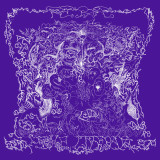
Søren Skov Orbit's debut album, "Adrift," is at once subtle and profound. The saxophonist and his collaborators have created something quite special and consistently deep. This record may not easily be classifiable, but the most interesting music creeps between the lines
Danish tenor and soprano saxophonist Søren Skov (Debre Damo Dining Orchestra) and keyboardist Peder Vind co-founded the trippy quintet Søren Skov Orbit in 2016 to explore “more jazzy ideas,” as the saxophonist puts it. Joined by a rhythm section steeped in contemporary improvisation and psychedelia, bassist Casper Nyvang Rask, drummer Rune Lohse and percussionist Ayi Solomon of the legendary 80's Ghanaian roots/highlife band Classique Vibes, the Orbit belts out a richly focused helping of broadly African-inspired modern jazz with a hazy sheen.
On the opening “Notifications of Nothingness,” Skov digs in his heels, a steely but languid unspooling of burnished tenor lines atop condensed, quavering piano and the thick footfalls of bass and percussion. As a tenor player, Skov has done his homework and has a kinship with Albert Ayler, Archie Shepp, J.R. Monterose, and the Dutchman Hans Dulfer, but he clearly has got his own robust phraseology and expressiveness. He also cites multi-reedists John Gilmore, Yusef Lateef, and Bilal Abdurahman as, “some of the players I’ve been listening to the most for the last 10-15 years.”
A healthy dose of reverb is present throughout the album, echoing Alton Abraham’s studio wizardry with the Sun Ra Arkestra or the trance-inducing and compressed fidelity of certain Ethio-jazz and Mystic Revelations of Rastafari sessions. Skov notes that, “everything is recorded live at the same time in the same room. I wanted to do it that way in order to catch the dynamics and authenticity of the music.” There is, in fact, a complex teeter- totter between crisp and hazy execution, achieved by a delicately balanced mix that keeps the group’s sound simultaneously advancing and receding. Vind’s phrasing is terse and introspective, a vibrating echo that nudges and reflects on Skov’s brusque tenor in a dance of sonic displacement.
“Orbiting” pits a chunky backbeat and the teetering, taut hand-rhythms of Solomon against an infectious, almost microtonal piano riff, while Skov’s arpeggios are clean and florid as he patiently rises up from under a carpet of funky loops. Following the freer “Reflections of Rif,” “Naration” lilts with a wink at “Footprints” and tugs between up-tempo polyrhythmic drive, clanging keyboard accents, and the innately steadfast keenness of the bandleader. The coupling of Solomon and Lohse is a big part of the group’s detailed energy; as the leader puts it, “Ayi knows everything about regional differences in drum patterns. He is always listening and super responsive, and his and Rune’s dynamics are amazing.” The music both presents a “vibe” and keeps the door open for engaging well under the surface as repeated listens will be extremely rewarding.
Buscar:almost
Sara May grew up on a dirt road just outside a small Ontario town known for its Honda plant and Potato Festival. Over the course of ten indie-leaning, alt-country tracks on 'Legacy', her latest album as Falcon Jane, she expounds on that origin story through the great archetypes of country music: the drinker, the vagabond, the absent father. She presents these characters with a clarity and empathy that feels almost transgressive-a loving touch that crosses our rural / urban divides. But these are Sara's stories too: her rural childhood, her move to Toronto, her current home in the working class town of Shelburne, and her life on the road. She comes by it honest. And the transformation on 'Legacy' isn't just lyrical. Alongside producer José Contreras (By Divine Right), Falcon Jane refine their sound-pushing toward folk and country like contemporaries Waxahatchee and Angel Olsen. May's voice, the one constant from 2015's 'Alive n Well' EP, through the dream pop of her 2018 debut album 'Feelin' Freaky', to the sprawling indie rock of 2020's 'Faith', is more powerful here, sitting atop the warm, Nashville-leaning production. The result is both striking and blindingly obvious: Sara May has found her way back home.
The Norwegian underground black metal band Kirkebrann has ventured from the early days of 2004 to now with increasingly more aggressive, misanthropic and epic themes of real-world tragedy as they unfold before our very eyes. Their frosty, rough and harsh black metal is equal to the classic early Norwegian black metal of the early ‘90s. The second full length has been in the making for almost a decade with some of those songs performed live for the same amount of time through blasphemy, blood and existential dread; featuring multiple guests on vocals of madness and triumph.
This album marks the beginning of a new era in Kirkebrann's twenty years of existence with its unrestrained force - full of blastbeats - in conveying dreadful, atmospheric and melancholic harmonies and sound of inspiration from the dark forces that are enclosing upon humanity's imminent downfall. “Mot Trellenes Forfal” was recorded by Kirkebrann with Draug on vocals, Hrafn on lead guitar, jK on guitar, Januz Skroemt Kvirinus Bifronsson on bass and Nødset on drums. The album also features guest vocals by Dødsherre (Djevelkult), Nasreten (Carpathian Forest), Cornu (Svikt), Lianne Krossburner (Edenkaiser) and Skrotmunn Blåskrott (Likfunn). It's time to release this curse upon humanity and release us from its limbo!
Since first splashing on to the Southern California circuit in the mid-aughts, Geneva Jacuzzi (née Garvin) quickly cemented herself as the queen of the Los Angeles underground. Her immersive and unhinged multimedia performances are the stuff of legend, a psychotropic gallery of masks, costumes, confrontation, and massive art installations. Jacuzzi’s recordings are equally revered, catchy hooks and cryptic moods dusted in 4-track grit. The arrival of her third official full-length, and Dais Records debut, is cause for such celebration. Triple Fire vividly expands and crystallizes Jacuzzi’s signature fusion of midnight melody and mutant aerobics across a 12-track hit parade of wildcard synth-pop and sly post-apocalyptic camp. Her enthusiasm for the album is as bold as her body of work: “Halfway through, we started calling this the record of the prophecy, the record that’s going to save mankind.”
Opener “Laps of Luxury” sets the template – a strobe-lit dreamer’s delight of swaggering synth bass, Haçienda drum machinery, and sultry vocal spellcasting (“Tragic mysteries I’ve known for centuries / I burned all memories and turned to fantasy”). The collection burns through shades of sardonic strut (“Art Is Dangerous,” “Nu2U,” “Keep It Secret”), coldwave kiss off (“Speed Of Light,” co-produced by Andrew Clinco of Drab Majesty), retro-futurist body music (“Dry,” “Scene Ballerina,” “Bow Tie Eater”), and cheeky glitterball pop (“Take It Or Leave It,” “Heart Full Of Poison” co-produced by Roderick Edens and Andrew Briggs). She likens the eclectic spectrum of moods to the continuum of human emotions: “Funny, sexy, sad, scary, witty, hopeful, menacing. Eventually it deconstructs, turns into a party, and then ends sweet and soft.”
Taken as a whole, Triple Fire comes as close as any document yet to capturing Jacuzzi’s kaleidoscopic alchemy of pop sugar and chaos energy, flickering between icy and ironic, chic and surreal, hungry and heartsick. Hers is a muse as rare as it is regenerative, forever reborn at the precipice of the next chorus: “Someone said that Alcatraz had fallen into the sea / Almost sounded like an angel calling me in a dream / I felt an electric shock when I picked up the microphone.”
The Moon and the Melodies is a singular record within the Cocteau Twins" catalogue - unusually ethereal, even by their standards, and largely instrumental, guided by the free-form improvisations of Harold Budd, an ambient pioneer who had drifted into their orbit as if by divine intervention. Building on the atmospheric bliss of Victorialand, released earlier the same year, it signalled a possible future for the trio, yet it was a path they"d never take again. Now, almost forty years after it was fi rst released, it"s being reissued on vinyl for the first time - remastered, from the original tapes, by Robin Guthrie himself. Over the ensuing years, The Moon and the Melodies has attracted a passionate fan base. Its most atmospheric tracks routinely turn up in ambient DJ sets. "Sea, Swallow Me" is one of the Cocteau Twins" most streamed songs on Spotify, having found a new life on TikTok, where it serves as the soundtrack to innumerable expressions of hard-to-express melancholy. For such a low-key aff air, the album casts a long shadow - but Raymonde believes the record"s uniqueness stems directly from its humble, unpremeditated origins. "It captured a moment in time between friends that are enjoying making music together. Really, that"s the essence of it."
Simple Reality cements the short lived legacy of Coventry DIY group Skeet.
Emerging from a scene of first-generation punks and 2 Tone kids, Skeet was instigated by Gary and Nigel Meffen in 1981, fusing tightrope instrumentals with a Roland CR-8000 under the glow of projected visuals. After a cassette of their debut performance found its way to Kay Booth who worked at Inferno Records, the unsuspecting frontwoman took the liberty of adding her own vocals. Instantly embraced as a permanent member, Booth’s shy delivery and open-diary expressions of social alienation and romantic rejection hovered over the brothers’ scratchy guitar and agitated bass.
Playing as few as 10 shows, their unnerving minimalism was recorded in a suburban home studio, borrowing a reel-to-reel from Toby Lyons (The Colourfield) and a mixer from Jerry Dammers (The Specials). Record labels gestured interest until one day they were no more - no arguments, no official split, just a silent parting of the ways and three people taking journeys in different directions. Unheard and unloved in the vaults for nearly four decades, 'Brief Call' finally resurfaced via the Coventry Music Museum compendium Alternative Sounds Volume 1, followed by a micro pressing of the full suite on Chris Long’s Almost Unknown imprint in 2023.
Simple Reality now offers a definitive snapshot of these must-hear neurotic post-punks. Mastered by Skeet fanatic Mikey Young, newly discovered instrumental multitracks are restored alongside a live recording of their final stand. Performed atop of a trailer in a pub beer garden, the release-worthy desk tape adds three new tracks and a more energised swing at ‘Left On the Shelf’s apathetic techno-pop.
RIYL: Fire Engines, 23 Skidoo, A Certain Ratio, Young Marble Giants, pel mel
Coke Bottle Green vinyl. Who were the first punks? Do The Damned have more of a shout than The Sex Pistols? The Stooges or Ramones? Gregg Deal, the acclaimed visual and performance artist behind his new project Dead Pioneers, is making a claim that Indigenous Americans were the first real punks. Deal suggests that the overarching theme of the album is "an introduction to the band itself". Created with a DIY disposition and the "love of a scene that saves lives", they reel off a roll call of marginalised groups and protected characteristics: "Indigenous rights, Black rights, Brown rights, Asian rights, Gay rights, Trans rights, Workers rights and beyond_". This is central to their identity and focus, saying that "with a North American Indigenous person as the vocalist, being unapologetically upfront on the social, political and cultural side of things doesn't seem necessary, but paramount to the overall tone of the band." This self-titled debut, coming in at a lithe 22 minutes with only one of the twelve tracks exceeding three minutes, is almost over before it begins, but covers a huge amount of ground in that time. Blistering opener 'Tired' sets out their stall; as with the whole album, it is passionate, but never preaching. Capitalised 'Political Music' can be hard to land without coming across as hectoring or earnest, but Deal's literary, humorous lyrics effortlessly cut through complex issues of marginalisation and colonialism.
The second part in Shan’s warehouse series delivers more of the same – but that’s definitely a great thing, if the dish has a great taste. Like it’s successful predecessor, the tracks don’t re-invent the wheel, but cater to all the nameless spaces and places that made raving in defiant and derelict places fun. There is house that sounds like techno (Elevate) and vice versa. Seasoned with break beats (89 Swing or the Future Sound of London-esque Euphony) or breaks for love (Uplift My Spirit) and even dub sirens, it is almost impossible not to find something to suit the customer’s environment. The main focus of attention might be the jack of all trades called Phantazia. Wouldn’t have sounded out of place at the entertainment series of the same name, it melts proto hardcore harmonics with Soul II Soul type of strings and immediate call for „the action“. And as we all know, that always speaks louder than words.
goat (JP) are renowned for two albums released in 2013 and 2015 that took Kraftwerk’s man-machine concept back to its roots with swingeing, inch-tight drums, bass and guitar patterns that needed to be heard to be believed. For their long-in-the-making new album ‘Joy In Fear’, band leader Koshiro Hino (YPY, KAKUHAN) describes the process as “90 percent pain” - and we can well believe it - few other records we can think of transmute DAW-composed rhythmic precision into such an expressive instrumental performance. It really is a feat of determination, skill and execution that seems to defy human dexterity.
Make no mistake - an academic exercise it ain’t - in the most visceral sense, goat (JP) make BODY music, for dancing, flailing, for losing yourself in completely. As usual, Hino plays guitar, backed by bassist Atsumi Tagami, while Akihiko Ando joins on saxophone, while Takafumi Okada and Rai Tateishi step in to handle percussion, with the latter moonlighting on flute. Every sound is sculpted into a fragment of cadence: guitar and bass prangs alternately echo and dance between the drums, and Ando's sax is mutated into a respiratory slobber of guttural smacks and phantom breaths.
In some respects, it's tempting to label it jazz, but the kind of jazz that Miles Davis spearheaded on the game-changing 'On The Corner', the blueprint for so much post-punk, electronic music and avant rock. goat (JP) take that raw alloy and sharpen it like a blade, mangling the template with the knotty metrics of Autechre or Ryoji Ikeda. The accuracy is galvanic; it's almost impossible to comprehend each player keeping a mental note of the mathematical time signatures, and yet they floss them out with trills and icy stutters that seem to evaporate around the thick, taiko-like thuds.
They practically get our teeth gnashing with the bruxist rictus chatter of ‘III I IIII III’ , before ‘Cold Heat’ introduces subtly harmonised, new aspects to their sound with slivers of Hassellian flute and ringing overtones of their percussion, while the winding sensuality of ‘Warped’ slips down very nicely. Their links to OG no-wavers like Glenn Branca & Wharton Tiers’ Theoretical Girls - is manifest in the 8 mins of chipping stop/start pulse and parry to ‘Modal Flower’, while a total left turn into Mark Fell-meets-Ligeti-esque messed up metronomics in ‘GMF’ ties it off with a properly beguiling flourish.
Black Truffle is thrilled to announce a reissue of Chico Mello and Helinho Brandão’s self-titled release from 1984, the first return to vinyl of this classic of Brazilian experimental music with its original cover art and complete track listing. An under-recognised figure whose work inhabits a singular terrain where radical new music techniques and music theatre meet musica popular brasileira, Mello has lived and worked in Berlin since the late 1980s. A student of Dieter Schnebel, Mello played in the 90s iteration of Arnold Dreyblatt’s Orchestra of Excited Strings alongside compatriot Silvia Ocougne, with whom he produced a radical and hilarious deconstruction of MPB classics on Musica Brasileira De(s)composta (an early and rather atypical release on Edition Wandelweiser).
On this release, his only recording predating his move to Europe, Mello works with the alto saxophonist Helinho Brandão, who appears to be otherwise unknown outside Brazil. The record’s six tracks range from solo saxophone improvisation to densely layered ensemble works bridging minimalism, acoustic sound art and a plaintive melodic sensibility that calls up Edu Lobo or Milton Nascimento. Beginning with a dramatic, dissonant wind and string surge from which emerge ominously pounding piano chords, opener ‘Água’ slowly builds in intensity, a halo of clustered vocal harmonies gradually closing in on Brandão’s squealing sax until the piece opens up to reveal a gorgeous passage of melodic singing. The piano accompaniment reduces to tolling bass notes as the voice begins a repeated incantation, suggesting a ritualistic atmosphere reminiscent of parts of Xenakis’ setting of Oresteia. Dissonant, sawing tremolos on the strings climb to a crescendo before disappearing into the sounds of water being poured and splashed into metal vessels, presented not as a field recording but as a percussive element performed by the ensemble. A child’s voice then appears, singing to piano accompaniment the same melody heard earlier in the piece. After a brief solo alto improvisation from Brandão, working with the guttural pops and fleeting melodic gestures of Braxton or Roscoe Mitchell, the remainder of the first side is dedicated to the leisurely unfolding of ‘Baiando’ over the course of twelve minutes. A trio for Brandão on soprano saxophone, Mello on a very period-appropriate phased nylon string guitar and Edu Dequech on bongos, the performance eases its way hypnotically through subtle variations on a set of rhythmic and melodic patterns, almost derailed at points by Brandão’s wild forays into extended technique but held together by Mello’s droning guitar notes.
The second side opens with another multi-part epic for a larger ensemble, ‘Matraca’, which makes use of strings, electric guitars and a wide range of South American percussion instruments. Rasping violin harmonics hover as drum hits, repeated guitar notes and triangle accompany a slowly descending bass glissando. A sudden change in direction introduces a thrumming, incessantly repeated bowed bass tone, beginning a series of episodes of minimalist phasing and pattern variation, the combinations of electric guitars and orchestral instruments giving the ensemble an ad hoc charm like the early Penguin Café Orchestra but with more percussive drive. Eventually the piece is overrun by a cacophony of the titular matracas (a kind of ratchet/cog rattle). Following a lyrical trio improvisation by Mello, Brandão and Gerson Kornin on bass, the final ‘Danca’ focuses entirely on Mello’s layered acoustic guitars and vocals, using this restricted palette to build up a haunting piece of almost orchestral density, reminiscent of the 70s work of Egberto Gismonti in how it thickens a folkish ambience with harmonic sophistication.
Arriving in a starkly beautiful gatefold sleeve and sounding better than ever in its new remaster, one might call the stunning music contained on Chico Mello/Helinho Brandão ahead of its time. But what (other than some of Mello’s own work) produced in the years since its initial release has really touched the organic fusion of minimalism, free improvisation, radical instrumental technique and popular song achieved here? Forty years after its first release, Chico Mello/Helinho Brandão remains music of the future.
On 9 August, 2024, Merge Records reissues David Kilgour's A Feather in the Engine, remastered and pressed on vinyl for the very first time. Originally released in 2002, A Feather in the Engine followed two full-band efforts_1997's David Kilgour & the Heavy Eights and The Clean's 2001 album Getaway_and is thus almost startling in its intimacy. Recorded at home and mostly alone (The Verlaines' Graeme Downes provides lush string arrangements), Kilgour once called A Feather in the Engine "the most solo LP I've made." Interpolating his genius for guitar pop through acoustic guitars and gorgeous instrumentals, its melodies unfold gently, suggesting that the 13 songs here, written over the course of four years, were searching Kilgour as much as he was searching them. The dichotomy between A Feather in the Engine's pop songs and instrumentals fascinates the ear, drawing the listener closer and closer to Kilgour's virtuosic guitar playing when his lyrics aren't imparting his breezy charm. The depth of style he achieves_the psych pop of "Today Is Gonna Be Mine," the Velvet Underground-esque churn of "All the Rest," the chamber folk of "The Perfect Watch"_is daunting; listening to it now, every song feels capable of generating a dozen playlists, or like the spawning point of a new microgenre. Perhaps anomalous upon release, it's A Feather in the Engine's instrumentals that feel weightiest in this regard now. "Sept. 98" and "Backwards Forwards," respectively the opening and closing tracks of the album, are elegant, pastoral epics that call out into the yawning expanse, presaging the simmering ambient country of William Tyler and SUSS, while "Instra 2" pushes out the boundaries of Eastern-influenced psychedelia. Lovingly remastered (and in some cases remixed) from the original tapes by Tom Bell at Port Chalmers Recording Services, the vinyl reissue of A Feather in the Engine is a crucial opportunity to rediscover one of David Kilgour's best records, a handcrafted gem that perfects guitar pop's past while pointing to its future, idiosyncratic in its making and tantalizing in its potential. There is good reason for David Kilgour to be your favorite musician's favorite musician. A Feather in the Engine is good reason for him to become yours.
Fera’s trajectory sticks out like a sore thumb, you need to invest time, carefully divided between body & mind, to truly take a deep dive into his audacious output. After the acclaimed ‘Stupidamutaforma’ and ‘Corpo Senza Carne’, Fera is back with ‘Psiche Liberata’, an oblique, imperfect and broken record, in other words, exactly the type of magical voyage you want to be on. The mind, finally liberated.
Fera is Andrea De Franco, electronic composer from Southern Italy now residing in Bologna, also known for his work as visual artist/designer and member of the Undicesimacasa collective. His musical cosmos is profound and imaginative, intergalactic atmospheres that condense fragmented IDM, scintillating textures, distorted synthscapes, crunchy technoid rhythms and swirling abstractions that weave gently, sometimes moody and stark, more often celestial and awe-inspiring.
Mixed in Berlin by Steve Scanu ‘Psiche Liberata’ encapsulates Fera’s dense and intricate thought process in contrast with his simple and direct approach to writing and recording that finds its more natural output in his rapturous live sets where a mono signal runs through a few analog pedals transforming instantly into menacing alien grooves and fluid ecstasis.
Like ‘Psiche Liberata’s artwork, hand-drawn by Fera, every detailed miniature leads to a single cell of sound, tracks collide against each other in a psychotic kaleidoscope where every safe space is confronted with subsequent noise, alterations or interruptions. The black terror of ‘Celestial Anacusma’ is followed by the space-jazz banquet of ‘Milk Tears In The Hug Chamber’ doped up cyber Sun Ra extravaganza featuring Laura Agnusdei and Luigi Monteanni (Artetetra) on saxophones and flutes; ‘Silenzio Solare’ sprinkles Mille Plateaux era minimalism all over hallucinations, while ‘Diluvia’ crosses industrial acid with perpetual motion; title track ‘Psiche Liberata’ murmurs mechanically, a downtempo drifter for the wide-eyed 7AM comedown: ‘Simulacrima’ melts Boards Of Canada’s mellow pastoralism with dystopian meta-level dreamland and ‘Riposa’ showcases an overwhelming melancholy executed with elegance in a slo-mo world where the ineffable transcends notions of ambient and becomes a warm embrace.
Created on a Monotribe, MS20 & Volca Sample/fm, ‘Psiche Liberata’s velvet heaviness was achieved by re-amping many of the instruments through a Leslie Rotary Speaker and a reel-to-reel Telefunken. Fera’s sonic tapestry is in constant flux, underlying themes of love longing and affection run through the record but in a turbulent, volcanic, unleashed fashion, almost on the brink of utter noise or complete silence, reminding us that this is an artist like no other amidst the ever changing electronic scene. These are transmissions from the gutter, where the inevitable meets the unattainable and collapses.
"Fera’s tarnished materials are destined for ruin; “Stupida,” full of longing and regret, sounds like an elegy for a fallen world." Pitchfork
"A cut of dark magic that fits like a glove to overcast days, wild winds and lashing rains. Insistent, the treacle-thick bassline oozes out, soaking the space between the melancholic synth lines." Inverted Audio
"The songs on Stupidamutaforma feel hypnotizing...it establishes De Franco as a composer who uses space and time to create a set of rich, immersive works." Bandcamp 'Album Of The Day'
One of the prominent growing voices in Timmion Record's roster, singer Emilia Sisco blesses your turntable with another deep soul ballad. Joining hands with Cold Diamond & Mink, Emilia pours a generous helping of deep soul magic into "Let Me In", gliding over the southerntinged beat with melodic grace. It's almost impossible to remain ambivalent to Emilia's talent when the spine-tingling chorus with its clever twists rolls in. The bittersweet love song's timeless feel pours over the listener like the flooding Mississippi, anthemic but understated. Flipping the single, we get to revisit Emilia's previous single "Love Can Carry Me" but this time in instrumental mode, titled as "Way Past Midnight". It's not just a vocal strip down, but this time Cold Diamond & Mink has equipped the track with a jazzy Grant Green styled lead guitar. Tasty. You would have to be a cold-blooded robot not to feel something from this soulful double sider. Forget the dance floors and bedrooms for a minute, these songs are the best fertilizer for your personal mind garden.
Isabell Gustafsson-Ny joins Warm Winters Ltd. with Rosenhagtorn, a suite of short pieces for piano, violin and voice. Absorbing in its profound focus on listening, this collection is a striking exploration of these sound sources; their repetitions, harmonics and oscillations. Conceiving of the release as a house, a different song is playing in each room, Gustafsson-Ny was able to explore the rawness and fragility of each instrument with incredible freedom and sensibility. She describes the album in the following words: "In the music there is both repetition and flow, but also the creak of the pedal organ. Here are Radigue traces and slow slow piano. Here is the violin again, resumed after many years of almost fallow. Here are the overtones and the scratchy strings. Here I dare to open the door to the voice." A unique kind of dusty, intimate folk music.
Vinyl Packaging: Full color jacket featuring original artwork by Callum Rooney. Can I Communicate With the Unknown? is the new album from Go By Ocean, moniker of Northern California based singer / songwriter / producer Ryan McCaffrey. Co-produced alongside Tim Bluhm (The Mother Hips) and David Glasebrook, the album features contributions from a wide cast of characters, ranging from the tight knit community of Phil Lesh’s much loved Terrapin Crossroads to the wider West Coast indie-rock scene, including members of The Mother Hips, Sugar Candy Mountain, ALO, Tea Leaf Green, and more. Building upon McCaffrey’s catalog of songs, the new album finds inspiration in the down-to-earth music of 1970’s Marin County, when songwriters like Michael Hurley and Jesse Colin Young lived out in Olema and Point Reyes, the kind of places where songs blow in on the breeze from the Pacific Ocean. Lyrically, the album traces a hero’s journey as the narrator struggles with addiction, eventually finding peace and freedom in a tumultuous world, wrestling with metaphysical and spiritual ideas along the way. Highly anticipated new album from Go By Ocean, co-produced by Tim Bluhm of The Mother Hips. Press coverage includes reviews and features in Austin Town Hall, Glide Magazine, Psychedelic Baby Magazine, and more. UK/EU Publicity handled by Chris Carr & Mal Smith. “...washed with breezy beachy vibes…” - Glide Magazine // “...marries the bright guitar arrangement of The Byrds with an updated indie appeal.” - The Wild Is Calling // “...you can almost feel the hope over the hills waiting for you with open arms.” - Austin Town Hall // “‘...satisfyingly artful and I would venture to guess you’ve never heard anything quite like it.” - Ear To the Ground Music // “We will be spinning the hell out of this record for the rest of the summer.” - Up To Hear Music // “...it’s not hard to imagine some of these songs floating in on the coastal fog, ascending ghosts indeed.” - Psychedelic Baby Magazine
Lebanon oud master Rabih Abou-Khalil's stunning 1996 album 'Arabian
Waltz' is appearing here on vinyl for the first time."Arabian Waltz is the
pinnacle of Rabih Abou-Khalil's achievement as a composer and arranger
It is a sublime fusion of jazz, Middle Eastern traditional music, and Western
classical. In addition to Abou-Khalil on oud (the Arabic lute), Michel Godard on the
tuba and the serpent (the tuba's antique kinsman), and Nabil Khaiat on frame
drums, the album also features the Balanescu String Quartet instead of the usual
trumpet or sax. The presence of the Balanescu might seem to pose a dilemma
for the composer: traditional Middle Eastern music uses no harmony but a string
quartet is all about harmony. Abou- Khalil achieves a compromise by generally
writing the string parts in unison (or in octaves), in effect using the quartet as a
single voice, but also letting the quartet split up to play parts in unison with the
other instruments or to provide ornamentation. Without surrendering jazziness at
all, the presence of the strings makes possible a wondrous atmosphere, almost
as if one is listening to the soundtrack of a classy movie set in Beirut or
Damascus during the '40s. This feeling is greatest on "Dreams of a Dying City"
with its brooding tuba and cello motifs and grave, repeated rhythms. "The Pain
After" starts with an impressive tuba solo that turns into a long interlude for tuba
and string quartet; sad, slow music that sounds like one of Beethoven 's late
quartets. Then Abou- Khalil finally enters on oud, bringing a sustained note of
wistfulness. Fortunately, beside the darker numbers lie the propulsive drama of
"Arabian Waltz" and the bobbing and weaving quirkiness of "Ornette Never
Sleeps." Abou- Khalil is known for experimenting with the possibilities his guest
musicians bring to his style. In this case, the guests have inspired the host to
reach a new height and maybe even a new style. This recording suits every fan of
world music, jazz, classical, or just good music." - Kurt Keefner
One of the prominent growing voices in Timmion Record's roster, singer Emilia Sisco blesses your turntable with another deep soul ballad. Joining hands with Cold Diamond & Mink, Emilia pours a generous helping of deep soul magic into "Let Me In", gliding over the southerntinged beat with melodic grace. It's almost impossible to remain ambivalent to Emilia's talent when the spine-tingling chorus with its clever twists rolls in. The bittersweet love song's timeless feel pours over the listener like the flooding Mississippi, anthemic but understated. Flipping the single, we get to revisit Emilia's previous single "Love Can Carry Me" but this time in instrumental mode, titled as "Way Past Midnight". It's not just a vocal strip down, but this time Cold Diamond & Mink has equipped the track with a jazzy Grant Green styled lead guitar. Tasty. You would have to be a cold-blooded robot not to feel something from this soulful double sider. Forget the dance floors and bedrooms for a minute, these songs are the best fertilizer for your personal mind garden.
2024 Repress
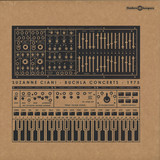
Finders Keepers invite you to witness the incredible first ever Buchla synthesiser concerts/demonstrations providing a distinctive feminine alternative to The Silver Apples Of The Moon if they had ever been presented in phonographic form. This is history in the remaking.
This spring Finders Keepers Records are proud to release an archival project that not only redefines musical history but boasts genuine claim to the overused buzzwords such as pioneering, maverick, experimental, groundbreaking and esoteric, while questioning social politics and the evolution of music technology as we've come to understand it. To describe this records as a game-changer is an understatement. This record represents a musical revolution, a scientific benchmark and a trophy in the cabinet of counter culture creativity. This record is a triumphant yardstick in the synthesiser space race and the untold story of the first woman on the proverbial moon. While pondering the early accolades of this record it's daunting to learn that this record was in fact not a record at all... It was a manifesto and a gateway to a new world, that somehow never quite opened. If the unfamiliar, modernistic, melodic, pulses, tones and harmonics found on this 1975 live presentation/grant application/educational demonstration had been placed in a phonographic context alongside the promoted work of Morton Subotnick, Walter Carlos or Tomita then the name Suzanne Ciani and her influence would have already radically changed the shape, sound and gender of our record collections. Hopefully there is still chance.
In short, Suzanne was a self-imposed twenty-year-old employee of the Buchla modular synthesiser company, San Francisco's neck and neck contender to New York's Moog. Buchla was run by a community of festival freaks and academic acid eaters whose roots in new age lifestyles and the reinvention of art and music replaced the business acumen enjoyed by its likeminded East Coasters. In the eyes of the consumer the creative refusal to adopt rudimentary facets like a piano keyboard controller rendered the Buchla synthesiser the more obscure stubborn sister of the synth marathon, steering these incredible units away from the mainstream into the homes and studios of free music aficionados, art house composers and die-hard revolutionaries. Championed and semi-showcased by composer Morton Subotnick on his albums The Bull and Silver Apples Of The Moon, Buchla's versatility began to open the minds of a new generation, but the high-end design features and no-compromise modus operandi was often confused with incompatibility and, in the pulsating shadow of Moog's marketing, the revolution would not be televised nor patronised. Suzanne Ciani, as one of the very few female composers on the frontline (and also providing the back line) did not lose faith.
These concerts' are the epitome of rare music technology historic documents, performed by a real musician whose skills and academic education in classical composition already outweighed her male synthesiser contemporaries of twice her age. At the very start of her fragile career these recordings are nothing short of sacrificial ode to her mentor and machine, sonic pickets of the revolution and love letters to an absolutely genuine vision of and 'alternative' musical future. In denouncing her own precocious polymathmatic past in a bid to persuade the world to sing from a new hymn sheet, Suzanne Ciani created a bi-product of never before heard music that would render the pigeon holes ambient' and futuristic' utterly inadequate. Providing nothing short of an entirely different feminine take on the experimental records' of Morton Subotnick and proving to a small, judgmental audience and jury the true versatility of one of the most radical and idiosyncratic musical instruments of the 20th century. These recordings have not been heard since then.
The importance of these genuinely lost pieces of electronic musics puzzle almost eclipses the glaring detail of Suzanne's gender as a distinct minority in an almost exclusively male dominated, faceless, coldly scientific landscape. Those familiar with Suzanne's work, a vast vault of previously unpublished non-records', will already know how the creative politics in her art of being' simultaneously reshaped the worlds of synth design, advertising and film composition before anyone had even dropped a stylus in her groove. Needless to say this record, finally commanding the archival format of choice, courtesy of the Ciani and Finders Keepers longstanding unison, was not the last first' with which this hugely important composer would gift society, and the future of a wide range of exciting evolving creative disciplines.
You have found a holy grail of electronic music and a female musical pioneer who was too proactive to take the trophies. With the light of Buchla and Ciani's initial flame Finders Keepers continues to take a torch through the vaults of this lesser-celebrated music legacy shining a beam on these non-records' that evaded the limelight for almost half a century. You can't write history when you are too busy making it. With fresh ink in the bottomless well, let's start at the beginning. Again. You, are invited!
LTD. COKE BOTTLE CLEAR VINYL[23,49 €]
Written with no big plan in mind, Reverend Baron's "Overpass Boy" becomes a Los Angeles meditation, an eight song prayer of poetic topography. The album gives the city its own sound, and its own songs to hum. Recorded in several different locations of LA, and loosely sketching the story of a young wanderer, the album is an easy current of observations and longings. Slices of soul and doo-wop emerge in stacked harmonies, while the percussion and grooves are the blooms that could only come from East LA. Garcia's investment to vocal tenderness and instrumental high style strikes our universal center. His soft serenade reconnects us to something misplaced. Playing almost every instrument on the album, Garcia's spirit is tailored into the sound, designing an amalgam of tones and frequencies as idiosyncratic as the singer himself. Traversing the alleys, passing the sous-chef's cigarette smoke, under the shaking bridges, behind a velvet curtain in a good suit, with a slide guitar in the rain, the titles quilt together for us: Every promise out here walks and waits in the little hours. Jackie and Jimmy drive away and we're left in that little valley, suspended. Recorded and digitally released in 2019, "Overpass Boy" will be re-released by Karma Chief Records on 8/2/2024