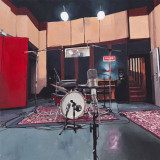
'Racoons' ist das mittlerweile fünfte Soloalbum des außergewöhnlichen Schlagzeugers Erland Dahlen. Er hat auf mehr als 300 Alben mit einer Vielzahl von Künstlern unterschiedlicher Genres gespielt und tritt regelmäßig mit Bands und Künstlern wie der Nils Petter Molvær-Band, Stian Westerhus, Geir Sundstøl, Madrugada und Eivind Aarset auf, um nur einige zu nennen. Auf 'Racoons' spielt Dahlen diverse individuell angefertigte Instrumente - verschiedene Holztrommeln oder maßgeschneiderten Zitherbass. Dahlen verwendet auch chromatische Blütenglocken und verschiedene Metallgegenstände für seine spannenden Klang-Collagen. Erland Dahlens Soloprojekt entstand aus der Tatsache, dass er im Laufe der Jahre eine Vielzahl von Platten mit anderen Musikern gespielt hatte, und ein Projekt haben wollte, bei dem er eigenständig aufnehmen und live spielen konnte. Im Laufe der Zeit hatten sich zu viele musikalische Ideen angesammelt, die zu keinem anderen Projekt passten, sodass er beschloss, einige davon in einem Soloprojekt zu verwenden. Daraus wurden bislang fünf spannende, hochkreative Alben die zwischen Elektronik und Jazz pendeln.
Cerca:als pet
- A1: Spiritual
- A2: Painted Houses (Feat. Conway The Machine)
- A3: Zelle Transfers
- A4: Drug Trade (Feat. Black Thought)
- A5: Harlem World 97 (Feat. Estelle)
- B1: Spiritual (Instrumental)
- B2: Painted Houses (Instrumental)
- B3: Zelle Transfers (Instrumental)
- B4: Drug Trade (Instrumental)
- B5: Harlem World 97 (Instrumental)
Flying Objects is the new collaborative project from indie heavyweights Smoke DZA and Flying Lotus - featuring Black Thought (The Roots/Jimmy Fallon), Estelle, Conway The Machine, and more. Smoke DZA is a popular independent rapper from New York City who has worked with Big K.R.I.T., Wiz Khalifa, Action Bronson and ASAP Rocky among others, and is a founding member of the Smokers Club. His album, Rolling Stoned was awarded the High Times Doobie Award for Hip Hop album of the year for 2011. Other popular album releases include Rugby Thompson (produced by Harry Fraud), Dream.Zone.Achieve (features from Cam'ron, Joey Bada$$, Ab-Soul, Wiz Khalifa, Curren$y), and Don't Smoke Rock (produced by Pete Rock). Flying Lotus is a producer, DJ, filmmaker and rapper from Los Angeles who has worked with Kendrick Lamar, Danny Brown, Mac Miller, Chance The Rapper, Blu and more. He is also the founder of the record label Brainfeeder. He has released seven studio albums. His debut project 1983 dropped in 2006 on Stones Throw Records and his next six projects all came out on Warp Records - to critical acclaim.
Orange vinyl. Time is supposed to mellow us, but for Petrol Girls it has distilled their feminist politics into an ever more potent cocktail. Fitting, given that their logo from day one has been a flaming molotov. Since their formation in 2012, the band has been known for playing fast-paced, chaotic punk that takes aim at everything from sexual violence to immigration policy, but over the last few years their sound has evolved in a more nuanced direction. Their 2016 debut album Talk of Violence was a blast of pure political rage, while 2019's Cut & Stitch saw vocalist Ren Aldridge exploring familiar themes from a more personal perspective. Now their latest offering, Baby - to be released through the London-based independent label Hassle on June 24th - sees the band turn another new corner. This time, by embracing irreverence. "We wanted this album to be less epic and less preachy from day one," Aldridge says. "I hate sanctimoniousness. Like, really fucking hate it. But I also know that I have been mega preachy, and felt very pressured to be sanctimonious, because we've always played in a very political punk scene. I lost my fun side, and I really needed to come back to that." Recorded with Pete Miles at Middle Farm Studios in Devon, Baby embraces a more playful sound. A focus on groove and repetition - driven by guitarist Joe York, drummer Zock and bassist Robin Gatt - give the songs a Talking Heads feel, while retaining the band's formative post-punk energy. The lyrics, too, are a departure for Aldridge. While she continues to address heavy topics like burn out, femicide and police violence, the lyrics balance directed anger with tongue-in-cheek humour where appropriate. Angular opener "Preachers" puts the self-aggrandising nature of call-out culture on blast with lyrics like "feeling dead important in the comments", while lead single "Baby, I Had An Abortion" is intentionally puerile from title to finish. On the flip side, tracks like "Violent By Design" see the band kicking back against carceral feminism in the wake of a news cycle dominated by Black Lives Matter protests and PC Wayne Cousins' brutal murder of Sarah Everard. Similarly, "Fight For Our Lives" - a harsh, borderline industrial song - was lyrically co-written by activist and vocalist Janey Starling. Aldridge deliberately wrote the verses to sound like a manifesto, and the lyrics reference Starling's Dignity For Dead Women Campaign with Level Up, which successfully called for the UK media to change the way it reports on fatal incidents of domestic violence. Baby saw Petrol Girls working in new ways - scrapping entire songs rather than trying to force things that didn't feel right, recording to tape for the first time, and deliberately leaving in imperfections. It was a more carefree process, which Aldridge - having gone through a particularly bad period of mental ill-health at the start of 2021 - welcomed. "Our whole thing for a long time, and a big focus of the last record, was making political struggle sustainable," Aldridge says. "And I think having a good time where possible, and things being not totally serious all the time, is really essential."
- A1: Peter Tevis - A Gringo Like M
- A2: Don Powell - Cannibal (Cantata Ii)
- A3: Peter Boom - Splash
- A4: Christy - Solo Nostalgia
- A5: The Sorrows - Pioggia Sul Tuo Viso
- B1: Lisa Gastoni - Una Stanza Vuota
- B2: Trio Junior - Fruscio Di Foglie Verdi
- B3: Patrick Samson - Gloria
- B4: Le Voci Bianche Di Renata Cortiglioni - Guerra E Pace, Pollo E Brace
- B5: I Cantori Moderni Di Alessandroni - Matto, Caldo, Soldi, Morto Girotondo
- C1: Christy - Man For Me
- C2: Florinda Bolkan - Vai Via Malinconia (#4)
- C3: Jimmy Fontana - Metti Una Sera A Cena
- C4: Sergio Endrigo - Nuvole
- C5: Domenico Modugno - Filastrocca Vietnamita
- C6: Edda Dell'orso - Uccellacci E Uccellini (Titoli De Testa) (Titoli De Testa)
- D1: Massimo Ranieri - Luce Chiara Per Vergine "Curve Oscure
- D2: Swan Robinson - Un Po' Per Giorno
- D3: King Harvest - No One Can
- D4: Daniel Beretta - You & I
- D5: Um Amico
Während seiner außergewöhnlichen Karriere, die sich über mehr als sechs Jahrzehnte erstreckte, schuf der weltberühmte italienische Komponist Ennio Morricone mehr als 600 Originalkompositionen und einen einzigartigen und unverwechselbaren Stil, der avantgardistische Lösungen mit feinster Pop-Psych-Attitüde verband.
Zu den Künstlern, die den Maestro sampelten oder sich in ihren Produktionen von ihm inspirieren ließen, gehören: Jay-Z, Flying Lotus, Danger Mouse, Madlib, Mark Knopfler, U2.
Anlässlich des 95. Geburtstags des Maestros (10. November 2023) präsentiert CAM Sugar eine neue Sammlung von wenig bekannten Perlen, die von Morricone komponiert wurden und die 2020 die Morricone Segreto Collection ergänzen: Morricone Segreto Songbook.
Ein Beweis dafür, dass auch einer der berühmtesten Komponisten unserer Zeit noch Geheimnisse zu lüften hat.
Das Morricone Segreto Songbook enthüllt die poppig psychedelischen, düster-kinematografischen und avantgardistischen Klänge, die die ursprüngliche Sammlung kennzeichneten, mit einigen Ausflügen in den Folk-Rock der Zeit, zwischen ergreifenden Balladen und eleganten Chansons.
Diese Anthologie entstand aus dem Wunsch heraus, Morricones Filmmusiken zu erforschen und einige versteckte Perlen zu entdecken, die trotz des innovativen Niveaus der Kompositionen und der Modernität der Orchestrierung mehr oder weniger in Vergessenheit geraten oder in den Hintergrund gedrängt worden sind.
Ab dem 10.11 als 2LP oder 1-CD Digipack verfügbar.
Ausbalancierte und dynamische Neupressung des 2018er Debütalbums der Melbourner Jazz-Band Midlife, das bei den Worldwide FM Awards als bestes Album des Jahres nominiert war und Trendsetter wie DJ Harvey, Gilles Peterson, Artwork und Bradley Zero begeistert hat. Mit seiner sensationellen, Genre sprengenden Kombination aus progressiven 70er Sounds mit elektronischem Krautrock, unterlegt mit einer Mischung aus rhythmischem Funk, House und Dream-Pop, ist die LP jetzt schon ein Klassiker der Psychedelic-Jazz-Fusion, der eine süchtig machende Atmosphäre schafft, die live mit wilden Improvisationen unterstützt wird.
Berlin-based Swedish bassist and producer Petter Eldh returns with a new Koma Saxo album Post Koma, out on We Jazz Records, 10 November. The title Post Koma aptly describes the vibe of this one: The Koma Saxo sound continues its evolution, morphing into a holistic vision of jazz now and soon, where live instrumentation and repurposed sampling lose their boundaries.
Over the course of its three iterations (self-titled debut in 2019, LIVE in 2020, Koma West in 2022) Koma Saxo has sounded at times "liquid" and postproduced, at times raw and direct, at times acoustic and at other times oddly electronic (even while still being made with acoustic instruments). Post Koma is a culmination of this sonic study by Eldh, resulting in a music vision that never second-guesses throwing tasty hooks and everlasting melodies out the window after a mere bite of them. But fear not: there are even more new ideas just around the corner.
Eldh's compositions and ideas merge together in a way that just flows. There are quality musicians in the mix, including Koma Saxo live band members Sofia Jernberg, Jonas Kullhammar, Otis Sandsjö, Mikko Innanen, Maciej Obara and Christian Lillinger, but that's like saying that a cake includes flour and sugar. This music is not about playing, it's essentially about how the music is and how it takes its shape, so you quickly lose track of who did what, and that's all in the benefit of encountering this music as an entity that is constantly challenging itself while moving forward. The musicians are valued contributors, and an integral part of what's here, but this is far from traditional jazz playing where a band sits in a room playing takes after takes of compositions on sheet.
That being said, this is jazz to the fullest. That is, music that understands its past but always moves forward, and is never afraid of taking risks. Petter Eldh uses jazz as a starting point, not the end goal. This gives his music edge and mobility beyond what can be contained on one album. In a way, an album, then, becomes a snapshot of a creative process in constant flux and evolution.
Opening track "Koma" is literally drum & bass. It only consists of those two elements, yet what comes out of it is an open invite, a way of clearing your palette. It would be useless to describe individual tracks beyond that, but there's a strong sense of deliverance to the set. It feels like an ending, and also like a new beginning.
Berlin-based Swedish bassist and producer Petter Eldh returns with a new Koma Saxo album Post Koma, out on We Jazz Records, 10 November. The title Post Koma aptly describes the vibe of this one: The Koma Saxo sound continues its evolution, morphing into a holistic vision of jazz now and soon, where live instrumentation and repurposed sampling lose their boundaries.
Over the course of its three iterations (self-titled debut in 2019, LIVE in 2020, Koma West in 2022) Koma Saxo has sounded at times "liquid" and postproduced, at times raw and direct, at times acoustic and at other times oddly electronic (even while still being made with acoustic instruments). Post Koma is a culmination of this sonic study by Eldh, resulting in a music vision that never second-guesses throwing tasty hooks and everlasting melodies out the window after a mere bite of them. But fear not: there are even more new ideas just around the corner.
Eldh's compositions and ideas merge together in a way that just flows. There are quality musicians in the mix, including Koma Saxo live band members Sofia Jernberg, Jonas Kullhammar, Otis Sandsjö, Mikko Innanen, Maciej Obara and Christian Lillinger, but that's like saying that a cake includes flour and sugar. This music is not about playing, it's essentially about how the music is and how it takes its shape, so you quickly lose track of who did what, and that's all in the benefit of encountering this music as an entity that is constantly challenging itself while moving forward. The musicians are valued contributors, and an integral part of what's here, but this is far from traditional jazz playing where a band sits in a room playing takes after takes of compositions on sheet.
That being said, this is jazz to the fullest. That is, music that understands its past but always moves forward, and is never afraid of taking risks. Petter Eldh uses jazz as a starting point, not the end goal. This gives his music edge and mobility beyond what can be contained on one album. In a way, an album, then, becomes a snapshot of a creative process in constant flux and evolution.
Opening track "Koma" is literally drum & bass. It only consists of those two elements, yet what comes out of it is an open invite, a way of clearing your palette. It would be useless to describe individual tracks beyond that, but there's a strong sense of deliverance to the set. It feels like an ending, and also like a new beginning.
Euroteuro, die Dritte! November 2023, Die Wiener Pop Gruppe EUROTEURO um Mastermind Peter T. präsentieren ihr neues drittes Album "VOLUME III". Mit ihrem Sommerhit "AUTOGRILL" hat das Wiener Kollektiv EUROTEURO einen ewigen Ohrwurm für alle italophilen Espresso-Freunde geschaffen. Mit dem 2022 erschienenem zweiten Album hat das Popkollektiv bewiesen, dass sie weit mehr als ein One-Hit-Wonder sind. Leichtfüssiger Elektropop trifft auf Cover-Versionen von XTC bzw Georg Kreisler-Songs. Dem folgten Auftritte im österreichischen ORF-Fernsehen, ein Headliner-Slot am Wiener Popfest, eine Einladung zum Fusion Festival nahe Berlin und so manche Cameo-Auftritte in österr. Filmen & Serien. Mit markantem Wiener Schmäh tourt EUROTEURO mit ihrem expressiven Synth-Pop nun in Duo-Besetzung durch den deutschsprachigen Raum. Mit im Gepäck ihre neue Vinylscheibe inkl. der Single "Teuer", wo sie das mittlerweile vom Gespenst zum realen Türsteher mutierte Phänomen der Teuerung besingen. "900 Euro warm. Viel zu teuer! Regelbruch - Strafe zahlen. Viel zu teuer!" Ein atemloses Stück Musik, das den Wahnsinn der uns umgibt ein Stück weit zu kanalisieren versucht. Die aktuelle Single "Zeit" kann als Ode an die Entschleunigung gesehen werden. Nicht alles muss immer sofort sein, manchmal muss man einfach nur um "ein bischen mehr Zeit" bitten. "Sie singen für dein Recht auf Eskapismus, selbst wenn du dir nichts mehr leisten kannst. Euroteuro zelebrieren einen Prekariat und Proletariat vereinenden Scheißdrauf-Hedonismus ("Insel" bzw. das unverwüstliche Debüt "Autogrill") und nehmen dabei auch vor die Song-gewordene Anwendung von Bertrand Russells Lob des Müßiggangs ("Kündigung", "Sag Alles Ab") nicht Halt. In diesem Sinn kann man Zeilen wie "Lassen sie einfach das Studium sein" aus "Wenn das alle täten" ebenso als ironisch wie ernsthaft subversiv interpretieren. Die Verweigerung der vom Neoliberalismus verlangten ständigen Selbstoptimierung trifft dabei auf den gelebten Widerspruch der beiden emblematischen europäischen Fetische von Bewegungsfreiheit und Wachstum." (Robert Rotifer)
Five groups, one mythical studio - documenting the emergence of a generation!
The initial postulate was simple: five groups, one emblematic studio and 24 hours for each to imagine and record two unreleased tracks with one objective - the will to document a French jazz scene in the midst of renewal.
In these last few years, several innovative currents have shaken up the world of jazz and attracted new fans. They have bubbled up from Los Angeles, impregnated with hip-hop culture (Kamasi Washington, Terrace Martin, Thundercat), or from London, tinged with African rhythms (Nubya Garcia, Kokoroko, Ezra Collective). Meanwhile, in France, a new scene is emerging, carrying with it more of a dancefloor-oriented sound influenced by electronic music - an obvious kinship with the French Touch explosion of the late 90s.
Historically, every movement has been assimilated to a certain neighbourhood, to specific clubs where late at night, young guns stayed up to imagine the jazz of tomorrow - the Cotton Club for the jazz of the 20s, Minton’s Playhouse in Harlem for Be-Bop, the Black Hawk in San Francisco for West Coast jazz, Birdland in New York for Hard-Bop or a lot more recently, the Total Refreshment Centre which has been the playing field for the new London scene.
In Paris too, this new sound is associated with actual venues, places which have allowed these groups to form, create a repertoire and forge an aesthetic - Le Baiser Salé for Monsieur Mâlâ, La Gare/Le Gore for Photon, La Pêche in Montreuil for Ishkero, La Petite Halle for Underground Canopy and also le Duc des Lombards and le 38 Riv’ for Alex Monfort; it’s in a live context that this music will always continue to evolve.
Keeping this “live” spirit, with all its spontaneity, was actually the guiding line for the elaboration of this Studio Pigalle compilation. Each take was recorded in the most organic way possible, bringing all the musicians together in the same room to limit post-production alterations before the final cut was assembled, in just one day, by studio in-house sound engineer, Felix Rémy.
A feeling of urgency permeates a record guided by an artistic production taking care to crystalise the essence of this artistically free-range generation whose childhoods were rocked just as much by Bill Evans and Roy Hargrove as by J Dilla and Jeff Mills. One of the two tracks recorded is geared towards the dancefloor, and the other, more cosmic/ambient gives freer rein to individual interpretation.
There were therefore many possible ways of interpreting these guidelines for the five formations which number among the most distinctive on the current French musical landscape, and the occasion, for some, to rummage through their archives! With Transe (Mbappé) and Da Verdere (Vella), Monsieur
Mâlâ present us with two unreleased tracks issued from the very first rehearsals of the quintet reworked especially for this compilation. “Seen the aesthetic range of this group, it all worked out very naturally in the studio”, recounts keyboardist Nicholas Vella “Recording like they did in the sixties with all the channels live and working with small imperfections was a very interesting task, even when it came to the mix, we had to make do with the takes we had... “
“Our group is very recent, and with this session, in just two tracks, we had the opportunity to present the entirety of our musical universe,” says Photons pianist Gauthier Toux. “All too often, we assimilate this fusion between jazz and dance music to computers and post-production modifications. For “Dessine”, we kept the first take, and we must have recorded just three or four for the other track with more of a techno bent. In one day, we understood that we could play our entire repertoire live, from A to Z”.
“When the Komos label offered me this project, it immediately spoke to me”, remembers Alex Monfort “Straight away, I thought of “Since I Met You”, a track with a nine/four time signature which really is reminiscent of a new- soul groove, but with this extra cosmic vibe! I wrote the words to the chorus and Nina Tonji placed her voice on the track, adding her own verses. For “Tonight”, the up-tempo track, I wanted to head off in more of a hybrid direction inspired by Kaytranada or the Black Radio series by Robert Glasper. A cross-over between jazz and hip-hop which really does represent my world, and I also tried to place vocals centre stage (Emcee Agora)”.
“We truly resonated with the way Antoine Rajon imagined this compilation and the recording session”, confide Warren Dongué and Jérémy Tallon from Underground Canopy. “When arriving in this studio we felt as if we had gone backtothe70s! Inkeepingwiththespiritofthisera,heknewhowtoletus keep our spontaneity, without recording in too many takes, and that’s how we like to work”.
“We managed to adhere to the themes of the compilation without changing our instrumentation, we wanted to remain faithful to the sound of Ishkero on these new compositions and take them somewhere else” – says drummer TaoEhrlich -“Withoutaddinganyelectronics.Thesessionwassupervisedin a truly subtle and benevolent manner. From a human perspective, it was also a wonderful experience”.
Whether turned towards hip-hop, ethnic or electronic music, the artists featured on this Studio Pigalle compilation represent the eclecticism of a new generation in the process of writing the first chapters of its history. Open to experimentation, these artists continue to hold high an immutable love for improvisation and creation in the moment... another definition of the word Jazz!
Color Vinyl[20,97 €]
In the decade or so that hard-working New York quartet Sunwatchers have operated, the group has steadily & subtly refined their sound - a brain-blasting mixture of jazz, psychedelia, krautrock, punk, noise, & Saharan blues - into something that is avant-leaning enough to appeal to the discerning jazz & experimental music fan & weird & wooly enough to get the true heads' toes tapping. "Music Is Victory Over Time" is the band's 5th album, and fourth for Chicago-based Trouble In Mind Records, seeing the long-running lineup of Peter Kerlin (bass guitar), Jim McHugh (guitars), Jason Robira (drums), and Jeff Tobias (alto saxophone and keyboards) in prime form. Album opener "World People" is a classic Sunwatchers number whose title expresses their Anarcho-Internationalist ideology (and the atypically multi-culti make up of their crowds), with an underlying melodic resonance to New Orleans funeral marches à la Albert Ayler _ a triumphant call to arms to all peoples. Live fave "Too Gary"'s gang vocal shout punctuates a motorik rager named for a phrase often uttered by a badass eight year old skateboarder McHugh knew with a speech impediment (it means "that's too scary"). "T.A.S.C." (or "Theme For Anarchist Sports Center") is inspired by Sonny Sharrock's maligned 80's output & sounds exactly like a wrathful, mutant version of a prime-time athletic show theme, replete with the requisite "sitcom ending." The sun- scorched "Foams" - a longform piece intended to depict natural stuff like tides, nightfall, and time slowly passing, ancient, peaceful and slightly gross all at once - practically jumps out of the speakers, its palpable intensity crackling in your eardrums. The title of "Tumulus" might reference an ancient burial mound, but the music itself might be the group's most high-tech song to date, complimented by an arpeggiating sequencer, three different forms of tape delay and an electric saxophone; ecstatic, fiery & deeply spiritual. "There Goes Ol' Ooze" is a smoky creeper that lets Tobias & Kerlin take a walk for a while, with respectful nods to the Stones and Steve Reich. "Song For The Gone" closes out the album, showcasing a sincerely tender moment for the gang, as an expression of love and resolve for dear friends who had recently, tragically died. Its cascading, bluesy melody attuning itself to our own collective unconscious grief. Having the distinct pleasure of being the first band to record in John Dwyer 's new LA-based recording studio Discount Mirrors, "Music Is Victory Over Time" boasts a beefed up sound. The band worked closely with in-house engineer Eric Bauer - facilitator, troubleshooter, sonic obsessive, a legendary freak and a DIY lifer. The band also had full access to the studio's epic armory of gear: amps, axes (it's Dwyer's Eddie Harris model electric sax), synths, a bass guitar once belonging to Klaus Flouride of the Dead Kennedys. Crucial for the sounds and the vibe. The album art was created by Josh MacPhee, the activist artist, author, archivist and founding member of both the radical artist collective Just Seeds and Interference Archive, a public collection of materials from social movements based in Brooklyn. MacPhee's participation in the project works as a statement of Sunwatchers' progressive utopian intentionality, and organically underscores their involvement in revolutionary projects within and without of their hometown. Listening to "Music Is Victory Over Time", Sunwatcher's rebellious spirit & unbridled enthusiasm remain fully intact, but the secret sauce is their infectious irreverence in the face of the horrors of this world. Much of our best cultural commentary is Trojan-horsed to the general public via humor & satire & the band has a knack for lacing the ridiculous with the radical. It's good to have them back. "Music Is Victory Over Time" is released worldwide digitally via most DSPs, on CD, black vinyl & a limited "Sunflare" blue/red splatter vinyl while supplies last.
Black Vinyl[20,97 €]
In the decade or so that hard-working New York quartet Sunwatchers have operated, the group has steadily & subtly refined their sound - a brain-blasting mixture of jazz, psychedelia, krautrock, punk, noise, & Saharan blues - into something that is avant-leaning enough to appeal to the discerning jazz & experimental music fan & weird & wooly enough to get the true heads' toes tapping. "Music Is Victory Over Time" is the band's 5th album, and fourth for Chicago-based Trouble In Mind Records, seeing the long-running lineup of Peter Kerlin (bass guitar), Jim McHugh (guitars), Jason Robira (drums), and Jeff Tobias (alto saxophone and keyboards) in prime form. Album opener "World People" is a classic Sunwatchers number whose title expresses their Anarcho-Internationalist ideology (and the atypically multi-culti make up of their crowds), with an underlying melodic resonance to New Orleans funeral marches à la Albert Ayler _ a triumphant call to arms to all peoples. Live fave "Too Gary"'s gang vocal shout punctuates a motorik rager named for a phrase often uttered by a badass eight year old skateboarder McHugh knew with a speech impediment (it means "that's too scary"). "T.A.S.C." (or "Theme For Anarchist Sports Center") is inspired by Sonny Sharrock's maligned 80's output & sounds exactly like a wrathful, mutant version of a prime-time athletic show theme, replete with the requisite "sitcom ending." The sun- scorched "Foams" - a longform piece intended to depict natural stuff like tides, nightfall, and time slowly passing, ancient, peaceful and slightly gross all at once - practically jumps out of the speakers, its palpable intensity crackling in your eardrums. The title of "Tumulus" might reference an ancient burial mound, but the music itself might be the group's most high-tech song to date, complimented by an arpeggiating sequencer, three different forms of tape delay and an electric saxophone; ecstatic, fiery & deeply spiritual. "There Goes Ol' Ooze" is a smoky creeper that lets Tobias & Kerlin take a walk for a while, with respectful nods to the Stones and Steve Reich. "Song For The Gone" closes out the album, showcasing a sincerely tender moment for the gang, as an expression of love and resolve for dear friends who had recently, tragically died. Its cascading, bluesy melody attuning itself to our own collective unconscious grief. Having the distinct pleasure of being the first band to record in John Dwyer 's new LA-based recording studio Discount Mirrors, "Music Is Victory Over Time" boasts a beefed up sound. The band worked closely with in-house engineer Eric Bauer - facilitator, troubleshooter, sonic obsessive, a legendary freak and a DIY lifer. The band also had full access to the studio's epic armory of gear: amps, axes (it's Dwyer's Eddie Harris model electric sax), synths, a bass guitar once belonging to Klaus Flouride of the Dead Kennedys. Crucial for the sounds and the vibe. The album art was created by Josh MacPhee, the activist artist, author, archivist and founding member of both the radical artist collective Just Seeds and Interference Archive, a public collection of materials from social movements based in Brooklyn. MacPhee's participation in the project works as a statement of Sunwatchers' progressive utopian intentionality, and organically underscores their involvement in revolutionary projects within and without of their hometown. Listening to "Music Is Victory Over Time", Sunwatcher's rebellious spirit & unbridled enthusiasm remain fully intact, but the secret sauce is their infectious irreverence in the face of the horrors of this world. Much of our best cultural commentary is Trojan-horsed to the general public via humor & satire & the band has a knack for lacing the ridiculous with the radical. It's good to have them back. "Music Is Victory Over Time" is released worldwide digitally via most DSPs, on CD, black vinyl & a limited "Sunflare" blue/red splatter vinyl while supplies last.
"Chapter Two" umfasst die Alben "The Final Chapter" (1997), "Hypocrisy" (1999) und "Into The Abyss" (2000). Diese Alben gelten als Meilensteine in der Karriere von HYPOCRISY, da Peter Tägtgren, Mikael Hedlund und Lars Szöke in dieser Zeit ein neues Niveau an Songwriting-Qualität erreichten und die Dynamik betonten. Sie schufen zusätzliche atmosphärische Ebenen und setzten gelegentlich Clean-Vocals ein, was zu eindringlich schönen, aber dennoch schweren und aggressiven Melodic-Death-Metal-Hymnen führte. Nun kehren diese atemberaubenden Alben in edlen Vinyl- und CD-Editionen zurück, während Tägtgrens Remaster von "Into The Abyss" auch digital veröffentlicht wird.
Isabelle Adjani ist das, was man eine Ikone des französischen Kinos nennen kann. Mit ihren fünf César-Auszeichnungen (ein beeindruckender Rekord) in der Kategorie "Beste Schauspielerin" für "Possession", "Ein tödlicher Sommer", "Camille Claudel", "La Reine Margot" und "Skirt Day" hat sie keinen Zweifel an ihrem Starstatus gelassen - sowohl in Frankreich als auch international. Die Wartezeit auf ein Album von Isabelle Adjani schien nicht enden zu wollen.
Nach ihrer legendären Reise mit Serge Gainsbourg, die sie vom Grund des Swimmingpools (Adjanis eigene Worte in ihrer ersten musikalischen Veröffentlichung mit der französischen Musiklegende Gainsbourg, Pull marine) zu den Höhen des Ruhms führte, begann sie mit der unglaublichsten Besetzung zu arbeiten, die diese Ära zu bieten hatte - Benjamin Biolay, Etienne Daho, Gaëtan Roussel, Seal, Simon Le Bon, Christophe, Akhenaton, Daniel Darc, Philippe Pascal, David Sylvian, Youssou N'Dour und Peter Murphy. Diese Veröffentlichung ist das Ergebnis von 15 Jahren Sessions und Treffen, bei denen die Zeit einfach keine Rolle mehr spielte.
Das neue Album, das vollständig von Pascal Obispo produziert wurde und bei dem Pascal Obispo und Cécile de Laurentis gemeinsam Regie geführt haben, ist endlich aus seiner Puppe geschlüpft. Isabelle Adjani meldet sich mit ihrem einzigartigen Album "Bande originale" (dt.: "Soundtrack") zurück, das in Form von 12 Duetten ein musikalisches Großereignis für die Festtage sein wird.
Transparent rotes Vinyl. Weihnachtslieder gibt es viele. Die meisten sind weichgespült und kitschig und verfolgen die geplagten Eltern häufig noch als unangenehmer Ohrwurm, wenn Lametta und Kugel längst wieder im Keller verstaut sind. Und wer sagt eigentlich, dass Kinder auf seichtes Gedudel stehen? Niemand! Und genau deshalb ist es gut, dass es die Band "Randale" gibt. Die vier Musiker Jochen Vahle, Christian Keller, Garrelt Riepelmeier und Marc Jürgen machen Rockmusik für Kinder. Manchmal laut und krachig, manchmal nachdenklich und leise, aber mit einem Augenzwinkern und viel Witz. Jetzt legen die Bielefelder mit ihrer wiederveröffentlichten CD ein ganz spezielles Weihnachts- Album vor: 10 Songs, die in bewährter Randale-Manier auf die besondere Zeit einstimmen. Und das heißt: Als Country-, Reggae-, Rock- oder Punkversion. 6 Titel stammen von der original CD von 2006. "Harald und Peter feiern Weihnachten" sowie "Jeder kann helfen" sind brandneu. "Der Kuckuck und der Esel" streiten nicht über die schönste Stimme, sondern über den schönsten Baum. Und die "Affendisco" verwandelt sich in die "Weihnachtsdisco". Die Fangruppe wächst und wächst. Fazit: Dieses Album gehört nicht unter den Baum. Es sollte spätestens zu Nikolaus in der Tüte beziehungsweise im Strumpf stecken! Und was wünscht sich die Band? "Dass die CD zusammen mit dem Christbaumschmuck sicher verstaut wird und damit auch in den nächsten Jahren zum festen Bestandteil des Festes wird!"
Das Boot ist ein erfolgreicher deutscher Kriegsfilm unter der Regie von Wolfgang Petersen, in dem Jürgen Prochnow, Herbert Grönemeyer und Klaus Wennemann die Hauptrollen spielen. Der Original-Soundtrack, komponiert von Klaus Doldinger, wird nun erstmals als 1LP auf farbigen Vinyl (Crystal Clear) aufgelegt und
erscheint am 03.11..
Der Film erhielt sehr positive Kritiken und wurde für sechs Oscars nominiert, wobei zwei dieser Nominierungen (für die beste Regie und das beste adaptierte Drehbuch) an Petersen selbst gingen; außerdem war er für einen BAFTA Award und einen DGA Award nominiert.
Der Soundtrack zum Film wurde von Klaus Doldinger komponiert und produziert, der für seine Arbeit im Jazz und als Filmmusikkomponist bekannt ist. Die charakteristische Titelmelodie des Soundtracks
verselbständigte sich, nachdem die deutsche Rave-Gruppe U96 1991 eine neu abgemischte "Techno-Version" geschaffen hatte. Die Titelmelodie "Das Boot" wurde später zu einem internationalen Hit.
- A1: Böser Die Glocken Nie Klingen 20:09:00
- B1: Böser Die Glocken Nie Klingen 10:53:00
- C1: Böser Die Glocken Nie Klingen 17:28:00
- D1: Böser Die Glocken Nie Klingen 11:24:00
- E1: Böser Die Glocken Nie Klingen 19:09:00
- F1: Böser Die Glocken Nie Klingen 21:20:00
- G1: Böser Die Glocken Nie Klingen 19:39:00
- H1: Böser Die Glocken Nie Klingen 18:41:00
- I1: Böser Die Glocken Nie Klingen 12:52:00
- J1: Böser Die Glocken Nie Klingen 21:17:00
- K1: Böser Die Glocken Nie Klingen 10:41:00
- L1: Böser Die Glocken Nie Klingen 19:54:00
3xCassette[73,07 €]
24 spannende Kapitel mit farbigen Illustrationen
Perfekt als Adventskalender nutzbar
Exklusive, limitierte Auflage
Ein tolles Geschenk für alle Fans der Kultreihe
Weihnachten auf dem Schrottplatz - doch die drei ??? gönnen sich keine Pause. Auch in der besinnlichen Adventszeit übernehmen Justus, Peter und Bob jeden Fall.Die drei Detektive schmücken den Weihnachtsbaum auf dem Schrottplatz, als sie plötzlich einen kryptischen Hilferuf in einem Weihnachtsglöckchen entdecken. Doch wer ist der Absender? Die Spur führt die drei ??? in ein Wohnheim für Jugendliche. Die Zeit drängt - wird es ihnen bis zum 24. Dezember gelingen, den Fall zu lösen? Ein weihnachtlicher Fall in 24 Kapiteln.
- A1: Böser Die Glocken Nie Klingen 09:29:00
- A2: Böser Die Glocken Nie Klingen 10:40:00
- A3: Böser Die Glocken Nie Klingen 05:52:00
- A4: Böser Die Glocken Nie Klingen 05:01:00
- B1: Böser Die Glocken Nie Klingen 10:19:00
- B2: Böser Die Glocken Nie Klingen 07:09:00
- B3: Böser Die Glocken Nie Klingen 11:24:00
- B4: Böser Die Glocken Nie Klingen 12:04:00
- C1: Böser Die Glocken Nie Klingen 07:05:00
- C2: Böser Die Glocken Nie Klingen 08:03:00
- C3: Böser Die Glocken Nie Klingen 08:50:00
- C4: Böser Die Glocken Nie Klingen 04:27:00
- D1: Böser Die Glocken Nie Klingen 06:13:00
- D2: Böser Die Glocken Nie Klingen 04:35:00
- D3: Böser Die Glocken Nie Klingen 06:39:00
- D4: Böser Die Glocken Nie Klingen 02:12:00
- D5: Böser Die Glocken Nie Klingen 06:35:00
- E1: Böser Die Glocken Nie Klingen 12:06:00
- E2: Böser Die Glocken Nie Klingen 12:52:00
- E3: Böser Die Glocken Nie Klingen 21:17:00
- F1: Böser Die Glocken Nie Klingen 04:24:00
- F2: Böser Die Glocken Nie Klingen 06:18:00
- F3: Böser Die Glocken Nie Klingen 11:57:00
- F4: Böser Die Glocken Nie Klingen 07:57:00
6x12"[73,07 €]
24 spannende Kapitel mit farbigen Illustrationen
Perfekt als Adventskalender nutzbar
Exklusive, limitierte Auflage
Ein tolles Geschenk für alle Fans der Kultreihe
Weihnachten auf dem Schrottplatz - doch die drei ??? gönnen sich keine Pause. Auch in der besinnlichen Adventszeit übernehmen Justus, Peter und Bob jeden Fall.Die drei Detektive schmücken den Weihnachtsbaum auf dem Schrottplatz, als sie plötzlich einen kryptischen Hilferuf in einem Weihnachtsglöckchen entdecken. Doch wer ist der Absender? Die Spur führt die drei ??? in ein Wohnheim für Jugendliche. Die Zeit drängt - wird es ihnen bis zum 24. Dezember gelingen, den Fall zu lösen? Ein weihnachtlicher Fall in 24 Kapiteln.
Following the release of the shoegaze masterpiece Delaware in 1992, and the intricate experimentations on National Coma in 1993, Drop Nineteens disbanded. They had a great run. Shared stages with Radiohead, Hole, Blur, PJ Harvey. Went from being teenaged kids in Boston to mid twenty somethings with an MTV video under their belt. So when Drop Nineteens ceased to be, Greg Ackell felt content, music was a closed chapter. That was until 2021. For the first time in nearly 30 years, Ackell felt compelled to pick up a guitar. He immediately called up Steve Zimmeran, the band's bassist and fellow guitarist, and the two got writing. It felt effortless for Ackell, like he never stopped writing music. "We were off to the races," he says. "But also the question came up: what does a Drop Nineteens song sound like today? Enter Hard Light, the band's stunning third record. It's the band's proverbial follow up to Delaware, a modern Drop Nineteens record that is completely singular in its sound and vision. The first task making Hard Light, was of course, getting the rest of the band back together. Drop Nineteens is an inherently collaborative project. Ackell's primarily the lyrics writer, and he collaborates with Zimmerman, Paula Kelley, Motohiro Yasue, and Peter Koeplin to create the sonic world. The record came together over the course of a year, recording at a patchwork of studios all around the country. Making music together felt natural, fluid, exciting. The guitar reverb is expansive as ever. Ackell and Kelley's vocals are crystalline. "Scapa Flow," is triumphant. An excellent example of what a modern day Drop Nineteens song sounds like. The guitars glide like clouds on a blue sky day, drums shuffle in the background, searching. Ackell and Kelley's vocals are cool toned and dreamy, bound up in a haze of reverb. It's unquestionably lovely. You could say the same for the whole of the record. Hard Light is so lovely. A portrait of a band 30 years later, as talented and as dedicated to their craft as ever.
Das "Rock-Album" der Mountain Goats enthält 13 formidable Songs, die an so interessanten und unterschiedlichen Plätzen wie Fairbanks, Stockholm, Seattle, San Francisco oder Durham geschrieben wurden. Diese Vielfalt der Ortschaften spiegelt sich auch in der fesselnden Andersartigkeit der Songs wieder. John Darnielle fasziniert erneut mit intensiven Texten, die z.B. von Krimi-Autoren, dem letzten Sex mit der Freundin, einem See-Monster, Splatter-Filmen und vielen anderen Kuriositäten handeln. "Heretic Pride" entstand in Zusammenarbeit mit vielen guten alten Freunden von John, zu denen sich diesmal aber auch einige neue gesellten. Schon beinahe als feste Bandmitglieder fungieren Peter Hughes am Bass, John Wurster an den Drums, Franklin Bruno am Klavier und Erik Friedlander am Cello. Zudem steuerte St. Vincents Annie Clark einige bezaubernde Gitarrenchords und Backing Vocals bei.
Repress!
In the mid-1970s, a force of nature swept across the continental United States, cutting across all strata of race and class, rooting in our minds, our homes, our culture. It wasn’t The Exorcist, Goodbye Yellow Brick Road, or even bell-bottoms, but instead a book called The Secret Life of Plants. The work of occultist/former OSS agent Peter Tompkins and former CIA agent/dowsing enthusiast Christopher Bird, the books shot up the bestseller charts and spread like kudzu across the landscape, becoming a phenomenon. Seemingly overnight, the indoor plant business was in full bloom and photosynthetic eukaryotes of every genus were hanging off walls, lording over bookshelves, and basking on sunny window ledges. The science behind Secret Life was specious: plants can hear our prayers, they’re lie detectors, they’re telepathic, able to predict natural disasters and receive signals from distant galaxies. But that didn’t stop millions from buying and nurturing their new plants.
Perhaps the craziest claim of the book was that plants also dug music. And whether you purchased a snake plant, asparagus fern, peace lily, or what have you from Mother Earth on Melrose Avenue in Los Angeles (or bought a Simmons mattress from Sears), you also took home Plantasia, an album recorded especially for them. Subtitled “warm earth music for plants…and the people that love them,” it was full of bucolic, charming, stoner-friendly, decidedly unscientific tunes enacted on the new-fangled device called the Moog. Plants date back from the dawn of time, but apparently they loved the Moog, never mind that the synthesizer had been on the market for just a few years. Most of all, the plants loved the ditties made by composer Mort Garson.
Few characters in early electronic music can be both fearless pioneers and cheesy trend-chasers, but Garson embraced both extremes, and has been unheralded as a result. When one writer rhetorically asked: “How was Garson’s music so ubiquitous while the man remained so under the radar?” the answer was simple. Well before Brian Eno did it, Garson was making discreet music, both the man and his music as inconspicuous as a Chlorophytumcomosum. Julliard-educated and active as a session player in the post-war era, Garson wrote lounge hits, scored plush arrangements for Doris Day, and garlanded weeping countrypolitan strings around Glen Campbell’s “By the Time I Get to Phoenix.” He could render the Beatles and Simon & Garfunkel alike into easy listening and also dreamed up his own ditties. “An idear” as Garson himself would drawl it out. “I live with it, I walk it, I sing it.”
But as his daughter Day Darmet recalls: “When my dad found the synthesizer, he realized he didn’t want to do pop music anymore.” Garson encountered Robert Moog and his new device at the Audio Engineering Society’s West Coast convention in 1967 and immediately began tinkering with the device. With the Moog, those idears could be transformed. “He constantly had a song he was humming,” Darmet says. “At the table he was constantly tapping.” Which is to say that Mort pulled his melodies out of thin air, just like any household plant would.
The Plantae kingdom grew to its height by 1976, from DC Comics’ mossy superhero Swamp Thing to Stevie Wonder’s own herbal meditation, Journey Through the Secret Life of Plants. Nefarious manifestations of human-plant interaction also abounded, be it the grotesque pods in Invasion of the Body Snatchers or the pothead paranoia of the US Government spraying Mexican marijuana fields with the herbicide paraquat (which led to the rise in homegrown pot by the 1980s). And then there’s the warm, leafy embrace of Plantasia itself.
“My mom had a lot of plants,” Darmet says. “She didn’t believe in organized religion, she believed the earth was the best thing in the whole world. Whatever created us was incredible.” And she also knew when her husband had a good song, shouting from another room when she heard him humming a good idear. Novel as it might seem, Plantasia is simply full of good tunes.
Garson may have given the album away to new plant and bed owners, but a decade later a new generation could hear his music in another surreptitious way. Millions of kids bought The Legend of Zelda for their Nintendo Entertainment System back in 1986 and one distinct 8-bit tune bears more than a passing resemblance to album highlight “Concerto for Philodendron and Pothos.” Garson was never properly credited for it, but he nevertheless subliminally slipped into a new generations’ head, helping kids and plants alike grow.
Hearing Plantasia in the 21st century, it seems less an ode to our photosynthesizing friends by Garson and more an homage to his wife, the one with the green thumb that made everything flower around him. “My dad would be totally pleased to know that people are really interested in this music that had no popularity at the time,” Darmet says of Plantasia’snew renaissance. “He would be fascinated by the fact that people are finally understanding and appreciating this part of his musical career that he got no admiration for back then.” Garson seems to be everywhere again, even if he’s not really noticed, just like a houseplant.