Als sie 2014 im Alter von nur 14 Jahren auf der Berliner Fashion Week auf dem Laufsteg erschien, staunte die Welt: Anna Ermakova, die Tochter von Boris Becker, die abseits der Öffentlichkeit bei ihrer Mutter Angela aufwuchs, präsentierte sich als selbstbewusstes Mädchen und machte einen fantastischen Job! Schließlich nahm sie im Alter von 22 Jahren am TV-Format "Let’s Dance" teil und stellte einen neuen Punkte-Rekord auf.
Jetzt der nächste Schritt: Anna singt! Auf ihrer ersten Single "Behind Blue Eyes" - einem Cover der englischen Band "The Who" - erzählt sie auf emotionale Art und Weise ihre Geschichte.
Cerca:alter
Hardwood Vinyl. Narrow Head's highly anticipated new LP 12th House Rock arrives August 28th on Run For Cover Records. The Houston-based band's latest entry is the distillation of the greatest moments in 90's alternative and hard rock with a fresh set of ears, thirteen tracks of their signature brand of bludgeoning lullabies bursting at the seams with creative ideas, new directions and yes, massive, monolithic riffs. In between the sparkle and smash, open-hearted and emotionally naked songwriting showcases a core piece of the band's identity- showcasing 12th House Rock as one of the best releases of 2020.Delving into deep-seated themes of self loathing, desolation, self-medication, the loss of loved ones and hopeful redemption,12th House Rock is, as the title suggests, a rock-focused LP themed on transition- exploring the vast abyss of darkness just before the sun cracks upon the horizon. Using distorted guitars as their primary vehicle, Narrow Head's wall of riffs add stark contrast to their best quality- deceptively sweet pop melodies that channel the lessons of My Bloody Valentine, Cocteau Twins, Helmet, Deftones and Guided by Voices all at once.
Fera’s trajectory sticks out like a sore thumb, you need to invest time, carefully divided between body & mind, to truly take a deep dive into his audacious output. After the acclaimed ‘Stupidamutaforma’ and ‘Corpo Senza Carne’, Fera is back with ‘Psiche Liberata’, an oblique, imperfect and broken record, in other words, exactly the type of magical voyage you want to be on. The mind, finally liberated.
Fera is Andrea De Franco, electronic composer from Southern Italy now residing in Bologna, also known for his work as visual artist/designer and member of the Undicesimacasa collective. His musical cosmos is profound and imaginative, intergalactic atmospheres that condense fragmented IDM, scintillating textures, distorted synthscapes, crunchy technoid rhythms and swirling abstractions that weave gently, sometimes moody and stark, more often celestial and awe-inspiring.
Mixed in Berlin by Steve Scanu ‘Psiche Liberata’ encapsulates Fera’s dense and intricate thought process in contrast with his simple and direct approach to writing and recording that finds its more natural output in his rapturous live sets where a mono signal runs through a few analog pedals transforming instantly into menacing alien grooves and fluid ecstasis.
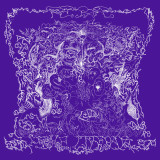
Like ‘Psiche Liberata’s artwork, hand-drawn by Fera, every detailed miniature leads to a single cell of sound, tracks collide against each other in a psychotic kaleidoscope where every safe space is confronted with subsequent noise, alterations or interruptions. The black terror of ‘Celestial Anacusma’ is followed by the space-jazz banquet of ‘Milk Tears In The Hug Chamber’ doped up cyber Sun Ra extravaganza featuring Laura Agnusdei and Luigi Monteanni (Artetetra) on saxophones and flutes; ‘Silenzio Solare’ sprinkles Mille Plateaux era minimalism all over hallucinations, while ‘Diluvia’ crosses industrial acid with perpetual motion; title track ‘Psiche Liberata’ murmurs mechanically, a downtempo drifter for the wide-eyed 7AM comedown: ‘Simulacrima’ melts Boards Of Canada’s mellow pastoralism with dystopian meta-level dreamland and ‘Riposa’ showcases an overwhelming melancholy executed with elegance in a slo-mo world where the ineffable transcends notions of ambient and becomes a warm embrace.
Created on a Monotribe, MS20 & Volca Sample/fm, ‘Psiche Liberata’s velvet heaviness was achieved by re-amping many of the instruments through a Leslie Rotary Speaker and a reel-to-reel Telefunken. Fera’s sonic tapestry is in constant flux, underlying themes of love longing and affection run through the record but in a turbulent, volcanic, unleashed fashion, almost on the brink of utter noise or complete silence, reminding us that this is an artist like no other amidst the ever changing electronic scene. These are transmissions from the gutter, where the inevitable meets the unattainable and collapses.
"Fera’s tarnished materials are destined for ruin; “Stupida,” full of longing and regret, sounds like an elegy for a fallen world." Pitchfork
"A cut of dark magic that fits like a glove to overcast days, wild winds and lashing rains. Insistent, the treacle-thick bassline oozes out, soaking the space between the melancholic synth lines." Inverted Audio
"The songs on Stupidamutaforma feel hypnotizing...it establishes De Franco as a composer who uses space and time to create a set of rich, immersive works." Bandcamp 'Album Of The Day'
OBERHEIM! is the love child of Gothenburg's alternative backyard, born from the union of scattered guerrilla groups such as URAN, Exorcist GBG, Dirty Burger, The Population, Melody Fields, Lady Banana, and Tentakel. Their self-titled debut album is a psychedelic garage rock explosion that draws its lifeblood from bands like The Stooges, Can, Kraftwerk, and The Gun Club.
ohn Fahey’s Takoma label is best known for pushing the envelope when it comes to acoustic guitar playing, but in 1967 it released a record that has become one of the true cult classics of the ‘60s free jazz movement. Charles Martin Simon was an aspiring writer whose artist wife died in 1965. When he tried to pick up the torch and become an artist using her art supplies, he was, in his words, “reduced to nothing,” and thus created an alter ego or “psyche fragmentation,” Charlie Nothing. Under that moniker he became most famous for creating “dingulators,” working guitar sculptures made from parts of American cars; in 1967, though, he recorded The Psychedelic Saxophone of Charlie Nothing/In Eternity with Brother Frederic, an album consisting of two separate saxophone improvisations accompanied only with gong, tabla, and ukelele. Its cover adorned by Nothing’s own hand-drawn art, this record has since become not only something of a “secret handshake” among free jazz fans, but also a classic of outsider art, fitting right next to your Moondog records if not in sound than in spirit. For its first ever reissue in any format, we’ve gone back to the original tapes to present an all-analog release of The Psychedelic Saxophone of Charlie Nothing/In Eternity with Brother Frederic on black vinyl with the original art intact, offering an unfiltered experience of this man’s cracked genius. A memorable look ‘n’ listen to say the least.
Itʼs been five years since the last BELONG long player, as the duo works slowly to organize their sound works. Both the time invested, and the wait, have been well rewarded with this return.
Common Era shows extraordinary progression from that first album of dense, scorched earth instrumentals, hints of a new direction having been revealed on the Colorless Record EP from 2008 which contained covers of four should-have-been classics from the original psychedelic era.
The new material has such common pop elements as “songs”, vocals and drum machines, but the results could hardly be called conventional and are like little else happening on the current “scene”. The songs themselves are akin to radio transmissions received from another time and place, just as likely to be the future as the past, or even from a contemporary alternate universe.
They are both passionate and dispassionate, grey yet technicolor, ghostly and palpable, distant yet immediate, grainy and focused. Upon listening these conceptual contradictions are dismissed with ease, as the recordings reveal that they fit all of these descriptors simultaneously, an extraordinary balancing act.
Die US Alternative Metal-Vorreiter MUSHROOMHEAD melden sich diesen Sommer mit ihrem neuen Album Call The Devil zurück. Call The Devil ist der Nachfolger des achten Albums und Label-Debüts A Wonderful Life (2020), mit dem die Horror-Ikonen in den USA große Erfolge feierten (Platz 2 der US Current Hard Music Albums Charts und Platz 8 der Current Rock Albums Charts). Außerdem war es das Debüt von Jackie LaPonza – der ersten Sängerin von MUSHROOMHEAD.
Nach zwölfjähriger Pause kehrt Gitarrist Dave „Gravy" Felton auf Call The Devil zurück und verleiht zwei der neuen Tracks seine unverkennbaren Skills. Felton hat in der Vergangenheit auf mehreren wegweisenden Alben von MUSHROOMHEAD mitgewirkt und gilt durch seine Arbeit an Klassikern wie „Along The Way", „Sun Doesn't Rise" und „The Dream Is Over" als einer der prägendsten Songwriter. Call The Devil wurde erneut von Mastermind und Drummer Skinny produziert und von Matt Wallace (Faith No More, 3 Doors Down) gemischt, der bereits für das Kultalbum XIII mit der Band
zusammengearbeitet hat. Gemastert wurde Call The Devil von Jacob Hansen, der für seine Arbeit mit Größen wie Volbeat, Epica und Arch Enemy bekannt ist.
COMPLETE ALBUM + 8 BONUS TRACKS -180g VIRGIN VINYL - LIMITED EDITION
Specially prepared liner notes by renowned music writer Brian Morton. From his early days as a pioneer of rockabilly and rock & roll in the 1950s, to his decades as an international representative of country music, to his resurgence to fame as both a living legend and an alternative country icon in the 1990s, Johnny Cash has influenced countless artists and left a body of work matched only by the greatest artists of his time. This LP presents some of his greatest hits, including the classic I Walk the Line.
Johnny Cash (1932-2003) developed a unique sound from his early Sun recordings with the Tennessee Two. His unusually deep, resolutely un-decorous voice rode atop the boom- chicka- boom guitar style invented by his right- hand man Luther Perkins and a rockabilly-ish slap bass by Marshall Grant.
A group of three disillusioned teenaged punks find themselves
transported into a terrifying alternate universe in The Devil's Egg, a new
fantasy rock opera from Missouri music renegades The Hooten Hallers
Throughout 13 spellbinding tracks, the music flows through a rainbow of musical
genres from R&B and metal to punk and prog rock. Captivating audiences with
their high-energy romps for nearly 20 years, the satisfying vocal pairing of John
Randall 's gravel and Andy Rehm 's falsetto, along with Kellie Everett 's low
woodwinds, weave between basslines and melodies to round out one of modern
music's most unexpected power trios. While musically diverse, the rock opera's
coming- of- age storyline ties it all together, conjuring the science fiction of
Stranger Things and the folklore of the Coen brothers to transport characters
through an epic and transformative quest. In the end, the kids form unusual
alliances to attempt their escape, allowing The Hooten Hallers to take listeners
on their wildest, most cinematic journey yet.
2024 repress
Isle Of Jura go back to 1976 to resurrect 'Anambra', the jewel in the crown of Dub, Soul & Funk outfit Ozo. 'Anambra' is something of a classic, a unique song that's slow, ritualistic and spiritual, mixing African & Nyabinghi drumming with a Buddhist Sanskrit mantra 'Om Mani Padme Hum'. An alternate version 'Anambra River' appears for the first time on the same 12'.
2024 Repress
After 7 years and countless requests, Sneaker Social Club finally deliver a repress of Dream Cycle - Part One.
After a chance meeting at Gottwood in 2016 a bond was established between Dream Cycle (Robin Clarke) and label owner Jamie Russell over a shared love of 2 Bad Mice and Moving Shadow. It wasn't long before Clarke began channeling elements of that influence to produce his Dream Cycle Part.1 EP. Unfolding over 4 steppy tracks and an ambient closer, Clarke melds sharp snares, summery motifs, dense atmospheres and thick subs whilst keeping things suffused with a distinctly UK quality that marries his work perfectly with the Sneaker catalogue.
DJ Support: Ryan Elliott, DJ Die, The Blessed Madonna, Octo Octa, Bwana, Altered Natives, Noodles (Groove Chronicles), Liem (Lehult), Deejay Astral, LA4A, 2 Bad Mice, Fred P, Matt Karmil, Flori, Marco Zenker, J.Rocc (lol at comment!), Ajukaja, Gnork, William Djoko, Till Von Sein, Fold, ASOK, Gene Farris, DJ bwin, Seven Davis Jr, TRP, DJ Octopus, DJ Normal 4, Gerd, Dean Man s Chest, Poté, Doc Scott, Violet, James Welsh (Kamera), Konx-om-Pax, Etch, Raresh, Hrdvsion, Michael Serafini (Gramaphone), Frazer Ray, DJ Guy, Mak & Pasteman, Shenoda, Urulu, Mark Archer & James Zabiela, Zinc, Lehult, Jackie House, Mosca, Noodles (Groove Chronicles) & DJ Die.
2024 Repress
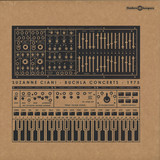
Finders Keepers invite you to witness the incredible first ever Buchla synthesiser concerts/demonstrations providing a distinctive feminine alternative to The Silver Apples Of The Moon if they had ever been presented in phonographic form. This is history in the remaking.
This spring Finders Keepers Records are proud to release an archival project that not only redefines musical history but boasts genuine claim to the overused buzzwords such as pioneering, maverick, experimental, groundbreaking and esoteric, while questioning social politics and the evolution of music technology as we've come to understand it. To describe this records as a game-changer is an understatement. This record represents a musical revolution, a scientific benchmark and a trophy in the cabinet of counter culture creativity. This record is a triumphant yardstick in the synthesiser space race and the untold story of the first woman on the proverbial moon. While pondering the early accolades of this record it's daunting to learn that this record was in fact not a record at all... It was a manifesto and a gateway to a new world, that somehow never quite opened. If the unfamiliar, modernistic, melodic, pulses, tones and harmonics found on this 1975 live presentation/grant application/educational demonstration had been placed in a phonographic context alongside the promoted work of Morton Subotnick, Walter Carlos or Tomita then the name Suzanne Ciani and her influence would have already radically changed the shape, sound and gender of our record collections. Hopefully there is still chance.
In short, Suzanne was a self-imposed twenty-year-old employee of the Buchla modular synthesiser company, San Francisco's neck and neck contender to New York's Moog. Buchla was run by a community of festival freaks and academic acid eaters whose roots in new age lifestyles and the reinvention of art and music replaced the business acumen enjoyed by its likeminded East Coasters. In the eyes of the consumer the creative refusal to adopt rudimentary facets like a piano keyboard controller rendered the Buchla synthesiser the more obscure stubborn sister of the synth marathon, steering these incredible units away from the mainstream into the homes and studios of free music aficionados, art house composers and die-hard revolutionaries. Championed and semi-showcased by composer Morton Subotnick on his albums The Bull and Silver Apples Of The Moon, Buchla's versatility began to open the minds of a new generation, but the high-end design features and no-compromise modus operandi was often confused with incompatibility and, in the pulsating shadow of Moog's marketing, the revolution would not be televised nor patronised. Suzanne Ciani, as one of the very few female composers on the frontline (and also providing the back line) did not lose faith.
These concerts' are the epitome of rare music technology historic documents, performed by a real musician whose skills and academic education in classical composition already outweighed her male synthesiser contemporaries of twice her age. At the very start of her fragile career these recordings are nothing short of sacrificial ode to her mentor and machine, sonic pickets of the revolution and love letters to an absolutely genuine vision of and 'alternative' musical future. In denouncing her own precocious polymathmatic past in a bid to persuade the world to sing from a new hymn sheet, Suzanne Ciani created a bi-product of never before heard music that would render the pigeon holes ambient' and futuristic' utterly inadequate. Providing nothing short of an entirely different feminine take on the experimental records' of Morton Subotnick and proving to a small, judgmental audience and jury the true versatility of one of the most radical and idiosyncratic musical instruments of the 20th century. These recordings have not been heard since then.
The importance of these genuinely lost pieces of electronic musics puzzle almost eclipses the glaring detail of Suzanne's gender as a distinct minority in an almost exclusively male dominated, faceless, coldly scientific landscape. Those familiar with Suzanne's work, a vast vault of previously unpublished non-records', will already know how the creative politics in her art of being' simultaneously reshaped the worlds of synth design, advertising and film composition before anyone had even dropped a stylus in her groove. Needless to say this record, finally commanding the archival format of choice, courtesy of the Ciani and Finders Keepers longstanding unison, was not the last first' with which this hugely important composer would gift society, and the future of a wide range of exciting evolving creative disciplines.
You have found a holy grail of electronic music and a female musical pioneer who was too proactive to take the trophies. With the light of Buchla and Ciani's initial flame Finders Keepers continues to take a torch through the vaults of this lesser-celebrated music legacy shining a beam on these non-records' that evaded the limelight for almost half a century. You can't write history when you are too busy making it. With fresh ink in the bottomless well, let's start at the beginning. Again. You, are invited!
"MOTOMAMI+" ist das Deluxe-Album der mit dem Grammy Award ausgezeichneten Künstlerin, Produzentin und Songwriterin ROSALIA. Das Originalalbum "MOTOMAMI" wurde mit dem GRAMMY Award für das beste Latin-Rock- oder Alternative-Album sowie mit vier Latin-GRAMMYs, darunter Album des Jahres, ausgezeichnet. Die Deluxe-Edition von "MOTOMAMI+" enthält das Originalalbum, darunter die Hits "LA FAMA" mit The Weeknd, "SAOKO" und "BIZCOCHITO", sowie 8 zusätzliche Tracks, die zum ersten Mal auf Vinyl erscheinen, darunter die Hitsingle "DESPECHÁ".
Lead, Sails, Paper, Anchor is the fourth studio album by American metalcore band Atreyu. It debuted at number 8 in the Billboard 200 chart and peaked at number 1 in both the alternative, rock as hard rock charts. Three singles, ""Becoming the Bull"", ""Falling Down"" and ""Slow Burn"", made it to the US Mainstream Rock Tracks chart.
Lead, Sails, Paper, Anchor is available on black vinyl. It is housed in a gatefold sleeve and includes an insert.
- Father And Son
- Come Sunday, Bass
- The Inflated Tear, V1
- Fire Waltz
- Desert Fairy Princess
- Fables Of Faubus
- Aquarius
- Warm Canto
- The Inflated Tear, V2
- Come Sunday, Soprano
- Assunta
- Father And Son
- Spirits Rejoice, Var 1
- Ogún Bárá
- Angela’s Angel
- Naima
- The Prayer
- Rahsaan Is Beautiful
- A Walk With Thee
- Humility In The Light Of The Creator
- Love
- Life
- Love (Alternate Take)
- Life Revisited
Gold Vinyl[25,17 €]
Tomin is a self-taught multi-instrumentalist, bioinformatician, and poet from Brooklyn, New York. His primary instruments are the flute, trumpet and alto clarinet, and he participates in the creative music scene as a performer, improvisor, composer and fan. Outside of music, he works in computational genetics, with a focus on oncology. Flores para Caramina y Verene compiles recordings that he self-released across 2020 and 2021.
- Father And Son
- Come Sunday, Bass
- The Inflated Tear, V1
- Fire Waltz
- Desert Fairy Princess
- Fables Of Faubus
- Aquarius
- Warm Canto
- The Inflated Tear, V2
- Come Sunday, Soprano
- Assunta
- Father And Son
- Spirits Rejoice, Var 1
- Ogún Bárá
- Angela’s Angel
- Naima
- The Prayer
- Rahsaan Is Beautiful
- A Walk With Thee
- Humility In The Light Of The Creator
- Love
- Life
- Love (Alternate Take)
- Life Revisited
Black Vinyl[22,27 €]
Tomin is a self-taught multi-instrumentalist, bioinformatician, and poet from Brooklyn, New York. His primary instruments are the flute, trumpet and alto clarinet, and he participates in the creative music scene as a performer, improvisor, composer and fan. Outside of music, he works in computational genetics, with a focus on oncology. Flores para Caramina y Verene compiles recordings that he self-released across 2020 and 2021.
Dust & Disquiet is the band’s fourth full-length album and the follow up to 2012’s stellar Waking Season. Recorded at Q Division Studios in Somerville, Massachusetts, Caspian once again tapped Matt Bayles (Isis, Cursive, Screaming Females, The Sword) to produce and mix. On Dust & Disquiet, Caspian again refuses to be confined by genre. Listeners will find those familiar intricately textured soundscapes that the band has become known for. Caspian released, Waking Season, in 2012 to critical acclaim, with Spin proclaiming it as the “Best Post Rock Album of 2012.” The band followed with the release of Hymn For the Greatest Generation in the fall of 2013, an EP that was to serve as Caspian’s epilogue to Waking Season. Hymn for the Greatest Generation was also well received, finding praise everywhere from Pitchfork to Nylon to Alternative Press.
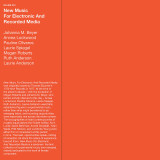
Marking its first decade of activity, Blume returns with the first ever vinyl reissue of the seminal “New Music for Electronic and Recorded Media”, from 1977, the third and final instalment in a suite of releases that includes James Tenney’s “Postal Pieces” and Ben Vida’s “Vocal Trio”. Unquestionably among the most important collections of experimental music to emerge during the 20th Century, “New Music for Electronic and Recorded Media” is the original feminist presentation in its context, releasing the work of Johanna M. Beyer, Annea Lockwood, Pauline Oliveros, Laurie Spiegel, Megan Roberts, Ruth Anderson, and Laurie Anderson under its collective banner. Includes newly commissioned liner notes by Jennifer Lucy Allen and Bradford Bailey.
Since its founding back in 2014, Blume has carved a unique place in cultural landscape, issuing free standing works, spanning the historical and contemporary, that represent singular gestures of creativity within the field of experimental sound. Joining their broad efforts in building networks of context and understanding that already includes the efforts of efforts of Werner Durand, Sarah Hennies, Bruce Nauman, John Butcher, Jocy de Oliveira, Mary Jane Leach, Valentina Magaletti, Alvin Curran, Julius Eastman, Alvin Lucier, and others, Blume delivers their third release in their first suite of releases for 2024, the fist ever vinyl reissue of the seminal “New Music for Electronic and Recorded Media” compilation, originally issued by Thomas Buckner's 1750 Arch Records in 1977. Out of print for decades on vinyl and arguably the most important feminist statement in the history of experimental music, illuminating the work of Johanna M. Beyer, Annea Lockwood, Pauline Oliveros, Laurie Spiegel, Megan Robert, Ruth Anderson, and Laurie Anderson - in a number of cases representing their recording debuts - during a crucial moment in the history of experimental music. Blume’s brand new edition - complete with newly commissioned liner notes by Jennifer Lucy Allen and Bradford Bailey, as well as reproducing Charles Amirkhanian’s original accompanying text - radically shifts perceptions of the past and present day with its truly revolutionary sounds.
Issued by Thomas Buckner's 1750 Arch Records in 1977, and out of print nearly the entire time since, “New Music for Electronic and Recorded Media” can be understood within two simple frameworks. On one hand, it is an astounding document of the landscape of experimental music toward the end of the 1970s. On the other, it is a historically significant feminist statement, being the first collection of experimental music entirely dedicated to female composers, a number of whom were grossly under-celebrated at the time, but have since gone on to be regarded as among the most important composers of their generation.
The eight pieces gathered by “New Music for Electronic and Recorded Media” - Johanna M. Beyer’s “Music of the Spheres”, Annea Lockwood’s “World Rhythms”, Pauline Oliveros’ “Bye Bye Butterfly”, Laurie Spiegel’s “Appalachian Grove I”, Megan Roberts’ “I Could Sit Here All Day”, Ruth Anderson’s “Points”, and Laurie Anderson’s “New York Social Life” and “Time To Go (For Diego)” - might be regarded as the first cohesive vision of alternate proximity or expression of experimental music to what has always been a frustratingly male dominated environment, and to the tropes, temperaments, and sensibilities that have been historically perceived to define it. It is an expanded vision of truth. While the presence of feminine sensibilities and temperaments in experimental music, however they may present themselves, were anything but new in 1977, “New Music for Electronic and Recorded Media” was the first opportunity, beyond the temporal limitations of live performance, to view them collectively, rather than as individualised expressions within a larger body of similar gestures (as was the case of Oliveros’ inclusion in Odyssey’s 1967 “New Sounds In Electronic Music” and “Extended Voices” compilations) where they might be confused for something else; to regard and celebrate a radical notion of feminine sonority for its unique characteristics and through its interrelations.
While its historical significance and groundbreaking nature can not be debated in its totality, nearly half a century on “New Music for Electronic and Recorded Media” remains compelling in both its musicality and the palpable sense of its lasting influence. Every composition across the album’s two sides is not only engrossing and deeply compelling - feeling as fresh and relevant as the day it was laid to tape - but clearly tangible in their lasting influence. Viewed in context, the album’s eight works feel like breath of fresh air when compared to much of what came before, and laid the groundwork for much of what was to come, introducing a new, often more holistic temperament and more sensitive and inclusive sensibility into the landscape of experimental music.
Particularly in the case of Annea Lockwood, Pauline Oliveros, Laurie Spiegel, Ruth Anderson, and Laurie Anderson, it's hard to throw ourselves back in time and imagine a moment when these composers rested in a fairly marginalised corner of the creative landscape. Blume’s brand new edition of “New Music for Electronic and Recorded Media” - complete with newly commissioned liner notes by Jennifer Lucy Allen and Bradford Bailey, as well as reproducing Charles Amirkhanian’s original accompanying text - brings us back to this confounding moment and points us toward a crucial moment of change set forth by these incredible composers and their sounds. Absolutely seminal and not to be missed.
"Ahead of a colossal US stadium Summer 2024 tour, Def Leppard announce a brand new, one-off single ‘Just Like 73’ featuring Rock guitarist Legend Tom Morello. Inspired by the Glam Rock Stompers of the 1970s, the single is available to own on limited edition 7” black vinyl, the B side to which showcases an alternative Def Leppard only version of the single.
First official vinyl reissue under Sonor music production license - numbered to 500 copies.
Outstanding Italian Library session from the desirable Nike private label owned by Bruno Battisti D'Amario and featuring the great Silvano Chimenti on guitars and Edda Dell'Orso scats. Amazing, refined Score music released for TV and documentaries music production with superb loungy and soft sounds inspired by Western landscapes and natural panorama. Moody and bluesy jam with a mixture of various guitar tones, trippy atmospheres and themed descriptive music with addiction of soft Psychedelic moods, Easy Listening and allegro vibes alternated by sweet melodies. The cult maestro and Morricone's collaborator D'Amario here provides one of his highest masterwork in composition with its classical guitar added by Chimenti's Psychedelic notes and some mindmelting Edda Dell'Orso's scat numbers. Several exquisite Spaghetti Western inspired themes, maybe used as original score for obscure movie in the '70s / ethereal LSD Psychedelic vibes with isolated distorted Wah Wah / Lounge moods throughout with nature inspired themes / Folk & Blues influences / trippy Scat vocals / 70s Easy Listening and panoramic descriptive music for a very complete Library session. Great album!