In an era defined by futility, isolation, and precarity, it can be difficult to envision a utopia. But on Skeleten’s thrilling, immersive debut album, Under Utopia, the Sydney musician dares to imagine new ways of being that are not characterized by doom or despair. Across eleven tracks of free-flowing, transcendent, and often euphoric electronic music, Skeleten praises the power of comradery and community; while dreaming of a future that is joyously boundless.
Skeleten, real name Russell Fitzgibbon, has always been fascinated by the ideas of utopias. He’s thought a lot about how the concept has shifted and morphed throughout history, and how the goal post for a utopia is always moving further and further away. “We're more familiar with the idea of a dystopia in the modern world - that's more close to our consciousness. I think on this album I wanted to explore the importance of imaging and embodying a new world.”
Written before and during the pandemic, the album was born out of a desire to connect with others and to shake the mantle of introspection that had been placed on his previous works. From the opening notes of the otherworldly album opener “Generator”, it's clear that this record prioritises immediate pleasures without forgoing intimacy. The lyrics are also more explicit, reaching outward with inviting choruses and mantra-like melodies. “I think the album came out of the experience of feeling this great desire to reconnect and dreaming of the power of community,” says the musician.
This is especially present in lead single ‘Sharing The Fire’, a song that crackles with optimism. A sprawling dance track with pulsating synths and Fitzgibbon’s gentle, warm vocals, the song is about futures that are full of brightness and bliss. As the artist repeats in the song’s chorus: “for all that you know, summer could be around the corner.” The song is about an “almost frustrated desire to connect with more people and feel that sense of community through shared goals.” The accompanying video clip, shot on 35mm, is similarly invested in ideas of companionship and gathering. Shot in a clinical, drab office space, friends and revelers fill the space with warmth and energy.
Elsewhere, this invocation of paradise is infused in the stripped-back, singular title track “Under Utopia”. The song was significant to Fitzgibbon, as it allowed him to gather all his thoughts and ideas about his new music under one message. “It’s something I wrote when I had this collection of songs and wanted to give it a single voice, which was about seeing the world entirely new, full of hope and beauty, and all of us underneath pushing it upwards.”
An antidote for gloom presented in Under Utopia is the transformative power of love. There’s “Heart Full Of Tenderness”, a woozy, languorous love song, awash with cloudy vocals and glistening synths; the truncated beats and hypnotic pleading of “Territory Day” and “Right Here It’s Only Love” which explores the icier and ambient side of R’n’B.
Another hallmark that characterizes Under Utopia is Fitzgibbon’s airy and spacious mix, which gives his songs room to sprawl out and simmer; as well as allowing his calming baritone to come to the fore. This is notable in the contemplative, synth-laden “Colour Room”, the funk-tinged “Walking On Your Name,” the previously released “No Drones in the Afterlife,” and the beloved early single “Mirrored,” which speaks of finding yourself through a connection to those around you.
Fitzgibbon has been enmeshed in the Sydney music scene for years. Skeleten emerged out of a need to experiment and make music without worrying about the outcome. “It was just me making music that felt right, and very much focusing on this kind of meditative aspect of exploring without any goal,” says Fitzgibbon. But as the project has evolved, the artist has gained clarity on what he hopes his music will achieve: bringing people together, and creating an atmosphere of elation. Or as Fitzgibbon puts it on Under Utopia’s hallucinatory album closer “We’re gonna get everything we need in the world.”
Buscar:amb
“All in the Golden Afternoon We Glide” (Realia006) is the forthcoming record from LATHE 00, the new moniker under which Umbria-based artist Leonardo Carloni has recently started to operate.
Preceded by several collaborative undertakings, LATHE 00’s debut solo album is akin to an experiment in autotheory, where art-making practice and theoretical inquiry are entwined to the point of being virtually inseparable. Through the combined use of autobiographical and philosophical elements, “All in the Golden Afternoon We Glide” meditates on individuality, technology, and new forms of (post-)human existence.
The record has been conceived as a three-act project, with each act comprising four compositions that correspond to as many recurring themes: birth, love, death, and emptiness. Produced over the course of two years, the album has a total of twelve tracks, the majority of which run for less than two and a half minutes. Upon closer inspection, these tracks feel less like standalone pieces of music and more like outtakes of a single but continuously mutating continuum.
LATHE 00’s first feature is a work of rare beauty. As a one-person debut project, its stylistic variety, compositional maturity, and technical rigor are outstanding. By combining a forward-looking production style with references as varied as ambient, hyper-pop, instrumental post-rock, world-beat, and modern classical and folk music, LATHE 00 develops a mode of expression that transgresses genres and is distinctively his own.
The result is a signature sound that feels equally primordial and hyper-contemporary, fleshly visceral and detached. The inclusion of the artist's own vocals in the music is a notable aspect of this style. Alongside sampled materials, his non-lexical vocalisations appear as both an affirmative and negative act, simultaneously gesturing towards bodiless dissolution and a desire to reclaim one’s all-too-embodied presence in this world.
Despite being a concept album grounded in a profound theoretical substrate, “All in the Golden Afternoon We Glide” surprisingly relies on wordless communication only. As such, in it, song titles become key vectors of information. Appealing primarily to the listener’s sense of sight, they are used in a way that seamlessly blends the aesthetics of the digital (“Loading of Image Aborted!”), nature (the title track), and ritual (Pouring Blood into the Lake).
The album will be released in digital format alongside a limited-edition printed publication conceptualised and designed by Lidia Ginga Cozzupoli and Bernardo Berga.
Mission to the Sun synthesizes ambient, post-industrial landscapes with expansive arrangements and haunting vocals. The project consists of Ritual Howls' Christopher Samuels (synths, samples, programming) and Kirill Slavin (vocals). Their sophomore album, Sophia Oscillations, is an immersive journey through the dark corners of post-industrial music. The Detroit based duo continues the sonic exploration started on their debut album Cleansed by Fire, while delving deeper into themes of isolation and lost communication. Christopher Samuels' synths, samples and rhythmic programming is accented by Kirill Slavin's haunting vocal delivery as the listener receives intersperse audio recordings from the outer reaches of inner space.
Colloboh (a portmanteau of Collins Oboh) is a Nigerian-born, Los Angeles-based experimental producer and composer who has spent the past several years cultivating genre-spanning modular wizardry. A self-taught synthesist, Colloboh’s DIY recording diaries (still archived on Instagram) quickly amassed a dedicated online following, eventually catching the eye of Leaving Records founder, MatthewDavid, who wasted no time tapping the then-twenty-six-year-old to perform at the monthly Leaving showcase, Listen to Music Outside In The Daylight Under a Tree. In 2021, Colloboh permanently relocated to Los Angeles from Baltimore, dedicating himself to music full-time, and quickly becoming a fixture of the city’s vibrant experimental scene. Whereas Colloboh’s debut EP Entity Relation (released that same year) dove headlong into club beats, Saana Sahel, out May 5th 2023 on Leaving Records, showcases the breadth of the fledgeling composer’s ambitions. The EP’s title, Saana Sahel, refers to a land of Colloboh’s pure imagining—an untouched utopia spanning lush coastlines and sweeping deserts. Beginning with the stately “Acid Sunrise” (like a Phillip Glass rave comedown), the EP functions as an atlas of sorts, mapping the region’s varied environments and moods. And varied indeed—across these six tracks there lie ecstatic jazz freakouts, samba shuffles, guest vocals from (seemingly) the very Seraphim, and interpolations of Debussy and Gabriel Faure. The breadth of sounds conjured here is a testament not only to Colloboh’s eclectic roster of influences, but also the period of deep and challenging personal growth that immediately preceded the EP’s composition. The construction of Saana Sahel (both the imagined locale and the release) served as a spiritual lode star, a place to which Colloboh could retreat for energetic restoration. Ever-generous, Colloboh has charted these expeditions for us in song, and now we may all draw sustenance and inspiration from the wellsprings of this rich land.
- A1: Terence Fixmer - Threetwoone
- A2: Kujo - Cardioid Resonance
- A3: Nocturnal Emissions - Settimio
- A4: Vatican Shadow - Predawn Coup D'etat
- B1: Alessandro Adriani - Lyra01
- B2: Phase Fatale – Fabricated Fog
- B3: Ancient Methods - Thus Spoke The Leviathan
- C1: Key Clef - Dreaming Sun
- C2: 3 14 - Taltos Remembers
- C3: Ezuri & Rsot - Blasphemous Bath
- D1: Junk Dna - Capacitance
- D2: Cpr - Fire Gathering
- D3: Zoviet*France - Floresiense
Summer’s here with Limbic Resonance ‘s first vinyl release giving a strong impression of our exploration into the darker sides of electronic music & ambient soundfields.
Spread over 13 tracks by pioneering artists, established current acts, upcoming new faces and under the radar mavericks, LDRR is a sound canvas representing LR ongoing interest in unpredictable & undertow sounds & atmospheres.
Compiled by Alexandra Ismalone
Limbic Resonance is a platform set up by Jeroen Lauwers (Red Stars Over Tokyo, Hot Hair Records, Testtoon), Alexandra Ismalone (Alekzandra/CPR) & Tobias Lisius (Liziuz, CPR) bringing together their solo and cooperative output.
LR conjures a sound that paradoxically traverses dark & light, a wave of dark ambient music punctured by rays of light sculpted w/ lush loops, heartbeat pulses & psychedelic electronics. Their vision is abstract primitivism and modern romanticism bypassing the artificial modern day present, a soothing meditative space w/ indefinable mysterious undertones.
Creating a “beyond logic” world & vision that melts smothered spectral ghostlike dreampop soundfields with unbound dark occult ceremony exercises. A cross pollination of two universes where space and time confront themselves and will be burned down within the ritualistic circle, the remaining void filled with warmth and sparkles, detached from their original source, a rebirth of natural primitivism.
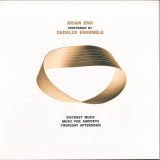
RITUAL MUSIC AND URBAN SURVIVAL STRATEGIES
With »Discreet Music« (1975), »Music for Airports« (1978) and »Thursday Afternoon« (1985), Brian Eno invented a new music genre, Ambient Music, which he defined as »able to accommodate many levels of listening attention without enforcing one in particular; it must be as ignorable as it is interesting«. These versions performed and arranged by Dedalus Ensemble, according to the musicians and the critics who listened to it, goes beyond what we expect from it. A mental base that takes us far away. One of the only music without beginning or end in which we want to stay as long as possible.
The Dedalus Ensemble is a contemporary music ensemble based in Toulouse, founded in 1996 by Didier Aschour. Its repertoire includes works by classics of minimalism such as Christian Wolff, Phill Niblock, Frederic Rzewski, Tom Johnson, Moondog or Philip Glass.
She may be making her first appearance on NuNorthern Soul, but Zeynep Erbay is no newcomer. A classically trained pianist who took a turn towards the dancefloor while at university, the Turkish DJ/producer earned her first release on Compost Records way back in 2007 after taking part in 2006’s Red Bull Music Academy programme. Since then, her career has been on an upwards trajectory, with releases on Fools Gold and Soul Clap Records confirming Erbay as a genuine rising star of underground electronic music.
On the Healer EP, the Istanbul-based producer showcases the more atmospheric, sun-kissed end of her productions, taking a turn away from synth-powered, disco-leaning club tracks towards something more suitable for al-fresco events, sun-down sets, and sofa-bound listening sessions.
Inspired by a poem inscribed on the back cover of the EP, Erbay’s two original instrumental tracks simply ooze with emotion. The poem tells the story of a whale searching for her family while helping others along the way, which acts as a metaphor for our wider search for belonging and acceptance.
This aural narrative unfolds firstly across ‘Heart of a Healer’, a slowly unfurling stunner in which emotion-rich chords, gentle electronic melodies and Erbay’s poignant and picturesque piano motifs, gently rise above a chunky dub disco bassline and mid-tempo, triple-time drums.
Delving further, the effortlessly emotional, life-affirming composition ‘Healer Whale’, where Erbay’s impeccable piano playing ushers in languid, jazz-flecked drums, dubby bass, sumptuous synth-strings and colourful, slow-moving chords.
On remix dutires, NYC-based Italian Danilo Braca, who also mastered the release, provides a fine club-focused fix of ‘Heart of a Healer’, laced with crunchy machine drums and undulating TB-303 acid lines. NuNorthern Soul regular Marshall Watson handles ‘Healer Whale’, first delivering a fine ‘Remix’ version that effortlessly blurs the boundary between dub disco and Balearic nu-disco, before serving up a shorter, ambient ‘Reprise’ version.
The Eighteen Minute Gap lets you embark on a mysterious journey into a world of ethereal ambient music, where beautiful and soothing listening experiences await. Using field recordings and manipulating textures and sounds, Sonmi451 creates minimal yet tantalizing soundscapes, filled with intimate whispering voices.
Since 2005 Bernard Zwijzen is creating his own blend of minimal, soundscape-laden atmospheric electronics under the moniker Sonmi451 (a character from David Mitchell's novel "Cloud Atlas"), based in Hasselt, Belgium. He has been previously released on labels such as : U-Cover, Slaapwel Records, Time Released Sounds, Eilean Rec. and this is his second album on LAAPS. "The Eighteen Minute Gap" is his thirteenth releases.
Sonmi451 uses various soft- and hardware synths and samplers to create a truly unique and immersive audio experience where one is captivated by mystery and intrigue and immersed in a world of mysterious sounds where boundaries between reality and imagination begin to blur.
The latest by Canadian composer Tim Hecker serves as a beacon of unease against the deluge of false positive corporate ambient currently in vogue.
Whether taken as warning or promise, No Highs delivers – this is music of austerity and ambiguity, purgatorial and seasick. A jagged anti-relaxant for our medicated age, rough-hewn and undefined.
Morse code pulse programming flickers like distress signals while a gathering storm of strings, noise, and low-end looms in the distance. Processed electronics shiver and shudder against pitch-shifting assemblages of crackling voltage, mantric horns (including exquisite modal sax by Colin Stetson), and cathedral keys.
Throughout, the pieces both accrue and avoid drama, more attuned to undertow than crescendo. Hecker mentions “negation” as a muse of sorts – the sense of tumult without bombast, tethered ecstasies, an escape from escapism. His is an antagonism both brusque and beguiling, devoid of resolution, beckoning the listener ever deeper into its greyscale alchemies of magisterial disquiet.
After the release of "3.3 magnitude" and the remixes of the single "1.3 HDG" unveiled last February, H3 Records continues its musical exploration between rap and electronic music with a new release, "Music 4 Tesla".
This time, rapper Kaba joins forces with producer Hyas and unveils a slender and festive 6-track track, true to the label's identity.
Hyas started producing music in 2017 and released his first projects completely independently. Today, he has more than twenty releases on labels such as 99CTS and Casa Voyager. The Lyon native, resident of Le Sucre and Rinse FM, has a string of dates and festivals in France and abroad and founded his own label Bardouin Music in 2020.
For his part, Kaba has released three singles this year, including two featuring Karmen (formerly Tortoz) and Samy Ceezy, and a 10-track "Long Story Short", a joint project with the young beatmaker Keno.
The connection between the two artists was very natural: the rapper's ambitions and Hyas' influences complemented each other and led to a first draft of tracks, convincing enough to form the basis of a joint project. With influences from UK Garage, Acid House, Ghetto House and 2step, "Music 4 Tesla" is a high-flying, catchy, danceable, warm and sunny project. Throughout the tracks, Kaba borrows incisive old school flows (like on "4daMob") but also "DMV" (overlap flows where the phrases overlap like on "Original G") and enriches the musical universe of the project, which carries in it this fever of H3 Records' sounds.
Between pervasive house influences and bouncy bass, borrowed from funk sounds, "Music 4 Tesla" depicts throughout its 20 minutes a captivating gradation of festive ambiences, and proves again that the marriage of rap and house is definitely made to last.
Lazy Reflex Complex lands their second release with a split EP by Clone's techno-ambassador Lenson and Sculpturism / Miller & Keane; two collaboration projects of Dave Miller that were produced back in 2003. Tranquilizer, originally released on the Schenk1 compilation (Onderwereld), has been remastered for vinyl and is exclusively available for the fitting format. Label head 543ff reworks Tranquilizer in an ominous and hypnotic fashion. Big room beats built to shake floors and move crowds. Mastered by Audiosculpture.
The album follows her two previous collections released by French-Canadian shadow ambient imprint Cyclic Law. Betti's output has been strongly shaped by the juxtapositional nature of the island she calls home. A beautiful Mediterranean island that is also home to a petroleum refinery's and its significantly haunting presence. There is conflict in that ideal, and Betti's music has always displayed a sense of beauty, yet with ominous undertones.
With Before the Last Light is Blown, Betti focused on the transience of life as a means of inspira- tion. It is human nature to move forward, consume, and always reach the next goal and to never give much thought to the briefness of our time here. The impermanence of life may seem like a dark topic, but to the contrary, pausing to think of such brevity could allow us to see the beauty we are missing in our endless need to fulfill and consume.
Betti takes us to a dark place only to show us the beauty within, a vital constant in her output as shedir.
Originally released in 95’ via CD on the seminal U.S ambient label, Silent, Numinous Island is the result of live jam sessions between Yokota and Castle. Several original tracks were recorded to DAT tape and then mixed to create a long form audio travelogue to an otherworldly destination. The result is something similar to the KLF’s Chill Out paired with Yokota’s unmistakable sound palette and Castle’s gift for storytelling.
The vinyl edition has been faithfully edited by David Fogarty for uninterrupted hi–fidelity vinyl playback, maintaining the original track sequencing and energy of the CD version.
Pelican and Thrill Jockey are proud to present a deluxe edition of the band"s acclaimed 2005 album The Fire In Our Throats Will Beckon The Thaw, newly remixed, remastered and featuring special bonus rarities including an early version of "Red Ran Amber," (previously only available on a split with MONO) and demos of "Autumn Into Summer," "Last Day of Winter" and "Sirius". The Fire In Our Throats established Pelican as indisputable masters of their craft. Pelican"s ability to alchemize their influences into a sound so wholly original and then expand on that sound into a work of captivating beauty remains a marvel. The album indelibly shifted the paradigm of heavy music and the ripples of that shift can be heard in the countless bands who have risen to prominence since its release. The genre-busting nature of the album"s melodicism and refined dynamics was a harbinger of things to come in a genre whose strict boundaries were rapidly being shattered; a fact recognized and cemented by the album"s critical reception, which engendered everything from an Album of the Year nod from Decibel, to pontifications about Pelican representing a rising wave of intellectualism in metal from the New York Times. Nearly two decades since the album"s release on Hydra Head Records, The Fire In Our Throats has stood as not just one of the band"s most celebrated releases, but as a watershed work of avant-metal. The album arrives with a fresh mix by its original engineer Greg Norman and mastering by Josh Bonati, imbibing the songs with a new ferocity while also granting increased clarity, highlighting the developing interplay between each member. The refreshed mix brings an additional punch to the rhythm section of bassist Bryan Herweg and drummer Larry Herweg, bolstering the brightened melodicism and interlocking riffing between guitarists Trevor Shelley de Brauw and Laurent Schroeder-Lebec. The more articulate presentation of the album showcases the power of each individual player while buttressing Pelican"s distinct sound as a unified force.
2023 Repress
The Hague based producer ''Deniro'' is responsible for the 3rd installment in the ''Oblique Music'' series. This time around the 12'' consists of 4 club cuts that all showcase a different ambiance throughout. Label owner Ben Buitendijk is carefully curating the sound for his recently established imprint and Deniro's (extinct) Penguin inspired package definitely matches with the label's previous escapades. ''Kairaku 1'' is a dubbed out whirlwind which uses emotive drum patterns and hazy reverbs that blend together in the most perfect way and cause for a inspiring atmosphere to occur instantly. ''Kairaku 2'' is a more classic sounding cut which maintains originality through ''Deniro's'' signature drum patterns and the constantly changing chords that make this effort one of the more special ones. The B side opens up with ''Kairaku 3''. This is again a dubbed out cut that is drenched with percussive sounds that would suit perfect in the more adventurous settings. ''Kairaku 4'' is filled with interesting textures and progresses in a minor but riveting way.
Penguin Cafe kündigen heute ihr fünftes Studioalbum Rain Before Seven... an, das am 7.Juli 2023 bei Erased Tapes erscheinen wird.
Eine zuversichtliche Grundstimmung durchzieht das fünfte Studioalbum von Penguin Cafe, Rain Before Seven…, wobei es sich keinesfalls um jenen extrem selbstbewussten, fast schon prahlerischen Optimismus handelt, sondern eher um so eine auf bescheidene Art hoffnungsvolle Grundhaltung, die man den Menschen auf der Insel ja häufiger nachsagt. Auch wenn alle Anzeichen das Gegenteil behaupten, spürt man hier sofort diese Gewissheit, dass sich alles doch noch irgendwie zum Guten wenden wird. Vermutlich zumindest.
Der Titel des Albums geht auf eine alte Bauernregel zurück, wobei die gereimte Vorhersage – „… fine before eleven“: ab 11 Uhr also wieder alles klar – auf ein baldiges gutes Ende hindeutet, vollkommen unabhängig davon, was die Wissenschaft sagt: „Ich habe diesen Spruch in einem Buch entdeckt. Davor hatte ich ihn noch nie gehört“, erzählt Arthur Jeffes, der Kopf von Penguin Cafe. „Er hat so einen dezent optimistischen Beigeschmack, und das gefällt mir sehr. Man verwendet ihn heutzutage kaum noch, aber der Reim beschreibt tatsächlich Wetterphänomene in England, die vom Atlantik aus über die Insel ziehen.“
Angefangen beim leinwandgroßen und schwärmerischen Eröffnungstitel „Welcome to London“, der mit einem Augenzwinkern auf Morricone anspielt, bis hin zum „Goldfinch Yodel“, jenem „Maibaum-Banger“ (um es mit Arthurs Worten zu sagen), mit dem das neue Album ausklingt, zieht sich ein angenehmes Gefühl von Leichtigkeit und Lebensmut durch den Longplayer, unterfüttert mit der Ausgelassenheit exotischer Rhythmen. Alles wirkt spielerisch und verspielt, und selbst der Titel ist eine Anspielung – auf A Matter of Life… aus dem Jahr 2011, der letzten Veröffentlichung, deren Titel in eine Ellipse mündete Jenes Debütalbum von Penguin Cafe diente einst als Bindeglied und Brücke – zwischen dem legendären Penguin Cafe Orchestra, das einst Arthurs Vater Simon Jeffes leitete, und dem gefeierten Nachfolger, als dessen Mastermind seither Arthur verantwortlich zeichnet.
„Ich glaube, das wirklich Neue an seinem Ansatz bestand darin, spannende und schräge Ideen zu nehmen – und dann seltsame Dinge damit anzustellen“, meint Arthur, „dabei aber konstant im Blick zu haben, dass es hinterher auch schön klingt und emotional ansprechend bleibt.“ Dieses Ethos lebt weiter in der Musik von Penguin Cafe: „Dazu haben wir uns entschlossen, als ich daran anknüpfte, schließlich spielen wir die Sachen meines Vaters und machen dazu auch neue Musik, die im selben Klanguniversum angesiedelt ist. Das bedeutet, dass ich gewissermaßen moralisch dazu verpflichtet bin, den ursprünglichen roten Faden im Auge zu behalten – und dafür zu sorgen, dass wir nicht plötzlich in Richtung Thrash-Metal abbiegen.“
Dennoch waren die rhythmischen Elemente, die zum Teil sogar an elektronische Sounds erinnern, noch nie so präsent und tonangebend wie auf Rain Before Seven…, was durchaus auch dem Co-Produzenten Robert Raths geschuldet ist. „Find Your Feet“ etwa hat ein Beat-Fundament, das weit über einen bloßen Pulsschlag hinausgeht. Abgemischt von Tom Chichester-Clark, blitzt an Stellen wie diesen etwas auf, das Arthur selbst als „fast schon elektronischen Vibe“ bezeichnet, um dann ganz aufgeregt zu ergänzen: „Es geht vor allem auch einfach ums Spaßhaben, was auf den letzten drei Alben nicht so zu hören war.” Extrem ausgelassen klingt auch „In Re Budd“, das dem verstorbenen Ambient-Urgestein Harold Budd gewidmet ist. Arthur erfuhr von dessen Tod an jenem Tag, als er diesen feierlichen Ohrwurm komponierte, dessen Synkopen deutlich komplexer sind, als sie auf den ersten Blick wirken. Auf einem präparierten Klavier gespielt, wobei die Filzstücke dem Track zusätzlichen Bounce verleihen, setzt Jeffes hier auf einen Afro Cuban Cafe-Vibe – was wunderbar zum widerspenstigen Geist des verstorbenen Budd passt.
Und schließlich wäre da noch das bereits erwähnte „Welcome to London“, das seinen Titel erhielt, als sich die Welt gerade wieder zu öffnen begann und die Menschen auch wieder Fernreisen antreten durften. Jeffes, der somit nach langer Zeit endlich wieder einen Fuß auf britischen Boden setzen konnte, war sofort beeindruckt von filmischen Soundtrack-Qualitäten (à la John Barry) dieses Stücks, als er mit dem Taxi von Heathrow nach West-London fuhr und zur Musik die opulente, in Dämmerungslicht getauchte Metropolenkulisse auf sich wirken ließ. Hier kann man deutlich die eingangs erwähnte Zuversicht raushören – und dazu vielleicht auch einen Hauch von bissiger Ironie: „Robert Raths hat der Sache noch eine Nuance hinzugefügt, die ich interessant finde, weil doch so viele Londoner ursprünglich gar nicht aus London stammen. Man schlägt also in London als Zugezogener auf, man weiß noch nicht, zu welchem Lager man sich zugehörig fühlen soll, und dann wird man auf der Straße überfallen und ausgeraubt – und in dem Licht betrachtet, hat dieses ‘Welcome to London’ doch einen eher sarkastischen Beigeschmack.“
- A1: Robert Armani - Ambulance
- A2: Christopher Just - Feelin' Alright (Ladies Night Decisi
- A3: Marmion - Schöneberg
- B1: Gui Boratto - Arquipelago
- B2: Oxia - Domino
- B3: Steve Bug - Loverboy
- C1: Laurent Garnier - Dark Comet
- C2: Robbie Rivera - Funk-A-Tron(Robbie Rivera's Main Mix)
- C3: Slam - Vapour
- D1: Carl Cox - Acid Charge
- D2: Pouncy & Moore - The Sound Of Heart
- D3: Sascha Funke - Drei Auf Drei 2
- D4: Vitalic - Poney Pt 1
With the Underground Collection , rediscover all the gems of the Underground Electro. One volume dedicated to House and one to Techno on two nice double vinyls. All tracks in their long original edit remastered. Featuring : Carl Cox - laurent garnier - Louie Vega - Robert Zrmani - Dj GregOry - Kings Of Tomorrow - Julien Jabre - Dj Deep - Oxia - Vitalic - Kerri Chandler - Coeo...
Western Massachusetts band Landowner play abrasively clean minimalist-punk. Singer Dan Shaw began Landowner in 2016, writing and recording Impressive Almanac with a practice amp and a laptop drum machine. Those available tools would inform the band’s unapologetic sound—clean, confrontational, and absurdly stark. With a stated goal to sound like “Antelope playing Discharge”, Landowner’s diamond hard structures, repetitious instrumentals and caricatured hardcore make space for lyrics that reflect on the global systems our lives are tangled in and the dark absurdities we take for granted.
Landowner’s fourth Born Yesterday full length Escape the Compound focuses on the powerful grips manipulators and reality-deniers have on their victims, examining the social, political and interpersonal damage of cult-like influence and control. “A lot of the lyrics focus on cult manipulators and narcissists: falling victim to their toxic dynamics, and the difficulty of escaping their grip” says Shaw. From climate change deniers and conspiracy theorists to deceptive narcissists and actual cult leaders, Landowner explores the ubiquity of modern unreality through evocative imagery and a keen sense of awareness. The band’s plain instrumentation sheds and subverts hardcore punk’s noisy veil in favor of a direct, unswerving examination of these themes.
Written and recorded following the release of 2020’s Consultant, Escape the Compound finds Landowner leaning into the studio through deeper experimentation with a wider palette of sounds. The group’s lineup of Josh Owsley (bass), Elliot Hughes (guitar), Jeff Gilmartin (guitar), Josh Daniel (drums) and Dan Shaw played often since coming together in 2017. But with pandemic restrictions in place, the making of Escape the Compound became a much more insular pursuit, one where the mixing and mastering process helped turn the band’s most varied batch of material into a cohesive, thematic collection of songs.
Album opener “Witch Museum” is a collage of dark Massachusetts historical imagery. The song evokes a kind of cult dynamic travelling like a shadow through time, where dark absurdities are taken for granted, toxic behaviours are excused, and normalcy begins to shift. The line “Gail's behaviour has changed” casts fictional “Gail” as the dark manipulator, whose whim we’re at the mercy of. She sheds her toxic behaviour and the crisis finally ends - “and peace returns to the Commonwealth”- an absurdity, given that cult leaders and narcissists rarely seem to change.
By considering the past, Landowner sheds light on the present. The band challenges egomaniacs reluctant to accept an uncomfortable reality with both cynicism and concern. The literal landowner described in “Heat Stroke” collapses in exhaustion, cooked by a suffocating bass line and sizzling hi-hats. “You'd rather die of heat stroke than to let anybody see you change your mind,” Shaw gasps, later pleading with the character in “Floodwatch” to “please reconsider” their brazen stubbornness as they plunge through the rising waters of a flooded road.
The character in “Swimmer of Note” refuses to admit their miscalculations, instead doubling down on an ever-growing and increasingly-unsteady tower of lies. The sneering “Damning Evidence” sets a scene all too familiar: a smoking gun scenario with zero consequences. Shaw’s exaggerated vocal refrains and sarcastic inflections mock false hope: “how will they be expected to keep their minds intact, at the shock of simply hearing such damning evidence?”
“Beyond the Darkened Library” creaks open a secret passageway into a dimly lit, endless labyrinth of conspiracy theories, in which the character becomes hopelessly lost. “Aftermath” sounds the alarms: “stare so long that you start getting used to it; one glance says you should never get used to it.” The pair of “Tactics” tracks express what Shaw calls “an interpersonal microcosm of the album’s themes.”
Perhaps the most ambitious arc on Escape the Compound loosely begins with the title track. The subject in “Escape the Compound” gradually recognizes their own victimhood and plans a calculated flight from the “captivating shepherd” – hop the fence, flee, and regain autonomy. As the narrator escapes their stifling and abusive cult microcosm, a much grander existential timeline begins to appear. “Thousands of Years in Fast Forward” narrates a psychedelic surrender to the shared human experience through space and time, an ego-death adjacent to our ancestry, our own existence, and the before and after. “At the site of the crater, molecular hands unclasp molecular hands as you lose conditioning,” Shaw sings on the title track, “Your grandmother's garden. Your grandmother's kitchen. Your grandmother's primordial ocean.” It’s a profound actualizing glimpse into a true, forgotten reality and a startling reconnection with the self.
Connection ist das fünfte Album von Ceramic Dog und auch ihr bisher bestes ... ein Werk, das die Spannung zwischen Marc Ribot’s Ceramic Dogs Punk/New Music/Pop-Ausgangspunkten und den JazzRock-Ambitionen, die sie immer (nie zu weit) unter der Oberfläche vergraben haben, in Songs auslebt. Nach 18 Jahren kollektiven Lebens auf der Straße/in dieser Welt ... scheint ihre ‚Connection‘ die einzige Währung zu sein, die Ceramic Dog noch akzeptiert. Und auf
"Connection" spielen sie mit/für sie, als gäbe es kein Morgen.