Etui welcomes Tim Kossmann. With Lockdown Loops the Westfalia dub techno mastermind presents a very personal EP with 3 deep, loop based tunes recorded in extreme isolation during lockdown. The situation created a feeling of lonesome remoteness and uncertainty, transcended by putting in more man hours in the studio.
The EP starts with Loop A, a dreamy dub techno riddim that has nice distant echoes and mint chords. The 2nd track Loop B has a more noisy, warped chord progression topped with atmospheric piano riffs.
Loop C on the b-side consists probably of the most heavenly sounding melancholic chord loop he has recorded so far. Expect a tune composed of atmospheric bluster combined with a banging deep mono bass and different layers of noise. It is simply an epic lofi sound anthem.
Tim Kossmann is a Germany based producer who focuses mainly on dub techno and ambient. Since 2016 he has been releasing on a constant basis on labels like Telrae, Greyscale and Superordinate Dub Waves among many others.
He loves to explore the deep side of techno, with the aim of creating deep, lush chords and soundscapes filled with echo and spaced out delays, where deeply banging bass and moving whitenoise are combined with sophisticated harmonics in order to push the boundaries of the genre.
Поиск:amb
Все
Vier Jahre nach dem Ende seiner Progrock-Band Mess brachte der estnische Musiker Sven Grünberg 1981 das bemerkenswerte Album "Hingus" heraus. Das 23-minütige Titelstück beschwört, mitunter beeinflusst von fernöstlicher Tonalität, mit einer Kirchenorgel, extrem seltenen Synthesizern und außergewöhnlichen Percussion-Effekten faszinierende futuristische Klangwelten. Die beiden anderen, ebenfalls großartigen Tracks erinnern stilistisch eher an die Berliner Schule um Klaus Schulze und Tangerine Dream. Grünberg ist in Estland ein bekannter Bühnen- und Filmmusiker - und ein alter Hase, was elektronische Musik betrifft. 1974, noch während seines Musikstudiums, gründete er zusammen mit Härmo Härm die Progrock-Band Mess. Grünberg war damals der erste Musiker im Baltikum, der einen Synthesizer einsetzte. Mit dem Album "Hingus" (zu Deutsch: "Atem"), das er zwischen 1978 und 1980 einspielte, widmete er sich dem Ambient, versetzt mit einer Prise Space- und Progrock sowie intensiven asiatischen Einflüssen. Basis der Aufnahmen waren die Orgeln der Kirche in Rapla und des Doms von Tallinn. Die sakrale Anmutung wird durch Synthesizer und Percussions gebrochen oder auch ins Rauschhafte gesteigert. Röhrenglocken (die von Mike Oldfield bekannten Tubular Bells), Paarbecken (Piatti), eine Ratsche (Raganella), ein Tamburin, ein ostasiatischer Metallgong namens Tamtam, Glockenspiel und Kastagnetten kommen zum Einsatz. Zudem spielt Grünberg diverse ungewöhnliche elektronische Instrumente, die Härmo Härm und andere teilweise als Einzelstücke selber bauten. Dennoch zählt dieses außerirdisch schöne und zum Teil hochpsychedelische Album hierzulande zu den noch zu entdeckenden Klassikern dieses Genres.
Without the West German-born Väth, techno would look, sound and feel very different. Since falling in love with electronic music and DJing in 1981, his dedication to the art has never faltered. He plays every party as if it were his last. His broad smile has connected with millions of people around the world. His colourful and curious character has imbued techno with a personality it was often lacking. His selections remain hugely unpredictable, despite the fact that he has been playing around the world for more than 40 years. To remain not only relevant but innovative after so long is a testament to Sven's ability to connect through music on a deeper level.
Technically, of course, he is a DJ who can play for thirty hours and not miss a beat. His track selections seem almost divine, and his aura is certainly otherworldly. But more than that, he is a ringleader who is able to mix the artful side of techno with the playful side of partying. Most famously he has done this for more than 20 years at his iconic Cocoon parties in Ibiza. They single-handedly introduced techno to the White Isle and have been its beating heart ever since. Under his charge, strict style guidelines and exaggerated pigeonholing no longer apply. Instead, he has perfected the art of playing far and wide while always remaining true to his own musical identity.
In the studio, Sven has always been just as unique. He has worked under several aliases but always brought a fresh perspective. Whether securing chart hits as part of OFF in the eighties, serving up brutalist techno and trance-tinged sounds in the nineties or crafting major label albums in the 2000s, his music has remained utterly forward-looking. That legacy continues with Catharsis as Sven teams up with highly respected producer Gregor Tresher for his latest long-form offering. Tresher has long been part of the Cocoon family and is a revered artist in his own right, when the two got together in the studio it was clear they had an instant connection and there would only be one person fit to co-author this LP.
It is a record inspired by Sven's interest in the physical and spiritual processes that take place when we dance. "They are realms into which we immerse ourselves to experience our own mysticism and ecstasy," he muses. "Dancing is a conversation between body and soul and it spiritually connects us with each other." Because of the pandemic, that is of course a feeling that we all missed out on for so long. "No dancing, no paradise!" says Sven. "My imagination for this record was fueled by the many cultural experiences and encounters I have had in my life. They gave me the strength to find a way, the way to myself." And that way to himself is through music, through purifying dancing rituals and the exchange of spiritual energies that are generated in the club.
The thirteen-track album explores all facets of Sven's sound. It opens with the stomping drums but sleek synths of 'What I Used To Play' and unfolds through deep and dirty rhythms like 'The Worm', subtly euphoric highs on 'The Inner Voice' and the bubbly tribalism of the title track. There is the impassioned call-to-arms that is 'Feiern', peak-time melodic workout 'Mystic Voices' and soothing electronic lullabies like 'Being In Love'. The second half of the album takes in many more twists and turns such as the exotic strings and driving drums of 'Butoh', the paranoid techno minimalism of 'NYX' and expansive synthscapes of ambient gem 'The Cranes Of Gangtey Valley' before things play out though rugged beats and emotive chords on 'We Are', which is named after the idea that we are what we think. "With our thoughts, we make the world.? says Sven.
Then comes the moody reflection of 'Silvi's Dream', which was written in French for Sven's girlfriend. Last but not least we have the immersive dream that is 'Panta Rhei', which completes a trio of electronica tunes on the album. Ambient music has been an integral part on almost every album Sven has written because it can bring a certain emotional deepness, a quality that Sven always has been looking for.
'Catharsis' is an adventurous album that captures the good times, the sad times and, most importantly, the times of hope.
- A1: Guillermo Cazenave - Mandala Fiel
- A2: Adalberto Cevasco - Comparsa Color De Leon
- A3: Litto Nebbia & Mirtha Defilpo - En La Tierra El Sol
- A4: Comedia - Los Dias Antes A Melina
- A5: Cesar Franov - Puma
- A6: Los Musicos Del Centro - Sombras De Ecuador (Feat Daniel Homer)
- B1: Jose Sarten Luis Asaresi - Lluvia De Invierno
- B2: Mate De Luna - Te Conozco De Algun Lado
- B3: Alfombra Magica - Pequeno Y Primitivo
- B4: El Molino - Moliendo Parches
- B5: Quique Sinesi & Cesar Franov - Sudan
HIGHLIGHTS: Let yourself go with the overwhelming musical output of Argentina's very own Melopea Discos, in a selection of songs that explore fusion with an air of mystery and a side of exquisite sensitivity across 11 carefully curated leftfield synth pop, experimental folk and ambient tracks. "Viento Sur" has been compiled by Argentine DJs and collectors Bárbara Salazar and Alejandro Cohen (dublab) based in Buenos Aires and Los Angeles respectively. Most of the songs are reissued here for the first time and many of them were previously unavailable on vinyl. Includes a 4-page insert with liner notes and photos. Remastered sound. Further Info: Viento Sur. Experimental Music & Fusion Music from Argentina. A Retrospective from Melopea Discos. Following the success of our 2020 release "América Invertida" (VAMPI 205), a fascinating survey of Uruguay's lesser-covered '80s endeavours in new wave pop, jazz-fusion, ambient folk and electronics, it's now time to cross to the other side of Rio de la Plata and let yourself go with the overwhelming musical output of Argentina's very own Melopea Discos. Born partly out of necessity and partly by a twist of fate, Melopea is a record label from Argentina created at the end of the 80s as a vehicle for the creative curiosity of its founder, Litto Nebbia, to document music not supported by the music industry. The songs that form "Viento Sur" do not provide a comprehensive vision of the different styles of the label but rather an approach to its more experimental side. This compilation puts together a selection of songs that explore fusion with an air of mystery and a side of exquisite sensitivity across 11 carefully curated tracks. From the southernmost latitudes of the American continent, "Viento Sur" brings soft and warm atmospheres that intermingle with more earthly pulses; sounds that reflect the beauty and richness of Argentina, from the jungle to the pampas, the subtlety of the forest, and the effervescence of the Río de la Plata and its neighboring candombe. "Viento Sur" has been compiled by Argentine DJs and collectors Bárbara Salazar and Alejandro Cohen (dublab) based in Buenos Aires and Los Angeles respectively. This release is presented with obi strip and a 4-page insert including liner notes and photos. Most of the tracks are reissued here for the first time and many of them were previously unavailable on vinyl. Remastered sound.
After the 2020 album "Lieder Für Geometrische Stunden", Sankt Otten finally make us happy again with a new release at the beginning of 2022. "Symmetrie Und Wahnsinn" (Symmetry and madness) fits here skillfully, both creatively and musically, in an album series with geometric context.
The album starts unusually buoyant with "Hymne Der Melancholischen Programmierer" (Hymn for sentimental programmers). A Kraut-Pop pearl, which could go on forever with its Motorik swing and with its catchy melody the track doesn't come across as melancholic as the song title predicts. You have to listen twice to not succumb to the illusion that it was composed in Düsseldorf at the end of the seventies. Here (and on the track "Sei Symmetrisch Zu Mir"), Sankt Otten were supported in the studio by drummer friend DIRK PELLMANN.
The drum machine in rumbling funky mode. "Die Glücklichen Unglücklichen", the secret hit of the album? They bend the beat into geometric shapes, let the bass play in circles and cover the song with ghostly choirs. The echo of a spinett-like sound overlays the sound, spitting out a deceptively cuddly dream world.
The 10 minute long "Die Ordnung Des Lärms" could be called an Ambient-Kraut symphony without hesitation. An enormous swelling to ecstasy, a guitar sings distantly in the background. Silence. Synthetic strings pave the way and are supported by choirs. A crackle that suggests a rhythm until it is taken over by a drum computer in the main part of the track. Bombastic mountains of synthesizers pile up and yet a catchy melody finds its way through this mishmash of hypnotic electronics. Fourth movement - Kosmische-choirs in suspension over a bass synth and an Ebow guitar. Is this already Prog-Rock? The question doesn't arise, in the end everything merges into reverb. "Luftspiegelung Der Sentimentalitäten" begins cautiously with a gentle sequence and a discreet kick drum. The mini-Moog sounds like a guitar. Anyway. A surface floats by and returns, layers and shapes build up. At last, everything melts into perfect harmony with a plaintive-sounding synth. This track was composed as a stripped back reprise of the first track from the last album "Sentimentale Sequenzen". A hypnotic Motorik-beat of an 808 that encourages head nodding and could almost be danceable. True to style with warm analog 80s electronic sounds and a loose echo guitar. This is "Angekommen In Der letzten Reihe". Man and machine hand in hand as a homogeneous musical unit and the connection of tradition and vision.
Sankt Otten like images of infinity. In the religious sense of meditative mantras, or also in the mathematical sense of an elongated curve that eventually returns to its starting point. "Bis Das Helle Licht Uns Holt" goes exactly in this direction with its classical use of sequencers and a sound carpet of choirs. Sound worlds that, through a clever repetitiveness, barely noticeably guard the constant changes in the compositional mesh like a secret and only reveal what is to be discovered by listening closely and letting it be seen. Such a thing is probably called Berlin School?
The Osnabrück duo Sankt Otten, founded in 1999, has been releasing on Denovali since 2009. With their now 12th album they give us again a gem of timeless instrumental music. The holy trinity of Krautrock, Ambient and contemporary Electronics, but always stylistically confident and unmistakable Sankt Otten. For the mastering New York based RAFAEL ANTON IRISARRI could be won. Also with the cover layout again good taste is proven. As part two of a cover series, this extraordinary die-cut cover artwork was again created by designer DANIEL CASTREJÓN.
We've always done things our own way and without any outside pressure,” says Paul Isherwood of The Soundcarriers. “Making music like this keeps things fresh, you always lose something and gain something as you go along but I think of it as just another chapter.”
There have been many chapters in the life of the band to date and each one is defined by the singular approach and style of the group. Since forming in 2007 the band - comprised of Isherwood, Adam Cann, Dorian Conway and Leonore Wheatley - have released three albums that position them as a distinct and unique force in British music. Eschewing fads and trends that come and go, they have instead focused on honing their own sonic world that glides between woozy psychedelia, immersive grooves, subtle pop and rich, enveloping soundscapes. They’ve consistently moved at their own pace and on their own terms and on their fourth album, Wilds, they return after seven years since their last. “The sessions started in a cottage in the wilds so there's a literal meaning,” Isherwood says of the title. “But figuratively we've pretty much been in the wild for the last few years as far as a lot of people are concerned.”
The recording was staggered over a few different locations, from cottages to primary schools, before finishing in an art gallery. “The beauty of recording in non-studio studios is you have the time for the unexpected to happen,” says Isherwood. “Which is really what keeps you coming back for more.” As a result of the timeframe of the album, it’s one that has changed and grown a lot over the years. “The record has been through a lot of stages,” says Isherwood. “It's almost been circular. We started off wanting to do an album of more shorter, concise tracks and then sort of sidestepped into some more spacey ambient ideas so in a way the album is kind of a synthesis of the two phases, overall carrying on with many of the themes and influences of the first three but with a more focused approach.”
The opening ‘Waves’ leaps out the gate with an infectious hook kissed by a touch of French pop before leaping into a devilishly catchy chorus and into a mini prog-like flute breakdown. It sets the tone for an album that is rich in adventure and unpredictability that manages to balance experimentation with accessibility. ‘At The Time’ is almost unrelenting in its grinding charge, managing to create a groove that cracks and pulses at the same time, ‘Wilds’ is a gorgeously floating piece of music that skips along with strutting bass as Wheatley’s vocals merge melody with texture magically. The closing ‘Happens Too Soon gently stirs to life with an almost pastoral folk air to it, as it slowly builds into swirling psych pop rich in texture before reaching a rousing crescendo. “I feel this album sums up a lot of our influences,” says Isherwood. “There’s a strong folk influence in the sense of the actual songwriting but musically we wanted to create songs that were like those rare oddities you find on a bizarre charity shop record. A collection of "one offs" capturing a moment rather than trying to make a hit song.”
This sense of it being an album of unique songs is clearly apparent throughout but it also maintains a natural flow and cohesion. This is something that stems from the band’s approach to songwriting for the record. “A lot of the tracks started with a feel or groove,” says Isherwood. “Then building it into a more concise arranged piece. We were conscious that we didn't want the recording to sound too over-polished so although a lot of the tracks were quite painstaking in how they evolved we wanted the actual recording to be quite raw and not be reliant on cutting things up or overly editing things. We wanted it to sound natural rather than perfect.”
Heavy Machinery Records and Tee Pee Records are very excited to announce 'Tales of Torment', the new record from Melbourne horror rock juggernaut Rot TV, out February 18, 2022. The record is led by first single 'Ready To Die', a relentless, loud n' proud rock number with "just the right ratio of headbangery to boogie woogie".
Rot TV are lovers of all things freakish and gritty - be it a demented old Lovecraft tale, or a BÖC tune on full blast. Their debut vinyl release FDA/Transylvanian Nights was a hard n’ heavy double feature of howling, riff-crazy horror rock, and their brand new debut LP Tales of Torment delivers all this and more. Rot TV have described their forthcoming album as a delightful journey to hell and back dedicated to ALL maniacs - and that means YOU.
credits
released February 18, 2022
Harriet Hudson-Clise - lead vocals
Graham Clise - guitars, percussion & vocals
Robert Muiños - guitars, percussion & vocals
Zac Holly - bass, synthesizer & vocals
Lee Parker - drums, percussion & vocals
Recorded, mixed and produced by Robert Muiños at Sauna Studios, Collingwood in 2021
Mastered by John Davis at Metropolis Mastering
Front cover painting by Chris Grande
Logo & handwriting by Harriet Hudson-Clise
Design and collage by Luke Fraser at Grin Creative
Project coordination by Amber Arizono
Series curated and produced by Miles Brown
- A1: Where's The One?
- A2: Resila
- A3: Kule Kule Redux
- A4: The Chief Enters Again
- A5: Château Rouge
- A6: Super Duper Rescue Allstars
- A7: Tita Tita
- A8: Doubt/Hope
- A9: Banza Banza
- A10: Kabongo Celeste
- B1: On The Road
- B2: Beyond The
- B3: Many Tongues In Our Band
- B4: For Augustin
- B5: Even The Boa Can't Swallow A Viper
- B6: Mama's Way/Above The Tree Line
- B7: Ambulayi Tshaniye
- B8: Bombo & Sifflets
- B9: Tshitua Fuila Mbuloba
- B10: Mulume/Change
- B11: Tandjolo's Greetings
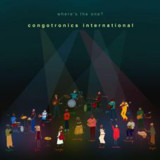
A supergroup comprising Deerhoof + Juana Molina + Kasai Allstars + Konono No.1 + Skeletons + Wildbirds & Peacedrums. It all started when the music of Konono No.1 and Kasai Allstars was first released in the US and Europe, in the later part of the '00s. With its blend of ritual music, traditional percussion, thumb pianos, electric guitars, and makeshift instruments made from junkyard scrap, their out-of-this-world sound now also known as Congotronics, a word coined to title the series in which their albums appeared on Crammed Discs - deeply struck the imagination of musicians and fans worldwide. Leading rock media enthused about this newly rediscovered brand of "primal rock", while an impressive string of avant-rock, electronic & hip hop artists (from Dirty Projectors, Andrew Bird, Animal Collective and Deerhoof to Beck, Björk, Wilco, Radiohead, Saul Williams, Questlove and many more) repeatedly quoted the Congotronics bands as major sources of inspiration.
Vinyl in Gatefold Jacket, green/black double coloured LP with lyric insert and download card.
Keep This Be the Way is Helms Alee's sixth full-length and first new album in over 3 years. Across the span of their first five studio albums, Seattle trio Helms Alee have consistently refined their signature sound-a blend of lilting siren songs, crushing thunder and sludge, and heady guitar pop filled with lush guitars and elaborate three-part vocal harmonies that reach widely across various subgenres of the heavy music world. On this latest album they expand their palette by delving into the production possibilities afforded by recording the album themselves, creating their most dynamic and technicoloured work to date.. Keep This Be the Way still very much sounds like a Helms Alee record, but it's their first album that diverts from the faithful recreation of their live sound and delves into a vibrant tapestry of surreal sounds and invented spaces. This new approach is immediately evident on first single "See Sights Smell Smells," where reverse cymbal crashes, fragmented piano, layered drums, woozy drones, saxophone freak-outs, and trippy vocal treatments transport the listener to an altered state of exhilarated anticipation. The pendulum swings towards more adventurous and exploratory sounds on songs like "Tripping Up the Stairs", it's nightmarish synth glides pitted against distorted barrages steeped in classic Helms Alee timbre. And therein lies the power of the Keep Us Be the Way: it reflects a period of change, ambiguity and perseverance through its fearless curiosity, cathartic rumble, and sublime beauty. Helms Alee supporting Russian Circles on the upcoming EU Headline tour in April/May 2022.
Bristol techno, noise and hardcore supremos SCALPING are
releasing their highly anticipated debut album ‘Void’.
‘Void’ comes on the heels of an extremely exciting 2021 for the
band, which saw them play to sold-out crowds at the Roundhouse
twice in two weeks - both on tour with Squarepusher and at
Pitchfork Festival London - as well as releasing two widely
acclaimed EPs titled ‘FLOOD’ and ‘FLOOD Remixed’, the latter of
which featured treatments from producers Hodge, Azu Tiwaline,
object blue, AQXDM and Laurel Halo and Scottish instrumental
rock legends Mogwai.
SCALPING are heavy metal in 4D; the sound is moody, distorted
and rhythmic, but the use of electronic techniques gives the finer
details room to breathe, making more space for experimentation.
Tracks such as ‘Tether’, featuring Oakland rapper DÆMON, puts
a modern, metal twist on Bristolian trip-hop, whereas album closer
‘Remain in Statis’ features fast-rising artist Grove, a Bristol-based
rapper and self-professed metalhead whose commanding
presence sets the track alight.
In the heat and darkness, it’s a swarm of low-end frequencies and
ripping guitars, somewhere between Black Sabbath-esque
psychedelica and The Bug’s sub-bass headfuckery. Live, the
effect is immense. SCALPING play continuously for the duration of
their sets, generating a storm of metal-and-techno through a rising
beats-per-minute count.
‘Void’ will be put to the test, as the band kicks off an eight-date UK
headline tour, culminating in a live performance at fabric on May
5th. As live shows return in 2022, SCALPING will continue to
prove themselves as one of the UK’s most impressive, ambitious,
and original new live bands.
Following 2019’s critically-acclaimed sophomore album, I Spent the Winter Writing Songs About Getting Better, Proper. is making their return with The Great American Novel. “The Great American Novel is a concept album about how Black genius, specifically my own, goes ignored, relentlessly contested, or just gets completely snuffed out before it can flourish,” vocalist Erik Garlington said. “This record is a concept album that’s meant to read like a book; every song is a chapter following the protagonist through their 20s. Imagine a queer, Black Holden Caufield-type coming up in the 2010s.” The result is an album that is both lyrically and musically heavy, the former something fans have come to expect from Garlington’s unflinchingly honest lyrical content, but the latter something that’ll be refreshingly new. Channeling the heavier music he listened to during his adolescence — from post-hardcore outfit At the Drive-In to progressive metal band System of a Down — Garlington and the rest of Proper. — bassist Natasha Johnson and drummer Elijah Watson — push themselves in ways they haven’t before, culminating in an ambitious project that showcases the new sonic territory the band is heading in. Recorded by Bartees Strange in early 2021 and mixed/mastered by Brian DiMeglio, TGAN is made up of 14 songs, with three of them to be singles dropped throughout the course of the album’s release
Limited Edition
Ambient/Instrumental release from hotly-tipped Liverpool alt Metallers.
Memorial are a duo, Jack and Ollie. Neither are in any great hurry, with their songwriting process originally found spent solo, several hundred miles apart in Brighton and Manchester. Voice memos zipped across the internet, all half thoughts and feelings seeking the other's encouragement.
Headline shows in London and Brighton and supports in 2021: Bess Atwell, Chartreuse, Richard Thompson, Courtney Marie Andrews, Amber Run, Samantha Crain. Nominated for AMA's 'UK song of the year', award ceremony in January at Hackney Empire.RADIO:
Sessions on BBC Radio Wales with Janice Long Interview with Robert Elms on BBC Radio London Chosen as John Kennedy's Hot Ones and X-Posure Big One on Radio X Consistent radio plays on Radio 1's Chillest Show with Sian Eleri, Chris Hawkins on BBC 6Music and on Amazing Radio Further spot plays from Elton John on Beats, Roddy Hart on BBC Radio Scotland, Soho Radio and more.
't Geruis is a discreet musician from Belgium, working in the field of ambient, with a grainy and organic texture deriving from lo-fi recordings/samples. "Bain D'Étoiles" is his third solo release on a label, after 2 albums on Lost Tribe Sound and several self-released digital albums.
This album is about searching for wonder. Stories that give a sense of adventure. a vague memory of a discovery, something that lurks in the forest.
While most ensembles are driven by personalities, the Necks are powered by an idea. A very large and simple idea - which now seems completely obvious…. but only because the Necks thought of it and made it work. Now their pleasure (and ours) is sequentially to re-imagine and explore that idea – the prime directive of which seems to be to be that each unfolding step and every passing detail of any performance be allowed to evolve organically out of the musical conditions established at its moment of departure. In other words, we are in the territory of chaos and catastrophe theory; of hurricanes and butterfly wings… And, since one can never step twice into the same river, each beginning has led to wildly unpredictable and variant outcomes; and imperceptibly: you never hear the changes until somehow they have already happened. “We end up, Lloyd Swanton writes, ‘in a very different place from whatever our initial notion … had been.” In the case of Vertigo, we are dropped straight into an almost Feldmanesque musical universe, in which sounds - seemingly disconnected - are already there; creating space rather than inhabiting it. Then, without trying, they mutate. Not mechanically and not according to any pre-determined process - because it’s always clear that what we hear is being played by human beings; that it’s music. A special kind of music that is not pushy or demanding or demonstrative, but rather co-operative, spatial, ambiguous. A music that leaves room for its listeners.
A cold wind blows while a disembodied drum marches in distance, diving slowly into an orchestra warm-up that ends with a bang: Marmo Music welcomes back Massimo Pegoraro, aka Modus, this time with a special tape release that carries genuinely shaped musical fantasies by the enigmatic electronic music composer and DJ from Genova. Each tune brings a new shade of his polychrome musical universe. He wrote a library music leaning ode to Moondog, recalls forgotten WW1 battles with longing choirs’ chanting along a minimal droning dream house Cello tone, and drops a melancholic fairytale that pits footage of kids laughing at a street market against Fellini-Score spinet melodies. Three of 14 mesmerizing, profoundly written pieces of music, that tell multi-layered contes with Synth reverberations, jazz ambiances, experimental Brit pop sonics, and a sundry range of field recordings. Together they build an enthralling story arc, that displays the open-minded spheres of the broad musical cosmos of Modus. To open the doors to his universe extensive, he additionally wrote some author’s notes for each single composition, that evoke vibrant images on his inspirations and their sounding outcome. Check the spell below while listening to intensely produced explorer music, that brings you obscure ideas from afar who express all the many subtle spirits of Modus.
Third Eye Blind 'Our Bande Apart', produced by Stephan Jenkins and Colin
Holbrook is their follow up to 'Screamer' and the first release since
lockdown
Recorded in Eagle Rock, Los Angeles with guest Ryan Olson of Poliça and
Marijuana Death Squad adding his unique, overall weirdness to the song. The
albums' first single "Box of Bones concerns itself with the ambivalence and
stakes of relationships under pressure," says Stephan Jenkins. The song is from
the band's first recording session since before lockdown and "is the most fun
we've ever had in the studio," he adds. "You can hear the exuberance we have
playing together in the same room again." With it comes a video celebrating
creativity and connection with artists Joseph Arthur & UnCuttArt, directed by
David Wexler (Motorcycle Drive By, TriBeCa Film Festival 2020) and inspired by
Marina Abramovi 263;'s legendary art installation, The Artist Is Present.
The following track "Again" features Bethany Cosentino of Best Coast trading
vocals with Stephan Jenkins on a song that is reminiscent of a travelogue from
days gone by.
repressed !
Emotional Rescue reissue 'Into Dark Water', the second album from UK post-industrial ambient pioneers O Yuki Conjugate (OYC).
The willfully obscure OYC formed in Nottingham in 1982 and have had a sporadic career on the outskirts of musical culture ever since. Initially associated with the early 80s post-industrial scene - along with Soviet France and Muslimgauze - OYC quietly forged their own brand of ambient music at a time when it was distinctly unfashionable to do so.
Always reluctant to categorise their sounds, OYC have been variously described as post-industrial, ambient, darkwave, tribal ambient, chill out, electronica and Fourth World. Take your pick.
'Into Dark Water' was recorded in 1986 over four days in an eight-track garage studio in Nottingham. Produced and engineered by John Kaukis, the result was a blend of flutes, percussion, electronics and loops that focused their sound and became for many the definitive OYC album.
Originally released in 1987 on the Leeds-based Final Image label, 'Into Dark Water' quickly sold out and has been highly sought after ever since. The re-issue, featuring a lovingly recreated sleeve, makes a vinyl version of this classic available again for the first time in over 30 years.
Linda Fredriksson (they/them) shares their debut solo album "Juniper" on We Jazz Records, 29 Oct 2021. Linda (of Mopo and Superposition) has been working on the compositions heard on the album for several years, composing them mostly on guitar, keys and by singing. Only later have they been arranged for the band heard on the album, including Fredriksson on saxes and various instruments, Tuomo Prättälä (of ilmiliekki Quartet) on rhodes, moog and piano, Minna Koivisto on modular synth, moog and OP, Olavi Louhivuori (of Superposition) on drums, and Mikael Saastamoinen (of OK:KO and Superposition) on bass, plus featuring the Swedish artist Matti Bye on piano.
At heart, "Juniper" is a "singer-songwriter album", performed by an instrumental jazz band. The end result is unique, personal, and as Linda themself puts it "quiet and introspective". The first single from the album is "Neon Light and the sky was trans", "a song from the shining streets – the beginning of something new", featuring field recordings of rain falling down behind the window of Linda's Helsinki working space.
It's a fitting introduction to an album full on wonders and carefully crafted secrets ready to be discovered. "Juniper" is a world unto itself, and Fredriksson describes the process as one of isolation and of learning slowly to do new things. After the demo stage, the songs were taken to the full band, but what's on the record often stays true to the minimal nature of the early demos. Linda credits their co-producer Minna Koivisto as a key ally in the process of maintaining the demo sessions' fragile beauty on the actual finished record.
With regards to instrumentation, those who have heard Linda Fredriksson in Mopo and Superposition are likely to be surprised by their credit listing including not only alto and baritone saxophones, plus bass clarinet, but also guitar, Rhythmic8 synths, ambience recordings and drum programming. Linda describes the way of finding new sounds through their beloved old guitar as follows: "It's an old acoustic guitar that has been hit by a car and is literally full of holes, but that makes the sound just perfect for this album and you can hear the instrument on 'Pinetree song' and 'Lempilauluni' (Finnish for 'My Loved Song')."
In fact, Linda began their music-making with guitar and vocals, and the debut of the hole-filled vintage acoustic guitar makes perfect sense here, while also describing the album's immediate sound perhaps better than any other individual instrument used. The influence list for the album name checks the likes of Feist, Neil Young, Susanne Sundfør, Alice Coltrane, Pharoah Sanders, Eric Dolphy and Fever Ray, yet the number one inspiration for Fredriksson prior to making the album was "Carrie and Lowell", the 2017 album by Sufjan Stevens. Different as the albums are in terms of instrumentation and general scope, it's fascinating to draw parallels between them by listening to the quietness and immediacy of the music. "Nana – Tepalle" also relates to the world of "Carrie and Lowell" in being a dedication to a lost family member, Linda's grandmother (she is featured in the digital single artwork).
Throughout the album, Linda plays their saxophones in a way that is serving music first and foremost. The musician's ego, so often at the forefront in jazz, takes a backseat, and the songs themselves remain. Linda thinks as a composer, utilising their instrument where and how necessary, not presenting "chops". "It's sometimes hard to play simple," they say, "but I tried to follow my instinct about what the songs need. The mood rules here, any solos or improvisations happen around that at all times."
"Juniper" can still be heard as a jazz album, but perhaps one reminding that the word doesn't need to mean any one thing in particular. At its best, jazz music is highly personal and "of the moment", both true on "Juniper". The album has been made in two different studios, three homes, two summer cottages and four working spaces. It was recorded with professional studio equipment but also with an iPhone and on a basic built-in laptop speaker. With that, "Juniper" stands as a remarkable musical diary of a creative musician and composer during the early 2020's.
Repress
Founded in October 2017 and known in first place as a party series in Essen, The Third Room expands its spectrum with their debut as a label and mastering studio as well. Those three disciplines going hand in hand and forming our vision as a creative collective. Creating, crafting and sharing the passion that drives us.
After a bitter series of event cancellations caused by the corona pandemic we had to find a way to overcome this financial crisis which has put lot of people in a difficult situation who are driven by love and dedication for what they do. In first place we wanted to give all ticket buyers who waived their refunds for the cancelled The Third Room x Bassiani event at UNESCO World Heritage's Mischanlage a "thank you" gift in form as a Fundraiser Compilation. We wanted to preserve what we have built up over the years at our home base. Because we do believe that the Mischanlage is maybe the most aesthetically-techno place we've ever seen.
We, the founders Ahmet Sisman & VNNN., reached out for artists we have invited on our events, build up a strong relationship and sharing the same ambition for what we stand for. Not only regular guests such as Dax J, Ellen Allien or SHWD & Obscure Shape who have accompanied us over the years, but also new friendships have risen up with artists like Henning Baer, Hector Oaks or Markus Suckut. Or collectives such as Lebendig, R-Imprint, Brutalism, Purify and Acid Wave Records. It is safe to say that we have our own special story with each artist on this compilation and it shows once more that music unites us in these hard times. If you like what you hear, buy the music, support the artists and the local scene. Everyone who has held their T3R x Bassiani Tickets will get a download link of the compilation.