“What a curious feeling!“ said Alice; „I must be shutting up like a telescope.“ ***
Mieke Miami's "Montecarlo Magic", the follow- up to her debut album "In the Forest", (2016, Sonar Kollektiv) may no longer darken through the forest, but there is truly no compulsion to light either. It is more of a special, positive swing that radiates inwards and outwards, a state that seems to be an inner retreat and a journey at the same time: Florida, California and Brandenburg all nestle very close together here. Perhaps there is a river rattling through the picture and surely there are magicians playing with things hidden somewhere: bessoted, dreamy and certainly easy to find. Because in this world, no one is supposed to look around for anything. „Find what you want“, says Mieke.
Поиск:amb
Все
Saxophonist and composer Julian Siegel's fourth release on Whirlwind and his most ambitious musical feat to date, sees him assemble the Julian Siegel Jazz Orchestra. Following the acclaimed quartet release 'Vista' and the influential co-led Partisans album 'Nit de Nit', Siegel solidifies his reputation as one of Europe's most celebrated artists working across jazz and improvised music. Siegel has appeared as a member of some of the great large ensembles - he lists Hermeto Pascoal, Mike Gibbs, Kenny Wheeler, Django Bates and NDR Bigband amongst extensive performing credits. Now, the instrumentalist turns leader: 'Tales from the Jacquard 'is Siegel's first record at the helm of a large ensemble.
Binding a deep social and political conscious with rigorous musical experimentation, the Brussels based, Italian pianist, performer, composer, Giovanni Di Domenico, delivers Downtown Ethnic Music, the 4th instalment of Die Schachtel’s Decay Music series, focused on inspired contemporary experimental efforts in the ambient, ethereal, and emotively abstract music.
Over the last decade or so, Giovanni Di Domenico has carved a deep path through a diverse number of discrete fields within experimental music, working in various ensembles - Abschattungen, AufHeben, Bonjintan, Cement Shoes, Delivery Health, Going, etc. - as well as producing a discography of critically heralded solo efforts, and intimate collaborations with Jim O'Rourke, Tatsuhisa Yamamoto, Akira Sakata, Arve Henriksen, Tatsuhisa Yamamoto, Alexandra Grimal, Nate Wooley, Chris Corsano, and others.
Downtown Ethnic Music encounters Di Domenico reimagining the future of urban music, pluming the mysterious and emotive depths of self, to arrive at vision of sonorous utopia, radically divergent from those of the past. Hybridizing numerous forms of musical practice, while making a conceptual nod to Jon Hassell’s notion of the "fourth world”, as well as the cross-temporal transnationalism of Roberto Musci, Aktuala, Futuro Antico, and the Third Ear Band, Di Domenico’s vision of democracy - rendered through the creative metaphors of sound - is a true to life, bristling conflict, as open-ended as it is ordered, and as dramatic and tense as it is beautiful, playful, and refined.
A colorful tapestry of ideas, experiences, histories, and reference points, woven from a pallet of electronics, synthesis, and various acoustic sources - the intervening rhythms of drummer João Lobo, vocals by Pak Yan Lau and Patshiva CIE women choir, the horns of Ananta Roosens and Jordi Grognard etc. - across the length of Downtown Ethnic Music, the boundaries between idiom, expressive concept, collective, and individual blur, giving way to a visionary, forward-thinking rendering of electroacoustic music, that subtly reminds us of the social and political potential of art.
Seamlessly incorporating bubbling electronic abstraction, sprawling ambience and long tones, throbbing kosmische, acoustic free improvisation, and the human voice, Giovanni Di Domenico’s Downtown Ethnic Music represents a high-water mark in an already astounding career. Issued by Die Schachtel in a one-time edition of 250 copies, pressed to 180g marble vinyl and housed in a pro-printed inner sleeve and jacket, contained in a silk-screen PVC sleeve.
Riding the razor’s edge between rigorous experimentation, innovation, and tradition, London based, Italian composer, cellist, and electronic performer, Sandro Mussida, joins the Die Schachtel family with Rueben, his 3rd solo LP.
Active since the early 2000s, Sandro Mussida worked extensively with Mark Fell, Curl Collective, Lorenzo Senni, Oren Ambarchi, and Alessandra Novaga, among others, as well as a founding member of the interdisciplinary artists' group TQS Collective, before releasing his solo debut, Ventuno Costellazioni Invisibili, on Metrica in 2017, followed by Eeeooosss, released by Soave in 2019. Rueben, like its predecessor, deploys a microtonal vocabulary within a three-instrument sound palette and builds upon Mussida’s long-standing investigations of active listening, augmented by a developing practice that challenges aural perceptions of historical, non-equal-tempered tuning systems.
The 3rd instalment of Die Schachtel’s Decay Music series - launched to highlight inspired contemporary experimental efforts in the ambient, ethereal, and emotively abstract music - Rueben was recorded during 2018 in the church of St.Giusto in Volterra, Italy. Deeply inspired by Italian Renaissance paintings encountered by Mussida during the work’s composition, and conceived at the intersection of acoustic and electronic aural fields, in careful response to the space itself, the sounds of electric guitar, bass clarinet and cello - treated as minuscule sound atoms, rapidly projected to form structures of evolving densities - harmoniously enter into dialogue, forming a multi-layered, contemplative sonic landscape, within the interwoven complexity of their own reflections.
Central to Mussida’s work is the role of the performer, the experience of sound in a given space, and the relation of those sounds to memory and observation. Across the length of Rueben, bound to the work’s inspiration in the visual realm, the interplay between the senses blurs, presenting the act of listening as a mirror for the experience and legacies of seeing. In Mussida’s hands, sound emerges as a trace or memory suspended in a non-linear conception of time, where imprint, movement, and event, as they relate to place and happening, are perceived by the ear, recalling the Russian theologian Pavel Florenskij’s idea of ‘reverse time’, that likens temporal condition activated by experiences with art as similar to that of dreams.
Vast in scope and intricate detail, the 9 discrete compositions that form Rueben unfold in a series of interconnected, shimmering landscapes of tone and texture, each, through the interplay of their elements, configuring a radically dense rendering of minimalist, ambient music that challenge the perceived boundaries of those historical definitions. The identity of individual sound sources fades against their collective whole, sculpting an inward-looking aural image of the church of St.Giusto, that echoes the radiance of the paintings that lay at the heart of the album’s inspiration.
An inspired and radically forward-thinking realization of electro-acoustic music, Mussida pushes toward innumerable possible futures of experimental practice, imbued with ghosts and histories of the past. Rueben is issued Die Schachtel on vinyl in a one-time edition of 250 copies, pressed to 180g marble vinyl and housed in a pro-printed inner sleeve and jacket, featuring an original Sumi-e painting by Japanese artist and avant rock drummer Akihide Monna (Bo Ningen), contained in a silk-screen PVC sleeve.
70s/80s influenced ambient mixed up with a healthy dose of UFO's, abduction, occultism, paranoia, astral flow, new age and long lost Atlantis. 2020 was the year when Albert Kuningas debut vinyl on Escape From Synthesis was released and now the second part of this ambient/
dark ambient masterpiece is available! Finally it's time to get physical vinyl copies of legendary Bandcamp-only release "Music for UFO document programs 2" with a never before heard bonus track called 'Sateenkaarisilta 2'! Don't sleep on this one as it's limited release of 200pcs only.
Continuing our ambitious People Like Us vinyl reissue program with Welcome Aboard – a strangely relevant 10-year-old album (originally released in May 2011) when People Like Us aka Vicki Bennett became stranded in the US after the Icelandic Eyjafjallajökull volcano eruption closed much of northern Europe’s airspace.
Volcanically marooned in Baltimore and NYC, Bennett utilized some of her “free” time to work on the album and even gained audio contributions from fellow experimental musicians Jason Willett (of Half Japanese) and M.C. Schmidt (of Matmos) via her extended stay
Bennett derived thematic material of displacement, travel, and a longing for elsewhere from the natural disaster that caused her own predicament. Now strangely echoed by the Covid-19 outbreak and the various grounding of planes and stay at home policies worldwide.
While the general mashup culture often centres on the instant gratification of seamlessly juxtaposing hooks, People Like Us tracks transform the source material into collages that are equal parts dissonance and pleasure, making artful commentaries on our culture and Bennett’s own existential amusement within such a wondrous world. No one could have predicted how relevant this album would have been 10 years later.
Volcanoes or Viruses, Welcome Abroad is what happens when you’re stranded due to a freak natural occurrence trapping people all over the world and causing mass plane cancellations.
Layton Giordani takes the next step in the evolution of his sound with ‘Hyper World’.
Despite the challenging year we all shared in 2020, Giordani continued to grow in leaps and bounds as a producer. His second studio album ‘New Generation’ was a critical success and showcased the breadth of his artistry over 11 tracks, with moods fit for both the dancefloor and afterhours alike.
His latest offering, however, flexes its raving muscle and ambles up for the summer. The title track is bad arse, with swirling pads, trippy arpeggios and subtle flourishes of acid and psychedelica that all combine for a stomping finish. Fresh in every sense. ‘Astro’ is heavy on drama, driven by a big synth lead that pierces the air with intensity, before a delicious mid-track key change pushes the energy up to eleven and shortly after drops down into a celestial break, before building back up again.
In Switzerland, the Ellis Mano Band are not unlike the Wrecking Crew or
the Funk Brothers.
They are top-flight studio musicians and elites in the Swiss music scene. Although they spent years making music with other artists, the band members
never got much time to make music of their own until now.
“We chose the album title “Ambedo” because it reflects the state of the process of recording an album,” says guitarist Edis Mano. “Ambedo” refers to the
tendency both to reflect and to absorb. Musicians like us do it all the time,
especially when we compose new songs and create a new album.”
The first single “Keep It Simple” refers to the one subject on the planet that
certainly is not simple at all... love.”
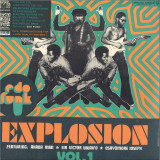
- A1: Africa Is My Root - Osayomore Joseph And The Creative Seven
- A2: Ta Gha Hunsimwen - Akaba Man The Nigie Rokets
- A3: Popular Side - Akaba Man And The African Pride
- B1: Iranm Iran - Victor Uwaifo And His Titibitis
- B2: Sakpaide No 2 - Victor Uwaifo And His Titibitis
- B3: Ta Ghi Rare - Akaba Man The Nigie Rokets
- C1: My Name Is Money - Osayomore Joseph
- C2: Ogbov Omwan - Akaba Man The Nigie Rokets
- C3: Aibalegbe - Victor Uwaifo And His Titibitis
- D1: Who Know Man - Osayomore Joseph And The Ulele Power Sound
- D2: Obviemama - Victor Uwaifo And His Titibitis
- D3: Ororo No De Fade - Osayomore Joseph And The Ulele Power Sound
Analog Africa Presents Edo Funk Explosion Vol. 1, available on
2xLP/Gatefold LP with 20-page booklet / CD with 36-page booklet. It was
in Benin City, in the heart of Nigeria, that a new hybrid of intoxicating
highlife music known as Edo Funk was born.
It first emerged in the late 1970s when a group of musicians began to experiment with different ways of integrating elements from their native Edo culture
and fusing them with new sound effects coming from West Africa s night-clubs.
Unlike the rather polished 1980 s Nigerian disco productions coming out of the
international metropolis of Lagos Edo Funk was raw and reduced to its bare
minimum.
Someone was needed to channel this energy into a distinctive sound and Sir
Victor Uwaifo appeared like a mad professor with his Joromi studio. Uwaifo
took the skeletal structure of Edo music and relentless began fusing them with
synthesizers, electric guitars and 80 s effect racks which resulted in some of the
most outstanding Edo recordings ever made. An explosive spiced up brew with
an odd psychedelic note known as Edo Funk.
That’s the sound you’ll be discovering in the first volume of the Edo Funk Explosion series which focusses on the genre’s greatest originators; Osayomore
Joseph, Akaba Man, and Sir Victor Uwaifo: Osayomore Joseph was one of the
first musicians to bring the sound of the flute into the horn-dominated world
of highlife, and his skills as a performer made him a fixture on the Lagos scene.
When he returned to settle in Benin City in the mid 1970s - at the invitation of
the royal family - he devoted himself to the modernisation and electrification
of Edo music, using funk and Afro-beat as the building blocks for songs that
weren’t afraid to call out government corruption or confront the dark legacy of
Nigeria’s colonial past.
Akaba Man was the philosopher king of Edo funk. Less overtly political than Osayomore Joseph and less psychedelic than Victor Uwaifo, he found the perfect
medium for his message in the trance-like grooves of Edo funk. With pulsating
rhythms awash in cosmic synth-fields and lyrics that express a deep personal
vision, he found great success at the dawn of the 1980s as one of Benin City’s
most persuasive ambassadors of funky highlife.
Victor Uwaifo was already a star in Nigeria when he built the legendary Joromi
studios in his hometown of Benin City in 1978. Using his unique guitar style as
the mediating force between West-African highlife and the traditional rhythms
and melodies of Edo music, he had scored several hits in the early seventies,
but once he had his own sixteen-track facility he was able to pursue his obsession with the synesthetic possibilities of pure sound, adding squelchy synths,
swirling organs and studio effects to hypnotic basslines and raw grooves. Between his own records and his production for other musicians, he quickly established himself as the godfather of Edo funk.
What unites these diverse musicians is their ability to strip funk down to its
primal essence and use it as the foundation for their own excursions inward to
the heart of Edo culture and outward to the furthest limits of sonic alchemy.
The twelve tracks on Edo Funk Explosion Volume 1 pulse with raw inspiration,
mixing highlife horns, driving rhythms, day-glo keyboards and tripped-out guitars into a funk experience unlike any other.
Ex-Voto is the first page in a new story, where French techno artist Nao Nhil looks inwards to find pools of sonic hypnosis. Taking inspiration from both techno and ambient music, Nao Nhil explores the outer reaches of contemporary, dancefloor expression, striking a delicate balance between body and mind. Contrasts between percussive roughness and slick execution, or between brooding darkness and beams of radiance, colour the sound and hold your gaze. The pristine techno construction of "Ex-Voto" tunnels deep into Nao Nhil's core, unearthing the roots from which the laser-cut drone of "Primal Atom" and the stepping kaleidoscope of "Psylle" were born.
The second release on Pleasant Life comes from Bristol-based producer Remotif. “The Sound of Hope Played Backwards” is an EP comprising four tracks built up of ambient textures, ethereal soundscapes and broken percussion. Music composed as much for dreaming as it is dancing. Pleasant Life is a record label run by Ally Tropical.
Wir haben gehört, dass Post-Punk es bis auf die Frühlingsseiten der Sunday Times geschafft hat. Oh, bleibt da dran - Desperate Journalist wüten schon seit gefühlten Äonen mit ihrer melodramatischen Mischung aus traumatisierten Gitarren und kunstvoll gebrochenem Gesang gegen den Konzern-Apparat. Sechs Jahre sind vergangen seit dem Erscheinen des teuflischen "Desperate Journalist"-Debuts in 2015. Das stürmische zweite Album "Grow Up" erschien 2017, während 2019 das stellare "The Search For The Miraculous" weit und breit zu hören war. "Maximum Sorrow!", das komplett in Crouch End inmitten der Covid-Pandemie aufgenommen wurde, strotzt nur so vor Alt-Rock-Muskeln, die in sieben Jahren unermüdlicher Auftritte und Veröffentlichungen aufgebaut wurden, wie ein wilder Panther auf der Pirsch. Angetrieben von Simon Drowners ohrwurmverdächtiger Bassline zeigt sich das Quartett schon beider Lead-Single "Fault" in makellos brutaler Form, mit Banshee-Heulen und selbstzerfleischenden Texten von Sängerin Jo Bevan: "And those teenage hangups are hard to beat / When your closet is piled up with defeat", schnauzt sie an einer besonders stacheligen Stelle, während ihr Gitarrist Rob Hardy und Schlagzeuger Caz Hellbent nur noch feuriges Öl in die akustischen Flammen gießen können. Wie ein Großteil des restlichen Albums ist "Fault" sowohl verspielt als auch voll mit Wut. Das sind Desperate Journalist in hyperdynamischer Form, superglatt, aber nie krankhaft glatt; ambitioniert und expansiv, aber immer noch selbstverliebt und durch und durch DIY. Es gibt traditionelle verzweifelte Reisen in das Herz der Dunkelheit - siehe die doomig-prägnanten Desintegrationen von "Armageddon". Und es gibt brillant beleuchtete Lichtblicke: die ohnmächtige Eleganz von "Utopia", die sardonische, melodieverliebte Frechheit von "Personality Girlfriend", die Ruhe von "Formaldehyde", ein tragisches Finale auf jedem anderen Album - hier als Opener. Ein Lob auch für die raumgreifenden, epischen Chorschübe von "Everything You Wanted" und die spektakulär bittersüßen Sehnsüchte von "What You're Scared Of", die mit verstreuten Zuckerwürfeln bestückt sind.
Born Bad continue their mind-expanding and totally essential series of library music ‘Space Oddities’ compilations with this set focusing on French musician and composer Sauveur Mallia.
In the ever-expanding universe of 70s and 80s French library music, Mallia holds a special place; his career, multifaceted work and the uniqueness of his talent have made him an exemplary figure in the unsung world of library musicians.
In those years a few of them, often for economical reasons, would set off on a
space conquest, taking along just a few synthesisers.
Their ambition well surpassed the modesty of their means; it was in turn the
condition to their experimentations with sound which were to create a new
sonic space: that of a nation tumbling into modernity. From French soil to the
farthest reaches of the cosmos, there were just a few steps to take. It’s with the
label Tele Music, boarding the spaceship Arpadys, along with the Voyage crew,
that Sauveur Mallia took the big leap.
Giancarlo Erra Returns With Spellbinding New Lp ‘Departure Tapes’ On
Kscope. Gatefold Oxblood Coloured Vinyl Edition.
UK based Italian composer, multi-instrumentalist and visual artist Giancarlo
Erra started his career in 2005 with one man studio project Nosound. In 2008
Erra signed with Kscope and released a string of albums under the Nosound
banner before recording the first album under his own name ‘Ends I-VII’ in
2019.
He now returns with a new album ‘Departure Tapes’, reflecting what has been
a difficult year with the loss of his father to cancer.
In Giancarlo’s own words “The end result is the most experimental (and darkest at times) material I ever wrote, without compromise or set plan. It contains
all the elements of my music in a very unconscious free flow way. It’s the first
album I wrote without knowing I was writing it, intrinsically linked to one of the
hardest and yet more healing parts of my life.”
‘Departure Tapes’ is an album of contemplative recordings, written while travelling between the UK and Italy. Most of these tracks have been recorded live
by Erra, so for the most part they are totally unique and hold a sincerity which
cannot be replicated.
Max Richter, Olafur Arnalds, Nils Frahm and the more electronic / ambient
recordings of Brian Eno may offer a reference point by which to enter Erra’s
world, but the depth within these recordings is truly original.
‘Departure Tapes’ is available in a gatefold sleeve on oxblood coloured vinyl and
The DVD-A/V includes high resolution stereo & 5.1 mix: DVD-V: stereo 24/48
LPCM lossless mixes, Dolby Digital 5.1 Surround, DTS 96/24 5.1 Surround DVDA: 5.1 Surround 24/48 LPCM lossless mixes
Polo & Pan's debut album Caravelle reached the heights of professional recognition by being certified platinum in the international market, gold in France, with three singles exceeding the threshold of gold certification outside of France, consecrating Polo & Pan as the new French Touch ambassadors. Now, our two explorers invite us with Cyclorama to a journey through time, along the steps of human existence. After a year of lockdown introspection, the duo decided to create music that weaves themselves into the backgrounds of our lives. From birth to death and transcendence, Cyclorama offers a colorful score to the "comedy of life" as Celentano sang, this existential theatre that is played-out by every human being.’’ Out everywhere on 6/25.
Re-mastering by: Ray Staff at Air Mastering, Lyndhurst Hall, London
Morgan was one of the most active artists in the Los Angeles underground jazz scene, and a member of the late great Horace Tapscott‘s artist collective Union of God’s Musicians and Artists Ascension (UGMAA). He performed alongside Tapscott, and other Nimbus recording artists like Jesse Sharps, who he introduced to Tapscott. He also performed with Arthur Blythe, Gary Bartz, Azar Lawrence, as well as soul icons Willie Hutch (notably on the Foxy Brown soundtrack) and Rufus & Chaka Khan. Most recently he contributed to Carlos Niño’s 2016 album Flutes, Echoes, It’s All Happening!, and was a part of Niño and vocalist Dwight Trible’s soul-jazz group Build An Ark (which also featured Tribe’s Phil Ranelin).
Journey Into Nigritia was Morgan’s debut as a leader, and the first of three recordings he released for Nimbus West. The album has a strong post-Coltrane spiritual feel, with some modal-based melodies, and some fiery solos from saxophonist Dadisi Komolafe. The record also features a solid rhythm section featuring bassist Jeff Littleton and drummer Fritz Wise.
Review by T J Gorton
At the dawn of the Reagan years, LA jazz pianist Nate Morgan recorded his first album for Nimbus West. Journey Into Nigritia portrays an artist marked by the icons of his day, and striving for reinvention. Although he came from a solid jazz background, coming up through the Pan Afrikan People's Arkestra, Morgan found more exciting work with pop bands in the seventies, including glory years with Rufus w/Chaka Khan. On Journey into Nigritia, Morgan re-embraces jazz. Included in the band are Jeff Littleton on bass, Fritz Wise on drums, and Dadisi Komolafe on alto sax.
The collection opens with the Trane-ish Mrafu. Komolafe blasts off in short order, and while the modal chording recalls Tyner, Morgan shows flashes of the nimble loquacious gift that define him. While Alice Coltrane incense perfumes "Morning Prayer, Morgan's devotional sincerity and personnel expression triumph.
Suitably complex with yearning minors, Mother features the trio performing a memorable composition. Littleton's deep-note sustain contrasts Wise's shimmering cymbals, while Morgan tells heart-wrenching truth. With a somewhat solemn theme, He Left Us a Song regularly bursts through into straight-ahead fast break sprints up and down the court. The unexpected "Study in C.T. offers an homage to Cecil Taylor and Morgan's musical roots with free improvisations on a dense and spiky theme. The exhilarating result has Morgan exploring his own way, with a winking slinging of jagged bass chords halfway through.
While a quarter century's experience has nurtured Morgan's prodigious gifts beyond this ambitious debut, Journey Into Nigritia offers enjoyable insights into his artistic evolution, while adding another precious title to the discography of one of the most woefully under-recorded greats of our time.
The Jive Turkeys are made up of four musicians who have been playing together for the better part of the last five years in a hip-hop group called Soundscape. Soundscape is a group based in Oxford, OH, home of Miami University. This is where Matt Amburgy (organ), Terry Cole (bass), Andrew DeRoberts (guitar), and Rob Houk (drums) first met. And while Soundscape has always provided all of them the opportunity to grow and develop as musicians through the group's unique fusion of genres (hip-hop, funk, jazz, rock).
- A1: Never (A Perpetual Transhumanist Curse)
- A2: Demons (Conditioned Noosphere)
- A3: Necropolitics (Loose Remembrance)
- A4: Alucard And Alive Again (Melancholic Rage)
- B1: Sacrificing Your Heart (It Could Be Bloody Marvellous)
- B2: Crossed Realities (Drained Vectoralisation)
- B3: Demons Ii (Wardrums And Noises Of An Attention Crisis)
- B4: Silent Together (Somewhere Alone)
- B5: Necrorose For The Illdisciplined Void (Dark Euphoria)
- C1: Nicola Kazimir - 9 Eternities In Doom Ep (7Inch) - Midnight Fury (9 Eternities In Doom)
- D1: Nicola Kazimir - 9 Eternities In Doom Ep (7Inch) - Maniac (Resentment Of The Alienated)
In Post-Heretic Dracula X Chronicles II the Dracula figure functions as a part fictive and part autobiographical metaphor. Dracula mirrors certain systematic (therefore also internal) conditionings and attributes in its whole ambivalent fluctuations. This character represents the complex relationships of a loving/living person in a neo-liberal capitalist system while oscillating between melancholia & rage, facing the preservation or loss of his love and standing in an alienated position towards the ruling order. The eleven featured compositions and their respective song names (both of them are riddled with references) playfully touch on conflicts between love, life and system-critique, without being too upfront about the subject-matter.
Nicola Kazimir (*28.05.1990 in Zürich, Schweiz)
A DJ, producer, musician, artist, space-owner, record label owner and party organizer, Nicola Kazimir works freely across platforms and communities. For Kazimir, these numerous positions are not static, and they can actfluidly and reciprocally as a whole, or as separate entities. His artistic and acoustic productions are mostly based on topics that include the institutionalization of techno, copyright, dividualism and the human perception of repetitive rhythm patterns mixed with aesthetic codes of b-movie horror movies or occultism. He is one of the founders and still part of the labels Les Points/ Gentrified Underground / Infoline and the offspace Mikro Zürich. Other projects include a supporting role in the organization of Zentralwäscherei Zürich and being part of the Clubbüro-team at Rote Fabrik.
On her second album Ursgal Mongolian singer Enji creates a unique blend of Jazz and Folk with the thousand-year-old traditions of Mongolian music. Currently based in Munich, her lyrics tell personal stories about unbearable distances, the oddness of being on earth and the simple truths in life.
She's accompanied by Paul Brändle on guitar and Munguntovch Tsolmonbayar on double bass.
Born in Ulaanbaatar, Enji grew up in a yurt to a working-class family. Having always been drawn to music, dance and literature, she initially wanted to become a music teacher with little ambitions to compose or be on stage. A program by the local Goethe Institute sparked her passion for Jazz and eventually led her to become a performing artist. Inspired by the music of Carmen McRae, Ella Fitzgerald and Nancy Wilson, Enji started writing songs of her own, cherishing this newfound means of expression. Ursgal is the first record featuring her original compositions.