Celebrating the 10th Anniversary of “Unorthodox Jukebox”, a limited Dark Red Vinyl edition will be released on the 17th June, with the pre-order going live on the 19th May. “Unorthodox Jukebox” is the second studio album by American singer and songwriter Bruno Mars. It debuted at #2 on the US Billboard 200, The record also reached #1 in Australia, Canada, Switzerland, and the U.K.. It became Mars's fastest-selling album in the latter country in 2012, the third best-selling album in Australia in 2013, and the fifth best-selling in the United States in 2013. The International Federation of the Phonographic Industry (IFPI) reported that Unorthodox Jukebox was globally the fourth best-selling album in 2013. “Unorthodox Jukebox” also won the Grammy Award for Best Pop Vocal Album at the 56th Grammy Awards.
Bruno Mars is a 21-time GRAMMY Award nominee and multi-GRAMMY winner. The celebrated singer, songwriter, producer, musician has sold over 171 million singles worldwide, making him one of the best-selling artists of all time. His most recent critically acclaimed and RIAA certified platinum album, “24K Magic,” made an impressive debut atop the Top Digital Albums and R&B/Hip-Hop Albums charts. Additionally, the album and its lead single, “24K Magic,” simultaneously hit No. 1 on the iTunes Overall Albums and Overall Songs charts week of release. The single has since climbed to No. 4 on the Billboard Hot 100 and has also officially been certified Platinum by the RIAA.
Search:american young
"Hollywood, the new album by German pianist Sebastian Knauer is centred around the music and family story of legendary American film music composer Alfred Newman.
He recorded it with the son of Alfred, conductor and composer David Newman and the Deutsches Symphonie-Orchester Berlin.
Alfred Newman, the founding father of the Hollywood sound, composer of the world's most famous fanfare, the 20th Century Fox logo, winner of nine Academy Awards, nominated for 45, friend of Gershwin,Copland, Bernard Herrmann, mentor of Alex North, Elmer Bernstein, Jerry Goldsmith and founder of the most successful film music dynasty: his younger brothers Emil and Lionel Newman (“Hello, Dolly!”), his older son David Newman (“Ice Age”, “Anastasia”), the younger son Thomas Newman (“American Beauty”, ""James Bond: Skyfall""), his nephew Randy Newman ... and his grandchildren are already starting their careers ...
George Gershwin or Aaron Copland, Alex North or Elmer Bernstein, Bernard Herrmann or Jerry Goldsmith - all the composers on Sebastian Knauer's new album have three things in common: they come from the USA, they have naturally intertwined classical composition and film music and they are closely associated with Alfred Newman."
- A1: Runway
- A2: Track Of The Time
- A3: Reaching Through
- A4: Holy Low
- A5: Just To Feel Alive
- B1: Seasons Change
- B2: Some Are Lucky
- B3: Ruby
- B4: Call The Days
- B5: Holy Loud
8/10 FULL-PAGE LEAD REVIEW IN UNCUT: “TALENTED ARTISTS SUCH AS ALDOUS HARDING , DELANEY DAVIDSON, IVY ROSSITER AND MARLON WILLIAMS REPRESENT A FRESH COUNTRY-FOLK/AMERICANA MOVEMENT IN AND AROUND CHRISTCHURCH AND DUNEDIN. NADIA REID'S IMPECCABLE DEBUT WILL MAYBE SET A WIDER ORBIT IN MOTION.”
4/5 LEAD REVIEW IN MOJO: “INSPIRED DEBUT BY A YOUNG NEW ZEALAND SINGER-SONGWRITER YOU'LL FEEL YOU'VE KNOWN FOREVER. A WONDERFUL ALBUM"
SUNDAY TIMES DEBUT OF THE WEEK: "SHE RANKS ALONGSIDE LOW AND THE COWBOY JUNKIES FOR DELIVERING SLOW-BURN EMOTION"
"It has all that well-smoked wisdom, that mingling of strength and yearning that seems to charge the work of all my favourite female artists – Laura Marling, The Weather Station, Sharon Van Etten and Tift Merritt, to name but four. Reid is just 23, and since I am loathe to run that “old beyond her years” line, let us simply say that when I hear a young artist making an album as soulful and rich and self-possessed as Listen to Formation, Look for the Signs, I feel so thrilled not only for the existence of that record but for all the music they will make over all the years to come.” THE GUARDIAN PLAYLIST
6MUSIC ALBUM OF THE WEEK
A richness of voice; a depth of emotion; and wise beyond her years; with Listen To Formation, Look For the Signs, 23-year-old New Zealand native Nadia Reid has claimed her place as one of the country’s most evocative and profound young songwriters. Her music traces the sharp mountain peaks, azure coastline, and mirrored images of the land and sky that pinpoint her home country’s vast open landscapes.
Whether nerding about with friends, stunning audiences into silence with her spellbinding live shows or unwinding in the tranquillity of her favourite hometown spot overlooking Port Chalmers’ harbour through her large-rimmed spectacles, Nadia Reid has achieved a gloriously fresh and eloquent new folk sound. “I’ve been in New Zealand my whole life and guess at times I take for granted the serene beauty that I live so closely with,” she says of her music’s majestic affiliation with nature. Mapping out tales of change and loss, whilst drawing inspiration from reading, writing, the human condition, falling in and out of love, death, and birth - it all lends to a superbly balanced album that moves surreptitiously between sparse and fragile melancholia to beautifully brutal lyricism with a philosophical maturity that bellies her years.
Born in Auckland, Nadia’s acoustic roots stem from an upbringing in a musical household where attending folk clubs and festivals were regular occurrences on the family calendar. “I was lucky to witness a lot of live music and theatre performances because my mum was an actress. I was encouraged to learn piano and guitar, and attended a Steiner school where we spent a lot of time in nature, singing songs.” Before long Nadia was listening to The Be Good Tanyas with friend and fellow recording artist Aldous Harding, which spurred her chosen career path. “There was something spiritual about the Tanyas’ records - I vividly remember the goose-bump feelings up my arms, a true connection to the lyrics and vocals,” she recalls. “Aldous was the first person who told me I had a good voice and I thank her for that. I admire her as an artist and writer, and we like to keep up with what each other is up to.”
Creating her own enchanting wonderworld, each of Nadia’s songs explores the elements; truly organic, her vocals ebb, flow and soar but are always ignited with fire from the gut. Her lyrics clearly reference lush landscapes but equally reflect alienation provided by the surrounding Pacific Ocean and mortality of living in such close proximity to Mother Nature’s wrath, as experienced whilst living in Christchurch at the time of 2011’s devastating earthquake. “It shook the city to its core,” Nadia recalls. “I’m sure living through it has shaped my personality and writing. My first EP was recorded just months afterwards, it was a strange time. We were all quite fragile, but I was braver somehow.”
Boldly infusing folk with full flavour, Listen To Formation, Look For The Signs was produced by Ben Edwards, owner of Lyttelton Records in his Sitting Room studios with Nadia’s band consisting bassist Richie Pickard, guitarist Sam Taylor and percussionist Joe McCallum. Whilst 'Reaching Through’s rich but unhurried nature evokes She Hangs Brightly -era Mazzy Star and intricate nuances of Beth Orton are recalled on lead single ‘Call The Days’ which talks of moving to a new town and was the first song penned after Nadia moved from Christchurch to Wellington; spurred on by a “panic attack” and being “worried about making the right choices in life”. Elsewhere ‘Runway’ and ‘Some Are Lucky’ immediately channel Nadia’s love of TBGT’s Jolie Holland and appreciation for New Zealand’s Maori music by Maisey Rika and Anika Moa, plus the inspirational narratives of Kenyan-born Somali poet Warsan Shire.
"Black Stone Cherry is the debut album from American southern rockers Black Stone Cherry. They offer more than your traditional southern rock sound, it's a mix of classic rock & hard rock tight together with some ballads. This 4 piece knows how to roll & deliver, Chris Robertson’s powerful, rough voice, Ben Wells’ bluesy guitar riffs, Jon Lawhon’s impressive bass play and John Fred Young’s technical skilled drum rolls it's all there. Black Stone Cherry's debut album is indeed a real treat for rock fans.
Black Stone Cherry is available as a limited edition of 1000 individually numbered copies on translucent red colored vinyl. It comes in a gatefold and contains an insert."
Ludwig Hart, who over two albums has established himself as our foremost innovator of classic American road rock aesthetics, has throughout 2024 released songs with a sound that is even bigger than on the artist's breakthrough album, 2021's "Paloma". The song "Less I Try" has been in constant radio rotation in Sweden, Germany and the UK, and Hart has had time to appear on national TV, embark on a major tour with two successful gigs at The Great Escape in Brighton and spend a summer playing the biggest Swedish festival stages. On his third album "Stay Young" - released on September 27 via Argle Bargle Studios - Hart showcases an increasing freedom to genre and style. From reflective, stripped-down tracks like "Ghost of You" and the title track, we're taken through the reverb-drenched garage boogie of "Run Run" to the big chorus wind-in-the-hair rock of single favorites like "Less I Try" and "Journey." On previous albums, Hart has been praised for his lyrics - personal stories about people around him growing up and their life situations. On ”Stay Young” - on the contrary - he turns inward and faces his own fears and demons. "It's been scary but necessary. The album is about my fears of getting older, fears of ending up like my dad. It's about how much I've tried to suppress things I've been through, and how they've probably shaped me into who I am. I live with ghosts that never seem to want to let go, I have my own devil on my shoulder that constantly makes itself known. I am periodically terrified of ending up in total fucking darkness. This record has helped me try to understand why."
"Mind Of A Country Boy is the eight studio album from 5x Entertainer of the Year, Luke Bryan. Hailing from Georgia and now based in Tennessee, Bryan has sold over 75 million records, performed for more than 14 million fans on his sold-on headlining stadium tours and his own festival, Crash My Playa, as well as being a judge on American Idol. Mind Of A Country Boy marks his first new album in four years, with the singer remarking, ""I've been able to take my time and really compile songs for this album. If it's a song that I cut two or three years ago, and I still love it, and it still sounds fresh, then I feel like it'll stand the test of time.""
The 14-track album includes singles “Country On”, “But I Got a Beer in My Hand” and “Love You, Miss You, Mean It”, the latter of which Bryan says, “was special from the first time I heard it. I knew it would resonate. It’s about young love and that whole process of trying to make relationships work through the on-again and off-again cycles. My wife and I went through that journey during college, and I know a lot of people out there have too.”"
- A1: Baby Talk
- A2: Heart & Soul
- A3: Barbara Ann
- A4: Palisades Park
- A5: Who Put The Bomp
- A6: Poor Little Puppet
- A7: Cindy
- A8: Wanted, One Girl
- A9: Queen Of My Heart
- B1: There's A Girl
- B2: Gee
- B3: Tennessee
- B4: A Sunday Kind Of Love
- B5: We Go Together
- B6: Clementine
- B7: (She's Still Talkin') Baby Talk
- B8: Jennie Lee (Jan & Arnie)
- B9: Gas Money (Jan & Arnie)
History brackets Jan and Dean with friends the Beach Boys as
stereotypical young Californians – all-American surfers with bikiniclad girls on their arm. Yet they had a history before they fell in with
the Wilson brothers, beating Brian and company to the charts by a
matter of four years. Their success also helped Los Angeles emerge
as a musical centre of the United States. The major labels of the
time were based in New York and Chicago, and the city’s major
leisure industries were television and cinema. This album focuses
on the early years, including a couple of the rare Jan and Arnie
songs, to give the fullest possible background to a classic pop
partnership.
- 1: Crazy - Patsy Cline
- 2: Behind Closed Doors - Charlie Rich
- 3: Sea Of Heartbreak - Don Gibson
- 4: Walk On By - Leroy Van Dyke
- 5: Big Bad John - Jimmy Dean
- 6: I'm A Honky Tonk Girl - Loretta Lynn
- 7: Rawhide - Frankie Laine
- 8: Funny How Time Slips Away - Willie Nelson
- 1: Welcome To My World - Jim Reeves
- 2: It's Four In The Morning - Faron Young
- 3: I Walk The Line - Johnny Cash
- 4: Single Girl - Sandy Posey
- 5: Sixteen Tons - Tennessee Ernie Ford
- 6: Hey Good Lookin' - Hank Williams
- 7: Alabam - Cowboy Copas
- 8: It Wasn't God Who Made Honky Tonk Angels - Kitty Wells
- 1: Rose Garden - Lynn Anderson
- 2: My Special Angel - Bobby Helms
- 3: I'm Sorry - Brenda Lee
- 4: Oh Lonesome Me - Don Gibson
- 5: He'll Have To Go - Jim Reeves
- 6: Dark Moon - Bonnie Guitar
- 7: Big Iron - Marty Robbins
- 8: Your Cheatin' Heart - Hank Williams
- 3: Six Days On The Road - Dave Dudley
- 4: I Fall To Pieces - Patsy Cline
- 5: Crazy - Willie Nelson
- 6: Don't Take Your Guns To Town - Johnny Cash
- 7: Singing The Blues - Marty Robbins
- 8: I Can't Stop Loving You - Ray Charles
- Haper Valley P.t.a. - Jeannie C. Riley
- 2: From A Jack To A King - Ned Miller
The songs that grace this comprehensive double vinyl package all come from the golden age of country music. For nearly a century now, country music has been captured on cylinder, vinyl, tape and compact disc. In America during the 1950s, while rock & roll battled calypso as the nation’s favourite sound, meanwhile in the background, these classic country songs could be heard across the land - all the way from the Gulf of Mexico, right up to the frozen wastes of Minnesota. After the golden age of what might be called pure country, came country-rock, alt-country and Americana. But the century of songs gathered together here is plain and simple country music - at its best
A hard rock mash up - Bandleader Paul Ngozi's split album with his drummer and co-vocalist Chrissy Zebby Tembo. The set includes an oversized 8 page booklet detailing Ngozi’s arc, rare photographs, discography and annotations.
"Zambia’s Zamrock movement that exploded in the 1970s...provided young musicians access to European and American music, and created a unique sound. At its root, Zamrock melded fuzz-toned psychedelia, chugging garage rock and roiling funk with a broad mix of African cadences and beats...enlivening a scene that included bands like Musi-O-Tunya, Amanaz and the Ngozi Family” - New York Times
Zamrock was a bona-fide rock scene: on the African continent, only Nigeria can claim one so comprehensive, and Nigeria’s was largely catalyzed and funded by subsidiaries of the European major labels. Zamrock was as independent as the newly-named country, formerly known as Northern Rhodesia. Zamrock is starting in its completeness, especially for a scene that emerged, unfurled and disappeared so quickly. From Musi-O-Tunyaís fusion of Fela’s Afro-beat, Hendrix’s rock, South African jazz and traditional Zambian melodies and rhythms to Salty Dog’s acid folk/rock, Zambia’s rock scene contained all of rock’s subgenres. Zamrock was much more than an imitation of American and European rock music: it quickly became a uniquely Zambian movement, befitting of its name. WITCH, Paul Ngozi and Amanaz sound nothing like other rock music from the African continent - or elsewhere. Zamrock came from a nation's youth carrying forth the momentum of a political and social revolution with a musical revolution that maintained the fiery power of early rock - in the mid-to late-70s. From that era, Zamrockís energy is matched only by the punk and hip hop scenes of England and America.
Strange Power!, the fifth record from Durham, NC-based songwriter and poet Anne Malin Ringwalt, emerges from the darkest waters of the self into a world remade. Releasing in conjunction with her second book of poetry, What Floods (Inside the Castle, Oct. 2024), Strange Power! overflows with Ringwalt's teeming and sensuous personal symbolry: glowing lilacs and gentle queens, dolphins wild and girls who grew up brave _ T.S. Eliot sung by Cat Power, backed by Mount Eerie. She sings: "I rose up from water." Ringwalt writes and performs with the authority of a lifetime spent harnessing the alchemy of storytelling; her belief in the power of words to heal and transform is palpable in each achingly- delivered lyric. Made amidst profound inner and outer change, Strange Power! also sees Ringwalt taking up the role of self-producer for the first time, mirroring and supporting the record's Orphic quest by gathering contributions from a coterie of friends wielding an electric range of American instruments. Violins, vibraphones, drum machines, electric guitars dappled with spring reverb, wind-blown shells, and a host of other numinous sounds form an unfurling and shadowy world which was then carefully honed during the mixing process (shepherded by Michael Cormier-O'Leary and Lucas Knapp) _ settling the final record in an eerie meridian between spareness and verdancy. The result is a beguiling and darkly blooming realm: the sound of a personal cosmos being remade, piece by piece. Ringwalt is at the height of her spirit as both songwriter-poet and singer, her willowy voice by turns conjuring and keening as she reckons with her deep past and the stories told since. Opening track "The Pines" sets the stage for a record of truly life-long scope: "I was a child, now I hold her / I was asleep for many years." Some songs, like the gorgeous "North Carolina" and "The Saint," were written as early as 2013 but, Ringwalt says, "insisted upon being remembered" as the record took shape; in its final form, they serve as inciting moments of self-discovery before the journey to come. "The Visionary" recalls one of Ringwalt's earliest musical breakthroughs _ her re-rendering of an Emily Brontë poem into a song at age 15 _ and, she says, "`cites' the melody of that song in the context of this new one _ a holding of the past and present and every layer in between/beyond, in utter solitude _ a solitude that reflects certain aspects of abandon as a child and an adult..." This unusually lengthy time-scale lends Strange Power! a deeply moving sense of narrative fullness. Stretches of the record _ particularly the "Judgment Day" ? "River" ? "Lilac Bloom" trifecta that form the black heart of Side 1 _ may recall familiar wanderings of personal underworlds such as Mount Eerie's Lost Wisdom Pt. 2 or Neil Young's Ditch Trilogy. Yet this hollowed landscape is in turn exorcized by the a capella "I Know," in which Ringwalt sings "I won't be gutted by you / For giving and trying to heal / I won't be gutted, I am not a fool / I deserve a love that is new" before the song concludes with a piano passage that recalls hymnal music _ suggesting a faith in life itself to offer new beginnings. Side 2 features some of Ringwalt's most powerfully introspective writing to date, as the songwriter casts off myth after myth in her search for personal transformation. By the final song, "Stories," the energy that has been gathering all throughout the record breaks loose as Ringwalt reflects: "I wrote so many stories, not knowing what the end was." But at this stage in the journey, we know there is no such thing as an ending; if the healing process is never complete, the storyteller's strange power is what finally offers liberation.
Forgetting You Is Like Breathing Water, the self-titled debut from the duo of trumpeter Will Evans and guitarist, synthesist, producer and multi-instrumentalist Theo Trump, arrives like a vault revelation. It feels like a decades-old yet newly unearthed masterwork of gorgeous ambient improvisation, the sort of thing scholars live to research and shepherd into deluxe reissue.
The patient, crystalline chords that swell and resonate like a series of confessions; the textured brass murmurs that suggest a ’60s or ’70s Fire Music master at their most poignant. Provocative found-sound experiments threading arcane religious recordings through dystopian soundscapes. Ear-shattering free-noise tumult. Where and when did this music come from? Who are these voices?
As it turns out, Forgetting You Is Like Breathing Water springs from an engrossing human story, though it isn’t necessarily the one you’d expect. This work of stunning maturity is in fact an entrance by two little-known explorers in their early 20s, who grew up together in Virginia, in the shadow of the Blue Ridge Mountains. It documents one of those perfect, sparkling moments in post-adolescence when big decisions and responsibilities are right around the corner, but for a spell, two young artists are able to create among the comforts and nostalgia of their shared past.
It also represents a reunion of sorts, as Evans and Trump connected as toddlers, became inseparable as boys, then pursued independent lives and creative paths as young adults. “Theo is my oldest friend,” Evans says, “and I feel like that’s what this band is — us meeting right in the middle of our interests.”
Now, having conjured this magic, they’ve detached once again: Evans, whose other works include the indie/avant-jazz unit Angelica X, is currently based in New York City. Trump recently moved to England, where he’d participated in his family’s theatre company, to go to school and further his solo ambient project. “This album didn’t start out as something super ambitious,” Evans explains. “It was more just an excuse to spend time together again and make music.”
***
In conversation, Evans and Trump are a delight, especially for cynics who might think that Gen-Z is only capable of doomscrolling. They come across as kindly young intellectuals who grew up using the internet as it was intended, for exposure to ideas and art across genres and generations. Trump points to indie-folk and the oracular post-rock of late Talk Talk, Bark Psychosis and Gastr del Sol. Pressed for his guitar heroes, he cites Bill Orcutt, Mary Halvorson and Marc Ribot, and mentions his devotion to alt-country. Heyday electro-industrial stuff like Skinny Puppy and Nine Inch Nails also meant a lot to him.
Evans is equally intrepid, though his background has a greater jazz focus. Ambrose Akinmusire, among today’s most thoughtfully commanding trumpeters, is a favorite. As for the soulful murmur he offers throughout Forgetting You, Pharoah Sanders’ wistful and lyrical contributions to Floating Points’ work is a touchstone.
The two grew up down the street from each other in the northern Piedmont town of Batesville, Virginia. Their families were friends, holidays were celebrated together and they became the most loyal of pals. As children they had a pretend band.
Then life unfolded, they attended different schools and their paths diverged. Evans discovered John Coltrane and became a jazz obsessive, as Trump found punk and hardcore and later began making ambient music. As a dedicated jazz trumpeter, Evans studied formally and widely; Trump was an autodidact, teaching himself guitar and absorbing synthesis and production techniques. The late teens and very early 20s brought moves away from home and back to home, as well as plenty of listening and learning. The Covid pandemic meant an opportunity to reconnect on long walks. Through it all, together and apart, they remained reverent of each other.
By early 2023, they found themselves living again among the Blue Ridge Mountains. In the evening, after giving trumpet lessons in Charlottesville, Evans would make the eerily beautiful trek “over the mountain” to Trump’s home in Staunton, Virginia. They’d talk and eat and begin to improvise, deep into the night. Evans played trumpet and sometimes drums. (Given the wee-hours recording schedule, the neighbors didn’t appreciate the latter.) Trump plugged a rickety, junk-store Telecaster-style guitar into a cheap solid-state amp and explored open tunings; he also layered on lap steel, electric bass, synths and electronics.
They locked in and relished each other’s gifts. In Trump, those include patience and intentionality and sonic decision-making; for Evans, a distinctive trumpet sound that both musicians think of as a singer’s voice. “Will’s playing is so thoughtful and well placed,” Trump says. “My goal from a producer’s mindset is that the trumpet will occupy the space that vocals would take.”
Often, they got lost in the best way. “The thing I look for most when I’m playing is that feeling of disappearing into what you’re doing,” Evans says. “Usually when that happens, the music is good.”
By the same token, they didn’t pursue free improvisation as an ethic, or as a pure process. Their goal was something closer to spontaneous composition. “We were trying to make good songs,” Evans says simply. Later, Trump did brilliant post-production work, expanding a modest setup into an enthralling soundworld. Under his judicious editorship, music that was wholly improvised sounds at times like a carefully composed new-music commission.
The results speak for themselves. “A Happy Death” summons up a swath of American desolation through the viewfinder of Wim Wenders. “Flesh of Lost Summers” and “Partings” are highlights from an essential ECM LP that never was. “A Collapse of Horses” infuses those seminal post-rock influences with the plod of doom metal or slowcore. The album’s final track, “The Mountains Are a Dream That Calls to Me,” was in fact the first thing the duo recorded, as an evocation of those twilit drives across the Blue Ridge Mountains. “Looking back at what we chose to name the songs,” Evans says, “and some of the sounds and how they make me feel, there is an air of impermanence and loss to this album.”
“I’m excited for everything that’s to come,” he adds, “but I recently thought, ‘Damn — that’s not going to happen again.’ It was a privilege for us to have that time together.”
- Reverend Horace Tyler - Intro 00:35
- The Thrillers Band - The Thrillers Band Theme 03:12
- Carla & The Carlettes - Love Makes A Woman 04:06
- The Channels 4 - I Wish It Would Rain 03:13
- Sharon Seabrook & The Starlettes - Come & Get These Memories 03:03
- The United Souls - I Want To Be Sweeter To You (Than I Was Yesterday) 03:08
- The Destinations - Cowboys To Girls 03:11
- Carla & The Carlettes - Grooving 03:00
- The Channels 4 - Cross My Heart 03:30
- The United Souls - The Way You Do The Things You Do 02:39
- The Starlettes - Dry Your Eyes 02:13
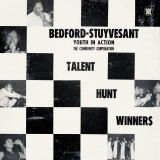
Big Crown Records is proud to present the reissue of one of Brooklyn’s most sought after “holy grail” soul records, YIA Talent Hunt Winners. Youth in Action, Inc. (YIA) was formed in 1963 when the Central Brooklyn Coordinating Council received a grant to develop a youth services program in the Bedford-Stuyvesant community. It was originally organized to identify and address the social problems that were leading to the high crime rate in Bed-Stuy. Recently the Smithsonian Museum of African American History released an archive of footage filmed by a community activist, which shows the real-world effects of the group’s efforts: young people engaged in sports, the arts, and other activities to better themselves and their world. The appearances by Jackie and Bobby Kennedy point to the group's relationship to the Great Society programs of President Lyndon B. Johnson. What there is no mention of in either the NMAAHC’s collection of YIA materials nor in the Brooklyn Public Library’s also extensive collection is this talent show and the record that came to be because of it.
Local vocal groups chose tunes to cover from the era (1964 - 1968) ranging from The Rascals to The Intruders, from The O’Jays to Billy Stewart. All of these groups were backed by a local act called The Thrillers Band. The winners of the talent contest were then invited into the studio to record their versions which would be pressed up on this record and given away to local radio and TV stations. The hope of the whole thing was that this would help the young groups get discovered by producers and record labels and start their professional music careers. The intro to the album is Reverend Horace Tyler congratulating the winners and asking them “to just remember, when you reach the top and become our big stars of tomorrow, don’t forget YIA”.
What this album may lack in fidelity and production it more than makes up for in charm. The engineers at the recording sessions pump in pre recorded applause and screaming to give the it the feel of the day of the contest while the young groups sing their hearts out, clearly giving their all. From today’s perspective, soul music fans will lose it over the choices of covers on this record and the killer, raw, innocent performances of them by these local Brooklyn groups. The Channels 4, Carla & The Carlettes, The United Souls, Sharon Seabrook & The Starlettes, and The Destinations all won that day and got to take place in this record. It makes you wonder, and even pine for the performances of the groups who didn’t make the cut, even if just to find out what tunes they covered, or better yet, were their original songs written by some of them for this contest?
It is with great pleasure that we make this available to the public again. This is a truly rare record, and an awesome piece of New York History.
"Mountain Music is Nina Nesbitt as fans have never heard her before. Having risen to fame at a young age with her disarming, candid pop – the Scottish musician is now found in an entirely new realm. It is inspired in part by the two years she spent touring the States in support of her second studio album: the critically acclaimed Top 40, The Sun Will Come Up, The Seasons Will Change, which has now accrued over a billion streams. These songs are permeated with gorgeous nods to US folk and Americana. It’s made all the more extraordinary by the face that, not long ago, Nesbitt was considering quitting music altogether. Produced by Peter Miles and Nesbitt, mixed and mastered by Miles at his stunning studio MiddleFarm in south Devon, and released via her own label, Apple Tree Records. A playful nod to her 2012 debut EP, TheApple Tree, this marks the start of an exciting new era for Nina Nesbitt. While it might sound strange that Nesbitt was drawn to the music of Appalachia, heard echoing through the vast, verdant mountain ranges of the eastern United States, it makes more sense when you consider how traditional Scottish ballads and hymns are threads in that rich tapestry.
Empathy is one of Nesbitt’s greatest strengths. We hear it on “Painkiller”, a Joni Mitchell-indebted ballad on which her heart breaks for the men who believe they have to suppress their own feelings. One of the album’s standout qualities is, perhaps, the dynamic that Nesbitt creates from one song to the next. Where many folk artists might lean into quiet introspection, she craves the full spectrum of emotion – so ensconced around “Painkiller” you have the tender “On the Run’, with its distant shivers of percussion and crystalline piano, but also “Anger”. She’s in a nostalgic mood on the rousing “Coming Home”, a Springsteen-inspired, driving-with-the-top-down journey back to the places and people she loves. We all lose ourselves sometimes. The trick is learning how to find our way back, pushing those clouds away to see the blue skies beyond. For artist Nina Nesbitt, hard-hitting truths and revelations take precedent on her remarkable, career-best album, Mountain Music. Nesbitt knows exactly who she is, and now, she’s ready to tell the world."
At the height of the First World War, two young British soldiers, Schofield (Captain Fantastic’s George MacKay) and Blake (Game of Thrones’ Dean-Charles Chapman) are given a seemingly impossible mission. In a race against time, they must cross enemy territory and deliver a message that will stop a deadly attack on hundreds of soldiers—Blake’s own brother among them. 1917 is directed by Sam Mendes, who wrote the screenplay with Krysty Wilson-Cairns (Showtime’s Penny Dreadful). Rotten Tomatoes critical consensus reads: ""Hard-hitting, immersive, and an impressive technical achievement, 1917 captures the trench warfare of World War I with raw, startling immediacy."" The music to the movie is composed by Thomas Newman (The Shawshank Redemption, American Beauty, Road to Perdition). Newman has received a whopping 15 Oscar bids throughout his career, including one for this epic score. Since the film is designed to be told in one continuous shot from cinematographer Roger Deakins, Newman’s pulse-pounding score often serves as a unique form of editing. The music cuts off during dramatic cues, ramps up in battle scenes and, in one breathtaking moment, becomes almost operatic as MacKay runs through war ruins to escape being seen from enemy flares. 1917 is available as a limited edition of 500 individually numbered copies on translucent blue coloured vinyl. The package includes an 8-page booklet with movie stills and liner notes by Sam Mendes.
Celebrating the 10th Anniversary of “Unorthodox Jukebox”, a limited Dark Red Vinyl edition will be released on the 17th June, with the pre-order going live on the 19th May. “Unorthodox Jukebox” is the second studio album by American singer and songwriter Bruno Mars. It debuted at #2 on the US Billboard 200, The record also reached #1 in Australia, Canada, Switzerland, and the U.K.. It became Mars's fastest-selling album in the latter country in 2012, the third best-selling album in Australia in 2013, and the fifth best-selling in the United States in 2013. The International Federation of the Phonographic Industry (IFPI) reported that Unorthodox Jukebox was globally the fourth best-selling album in 2013. “Unorthodox Jukebox” also won the Grammy Award for Best Pop Vocal Album at the 56th Grammy Awards.
Bruno Mars is a 21-time GRAMMY Award nominee and multi-GRAMMY winner. The celebrated singer, songwriter, producer, musician has sold over 171 million singles worldwide, making him one of the best-selling artists of all time. His most recent critically acclaimed and RIAA certified platinum album, “24K Magic,” made an impressive debut atop the Top Digital Albums and R&B/Hip-Hop Albums charts. Additionally, the album and its lead single, “24K Magic,” simultaneously hit No. 1 on the iTunes Overall Albums and Overall Songs charts week of release. The single has since climbed to No. 4 on the Billboard Hot 100 and has also officially been certified Platinum by the RIAA.
In 2007, Céu debuted her self-titled album, becoming one of the select Brazilian artistsnominated for an American Grammy in the World Music category and is widely regarded as one of the most in_¼éuential Brazilian artists of her generation. With now six albums to her credit, Céu has transcended borders, captivating audiences on five continents at prestigious festivals such as the Montreal Jazz Festival, Coachella, Roskilde, Rock in Rio and Lollapalooza. She is renownedfor her collaborations with both Brazilian and international artists like Duran Duran, Herbie Hancock, Jorge Ben Jor, Gilberto Gil and Emicida. Recorded in the USA, the album features musical production by Céu as well as Brazilian musician and producer Pupillo (drummer of Naçao Zumbi) and American multi- instrumentalist and arranger Adrian Younge (co-founder of Jazz Is Dead). Recorded at Linear Labs Studio in Los Angeles, Novela is Céu"s sixth studio album. It was captured live on tape, in a dynamic moment that demands total presence. A number of artists feature on the record: American MC and songwriter LadyBug Mecca, Franco-Senegalese singer and songwriter anaiis, American singers Loren Oden and Jensine Benitez, American DJ and producer Frankie Reyes, French artist Hervé Salters (General Elektriks) and Brazilian national treasure Marcos Valle. In Novela, ancient technologies, healing, creaminess, bolero, polished stars, echoes of soul music, things of the earth, rap, and whispers to guides emerge. Throughout the record, there is a reaffirmation of the author"sfearlessness, committed to her time, in the complexity and beauty of creative work. Always keeping the diversity of Brazilian music on the horizon.
- A1: Sam Ruffillo & Fimiani - Mediterranea (Party Mix Extended)
- A2: Tommiboy Feat Dm Disco Band - La Sfinge
- B1: M¥Ss Keta & Kapote - Italomania Intermezzo
- B2: Severino & Giacomo Moras Ft M¥Ss Keta - Maledetto
- B3: Stump Valley Feat Femmina - Non Dire Di No (Extended Version)
- C1: Munk & Kapote - La Musica (Hot Dj Version)
- C2: Fimiani & Angeleri - Sessospaghetti (Extended Version)
- C3: Kapote - Sono Tropical (Extended Version)
- D1: Giovanni Damico - Tropica (Feat Martina)
- D2: Lele Sacchi Feat Elasi - Malamore (Extended Version)
- D3: Daniel Monaco Band - Milly
Toy Tonics ITALOMANIA Vol. 2 is a compilation dedicated to NEW ITALIAN DISCO. (Not Italo Disco.)
13 young contemporary Italian producers made new organic disco, indie dance, avant pop and house tracks with Italian vocals.
Everything on this compilation has been produced in 2023. Fresh dance music by Italian indie electronic star Myss Keta together with DJ Severino (of Horse Meat Disco) and newcomers Sam Ruffillo, Fimiani, Magou, Tommiboy, Daniel Monaco, Giovanni Damico. And new music by artists Stump Valley (from Dekmantel), Munk (Gomma records), Rodion (Slow Motion Records) and DJ legend Lele Sacchi,
The ITALOMANIA compilation was initiated by Toy Tonics boss Kapote. The idea is to show the status of Italian Disco of today. It’s like a „manifesto“!
Kapote invited the most relevant Italian producers to make new tracks with Italian vocals and show different styles of modern Italian disco, dance and house music.
with Italian vocals. All tracks compiled by Kapote aka Mathias Modica aka Munk. Italo-German producer, DJ, keyboarder and head of Toy Tonics and Gomma records.
Italian Disco is not Italo Disco.
While the last years the slightly trashy pop music of the 1980’s called Italo Disco (with English lyrics) had a big revival. But now also the attention for more quality and organic dance music with Italian language is rising. This compilation is about this Italian Disco,
It’s a fact that not just in Italy but also in France and Germany there are now artists singing in Italian or using Italian words and names - even if they are not Italian.
Let’s not forget: The world’s culture of party, dancing, showbizness and pop music would be unimaginable without the heritage and creativity that Italians contributed.
Italy is not just the country of good food, beautiful beaches and high fashion, but it’s also the original country of dance music. Since almost 3000 years, since the ancient roman times the Italians have been making (dance) music culture, creating popular culture and being the maestros in organizing parties.
Also the disco wave of the 1970ies and the Pop music of the 1980ies has been co-created by Italians (and Italo-americans in New York).
The ITALOMANIA artists & tracklist:
M¥SS KETA
The most famous artist on the compilation is singer M¥SS KETA. The Italian press calls her "the Italian Lady Gaga“. M¥SS KETA is an edgy performer that reached the top of the charts with indie pop songs, but is also well rooted in the Milan art, fashion and LGTB scene.
To create a song for Italomania she teamed up with DJ Severino. The Italian part of London’s Horse Meat Disco DJ collective. Probably the world leading queer DJ team. (M¥SS KETA recently was invited to perform Berghain in Berlin).
Sam Ruffillo
Sam Ruffilo has contributed a new (party) version of his song Mediterranea. A organic disco track with lyrics in Neapolitan dialect. Sam Ruffillo is an upcoming Italian DJ and producer and one of the lead artists of Toy Tonics (along with Coeo, Kapote and Cody Currie). He had a few underground hits combining leftfield disco and Lofi House with Italian vocals creating a new genre that is finding lot of fans right now. One of his songs (Chiamami Subito) made it into the rotation of big Italian radio station M20. On Instrgam you can see his DJ sets where hundreds of Italians sing his songs at Toy Tonics parties.
Munk
Toy Tonics head honcho Kapote reworked the Munk song ‚La Musica‘ for this compilation. Munk is the former producer name of Mathias Modica aka Kapote. The creative mind behind Toy Tonics and Gomma records. ‚La Musica‘ is an Italo house song that he originally released 2010 when he was doing his former label Gomma records. Now there is this new version of this catchy dance song with the Italian hookline that became almost iconic when first released.
It made sense to include a new version of this track on ITALOMANIA because its a blueprint of italian disco and sounds so fresh again now.
Giovanni Damico
The south Italian DJ, producer made „Tropica“. The song is a tribute to the music of the Italian discos of south Italy of the 1980ies. A Balearic session that can be great at a beach in the afternoon, but also for dancing in the early morning. Damico is part of the new Italian disco scene releasing his dance tracks on international labels like Lumberjacks in hell and White Rabbit records since 2013.
Kapote
His new song „Sono tropical“ is an ironic Latin pop song based on a classic salsa piano riff and a strong Latin soul bassline. It reminds the big tunes from the 1970ies New York Salsa Scene (Tito Puente, Willie Colon, Fania All Stars). The vocals performed by Kapote are a mix of Italian and Spanish. The girl’s voice is also performed by Kapote. But transferred into a female voice by an AI. All instruments played by Kapote who before starting to get into the DJ and label business used to to study jazz piano. Before starting Toy Tonics Kapote he released 3 albums under his former name Munk and produced records with big names from the electronic music scene like James Murphy of LCD Soundsystem, Peaches, The Rammellzee and three albums of Danish band WhoMadeWho. Mathias/ Kapote also worked with artists like Franz Ferdinand, The Rapture and Asia Argento.
Lele Sacchi
Lele Sacchi is an Italian DJ legend and host of Italy's most important DJ radio show on RAI national radio. He has been djing all around the world playing from Circoloco Ibiza to Avalon LA. He has Besides being on Italian national radio he has been doing shows on NTS Radio or guest on BBC Six. He produced for labels like Soul Clap, !K7, Internasjonal, Nervous, Snatch, Crosstown Rebels, Poker Flat and his own Stolen Goods imprint.
Sacchi teamed up with young vocalist Elasi, a new talent from Milano that is making waves in Italy for a few songs she released in a indie disco style. Their song is an interpretation of late 70’s cult slow disco pop classic ‘Malamore’ by the underdog Enzo Carella. A mix of slow house and playful pop with a slight touch of acid!
Tommiboy
Tommiboy made a nasty, disco rock song called Sfinge. Only 26 years old he is one of the most hyped up Italian disco diggers and collectors. Originally from Rimini, the capital of discos, he is the son of a father who was a regular dancer in Rimini’s clubs of the 1980is and fed his son with all things disco.
Tommiboy started to do parties and compilations under the name Disco Stupenda three years ago. By now he and his parties are a big thing in Italy and has fans all around the country. He also is DJ for fashion brands like Gucci and he is the guy who re-introduced 1980s stars like Pino D’Angio.
Fimiani aka BPlan
The DJ und producer from Napoli is part of the new, vibrant disco scene from Napoli. (NuGenea, Mystik Jungle, Manny Whodamanny )
His collabo with italian 1980ies crooner Angeleri called SessoSpaghetti is a remake of a song originally released in 1983, but never became famous when it came out. The drums on the song are played by Napoli legend Tullio De Piscopo and the guitar by Lucio Battisti guitar player Massimo Luca.
The new version is a ironic summer disco with sexy vocals and Italian fun rapping about beach life, beautiful girls and sex on the beach. Fimiani also does edits of rare italo disco under the name of BPlan
Daniel Monaco
Daniel Monaco is a multi-talented artist, producer, and bass player DJ, bandleader and producer from Napoli - but has been living for many years in Amsterdam where he hosted show on Red Light Radio released on Labels of the likes of Rush Hour and Bordello a Parigi. Is one of the key figures of the scene due to unique fusion of Italo Disco, Proto House, Obscure Disco, and a captivating tropical touch. His latest EPs came out on Slow Rush Hour records and Periodica Records contributed the song ‚Milly‘ for Italomania. Played with a 5 person band.
Stump Valley
The two DJs, producers and vinyl collector are experts in all things Italo Disco and Balearic music. Before joining Toy Tonics they released an album on Dekmantel records. One of the guys (Brain de Palma) is the favorite DJ of Peggy Gou. He is regularly opening the shows of Peggy as a warm up DJ and releases his solo records on Peggy's label Gudu records. For this compilation they made Non dire di no. An old school piano house track with catchy vocals in the finest tradition of the piano house style that Italians invented in the early 1990ies.
- Mélissa Laveaux - Kouzen (Melanie Charles Remix)
- Msaki X Tubatsi - Zibonakalise (Vigro Deep Remix)
- Mamani Keita - Nenibali (Catu Diosis Remix)
- Gerald Toto, Richard Bona, Lokua Kanza - Youwilé (Hagan
- Que Vola ? - Iyesa (Keene Remix)
- Lucas Santtana - Ninguém Solta A Mao De Ninguém (Luana
- Koki Nakano - Mue (Sofie Birch Remix)
- Blick Bassy - Woni (Vanyfox Remix)
- Asynchrone - Plastic Bamboo (Shinichiro Yokota Remix)
For the past 20 years, NO FORMAT! has been cultivating the idea of an artisanal and homemade label, supporting artists who stand out with unexpected projects. Its motto, "You never know in advance what you"ll fall in love with", has guided its direction from the outset. Its high standards on the quality of the sound has become its trademark, while one of the mainstays of its work is the development of collaborations between artists from diverse backgrounds. For its 20th anniversary, a new guard of electronically-inspired artists takes over the NO FORMAT catalog for an original remix album, specially created for the occasion. 10 iconic tracks from the label are reimagined by 10 young, talented, emerging and/or established producers, carefully chosen on each track. While Pan-African trio Toto Bona Lokua"s music is reworked by British-Ghanaian afro-bass pioneer Hagan, South African vocal duo Msaki x Tubatsi is reimagined through a remix by amapiano heavy-weight Vigro Deep. Blick Bassy"s delicate Cameroon folk turns into an afro-club anthem produced by Moonshine collective leading figure Vanyfox ; Haitian-American neo-jazz artist Melanie Charles electrifies "Kouzen" by Haitian Canadian singer-songwriter Mélissa Laveaux ; renowned sound artist Sofie Birch transforms Koki Nakano"s delicate piano into an ambient soundscape. Japanese house pioneer Shinichiro Yokota gives a new spin on electro-jazz collective Asynchrone, which was inspired by Ryuichi Sakamoto"s work. "NO FORMAT! Remixed (2004-2024)" is both a celebration of 20 years of music and creation, bringing this beautiful and curated catalog into a vibrant and festive compilation, and a step towards the label"s next 20 years.
Previously Unreleased Recording. Limited to 1200 copies on transparent cherry vinyl. Tip-on jacket, Download code. Insert featuring LP sized original art by Grungie O'Muck. Includes the original recording of Richard Tucker's "Are You Leaving For The Country", later covered by Karen Dalton, and the only song co-written by Karen & Richard, "Sleeping In The Garden". "Richard, Cam & Bert seem to have grasped The Great Harmony. That is, ensemble singing that is at once sweet, precise, funky and a bit sardonic..." -Mike Jahn / New York Times (1970) "For a few years in the late sixties and early seventies Richard Cam & Bert ruled MacDougal St. walking a fine line between the increasingly commercialized demands created by groups like Crosby Stills and Nash and the fierce integrity of earlier folk performers, the generation to which Richard belonged. They managed this with great aplomb, producing original tunes of great integrity and obvious folkloric origins, as well as those which expressed the anarchic omnipresent psychedelia of the moment. They also never abandoned the idea of including some traditional material in their performances. But for the usual random application of luck they could have been very big." - Grungie O'Muck / Artist, Bluesman, Cover artist for their first album and contributor to this one. Richard Tucker, Campbell Bruce, and Bert Lee coalesced as a trio in the spring of 1968, and by the end of that year had become regular performers at fabled Greenwich Village nightspots - The Gaslight, The Bag I'm In, Cafe Feenjon, among others. But mostly they were street singers, busking regularly in Central Park. Their only LP, Limited Edition, was released in 1970, and sold mainly at gigs and on the street. Somewhere in The Stars compiles earlier, previously unreleased recordings, when all three members were signed with Peer-Southern Music publishers as writers and began using their studio to make demos and experiment musically. Beautifully recorded by house engineer Charlie Mack (supervised by Jimmy Ienner), the demos capture a back room casualness and rustic, homespun quality. For me, listening to their songs and harmonies is like entering a world you always hoped existed but had never experienced. Some of the songs were re-recorded the following year for Limited Edition, but many are heard here for the first time. Among them is the original demo for Richard Tucker's song, "Are You Leaving For The Country", which Karen Dalton covered on her seminal 1971 release, In My Own Time. Richard and Karen were husband and wife for much of the 1960s, performing as a duo (initially as a trio with Tim Hardin), and navigating their time on the Village scene while alternating living in a small mining town outside Boulder, Co. before splitting up in 1967. Also making its debut, is the only song Richard and Karen ever wrote together, the haunting "Sleeping In The Garden". Also contains two epic songs by Cam "One Of These First Nights", and "Stockholm") not on their LP, but staples of their live performances, and noted in a gig review by The New York Times, and in a column by future A&R hero, Karin Berg, who was an early champion. Another rarity is the only cover of "Sweet Mama" by Fred Neil we've ever heard. Campell Bruce came to New York in 1967 as lead singer with a band from Washington, DC, The Natty Bumpo. They'd recently signed a record deal with Phillips, but were falling apart. Cam landed in the Village with an acoustic guitar and first started playing and singing in the basket houses, and shortly thereafter at The Gaslight, as the "Cam Bruce Trio" (which included Collin Walcott). After opening for Mose Allison, Cam's hero, the trio went their separate ways, and Cam returned to regular solo gigs at The Flamenco, and the basket houses on Bleecker. Richard and Cam met up on that scene and quickly found a musical kinship as well as becoming best pals. Bert Lee arrived in New York as a runaway the following winter, and began playing and sleeping wherever he could. His sometime accompanist, Ron Price, introduced Bert to Richard and Cam just as Bert's own songs were garnering attention from publishers. According to Bert, "I arrived on the New York scene during a time of great change, and it was the notion of change that influenced me. All around me I saw there were two sorts of songwriters, on the one hand dedicated to the traditions that had inspired them, folk, jazz, the American songbook. On the other hand were songwriters influenced by the wave of experimentation that The Beatles were the perfect example of. Mixing genres, writing lyrics that weren't just about ordinary love and loss. Richard Tucker was a country blues player, with a relaxed and melodic approach to the craft. Cam wrote something more akin to soul songs, with a hint of jazz in the changes. I was writing tunes that sometimes drew on classical structures with a tendency toward what I suppose would be known as prog-rock. But I was rather adamant about not being pinned down stylistically, and so I would write, for example, a song based on some complex classical chord structure, and then go right ahead and write a simple folk song, like Evelyn. Our band was popular locally, and it was this variety that made it distinct." Delmore is excited to present this unearthed treasure, fifteen years in the making. In the words of Richard Tucker, "Tap on your knee, roll on the floor; if you aint free, what's it all for?" "The trio's singing, playing, and writing have all withstood the test of time. Believe me, because I was there. In 1969 R,C&B, myself, Charles John Quarto, David Bromberg, Ron Price, and Keith Sykes were just a few of that year's crop of song-slingers. We were young turks back then, out on the prowl in New York's Greenwich Village for record deals, gigs, and beautiful young women to sleep with and maybe even write a song about. I've lost the names and numbers of those lovelies and I'm not sure what happened to Ron Price, but Richard, Cam, and Bert are back! - Loudon Wainwright lll
Gregory T.S. Walker’s Minstrels & Minimoogs was self-published by a young, nomadic composer and virtuoso in 1988 to accompany an immersive multimedia performance at the University of Colorado Boulder’s Fiske Planetarium. Created with this outer, and other, world setting in mind, the four tracks find Walker stretching toward an ancient-to-future vision where Egyptian myths and Hieronymus Bosch-ian tableaus are rendered in a screaming three dimensional circuitry of electronic drums, synth guitars, and, of course, Minimoog. Given the musical terrains and outmoded topics traversed, and that this entirely DIY effort was originally released as a micro one-sided 12” edition, Minstrels & Minimoogs is as perplexing and euphoric a document lost-to-time as it is now found.
Born in 1961 into an intensely musical family spanning four generations, Gregory’s mother Helen Walker-Hill was a noted musicologist specializing in the rediscovery and work of historical Black female composers, while his father, George Walker, was the first African American composer to win the Pulitzer Prize for music. Both parents studied with the famed (and famously strict) Nadia Boulanger in Paris in the 1950s, and held to lofty aesthetic standards in their home life. Walker began studying the violin as a child, but when a burgeoning interest in the electric guitar and rock music as a teen manifested, it was largely verboten in the household. The rule was that the music played in the home was to be acoustic and classical. Although the elder Walkers eventually relented and allowed Gregory’s guitar to be plugged in for a brief interval on the weekends, the remaining days he settled for strumming it sans amplification.
Gregory, conditioned and eager for a life in music but looking to get out from under the influence and yoke of his famous composer father, ultimately chose to study computer music at the University of California at San Diego, where he earned a Master of Arts. This was followed by another MA in electronic music composition at that hotbed of West Coast experimental music, Mills College. Intermedia and multimedia in the arts was the rage in the 1980s, and Mills was one of the centers for it; audacious spectacle meeting visionary performance, such as one of the realizations for Anthony Braxton’s music for multiple orchestras a young Gregory performed in with his violin.
After a series of solo synthesizer concerts around California, Gregory followed a girlfriend on a mid-country move to Boulder, Colorado. After picking up yet another composition degree at University of Colorado Boulder, his life as a composer really started, writing a piece for extended technique for guitar, a passacaglia for vocoder and orchestra, as well as Minstrels & Minimoogs.
Envisioned as a multimedia performance such as the kind he’d experienced at Mills (which was all but unknown in Boulder at the time), Gregory roped in a number of college going or aged friends of varying skill levels and musical sympathies to accompany him with distorted sax or oblique spoken interludes. Confronted with a lack of finances, but driven to get his ideas captured in a complete musical package, the album was recorded in his brother’s apartment. If not every player assembled was on Gregory’s virtuosic level, so be it; it was more about capturing the spirit of his intentions and embracing the serendipity of mistakes.
An inspired attempt at world building, Minstrels & Minimoogs draws on the deep well of musical knowledge Gregory gathered from his parents and teachers, but all the while subverting that historical basis by incorporating mutant strains of prog and pop music. The work accumulated is not unlike the playful 1980s work of Gregorio Paniagua, where medieval estampies and rondeaus are wrenched into an anachronistic present where Hildegard Von Bingen and Kate Bush are contemporaries. Ars nova, new art, a 20th century minimalist jester and troubadour.
A one sided LP was the cheapest option Gregory found to have Minstrels & Minimoogs memorialized on vinyl, so somewhere between 50 to 100 copies were pressed. There was no distribution, outside of copies that were handed out to friends or sold at the performances at the planetarium. Gregory T.S. Walker’s cosmic-futuristic forays into oblique pop and baroque subversion could forever reside perfectly in both the domed simulacrum of our universe for which it was composed, in the formats it is being reintoduced now, and our own biblical firmament. For in the words of Gregory, straight from the original liner notes: “God Is A Minimoog”
Gregory T.S. Walker’s Minstrels & Minimoogs arrives again August 23, 2024 on vinyl and digitally as part of uncommon¢ (“uncommon sense”), an open-ended, serialized endeavor from Freedom to Spend that provides new meaning for rarefied recordings from music's outermost fringe.
A late period hard-rock, proto-punk entry in Zambian guitarist and bandleader Paul Ngozi’s extensive catalog. Featuring drummer Chrissy Zebby Tembo. LP includes oversized 8 page booklet detailing Ngozi’s arc, rare photographs, discography and annotations. Released under license from the Estate of Paul Nyirongo. “Zambia's Zamrock movement that exploded in the 1970s ... provided young musicians access to European and American music, and created a unique sound. At its root, Zamrock melded fuzz-toned psychedelia, chugging garage rock and roiling funk with a broad mix of African cadences and beats.... enlivening a scene that included bands like Musi O Tunya, Amanaz and the Ngozi Family.” - The New York Times Zamrock was a bona-fide rock scene, with albums released through independent labels based in Zambia. This music scene was complete, encompassing the genres of rock, acid folk, fusion, Afro-beat, South African jazz and traditional Zambian melodies. It quickly became a uniquely Zambian movement, befitting of its name. WITCH, Paul Ngozi and Amanaz sound nothing like other rock music from the African continent or elsewhere.
Poet's Tooth - the band's second album for Kill Rock Stars - steers the duo's whimsical western- tinted quality into fascinating new directions: cinematic- pop balladry on the autoharp- tinged opener "Young & Free," gently clip- clopping Americana-folk on "Hard Hearted Way," and bass-driven funk on the wry "Eggs In One Basket." With help from producer Danny Reisch, Tele Novella have crafted their most genre-rich, poetic, and sincere album yet.
After the success of her breakout EP, 'Water-Based Lullabies', a playful, Zodiac-inspired odyssey through life and love, Mancunian fan favourite Abbie Ozard is back with a bang. The last release hinted at an evolution in sound, and in the soon-to-drop album 'Everything Still Worries Me', we see all that potential realised as Ozard's musical and personal growth is laid bare.
Growing pains and the overwhelm of those first steps into adulthood of stand out as overarching themes in this more serious, introspective body of work, in which Ozard explores beyond her bedroom-pop origins and lays bare the vulnerabilities that will resonate with so many young women becoming adults in a complex, confusing and ever-changing world. Even without the transcendent vocals that could belong to no one else, Ozard is present in every second of this album - from musical performances from close friends to samples of old family videos, she is enshrined in this spellbinding debut that could not be more authentic to its creator.
"Waxwork Records, in conjunction with Hollywood Records and Paramount Pictures, is thrilled to present SLEEPY HOLLOW Music From The Motion Picture by Danny Elfman for the very first time on vinyl! SLEEPY HOLLOW is a 1999 gothic supernatural horror film directed by Tim Burton and starring Johnny Depp, Christina Ricci, and Christopher Walken. It is based loosely on Washington Irving’s 1820 short story “The Legend of Sleepy Hollow”. The plot follows police constable Ichabod Crane (Depp) sent from New York City to investigate a series of murders in the village of Sleepy Hollow by a mysterious Headless Horseman.
Danny Elfman is an award winning American film composer, singer, and songwriter. He has garnered international recognition for composing over 100 feature film scores. Elfman is a longtime collaborator of director Tim Burton having scored such films as Beetlejuice, Edward Scissorhands, and The Nightmare Before Christmas.
Sleepy Hollow stands as one of Elfman’s largest orchestral scores and utilizes weighty brass, eerie choral pieces, and unnerving strings. His use of romantic themes cut a calming tone throughout the dark and mysterious gothic-fairy-tale.
Waxwork Records is proud to present the debut vinyl release of SLEEPY HOLLOW Music From The Motion Picture by Danny Elfman as a deluxe double LP album. Album features include 150 gram colored vinyl (Metallic Silver and Blood Red Swirl), new artwork by Steven Reeves, heavyweight gatefold jackets with matte satin coating and spot UV gloss varnish, and a 11”x11” art print."
As Tele Novella, Chronis (who performs in the beloved and rekindled indie pop band Voxtrot) and Ribbons (who previously performed in the long-running “Victorian punk” project Agent Ribbons) have spent their past two albums creating "Medieval outsider country" on 2016’s House Of Souls and 2021’s Merlynn Belle. Poet’s Tooth – the band’s second album for Kill Rock Stars – steers the duo’s whimsical western-tinted quality into fascinating new directions: cinematic-pop balladry on the autoharp-tinged opener “Young & Free,” gently clip-clopping Americana-folk on “Hard-Hearted Way,” and bass-driven funk on the wry “Eggs In One Basket.” With help from producer Danny Reisch, Tele Novella have crafted their most genre-rich, poetic, and sincere album yet.
Comes with insert and download coupon.
Imagine a Latin remake of Back to the Future. The mad scientist is Arsenio Rodriguez (the godfather of salsa) and the young student who travels through time with him is Eblis Alvarez (Meridian Brothers). This album can only be described as the perfect soundtrack for that movie that never was.
After the massive buzz generated by his first solo album, Mentallogenic, Alex Figueira got back in the studio to work in a more collective fashion this time, carefully assembling the second album of his largest project to date, Conjunto Papa Upa; a team of 6 musicians, spanning 3 generations of some of the best talent in the Latin and avant-garde scenes.
In an era where tropical music is dominated by purely electronic and rhythmically uniform sounds, the ten songs encompassed in “Fruta Madura” (“Ripe Fruit”) wander through the most diverse tempos, rhythms, and motifs effortlessly. A real breath of fresh air that gracefully incorporates soul, funk, jazz, psychedelia, and electronics into a solid tropical, irresistibly polyrhythmic foundation, without ever succumbing to the many genre clichés.
The distinctive production and catchy songwriting of Figueira shine in a very distinctive light on this second full-length. Living up to his reputation (Miles Cleret, founder of Soundway Records, called him “one of the scene's truly authentic and eccentric producers”), he takes the opportunity to show he’s not afraid to keep walking his own path.
Taking the band for a wild ride through the traditions of Africa, America, and the Caribbean; contrasting them with a ridiculously wide plethora of vintage, contemporary, and futuristic sounds, and pivoting on the exuberant musicality displayed by his musicians; the result leaves no doubt: this album is destined to be considered a future classic of the exciting tropical psychedelic music of the 21st century.
Addressing the most diverse themes in this new collection of songs, things take on a much more mature tone, as the title clearly suggests.
The opening track “El segundo es más sabroso” (“The second one is tastier”) sets the tone in the most assertive way imaginable, with the band boldly declaring, through multiple metaphorical references (laid upon a crazy mix of Dominican merengue, Detroit techno, classic and free jazz, dub, and electro), that the bar will be set higher with this second album.
The remaining compositions touch upon the most diverse subjects, with a fair dose of humor, sarcasm, and postmodern “magic realism”. “El Algoritmo” (The Algorithm) is a parranda-cumbia hybrid (for lack of a specific term) about the omnipresence of technology in our lives. The sophisticated Latin soul of the titling track “Fruta Madura” makes a case for the beauty of the maturity process. Some key philosophical teachings of Marcus Aurelius (the role of causality, the impositions of “the logos” and the importance of self-control) get a twisted cumbia treatment on “Reos del Deseo” (Prisoners of Desire). “No le pongas Coca-Cola” (“Don’t put Coca Cola in it”) shows us the most satirical side of the band, accusing those who mix Coca Cola with Rum of committing "sacrilege", on a powerful base of Dem Bow (the grandfather of Reggaeton), intertwined with touches of soul, salsa, and Cuban comparsa.
"Háblame Claro" (“Talk to me clearly”) is a story of heartbreak that evokes in its first part the spirit of the erotic salsa of the 80s (a subgenre deeply despised by purists), and after an unexpected samba interlude, leads to the hardest salsa of the 70s (a subgenre adored by purists), to end up in the surprising form of pure Afro-Cuban ceremonial music.
“Tu mamá tenía razón” ("Your Mom Was Right") is an attempt to exalt the spirit of the Latin American soap opera in the key of “acid bachata”, to recount a real-life case, witnessed by the band on countless occasions: the partying woman who arrives at the show accompanied by her bitter husband, who obviously does not like to dance. A very cheeky song to talk about the very serious and pertinent topic of female empowerment.
“La misma vaina” (“The same thing”) with its indescribable blend of bantú, candomblé, and Mozambique rhythms with abstract synthesizers, is an ode to adventure in favor of the aversion to taking risks and seeking predictability.
“Amigas picadas” (“Salty friends”) is another humorous song recounting another real-life case witnessed by the band on countless occasions: a love encounter sabotaged by the girlfriend's friends, who all happen to fancy the same guy. A jazzy take on the ancient Dominican rhythm of pambiche (grandfather of merengue), with generous psychedelic touches, resembling the classy late 60s releases of Guadeloupe's legendary producer / label owner Henri Debs.
“Vinimos a hablar” (“We came to talk”) takes sarcasm to the highest level, to ridicule the absurdity (also experienced by the band firsthand) seen in live music venues where people pay a ticket to go and have conversations that could be carried out much better on any bar, where no band is playing. The music alternates between a delicate melody with loose, sparse percussion and a full-on, pumping Angolan semba, with a techno kick drum included; bringing things to an apotheotic grooving finale, where the peculiar swing of Venezuelan calypso from the Callao region is thrown on top of all the precedent elements; closing the album in the most uplifting, “end of the carnival parade” feel.
The artwork is a delicate and impactful oil painting by Colombian artist Kevin Simón Mancera, who has collaborated many times with the label before (“Maracas, tambourines and other hellish things” tape and the Lola’s Dice LP).
What the experts are saying:
“Alex (Figueira) dove into this work with a brutal cohesion between lyrics and synths. Timbre poetry, sound poetry (you name it). And that, superimposed on his always impeccable percussive base, confirms the title of “avant-garde visionary of our beautiful Latin music”".
EBLIS ALVAREZ (MERIDIAN BROTHERS)
“Papa Upa's infectious quirkiness is a balm against boredom. A mature album, but without an expiration date”.
GLADYS PALMERA
“Here there is a lot of strength, drum, cadence and psychedelia, lost dance rhythms, united in an intercontinental Latin/African/and Caribbean journey, a unique winning combination that we could consider the new “Ritmo Figueira”.
DISCODELIC
Conjunto Papa Upa are:
Alex Figueira - Timbales, percussion, vocals.
Gerardo Rosales - Congas, percussion, vocals.
Ramón Mendeville - Bongos, percussion, vocals.
Randy Winterdal - Bass.
Andrew Moreno - Guitar.
Nico Chientarolli - Organ, piano, synths.
All songs written by Alex Figueira.
Arranged and performed by Conjunto Papa Upa.
Recorded, produced, mixed and mastered by Alex Figueira at Heat Too Hot, Amsterdam.
AJ Lee & Blue Summit are an award-winning, energetic, and technically jaw-dropping bluegrass band quickly rising on the national roots music scene. Based in Santa Cruz, California, the group met as teenagers, picking together as kids at local bluegrass festivals until one day, they decided they would be a band. Their Signature Sounds debut, City of Glass is a spellbinding collection of original songs and covers that’s just as much country soul and gritty, bluesy Americana as it is rock club and festival-ready string band fare, all framed through a California folk lens. City of Glass not only focuses on AJ Lee’s songwriting and once in a generation voice, but also features the Bakersfield sound of guitarist and second lead vocalist Scott Gates on three tracks along with the guitar wizardry and indie rock influence of Sullivan Tuttle, the younger brother of Bluegrass superstar Molly Tuttle.
Celebrated Zambian guitarist and bandleader Paul Ngozi’s concept album about the stuggles of those living in Africa’s 1970s townships Includes Oversized 8 Page Booklet That Details Paul Ngozi and The Ngozi Family’s Arc, Including Rare Photographs, Discography And Annotation. The third entry in an era-defining reissue series on Now-Again centered around this Zamrock legend and his band - previous entries include Day Of Judgement and 45,000 Volts
"Zambia’s Zamrock movement that exploded in the 1970s...provided young musicians access to European and American music, and created a unique sound. At its root, Zamrock melded fuzz-toned psychedelia, chugging garage rock and roiling funk with a broad mix of African cadences and beats...enlivening a scene that included bands like Musi-O-Tunya, Amanaz and the Ngozi Family” (New York Times)
Zamrock was a bona-fide rock scene: on the African continent, only Nigeria can claim one so comprehensive, and Nigeria’s was largely catalyzed and funded by subsidiaries of the European major labels. Zamrock was as independent as the newly-named country, formerly known as Northern Rhodesia. Zamrock is starting in its completeness, especially for a scene that emerged, unfurled and disappeared so quickly. From Musi-O-Tunyaís fusion of Fela’s Afro-beat, Hendrix’s rock, South African jazz and traditional Zambian melodies and rhythms to Salty Dog’s acid folk/rock, Zambia’s rock scene contained all of rock’s subgenres. Zamrock was much more than an imitation of American and European rock music: it quickly became a uniquely Zambian movement, befitting of its name. WITCH, Paul Ngozi and Amanaz sound nothing like other rock music from the African continent - or elsewhere.
A journey, in 16 tracks, through the career of this pioneer band of the Latin American Punk 'n' Roll scene, active since 1987 and founded in the city of Quilmes (Argentina). Punk 77, Street Punk and Punk 'n' Roll on glorious vinyl and for the first time in Europe. DESCRIPTION Doble Fuerza is a pioneering band of the Latin American punk 'n' roll scene that has been active since 1987 (hence the title of the LP). Founded in the city of Quilmes (Argentina), south of the Buenos Aires metropolitan area, they have built their own recognizable sound, influenced by punk 77, street punk and punk 'n' roll. For the first time in Europe, on a long-playing record, on glorious vinyl, 16 tracks that represent a detailed tour through Doble Fuerza's 35-year career, remastered for the occasion. The result is most entertaining and activating. Primitive sonorities of angry young men doing street-punk without concessions in "Disturbios" Riots and "La Vida Se Va" Life Goes, give way to heartfelt street love in a hard-power-pop vein ("¿Por Qué No Me Llamas?" [Why Don't You Call Me?], "Encontrarte" [Find You], "Sola" [Alone]) and Ramonesian essences in "Desocupado" [Unemployed]. And all of this leads to their personal punk 'n' roll sound with a Buenos Aires accent, i.e. punk-rock clearly influenced by punk 77 and the rock 'n' roll of the 50s and 60s. In "Leave Me Alone", "Anestesiado" [Anaesthetised], "Grito de Revolución" [Revolution Yell], "Almas Gemelas" [Twin Souls] and "Canción de Libertad" [Song of Revolution] you can sense some of the many bands of the three decades that are part of their wide musical background and that have served as teachers to forge their style. Nor do they forget the cheerful tavern hymns to sing loudly and to overcome the struggle and heartbreaks with good humor, "Otra Vuelta de Cerveza" [Another Round of Beer] and "El Rey del Fernet" [The King of Fernet]. The three covers of this collection deserve special mention. Three adaptations sung in Spanish that the quintet led by Hugo Irisarri makes totally their own: "Pibes de Barrio" (Cockney Rejects), "Laburando" (Cock Sparrer) and "Spanish Bombs" (The Clash). The accent may be different, but the situations, the sound references, the messages... become immediately familiar and recognizable. "1987" is a careful presentation letter on this side of the pond of the Argentinean band's wide repertoire that unites commitment, fun and enthusiasm in equal parts
Northampton, Massachusetts. The Five Colleges. Hampshire College. Forward-thinking education. Electronic Music studies. A vast student population created and sustained a vibrant cultural scene. This is but a snapshot of a fraction, but a fertile and significant one that impacted the lives of many who came in contact with it. The book follows a tight group of people who got together, made music, promoted and released it, created the conditions for others to record and release music, booked bands and then scattered throughout the Midwest and East Coast.
First person memories and memorabilia from Christopher Vine, Craig O'Donnell, Elliott Sharp, James Whittemore, Nicholas Brown, Sean Elias and others, patch up a story of joyous action, firm and enthusiastic DIY endeavours to make things happen as they would like them to happen. It is about a local scene and some key protagonists and it communicates values and methods that are still current — and probably will always be in some form or another among young people with a serious drive to act upon their artistic inclinations. This is also a depiction of what was in fact a model of a music scene. A complete ecosystem was in place during this period. Northampton, sure, but extended across the whole of Pioneer Valley in Western Massachusetts. Bars, music and record stores, live music, College radio, electronic music studios, written press and a lot of energy going into creative work. The immediate "punk effect" motivated the appearance of numerous bands, many short lived, others evolving into New Wave / Power Pop territory, eventually crossing into Post-Punk experimentation.
Turning The Crank is also a companion to an EP of the same title, including music played, produced and recorded in Northampton between decades (1970s going into the 1980s) by different combinations of individuals resulting in The Higher Primates, The Scientific Americans and Human Error. Music in turns mechanical and austere, gorgeously loose, in love with Dub.
- A1: Back On Top Again
- A2: Another Love Lay Over Feat Shirley Diamond
- A3: I Lost My Baby On Face Book Feat Donnie Mckisic
- A4: Keep It On The Hush Hush
- A5: Get In Touch With Me
- B1: What Happened To The 0-0 Wee
- B2: Can I Still Be Your Friend
- B3: I'd Be A Fool 2 Fool Around With You
- B4: I Put A Claim On That Thing
In the history of Black American soul music many recording artists have been called “Legends” some deservedly and perhaps some not so deserving of this current over used accolade? I might be a tad biased here, perhaps? but in my book one James Howard McCelland a.k.a Jesse James has surely earned the right to be called a “Legend” this octogenarian performer has weathered many storms and shifts in musical trends and styles over the years but like the trouper that he is albeit in lower keys these days he still manages time and time again to come up with the goods! “Back On Top Again” is Jesse James latest production album, a project filled with recent and current recordings in a southern soul style that has likened in passing by several respected soul scribes to the Malaco Sound I’ll let the record buying public make their own minds up on that one, I’m sure veteran DJ Bob Jones won’t mind me using his quote below:
The album also features two of Jesse’s friend’s with Donnie McKisic providing the rapping and additional backing vocals on the upbeat “I Lost My Baby On Face Book” and Shirley Diamond who you may recall from Soul Junction’s recent 45 release “You Don’t Know Who You Sleeping With” (SJ1021) returning with another excellent Diamond & James duet “Another Love Lay Over” as a further foot note the featured song “I’d Be A Fool 2 Fool Around On You” is an excellent cover version of what was a previously unissued Harvey Scales song until Soul Junction released it as the flipside their thirteenth 45 single release way back in 2011.
Album Sleeve Notes:
At the dawn of the 1960’s a young aspiring soul singer from Richmond, California by the name of James H. McClelland was honing his performing skills in several local nightclubs. At one particular show the compere struggled to pronounce the young performer’s surname and to hide his embarrassment he hurriedly introduced him as ‘Jesse James’, which became Jesse’s Stage name to the present day.
Jesse’s big break came through his aunt who at that time just happened to be dating West Coast Blues and R&B Legend Jimmy McCracklin. The aunt suggested to McCracklin the he should take a listen to her talented nephew, suitably impressed McCracklin produced Jesse on a song he’d written “I Will Go” for the local Shirley label. The release is credited to Jesse James & The Royal Aces a bunch of local musicians that Jesse had grown up with which included Slyvester Stewart a.k.a Mr “Dance To The Music” himself Sly Stone” on guitar. “I Will Go” was quite a popular record locally and led to a further four Jesse James releases on Shirley culminating in Jesse’s most sought-after record the delightful “Are You Gonna Leave Me”in 1966. The following year Jesse recorded the minor hit “Believe In Me Baby” released by the local ‘Hit’ label before being picked up by 20th Century for national distribution. While signed to 20th Century Jesse recorded a self-titled album and three other 45 singles before leaving the label.
Following a solitary 45 release for the Uni Label in 1969 Jesse formed his own Production and Publishing company ‘South Richmond Music’ releasing 45’s on his own label logo’s Zea and Zay before returning to 20th Century for a second time during 1974, releasing two 45 singles of which the sublime “If You Want A Love Affair” reaching #92 in the Billboard R&B charts in 1975, a song that would later receive worldwide acclaimed and is now regarded as Jesse’s signature tune. Ron Carson had been the producer on the later 20th Century releases and it was he that placed one of Jesse’s songs “The Same Thing Happens” on the Happy Fox label’s blaxploitation album “Black Fist”.
Into the 1980’s Jesse leased some of his songs for release on the Atlanta Georgia, Midtown label, a solitary release on the Moonlite Hope Music label (a lead single for a proposed album that never materialised) followed before Jesse joined Max Kidd’s Washington based TTED label. The TTED imprint was to yield Jesse’s biggest hit record “I Can Do Bad By Myself” reaching #61 in the R&B Charts. Following TTED Jesse formed Gunsmoke records releasing “Love On The Side” in 1988, from there on Jesse has continued to regularly release numerous studio albums though the 90’s into the new millennium and on to the present day.
Now well into his seventh decade as a performer this most resilient and enduring performer, has never been one to let the grass grow under his feet. He still performs live shows and is actively writing, producing and recording fresh new material. Soul Junction have now gathered together some of Jesse’s most recent and new recordings to form this album project which is aptly titled “Back On Top Again” Ride on Jesse James!
Club music culture necessarily shifted gears in many ways during and after the course of the pandemic. Older participants found their way into other interests and younger participants took new reigns to orient spaces they felt good inside of. The agenda for the music, and the cultural industry surrounding it at large, took a more frivolous and “fun” turn. Clubs needed to recoup lost money, people needed more refreshing catharsis for their nightlife escape, and in some pockets scattered around the globe a newer and younger cadre of producers/promoters/DJ’s pulled optical cues from a scattering of “darker” influences to give an alternate aesthetic to the aforementioned “vibes” culture. In the midst of this, a large polarization of conceptual energy shifted within the compositional and utilitarian machinations of the club music culture leaving behind the brooding and cerebral placeholders for different kind of enjoyable hedonism. Terrestrial Paradise’ “Artificial Hell” harkens to another prescient time before that shift occurred. “Artificial Hell’ might just be an illustration of what all of this fun escapism encapsulates.
Terrestrial Paradise is the latest moniker from Montreal come Los Angeles based producer Jaclyn Kendal. Having developed and cemented her sonic positionality with releases on North American labels like Ascetic House and Summer isle over the years, as well as a series of monolithic live sets, Bank is pleased to announce Kendal’s Terrestrial Paradise first full length album “Artificial Hell”. Over the course of nine recordings, “Artificial Hell” gives a master class in pressurized industrial techno of the slower variety. Fitting with the legacy of Bank’s output since it’s inception, Terrestrial Paradise’s aesthetic sensibilities sit within the canon of a certain tinge of club music imbued with a sense of natural grit, sans pretense.
“Artificial Hell” nods to artists like Scorn, Regis, and 400 PPM while maintaining it’s own territory in the landscape of cerebral and brooding rhythmic techno. Ominous, mechanistic drones sit above succinctly exacted percussion composition and sound design. Throughout “Artificial Hell”, Kendal shows her proficiency with the push and pull of building and releasing tension. On tracks like “Salvation” and “Relativity” she melds her synth wash wallscapes with driving percussion, serving as both a hint and counterpoint to the the entirety of the latter part of the album taking on spartan ambient compositions as a way to keep the listener in a subdued stasis. This album is a statement piece from a long time participant in the North American underground music sectors. It reminds the listener through perilous, considered rhythms and darker drone impositions to cement themselves back into a place where not
everything is always a good time.
- A1: Old Devil Moon
- A2: What Are You Doing The Rest Of Life?
- A3: Speak Low
- A4: It Might As Well Be Spring
- B1: Autumn In New York
- B2: There Is No Greater Love
- B3: Don't Explain
- B4: I Only Have Eyes For You
Anne Young sings emotionally and lively. The Yuji Ohno Trio that draws out and enhances its charm to the fullest. I am fascinated by the absolute masterpiece “Speak Low”
American club singer Anne Young’s first album recorded when she came to Japan in 1975. Backed by a trio of Yuji Ohno, Yoshio Ikeda and Yasuyoshi Okayama. It is a masterpiece that has been sought after for a long time both in Japan and overseas, with the recording of the absolute masterpiece “Speak Low”, which is glossy and full of dynamism. Eyes and eyes tend to be attracted to the same song, but this work has an emotional singing such as the light and neat “Old Devil Moon”, the graceful and beautiful “Autumn In New York”, and the earnest appeal “Don’t Explain”. The charm of young people is packed. And the arrangement and performance that draws out and enhances its charm to the fullest is also excellent. This work is also attracting attention as one of Yuji Ohno’s valuable piano trio works.
- I Guess I'll Have To Change My Plan
- I Could Have Told You
- Stormy Weather
- That Old Feeling
- My One And Only Love
- As Time Goes By
- Imagination
- How Deep Is The Ocean
- Here's That Rainy Day
- Where Is The One
- Day In - Day Out
- I Couldn't Sleep A Wink Last Night
- Sentimental Journey
- Somewhere Along The Way
- These Foolish Things (Remind Me Of You)
- Stardust
- Young At Heart
- Polka Dots And Moonbeams
- All The Way
- Nevertheless
- On A Little Street In Singapore
- Melancholy Mood
- That Old Black Magic
- Come Rain Or Come Shine
- Autumn Leaves
- Why Try To Change Me Now
- Full Moon And Empty Arms
- Where Are You
- What'll I Do
- That Lucky Old Sun
- I'm A Fool To Want You
- The Night We Called It A Day
Bob Dylan released “Triplicate”, his third collection of pop standards. Like Dylan’s earlier albums, “Shadows in the Night” (2015) and “Fallen Angels”(2016), most of the songs have an association with the great Frank Sinatra. This double LP presents Frank Sinatra’s versions of many of the songs Dylan sang in these three forays into The Great American Songbook. Orchestras accompanying the iconic singer are led by Nelson Riddle, Gordon Jenkins, Billy May, Alex Stordahl, and Tommy Dorsey, among others. Dylan once related this about an encounter he had with Ol’ Blue Eyes: “He was funny, we were standing out on his patio at night and he said to me, ‘You and me, pal, we got blue eyes, we’re from up there,’ and he pointed to the stars. ‘These other bums are from down here.’ I remember thinking that he might be right.”
- 1: Different Type Time (Prod. Quelle Chris & Cavalier)
- 2: Custard Spoon (Prod. Quelle Chris)
- 3: Can’t Leave It Alone Feat. Eric Jaye (Prod. Glassc!Ty)
- 4: Come Proper (Prod. Jacob Rochester)
- 5: Touchtones (Prod. Aummaah)
- 6: Déjà Vu / Tydro ‘97 (Prod. Messiah Muzik / Quelle Chris)
- 7: Doodoo Damien (Prod. Quelle Chris)
- 8: Baby I’m Home (Prod. Wino Willy)
- 9: Yeah Boiii (Prod. Quelle Chris)
- 10: All Things Considered (Prod. Wino Willy)
- 11: Pears (Prod. Malik Abdul-Rahmaan)
- 12: Told You (Prod. Fushou)
- 13: Badvice (Prod. Low Key)
- 14: Think About It Feat. Billzegypt (Prod. Obliv)
- 15: Up From Here / 7Th Ward Spyboy (Prod. Ahwlee / Quelle Chris)
- 16: Manigaults / I Miss Them (Prod. Ruffiankick)
- 17: Lazaroos (Prod. Vinny Cuzns)
- 18: Bespoke Feat. Dominic Minix (Prod. Hann_11)
- 19: 50 Bags Feat. Lord Chilla (Prod. Child Actor)
- 20: Axiom / My Gawd (Prod. Glassc!Ty / Quelle Chris)
- 21: Flourish (Prod. Quelle Chris)
"It seemed that if I didn’t somehow repeat the process of greatness, and do so immediately, multiple times away to satisfy playlist and binge watch culture, then I “wasn’t shit”. After a while I was like “nah this doesn’t feel good,… I don’t know if I am finding joy in this”. I would record songs and not release them, obsess over sessions recorded in my home with 30 takes of vocals and wake up only to delete them. When it began to feel right I found solace in an epiphany that I was not obligated to operate at any other wavelength. I am moving on a different type of time, and that doesn’t expire." -Cavalier
For heads of a certain time period of NYC hip-hop, Brooklyn born, New Orleans-based rapper and songwriter, Cavalier was the one that got away. The outrageously talented artist whose name and reputation preceded him everywhere you went in the scene. The rapper who everyone knew was so dope that he had to blow, but who never seemed concerned with any of that. The pretty boy draped in Polo who stole every live show with a feather in his hair and a mouth full of gold fronts. The cat so dedicated to his own independence that even indie labels stopped trying to sign him and projects came when they came, but when they came they were undeniable.
Cavalier was THAT guy for a lot of us; a silver-tongued philosopher with an eye for the poignant details of black life and a delivery as effortless as a young Ken Griffey’s swing. All that said, it never really felt like Cav had that moment in the spotlight that we always assumed was coming. After chiseling away through headier cult corners of the NYC hip-hop scene Cavalier was recognized for his memorable co-pilot to Quelle Chris’ 2013 Mello Music debut, Niggas Is Men. The critically acclaimed LP helped propel Quelle Chris into the forefront of indie hip-hop (and also happened to be the first production credits for Messiah Muzik). Cav followed up with his first full length, Chief, which sports a notable Raekwon feature but also early work from producers like Ohbliv and Tall Black Guy. A relocation to New Orleans and partnership with producer/vocalist Iman Omari yielded two more projects: 2015’s Lemonade EP and Private Stock in 2018. Great records all; eagerly sought by collectors and signal boosted by influential media like OkayPlayer, Solange’s Saint Heron, and Pitchfork. Cavalier’s bonafides have never been in question, but his new album Different Type Time feels like a revelation—a sonic suspension bridge between his rich history and the artform’s future.
Different Type Time doesn’t sound like the future though, its vibrations are somewhere all their own. It sounds like jazz, like a conversation overheard in roti shop, or a pool hall, or the foyer of your old building on a fall day, front door propped open with a brick. The blues is in there too, and the south—the American South, and theGlobal South, and South Brooklyn. It’s not that it sounds like the past, but you can hear everything that came before in the thick of the basslines and the yearning of the keys. Different Type Time also doesn’t sound like now, it sounds like RIGHT NOW; the bounce of the lyrics like the staccato of basketball in the park, carried on a spring breeze.
Although he doesn’t rap on DTT, Quelle Chris plays a pivotal role; producing eight songs and serving as associate producer/consigliere to Cav throughout the creative process. “There is no time wasted in explaining things when I collaborate with Quelle. He understands the universe I am in and the realities I want to create. He’s in them. And I don’t think I can envision one without him,” Cavalier explains. Messiah Muzik, Wino Willy, Ohbliv, Ahwlee, Child Actor, Fushou and several other producers round out the credits, all lending their talents to the album’s spaciously soulful sound. At the center of all these alchemies is Cavalier, nimbly dancing in and out of pockets like a sidewalk game of jumprope. Different Type Time is a masterclass in this thing we call hip-hop; daring and original, yet always standing deeply rooted in the culture.
- Little Women
- Plumfield
- The Beach
- Christmas Morning
- Dance On The Porch
- Ice Skating
- The Book
- Father Comes Home
- Christmas Breakfast
- Amy
- Friedrich Dances With Jo
- Telegram
- Theatre In The Attic
- Laurie Kisses Amy
- Friedrich
- Laurie And Jo On The Hill
- Young Love
- Meg's Dress
- Carriage Ride
- Laurie
- The Letter
- Snow In The Garden
- Jo Writes
- Amy, Fred, Meg & John
- Dr March's Daughters
- It's Romance
"Little Women explores the lives of the March sisters in 1860s New England in the aftermath of the American Civil War. The prolific composer Alexandre Desplat, who has an incredible number of high-profile projects under his belt, composed the music for the movie. Overall, Desplat currently has ten Oscar nominations in his career, with two wins (The Shape Of Water and The Grand Budapest Hotel). As some has stated his musical score for Little Women was undoubtedly one of the best compositions of the year. According to one of its producers, the new adaptation of Little Women focuses more on the sisters' young adult lives, particularly after Meg, Jo, and Amy leave their family home. The film jumps back and forth in time and focuses more on themes rather than narrative. Little Women stars Timothée Chalamet, Saoirse Ronan, Emma Watson, and Meryl Streep amongst others.
Little Women is available as a limited edition of 1500 individually numbered copies on lavender coloured vinyl. This 2LP is housed in a heavyweight gatefold sleeve and includes a 32-page booklet with exclusive pictures, liner notes, and sheet music."
Little Women by Alexandre Desplat, released 16 May 2024, includes the following tracks: "The Beach ", "Dance On The Porch ", "The Book ", "Christmas Breakfast " and more.
This version of Little Women comes as a 2xLP in a(n) Gatefold Sleeve
- A1: Oriana Ikomo - Never Forget
- A2: Moodprint - Eartha
- A3: Kin Gajo - Exit, Gajo!
- A4: Adja - Told You So
- A5: Bodies - Brioche
- B1: Orson Claeys - Conversations
- B2: Bodem - Kleine Mars
- B3: Honey - Bossa Dolce
- C1: Azmari - Sheep Party
- C2: Le Ministère - De L'amour
- C3: Ciao Kennedy - Parcifal Pt. I
- D1: Echofarmer - Beginning Would Have Been Outside
- D2: Kassius - Escapism
- D3: Bruno X Soet X Moene - Ott
Vol. 1[22,27 €]
Vol.2 Black Vinyl[24,79 €]
Vol.2 Limted Red Vinyl[26,01 €]
Vol. 3 Black Vinyl[24,16 €]
Limted version on 2LP transparent violet vinyl in gatefold sleeve, 300 copies! ‘Lefto presents Jazz Cats' is back with volume 3 and still doing what it does best: putting you in the front row of what the thriving Belgian jazz scene currently has to offer and revealing a melting pot of the musical talent.
'Lefto presents Jazz Cats' is back with volume 3 and still doing what it does best: putting you in the front row of what the thriving Belgian jazz scene currently has to offer and revealing a melting pot of the musical talent coming out one of the smallest countries in Europe. Never change a winning team they say, so we're happy to have Belgian DJ and eclectic connoisseur Lefto on board again.
Although you expect thecompilation to be talking jazz, volume 3 explores a broader array of styles, genres, and sounds than ever before, arriving at a point where the 'young cats' of today don't bother no more. It may focus on the Belgian scene, but let's face it, seeing the influences, this one could be compiled from all over the world. From the empowering and bittersweet voices of Oriana Ikomo and Adja, over the more acoustic-electronic productions of Moodprint, Ciao Kennedy, Kassius and echofarmer. It's even expanding the Jazz Cats universe to dub and bass-heavy tracks with Kin Gajo and Le Ministère, Ethio-jazz from Azmari, while sending you back to earth with bodies' swirling sax and drums. That saxophone still rings in your ears when you end up in the orbit of the march-like drums of Bodem, Orson Claeys' piano testing your ability to follow him, slamming the breaks to go smooth cruisin' with HONEY (Morricone meets Khruangbin, anyone?), to crashing in a raging tempo on that last track of Bruno x Soet x Moene. And there you are, back with us.
2018's 'Lefto presents Jazz Cats' included tracks from some of Belgium's biggest hitters, including Black Flower, STUFF. De Beren Gieren and Glass Museum who have all gone on to receive global acclaim. The album was given the accolade of 'Album of the Week' on Worldwide FM and also received further radio support from Jazz FM in addition to numerous glowing reviews. The 2022 follow-up 'Jazz Cats volume 2' paved the way for a new generation inspired by its peers, entering another era of very talented individuals and collectives. Maybe even more so than 4 years before. It uncovered a beautiful balance of more established but also obscure musicians and artists. Opening up to electronics and dance, enter bands like ECHT!, Stellar Legions and TUKAN. Thrilling innovative soundscape grooves and jazz fusion with Bandler Ching and L?p?GangGang, not to forget about the weaving musical odyssey that is M.CHUZI. In addition, there's the balanced unease of One Frame Movement, the laidback 'acoustic electronica' of Boombox Experiments, the classic funky jazz stylings of Cargo Mas and cinematic The Brums, all of these have set volume 2 on the map as an essential release for any jazzhead with a passion for new sounds.
Tastemaker, selector, curator, DJ and producer, these words often get mentioned when Lefto's name pops up in discussions. And rightly so. If you've ever had the pleasure to listen to one of his incredible Boiler Room sets or one of his many radio shows, you'll know why. Famed for his gloriously eclectic taste on the decks, he switches effortlessly between hip hop, funk, breaks, neck-snapping beats, future bass, South-American influences, bruk riddims, some wild African rhythms and of course, jazz.
Growing up as a child, his father would have the sounds of jazz flowing through the speakers. Which led him to bars around town to hear the latest jazz ensembles. Falling in love with the genre, he would later refine his knack for record digging and fine ear for music working at Belgium's legendary Music Mania record store in his hometown Brussels. Which makes that Lefto is consistently a couple steps ahead. He doesn't wait for the next thing to land in his lap, but actively seeking it out.
Lefto on Jazz Cats volume 3:
"Another release in less than two years! I am very impressed by the amount of creative "jazz" talent we've managed to compile over the last couple of years. Thanks to the internet, young musicians find inspiration from around the globe and incorporate diverse influences into their work. Given the history and heritage of jazz in this country, it has managed to create a healthy jazz scene supported by festivals, venues, press, and labels. Therefore, I am very proud to present to you the thirdinstallment of Jazz Cats. This compilation is dedicated to the young and hardworking musicians who are the present and the future of Belgium's jazz scene."
With $10 Cowboy, Charley Crockett didn’t set out to make a themed record. He had released a concept album in 2022, the critically acclaimed Man From Waco, propelling Crockett to new heights and establishing him as one of the leaders of a sparkling revival of traditional country and folk music. For the follow up album, Crockett wrote freely, over a two-month period, as he wound his way across the United States on the back of a tour bus. The resulting songs—raw, personal, vivid portraits of a country in transition—ended up being connected after all. “This material is written at truck stops, it’s written at casinos, it’s written in the alleys behind the venues, it’s written in my truck parked up on South Congress in Austin,” explains Crockett. “A ramblin’ man like me, a genuine transient, is in a pretty damn good position to have something to say about America.” As the album unfolds, you begin to understand that a $10 Cowboy is anyone who has hustled to get by, who didn’t fit in, who has slept on other people’s couches, or the street, who has fallen down, gotten up, and ventured from home chasing a paying gig, or a new start. “Being out on the road gives you a first-hand experience of how different kinds of Americans see themselves as going through some kind of great struggle,” Crockett says. “The roughneck working the oil and natural gas fields in West Texas. The single mother raising kids by herself. The young man working a street corner because he thinks it's his only option. I would be dishonest if I said I couldn’t see the thread. Each of ‘em feel invisible. I am struck by the battles they are fighting internally, and the ways they have been entrapped by what America says they are.” The album was recorded at Arlyn Studios in Austin, produced by Crockett and his long-time collaborator Billy Horton. It was recorded live to tape, with anywhere from 6-12 musicians and backup singers on each track, giving the songs the feel of a live performance. It’s a sound Crockett has been after for years. “Reason I cut it on tape is because when you got the right people in the room, and the great players rise to the occasion when that red light is on and the tape is rolling, you get the magic of a great performance.” It's exactly what he achieved with $10 Cowboy. Regular bandmates Fox, Nathan Fleming, and Mayo Valdez are joined by some of the genre’s most talented players—Rich Brotherton, Kevin Smith, Dave LeRoy Biller, T. Jarrod Bonta and others, including a string quartet. Lauren Cervantes and Angela Miller sing on the album. While the musicianship and accompaniment are exquisite, they are also subtle, placed joyously, yet judiciously across the album. No, Crockett didn’t set out to write a themed record. Or, through his studied eye, to find America. But with $10 Cowboy, he might have done both.
The Morning Papers Have Given Us the Vapours was made with the black watch bandmates and producers/engineers Rob Campanella (Brian Jonestown Massacre, The Tyde, The Warlocks) and Andy Creighton (The World Record, Parson Red Heads). Ben Eshbach, formerly of The Sugarplastic, arranged the strings. Kesha Rose guests on lead vocals on the second single, Oh Do Shut Up. And the great Lindsay Murray once again lends her beautiful backing vox to a number of tracks.
the black watch songwriter/frontman John Andrew Fredrick wrote the ten songs on this, his Los Angeles-based band's latest album, entirely unselfconsciously, with no set goal in mind other than to revel in the joy of songwriting, and, eventually, the luxury of recording his music with his more-than-accomplished band. The Morning Papers Have Given Us the Vapours, produced separately and together by Rob Campanella and Andy Creighton evinces the black watch's often stunning ability to, as Andy Gill once observed in The Independent, "find chaos in the calm, melody in the miasma."
Fredrick, who has also published four comedic novels and a book on the early films of Wes Anderson, jovially describes himself as "a recovering Anglophile--one who'll never, one hopes, fully recover." From his home studio in the Angeleno Heights district of L.A., he waxes eloquent about how being branded, as it were, as a too-ardent lover of British music, film, and literature has left him as bemused as has the tag "prolific" that is often affixed to reviews of his work.
"I just don't think it's all that interesting to note that we've made so many records. Looked at one way, it's a sort of deflection from talking about the timbre if not the quality of the individual songs. Though I know it can be intimidating for fans who've just discovered us--a sort of 'My goodness, where do I start with this band that has put out LPs since 1988?' I get it. I do. I picture someone standing at our slot at a bin at a record store becoming overwhelmed at the prospect of picking the 'wrong' title. And then walking away and not picking up anything from us!" Fredrick laughs. "What can you do indeed?"
He started his career as a songwriter as a result of an American Football injury that left him bedridden in the home he grew up in in Santa Barbara, California. The year The Beatles immortal double-album came out at Christmastime he broke his leg so badly that he had to be home-schooled for an entire year. His parents, ex-teachers themselves, refused to let him watch telly for more than an hour a day. He propped a Silvertone acoustic on top of the massive cast that screamed all the way up to his thigh from his toes, and began to write little melodies and lyrics that, doubtless, did not in the least mask his love for the Fabs, The White Album in especial.
And he read and read and read--histories of the American Revolution and Civil War, mostly, and as many Dickens novels as his mum and dad could bring him. "That year," Fredrick observes, "surely made me who I am today. Proof that intensely unfortunate-seeming events can prove most fortunate. As a sport-mad kid, it made me absolutely mental that I was exiled from the activities I loved most and the school teams I played on. What a blessing undisguised that injury was! Not that I'd like to experience anything like it ever again, mind you."
Fredrick can even recall a few of the melodies he wrote as boy ("Utterly trite, of course, completely jejune"); and in a way, The Morning Papers Have Given Us the Vapours showcases a kind of get-back-to-where-you-once-belonged sensibility. "I didn't intend, this time, to make an album per se. I write both songs and fiction in order to find out what happens, to find out what I might want to say," he notes. "Rob often asks me what a particular song is about; and I often reply that I either don't know, or would prefer that others say. Same thing goes for when people ask me where they should start with our discography. I never know what to say. Our LP from 2011, Led Zeppelin Five (remastered in 2021 for its tenth anniversary), has been our best seller, I think--but that may be because some stoned Zepheads thought their gods had perhaps put out a record they'd missed!"
Despite being deadly serious about music-making, TBW's been known to either whimsically or perversely title their albums. Examples: Jiggery-Pokery (an allusion to John Lennon assessing George Martin's productions), After the Gold Room (a pun on the Neil Young classic plus a local eastside L.A. watering hole), Sugarplum Fairy, Sugarplum Fairy (echoing Lennon's famous count-off to A Day in the Life), Fromthing Somethat (a garbled spoonerism/lyric while doing a vocal), Brilliant Failures (the 2020 release that, along with Fromthing Somethat, was named Album of the Year by venerable indie rock magazine The Big Takeover), and the aforementioned LZ5.
For the new LP, the band recruited longtime friends and allies Ben Eshbach (the Emmy-Award-winning frontman of The Sugarplastic) and Lindsay Murray (Gretchens Wheel) to compose and arrange strings and sing heaps of lovely backing vocals, respectively.
And the result? A collection of songs that Fredrick, in his quite-but-not-quite self-deprecatory way, might call another set of brilliant failures. "Every song, every LP we do, is a failure of sorts--no matter how powerful or beautiful or pleasing-to-us it turns out," John concludes. "I have often said that my aim is to write songs as good as anything on The Beatles... and I will never achieve my goal. And thus I'll have to keep at it, keep trying. And chin-chin to that!"
And now your attention's been brought to a band (or you've heard of them or heard a track or two down the years) that has been pegged by The L.A. Weekly as "a national treasure" as well as "the most criminally-neglected indie pop group imaginable."
So here's to the prospect of that ostensible neglect becoming as much of a thing of the past as John Andrew Fredrick's year-long stint in bed.
Reissue of early Japanese house outing by Junichi Soma, Shuji Wada and Katsuya Sayo. Comes with insert with liner notes.
All musical movements require a spark to set them alight; in the case of Japanese house music, that spark was provided by the forward-thinking resident DJs of The Bank in Roppongi, Tokyo. In 1989, to celebrate the ground-breaking club’s first birthday, the venue released a 12” EP featuring first-time productions from three of its DJs, Junichi Soma, Shuji Wada and Strong Katsuya AKS Katsuya Sayo.
Widely considered to be one of the first ever EP of house music produced in Japan, 1st Unit was never officially released. Instead, 500 of the 1000 copies pressed were given away at The Bank’s first birthday party, with the rest initially being sold not in local record stores, but rather the venue’s own in-house shop. Three decades on, the 12” is finally set to get its first worldwide release via Rush Hour’s Store JPN Series.
The record has its roots in The Bank’s willingness to give its ever-changing roster of DJs a free hand to play what they liked – at the time a rarity in Tokyo nightclubs, whose musical offerings usually revolved around strictly defined playlists. At The Bank in 1989, it was not only common to hear European body music and the kind of post-disco New York productions associated with Larry Levan’s sets at the Paradise Garage, but also acid house – something not offered at the time by other clubs in the city.
This cutting-edge blend of sounds, combined with the venue’s unique decor (it was modeled on the inside of a London bank, complete with a cashier’s window to take entrance fees), made The Bank a go-to spot for young party-goers, celebrities and forward-thinking Japanese musicians (Ryuichi Sakamoto was reportedly a weekly visitor).
When it came to celebrating the club’s birthday by cutting a unique record, it made sense for The Bank’s owners to turn to three of their most exciting resident DJs, who were assisted by Heigo Tani and Jun Ebi. The collective name, 1st Unit, was chosen to reflect the fact that all three resident DJs were debutants with no previous studio experience.
As this reissue proves, the music remains timeless, magical, and authentic to the sound of American house productions of the period – albeit with occasional twists,. Katsuya Sano’s EP opener, ‘I Need Love’, sounds like a twist on Larry Heard productions of the period – all jacking TR-909 drums, undulating analogue bass, dreamy JUNO synthesizer chords and evocative vocal samples.
The influence of Chicago acid house is also evident on Junichi Souma’s ‘Ubnormal Life’, whose unusual title contains what he says was an intentional misspelling. Driven forwards by restless drum machine handclaps, sweet chords and rising and falling melodic motifs, the track is an energetic and uplifting treat.
Perhaps the most influential of the three tracks at the time – within Japan at least – was Shuji Wada’s similarly misspelled ‘Endless Load’. Deeper and more melodic with a more expansive arrangement, the track’s combination of marimba-style lead lines, tribal drum patterns, dreamy chords and jazz-funk influenced bass offered a loose blueprint for the more successful and better-known Japanese deep house tracks that followed.