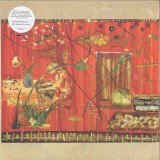
Released during the late 1970's Disco era, Milton Wright's sophomore long player has always stood out as a singular, innovative example of the deepest, rarest grooves known to underground Soul lovers all over the globe. This often overlooked body of work has found a whole new audience who revisited the man's work retrospectively, pushing the LP into the domain of "holy grail" status amongst Black music lovers and Funk fanatics. "Spaced" has been at the top of the wants lists of serious music lovers for decades, often unattainable and commanding stellar collectors prices on-line, sometimes fetching amounts of upwards of £400. This unique LP could be perceived as being Wright's most personal work, tragically overshadowed by the burgeoning successes of his then label mates on Miami's Alston Records imprint. The sheer craftsmanship and songwriting prowess on show is undeniable, as is the top level musicianship and production, sounding ridiculously fresh almost some 40 years later. Above Board distribution has collaborated with Alston / TK Records to ensure the quality of this fully legitimate repress of this long lost Soul / Funk classic has been maintained. Remastered, reissued and represented with the full cooperation of the license holders for 2016. Do not pass up the chance to own a true gem, a pivotal, lost LP like "Spaced", now made available again to be enjoyed by all. "Magic Music".
Buscar:amount
Black Vinyl Edition
The Log and the Leeway follows a 6 year journey of personal exploration and drastic change for Bram Bosteels and his singular Kaboom Karavan universe. What entails is a sound-curiosity of rare format, following a metamorphosis that goes beyond the musical.
Early in the process, Bram was struck by the word/concept of a Leeway : the gradual departure from an intented course due to external influences. Following a boyish fascination for explorers travel journals, logbooks and the far fetched corners of the world, he could not have forseen how fitting of a title he had chosen. Drastically all of a sudden one day, completely unexpectedly, Bram experienced his own father dying in front of him from a rare disease. Shocked and confused by this intense encounter, his perspectives and musical course departed from its original path. But at the same time it was an enlightenment and a necessary influence for him to realise the initial idea and finish this album, started over half a decade before.
The ones familiar with Kaboom Karavan already know that nothing really sounds quite like it. Bram’s musical (and non-musical) universe is of the rare breed that seems to be entirely his own. Self-contained, but never opaque. Quite the opposite actually. Bram never pushes us away, instead, by listening to his music we are given view to a synesthetic wunderkammer of images, places, objects and possibilities. Distant but magnetic, alien but intimately familiar, Kaboom is folk music from another dimension. Listening to The Log and the Leeway is like waking up next to a bonfire in the middle of a swamp wearing somebody else’s clothes: You may not know how you got here, but whatever is happening seems to very directly involve YOU. What will happen?
Note from Erik K Skodvin (Miasmah): All the sounds, fabrics, instrumentation and stories that binds The Log and the Leeway together go far beyond what can be touched up in this simple writeup. As someone who have followed this journey since the beginning, and seen it shift from lighthearted fun to the most crepuscular personal experience, heard the stories behind (almost) every field recording and gone through boundless amounts of clips, visual details, notes, and inspirations – I can only say that it is with great pleasure and certain nostalgia I can present this record in full through Miasmah and close this quite extraordinary chapter. Bram is without doubt the most fascinating person I know. Like I told him in April 2020 during a trying time: “If everything fails, we´ll open a Kaboom Karavan museum” - an idea that might not be as far-fetched as it sounds.
Featuring: Cover painting by John Lurie. 16 page booklet of Musical illustration / collagés by Walter Dhoogh & Erik K Skodvin that more or less connects (or confuses) the dots between the music and stories behind. Mastered by Lupo at Loop-O
- A1: Willie Hutch - Brother's Gonna Work It Out
- A2: Charles Earland - Leaving This Planet
- B1: Laura Lee - (If You Want To Try Love Again) Remember Me
- B2: The Modulations - I Can't Fight Your Love
- B3: Margie Joseph - Prophecy
- C1: Blue Magic - Welcome To The Club
- C2: Twennynine With Lenny White - Fancy Dancer (12" Version)
- D1: Miroslave Vitous - New York City
- D2: Edgar Winter - Above And Beyond (12" Version)
For the last 20 years London-based author and party organiser Tim Lawrence has dedicated himself to excavating the history of New York City party culture and bringing some of the most powerful aspects of that culture to London’s dance scene, from where it has ricocheted around the world.
Having conducted the first and set of major interviews with David Mancuso of the New York City Loft, Lawrence started to host Loft-style Lucky Cloud Sound System parties with David and friends in London in June 2003. In February 2004 he published the first of three published three pioneering histories that have excavated and championed the previously overlooked foundations of contemporary party culture: Love Saves the Day: A History of American Dance Music (1970-79), Hold on to Your Dreams: Arthur Russell and the Downtown Music Scene (1973-92), and Life and Death on the New York Dance Floor (1980-83). Since 2018 Lawrence has hosted and DJed at the community audiophile party "All Our Friends. Paper Magazine describes him as the “reigning authority on the history of dance music in New York”.
With knowledge to share, and a readership as well as a dance floor to feed, Lawrence released Life and Death on the New York Dance Floor as the debut imprint on Reappearing Records. A year in the making, a compilation featuring rare and iconic tracks that appear in his much-loved and heavily-thumbed classic Love Saves the Day amounts to the follow-up. The collection features several tracks selected regularly by Mancuso, the party host who exerted a prophetic and unparalleled influence on New York City party culture, as charted by Lawrence. It also includes choice picks from groundbreaking DJs such as Michael Cappello, Steve D’Acquisto, Francis Grasso, Richie Kaczor, Larry Levan and Nicky Siano, whose expressive contributions are faithfully recorded in Love Saves the Day. The compilation traces how disco grew out of the record collections and intuitive sensibility of these and other DJs, offering a unique survey of the era’s expansive sonic palette.
The Bees are a textbook case of the chew and spit cycle that was the late 80’s South African music industry. Although their unknown story is likely unique, it is just as likely that it is no different to that of many other young artists who dreamed of getting their music heard at the time.
By 1988, the independent record label was no longer as uncommon as it had been at the beginning of the decade. As the 80s went on, more seasoned A&R reps and Producers that had gained experience and connections from their work under major labels would be trying to cash in on a market they helped create. Without the need of big rooms or expensive recording equipment, the digital advancements allowed many Producers to open or work in smaller studios and promote unknown artists under their own imprints. They would then have their catalogs marketed and distributed by the same major labels they had been working for just years prior. This would open up the possibility of a new era of stars as potential talent no longer had to be pitched to major labels in hopes of them taking a chance on a new signee over their already established artists. With the market growing and a struggle to keep up with the demand for new sounds this agreement would allow the major labels to put new emerging artists or groups on their catalog with little investment and high reward if it happened to be a hit.
ON Records was just one of the independent players at the time. Ronnie Robot had just signed the unlikely trio The Bees in hopes of adding a hit group to his label roster that consisted of solo acts. Despite the debut’s fresh house inspired sound, it failed to catch on was outsold by the bubblegum disco the label was known for. Over the years unsold back stock and promos would build up with the distributor. Luckily this allowed sealed copies from the label’s catalog to survive into the 90s when the distributor’s stock was unloaded and picked up by legendary Johannesburg jazz shop Kohinoor. Here sealed copies of the Bees first attempt sat under appreciated for over 20 years before becoming a hot title after they started circulating online and became club staples. This is how the first album of an unknown group with no success was able to become a collectors item and earn a reissue over 25 years later.
With their first record behind them The Bees were ready move forward and get back into the studio. A suggestion from producers had the trio change camps and go work with the newly formed Creative Sound Recordings, the label that promised “Music for the Future” and ended up being an essential studio in the early years of Kwaito. They would work with producer Chris Ghelakis and guitarist George Vardas, while a young Marvin Moses sat behind the desk. Musically the sophomore album was as good as a follow up as you could get. Building on the first album, Mashonisa delivers catchy melodies backed by heavy drum programming that would score points with any Pantsula. The Black Box inspired “ Never Give Up” was one of two tracks chosen to be pressed as the promo for the album, hoping to trick listeners with their catchy version of the hit( A year later the label would release their first volume of Black Box covers sang by neo soul diva BB, it would be a great seller). The label printed up an unknown amount of these in a last attempt to push the release in Shabeens and on Radio. The cheaper route of flooding the market with promo copies would only pay off 25 years later when unplayed copies started being rediscovered and had survived the years in a quantity that original run of the full album could not. Once again it was clear that with no mainstream appeal, the quality of the music on its own was not enough to garner any success at the time. The album flopped worse than their first and failed to make it past it’s initial run, making it one of the harder titles to get from the CSR catalog.
Mashonisa would be the last attempt from the Bees. They would disappear from the scene as quickly as they appeared. Of the three members it is only known that lead Singer Solomon Phiri continued in music fronting a wave dance group before he mysteriously vanished in 1993, never to be heard from again. Through a combination of luck and circumstance the group, which is unknown in South Africa to even the most plugged in musicians, producers and radio hosts of the time, managed to finally get some of the recognition they deserved 30 years later. Unfortunately this small blip of fame would happen with none of the band members present to give their side of the story, or even aware of how their two albums became popular enough to be printed on different continents in a new millennia. The Bees suffered the same fate as countless other artists of the time, who thanks to emerging independent labels and willing producers were given an opportunity to have a short career, only to be replaced by the meat grinder of the music industry when they failed to produce a hit.
Lascelle 'Lascelles' Gordon - the driving force behind Vibration Black Finger – astonishes us yet again with a magnificent second album. Once more his inspiration is drawn from the obscure spiritual jazz collectives of the 1970s where he employs a vast array of like-minded collaborators to create a listening experience infused with an ever-present undercurrent of personal expression and cultural empowerment that's as enriched with ideas as it is progressive in its form.
Having earned his chops as founding member of the Brand New Heavies, Campag Velocet and Heliocentric World, Lascelle's latest album Can You See What I'm Trying to Say bursts with energy and vivid contrasts, flowing effortlessly between beat-laden grooves, oscillating improvisations, soulful recitations, audio verité and moody atmospherics. The album drops like a post-hip-hop reimagining of foundational genres, with a prayer to the future.
''Can You See What I'm Trying to Say' is a quote from Marion Brown, the great alto saxophonist' explains Gordon. 'The album was put together over the last three years, not in the conventional way of going into the recording studio with musicians, but starting from ideas I had on various formats (cassettes, mini disc, DATs & reel to reel). I also used field recordings. I did a lot of home recording with long time musical friends Ben Cowen & Diana Gutkind, some of them going back 20 years. The voices of my nieces (heard on Law of the Universe) were recorded 25 years ago. 'Only in a Dream' and 'Empty Streets' are the only songs that were recorded live in the studio.'
'I was blown away by the New Life Trio 'Empty Streets' (from 1978) and was fascinated by the vocals' continues Lascelles. 'I always thought it would be great to cover this tune'. Such is the power of this song, it's used to open the album, with vocalist Ebony Rose turning in a thoroughly haunting vocal performance. While not a concept album as such, Lascelles has nonetheless conceived and presented Can You See What I'm Trying to Say to be heard as a complete listening experience, with each track blending into the next, resulting in a seamless expression of music.
Following 'Empty Streets', some instrumental interludes segue into a dimensional drift of beats, space synths, horns and electronics; there's a vocal reprise of 'Acting For Liberation', sung with gusto by Maggie Nichols, and then there's the album's momentous finale, 'Only In A Dream', which takes off as an ominous drone before a delicious bassline from the late Ken Kambayashi transforms it into an intense, soaring epic which finally descends onto another world.
In a career spanning several decades, Lascelle Gordon remains an omnivorous musical force, whether as DJ, collaborator or radio broadcaster. As amply demonstrated on Can You See What I'm Trying to Say, he refuses to rest on his laurels and continues to impress with music that is as rich, vital and contemporary as anything he's done before, covering an incredible amount of musical ground in the process.
- A1: Shika 5' 04
- A2: Korin 6' 16
- A3: Ratanka 8' 13
- A4: 4 Gen Ga Nai 5' 07
- A5: Furura 3' 58
- B1: Mochi 3' 10
- B2: Shonen 4' 51
- B3: Tsuchi No Ue 6' 01
- B4: Biton 5' 36
- B5: Heritage 2' 25
- 1: Kyoku Wa Mirai 8' 25
- 2: Trampoline 5' 06
- 3: Toki No Uta 4' 59
- 4: Umiuta ' 50
- 5: New New Penopion 3' 26
- 6: Furo 3' 58
- 7: Yuki Yu 3' 25
- 8: Nana Hongi 4' 52
- 9: Saihate 8' 53
- 1: Iso (Phase) 7' 34
- 2: Music Exists 6' 41
- 3: Monki 5' 06
- 4: Papa 6
- 5: Yoru Wa Nagame ' 13
- A4: Riku No Hate, Mizu No Shiro 7' 03
- B1: Sanma 7' 21
- B2: Nitamono Doushi 3' 23
- B3: Wataridori 7' 28
- B1: Onjuku 4' 13
- 1: Budo No Arika 3' 43
- 2: Choe 4' 1
- 3: Korin (Instrumental) 6' 16
- 4: Jingreel 6' 17
- 5: Kick Out The Ass! 3' 01
- 6: Fururano 1 3' 58
- 7: Guitar 3' 41
- 8: Ten To Ten 7' 03
- 6: Nanja Nronja 4' 08
- 7: Tomas Azarahi 2' 4
- 8: Doble Andreas 3' 25
- 9: Johan No Gohan 3' 20
- 10: Sukkarakaan 5' 33
- A1: Eyes 6' 30
- A2: Ende 3' 22
- A3: Tsuki No Oto 7' 29
Now finally, the great "Music Exists"-series by Tokyo-based duo the Tenniscoats is completed. Apart from the regular 4 volumes, there is a heavy cardboard box, beautifully screenprinted and hand-numbered by senorburns, in 12 different color-combinations. Inside you'll find an extra-LP of bonus-tracks and alternative versions, "Music Exists disc 5", which only comes exclusively with this box. Like on the other LPs, you’ll hear heartbreaking songs, beautifully arranged with acoustic guitar, melodica, psychedelic keyboards and soundexperiments. Also included is a A3-Poster with a drawing by Ueno not used within the previous album-artworks.
Limited one-time pressing of only 500 copies worldwide. There is a small amount of full boxes with all 5 LPs and Poster available, for those, who don‘t have any of the albums so far.
Tenniscoats have devoted followers allover the world, but their releases were always hard to find outside of Japan. Except for their album "Tokinouta", which saw a very limited run on vinyl, and the seminal "Two Sunsets", their collaboration with the Pastels (and a small handfull of 7"s), there were never any vinyl-releases, and also the CDs were hard to get for any-one, who doesn't speak or read japanese.
So, this is the chance to dive deep into the beautiful, unique world of the Tenniscoats and their opus magnum "music exists".
"It may even be their greatest ever music, essential plus" Monorail Music, Glasgow
"Whatever's ailing you, Tokyo's Tenniscoats have got something for that" Boomkat, Manchester
Kohib is an important member of the Tromsø electronic music scene, equally as a club organizer, DJ, and producer. His debut was on the Prima Norsk 3 compilation in 2005, followed by an album, a remix-album, and a string of highly regarded EPs and singles. Kohib has had success both with his electronica-style releases (the track "Hear This" from his debut album was licensed to the Buddha Bar XIV compilation) as well as his dance floor releases for Beatservice, Sprechen, Cibicaldi, and SpinSpin NYC.
In Mountains is a desire to seek horizon. The album was written and recorded in November, December and January. A time when the sun is absent in Tromsø. However, the origin of lots of the rhythms in the music, are harvested during summer, from the same area. Sound samples are taken from Kohib's surroundings, from creaking in worn-out doors, to ambient silence along the coast. An electronic album, yes. But all the rhythms and instrumentation are analog. The goal has been to give leeway to all elements, by limiting the amount of information. So, if it follows a dogma with this album, it has been to limit the number of tracks to each song to the bare minimum. A sound weighs the most when alone.
The album will be promoted in UK / worldwide by Shine PR (UK) + social media marketing by Beatservice Records.
Now finally, the great "Music Exists"-series by Tokyo-based duo the Tenniscoats is completed. Apart from the regular 4 volumes, there is a heavy cardboard box, beautifully screenprinted and hand-numbered by senorburns, in 12 different color-combinations. Inside you'll find an extra-LP of bonus-tracks and alternative versions, "Music Exists disc 5", which only comes exclusively with this box. Like on the other LPs, you’ll hear heartbreaking songs, beautifully arranged with acoustic guitar, melodica, psychedelic keyboards and soundexperiments. Also included is a A3-Poster with a drawing by Ueno not used within the previous album-artworks.
Limited one-time pressing of only 500 copies worldwide. There is a small amount of full boxes with all 5 LPs and Poster available, for those, who don‘t have any of the albums so far.
Tenniscoats have devoted followers allover the world, but their releases were always hard to find outside of Japan. Except for their album "Tokinouta", which saw a very limited run on vinyl, and the seminal "Two Sunsets", their collaboration with the Pastels (and a small handfull of 7"s), there were never any vinyl-releases, and also the CDs were hard to get for any-one, who doesn't speak or read japanese.
So, this is the chance to dive deep into the beautiful, unique world of the Tenniscoats and their opus magnum "music exists".
"It may even be their greatest ever music, essential plus" Monorail Music, Glasgow
"Whatever's ailing you, Tokyo's Tenniscoats have got something for that" Boomkat, Manchester
Ital Tek (a.k.a. Alan Myson) returns to Planet Mu with his sixth album ‘Outland‘. The album was written during a period of new beginnings following a move out of the city to a quieter space and the birth of his first child. During this time of self-imposed isolation Alan recorded a huge amount of source material and spent weeks and months sitting up at night with his newborn, listening back and making notes on how the new record should take form, focusing and developing ideas to shape this lean ten-track album.
Alan talks of the record being a collaboration between two parts of himself, something that definitely comes across as the album unfolds. Textures are something Alan excels at and on his last album, the largely beatless ‘Bodied’, it felt as if he was building a new sound-world. On ‘Outland’ he expands upon this. The album brings together the extremes of Alan's sound, contrasting roughened bass and beats with starker more detailed atmospheres and emotions.
The most beat-driven song here is ‘Deadhead’, with its gnarled bouncing bass, angular distorted melodies and cavernous textures. On tracks like ‘Bladed Terrain’ the contrasts are even more defined with buzzing drones and razor sharp drums plunging into a grainy fog, giving the track a dramatic 3D feel.
Then there are the stop-start pauses of ‘Leaving The Grid’, where the song evaporates into space before reemerging with shuddering rhythms and ghostly textures. Melodies crawl around these tracks as if they’re just waking up, as heard on the atmospheric ‘Angel In Ruin’.
The sleep-deprived fraying of the senses became Alan’s routine and one which he says gave him a renewed creative energy; half-asleep, working through the night, and then into the daytime super-focused but exhausted. Prone to audio hallucinations whilst writing the album, he aimed to capture these distortions in his perception of pitch and time, and you can hear these effects interpreted on tracks like ‘Endless’ and ‘Open Heart’ as melodies phase and slip out of time like an emotional Doppler effect.
This is also true of the soaring atonal synths at the peak of ‘Diamond Child’, which feel like the aural equivalent of eye floaters. These intuitive feelings and functions are a difficult thing to capture in sound, but Alan manages it beautifully and always makes the result feel warm and adventurous, heartfelt and epic.
Repress
A triumphant return to old form after classic bangers like PROTOTYPE (KOMPAKT 92), FREQUENCY (KOMPAKT 102) or MAXIMIZE (KOMPAKT 145), but also a bold step in a new sonic direction: Kompakt ally REX THE DOG presents his latest offering SICKO - a brand new 12" packed with two incorruptible rabble-rousers that hit the floor right behind the ears, employing sharply focussed thrust and dramatic sweeps to stunning effect.
Having started out with just one synth in 2004 -
the same vintage Korg 700S that was used by Mute Records founder Daniel Miller for his legendary "Warm Leatherette" outing -, REX THE DOG knows perfectly well how to squeeze the most out of a limited set of sounds. A growing intimacy with analog gear finally lead the producer to design and build his very own array of modular synthesizer components, including a sampler fittingly called RTD-001.
Armed with this barn-storming DIY attitude, and using gear he made with his own hands, Rex pulls two strikingly muscular rabbits out of his hat: the A-side's title cut SICKO is a raw, pounding cut-up fest that builds a scary amount of tension just with a few distinct elements, while the flipside's KORGASMOTRON loads up its bleep-ridden
chassis with a succulent, sweeping vocal and some well-placed acid drops. Both tracks showcase a leaner, cleaner, but also meaner approach to dance music, making this a particularly thrilling entry in REX THE DOG's oeuvre.
Be With hereby presents aural perfection.
Don’t let the title mislead you, “Much Too Much” by Sass has just the right amount of everything, whether you’re talking about the vocal or the instrumental. And that’s as true now as it was when it was originally released back in 1982.
In 1981 The Jack Sass Band, as they were known, were still working the NYC club circuit. Along with the likes of Change, The BB & Q Band and High Fashion, they were part of the Little Macho Music phenomenon and that’s how they ended up in an 8 track studio on 7th Avenue near 20th Street, where Little Macho recorded demos.
Produced by the band’s vocalist Mic Murphy, who also wrote the track along with fellow band member LaForrest Cope, the band needed just one session to capture “Much Too Much”. The recording studio just so happened to be run by Silvio Tancredi and when the tracks were finished he offered to put them out on his 25 West record label. The vocal version and an instrumental mix were released as a 12" the following year. Mic tells us this meant Sass “were one of the few bands to have a record release while still playing on the club circuit. So the reaction exceeded our expectations at the time”.
According to Mic “Much Too Much” was something a little different from the band’s live sound at the time, “it was more R&B smoothed out than the more funk rock we usually leaned into”. Indeed, the track glides with grace, poise and patience. The elegant, easy tempo, combined with the magnificent melody and Mic’s signature sublime vocal conjures magic. The blend of deep boogie-funk power and heavenly sweetness is both infectious and goosebump-inducing.
Over on the flip-side, the instrumental slaps harder. Without Mic’s vocal it’s just pure groove, with nothing to stop you vibing all night - the bassline, the drums and the melody still connect. Hard. Pick your side, you won’t lose.
Working directly with Mic Murphy means that the audio for this re-issue of the classic 12" comes from the original tapes. Cut at 45 RPM and released in a plain sleeve, we’ve made sure this record is well up to the job of having a permanent place in every DJ’s bag. As far as we’re concerned, this is essential stuff.
Mic told us just how much it means to him to have “Much To Much” re-issued: “It’s an amazing feeling to have something you created almost 40 years ago still have relevance and even more amazing to be considered among the Northern Soul boogie anthems. And it’s especially important to me that we’re available again on vinyl”.
Getting stuck into the new year with a fresh, contemporary jazz attitude, Rocafort Records are proud to present the Kumadé EP from exciting Swiss-French quartet KUMA, led by keyboardist Matthieu Llodra and saxophonist Arthur Donnot.
Confidence, rhythmicality and solidity are the first impressions that hit you from this tight outfit of young but highly experienced musicians. After nine years of holding down a 10-night residency at the prestigious Cully Jazz Festival, Llodra and Donnot have honed down their skills in front of a live audience making tension, pacing and release their speciality in compositional strategy. Grooves and moods are created with just the right amount of rise and fall, push and pull, melodic catches and improvisational wanderings.
The EP is well balanced out with two spaciously laconic, ethereal tracks - Alfama and The Core - that could easily belong on some ECM-inspired soundscape, juxtaposed with Kumadé and I.G.A.T.F. that pack a fuller punch, fat and chunky in all the right places, hinting at a 1970s style George Duke at his funky-fusion best.
Despite a whiff of nostalgic reference, rest assured that the KUMA timbre is fresh and exploratory, as innovative and curious as any protagonist from the current UK jazz explosion. Keep an ear out for these young Jedi masters, all of them at the top of their game. More assured, impressive releases are due out this year.
Matthieu Llodra – Fender Rhodes
Arthur Donnot – Sax
Fabien Iannone - Bass
Maxence Sibille – Drums
Zacharie Ksyk – Trumpet (guest on Kumadé").
Dimi is the new solo project and label of (Dimitrios Ploumpidis) one half of techno duo, AnD.
The Dimi label will be an exploration in sound, pushing techno, rave and dance floor sounds with a raw and powerful attitude.
DIMI001 kicks off with "Time Travel". Pulsating kick drums and vocal cuts interweave, creating groove with the snappy snare and lashing hi hats. When the huge synth stab and melody drop to take us straight to a hedonistic past put looking clearly into the future.
"Bang Your Face" enters the room with a tight, hard-hitting kick and serrated rave sirens building an infectious groove before being banged in the face with the old school euphoric synth line that drops in and out of the mix creating tension and dramatic shifts in the track.
"Groove Away" a throbbing bass and kick drum drop with a sinister stab for this funky techno monster. Hard in dynamics but with a maximum amount of groove this track thumps and slams while the spaced out synth line and rave stabs help keep this funky banger grooving all the way to outer space as the alien melodies propel us for take off.
"All In" syncopated delayed synth stabs build in this track with tight rhythmic percussion and distorted kick drum. The snare enters like a punch to the face but only solidifying the swing while the main synth line opens building tension ready to destroy everything in its path. This is Dimi showcasing his direct and unique take on techno music.
Under his Klankman moniker, Maarten Epskamp brings his own twisted take on techno with a lavish amount of acid. Displaying a free-form DIY approach of rhythmic electronic music with an intuitive compositional approach. The result might sometimes be experimental and certainly be intriguing, but the dancefloor is never far away.
- A1: Darıldım Darıldım - Akbaba İkilisi
- A2: Misket - Kına Gecesi Ensemble
- A3: Gönül Dağı - Mehtap Tuna
- A4: Topal - Sarı Zeki
- A5: Karanfilli Yar - Handan Yazgan
- A6: Yine Gönlüm Sende - Mehmet Karakoç
- A7: Mercanlar - Sultan Sümbül
- B1: Yaz Dostum - Gülcan Opel
- B2: Nar Tanesi - Mehtap Tuna
- B3: Dom Dom Kurşunu - Sarı Zeki
- B4: Mavilim Hangi Ellidir - Handan Yazgan
- B5: Sarı Yıldız - Kına Gecesi Ensemble
- B6: Asrın Bozuk Düzeni - Aşık Emrah
Uzelli Kaset was established in 1971 by Muammer and Yavuz Uzelli in Frankfurt, Germany. Their music resonated not only with the longing that Gastarbeiter (guest workers) felt for the homelands and families they had left behind and the melancholy brought by their difficult living and working conditions in Germany, but also with the joy that welled up at village weddings on their days off, and the long car or train journeys home. Reaching the remotest corners of Germany as well as Turkey, Uzelli Kaset was soon more than just a music company; it became a companion to Turkish workers living far from home. Not counting the handful of 8-track tapes and 14 LPs released in the early days, the catalog consisted entirely of cassettes.
When they opened their Istanbul office in 1977, Uzelli moved beyond production and became successful in the areas of reproduction, distribution and marketing. Taking the catalogs of other production companies under its umbrella, it continued its rapid growth.
The 90s became the CD decade, and because Uzelli Kaset had not released its catalog in CD format, hundreds of albums remained unavailable to an entire new generation. Because the albums had not been released in LP form either, musical explorers ran into the same problem. Remaining active and serving in various areas of the music industry, Uzelli carefully preserved its visual, audio and document archives, ensuring their survival to the present day.
After an immense amount of work, this catalog, which had long awaited discovery by new generations, was finally released in digital format. For record collectors seeking the spirit of those times, we also began offering this special selection of compilation albums in vinyl format. As we created this series, our goal was to guide listeners toward new discoveries, and open new pages for music lovers to explore. Leaving our rich, multifaceted catalog to genuine musicians, curators and artists, our desire became to approach the recordings of that period from a different perspective.
We are overjoyed to know that our continuing meticulous work will bear fruits whose taste and aroma have been long forgotten.
Uzelli
"Filterealism" starts from the territories where Gamayun haven't stepped before, from the music that only seems to be simple, but in fact it turns out to be very compound. Their recordings are not escapist in any sense of its meanings anymore; the whole album consists of divisions, explorations and adoptions through the personal and collective experience of music-making. The technical side of this sound acts likewise: you can hear a large amount of routine items (furniture, utensils and deformed recordings of the nature) among "conventional" electronic gadgets and live instruments.
"Filterealism" sounds just like some Soviet electronic music pioneer, which had shifted his focal grip from the modulations and synthesizers to all the simple things of surrounding and completed the piece with profounder shot of weirdness and commonplace wondering. And it literally works like a wonder.
Sublunar Records, the label run by Sciahri and Dagdrom, start 2020 with the second chapter of the trilogy “Corpora”.
Part II involves Svreca, founder of the legendary label Semantica with ìPaganismî. A precisely contoured aural architecture that leads in a psychedelic feeling where all sense of space and time are lost.
Rhyws, known as one-half of the duo Cassegrain and recently releasing two stunning EPs on Avian under his own name, debuts on Sublunar with ìPasajulî. Sculpting highly textured sounds where percussions have the perfect amount of rough and smooth.
The EP is closed by Pris, an artist who has made a career from this style of techno hypnosis across records that represent the very best of modern deep techno. His track ìRustî is a psychedelic odyssey where a melody works its way into the background, but never quite reaches the surface completely.
London-based folk-psych-country band The Hanging Stars return with their eclectic third studio album, A New Kind Of Sky, due out on 21 February 2019. Carrying on their exploration of transatlantic psychedelic folk and cosmic country, the new album blends twelve-string, harmony-laden lullabies with soft rock anthems to create a guilded box of bucolic folk-rock. As well as the band’s signature wistful pastoral escapism, there are lyrical concerns about the recent past; the systematic division of people, values, facts and humanity in The West in general - and the UK in particular. The band weave the same thread they have always woven but this time with a more unified vision, creating a kaleidoscopic poncho for these times.
The Hanging Stars comprise songwriter, singer and guitarist Richard Olson, Sam Ferman on bass, Paulie Cobra on drums, Patrick Ralla on guitars, keys and vocals, and renowned pedal steel player Joe Harvey-Whyte. Returning guest Collin Hegna from Brian Jonestown Massacre plays an instrument called a Marxophone on “Choir of Criers”. They also welcome Sean Read of The Rockingbirds and Dexy's Midnight Runners, who adds horns to “Three Rolling Hills” and “I Was A Stone”.
The main bulk of the recording for the new album was done live in the studio at Echozoo in Eastbourne with Dave Lynch. For the first time, the band decided to dive straight in to the recording studio following their German tour in 2018. Having lived in each other’s pockets and playing their new songs every night, the band were as tight and primed as they could possibly be. There ensued a few, very long, days of recording, capturing the essence of the band in their element.
The songwriting process was even more collaborative for this album, with the usual co-writes between Richard Olson, Sam Ferman and Patrick Ralla enhanced by Joe Harvey-White’s arrangements and Paulie Cobra’s harmonies. The biggest difference is that Sam Ferman sings lead on the first single “‘(I’ve Seen) The Summer in Her Eyes”, a song about lost love and self doubt channeled through two and a half minutes of garage pastoralism.
The album’s title track “A New Kind of Sky” tells a story from the point of view of somebody who idealises a past that never existed. The band go glam-rock on the stand-out track “I Will Please You”, a tale of a cult leader/world leader and his irresistible (for some) charm from the point-of-view of his most recent victim and “Heavy Blue” is a country music tale of drunken debauchery seen through the eyes of an inexperienced young man. The triumphant trumpet-driven song “These Rolling Hills” is a minor-key tale of a journey into the hills of Marin County, California undertaken by Paulie and Richard to visit friends Asteroid No. 4, with a most interesting outcome.
The Hanging Stars released their debut album Over the Silvery Lake in 2016, which received plaudits from broadsheets such as The Times, who described it as; "An album with enough of a hazy, sun-dappled charm to make the capital's dreariest weather bearable”, as well as The Guardian, who said; “Mersey-laced harmonies and just a whiff of the Gun Club.” They picked up a good amount of support at 6 Music and “The House on the Hill” scored a much-coveted 10/10 by John Robb on Steve Lamacq’s Roundtable.
Their second album Songs For Somewhere Else in 2017 received critical acclaim from the likes of Uncut (Revelations article), Shindig (several features and 4* review) as well as The Quietus and The Line Of Best Fit, plus radio support from Gideon Coe and Bob Harris (they performed an Under the Apple Tree Session for Bob Harris in January 2019).
Whilst playing their own successful sold-out headline dates, the band were invited to share the stage with Teenage Fanclub, The Clientele, Wolf People, The Long Ryders and GospelbeacH, as well as playing festivals such as Liverpool’s International Festival of Psychedelia, Red Rooster, Ramblin' Roots, UK Americana Festival and The Long Road.
Another banger from cultuurschok., 4 cuts straight out of The Lost Vessel After Midnight” in The Hague! This time he miraculously appears on the Dutch “Onrijn Records”, the third release on their label. Soundwise this EP is comparable with cultuurschok his previous EP “op Sterven na Dood”. Tracks on Planet Hoax are more diverse, still catchy, uplifting and wrapped in a good amount of energy.
This record was made to dance, wether you are into raw Disco, lo-fi Techno, Electro.. This EP rocks!
Second phantasmagorical audio outing from former Seefeel andLoops Haunt members, Mark Clifford and Scott Gordon. 'Two' expands the duo's unique take on spectral synthesis incorporating a diverse amount of approaches to experimental sound. Twoexpoundsa hybrid mix of acoustic based audio design, ambient tonality, sound effects, music, abstraction and world's hybrid video game soundtrack.
There is something of an onomatopoeia quality to the release as the six tracks take on the character of their individual title. Silt, Dapple, Overcurve, Scutter, Strain and Plates appear as extremely well executed versions of the inferred intent of their namesake. This inquisitive approach will appeal to those interested in the more exploratory end of sound production providing hope as newly formed methods and colours are exposed from the duo's contemporary audio tactics.
Seasoned veterans can lie in a bed of laurels whereas 'Two' is an exemplary release revelling in the enthusiasm that comes from the joy of unabated exploration.