Cerca:anagrams

Generi
Tutto
  • 1
Anagrams - Blue Voices LP

Anagrams

Blue Voices LP

12inchBALMAT08
Balmat
06.11.2023

Balmat co-founders Philip Sherburne and Albert Salinas have been fans of Shy Layers’ lilting, Balearic pop for years, so when Shy Layers’ JD Walsh asked us to listen to a set of demos he was working up with fellow Atlanta multi-instrumentalist Jeff Crompton, we jumped at the chance. And once we heard their work in progress, the decision was almost immediate: We have to release this.

Together, Walsh and Crompton are Anagrams, and their debut album together, Blue Voices, might initially seem like a departure from Balmat’s habitually electronic terrain. It’s not ambient music, but it’s also not not ambient music, at least to listeners in the right frame of mind. The two musicians, who met when Walsh moved from Brooklyn to Atlanta in 2016 and began collaborating a few years later, see the music in similarly ambiguous terms. “I like it because it’s not jazz,” jokes Crompton, a veteran and credentialed jazz player. “And JD likes it because it’s jazz.”

Crompton is a musician (and former high-school band teacher) with deep roots in Georgia’s improvised and experimental music scenes; his credits include shows with Eugene Chadbourne, a guest appearance with Godspeed You! Black Emperor, and a collaboration with Duet for Theremin and Lap Steel’s 12-hour drone performance at Knoxville’s Big Ears. On Blue Voices he plays alto and tenor saxophone, clarinet, electric piano, and organ. Walsh has been releasing music as Shy Layers since 2015, when he started self-releasing on Bandcamp; the following year, Germany’s Growing Bin packaged his first two EPs as a self-titled album, and in 2018, Tim Sweeney’s Beats in Space label put out Shy Layers’ sophomore album, Midnight Marker. Where those records channeled Walsh’s playful harmonic instincts into wistful songwriting with tropical overtones, on Blue Voices he lets his experimental tendencies take the lead. Playing acoustic and electric guitars, electric lap steel, bass, Moog Matriarch, modular synth, and programmed drums, he concentrates his energies on richly textural layers and abstract assemblages of tone color.

Across the album’s 11 tracks, there are faint echoes of familiar touchstones: the atmospheric twang of Daniel Lanois’ pedal steel on Apollo: Atmospheres and Soundtracks; the mercurial modal runs of Ethio- jazz; the late-summer calm of Fuubutsushi; the versatility of players and composers like Patrick Shiroishi and Sam Gendel, who are asking similar questions about where jazz ends and some other, nameless territory begins. Mostly, though, what Blue Voices captures is the quixotic sound of two restless musical imaginations making it up as they go along, two voices discovering a shared language in a hitherto unexplored shade of blue.

non in magazzino

Ordina ora e ordineremo l'articolo per te presso il nostro fornitore.
22,27

Last In: 2 years ago
MATMOS - Regards Uklony Dla Boguslaw Schaeffer LP

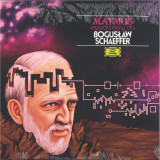
Matmos are one of the most prominent experimental electronic artists working today, crafting work by creating new conceptual frameworks & immediately testing those frameworks absolute limits. For Regards / Uklony dla Boguslaw Schaeffer they've focused on another artist known, in large part, for doing the same. Boguslaw Schaeffer was one of the first Polish artists creating electronic music. In step with American contemporaries like John Cage and Morton Feldman, he worked across the boundaries of classical composition, electronic experimentation, and radical theater in playfully form-breaking ways. Matmos are not the first ones to recognize the power of his catalog, from Solo (a 2008 documentary that garnered numerous international awards), to the annual Shaeffer's Era Festival (most recently celebrated simultaneously in Warsaw and Los Angeles) his work continues to inspire. Regards.. however, was not just inspired by his work, Matmos were given access to the entirity of Schaeffer's recorded works to use as they saw fit, commissioned by the prestigious Instytutu Adama Mickiewicza. They re-assembled & re-combined these recorded works with modern instrumentations in a way that only Matmos could, and what emerges is a composite portrait of the utopian 1960s Polish avant-garde and the contemporary dystopian cultural moment regarding each other across a distance. To facilitate the transcultural exchange that is the album's essential premise, all song titles and liner-notes are provided in both English and Polish. The album was mastered by Rashad Becker and features illustration and design by acclaimed artist Robert Beatty (Tame Impala, Osees, Mdou Moctar). Like the anagrams of the letters of Boguslaw Schaeffer's name that were re-assembled to create some of the song titles, the album itself is a musical re-assemblage of component parts into possible but unforeseen new shapes. Adding harp from Irish harpist Una Monaghan, erhu, viola and violin from Turkish multi-instrumentalist Ulas Kurugullu, and electronic processes from Baltimore instrument builder Will Schorre, and Horse Lords wunderkind Max Eilbacher, the resulting arrangements constantly toy with scale as they move from the close-mic-ing of ASMR and the intimacy of chamber music to the immensity of processed drones and oceanic field-recordings that close the album. Offering a "life review" of production styles, Regards / Uklony dla Boguslaw Schaeffer builds temporary shelters out of the panoramic wreckage of modernist composition, sixties tape music, seventies dub, eighties industrial music, nineties postrock and dark ambient, 2000s era glitch fetishism, and contemporary post-everything collage sensibilities.

non in magazzino

Ordina ora e ordineremo l'articolo per te presso il nostro fornitore.
31,05

Last In: 3 years ago
MATMOS - Regards Uklony Dla Boguslaw Schaeffer LP

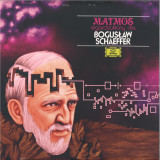
Matmos are one of the most prominent experimental electronic artists working today, crafting work by creating new conceptual frameworks & immediately testing those frameworks absolute limits. For Regards / Uklony dla Boguslaw Schaeffer they've focused on another artist known, in large part, for doing the same. Boguslaw Schaeffer was one of the first Polish artists creating electronic music. In step with American contemporaries like John Cage and Morton Feldman, he worked across the boundaries of classical composition, electronic experimentation, and radical theater in playfully form-breaking ways. Matmos are not the first ones to recognize the power of his catalog, from Solo (a 2008 documentary that garnered numerous international awards), to the annual Shaeffer's Era Festival (most recently celebrated simultaneously in Warsaw and Los Angeles) his work continues to inspire. Regards.. however, was not just inspired by his work, Matmos were given access to the entirity of Schaeffer's recorded works to use as they saw fit, commissioned by the prestigious Instytutu Adama Mickiewicza. They re-assembled & re-combined these recorded works with modern instrumentations in a way that only Matmos could, and what emerges is a composite portrait of the utopian 1960s Polish avant-garde and the contemporary dystopian cultural moment regarding each other across a distance. To facilitate the transcultural exchange that is the album's essential premise, all song titles and liner-notes are provided in both English and Polish. The album was mastered by Rashad Becker and features illustration and design by acclaimed artist Robert Beatty (Tame Impala, Osees, Mdou Moctar). Like the anagrams of the letters of Boguslaw Schaeffer's name that were re-assembled to create some of the song titles, the album itself is a musical re-assemblage of component parts into possible but unforeseen new shapes. Adding harp from Irish harpist Una Monaghan, erhu, viola and violin from Turkish multi-instrumentalist Ulas Kurugullu, and electronic processes from Baltimore instrument builder Will Schorre, and Horse Lords wunderkind Max Eilbacher, the resulting arrangements constantly toy with scale as they move from the close-mic-ing of ASMR and the intimacy of chamber music to the immensity of processed drones and oceanic field-recordings that close the album. Offering a "life review" of production styles, Regards / Uklony dla Boguslaw Schaeffer builds temporary shelters out of the panoramic wreckage of modernist composition, sixties tape music, seventies dub, eighties industrial music, nineties postrock and dark ambient, 2000s era glitch fetishism, and contemporary post-everything collage sensibilities.

non in magazzino

Ordina ora e ordineremo l'articolo per te presso il nostro fornitore.
29,37

Last In: 3 years ago
Chapelier Fou - Meridiens

Chapelier Fou

Meridiens

12inchIDA144LP
ICI D'AILLEURS
19.11.2021

We used to enjoy presenting Chapelier Fou's work using the idea of music in the form of a treasure hunt. However, while the phrase in itself it still just as relevant today, we would never have imagined that it would become such an integral part of one of his albums. Or two of his albums to be perfectly exact - Méridiens and Parallèles. Two records with twelve songs each which answer each other back in the form of anagrams. They are like the two sides of the same planet - similar but simultaneously so different. They need to be discovered one after the other taking the time necessary to travel through the sound territories produced by his imagination. The starting point is a sombre night in Uqbar… Chapelier Fou's opening reference to Borgès was obviously not made by chance. He subsequently confided in us the objective of his diptych, namely to combine reality with fiction to question certainties and our relationships with the imaginary sphere. He has continued with his traditional classical-contemporary electronic approach which, although now known to a wide audience, has the advantage of opening up a whole range of possibilities right up to the infinite scale. Moving away from an "État Nain" (Dwarf State) to take refuge on an asteroid...Throughout Méridiens, each composition can be seen as a universe in itself or a specific landscape with its own temporality. Proof of this is the introduction to the chamber music format composed for and performed by only strings which can only be given the date we want to give it. This is "État Nain" in which violins are played like guitars. In some parts we find the spirit of the Penguin Cafe Orchestra and the idea of cheering up classical instruments and not taking everything too seriously. In other parts, we find something close to a mischievous and childish unplugged grunge anthem that could be from the French series Les Shadoks. This mischievous view of things is shown to full effect in Am Scharchtensee. The introduction shows Chapelier Fou's whole classical universe and mastery of orchestration in which "modular" electronics provide a subtle and discreet backdrop. Then, the record suddenly switches to a surrealist dialogue between these classical sounds and modular synthesizers with the flavour of the German pioneers Kluster/Harmonia to name but one example. Timelessness and imaginary places. La vie de cocagne confirms this choice of total freedom. It's traditional music with old sounds, a kind of forgotten bourrée (old French dance) in which electronic sounds disturb the established order and thus reach another musical dimension. Le méridien du Péricarde followed by Désert de Sonora push this idea of a trompe l'oreille and a hall of mirrors even further. The latter track ends almost like a catchy 80s melody and we can no longer find any logical meaning. We let ourselves be carried away by this profusion of madness and are a little amazed by this mastery of sound, composition and space. It sometimes all seems like a succession of conjuring tricks. Chapelier Fou takes not being serious very seriously indeed. The end song Everest trail is the perfect conclusion, a deadpan track in which the primary aspect of a totally classical melody in all its straightness is underpinned by a permanent exchange of electronic tweets which mocks the main musical posture. This impertinence harks back to Pierre Schaeffer who directed the ORTF's very serious experimental department in another era and allowed the development of Jacques Rouxel's series Les Shadoks thus introducing the general public to the notion of concrete music. This is also perhaps why Louis Warynski's stage name is French – because he has opted to use his French musical heritage. Thus the first singles selected from this album, Constantinople with its groovy and jazzy allure and Le Triangle des Bermudes evoke composers like Michel Magne or Michel Colombier both of whom have totally open minds and consider all music to have the same importance, namely that of sound. In absolutely all the tracks that make up Méridiens, you will find at least one detail - a pattern, melody, sometimes a simple sound - that will draw you back to explore it a little more. And the words are carefully weighed for sure. It's quite simple. This is undoubtedly his most hypnotizing and catchy album. Chapelier Fou has become a complete master of his own universe. He draws the start and finish lines himself and no one can follow him in a field that now belongs to him alone. Composed imaginary spheres, illustrated territories...Music is just as meaningful as the more visual arts. Therefore the artwork of Méridiens had to project each of the twelve tracks considered individually and not just the whole album as such. Chapelier Fou therefore asked his old friend the contemporary artist Corentin Grossman to create twelve windows to represent glimpses of the twelve worlds composed for the record. Windows or mirrors when it comes to that? You can never be sure of anything...Space OK. But what about time? The years go by and sometimes we forget that fact. But a simple glance back is often enough to gently touch the time that has passed. It is over 10 years since his first official record and he has been composing, recording and sharing his music for almost 20 years. 20 years is a long time. It makes some people look old while others fall into reassuring but sterile nostalgia. Chapelier Fou, on the other hand, has released his most ambitious project and tried to take a higher view of his discography that was itself nevertheless irreproachable. Although the journey is over we can see Parallèles universes on the horizon. Chapelier Fou has announced 12 additional tracks which are like echoes of the compositions on Méridiens' and will be released on the album Parallèles next spring. They are neither twins nor opposites – they are instead totally original new compositions which go further in exploring a universe which is already richly abundant.

pre-ordina ora19.11.2021

dovrebbe essere pubblicato su 19.11.2021

23,74

Last In: 2026 years ago
  • 1
Articoli per pagina:
N/ABPM
Vinyl
