Cerca:ancient

Generi
Tutto
GERARDO FRISINA & LUZIA DVOREK FEAT. TOCO - MEU CANTO / A LENDA DO ABAETE 7"

Following the digital release of the single “Meu Canto” in early February 2026, Gerardo Frisina and singer Luzia Dvorek return to Brazilian music with a new and compelling interpretation of a timeless classic, “A Lenda do Abaeté” by Dorival Caymmi; the release of this 45rpm single brings to a close a special project entirely dedicated to Bahia, the beating heart and symbol of Brazilian culture.

“Meu Canto” takes shape from an original composition by Gerardo Frisina, who signs both music and production, crafting a soundscape that is suspended between delicacy and depth upon which Luzia Dvorek - joined by songwriter Toco, whose refined backing vocals further enrich the song’s emotional dialogue - has drawn the melodic line and written the lyrics. A journey into roots and origins that tells the story of Luzia’s family, deeply embedded in the warm, fertile land of northeastern Brazil. “Meu Canto” sees also the participation of Alfonso Deidda on flute, whose airy timbre introduces new shades of color to the composition.

In “A Lenda do Abaeté”, the 45rpm B-side, Gerardo Frisina weaves an elegant and immersive rhythmic framework, evoking soundscapes that feel both deep-rooted and timeless. Within this setting, Luzia Dvorek’s voice unfolds with emotional intensity, balancing expressive strength and subtle delicacy as it narrates the ancient legend of the Abaeté lagoon. A place steeped in charm and mystery, suspended between myth and reality, whose stories have been passed down through generations in Salvador, in Brazil’s north-eastern region.

The project is further enriched by the acoustic guitar of Francesco Borrelli - who also took care of the tracks mixing and mastering - and Toco’s distinctive vocal contributions, which add depth and nuance to the overall sound.

non in magazzino

Ordina ora e ordineremo l'articolo per te presso il nostro fornitore.

10,04

Last In: 42 days ago
Iivana Mišukka & Arja Kastinen - Iivana Mišukka (Tape)
  • 01: Maanitus &Amp; Tšiižik
  • 02: Markka
  • 03: Melkutus
  • 04: Letška
  • 05: Kuuen Parin Hoirola
  • 06: Brišatka
  • 07: Tšiižik
  • 08: Kirkonkellot
  • 09: Kirkonkellot Korkea
  • 10: Hoirola, 3 Parin
  • 11: Lippa
  • 12: Kyngäkiža
  • 13: Ristakondra
  • 14: Vanha Polkka
  • 15: Viistoista
  • 16: Vanha Valssi
  • 17: Kiberä
  • 18: Maanitus Kuokan Kanteleella
  • 19: Tuuti Lasta Nukkumahe
disponibile anche

Vinyl[22,65 €]


Death Is Not The End present a further volume of Arja Kastinen's eerie amalgamations of 110 year old wax cylinders with her own meticulously transcribed takes, this time focussing in on Armas Otto Väisänen's field recordings of kantele player Iivana Mišukka (b. 1861 d.1919).

"Ivana Mišukka (1861–1919) was one of the Karelian kantele players recorded by the folk music researcher Armas Otto Väisänen on wax cylinders in 1916 and 1917. In the early 20th century, the remote areas of Border Karelia were undergoing the final phase of a transformation in musical culture, with the ancient runo song tradition giving way to newer forms of music. This transition is reflected in Mišukka's repertoire and choice of instrument. The ancient small kantele, hollowed out of a single piece of wood, was already rare at the turn of the century. Mišukka's kantele was a new type of instrument with 26 strings, constructed of several parts, but he played it using the traditional plucking technique. Like other Border Karelian kantele players, his repertoire consisted of music rooted in runosong culture, as well as newer dances and songs from the east and west. Most of the recorded material falls into the latter category.

Ivan Bogdanov Mišukka was born out of wedlock in Suursara village, Suistamo, on 1 May 1861. He began playing the kantele at the age of five or six, quickly mastering the instrument. In adulthood, he was considered one of the area's best master players. Mišukka was landless for most of his life and lived in different parts of the Suistamo parish. His first wife, Tekla Markintytär, died in 1897 at the age of 40, and his second wife, Jevdokia Filipintytär Jeminen, died in 1907 at the age of 50. Seven children were born from the first marriage, two of whom died young. The third wife, Maria Ignatintytär Gurnan (Kuurnanen), was a well-known master of lamentations. Together with Maria, Iivana Mišukka worked as a tenant farmer in the village of Suursara. Mišukka suffered from rheumatism, which prevented him from participating in physical work like Maria. This was apparently partly the reason why Iivana Mišukka went to earn extra money by playing the kantele on gig trips. He often had other traditional artists from Suistamo as his travelling companions, such as the runosingers Konstantin Kuokka and Iivana Onoila. Iivana Mišukka died in Leppäsyrjä village, Suistamo, on 18 May 1919 at the age of 58, and his kantele was donated to Teppana Jänis.

Mišukka only used 14 of the 26 strings on his kantele, playing the same tunes either a fourth higher or lower. He tuned his kantele to the major scale using fifths, except for a low seventh scale degree on the upper strings, but not below the fundamental. Since he did not use the seventh note of the scale on the upper strings at all, he could use the major scale both lower and a fourth higher with this tuning. According to Mišukka, the sound of higher, or 'finer', strings is 'more beautiful', while that of lower ones is 'greater'. Among runosingers, the size of the thirds varied, ranging from major to minor to neutral. A similar phenomenon can be observed in kantele tunings, where the third, sixth and seventh scale degrees vary in a comparable way.

During a meeting, Väisänen suggested that Mišukka play the smaller kantele belonging to Konstantin Kuokka. The idea was to bring it closer to the horn to improve the recording quality. However, the kantele was completely out of tune, and now Mišukka tuned it to the Lydian scale (track 18).

Using the old plucking technique, Mišukka placed his right middle finger on the fundamental tone, his right index finger on the second scale degree, his left middle finger on the third scale degree and his left index finger on the fourth scale degree, and his right thumb on the fifth. The thumb also played the notes above the fifth note of the scale. As Mišukka remarked to Väisänen: 'Peigaloll' tuloo enemb ruadoa' (the thumb has to do more work). However, he did not use the seventh note of the scale on the upper strings at all. Below the fundamental note, he played the seventh and sixth notes of the scale with his right middle finger of and the fifth note of the scale with his right ring finger. This fifth scale degree below the fundamental is almost always used as a drone. Sometimes, when the melody required it, Mišukka, like other players, also varied the fingering. He would also occasionally strike the same string with the side of his fingernail after plucking it.

The wax cylinder recordings of Karelian kantele players are kept in the archives of the Finnish Literature Society in Helsinki, Finland. Copies were made of them onto reel-to-reel tapes in both the 1960s and 1980s. The 1960s copies are mono and the 1980s copies are stereo. However, not all kantele recordings from these decades have survived.

The sound of the kantele is difficult to hear in wax cylinder recordings due to its low volume, and it occasionally becomes completely obscured by noise. During the copying process, the cylinder sometimes rotates unevenly, resulting in breaks or jumps in the music. Additionally, the rotation speed of the cylinder in the copies does not correspond to the performance speed of the original music, which alters the pitch. However, since Väisänen's precise notes are available in the archive, it is possible to deduce the melodies, their speed, and the tuning level of the kantele in the recordings. Of the copies of the original recordings from the 1960s and 1980s, I have selected the one that best met the requirements of this publication and adjusted the speed of the recording to align with Väisänen's notes. To enhance the listening experience, I have replayed the songs, which now partly overlap the old recordings on this release."

— Arja Kastinen

pre-ordina ora27.03.2026

dovrebbe essere pubblicato su 27.03.2026

16,39
Iivana Mišukka & Arja Kastinen - Iivana Mišukka LP

Death Is Not The End present a further volume of Arja Kastinen's eerie amalgamations of 110 year old wax cylinders with her own meticulously transcribed takes, this time focussing in on Armas Otto Väisänen's field recordings of kantele player Iivana Mišukka (b. 1861 d.1919).

"Ivana Mišukka (1861–1919) was one of the Karelian kantele players recorded by the folk music researcher Armas Otto Väisänen on wax cylinders in 1916 and 1917. In the early 20th century, the remote areas of Border Karelia were undergoing the final phase of a transformation in musical culture, with the ancient runo song tradition giving way to newer forms of music. This transition is reflected in Mišukka's repertoire and choice of instrument. The ancient small kantele, hollowed out of a single piece of wood, was already rare at the turn of the century. Mišukka's kantele was a new type of instrument with 26 strings, constructed of several parts, but he played it using the traditional plucking technique. Like other Border Karelian kantele players, his repertoire consisted of music rooted in runosong culture, as well as newer dances and songs from the east and west. Most of the recorded material falls into the latter category.

Ivan Bogdanov Mišukka was born out of wedlock in Suursara village, Suistamo, on 1 May 1861. He began playing the kantele at the age of five or six, quickly mastering the instrument. In adulthood, he was considered one of the area's best master players. Mišukka was landless for most of his life and lived in different parts of the Suistamo parish. His first wife, Tekla Markintytär, died in 1897 at the age of 40, and his second wife, Jevdokia Filipintytär Jeminen, died in 1907 at the age of 50. Seven children were born from the first marriage, two of whom died young. The third wife, Maria Ignatintytär Gurnan (Kuurnanen), was a well-known master of lamentations. Together with Maria, Iivana Mišukka worked as a tenant farmer in the village of Suursara. Mišukka suffered from rheumatism, which prevented him from participating in physical work like Maria. This was apparently partly the reason why Iivana Mišukka went to earn extra money by playing the kantele on gig trips. He often had other traditional artists from Suistamo as his travelling companions, such as the runosingers Konstantin Kuokka and Iivana Onoila. Iivana Mišukka died in Leppäsyrjä village, Suistamo, on 18 May 1919 at the age of 58, and his kantele was donated to Teppana Jänis.

Mišukka only used 14 of the 26 strings on his kantele, playing the same tunes either a fourth higher or lower. He tuned his kantele to the major scale using fifths, except for a low seventh scale degree on the upper strings, but not below the fundamental. Since he did not use the seventh note of the scale on the upper strings at all, he could use the major scale both lower and a fourth higher with this tuning. According to Mišukka, the sound of higher, or 'finer', strings is 'more beautiful', while that of lower ones is 'greater'. Among runosingers, the size of the thirds varied, ranging from major to minor to neutral. A similar phenomenon can be observed in kantele tunings, where the third, sixth and seventh scale degrees vary in a comparable way.

During a meeting, Väisänen suggested that Mišukka play the smaller kantele belonging to Konstantin Kuokka. The idea was to bring it closer to the horn to improve the recording quality. However, the kantele was completely out of tune, and now Mišukka tuned it to the Lydian scale (track 18).

Using the old plucking technique, Mišukka placed his right middle finger on the fundamental tone, his right index finger on the second scale degree, his left middle finger on the third scale degree and his left index finger on the fourth scale degree, and his right thumb on the fifth. The thumb also played the notes above the fifth note of the scale. As Mišukka remarked to Väisänen: 'Peigaloll' tuloo enemb ruadoa' (the thumb has to do more work). However, he did not use the seventh note of the scale on the upper strings at all. Below the fundamental note, he played the seventh and sixth notes of the scale with his right middle finger of and the fifth note of the scale with his right ring finger. This fifth scale degree below the fundamental is almost always used as a drone. Sometimes, when the melody required it, Mišukka, like other players, also varied the fingering. He would also occasionally strike the same string with the side of his fingernail after plucking it.

The wax cylinder recordings of Karelian kantele players are kept in the archives of the Finnish Literature Society in Helsinki, Finland. Copies were made of them onto reel-to-reel tapes in both the 1960s and 1980s. The 1960s copies are mono and the 1980s copies are stereo. However, not all kantele recordings from these decades have survived.

The sound of the kantele is difficult to hear in wax cylinder recordings due to its low volume, and it occasionally becomes completely obscured by noise. During the copying process, the cylinder sometimes rotates unevenly, resulting in breaks or jumps in the music. Additionally, the rotation speed of the cylinder in the copies does not correspond to the performance speed of the original music, which alters the pitch. However, since Väisänen's precise notes are available in the archive, it is possible to deduce the melodies, their speed, and the tuning level of the kantele in the recordings. Of the copies of the original recordings from the 1960s and 1980s, I have selected the one that best met the requirements of this publication and adjusted the speed of the recording to align with Väisänen's notes. To enhance the listening experience, I have replayed the songs, which now partly overlap the old recordings on this release."

— Arja Kastinen

pre-ordina ora27.03.2026

dovrebbe essere pubblicato su 27.03.2026

22,65
Aggressive Perfector - Come Creeping Fiends
  • 1: Dead Undead
  • 2: Strange Companion
  • 3: Fiend In You
  • 4: Like A Beast
  • 5: Obscene Cult
  • 6: Denied By The Reaper
  • 7: Harlot’s Spell
  • 8: Return Of The Axe
  • 9: Gallows

DYING VICTIMS PRODUCTIONS is proud to present AGGRESSIVE PERFECTOR’s highly anticipated second album, Come Creeping Fiends, on CD and vinyl LP formats. Released in 2019 via DYING VICTIMS, AGGRESSIVE PERFECTOR’s Havoc at the Midnight Hour debut album introduced this British power-trio with no small amount of sleazy, Satanic fanfare. While their background may jointly lie in black metal, the three un-gentlemen of AGGRESSIVE PERFECTOR held high heavy metal done the ancient way: classic Tank, early Raven, Warfare, and of course the almighty Venom as well as modern torchbearers like Midnight, Whipstriker, and Power From Hell. Unsurprisingly, the album garnered international acclaim. Eclipsing that feat is the band’s second album, Come Creeping Fiends.

Truly titled once again, Come Creeping Fiends comprises nine tracks of heavy metal for the insane, forged in the Manchester morgue. Raging like a ravenous beast, summoning ancient ones, and agonizing with morbid doom, AGGRESSIVE PERFECTOR cover a lot of ground here, but like the rotting undead that inspired it, this second album somehow holds together. The same black magic that made Havoc at the Midnight Hour a highlight six(-six-six) years ago is here again, only this time with a higher kill count and hit rate. Cleaner and crisper in execution but somehow darker and dirtier in its content, Come Creeping Fiends offers highlights at every crooked turn; tunes like “Strange Companion,” “Fiend in You,” and lead track “Dead Undead” will have all the witches dancing. Needless to say, fans of maniacal, EVIL heavy metal music and horror movies will find a lot to love. The wait for AGGRESSIVE PERFECTOR’s second album might have been long, but Come Creeping Fiends will prove to be worth it…

pre-ordina ora27.03.2026

dovrebbe essere pubblicato su 27.03.2026

22,65
Cruel Force - Haneda LP

While many have tried to emulate the ancient German (black)thrash sound, CRUEL FORCE brimmed with an authenticity that could not be denied, as well as songwriting that added to that noble tradition rather than lazily picking at its corpse. Their two successive albums, 2010's The Rise of Satanic Might and 2011's Under the Sign of the Moon, made CRUEL FORCE a certifiably CULT name in the international metal underground. Sadly, the band fell into a hiatus following that second album, but returned reinvigorated with the comeback 7" EP Across the Styx in 2022 and, a year later, the glorious full- length Dawn of the Axe at the hands of new label home SHADOW KINGDOM. Continuing to make up for lost time, CRUEL FORCE storm back with swords gleaming high on their fourth full- length, Haneda.

Where a line could be drawn between the band's "first era" of The Rise of Satanic Might / Under the Sign of the Moon, so continues this Second Era that began with Dawn of the Axe - one that harkens to the "Jurassic period" of heavy metal, when everything was rawer, less polished, and more energetic and powerful. As displayed by that pivotal predecessor, Haneda further proves that CRUEL FORCE are more so an old-style speed metal band, largely bereft of that blackened edge during their First Era. The tradeoff is that there's a prominent mysticism coursing through that speed, and the blue-collared aspect of Dawn of the Axe is now spit-shined to a lethal slickness that makes Haneda hit that much harder.

However, it must be stressed that, while it follows logically from Dawn of the Axe, Haneda is very much its own headspace, its own continuation of a still-vital aesthetic. At times more epic, exuding both more and different atmospheres, CRUEL FORCE here take the listener on a journey from old temples to desert planes, from deep jungles to mountain tops, and other mysterious locales beyond; indeed, the whole record is like a journey through mystical realms. Although no concept album, Haneda is very conceptual in its aesthetics, even down to its production: BIG and naturaltoned, from the guitars to especially the drums, everything here is as '80s and authentic as possible, underlining

pre-ordina ora27.03.2026

dovrebbe essere pubblicato su 27.03.2026

22,06
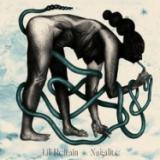
Lili Refrain - Nagalite LP

Lili Refrain

Nagalite LP

12inchSSR00167LP
Subsounds Records
27.03.2026
  • 1: Exuvia
  • 2: Nagal
  • 3: Coil
  • 4: Lithos
disponibile anche

Ice Blue vinyl[23,49 €]


After that album, in addition to an intense schedule of headlining shows, she was invited to support prestigious artists such as experimental folk paladins Heilung and the historic gothic rock band The Cult on their extensive tours across Europe and the United Kingdom. It was during her performance at the Hammersmith Apollo in London, as part of the tour with Heilung and Eivor, that the album "Live in London" (2024) was recorded -- a testament to her overwhelming performative power, a cathartic ritual capable of transcending genres and styles.

Blending folk metal, dark ambient, pagan ritual, psychedelia and operatic elements, and entirely composed, performed and sung by Lili Refrain, "Nagalite" combines in its title two words: "Naga," from Sanskrit, meaning "serpent," bearer of ancient knowledge; and "Lite," from the Greek lithos, "stone," something that endures beyond space and time, embodying earth, world and family. From this fusion emerges a symbolic being -- a stone- serpent -- the living body of metamorphosis, emblem of an imaginary transformation through four serpentine alchemical states, the four tracks that make up the suite. It is a sonic reflection on an era marked by war and horror, in which the artist traces a possibility of resilience and new life.

pre-ordina ora27.03.2026

dovrebbe essere pubblicato su 27.03.2026

21,81
Lili Refrain - Nagalite LP

Lili Refrain

Nagalite LP

12inchSSR00167LTD
Subsounds Records
27.03.2026
 
4
disponibile anche

Black Vinyl[21,81 €]


After that album, in addition to an intense schedule of headlining shows, she was invited to support prestigious artists such as experimental folk paladins Heilung and the historic gothic rock band The Cult on their extensive tours across Europe and the United Kingdom. It was during her performance at the Hammersmith Apollo in London, as part of the tour with Heilung and Eivor, that the album "Live in London" (2024) was recorded -- a testament to her overwhelming performative power, a cathartic ritual capable of transcending genres and styles.

Blending folk metal, dark ambient, pagan ritual, psychedelia and operatic elements, and entirely composed, performed and sung by Lili Refrain, "Nagalite" combines in its title two words: "Naga," from Sanskrit, meaning "serpent," bearer of ancient knowledge; and "Lite," from the Greek lithos, "stone," something that endures beyond space and time, embodying earth, world and family. From this fusion emerges a symbolic being -- a stone- serpent -- the living body of metamorphosis, emblem of an imaginary transformation through four serpentine alchemical states, the four tracks that make up the suite. It is a sonic reflection on an era marked by war and horror, in which the artist traces a possibility of resilience and new life.

pre-ordina ora27.03.2026

dovrebbe essere pubblicato su 27.03.2026

23,49
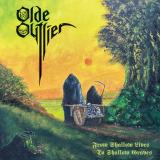
Olde Outlier - From Shallow Lives to Shallow Graves LP

In many ways, OLDE OUTLIER rise from the legacy of Australia’s late Innsmouth — a cult band whose 2014 debut Consumed by Elder Sign endures as an underground classic. The connection is more than symbolic: guitarist Askew, vocalist Appleton, and bassist Greenbank all passed through Innsmouth’s ranks, while Beau Dyer now leads this new incarnation after years spent shaping the sound of Innsmouth and the earlier project Grenade.

From Shallow Lives to Shallow Graves marks OLDE OUTLIER’s recorded debut, a four-track, thirty-five-minute descent into their own cavernous realm. While faint echoes of Innsmouth’s inspirations — Armoured Angel and early Samael — linger, the band draw from a broader and far more obscure constellation. Shades of Amon Goeth, Martyrium, Head of the Demon, and Florida’s Equinox collide with the spectral drift of Ophthalamia and early Katatonia and Tiamat, all eroded and blackened into something untraceable.

Despite these depths, OLDE OUTLIER avoid any sense of technical indulgence. Their sound carries a rough, deliberate simplicity — a raw and smoky power that pushes each of the four long tracks forward with unhurried certainty. The songwriting unfolds through patient repetition and subtle shifts, allowing motifs to seep into place and gradually hypnotise. Appleton’s low gutturals bring a grim, expressive edge reminiscent of early Septic Flesh or Thou Art Lord, while the more open, lead-driven riffing imparts a distinctly archaic heavy metal aura that separates this band from their origins.

At many moments, that union of grit and atmosphere surpasses even Innsmouth’s achievements. Accented by well-placed clean and chorused guitar lines, From Shallow Lives to Shallow Graves becomes an immersive and strangely timeless work — a glimpse into an ancient, dimly lit world where OLDE OUTLIER feel less like a new formation and more like something unearthed from a forgotten past.

pre-ordina ora26.03.2026

dovrebbe essere pubblicato su 26.03.2026

28,53
Geinoh Yamashirogumi - Ecophony Rinne LP

One of the most innovative and ambitious albums ever made, Genioh Yamashirogumi’s Ecophony Rinne is a sonic masterpiece featuring over 200 musicians that expanded the limits of what music and sound could do.

Before Akira there was Ecophony Rinne. Originally released in 1986, Ecophony Rinne is a four-part symphony of “ecological music” by Geinoh Yamashirogumi that married ancient tradition with technological innovation, and changed the way we listen to music in the process.

Half-speed mastered at Abbey Road by Miles Showell, Time Capsule’s high-tech analogue reissue is the first to reproduce composer Ōhashi’s ground-breaking “Hypersonic Effect” theory on vinyl, cutting frequencies beyond the realm of human hearing into wax to capture the full spectrum emotional impact of this extraordinary work.

Founded by genius polymath Tsutomu Ōhashi aka Shoji Yamashiro, Geinoh Yamashirogumi is a shapeshifting collective of over a hundred members from across disciplines. Rejecting professional musicianship, Ōhashi cultivated an ethos where neuroscientists, psychologists, doctors, journalists, engineers and students could critique society through artistic expression and pursue their research in ethnomusicological performances that spanned global traditions, Eastern spirituality and Western classical form.

Ecophony Rinne represents the pinnacle of this vision - an expansive orchestral suite made with over 200 musicians that channeled Ōhashi’s thinking about mankind’s relationship with nature, and fundamental questions of life, death and rebirth.

Here pipe organ synths made from sampled Tibetan horns sit alongside field recordings from Central African forests, Buddhist mantras circle dummy head microphones, Javanese Jegog percussion ensembles pulse like verdant ecosystems, and the acoustics of temples, caves and landscapes are conveyed in the mix. Weaving together culture, nature and technology, it is a record that vibrates with the polyphony of life on Earth.

But Ecophony Rinne was not only musically innovative. Noticing the difference between vinyl and CD versions of the album where digital reproduction limited the sound, Ōhashi developed a theory of “Hypersonic Effect”, determining that ultra-high frequencies above 20khz can impact human perception even if they are inaudible. At once a physical and a psychological experience, to listen to Ecophony Rinne is to feel music differently.

The rest is history. After its release, Ōhashi was approached by director Katsuhiro Ōtomo to produce the soundtrack for Akira, the work for which Geinoh Yamashirogumi is best known. Emerging from the shadows at last, Ecophony Rinne was its transcendental blueprint, reissued in its most complete hypersonic form on vinyl for the first time.

Rather than describe nature, Ecophony Rinne embodied it. Rather than reflect culture, Ecophony Rinne defined it. Rather than explore technology, Ecophony Rinne changed it. As a work of art, it is more relevant than ever. You won’t have heard anything like it.

non in magazzino

Ordina ora e ordineremo l'articolo per te presso il nostro fornitore.

27,69

Last In: 46 days ago
Stine Janvin / Morten Joh - Or Gare - funeral procession music from Ryfylke, Norway

Stine Janvin & Morten Joh unveil "Or Gare," a stark and deeply atmospheric excavation of funeral-processional music from Ryfylke, Norway. The release marks the debut collaboration of both artists, recasting a near-forgotten tradition into ghost-lit contemporary form. Rooted in the bygone custom of "Liksong" (literally "corpse song") that was once sung by small groups of singers who guided rural funeral processions, Janvin and Joh tap into its uncanny, unbearably slow intervallic structures, reanimating the practice as a kind of ancient electronic microtonal devotional music.

pre-ordina ora23.03.2026

dovrebbe essere pubblicato su 23.03.2026

26,47
Julinko - Naebula LP
  • Osmos
  • Peace Of The Unsaid
  • Cloudmachine
  • Skin Dress
  • Unleash
  • Jeanne De Rien
  • Kiss The Lion's Tongue
  • Throw Ashes!
  • Samadhi
  • Hora Et Devoura

Devotional music most often gets distilled into earthy chants and ancient folklore, it doesn't always ascend to the sky like Julinko’s ‘Naebula’ an album that from the first organ note clearly trades in terrestrial dreams for ethereal visions. A feverish quality permeates the whole record, as if a ritualistic performance was being captured from start to finish, a collection of hallucinatory doom, synthetic neo-folk hymns and ghostly art-rock.

Julinko, stage name for Giulia Parin Zecchin, has long been one of the best kept secrets of the experimental community in North-East Italy, with three records that helped define her unique blend of heavy psychedelia, slowcore and dark ambient. On ‘Naebula’ what really stands out is how powerful and soaring her voice is, a weapon of undeniable force that can transform into a vessel of raw fervour or glide effortlessly as a delicate lament. Her unconventional approach shines through on tracks like ‘Jeanne De Rien’, where a marching pulse acts as a pillar for an extended mantra, almost verging into powwow territory. ‘Peace Of The Unsaid’ uses its arrhythmical structure to create space, a crepuscular night ode that reaches the heights of Sinead O’Connor’s most intimate force-fulness while retaining a sweet composure. Whether it’s glacial murderous shrieks or gospel-esque vitality, songs like ‘Cloudmachine’ or ‘Kiss The Lion’s Tongue’ seem to draw as much from a tradition of European minimalism, the use of drones and repetition, to the tradition of folksongs as hymns, where modal harmonies make way for an apparent stasis. Another key element in Julinko’s songwriting is the seamless blend of her minimalistic approach with these dense textures borrowed from a distant outsider metal heritage, Lynchean noir on steroids or wordless exorcisms with deep undercurrents.

pre-ordina ora20.03.2026

dovrebbe essere pubblicato su 20.03.2026

26,68
Original Soundtrack - Monkey King - Havoc In Heavens Place (2x12")
  • A1: Yu Huang Da Di, The Jade Emperor
  • A2: Tieshan Gongzu, The Princess Iron Fan
  • A3: Ao Kuang, The Dragon King Of The East Sea
  • B1: Nūwa, The Goddess Of Works
  • B2: Roxue, The Silver Fox
  • B3: Erlang Shen, The Three Eyed Warrior
  • B4: Guan Yin, The Goddess Of Mercy
  • C1: Subhūti, The Old Master
  • C2: Niu Mo Wang, The Bull Demon King
  • D1: Sun Wukong, The Monkey King
  • D2: Just Dreams

Sun Wukong (The Monkey King) is a monkey born from a heavenly stone who acquires supernatural powers. After rebelling against heaven and being imprisoned under a mountain for 500 years, he later accompanies the monk Xuanzang on a journey to India. Thus, according to legend, Buddhism is brought to ancient China. This much beloved story, is as much a part of Asian culture as The Iliad and The Odyssey or The Wizard of Oz are to the West.

The 2014 action-fantasy film Monkey King - Havoc In Heaven's Place was directed by Soi Cheang, Starring Donnie Yen as the titular protagonist Sun Wukong. A Hong Kong-Chinese co-production, Yen also serves as the film's action director. The film co-stars Donald Chow, Aaron Kwok, Joe Chen and Peter Ho. The music was composed by Christopher Young.

Funfact; the drums on this soundtrack was done by none other than Dave Lombardo (ex- Slayer)

In China, The Monkey King was highly succesful and became only the third Chinese film to earn more than a billion yuan at the Chinese box office.

The soundtrack of Monkey King - Havoc In Heaven's Place is available for the first time on vinyl as a limited and numbered 2LP of 500 copies on gold vinyl, and includes an insert.

pre-ordina ora20.03.2026

dovrebbe essere pubblicato su 20.03.2026

41,60
hoyah חיה - Can I Get A Chayah? (TAPE)

On his second album for Bruk, hoyah חיה continues to take an unflinching look at his Jewish identity while confronted with the heinous actions of the Israeli state. Echoing the name of his Refuge Worldwide radio show, he examines the shared histories of the Jewish diaspora across the Middle East and North Africa — from Morocco to Uzbekistan and everywhere in between. Can I Get A Chayah? is an honest attempt to explore what Judaism could become at a time when the culture faces an existential crisis.

The sonic approach hoyah חיה takes on Can I Get A Chayah? is central to the album's theme, as hard-gated processing on every sound creates a disorienting effect aiming for a kind of 'functional transcendentalism'. From the opening strains of preceding single '808s n Trance Gates' the jagged stop-start intensity of the samples sets a head-spinning tone for the album. The source material comes from across the aforementioned Jewish diaspora, challenging the nationalist idea of the single Jewish state.

Balancing beauty and aggression, hoyah חיה also reaches to a strong cast of collaborators to round out his cultural explorations. Principle among these is the late David German, the US-born guitarist and songwriter behind Silver Jews, whose repeated, bewildered mantras on 'Shalom Aleichem' embody hoyah חיה's own struggles with faith in the face of current horrors. Internationally celebrated Turkish-descent German musician Derya Yıldırım graces 'Talmuds' with her haunting vocal — a tribute to ancient Jewish mysticism that gets passed through the album's unrelenting sonic framework. On 'The Lock' Muha tackles African transcendentalism, while Rael pulls no punches with the questions he poses on the barbed 'This Song Has A Different Title But It Can't Be Published Here Because Of "Reasons"'.

With further prayer recitals on 'Lekha Dodi' and 'The Nose' and videos examining the psychedelic nature of reading the talmud and repetitive prayer movement shuckling, hoyah חיה has taken his research deep into the spirituality of his heritage at a time of crisis for Jewish identity. Naturally, Can I Get A Chayah? is not an easy listening experience, but neither is it a bleak one. There is beauty, mystery, complexity and nuance woven within the stark approach — an intentional, considered statement on a culture much deeper and wider than the barbaric acts of an unrepresentative group of twisted ethno-nationalists.

pre-ordina ora20.03.2026

dovrebbe essere pubblicato su 20.03.2026

14,92
Various - Minyo Groove 1963-1979 - Japan Meets Latin, Rock, Rare Groove & Funky Vibes (Selected by DJ Yoshizaw

- For all fans of the Wamono series!

- All tracks selected by DJ Yoshizawa Dynamite. Includes the first ever vinyl release of The Peanuts' "Ohara Bushi" track, originally released only on tape in 1970.

- Fully licensed King Records masters.

- Mastering and lacquer cut by Jukka Sarapaa at Timmion Cutting Lab, Helsinki, Finland.

- 180g heavy vinyl pressing, reverse board jacket.

- Artwork by Nicolas Kerembellec (Nker).

---

Active as a professional DJ in Japan since the late eighties, DJ Yoshizawa Dynamite is also a renowned remixer, compiler and producer. An avid record collector and an expert of Wamono music, Yoshizawa has published in 2015 the now-classic Wamono A to Z records guide book, which instantly sold-out. The book unveiled a myriad of beautiful and rare records from a highly prolific, but still then unknown, Japanese groove scene. He has also selected a large part of the music in our highly acclaimed Wamono compilations.

For this brand new chapter in the series, Yoshizawa explores King Records' legendary catalog and unearths exceptional, rare and unknown musical gems. King Records has been releasing music since 1931 and is one of the most prestigious labels in Japan. Traditional Japanese music, known as "Minyo", are ancient songs once sung by fishermen, coal miners and sumo wrestlers. They are reimagined here with vibrant afro latin, rock, rare groove and funky arrangements in this killer selection of music released on King between 1963 and 1979. Also worth mentioning is the track Ohara Bushi by The Peanuts, which was released only on tape in 1970 and is now available for the first time ever on vinyl format.

Put the needle on the record, turn up the volume and dig right now into the Wamono sound - the cream of the Japanese funk, soul, rare groove and disco music developed throughout the years since the end of the fifties in Japan!

---

180GWALP08 - Manufactured and distributed by 180g.

non in magazzino

Ordina ora e ordineremo l'articolo per te presso il nostro fornitore.

34,03

Last In: 56 days ago
Locust - Morning Light LP 2x12"

Locust

Morning Light LP 2x12"

2x12inchAMBLP7942
Apollo
19.03.2026

Apollo Records proudly present the vinyl reissue of ‘Morning Light’, the acclaimed 1997 album from Mark Van Hoen’s Locust project; a work that blurred the boundaries between ambient electronics, trip-hop, and dream-pop with an emotional precision few have matched since.

Originally issued during the label’s pioneering late-’90s era, ‘Morning Light’ marked a bold evolution for Van Hoen, best known at the time for his dark, abstract ambient work under Locust and as a member of Seefeel. Seeking to create something more human and melodic, Van Hoen assembled a rotating cast of collaborators, including Zoe Niblett, Craig Bethell, Neil Halstead (Slowdive/Mojave 3), and Wendy Roberts, blending fractured dance rhythms, live instrumentation, and intimate vocal performances into something both deeply personal and effortlessly cinematic.

From the haunting reimagining of The Carpenters’ ‘No-One In The World’ to the slow blooming emotional arcs of ‘All Your Own Way,’ ‘Folie’, and ‘The Girl With The Fairytale Dream’, the album’s 13 tracks form a widescreen narrative of melancholy and beauty. Reviewers at the time hailed it as “a subtle delight” and “sheer God-given genius”, comparing its mood and texture to Massive Attack, This Mortal Coil, and Portishead, yet noting its entirely singular voice.

This reissue restores Morning Light to vinyl for the first time in over two decades. A crucial artefact from the fertile intersection of experimental electronica and ethereal pop, ‘Morning Light’ stands today as one of the label’s most quietly influential releases.

non in magazzino

Ordina ora e ordineremo l'articolo per te presso il nostro fornitore.

26,68

Last In: 53 days ago
Demetrio Castellucci & Massimo Pupillo - Sleep Technique LP
  • 1: Skull Chamber
  • 2: The Venus And The Sorcerer
  • 3: Panel Of The Lions
  • 4: Hillaire Chamber
  • 5: Candle Gallery
  • 6: Chamber Of The Bear Hollows (North)
  • 7: Chamber Of The Bear Hollows (South) & Brunel Chamber
  • 8: Entrance Chamber

Demetrio Castellucci and Massimo Pupillo present the music of Sleep Technique, a performance by Dewey Dell inspired by the Chauvet cave and its ancient cave paintings.
The music comes to life anew on record, an immersion into the depths of sonic particles, moist electroacoustic rhythms, the repeated forms of speleothems, and the electric bass that scrapes the walls, shaping them into concave or convex surfaces. A voice that moves incredibly slowly, yet is in constant motion, like the millennia-old, unceasing erosion of water.
The album’s journey follows the geography of the cave in reverse, moving from its deepest chamber back to the entrance.

Demetrio Castellucci is a composer and sound designer who has been involved in theater productions, choreography, and film since 2004. Around the same time, he began performing as a DJ, favoring an omnitemporal approach geared toward dance that transcends musical genres. Since 2006, he has been a member of the dance company Dewey Dell, and since 2007, he has been active as Black Fanfare, a maximalist electroacoustic project. He has collaborated on performances by Andreco and Enrico Ticconi/Ginevra Panzetti, as well as on films by Ahmed Ben Nessib, Beatrice Pucci, and Ilaria di Carlo. After living in London and Berlin, he settled in Vilnius, where in 2018 he founded Unarcheology, a digital platform that publishes music and radio programs. He is also active as Airport Gad, an ambient project which, together with Unarcheology, launched its own “Airline Company”: concerts in a flight simulator built from cardboard, where the pilots are also the musicians.

Massimo Pupillo is best known as a founding member of the band Zu, with whom he has released 18 albums and performed over 2,000 live shows worldwide. He has maintained a highly open and multidisciplinary approach that has led him to work with some of the most acclaimed figures in the contemporary art world: South African photographer Roger Ballen, actors Malcolm McDowell and Marton Csokas, Romeo Castellucci and Chiara Guidi of Societas Raffaello Sanzio, American choreographer Meg Stuart, poet Anne Waldman, and Italian poet Gabriele Tinti, among others. He has collaborated live and in the studio with avant-garde musicians and composers such as Alvin Curran, piano duo Katia & Marielle Labèque, and classical virtuosos like Viktoria Mullova and Giovanni Sollima. He has also worked with some of the most influential names in the international rock scene, including Mike Patton, Thurston Moore, Jim O’Rourke (Sonic Youth), Guy Picciotto & Joe Lally (Fugazi), Buzz Osborne (Melvins), and Damo Suzuki (CAN).

In the field of improvised music, he has collaborated with Peter Brötzmann, Toshinori Kondo, Mats Gustafsson, Ken Vandermark, and Tony Buck, among others. Within the experimental music scene, his collaborations include Oren Ambarchi, David Tibet (Current 93), Thighpaulsandra (Coil), Stephen O’Malley (Sunn O))), Abul Mogard, Mick Harris (Scorn), Gordon Sharp (This Mortal Coil), FM Einheit (Einstürzende Neubauten), and many more. In cinema, he composed the score for Kirill Serebrennikov’s film LIMONOV, presented at Festival de Cannes in 2024.

pre-ordina ora13.03.2026

dovrebbe essere pubblicato su 13.03.2026

25,17
Yamila - Noor

Yamila

Noor

12inchUR169LP
Umor-Rex
11.03.2026

Yamila presents her second album on Umor Rex, Noor. Following Visions, Yamila returns with a work that merges nature-experience listening with expansive musicality. Noor was born from her time in an ecologist community, where she sought refuge in stillness, learned from animals, and tried to forget the human. In this communion with nature, she discovered a new compositional approach: reducing acoustic noise to allow unheard voices to emerge, transforming music into a possibility for interspecies dialogue.

Since ancient times, sound has been used to care for herds, to call across distances, to communicate with the non-human. Noor reimagines that ancestral role in a contemporary language, where epic harmonies collide with delicate micro-tonalities, and where rhythm unfolds not only as pulse but as movement for the body, a natural extension of Yamila’s work with dance companies and choreographers.

Her voice is interwoven with electronics and the resonant strings of Echo Collective, creating sonic landscapes that radiate intensity and fragility. At times monumental, at others almost whispered, Noor oscillates between composition and spontaneity, structure and suspension.

The album unfurls as a dialogue between the organic and the artificial, where sound grows like a sprout breaking through hard soil. Yamila’s music here is not only to be heard, but to be inhabited: a choreography of air, vibration, and resonance. Noor is both shelter and revelation, a reminder that music can still be epic, luminous, and deeply human, while listening beyond the human.

All music and voices by Yamila Ríos. Recorded at Destelheide by Christophe Albertijn. Strings by Trio Echo Collective (Violin: Margaret Hermant, Viola: Neil Leiter), (Cello: Stijn Kuppens), (Arrangements: Pierre Slinckx). Mastered by Rafael Anton Irisarri at Black Knoll Studio, NY. Photos by Assiah Alcázar. Design & layout by Daniel Castrejón.

non in magazzino

Ordina ora e ordineremo l'articolo per te presso il nostro fornitore.

22,27

Last In: 61 days ago
Luciano Cilio - Dialoghi Del Presente

Luciano Cilio was born in Naples, Italy, in 1950. He studied music and architecture and, in the late '60s, collaborated with local artist Alan Sorrenti, American expat Shawn Phillips and various avant-garde theater groups. A virtuoso guitarist and self-taught composer, Cilio released only one LP before his untimely death at the age of 33.

Dialoghi Del Presente (1977) is a work like no other, one that sounds both ancient and ahead of its time. Produced by Renato Marengo, it features a series of muted tableaux for strings, woodwinds, guitar, chorus, piano and percussion. Cilio carves out a space where subtle, repetitive phrases yield – almost imperceptibly – to breathtaking silence.

As Jim O'Rourke writes, "These recordings sound as if they were to please no one but himself; they feel self-contained, introspective, and determined ... You can feel in the music a sort of necessity that can be rarely found, like in This Heat's debut or Nick Drake's Pink Moon."

While each subsequent "quadro" grows slightly more abstract, Cilio draws the listener into an expansive, pastoral soundscape. The closing piece, "Interludio," begins with a plaintive guitar, which is joined by haunting strings and woodwinds before concluding, poignantly, as the album began, with Cilio and his guitar, alone once more.

Superior Viaduct's edition reproduces the original sleeve design. Recommended for fans of Johann Johannsson, Talk Talk's Spirit of Eden, Arvo Part and Popol Vuh.

pre-ordina ora06.03.2026

dovrebbe essere pubblicato su 06.03.2026

26,47
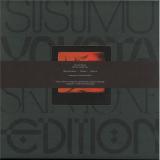
Susumu Yokota - The Boy And The Tree (Skintone Edition) LP 2x12"

- Limited edition Orange 2x12” vinyl LP.
- Housed in PMS printed inner sleeve, featuring custom fonts by No Format and spot gloss abstraction of the original album artwork.
- Accompanied with a double sided 2-panel insert and double sided 4 panel poster.
- All sleeved in a custom PMS reverse board outer sleeve with die cut square centre panel and belly band.

The Boy and the Tree was composed after a visit to Yakushima Island, an outstandingly beautiful world heritage site off the southern tip of Japan, scored by a deep, lush and ancient ravine, home of the ancient 7000-year old ‘Jōmon Sugi’. Tree. Also the inspiration for Miyazaki's epic anime Princess Mononoke, a conflict between the rampant greed and destructive force of humanity, and the stoic, mysterious fragility of nature.

This fleeting immersion in nature lent the album a profound introspection and mystery, and the its twelve tracks unfold in dream sequence, each drifting seamlessly into the next while still managing to steer the listener in myriad directions, from eerie butoh atmospheres, to ebullient raga, to desolate, cavernous chanson. The Boy And The Tree is definitely one of, if not the most, visually evocative and cinematic Yokota releases.

non in magazzino

Ordina ora e ordineremo l'articolo per te presso il nostro fornitore.

34,66

Last In: 70 days ago
Derek Hunter Wilson - Sculptures

Scupltures is composer and pianist Derek Hunter Wilson’s third solo album, an ode to the ancient and contested shorelines of the Pacific Northwest. Deeply embedded in place, the six longform pieces that make up the album reflect the artist’s journey through grief (including losing his father) and the passage of time, each one built upon loops created from extended sessions with harpist Joshua Ward. Like the foggy, moss-encrusted locations that inspired the album, Sculptures has a timeless feel to it, shadowed by the rumblings of a colonial system in decay.

Award-winning poet Mathias Svalina composed a poem for the album, entitled “A Dream for Sculptures”. It is reproduced on an insert that accompanies each LP.

Derek Hunter Wilson is a composer and multi-instrumentalist based in Portland. He has released two solo albums on Beacon Sound (Travelogue, 2017; Steel, Wood, & Air, 2019), as well as a collaborative album with Location Services entitled Wake (2022). In 2018 he collaborated with visual artist Gregory Euclide for his Thesis Project label, resulting in a split 10" with Spanish musician Rauelsson. He has additionally worked with poets Zachary Schomburg and Brandi Katherine Herrera for several sound and performance pieces, and has performed live on the West Coast and in Berlin, sharing the stage with artists such as Colleen, Amulets, Patricia Wolf, Pulse Emitter, and Liima.

pre-ordina ora27.02.2026

dovrebbe essere pubblicato su 27.02.2026

23,95
Articoli per pagina:
N/ABPM
Vinyl