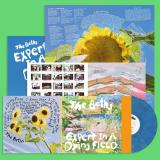
REPRESS ON SILVER VINYL . COMES WITH 24”x24” POSTER + DOWNLOAD CARD + GATEFOLD JACKET.
On The Beths’ album Expert In A Dying Field, Elizabeth Stokes’ songwriting positions her somewhere between being a novelist and a documentarian. The songs collected here are autobiographical, but they’re also character sketches of relationships – platonic, familial, romantic – and more importantly, their aftermaths. The shapes and ghosts left in absences. The question that hangs in the air: what do you do with how intimately versed you’ve become in a person, once they’re gone from your life?
The third LP from the New Zealand quartet houses 12 jewels of tight, guitar-heavy songs that worm their way into your head, an incandescent collision of power-pop and skuzz. With Expert, The Beths wanted to make an album meant to be experienced live, for both the listeners and themselves. They wanted it to be fun -- to hear, to play -- in spite of the prickling anxiety throughout the lyrics, the fear of change and struggle to cope.
Most of Expert was recorded at guitarist Jonathan Pearce’s studio on Karangahape Road in Tāmaki Makaurau, Aotearoa (Auckland, New Zealand) -- and sometimes in the building's cavernous stairwell at 1am -- toward the end of 2021, until they were interrupted by a four-month national lockdown. They traded notes remotely for months, songwriting from afar and fleshing out the arrangements alone, the first time they’d written together in such a way. The following February, The Beths left the country for the first time in more than two years to tour across the US, and simultaneously finish mixing the album on the road. That latter half felt more collaborative, with everyone on-hand to trade notes in real time, until it all culminated in a chaotic three-day studio mad-dash in Los Angeles. There, Expert finally became the record they were hearing in their heads.
Expert is an extension of the same skuzzy palette the band has built across their catalog, pop hooks embedded in incisive indie rock. The album’s title track “Expert In A Dying Field” introduces the thesis for the record: “How does it feel to be an expert in a dying field? How do you know it’s over when you can’t let go?” Stokes asks. “Love is learned over time ‘til you’re an expert in a dying field.”
The rest is a capsule of The Beths’ most electrifying and exciting output, a sonic spectrum: “Your Side” is a forlorn and sincere love song, emotive; while “Silence is Golden,” with its propulsive drum line and stop-start staccato of a guitar line winding up and down, is one of the band’s sharpest and most driving. “When You Know You Know” skews a bit groovier, pure pop and a natural addition to the band’s live set. “Knees Deep” was written last minute, but yields one of the best guitar lines on Expert. There’s a certain chaos across the 12 tracks, the palpable joy of playing music with long-time friends colliding with the raw nerves of pain.
Stokes strings it all together through her singular songwriting lens, earnest and self-effacing, zeroing in on the granules of doubt and how they snowball. Did I do the wrong thing? Or did you? And are we still good people at the end of it? She isn’t interested in villains, but instead interested in just telling the story. That insecurity and thoughtfulness, translated into universality and understanding, has been the guiding light of The Beths’ output since 2016. In the face of pain, there’s no dwelling on internal anguish - instead, through The Beths’ music, our shortcomings are met with acceptance. And Expert In A Dying Field is the most tactile that tenderness has been.
quête:angel anx
Brooklyn-based techno experimentalist and filmmaker Michelle Roginsky (aka mother) joins Delusional Records with her first-ever musical offering, a cinematic concept EP that weaves medical anxieties into a thematic tapestry of arresting club sonics.
In A Simple Procedure, Roginsky evokes the bleak and euphoric duality of femme embodiment; the soundtrack to an unreleased body horror film narrated by ethereal ambience and driving dancefloor grooves. The title track begins with sweeping, densely-textured synths disintegrating into a foreboding bassline, humming steadily alongside tidal waves of ominous arpeggios and plodding drums reminiscent of 90s trip-hop. In Sublingual, body-shaking club drums become a vessel for distorted vocals and granulated textures as they pass through thick membranes of saliva-drenched bass. Metamorpher follows with a hypnotic 4x4 trip that metabolizes deep anxious grooves into a rave-ready wiggler, while Angel Gossip keeps the blood flowing with a pounding peak-time techno roller guaranteed to keep the floor locked. Finally, There Are Two Rooms sends us off with a pensive meditation of wailing synths and dark, Lynchian atmosphere... the final scene of a dream half-remembered upon waking from anaesthesia.
NYC's Laenz delivers the epilogue with a shaking, subterranean remix of A Simple Procedure, injecting the opening track's textures into the fissures of deep and trembling grooves.
With its darkly seductive moods and high-concept execution, A Simple Procedure is a perfect addition to Delusional's genre-ambiguous catalog of queer and femme-forward sonic offerings.
Los Angeles-based producer and composer Hayes Bradley returns with his most ambitious work yet, Audience, out now via StrataSonic Records. A departure from his years composing for film and fashion, the 14-track album marks a return to his dancefloor roots by melding breakbeats, trip-hop, and ambient textures into something both nostalgic and forward-thinking.
After two beatless, melodic LPs on Secular Sabbath, Bradley arrives at Los Angeles’ StrataSonic—an independent label celebrated for prioritizing artistic freedom—with Audience, a record defined by moody, churning breaks and rich soundscapes. Across the album, he merges the emotional depth of his scoring work with the kinetic energy of underground dance music, crafting a deeply-layed and adventurous project that exists beyond trends while highlighting his versatility as both producer and performer.
The album features collaborations with Luna on the ethereal “Dear Treasure” (accompanied by a music video with collaborator and partner Luna Blaise) Amtrac on “Be Right With You,” and Oxis on “Wishes,” alongside a range of instrumental cuts that highlight Bradley’s approach to rhythm and sound design.
At its core, Audience is an exploration of embracing personal and musical chaos. Bradley channels moments of anxiety, uncertainty, and raw emotion into tracks that are unpredictable and immersive. The album reflects his philosophy of leaning into disorder—turning moments of anxiety, unpredictability, and chaos into kinetic music that moves both body and mind.
HISINGEN TAXI RIDER is TOMMA INTET’s fourth album, but the first to be written entirely in Swedish. It tells the story of moving to Gothenburg and the transformative experience of new impressions and people. A tribute to adventure, the thrill in your stomach, and all those late nights. Taxi rides to raves and after-parties. Taxi rides home to loneliness. Taxi rides to love and taxi rides to anxiety.
With HISINGEN TAXI RIDER, TOMMA INTET continues on their distinctive path, refining their signature sound. Layered harmonies run like a red thread through an ever-evolving musical landscape—blending grit with angel dust.
Written and produced by Magnus Petersson at Rum 101. Produced, mixed, and mastered by Johan Holm at Studio Påtår.
HOMESHAKE ist das Projekt des kanadischen Home-Producers Peter Sagar, dessen Sound halluzinatorisch und herzzerreißend in seinen Schreien nach Verbindung ist, strukturiert, tiefgründig, auf einzigartige Weise seine vielfältigen Einflüsse würdigend. "Horsie", das siebte HOMESHAKE-Album und das zweite in 2024, vertieft Sagars Beziehung zu Einsamkeit und Angst und untersucht diese Themen im Kontext von Live-Auftritten. Die 12 Songs verwenden von Künstlern wie Four Tet und My Bloody Valentine beeinflusste Texturen, die rhythmischen Formen von D’Angelo und Sade sowie Ambient Americana-Momente im Stile Ry Cooders.
Following March's CD Wallet, HOMESHAKE presents his second album of 2024, Horsie. Written and recorded at his home studio in Toronto, it explores Sagar’s complicated feelings about returning to live performance. Deepening his relationship to loneliness and anxiety, the record examines those themes in the context of touring.
Horsie employs various textures influenced by artists like Four Tet and My Bloody Valentine, the rhythmic forms of D’Angelo and Sade, and moments of ambient Americana found in the works of Ry Cooder. The cornerstone pieces of gear used were an Ensoniq EPS and Roland Juno 60, though the album also employs a great deal of electric guitar, along with his beloved SP-404. He maintains a philosophy of “less is more,” finding the simplest route from one point to another.
HOMESHAKE, the musical project of Peter Sagar, is an expression of adjustment and contortion within the world as he experiences it and the sounds he wants to hear in it. Hallucinatory and heartbreaking in its cries for connection, Sagar’s sound is often imitated but has proven to be entirely his own; textural and profound, uniquely honoring his diverse influences but adrift within its own transportive imagination.
In the new duo MISTRA, two extremes in the Norwegian music industry collide - Pop queen Benedicte Adrian and metal pioneer Anders Odden. Their first single "Waltz of Death" was performed in the 3rd semifinal of Melodi Grand Prix (the Norwegian Eurovision Song Contest) Benedicte Adrian is back in MGP 40 years after the success of Dollie de Luxe. The duo, which consisted of Benedicte and Ingrid Bjørnov, won the competition with "Lenge Leve Livet". They followed up the success with the album "Rock vs Opera" and have composed music for several musicals together. They released their last album as "Adrian/Bjørnov". As a solo artist, Benedicte has, among other things, sung the role of Queen of the Night in "Tryllefløyten" at Den Norske Opera, released the solo album "Desember" and guested on various stages both as a pop artist and a classical singer. Anders Odden has a long life behind him in black metal. In 1990, his band, Cadaver, debuted with Norway's first death metal LP "Hallucinating Anxiety". Since then, Cadaver has released six albums and gained cult status worldwide. Anders has also toured the world as a musician for other bands such as Celtic Frost. He has also collaborated with famous musicians such as Ronni Le Tekrø, Ledfoot, Hank Von Hell and Tony Harnell. Produced and mixed by Adair Daufembach in Studio Tomb, Norway
"Strawberry Seed, Big Bill’s third full-length LP, represents evolutionary growth for the Austin rock band. While the album includes some of the snide anthems they’re known for in songs like “Poverty of Wires,” “Throw it Away,” and “Political Meat,” much of the album feels warmer, with layers of acoustic guitar, synthesizers, piano, and background singers adding texture to their esoteric sound. Even when they go for the familiar angular riffs and propulsive drums—provided by former White Denim drummer Jeff Olson, who joined the band in 2020 and produced most of this record—the topics are more relatable than ever before, and more political, too. “Poverty of Wires” hits directly with post-punk fervor and a lyric about how rich people are always sick of talking about the poor, and “Political Meat” rails against a depressingly familiar cycle: “politely critique; get spit out like mouthwash and rinse and repeat.”
On Strawberry Seed, Big Bill is more mature and more self-assured, but you’ll never take the anxious energy out of the punk."
"All our dreamers lose to the light" - from "Angels Go Home" When the pandemic began, and the world shut down, so did the process of creating for Iron & Wine's Sam Beam. In its place was a domesticity that the singer hadn't felt in a long time, and although it was filled with many rewards, making music was not one of them. Reflecting on that time, Beam notes: "I feel blessed and grateful that I and most of my friends and family made it through the pandemic relatively unscathed compared to so many others, but it completely paralyzed the songwriter in me. The last thing I wanted to write about was COVID, and yet every moment I sat with my pen, it lingered around the edges and wouldn't leave. This lasted for over two years." The journey back began with a recording session in Memphis to record a handful of Lori McKenna tracks for the EP Lori with friend and producer Matt Ross-Spang. The cathartic experience reconnected Beam with his love for making music, and soon enough the paralysis had passed, and he was finishing lyrics and booking studio time for what would become Light Verse. Light Verse was recorded with engineer and mixer Dave Way at his studio Waystation high up in Laurel Canyon (with an additional session at Silent Zoo Studio with a 24-piece orchestra), with a host of talented musicians joining Beam: Tyler Chester, Sebastian Steinberg, David Garza, Griffin Goldsmith, Beth Goodfellow, Kyle Crane, and Paul Cartwright. And, Fiona Apple joined Beam on vocals for the duet "All In Good Time." Beam lyrically once again takes focus on a series of both fictional and personal insights, filled with desperate characters and wide-eyed optimists, offering promise and a dose of heartache, tears and laughter, life and love. Taking stock in the album's title, he jokes, "Light verse is a form of poetry about playful themes that often uses nonsense and wordplay, and it's my first official Iron & Wine comedy album!_. Just kidding_." While true this may be Iron & Wine's most playful record, Beam says the title mostly reflects the way the songs were born with joy after the heaviness and anxiety of the pandemic. Where recent records like Beast Epic or Weed Garden gave air to the disquiet of middle-aged frailty and brokenness, these songs trade that for the focus acceptance can bring. Moment by moment, they delight in being pointed or silly (or both) and attempt beauty over prettiness. Light Verse arrives April 26th, and it's Iron & Wine's seventh full-length overall and fifth for Sub Pop Records. Fashioned as an album that should be taken as a whole, it sounds lovingly handmade and self-assured as a secret handshake. Track by track, its equal parts elegy, kaleidoscope, truth, and dare.
FYEAR is a Montréal-based ensemble led by composer Jason Sharp and poet/writer Kaie Kellough that fuses spoken word into genre-bending compositions for electronics, two voices, two drummers, and processed saxophone, pedal steel guitar, and violins. FYEAR incorporates drone, out-jazz, post-classical, ambient metal, avant-rock, and modular synthesis in a sonic and stylistic palette the opposite of collage or pastiche: the FYEAR ensemble integrates a unique and unified sound/aesthetic while traversing adventurous and variegated terrain. Kellough’s poetic materiality conveys acute political-existential themes, alternating between declarative, meditative, and cut-up/semiotic manifestations. This self-titled debut album is a supremely innovative 40-minute multi-movement work; an ardent mission statement that mines the interzone where Saul Williams, Moor Mother/Irreversible Entanglements, Shabazz Palaces, Zulu, Angel Bat Dawid, Damon Locks/Black Monument Ensemble, Shabaka Hutchings, and Matana Roberts are all iconoclastic neighbours. FYEAR melds improvisation and composition, traditional notation and graphic scoring, electronic and acoustic instrumentation, lucid recitation and abstract vocalization, balancing intensive structure with an expansive sense of exploration. Through several years of collaboration, development, workshops, commissions and performances conducted by Sharp and Kellough, their wordsound practice has culminated in this nine-piece group which also features poet/writer/activist Tawhida Tanya Evanson (present director of the Banff Centre Spoken Word program) violinists Josh Zubot and Jesse Zubot (Tanya Tagaq, Darius Jones, Joshua Hyslop), pedal steel player Joe Grass (Tim Hecker, Patrick Watson), drummers Stefan Schneider (Bell Orchestre) and Tommy Crane (The Mingus Big Band, Aaron Parks), with live visual typographics from Kevin Yuen-Kit Lo, who also designs the album art. Propelled by the vocal interactions of Kellough and Evanson, FYEAR interrogates our present and future post-capitalist polycrisis, invoking collective anxieties, emotions, and critiques. FYEAR re-poetizes our constructed, manipulated social/conceptual realities, re-inscribing questions about the future by setting them to a wildly dynamic and evocative temporal soundtrack: Who does it belong to? How will it be shared? How do we project a collective future into the contested challenges of climate change, global migration, wealth gaps, safety/precarity, identity/affinity, segmentation / segregation, all our seemingly irreconcilable histories and forward visions for the world we dream to inhabit
Punk pioneers Crass continue their vinyl reissue series, re-pressing their limited releases by adjacent artists through Crass Records, in association with One Little Independent. The series, including over twenty bands and solo artists recorded at the legendary Southern Studios and produced by Penny Rimbaud, continues with two more historic pieces from the Crass Records catalogue; ‘Barbed Wire Halo’ by Annie Anxiety and ‘Neu Smell’ by Flux of Pink Indians.
They follow records from the likes of Captain Sensible, Omega Tribe, Honey Bane, Jane Gregory, Lack of Knowledge, Sleeping Dogs, Rudimentary Peni and Zounds. First released on 7” vinyl, limiting the sound, the new series has been remastered for 12” by Alex Gordon at Abbey Road Studios, allowing them to be heard as never before. This, plus enlarged replicas of the original covers, brings new gusto to their already radical sound.
New York City musical maverick and performance artist Annie Anxiety, aka Little Annie aka Annie Bandez, began her illustrious career (including work with Adrian Sherwood, Coil, Current 93, and Lee ‘Scratch’ Perry) with Crass. They released her first solo single, 1981’s ‘Barbed Wire Halo’ alongside ‘Cyanide Tears’, an extraordinarily prescient piece of jagged electronics, samples, and skeletal rhythms, led by Annie’s nightmarish vocals.
She tells us; “When creating this single with Penny I hadn’t heard the word ‘avant-guard’ nor could I spell it – I only got explained ‘concretism’ via an interview I did in Berlin regarding some of my work three years ago – My father was a printer so I grew up with sound of printing press and subway train beats and always heard melodies and cross rhythms within those beats – I was just making dance music / disco tunes to my mind and Pen heard those same tunes I was hearing – my first recording, in retrospect I guess, was pretty ‘out there’ at its release, but to us it was dance floor for a club yet to be invented- one day”.
Penny Rimbaud expands; “Annie Anxiety is a total enigma, a passionate voice in the wilderness of consensual reason. Dada in instinct, Monroe in affection, Rambo in inflection, Annie rams it home with divine thunder. An instigator and innovator, she’s the bonkers angel of Yonkers, NYC. With no time to spare, Annie takes to the road with complete conviction, overtaking Kerouac halfway down 5th Avenue. Catch her if you can”.
30th year anniversary edition of Distorted Pony's industrial noise-rock classic 'Punishment Room, remastered by Bob Weston at Chicago Mastering Service in 2023. Back on vinyl for the first time in 30 years, recorded in 1992 by Steve Albini and originally released on Bomp!, this album is an absolute essential for any noise-rock aficionado. The Los Angeles band turned heads with their aggressive mix of industrial, post-punk, feedback assault on metal sheets and trashcans. The focal point of Distorted Pony (which formed in 1986 and called it quits in ’93) was Dora Jahr’s seething bass and the mix of screeching guitars from David U and Robert Hammer. "Distorted Pony was already history by the time Instant Winner was released, but with proper live-fast/die-young spirit the album leaves one hell of an impressive corpse — it’s easily the most potent of the three records
Second chances are rare in rock 'n' roll. Most bands only get one shot at the brass ring, and once the opportunity passes by, it's gone forever. Maybe that's why Uncle Lucius sounds like a band reborn on Like It's The Last One Left, a cathartic comeback album that reunites the platinum-selling group — and pumps new blood into its roster — after a five-year hiatus. Written and recorded in the band's hometown of Austin, Texas, Like It's The Last One Left isn't just a return to form; it's an expansion, bolstering Uncle Lucius' mix of amped-up Americana and greasy roots-rock with string arrangements, adventurous production, and the sharpest songwriting of the group's career. "There are no limitations this time around," says frontman Kevin Galloway. "We're exploring different areas of American roots music, and we're doing it our own way. There's a new perspective that comes with stepping away from something for a while, then coming back to it. You can see it with new eyes." Rooted in lyrics about resolve and resilience, Like It's The Last One Left blurs the boundaries between genre and generation. It's a battle cry from a band that's rededicated itself to fighting the good fight, trading the breakneck pace of the group's past for something a little more swaggering, stabilizing, and singular. "Remember to breathe," Galloway sings during the album's final moments, delivering those lines like a veteran road warrior who's seen his share of exhaustion. That's good advice. After spending a decade in the trenches, Uncle Lucius has caught its breath, seized the moment, and enjoyed a much-deserved victory lap. Like It's The Last One Left is the soundtrack to the next leg of the journey.
Here's the thing about ill peach: this band exists because they are too weird to not exist. The seed of ill peach was first planted in the recording studios of New York City where Pat Morrissey and Jess Corazza were working together as professional songwriters, collaborating with artists like Icona Pop, SZA, Weezer, Pharrell, Big Freedia, and others. Then came the day they were offered their own publishing deal. Cool, right? Well, about that: "Everyone kept saying, 'The stuff that you're writing is slightly too left-of-center-weirdo stuff," remembers Morrissey. "Why don't you start your own project?" Thus ill peach, a pop band with a punk streak and a taste for both the rotten and the sweet, with an approach to making music that goes something like: "Do you want to pick up a guitar and do you want to be on this water jug and we'll record it on the iPhone and create some weird drum pattern?" Following a series of well-received EPs on their own Pop Can Records (a record label and artist collective Morrissey and close collaborator Jesse Schuster run with friends), a digital single for Hardly Art's 15th anniversary series, and some colorful music videos that crystallized the band's visual aesthetic along with their sound, ill peach's "weirdo stuff" comes to fruition on first full-length THIS IS NOT AN EXIT: a collection of anthemic songs built out of bright pop and gritty experimental elements (Morrissey names the sculptural use of distortion on the final albums by Low as an inspiration), punctuated with hooky choruses ready to be screamed along to in the safety of your own bedroom or with a bunch of friends at one of ill peach's intense live shows. If ill peach first blossomed in New York, it took quarantine in Los Angeles for the project to ripen. The end of the world turned out to be what ill peach needed to get real with themselves. "It helped us creatively to zone in and removed us from the industry side of things to where we could just be like: this is our new identity, let's jump with both feet." THIS IS NOT AN EXIT's title is a reflection of something Corazza realized during a period of personal and familial crises "I kept walking into buildings and I'd try to exit somewhere and the sign would be like, 'This is not an exit,'" she says. "It just felt like a metaphor for a hopeful thing-don't give up yet." This combination of hope and anxiety is all over THIS IS NOT AN EXIT, reflected in a sonic palette (Alternative! Electronica! Indie! Radio pop! Coldplay!) as eclectic as it is unpretentious. Ultimately, THIS IS NOT AN EXIT is a record about healing, a process often spoken about in New Age-y terms but one that in reality can be really confusing and, yes, weird. But it is the beautiful strangeness of being alive that ill peach capture so well on THIS IS NOT AN EXIT.
In the early 1990s, a team of linguists, engineers, anthropologists, and archaeologists were tasked with constructing a type of communication that could transcend time. How might we converse with future civilizations when language may evolve or dissolve entirely? The result yielded the design of spike fields; a strange construction of granite thorns bursting from the earth to alert its viewers to the deadly uninhabitability of nuclear waste disposal sites. For Maria BC (they/them), this state of temporal focus molds the wanderings on their second full length album Spike Field. How do we connect with the weathered shadow of our experience, while envisioning the self a few steps ahead of us? While their debut album Hyaline (2022, Father/Daughter) explored grief and anxiety through a series of character-led accounts, Spike Field recognizes that the past will continue to lurk below the surface until we decide to break through the soil. Spike Field was recorded in the home of a family friend. The home featured an out-of-tune baby Steinway piano, complete with squeaky hammers and strange, sporadic sounds. The piano is sprinkled throughout the album, and features extensively on opener "Amber," showcasing Maria BC's looser, more extensive arrangements. The song flickers with electronic wonder, like a wave seeking out its station, before crashing into the angelic choral introduction of "Watcher". Strings, plucked guitar and buzzing swells accompany their classically-trained mezzo-soprano voice on "Return to Sender," a song that focuses on the frustrations and turmoil of being unable to reach a loved one--both physically and emotionally. Spike Field reminds us that despite our best efforts to bury certain aspects of ourselves, they will always lurk beneath the surface. Instead of ignoring the seeds striving to break through, we can point to these places with a curious grace, concocting a language that transcends words to converse with our previous selves. Maria BC pieces together juxtaposing sonic landscapes and oscillating vocals to represent the thread of miscommunication, or the failure of words, that weaves throughout the album, transforming it into a distinct and ever-evolving sonic tongue. If we listen, we might find something new within ourselves.
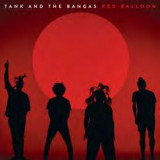
Gerade erst Grammy-nominiert als “Best New Artist” haben Tank And The Bangas ihr drittes Studioalbum aufgenommen. Zu dem vor R&B-, Hip-Hop-, Jazz-, Funk- und Soul-Grooves aus allen Nähten platzenden
Album luden sie diesmal Gäste wie Questlove, Lalah Hathaway, Big Freedia, Jacob Collier, Trombone Shorty, Jamison Ross und Wayne Brady ein.
Die in New Orleans ansässige Band mit der energiegeladenen Frontfrau Tarriona “Tank” Ball wurde 2017 durch den NPR Tiny Desk Contest auf YouTube berühmt (sensationelle 12,5 Millionen Aufrufe). „Red Balloon“ entstand jetzt in Folge der pandemiebedingten Unterbrechung des anstrengenden Tour-Pensums der Band. Die Pause gab den Musikern Raum zum Atmen und die Chance für ein kreatives Kräftesammeln. Das Werk zeigt die Band auf einem neuen künstlerischen Level, produziert wurde es von der Band selbst
und aufgenommen in New Orleans und Los Angeles.
- 1: Haywood Ranch
- 2: The Muybridge Clip
- 3: La Vie C'est Chouette
- 4: Jupiter's Claim
- 5: Brother Sister Walk
- 6: Walk On By
- 7: Not Good
- 8: What's A Bad Miracle
- 9: The Oprah Shot
- 10: Ancient Aliens
- 11: Park Kids Prank Haywood
- 12: It's In The Cloud
- 13: Holy Sh*T It's Real
- 14: Progressive Anxiety
- 15: The Star Lasso Expeeerrriii
- 16: Arena Attack
- 17: Sunglasses At Night (Jean Jacket Mix)
- 18: Blood Rain
- 19: The Unaccounted For
- 20: Preparing The Trap
- 21: Purple People Reader
- 22: Exuma
- 23: The Obeah Man
- 24: Man Down
- 27: Abduction
- 28: Havoc
- 29: Em & Angel Fly
- 30: A Hero Falls
- 31: Pursuit
- 32: Winkin' Well
- 33: Nope
- 25: The Run (Urban Legends)
- 26: Wtf Is That
Waxwork Records in partnership with Back Lot Music is honored to release NOPE Original Motion Picture Soundtrack by Michael Abels. Oscarr winner Jordan Peele disrupted and redefined modern horror with Get Out and then Us, he reimagines the summer movie with a new pop nightmare: the expansive horror epic, Nope. The film reunites Peele with Oscarr winner Daniel Kaluuya (Get Out, Judas and the Black Messiah), who is joined by Keke Palmer and Oscarr nominee Steven Yeun as residents in a lonely gulch of inland California who bear witness to an uncanny and chilling discovery. NOPE marks Abels' third feature film score with director Jordan Peele, having previously scored Peele's GET OUT and US. The album also features songs from the film, including a new version of Corey Hart's classic "Sunglasses at Night (Jean Jacket Mix)", Dionne Warwick's "Walk on By", The Lost Generation's "This is the Lost Generation", Exuma's "Exuma, the Obeah Man", and a never-before-released gem by a young Jodie Foster, "La Vie C'est Chouette" from the 1977 film MOI, FLEUR BLEUE. "NOPE is my most ambitious score to date," says Abels. "There are elements from the genres of sci-fi, action, horror, and westerns, but always through the tonal palette of Jordan Peele's unique vision. The lines between source music and score are blurred, as a good part of the score seems to be playing at the theme park, which is a key location in the story. The score is at times terrifying, yet also invokes the sense of awe and wonder that the characters feel as they realize what they are seeing. The film eventually becomes a grand adventure, and so the music expands into the larger-than-life scale we expect of a summer blockbuster." He goes on to say, "it was a joy to compose a score that encompassed such a broad range of genres and emotions, and I'm thrilled to have audiences experience all of them through this album." "Michael is one the most exciting composers working today - he has this amazing ability to create new sounds which was important for this film," Jordan Peele says. "He's able to play in the familiar and in the unfamiliar at the same time, so that helps give every film its own character, and he has an incredible mastery of so many different music genres." Abels is known for his genre-defying scores for the Jordan Peele films GET OUT and US, for which Abels won a World Soundtrack Award, the Jerry Goldsmith Award, a Critics Choice nomination, and multiple critics' awards. The hip-hop influenced score for US was short-listed for an Academy Awardr and was named "Score of the Decade" by The Wrap. Abels is also co-founder of the Composers Diversity Collective, an advocacy group to increase visibility of composers of color in film, gaming and streaming media. Waxwork Records is thrilled to present the official NOPE deluxe double LP soundtrack album. The package comes complete with 180-gram colored vinyl, quality packaging, original artwork by Ethan Mesa, heavyweight gatefold jacket with matte coating, a multi-page 12" x 12" booklet, liner notes, & more!
Milly make songs that simmer and spark. The Los Angeles-based band, led by songwriter Brendan Dyer, finds power in the slow burn: their music carries the tension of a lake’s surface moments before a storm hits, or a cracking pane of glass moments before it shatters. Their debut album, Eternal Ring, is kinetic, physical, and often a little bit volatile — a mixture of emo music and 90s-indebted indie that tastes as if it’s been fermenting for years, feeding on itself until it becomes something new entirely. A profound first full-length statement from Dyer and his closest collaborator, bass player Yarden Erez, it’s a record that takes the anxiety of modern-day America and filters it through a prismatic, powerfully individualistic lens, resulting in something intense, bracing, and deeply modern
Ingredient is the elegant collaboration of Toronto poets, composers, producers and dear friends Ian Daniel Kehoe and Luka Kuplowsky. Their self-titled release is an enigmatic electronic avant-pop record attuned to the micro and macro perspectives of the natural world. Ingredient is an album whose lyrics are more poem than lyric, and whose songs exist in a merger of house music, philosophically-minded lyricism and contemporary R&B. One might recall electronic and art-pop luminaries such as Yukihiro Takahashi, The Blue Nile, and Arthur Russell, or connect it to contemporaries like Nite Jewel, Westerman and Blood Orange. A distinct world of dance, of questions, of secrecy and ultimate softness.
Eight years of friendship forges strange telepathy.
In the summer of 2020, Ian Daniel Kehoe was entrenched in a new feeling of heaviness; psychosomatic symptoms had started to proliferate; stress made new pores across the body, bending sensitivity into pain. His days were met with confusion, detachment, sleeplessness and pain without causation. Disfigured, he felt that what had been central and centering was blown out to the periphery of things. In a moment of self-preservation he reached out to his dear friend Luka Kuplowsky to make an album together. For Kehoe, it was an instinctual grasp for the anchoring truthfulness of deep friendship and the potential for a dedicated creative collaboration. Kuplowsky’s presence was light, supportful and curious, eager to explore musically the sounds they were mutually drawn to: house music, ambient pop, dub. The duality between Kuplowsky and Kehoe – between the Aflight and the Unmoored – is a portrait of a friendship whose exchanges came easy and produced an outpouring of song. Creation and therapy crisscross. In email correspondence that catalogs their process of collaboration, affection abounds: “feels bare without the Luka Licks”, or “Love you so much”, or “Kinda just overwhelmed with deadliness coming in at all angles.” When their voices first come in together on “Wolf,” that harmony arrives in a dramatic avant-pop sound that is bold and wondrous.
Kuplowsky and Kehoe both arrive at Ingredient as established artists whose works are committed to language’s propensity to provoke and mystify. Kuplowsky’s 2020 album Stardust is an idiosyncratic and otherworldly blend of pop and jazz romanticism grounded by Cohen-esque vocals and a stirring philosophical curiosity. Kehoe’s entrance into the new decade has hatched four records of pop experimentation, most recently 2022’s Yes Very So, a euphoric and bold album of poetic synth-pop and meditative ambient instrumentals. Kuplowsky and Kehoe’s union as Ingredient is a beautiful and unusual chemistry that integrates their distinct approaches while bringing forth a newness: a sound that alternates between cinematic technicolor and dubbed out fogginess; a lyricism that exchanges their lucid and clear poetics for a playful and obtuse verse. The album intuitively taps into the opposing emotional states of Kuplowsky and Kehoe during the conception of the record, contrasting the buoyancy of trumpeting keyboards (“Resurface”), angelic synthesized voices (“Come”), and rolling bass (“Photo”) with the record’s underlying darkness of whirring buzzsaw textures (“Transmission”), whooping sirens (“Wolf”) and murky ambience (“Illumination”). Lyrically, this duality arises in the record’s flux between openness (“Variation”, “Raindrop”) and existential dread (“Wolf”). “Illumination” most clearly crystalizes this opposition, reconciling the verses’ neurotic yearning for enlightenment with the chorus’ liberating doctrine of negation: “no more devotion… no more delusion”. Amidst the gradations of light and dark, Kuplowsky and Kehoe trade indelible, lush melodies as though their voices are made of a substance that melts easily one into the other. The harmony of poetry, sound, and texture cuts through your brain fog like a wet diamond.
Ingredient’s self-titled record was assembled by Kuplowsky and Kehoe over the course of six months in a home studio they frequented daily. Amidst synthesizers and drum machines they composed, re-composed, and workshopped a wide array of music, ultimately focusing on a set of eight songs that lived in a shared musical and philosophical world. Recording days often ended in basketball games at a local court or a rooftop commune over a pot of tulsi tea and a crossword puzzle. Kuplowsky brought in the Blue Cliff Record – the classic anthology of Chan Buddhism – whose inscrutable and sublime insights remained constant throughout the recording process as an activator of reorientation and reflection. While Kehoe was frequently rendered physically immobile by bouts of anxiety, a patience and mutual caring governed the pace of their creation; rest, stretching and meditation became equally important as the act of arrangement. Invited into their intimate circle of composition was Thom Gill, whose heavenly voice uplifts “Variation” and “Raindrop,” and Karen Ng, whose alto sax simmers and dances around the funky strut of “Raindrop.”
The lyrics on Ingredient reflect the persistence of change, the infinite variability of nature where randomness and divergence are no accidents. In Daoism, duality, in the form of Yin and Yang, is not contradictory as it is in Western idealist philosophy, but rather composes the eternal and lived paradox of our changeless-changing universe: changeless because all is change, and changing because the dynamism of the Dao makes each moment transformational. Kuplowsky and Kehoe refract this way of seeing the world, as in Variation: “Variation in the natural world / there it is.” Ingredient is an experience of the manifold ways of saying there it is of the transformational world, and there it is, unfolding. Elsewhere, change and ephemerality is addressed through the record’s preoccupation with non-human perspectives, reorienting the listener to the wolf, the mouse, the emerald frog, the centipede, the bird, the fly in the lamp. The album cover visualizes this fascination with the striking image of a reddish-orange frog atop a defamiliarized landscape of dark green leaves. Mirroring the exploratory process of the record’s collaboration, the frog also signals the amphibian’s natural inclination to leap into boundless potential. Kuplowsky and Kehoe’s lyrics manifest philosopher and ecologist Timothy Morton’s concept of “the mesh,” drawing attention to the “vast, entangled web” of interconnectedness that connects all life forms and interweaving the songwriters’ shared wonder into the Animal’s unknowability. As Luka narrates in the breakdown of the dance-floor ready “Photo,” “the closer we observe things, the further they retreat into abstraction.” In Ingredient’s ecosystem, perception is a reversible fractal where the world’s minutest details mirror the shape of the cosmos.
According to the Dao, the path to healing starts by reorienting perception away from the self and toward the self’s subsumption in Totality. For Kehoe, collaborating with Kuplowsky became the reorientation necessary for the self-preservation he was seeking, opening up a shared creative practice to navigate and soften the complexity of his psychological shattering. The album begins with Kuplowsky intoning “colossal faith” which bounces around the stereo field in a cloud of echo, and it is the enormity of “faith” that centers both Kuplowsky and Kehoe’s collaboration and their inquisitiveness in the vast mysteries of our very being. Truth in Ingredient is not an essential nugget, but a bending of the light – it is the equivocal entanglement of how we are in nature as nature, but with a plea or prayer under our breath that marks our felt distance from what we are a part of: “carry me towards the mountains of my birth / returning to the nest / the silence of the earth.”
2022 Repress
LP+MP3 - Carefully ReEdited, 100% Original
Lady of Mine is the 1989 debut LP by self-made Italian-American Joe Tossini. An astoundingly honest, passionate record of cosmopolitan lounge music, he willed this charming suburban oddity into existence without any formal musical training.
Special remarks : LP with digital download card
Lady of Mine is the 1989 debut LP by self-made Italian-American Joe Tossini. An astoundingly honest, passionate record of cosmopolitan lounge music, he willed this charming suburban oddity into existence without any formal musical training.
Sicilian by birth, Tossini drifted around the world between Italy, Germany and Canada, before finally settling in New Jersey. After the passing of his mother and the breakdown of a second marriage, an anxious and depressed Tossini took to songwriting as a form of therapy, crafting disarmingly candid lyrics from his extraordinary life and loves. Whatever industry savvy or musical virtuosity he lacked was made up for by unflinching resourcefulness and infectious charisma. Befriending bandleader Peppino Lattanzi at local club The Rickshaw Inn, he was encouraged to animate his singular songs with an ambitious cast of 9 players and 5 backing vocalists, sincerely credited as his Friends.
The Atlantic City basement sessions are a low budget, high romance testament to Tossini's character and the power of positive thinking. From the defiant, Casiotone samba of If I Should Fall In Love, to Wild Dream's dizzying escapism and the native tongue croons of Sulla Luna and Sincerita, Lady Of Mine hums with the inimitable magic of a true original. Piercing the heart with an effectively sparse combination of humming keys, CompuRhythm drums, horn flourishes and backing divas, ample room was left for Tossini to frankly deliver his much-needed life lessons.
Underperforming commercially at the hands of short lived label IEA Records, Lady Of Mine has since earned a place in the outsider music canon. Recently peaking interest as a cornerstone of the Sky Girl compilation, the private press trades for inordinate sums, typically with no financial benefit to its creator. Lady Of Mine is now finally reissued on the artist's own terms via Joe Tossini Music, in partnership with Efficient Space, restored from original master tapes with unseen photos, extensive liner notes and Tossini's trademark wisdom.
Devoutly independent, Tossini has previously self-released the 2015 instrumental album When You Love Someone as well as two books - a new fiction novel The Devil In White and his autobiography The Account of My Life.
Tape
The third LP from the New Zealand quartet houses 12 jewels of tight, guitar-heavy songs that worm their way into your head, an incandescent collision of power-pop and skuzz. With Expert, The Beths wanted to make an album meant to be experienced live, for both the listeners and themselves. They wanted it to be fun -- to hear, to play -- in spite of the prickling anxiety throughout the lyrics, the fear of change and struggle to cope.
Most of Expert was recorded at guitarist Jonathan Pearce’s studio on Karangahape Road in Tāmaki Makaurau, Aotearoa (Auckland, New Zealand) -- and sometimes in the building's cavernous stairwell at 1am -- toward the end of 2021, until they were interrupted by a four-month national lockdown. They traded notes remotely for months, songwriting from afar and fleshing out the arrangements alone, the first time they’d written together in such a way. The following February, The Beths left the country for the first time in more than two years to tour across the US, and simultaneously finish mixing the album on the road. That latter half felt more collaborative, with everyone on-hand to trade notes in real time, until it all culminated in a chaotic three-day studio mad-dash in Los Angeles. There, Expert finally became the record they were hearing in their heads.
Expert is an extension of the same skuzzy palette the band has built across their catalog, pop hooks embedded in incisive indie rock. The album’s title track “Expert In A Dying Field” introduces the thesis for the record: “How does it feel to be an expert in a dying field? How do you know it’s over when you can’t let go?” Stokes asks. “Love is learned over time ‘til you’re an expert in a dying field.”
The rest is a capsule of The Beths’ most electrifying and exciting output, a sonic spectrum: “Your Side” is a forlorn and sincere love song, emotive; while “Silence is Golden,” with its propulsive drum line and stop-start staccato of a guitar line winding up and down, is one of the band’s sharpest and most driving. “When You Know You Know” skews a bit groovier, pure pop and a natural addition to the band’s live set. “Knees Deep” was written last minute, but yields one of the best guitar lines on Expert. There’s a certain chaos across the 12 tracks, the palpable joy of playing music with long-time friends colliding with the raw nerves of pain.
Stokes strings it all together through her singular songwriting lens, earnest and self-effacing, zeroing in on the granules of doubt and how they snowball. Did I do the wrong thing? Or did you? And are we still good people at the end of it? She isn’t interested in villains, but instead interested in just telling the story. That insecurity and thoughtfulness, translated into universality and understanding, has been the guiding light of The Beths’ output since 2016. In the face of pain, there’s no dwelling on internal anguish - instead, through The Beths’ musi