repressed !
From samba and bossa nova through to baile funk, with carioca expressions of jazz, rock and hip hop in between, the sound of Rio de Janeiro, while continually evolving, has always held an unnameable quality which reflects the magic and mystique of the city itself. Multi-instrumentalist and arranger Antonio Neves is the city’s newest trailblazer: the enfant-terrible of Rio’s music scene, leading a vital and diverse constellation of both emerging and well-known artists advancing the city’s musical legacy.
“It all started one sleepless night, after watching a Quincy Jones documentary”. Inspired by the legendary music magnate, Neves began writing a list of artists residing in Rio de Janeiro “people that I admire, that I consider geniuses of their instruments, who share with me affinities, anxieties and projects.” The list included some of Brazil’s most revered living musicians who Neves has worked with in recent years: Hamilton de Holanda, Leo Gandelman and Dorival Caymmi. Neves also called on some of Brazil's most exciting emerging talents including Alice Cayymii and Ana Frango Eletrico.
A Pegada Agora É Essa (The Sway Now) is Neves’ second album: a vibrant portrait of the current Brazilian music scene. From the regional to universal, popular to erudite, samba to rap, Latin rhythms to jazz, MPB and pop to good old rock'n'roll, Neves walks with fluency and mastery amongst all the musical genres that Brazil has to offer.
“My offer to the musicians was complete freedom to express themselves through the songs I proposed – classics like “Summertime”, “Luz Negra” and “Noite de Temporal”, and compositions of my own – creating a space of authorship for the band and the guests. A space for inventions, purges, delusions, laughter. The idea was to bring the freedom of jazz crossed by Brazilian rhythms, such as the traditionals Partido Alto (A Pegada Agora É Essa) and Jongo (Jongo no Feudo and Luz Negra); rhythms of African-Brazilian religions like Candomblé (Noite de Temporal) and Umbanda (Forte Apache); and a tribute to newest Rio de Janeiro’s contribution to Brazilian music, the Funk Carioca (Simba)”.
Coming from a musical family, Antonio’s father, Eduardo Neves, was a renowned conductor and a professor at Juilliard School of Music and the California Jazz Conservatory. In the bohemian neighbourhood of Lapa, aged 14, Antonio began his career as a drummer, before experimenting with brass. He would soon become a skilled trombonist and arranger achieving the recognition of his teachers and peers. It wasn’t long before he would be playing with some of the biggest names in Brazilian music, such as Hamilton de Holanda, Leo Gandelman, Moreno Veloso, Kassin and Elza Soares.
His debut album as a trombonist was PA7 (2017, Rock It), released at the same time he was travelling the world playing with artists like Moreno Veloso, Kassin and Leo Gandelman, and recording the albums Jobim, Orquestra e Convidados (2017, Biscoito Fino), with Mário Adnet and Paulo Jobim; and Elza Soares Canta e Chora Lupi (2017, Coqueiro Verde Records). More recently, Neves was the arranger for the acclaimed Little Electric Chicken Heart album, by Ana Frango Elétrico, which has been nominated for a Latin Grammy and voted 2019’s ‘Brazilian Music Revelation’ by The Art Critics Association of São Paulo.
Поиск:antonio neves
Все
- 1
- A1: Antonio Adolfo E A Brazuca - Dois Minutos De Uma Novo Dia
- B1: Maria Castro Neves & Samba S.a. - Candomble
'2 Minutos De Um Novo Dia' - pacey samba-funk-MPB that originally appeared on a 7' from 1969 released on Odeon Brazil. Soaring vocals, strings and horns over alternating full and half-time funk drum breaks. Very big indeed.
'Candomble' has been a resident in our DJ sets for a long, long time. A retrained, deeper opening section drops into drum heavy, rich uptempo jazzy-MPB. Super catchy vocal hooks and piano lines sit over the top from start to finish. Taken from their self titled album from 1975 on RCA.
Far Out Recordings proudly presents Ladeiras De Santa Teresa, the debut collaboration between Rio-jazz maverick Antonio Neves and carioca percussion master Thiaguinho Silva. In what could well be the first ever Brazilian jazz album centered around two drummers, Ladeiras De Santa Teresa is an uncompromisingly groove-rich recording, steeped in trad-samba roots and brass power.
Since his acclaimed 2021 album A Pegada Agora E Esssa Antonio Neves has remained a mainstay of the international facing Brazilian scene, performing both as a trombonist and drummer. His instrumental contributions to contemporary classics like Ana Frango Eletrico’s Little Electric Chicken Heart, Bruno Berle’s No Reino Dos Afetos 2, and Bala Desejo’s Sim Sim Sim will be marveled upon by future generations. His partner in crime Thiaguinho Silva happens to be the son of percussion icon Robertinho Silva, who has played on more or less every canonical Brazilian record, Arthur Verocai (1972), Clube Da Esquina (Milton Nascimento and Lo Borges, 1972), and India (Gal Costa, 1973) to name barely a few. Thiaguinho himself has worked with Marcelo D2, Gal Costa, Liniker and Alice Caymmi, and upon listening to Ladeiras De Santa Teresa, it’s clear that Thiaguinho is more than a worthy successor to carry the Silva family torch.
Some listeners may already be familiar with “Das Neves,” which appeared on Mr Bongo’s Rio De Janeiro-focused Hidden Waters compilation in 2023. The track showcases the profoundly skilled Neves brothers brass section (Antonio alongside brother Edu, who has performed with Hermeto Pascoal), the fiery elegance of pianist Luiz Otávio (Dora Morelenbaum), and Thiaguinho’s pulsating samba breaks. This synergised combo continues across the album, notably on “Fendas Vocais” with Neves doubling up on drums, exhibiting his inventive and fearless skill as an arranger. The album also features street-artist, musician and rapper Joca, adding vocalised dynamism and swagger to an otherwise entirely instrumental record on “Viagem de Trem”.
The album’s title Ladeiras De Santa Teresa (The hills of Santa Teresa) is named in tribute to Rio De Janeiro’s famed Santa Teresa neighborhood, a bohemian enclave with scenic views of the iconic cityscape. The spirit of Santa Teresa with its expansive city views and bustling energy is embodied in the album which encapsulates the jazz and samba histories felt within the neighborhood’s windy alleyways and cobbled streets.
Ladeiras De Santa Teresa by Neves E Silva is out on vinyl, CD and digital on Friday 20th March 2026.
- A1: C’est Loin
- A2: Là Où Tu Veux (Deixa A Gira Girá)
- A3: Pas Tant De D'chichi Ponpon
- A4: Assez
- A5: Le Soleil En Haut
- A6: Tout L’or
- B1: Désillusion
- B2: Attends-Moi
- B3: O Sapo
- B4: Horssaison
- B5: Presque Rien
- B6: Vou Festejar
For his sixth solo album, Ezéchiel Pailhès returns with a new collection of songs infused by a sunny wandering spirit.
Within each of the twelve songs on SOL is a thread of melancholic happiness that has permeated much of Pailhès’ music and songwriting. He addresses love, the passing of time, hope, lost illusions, fleeting moments of grace, the temptation of forgetting, a need to escape, and desire. All this is
insulated by understated orchestrations that blend acoustic and electronic instrumentation with deft confidence.
The Portuguese and Brazilian concept of saudade—a form of melancholic longing and nostalgia— pervades, thanks in part to Pailhès decision to record the album in Rio de Janiero and to reinterpret some of the finest works of Música Popular Brasileira (MPB). In particular, he revisits a handful of
lesser known classics from the mid-century samba and bossa nova era—originally written or performed by talents including Vinícius de Moraes, João Gilberto, Tom Zé, Dorival Caymmi, João Donato, Os Tincoãs, and Ataulfo Alves.
The shift from Brazilian Portuguese to French and the decision to adapt rather than perform a straightforward cover versions, allows Pailhès to invent a form of prosody and euphony (the musicality and harmonious combination of words) that feels vibrant and unlike anything else in today’s French
chanson landscape.
“Some lyrics are simple translations from Portuguese, in what I’d call an expanded version. For others, I started from a single word or a single phrase and embroidered an entirely new text that carried me elsewhere,” explains Pailhès. “I allowed myself great interpretive freedom, while preserving the humanist dimension of the original songs. I’ve always been deeply moved by the way Brazilians transfigure reality through heightened emotion. I love this visceral and spontaneous country, which always seems to live through emotion. And above all, I love its music both popular and unifying,
bringing together all social classes. In that sense, it’s very political music, but even more so utopian, made by the people and for the people.”
On this new album, however, the French artist was keen to avoid cliché. Each song is therefore built around a carefully balanced interplay between Pailhès’ piano and synthesizers, alongside restrained arrangements of percussion, brass, bass, and cavaquinho (a small four-string plucked guitar). These parts were recorded in Rio de Janeiro with two musicians who regularly perform alongside the legendary Caetano Veloso—Kainã Do Jêje and Alberto Continentino—joined by Thomas Harres, Antônio Neves, Eduardo Neves, and Gabriel Loddo.
Since the 1960s, France and Brazil have shared a long-standing cultural and musical relationship. Some Brazilian artists, most famously Gilberto Gil, took refuge in France during the dictatorship years (1964–1985). But above all, French chanson quickly fell in love with the richness and ingenuity of
bossa nova and samba, translating and reinventing them in the language of Molière. Throughout the 1960s and 1970s, albums and hits by Henri Salvador, Georges Moustaki, Pierre Barouh, Pierre Vassiliu, and Claude Nougaro all drew from the MPB repertoire.
Fifty years later, with SOL, Ezéchiel Pailhès reinvents this rich Franco-Brazilian musical legacy, bringing to it a personality and modernity that stand confidently alongside those of his forbears.
Here at Mr Bongo we have been inundated with people asking us to reissue this release. Ana Frango Elétrico's petit cult classic masterpiece 'Little Electric Chicken Heart' from 2019, which was only ever released on vinyl and CD in Brazil and Japan, has fast become a collector's item.
Well received by fans, DJs, and reviewers on release, The Needle Drop expressed "Ana Frango Elétrico's authentically vintage fusion of chamber pop, rock, samba and jazz is a real blast!" listing it as one of its Top 50 Albums of 2019. The album's reputation has been slowly building ever since, gaining a Latin Grammy nomination in 2020, and now solidly cementing itself as a gem of contemporary Brazilian music.
Across the albums nine tracks, Ana blends elements and influences from MPB, Tropicália, indie rock, punk and pop, forging them together with a sumptuous dose of her signature style. The finesse of 'Saudade' kicks off the LP, one of Ana's most known tracks to a non-Brazilian audience. A sublime opener, beginning with a spellbinding piano solo before transcending into a beautiful dream-laden slice of warmth, complete with luscious jazzy horns and deft vocal delivery. ‘Promessa e previsões’ follows, the only track on the album not to be written by Ana, instead being penned by Chico França. It’s a swelling and sweeping twilight groover, building and breaking across absorbing peaks.
Other highlights on the album include the anthemic 'Chocolate', which was a firm favourite with a packed sing-along crowd when we heard Ana perform it live. Elsewhere, 'Se No Cinema' hits with its quirky allure, charm and catchy melodies before transforming into a carnival spirit.
Tapping into the richness of Brazil’s new wave of musical energy, the album also includes a heavyweight lineup of collaborations with artists such as Dora Morelenbaum (Bala Desejo), Tim Bernardes, Antonio Neves and Guilherme Lirio to name but a few.
A short, sweet and refreshing record, that leaves nothing to waste, marrying playful ideas with poignant themes. 'Little Electric Chicken Heart' is a future classic and will beguile fans of ‘70s Brazilian recordings, Gal Costa, Mac DeMarco, Stereolab, Superorganism, Caetano Veloso and more.
Far Out Recordings proudly presents the self-titled debut album by Rio de Janeiro born multi-instrumentalist, composer and arranger Tunico. Honing Brazilian roots rhythms like maracatu, xanadu, and samba, to combine with a global contemporary jazz outlook, the newcomer adds a modern classic to the ever rich vein of Brazilian instrumental music.
Consider it a natural evolution from the legacies of greats like Quarteto Novo, Hermeto Pascoal, Banda Black Rio, Tamba Trio, and Dom Um Romão, Tunico’s debut brings together an eye catching ensemble of talents from the Rio jazz community, with whom he performs on a weekly basis at celebrated live sessions and jam’s at venues like Macuna and Comuna Lapa, which often go on all night.
Released in 2022, the album’s rip-roaring lead single “Galope” features the effervescent vocals of Katerina Assef, as well as consummate solos from all over the band, as Sounds & Colours put it “…it exudes distinction and promise”. “Sambola” calls on the signature swagger of Far Out favourite Antonio Neves, indulging us in irresistible swinging samba-funk, undeniably reminiscent of the aforementioned Banda Black Rio in their late 70s heyday.
Born and raised in an artistic Rio household, Antonio Secchin aka Tunico’s father was the painter Guilherme Secchin, whose original work is lovingly repurposed to create the album’s cover. Antonio learned his trade on guitar from a young age, which remains his primary method for composition, but at the age of eighteen he started to gravitate towards the saxophone, and in particular the soprano sax, from which he now leads bands despite being entirely self taught. He would develop his skills busking on curbsides and metro stations before becoming a mainstay player in venues and clubs around the city.
When the pandemic struck, Antonio retreated to his family home in the Rio countryside. With time and space to breathe and reflect in a natural environment, he set to work at fleshing out the compositions he’d written throughout his musical life into full bodied works. His affinity with his rural surroundings is reflected in the luscious, blossoming feel of this groovy, mystical and poignant instrumental debut album.
Tunico will be released on vinyl, CD and digital platf
"Taking influence from the pioneers of Música Popular Brasileira, Wolfgang Pérez has crafted an exquisite album of summery experimental pop music that encapsulates the beauty and chaos of modern Brazil. A must-listen for fans of Tom Zé, Gilberto Gil, Kiko Dinucci, Negro Leo, Ricardo Dias Gomes, and João Gilberto.
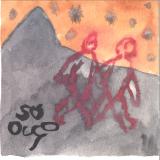
Genre-blending songwriter, arranger, and guitarist Wolfgang Pérez is set to release his highly anticipated new album Só Ouço in July 2025 on Hive Mind. Known for his unique fusion of influences, the German-Spanish artist first captured attention with his 2021 debut WHO CARES WHO CARES (Fun In The Church), followed by the critically acclaimed Spanish-language album AHORA (BAUMUSIK, 2024).
Só Ouço is the fruit of an 18-month creative residency in Rio de Janeiro, where Pérez collaborated with a group of young Brazilian musicians. Deeply inspired by the city's sounds and rhythms, the album marks an exciting chapter in Pérez’s evolving artistic journey.
In 2022, Wolfgang Pérez arrived in Rio de Janeiro on a university exchange to study composition, and quickly found himself immersed in the city’s rich musical landscape. Introduced early on to Rio icons like Thiago Nassif, Arto Lindsay, and Ana Frango Elétrico, what began as a semester turned into a transformative three-semester stay. Pérez absorbed the city's contrasts - it's beauty, its people, it's chaos and violence, all it's contradictions and life - while deeply studying Brazilian music at UFRJ/UNIRIO under the guidance of masters Josimar Carneiro, Marcello Gonçalves and Almir Cortes.
Wolfgang spent the first 6 months or so soaking in as much as possible, going to shows, to the baile funk parties, walking the streets, hiking the mountains in and around Rio, listening to music, making friends, learning where to go and where not to, learning the language, learning the slang, incorporating the culture. He used the time to forget himself in the vibrance of the city.
After this the band came together through a series of chance encounters and happy accidents...some loose jam sessions led to shows around Rio, where Wolfgang, alongside Luis Magalhães (bass), Pedro Fonte (drums) and Paulo Emmery (electric guitar), started to flesh out some of Wolfgang's compositions. At a show at Audio Rebel they met Angelo Wolf (owner of Wolf Estúdio and engineer for artists such as Bala Desejo, Dora Morelenbaum, Zé Ibarra, Marcos Valle, Antonio Neves and Ana Frango Elétrico); moved by the music, Wolf offered Pérez residency and studio time at Wolf Estúdio, providing the foundation for Só Ouço. Angelo was a catalyst for the production of Só Ouço, his openness and generosity helping to shape the sound of the record. Carol Maia, a young guitarist, lyricist and singer brought a sensitivity and tenderness to the songs, while Antonio Neves helped to pull together the brass and woodwind players who would complete the lush sound of the album.
Meticulously arranged, and beautifully composed, Só Ouço is a joy to listen to and surprising at every turn. Classic songwriting and cutting edge production blend to produce an album that is by turns tender and gentle, abrasive and unsettling, a joyful celebration of life in all its complexity."
‘Mormaço Queima’ is where it all began for Ana Frango Eléctrico. Raw, quirky and lo-fi, it’s a debut album brimming with attitude and youthful energy, characteristics that would go on to define their sound. Previously released digitally in Brazil in 2018, with a private press CD version in 2020 and later a Brazilian vinyl version in 2022, here at Mr Bongo we felt it deserved a much-needed worldwide edition for all of us to savour.
A charming, idiosyncratic blend of MPB, Tropicália, and indie from a talented singer-songwriter, multi-instrumentalist and producer who would later become one of Brazil’s brightest international stars. ‘Mormaço Queima’ has a cool, laidback, swagger channelling ‘90s bands such as Pavement. The arrangements feel loose and easy, the opener, 'Farelos' (Crumbs), seems to ebb and flow on a razor's edge before the percussion and Antonio Neves' trombone draws the song into a structure. Another highlight is 'No Bico Do Mamilo', which has a free-flowing vibe, Ana pushing, pulling, and playing with the song's energy, keeping listeners constantly on their toes. Tracks such as 'Roxo' lean more into a punk attitude, with the pendulum swinging from easy-going to frenetic. The longest song on the album 'Picles', continues to sway the pendulum this time moving from DIY punk-funk into a psychedelic workout
Co-produced by friends and fellow future collaborators Guilherme Lirio, Gustavo Benjão, Marcelo Callado, and Thiago Nassif, ‘Mormaço Queima’ is a playful showcase of Ana Frango Eléctrico’s distinctive style. Plotting Ana's musical career, it's clear they are not one to be pigeon-holed, nor to be confined to a single genre. Instead, they are ever evolving and this captivating debut album was the building block for a career that has already seen them gain multiple Latin-Grammy awards and tour the world with their music.
• Pressed to vinyl for the first time
• Manufactered by Polysom (Brazil)
• Produced by Arto Lindsay, arrangements by maestro Arthur Verocai (Strings) and trombonist Antonio Neves (Horns).
• Special guest appearances by Jorge Drexler, Seu Jorge, and Flor
"Portas" easily showcases Marisa's ability to blend together a diverse range of genres with a style and smoothness that only comes from the expertise she has gathered throughout her celebrated career.
Having already received numerous prestigious awards throughout her artistic career, the announcement of this album has left fans eagerly awaiting its release. In addition to her four Latin Grammy wins, she is considered the greatest Brazilian singer of her generation, known for the creative power of her live performances and the consistent excellence of her entire discography – the new album being no different.
The Brazilian composer, pianist and producer, Mário Castro Neves and his group, Samba S. A.'s self-titled album from 1967 is oozing with class. It possesses that archetypal 60's bossa nova, jazz, samba sound. We’d place it up there with Sergio Mendes at his finest, Tambo Trio or Milton Banana. It’s a breezy ride that touches on easy listening at times, but it holds it together with a cool swagger. Biba and Thaís Do Amaral's vocals are on point, with a relaxed delivery that compliments the tracks with the sublime beauty à la vocal groups such as Quarteto Em Cy, who Biba also sang with, as well as with Antonio Adolfo's e A Brazuca. Also appearing on the record is bassist extraordinaire, Novelli who worked with Milton Nascimento, Nelson Angelo E Joyce, Airto, and many of the greats of Brazilian music of the time.
The album has long been a favourite with DJs and collectors over the years, with songs selected for compilations by Gilles Peterson and Nicola Conte. One of the centrepieces of the album, 'Candomblé’, has been sampled by Cut Chemist on his track 'Povo De Santo'. The song 'Naña' is punchy and light with dancefloor-jazz appeal. The gloriously catchy 'Vem Balançar' is a brilliant bossa shuffler. A superb listen throughout, the album sticks to a framework but delivers in spades.
Though released on the major-label RCA Victor, original copies are elusive, sought-after items with a price tag to match. For this reissue, we have opted for the Mono master, mirroring the original 1967 Brazilian pressing. Instantly familiar, the album has a welcoming feeling of nostalgia and is something that stays with you from the first listen.
Here at Mr Bongo we have been inundated with people asking us to reissue this release. Ana Frango Elétrico's petit cult classic masterpiece 'Little Electric Chicken Heart' from 2019, which was only ever released on vinyl and CD in Brazil and Japan, has fast become a collector's item.
Well received by fans, DJs, and reviewers on release, The Needle Drop expressed "Ana Frango Elétrico's authentically vintage fusion of chamber pop, rock, samba and jazz is a real blast!" listing it as one of its Top 50 Albums of 2019. The album's reputation has been slowly building ever since, gaining a Latin Grammy nomination in 2020, and now solidly cementing itself as a gem of contemporary Brazilian music.
Across the albums nine tracks, Ana blends elements and influences from MPB, Tropicália, indie rock, punk and pop, forging them together with a sumptuous dose of her signature style. The finesse of 'Saudade' kicks off the LP, one of Ana's most known tracks to a non-Brazilian audience. A sublime opener, beginning with a spellbinding piano solo before transcending into a beautiful dream-laden slice of warmth, complete with luscious jazzy horns and deft vocal delivery. ‘Promessa e previsões’ follows, the only track on the album not to be written by Ana, instead being penned by Chico França. It’s a swelling and sweeping twilight groover, building and breaking across absorbing peaks.
Other highlights on the album include the anthemic 'Chocolate', which was a firm favourite with a packed sing-along crowd when we heard Ana perform it live. Elsewhere, 'Se No Cinema' hits with its quirky allure, charm and catchy melodies before transforming into a carnival spirit.
Tapping into the richness of Brazil’s new wave of musical energy, the album also includes a heavyweight lineup of collaborations with artists such as Dora Morelenbaum (Bala Desejo), Tim Bernardes, Antonio Neves and Guilherme Lirio to name but a few.
A short, sweet and refreshing record, that leaves nothing to waste, marrying playful ideas with poignant themes. 'Little Electric Chicken Heart' is a future classic and will beguile fans of ‘70s Brazilian recordings, Gal Costa, Mac DeMarco, Stereolab, Superorganism, Caetano Veloso and more.
- A1: Ana Frango Elétrico – Saudade
- A2: Pedro Fonte – Clichê
- A3: Bala Desejo - Lua Comanche
- A4: Ava Rocha - Boca Do Céu
- A5: Exército De Bebês - Avós Da Experiência
- A6: Thiago Nassif - Soar Estranho (Feat. Arto Lindsay, Vinicius Cantuária & Gabriela Riley)
- B1: Negro Leo – Mulato
- B2: Mari Romano – Amélie
- B3: Rosabege - Sigo Num Site / Mármore
- B4: Dora Morelenbaum - Vento De Beirada
- B5: Cadu Tenório & Juçara Marçal - Candombe - La Cacundê Iauê
- B6: Jonas Sa – Gigol?
- C1: Troá – Bandeide
- C2: Marcelo Callado - Simbora (Feat. Silvia Machete)
- C3: Ovo Ou Bicho – Moços
- C4: Lê Almeida - Apreço Antigo
- C5: Vovô Bebê - Briga De Família (Feat. Ana Frango)
- D1: Joana Queiroz - Dois Litorais
- D2: Raquel Dimantas - Flecha Azul
- D3: António Neves & Thiaguinho Silva - Das Neves
- D4: Letrux - Dorme Com Essa
- D5: Os Ritmistas - Sambolero
The popularity of Brazilian music from the 60s, 70s and 80s has experienced quite the renaissance; artists such as Gal Costa, Gilberto Gil, Arthur Verocai, Joyce et al, have become household names to an international audience passionate about global sounds. However, even for die-hard fans and collectors of Brazilian music of the past, discovering contemporary Brazilian artists is not always easy, nor accessible. But, if you know where to look, you will see that there is a resurgence well underway that can be epitomised by an exciting new wave of Brazilian artists beginning to break through and gather momentum overseas. It’s with thanks to Sound and Colours, a website devoted to promoting Latin American music and culture, that we can help shine a light on one particular collective, bursting with creativity and camaraderie.
‘Hidden Waters: Strange and Sublime Sounds of Rio de Janeiro’ is compiled by Joe Osborne (founder of specialist Brazilian music platform Brazilian Wax) and Russ Slater (editor at large of Sounds and Colours). Focusing solely on the 'Rio Scene', rather than taking on the mammoth task of tackling Brazil as a whole, this collection presents 20-plus ground-breaking artists selected from Rio’s resurgent music scene. By presenting a snapshot into the pulse of the city and the vibrant musicians that live in it, ‘Hidden Waters’ collates tracks from a wide spectrum of musical genres from the avant-garde edge to bossa nova, samba, Candomblé, lo-fi rock, jazz and funk.
‘Hidden Waters’ showcases musicians such as iconic Rio mainstays Negro Leo & Ava Rocha, Brazilian jazz upstart Antônio Neves, critically lauded Avant-pop trailblazer Thiago Nassif, breakthrough artists Ana Frango Elétrico and Letrux, lo-fi psych rocker Lê Almeida, plus the Latin Grammy-winning Bala Desejo who are set to explode onto the world stage. The music featured on ‘Hidden Waters’ is unequivocally Brazilian, swelling with samba, bossa nova, funk, and jazz. But it’s within the album's blend; from sunny psychedelia to dusky synth-pop via experimental electronics, that marks the compilation as the sound of modern, multicultural Rio.
This comprehensive compilation comes with album artwork designed by Rio music’s leading album artwork designer, Caio Paiva. It features essays by professor and music critic Bernardo Oliveira and music journalist Leonardo Lichote, plus extensive notes on each track by the artists themselves.
For volume 86 in the Brazil45 series, we return with a pair of stellar 1970s Brazilian-Funk / Black Rio nuggets by two of the greats of the genre, Toni Tornado & Zeca Do Trombone.
'Sou Negro' (I'm Black) is taken from Toni Tornado's (aka Antônio Viana Gomes) sought after 1970 four-track compacto EP on Odeon Records. Already having had some experience in show business as a dancer in the 1960s, Toni started his musical career in 1970 and adopted the stage name 'Toni Tornado'. The influence of James Brown flowed through his music, with Toni becoming one of the first Brazilian artists (alongside Tim Maia) to introduce the soul and funk sound into Brazilian music. Together with other contemporary musicians and bands such as Banda Black Rio, Gerson King Combo and Cassiano, this new sound led to DJ's throwing soul parties. This unique Brazilian take on soul and funk (and later on disco) became coined as 'Black Rio'. A movement that celebrated pride in its Black identity and consciousness.
Zeca Do Trombone has an impressive repertoire which has seen him releasing a handful of solo albums and working with some of the greats of Brazilian music, such as Tim Maia, Ivan Lins, Joyce, and Luis Vagner. The track 'Coluna Do Meio' is taken from his 1976 collaboration project 'Zé Do Trombone E Roberto Sax' with saxophonist Roberto Sax, which additionally features the heavyweight Wilson das Neves on percussion. This catchy Wah-Wah guitar-led dancer has become a favourite with DJ's over the years and will continue to be championed for years to come.
Following highly praised releases by Hermeto Pascoal & Grupo, Leonardo Marques, Xenia Franca and Moons, 180g and the legendary Disk Union continue to explore the best of today's Brazilian music scene with this wonderful psychedelic and funky pop album by Rio de Janeiro's Gus Levy: Magia Magia.
The mystical universe of Magia Magia reflects influences from the samba rock of Jorge Ben, the romantic grooves of Djavan and the psychedelic pop of Connan Mockasin and Negro Léo. The lyrics and sensations suggest a new way of seeing the reality of the world and relationships: union, spirituality, magic, complicity, happiness, courage, love, fraternity, dilemmas and contradictions lead the poetical subject of Magia Magia. Inspired by a conception of the universe ruled by feminine entities, Gus Levy brings with Magia Magia a masterpiece of modern Brazilian psychedelic and funky pop, with exquisite artwork by Fernanda Varella.
A composer and multi-instrumentalist from Rio de Janeiro, Brazil, Gus Levy has been gaining more and more attention on the Brazilian music scene during the last few years. He is also a producer at Rio de Janeiro's Estúdio Carolina studios, a member of the band "Os Dentes" for more than 10 years, and the guitarist of choice for artists like Antonio Neves, Filipe Marones and João Werneck.
- 1