
pre-order now12.01.2024
expected to be published on 12.01.2024
45,34 €
expected to be published on 12.01.2024
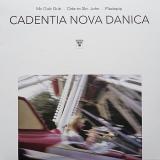
John Tchicai (1936 – 2012) was one of the most important free improvising saxophonists of the 20th Century: an artist of rare vision and aptitude whose lines soared and stood out even in the most hallowed company, and whose body of work as a leader / composer is among the most singular and distinct within the entire canon of that music. But Tchicai’s importance doesn’t end there. Born in Copenhagen, Denmark, to a Danish mother and a Congolese father, his life and career represent a crucial bridge between the European and American traditions of free jazz. Initially trained on violin as a child, Tchicai shifted his focus to the clarinet and alto saxophone during his mid-teens, and began touring Europe as a professional musician by his early 20s, which landed him at a socialist youth festival in Helsinki, Finland, where he met the trumpeter Bill Dixon and saxophonist Archie Shepp. Impressed by what they heard, Dixon and Shepp encouraged the young saxophonist to move to New York, and in so doing changed the history of jazz forever.
Tchicai’s arrival in New York marks the rare occurrence of a European player joining the intimate circle that was first wave of American free jazz. Following his landing in the city in November of 1962, in addition to regularly sitting in with Don Cherry’s group, Tchicai began playing with Bill Dixon's band alongside Archie Shepp and Roswell Rudd, forming the nucleus of the foundation of the New York Contemporary Five - one of the most important groups of the era - which counted Tchicai, Shepp, Cherry, Don Moore, and J. C. Moses as its members. From the ashes of this group, Tchicai would go on to found the legendary ensemble, New York Art Quartet, with Roswell Rudd, Milford Graves, and Lewis Worrell, as well as working within Albert Ayler's band, recording “New York Eye and Ear Control”, Shepp’s band, recording “Four for Trane”, the ensemble that recorded John Coltrane's “Ascension”, and the Jazz Composer's “Orchestra”.
By the time he decided to return to Denmark in 1966, had Tchicai chosen to record little else, his legacy within the history of music would have been ensured. Incredibly ambitious, his arrival home marked the beginning of an incredible period of activity which saw him radically expanding his creative explorations, which by the end of the decade would include becoming a founding member of Amsterdam's Instant Composers Pool and helping to record John Lennon and Yoko Ono's “Unfinished Music No.2: Life with the Lions”. This, however, was proceeded the formation of a new orchestra, Cadentia Nova Danica, led by Tchicai, dedicated to radical cross-disciplinary exploration. Remaining together between 1966 and 1971, the group and its shifting membership regularly fell into collaboration with artists and composers, notably Musica Elettronica Viva, who existed beyond the realms of jazz, as well as participating within multi-media events that incorporated the visual realms.
Cadentia Nova Danica’s only two LPs - “Cadentia Nova Danica” (Polydor, 1968), and “Afrodisiaca” (MPS, 1969) - are effectively Tchicai recorded efforts as a leader, and are legendary. There’s little mystery, once heard, why the later landed on Thurston Moore’s iconic “Top Ten from the Free Jazz Underground”, published by Grand Royal in 1996. Sadly, despite playing extensively during their five year run, with exception of a CD documenting a performance at Jazzhus Montmartre, in 1966, until now there has been no other publicly available recordings that allow us to capture a glimpse of this astounding band at work. Alga Marghen / Formalibera’s vinyl pressing of a never before released body of recordings, made in Copenhagen between 1969 and 1970, changes that in the most exciting of ways.
Comprising three pieces - “Mc Gub Gub, (I–VIII)”; “Ode to Skt. John”; and “Pladepip” - the material on this stunning LP comes from two specific events. The first, which encompasses the first side, “Mc Gub Gub, (I–VIII)” was recorded by Cadentia Nova Danica - in this instance, Tchicai, Sune Weimar, Theo Rahbek, Christian Kyhl, Niels Holt, Jørgen Thorup, Michael Schou, Morgens Bollerup, Allan Gregersen, Ole Matthiessen, Pierre Dørge, Willy Jaegert, Anthony Barnett, and Jon Finsen - on May 29th, 1969, at the ABC-Theatre in Copenhagen. Penned by Tchicai, the piece is a sprawling, evolutionary composition at the outer reaches of free jazz, rooted in large blocks of colliding tonality and rhythm - a sound only accessible to larger ensembles - that push territories explored by Charles Mingus to previously unimagined heights, threaded by moments of hard blown fire. Writhing like a stormy sea - skronking and devilish - “Mc Gub Gub, (I–VIII)” is a work of profound complexity that singlehandedly illuminates not only Tchicai’s singular vision as a composer, but also the power and uniqueness of Cadentia Nova Danica during the band’s most vital period.
The two pieces - “Ode to Skt. John” and “Pladepip” - taking up the flip side, were recorded on February 21st, 1970, at the Danish Broadcasting Corporation’s Radio House, and are the outcome of Cadentia Nova Danica’s extended residency there between 1969 and 1970. In many ways, these two recordings offer some of the best insights into the broad collaborative approaches that defined the band, in this case encountering them working with Danish experimental composer, Svend Erik Werner, who was among the earliest in his country to embrace stylistic pluralism and the use historical forms within a modern context. “Ode to Skt. John” - based on aspects of Gregorian music - was penned by Werner, incorporating heady improvisation by the members of Cadentia Nova Danica, this time made up by Tchicai, Sune Weimar, Hugh Steinmetz, Theo Rahbek, Christian Kyhl, Michael Schou, Morgens Bollerup, Ole Kühl, Torben Enghoff, Mauritz Tchikai, Kjeld Ipsen, Willy Jaegert, Ole Matthiessen, Ole Thilo, Pierre Dørge, Steffen Andersen, Jon Finse, and Clause Bøje. The piece is a fascinating binary of the composed and improvised, utilising the band’s large scale to introduce a remarkable sound within its slow progressions and furious, driving free moments, in this incredible meeting of worlds.
The album’s final piece, “Pladepip”, is arguably its most historically significant: an entirely singular piece, unlike anything in Tchicai’s recorded canon as his foray into musique concréte. Drawing upon two recordings of full-band improvisations by Cadentia Nova Danica, for its creation Tchicai also gouged the surfaces of 78rpm records in his collection to skip and create repeated phrases and patterns, creating a stunning sound collage of hard angles and abrupt phrase, that creates a striking counterpoint to the band’s flowing improvisations that bookend those passages. The result is an engrossing listen and easily one of the most unique and culturally important gestures in the entire history of musique concréte.
Truly incredible, Alga Marghen / Formalibera’s vinyl pressing of this never before released body of recordings, made by John Tchicai’s Cadentia Nova Danica, in Copenhagen between 1969 and 1970, offers an unprecedented window into one of the most important groups working in Europe during that period, significantly expanding their rare and slim discography to date. Accompanied by extensive exploratory liner notes by veteran jazz writer, Ed Hazell, this is easily one of the most historically important archival releases of the year and is impossible to recommend enough. Absolutely essential on every count.
expected to be published on 28.08.2026

"Lover Man by the Archie Shepp Quartet featuring Annette Lowman was originally released in 1989. For this release tenor saxophonist Shepp was joined by pianist Dave Burrell, bassist Herman Wright, drummer Stephen McCraven and vocals by Annette Lowman. It's a diverse album with the title track featuring Lowman's warm vocals and Shepp's tenor in the background., the band's jazzy swings version of Duke Ellington's ""Squeeze Me"" and 8 other pieces.
This expanded edition of Lover Man includes two tracks ""Margy Pargy"" and ""Tribute To Bessie Smith"" which were previously only available on cd. "
expected to be published on 25.10.2024

Unknown spiritual jazz gem recorded in Argentina in the 80s, under the influence of Pharoah Sanders, Don Cherry, Archie Shepp_, and originally released on Litto Nebbia's label Melopea. Already supported by Gilles Peterson on his radio show, this mind-blowing album combines ethno-free jazz passages and deep progressive compositions led by saxophonist Marcelo Peralta resulting a very impressive ode to the legacy of Coltrane. First time reissue. Includes extensive notes and many previously unpublished photos. 180g vinyl. DESCRIPTION Unknown spiritual jazz gem recorded in Argentina in the late 80s, under the influence of Pharoah Sanders, Don Cherry, Archie Shepp_, and originally released on Litto Nebbia's label Melopea. This is the first and only album ever released by this band, Grupo de Improvisación Tercer Mundo (Third World Improvisation Group), formed by a quartet of young musicians based in Buenos Aires accompanied by drummer Norberto Minchillo (López Fürst, Fernando Gelbard, Jorge Navarro_) and Litto Nebbia himself during the recording sessions. They would also organize weekly jam sessions in public spaces in Buenos Aires, getting visual artists, poets and even passersby involved in these communal actions that aimed to promote self-expression in an environment of total freedom. After the gigs they'd gather again for intense listening sessions of deep jazz for hours_ Already supported by Gilles Peterson on his radio show, this mind-blowing album combines ethno-free jazz passages and deep progressive compositions led by saxophonist Marcelo Peralta resulting a very impressive ode to the legacy of Coltrane and a very accomplished work of jazz improvisation. 'Almas Liberadas' and 'Un Hilo de Luz' sound as a clear tribute to Pharoah Sanders, as the subtitle of the latter openly states. First time reissue. Includes extensive notes and many previously unpublished photos.
expected to be published on 12.07.2024

Tenor saxophonist Ben Webster (born Kansas City, 1909) needs little introduction, Webster is regarded as one of the three foremost swing era tenor saxophonists - the two others being Coleman Hawkins and Lester Young. His ballad playing and sound inspired such later fellow saxophonists as Archie Shepp, Sonny Rollins and John Coltrane. Webster became famous for his unique sound, quick tempos, his solos that contained great virile rhythmic momentum, a rasping timbre and an almost brutal aggressiveness filled with growl, while his ballad playing was breathy, tender and sensual. The list of his collaborations is long, Ben Webster worked, recorded and played with legends from the likes of Art Tatum, Count Basie, Cab Calloway, Roy Eldridge and Dexter Gordon_but a dream came true when he was offered a permanent job in Duke Ellington's orchestra where his personal style matured. Webster stayed with Ellington until 1943, after which he formed his own groups and played with other small ensembles. From 1952 on he spent his time between Los Angeles and New York playing, freelancing and recording with a variety of soloists, among them high-profile singers like Billie Holiday, Ella Fitzgerald, Carmen McRae and Frank Sinatra. Despite excellent reviews of his albums, it was difficult for Webster to find steady work in the US during the early 1960's, and when in 1964 he got offered to play for a month in London he accepted and sailed to England. Webster never returned to the United States. In Europe he found plenty of work, playing residences in Scandinavia, settled in Amsterdam (1966-69) and then in Copenhagen (where he even has a street named after him). He toured frequently, playing in clubs and at big festivals with local bands or with visiting American musicians. Ben Webster suffered a stroke in Amsterdam in September 1973 following a performance in Leiden and died on September 20. Even when his health started to decline during his last years, his playing never did. To the last day Webster played with passion and intensity, delivering weight on every note. Webster is the subject of two renowned documentaries and two extensive biographies have been published about his legacy. Responsible for a plethora of excellent recordings he remains THE best-selling tenor saxophonist in jazz. Ben Webster was one of those unique jazz musicians whose presence came through on every recording (He recorded for prestigious labels including Verve, Impulse!, Prestige, Reprise, Blue Note_and countless others. On the album we are proudly presenting you today (Wayfaring Stranger recorded in 1970 by the NPS Radio network in The Netherlands) you will find mind-blowing high-quality Dutch sessions that were left dormant on a shelf and weren't commercially released for over 30 years! On 'Wayfaring Stranger' the listener is treated to no less than nine sublime tracks that document Webster's trademark relaxed-swinging but imaginative playing style that never gets boring. The album features an all-star line-up from the likes of Rob Langereis (Toots Thielemans), John Engels (Chet Baker, Dizzy Gillespie) and Cees Slinger (Dexter Gordon, Slide Hampton). Expect a 61-year-old Ben Webster in excellent form giving a warm, dusky, gritty yet funky performance where he delivers everything from up-tempo material, 12-bar blues jams to soulful expressive ballads. Webster's quartet is in constant musical dialog with each other, creating a unique back and forth between musicians at the top of their game. Tidal Waves Music now proudly presents the FIRST EVER vinyl release of this fantastic album (originally released as a limited Compact Disc edition back in 2000). This unique record comes as a deluxe 180g DOUBLE vinyl edition (strictly limited to 1000 copies) with obi strip.
expected to be published on 24.11.2023

Woke rhythms and high-spirited grooves from the vaults of two seminal Italian jazz labels, between the 70s and 80s. Intensely curated by Khalab.
Hyperituals is a philological investigation that deeply delves into the possibilities of sound, rhythm, remix, and endless sampling. Inspiring listening, interpretation, and reinterpretation.
This volume is dedicated to the catalogue of the Italian Black Saint. Thanks to a constant, cutting-edge, and meticulous commitment, Black Saint & Soul Note established themself as two of the most important imprints for international jazz. They always placed the artists, their visions, and their music at the centre, giving them total freedom of creative expression. By combining jazz tradition with the political vanguard sentiment of the time, the two labels were able to press and produce more than five hundred records, many of which are by some of the brightest names in creative jazz or the ‘avant-garde’ of the era.
Curated by Khalab, the selection - focused on rhythms, grooves, and Afrocentric traditions - blends moments in which the rhythmic aspect is powerfully explicit, with others in which the kinetic aspect dialogues on different levels with African American cultural contexts.
Order now and we will order the item for you at our supplier.

Bristolian power-improv duo Run Logan Run continue their link-up with Worm Discs and producer Riaan Vosloo on Nature Will Take Care Of You – a monumental slab of contemporary energy music that draws on the heavy soul of David Axelrod and the fiery commitment of Archie Shepp. Working with an expanded line-up that includes singer Annie Gardiner (daughter of the late guitarist Ricky Gardiner, who played and collaborated with Iggy Pop and David Bowie) plus a string quartet and a brass section, saxophonist Andrew Neil Hayes and drummer Matt Brown have once again steered Run Logan Run in a dramatic new direction. Churning, future-forwards and emotionally tuned in, Nature Will Take Care Of You reaches out towards propulsive rock and psychedelic soul, while keeping one foot in the radical jazz-not-jazz of Bristol’s ever fertile improv scene.
The core of Run Logan Run’s sound is the dynamic conjunction of Matt Brown’s agile and powerful drums with Andrew Hayes’ looping, pedal-treated sax motifs. No matter how the duo augment and enhance their music, the kernel of their art has always been the spiralling energies generated by this essential musical relationship. Explorations of repetition, dissolution and dervish-like disorientation remain a central part of their project, with Brown weaving a tight rhythmic armature for Hayes’ unshackled journeys into sound. But though they began within Bristol’s improvised music scene, their vision has been increasingly structured and expansive, and the arrival of producer and bassist Riaan Vosloo (Nostalgia 77) for 2021’s For a Brief Moment We Could Smell The Flowers allowed to them move outwards to explore pulsing, cinematic synth-scapes. Vosloo is behind the boards again on Nature Will Take Care of You – and the duo’s vision has broadened a step further.
expected to be published on 25.11.2022

Avant-garde jazz drummer Rashied Ali played with John Coltrane up until his death in 1967, appearing on final recordings like The Olatunji Concert and Interstellar Space. After Coltrane's death, Ali soon formed his own quartet, with Fred Simmons on piano, Stafford James on bass violin and Carlos Ward on alto sax and flute. The quartet's first release, New Directions In Modern Music, released on Ali's own Survival Records in 1973, exploded onto the free jazz scene, influencing the likes of Don Cherry and Archie Shepp (as well as many outside the jazz idiom), becoming a kind of manifesto for avant-garde music of the period.
expected to be published on 30.07.2021

Orange and black. Fire and ebony. Fury and pride. Wearing its signature colors proudly and raising its exclamation point high, Impulse! Records was the go-to label for music that harnessed the searching and political stand-taking of the Sixties. Launched in 1961, Impulse grew to become an inherent part of the era’s velocity as well as its volume, pulling jazz into the age of Black Power, Afrocentricity, and Spiritual Expansion. In its balance of tradition and transition, it bridged the golden age of jazz, that brief window from the late Fifties to the Seventies when players representing every jazz era were alive and active—from Louis Armstrong to Albert Ayler, from the legends of lore to a new generation of energy players. Impulse treated all its musicians as innovators, revolutionaries even—from swing and bebop, to free and Afrofuturist. The performances on Impulse Records: Music, Message and the Moment draw their staying power from a wide embrace of styles and sounds, as well as a tight focus on a historic moment when the promise of change was in the air and the message of racial harmony was in the music. Today that music has lost none of its relevance: the promise still deferred, the message still on time.
expected to be published on 14.05.2021

This was Charles Tolliver's first album as a leader. The setting is unique only because his second Freedom-Black Lion album 'The Ringer' and all of his subsequent albums on Strata-East featured his quartet Music Inc. with pianist Stanley Cowell. Here he is surrounded in quartet and quintet formats with a truly stellar cast of the leading players on the New York jazz scene.
Charles plays the role of leader, composer and trumpeter. But it is surely that last role that deserves the most attention. The trumpet is a brass instrument that leans toward a hard sound and staccato phrasing. Yet Tolliver is the quintessence of fluidity. While it may be undeniable that he has learned from his musical heritage and past trumpet masters, a trumpeter of such flow, tone, control, lyricism and creativity is, by definition, a major musician.
Charles Tolliver first came to the professional jazz scene in the mid-sixties, when he first met Jackie McLean. Under McLean's leadership, he played on a number of Blue Note record sessions, some of which have yet to be released. He contributed original tunes to many of those sessions.
Within a couple of years, Tolliver was a well known figure in New York circles, playing and/or recording with Booker Ervin, Archie Shepp, Andrew Hill, Roy Ayers, Art Blakey, Sonny Rollins, Willie Bobo, Gerald Wilson, McCoy Tyner, Hank Mobley, and many others. His compositions were getting recorded by many artists. He gained his greatest recognition during a two year stint with the Max Roach quintet that also included Gary Bartz and Stanley Cowell.
There is also a previously unreleased bonus track of the song, "Repetition", recorded by Charles for this LP which will be included on this new release of the album. This song was originally made famous by Charlie Parker's LP With Strings.
This album is certainly an important and lasting document in light of the musicians involved and in light of its unique context for Charles Tolliver. But basically, it is just a great album to listen to. Michael Cuscuna
Order now and we will order the item for you at our supplier.
