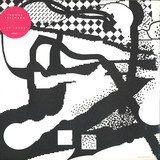
Metal is a collaborative endeavor between Bristol and London artists Jamie Paton and Mike Bourne of Cage & Aviary and Teeth Of The Sea, respectively. A shared love for modular synthesis brought the two together in 2018 for a series of improvised live performances and the tracks featured on this EP were born from rehearsals for those sessions. What draws ESP to this music is its paradigmatic nature. The tracks are exercises in improvisation yet there is a level of control in which the performance slowly comes alive. Jam sessions allow for artistic gratification, a freedom of form often at the expense of the listener, but when artists set forth exacting parameters, there grows an opportunity for alternate forms of fulfillment on both sides of the experience. As is typical among stylistic prototypes, a reduction of tools frees the artist to narrow their focus and explore more singular modes of performance.
Jamie and Mike chose texture as a concept, namely Metal, and following the aforementioned methods, minimized their instrumentation toward the aesthetic representation of that element. Operating in a void without the convenience and advantages of the infinite tools we’re now accustomed to, they exhausted a short list of granular details, honing their concept to a fine point. Throughout these three iterations on the theme, we hear timbres that depict metal literally, but moreover we gain a view into the duo’s visceral attachment to its materiality, abstractions of its surfaces, and an overall transgression from conventional constructs of beauty. The idea is simple, designed with discipline to romanticize both the crudeness and elegance in one of Earth’s most industrious and enigmatic elements. Metal.
Поиск:artistic control
Все
2x12"
Parisian label Another Moon are pleased to announce the imminent release of the second collaborative album by Scott Monteith aka Deadbeat and Paul St Hilaire aka Tikiman entitled 4 Quarters of Love and Modern Lash. When asked about about the album's motivations and production process, Monteith had the following to say: “I first heard Paul's voice back in 1996 when I stumbled upon the first Burial Mix 10 inch in a local shop, and it would be no exaggeration to say it has echoed in my mind ever since. We began working together in 2008, and it's fair to say the experience of performing and learning from him has left an indelible mark on my artistic process and my outlook on life in general. He is possessed of a truly electrifying spirit. I’ve had a folder on my hard drive called “For Tiki” for 14 years now, for those more often than not late night studio moments when I stumble upon a rhythmic or musical phrase and hear that unmistakable voice bubbling up in my mind. When that folder fills up with enough of those little magic moments I know it's time to call him, though strangely enough, he more often than not ends up calling me around those times. Such is his deep universal awareness.” “I wrote the initial sketches for what would eventually become this new album over the course of last year to a large extent as a way of trying to process what I perceived as a creeping darkness and sickness in both my own life and the world in general that desperately needed exorcising. When I received his initial responses I nearly fell off my chair. It goes without saying that Paul is a lyricist and poet second to none, and anyone familiar with his enormous body of work can attest to that. And yet, there was something in these latest pieces that hammered the proverbial nail clean through the wood. They perfectly captured this sense of rising tension, of a world that was getting almost psychedelically weirder and darker by the day, and both held a mirror up to this and offered some much needed release. Little did we know, nor could we possibly have imagined, that by the time the record actually hit the shelves, things would get exponentially weirder and darker still.” “It is my great hope that at some point in the coming months we will be able to get back on the road and share these new pieces with people in a live setting, as performing with Tiki is truly one of my greatest joys, and I think it’s where the fire in our work together truly burns brightest. In the meantime, it is my great hope that these 4 long form meditations might provide a little solace for people in their isolation, be it quietly, eyes closed lying on the coach, or cranked up, full on raving in their living rooms.”
Mirror Glaze Lavish” is Marc’s latest effort in trying to depict his cynical and disillusioned view of the present-day music scene, seen through a sonic magnifier that emphasizes its greatest controversies, by juxtaposing different electronic languages as a challenge to the current levelling artistic trends. The artist personality is nullified, standardized to a state of placid non-critical thinking. Everyday’s emptiness emerges as the structure of reality and only the cracks in it still lead to life. “Great souls suffer in silence”, once said Friedrich Schiller, but what if silence becomes an audible, danceable image? As if all these electro cuts, differently permeated with a balanced mix of playful darkness, were populated by eerie animals that cannot find peace with their habitat and keep dancing relentlessly until the very end of their miserable existence. Seen in this context, each of Marc’s tracks must be interpreted as an irreverent and poignant act of self-assertion vis-à-vis his contemporaries. Morah’s reinterpretation of “Celexxa” adds value to the original track, taking us for a dirty ride on a psycho-electro-charged rollercoaster.
Since forming in 2006 post-punk experimentalists Sebastian Melmoth have been on a thoughtful and adventurous musical journey. In a constant state of aural evolution, the London-based four-piece has a delivered a string of albums and EPs that variously touch on everything from garage-rock, grunge and lo-fi pop, to electro, new wave, dark ambient and music concrete, all the while drawing on a myriad of literary and artistic influences.
The band’s first release for Artificial Dance digs deep into their admirable and eye-opening catalogue and draws together some of the Amsterdam-based label’s favourites from the more electronic end of the band’s output. Entitled “The Dynamics of Vanity” – a comment on Western culture’s obsession with rehashing the past and the band’s own in-built distrust of artistic naval-gazing – the set is not a ‘best of’ retrospective but rather a ‘sort of’ selection of stylistically interconnected cuts that gives a very specific snapshot of the band’s work.
Check for example “Icarus”, a drowsy, hypnotic and sample-laden soundscape that effortlessly joins the dots between post-rock, pitched-down electronica and early morning ambient, or the slowly unfurling throb of thought-provoking opener “The Engineering of Consent”, a swelling, melancholic post-jazz meditation on propaganda and governmental mind control featuring spoken word samples from William S Burroughs in conversation with Brion Gysin, Timothy Leary, Les Levine and Robert Anton Wilson.
The showcased songs are typically hard-to-pin-down, too, with the re-imagined gothic horror break-up cut “Prosopagnosia’ and slow-burn audio addition of “Waiting For Godot” being joined by the wide-eyed morning dream-pop hallucinations of “Seeds (Descent Into Decadence)”. It all adds up to a collection that expertly showcases one engaging thread – of many – running through Sebastian Melmoth’s esoteric body of work.
The new album 'Aesthesis' from Shapednoise aka Sicilian artist Nino Pedone is out in November 2019 on Numbers.
Over the nine tracks and thirty seven minutes, there’s a controlled collision of noise and metal with rave and hardcore. Pedone’s penchant for the peak energies of gritty techno and modern rap/trap bleed through, with earth-shattering blocks of bass and beats conveyed within his practice of sonic sculpture. ‘Aesthesis’ melts these sounds down, evolving them into something new of his own - a complex, hybrid being designed to be played loud. The first listen, CRx Aureal, is one of the most arresting cuts from the record: a nightmarish thrill embracing a sense of constant movement, with intense shards of sound ricocheting and morphing, forged together through a series of metallic refrains. This flirtation with the extremes of sound has engulfed Shapednoise’s entire creative output and lifestyle - from his albums and EPs over the last decade, to his two labels Cosmo Rhythmatic and REPITCH, having recently dropped critically acclaimed releases by King Midas Sound, Shackleton & VTSS. Pedone describes ‘Aesthesis’ as “informed by a set of key elements that intwine all the tracks together, like steps in a long research process. It is intended as a sensory experience where the senses act as an interface, sound as space.” His experimentation with unorthodox rhythmic structures and radical cinematic design reveals actions grounded in direct experience, but “inspired by a kind of speculative realism”. In seeking to master the wild heights of noise and the weight of subsonic frequencies, Shapednoise aims to “generate a sense of unreal-yet-tangible space and time, where the physicality of the music builds up a place that exists between people and objects, rather than the other way around.”
A series of artistic collaborations are heard throughout the album - from the caustic R&B of album opener 'Intriguing (In The End)' which features vocals from multimedia artist E. Jane's alter ego MHYSA (of NON & Halcyon Veil), to Justin K Broadrick (founding member of Godflesh and ZONAL) on 'Blaze', and album closer 'Moby Dick'; a collaboration with Scottish legend Drew McDowall (ex-Coil and Psychic TV member), and Rabit (founder of Halcyon Veil).
A regular participant and core member of the CV family since
the very beginning, it was only a matter of time before Simon
Mann would unveil his first solitary vinyl release. Previously,
his appearances on CV’s introductory VA – CVR VI, the
stunning eight-track digital release titled the ‘Shadow Ranger
E.P.’, and performances representing the label both live and
DJing, have allowed Controlled Violence to decipher Simon’s
modus operandi, his artistic milieu, and his sound. Beneath
The Canopy is, however, Simon’s most synoptic work to date,
dancing between labyrinthine environs (natural or
otherworldly), heart-felt progressions, and playful percussion.
From start to finish, the organic elements of Simon Mann’s
artworks present themselves with a sense of wonderment.
The mind begins to lose itself between the defined sounds of
electronic devices, and those derived from reality. Beneath The
Canopy doesn't seek to confuse, but rather define, and
subsequently present the concepts of unity. It summarises the
duality between analogue and digital that occurs in our world,
proving that Simon Mann is both an elite musician, and a being
who is truly sync with the world around him.
As a musical act, Xeno & Oaklander (Sean McBride and Liz Wendelbo) conflate a rich love of analog synths, melody, and mythology with eloquent nuance and a nod to the heritage they draw from. While that construct is the duo's immediate kiss and crush, there's a deeper importance to their collaboration which began in 2004. As evidenced in their debut Vigils (2004), McBride and Wendelbo's artistic dynamic is more than just a mutual love for electronics but a contrast between architectural precision and painterly expression. From the film scores to the traditional albums they've recorded in their Brooklyn studio, they've both spurred and fostered the global synth wave revival through a commitment to analog-only production and performance as well as a strident respect for the medium.
On their latest album Hypnos and first for the Dais imprint, the duo leveraged the talents of visual artist and live sound engineer Egan Frantz to mix the album. It's a touch that adds both punch and balance, allowing their inherent conceptual voices to converge into a collage with defined edges and warm, synapses of frequency and beat.
'Musically, Hypnos is a return to polyphony after several years of using strictly monophonic synthesizers,' McBride says about the album's ethos. 'This has brought dense harmonies and a more complex counterpoint to the composition. Staying with the same equipment and processes without the inveterate compulsion to update and refashion allows for a clearly perceivable genealogy with our previous work.'
'I felt the desire to tell mythical stories, I also wanted my voice to sit strongly in the mix,' Wendelbo explains. 'I channeled the spirits of 60s French Pop chanteuse Françoise Hardy and 80s New Wave New York icon Tina Weymouth.' Her intentions are best evidenced on the tracks 'Angelique,'and 'Insomnia,' the former a spry track sung in French, against a springy rhythm. Laden with expanding and contrasting frequency and a penchant for strategic rhythm, Hypnos juxtaposes dance with distance, creating an immersive oeuvre that exudes contrast and control.
d
Virtuoso compositions, subtle synthetic atmospheres, voices oscillating between pure intentions and dreamlike fantasy, a confusion of feelings and desires, time and space...Garden of Love, the 3rd album by electro duo Scratch Massive makes an impression from the first moments that you hear its enigmatic beauty. Like a ghost train moving along a tightrope - between shadow and light, failure and redemption, violence and melancholy - this fourth studio album reaffirms the Parisian DJ/Producer duo style/vibe with their hybrid sounds and sensory experiences. For 15 years, Maud Geffray and Sebastien Chenut have maintained artistic and aesthetic control as they participated in the 'revolution of the dancefloors'. In the early 2000s, 'Made in France' electro became known for its hedonism and as the savior of an entire techno generation ready to fight (or at least on the dancefloor!) for a future that was increasingly frustrating and hypothetical.
On first glance, Garden of Love, appears to be an invitation to love and peace, however, nothing is ever that simple, as the album cover evokes a multitude of interpretations. The lyrics speak to the depths of the soul, covering a range of emotion from love, emotions, and fears ... Garden of Love is for our hearts and bodies to become receptive again: the disenchanted poetry of the Last Dance, the sumptuous opening track set against a backdrop of electro-pop murmured in the light and shadows as painful caress; the psychedelic scent of Sunken (a duet recorded with the complicit and poisonous voice of Léonie Pernet); and the dark-tech shores of "Fantome X" with the evanescent and hypnotic pop clarity of Feel The Void (both magnified by the vocals of Romain Thominot of the Reims pop band Grindi Manberg). Scratch Massive draws the outline of an electronic music in search of redemption - reinventing their icy grooves and confronting it with a naive elegance and a disillusioned romanticism that embodies our time.
White Shadows In The South Seas is the title of a book written in 1919 by Frederick O'Brien as part of a trilogy he wrote based on his experiences living in the Pacific islands in the early part of the 20th century. His book was taken as the starting point for a film to be directed, initially, by Robert Flaherty (famous at the time for his groundbreaking documentary / fiction film Nanook Of The North) with W.S.Van Dyke as his support. The film, ultimately, apart from the title, had little to do with O'Brien's book and Flaherty left the film after a few months leaving Van Dyke to finish it.
I purchased O'Brien's book, along with many others, from Basement Books, a secondhand bookstore in Melbourne/Australia. Part of my 'Islomania' and on going fascination with all things Pacific. When I discovered there was a 1929 silent film based on the book I sought it out and started to present it as part of my 'Live Music/Silent films' repertoire. Tabu by Frederick Murnau, which coincidently also had Flaherty as co-director originally, was the first film I ever wrote / improvised a score for and presented as a live film/music performance. My repertoire extends to over 23 films now.
My eclectic and diverse musical and artistic interests extend into 'Hawaiian', 'Exotica', 'Ambient' and 'Electronic' Music. I have produced several volumes of so called 'Electronic, Ambient, Exotica' on CD and Vinyl, including Kiribati, Globe Notes, Rayon Hula ( on Vinyl, CD and digital format ) and most recently, New Globe Note on Vinyl and White Shadows In The South Seas on CD.
White Shadows In The South Seas features some of the music presented in my live screenings of the 1929 silent film.
The film is the story of Dr. Matthew Lloyd, an alcoholic doctor who is disgusted by the exploitation by white people of the natives on a Polynesian island. The natives dive for pearls, however, numerous accidents occur and one diver dies. In anger, Dr. Lloyd punches Sebastian, the employer. As revenge and to prevent further interruption of his activities, he tricks Dr. Lloyd onto a ship with a diseased crew (thinking they are ill) and his men rough him up and send the ship off into a storm. Dr. Lloyd survives and is washed ashore on an island where none of the natives have ever seen a white man before. Lloyd is rescued and ultimately falls in love with the chief's daughter, who is Taboo, hence Lloyd is prevented from pursuing his love for her. An incident occurs and a young boy is thought to have drowned but Lloyd is able to revive him, earning him points and permission with the chief's daughter. Lloyd begins to realise that the local islanders have no sense of the value of the black pearls which grow in abundance around their island and he starts to dive for them and collect them. One morning the white man Sebastian unexpectedly turns up on a scooner and starts to offer the islanders trade for their pearls. Llloyd tries to interrupt the encounter and is shot and dies. His wife and the islanders morn for his dead body and, symbolically, the passing of a way of life.
Mike Cooper plays - Electric and acoustic lap steel guitars / electronics / Zoom Sampletrack / Kaos Pad / Casio SK1 / Korg Drum Machine / Self Made Instruments.
It also features field recordings made on Pulau Ubin by Mike Cooper during a month as Artist In Residence for The Artist Village / Singapore.
I would like to acknowledge and thank Lawrence English (Room40 Records) for his assistance and encouragement with the original recordings and the CD version of White Shadows In The South Seas.
All music written and played by Mike Cooper PRS/MCPS - except Po Mahina (trad. Arr. Cooper) and Hilo Hanakahi (trad. Arr. Cooper)
Recorded and Mixed at the Steelworks in Rome 2012/2013.
A White Shadow In The South Seas
In February 2014 'A White Shadow In The South Seas' was the title of an audio-visual installation I made at the Teatro In Scatola in Rome, Italy, presented as part of a series of sound installations titled 'Visitazioni' produced by Proposte Sonore.
The essay below, as well as our collection of Hawaiian shirts, Exotica and Hawaiian vinyl records, was an inspiration for this installation.
'..the transformation and reconstitution of the souvenir commodity as an indigenous ethnic art form and a scarce relic of Hawai'i's romanticized past...' from - Clothing and Textile Reasearch Journal - From Kitsch to Chic by Marcia A. Morgado.
And....
Michael Thompson's Rubbish Theory (1979)
' ...a critical aspect of Western culture is the pre-disposition to see objects in terms of two overt categories: the transient and the durable. Objects identified as transient have finite life spans and lose value over time, whereas those identified as durable have infinite lives and over time increae in value....category assignments are arbitrary, but once assigned a category membership determines relative value. Fashion apparel-by defenition-is assigned to the transient category; paintings commonly are designated durables....how is it that transient objects.. ( e.g. Hawaiian shirts and vinyl records ) ..sometimes become durables.
Objects assigned to the rubbish category are largely invisible, have no value and, ideally, no life span. Fashion for example, no longer worn and relegated to the back of the wardrobe has fallen into the covert rubbish category. But rubbish can be rescued and transformed. Thompson says ' What I believe happens is a transient object gradually declining in value and in expected life span may slide across into rubbish. Here it exists in a timeless and valueless limbo where it has a chance to be re-discovered and be successfully transformed to a durable. Such transferes are radical: objects gradually slide from transcience to rubbish, but the transformation from rubbish to durable involves an all-or-nothing leap across two boundaries, that separating the worthless from the valuable and that between the covert and the overt. Things drift into obscurity but they leap into prominence.
The delightful consequence of this hypothesis is that in order to study the social control of value we must study rubbish.
The rubbish-to-durable transformation is accompanied by the development of highly specialized knowledge derived from the discovery of subtle variations and complex details that went unnoticed in the objects transient stage. The discoveries initiate renewed interest in the object and its market value begins to climb. As prices soar beyond the reach of ordinary people, the object becomes available only in high priced collectors' markets. Furthermore, as market values rise, the aesthetic value of the object undergoes a reassessment as well, and it becomes increasingly apparent that the objects intrinsic beauty has been overlooked. Ultimately the object is re -assigned as a durable and becomes recognized as a timeless classic.
Exotica, Ambience and Pacificism - A dialogue with Mike Cooper & Professor Philip Hayward Deputy Pro Vice Chancellor of Research Southern Cross University, Lismore, Australia.
Thomas Fehlmann steps away as co-member of The Orb following two acclaimed full lengths on Kompakt (COW - 2016, Moonbuilding 2703 AD - 2015) and embarks back on his solo career with a career defining album 'Los Lagos' - from Detroit to Schaffel techno he conducts a broad spectrum of electronic music into a seamless flow.
Thomas Fehlmann has been active since the late 1970's from Palais Schaumburg, the Tresor defnining trio 3MB (with Moritz von Oswald and Juan Atkins), Ocean Club (together with Gudrun Gut) and of course The Orb.
Artwork direction and design by DESIGNERS REPUBLIC.
'Los Lagos' is Thomas Fehlmann's seventh solo full-length, his 4th for Kompakt following his Berlin inspired 2010 full length 'Gute Luft'. in the musician's own words it's about "checking the juice".
Establishing a picture of his current artistic condition, as suggested by the title - los lagos / die lage / the situation (literally translating to 'the lakes' but taking the meaning of 'wassup' in the context of a relaxed discussion between friends), the album refers to Fehlmann's "musical motivation, dreams and wishes" through the language of music exclusively: a way to "allow myself to techno" he says, "to techno as a means to deconstruct and rebuild again. Set up an area of tension, loose it in the flow of the grooves. Magnifying some detail out of proportion, regroup around that and slowly knit a texture. Expand."
"It was time to take a bend and head where the sun rises or sets, wherever my heart drives me." This is pretty much the kind of decision Thomas Fehlmann has made. 61 and shining, longstanding member of The Orb, multi-talented composer and boundless experimentalist, had to make in the twilight of his collaboration with Alex Paterson, eager to taste the flavours of the unknown on his own again. "It was the moment when felxibility would have become compromise'. Far from being the demise of their joint dream, this was bound to split it in two distinct, parallel fantasies - rich of their own singularity.
As goes with that essential love of his for the free-flowing nature of electronic music, a fascination born out of its "lack of borders", capable of "inventing, changing the emphasis, experimenting with an unpredictable outcome", 'Los Lagos' "freely connects disparate extremes. Art, disco, minimalism, schmalz, jazz and funk". As he likes to say, Fehlmann's head functions as a sampler, capturing elements and re-assembling them under his own embracing perspective ; not afraid to leap from a deep, dubbed-out hypnotism ('Window', 'Morrislouis', 'Freiluft') to the playfulness of '90s-style bleepy schaffel ('Tempelhof' featuring Max Loderbauer), through out-there, muscle-flexing dancefloor cuts ('Triggerism') onto the calmness of ambient ('Geworden').
In need to keep his inner balance in check, Fehlmann committed himself to "switch off the control" and follow his intuition, which isn't so much of an easy process as he also wanted to incorporate the side disturbances experienced: "it's a complex process of search and destroy to bring out a new beauty trying to expand my vocabulary". With 'Los Lagos', Fehlmann looked at finding "the structure that's surprising, disturbing and rewarding". The artwork for the record, courtesy of contemporary artist and friend Albert Oehlen whom he shares lots of artistic ambitions with, echoes the producer's "funky use of shape and space, sludge and clarity" like a second skin. A search for light and harmony that Fehlmann sums up eloquently: "Does your inner musical voice respond", that is the question. Then "doors open up in unexpected corners, rays of light appear; you follow through and you're in - in your oasis."
New Flesh Records 19 Ever wonder what would happen at the first minuts of an Alien in-vasion Answer can be found on Geometric Vision', the debut EP of Hungarian electro don Norwell on French New Flesh Records. Real name Balázs Semsei, Norwell has turned out a steady stream of releases on labels like Dalmatia Daniel, Pinkman, Chabu Recor-dings, Seagrave and his own Farberwechsel imprint until now, always coming on strong with a personal artistic vision plus a sense of drama.
Across four craftily cuts on Umwelt's label, he revisits his own dystopian universe made of sonic frequencies fused into rich atmosphere with a strong array of emotions. From the haunting opener Geometric Vision' to the explosive final Conversation Patterns', Nor-well signs one of his best release to date.
Fascinating synth melodies supported by raw drums and insane electro textures compose this must have 12'' and an essential addition to the New Flesh catalog. Heavy electro darkness for serious heads, this is a soulful EP full of depth, impossible to ignore!
DJ, musician, former saxophonist - there's a combination of skills you don't get to see too often. Get acquainted with DEMIAN, then, aka Damien Pontonnier, a French artist who relocated to Paris after an influential career as
electronic music pioneer and party organizer in Northern Spain. Now an accomplished producer with releases on labels such as Correspondant or Clouded Vision, he presents the MILESTARS EP for Kompakt - a quirky and vibrant track trio with an obvious knack for catchy melodic details in a kinetic techno corsage.
Having amassed quite the experience portfolio when it comes to grassroots club culture, DEMIAN knows a thing or two about inspiring a dance floor - but that doesn't necessarily account for the artistic versatility or genuine lust for sonic adventures and happy accidents that these cuts exhibit: opener DÉCLICA boots with deliciously stoic cowbell-isms that leave the doors of perception wide open for some iconoclastic, yet surprisingly effective synth action.
Meanwhile, the title cut invests in texture-rich atmosphere without forgetting about the precise amount of momentum you need to tip the floor over the edge. Closer NO HYPE FOR THE FISH takes things in a more hypnotic direction, intertwining freeform arpeggios and tape delay with smart beatmanship. Simultaneously lush and lean in its overall aesthetic, the MILESTARS EP will feed both the nerd and the dancer in you - a swiss army knife with all the right tools for masterful crowd control.
The Europe-centered techno scene might be thinking: Where is techno in a city as vast, dynamic and electric as New York It's alive and well, and keeps growing through aptly-named NEW YORK TRAX. Founded in 2016 and based in Brooklyn, NEW YORK TRAX is an outlet for New York music, by New York artists, in New York city.
New York Trax 02 was written by Boris Brenecki (Ontal, Impulse Controls), who has recently relocated to New York, starting a new chapter in his life and artistic career. This record is the very first material he produced in New York, heavily inspired by the city and its people. 'The Oven', with its continuous filthy groove intensified by metallic percussions, is a serious candidate for an instant classic and a deadly weapon when used on a dancefloor. The grittiness of "The Oven" was depicted through images of the less beaten paths of New York in a well-received official video published recently by the label. Dark yet insanely dynamic "Transit System", based on field recordings of the New York City subway, opens with a bang the B side of the record, followed by "Strictly Hardcore", a sonic manifesto of brutality. Get it while it's hot!
Drew McDowall's back story reads like a primer of psychedelic fiction woven into statements of the unbelievable, superhuman and outright insane. Somewhere in the chaotic madness, comes an artist such as McDowall with total control and absolute calm within his songs and artistic method.
Growing up in the gangs of 1970's Scotland, Drew McDowall started to shy away from the daily violence once punk took hold of the counterculture youth. Drew McDowall quickly scrambled to form his own punk band in 1978 with his then wife, Rose McDowall, called The Poems. Shortly lived, the Poems released a single and various tracks but more importantly, the band allowed McDowall to network with other local musicians in Glasgow, such as Orange Juice, and allowed him to travel down to London thus forming friendships with Genesis P-Orridge, David Tibet and countless others, bringing Drew into the fold of the experimental revolution happening in the UK brought upon by Throbbing Gristle and executed by bands such as Psychic TV and Current 93.
During the 1980's, McDowall found himself in the ranks of P-Orridge's Psychic TV and collaborating with the mysterious duo comprised of former Throbbing Gristle creator Peter 'Sleazy' Christopherson and the enigmatic John Balance who had been creating esoteric and progressive electronic music under the title of Coil. It was during his formative collaborations with Coil that McDowall saw himself shift from occasional contributor to austere full-time member of the arcane outfit. McDowall's impact on the band's sound was apparent as the releases transformed from their previous avant pop signature to a more complex and methodic electronic imprint accompanied by even more abstruse subject matter than previous years. McDowall would continue honing his compositional skills with Coil until the release of the band's two most broad-minded albums, Astral Disaster and Musick to Play in the Dark.
The past decade, Drew McDowall found himself living in New York City and re-appropriating himself within the local music scenes he found himself contributing to. In 2011, alongside his friend and collaborator, Tres Warren (Psychic Ills), McDowall found himself exploring his passion of meditative drone and abstract sound patterns in their project Compound Eye. In recent times, McDowall's production work has provided the music world with some of the most outstanding remixes for bands such as Nine Inch Nails, Azar Swan and Long Distance Poison as well as his well-received scores he composed alongside artist Tamaryn for the works of Bret Easton Ellis. Outside of his collaborative duties, McDowall formed an audience as a solo artist, playing countless performances and showcases around New York's electronic music haunts.
Dais Records approached Drew to solidify his standing as a leading electronic musician with the recording of new material neatly wrapped up in his debut album entitled 'Collapse'. Recorded in 2015 in Brooklyn, NY, McDowall's synonymous modular synthesizer compositions are augmented by obtuse sampling cut-ups and contributions from Nicky Mao (Hiro Kone / Effi Briest) rounding out the lumbering sequential knot work that has become synonymous with McDowall and craft.
Alftavatn is Thomalla.s second EP release on Berlin-based Techno-label Krakatau Records. The tracks captivate instantly and still surprise with imaginative variety, sudden shifts and dazzling timbre. 23 year-old Thomalla was featured as a co-musician on Bodi Bill's European ›What‹-Tour in 2011/12 and recently started playing live-shows on his own. His tracks unite artistic and dancefloor-compatible appeal, which he was also able to show during last year's visit of the Red Bull Music Academy in Madrid. The Alftavatn EP articulates his forward-looking interpretation of electronic music, embedded in references of his own eclectic education. Techno without thought control.