“The Berlin based label “lyree” continues its series with the release number “003” of the catalog. “Kuruka” is an electric and sparkling V.A. composed by Temudo, Judas, Quelza, D-Leria and JLTZ. The conceptual aspect of combining the arts of Music, Photography and Poetry is still well marked in this release, as well as the futuristic groovy and dark-tense sound that has characterized the label so far. From the rawness and aggressiveness of “Fuck Fifa” by Temudo and “La Charmeuse” by Quelza, to the “plasticky” brain-melting synths of “Berimbau De Boca” by D-Leria, passing through the darkness loopy “Σ-Range” by JudaΣ and the new acid of “Acid On The Rocks” by JLTZ, “Kuruka” manages to capture the listener’s psyche and to drag him onto fiery dancefloors. Each Record comes with a poem written by the label owner Valerio Polani as an insert. Photo Cover by Valerio Polani Artwork by Metaprog Master by Joao Rodrigues at Tema Mastering Studio.”
Search:aspect
repress
"The haunting ambience of Beat fit somewhat with the then-popular Massive Attack and Portishead, but the album's subsonic drone made it more of a minimal mood piece than a collection of songs." MAGNET
The second in a trio of albums released by the core duo of Lawrence Chandler and Martha Schwendener, Beat is without doubt their definitive artistic statement.
Coming 20 years to the day of its original release, this is the first time this album has been available on vinyl in almost two decades, and the first ever U.S. vinyl release. (Was released here on Beggars Banquet, original copies very hard to find..)
The second album from New York City's Bowery Electric was released in late 1996, less than 15 months after their self-titled debut, but it found them having traveled light years musically in the interim, the group having seemingly decided to see how far they could take the guitar/ bass/ drums/ vocal setup into the atmosphere.
Every aspect of their approach had been refined and focused: squalling, distorted guitars had been transformed into hazy, sensual sheets; the live drums transmuted to sampled rhythms more in debt to the blossoming downtempo sound of the day; bass lines reduced to their most basic diagrams; vocals submerged to become one with the narcotized fog of the instruments; even the lyrics were reduced to a few minimal lines used sparingly so as not to overshadow the dynamic.
Beat is a lush and dense mantra of shadowy percussion, barely-there vocals and immersive drones that envelops the listener in an opiated blanket of sound.
quotes:
"Bowery Electric have made something utterly astonishing here. So deep, so wide, and somehow as intimate as a train crash. The first six tracks are just the most crushingly beautiful thing I've heard in 1997; the last five are even better. Good god, THIS IS IT." Melody Maker
"While cymbals shower down over the songs like a torrent of shattered glass, their austere beauty is never static. Ambience has rarely sounded so messy." Exclaim
A near-perfect mix of shifting dance beats, menacing electronic drones, analogue bleeps,
syncopated rhythms and ethereal vocals." Now UK
Boston-based progressive death metal outfit Revocation return from the Lovecraftian outer limits on new album, Netherheaven. Four years in the making, the Billboard-charting trio—featuring Dave Davidson (vocals/guitars), Ash Pearson (drums), and Brett Bamberger (bass)--meticulously explore the allegorical and literal aspects of Hell as they dig deeper into the darker, more diabolical side of death metal. In short, where the previous album, The Outer Ones (2018), jettison Revocation into the horrific maw of the cosmos, Netherheaven bores deftly through the nine rings of Hell to directly confront Lucifer and his multitudinous faces. The album's stunning Renaissance-style Paolo Girardi (Firespawn, Power Trip) cover art says it all. Revocation will release Netherheaven on September 9th. Indeed, as the adventurous triumvirate enter their 16th year, they show zero signs of slowing down or softening up. If death metal was looking for an Album of the Year, it's got a top contender in Netherheaven.
Black Truffle is thrilled to announce Drumming Up Trouble, the first release of previously unissued music by Alvin Curran on the label. Collecting works recorded between 2018-2021 and a side-long epic dating back to the early 80s, as the title suggests, Drumming Up Trouble focuses on a hitherto almost unknown aspect of Curran’s encyclopaedic and omnivorous musical world: his experiments with sampled and synthesised percussion. As Curran’s wonderful, wildly sweeping liner notes make clear, his fascination with drumming belongs to the radical investigation of music’s fundamental elements that has marked his output since the beginnings of MEV, who aimed (as he says in a recent interview) to return ‘in some collective way to a non-existent start time in the history of human music’. Whatever kind of music our proto-human ancestors played, he writes, ‘drums were front and centre in the mix. Drums rule!’
In a paradox typical of Curran’s approach, Drumming Up Trouble interrogates this most ancient dimension of music with contemporary technology. On the first side, we hear recent pieces performed using the sampling software and full-size MIDI keyboard setup Curran has refined since the 1980s. Two of them are wild real-time improvisations, primarily utilising an enormous bank of hip-hop samples. Building from polyrhythmic layers of drum machine fragments to wild cacophonies of clashing vocal samples, scratching, and frantic pitch shifting, these energetic and at times hilarious pieces occupy a space somewhere between John Oswald’s Plunderphonics, Pat Thomas and Matt Wand in the Tony Oxley Quartet, and the propulsive Kudoro/Grime fusion of Lisbon’s Príncipe label. They are improvisations are accompanied by two austere, minimal compositions realised in collaboration with Angelo Maria Fallo: ‘End Zone’ for orchestral bass drum and high oscillator, and ‘Rollings’, where a snare roll is gradually stretched and filtered by digital means into ‘floating electronic gossamer’.
The incredible breadth of Curran’s output makes it pretty unlikely that a listener familiar with his work would be surprised to find it branching out in a new direction. But no degree of familiarity with his work can really prepare for side B’s epic and bizarre ‘Field it More’. It’s perhaps best to let the maestro describe this unhinged and infectious offering in his own words: ‘It features an 8 bar funky minimal riff à la James Brown, played on synth and an-out-of-tune piano, synced to a pre-paid patch on the Roland drum machine. Over this is laid a heavily processed track of the voices of dancer Yoshiko Chuma and movie-maker Jacob Burckhardt discussing an upcoming performance of theirs at the Venice film festival, capped by a track of my playing an increasingly out of control blues over the top of all of the above’. Only Pekka Airaksinen’s Buddhas of the Golden Light comes to mind as a reference point that might even vaguely compare to this wild home-brew of drum-machine funk, mad improvisation and squelching electronics, which eventually dissolved into a massive, layered cluster. Ancient and modern, synthetic and human, hysterical and rigorous, Drumming up Trouble is 100% Curran.
- Delirious Eyes
- Parish (Overworld Theme)
- Grainer To Chicago
- Fourth Flood
- Endless Eve
- Troy Story
- Perilloux & Sons Llc
- Disorientation Is Normal
- Trinkets
- Behind The Fenceline
- Last House In Dimes
- Ditch Man's Curse
- Planner Will Hide
- Your Pawpaw
- Refinery Fight
- Apocryphon Of Kenner John
- Here Comes The Scum
- True Padu
- The Long Road
- Corrupted Sanctum
- Forgive Me, Father
- Virtual Death
- Homunculus
- View Of A Burning City
Red Vinyl[35,25 €]
Baton Rouge sludge band Thou have released over a dozen LPs worth of music, collaborated with divergent artists like Emma Ruth Rundle and The Body and released covers that run the full gamut of genres. Continuing their practice of bucking typical metal tradition, their latest record, a split release with composer Gewgawly I, is a soundtrack created for the highly anticipated new video game NORCO.
Gewgawly I has created a master work of ambiance, not only reminiscent of some of the best game soundtracks from the 80s and 90s but also a stunning work of contemporary experimental music pushing the genre forward in exciting ways. Thou have rounded out the game’s grit with a wash of downtuned doom and drone. The band has previously been described as “For fans of: alienation, absurdity, boredom, futility, decay, the tyranny of history, the vulgarities of change, awareness as agony, reason as disease,” and these themes
come to life vividly in Thou’s collaboration with the richly illustrated world of NORCO.
“Thou represents an aspect of Louisiana that’s close to my heart. The members know the suburbs of New Orleans and Baton Rouge well. They capture a kind of strange irreverence in their sound and visuals that’s specific to the region and has influenced the game NORCO,” says Yuts from Geography of Robots. ”We’ve been trying to collaborate for a while, and I’m just stoked it’s finally happening!”
- Delirious Eyes
- Parish (Overworld Theme)
- Grainer To Chicago
- Fourth Flood
- Endless Eve
- Troy Story
- Perilloux & Sons Llc
- Disorientation Is Normal
- Trinkets
- Behind The Fenceline
- Last House In Dimes
- Ditch Man's Curse
- Planner Will Hide
- Your Pawpaw
- Refinery Fight
- Apocryphon Of Kenner John
- Here Comes The Scum
- True Padu
- The Long Road
- Corrupted Sanctum
- Forgive Me, Father
- Virtual Death
- Homunculus
- View Of A Burning City
Black Vinyl[33,57 €]
Baton Rouge sludge band Thou have released over a dozen LPs worth of music, collaborated with divergent artists like Emma Ruth Rundle and The Body and released covers that run the full gamut of genres. Continuing their practice of bucking typical metal tradition, their latest record, a split release with composer Gewgawly I, is a soundtrack created for the highly anticipated new video game NORCO.
Gewgawly I has created a master work of ambiance, not only reminiscent of some of the best game soundtracks from the 80s and 90s but also a stunning work of contemporary experimental music pushing the genre forward in exciting ways. Thou have rounded out the game’s grit with a wash of downtuned doom and drone. The band has previously been described as “For fans of: alienation, absurdity, boredom, futility, decay, the tyranny of history, the vulgarities of change, awareness as agony, reason as disease,” and these themes
come to life vividly in Thou’s collaboration with the richly illustrated world of NORCO.
“Thou represents an aspect of Louisiana that’s close to my heart. The members know the suburbs of New Orleans and Baton Rouge well. They capture a kind of strange irreverence in their sound and visuals that’s specific to the region and has influenced the game NORCO,” says Yuts from Geography of Robots. ”We’ve been trying to collaborate for a while, and I’m just stoked it’s finally happening!”
King Gizzard & The Lizard Wizard return with new album K.G., their sixteenth since forming in 2010. In the wake of a global pandemic, it’s a collection of songs composed and recorded remotely after the six members of the band retreated to their own homes scattered around Melbourne, Australia. K.G. is a pure distillation of the King Gizzard sound, one that cherry picks the best aspects of previous albums and contorts them into new shapes via defiantly non-western rock scales.
King Gizzard & The Lizard Wizard are repressing their sixteenth album, K.G. n 2010. In the wake of a global pandemic, it’s a collection of songs that saw the six members of the band retreating to their own homes scattered around Melbourne, Australia to compose and record remotely. But have no fear! Not a drop of that unnamed alchemical something that makes this band so special is missing. This is the Gizz firing on all sonic cylinders, for if ever a band were built to swiftly adapt to adverse circumstance then it is them. Hell, on paper Covid-19, with its monstrous yet unseen face, ecological implications and new language, even sounds like an abandoned concept for a King Gizzard & the Lizard Wizard album.
Truth be told, the practicalities of the creation of K.G. is a side-issue. It is the contents and the sheer visceral power of music that matters. Music that will live on long after a virus has passed. Back in 2017 the band released Flying Microtonal Banana, now one of their most highly regarded albums. That it was the first of five released by the band that year and was only part the story – a story made all the remarkable by the fact it was recorded using a microtonal musical scale that requires quarter tone tunings, on instruments custom-made for the occasion. It spawned a plethora of live favourites such as ‘Rattlesnake’, ‘Sleep Drifter’, ‘Nuclear Fusion’ and ‘Billabong Valley’ and showed the wider world that the Gizz paint from a palette that extends far beyond the musical colours of western rock. Here were songs in tunings more common in traditional Turkish or Arabic music.
“FMB was one of the purest and most enjoyable recording experiences we’ve had, and the ideas just kept coming” explains de facto band leader and multi-instrumentalist Stu Mackenzie. “But we didn’t think we would play it live as the music dictated a new medium that requires different instruments, new flight cases and so. It was a liberating studio-based experiment which surprisingly translated seamlessly and spawned some of favourite songs to play live.”
So now they return to the microtonal tunings on K.G., an album best described as a pure distillation of the King Gizzard sound, one that cherry picks the best aspects of previous albums and contorts them into new shapes and via defiantly non-Western rock scales. There’s walk-on theme song ‘K.G.L.W’, the celestial disco-funk of ‘Intrasport’, the righteous life-giving staccato rock of ‘Ontology’, epic stoner-sludge closer ‘The Hungry Wolf Of Fate’, which ends the album in abrupt burst of white noise. All come together to represent the next-level of the expanding Gizz sound.
K.G. is both a stand-alone work and also part of a bigger musical picture. More news on that shall be forthcoming – fans of the band know by now that King Gizzard don’t do things by halves. If music were organic matter, then their albums are ever-changing entities: initial highlights are often superseded on further exploration, favourite tracks replaced by less obvious moments, while riffs or bursts of noise from four or five albums back might suddenly rear their heads again.
Bristol native Daffy returns to Shall Not Fade with his second solo EP, focusing on the darker aspects of 4x4 garage.
The title track typifies Daffy's unique and forward-thinking take on UKG. The dynamic chant of a dancehall MC is ramped up to invigorate a UKG stomper, the product: a rude, flavoursome track which evokes Spooky and Riko Dan's "High Power". Serious. The aptly-named "Darker Days" is more reminiscent of El-B with cool-toned low end growls before "Take It Easy" and "Warped" bring things to an energetic close with a stomping 4x4 rhythm and warped bassline which nod to old school speed garage.
Brain Feelings is the debut EP from South London band moa moa. With glitchy synths, pulsing drums and catchy choruses, moa moa are proving that pop can be weird and accessible at the same time; the perfect psychedelic soundtrack to the comfortable tedium of life.
2021 saw moa moa ramp up the excitement around them with a pair of exquisite singles including the kaleidoscopic pop of ‘Drive’ – which features on forthcoming EP ‘Brain Feelings’ – and their Speedy Wunderground single ‘Coltan Candy’ which came out to rapturous acclaim from 6 Music’s Steve Lamacq, Huw Stephens, Don Letts, and Shaun Keaveny, and publications including NME, DIY, Paste Magazine, and Brooklyn Vegan.
The band’s debut EP ‘Brain Feelings’ explores states of emotional suppression and emotional unintelligence. James says, “I often feel that, when balancing every aspect of my life, I don’t have time left to process and express my emotions. The feelings just get stuck in my brain, making me feel insular, disconnected and less able to participate in the world.
CHARLES MINGUS (1922 – 1979)
At the end of the Fifties, hard bop was something else looking for a way out. The inexorable cycle of avant-garde trends needed renewal. These were years when both sides of the Atlantic saw wide-reaching deconstruction in philosophy, painting and music. Everything that seemed to belong to a healthy, normal, established order was seen with the most scrupulous scepticism.
In the history of art, successive pivotal years have always had an artificial aspect while at the same time they have revealed the state of an art that would define a new aesthetic. 1913… 1922 … 1959 … The Shape of Jazz to Come, Kind of Blue, Time Out, Ah Um … When creative minds decoded the structures of an art that was current, it was time to discover new ones. Charles Mingus was one of those who deconstructed, a creator and inventor who marked out a path for the other artists to come.
Sometimes a band grows so exponentially from one record to the next, it’s almost jarring. Hell Fire has already established themselves as the preeminent masters of a new hybrid breed of Bay Area thrash and NWOBHM in just a few short years, but their fourth album Reckoning is the type of ascendance that truly sets a band apart.
Reckoning is their Master of Puppets, their Number of The Beast, their Defenders Of The Faith. From the very first notes of the album opening title track, you can feel a vital new energy and inspiration to their music. To say Hell Fire used the recent global downtime to dig within and fully refine their sound would be an understatement. It truly is a reckoning.
“This album is every aspect of our band amplified to its maximum potential,” says singer/guitarist Jake Nunn. “This is the record we've always wanted to make, and it feels like we're just getting started,” guitarist Tony Campos adds. “We wanted to push ourselves musically and capture some of our frustrations, anger, loneliness, and rage over being locked inside and dealing with life during a global pandemic in the days when no one really knew how to navigate,” says drummer Mike Smith.
With no touring on the horizon in 2020, the band hunkered down and recorded nearly a full album in preproduction home demos. “I set up a little studio in my garage to record guitar, bass, and vocal tracks,” Campos says. “While Mike bought an electronic drum set and we demoed every song so we were more prepared going into the studio.” Each of them found themselves practicing more on their own and ironing out every last detail and nuance before finally being able to once again play in a room together.
The band’s heightened professionalism also brings in guest bassist Matt Freeman (of Rancid and Operation Ivy fame) on the album after original bassist Herman Bandala departed the band amicably during the initial writing process. New bassist Kai Sun joined Hell Fire in Fall 2021. Reckoning was recorded and mixed at Atomic Studios in Oakland, CA with Chris Dugan.
The title track kicks things off with a slight nod to the layered melodies of acoustic and harmonized guitars of Metallica’s “Battery” before the band rips into its signature galloping guitar picks, soaring harmonies and blistering rhythms. It’s an anthem and a gauntlet thrown down with Nunn’s shimmering screams and guttural howls while dueling guitar solos and Smith’s relentless double bass drum shuffle bring home the point that Hell Fire is born anew. “Medieval Cowboys” hearkens to the epic attack of Iron Maiden’s Powerslave with glistening melodies and complexly interwoven musical shifts that showcase exactly how tight and precise the band has become. “Addicted To Violence” is blistering thrash and “Thrill Of The Chase” soars with rich harmonies while both songs lyrically reflect hard truths the band faced in isolation. The lush acoustic based ballad “A Dying Moon” shows the band effortlessly stretching out in new directions. “It Ends Tonight” is an epic anthem served as a mission statement to the band’s return wherein arpeggiated riffs, squealing pinch harmonics, group chant vocals and Smith’s octopus-armed beats will have legions raising their fists in the air in salute.
“It’s somehow the heaviest and most melodic work we’ve done, and I’m proud of the discipline it took,” Nunn says. “It’s a wild thing.”
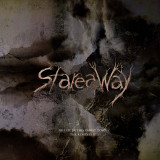
Back in 2011 Markus Guentner and Heiko Badje formed Stareaway to follow their vision of creating both enchanting and haunting music from melodies and drones. Combining Guentners complex Wall of Electronic Sound and Badjes ethereal androgyn voice and multifaceted guitar play, they indeed produced some epic works between Ambient, Pop and Shoegaze, strangely shimmering and profoundly mysterious.
Now Stareaways fantastic (and back then maybe a little overlooked) album No Life In This Ghost Town sees its rerelease and is, for celebrational purposes, accompanied by this EP of four stunning remixes by stunning artists Rafael Anton Irisarri (who also did the mastering), Simon Scott (Slowdive), Thomas Fehlmann and David Westlake (ex Sneaker Pimps). Rafael Anton Irisarris magical take on O Suomi sparkles bright, still with melancholia always present. David Westlake emphasizes the Pop-aspect of Appointments, adding lush synth melodies and light-filled grooves while Thomas Fehlmann lets All Over You spiral into Popambients most majestic heights. Finally Simon Scott builds a Kathedrale aus Klang on Dreams May Never. Amazing remixes of amazing originals.
Like meeting an old friend again, Dalmata Daniel welcomes DJ Overdose back to their catalog. Six years ago the infamous Dutchman's '05 Poly 800 Loop' EP was released, which served as a powerful launch to Dalmata Daniel, opening the first chapter in their story. Later in 2019, a split release with Sematic4 was also a highlight in the life of the label; and now, 3 years later, DJ Overdose checks in with the 'Powers of Ten EP' with a J. Mono remix, available both in digital and vinyl format, the latter having 2 bonus tracks.
The distinct, crunchy sound of DJ Overdose, bearing aspects of old school hip-hop-infused sampling and contemporary analog vibes creates the perfect blend of both worlds. 'Garden of Lust' opens up the adventure with a combo of warm basslines and solid drum-programming. This initial track feeds us these cardinal elements as the bread and butter they are: subtle variations and fine spices do appear here and there as the track goes along, but the key, beating pulse in 'Garden of Lust' brings massive hits stable as a sledgehammer in the hands of a blacksmith.
'Feed The Beats' elevates the game to cinematic territories: its majestic string-like central melody makes me alert and ablaze, making me feel like I'm in a late 80s L.A. setting facing malevolent zombie-aliens in my Wayfarer shades. Blasting beats and Carpenterian coolness all over the place, while the spooky bassline just keeps sneaking up on me endlessly.
If you are wondering when's the best time of the year to bring out your boombox at last, then this is your lucky day: with 'BOB', the first bonus track on the vinyl, we can experience some roarin' bassdrums, snappy snares, MCs with the speed of light and all that jazz. The low-bit sampling and vinyl scratching come and kick you right in the face so hard that it becomes pretty obvious you'll can't help but start some serious beatbox battles in your bathtub with your rubber duck.
A feverish groove in the prime time of a funky bash, in the haze of a sensual rave-up: that's all one really wants when going for a Saturday night out. We definitely get this and much more from 'Room 714', another vinyl-only bonus track. A berserk voice and ethereal chords guide us through this mysterious track, but while we are busy trying to impress our crushes on the dance floor, things around us are slowly getting very, very freaky, maybe a bit way too freaky.
As wobbly and jolly as it gets, our Dutch friend ends his session with 'Ðr ¡v€ M€ ¢r@z¥', a vocoder-heavy disco banger, full of merry vocal FX and smart rhythmic glitches as he completes his flight. To close the EP, our local hero, J. Mono delivers an insane remix of 'Ðr ¡v€ M€ ¢r@z¥': one can clearly imagine how he grabs and turns the BPM knob all the way up, fires up some arpeggios on his mighty synths and casts a complete reimagination of the original track.
New version on Solar Orange Vinyl. RIYL: Slowdive, DIIV, Electric Youth, The Cure, My Bloody Valentine. Solo project of Los Angeles based Matthew Doty (ex-Saxon Shore). For Matthew Doty, Deserta has always been about exploring a sonic universe that allows him to express a kaleidoscope of emotions, without having to say much at all. Through a patchwork of reverb-tinged textures – drone guitars, lingering synths and driving percussion – the Los Angeles-based singer/songwriter and multi-instrumentalist weaves together stories of care, frustration and catharsis that ultimately stretch to a gentle resolve. On new album Every Moment, Everything You Need, Doty chronicles the kind of year we all fear, full of uncertainty, tension and sustained pressure, and transforms it into a celebration of perseverance. It’s an essential reminder that we have the power to shape the stories we tell. The pandemic meant that Doty had to give up his studio and downsize a lot of his gear and instead, carve out a space in his two-bedroom apartment to craft the next chapter of Deserta. Sharing the space with his wife and son, Doty and his partner are also essential healthcare workers, which meant the couple would often have to tag-team childcare, along with 13-hour shifts in PPE and people constantly calling with questions about the ever changing guidelines and protocols. Once the blueprint for Every Moment, Everything You Need was set, Doty reached out to a number of collaborators to stitch together his vision for the sonic landscape. James McAlister (Sufjan Stevens, The National, Taylor Swift) came onboard to perform and record drums, while Caroline Lufkin (Mice Parade) wrote and performed vocals on the ethereal “Where Did You Go.” Elsewhere, the LP was mixed by Dave Fridmann (Tame Impala, Mogwai, Interpol), with Beach House and Slowdive producer Chris Coady engineering and co-producing, making this the first time Fridmann and Coady had worked together on a project. While the vocals are more prominent than Deserta’s previous albums, it’s their amalgamation with the instrumental aspects that secures Every Moment, Everything You Need as Deserta’s most confident and assured release to date. An affecting emotional candor teamed with persistent riffs and tenacious rhythms sees Doty unafraid to dive deeper; an unrestrained approach that ushers in a lustrous purging of agitation and anxiety. Showcasing those dark, exhaustive thoughts through crucial swells and looped, electronic soundscapes, it’s an LP that’s infinitely layered, with something new to discover with each and every enchanting listen.
RED is a project by Francis Latreille aka Priori. It showcases a darker, more chaotic, and rugged sound. Whereas a lot of Piori's work investigates the delicate and elegant aspects of nature and technology, this album delves into the eeriness of it all, the loneliness of rural living, and the appeal of mysticism. Strange sounds and textures are arranged in unpredictable but sometimes surprisingly dancey moments.
“Rob wanted the world of The Northman to feel harsh and uncomfortable, and for everything to feel like it was caked in mud and dry blood, so it was crucial for the score to mirror that.” Composers Robin Carolan (Tri-Angle Records) and Sebastian Gainsborough (Vessel) were given a task of epic proportions when director Rob Eggers (The VVitch, The Lighthouse) asked them to create the score for his ambitious and highly anticipated new film The Northman, releasing on April 22nd. They needed to make a score that both honored the immense research that had gone into the authenticity of this Viking era period piece and complimented the cinematic maximalism of the film for a modern audience. The artists stretched themselves to the depths of their creativity and the resulting album is a gorgeous sonic tableaux that places the listener right in the center of the film.
While arranging the score the composers consulted musician and ethnographer Poul Høxbro for inspiration and insight into the history of Viking music. Having backgrounds in left field electronic music, Robin and Sebastian felt liberated by the constraint of using a small selection of musical tools for this piece. “Electronic music has almost limitless potential when it comes to making sounds and that’s obviously an incredible thing, but you can also go down the wormhole and get lost in it sometimes. There’s no risk of that happening when you only have a few primary instruments to draw upon.” Robin remarked.
They utilized traditional instruments such as the tagelharpa, langspil, kravik lyre, and säckpip to build the cinematic world of The Northman but they also took creative freedoms in adding instruments likes drums, which some academics believe wouldn’t have played a big part in Viking musical culture, simply due to the lack of archaeological evidence of actual drums. “One of the pieces we wrote was intended to emulate the sound of a bullroarer; an ancient instrument used in sacred rituals or in battle to intimidate enemies. It makes a really disorienting roaring vibrato sound and low frequencies capable of traveling insane distances.” Robin says when asked about one of the more unique aspects of the score. Everyone involved put so much effort into both their research and their creativity and this richness is evident in every track. The album as a whole is a cinematic masterpiece of sound and ambiance, both gorgeous and disturbing, like the film it so beautifully accompanies.
“Rob wanted the world of The Northman to feel harsh and uncomfortable, and for everything to feel like it was caked in mud and dry blood, so it was crucial for the score to mirror that.” Composers Robin Carolan (Tri-Angle Records) and Sebastian Gainsborough (Vessel) were given a task of epic proportions when director Rob Eggers (The VVitch, The Lighthouse) asked them to create the score for his ambitious and highly anticipated new film The Northman, releasing on April 22nd. They needed to make a score that both honored the immense research that had gone into the authenticity of this Viking era period piece and complimented the cinematic maximalism of the film for a modern audience. The artists stretched themselves to the depths of their creativity and the resulting album is a gorgeous sonic tableaux that places the listener right in the center of the film.
While arranging the score the composers consulted musician and ethnographer Poul Høxbro for inspiration and insight into the history of Viking music. Having backgrounds in left field electronic music, Robin and Sebastian felt liberated by the constraint of using a small selection of musical tools for this piece. “Electronic music has almost limitless potential when it comes to making sounds and that’s obviously an incredible thing, but you can also go down the wormhole and get lost in it sometimes. There’s no risk of that happening when you only have a few primary instruments to draw upon.” Robin remarked.
They utilized traditional instruments such as the tagelharpa, langspil, kravik lyre, and säckpip to build the cinematic world of The Northman but they also took creative freedoms in adding instruments likes drums, which some academics believe wouldn’t have played a big part in Viking musical culture, simply due to the lack of archaeological evidence of actual drums. “One of the pieces we wrote was intended to emulate the sound of a bullroarer; an ancient instrument used in sacred rituals or in battle to intimidate enemies. It makes a really disorienting roaring vibrato sound and low frequencies capable of traveling insane distances.” Robin says when asked about one of the more unique aspects of the score. Everyone involved put so much effort into both their research and their creativity and this richness is evident in every track. The album as a whole is a cinematic masterpiece of sound and ambiance, both gorgeous and disturbing, like the film it so beautifully accompanies.
• Remastered for maximum fidelity.
• Features deluxe packaging, a fold out posted and a patch.
• Limited and individually numbered.
Fear Factory is an American Industrial Metal band formed in Los Angeles in 1990. Throughout their career they have released nine full-length albums with a tenth studio album coming in 2021. Soul Of A New Machine is the band’s debut album for Roadrunner Records, released on August 25, 1992.
AllMusic's Jason Birchmeier gave the album three stars out of five, remarking that "Fear Factory were quite ahead of their time in 1992". The critic also noted the diversity of the genres featured in the recording, saying that "Soul of a New Machine was so ground-breaking because it fused together some of the best aspects of numerous metal subgenres", which "[resulted] in a unique sound". Rock Hard rated the album highly, saying that the sound of the album was strange, indescribable yet required listening. Rock Hard also complimented the blending of various sub-genres, with particular note to Burton Bell for managing such an eclectic set of vocals.