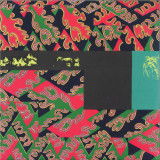
London-based musician Harriet Zoe Pittard aka Zoee has been described as an artist who writes 'personal pop for people who don't fit in' (Huck Magazine). Previously, Zoee has released singles through Ryan Hemworth's 'Secret Songs' imprint and Vegyn's label Plz Make It Ruins, as well as guesting as a vocalist on tracks with Hot Chip's Joe Goddard and with hyper-pop collective PC Music.Over the past two years Zoee has taken some time to nurture her voice and her sound. Her debut album 'Flaw Flower' is due on June 25th. 'Flaw Flower' is an honest and vulnerable glimpse into Zoee's interior world, a world she creates through marrying her real-life phone notes with imagery taken from modern works of literature such as "The Flowering Corpse" by Djuna Barnes, Sylvia Plath's "A Winter Ship" and Maggie Nelson's "Bluets". Through these 11 new songs, Zoee delves deep into her own emotional life, combining aspects of the everyday with the surreal in order to uncover the beauty found in being flawed. The record nods to the avant pop of the 80s, an era that Zoee has always been drawn to thanks to the expressive and trailblazing music of women including Anne Clark, Joan Armatrading, Cyndi Lauper, Rose McDowall and Anna Domino. The album is characterised by a mix of hi-fi and lo-fi instrumentation. 'The Loft' features a free jazz solo from acclaimed experimental saxophonist Ben Vince alongside stock GarageBand synths. 'Host' combines home demo backing vocals with an elaborate baby grand piano solo. Zoee sources foley sounds from YouTube and pulls from her own domestic field recordings, such as a microwave buzzing in 'Microwave' and a shower running in 'Evening Primrose', often using these sounds as the starting point for the songs. Maintaining intimate bedroom elements whilst developing a more expansive band sound, felt integral to the project, since that's where Zoee's writing process often starts, sat on her bed with her laptop and midi keyboard. Writing for the album began in October 2018 when Zoee started working closely again with friend and long-term musical collaborator Rowan Martin. As the material for the record began to take shape the writing and recording process also evolved with the addition of bassist Kyrone Oak and keys player Laura Norman, as well as contributions from Ben Vince and London pop artist Saint Torrente. "I feel like the songs on this album took me deeper into myself, the sad song that I thought was about a boy is still about that but it's also about loss, about self-determination, about not losing hope, about memory, about domesticity, about detachment, about my dad, about my mum, about change, about feeling incredibly alone, about growing up."
Suche:aspects
Music for animation cyber-noir film “Battlefield” (based on same-titled book by Stephen King)
Animated films soundtrack is one of the most substantial aspects of Bystryakov's career. He masterfully balances between being a composer and a sound designer. A cartoon thriller for Stephen King's original story was created at the Kyivnaukfilm studio in 1986. The work itself reached the Soviet reader in 1981 for the first time and was King's first publication in the USSR, as well as "Battleground" was the first and only film adaptation.
"Battlefield" is a work that belongs entirely to its time. This soundtrack is a semi-conscious journey through the night TV network: from Italian horror movies and detectives to the movie Blade Runner on the last working channel well past midnight.
Actually, in such a sequence, the fabric of the work is revealed. The atmosphere in the style of Goblin (Untitled I), thus echoing the work of Enno Morricone (Title theme, Theme of the boss). In addition to melodic fragments, he boldly creates minimalist pieces that undoubtedly sound like an early acid house (Untitled II), because the sounds of Roland TB-303 and TR-606 are instantly recognisable.
Bystryakov's approach did not involve the use of many tools or effects. He worked with one Roland Juno-106 synthesiser, using the full palette of its sound. His new tool is a counterpoint. This is how the final theme (End Theme) is constructed, where a piercing solo on a saxophone changes the atmosphere to nostalgia.
Is Joe's 2nd album on Sable Noir recordings. It's a recollection of tunes put on a side throughout the years in the idea to make an album, and englobing all the different aspects possible of some of the music the producer has been up to.
Flow LP takes its influences from triphop to dub techno, ambient music to jungle, soulful drum and bass of course, but also cinematic ambient scores to darkest and percussive 170 joints.
The point here was to be able to tell a story bringing all those different styles all together, and also to deliver an album. Not only for dj's, but also for a full listening purpose. That's why we also released this album, in vinyl, digital, but also in a good old fashioned CD version too.
We hope this cosmic journey through all those styles makes you feel something special. Wherever you listen to it.
Sable noir recordings, but also everything behind this LP is a friend and family co working team, and it is a real pleasure to finally be able to bring this to you now!
Stand Atlantic are a female fronted band from Sydney, Australia. Their fresh blend of melodic hooks and power-driven instrumentals allow them to sit atop of the genre. With their honest lyrical nature and relentless ability to move an audience live, the band are being tipped to be the next to break through the Australian scene. At the end of 2016 Stand Atlantic entered Electric Sun studio to record their new EP 'Sidewinder' with producer Stevie Wright (With Confidence). The EP shows the band mixing accessible song writing and exceptional musicianship, balancing out both the 'pop' and 'rock' aspects of their sound.
‘Nurture’ is an album about hope, overcoming despair, faithfully pursuing a sense of purpose, and trying to prove that it’s worthwhile to try.
This album came about during a period of intense creative and emotional struggle. I had structured my life around the expectation that the only thing that made me happy was writing music. But it was exactly that obsession and imbalance that made writing music an impossibility for me for years.
I wanted it too much, was highly self-critical, and I was so scared that I wouldn’t ever be able to write music again. And the more desperate I became to write music, the harder it became.
Only by accepting that I might never be able to do it again, and by embracing and trying to find happiness in aspects of life outside of music, was I able to slowly claw my way into being able to do it again. And on the other side of all this fear and anxiety, I found this life-giving sort of light and beauty. I felt a gratitude towards real life that I used to only feel towards fiction.
I’m really, deeply glad that I wrote this album. It’s my favorite music I’ve ever made, and it made me feel purposeful and happy to write music again. I want to write music that tells people that an earnest and sincere effort to overcome that thing you’re struggling with is the best path forward.
There’s no shortage of fuel for despair and nihilism, but I’ve found that those things don’t help. I want the listener to know that even when it seems impossible and insurmountable, it’s worthwhile to do your best, that there’s no shame in hope, and that purpose and meaning are worth pursuing.
Deep spiritual jazz recorded in Germany, performed by Jamaican born saxophone player Fitz Gore and his international group The Talismen, featuring a.o. bassist Gérard Ebbo from Morocco and drummer Philippe Zobda-Quitman from Martinique. This is the first reissue of their second album, released in 1976 by the small private label GorBra from Bonn, including "Delilah" and "Requiem For Julian Cannonball Adderley". The rare LP comes in a newly mastered version with original cover design and sleeve notes. Fitz Gore's music is full of tremendous tension and movement between deep seriousness, inwardness and humility; it affects your life, it liberates and heals.
Original sleeve notes from 1976:
"Soundmagnificat" is the successor to "Soundnitia" (GorBra Records F 665 532), the first release from the Talismen, an international group with Jamaican Tenor saxophonist Fitz Gore (born1935) as founder, spiritual and musical leader, main soloist. "Soundnitia" contained concert performances of June, 1975, including compositions by John Coltrane, Horace Silver and one by Gérard "Prof. Dr. Splüm" Ebbo, bassist of the Talismen.
This second offering from the Talismen is more varied. It has four tracks recorded at four different occasions. It presents Fitz Gore as a singer, a composer, as well as, a tenor saxophonist. The opener, Requiem for Julian "Cannonball" Adderley, is a moving tribute to a great American artist, the late alto saxophonist "Cannonball" Adderley. On this track, Hungarian drummer Janos Sudy is heard with the Talismen, for the first time. The playing by the quartet on this slow lament very adequately illustrates the mood of the composition
For the next piece, a concert performance, Gore selected a gem from the American Negro Song Tradition and he displays a mighty, masculine and soulful voice in Steal Away. An example of a modern artist using an old traditional to express his own inner feelings. Delilah is taken from another concert performance, the same concert as the music on "Soundnitia". It has extensive playing by Gore, a bass solo by Gérard Ebbo, leading into some exciting conga playing by Lamont Hampton.
The final track, A Sinner Kissed An Angel, was recorded by another tenor player, Wardell Gray, in 1950, but this version is all Gore's. After the piano introduction, Gore delivers the melody with authority and with an expressive use especially of the high register of his instrument. In his improvisation, Gore's playing becomes more dissonant. Some of his playing here causes me to think of the way the late Albert Ayler sounded on his first recordings done in Sweden, in the beginning of the 60s. No drums here, but nice accompaniment and solo work of Jochen Paul on vibes.
I met Fitz Gore in Copenhagen in the fall of 1975. We were both listening to the trumpet playing of Harry "Sweets" Edison at the now defunct Café Montmartre. Prior to that time, I did not know Gore and his music, but listening to his playing on this album and the earlier one, has once more widened my musical horizon. His music has struck some chords within me. "Music is communication", John Coltrane once said. I feel sure that as you listen to the music of Fitz Gore and his Talismen, you will get the message.
In these notes, I have mentioned a couple of jazz artists and another one ought to be named primarily, because he has meant a lot to Gore: Sonny Rollins. The two met in Paris in 1966. Gore says of Rollins: "He openend my eyes ...big man … phenomenon … my man". As Sonny Rollins's artistry, the music of Fitz Gore holds many aspects, some being aggressive and even hysterical, others being those of beauty and peace. As life itself … (Roland Baggenaes, June 1976)
The music of Fitz Gore, rooted in the blues, is full of tremendous tension and movement between deep seriousness, inwardness, humility and humor, hardness and tenderness; it affects your life, it liberates and heals - a hopeful, a truly groundbreaking, a timeless, a new music - Newsic!
(Gisela Braasch, 1976)
In memory of Fitz Gore.
Mastered 2020 by Roskow Kretschmann at Audiomoto,
kindly supported by Tom Sky. Vinyl cut at SST.
Producer for reissue: Ekkehart Fleischhammer,
reproduction of original cover design by Gisela Gore:
Patrick Haase aka rab.bit.
The Süddeutsche Zeitung hailed Johanna Summer’s performance
at the Young Munich Jazz Prize in 2018 as “a small sensation.”
The pianist, born in Plauen in Saxony in 1995, had encompassed
the whole gamut, from jazz freedom to classical rigour. The critic
from this respected newspaper marvelled at her “amazing gift to
make well-known melodies sound so convincingly her own, they
develop a real sense of creative urgency.” Summer’s winning of
the prize itself became almost incidental; far more significant was
the fact that this competition heralded the arrival of one of the
most interesting new pianists in European jazz.
For her debut album, Summer has chosen to make compositions
by Robert Schumann the point of departure for her journeys into
pianistic fantasy. Schumann’s cycles of piano pieces
‘Kinderszenen’ (scenes from childhood) and ‘Album für die
Jugend’ (album for the young) had been familiar to her since
childhood, not just as player and listener but also - because
Schumann was from nearby Zwickau - as works by someone from
her region of Germany. From an early age she was enchanted by
both the melodic and the pictorial aspects of these short pieces.
And yet, to make her own adaptations of seven of the pieces was
a far from a simple task: “I worked for a long time on re-casting
them, trying out all of the pieces in all keys and in a lot of different
time signatures, creating several miniature interpretations and
finally arrived at this selection, which I shaped into a cohesive
sequence with a single arc.”
The depth of her involvement with the original Schumann pieces
comes across strongly on the album. As does her impressive and
complex personality as a jazz musician with a very wide range of
expression: romantic passages and an instinct for melody but also
powerful grooves and exciting innovations. And all imbued with a
sense of how to tell stories through music, a mature and clear
vision of dramaturgy, dynamics, tension and atmosphere. A
sentence written by Schumann seems to predict exactly the kind
of new life that Johanna Summer has breathed into these pieces:
“How infinite is the realm of forms, with everything that can be
used and worked on for centuries to come.”
Rich in musical associations yet utterly singular in its voice, joyous with an inner tranquility, the music of Natural Information Society is unlike any other being made today. Their sixth album in eleven years for eremite records, descension (Out of Our Constrictions) is the first to be recorded live, featuring a set from London’s Cafe OTO with veteran English free-improv great Evan Parker, & the first to feature just one extended composition. The 75-minute performance, inspired by the galvanizing presence of Parker, is a sustained bacchanalia of collective ecstasy. You could call it their party album.
This was the second time Parker played with NIS. Joshua Abrams: “Both times we played compositions with Evan in mind. I don’t tell Evan anything. He’s a free agent.”
The music is focused & malleable, energized & even-keeled, drawing on concepts of ensemble playing common to musics from many locations & eras without any one specific aesthetic realization completely defining it.
“The rhythms that Mikel plays are not an exact reference to Chicago house, but that’s in there,” Abrams says. “I like to take a cyclic view of music history, can we take that four-on-the-floor, & consider how it connects to swing-era music? Can we articulate a through line? I dee-jayed for years in Chicago & lessons I learned from playing records for dancing inform how I think about the group’s music. The listener can make connections to aspects of soul music, electronic music, minimalism, traditional folk musics, & other musics of the diaspora as well. It’s about these aspects coming together. I don’t need to mimic something, I need to embody it to get to the spirit, to get to the living thing.”
For jazz fans, the sound of Parker’s soprano & Jason Stein’s bass clarinet might evoke Coltrane & Dolphy, even though they didn’t necessarily set out to do that & they play with complete individuality. Abrams sees a bridge to the historical precedent, too. “Since we first met in the 1990s, one of the things that Evan and I connected on was Coltrane’s music,” he says. “I hoped that we would tap into that sound world intuitively. In this case, I think that level of evocation adds another layer of depth, versus a layer of reference.”
Indeed, this is a performance in which the connections among the ensemble & the creative tension between improvisation and composition build into a complex mesh of associations & interactions. While the band confines itself to the territory mapped out by Abrams’ composition, they are remarkably attentive & responsive, making adjustments to Parker’s improvisations. When Parker’s intricate patterns of notes interweave with the band, the parts reinforce one another & the music rockets upward. Sometimes, Parker’s lines are cradled by the group’s gentle pulse & an unearthly lyrical balance is struck.
Drummer Mikel Patrick Avery is locked-in, playing with hellacious long-form discipline, feel & responsiveness. Jason Stein’s animated, vocalized bass clarinet weaves in & out with Lisa Alvarado’s harmonium to state the piece’s thematic material; the pulsing tremolo on the harmonium brings a Spacemen 3 vibe to the party. Abrams ties together melody & rhythm on guimbri, a presence that leads without seeming to. Like his bandmates, he shifts modes of playing frequently, improvising & then returning to the composed structure.
“As specific as the composition is, the goal is to internalize it & mix it up,” Abrams says. “The idea is to get so comfortable that we can make spontaneous changes, find new routes of activity, stasis & byways every gig. It’s like a web we’re spinning. If someone makes a move, we all aim to be aware of it, make room for it. Experiencing & listening is what it’s about, & Evan supercharges that.”
& “supercharged” is the word for this album. With Parker further opening up their music, descension (Out of Our Constrictions) is the sound of Natural Information Society growing both more disciplined and freer, one of the great bands of its time on a deep run.
Aguirre edition: Mastered by Helge Sten, Audio Virus, Oslo. Lacquers by Dubplates & Mastering. Liner Notes by Theaster Gates. LPs pressed on premium audiophile-quality vinyl at Pallas Records. US 2xLP edition available thru Eremite records.
Hilltown Disco welcomes St. Theodore, Larionov & Sheepray to the label in a Russian affair, proudly presenting ‘Black Earth Strikes Back’.
‘Black Earth Strikes Back’ is a twisted tale of two-halves – the story of unrest, a battle of the dark, cryptic underbelly looking to overthrow normality, fused together with the outer-core of electro.
Larionov and Sheepray stand for the A-side and take the reins with 3 tracks of warm bleeps, gentle electro beats with elements of sci-fi funk and aspects of italo.
St. Theodore supplies the mechanics for the B-side with three tracks filled with murky, rumbling analogue bass, with piercing acid-lines seeping through. Music that is geared for the dancefloors of the future.
Zaumne's new album titled Élévation is a multifaceted yet subtle work, an abstract collage that is equally entrancing and immersive. Quoting passages from Baudelaire’s “Flowers of Evil”, the Polish musician promises to elevate the soul and consciousness “Beyond the sun / Beyond the ether”. Yet simultaneously, the artist wants us to stay where we are and focus on the immediate surroundings in search of our personal attachment to the world.
Initially recorded for the WET (Weird Erotic Tension) online community the four pieces are an exploration of erotic aspects of the environment and uncanny intimacy with other beings and objects that dwell in our nearest proximity. Just like on previous releases for labels like Czaszka Rec. or Perfect Aesthetics, on Élévation Zaumne maintains his interest in emotional aspects of sound and internet culture – he builds his compositions from fragments of ASMR-whispered poetry, samples of natural phenomena and field recordings from his family home and its environ.
What starts as an escapist exercise driven by uneasiness and ennui becomes an individual healing process, in which the subject rediscovers the strangely intimate relationship with the world and opens up to almost magical methods of communicating with other beings. ASMR samples and sounds of the artist touching, playing with and exciting different objects are an experiment in establishing contact with the non-human realm and a method of attuning the body and the mind to the reality in which everything is interconnected.
Zaumne tests Einstein’s “spooky action at a distance” through radical, sensual intimacy with what’s near, finding a glimpse of the absolute in his own room, again quoting Baudelaire: “To a child who is fond of maps and engravings / The universe is the size of his immense hunger”.
Zaumne is the moniker of Polish musician Mateusz Olszewski. In the past few years, he has released music on labels like Magia, Perfect Aesthetics, BAS or Czaszka Rec. Élévation, released by Mondoj and initially commissioned by WET, is his first vinyl release. Blending elements of genres like ambient, dub, minimalism and tape music with ASMR samples, field recordings and spoken word, he creates work with deep emotional focus and impact.
- A1: Missing Highs
- A2: Caveat Emptor
- A3: Ultra Blue (Feat Newborn Jr)
- A4: An Obstruction In The Clear Plastic
- A5: What Else Do You Want? (Feat Baltra)
- A6: Utica
- A7: Salvaged Copper (Feat Terrence Dixon)
- B1: Basic Needs (Feat Nick Murphy)
- B2: Asmr/Exhaustion
- B3: Cement Object, Vacuum Sealed
- B4: Pain Tolerance
- B5: Muscle/Maintain/Feen (Feat Danny Scales)
- B6: Faith For The Weak
- B7: Life Out Of Balance (Feat Santpoort, Shigeto & Krzysztof Wodiczko)
Since his 2012 debut as Heathered Pearls, Jakub Alexander has constructed art — music, objects, installations, performances — as a way of re-imagining fragments of his past and mapping ideas for his future. The Polish-born, Michigan-raised, New York-based artist and producer sees imagery and narrative framework as fluid components to his craft. Alexander’s first album, Loyal, mimicked the hypnotic motions of ocean waves at night, offering melodic, loop-based ambient music as a tribute to the tasteful influence of his mother and aunt. The second Heathered Pearls album, Body Complex, found inspiration from comfort, imperfection, and visions of interior architecture, transforming Loyal’s soft textures into driving 4/4 figures, glacial tone drifts, and starry synth plateaus. His 2017 EP, Detroit, MI 1997 - 2001, reflected on a formative era through ephem- eral dance music. The third Heathered Pearls full-length,
Cast, returns to moodier loop formats joined by the distinctly new presence of the spo- ken word. The move mirrors the multitudes of its namesake: collaborators comprise a cast, healing in the bind of a cast, complex emotions and the shadows they cast. Alexander started work on Cast when living in Berlin and in Queens.
“I hit a wall listening to these tracks when they were instrumental.” This is where he diverged from previous modes, deciding to integrate speech. With a healthy distaste for aspects of performance art, he invited strictly non-scripted recordings, a series of anti-performances. This new format adds a surprising human element to music that has previously operated as sea-shapes or infrastructure. These flashes of language, Alexander’s close friends speaking about things, narratively and cerebrally, casually and profoundly, turn the distinctive Heathered Pearls sound into some- thing surprisingly gritty, tangible, and in certain sweeps, cinematic. It is as if the world outside of these compositions bleeds into the music, casting their verbal being from just off the surface, like the album’s cover artwork where the light hits the plexi object but misses the wall.
Alexander sees his covers as naturally unfinished workstations; the gauzed and patinaed copper on Cast continues in this philosophy. This is all to say Cast deals with absence as much a presence. Among the guest storytellers is Alexander’s friend and tourmate Nick Murphy (formerly Chet Faker), who unwinds a series of tender observations on “Basic Needs.” The swirling synthesizer immerses a series of empathies; feeling like an egg yolk, a window’s view, his love for the color yellow, and wanting yellow to love him back.
King Gizzard & The Lizard Wizard return with new album K.G., their sixteenth since forming in 2010. In the wake of a global pandemic, it’s a collection of songs composed and recorded remotely after the six members of the band retreated to their own homes scattered around Melbourne, Australia. K.G. is a pure distillation of the King Gizzard sound, one that cherry picks the best aspects of previous albums and contorts them into new shapes via defiantly non-western rock scales.
A guitarry hybrid of AZITA’s edgy rock / soul / R&B sound. Grooving good times, acerbic exchanges overheard in the street, shifts in community, the losses you will carry always, dark recesses late at night that echo with a wonder you've never felt before. Life.
All instruments played by AZITA; the wackest, most AZITA-harmonious sounding pop album yet.
For those who find the passage of time a one-way process of attrition, here’s good news for you. In the eight years since AZITA’s last long-player her fevered brain has barely rested and the proof is a new album of unbounded physical and mental activity, music and entertainment, entitled ‘Glen Echo’.
The worlds of the previous AZITAs have left their unmistakable essence. Her singular conception of pop music - the idiosyncratic songs, singing and playing that have graced seven acclaimed releases - is in verdant recurrence on ‘Glen Echo’, blossoming anew, cutting sharply in the spirit and image of her everevolving, always questioning style.
Writing and arranging on keyboards since the time of her solo debut, AZITA focused on guitars for this set of songs. Not simply for swagger or a fresh approach to soloing but as part of a way to elide expected singer-songwriter tropes, to democratically populate the sound-stage in equal partnership instead.
This is a key aspect of the ‘Glen Echo’ sound, one that determined another new choice - AZITA playing everything on the album herself.
Previous long-players ‘Enantiodromia’, ‘Life On the Fly’ and ‘How Will You?’ were achieved via close work with players and engineers who took the compositions from the demo to a finished form. Invariably though, something would get lost in the transmigration somewhere. With ‘Glen Echo’, AZITA comes through fully, jaggedly, most vividly, owning her intention entirely in the dialogue of singing and playing her rock and rhythm and blues.
The lyric sheet is riddled with language that circles, through the many moments of life, aspects of the passage of time, the pre-empted dreams and strangeness of the present and the way we invent an idealized past in response to the changes, guiding the narrative... where? It’s all banded together by AZITA’s wit, equal parts droll and dire, her dispassionate view of fates and outcomes for all of us here together on the planet, textured with unique, cinematic details and sudden dives into a deeply felt, utterly OG sense of soul.
In ‘Glen Echo’ are a multitude of sounds - all the moments in a life: the good time grooves, acerbic exchanges in the street, shifts in community and generosity, moments of loss you know you will carry forever, reflection upon unknown futures and pasts, the dark recesses late at night that echo with a wonder you’ve never felt before. You name it, AZITA’s got some sweet and sour theme music for it.
‘PEACEMEAL’ is yet another reinvention for Ron
Gallo - a human being on a lifelong chase of
himself and using music as the main vehicle.
On his third LP, he exits the noisy confines of the
garage and goes outside where there’s no limit to
embracing all aspects of himself.
The result is a colourful hodgepodge of 90’s hiphop, r&b, weirdo pop, jazz and punk. The sounds
change but the sense of humanity, humour and a
truly eccentric worldview is the common thread in
all of Gallo’s music.
Mostly written and recorded during a period of
self-isolation in summer 2019, it’s an uncanny
foreshadowing of the global situation that was to
come and give all the songs a new meaning. This
is feel-good music that attempts to confront and
understand human existence.
Ron Gallo just wants to be himself, destroy
expectations and encourage you to do the same in
a world that does just about everything to try and
box us in - not to mention, this is his best most
fun one yet.
When a synth master like Steve Moore joins forces with the legendary KPM, magic must materialise. And so it does with Analog Sensitivity: cinematic, enigmatic synthscapes to both haunt and heal.
New York-based multi-instrumentalist/producer/film composer Steve Moore is probably best known for his synthesizer and bass guitar work as Zombi, together with Anthony Paterra. But he is also part of Miracle and Titan as well as being a prolific solo artist releasing music as Gianni Rossi, Lovelock and under his own name. Steve’s music has found a home across labels like Future Times, Mexican Summer, LIES, Static Caravan, Relapse, Kompakt, Spectrum Spools, Death Waltz and Ghost Box, and much of his recent work has been scoring films like The Guest and Cub. Prolific indeed.
The story of Analog Sensitivity starts with those soundtracks, or more specifically the time in between them. Rather than being commissioned by KPM, this LP comes from music Steve was recording sporadically and tinkering with for over three years during the downtime between his film projects. There were no ideas about what it was nor a plan for how it would be released, or even if it was going to be released at all.
However, after Jon Tye invited him to play on the Ocean Moon project for KPM Steve realised that the hallowed library label might be the perfect home for what he had been working on. The people at KPM agreed. Finishing production in late 2019 in Albany, NY, he came up with the track sequencing and suddenly, he had an album: Analog Sensitivity.
The LP opens with the dystopian electronic minimalism of “Eldborg”, its dark synth bass unfolding to ominous synth pads, shadowy sustains and glistening arpeggios. “At The Edge Of Perception” brings an unsettling retro-future of edgy analogue leads and desolate FX. The sound of a robotic core tears through the sparse textures of the enigmatic “Rose Of Charon”. A chilling breeze blows through a persistent, hypnotic synth sequence on “Time Freeze”. Title track “Analog Sensitivity” is a sparkling transcendental synthscape of melody, drones and celestial synth. The brooding “Behind The Waterfall” winds down the first side, building subtle strings and a desolate sound beneath its haunting organ.
“Mirror Mountain” ushers in side two, its woozy bass and arpeggio unfolding to envelop the muffled, muted echos of its organic leads. "Syzygy" emerges you in bubbling sequences, airiness and ambient electric guitar tones. It’s followed by the cinematic minimalism of “Pentagram Of Venus” and its trickling FX. The wind swirls through the otherworldly “Of Dust Thou Art” kicking up clouds of unsettling, plodding synth sequences leading to the uneasy atmosphere of “Message From The Beast” which builds to the echo of the last refrain of some choral incantation. Closing track “Urge Surfing” is as cool a climax as you’d hope from something so brilliantly titled, riding along hushed waves of brooding electronics.
With the clue right there in the title, Analog Sensitivity is built up from the quieter aspects of the sound Steve has been exploring and evolving for over 20 years. It’s a layering of ambivalently dense and airy, muffled and echoing sounds from his collection of synthesizers and other electronic music hardware. And whilst some of Steve’s other work uses this vintage equipment to conjure the past, that wasn’t his intention here. Steve explains “I wanted Analog Sensitivity to feel atemporal, as though it could have been released any time over the past 30 or 40 years. While not specifically in the spirit of any particular album, I’m really into old KPM artists like Alan Hawkshaw and Brian Bennett”.
With 2017’s ‘Planetary Prince’, pianist/composer Cameron Graves established himself as a visionary creative force emerging from the Los Angeles genre-defying collective The West Coast Get Down.
With his sophomore album ‘Seven’, Graves further expands on his otherworldly inspirations, alongside guitarist Colin Cook, bassist Max Gerl, drummer Mike Mitchell and special guest Kamasi Washington.
Upon an initial listen, the juggernaut metal force and hardcore precision of ‘Seven’ can knock you back. After all, Graves grew up in metal-rich Los Angeles, headbanging to Living Colour as a kid and, after immersing himself in jazz and classical studies for years, he reignited his love for hard rock through records by Pantera, Slipknot and his most profound metal influence, Swedish titans Meshuggah.
But a closer listen to ‘Seven’ reveals a myriad of other influences at work. “Los Angeles is a melting pot of everything,” Graves points out. His father, Carl Graves, was a great soul singer, and you can hear his imprint along with the likes of Marvin Gaye and Otis Redding, on “Eternal Paradise,” which marks the younger Graves’ vocal debut.
Throughout the album, the generation of 1970s jazz-rock fusion pioneers is a source of inspiration. “Our mission is to continue that legacy of advanced music that was started by bands like Mahavishnu Orchestra, Weather Report and Return to Forever,” Graves says. “That was instilled in us by the masters. Stanley Clarke, Chick Corea, Herbie Hancock - these guys sat with us and told us, ‘Look, man, you’ve got to carry this on.’
“Cameron Graves is a musical genius. He has an innovative approach to the piano that is completely unique.” - Kamasi Washington
“In all aspects of his being, Graves embodies intense seeking and absurd skill.”
- LA Weekly
Unique composer duo Rebekka Karijord & Jon Ekstrand create compelling, hybrid score to intimate portrait of teenage climate activist Greta Thunberg `I Am Greta', the intimate Hulu documentary by Swedish director Nathan Gross-man, tells the story of teenage climate activist Greta Thunberg through compel-ling, never-before-seen-footage. Starting with her one-person school strike for cli-mate action outside the Swedish Parliament, Grossman follows Greta in her rise to prominence. The film culminates with the extraordinary wind-powered voyage across the Atlantic to speak at the UN Climate Action Summit in New York. To musically accompany Greta and the children of the Fridays for Future movement on their journey, composers Rebekka Karijord and Jon Ekstrand spent time searching for the right balance when it comes to how much emotional triggers the music should of-fer: "With the music for `I Am Greta' we aimed to find a sonic counterpoint to the friction between the shy, contemplative inner world of Greta, and the unbounded ener-gy of the natural world and climate change movement. From the start we found it useful to separate the score into three distinct voices: Greta's Voice, the voice of the natural world, and the voice of the climate change movement." "We choose to work with repetition and persistent musical patterns, often illustrated through energetic string arpeggios. This we felt helped underline the remarkable persistence and focus of Greta has on the climate issue, as well as that of the re-lentlessness of nature. Then we found a few places throughout the score, where more melodic aspects could be introduced and carry the story through its dramaturgical journey. It allowed the melodic aspects to shine through when they are introduced." "The score consists of a string octet, modular synthesisers and a voice instrument built by Rebekka of 25 unique singers sampled in their full range. Our soloist on the soundtrack is the cellist Linnea Olsson, whom has a very specific airy and organ-ic tone." "Rebekka and Jon's dynamic score to `I Am Greta' is huge and intimate, uplifting and melancholic, and manages to carry the emotional nuance of Greta's story. The score forms a musical parallel to Greta's journey and narrative voice throughout the film. It's energy, urgency and emotional depth reminds us that the time for climate action is now." - Nathan Grossman, director of `I Am Greta'
CLEAR VINYL W. PINK STREAKS
2xLP pressed on virgin vinyl, packaged in a wide spine jacket printed on uncoated stock with custom high gloss slipcase and free download card. Love is what makes us human. It guides our decisions, shapes our worldview, and defines our experiences. Its absence equates to tragedy while its presence gives our lives meaning. "Love has been well worn theme throughout a lot of rock music, but most commonly in terms of love-lost, overly romanticized versions of new love, or as a veil for sexual conquest," says SUMAC guitarist and vocalist Aaron Turner (Old Man Gloom, Mamiffer, ISIS). "It is rarely addressed in its more spiritual and vulnerable aspects." Those less-traversed territories of humankind's connective bond became the central theme SUMAC's third full-length album, Love In Shadow, though their explorations of that motif are a far cry from traditional manifestations of love in the realm of art. Across four protracted songs, Turner and his cohorts-Nick Yacyshyn (Baptists, Erosion) on drums and Brian Cook (Russian Circles) on bass-interlace and mangle sounds from their instruments in a sonic homage to both the innate warmth of human magnetism and the cold realities of corrupted love-jealousy, obsession, perversion, addiction.
“Instead of landscape sketches I wanted to go into more personal areas of my reality,” says Jim Ghedi of his third album In The Furrows Of Common Place. “To hold up certain aspects of society that were laying bare in front of me.”
Whilst Ghedi’s previous idiosyncratic take on folk has often been instrumental, exploring the natural world and his relationship to it through his music as seen on 2018's A Hymn For Ancient Land. His new album In The Furrow Of Common Place is a deeper plunge inside himself to offer up more of his voice to accompany his profoundly unique and moving compositions. “There were things I was seeing around me and being affected by in my daily life,” he says. “Socially and politically I saw defiance but also hopelessness. I wanted to be honest with the frustration and turmoil I was experiencing.”
The decision to include more of Ghedi’s vocals was a conscious one and driven by a need to say something. However, this isn’t a brash raging political polemic. As is now customary with Ghedi’s work, it is rich in nuance, history, poetry and allegory. Musically, the album is equally locked into this ongoing sense of evolution. Ghedi’s intricate yet deft guitar playing still twists and flows its way through the core, weaving in and out of gliding double bass, sweeping violin, gentle percussion and vocals that shift from tender solos to overlapping harmonies.
As with much of Ghedi’s work, there’s a rich connection between the past and the current. Musically, he continues to sit in a singular position of sounding distinctly contemporary yet also with a touch of traditional flair. This expands itself into the lyrical terrain here too. “I've been exploring contemporary issues and in that process discovering sources that correlate with similar issues in the past,” he says. “Which proves that these issues throughout history - environmental destruction, working class poverty etc - are ongoing.”
For all the socio-political and historical backdrop to the record it is not one that feels overwhelmed by it. Much like Ghedi’s work when it was largely instrumental - and some of it still is here - it flows and unfurls thoughtfully, with space still being utilised masterfully, creating room to pause and reflect. It’s another inimitable record from an artist that truly sounds like nobody else right now.
“The earth shall rise again...”
AMOR/LEMUR finds the Glasgow quartet AMOR in partnership with Norwegian improvising ensemble LEMUR to hopeful and ecstatic effect. Conceived before the onset of Covid 19 but finished during spring lockdown, their eponymous EP is the most loose, alive and elevated recording in AMOR’s catalog. AMOR/LEMUR takes the template of throbbing avant disco expanded upon on previous recordings for Night School and lifts it into new
territories, with new tonalities and unexpected turns on the journey. More than anything, the expanded, near- cinematic expression of human connectivity feels like a lightning new energy to grasp in the dark.
Following a revelatory concert in Glasgow in January 2020 wherein the two sets of musicians met and performed together for the first time, a recording session was arranged the following day, resulting in the most elevated permutation of AMOR’s art to date. Each track was built upon a rhythmic bedrock of percussion and drums performed by Paul Thomson and samples/synthesizer by Luke Fowler. Thomson used bamboo Javanese gamelan (most notably on For You) and scrap metal, as well as traditional percussion and drums while Fowler incorporated processed ambient field recordings recorded in enclosed acoustic spaces around Glasgow. Singer/pianist Richard Youngs contributes some of the most bright and mindful work of his career. Acoustic bass player Michael Francis Duch, whose lush playing as ever provides the elastic spine to each song, scored the string parts for LEMUR on piano at home in Norway. The addition of swelling strings and drones fills out the AMOR sound significantly, lending a sonorous tone to 8 minute, epic closer For You or an ascending melodic introduction to Stars Burst that feels like a new morning dawning on a world saved from certain death. With the circumstances of lockdown forcing the musicians to work differently, a thread of optimism and utopia grounded in the moment weaves through these tracks. Unravel reveals a spine tingling vocal from Youngs. It’s a song about the simultaneously grounding and ecstatic effect of love, feeling connected to others. It’s a simple message, “I’m finding myself in your smile, always unravels me” speaks of ego death, the dissipation of the material into a nirvana of pure energy, the power of surrender. This isn’t a quasi-religious message, this is the power of each other, a love song to connection in a temporary age of isolation. Stars Burst is a play on the inner and outer cosmos, with narrator Youngs exploring wonder to a pounding galloping rhythm and snake-charming synth. It’s an open dance, with the group locked in together for the wild ride. Fear is the centerpiece of the record, starting with drones and scraped overtones before swirling synth notes filter upwards to meet reverberating minor chords. Over 8 minutes of tight but loose playing, Youngs is the shaman instructing us to use Fear as a celebration of the moment, embrace it and jump into the unknown. The only way to overcome your fear is to feel it, use it as an energy. The use of the studio as an instrument throughout side 2 is particularly important, with the dubbing and mixing prowess of engineer Paul Savage (who mixed unattended due to lockdown restrictions) and tape manipulations performed by Jason Lescallet coming into play. For You closes out with a largely instrumental, evolving composition that uses many of the abstract and novel aspects of this permutation to aid the trance. It’s massive, an unfurling creature with unexpected tonalities and serious heft.