Disco Volante is a new imprint created by Laila Moshiri (aka Laila), curator of the Disco Volante show on Ibiza Global Radio, aimed at merging different cultures, styles, personalities and their unique music frequencies.
The imprint's first EP - Aston Martin - is the result of the beautiful collaboration between Dandy Jack & Laila. Pursuing an intrinsic desire to flirt with deep and sensual music, Martin and Laila created a collection of tracks that span a multitude of genres, from laidback minimal to Detroit-tinged deep house.
Поиск:aston
Все
Introducing the highly anticipated EP from the legendary Aston, of the Freestylers, Blapps Posse, and Rap & Aston. This time, he has teamed up with the talented DJ Quicklung to create four brand new tracks, each showcasing Aston's impeccable production skills and style.
The EP opens with "Raggamuffin Soldiers," a hard-hitting D&B track with classic influences that has already gained significant support across clubs and radio. Next up is "Moving On," a lively club roller that clearly showcases Aston's foundations and rave pedigree.
On the flip side, "Galactica" takes things in a darker direction with moody D&B vibes that pay homage to classic Suburban Base and Boogie Times, but with a fresh twist that's unmistakably 2023. Finally, "The Hangman" closes out the EP with a stunning breakbeat masterpiece that will leave listeners wanting more.
With its diverse range of sounds and styles, this EP is a testament to Aston's enduring talent and influence in the world of electronic music. Don't miss out on this incredible release!
Back in 1993, Aston was the one half to the SUBURBAN BASE act 'Rap and Aston' as well as part of 'Engineers Without Fears' and earlier 'The Blapps Posse', he then went on to form the hugely successful group 'The Freestylers'. He produced for artists such as Rebel MC and created some of the Sub Base classics which include Vertigo, More Time, Jeopardy and is now back with a brand new release of old skool inspired bangers to launch a new era of Boogie Times Records.
First up Aston introduces Pirate Jams with the the stunning ‘U Know The Score’, from the very first old skool lead stab and catchy vocal you know that here is a tune from a master of their craft, with all the years of experience and success condensed into one tune to make the definitive early 90's vibe with and updated twist. This has instant classic and future anthem written all over it, fingers crossed we get out and about to hear this at raves across the summer.
Next up is '4EVR' alongside Quicklung, a bolder driving piece of old skool inspired genius, from the early days of rave almost an 89/90s Belgium import vibe to it for those that 'Know The Score' as the A side says!
Grab yourself a piece of future history now whilst rather than hunting discogs two years from now lol
The Astonishing is the thirteenth studio album by Dream Theater. The Astonishing is set in a dystopian future United States and follows the Ravenskill Rebel Militia in their efforts to defy the Great Northern Empire
of the Americas using the magical power of music. It was inspired by contemporary fantasy and science fiction franchises such as Game of Thrones and Star Wars, as well as John Petrucci’s observations on the
ubiquity of technological automation in modern-day society. Limited edition 4LP release on clear vinyl.
Due to overwhelming demand for our 5LP boxset which sold out on the day of release, here are the first ever official individual re-issues of all five of the iconic Lansdowne recording sessions by the legendary UK jazz combo, the Don Rendell/Ian Carr Quintet.
The five albums; Shades Of Blues (1965), Dusk Fire (1966), Phase III (1968), Change Is (1969) and Live (1969), have reached almost mythical status in the collector's world. Regarded as holy grail artefacts for even the seasoned aficionado, the collective second hand market value comes to an astonishing £6000.
The complete Don Rendell & Ian Carr Lansdowne recording sessions are now available as individual LPs. We located and acquired the original analogue master tapes from the Universal vaults and created masters at Abbey Road Studios to produce audiophile quality 180g pressings replete with replica artwork - shape, design, and even paper stock. No stone has been left unturned to deliver this absolute labour of love to the highest possible standard! Inside is a link to a printable online pdf which contains never before seen photographs, interviews with the remaining living band members and liner notes from BBC Radio 3 presenter and award-winning jazz writer Alyn Shipton.
The band played together for seven years and during this fruitful time they made a plethora of deeply melodic, post-bop British jazz compositions that later on took influences from Indo and more spiritually guided jazz. Produced by the influential Denis Preston and recorded at his Lansdowne Studios in London, the band was primarily made up of saxophonist Don Rendell, trumpeter/composer Ian Carr, and pianist/composer Michael Garrick. This is UK jazz at its absolute finest and is a treasure not to be missed.
- Osni Opening
- Act I: Garden
- Act I: Loon
- Act Ii: Dragon
- Act Ii: Pyre
- Act Iii: Umbra
- Act Iii: Rite
- Act Iv: Flood
- Act Iv: Everglow
- Osni Closing
In ,Osni the Flare", dem zweiten Teil von Tristan Allens mythischer Trilogie, zeigt der Komponist, Produzent und Puppenspieler, wie ein Sterblicher durch die Entdeckung des Feuers zu einer Gottheit wird. ,Osni the Flare" wurde über vier Jahre hinweg mit wortlosen Gesängen, Orgeln, Okarinas, einer Menge Spielzeuginstrumenten und einem ausgeklügelten Sounddesign aufgenommen und erzählt in vier akustisch und visuell beeindruckenden Akten von den Ursprüngen der Flamme und der Zeitlichkeit. Allen webt einen Schöpfungsmythos, der zwischen Schönheit, Schatten und wehmütiger Glut wechselt, und schafft so ein Portal zu einem sorgfältig gestalteten, emotional kraftvollen Klang und einer Geschichte, die durch ein fantastisches Reich hallen. Allen wurde in Saratoga Springs, New York, geboren und hat Kindheitserinnerungen an den Aufenthalt seiner Familie in Japan. Sein Weg führte ihn zu prägenden Begegnungen, darunter mit seinem Lehrer Andy Lorio, der das wachsende Interesse und Können des jungen Musikers am Klavier durch Improvisationstechniken förderte, und Amanda Palmer, die ihn mit 16 Jahren während eines Sommerprogramms am Berklee College entdeckte und seine erste Veröffentlichung durch Crowdfunding finanzierte. Nachdem er an der Berklee Klavier studiert, das Live-Elektronik-Kollektiv Nue mitbegründet, mit der Metal-Band Dent durch China getourt und zwei Solo-Klavier-EPs veröffentlicht hatte, zog Allen 2018 von Boston nach Brooklyn. Eine Anzeige auf Craigslist führte zu einer Puppenspielausbildung bei Mike Leach, der ihnen sechs Monate lang beibrachte, wie man eine Marionette richtig führt, was ihnen eine Stelle als Darsteller am renommierten Puppetworks Theater einbrachte. Diese harte Arbeit, zusammen mit dem Kontakt zu den Artefakten des Bread and Puppet Theater ihres Vaters und dem balinesischen Schattenspiel, brachte Allen zu ihrer kreativen Praxis: Komponieren für akustische Instrumente, elektronisches Arrangieren und Auftritte mit Puppenspiel. Osni the Flare erzählt einen Schöpfungsmythos, in dem die Titelfigur in einem Garten aufwacht und Äpfel von einem Baum pflückt. Von einem Loon herbeigerufen, macht sich Osni auf, den Baum vor der Kälte des Winters zu schützen. Als der Loon von einem Drachen verschlungen wird, wagt sich Osni in dessen Bauch und entdeckt dort Glut. Als er diese Glut dem Baum anbietet, entzündet sich dieser - der Ursprung des Feuers selbst. Iso, der Gott des Meeres, greift mit einer Flut ein, die Osnis Garten überschwemmt. Nach seinem Tod gelangt Osnis Seele in das Reich der Schatten, wo sie sich Tin und Iso anschließt und zur Gottheit des Feuers wird - Osni the Flare. Das Album klingt menschlicher und kindlicher als sein Vorgänger ,Tin Iso and The Dawn" und wechselt von der Perspektive der Götter als Beobachter zu der des ersten sterblichen Charakters in Allens Welt. Unterstützt durch neue Liebe, kanalisiert das Projekt Gefühle in Musik, die zu einem ganz eigenen Zauber wird. Wie Tin Iso beginnt und endet das Album mit Klavierklängen als Portal, das die Heimat repräsentiert, während Osni sich auf eine Reise durch drei Reiche begibt: das Land der Lebenden, das Zwischenreich und das Jenseits. Osni the Flare wurde fast komplett mit einem Aston-Kondensatormikrofon in Allens Wohnung in Brooklyn mit Blick auf den Cypress Hills Friedhof aufgenommen und besteht aus Spielzeugklavier und Flöten, Okarinas, Harmonium, Pumporgel, E-Bass und Kontrabass, Gadgets und einer umfangreichen Sammlung von Spieluhren und Glocken. Die Gesangsmelodie - inspiriert vom Summen seiner Partnerin Virginia Garcia Ruiz, das an Pans Labyrinth erinnert - war Allens erster Ausflug in den Gesangsbereich, wobei er eine Melodie ohne Worte verwendete, um den Zuhörern zu ermöglichen, die Protagonisten zu bleiben. Die Flöten wurden Note für Note akribisch aufgenommen, darunter balinesische Sulings, Fundstücke aus chinesischen Souvenirläden und vogelförmige Okarinas. Die Spieluhren wurden langsam aufgezogen, einzeln gesampelt und dann neu arrangiert und gestimmt, um Virginias Summen zu verdoppeln. Ein ausgedientes Casio SK-1 mit einem kaputten Lautsprecher wird mit einem Harmonium kombiniert, um Akkordtexturen zu erzeugen. Stundenlange Improvisationen, die durch Bastl Thyme und NanoVerb geleitet wurden, erzeugten lange, ausklingende Delays, wobei die besten Momente für Songs ausgewählt wurden. Feuergeräusche entstanden durch Fingernagelklicken auf Klaviertasten. Feldaufnahmen hielten das Zerlegen eines Klavieruntergestells, das Löschen von Kerzen und Geräusche aus einem Hospiz fest. Die Stimme des Drachen spricht Worte aus Allens erfundener Sprache. Die Melodie liegt oft im Bass - inspiriert von Goth und Gamelan - mit nach oben gerichteten Verzierungen. Der detailreiche Ansatz spiegelt eine Punktierung wider, die Allens Original-Artwork für das Albumcover ähnelt und durch ihre obsessive Arbeit kleine Teile zu einem großen Bild zusammenfügt - unter der Dusche, vor dem Einschlafen, mitten im Satz. Das Klavier wurde von der Toningenieurin Katie Von Schleicher bei Figure 8 Recording neu aufgenommen, gemischt wurde das Album von Paul Corley. Der technische Leiter Jim Freeman arbeitete vier Monate lang am Halsgelenk und fünf Monate lang an den Schultern der Basswood-Stabpuppe, die von Bruce Schwartz' Ballerina inspiriert ist. Freeman verbrachte Jahre damit, ein selbstgebautes LED-System zu entwickeln, um das Puppenspiel von der Bühne aus zu beleuchten, und sein unwillkürliches Pfeifen während der Arbeit wurde heimlich aufgenommen und ist im Schlussmoment zu hören. Die Herstellung der Puppen wurde von Miryam Moutillet und Lauder Weldon überwacht, die hybriden Köpfe wurden von Duygu Bayar Ekren entworfen. Seit der Veröffentlichung von Tin Iso im Jahr 2023 hat Allen in der experimentellen Puppenspiel-Community von New York City eine Heimat gefunden und wird von der Jim Henson Foundation und La MaMa unterstützt. ,Osni the Flare" steht für Tristan Allens kontinuierliche Weltgestaltung mit akribischer Kontinuität - viele bewegliche Teile, die in funkelnder Kohäsion präsentiert werden, wobei sich jede Komponente aus einer Idee entwickelt, wie eine Fantasy-Serie, die im selben Reich spielt. Das Album erreicht das, was sich Allens kindliches Ich beim Anschauen von Fantasy-Filmen vorgestellt hat: Musik, die nicht so klingt, als würden Menschen Instrumente spielen, sondern wie das Werk der fantastischen Welt selbst. Durch die Kunst des Puppenspielers, ,wahre Lügen zu erzählen", lädt Allen die Zuhörer ein, etwas Ursprüngliches und Unmittelbares zu erleben. Während Osni sich von einem Sterblichen zu einer Gottheit verwandelt, zeichnet das Album nicht nur den Ursprung des Feuers nach, sondern auch den Ursprung des Mythos selbst.
- A1: All My Love
- B1: Can't Get Over You
The world of discovering Soul music and artists can lead to sheer moments of jubilation. The thought of igniting a long lost sound, reviving the energy of a once exuberant individual . But not every story that's told is filled with joy. Some are peppered along the way with struggles and heartache. Over time artists have battled with over powering label owners, record executives who just don't back what you do. The story of Tommy Hill is one such story. Tommy along with friend and longtime collaborator Ricky Tarbo had a deal with Motown records back in the early 1980's which turned sour very quickly. His release "Flame"/"Super Star Of Love' was dropped pretty quickly with no promotion and record boss Sylvia Rhône calling the shots within the duo questioning skin colour within the group and even trying to get vocals wiped off the release to sabotage it.
This said the single didn't amount to much and nothing else was recorded for Motown records. The duo did record some 4 demo's in LA before Tommy headed to re-record them again in New York circa 1982.
The A side has never been released until now, which is such a crying shame as the quality is so damn good. It's an uptempo boogie cut called "All My Love" which we gave a sexy 45 mix so you get some slamming synth work half way in. Tommy Hill's vocal range is nothing but astonishing. Just check out the 2 step ballad of "Can't Get Over You", which was recorded and released back in 1980 by The James Simpson penetration Band written by Tommy Hill, who went back into the studio 2 years later to give the song much more depth not only within the production but also to his vocal range. Tommy Hill headed back to LA after not securing a record deal and a few years later tried to get this singing career back on track. Like many of the artists who have moved on to a higher place Tommy succumbed to his own mental health issues and took his life. We hope this record does you proud Tommy Hill
- 1: Urn Burial
- 2: The Redness In The West
- 3: The Third Migration
- 4: They Came Like Swallows
- 5: The Living Theater
- 6: The Oceans Are Crying
- 7: Insight
Black Vinyl[30,67 €]
They Came Like Swallows is the first album-length collaboration between Thurston Moore and Kramer (now officially Bonner Kramer), two giants of alternative/ experimental music. The accomplishments and influence of these two artists in the world of independent music cannot be overstated and the result of their artistic union is a startlingly cohesive statement that burns through landscapes of primitive outsider rock, avant-garde composition, progressive ambient and further locales boldly and beautifully unnamable. “Kramer and I reconnected in Miami, Florida, a few years back, many many years after each of us had departed NYC on separate life adventures. It was only a matter of time before Kramer and I started making plans to record together and with his irrepressible due diligence he quickly set up a mobile recording contraption in the pad I was decamped in, the Florida sunshine flowing through the palm leaves, lithe lizards skittering across the windowsills, and we just went for it.
Kramer had the idea to cover a Joy Division tune, a left turn from the improvisations we had been tracking, though wholly in keeping with both our sensibilities of light and dark unifying in transcendent songwriting, both of us devotees of 'the song' as well as 'the freedom.’ What transpired is They Came Like Swallows, a session we immediately felt should exist as a prayer to the war-torn souls of the families of Palestine continually decimated by the brutality of genocide. We agreed beyond words to offer our music as a sonic activism and as a beneficent energy. This album is our duo exchange for human dignity, it is our soul music for any semblance of a peaceful planet.” ~ Thurston Moore “For the first time in our nearly 45 years of friendship, we had identical time windows open to make a record together,” recounts Kramer. After all this time not a moment is wasted as the duo immediately taps into the heightened core of improvisational tension across these seven offerings. Volcanic opener “Urn Burial” notches a similar historic union (John Cale and Terry Riley) to meet the circumstances of the moment, with swirling mists of organ and pounding toms over guitar that thickens the atmosphere with jagged, grimy dissonance.
Solemn strings open the second track, “The Redness In The West,” with Kramer’s cello and viola in dueling bow beneath the high tension drive and sustain of Thurston’s electric guitar, tapping out a Morse code of tension that mounts endlessly into a fog of inevitable war by the end. Moore and Kramer’s sense of experimentalism is in free and full grandeur throughout They Came Like Swallows, though the duo keep a strong and constant sideways eye on melody, composition and architecture, to the ends that any strict lines between song and improvisation are blurred beyond qualification.
As if to punctuate this point, Swallows closes with a nightwork cover of Joy Division’s “Insight,” a doleful coda that breathes out with a solemn inner grace under Thurston’s instantly stylistically recognizable guitar melodies as they weave into he and Kramer’s unison voices. As the lone vocal piece and only traditional ‘song’ form on the album, “Insight” is unique to this set and as a closing statement draws connective lines back to the kind of dynamic, electrified melodicism that wove deep, melancholy patterns into the untamed fire of Sonic Youth’s Sister and Daydream Nation. In the album’s final moments, the two voices repeat the lyric “I’m not afraid anymore” as mantra, underscoring the heavy, unsettled themes and methods that preceded it. Kramer describes the creative process of They Came Like Swallows: “I had composed and recorded a few pieces at my home studio over the course of a couple weeks. Thurston was spending the winter in South Florida, so I flew down and spent a few days recording his guitar parts in his home there. Watching him spontaneously compose his parts was pretty astonishing, to say the least. Once we'd finished working on those pieces, we began improvising and following wherever the music pointed us, and another few pieces were born. We got straight to it, without anything driving us other than the joy of finally working together.
My personal goal was to remain present and catch as many surprises as I could from Thurston's guitar work, and there were plenty during those few days. We had a fucking blast.” Thurston’s contributions here will be readily familiar to any acolytes of his other works, the through-line between his inspired playing, cradled in Kramer’s meticulous, solid arrangements. “If I had to make this record again, I'd do it all exactly the same way,” Kramer says. “It’s like jazz, you don't think about it. You just do it. It was miraculous, and you don't fuck with a miracle.”
They Came Like Swallows is the first album-length collaboration between Thurston Moore and Kramer (now officially Bonner Kramer), two giants of alternative/ experimental music. The accomplishments and influence of these two artists in the world of independent music cannot be overstated and the result of their artistic union is a startlingly cohesive statement that burns through landscapes of primitive outsider rock, avant-garde composition, progressive ambient and further locales boldly and beautifully unnamable. “Kramer and I reconnected in Miami, Florida, a few years back, many many years after each of us had departed NYC on separate life adventures. It was only a matter of time before Kramer and I started making plans to record together and with his irrepressible due diligence he quickly set up a mobile recording contraption in the pad I was decamped in, the Florida sunshine flowing through the palm leaves, lithe lizards skittering across the windowsills, and we just went for it.
Kramer had the idea to cover a Joy Division tune, a left turn from the improvisations we had been tracking, though wholly in keeping with both our sensibilities of light and dark unifying in transcendent songwriting, both of us devotees of 'the song' as well as 'the freedom.’ What transpired is They Came Like Swallows, a session we immediately felt should exist as a prayer to the war-torn souls of the families of Palestine continually decimated by the brutality of genocide. We agreed beyond words to offer our music as a sonic activism and as a beneficent energy. This album is our duo exchange for human dignity, it is our soul music for any semblance of a peaceful planet.” ~ Thurston Moore “For the first time in our nearly 45 years of friendship, we had identical time windows open to make a record together,” recounts Kramer. After all this time not a moment is wasted as the duo immediately taps into the heightened core of improvisational tension across these seven offerings. Volcanic opener “Urn Burial” notches a similar historic union (John Cale and Terry Riley) to meet the circumstances of the moment, with swirling mists of organ and pounding toms over guitar that thickens the atmosphere with jagged, grimy dissonance.
Solemn strings open the second track, “The Redness In The West,” with Kramer’s cello and viola in dueling bow beneath the high tension drive and sustain of Thurston’s electric guitar, tapping out a Morse code of tension that mounts endlessly into a fog of inevitable war by the end. Moore and Kramer’s sense of experimentalism is in free and full grandeur throughout They Came Like Swallows, though the duo keep a strong and constant sideways eye on melody, composition and architecture, to the ends that any strict lines between song and improvisation are blurred beyond qualification.
As if to punctuate this point, Swallows closes with a nightwork cover of Joy Division’s “Insight,” a doleful coda that breathes out with a solemn inner grace under Thurston’s instantly stylistically recognizable guitar melodies as they weave into he and Kramer’s unison voices. As the lone vocal piece and only traditional ‘song’ form on the album, “Insight” is unique to this set and as a closing statement draws connective lines back to the kind of dynamic, electrified melodicism that wove deep, melancholy patterns into the untamed fire of Sonic Youth’s Sister and Daydream Nation. In the album’s final moments, the two voices repeat the lyric “I’m not afraid anymore” as mantra, underscoring the heavy, unsettled themes and methods that preceded it. Kramer describes the creative process of They Came Like Swallows: “I had composed and recorded a few pieces at my home studio over the course of a couple weeks. Thurston was spending the winter in South Florida, so I flew down and spent a few days recording his guitar parts in his home there. Watching him spontaneously compose his parts was pretty astonishing, to say the least. Once we'd finished working on those pieces, we began improvising and following wherever the music pointed us, and another few pieces were born. We got straight to it, without anything driving us other than the joy of finally working together.
My personal goal was to remain present and catch as many surprises as I could from Thurston's guitar work, and there were plenty during those few days. We had a fucking blast.” Thurston’s contributions here will be readily familiar to any acolytes of his other works, the through-line between his inspired playing, cradled in Kramer’s meticulous, solid arrangements. “If I had to make this record again, I'd do it all exactly the same way,” Kramer says. “It’s like jazz, you don't think about it. You just do it. It was miraculous, and you don't fuck with a miracle.”
- A1: Cirkus (Including Entry Of The Chameleons)
- A2: Indoor Games
- A3: Happy Family
- A4: Lady Of The Dancing Water
- B1: Prince Rupert Awakes
- B2: Bolero - The Peacocks Tale
- B3: The Battle Of Glass Tears (Including Dawn Song / Last Skirmish / Prince Rupert's Lament)
- B4: Big Top
DGM & Panegyric proudly present…
One of the highlights of the King Crimson 50th anniversary CD/Blu-ray editions to date has been King Crimson producer David Singleton’s series of Elemental Mixes as he utilises the full spectrum of available studio sessions for each album to produce very different takes on the familiar songs and pieces.
This is especially true of Lizard where the ambition of the material, the much-expanded line-up of musicians - the background of many of them in the jazz rather than the rock world - and the number of takes recorded, resulted in a large amount of material to be considered for this album.
There was enough material for David to be able to mix and produce alternate takes for every piece from the original album.
As well as giving great insight into the recordings, the nature of Elemental Mixes allows for different takes from individual musicians to be included – sometimes alongside one another - in a way that would never be considered in the formulation of the original album.
David comments that “When I was working on the Elemental mixes, I jokingly described them as ‘Lizard for those who don’t like Lizard’. They were a complete revelation. Lizard is the one album which, in its initial incarnation, never quite convinced me. And yet these Elemental mixes, with their opportunity to look ‘under the hood’ of the album, revealed something fresh, wonderful and astonishing. So, if you are a King Crimson fan, who like me, has never quite taken Lizard to your heart, then these are essential listening. And hopefully equally fascinating to those who already love the album”.
Presented as a single 200gram LP and including the complete album in Elemental Mixes form, running in the same sequence as the original album, this release showcases Lizard in a very different manner to how it’s previously been heard.
Lizard’s reputation has grown, deservedly so, in recent years as old and new audiences alike rediscovered the album, initially when it was first remixed for new Stereo and 5.1 Surround Sound editions in 2009 by Steven Wilson and then as much of it was performed live for the first time in concerts by the most recent King Crimson line-up between 2016 and 2018.
Forever Records
Music springs eternal. Recognising the enduring power of timeless albums to guide us through life, Forever Records is a reissue series dedicated to rediscovering lost musical treasures from across the spectrum of head-feeding, heart-rending electronic music.
Established by Rush Hour co-founder Christiaan Macdonald and Delsin founder Marsel van der Wielen, Forever Records places heartfelt faith in a carefully curated sequence of seminal, largely forgotten records from disparate eras, scenes and spaces within electronic music history. Tipped towards the mellow and introspective, these are albums that stop time when the needle hits the groove, stirring only when it's time to flip over before you sink back into the experience. That's what albums were always meant to be about, back then, right now, always and forever.
The Release:
Dancing on the wildest edge of the 90s outsider techno zeitgeist while proudly independent of any so-called scene, Ov Biospheres And Sacred Grooves: A Document Ov New Edge Folk Classics is both of its time and out of time. Rooted in the experiments of electronic music pioneers, industrial culture and ethnic music from around the globe while responding to the house and techno explosion, Robbert Heynen, Reinier Brekelmans, Reinoud van den Broek and Tim Freeman's freewheeling masterpiece takes in lush electronica and murky abstraction on its singular voyage through parts unknown.
Forever Records presents an extensive reissue edition of the first 'fully released' Psychick Warriors Ov Gaia album. Originally released in 1992, this is the first time the full, previously CD-only, version of Ov Biospheres and Sacred Grooves will be pressed on vinyl. The original LP and CD artwork from the various editions released in the early 90s has been combined and designed by the band, and the audio has been remastered with their full approval. As well as a new LP edition of the album, there will also be a uniquely numbered, limited edition available housed in a gatefold sleeve that comes with a bonus 10" featuring two previously unreleased tracks.
Press response to Ov Biospheres and Sacred Grooves - A Document Ov New Edge Folk Classics:
“That’s Magick! The Psychick Warriors Ov Gaia are Holland’s best kept secret.”
Sherman, NME, UK 1992
“PWOG’s debut LP is an organic invocation rite — the soundtrack to a new world coming to life, an odyssey. Cross-cultural rhythms, ambiences and environmental samples segue into one another like a fluid relay, and unlike the majority of dance records, it never settles into a routine. It’s always evolving, always unpredictable, an indefinitely religious experience.”
John Selzer, Melody Maker, UK 1992.
"Grown men, who snorted their first ecstasy to this record, stammered with tears in their eyes about divine experiences and the cosmos, man."
Peter Erik Hillenbach, Marabo Magazine, Germany 1992.
Sacred Grooves’ introduces tribal dance music for the mind, body music leaning on the avant garde. Its ripples of sound drift through tranced out ritualistic beats into ambience and serenity resembling something akin to The Orb meeting Klaus Schulze at a brain tuning session.
Sherman, NME, UK 1992
"There's still dance for a moment, in the opening track "The Challenge," then Psychick Warriors roam the earth, where African drummers, tropical sounds, and science-fiction chords have found their place in a spiralling interplay of rhythms and sounds. A captivating, almost magical ritual." Corné Evers, Oor Magazine, Netherlands 1992.
"It's truly astonishing what these Dutchmen have come up with for their first LP. Their roots might explain the enigma, for Psychick Warriors are more in the tradition of Psychic TV than in the desolate temples of techno-house fetishists, to which they are wrongly relegated. Here, chromosomes dance, not instincts." CMK, Tip, Germany 1992.
"The transcendental essence of this album is spread throughout, with musical gravitations emerging unexpectedly from sonic experiments that are sometimes primitive, sometimes
futuristic in intention… But there is always an aura of cosmic magic that constantly puts all the parts involved in conflict and which, upon closer analysis, ends up being the main reason for the final result." Blitz Magazine, Portugal 1992.
Forever Records
Music springs eternal. Recognising the enduring power of timeless albums to guide us through life, Forever Records is a reissue series dedicated to rediscovering lost musical treasures from across the spectrum of head-feeding, heart-rending electronic music.
Established by Rush Hour co-founder Christiaan Macdonald and Delsin founder Marsel van der Wielen, Forever Records places heartfelt faith in a carefully curated sequence of seminal, largely forgotten records from disparate eras, scenes and spaces within electronic music history. Tipped towards the mellow and introspective, these are albums that stop time when the needle hits the groove, stirring only when it's time to flip over before you sink back into the experience. That's what albums were always meant to be about, back then, right now, always and forever.
The Release:
Dancing on the wildest edge of the 90s outsider techno zeitgeist while proudly independent of any so-called scene, Ov Biospheres And Sacred Grooves: A Document Ov New Edge Folk Classics is both of its time and out of time. Rooted in the experiments of electronic music pioneers, industrial culture and ethnic music from around the globe while responding to the house and techno explosion, Robbert Heynen, Reinier Brekelmans, Reinoud van den Broek and Tim Freeman's freewheeling masterpiece takes in lush electronica and murky abstraction on its singular voyage through parts unknown.
Forever Records presents an extensive reissue edition of the first 'fully released' Psychick Warriors Ov Gaia album. Originally released in 1992, this is the first time the full, previously CD-only, version of Ov Biospheres and Sacred Grooves will be pressed on vinyl. The original LP and CD artwork from the various editions released in the early 90s has been combined and designed by the band, and the audio has been remastered with their full approval. As well as a new LP edition of the album, there will also be a uniquely numbered, limited edition available housed in a gatefold sleeve that comes with a bonus 10" featuring two previously unreleased tracks.
Press response to Ov Biospheres and Sacred Grooves - A Document Ov New Edge Folk Classics:
“That’s Magick! The Psychick Warriors Ov Gaia are Holland’s best kept secret.”
Sherman, NME, UK 1992
“PWOG’s debut LP is an organic invocation rite — the soundtrack to a new world coming to life, an odyssey. Cross-cultural rhythms, ambiences and environmental samples segue into one another like a fluid relay, and unlike the majority of dance records, it never settles into a routine. It’s always evolving, always unpredictable, an indefinitely religious experience.”
John Selzer, Melody Maker, UK 1992.
"Grown men, who snorted their first ecstasy to this record, stammered with tears in their eyes about divine experiences and the cosmos, man."
Peter Erik Hillenbach, Marabo Magazine, Germany 1992.
Sacred Grooves’ introduces tribal dance music for the mind, body music leaning on the avant garde. Its ripples of sound drift through tranced out ritualistic beats into ambience and serenity resembling something akin to The Orb meeting Klaus Schulze at a brain tuning session.
Sherman, NME, UK 1992
"There's still dance for a moment, in the opening track "The Challenge," then Psychick Warriors roam the earth, where African drummers, tropical sounds, and science-fiction chords have found their place in a spiralling interplay of rhythms and sounds. A captivating, almost magical ritual." Corné Evers, Oor Magazine, Netherlands 1992.
"It's truly astonishing what these Dutchmen have come up with for their first LP. Their roots might explain the enigma, for Psychick Warriors are more in the tradition of Psychic TV than in the desolate temples of techno-house fetishists, to which they are wrongly relegated. Here, chromosomes dance, not instincts." CMK, Tip, Germany 1992.
"The transcendental essence of this album is spread throughout, with musical gravitations emerging unexpectedly from sonic experiments that are sometimes primitive, sometimes
futuristic in intention… But there is always an aura of cosmic magic that constantly puts all the parts involved in conflict and which, upon closer analysis, ends up being the main reason for the final result." Blitz Magazine, Portugal 1992.
W.R.F. was formed in 2015 by Nina and late studio partner Andrew Weatherall to help wrangle the vast output recorded together beyond his solo releases.
Spotlighting nine tracks from the Apparently Solo series of EPs recorded between 2016- 2019 and released on Bandcamp in 2023, this lustrous time capsule marks the culmination of Walsh and Weatherall’s creative relationship born after they clicked at London’s earliest acid house clubs, becoming partners then managers of their Sabres Of Paradise/Sabrettes labels before taking different paths by the late '90s.
An accomplished musician, Nina had learned the art of studio technology by the time they reunited and started working together in 2012. Created at her Facility 4 Studio situated in the dangerous, gang-ridden no man’s land between Streatham and Mitcham, Anamchara captures the super-prolific creative stretch starting in 2015 that produced Weatherall’s Convenanza and Qualia solo sets, W.R.F.’s The Phoenix Suburb (And Other Stories) plus a whole lot more. According to Nina, Andrew envisioned the spectacular ‘Borderland’ as natural successor to ‘Smokebelch’, his most revered track. When it came to his remix, Nina enlisted renowned viola virtuoso Sarah Sarhandi and composed new harmonies with Pachelbel’s Canon in D Minor in mind.
The set also catches the breakthrough period when, through Nina’s careful coaxing, Andrew started using the computer system she’d set up to better express his musical visions by arranging the elements, grooves and melodies she sent him. Still considered the UK’s greatest DJ-producer, Andrew’s arrangements were inspired by his club-igniting sets. “This allowed me to mix the colours for his palette whilst he was painting the picture,” says Nina. Anamchara straddles the gamut of musical styles explored by W.R.F. at this time, from slower paced psychedelic “drug chug” outings ‘We Two’. ‘Heat To Meat Ratio’, ‘Hidden Watchers Part 1’ to banging acid house and techno sometimes inspired by the violence outside the studio door, including ‘SCHLAP’, ‘Crack-Ed’ and churning acid juggernaut ‘Yacidik’ (“After much dangling of the acid carrot, Andrew took a bite and, after one familiar raised eyebrow, never looked back,” says Nina).
Many tracks fly elements from the enormous sonic library Nina inherited from late partner Erick Legrand that she called The Akashic Library of Sound. Marking Andrew’s 2016 admission into the vault, ‘Rattly Old Puffin’ boasts Erick’s psychedelic guitar and tumbling drum loop Weatherall would run with, including on ‘Borderland’. “Erick was like our third member,” says Nina.
Bringing down the curtain, ‘Alma’’s exquisitely poignant melody that unfolds over thirteen time-stopping minutes was composed by Nina while navigating Erick’s birth and departure date anniversaries to accompany Andrew’s reading from Gordon Burn’s 1991 same-named novel at 2018’s Durham Literary Festival. Burn’s novel imagines early 60s popstrel Alma Cogan, who succumbed to cancer in 1966 surviving to reflect on fame. “Now it just makes me think of Erick. And every time I hear those well-placed cymbal crashes I can only think of the Captain himself.”
A beautiful grand finale for this astonishing selection of pure gold from the vaults.
Kris Needs / 2026
2026 Repress
The mashups to end all mashups. Fire up the Lowrider, crank the speakers – here’s two outrageously audacious cuts that put the ‘it’ in ‘lit’. Heavy vibes whichever side you blast.
DJ Support: Dr Packer, Aston Shuffle, Fdel, All Good Funk Alliance, Fingerman, Jordan Lee, Jsquared and Rackus.
The story of Change goes back to the 1980 and our introduction to Luther Vandross on their hits “Searching” and “The Glow Of Love”. Next there was the amazing James Robinson with them on “The Very Best In You” and “Miracles” before they joined forces with writers/producers Jimmy Jam & Terry Lewis for “Change Of Heart”, “You Are My Melody” and so many more. You know this already! But here in 2019 Expansion are thrilled to bring you two tracks from their new album with extraordinary remixes by Joey Negro and Opolopo. What could go wrong? Both tracks are astonishing, brilliant on the dance floor and presented here on vinyl exclusively for the first time.
- A1: Disco Wich Aa
- A2: Nainan Da Pyar De Gaya
- A3: Par Toon Ki Janay
- A4: Pyar Mainu Kar
- A5: Aye Deewane
- B1: Soniya Mukh Tera
- B2: Mainu Apne Pyar Wich
- B3: Chum Chum Dil Nal
- B4: Ve Tu Jaldi Jaldi Aa
- B5: Dohai Ni Dohai
- C1: Disco Wich Aa (Peaking Lights Remix)
- C2: Turbotito & Ragz Featuring Piya Malik - Nainan Da Pyar De Gaya
- C3: Par Toon Ki Janay (Danger Boys Remix)
- D1: Nainan Da Pyar De Gaya (Psychemagik Remix)
- D2: Par Toon Ki Janay (Dexter+Franz Remix)
- D3: Mainu Apne Pyar Wich (Mystic Jungle Remix)
- D4: Disco Wich Aa (Baalti Remix)
Naya Beat is incredibly excited to announce the release of an astonishing lost “holy grail”, Mohinder Kaur Bhamra’s 1982 masterpiece ‘Punjabi Disco’. Unknown and inaccessible to even the deepest of diggers, it is the first British Asian electronic dance album recorded and a true lost relic. A chance find of the original multitrack masters during the Covid lockdown led to ‘Punjabi Disco’ being rediscovered. Lovingly mixed down and remastered from these very studio recordings, the reissue also includes remixes by Peaking Lights, Baalti, Mystic Jungle, Psychemagik, and Danger Boys, as well as a cover by Say She She’s Piya Malik and Turbotito & Ragz and a previously unreleased track. It is available for pre-order and out on x2LP vinyl and all digital platforms on October 31st, 2025.
Released the same year and into equal obscurity as ‘Ten Ragas To A Disco Beat’, Charanjit Singh’s acid house opus, the reissue of ‘Punjabi Disco’ is set to have similar reverberations in the world of dance music. Produced by Mohinder’s eldest son and legendary bhangra pioneer Kuljit Bhamra using a recently acquired Roland SH-1000 synthesizer and a CR-8000 CompuRhythm drum machine played by his then 11-year-old brother, the album was recorded at Roxy Music bass player Rick Kenton’s studio in London. The concept for a Punjabi disco album was subsequently stolen from the Bhamra’s by the very record label that had agreed to distribute the album. Eventually self-released with no label support, ‘Punjabi Disco’ vanished into complete obscurity.
A pivotal figure in British Asian music, West London-based vocalist and first-generation immigrant Mohinder Kaur Bhamra became the first woman to sing at Punjabi weddings and other community events in the UK. Her son, Kuljit, would accompany her, playing tabla at her events from the age of six. Wedding music was traditionally a tame, segregated affair: men and women seated and separated on opposite sides of the room. ‘Punjabi Disco’ was born out of a desire to create an unsegregated dancefloor and inspired by the sounds of disco from the era. A tapestry of electric drum rhythm, warbling bass, and psychedelic siren-like Roland synth melodies provide a vehicle for Mohinder’s powerful voice. Part disco, part funk, part acid house, and infused with Punjabi folk melodies, the sound of ‘Punjabi Disco’ is as mesmerising as it is undefinable.
Featuring an incredible gatefold package and exhaustive liner notes by the Guardian’s Global Music Critic, Ammar Kalia, the x2LP release has been cut to vinyl for the discerning listener and DJ by Grammy-nominated Frank Merritt from The Carvery, London.
This is Naya Beat’s ninth release in a series of reissues, remixes, and compilations dedicated to uncovering electronic and dance music from the subcontinent and South Asian diaspora.
- A1: Intro (The Unknown Aquazone)
- A2: Depressurization
- A3: Water Walker
- A4: Mantaray
- B1: Unknown Journey Vi
- B2: Unknown Journey Vii
- B3: Unknown Journey Viii
- B4: Living On The Edge
- C1: (Unknown Interlude)
- C2: Hydro Cubes
- C3: Unknown Journey Ix
- C4: Aquatic Bata Particles
- D1: Sighting In The Abyss
- D2: Black Sea
- D3: Unknown Journey X
- D4: The Last Transmission
Repress
The journey continues... Clone Records continue with the re-issue series of the early catalogue of one of the most groundbreaking and influential techno acts ever... Raw, uncompromising music made with soul and creativity that has always been the trademark of Drexciya. This is the 4th release in the series and contains arguably some of their rarest and most astonishing tracks such as Black Sea, Mantaray, Hydro Cubes and Depressurization.
Design and layout by Klen.
Mastered by Alden Tyrell.
- A1: She's Getting Married In August
- A2: Evenin' Rain
- A3: Les Papillons
- A4: Zeena
- A5: Virgin Morn
- A6: Seeds
- B1: Crystal Blue
- B2: Lady Carole
- B3: Lotus Child
- B4: Last Prayer
- B5: Hymn For Today
- C1: Boston
- C2: Blackbird Charlie
- C3: My Sun
- C4: Closer To The Truth
- C5: Strange News
- D1: Moonchild
- D2: Red Shoe Truckin
- D3: Beautiful
- D4: Opal Blue Sunday
First time vinyl reissue, expanded and deluxe double gatefold 140g double vinyl, remastered audio with restored artwork and fresh liners written by Paul Hillery (Folk Funk & Trippy Troubadours)
Alan James Eastwood's glorious Seeds is a certified folk-funk lost-classic.
But who was Alan James Eastwood? He had never hit the big time and commercial success eluded him. By the mid-1970s, his musical career was pretty much over and he was almost unknown except among deep heads, amongst whom he would gain cult status.
Original copies of the 1971 vinyl release of Seeds exchange hands for high sums, if you can find one. This expanded 2LP contains an extra record, collecting 9 rare non-album singles and is presented in a gatefold sleeve complete with freshly commissioned liner notes courtesy of Paul Hillery (Folk Funk & Trippy Troubadours).
With the long overdue deluxe reissue of this prized artefact, we hope to finally shine a light on the unheralded genius of Alan James Eastwood. RIYL Nick Drake, Rodriguez, Richie Havens.
Alan James ‘Bugsy’ Eastwood was a renowned musician and singer who came to prominence in the late 1960s with The Exception, an unsung but excellent band from Birmingham. The Exception released many singles, the first featuring friend Robert Plant on tambourine, before an album, The Exceptional Exception. However, by this time, Bugsy was feeling constrained and restless; he left the band within weeks of the release.
Having vanished from the scene, he was honing a deeper, introspective edge to his songwriting. His demos found their way to the sound engineer and producer Mike Cooper at Pan Music Studios in Denmark Street. Loving what he heard, Eastwood soon entered a recording session with Cooper. The session was just Alan, his guitar and harmonica and - by all accounts - it was remarkable. With the songs, the voice and such an exceptional talent, it was hard to go wrong. Says Mike: "We had John Hawkins do the big string arrangements and Richard Hewson arranged the string quartet. We overdubbed the orchestrations on Alan's original session recordings, adding Chris Karan on tabla and various percussion. We considered re-recording the vocals but found that the magic on that original session was so exceptional overdubbing would not be as good as the atmospheric 'live' performance."
Mike and Alan viewed each track as a different entity, giving the album a diverse sonic palette. Assessing each song individually, they decided which would be suitable for each arranger. Top-flight session musicians were added to the roster to complete the sound, with Byron Lye Fook (father of musician Omar) on drums, bassist Mike Ward, Brian Pickles on marimba and jazz drummer Chris Karan on tabla and percussion. Recorded in a matter of days in Pan's small 8-track studio, they carefully added overdubs, rhythm sections and four string sessions arranged by Hawkins, with Hewson's arrangements recorded at Trident Studios.
Seeds was Alan James Eastwood's debut solo album – indeed, his only solo album - and was originally issued on President in 1971. It melded Eastwood’s impressive rock sensibilities with a folk thread to superb effect. His arresting voice - its deep, rough-hewn soulfulness - coupled with gorgeous string-drenched backing, make this a phenomenal listen. It really is a great 70s singer-songwriter record - with touches of acid-folk and folk-funk throughout.
It opens with "She's Getting Married In August", a mellow tune with Richard Hewson's strings arranged around Alan's straightforward guitar structure. Up next, the joyous, sun-dappled guitar and strings workout "Evenin' Rain" glides by before the fragile, accordion-enhanced "Les Papillons" breezes out of the speakers. The bluesy "Zeena" follows, featuring vocals and acoustic guitar and showcasing Eastwood's effortless harmonica. Starting out as a ballad, "Virgin Morn" builds with soaring strings and gospel-tinged backing vocals from Marilyn Powell and jazz singer Josephine Stahl. The A-side closes with the title track, "Seeds". With a chugging mid-tempo beat, soulful vocals and a beautiful Bacharach-esque string arrangement, it truly is stop-you-in-your-tracks spectacular.
Side B opens with "Crystal Blue", gilded by Lye Fook's marimba, lush gospel-esque backing vocals and handclaps. Eastwood's acoustic guitar begins "Lady Carole", which starts as a bluesy ballad and builds with more string arrangement, lifting the track to another height. A towering highlight of epic proportions, "Lotus Child" is a true masterpiece of arrangement. It opens with simple yet stunning do-do-dah vocal harmonies blended with John Hawkins's strings, bass lines and rhythmic beats, forming a vibe very much in conversation with the sounds coming from LA's Laurel Canyon. Next up, the heartwarming "Last Prayer", dedicated to Alan's first and last love, contains a melancholic vocal with a wistful string-drenched arrangement that would sit comfortably in a Federico Fellini score. Bringing the album to a close, "Hymn For Today" is a melodic raga with tabla, strings and a soft-psych feel. Eastwood's prophetic whisper - "I am real. At last, I am real" - profoundly hits home.
Kicking off the extra disc is the sparsely funky and country-tinged "Boston", released as the flip to the astonishing "Seeds". Next up are the two tracks that comprised Alan’s debut solo 7" single from 1968. The laconic, Bobby Charles-esque "Blackbird Charlie" evidences a real depth and charm in Eastwood's songwriting whilst the starkly brilliant flip, "My Sun", was a horizontal, atmospheric folk-tinged soundtracky precursor to his later work on Seeds.
In 1972, two further standalone singles followed. The first was the evergreen flute-driven folk-funk bomb, "Closer To The Truth", backed by the funky blues of "Strange News". The second, a deeply moving Havens-inspired "Moonchild" - rightly fawned over to this day - was flipped with "Red Shoe Truckin'", a groove-infused track. Eastwood also paired up with Marilyn Powell for a single produced by Powell's partner, Mike Cooper. Under the name Eastwood & Powell, they released their staggering rendition of "Beautiful", a rock-blues-pop song arranged by Ivor Raymonde and written by Carole King. Over on the flip, a funky Eastwood original "Opal Blue Sunday" lurked. This is not to be overlooked.
Over the years, Alan remained active on the music scene, but problems with alcohol and health complications from diabetes severely impacted his career. He spent his latter years living in London until his untimely death from heart failure on 25 October 2007, just one day before his 62nd birthday and without his music having received the real acclaim it so dearly deserved.
This deluxe reissue, spellbinding from beginning to end, should hopefully go some way to rectifying this tragic fact. Mastering for this special double vinyl edition was overseen by Be With regular Simon Francis and it was cut by the esteemed Cicely Balston at Abbey Road Studios to be pressed in the Netherlands by Record Industry. The original artwork has been lovingly brought back to life at Be With HQ, with the addition of passionately written liner notes specially for this landmark reissue by none other than Paul Hillery.
Disco Segreta is incredibly excited to introduce you a truly astonishing disco treasure from the vaults of Mario Baldoni aka Miro (Pat & Pats, Phil Sun, Govindo).
Originally recorded in June 1979 and previously unreleased, “Lucky Guy” was a demo track recorded by Miro in two versions (italian and english) with the creme de la creme of the session musicians of the era: Derek Wilson (drums), Ken Stage (guitar), Mike Logan (keyboards), plus the heavenly backing vocals of Nora Orlandi e i 4+4, to be considered for a release which was then mysteriously cancelled.
“Lucky Guy” is a display of the incredibly overlooked talent of Miro and a perfect time capsule of the 1979 “rosko” sound, when disco was mutating to incorporate rock elements, in the same vein of coeval productions such as Mauro Malavasi’s “Revanche” or Daniele Besquet’s Giants “Backdoor Man” projects.
The first-ever release of “Lucky Guy” will feature the English and Italian original demo versions plus a contemporary remix of “Lucky Guy” by italian mastermind Marcello Giordani (Italo Deviance, Circle Point Circle / Marvin & Guy, Maurizio & Dandolo, Marcelo).
Continuing its authenticly deep italian disco archaeology work, Disco Segreta offers you the incredible opportunity to own an authentic piece of the true Italian disco sound, exactly 45 years after its original recording! Don’t miss this thermonuclear dancefloor bomb!
Dj Junk returns with a 4 track EP featuring Le Voie Le Solei, Rave / breakbeat hardcore piano track with Classic piano, tuff breaks, atmospheric synth and mentasm noises to make a rave banger. So Many Times, a 90's style jungle techno rave track with big piano and full vocal with some hardcore rave noises over slamming break beats.
The Flipside features The Landlord, an old skool style rave / break beat hardcore track with the landlord piano sample, vocals, mentasm noises with tuff break beats, and finally, Spellbound, a 90's style rave / hardcore breakbeat piano track with a classic piano sample with some 91 rave business and super tuff breaks.
When Omar J Neri sent us the DAT with a white sticker marked with the date “26 January 1996” and some psychedelic drawings, we were quite astonished. Even more so when we listened to the incredible material inside the tape.
In 1996, Roby J was probably at his best, playing constantly in clubs like Insomnia, Imperiale, and Ashram, as well as Alex Piacciafuochi, the mind and owner of one of the studios (Alex Midi Studio) that defined the Tuscan progressive sound.
At that time, Omar J was a young talent building his reputation around the best clubs in the region. It was a fertile period for him, leading to his first release: "Primitive Pulsar".
Roby and Omar’s distinctive leftfield touch can be heard in these two long, slow-evolving, and structure-changing tracks. Truly two steps ahead and forward-thinking!
Unfortunately, Roby left us too soon in 2014. With Omar’s help, we are extremely honored to continue his important legacy and lucky enough to open their archives. More is yet to come… in loving memory of Roby J.
Probably the most astonishing hard rock LP out of 1970s Spain, repressed by popular demand and this time offering a very limited transparent blue colour run.
THE STORM hailed from Sevilla and were acclaimed by both audience and press reviewers as one of the best rock bands from Spain. The combo was formed by the Ruiz Geniz brothers (Angel and Diego), on guitar and drums respectively, plus Luis Genil (organ) and José Torres (bass).
Their debut album, originally released on Basf in 1974, is one of the Crown jewells of Spanish hard rock, and changes hands for a small fortune among collectors all over the world, especially since its inclusion in Hans Pokora's 'Record Dreams' books.
This LP really rocks. It's high energy hard rock that follows the line marked by the big organ outfits of the era such as DEEP PURPLE, ATOMIC ROOSTER, BRAM STOKER, MEGATÓN...
It has also a deep classic prog sound root, which reaches the top on 'Un Señor Llamado Fernández De Córdoba'.
We are talking of one of the seminal Spanish hard rock LPs.
'La Quinqui' / 'Llora' is Gipsy Power Band's debut single, where they merge flamenco rumba, rock and funk astonishingly, evoking a unique era of Spanish music.
Formed in Madrid in 2022, Gipsy Power Band was originally conceived to pay live tribute to the music of the Spanish exploitation film genre known as "cine quinqui", performing tracks from those movies and many other foundational songs: hits, some flops and hidden gems released in Spain from the mid-70s to the early 80s. Rock, funk, disco and flamenco rumba productions by Los Chichos, Las Grecas, Los Chunguitos and Los Chorbos, among others.
After two years setting the Madrid stages on fire and making the public dance to this vintage repertoire, the time has come to move to the next level. The band has evolved and now they are releasing their first own songs: a dramatic love story told from two points of view worthy of a period "cine quinqui" movie, the spirit of which inspires the compositions.
- A1: Vajolet (Feat Lukas Lauermann, Wolfgang Pfistermüller & Flip Philipp)
- A2: Autostrada Del Brennero (Feat Diggory Kenrick)
- A3: Latzfonser Kreuz (Feat Mamadou Diabate & Hamidou Koita)
- A4: Lago Di Garda (Feat Roger Robinson)
- A5: Alfa Romeo 145 (Feat Kwame Yeboah)
- A6: Feltuner Hütte (Feat Osman Murat Ertel)
- A7: Avrupa Köprüsü (Feat Osman Murat Ertel)
- A8: Europabrücke (Feat Susanna Gartmayer)
- B1: Ancient Atoll (Feat Reinhilde Gamper, Martin Mallaun & Flip Philipp)
- B2: Latemar (Feat Reinhilde Gamper & Martin Mallaun)
- B3: Brennerautobahn (Feat Taka Noda)
- B4: Echoes Part I (Feat Flip Philipp)
- B5: Echoes Part Ii (Feat Flip Philipp)
- B6: Transit Tribe (Feat Didi Kern)
- B7: Latemar (Reprise)
12"[23,49 €]
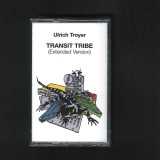
Ulrich Troyer has been producing music now solidly for over twenty years within a largely genre free framework, but whilst navigating forms such as avant-garde, techno, leftfield, field recording, electronica, glitch and ambient it is the aesthetics of dub that guide his creative direction. Not really recognisable in an orthodox form as remixed versions of roots reggae songs but in the way sonics are manipulated with space, the application and layering of delay, reverb and echo that fixes his output well within the scope of what might be called futurist dub.
The nearest comparisons to his new album TRANSIT TRIBE can only be established by a synthesis of some of the more adventurous explorations in modern music such as African Head Charge, Jon Hassell, Pole (Stefan Betke), Bill Laswell or even Miles Davis; featuring a diverse selection of artists and friends not only from Vienna and environs but also from around the world, sounds are not so much fused but allowed to float along the continuous flowing tide of warm waves of bass.
Rather than to allow the names of Ulrich Troyer's collaborators be merely listed in the album credits, what they bring to this joyful affair needs to be outlined, albeit briefly: Co-producer credits go to Osman Murat Ertel from Istanbul, who employed a variation on the old foolproof Nick Lowe method for checking out the impact quality of his own sound productions by playing tracks through his car sound system speakers!
Murat is a member of the electro-psych-folk group Baba Zula where he plays electric saz, oscillators and theremin and played a key part in the creative development of the album. Mamadou Diabate, the balafon master originally from Burkina Faso and now resident in Vienna, has developed his own unique technique of playing solos that replicate the sound of three instruments playing in unison; however the multi-talented Mamadou is engaged here on singing and playing the talking drum. From South Tyrol Reinhilde Gamper is a member of the experimental trio Greifer who are bringing the sound of the zither into the twenty-first century using new playing techniques and electronic gadgets. Susanna Gartmayer is an Austrian composer and bass clarinetist specialising in improv and multimedia sound research. Diggory Kenrick has been engaged with creating new dub fusions and also re-energising classic rocksteady and roots reggae classics, renowned for his interventions on flute. Didi Kern is an electronic dance musician and drummer from Vienna with a focus on free improvised music. Hamidou Koita, a singer and multi-instrumentalist, is from a traditional Griot family in Burkina Faso but now resident in Vienna and a regular musical partner of Mamadou Diabate playing drums and calabash. Austrian Lukas Lauermann is both a studio and live musician playing cello, also working on electronic sound design and writing string arrangements. He has recorded extensively and appeared on stage with both Mark Lanegan and Hans-Joachim Roedelius. Martin Mallaun is a Tyrol-born specialist in both the development of the zither in modern music and also as a researcher in the effects of climate change on the vegetation of Alpine ecosystems. Mystica Tribe is the musical alias of Tokyo-based dub/techno producer Taka (Takafumi) Noda. He collaborated with Vienna's own Vegetable Orchestra on 2020's "Transplants (Mystica Tribe Version)". After studying classical percussion Flip Philipp is now a jazz vibraphone player and member of the Vienna Symphony Orchestra. Wolfgang Pfistermüller is a member of the Vienna Trombone Quartet and the developer of the incredible bass-trombone Aurora with its uniquely warm and resonant sound. Roger Robinson is a renowned British poet, winner of many contemporary poetry prizes and member of the experimental music group King Midas Sound. Kwame Yeboah is a Ghanaian born UK based keyboard wizard who tours regularly with Yusuf / Cat Stevens, Ms. Dynamite and Pat Thomas.
So contained on the album is an astonishing mix of musicians and instruments: sounds of cowbells recorded in the South Tyrolean alps processed by modular synthesizers and heavy analogue bass synths combined with instruments such as zither, bass-zither, electro saz, flute, talking drum, trombone, cello, vibraphone, marimba, djembe, contra-alto clarinet, melodica, Farfisa - all bound together by organic live-drums and dub effects.
Liner notes by Steve Barker
- A1: Vajolet Feat Lukas Lauermann, Wolfgang Pfistermüller & Flip Philipp
- A2: Autostrada Del Brennero Feat Diggory Kenrick
- A3: Latzfonser Kreuz Feat Mamadou Diabate & Hamidou Koita
- A4: Lago Di Garda Feat Roger Robinson
- A5: Alfa Romeo 145 Feat Kwame Yeboah
- B1: Feltuner Hütte Feat Osman Murat Ertel
- B2: Avrupa Köprüsü Feat Osman Murat Ertel
- B3: Europabrücke Feat Susanna Gartmayer
- B4: Ancient Atoll Feat Reinhilde Gamper, Martin Mallaun & Flip Philipp
Cassette[14,92 €]
Ulrich Troyer has been producing music now solidly for over twenty years within a largely genre free framework, but whilst navigating forms such as avant-garde, techno, leftfield, field recording, electronica, glitch and ambient it is the aesthetics of dub that guide his creative direction. Not really recognisable in an orthodox form as remixed versions of roots reggae songs but in the way sonics are manipulated with space, the application and layering of delay, reverb and echo that fixes his output well within the scope of what might be called futurist dub.
The nearest comparisons to his new album TRANSIT TRIBE can only be established by a synthesis of some of the more adventurous explorations in modern music such as African Head Charge, Jon Hassell, Pole (Stefan Betke), Bill Laswell or even Miles Davis; featuring a diverse selection of artists and friends not only from Vienna and environs but also from around the world, sounds are not so much fused but allowed to float along the continuous flowing tide of warm waves of bass.
Rather than to allow the names of Ulrich Troyer's collaborators be merely listed in the album credits, what they bring to this joyful affair needs to be outlined, albeit briefly: Co-producer credits go to Osman Murat Ertel from Istanbul, who employed a variation on the old foolproof Nick Lowe method for checking out the impact quality of his own sound productions by playing tracks through his car sound system speakers!
Murat is a member of the electro-psych-folk group Baba Zula where he plays electric saz, oscillators and theremin and played a key part in the creative development of the album. Mamadou Diabate, the balafon master originally from Burkina Faso and now resident in Vienna, has developed his own unique technique of playing solos that replicate the sound of three instruments playing in unison; however the multi-talented Mamadou is engaged here on singing and playing the talking drum. From South Tyrol Reinhilde Gamper is a member of the experimental trio Greifer who are bringing the sound of the zither into the twenty-first century using new playing techniques and electronic gadgets. Susanna Gartmayer is an Austrian composer and bass clarinetist specialising in improv and multimedia sound research. Diggory Kenrick has been engaged with creating new dub fusions and also re-energising classic rocksteady and roots reggae classics, renowned for his interventions on flute. Didi Kern is an electronic dance musician and drummer from Vienna with a focus on free improvised music. Hamidou Koita, a singer and multi-instrumentalist, is from a traditional Griot family in Burkina Faso but now resident in Vienna and a regular musical partner of Mamadou Diabate playing drums and calabash. Austrian Lukas Lauermann is both a studio and live musician playing cello, also working on electronic sound design and writing string arrangements. He has recorded extensively and appeared on stage with both Mark Lanegan and Hans-Joachim Roedelius. Martin Mallaun is a Tyrol-born specialist in both the development of the zither in modern music and also as a researcher in the effects of climate change on the vegetation of Alpine ecosystems. After studying classical percussion Flip Philipp is now a jazz vibraphone player and member of the Vienna Symphony Orchestra. Wolfgang Pfistermüller is a member of the Vienna Trombone Quartet and the developer of the incredible bass-trombone Aurora with its uniquely warm and resonant sound. Roger Robinson is a renowned British poet, winner of many contemporary poetry prizes and member of the experimental music group King Midas Sound. Kwame Yeboah is a Ghanaian born UK based keyboard wizard who tours regularly with Yusuf / Cat Stevens, Ms. Dynamite and Pat Thomas.
So contained on the album is an astonishing mix of musicians and instruments: sounds of cowbells recorded in the South Tyrolean alps processed by modular synthesizers and heavy analogue bass synths combined with instruments such as zither, bass-zither, electro saz, flute, talking drum, trombone, cello, marimba, djembe, contra-alto clarinet, Farfisa - all bound together by organic live-drums and dub effects.
ROD MODELL : MUSIC FOR BUS STATIONS
MUSIC FOR BUS STATIONS is an astonishing work that pours into the soul of those allowing themselves to be transported in a dimension where sound turns into background noise. Sound becomes part of us, of our movements, our thoughts, our looks and our silences. There is no reason for resistance. Let's be silent. The noise around us is quite good.
"Generative sonic backdrop for bus stations. Designed to enhance space and portray a mod of progressiveness, grandeur, and ethereal calm. A slowly shifting static backdrop designed to enhance modern architecture, rather than compete with it. Sounding as if the structure itself was resonanting. Hovering sound-fields that utilizes sonic phenomena proven to induce states of calm. Can be presented as a multichannel, polyrhythmic installation with different components of the composition emanating form different areas within the structure, and elements constantly shifting in relationship to other elements, creating an organic sonic-tapestry that never repeats the same way. In essence, the soundscape becoming a living organism with unpredictable behavior. Inspired by avant-garde bus station designs such as Domitianus Arquitectura's station in Rio Maior, Portugal; Bluck & Morgen's Busbahnhof Poppenbuttel in Hamburg, Germany; and Metaraum Architect's bus station in Pzorzheim, Germany."
Rod Modell, January 2024
ROD MODELL (Deepchord): MUSIC FOR BUS STATIONS BS (Part 2/2)
MUSIC FOR BUS STATIONS is an astonishing work that pours into the soul of those allowing themselves to be transported in a dimension where sound turns into background noise. Sound becomes part of us, of our movements, our thoughts, our looks and our silences. There is no reason for resistance. Let's be silent. The noise around us is quite good.
"Generative sonic backdrop for bus stations. Designed to enhance space and portray a mod of progressiveness, grandeur, and ethereal calm. A slowly shifting static backdrop designed to enhance modern architecture, rather than compete with it. Sounding as if the structure itself was resonanting. Hovering sound-fields that utilizes sonic phenomena proven to induce states of calm. Can be presented as a multichannel, polyrhythmic installation with different components of the composition emanating form different areas within the structure, and elements constantly shifting in relationship to other elements, creating an organic sonic-tapestry that never repeats the same way. In essence, the soundscape becoming a living organism with unpredictable behavior. Inspired by avant-garde bus station designs such as Domitianus Arquitectura's station in Rio Maior, Portugal; Bluck & Morgen's Busbahnhof Poppenbuttel in Hamburg, Germany; and Metaraum Architect's bus station in Pzorzheim, Germany."
Rod Modell, January 2024
- A1: A Beautiful & Idiosyncratic Luminescence (++)
- A2: Assisting Sirens Escaping Velocity
- B1: While Patterns Unfold
- B2: Made Of Broken Glass & Astonishing Mirrors
- C1: Perpetuated On Canvas That Sets Us Apart
- C2: Fighting Against Legions Of Pricks
- C3: Cut A Sketch To Survive
- D1: Death By 9 To 5
- D2: Diving Solo
"Diving Solo" is the debut album of an artist who, after years of recognition under a different alias, has now redefined himself as "sr²." Central to this project is a deliberate departure from self-staging—shifting the focus entirely onto the art itself.
The album emerges from a deeply rooted vision that took shape over a decade ago. It navigates the fundamental questions of existence: the inevitability of impermanence, the search for meaning, and the quest to carve one's own path. Each track draws from formative experiences—from the electrifying pulse of countless club nights to the quiet, introspective moments that challenge our understanding of everyday life.
The tracks on this 9-track double LP transcend mere functionality; they evoke profound emotions and offer space for personal reflection. "Perpetuated on Canvas..." delves into how the first encounter with mortality can profoundly shape one's perception of life. "Diving Solo" inspires a break from conventions to seek what truly matters—even if that journey must sometimes be taken alone.
While the album weaves a coherent narrative, every listener is invited to discover their own nuances and shades of meaning within it. For, in the end, the artwork always extends beyond the artist.
Repress!
A special tribute addition of Ellum Audio comes courtesy of Maceo Plex & Jon
Dasilva, who bring back a pair of bygone musical gems with their own modern interpretations. Featuring an astonishing guest appearance by house vocal sensation Joi Cardwell, Ellum delivers a late summer anthem with 'Love Somebody Else'.
"A Seamless Symphony of Harmonious Electronica" - Jazziz
Emerging from over a year of creative hibernation following their debut album, Stavroz's upcoming EP "Kick Up the Dust" jolts them back into action. The EP flows gently, yet the overall mood of the journey isn’t always easy to pinpoint. There’s a certain vagueness to Stavroz’ sound which allows for bizarre experiments to seep through without interrupting the course. “We like to keep it lightly twisted, like a wink with a frown,” says the band.
In the title track however, Stavroz boldly steers towards the heart of the dance floor: efficient, remorseless, powerful, intense and most of all... elegant. Guiding you harmoniously through the club is a delightful duet of trumpet and saxophone, timed perfectly to heal you where it hurts most.
"Her Eyes Were Red" does what it says on the cover. There's melancholy - without sadness. Power - without force. Love - without lust. Stavroz's music possesses a distinct power that feels both natural and organic, never resorting to brute force or aggression. In their own way, the Belgian quartet offers an astonishing journey of saxophone & duduk, supported by broken beats and chopped vocals.
In Dae-El, a track featuring the Brussels-based producer and sound designer Poltrock, ethereal-sounding synths and duduk are combined with ghostly high-pitch distortions. Despite a backbone of muffled beats, the tune has vaporous qualities, reverberations that wobble and tinkle into space – it’s an easy listening experience but in a trippy, spaced-out way. “We’re trying to go for the sweet spot between the couch and the club”.
Adding further depth to their EP, Stavroz collaborates with Brazilian singer and composer Castello Branco in "Valente." Here, intimate Sade-like vocals harmonize with rubbery scratches, acoustic guitar, and horn segments, crafting a lush lounge piece that seamlessly balances both relaxation and empowerment, transparency and provocation. It's a testament to Stavroz's versatility and their knack for creating music that defies easy definition, leaving listeners eagerly anticipating the next twist and turn in their captivating musical journey.
"Niagara's third LP Afire is the rarest one from kraut drummer, formerly of Sunbirds, Klaus Weiss' band. An astonishing album which returns to the minimal sounds based on percussion and rhythm of their first album, yet retaining a feel of harmony all through it - this time not provided by the brass instruments that had been added in S.U.B., but though to the high emphasis put on combining a variety of drums each tuned to their perfect pitch, and the contribution of Embryo's bass player Dave King. Also present on the sessions were percussionists George Brown, Sabu Rex and Norman Tolbert. The phenomenal rhythms contained on this LP have made it a very sought after piece among those looking for cool samplers to mix.
Klaus Weiss is considered one of the best drummers of the German jazz scene, he was always very active and played with a lot of USA jazzmen travelling Germany like Hampton Hawes, Herbie Mann, Mal Waldron or Johnny Griffin, as well as with German greats as Klaus Doldinger, George Gruntz, Friedrich Gulda, etc. "
New Jersey producer, DJ and Inimeg Records head honcho Joey Anderson takes on the role of Obiaman for Obia Records 005. Well known for his deep and intriguing records Joey Anderson takes the label far into the night sky with Vanish EP. Accompanied by label owner Wendel Sield the EP sets to serve a variety for all tastes.
Anderson’s style of hypnotic rhythm and cosmic synth work finds common ground with the labels African background in “Masked Ones”. With haunted vocal shots and elegant drum work. Minimalistic use of elements fill the track exceptionally well.
“Vanish”, the records main cut fills any ear with an astonishing panned bassline accompanied by loosely layered hihats. Strange and eerie pads float around the bassline, while piano chords give structure to the music. Followed by “Escape” this well-crafted jam explores the deep even further. Jumping synth lines that sound from another planet edge the depth of Anderson’s amazing musical ear. The track is layered by dirty low frequencies that suck you in with weird noises and atmospheric melodies.
Orbiting an icy moon Wendel Sield's “Cultivate” shows itself at the end of the EP. A pulsating synth line dominates the track main character. Intricate percussion patterns drag the track along to a dirty mono sequence. Big open snares makes this a track a slap in the face to its listener.
For an aesthetic of (dis)obedience. The impressions Richard Siegal and his company Ballet of Difference gathered on a trip to Japan in September 2022 now find their way into a full-length dance evening. Siegal and his team had set off for Tokyo to learn the practice of Shuudan Koudou, also known as "Japanese Precision Walking". The strictly synchronised group choreographies are astonishing in their radical stringency and have become a secret YouTube hit, not least because of their peculiar subtle humour. Siegal recognises in the extreme disciplining of the bodies an analogy to the training practice of classical ballet. In the mutual exchange of these movement cultures, questions are raised about individual and collective thinking, about personal decision-making power and social responsibility. For this extraordinary project, Richard Siegal has invited a special guest: Nazareth Panadero, long-time companion of Pina Bausch, who has long since become an icon of Wuppertal dance theatre and will be on stage with the BoD ensemble.
The production BALLET OF (DIS)OBEDIENCE is sponsored by Goethe Institut, with the kind support of Sissel GmbH.
CHOREOGRAPHY & STAGE: RICHARD SIEGAL
COSTUME: FLORA MIRANDA
LIGHT & VIDEO: MATTHIAS SINGER
MUSIC: ALVA NOTO
DRAMATURGY: TOBIAS STAAB
more info to: Shuudan koudou
'Shuudan koudou' Shuudan Koudou Is the Japanese #art of Synchronized Precision ...YouTube · Boson TV: Tech Marvels & Cool Discoveries22 Dec 2022
Kottke.org https://kottke.org › shuudan-koud...Shuudan Koudou Is the Japanese Art of Synchronized Precision Walking
On the other hand, hybrid 3 is inspired by Noh Play - Japanese performances and deals with the refusal of rules musically, hybrid three continues the two previous albums and weaves both rhythmic and beatless musical pieces into a holistic work.
The idea for me has always been that these albums are not only perceived as individual tracks, but as a whole piece, which is why I find the possibility of experiencing and listening to these albums in the right order and as a whole particularly important. For me, the pieces are not only closely related to the ballet that was created for them, but also function as individual pieces as pure, musical pieces and mark a new quality for me, which is very strongly focussed on producing electronic sounds and structures in such a way that they can develop a sculptural quality.
The story of this EP dates back to 2021, when we—the whole BMP crew—were attending our annual family gathering at the now-defunct Sarcus festival (R.I.P).
On a late Saturday afternoon, we all gathered under the same tent to watch one of our dear friends perform live. You guessed it: this friend is Malouane. From the first track of the live set, we in the audience exchanged astonished looks. We knew he had been working hard on this live set for months but didn't know anything about it. As the live set unfolded, we kept traveling mentally in a perpetual state of amazement.
By the end of the set, we all had the same idea: to congratulate Malouane and ask for the tracks so we could release an EP that would capture the essence of this live set, allowing us to relive that very special moment.
After a long wait, we are now more than happy to share some selected tracks from the set with you, hoping you will feel the same excitement we felt at the time.
As a cherry on top, besides having four tracks from Malouane, we asked our dear friend Gabriel Belabbas—from Positive Future—to craft an additional remix, giving this EP a deep house edge.
Certified floorfiller!