Considering He Was A Self Taught Pianist, Brian Auger's Progress Into The Heart Of The British Modern Jazz Scene Of The Late 1950's And Early 60's Was Particularly Impressive. He Gained Invaluable Experience The Hard Way, Paying His Dues At The Cottage Club, And The Original Ronnie Scotts On Gerrard Street, Working With Renowned Saxophonists Tommy Whittle, Dick Morrisey And Jimmy Skidmore - And Sessions In Smoky East End Pubs With His Friend, Arguably Britain's Greatest Jazz Saxophonist Tubby Hayes.
The Inclusion Of Several Of His Rare, Early 60's Piano Trio Tracks On Both Volumes Of 'back To The Beginning - The Brian Auger Anthology' Brought Long Overdue Attention To Brian's Early Jazz Career, Which Many Were Simply Unaware Of Prior To Their Release. The Enthusiastic Reaction To Those Tracks That Stuck In Brian's Mind, And Later, Fate Intervened, As He Himself Explains, "a Couple Of Years Later, Ken Greene, The Music Director Of Bogie's, Called And Told Me That He Was Starting A Project, To Whit, A Week At Bogie's With A Different Jazz Piano Trio Each Night".
The Material Brian Decided To Play Features Tracks From A Selection Of His Musical Influences, Heroes And Friends Including 'chelsea Bridge' By One Of His Favourite Composers, The Great Billy Strayhorn, Freddie Hubbard's Ever Green 'little Sunflower', The Much Loved Standard 'there Is No Greater Love' Which Brian Used To Play In His Original Early 60's Piano Trio, And His Own Composition Victor's Delight He Wrote A Tribute To The Great English Jazz Musician Victor Feldman Who He First Discovered Via His Tenure With The Cannonball Adderley Quintet.
Surprisingly, This Is Brian's Very First Jazz Piano Album Of His Illustrious And Award Winning Career, And Marks A Return To The Instrument And The Music That First Entranced And Enthralled Him As A Young Boy. His Musical Journey, Which Began In Austere Post War London, And On Which He Absorbed So Many Varied Styles Of Music, And Literally Took Him Around The World, Enrapturing Audiences Worldwide, Has Indeed Come Full Circle.
quête:at project
doctor umezu diva is a japanese sax player kazutoki umezu's one off project which he invited two female artists, one is a legendary marimba player midori takada and one more is a vocalist&pianist and half of japanese newwave band colored music in the end of 80's.
this album was one of the best kept secret jazz album from japan. dubby from ondas tokyo(he compiled 'va/midnight in tokyo vol.2' on studio mule) brought me this record. it was really hard to find as the amount of copies has been very limited.
this album is a unique mixture of modern classical sound and avant-garde jazz which is kind of similar with strata east or nimbus.
Born out of a chance encounter in 2012 that led to a lasting friendship, Rhythm Section Int'l & producer, DJ, label boss, radio host, and record store owner Ruf Dug join forces to present 'The Committee'. Sitting somewhere between fictional band and studio collaboration, the record is the first fully in-house production for Rhythm Section, recorded start to finish at their own South East London studio and featuring vocals from label founder Bradley Zero and label mate FYI Chris's Chris Watson.
Right from the studio's initial creation, Ruf Dug felt inspired by the space's unique musical identity, jumping at the opportunity to create a collaborative record there over a two week studio residency. And between his DJ residencies at Pikes, Gottwood and NTS radio the Manchester-via-Ibiza computer game freak and renowned vinyl digger found the time to meld his wide range of influences. Having been a key driving force behind Be With's Holy Grail reissue of Bô'vel's - Check 4 U , Ruffy has more than earned his stripes as a boss level Street Soul collector, pre-empting the resurgent interest in the genre, which began in the mid 80s and is still a popular sound in Manchester today. This new release draws parallels between the DIY attitude of Street Soul labels like TSR, Intrigue, Jam Today & Elite and the modus operandi of the RS studio.
A wholly synergetic work, the project's title 'The Committee' reflects the collaborative nature of this release, as Ruf Dug states: 'Authorship is a strange concept at the best of times but this genuinely is a group effort and I very much enjoyed feeling like just one piece of a larger entity - the complete opposite to my usual production experience of being all alone in my room for days at a time.' The EP also features additional production from Rhythm Section's own Mali Baden-Powell, who DJ's and produces as Z Lovecraft and comes from a background in Street Soul music, his father was also in legendary UK acid jazz collective D'Influence. In addition, the record features a dynamic range of vocalists: sultry deliveries from Natalie Wildgoose and Sienna Mustafa, a rap from her sister Nadina, and the vocal debuts of FYI Chris's Chris Watson and Bradley Zero. 'I had been joking with Bradley that he needed to be on the record somehow and he did appear, playing an egg shaker at one point, but his singing wasn't in the least bit planned... I got back from lunch, and the next thing you know he just starts singing...So I dragged him reluctantly down the corridor to the studio and that's it- now he's a pop star!'
Also playfully melding digidub, soul, chicago house and acid jazz, the release not only marks a new chapter in the development of the Rhythm Section sound, but also catalogues a crucial turning Point in Ruf Dug's musical development. Still oozing with the cheeky DIY approach that won his own label, RUF KUTZ an army of fans, this latest Collab steps things up and opens a whole new realm of possibilities for one of Manchester's favourite sons.
F-Dorm is a collaboration between Connor Camburn of Litüus (AVIAN), and visual artist Conor Ekstrom. Commune follows the first F Dorm cassette on Mazurka and presents the first LP by the project. Songs build upon unexpected repetition, wielding normally aggressive sounds into meditative loops with subtle textural evolutions. Bursts of tape saturation, controlled waves of feedback, and linear drum beats shift and weave together through rhythmic delays. Affected vocals speak low as if coaxing the listener further out into the nether regions of the mind. The strange cumulative mood of the record is difficult to describe: A transcendental state or a foul parallel from which the listener arises stronger or does not arise at all. mummies in civilian clothes -the master of the riddle-a DOLLMIND haunts me in the penitentiary -the puttyman, naked inside -a mind made of cream
- A1: Ich Will Dir Helfen
- A2: A La Manière (With Roya Arab)
- A3: Ondine
- B1: Aspiration (With Mona Soyoc)
- B2: One Of These Days (With Hafdis Huld)
- B3: Théorème
- B4: Mortel Battement / Nocturne (With Alain Bashung)
- C1: Organique
- C2: The Watcher (With Mona Soyoc)
- C3: Qu’est-Ce Qui M’a Pris (With Philippe Poirier)
- D1: Xr 116 / Messe Rouge
- D2: Untitled
- D3: Ondine (Alt Take)
- D4: Piasong
The sensitive mountain » (la montagne sensible) is the nickname Alain Bashung came up with for Arnaud Rebotini. At the height of his fame, after the success of Fantaisie Militaire in 1998, Bashung readily agreed to create an album with Rebotini. The two men didn’t know each other; their record label had introduced them. Bashung brought in “Mortel Battement” and “Nocturne,” two poems by Jean Tardieu, which he recited in a voice simultaneously warm and flat, and Arnaud produced an impressionist soundscape that ended with an apocalypse of metal. Bashung was so proud of their collaboration that he offered to give several interviews to promote the record. Today, listening back to this moving Léo Ferré influenced "talking singing" exercise, it’s hard not to hear the template for L'Imprudence, the album that Bashung went on to record with Rebotini two years later. In a similar way, the album Organique sparked a productive partnership between Rebotini and filmmaker Robin Campillo, which resulted in their being awarded a César for Best Original Music in 2018. The director, who trusted Rebotini to create the soundtracks for his films Eastern Boys and 120 Beats per Minute, never kept his love for the 2000 record a secret.
Yet it’s an understatement to say that when it was released, Organique was not in the spirit of times. That year was all about the French touch. The funky samples of Modjo’s “Lady” and Superfunk’s “Lucky Star” ruled the sweaty dancefloors. Although Rebotini was familiar with the electronic scene, he had something else in mind when he set about creating Organique. Under his own name or under the pseudonyms Aleph, Avalanche, Black Strobe, Maison Laffitte, and of course Zend Avesta, he had already released several quite bizarre and experimental techno, house, or jungle maxi singles on pioneering labels like P.O.F., Source, and Artefact, run by his friend Jérôme Mestre’s, whom he had met back when both were working as record salesmen at Rough Trade’s ephemeral Parisian store. It was at Artefact, still financed at the time by Barclay and Universal, that he naturally proposed this record project, which was a bit "different." It was his first real album.
Arnaud Rebotini has never hidden his love-hate relationship with the electronic scene. He’s a fan of rave music, Rex, and later Pulp, but he listens mostly to metal and contemporary music, mainly American minimalists such as Terry Riley, Philip Glass, Steve Reich. He wanted to mix this genre with a more French aesthetic inspired by Debussy, whose unconventionality fascinates him. From the first suspended guitar note of Organique, you can pick up another influence, possibly poppier. In the style of Mark Hollis, the erratic leader of Talk Talk, whose only solo album’s silences and dissonances left their mark two years earlier, we hear the fingers touching the keys of the clarinet on “Ondine.” The instruments have presence, character. Nothing is smooth. Everything is organic.
Although it’s sometimes labeled as electronica because of Rebotini’s career, there’s nothing digital about Organique. No "pro tools" editing or samples, only programmed drums and some synth layering. And his guest vocalists. Playing the role of electro producer, he invited Bashung, of course, to join him on the album, but also Roya Arab, who Rebotini first spotted while she was playing in Archive, and her sister Leila, Gus Gus alum Hafdis Huld, Kat Onoma’s Philippe Poirier on the “Samuel Hall” inspired track “Qu’est ce qui m’a pris,” and former KaS Product member Mona Soyoc.
The frustration of a tour where he had "little to do on stage," the desire to sing himself, and the creation of the Black Strobe project, a haunting mix of blues and rock, stopped Zend Avesta from putting out another album. Eighteen years later, the Organique we rediscover today has lost nothing of its strangeness, nor beauty. When it came out, Bashung said, "What is interesting for a musician is to feel that you have a piece of wasteland in front of you, something to clear.” That remains true today.
An exploration of traditional Chadian music with an electronic twist...
Chad is in many ways a blind spot on the map of today's global musical conversation. Overlooked, misunderstood and misrepresented, outside observers rarely concede the country an autonomous voice over its past, present and future. N'Djamena, the dusty capital of Chad with its well-kept stories of boundary-breaking musical collaborations and thirst for experimentation is a city that reflects the country's diversity: the arid North, bordering the Sahara, where nomadic tribes revere the endless desert with their handcrafted instruments. The lush tropical South, where the frenetic drumming of local initiation ceremonies blends with sounds of neighboring Congo and Cameroon. Right in the middle: N'Djamena, a forgotten melting pot of cultures and peoples bursting with unrecorded stories of life at the margins of the world's attention.
Tackling this view is precisely one of the aims of Pulo NDJ. In May 2018, Nickodemus accepted an invitation from Hape Collective to travel to N'Djamena to teach a group of young adults DJ'ing and electronic music production, which resulted in the encounter between and a group of talented artists from Cameroon, Chad, Congo and Togo. After a weeklong series of listening to original songs & demos, the recordings continued in a pop-up studio created by DJ Buosis & Nickodemus which culimated in Desert To Douala, an album featuring 11 songs, all originally written and recorded in N'Djamena.
The project found its inspiration in the city's un-narrated diversity and seeks to explore the possibilities offered by technology to demonstrate how the country's rich heritage connects with existing musical conversations. It strives to create bridges in a world of walls. It has been a yearlong creative process that built friendships and fostered understanding among people united by a passion for music and creation.
Unshrouded in mystery: what once started as an anonymous underground project with stamped white labels and a clever take on sampling, has since then unfolded to be one of the longest-running and most successful teams in current dance music. Nurtured by the sounds of the past and blessed with the techniques of today, the music of Tiger & Woods always kept evolving in and around the tropes of disco, house and boogie. Classic dance music, if you will.
Celebrating the 10th anniversary this year, Marco Passarani and Valerio Delphi managed to arrive at album number three. A.O.D. is a pun on A.O.R. (adult oriented rock) and a play on their own sound. Defying the restricting rules electronic music record shop crates, it's a departure and an arrival at the same time. Inspired by the faded buildings and images of discotheques on the Italian countryside, the romantic start and bittersweet endings of summer, beach life and the excitement of travelling through the landscape to get to aforementioned temples of dance and subsequently the morning after.
Except for the 100% sample-free 1:00 am, everything on A.O.D. is based on a quiver of cleared samples from the Roman institution that is Claudio Donato and his Full Time and Goodymusic emporium. In Tiger & Woods hometown Rome, the often very electronic and futuristic sound of Italo Disco had a different twist. Much more boogie-based and influenced by the song-writing styles of New York City's dance scene, it played in a league of its own. Tiger & Woods use these materials to take them apart, out of context and into contrasting areas. Molding something completely new, one gets fooled to recognize Sade songs that aren't, pop music instrumentals and a reprise of memories that never existed. A ride through ones brain in a convertible with an Italian FM radio station playing in the background. Or to use less stiff poetry: a chill out album you can dance to or a dance album you can chill out to. Adult Oriented Dance.
Midnight Embassy is a pingpong project by songwriter Angela Aux and producer Sam Irl. During nightly sessions and on walks together, the two artists have created a palette of timeless tracks and futuristic sculptures from pop music flotsam. Like if two archive junkies had synchronized their sketch collections and notebooks so that the different genres and decades seem to effortlessly swirl through each other: Dub, Folk, Beatnik literature, Afrobeat & Electronica. Aux & Irl celebrate a gentle escapism, both cosmopolitan and aloof. This island mentality sparkles unobtrusively through all five tracks of the debut EP. No fireworks, no illuminated advertisements, no selfie thunderstorms: they come at dusk, set shimmering beacons and disappear on a reverberation trail behind the curtain of the night.
- Utopia Music are extremely proud to present UM022, Hydro's debut album 'Lateral Thinking'. - Spread over 3 plates (4 including the sampler), Hydro manages to really showcase the variety and musicality that he's known for. With over 20 years of experience, he manages to comfortably wear his many influences whilst offering something both fresh and new at the same time. The palette covers light and dark, warm & cold, ambience, jungle, funk, soulful, techy, rolling, half time, 130 & 140 bpm, hip hop, jazz, tribal, and even meditative vibes. Inspired by a lifetime of music, travel and memories the aim was to deliver an eclectic album that could satisfy both the DJs and the headz whilst also being able to transport the listener elsewhere on an emotional and cerebral level. Dance music that can work beyond the dance floor.
- Hydro has been releasing incredible music since 2003 on almost all of the big labels. Since his production beginnings collaborating with Break, he has continued to work on many different styles and with many other different producers. He's become known for his musical diversity and his name is synonymous with quality & finesse. It's an absolute honour to be able to introduce his debut album to you. This project also features War, who again establishes himself as one of the best engineers in the game. Since first collaborating in 2011, Hydro & War have proven to be a formidable team, known for consistently delivering essential releases, including for Utopia. The only other artist featured on the album is Mateba, who joins in for two of the more uplifting tracks. A talented French producer and a long time collaborator of both Hydro & War.
Jason Letkiewicz has always swum against the musical tides, flitting between different solo pseudonyms (including Steve Summers, Death Commando and Alan Hurst) and collaborative projects (most notably Mutant Beat Dance) in order to explore different aspects of his leftfield inspirations. With his latest release, a first full-length outing for Artificial Dance entitled Mirage Information, the Chicago-based artist is operating under an alias that celebrates this approach: Opposing Currents.
It's an alias he's used once before - for a track featured on Chronditic Sound's 2015 cassette compilation Non-Christian Referent - but Mirage Information sounds like an artistic rebirth. Densely layered, mind-altering and often intense, the album's seven tracks update the Cold War paranoia and pulsating electronics of EBM and industrial music for today's complex and chaotic political climate.
Throughout, Letkiewicz smothers off-kilter drum machine rhythms and throbbing, body-jacking synthesizer basslines in untold layers of hazy audio detail, creating a dystopian sound soup out of which alien electronic melodies, psychedelic acid lines and barely audible vocals emerge. At times, such as on angry opener 'Lying Awake', the extra-terrestrial 'Dissolve' and foreboding 'Shallow Grave', we're invited to dance in the darkness in celebration of impending doom. On other occasions, such as the poignant and melancholic closing cut 'It Awaits', Letkiewicz simply seems exasperated at the chaos that is life in the 21st century. It makes for a genuinely arresting and thought-provoking listen.
Jakarta/Indonesia based DJ/Producer/Akamady Records boss Gerhan Ferdinal & friend's project "KOMODO" made 2x floor killer tunes. Many people have been waiting for this 12" since Ene boss CHIDA played "Night Time" at his Boiler Room show in 2014. And "Make It Scream" is massive & heavy killer tune too. Underground music/party scene in East South Asia has grown up so fast these years. and still there are many great artists world unknown. Ene planning to release more Asian artist, new stuff from friends in the world in 2019.
Sublunar Records, the label run by Sciahri and Dagdrom, starts 2019 with his tenth re- lease.
'Corpora' is a new trilogy project whose elements will see the light throughout the year.
Part I involves Nuel, known for his collaboration with Donato Dozzy on the Aquaplano project and author of for two genre defining album on Further Records.
His contribution 'Intarsia' is a polyrhythmic mixture of ascending synth spirals where every element is tuned for maximum clarity and impact.
Then Sam KDC, an integral part of ASC's cutting edge Auxiliary label and regular on Geoff Presha's Samurai and Samurai Horo, comes in with 'Skirmish', a ritualistic experience where a memorable melodic figure is surrounded by delicate drum patterns. On the B side co-founder Sciahri releases all the tension with 'Linfa', pushing his signature sound into heavy atmospheric disturbances where distorted grooves bounce among skittering bits of percussion.
Wehbba collaborates with ghetto tech legend DJ Deeon, to deliver another superlative EP on Drumcode.
Since his debut on Drumcode in 2017, Brazil's Wehbba has become one of the most dependable and impressive artists on the roster. Last year saw two standout EP's 'Eclipse' and 'Catarse' drop on the imprint, alongside 'Just', his strong contribution to A-Sides Vol.7. He also made his mark playing Drumcode events at OFF Week, Resistance Ibiza and the much talked about double header in Manchester and Bristol when DC took over Warehouse Project and Motion respectively.
A true master craftsman in the studio, his first contribution for 2019 is typically impressive. A huge inspiration to Wehbba since his nascent raver days, ghetto tech icon DJ Deeon contributes a fierce vocal to 'We Have Bass', after a serendipitous hook up in São Paulo. A peak career moment collaborating with one of his original heroes and the artist responsible for the classic 'Freak Like Me', the resulting percussive-heavy cut kicks like a rodeo bull. 'Third Wave' is coffee geek Wehbba's homage to his favourite brew, constructing the production to mirror the experience of a caffeine fix, as a loopy trance-inducing groove leads to powerful synth stabs that are heavy on impact. 'Steamroller' is a stripped back slice of techno driven by the Brazilian's Korg MS-20 and found form after it initially begun as a studio jam inspired by Richie Hawtin's 'Minus Orange'.
A Jean-Michel Jarre fan stretching back to his childhood, 'Another Mistake' was conceived after Wehbba saw the French legend in concert last year and was subsequently able to meet him backstage through a mutual friend. While creating the track, the producer imagined Jarre playing the main layers of the hook on his famous Laser-harp, eliciting an almost celestial quality with the melody. This is a stirring slice of techno fit for stadiums. The EP ends with 'Purge', the artist's stream-of-consciousness expression recorded in one-take and a beautiful beat-less way to conclude the work.
apologia /ˌapəˈləʊdʒɪə/ noun: apologia; plural noun: apologias ● a
formal written defence of one’s opinions or conduct Introducing you the
name of the third release of Insulin. 3 original tracks made by
Damaskin. An artist who comes from Belgium. He is also known as
Seraphym Rhythm, his ambient side-project. This talented genius
offers here a real homeric journey, a travel through the abyssal depths
of his mind and the darkness of his music, thank to those hypnotic and
granular sounds with an incredible sound design, fabricated and melted
at perfection. In already hostile and tumultuous places, Codex Empire
is bringing the last hint of an overwhelming and chimerical
environment.
Born from Music of Life archive tapes (previously believed lost) which were uncovered by Robin Allinson in a Publishers warehouse in 2012.
The source material for this special record is" 1989 Hustlers Convention Live" (SPOCK1) ".
A Live Hip Hop Album, famously sampled by The Prodigy for the 'Everybody In The Place' vocal. The tapes of the night were multi tracks with 6 channels of audio recorded, Decks (Mono), 2 Mics (Mono) and the Room (Stereo). Being so old the tapes were first 'baked' and then transferred from a Studer machine in to Pro Tools via Prism Sound A/D converters at FX Rentals / FX Copyroom, Acton, London.
Notable performances by Artists on the Night came from MC Duke & Merlin; Mark The 45 King; Demon Boyz; Daddy Freddy. DJ's on the night were Westwood and Cut master Swift. Sections of their sets between Artists was captured. What did not make the Album was the Battle instigated by Overlord X coming on stage and stopping proceedings to battle MC Duke. As Duke once told me "X stuttered on the Mic".
Listening back, it's gold and puts Queen Latifa popping up in context. While restoring the Album as a multi track mixdown Robin started a series of new music projects plundering the MOL tapes and formed Stay On Target records to release them. Recordings were sent to: Sonars Ghost (SOT000), Stormski, 6Blocc, Bay B Kane and the last instalment was by Robbee Darkhalf.
SDH (Semiotics Department of Heteronyms) is the new project of two key figures of the synth-wave/industrial scene of Barcelona. Andrea P. Latorre and Sergi Algiz, founders of the Cønjuntø Vacíø label and also in the post-punk band Wind Atlas, unveil a new act more oriented towards pop music. SDH is change, alteration, distortion, metamorphosis. Their synth-pop songs, sprinkled with EBM and techno, are mysterious, obtuse and suggestive. The project seems to revolve around the idea of fiction. What is the language of feigned personalities What is fiction An individual is one and another, is liquid. It is physical. Incarnating someone is doing it in a corporeal way: making it flesh. Conceive: everything is real: reality does not exist. How is a fiction embodied They have already supported artists such as Marie Davidson and Merchandise and performed at the Swedish festival Kalabalik På Tyrolen, one of the reference festivals of the darkwave scene.
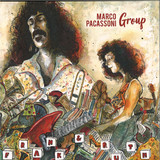
I cannot exactly remember when the idea of this album was born in my mind. What I am sure of is that I always wanted to complete such a project, which was to realize the dream of a vibraphone and marimba tribute to the music of my favorite musician composer, Frank Zappa. I met Marco Pacassoni about six years ago. I called him because we were looking for a vibraphonist for a tour with the artist Bungaro. We immediately developed a real friendship and when I told him about my idea and my fascination with Ruth Underwood, explaining that for me the best Zappa albums were the ones on which she played, he admitted that he knew only a part of that music, but that he would love to learn more. So I began to feed him tunes to listen to, sharing with him an imaginary track list. When Marco decided to really go for it (about two years ago), his first statement was that it was impossible not to include Peaches en Regalia and The Black Page on the album. That made me very happy because those are two of my favorites, and there was no better way to acknowledge the technical challenges behind this adventure. Marco studied Ionisation by Edgard Varese when he was in Conservatorio Rossini of Pesaro, even before he graduated in percussion at Berklee. It was strange for me that he could know more about Varese than about Zappa! I liked his idea of playing The Black Page alone at the marimba, just adding the beat, as if hearing the footsteps of an imaginary listener turning around. Who could it be My very first wish was to include Pink Napkins with Zappa's guitar solo played at the vibraphone.
- 180 GRAM AUDIOPHILE VINYL
- BRAND NEW 2019 NEO-CLASSICAL ALBUM
- PRINTED INNERSLEEVE
- LIMITED EDITION OF 500 INDIVIDUALLY NUMBERED COPIES ON TRANSPARENT VINYL
Fermata, Pieter de Graaf's debut project and the birth of a new talent in the neo-classical world. 'Filmic,' he replies when asked about the direction he had in his head, and there's an epic grandeur to many of the tracks. 'I have always written music' de Graaf explains, 'but with Fermata I felt that I could do so much more than just being a pianist, so I thought: 'Why shouldn't I try' The songs aren't 'written' in any traditional sense; instead he plays and improvise segments, records them, and listens back over and over before deciding what to use, what to discard, and what to embellish. No stone is left unturned in being guided by what the song requires - he has travelled North to record a church organ, wrote a score for a choir of four sopranos, and enlisted the help of friends and colleagues at Kytopia, the music collective in Utrecht that houses his studio.
It can take a while for an artist to find their true calling. For Pieter de Graaf, he's been searching since he sat next to his father, aged five, and watched him play the classics and the classical. He later immersed himself in the world of jazz, dedicating hours to practice, and studying at the Conservatory of Rotterdam. Several years spent touring with various bands, friends, and hip hop groups including The Kyteman Orchestra taught him an invaluable lesson, something that has informed his new project right from the start. His influences - Miles Davis, Nils Frahm, Rachmaninov, Bach, Herbie Hancock, and above all Keith Jarrett - allowed him to combine easy melodies with more virtuoso passages without losing the meaning, or the essence, of each song.
Fermata is available as a limited edition of 500 individually numbered copies on transparent vinyl.
- A1: You Make It Better
- A2: Been Thru
- A3: Weed Gunna
- A4: Voice Note #1
- B1: Strane Roses
- B2: Best Friend
- B3: Something To Say Feat. Frankie Stew
- B4: Outro
Recorded in Stockholm and produced by FAMILY_TIME and Maths Time Joy, who produced 'Best Friend', the mixtape follows the release of Ady's critically acclaimed debut album, 'Memories' in March 2018. Having worked on his debut album for some time, Ady wanted to release a collection of songs, ahead of writing and recording his second album.
A deft songwriter and a singer with soulful brilliance, Ady Suleiman has a rich era-spanning appreciation of music, and an innate need to turn life experiences into narrative. His timelessly classic yet fresh sound and lyrical distinctiveness has garnered him a broad range of influential fans from both sides of the Atlantic - from Chance the Rapper, Leon Bridges and Joey Bada$$ through to Labrinth, Michael Kiwanuka, Laura Mvula and Lianne Le Havas. Awarded 'Breakthrough Act of the Year' at Gilles Peterson's Worldwide Awards, Ady has been supported by the likes of The Fader, NME, Complex, The Line of Best Fit and Mahogany to The Independent and GQ (to name but a few).
A collection of songs which originated as voice memos on his phone, Ady comments, 'I wanted to make a project that is a bit more free, I originally wanted to do an interludes or outtakes project, but over time it changed form. 'Thoughts & Moments Vol 1' is the result."
Nexe Records is back, this time featuring the debut EP from SAMOT, "Forms Of Perception". The NX1 member and label co-owner returns with his solo project delivering a vigorous record including a remix of the French producer UVB.
"Petricor" opens the EP, a slow-burning broken track with electrifying synths driving powerful drums and inducing the listener in an hypnotic dance. "Cutis Ansarina" is a muscle flexing exercise, conceived for the dance floor, solid and classy, executed to perfection.
On the B-side "Kinestesia" is and lightning attack against the mind, wildly acid synth and percussions strike your brain. The UVB remix of "Kinesthesia" is taken to his territory where forcefulness dwells at will, built to raze the club.