Buscar:attempt

Estilos
Todo
Yashlik - Yashlik LP

Yashlik

Yashlik LP

12inchMQMSLR001
Maqom Soul
05.06.2026
  • 1: Yashlik
  • 2: Gozel
  • 3: Zhanajym
  • 4: Ne Veryu
  • 5: Olajim
  • 6: Vaj Dadej
  • 7: Almuta Almisi
  • 8: Nahshamda Sen
  • 9: Zhanan Kiz
  • 10: Chever Yarim
  • 11: Alti Kaptar

Maqom Soul Launches Its Reissue Series with a Cult Classic from Uyghur Ensemble “Yashlik”.
Maqom Soul, a newly founded Uzbek label dedicated to reviving rare and overlooked music from Central Asia, proudly announces its debut release: a vinyl reissue of the seminal album by the Uyghur vocal-instrumental ensemble Yashlik, originally recorded and released in 1978.
Founded in 1973 as part of the Uyghur Music and Drama Theater in Almaty, Yashlik (which translates from Uyghur as Youth) quickly emerged as a groundbreaking force in the regional music scene. Though born out of a theatrical setting, the group transcended those boundaries with a unique blend of Uyghur folk melodies, jazz influences, Soviet estrada, and traces of psychedelic rock.

The ensemble’s founder and artistic director was Murat Akhmadiev, a prominent figure in both the musical and cultural-political life of Kazakhstan. The album being reissued is one of the rare recordings where synthesizers, electric guitars, and drums appear side by side with traditional Uyghur instruments. More than a musical experiment, it stands as a cultural document of its era a creative attempt to preserve identity through the language of modern sound. Originally recorded at the Melodiya studios in the late 1970s, the album’s initial pressing was distributed only within the Soviet Union. Now, over four decades later, listeners finally have the opportunity to experience this music in a lovingly remastered and reimagined edition.
According to the team at Maqom Soul, beginning the label’s journey with Yashlik was a conscious and symbolic choice: “This was a group that embodied youthful energy, deep respect for tradition, and a genuine thirst for innovation. Their music once played at festivals and on television, and then quietly disappeared. We’re bringing it back — not out of nostalgia, but as a living piece of art.”

Maqom Soul is committed not just to reissuing rare records but to restoring the presence of culturally significant music that helped shape the sonic identity of Central Asia. Forgotten music is also part of the future. Maqom Soul brings it back to the stage.

Reservar05.06.2026

debe ser publicado en 05.06.2026

27,69 €
The Handover - New Old Medicine LP
  • A1: Part 1
  • B1: Part 2

Hot on the heals of their spectacular self-titled debut album, The Handover is back with their second long form composition, New Old Medicine. Aly Eissa (oud), Ayman Asfour (violin), and Jonas Cambien (vintage organ/synth) have been cutting their teeth on the international touring circuit for the past two years, landing from town to town in their seductive spaceship to blow people's minds and then dematerialize into the void. An outline for a new piece began to emerge along the route and late last year during a stop in Berlin, this metamorphosis of the trio's sound was recorded in pristine form by Rabih Beaini at Morphine Studios.
Attempting to define the music is not as important as allowing it to define itself - from person to person, village to village. All we can do is suggest what may resonate to lure you into the arena; psychedelic, folkloric, Egyptian, etc., as these excerpts from the liner notes suggest: "Though one long piece, New Old Medicine moves through several unofficial chapters. It originates in the psychic depths with a pensive melody. Gradually solidifying, the organ’s first solo ushers the piece into a swaying, reverent dance. This dance nears its end with a vigorously percussive section on oud, handing it off to the violin for a climactic solo. A momentary pause, then the rhythm thickens, and the musicians ride untethered through the midnight. This frenzy is followed by a calm repose on placid water. But this calm is merely a deep inhale before the final charged ascent into cosmic rapture."
Don't sleep on this one!

Reservar05.06.2026

debe ser publicado en 05.06.2026

28,53 €
OR SOBRE BLAU - MAKING FRIENDS

OR SOBRE BLAU

MAKING FRIENDS

12inchSTRLP-129
Stroom
30.05.2026out soon

Andreu G. Serra and Kiran Leonard first met in Lisbon nine years ago, arriving in the city within weeks of each other by chance. Living together in a crumbling warehouse in Alto São João, they recorded a series of improvisations that became The Piri Piri Samplers (Memorials of Distinction, 2019): Serra’s abrasive, tape-warped guitar lines colliding with Leonard’s stark, pedal-free counterpoint. They played a single gallery show, left Lisbon that summer, and then spent almost a decade living in different countries.

When Stroom reissued The Piri Piri Samplers in 2024, the label suggested the duo make a new record. At first, it seemed impossible: Leonard was in London, Ubaldo in southern Catalonia, and their attempts at long-distance recording quickly collapsed into nothing. But the near-failure sparked something. Leonard travelled to Catalonia to restart the process in person; soon after, Serra moved to South London, and the pair began meeting every week.

The result is Making Friends: a richer, more expansive album built over six months. Where The Piri Piri Samplers was assembled from raw improvisations, Making Friends transforms fragments into fully realised songs, weaving together nylon and steel-string guitars, piano, drums, bells, samplers and more. For the first time, Serra and Leonard sing together, each in his own language - Catalan and English - sometimes translating one another in real time.

Musically, Making Friends still carries the jagged dissonance and free-blues spirit of the duo’s earlier work, while opening outward toward everything from emo and blown-out noise to fractured chamber pop. There are only three guests on the album, and they are worth mentioning: Rachel Leonard and Antonia Serra (the musicians' mothers) on the seventh tune, and the American poet Pete Simonelli (of Enablers) appears on Top of Duboce / Tyne Bridge Crossing, one of the album’s two sprawling centerpieces.

At its heart, Making Friends is an album about friendship: about distance, reunion, family, and the stubborn need to make music together. It begins with uncertainty and disconnection, but ends somewhere stronger - with, as put on the closing track, “molta il.lusió per lo que pugue vindre” or “much excitement for what may come.”

Reservar

El artículo no se ha publicado. Tú puedes reservar ahora el artículo y después de ser pagado se te será enviado.

23,11 €
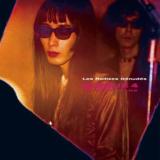
LES RALLIZES DENUDES - DISQUE 4 -’76 STUDIO ET LIVE-

Les Rallizes Dénudés returns with Disque 4 -’76 Studio et Live-, the latest in the ongoing series of official archival releases from the celebrated Japanese underground band.

In 1991, Les Rallizes Dénudés released what would become the only official albums issued during the band’s lifetime: ’67-’69 STUDIO et LIVE, MIZUTANI / Les Rallizes Dénudés, and ’77 LIVE. What no one knew at the time was that Takashi Mizutani was already deep into preparing another record.

Disque 4 reconstructs the track list Mizutani had put together for that fourth album. This includes the single “White Awakening," recorded in 1976 at the studio in Takadanobaba BIG BOX as part of the sessions that would become known among collectors as the “Virgin Demos.” Production and mastering of this archival release were handled once again by Makoto Kubota, assembling the album from the masters left behind by Mizutani, utilizing newly discovered tapes as additional sources.

Prepared by Mizutani using a variety of formats, including U-Matic, open reel, and DAT, the tracks were originally labeled with working titles such as “Disque 4” and “Record No. 4,” indicating that Mizutani intended them for inclusion on a possible fourth album. The recordings were taken primarily from studio sessions that all seemed to have taken place around 1976, which aligns with the claim that Mizutani himself once made that “there exists an album of studio recordings made with the same members as ‘77 LIVE.” His notes also suggest an attempt to sequence the tracks as a vinyl LP, splitting them into A and B sides. It's not hard to imagine that in the era of CDs in the early 1990s, an album on analog LP would have been an extremely difficult sell. Thus, the “Fourth Album” had become another lost piece of the intricate Rallizes myth.

Les Rallizes Dénudés may be notorious for the colossal volume and extended song lengths in their live settings. But this work, centered around studio recordings and condensed onto a single LP record, transcends the common impression of the band’s aggressive flood of noise. Instead, the “lyricism” at its core emerges with striking clarity. And needless to say, this is precisely the charm of the Rallizes that continues to captivate fans worldwide today.

No en stock

Haga su pedido ahora y le encargaremos el artículo en nuestro proveedor.

Ültimo hace: 4 Meses
29,20 €
Skip Spence - Oar  LP

Skip Spence

Oar LP

12inchMOVLP435C
Music On Vinyl
15.05.2026
  • A1: Little Hands
  • A2: Cripple Creek
  • A3: Diana
  • A4: Margaret-Tiger Rug
  • A5: Weighted Down (The Prison Song)
  • A6: War In Peace
  • B1: Broken Heart
  • B2: All Come To Meet Her
  • B3: Books Of Moses
  • B4: Dixie Peach Promenade
  • B5: Lawrence Of Euphoria
  • B6: Grey/Afro

Canadian-born Alexander 'Skip' Spence was the co-founder of Moby Grape, and played guitar with them until 1969. In the same year he released his only solo album: Oar.

The album was recorded after Spence had spent six months in a mental institution following a delusion-driven attempt to attack his Moby Grape band mates with a fire axe, after having ingested LSD. As the urban myth goes, on the day of his release he drove a motorcycle - dressed in only his pyjamas - directly to Nashville to record his only solo album. Fact is that he recorded this album in seven days, playing all the instruments himself, and that the end result is now considered to be a classic psychedelic folk album. After this album Spence largely withdrew from the music industry.

Original copies of Oar fetch quite the sum nowadays, so Music On Vinyl teamed up with Columbia/Sony to make this psychedelic folk gem available for everybody to enjoy.

Oar is available as a limited edition of 1000 individually numbered copies on transparent vinyl.

Reservar15.05.2026

debe ser publicado en 15.05.2026

31,30 €
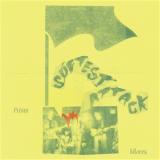
PRISM SHORES - SOFTEST ATTACK

Prism Shores return with Softest Attack, produced by Scott "Monty" Munro, the album blends '90s power pop crunch and shoegaze shimmer in their most collaborative and ambitious release yet. Montreal janglers Prism Shores return with a sharper, more immediate follow-up to their acclaimed 2025 breakthrough Out From Underneath. While the previous record leaned into atmosphere, this new album doubles down on hooks, maximalist guitars, and the pure strength of their melancholic songwriting. Produced by Scott "Monty" Munro (Preoccupations) and mixed by René Wilson, Softest Attack blends jangle pop, '90spower pop, and shoegaze with clear echoes of The Wedding Present, Teenage Fanclub, and My Bloody Valentine all filtered through the band's Dunedin-inspired indiepop sensibility. For the first time, all four members contribute lyrics and lead vocals, marking their most collaborative and ambitious effort yet. Softest Attack is Prism Shores' boldest attempt to craft a top-tier indiepop record: bigger, brighter, and overflowing with guitars, but always anchored by undeniable melody.

Reservar15.05.2026

debe ser publicado en 15.05.2026

25,42 €
HOLY SUN OPERA HOUSE - The Holy Sun Opera House LP

Holy Sun Opera House at its core is soprano and drummer Krissy Barker with composer dl Salo. Along with a revolving cast of collaborators, singers and performers, they create emotionally engaging and haunting symphonic music embellished by electronics, heavy drums and synthesizers. The group has been described as “Opera Cult” and as one who would play at the Roadhouse in Twin Peaks. They draw influence from early Dead Can Dance, Fever Ray and Klaus Nomi.

The Holy Sun Opera House is the group's self-titled debut set for release in May 2026 on the label Hologram Opera. The self-produced album was conceptualized as a way to describe an obsessive mind with music and inspired by the recurring dreams of singer Krissy Barker. In it is a realm of shifting rooms, dilapidated houses and passages. These unsettled rooms and spaces pose a striking confrontation of fear and anxiety from deep within.

In its conception, The Holy Sun Opera House was written as a passage through these ethereal dreams and spaces. The song Latched On depicts the compulsive psyche as a draining physical entity attached. While Voice of Gob, Decrepit Mansion, and Room with the Rain observe and attempt to find acceptance in this conflict. The Passages I & II travel between the curtains to the unknown entity residing in The Attic, who looks inside the mind of the dreamer and determines she has no soul.

The album blends genres with electro, darkwave, and contemporary classical music. The ritualistic passages of the choir throughout the album are reminiscent of Wicker Man and 1970's mystic cults, praising the deities residing within the dream. The arrangement of synths, electronics, heavy drums and operatic singing lend itself to something uniquely memorable.

Reservar15.05.2026

debe ser publicado en 15.05.2026

22,65 €
Victor Negri - Sem (TAPE)

Victor Negri

Sem (TAPE)

CassetteSTRAY019
Stray Signals
13.05.2026

Sem is the first album by Victor Negri under his own name, after a decade making music as Arubu Avua. Released via Stray Signals (Berlin) in partnership with Mutum (Portugal/Brazil), the album was composed between late 2023 and early 2025 during a prolonged period of compounded grief and relocation, and is built upon layers of guitar in irregular loops, alongside samples, experimental electronics, and field recordings.

Begun in Lisbon and finished in Campinas, Brazil, Sem (meaning “without”) deals with loss by juxtaposing new material with unfinished recordings from previous years. As the process unfolded, catharsis emerged as much through editing as through raw expression. The album became a symbolic attempt to glue together fragments and memories from a world that ceased to exist, in order to move forward.

Across its eight tracks, some pieces gradually unfold while others crumble or explode into distortion and feedback, while some seem almost suspended, as if unsure of the next steps. There is a loose trajectory from disorientation and collapse (“Voçoroca”) through astonished frustration (“Não”) and numb acceptance (“Obrigado”), toward a fragile optimism on the closing tracks “Os cacos” and “Boa continuação.” Negri’s first fully instrumental album, Sem contains no vocals at all. That absence emerged gradually after fruitless attempts at songwriting during the period; overwhelm and speechlessness ultimately prevailed. The result leaves room for ambiguity, wandering, and the unfamiliar.

Victor Negri is a Brazilian musician and songwriter. Previously known as Arubu Avua, he makes music framed by noise, feedback, irregular loops, and field recordings.

No en stock

Haga su pedido ahora y le encargaremos el artículo en nuestro proveedor.

Ültimo hace: 4 Meses
11,35 €
RURAL FRANCE - SLOTHS LP
  • 1: Slab
  • 2: Thirty-Seven Forever
  • 3: How You Gonna Get Even
  • 4: Someone You Forgot
  • 5: Lonely Heart Pyramid Scheme
  • 6: Soulseeker
  • 7: Jukebox Weepie
  • 8: Casio
  • 9: High Hopes (Ballad of Rural France)
  • 10: Electrical Tape

Much like the duo’s music, the story of Rural France is both mundane and magical. Tom Brown (also of transatlantic janglepunks Teenage Tom Petties) and Rob Fawkes moved to London in their mid-twenties. Despite living under the same roof, they never picked up a guitar – except for one drunken, failed attempt at writing a Spoon song (“Big Chops” …don’t ask). It was only after both separately relocating to Wiltshire and starting families that they began assembling songs as a way of meeting up. Tom had amassed a pile of sprightly slacker jams that were calling out for Fawkes’ messily melodic guitar lines. Rural France was born.

After a debut album on their hero, ex-Lemonhead Nic Dalton’s Half-a-Cow Records, they retreated to a garage to record their next two albums: RF (2021) and Exacamondo! (2024), both released on much-respected jangle label Meritorio Records. Despite being lo-fi in the truest GbV sense, both records were warmly received by the DIY indie blogosphere, with their short, scrappy, but supremely melodic songs landing on numerous AOTY lists. RF even won Album of the Year at Janglepop Hub.

Raven Sings The Blues probably summed up the sound best: “With drunken visions of Beach Boys harmonies playing in the back of their heads and hooks that consume Teenage Fanclub cheeriness with the same beautiful brevity that drives Tony Molina, the pair have knocked out eleven rumpled classics.” Album four, SLOTHS, arrives via Meritorio Records and Safe Suburban Home Records on 08/05, and is a slightly different beast. For one, it’s been mixed by a professional – Rob Slater (Westside Cowboy, Yard Act, Thank) – giving the guitars and drums room to breathe. It’s easily their most high-fidelity record to date. It’s also their jangliest, most baroque and thoughtful album yet. But alongside added organ, horns and mellotron – and drums from Tom’s Teenage Tom Petties bandmate Jeff Hamm – it still retains the buzzes, hums and little freak-outs that stick to the duo’s original “Pavement playing Teenage Fanclub” mission statement. “Rob and I both wanted to do something a little slower and a little more melancholy,” says Tom. “We resisted our usual urge to hit the distortion pedal and made something that fitted where we are now and celebrates how we still listen to Meatloaf when we get drunk.”

SLOTHS is also the most thematically consistent Rural France record to date. While it wouldn’t be right to call it grown-up, it definitely has homeowners’ insurance. From the Silver Jews-esque Americana of “Slab” and mid-life rallying cry of “Thirty Seven Forever”, to the horn-embossed loser anthem “Lonely Heart Pyramid Scheme,” the songs celebrate (and rail against) the absurdities of getting older, forming a band in your thirties, and the strange phenomenon of time passing. Because no matter how slow you move, everything else goes fast. SLOTHS.

Reservar08.05.2026

debe ser publicado en 08.05.2026

25,17 €
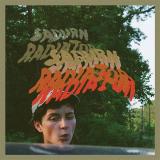
SADURN - RADIATOR

SADURN

RADIATOR

12inchRFCLPC5236
Run For Cover Records
08.05.2026
  • 1: SNAKE
  • 2: MOSES KILL
  • 3: GOLDEN ARM
  • 4: LUNCH
  • 5: SPECIAL POWER
  • 6: THE VOID / MADISON
  • 7: WHITE SHIRT
  • 8: RADIATOR
  • 9: ICEPICK
  • 10: <

Intimacy is manifested in every moment of Radiator, the debut album from Philadelphia's Sadurn. This feeling of closeness, of being able to lend your every sense to one's confessions of internal conflict, is due in large part to the circumstances under which this album was created. Much of the world fell apart in 2020, but Sadurn tucked themselves away in a Pocono's cabin, creating and recording what would become their first full-length. Within the confines of their close quarters, passing animals as the only auditory witness to a makeshift recording studio created by moving furniture, Sadurn created an album that will break your heart and then slowly piece it back together.Sadurn started as the solo project of Genevieve ??DeGroot. Picking up guitar in 2015, DeGroot started writing songs, eventually playing DIY shows throughout the city of Philadelphia. With time, the direction, sound, and members of Sadurn changed. The beginning of 2020 was meant to serve as their debut as a four member band (Jon Cox on guitar/tenor guitar, Tabita Ahnert on bass, and Amelia Swan on drums), but the world had other plans and the group adapted.Taking influence from artists like Gillian Welch, Alex G, and Jason Molina, Sadurn's emotive indie rock explores the struggles and eventual beauty of grappling with multiple emotional realities, particularly when it comes to relationships. That conflict, the idea of being forced to choose, even when terrified, is present on singles like "Radiator" and "Golden Arm." The latter is an unhurried ballad that shows its truest colors with time, eventually blossoming with unexpected admissions of desire and uncertainty. Indecision, heartbreak, and attempting to live out your days against the actual backdrop of a gradually worsening hellscape is a shared commonality among us all, but on Radiator Sadurn breaks down walls that others so often put up. It's a fleeting, impactful glimpse at one's whole heart, and its sweeping, special nature is evident from the moment the album opens.

Reservar08.05.2026

debe ser publicado en 08.05.2026

22,65 €
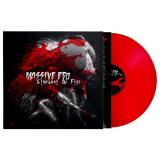
Massive Ego - Symphony Of Flies LP
  • A1: In Your Own Darkness
  • A2: Hit The Kerb Running
  • A3: (My) Death Song
  • A4: Broken Tomorrow feat. Boy George
  • A5: Life Has Other Plans
  • B1: Man Become Monster
  • B2: Dark Matter
  • B3: Shiver Shadow
  • B4: Beautiful Mind
  • B5: Spectacle Of My Own Making
  • More like this

In 2025, we celebrate 30 years Out Of Line - Three decades of chaos, passion and 0 Years in - Still defiant, still evolving…2026 marks the 30th Anniversary of Massive Ego, and the release of a brand new album: “Symphony Of Flies” is revealed on May 8th, 2026 and marks the band’s first ever vinyl release. Available as Digipak CD and Limited Red Vinyl. Symphony Of Flies is a powerful, defining statement in Massive Ego’s long and uncompromising career, marking not only the band’s 30th anniversary, but also a moment of reckoning, survival and renewal. Across ten tracks, Massive Ego transform personal collapse, recovery and resistance into one of their darkest, most personal and emotional works to date. Musically, the album moves effortlessly between darkwave, electronic rock, EBM, glam-infused bombast and confrontational pop, pairing club-ready intensity with deeply introspective lyricism. Singles such as “In Your Own Darkness”, “Hit The Kerb Running”, “(My) Death Song”, “Man Become Monster”, and “Broken Tomorrow” showcase the band at their most fearless, culminating in a standout collaboration with Boy George, whose presence underscores the album’s themes of endurance, reinvention and personal growth. Lyrically, Symphony Of Flies reads like a confession and a journal. Frontman Marc Massive confronts mental health, betrayal, isolation, and the long climb back from the brink, reframing darkness not as something to romanticise, but something to fight through. The album’s central metaphor, the “Symphony Of Flies,” evokes surveillance, toxicity, decay and transformation: the unseen forces that drain, observe, and attempt to undermine, until they are finally confronted and dispersed. “The worst things that happen to you are the best things that happen to you”

Reservar08.05.2026

debe ser publicado en 08.05.2026

25,00 €
Stick To Your Guns - Keep Planting Flowers LP

Stick To Your Guns hold a mirror up to society’s ills without blurring its ugliness. In an attempt to unapologetically trumpet real change, the Southern California quintet—Jesse Barnett vocals,Andrew Rose bass,Adam Galindo[drums], Chris Rawson [guitar], and Josh James [guitar]—never shy away from speaking or screaming unpopular truths from the purest place. Founded in2003, Stick To Your Guns have always written and performed with a sense of urgency, their socially conscious message hitting as hard as their signature hybrid of hardcore, punk, and metal. Over the course of their career, they’ve amassed over 50 million total streams, performed on four continents, and shared stages with the likes of Parkway Drive, Architects, and Every Time I Die. Most recently, Alternative Press praised 2017’s True View as “the result of a long time spent on self-reflection and realization.” The band’s latest release ‘Invisible Rain’ incorporates two new songs that remain quintessentially Stick To Your Guns while incorporating fresh elements. The band’s relentless pursuit of a better world and their critique of societal injustices continues to drive their music and message. In 2024, Stick To Your Guns signed with SharpTone Records, marking a new chapter in their storied career. This partnership promises to bring their potent blend of activism and music to an even broader audience, amplifying their call for change and social justice.

Reservar01.05.2026

debe ser publicado en 01.05.2026

27,86 €
Various - Digging Central Asia: Musical Archaeology Along the Silk Road LP

Death Is Not The End collaborate with Uzbek label Maqom Soul to deliver an LP counterpart to last year's mixtape of the same title, compiling specially picked & fully licensed individual belters from the ex-soviet studios of Central Asian republics between 1978 and 1989 - incl. Uzbek, Tajik, Kurdish & Uyghur artists pulling traditional folk motifs together with pop & rock and psych elements.

"These recordings do not form a smooth or coherent history. They feel more like a sequence of discoveries made at different moments and in different circumstances. Songs and instrumental pieces that once lived inside specific contexts radio broadcasts, philharmonic programs, touring routes now sit side by side, revealing hidden connections as well as clear fractures between them.

Nasiba Abdullaeva appears here as a voice from the end of an era. Trained within a conservatory system, she worked inside the format of the Soviet pop song while filling it with melodic logic that did not come from Moscow or Leningrad. Her voice is soft and sustained, shaped by Eastern melisma, and it never functions as decoration. Even in tightly structured songs there is a sense of resistance, an effort to preserve a musical language rooted in Uzbek tradition rather than fully adapted to an all Union standard.

The ensemble Sintez, later renamed Navo, represents a different path. Beginning as a student rock group, the band was gradually absorbed into the official VIA system with all its limitations and compromises. Yet it was precisely within those boundaries that Sintez and Navo developed a recognizable sound. Electric guitars and jazz rock harmonies do not overpower the folk material but remain in tension with it. Their recordings feel like negotiations between what the musicians wanted to play and what they were allowed to perform.

The Tajik ensemble Gulshan reflects an institutional approach carried to a high professional level. Formed under television and radio structures, the group treated folk material almost as a written score. Carefully constructed arrangements, close attention to orchestration, and restrained use of pop techniques define their sound. There is less spontaneity here, but a strong sense of discipline and structure, where national melody becomes part of a carefully controlled sonic framework.

Koma Wetan occupies a very different space. Formed in the 1970s, this Kurdish rock group approached poetry and folklore as tools of cultural assertion. Their psychedelic rock never feels like a stylistic borrowing. Instead it functions as a contemporary vessel for language and themes that might otherwise have remained unheard. Even today these recordings sound fragile and stubborn at the same time.

The Uyghur ensemble Yashlik, closely connected to a musical drama theatre, operated somewhere between stage performance and popular music. Their songs are built on folk melodies but shaped for wide audiences. What emerges is a constant attempt to preserve the recognizability of Uyghur musical identity without freezing it in a folkloric frame. Yashlik's music exists in a state of balance between representation and development.

Digging Central Asia does not attempt to establish hierarchies or offer a single wayof listening. Names and dates matter less than the sound itself. Tape noise, abrupt transitions, and unexpected timbres remain part of the material rather than flaws to be corrected. This music existed at the crossroads of multiple routes geographic, cultural, and ideological. Heard today in a new context, it no longer feels peripheral. Instead it stands as a reminder that the history of popular music is far more fragmented, layered, and polyphonic than it is usually allowed to be."

No en stock

Haga su pedido ahora y le encargaremos el artículo en nuestro proveedor.

22,48 €
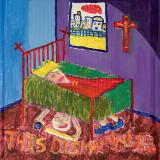
Urq - This Dismal Village (LP)

Venturing into “a limbo world between medieval tropes and modern-day decay”, New Orleans musician Urq (half of art punk duo Spllit) returns with a new solo offering. Recorded over a single, intense month, This Dismal Village is a homespun document that sits somewhere between jittery punk, dreary psychedelia, and hooky bedroom pop. Recorded to 4-track, the record embraces limitation as a creative engine, resulting in a sound that is raw, unsettled, and deeply atmospheric.

The album is set not in a fixed point in time or geography, but a liminal environment where dystopic visions and archaic fixtures exist side by side. In the dismal village, kings and witches share space with televisions, skyscrapers, and modern enterprise; organ fanfares echo down streets populated by disgruntled townsfolk and whispered gossip. It is simultaneously the dark ages, 1950s suburbia, and a 21st-century metropolis. Embracing anachronism was central to the project’s identity, an attempt to collapse history into a single, uneasy present.

Sonically and philosophically, the album sits firmly in the tradition of rough and raw cassette rock. Guided By Voices’ Bee Thousand looms large as an influence, particularly its ability to build an entire world through unpolished, first-take recordings. Robert Pollard’s idea of the “four P’s” (psych, punk, prog, and pop) serves as a neat summary of the artist’s musical instincts and each element can be traced right through the heart of This Dismal Village. Further inspiration comes from post-punk’s so-called “Calgary Sound,” a loose movement blending psych pop, post-punk, and math/prog elements with a home-recorded, unpretentious ethos.

The result is an album that unrolls like a place wandered through, uneasy, occasionally familiar, and impossible to pin down in time. All captured on tape before it could disappear like an apparition, like a dream only half-remembered.

Reservar24.04.2026

debe ser publicado en 24.04.2026

26,85 €
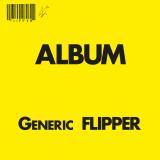
Flipper - Generic Flipper

Generic Flipper, the debut album by Flipper, remains the most absorbing full-length LP to emerge from the early San Francisco punk scene. A constant source of imitation for so-called "noise rock" bands, it has yet to be surpassed in its nihilistic glee.

Recorded between October 1980 and August 1981 and released in 1982 on the indispensable Subterranean Records, this album functions as a chaotic, sticky mass of individual personalities: the magma-like bass eruptions and dual vocals of Will Shatter and Bruce Loose, Ted Falconi's icy guitar scraping and the relentless beat of drummer Steve DePace. At times playful and taciturn, paranoid and absurd, Generic charts a deliberate path that willfully chances destruction.

In early '80s punk, when the hardening default was "faster-shorter-louder," Generic subverts the nascent hardcore scene with a strictly applied regimen of turgid-slower-heavier. The lyrics are bleak, yet unnervingly beautiful. "Ever" sets the tone with trademark restraint – "Ever wish the human race didn't exist? And then realize you're one too?" – while closer "Sex Bomb" is a churning, 8-minute epic with looping bass, saxophone accompaniment and electronic effects of dropping bombs.

Tons of indie bands have attempted to recreate Flipper's mix of acidic guitar, metallic bass sludge and sardonically brilliant lyricism, using the seemingly effortless template they pioneered; however, the effect usually drives listeners right back to Generic. While most of their contemporaries wilt under direct comparison, No Trend, the Butthole Surfers, feedtime and Church Police are a few who can stand the frigid heat.

No en stock

Haga su pedido ahora y le encargaremos el artículo en nuestro proveedor.

Ültimo hace: 5 Meses
26,47 €
Aziz Balouch - Spanish Cante Jondo And It's Origin In Sindhi Music (BOOK)

66 pages, 175 x 129mm paperback w/ litho printed cover & french flaps.

The second outing for our short run book publishing imprint, The End books, takes the form of a reprint of Spanish Cante Jondo and Its Origin in Sindhi Music, originally published in Spanish in 1955 under the name Cante Jondo: Su Origen y Evolución and later in this English translation.

Aziz Balouch here presents his theory on the roots of flamenco's 'deep song' in modern-day Pakistan, a cultural journey that mimics the routes of his own life, having been brought up among the Islamic mysticism and devotional songs of Sindh before travelling to Gibraltar in the early 1930s and becoming transfixed with the cante jondo across the border in southern Spain. Positing this concept through personal accounts rather than solid theoretical backing, this text provides a valuable account of an extraordinary existence that crossed remarkable geographical, musical, and spiritual boundaries. Issued here with a new introduction from anthropologist of sound, the senses and Islam, Stefan Williamson Fa.

"It would be easy to place Balouch on the fringes, as an eccentric footnote in flamenco history. But that misses the shape of his life and work. He was a figure who moved intuitively across boundaries that our present categories of nation, genre, discipline tend to fix in place. His work predates the founding of the academic discipline of ethnomusicology, the global circuits of world music, and the marketplace logic of fusion projects by decades. He was not an ethnographer or a proto–world musician, but someone for whom the deep song of Andalusia and the devotional song of the subcontinent resonated along the same fault lines of feeling, and who spent his life trying to trace them.

This book is one of the few surviving traces of that attempt. To read it now is to encounter a perspective that resists tidy narratives of influence or origin, despite its title and what he claims to do. It stands instead as evidence of an idiosyncratic musical imagination, one that relied less on proof than on listening, and on the belief that certain echoes carry farther than history can easily explain."

— Stefan Williamson Fa

Reservar10.04.2026

debe ser publicado en 10.04.2026

19,12€
Les Louanges - Alouette! LP 2x12"

Les Louanges

Alouette! LP 2x12"

12inchLPBONAL116C
Bonsound
10.04.2026

With Alouette!, Les Louanges attempts to make sense of his human condition and Québécois identity by bringing guitars and Joual (the French language dialect spoken in Québec) to the forefront while still fuelling his signature grooves. More rock-oriented than his previous albums, this third effort is luminous yet rich in sounds, emotion and political commentary. It unfolds through a journey that will lead Loulou to encounter universal experiences such as illness, death, and true love.

The album is also the result of an artistic quest that began during a period of self-reflection, when Vincent Roberge (aka Les Louanges or Loulou) seized the opportunity to take a break after his last extended tour. Alongside the existential questions typical of someone approaching their thirties came a rediscovery of the classics—from Leonard Cohen and Prince to Richard Desjardins and the nursery rhyme that gives the album its name–, followed by total exploration. In addition to playing most of the instruments himself, the singer-songwriter revived obscure Quebec records through sampling and got to experiment with actual sound recording. Roberge co-produced Alouette! with his long-time collaborator Félix Petit (because why change a winning formula).

Four years after the success of his sophomore album Crash, Les Louanges returns more confident than ever, thanks to a renewed cultural and emotional baggage that allows him to reflect on the past to better engage with the present, while also enjoying it to the fullest. All of this, without overlooking the future, which he foresees with hope despite the collective challenges that await us.

Reservar10.04.2026

debe ser publicado en 10.04.2026

28,53 €
Kjell Bjørgeengen & Lasse Marhaug - Flood Coil
 
9

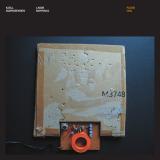
Some years ago, Kjell Bjørgeengen and Keith Rowe attempted to convert video signals into sound by setting up Rowe’s pickups next to an old CRT monitor, turning its magnetic field into a sound generator. Rowe further developed the system with David Jones at Alfred University, slimming down the setup using a copper coil, a circuit board, a video input, and a telephone pickup. Jones named it the »Flood Coil«, and it’s that instrument you can see on the album’s front cover and that lies at the core of these recordings, made without any physical live input from the artists themselves. In essence, it’s generative music in its purest form.

Bjørgeengen’s video feed is generated by oscillators, then routed into Marhaug’s pedals and then back into the Flood Coil, so any visual shifts alter the sound, and any modification to the sound changes the video. The duo have played this setup live many times, but for this studio version they left the system to do its thing without any intervention for two minutes at a time before moving onto the next idea. They recorded hours and hours using this process and then selected 18 highlights for this album, extracting harsh noise, power electronics, lulling feedback drone, and peculiar rhythmic snippets to show the scope of their technique.

A wall of growling, hi-octane Pulse Demon-style noise opens the set, gradually exposing us to more asymmetric textures, shifting through unstable repetitions that transform Merzbow’s metal-inspired screams into »Aaltopiiri«-era rhythmic noise. It’s remarkable, actually, how much Marhaug and Bjørgeengen can squeeze from the system, chancing on shivering, lower-case chugs and pops, galloping drums, soundsystem subs, and grinding blast beats that sound like Napalm Death’s »Scum« piped through a broken amp stack. It ain’t pretty, but noise/industrial freaks will revel in the fierce delights inside.

Reservar10.04.2026

debe ser publicado en 10.04.2026

32,35 €
UPSAMMY / VALENTINA MAGALETTI - SEISMO

A cocktail of rebellious queer vocal fragments, deceptive percussive granules and swaying hammered vibrations, upsammy and Valentina Magaletti's first collaboration trembles with suspense. The seeds of 'Seismo' were sown following a commission from Amsterdam's Rijksmuseum to soundtrack an exhibition of work from the Museum Boijmans van Beuningen in Rotterdam and the duo didn't want to approach their collaboration flippantly. So, wandering the museum's maze of rooms, they recorded various improvised percussive sounds with their arsenal of microphones, using the space to inform various rhythms and textures that were sculpted later into electroacoustic vignettes. This was just the starting point, though; as Magaletti and upsammy began performing together, the project evolved and 'Seismo' began to take shape. The duo had struck on a salient aesthetic concept, using mostly digital and acoustic mallet instruments to blur the boundary between their roles and create friction between the synthetic and the authentic. And the finished record is a phantasmagoric push-and-pull between its various conflicting elements: harmony and dissonance, randomness and predictability, openness and constraint. 'Seismo' isn't the first time that upsammy has studied her environment in search of revelation. On her acclaimed second album, 2024's 'Germ in a Population of Buildings', the Amsterdam-based DJ, producer and multidisciplinary artist erected her complex, unorthodox rhythms and eerie melodies around a modernist frame of field recordings collected in various cityscapes, countering heavyweight basslines with subtle, microscopic sounds. London-based Italian vanguard Magaletti, meanwhile, has applied her unique logic to innumerable projects at this point, working with everyone from batida icon Nídia and hardcore-dub outfit Moin to French writer Fanny Chiarello and British bass scientist Shackleton. For years she's approached the drums with criticism, attempting to challenge any preconceptions, something that's most visible on 2020's 'A Queer Anthology of Drums'. And both artists' thoughtful perspectives are welded together seamlessly on 'Seismo', a dizzying suite of eight eccentric statements that's fragile but never insecure, gauzy but not indistinct. An unnerving sense of space characterizes 'It Comes to an End' as Magaletti's in situ improvisations herald for upsammy's microscopic glitches and chiming pitch-bent melodies. It's almost unbalancing to witness the track's impossible dimensionality, the interplay between reverberant marimba hits and bone-dry synths, or percussion that's been recorded and processed in consciously different settings. A new architecture emerges in the sound itself that the two artists scan and explore meticulously, testing its boundaries with undulating hybridized rhythms on the invigorating 'Superimposed' and offsetting the powdery drums with liquified smacks and alien voices. The duo's vibrations are knotted with piano flourishes on 'Hyperlocalize', balanced with artificial clanks and clangs that disappear into the track's sonorous atmosphere, replaced by whispers and half-hallucinated insectoid chirps. 'Seismo' is an album that feeds off the energy generated by its juxtapositions: the tension and anticipation that's melted by rapid, hyperactive movement and the finely drawn rhythms disrupted by a layer of indistinct, barely perceptible microsounds. It's a collaboration that sounds like two minds challenging each other but not wrestling, each peering from their own distinct vantage point and imagining a third landscape shaped by optimistic, queer vibrations.

No en stock

Haga su pedido ahora y le encargaremos el artículo en nuestro proveedor.

Ültimo hace: 5 Meses
26,01 €
1 Umbrella - 1 Umbrella MC

1 Umbrella

1 Umbrella MC

CassetteERE1235
EMPIRE
03.04.2026
  • A1: 1 Umbrella
  • A2: One Of Those
  • A3: CODE
  • A4: Baller Blockin
  • A5: The Blueprint
  • A6: Off Top (feat. Larry June)
  • A7: No Gimmicks (feat. DaBoii)
  • B1: Pretty
  • B2: Type of Time
  • B3: N.E.W.S. (feat. Lingo & Dooder)

1 Umbrella represents a watershed moment for modern Bay Area hip-hop, effectively serving as the region’s "Avengers" assembly designed to consolidate the Northern California sound. For years, the local scene has been bisected by the distinct "mob music" bounce of Oakland and the melodic, trauma-drenched "pain music" of San Francisco; this collective is the first major commercial force to deliberately fuse these competing energies into a single, dominant infrastructure. The roster is a calculated cross-Bay alliance that balances opposing sonic weights: Lil Bean and Lil Yee anchor the group with the emotive, auto-tune-heavy melodies that define the current SF landscape, while Zaybang cuts through that introspection with his signature high-octane aggression.

Balancing the scales are ALLBLACK and 22nd Jim, who inject the classic East Bay attitude—ALLBLACK delivering the motivational, sports-heavy "player" lineage of the region, contrasted against Jim’s nonchalant, rhythmic flow. Backed by the powerhouse infrastructure of EMPIRE and united under tracks like "Baller Blockin" and the unification anthem "The Blueprint," the group is attempting to solve the fragmentation that has historically plagued the Bay’s independent market. By synchronizing their movement with the arrival of Super Bowl LX, 1 Umbrella is positioning itself not merely as a rap group, but as the official cultural ambassadors for the region, betting that a unified front can finally command the national spotlight that often eludes the West Coast’s independent giants.

Reservar03.04.2026

debe ser publicado en 03.04.2026

10,88 €
THE ROOTS - Undun LP

THE ROOTS

Undun LP

12inch6788928
Def Jam
24.03.2026
  • A1: Dun
  • A2: Sleep
  • A3: Make My feat Big Krit & Dice Raw
  • A4: One Time feat Phonte & Dice Raw
  • A5: Kool On feat Greg Porn & Truck North
  • A6: The Otherside feat Bilal Olivier & Greg Porn
  • B1: Stomp feat Greg Porn
  • B2: Lighthouse feat Dice Raw
  • B3: I Remember
  • B4: Tip The Scale feat Dice Raw
  • B5: Redford (For Yia-Yia & Pappou) (Redford Suite)
  • B6: Possibility (2nd Movement)
  • B7: Will To Power (3rd Movement)
  • B8: Finality (4th Movement)

Undun is the story of a man, Redford Stevens, dying in reverse, rewinding from the moment he became a statistic and hitting the points in his life where he's at his most self-aware. That he's a criminal who got caught up in the familiar street-hustle trappings that the modern media's documented countless times is a pivotal detail-- it's hit at an angle that seems to emphasize the futile inevitability of it all. His life could be any number of misdirected narratives that ends with a toe tag, and what details listeners learn about him are hazy, buried under archetypal turns of fate and decisive struggles. That this protagonist is a fictionalized composite of a handful of real people, filtered through a matter-of-fact narrative that splits character ambivalence with journalistic impartiality, only makes his lack of direction and the failure of any real closure stand out even more. "Lotta niggas go to prison," Dice Raw states on "Tip the Scale", "how many come out Malcolm X?"

So the Roots' latest album isn't a sprawling, rise-and-fall crime story, not a condemnation or a veneration of a man living outside the law, not a bullet-riddled grand guignol heavy on explicit details of soldiers getting cut down. It's a character study of a man whose existential crisis ends only with his death-- a death gone largely unspecified, the glamor and tragedy washed over with a doomed resignation. That's a hard thing to pull off, even for a band as given to deep-thinking concepts as the Roots are. And when your main lyrical catalyst is Black Thought-- a man more given to allusions than direct statements-- it's likely that it'll take a while for the full scope of Undun to really sink in.

If and when it does, it might strike listeners as a bit skeletal: omit the mood-setting instrumental bookends, including a brief, four-part orchestral suite that builds off Sufjan Stevens' "Redford (For Yia-Yia and Pappou)", and you've got maybe a half hour's worth of material. By ?uestlove's accounts, writing Redford's story introduced the headaches and challenges that come with scriptwriting into their songwriting, and what's left on Undun is the end result of frequent revisions and rewrites that attempt to reconcile character, theme, and continuity. If it comes at the expense of nuance, it's not always obvious: There's an easy-to-trace narrative line from Redford's acceptance of his fate ("Sleep") to his acknowledgement of how close it's approaching ("Make My"), back through declarations of aggravated toughness ("One Time"), and celebratory fatalism ("Kool On"), along ups and downs that juxtapose motivation ("Stomp") and helplessness ("Lighthouse"). When the vocal portion of the album ends with two of the bleakest sets of verses in the Roots discography, peaking with the estrangement of "I Remember" and the desperation of "Tip the Scale", Undun reveals itself as a story where a man's actual death isn't quite as tragic as the circumstances that pushed him to it.

No en stock

Haga su pedido ahora y le encargaremos el artículo en nuestro proveedor.

Ültimo hace: 6 Meses
31,05 €
MORE EAZE - SENTENCE STRUCTURE IN THE COUNTRY
  • LEAVE (AGAIN)
  • DISTANCE
  • AD FRIEND
  • CRUNCH THE NUMBERS
  • BITERS
  • THE PRODUCER
  • A CHORALE
  • HEALING ATTEMPT
  • SENTENCE STRUCTURE IN THE COUNTRY
  • MOVE
También disponible

OPAQUE RED VINYL[29,20 €]


more eaze is the moniker of Brooklyn-based composer, orchestrator, and multi-instrumentalist, mari maurice. A renowned collaborator both in performance and on recordings, maurice"s own work is a fantasia, a reflection of her curious and explorative musical mind, encompassing entire spectrums of sound from a wide sonic pallet of electro-acoustic textures, folk traditions, and pop forms that pirouette into fully realized ecosystems. sentence structure in the country is a definitive statement of the matchless quality of more eaze"s skill as player and musical thinker. The album relishes the ecstatic in performance and collaboration with an inviting wit and incisive compositions, imbuing tenderness, frustration, and joy into each passage. sentence structure in the country is a collection of compositions, each beautifully realized, self-contained worlds. maurice"s dexterous, tasteful arranging lays bare her influences and obsessive fascinations with remarkable congruency while foregoing any sense of indulgence. Her music holds a density not only in the lush compositions and embellishing flourishes, but also for those moments of spare, minimalist beauty. sentence structure in the country is a textural marvel, a mosaic of ethereal electronics and loamy acoustics sculpted around deeply moving, enduring songs.

Reservar20.03.2026

debe ser publicado en 20.03.2026

26,68 €
MORE EAZE - SENTENCE STRUCTURE IN THE COUNTRY

more eaze is the moniker of Brooklyn-based composer, orchestrator, and multi-instrumentalist, mari maurice. A renowned collaborator both in performance and on recordings, maurice"s own work is a fantasia, a reflection of her curious and explorative musical mind, encompassing entire spectrums of sound from a wide sonic pallet of electro-acoustic textures, folk traditions, and pop forms that pirouette into fully realized ecosystems. sentence structure in the country is a definitive statement of the matchless quality of more eaze"s skill as player and musical thinker. The album relishes the ecstatic in performance and collaboration with an inviting wit and incisive compositions, imbuing tenderness, frustration, and joy into each passage. sentence structure in the country is a collection of compositions, each beautifully realized, self-contained worlds. maurice"s dexterous, tasteful arranging lays bare her influences and obsessive fascinations with remarkable congruency while foregoing any sense of indulgence. Her music holds a density not only in the lush compositions and embellishing flourishes, but also for those moments of spare, minimalist beauty. sentence structure in the country is a textural marvel, a mosaic of ethereal electronics and loamy acoustics sculpted around deeply moving, enduring songs.

Reservar20.03.2026

debe ser publicado en 20.03.2026

29,20 €
Dust of Apollon - chapters left unread LP 2x12"
  • 1: in the morning, the mist will fade
  • 2: heartbeat
  • 3: take my head
  • 4: mosaics of madness
  • 5: lies in ink
  • 6: trust me, i love you
  • 7: make up your mind, before you see us fall
  • 8: pandaemonia
  • 9: end of the road
  • 10: dantes goodbye
  • 11: playbill
  • 12: the river styx
  • 13: th0rns
  • 14: orpheus

With “chapters left unread” , 22-year-old Berlin artist Dust of Apollon presents his debut album: an electrifying yet deeply emotional work that moves between electronic and rock elements. Across 14 tracks, the album revolves around themes such as identity, inner conflict, love, depression, and healing. Throughout, there is a recurring sense of looking back on the unread chapters of one’s own life: moments that once felt impossible to understand, and wounds that only years later found their words. The focus track, “end of the road, ” stands as one of the album’s most intense moments. It tells the story of two lovers who draw closer to each other in the night, only to drift apart again when daylight breaks. A raw and honest conflict between hope and letting go, between closeness and the fear of reopening a wound that may never fully heal Thus, “chapters left unread” becomes not only a musical debut, but an intimate self-portrait: a look back at what once was, and an attempt to make peace with one’s past...chapters left unread that are now finally being read!

Reservar20.03.2026

debe ser publicado en 20.03.2026

32,14 €
hoyah חיה - Can I Get A Chayah? (TAPE)

On his second album for Bruk, hoyah חיה continues to take an unflinching look at his Jewish identity while confronted with the heinous actions of the Israeli state. Echoing the name of his Refuge Worldwide radio show, he examines the shared histories of the Jewish diaspora across the Middle East and North Africa — from Morocco to Uzbekistan and everywhere in between. Can I Get A Chayah? is an honest attempt to explore what Judaism could become at a time when the culture faces an existential crisis.

The sonic approach hoyah חיה takes on Can I Get A Chayah? is central to the album's theme, as hard-gated processing on every sound creates a disorienting effect aiming for a kind of 'functional transcendentalism'. From the opening strains of preceding single '808s n Trance Gates' the jagged stop-start intensity of the samples sets a head-spinning tone for the album. The source material comes from across the aforementioned Jewish diaspora, challenging the nationalist idea of the single Jewish state.

Balancing beauty and aggression, hoyah חיה also reaches to a strong cast of collaborators to round out his cultural explorations. Principle among these is the late David German, the US-born guitarist and songwriter behind Silver Jews, whose repeated, bewildered mantras on 'Shalom Aleichem' embody hoyah חיה's own struggles with faith in the face of current horrors. Internationally celebrated Turkish-descent German musician Derya Yıldırım graces 'Talmuds' with her haunting vocal — a tribute to ancient Jewish mysticism that gets passed through the album's unrelenting sonic framework. On 'The Lock' Muha tackles African transcendentalism, while Rael pulls no punches with the questions he poses on the barbed 'This Song Has A Different Title But It Can't Be Published Here Because Of "Reasons"'.

With further prayer recitals on 'Lekha Dodi' and 'The Nose' and videos examining the psychedelic nature of reading the talmud and repetitive prayer movement shuckling, hoyah חיה has taken his research deep into the spirituality of his heritage at a time of crisis for Jewish identity. Naturally, Can I Get A Chayah? is not an easy listening experience, but neither is it a bleak one. There is beauty, mystery, complexity and nuance woven within the stark approach — an intentional, considered statement on a culture much deeper and wider than the barbaric acts of an unrepresentative group of twisted ethno-nationalists.

Reservar20.03.2026

debe ser publicado en 20.03.2026

14,92 €
HOUSE OF ALL - INKLINGS LP
  • 1: SPIRIT SALIENT
  • 2: THE REBEL DUKE
  • 3: WRECKED
  • 4: VALIANT HEART
  • 5: PRINCE OF THIS WORLD
  • 6: TIME IS OUT OF
  • 7: JOINT
  • 8: MY THROBBING HEART SHALL ROCK THEE
  • 9: OURS IS THE FALL
  • 10: SWEET REMEMBRENCER
  • 11: I AM THINE

It's hard to fathom Martin Bramah's trajectory from his beginnings as a guitarist/writer behind two crazily influential postpunk albums - The Fall's Live At The Witch Trials and Blue Orchids' The Greatest Hit (Money Mountain) (vocalist on the latter too, of course) - then nearly three decades of sporadic-at-best activity, offering releases just frequently enough to remind fans of his peculiar brilliance . . . before another stay in the void. Chalk it up to what you want - Mark E. Smith's utter usurpation of The Fall, his split from partner Una Baines after Blue Orchids' debut, the vague collapse of rash experimentation in `underground' music as early `80s nu-pop and American college rock diluted any real spirit, a few failed attempts at working with with Mark again . . . and maybe just life getting in the way. A sense of lost opportunities isn't tough to justify. Inasmuch as Martin was originally the singer for The Fall - Mark began as guitarist but couldn't play! - and given that the group's mythology was born in an era before that gang of Mancunian misfits had even thought of playing, it's high irony that 49 years after The Fall began, Martin has both become wildly prolific and the leader of a band with more rights of inheritance to The Fall's credibility than any other living person could justify . . .yet the band isn't remarkable for that as it is for the range and wealth extent of their collective powers and talent: two great and original guitarists, three of the UK's most daringly-skilled drummers, a genuine bass legend, and a brilliant spare Blue Orchid guitarist. Four albums in, the HOUSE Of ALL is getting ambitious, with each album a subtle improvement on the last, forging a path away from their pasts without denying a thing. Inklings differs from the first three for not having being largely improvised at first, with sounds, rhythm, groove and melody later forged into songs. They rehearsed! They had fun doing it! They're going on an extended tour! There were even extra tracks! We'll leave it to fans and critics to sit down and analyse the specifics of it all, but Steve, Si, Pete, Phil, Karl and Martin have made a bold and powerful album unlike any other you'll hear in 2026 . . . stately, majestic, bold and worthy of a group of real survivors. In perverse form, the album will be officially announced and preceded by a song not on the album!

Reservar20.03.2026

debe ser publicado en 20.03.2026

22,06 €
Prostitute - Attempted Martyr LP

Prostitute

Attempted Martyr LP

12inchSTUMM521
Mute
13.03.2026
  • A1: All Hail
  • A2: Judge
  • A3: M. Dada
  • A4: Body Meat
  • B1: Senegal
  • B2: In the Corner Dunce
  • B3: Joumana Kayrouz
  • B4: Harem Induction Hour
También disponible

Limited[24,79 €]


Hailed as one of the US's most exciting and provocative new bands, Prostitute's bracing debut Attempted Martyr finally sees its official worldwide release on Mute.?

Emerging out of Dearborn, Michigan, this five-piece deal in pure chaos and catharsis - fiery live shows, razor-sharp intensity, and a sound that's as incendiary as it is brutally tight. Their name reflects their fixation on identity, desperation, and survival under late capitalism.

Attempted Martyr was written in the midst of global and personal turmoil, capturing the zeitgeist of a world unraveling. A loose concept record, it chronicles the rise and fall of a doomed zealot whose pursuit of holy vengeance spirals into a psychotic orgy of violence, greed, and lust. It's dense, turbulent, and charged with blaring Middle Eastern, African and East Asian influences - all scorched into shape by producer Chris Koltay (The Armed, Mdou Moctar).

With mounting online buzz, critical acclaim and a run of sold-out bootleg editions, Prostitute's debut continues to gain momentum - now available on red viny

Reservar13.03.2026

debe ser publicado en 13.03.2026

24,79 €
Bettye Swann - Feel The Feeling LP

Bettye Swann possessed one of the most emotive voices in soul music’s cannon but her recording career was that of a shooting-star; it blazed at the start, then illumined brightly before abruptly dissipating, all in just eleven years. In 1975 she ceased recording, moved to Las Vegas and retired her Bettye Swann persona.
The Louisianan Betty Jean Champion had relocated to Los Angeles as a young woman where in around 1964 she was introduced to Al Scott, owner of Money Records. It was her fourth Money 45 “Make Me Yours” that propelled Swann into the stratosphere. One of the defining songs of the era, it was her pathway to Capitol Records with whom she signed in 1968.
By 1972 Bettye was at Atlantic Records. The initial Atlantic 45 “Victim Of A Foolish Heart” b/w “Cold Day In Hell” recorded at Fame with Mickey Buckins and Rick Hall, made for a promising debut reaching #16 on the Billboard chart. It was followed by Bettye’s version of Merle Haggard’s “Today I Started Loving You Again” and “Til I Get It Right”, a gentle country-soul labour. “I’m Not That Easy To Lose” also dates from those sessions.
In an attempt to broaden her appeal Atlantic sent Swann to Sigma Sound in Philadelphia where she cut Phil Hurtt’s’ and Tony Bell’s “Kiss My Love Goodbye”, “Time To Say Goodbye” and “When The Game is Played On You”. Her fortunes continued to wane so Swann was next placed with Nashville producer Brad Shapiro. The results were artistically stellar and included three unissued gemstones in The Isley’s “This Old Heart of Mine”, a definitive version of Maxine Weldon’s “I Want Sunday Back Again”, and “Either You Love Me Or Leave Me”.

Reservar27.02.2026

debe ser publicado en 27.02.2026

43,28 €
Jeffrey Martin - Alive (Live at The Showdown) LP 2x12"
  • 1: I Know What I Know
  • 2: Paper Crown
  • 3: Dogs In The Daylight
  • 4: Thief And A Liar
  • 5: Quiet Man
  • 6: (Intro) One Go Around
  • 7: One Go Around
  • 8: (Intro) Galveston
  • 9: Galveston
  • 10: (Intro) 1519
  • 11: 1519
  • 12: The Middle
  • 1: (Intro) Billy Burroughs
  • 2: Billy Burroughs
  • 3: Wellspring
  • 4: Out On The Weekend
  • 5: Red Station Wagon
  • 6: (Intro) Gold In The Water
  • 7: Gold In The Water
  • 8: Garden (Attempt)
  • 9: Garden
  • 10: Goodnight
  • 11: There Is A Treasure

Recorded on a packed night at Portland’s beloved haunt The Showdown, this live album captures Jeffrey Martin at his most raw and spellbinding. Although technically a live recording, the album possesses the same fidelity as his studio work, utilising the same stripped-back techniques that allow him to captivate any audience. This performance captures the full power of Jeffrey’s live presence - complete with his remarkable storytelling, both in and between songs - and firmly places him among the most compelling American singer-songwriters of today.

Reservar20.02.2026

debe ser publicado en 20.02.2026

26,85 €
Pentu - And I Saw My Devil And I Saw My Deep Blue Sea (TAPE)

Inspired by witnessing the broken tension and renewed possibilities of a laptop breaking down at a gig – not to mention the void left behind by the sudden end of a relationship – Pentu’s latest release is a jump-cut menagerie of musical moments. Sewn together into ‘And I Saw My Devil And I Saw My Deep Blue Sea’, these fifteen tracks continue the London-based producer’s active departure from the soundscapes and song structures that dominated their previous writing style. These disparate pieces slice themselves off into sudden silence, or veer into unpredictable sidebars, hopping from hyperactive instrumentals to beautifully deconstructed YouTube samples. Described by Pentu as “emotionally intuitive to write”, this is music by and for the endlessly scrolling modern mind – “navigating the world alongside the splintered, interruptive emotional hyper realities of social media.”

The sudden silences, drones, and interruptions are perhaps less surprising than the guitar-based textures of metal & shoegaze woven into several vital passages by Pentu. The result is a collage that encapsulates the erratic feeling, not only of a relationship’s end, but simply of navigating online mediascapes.”I found myself realising that my phone, the constant interrupter of nothingness and silence, was both a cause of depression (reliving memories, dating apps) and a relief from it (creating new friendships, distractions, also dating apps)”, says Pentu.

Pentu’s attempt to overcome content overload by actively curbing his setup of laptop-guitar--synth does little to reduce the scope of this album’s sonic palette. YouTube vlog samples (from videos with next-to-no views) are an attempt to recontextualise and dramatise material that “would have otherwise been throwaway moments lost in the internet”, adding staccato moments of reality to Pentu’s beautiful and jarring album-length paean to overstimulation.

No en stock

Haga su pedido ahora y le encargaremos el artículo en nuestro proveedor.

Ültimo hace: 7 Meses
13,40 €
STOOP KID - OFFICE OVERDUE LP

Stoop Kid is the jangly indie rock project of Diest-born Jens Rubens. After Camp Careful (2021) and Mount Cope (2023), Stoop Kid returns with his third full-length album Office Overdue, a ten-song collection that captures the quiet fatigue, flickering humor, and
fragile hope of keeping it together in a world that won't slow down.

'Office Overdue' is a collection of songs Jens made at home in his modest home studio. For this album, he wanted to let go of pressure and expectations more than ever, and only work on music when he genuinely felt like it.No fancy studio, no producer, just walking upstairs and messing around. The result doesn't always sound perfectly polished: the drums are sometimes clumsily programmed and more than a few wrong notes made it onto the record. The guitars were allowed to hit a bit harder this time, with the '90s slacker vibes coming through more prominently. The result is a record that feels raw and honest, and above all, was made purely out of enthusiasm.

Office Overdue explores the attempt to keep functioning in everyday life while the world around us feels on the verge of collapse. The songs move between mental exhaustion and self-reflection, carried by a dry, sometimes bitter humour that helps lighten the weight. The album focuses on repetition and routine, and on the tension between wanting to care for others and being trapped inside one's own head. Themes of anxiety, guilt and dissociation recur throughout, but are always accompanied by small moments of connection, gentle resistance and acceptance. Office Overdue embraces the mess, the doubt and the false notes, without drawing grand conclusions. Not everything is resolved, but the persistence remains.

Reservar13.02.2026

debe ser publicado en 13.02.2026

21,64 €
KOLOSSO - OVER

KOLOSSO

OVER

12inchSGH00019
Irma Records
13.02.2026
  • A1: ENTER
  • A2: PATRICE
  • A3: GLORIOUS ROAD FEAT. AWON, DJ CRAIM
  • A4: GHOST DOGS
  • A5: NEVE FEAT. LAURYYN
  • B1: HYDRA
  • B2: NEVER TOO MUCH FEAT. AWON
  • B3: VEGA
  • B4: SUPERVILLAINS FEAT. PASQUALE MIRRA
  • B5: OVER

Kolosso, a sacrilegious mix of 808, Tap, Drill, and Bastard Jazz.
Founded in 2023 under the guidance of multi-instrumentalist and producer Davide "Kidd" Angelica (who has previously worked with Inoki,
Deda, Voodoo Sound Club, and others), the group brings together some of the most visionary musicians in Bologna's underground scene.
Their music explores the chaos of contemporary life, intertwining urban sounds and jazz languages in a continuous exploration of new sonic
perspectives and narrative horizons. The result is powerful and powerful live performances, complemented by rich, layered, and meticulously
crafted album productions.
OVER is the conclusion of Phase 1 of the Kolosso project: extensive underground work, in the studio and on stage, seeking a point of collision
between jazz and urban sounds, trap, drill, and grime. Worlds seemingly distant but united by a common drive: to transform the chaos of the
present into language.
OVER is an attempt to go beyond: beyond the patterns of composition, beyond the rules of production. A huge sonic puzzle constructed with
patience, instinct, and perseverance.
OVER is the raw power of a musical collective condensed into an album. A tamed energy, yes, but still radioactive, like uranium: unstable,
dense, alive.
Featuring: DJ Craim, Awon, Lauryyn, Pasquale Mirra
CREDITS
Davide Angelica: compositions, guitar, samples
Salvatore Lauriola: bass
Giuseppe Allotta: drums
Gioacchino Allotta: keyboards, synth
Gabriele Polimeni: trumpet
Federico Califano: alto sax
Matteo Diego Scarcella: tenor sax, flute
Jacopo Trapani: compositions, recordings, mixing
Francesco Brini: mastering

Reservar13.02.2026

debe ser publicado en 13.02.2026

22,65 €
Islaja - Angel Tape LP

Islaja

Angel Tape LP

12inchACU02LP
Other Power
06.02.2026

Islaja presents her new album ”Angel Tape”, her debut release on the new Helsinki-based label Other Power. Drawing inspiration from childhood epiphanies while listening to an alleged recording of angels singing, Islaja has crafted an album that stands out as a major work in her expansive and celebrated catalogue, which includes previous releases on labels such as Ecstatic Peace!, Fonal and Svart.


Islaja, aka Finnish artist Merja Kokkonen, describes her new album as a “counterwork” to her most recent albums, where the mode of composing was more song-based. This time around, she goes more in the direction of vast fields of sound where the human voice is a key ingredient of music that breaks free of strict stylistic guidelines and traditional song forms. Rough around the edges, atonal and otherworldly, "Angel Tape” is the result of a lifetime of inspiration from something beyond the immediate realm of our experience, an attempt to catch the elusive essence of musical otherness.


”As a child, I listened to the ’angel tape’ my mother played, and I never thought that the human voices I heard on it were angels singing. Instead, all the aural debris lying just beneath the surface caught my attention as I thought it was mysterious and something from a different world than ours, and so that was probably what was referred to as the ’angels’ so miraculously caught on tape”, Kokkonen explains. ”I think this was one thing that led me on this lifelong quest to find new sounds and forms in music.”


The tape she is referring to, a mid-80s church recording, was passed around in religious circles. Each time the tape was copied, it became slightly more distorted. It was believed that this recording of religious music had accidentally captured for the first time the voices of actual angels singing. The tape was rumoured to have originated in Kansas City and to have made its way to Finland.


Whereas Islaja has often thought of albums as being collections of recent songs presented together, ”Angel Tape” has a strong sense of conceptual coherence. The music comes from a place. That doesn’t mean that one must take a single path from one place to the next, as close listenings of the album reveal layers upon layers of not only sound but also of mood and meaning. From the human voice in its barest form, to the rising dense walls of sound moving and reshaping, ”Angel Tape” is a captivating album that unveils new contours with each repeated listening.

Reservar06.02.2026

debe ser publicado en 06.02.2026

21,82 €
Dead Man's Chest & Tim Reaper - LOREFR001

When I first started Future Retro London, primarily as a club night, the first event was meant to take place in April 2020, but due to the coronavirus pandemic, the date got pushed to June 2020 in the hopes that venues in the UK would have re-opened by that time. They very much were not re-opened by then and navigating the various lockdown periods that occurred meant the first event didn't actually happen until December 2021.

Dead Man's Chest was part of the original lineup intended for the first event but by the time it was actually able to happen, he had temporarily relocated to Portugal & it meant he wasn't able to make it for it. Various attempts were made afterwards to try & include him in events I was doing but nothing came together until I finally had him play the 2nd joint event I did with Distant Planet in December 2024.

He runs a label called Western Lore which I've featured on previously, with 2 different remixes I did of Plastic Face by Response & Pliskin, as well as a track featured on the first Blunted Breaks compilation. It only made sense to eventually work on a joint label project as his label is a key figure in the current wave of jungle music, plus I hadn't put any music from him on Future Retro London yet so now I can finally tick him off the list!

Big up to Dead Man's Chest for his work on the collaborations & for his involvement in making this release a reality.

No en stock

Haga su pedido ahora y le encargaremos el artículo en nuestro proveedor.

Ültimo hace: 7 Meses
16,39 €
The Mars Volta - Noctourniquet

The Mars Volta

Noctourniquet

2x12inch4250795604969
CLOUDS HILL
30.01.2026
  • A1: The Whip Hand
  • A2: Aegis
  • A3: Dyslexicon
  • B1: Empty Vessels Make The Loudest Sound
  • B2: The Malkin Jewel
  • B3: Lapochka
  • C1: In Absentia
  • C2: Imago
  • C3: Molochwalker
  • C4: Trinkets Pale Of Moon
  • D1: Vedamalady
  • D2: Noctourniquet
  • D3: Zed And Two Naughts

Noctourniquet And then everything went black, at least for a while, at least for The Mars Volta. In the months and years following their fifth full-length, Octahedron, Omar kept on at his usual fearsome creative pace. In fact, he ramped up his output considerably, starting up his own Rodriguez Lopez Productions label and releasing a slew of solo albums. It was a practice he’d begun shortly after De-Loused’s release, with his solo debut A Manual Dexterity: Soundtrack Volume One, but as the decade reached its close, Omar grew to rely upon his solo recordings as an outlet for his prolific creativity, these albums often exploring musical pastures far beyond even The Mars Volta’s wide-ranging parameters. Before choosing to release music under his own name, Omar would always play it to Cedric first, to see if the frontman thought it had potential to become Mars Volta music. Shortly after Octahedron’s completion, Cedric flagged one batch of tracks Omar had cut with Deantoni Parks, a brilliant drummer and composer who’d briefly occupied the Mars Volta drumstool in-between Jon Theodore and Thomas Pridgen’s tenures, and whose volcanic creativity and unique, unpredictable approach to rhythm and composition had quickly made him one of Omar’s favourite artistic foils.

As with the music that made up Octahedron, the new tracks Cedric had optioned for The Mars Volta often veered far from the riotous, Grand Guignol visions of their earlier releases. It possessed the punchy, song-based focus of Octahedron, though this was a considerably darker, more menacing strain of pop, with synthesisers figuring heavily in the productions. Cedric took the tracks in 2009 and set about writing songs to the music. But no more new Mars Volta music would be heard until 2012. The years that passed in-between were nonetheless momentous, and busy, witnessing an unexpected reunion of the members of At The Drive-In, and Cedric joining his own side-project, Anywhere. But there wasn’t any sign of life within the Mars Volta until Omar, Cedric and their bandmates took to the road for a series of live shows in the spring of 2011, billed as The Omar Rodriguez-Lopez Group, debuting the songs that would become Noctourniquet. The album followed the next year, and it remains one of The Mars Volta’s finest, its electronic textures staking out unfamiliar but fertile new ground.

An unsettling, subtly turbulent listen, Noctourniquet found Cedric sketching out a story about “some sort of device that stops the darkness from bleeding”, drawing influence variously from the nursery rhyme Solomon Grundy, the Greek myth of Hyacinthus and the song Birth, School, Work, Death by British underground rockers The Godfathers. It was an album of dystopian futurism, signalled by the paranoid cyber-rock of opener The Whip Hand and its unnerving chorus, “That’s when I disconnect from you”. But it was also an album of inspired, unexpected moves and uncanny invention, like how Dyslexicon seemed to eerily evoke Blondie’s Rapture, before rushing headlong into its bruising chorus, tempos shifting restlessly throughout like quaking earth beneath the listener’s feet, or how Aegis put a brave new spin on The Mars Volta’s trademark rewiring of salsa’s overdriven passions, or how Cedric had never sounded as scary as he did on The Malkin Jewel’s mutant burlesque shuffle. Tracks like Molochwalker were sleek and concise in a way The Mars Volta had never really attempted before – which was all part of Omar’s plan.

“It had all been guitar, guitar, guitar, overdubs, everything fighting for space in the same frequency,” he explains. “So for Noctourniquet, it was all about subtracting elements, of sticking to how I made demos.” Deantoni’s presence helped revivify the group, playing against cliché and expectation, and taking each song in unexpected directions. “I’d beatbox a rhythm for him to play, to go with my guitar part, and he’d come back with three or four alternate options. It was so great.” Similarly, Cedric had never sung better than on Noctourniquet, staking out a fearsome spectrum from the chilling Tom Waitsian growl of The Malkin Jewel to the keening, beautiful vocalisation on Vedamalady, rising to match some of Omar’s most deft, most immediately effective and melodic songs yet. Indeed, Noctourniquet is the sound of a band discovering new ways to do familiar things, renewing their commitment to their mission, finding fresh inspiration a decade in, and shaking off any complacency that might have come with ten years of acclaim and success.

Reservar30.01.2026

debe ser publicado en 30.01.2026

27,69 €
Various - Wizzz! French Psychorama Volume 5 (67-75)

The journey through French-speaking pop archives continues with this fifth volume, packed with fuzz, gimmicks, and dissent. Far from the charts, the selected tracks display a great creative freedom, often backed by corrosive humor. Welcome to the surprising, kaleidoscopic, and colorful world of the late sixties and early seventies, Wizzz!
Born in Montauban, Robert Pico stumbled into music by chance when he met René Vaneste, then artistic director at Pathé-Marconi. René brought him to Paris to record his first 45 RPM EP in 1964. A year later, Pierre Perret introduced him to Vogue, where he recorded his second album with Claude Nougaro’s orchestra. Sylvie Vartan then introduced him to RCA, where he recorded four singles, including the astonishing "Chien Fidèle," a track backed by a hair-rising fuzz guitar. Alongside his solo career, he also composed for other artists like Alain Delon (the song was recorded but remains unreleased), Magali Noël, Bourvil, and Georges Guétary. In the Paris of the sixties, he mingled with Mireille Darc, Elsa Martinelli, Marie Laforêt, France Gall, Françoise Hardy, Petula Clark, Régine, Dani, Serge Gainsbourg, Joe Dassin, Franck Fernandel, Charles Level, and Roland Vincent. Despite his efforts and winning a Grand Prix Sacem for his final record, Robert Pico didn’t achieve the expected success in show business and decided to leave Paris and return to the Southwest, where he devoted himself to writing. He is the author of 23 books (including Delon et Compagnie, Jean-Marc Savary Editions 2025, a memoir about his youth and his many encounters). Today, he is relieved to never have become a celebrity and devotes himself to his work with passion.
In 1969, the Franco-Italian movie Erotissimo was released, directed by Gérard Pirès (who later directed Taxi in 1998, written and produced by Luc Besson). This pop comedy features Annie Girardot, Jean Yanne, Francis Blanche, Serge Gainsbourg, Nicole Croisille, Jacques Martin, and Patrick Topaloff. The soundtrack was written by Michel Polnareff and William Sheller, with lyrics by Jean-Lou Dabadie. "La Femme Faux-cils," performed by Annie Girardot. It recounts the feelings of a rich CEO's wife who seeks to develop her sex appeal under the influence of advertisement and magazines. Groovy, sparkling and light, this track, with ITS lush arrangements humorously critiques consumer society and feminine beauty standards.
“Je suis l’Etat” (1967) is the flagship track of the first EP by singer-songwriter Spauv Georges, aka Georges Larriaga, better known as Jim Larriaga (1941-2022). Born into a family of bakers, the young man was initially planning to become a hairdresser when he discovered English-speaking music through Elvis Presley and the Beatles. After this revelation, he decided he would become a songwriter and gave himself five years to succeed. He recorded his first two EP’s independently for RCA under the pseudonym Spauv Georges; meaning “that poor George”, a nickname given to him by the mother of her friend Jean-Pierre Prévotat (future drummer of the Players, Triangle, or Johnny Hallyday). Portraying a depressed and eccentric young man, Spauv Georges created corrosive and amusing songs that didn’t reach a wide audience, despite a TV appearance with Jean-Christophe Averty.
Supported by his loyal friend and fellow songwriter Jean-Max Rivière, Georges Larriaga met the future singer Carlos in the early '70s, then Sylvie Vartan’s assistant. He wrote songs for Carlos, including the popular "La vie est belle," "Y’a des indiens partout," and "La cantine", which went onto become a huge hit in 1972. He also composed for Claude François (“Anne-Marie”, 1971), Charlotte Julian (“Fleur de province”, 1972), helped launch child singer Roméo (who sold 4 million records), and later wrote the hit "Pas besoin d’éducation sexuelle" (1975) for the young Julie Bataille. In 1971, Jim recorded an album for Disc'Az: “L’univers étrange et fou de Jim Larriaga”, which featured pop gems like “La maison de mon père”.
The story of the song "Zoé" began when Pierre Dorsay, artistic director at Vogue Records, asked Swiss singer and musician Pierre Alain to write a song for a new female singer. The inspiration came when he realized that Zoé (the artist's name) was also the name of France's first atomic battery, created in 1948, which consisted of uranium oxide immersed in heavy water! The lyrics reflect a bubbling energy that must be handled with caution, while the instrumentation echoes this atomic theme, notably with the use of a theremin.
Zoé’s career lasted only as long as a single 45 RPM, but it seems Christine Fontane was the vocalist behind this pseudonym, who is known for several EPs, a good "popcorn" album in 1964, and a handful of children’s singles in the '70s. Regardless, the photograph on the cover is of a different girl entirely.
Later, Pierre Alain continued his career, writing songs for himself, Marie Laforêt, Danièle Licari, Alice Dona, Arlette Zola (3rd place in Eurovision 1982), and achieving multiple gold and platinum records in Canada. Also an inventor with several patents, president of the Romande Academy, and head of the French Alliance in Geneva, he now composes atonal music, books, and poetry. Moreover, he is also the host of "Les Mardis de Pierre Alain" at "Le P'tit Music'Hohl" in Geneva.
Filled with oriental choruses and fuzz guitar, "Fou" is from Jacques Da Sylva's only EP released by Vogue in 1967. Despite the quality of this recording, all traces of this singer disappear after this first effort.
Valentin is a baroque pop singer born in Belgium. He is the songwriter and composer of most of the tracks on his three singles released in the late 60s in Canada. A legend says that he reincarnated himself as Jacky Valentin during the 1970s for a rock'n'roll revival career in Belgium, but his older brother sadly debunked this story. Valentin's first two singles were arranged by Claude Rogen, a Parisian session pianist who had come to Canada to promote the song “Mister A Gogo”, a cover of David Bowie’s “Laughing Gnome”, adapted by singer Delphine, his wife at the time. Far from his usual network, Claude Rogen arranged music for Polydor, including the arrangements for “Je suis un vagabond” in 1969, a jerk tune with string arrangements and a furious optimism.
Jacques Malia wrote, composed, and recorded his only 45 EP for Festival in 1966. “Histoire de gitan” is an incredible beat track with bohemian scat that tells the story of a gypsy musician who came to Paris to make it in the Music-Hall, to no avail. The hero of the song and its author probably shared a similar fate, as Jacques Malia faded into anonymity after this remarkable attempt.
Bernard Jamet recorded two EPs for Barclay in the late sixties and co-wrote several songs with Christine Pilzer, Pascal Danel, and prolific songwriters Michel Delancray and Mya Simile. The track “Raison Légale” (1968), his masterpiece, immerses the listener in a courtroom right when a murderer is being judged, with jerk rhythm and free arrangements. A unique, paranoid, judicial, and psychedelic oddity.
Jean-Pierre Lebrot-Millers started his career in show business in 1967 as a singer and songwriter for the Philips label. After three singles, he wrote several songs of a new kind with his friend Pierre Halioche, in the midst of the sexual liberation movement and the democratization of drugs. With provocative lyrics, “Les filles du hasard” and “Barbara au Chapeau Rose” were released on a Philips singles in 1968. The character of Barbara was inspired by a queen of Parisian nightlife during the psychedelic years: model Charlotte Martin, who dated Eric Clapton from 1965 to 1968, then Jimmy Page from 1970 to 1983. Jean-Claude Petit’s arrangements, with a table-filled intro, soul brass, and Hendrixian guitar, emphasize the flamboyance of a hedonistic and sexy character, whose dog is named Junkie because “Junkie est un nom exquis”! The track was recorded live in three takes with a full orchestra.
Upon its release, the record was censored by Europe 1 and RTL due to its references to drug use. Jean-Pierre Lebrot was then banned from the airwaves and later dismissed by his record label. He changed his artist name to Jean-Pierre Millers, while his companion Pierre Halioche became D. Dolby for a new dreamy composition, “Chilla”, which Jean-Pierre produced himself with arrangements by Jean Musy. Once again, the song was immediately censored everywhere. After this setback, he decided to stop singing and started taking on odd jobs to support his Swedish wife and their son until the day he met Jean-Pierre Martin, then production manager at Decca, who had worked with Manu Dibango. Martin offered Jean-Pierre Lebrot-Millers, then employed at Rank Xerox, the position of artistic director at Decca. He accepted and became, a year later, promotion director (radio, press, TV). He worked on Julio Iglesias’s first album for Decca, which became a massive hit and allowed him to meet Claude Carrère. The latter asked him to write new songs and find their performers, much like a “talent scout.” It’s through him that Jean-Pierre discovered Julie Pietri and Corinne Hermès. He composed “Ma Pompadour” for Ringo, Sheila’s husband, and took the microphone again for the syncope hit “Rendez-Vous” in 1982.
That same year, Jean-Pierre Lebrot-Millers tried to release a track for which he had heavily gone into debt: “Si la vie est un cadeau”. Having recorded it in London, he presented it to numerous professionals, all of whom refused to get involved. The same thing happened with Antenne 2 and the Sacem when he proposed the song as France’s entry for Eurovision. He then met Haïm Saban, who was producing cartoon soundtracks and had just launched the Goldorak theme song. Saban, having listened to the song, declared it had the potential to become a hit. He sent Jean-Pierre and Corinne Hermès to meet the CEO of the Luxembourg radio and television network. The latter received them, asked to hear a verse and chorus a cappella in his office, and immediately hired them to represent Luxembourg at Eurovision 1983. They reworked the arrangements and recorded a new version with Haïm Saban as co-producer. The song ended up winning Eurovision 1983, a great comeback for our hero. He continued producing and hung out with the band Nacash in Belgium when a couple came to introduce their daughter for an impromptu audition in a hotel room. The girl sang “Les démons de minuit” while dancing to a radio cassette. Impressed, he had her take singing lessons for a year and composed a song for her (for which he had the melody and title, but no lyrics). This required him to go on the hunt for a lyricist, who ended up being Guy Carlier. They recorded the song, which was initially a ballad, at Bernard Estardy’s CBE studio, and gave the singer a new name: Melody. They showed the song around their industry network without success. Later, Estardy called Jean-Pierre to suggest changing the rhythm and making it pop-rock. Orlando, Dalida’s brother, liked the result and decided to co-produce the track. “Y’a pas que les grands qui rêvent » became a classic hit. The song has since been covered by Juliette Armanet (as a ballad, like the original) and Valentina.

Born into an aristocratic Breton family, Hervé Mettais-Cartier worked as a DJ at Queen Kiss, a nightclub in Poitiers, where he formed the band Les Concentrés with Michel (an actor) and Christian (a radio technician). Together, they created a repertoire of whimsical songs (“Ma bique est morte”, “J’suis un salaud”, “Fils de dégénéré”...) that they performed on stage dressed in white (in homage to “concentrated milk”). They performed at Bliboquet and Olympia in 1968 for the 10th edition of the “Relais de la chanson Française” organized by L’Humanité-Dimanche and Nous les Garçons et les Filles, sponsored by Pepsi Cola. Winners in the author-composer category, alongside Danish singer Dorte, their visibility allowed them to record a 45, and appear on television in Jean-Christophe Averty’s show. The A-side of the disc features Bruno le ravageur, a casatchok dedicated to Bruno Caquatrix, the director of Olympia, nicknamed in the song “Coq Atroce” or “croque-actrices”. The B-side is dedicated to “Fils de dégénéré”, a quirky tribute to Hervé's aristocratic roots, mixing absurdity with sophisticated vocal harmonies.
After Les Concentrés, Hervé Mettais-Cartier formed the duo La Paire et sa Bêtise with his friend Olivier Robert. They performed in Parisian cabarets and toured with Pierre Vassiliu. In the late 1970s, Hervé began a solo career. He recorded two albums for the Motors label in 1978 and 1979, which did not achieve their anticipated success due to lack of promotion. In 1980, he met Bernadette, with whom he started a family and created a “Chansons à voir” (songs to see) show that he performed until his death at the end of 2024.

Publicité comes from the final EP by the Missiles (Ducretet Thomson, 1966), a disc that also includes “La (nouvelle) guerre de cent ans”, featured on Volume 4 of our Wizzz! series. Please refer to the booklet for the story of the band.

“He’s 1.82 meters tall, 28 years old, weighs 135 kg, is black and Belgian”: this is the description of singer Hegesippe on the back of his sole single (Decca, 1967). He appears on the album cover wearing a Greek toga, like a hippie gag – we are at the end of the year 1967. In “Le crédo d’Hegesippe”, this former bodyguard of Antoine and the Charlots plays the delightful card of the thick brute converted to Flower-Power and non-violence, with arrangements by Jean-Daniel Mercier, aka Paul Mille.
“Ethéro-disco” was released on a promotional record for clients of the Maréchal company (Liège, Belgium) for the New Year 1979. Over a funky rhythm, celebrity impersonations (Brigitte Bardot, Jacques Dutronc, Fernandel…) deliver an enigmatic text about pharmaceutical products like ether, bismuth, and aspartate. The track was composed by Dan Sarravah (responsible for Joanna's “Hold-up inusité” featured on Wizzz! Volume 3) and Tony Talado, who was also a singer (one 45 in 1967), songwriter (with over a dozen credits between 1964 and 1985 in various styles from surf music to disco), author (Devenez Végétarien, Dricot Editions, 1985), ad designer, and psychologist.

Décollez-les is on the A-side of Mamlouk's only single, a pseudonym for Marsel Hurten, who is known for his work on several EPs in the late sixties, as well as composing music for Hervé Vilard’s “Capri, c’est fini”, Claude Channes' “La Haine”, Annie Philippe’s “On m’a toujours dit”, and Nancy Holloway’s “Panne de Cœur”.
This strange song, with Afrobeat horns and absurd dialogues between a chef and his kitchen staff, is the result of a collaboration between Marsel Hurten and one of his neighbors, a photographer from Pavillon-sous-Bois (93), where the musician settled after returning from the Algerian War. A music video was shot to promote the record.
Marsel Hurten was born in Tourcoing (59) into a musical family. At a young age, he joined the brass band founded by his grandfather, playing the piston before studying trumpet at the conservatory, as well as teaching himself how to play the guitar. As an orchestra musician, he toured in France, Belgium, Germany, and England. He released a series of solo 45’s between 1965 and 1968 for the DMF and Az labels before stopping recording to focus on working for other artists (Gilles Olivier, Noëlle Cordier…).
“L’amour nu” (Vogue, 1971) is the work of the short-lived Belgian band Mozaïque. The track, written by singer Jacques Albin, closely resembles another of his compositions, “Carré Blanc”, which he recorded in 1969 for Disc’AZ.
Represented by the Lumi Son micro-label based in Marignane (Côte d'Azur), Jean-Marc Garrigues released two 45 RPMs in the late sixties, defending the French jerk sound. The song “Je dis Non” is a short, joyful ode to youth, pop music, and rebellion.
Songwriter and performer Jacques Penuel released three singles. The first one, “Astronef 328” (Fontana, 1969), features a dizzying series of chords punctuated by sound effects, a sci-fi story, and arrangements by Jean-Claude Vannier.

We would like to sincerely thank Pierre Alain, Moon Blaha, Marsel Hurten, Bastien Larriaga, Jean-Pierre Lebrot-Millers, Bernadette Mettais-Cartier, Robert Pico, Olivier Robert, Claude Rogen, Micky Segura.

No en stock

Haga su pedido ahora y le encargaremos el artículo en nuestro proveedor.

Ültimo hace: 7 Meses
23,11 €
Debit - Desaceleradas

Debit

Desaceleradas

12inchLOVE141
Modern Love
26.01.2026

A chopped-and-screwed love letter to the sounds of rebajada – half-speed cumbia, pioneered by Sonido Dueñez in the 1990s, and born from an overheated turntable motor that didn’t make the crowd stop dancing. With Debit’s treatment, rebajada becomes an ethereal, at times intense ambient tapestry that’s also a history lesson.

Spend any amount of time pacing the streets of Monterrey, the bustling city in the north of Mexico where Delia Beatriz, aka Debit, grew up, and you’ll be sure to catch traces of cumbia echoing from Bluetooth speakers, DIY soundsystems, or car stereos. An Afro-Latin dance form and »practica cultural« originating in Colombia in the early 19th century, cumbia evolved rapidly in the early 1900s, as a localised sound played on drums and flutes quickly modernised to integrate European instrumentation like the accordion. When it reached Mexico in the 1940s, the sound shifted again, fusing with mariachi styles and integrating further vallenato folk elements. Eventually, cumbia spread across the entirety of Latin America, splintering into a spectrum of different musical styles such as chicha in Peru, and cumbia villera in Argentina. And over in Monterrey, cumbia inadvertently found its own idiosyncratic groove.

From the 1950s to the 1970s, waves of immigrants from across Mexico and Latin America headed to Monterrey to find work, making a home in Colonia Independencia. Colombian cumbia records, shipped in from Mexico City, Houston, and Miami, became the soundtrack of the neighbourhood, relaying familiar stories to a rural working class adjusting to their new industrial reality. The sound struck a chord with locals, and huge street parties hosted by ramshackle soundsystems known as sonideros unified the diverse community. So when cumbia rebajada materialised serendipitously in the 1990s, it emphasised and highlighted the memory distortions at the heart of the immigrant experience. Local record collector, selector, and sonidero Gabriel Dueñez had been playing cumbia for hours one night when disaster struck: his turntable’s motor overheated and slowed down, turning the music into a warped groan, with half-speed voices echoing over wobbly accordion drones and splashy drums. But the crowd kept dancing, and Sonido Dueñez realised he’d struck gold – cumbia rebajada was born.

Over the next few years, he dubbed a popular series of mixtapes, hawking them at the flea market on the dried-up Santa Catarina riverbed beneath El Puente del Papa, the bridge that links downtown Monterrey with Independencia. These woozy archives became the stuff of legend, poetically but subconsciously shadowing DJ Screw’s series of epochal cassettes that appeared over the border in Houston. Beatriz uses Sonido Dueñez’s first two tapes as the starting point for »Desaceleradas«, entering into a dialogue with time, culture, and geography as she recalls the sonic ecosystem that surrounded her decades ago, long before she emigrated to the USA. If 2022’s acclaimed »The Long Count« was an attempt to recover concealed pre-Columbian history in the face of colonisation, »Desaceleradas« jumps forward, figuring out how memory and shared celebration can resist a more contemporary form of cultural erasure. As AI systems scrape, blend, and decontextualise culture around us, leaving vapid slop, »Desaceleradas« proposes a slower, more careful, and ultimately more human kind of engagement. It’s an archive with a pulse.

No en stock

Haga su pedido ahora y le encargaremos el artículo en nuestro proveedor.

Ültimo hace: 7 Meses
28,15 €
aus - Eau

aus

Eau

12inchEMC027LP
EM Custom
23.01.2026

"Eau" is the lovely new album from aus, the solo project of Tokyo-born composer and producer Yasuhiko Fukuzono, who has gained attention, in Japan and overseas, for his thoughtfully paced and sensitively skillful music as well as his intriguing sound design for exhibitions and experimental cinema. Having worked primarily with keyboards and electronic sound up to this point, "Eau" is a slight yet fascinating shift for aus; the album, while still primarily an electronic work, revolves around the sonic world of a stringed acoustic sound source, the koto, that most characteristically Japanese of musical instruments. The very accomplished Eden Okuno provides the delicate-yet-rich koto sounds on offer here; Fukuzono, in the liner notes, acknowledges the importance of Okuno's artistry to the project.

The compositions on the album are designed to balance the sound of the koto, with its subtly variable attack and flickering resonance, with the timbre of other instruments. The delicate decay and metrical flexibility of the koto is enveloped by sustained synthesizer sounds and contrapuntally constructed piano melodies, creating a flowing ambience with absorbing undercurrents, a languid and liquid quality that reveals the suitability of the title.

Avid fans of contemporary Japanese music might hear the influence of pioneering works such as the the 1979 Hiroshi Yoshimura composition "Clouds for Alma", realized by koto player Tadao Sawai, and the 1993 album "Koto Vortex I: Works by Hiroshi Yoshimura" which featured performances of Yoshimura's works by the Japanese koto quartet Koto Vortex. These works attempted to remove the koto from its traditional context and place it within the context of ambient and techno. "Eau" is available on CD/LP/cassette/digital, with E/J liner notes by aus. "Eau" is the first collaborative release by EM Records and FLAU, the label run by Yasuhiko Fukuzono (aus).

No en stock

Haga su pedido ahora y le encargaremos el artículo en nuestro proveedor.

Ültimo hace: 8 Meses
22,65 €
Blair Mowat - DOCTOR JEKYLL (ORIGINAL FILM SOUNDTRACK)
  • A1: Doctor Jekyll
  • A2: Jekyll and Hyde
  • A3: A Grand Estate
  • A4: The Interview
  • A5: Hyde and Seek
  • A6: Nina and Rob
  • A7: Searching for Sandra
  • A8: The History of Hyde
  • A9: The Killing Game
  • A10: The Plan
  • B1: Attempted Murder
  • B2: Intruders
  • B3: The Devastation of Hyde
  • B4: The Deal
  • B5: Transformation
  • B6: Sweet Goodbyes
  • B7: Three Steps Ahead

Our director, Joe Stephenson, was looking for a bold, gothic, and dramatic score mixing traditional Hammer Films tropes with a modern sensibility.

Much like Jekyll and Hyde, this is a score of two parts, recorded with two different orchestras - the Budapest Art Orchestra and The Royal Scottish National Orchestra.

This helped to emphasise the split personality of the score: switching from sparse, haunting horror to the operatic gothic explosions we hear towards the end of the film.

A 30-person choir helped achieve a sense of scale where needed, and Hyde’s textural effects are performed on a variety of rare archaic instruments such as the Viola Da Gamba and Stroh Violin which help to evoke the sense of an ancient evil.

With a gorgeous smoky coloured vinyl, and Sean Longmore’s stunning bespoke artwork, this is a limited release that I’m eagerly awaiting to display on my own shelf.
The future of Hammer Films is bright, and I’m thrilled that fans can celebrate its rebirth with a score that honours the past while eagerly stepping into a new era." - Blair Mowat

Reservar23.01.2026

debe ser publicado en 23.01.2026

25,17 €
Artículos por página

Language

N/ABPM
Vinyl