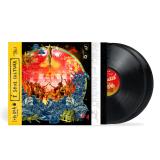
Das Audio von „Breakfast In America“ wurde in den Abbey Road Studios von Miles Showell übertragen und
vom Co-Produzenten des Albums, Peter Henderson, überwacht, wo sie das 1/2-Speed-Master schnitten,
das für die Pressung des Vinyls verwendet wurde. Die LP ist auf 180 g schwerem schwarzem Vinyl gepresst.
Es handelt sich um das sechste Studioalbum der Gruppe, das 1979 veröffentlicht wurde.
Suche:au
The Buenos Aires–based producer’s second album on Umor Rex can be read on at least two levels. The most direct traces its origin to the influence of environmental music, as well as to some pioneers of electronic music. The album was recorded in a single session, making extensive use of loops that were later edited and condensed into the six pieces that make up Pequeño clima doméstico. This working method responds to a playful approach that runs through Entidad Animada’s musical intentions, which often start from a specific genre or aesthetic and then filter it through his own language.
From a more conceptual perspective, the record proposes music as a tool capable of modifying the perception of a moment. Rather than closed songs, the album functions as a device that allows one to tune a state, transform a space, or alter a mood. In this sense, it engages with the idea of functional music not as a utilitarian background, but as a means to equalize time, slow the pace, and reconfigure the listener’s emotional climate.
All songs written and performed by Entidad Animada. Recorded in August 2025 in Buenos Aires, Argentina.
Field recordings and processed textures by Guazuncho.
Mastered by José D’Agostino at Moloko Estudio, Frankfurt, Germany. Cover photo by Diego Berruecos. Layout by Daniel Castrejón.
- 1: Zum Geleit / Galgenberg
- 2: Bim Bam Bum
- 3: Das Mondschaf
- 4: Galgenbruders Lied An Sophie, Die Henkersmaid
- 5: Das Geht An Dich
- 6: Der Werwolf
- 7: Der Mond
- 8: Der Hecht
- 9: Bundeslied Der Galgenbrüder
- 10: Der Tanz
- 11: Der Lattenzaun
- 12: Das Fest Des Wüstlings
- 13: Die Zwei Wurzeln
- 14: Leise Lieder
Mit "Galgenlieder" präsentiert der Club der toten Dichter sein Jubiläumsprojekt zum 20-jährigen Bestehen - eine außergewöhnliche Neuvertonung der legendären Gedichte Christian Morgensterns. Dessen skurriler Humor, philosophische Tiefe und spielerische Leichtigkeit bilden die ideale Grundlage für Reinhardt Repkes musikalische Neuinterpretationen, die den berühmten Texten wie "Der Lattenzaun", "Das Mondschaf" oder "Der Werwolf" ein zeitgemäßes, berührendes Klanggewand verleihen. Für dieses achte Programm des Clubs konnte Schauspieler Hans-Werner Meyer als Gastsänger gewonnen werden. Seine spontane Begeisterung - und seine persönliche Verbindung zu Morgensterns Lyrik - prägen den intensiven Vortrag zwischen Ironie, Wärme und feiner Melancholie. Begleitet wird er von Markus Runzheimer (Element of Crime), der Bass, Percussion und Gesang beisteuert. Bandgründer Reinhardt Repke zeichnet erneut für die Kompositionen verantwortlich und formt mit Gitarre und Stimme den charakteristischen Sound des Projekts.
- 01: Bunny&Apos;S Pie (Feat. Bruce Johnson, John Abercrombie &Amp; Chip White)
- 02: Trial N. 5 (Feat. Bruce Johnson, John Abercrombie &Amp; Chip White)
- 03: Dimenticare Stanca (Feat. Bruce Johnson, John Abercrombie &Amp; Chip White)
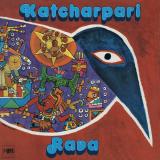
- 04: Katcharpari (Feat. Bruce Johnson, John Abercrombie &Amp; Chip White)
- 05: Fluid Connection (Feat. Bruce Johnson, John Abercrombie &Amp; Chip White)
- 06: Cheerin&Apos; Cherry (Feat. Bruce Johnson, John Abercrombie &Amp; Chip White)
- 07: Peace (Feat. Bruce Johnson, John Abercrombie &Amp; Chip White)
The breakthrough album. Enrico Rava's second solo record, recorded in Milan in January 1973 and released on the German BASF label, is nothing less than a cornerstone of Italian jazz-rock - the record that caught Manfred Eicher's attention and opened the doors to ECM. Rava himself has called it his breakthrough, and history proved him right.
The lineup is killer: John Abercrombie on guitar, Bruce Johnson on bass, Chip White on drums. Four musicians operating at the absolute peak of early seventies fusion energy - electric, cosmopolitan, burning with that particular fire that only existed in that brief window when jazz met rock and nobody knew the rules yet. Abercrombie, already on his way to becoming one of the most distinctive voices in electric jazz guitar, delivers some of his most ferocious early work here. White's drumming is relentless, pushing the music forward with an intensity that never lets up.
If Miles' Bitches Brew-era speaks to you, if Ian Carr's Nucleus gets you moving, if you know Sun Ra's Lanquidity and Don Cherry's Relativity Suite by heart - this is essential listening. Rava's vision was already fully formed: South American rhythms, Mediterranean warmth, free jazz ferocity, rock power - all flowing together without borders or categories. By the early seventies, Rava had absorbed everything - the New Thing, the European free scene, the electric revolution coming out of Miles' studio - and forged something entirely his own.
The seven tracks cover serious ground. "Bunny's Pie" introduces the music with an almost cosmic atmosphere of suspense, hovering in that liminal space before it trails off into the up-tempo vibrant frenzy of "Trial N. 5" - Abercrombie and Rava trading swirling solos at full intensity, the rhythm section locked in tight. "Dimenticare Stanca" moves from Rava's expressive balladic intro into pure funk, guitar and trumpet steering over the rhythmic drive with absolute confidence. The title track carries the lyrical feel and cadence of an Incan-Peruvian folksong - that cosmopolitan spirit made audible. "Fluid Connection" rides a funky bass riff into fusion heaven, with standout trumpet and guitar solos that build and release with perfect tension. "Cheerin' Cherry" pays homage to the great Don Cherry - Rava's spiritual mentor and fellow traveler in world music - exploring a North African soundscape that points toward the global jazz to come. Johnson's "Peace" closes the album with a minute and a half of serene, blissful calm - a moment of stillness after the storm.
This audiophile reissue - cut from the original masters, pressed by Pallas in Germany on 180gm vinyl, housed in a thick laminated hand-glued gatefold - does full justice to an album that remains a collector's holy grail.
Don't sleep on this one. Limited Edition.
El Calefóns 1985er LP "Salir Del Agujero" ist ein seltenes Juwel. Das in Zürich selbstproduzierte und in Eigenregie veröffentlichte Album stammt von einer der wenigen südamerikanischen Bands, die sich zu der Zeit in Europa aufhielten. Gegründet von den Argentiniern Coqui Reca (Komponist, Sänger, Multiinstrumentalist) und Pablo Miguez (Gitarre), bestanden El Calefón aus argentinischen und brasilianischen Musikern, die ursprünglich als Touristen gekommen waren, aber ohne offizielle Genehmigung als Immigranten blieben. Ihre Musik schöpfte aus den vielfältigen indigenen Stilen ihrer beiden Heimatländer und verschmolz sie mit den internationalen Klängen von Rock, Jazz und Pop. Das anspruchsvoll-originelle Album hat auch nach 40 Jahren nichts von seiner Frische eingebüßt und verströmt tropische Wärme und Lebensfreude – ein Zeugnis der unbeschwerten musikalischen Freiheit einer wechselvollen Musikära.
- A1: Mojo Pin
- A2: Dream Brother (Nag Champa Mix)
- B1: Kanga-Roo
- C1: So Real
- C2: So Real (Live)
- C3: Grace (Live)
- D1: Dream Brother (Live)
- E1: Dream Brother (Live)
- E2: The Way Young Lovers Do (Live)
- F1: Medley: Je N'en Connais La Fin/Hymne A L'amour (Live)
- F2: The Grace E.p
- G1: Grace
- G2: Grace (Live)
- G3: Mojo Pin (Live)
- H1: Hallelujah (Live)
- H2: Tongue (Rehearsal Demo)
- I1: Last Goodbye
- I2: Mojo Pin (Live Chocolate Version)
- J1: Kanga-Roo (Album Version)
- J2: Lost Highway (Live)
The Grace EPs by legendary singer-songwriter Jeff Buckley, is a 19-track, five x EP box set, comprising the following EPs: 'Peyote Radio Theatre' July 1994, 'Last Goodbye' January 1995, 'So Real' [June 1995], 'Live From The Bataclan' [October 1995] and 'The Grace EP' [February 1996],
This unique package contains all five twelve inch vinyl records each in their own full colour jacket, a double sided full colour insert with extensive liner notes, all carefully packed in a heavyweight leather laminate textured 15mm-spined outer sleeve.
The five discs that make up the Grace EPs box-set are a collection of live performances, B-sides and studio versions from songs that originally appeared on Buckley's "Grace" album.
Peyote Radio Theatre and So Real were promotional-only releases that weren't commercially available. The others are rare imports: Live from the Bataclan came out in France, The Grace EP in Australia, and Last Goodbye in Japan,
This EP set features "Last Goodbye", "Grace", "So Real" and two amazing live versions of his classic hits "Hallelujah" & "Mojo Pin".
The Grace EPs also features a whopping 12-minute version of Van Morrison's "The Way Young Lovers Do," a medley of "Je N'En Connais Pas la Fin/Hymne A l'Amour," Hank Williams's "Lost Highway," and a 14-minute take on Alex Chilton's "Kanga-Roo."
Finally there is a bonus track added to the The Grace EP; "Tongue," a spooky ambient 11-minute studio instrumental.
Van Breemen, bekannt für seine eindrucksvollen und psychologisch eindringlichen Klanglandschaften, bringt seinen eindringlichen, strukturierten Stil in NEONs „Keeper“ unter der Regie von Osgood Perkins ein.
Für den Film schuf Van Breemen eine minimalistische, organische Filmmusik aus Live-Akustikaufnahmen und maßgeschneiderten Sample-Instrumenten, in die er Klopf- und Schlaggeräusche sowie Holztexturen einfließen ließ, die die unheimliche Kulisse des Films widerspiegeln.
- A1: Celui Qui Ne Fait Rien
- A2: Dormir Le Restant De Ma Vie
- A3: Tu Parles En Dormant
- A4: Elle Veut Pas Se Lever
- A5: J’ai Rêvé Que Tu M’aimais Encore
- B6: Une Tisane Et Au Lit
- B7: Une Belle Après-Midi D’été
- B8: Une Mouche Sur Ma Bouche
- B9: Dans Ma Chambre
- B10: Le Grand Sommeil
- B11: Nocturne
Ten years after their last collaboration, Jacques Duvall and Benjamin Schoos return with Plein Sommeil, a duo album that is at once melancholic, ironic, and tender—a poetic mirror of the fatigue of the modern world.
The legendary lyricist for Lio, Chamfort, and Daho meets the indie pop producer and sonic adventurer of Freaksville, in a generational union as improbable as it is natural.
Between Brussels and Paris, they weave songs about slowness, worn-out love, and resistance through gentleness.
Blending original compositions and delicate covers (The Kinks, Higelin, Daho), the album evokes a sensual and lucid refuge amid the overheating of everyday life.
Recorded with Bertrand Burgalat, The Loved Drones, and lush string arrangements, Plein Sommeil embraces a handcrafted, timeless aesthetic.
Its motto: “Slow business” — a manifesto against the speed and emptiness of contemporary times.
Each song, balancing irony and elegance, celebrates fragility and humanity.
- 180: Millionen Hooligans
- 2: Die Kakteen
- 3: Wo Bleibt Mein Pferd?
- 4: Heinrich Brinkmann
- 5: Hobby Rider
- 6: Kleinigkeiten
- 7: Die Zuckerdose (Feat. Yvonne Ducksworth)
- 8: Psycho
- 9: Ein Käfig Voller Jungs
- 10: Sie Weiß Nicht, Woher Es Kam
- 11: Fender Stratocaster
- 12: Heil Bockwurst (Großer, Dicker König)
Mit Punkrock (1991) markierten Die Goldenen Zitronen ihren entscheidenden Wendepunkt - weg vom Fun-Punk der 80er hin zu einer politisch scharfen, stilistisch mutigen Band. Nach dem Album Fuck You (1990) suchten sie einen direkteren, ehrlicheren Sound - roh, schnell und ohne Studio-Perfektionismus. Gemeinsam mit Billy Childish, dem britischen Garagen-Guru aus Rochester/Kent, nahmen sie die Platte im Januar 1991 in nur drei Tagen auf. Keine Tricks, keine Nachbearbeitung - nur übersteuerte Pegel, Live-Energie und Haltung. Childish klebte die Anzeigen am Mischpult ab, mischte nach Gefühl und erklärte, dass jeder Mix höchstens 30 Minuten dauern dürfe. Das Ergebnis ist ein Meilenstein: ein raues, kompromissloses Album zwischen 60s-Garage, Punk und politischer Dringlichkeit. Songs wie "80 Millionen Hooligans" spiegeln die aufgewühlte Stimmung der frühen Nachwendezeit - Wiedervereinigung, Fremdenhass, Orientierungslosigkeit - und wirken heute wie ein unheilvolles Echo ihrer Zeit. Punkrock wurde zum Kultdokument einer Ära des Aufbruchs und der Widersprüche. 2009 wurde das Album remastered - der rohe Geist blieb, nur klarer denn je. Ungefiltert, übersteuert, unvergesslich - Punkrock, das Statement einer Band, die keine Kompromisse kannte.
- A1: ) Colour Chant
- A2: ) Still & Moving
- A3: ) The Reader’s Lamp
- A4: ) Sun In My Room
- A5: ) Carry A River In Your Mouth
- B1: ) Catch Up, Isobel
- B2: ) A Ship In The Sky
- B3: ) Some Circling
- B4: ) There Was Always A Golden Age
London quartet The Leaf Library return with their bold new album After The Rain, Strange Seeds. A luminous collection of pastoral indiepop, drawing inspiration from suburban isolation, unreliable memories and the surreality of the weather. Their most immediate and melodic work to date, the richly evocative songs brim with chiming guitars, buzzing organs and warm, dulcet strings, evoking Yo La Tengo’s more contemplative moments, The Clientele’s autumnal jangle pop and early Stereolab’s motorik melodicism. The sound of the album is defined by mixer John McEntire, whose work with Stereolab and Yo La Tengo (as well as a member of Tortoise/The Sea And Cake) have been major inspirations to the band.
The album explores themes of memory and place, albeit through an abstract haze – returning again and again to specific moments frozen in time: midsummer bright hot days in the Chilterns (“Sun In My Room”), meteorology and the strange movement of the weather (“Colour Chant”), red kites circling over suburban motorways (“Some Circling”), and the uncanny feeling of dusk and nighttime creatures on “The Reader’s Lamp” (titled by celebrated film director Peter Strickland). The lyrics are vivid yet elliptical, strung with abstract ideas and imagery, conjuring a gently unsettling, though never unwelcoming atmosphere. Not quite trusting your own recollection of things, while marvelling at the oddness of the natural world, the album’s title a good summation of the mix of strangeness and hope contained within.
As on past albums the band - founded by singer Kate Gibson and ex-Saloon guitarist Matt Ashton in the mid 2000s, and now completed by drummer Lewis Young and bassist Gareth Jones - have involved their extended musical family, including guitarist Mike Cranny (of fellow drone pop travellers Firestations) and keyboardist Irina Shtreis, both members of the Leaf Library live band. The album also sees the return of James Underwood’s Iskra Strings, a quartet that features on 4 tracks, with sumptuous arrangements by Daniel Fordham, as well as regular contributor Melinda Bronstein on vocals and Will Twynham (Dimorphodons) on harpsichord. They also welcomed Paddy Milner (on Hammond organ) and Scott McKeon (guitar) – both current members of Tom Jones’ band – for a startlingly delicate rolling crescendo to closing track “There Was Always A Golden Age”.
After The Rain, Strange Seeds is their 4th studio album. The result is The Leaf Library’s most accomplished and affecting work, John McEntire’s mix bringing a bold clarity to the band’s meticulous arrangements – closer to how they sound live than anything they’ve done before.
Mixed by Simon Lam (Kllo, Armlock) and mastered by Grammy-nominated engineer Andrei Eremin, the album features collaborations with British talent including rising spoken-word artist Emmeline, Mancunian ambient producer Frameworks, and Nattica from Fickle Friends on the single 'Oh My'. Speaking on the album, Fractures says: "There's no overarching theme to this album, not lyrically anyway. It's cobbled together like short diary entries of someone journeying through a sort of middling stasis in their life, a time of nothing particularly noteworthy, and that in itself provokes deeper and maybe darker introspection.
I didn't feel like needlessly plugging holes with lyrics, just light dabs here and there, light and shade to complete the visual I pictured in my head. The through line of the album is more within the sonic palette. There's a murkiness, a sort of dust in the audio that is cast over every song. Noth
Against all odds, a devout audience has ridden shotgun and grown with them every step of the way. This symbiotic relationship speaks to the band's quiet impact with over 167 million streams in the United States alone, widespread acclaim, and sold-out shows. They loudly carved out their own corner of heavy music with an inimitable hybrid of head-crushing polyrhythmic prog-spiked metal, hardcore spirit, and unbridled attitude.
They have assuredly leveled up over the course of albums such as Via 2011, No Sleep [2014], Different Animals [2017], and Happier? [2021]. Kerrang! hailed the latter as "an album that gives a nod to the band's past while still bringing in new ideas." Meanwhile, the group shared stages on tour with everyone from Ice Nine Kills and Born of Osiris to Dance Gavin Dance and Counterparts.
- The Organ Grinder
- In Your Own Sweet Way
- Just A Ballad For Woody
- Sippin' At Bells
- Estate
- The Dragon
- Joshua C
Remastered from the original recordings and now presented on a 45rpm 2 LP deluxe audiophile edition, this is first time the complete 7-track album has been available on vinyl. 'In My Own Sweet Way', recorded during a month- long European tour in 1987, captures Woody Shaw in peak form playing with a spirit and a sense of adventure that identify him as a jazz giant. Woody calls the trumpet "the prince of all the horns". Woody is the king of all the trumpet players.
Nobody around plays with such a big, round, ravishing sound - a sound which could easily fool you into thinking that you are listening to a flugelhorn. Woody's musical asociates on this album are Alex Deutsch, a young drummer from Austria who has worked in Europe with many American jazz stars; Neil Swainson, a highly gifted bassist from Toronto who has worked with Pat La Barbera and Peter Leitch but is perhaps best known for his superb collaboration with George Shearing; and Fred Henke , a pianist from Montreal whose credits include backing Clifford Jordan, Steve Grossman and Junior Cook
- I Want Candy
- Go Wild In The Country
- Do You Wanna Hold Me?
- Cowboy
- Aphrodisiac
- Chihuahua
- Baby, Oh No
- The Man Mountain
- Lonesome Tonight
- Love, Peace And Harmony
- See Jungle! (Jungle Boy)
- Rikki Dee
- (I'm A) Tv Savage
- Elimination Dancing
- Mile High Club
- Prince Of Darkness (Sinner, Sinner)
"Love, Peace & Harmony - The Best of Bow Wow Wow is a compilation of the iconic new wave group Bow Wow Wow, released in 2008. The band was formed by Malcolm McLaren, the manager of the Sex Pistols. McLaren recruited members of Adam and the Ants to form the band, featuring 13-year-old Annabella Lwin on lead vocals. Over the next four years, the band dominated the British charts, with nine singles entering the UK Top 100. ""Go Wild in the Country"" and ""I Want Candy"" even made it into the top 10. Their success didn't stop in the UK; they also enjoyed success in Australia, the US and the rest of Europe. This version of the compilation includes the song “The Man Mountain”, which reached the top 10 in Belgium and the Netherlands. Love, Peace & Harmony - The Best of Bow Wow Wow is available as a limited edition of 1000 individually numbered copies on slightly gold coloured vinyl. "
- A1: Langsam Wirst Ma Fremd 3:49
- A2: Kassiber 4:54
- A3: Vaschwindn 3:35
- A4: De An Und De Aundan 4:16
- A5: Taxitänzer 3:05
- A6: Da Dings 3:29
- B1: Guade Stubn 3:36
- B2: Gschnas 2:10
- B3: Da Zweifl 4:02
- B4: Somnambulen 3:28
- B5: Ka Ruah 3:10
LP (inkl. Downloadcode & Poster)
Release: 20.03.2026
"Gschnas" ist das vierte Voodoo Jürgens-Album.
Drei Jahre nach dem Meisterwerk "Wie die Noch noch jung wor" meldet er sich darauf als Popstar wider Willen zurück. Letztes Jahr gewann er für die Hauptrolle in Adrian Goigingers Kinohit "Rickerl" den österreichischen Filmpreis als bester Hauptdarsteller. Für die Alben davor gab es reihenweise Amadeus Awards, sprich Austro-Grammys und all seine Touren im gesamten deutschsprachigen Raum sind regelmäßig ausverkauft.
Nun war es Zeit für eine neue Standortbestimmung. Das Biotop "Beisl" war gestern. Gerade weil die zahlreichen Voodoo-Epigonen damit seit Jahren so gern haussieren gehen. Jetzt geht's um die weite Welt die da draußen wartet. Und die kleine da drinnen: die in der eigenen Seele. In Text und Sound geht es auf "Gschnas" für Voodoo um die eigene Autonomie, die Wiedergeburt der Inspiration, das freistrampeln von der typisch österreichischen Enge die einen nach unten drückt. Kurzum: es geht um alles. Mit welcher Energie er und seine on fire agierende Band dieses Husarenstück von einem Album reiten, mit welcher Spielfreude und welchem Selbstvertrauen hier ein Künstler neu denkt ohne dabei von sich erschlossenes aufzugeben und sich dabei selbst revitalisiert. Bist du (österreichisch für: nicht übel)! Dazu seine besten Melodien, seine wahrhaftigsten Texte, seine dringlichsten Performances, und eine Wolfgang Lehman (AKA Möstl)-Produktion, die für alle Involvierten nach Magnum Opus riecht. Das kann was. Und nicht nur das. Ein Album aus Zweifel geboren, für das es am Ende Faschingskrapfen regnet. Ein Album als Ereignis, in einer Zeit die sich selbst vergessen hat. Voodoo Magie die wirkt.
GAEREA ist nichts weniger als ein fantastisches Rätsel, tief verwurzelt in Extremen und leidenschaftlicher Hingabe. In weniger als einem Jahrzehnt hat das maskierte Kollektiv, das in der portugiesischen Stadt Porto gegründet wurde, unzählige dunkle Facetten des Metal getestet und präsentiert nun mit "Loss" sein fünftes Album sowie Debüt bei Century Media Records.
"Wir haben das getan, was wir immer getan haben - wir sind unserem Instinkt gefolgt", sagt der anonyme Sänger von GAEREA. "Doch etwas sagt mir, dass dieses neue Album Elemente hat, die sowohl unsere neuen als auch unsere alten Fans lieben werden - aber es ist nicht gerade genau das, was sie von uns erwarten."
"Loss" definiert GAEREA neu und verquickt Elemente aus ihrer Post-Black-Metal Vergangenheit mit eindringlichen Melodien zu raffinierten Klanglandschaften. Dabei schlüpft die Band aus dem kreativen Kokon, um sich in etwas ebenso Mitreißendes wie Unerwartetes zu verwandeln: Es gibt Klargesang. Es gibt Refrains, die so eingängig und leidenschaftlich sind wie die besten Rock- und Metal-Songs. Und doch ist es unverkennbar GAEREA.
Die maskierte und ritualisierte Bühnenpräsenz der Band ist nicht nur Teil einer Show, sondern ein integraler Bestandteil von GAEREA, der ihre musikalische Extremität auf ein philosophisches, avantgardistisches Level hebt. Ihre Uniformen bieten dabei eine gesichtslose und androgyne Leinwand, die es ihnen erlaubt, sich in vollkommen in ihre Performance zu stürzen, die nicht zuletzt durch eine gewisse Körperlichkeit in ihren Bann zieht. Trotz ihrer dunklen Präsenz versprüht die Band stets einen Hauch von Transzendenz und Positivität. Mit "Loss" verschmelzen GAEREA die Ästhetik des Extreme Metal, die Offenheit des Post-Rock und einen freigelegten, emotionalen Nerv zu einem neuen musikalischen Paradigma.
Das ist GAEREA.
"Loss" ist erhältlich als: Ltd. CD Digipak in O-Card, LP, Digital Album
- A1: Live Excerpt From Eavesdrop Festival 2024 - Rashad Becker
- A2: Live Excerpt From Eavesdrop Festival 2024 - Mariam Rezaei
- A3: Live Excerpt From Eavesdrop Festival 2024 - Audrey Chen & Hugo Esquinca
- A4: Live Excerpt From Eavesdrop Festival 2024 - Nima Aghiani
- A5: Mouthpiece - Lottie Sebes
- B1: Live Excerpt From Eavesdrop Festival 2024 - Nina Garcia
- B2: Approaching Chaos - Jasmine Guffond
- B3: Live Excerpt From Eavesdrop Festival 2024 - Ilpo Väisänen
- B4: Special Occasion - Mat Pogo
Benefit compilation with exclusive tracks from live performances & installations at eavesdrop festival 2024. All revenues go to charities providing medical aid and food sovereignty in Gaza.
In november 2024, eavesdrop festival presented its 3rd edition of contemporary electronic music and sound art, taking place in the striking architectural setting of silent green’s Betonhalle in Berlin. ”to eavesdrop” - is invoked as a mode of listening intently, attentively and with curiosity. With its ongoing commitment to adventurous listening cultures, the festival brought together a top-notch line-up of Berlin based and international artists, who share a common practice in electronic sound composition whilst spanning a diversity of inter-related contemporary tendencies. Whether it’s multi-award winning Mariam Razaei’s exceptional turntablism, Ilpo Väisänen’s legendary DIY analogue electronics, Jasmine Guffond’s generative sound installation, Nina Garcia’s extraordinary electric guitar manipulations, Lottie Sebes’ AI voice synthesis or Rashad Becker’s idiosyncratic synthesizer explorations, to name a few, eavesdrop invited listeners to consider, from multiple perspectives, new social and technical developments in international music and sound cultures.
This compilation documents those 2 nights with 9 exclusive tracks - 7 live performances and 2 stereo mixes from multi-channel installations, edited by the festival’s curator / organizer Jasmine Guffond, with a total running time of approx. 78 minutes. All revenues will go to charities providing medical aid and food sovereignty in Gaza: Medical Aid For Palestinians & Thamra.
The first resonant space Zosha Warpeha played in was the Emanuel Vigeland Museum in Oslo, Norway. Built as a mausoleum, its walls reach up into a gradual archway, creating an environment where sound expands and reverberates for twelve seconds before decaying into silence. Warpeha was greeted only by dim lights when she entered, and it wasn’t until she had spent several minutes listening that she was able to make out the frescoes that covered every inch of the room: graphic depictions of the cycle of life from conception through death. As the sound of her Hardanger d’amore encountered the walls and these slowly emerging scenes, they obscured its point of origin in both time and space, augmenting its own life cycle. The experience sat in the back of her mind over the next several years as she developed her own patient style of composition and performance, one that comes into full bloom on her new album I grow accustomed to the dark.
When Warpeha was selected as an artist in residence at Brooklyn’s ISSUE Project Room in 2025, she saw it as an opportunity to more intentionally explore how her music might fill a room with ample natural reverb. I grow accustomed to the dark documents two single-take solo performances for Hardanger d’amore and voice at IPR, with both pieces composed in a unique tuning system developed to interact with the space itself. Listeners can trace resonance from the contact of the bow on gut strings into the body of the instrument, its five sympathetic strings offering another layer of refraction, before the sound is thrown about the cavity of the room. The echoes emerge like a photographic double exposure, or wisps of smoke that linger in the air, creating ghostly harmonic convergences that blur the line between what is there and not-there. Sound begins to act like light, a synesthetic alchemy that transforms drones into beams and ornamental trills into flickers.
Both side-long compositions, “filament” and “visual purple,” exemplify a duality that animates Warpeha’s music: an expressive, individualistic style that draws on extensive knowledge of her instrument’s history in folk traditions, and an austere, devotional quality maintained by focus and precision. Though very different in character and structure, both pieces evolve slowly through numerous repetitive phrases, passages of stillness, and bursts of intensity. “filament” opens with a cycle of delicate melodic fragments played and sung around a drone before blossoming into an outpouring of swooping arpeggios, harmonics flying from the strings like sparks off a bonfire. The disorienting pulsation of harmonic beating forms the core of “visual purple,” the close-tone dissonance building to a swarm of open strings ringing boldly throughout the space. After the knotty tones reach their climax, the piece collapses into studied quietude, hushed, but without any drop in intensity.
When Warpeha first visited the Vigeland Museum in 2019, she was in Oslo to deepen her relationship to the Hardanger fiddle through the study of Norwegian traditional music, which is primarily passed down aurally. The experience of learning songs by ear, not only internalizing the tune but also absorbing the techniques and tonalities by listening, was a crucial step in her development as a composer. The years since have seen her sharpen those skills as a prolific member of the New York avant-garde and improvised music communities. Warpeha’s music encourages listeners to join her in this journey, to listen closely with each repeated phrase and through each dramatic shift. Like the frescoes on Vigeland’s walls, with time and intention, the depth of I grow accustomed to the dark comes on like a revelation.
AICHER is the work of longtime label veteran Liam Andrews (My Disco, EROS), with additional production from his My Disco spar Rohan Rebeiro – an experimental percussionist and erstwhile collaborator of Roland S. Howard and HTRK. Together, they make resoundingly coarse, bullish industrial musick, distilling fascinations with tone and space through eight gristly and darkly sublime cuts, sharpened by production from Boris Wilsdorf of Einstürzende Neubauten and Swans fame.
Through eight cuts, »Defensive Acoustics« reveals a clammy touch of reverberant buzz and below-the-belt shudder, with a creeping, sensual signature of authority that strongly recalls Alan Wilder’s Blasphemous Rumours-era sound design for Depeche Mode, stripped to absolute skeletal fire. Tectonic plates of sound are pushed to an extreme biting point in a sort of structural stress test that feels like an oil rig in action—or perhaps more acutely, junked at harbour.
We go from the lurching buckle of »Ascertain« and the bilious atonality of »Harness Pleads« to the vertiginous scale of the title piece and the brutal momentum of »An Exhausted Image«—almost collapsing under its own bass weight—while the pranging girders of »Constriction« make us think of that 101 version of »Stripped«: propulsive, full of primal energy, and clanging, clipped reverb. »Possessions« ends the album with a passage of bleakly romantic ambience, a judicious emotive counterweight to the preceding gnarl.
- A1: Harris & Orr - Spread Love
- A2: Terry And Deep South - Trying To Get By
- A3: Toshiyuki Honda - Burnin' Waves
- A4: Igna Igwebuike - Disco Bomp
- B1: Janette Renee - What's On Your Mind (Super Club Remix)
- B2: Grupo Serenata - Sodade, Tem Pena D’mim
- B3: Vital Disorders - Zombie
- B4: Alphonsus Idigo - Flight 505
- C1: Dj Food - Peace (Harvey's 30 Something Mix)
- C2: Man Jumping - In The Jungle
- C3: Stars - Dancin’ People
- D1: Gaucho - Dance Forever (Club Version)
- D2: 49Th Floor - Night Passage (Bongo Mix)
- D3: Orion Agassi - Desacato
- D4: Fatdog - Remember Feat Cj Raine
yellow vinyl[28,15 €]
With two deeply cherished compilations already in the bag, Luke Una steps up for the third volume in his É Soul Cultura series on Mr Bongo. A love letter to the dancefloor and its power to unite people from all corners of society amid growing division and extremist politics. Genre-spanning in nature, the 15 tracks travel between cosmic soul, boogie, proto-house, slo-mo technoid grooves, drum machine afro, astral bass-bugging futurism, jazz funk, dance, and disco. Each having the ability to move the body as much as the heart.
From his formative years in Sheffield to co-founding Manchester’s much-fabled Electric Chair with Justin Crawford, through to helming the iconic LGBTQ institutions of Homoelectric / Homobloc, Luke has spent 40 years immersed in dance music. His latest outlet, É Soul Cultura, has grown from a label to a globe-spanning events series with Luke holding residencies and embarking on tours across the world from Japan and Australia to America and Europe.
“For me, the dancefloor was never about a one-dimensional, thudding, 130 BPM beat only. It's a much more dynamic, broader vision than that. I cut my teeth in an era where a 100 BPM record had as much impact, excitement, and energy as a 134 BPM dancefloor jazz funk or techno record”, Luke mentions. É Soul Cultura Volume 3 is the perfect embodiment of that notion: “It’s about four decades in the trenches playing dance music, the late-night afters, the shebeens, the basements, warehouse parties, the eight-hour journeys in East London, through to festival sets at Houghton and We Out Here. It’s music unconstrained by genre or tempo and more about making your body move”.
But this isn’t simply a collection of disparate dance tracks; they carry meaning and soul. “It’s less about escapism, more about reconnection. My experience of post-covid has been the coming together of all the clans in various clubs and gatherings. A reaction to a very toxic world out there, where the aggro rhythms of division have sought to divide us, and people don't meet as often. The coming back together face-to-face in clubs has encouraged a real love in the air, there's a real togetherness and collective spirit”.
Opening up the compilation is a track that channels that very message, the transcendental, soul-rousing Harris & Orr ‘Spread Love’. Joining the dots from there, to the low-slung deep house closer of Fatdog ‘Remember’, you’ll find electronic drum machine Nigerian funk, sitting side by side with dancefloor Cape Verdean brilliance, a post-punk cover of Fela Kuti, rubbing shoulders with cosmic electro, and an Una-championed, 8-minute, kickless DJ Harvey remix. There’s jazz funk in various guises moving from boogie synth to astral travelling, slo-mo acidic raw techno, and a ‘79 soul stepper, alongside swirling percussive Italo disco and tribal-charged house. All infused with an innate ability to bring people together.
As society becomes increasingly fractured, É Soul Cultura Volume 3’s message is more than movement. It’s about dance music’s power to unify people from all walks of life and break down the barriers that divide us.