It was obvious from the first riff on the first song from their very first album: MASS WORSHIP were born fully-fledged, utterly unique and magnificently destructive. Emerging from Scandinavian shadows like an unstoppable, shape-shifting bulldozer, they have swiftly become one of the most praised and talked-about bands in the metal underground. Despite spending a big part of 2020-2021 locked inside, writing and recording new material, MASS WORSHIP did complete a highly successful tour in support of Polish death metal legends Vader. Meanwhile, MASS WORSHIP are primed and ready to unleash their second full-length assault. Due for release in 2022, “Portal Tombs” is a terrifying but electrifying exploration of the gloomy depths of human nature: a monolithic manifestation of the musical force that is MASS WORSHIP. Drawing inspiration from bands such as At The Gates, Mastodon and Meshuggah, MASS WORSHIP could be likened to many bands, but somehow forge their musical identity into something exceptionally distinctive and transcendent, and with enough confidence and conviction to win over even the most orthodox fans of the genre. “Portal Tombs” will once again proclaim MASS WORSHIP’s one-of-a-kind potency with maximum force. A triumph for both style and substance, “Portal Tombs” is the kind of metal record that shatters epochs, audaciously redefining what it means to be heavy. MASS WORSHIP continue to lead the charge for individuality and verve, while still delivering a never-ending tsunami of life-affirming, spine-shattering riffs. Lyrically, too, “Portal Tombs” takes the path less trodden, exploring the dark recesses of humanity’s past, its present and, darkest of all, its future. As we spiral towards an abyss of our own making, MASS WORSHIP’s soundtrack will resonate loudest of all. “Portal Tombs” is available as: Ltd. CD Digipak, Gatefold LP, Digital Album
Suche:aud
The eagerly awaited second release from Roland Johnson, backed with the equally brilliant “Can’t Get Enough” on our Yellow series brings the fabulous Yours and Mine from the first album – Imagine this – to vinyl. Elmore magazine said; “Yours and Mine” and “Promised Land” bring to mind the loving duets of Marvin Gaye and Tammi Terrell, sounding perfect for film.
and when reviewing the flip; The horns and saxes are crisp and energetic. Johnson co-wrote 9 of the 10 songs including the inviting up-tempo opener “Can’t Get Enough” with its O’Jays influence.
Source:
Roland’s first album, “Imagine This” was released by Blue Lotus Recording studio in 2016. This album was a deliberate move into mainly self-written songs and marked the desire by Roland to break out to wider audiences, gaining even more success than that shown by his live performances appreciated by all on the St Louis and Beale street Blues and Soul Scene.
Often compared to Otis Redding and Sam Cooke, which you can hear the influence, but Roland Johnson is a singer destined to come out of the shadows.
ROLAND-JOHNSON-MD-RECORDS-1.jpg
The success and increased interest in Roland’s first album bright about more interviews with the Missouri press and News, with interviews and award nominations celebrating his highly successful blend of heartfelt Southern Soul with a classic vintage delivery in a new way. In the UK Brian Goucher of Vibe UK picked up on the album and reviewed it excellently.
I dot think we need to add much more than that in all honesty, Roland is the real deal, hit the play buttons and decide for yourself.
Mark n Des
- A1: Bobby Cole A Perfect Day
- A2: Helmut Pistor's Big Rock Jazz Band There's A Promise For The Future
- A3: Ladykiller Mercy Mercy Mercy
- A4: Portraits In Sound It's Time For Music
- B1: Sebastian Good Time City Nights
- B2: Harve And Charee Got To Turn Away
- B3: Allison & Shaffer Moon Madness
- B4: Klaas Craats Six Water Gardens Of The Moon
- B5: Gemini If You're So Smart
- C1: Flash Around This Time
- C2: Garndarf Song For A Girl
- C3: Fang Buzbee & Sutton Frozen Love
- C4: Penn Central Make It Happen
- C5: The Menagerie They All Seem To Know
- D1: Hans Hass Welche Farbe Hat Der Wind
- D2: Ron & Sally Price California Feeling
- D3: Kris 'N Dale Memory Shelf
- D4: David White I Want To Have You A Long Time
- D5: Vision Girl We Really Done It This Time
After 6 years and 7 volumes, the Tramp Records crew invites you to join them on yet another enlightening journey into soulful Jazz, Folk and Funk from the 1970s.
This 8th volume contains nineteen Jazz, Soul and Folk nuggets from between the late 1960s and the late 1970s. One of the many highlights is the opening track by Bobby Cole which is most likely one of the finest independently produced vocal jazz recordings ever put on wax. So true. Oscar Brown Jr. and Mark Murphy sends its regards. But that's just the beginning. Praise Poems Vol.8 covers a wide selection of genres, from big band jazz (Helmut Pistor's Big Rock Jazz Band and Germany's own Ladykiller) to psych-pop (Portraits in Sound, Harve and Charee and Allison & Shaffer), from folk-rock (Flash, Garndarf and the incredible Fang Buzbee) to AOR (The Menagerie and Penn Central), completing the set with a handful of melancholic folk beauties, most notably Hans Hass Jr.'s mind-blowing "Welche Farbe hat der Wind".
Very few compilation series' release as many as eight volumes and those that get that far often start to run out of quality music or meander too far from their original artistic direction. That certainly is not the case with the "Praise Poems" series which leaps from strength-to-strength as our team of compilers and researchers continue to unearth lost and often overlooked music from an era long gone. Many of these records were released in small quantities as private pressings or by small regional labels. Obviously, those labels neither had the budget, expertise, nor options to promote their releases in a sweeping way. Therefore the majority of these artists failed to find the wider audience their music so richly deserved.
- A1: Peter Seiler - Serengeti
- A2: The Ambush - Casablanca
- A3: Bourbonese Qualk - Ton Ton Macoute
- B1: Pyrolator - Ein Weihnachtsmann Kommt In Die Disc
- B2: Torch Song - Hark (Long Version)
- B3: Kirlian Camera - Communicate (Instrumental Version)
- C1: Dj Blasy - Metacognition
- C2: Budino & Berko - Transoceanic
- C3: Fidelfatti - Ocean
- D1: Vibes Of Rhythm - Thrill Me (Trance-Paradise Mix)
- D2: Clock Dva - Cypher (Glyph)
- D3: Scott Edward - The Ion Engine
The Sound Of Love International 004 is a particular poignant collection of rarities, collectables and unearthed gems, pulled together by the Italian DJ and crate digger Budino. For the last two years, the pretty coastal town of Tisno in Croatia has been devoid of the (now) legendary Love International week-long celebration of music, leaving thousands of revellers and regular devotes with only the sounds of Love International to keep the spirits strong until the next time friendships are rekindled and dance resumes under the sun and the stars. Luckily, the fiesta is scheduled for a return to Tisno from 13th – 19th July 2022.
Budino, AKA Valentina Bodini, has a lifelong passion for vinyl, amassing an enviable collection of multi-genre LPs and singles via her years spent in Italy and now in Berlin. As resident DJ for Discodromo’s CockTail d’Amore parties, her enthusiasm for music and digging knows no boundaries, and her instalment into the Sound Of Love International series gives us an aural insight into her musical realm.
Musically, The Sound Of Love International #004 is a smorgasbord of sound. Opening with the glacial tones of Peter Seiler’s 1986 new-age gem ‘Serengeti’, the twelve track selection glides through proto-house, tribal ambience, industrial EBM, balearic dance and so much more. It’s a testament to the ground- breaking nature of these tracks that most of the music here was originally released some 30-40 years ago. Inclusions from Oliver Leib’s The Ambush project, Vibes Of Rhythm and Scott Edward stem from the post house & techno explosion of the early 90s, whilst the early proto-electronic experiments from the likes of Kirlian Camera, Clock DVA, Bourbonese Qualk and Pyrolator are welcomely revived for a new audience. Interestingly, a flexi-disc only release of ‘Hark’ by William Orbit & Laurie Mayer’s early 80s Torch Song project is also included here, elongated by Budino herself in the edit suite. Two brand new productions from DJ Blasy and Budino & Berko ensure that business is brought bang up to date, offering a unique and modern spin on the sounds of Budino, and her tantalising selection on this compilation.
- A1: Opening - 03 24
- A2: Call Center - 02 22
- A3: End Love - 00 58
- A4: Sister - 01 39
- A5: Mdma - 01 33
- A6: Paris 13Th - 01 52
- A7: Mother - 01 27
- A8: Arrival - 01 43
- B1: Nora - 02 05
- B2: Humiliation - 1 34
- B3: One Month Later - 02 37
- B4: Camille & Emilie - 01 39
- B5: Emilie Dance - 01 54
- B6: Looks - 01 10
- B7: Porno - 2 40
- B8: Nora & Amber - 2 56
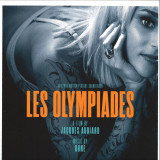
Sixteen musical vignettes of electrifying emotion at the crossroads of ambient, modern synthesizer productions and organic orchestral music experimentation, which tint French director Jacques Audiard's new feature film with the illuminated glow of a whole new generation.
Textextext - (add your write up)
When Jacques Audiard contacted him, Rone was just a few weeks away from receiving the Cesar award for best film score for his very first soundtrack "Night Ride", the highest honor in French film for a composer.
Throughout his career, the French director has been able to surprise his audience by playing on the codes of "genre films", while remaining faithful to the aesthetics of "art film". His cinema is both profound and entertaining, sophisticated and accessible, dark and dreamlike.
"Jacques' cinema is physical, sensual, modern", Rone says about the director, "when he asked me to do the music for Paris, 13th District , I immediately accepted, without seeing any images or reading the script. He is simply one of the greatest contemporary filmmakers."
His new feature film deals with youth in general and their sexuality in particular in a way no one may have done before. The story is based on four young characters and their existential questionings, whose destinies intertwined against the backdrop of the Parisian "Olympiades" high rises in the 13th arrondissement.
But time was already running out, as the film was set to be nominated for *Cannes' Palm D'or* at the rescheduled edition of the festival in July 2021. Between the releases of "Rone & Friends" and his remixes for Agnes Obel, Go Go Penguin and Jehnny Beth (who also plays a role in the film), the producer decided to lock himself away in in his brand-new Isola Studio in Cancale, French Brittany. He also invested in a large screen on which he projected loops of the film and started manipulating his gear. "I had Miles Davis in mind and the way he composed "Ascenseur pour l'échafaud" by improvising with his band while watching excerpts from the film."
After a first conclusive test on three scenes of the film which allowed Rone to showcase the skills he had developed in composition in various musical fields, a relationship of trust developed between the musician and the director, which resulted in over 45 minutes of Rone's music used for the final cut.
"There was a lot of music to be made in a short time, but the talks with Jacques were very stimulating. He had a fairly precise idea of what he wanted, while at the same time, I think, having the desire to be surprised, or even a little shaken up."
If the black and white aesthetic recalls the great hours of the "Nouvelle Vague", Rone´s music gives a new layer to the film which fits resolutely with 2020's zeitgeist.
This second soundtrack by Rone is a sonic urban adventure in itself. As it is used in the film, colouring in the lives of Audiard's protagonists, it will have the same impact on us, the listeners, in our own everyday lives.
Sleep Researchers is about a journey, which I haven't finished yet so I don't know what it sounds like. My father reads a few lines, betsy sings into a walkman and over the microphone of a toy casio. I bought a new Portastudio which has the buttons stuck, so when I get it running I record it in ableton. I like the way the sounds blend together on that old machine. I like to think of these tracks as sounds that will accompany moments. audio photos. a man held up in the body the words are worn out He came for me in the early morning but I was sleeping. a man tied to the ground with roots in the desert a man delayed in the body -- Francisco Sonur
Young LA star, Justin Jay, has already caught the ears of DJs and fans worldwide and released on the likes of dirtybird and Culprit. Last year, Jay shared an EP of deep house gold on Shall Not Fade sister label Lost Palms. Now he returns on their bass-oriented sublabel Time Is Now.
Hypnotized EP is a fun, breaks heavy romp featuring rave powerhouse trio Denham Audio and a remix by jungle mainstay Tim Reaper. From the off the energy is high, the title track rolling out pitched vocals and dramatic drops. "I Know" is ever more frenetic, breaks cascading over one another to a fever pitch, while Denham Audio collab "Swarm" brings out 303s and dramatic sub bass wobbles for a tour-de-force of hardcore dance vibes. Rising lofi house producer Angelo Jsn gives a euphoric, breathless edge to "Burgundy", an emotive space age trance number. Tim Reaper's untameable refix of "Swarm" keeps the heart racing to the end.
Outernational Sounds very proudly Presents The Mallory-Hall Band "Song of Soweto" & "The Last Special".
Limited, fully licensed digital and vinyl reissues of two crucial South African sessions led by Charles Mallory and Al Hall, Jnr., featuring Kirk Lightsey, Marshall Royal, Rudolph Johnson, Billy Brooks and more! Essential companion pieces to Kirk Lightsey’s legendary ‘Habiba’.
Featuring tracks:
Song Of Soweto: Side A – ‘Song of Soweto’, ‘Hamba Samba’; Side B – ‘Cape Town Blues’, ‘Moroka Rock’, ‘The African Night’
The Last Special: Side A - ‘The Last Special’, ‘Princess of Joh’Burg’; Side B - ‘Amafu (Clouds)’, ‘Blue Mabone’
Never released outside South Africa, and out of print since 1974, Outernational Sounds presents two long-lost Johannesburg sessions from the Mallory-Hall Band – an all-star review of West Coast jazz stars who toured apartheid South Africa in the mid-1970s.
Sanifu Al Hall, Jnr. is a musician’s musician. During a storied career stretching across six decades, Hall has recorded with the greats of the music including Freddie Hubbard, Doug Carn, and Johnny Hammond, and leads his own Cosmos Dwellerz Arkestra. But until recent years, the only records on which he had appeared as leader were a brace of rich, funky LPs, Song Of Soweto and The Last Special, issued only in South Africa under the moniker of The Mallory-Hall Band (named for Hall and his co-leader, guitarist Charles Mallory – musical director for Martha Reeves and the Vandellas, Mallory was conductor for Dusty Springfield touring bands, and had worked with John Lee Hooker, Stevie Wonder, and many others). Neither LP had any wider release, and both have remained out of print since 1974. How did a young stalwart of the Los Angeles jazz scene end up in a recording studio in apartheid South Africa?
Al Hall, Jnr. and Charles Mallory had arrived in South Africa as part of the touring band for the singer Lovelace Watkins. Sometimes billed as ‘the Black Sinatra’, the Detroit-born Watkins sang standards and ballroom classics on the Las Vegas circuit. He never made it big in the US, but in his 1970s heyday he was a huge star in southern Africa, and 1974 he hired a jazz big band to accompany him on a tour of South Africa – Hall and Mallory were part of the line-up, alongside Mastersounds bassist Monk Montgomery, pianist Kirk Lightsey, tenorist Rudolph Johnson, drummer Billy Brooks, and Marshall Royal, musical director of the Count Basie band. The tour was a huge success, and during downtime from performing, members of the group managed to independently record no fewer than three albums. Lightsey and Johnson’s stunning Habiba was the first (reissued as Outernational Sounds OTR.013), and it was followed by two crucial sessions led by Hall and Mallory – Song of Soweto and The Last Special, issued on the local IRC imprint.
Visiting apartheid South Africa in 1974 was a controversial choice for any artist. Numerous artistic and cultural bodies around the world had already announced that their members would boycott the country in solidarity with the struggle against apartheid, and working in South Africa was severely frowned on by anti-apartheid activists everywhere. For a Black band, touring the country to play to mostly white audiences could have been seen by many both inside and outside South Africa as a questionable decision. ‘It was a batch of mixed reactions when I choose to visit South Africa whilst apartheid policies were in place,’ Hall recalls. ‘To me the choice was a simple one – “I wanna see for myself!” I also wanted to be a part of breaking down racial barriers, having been down some of the same roads in my own country.’
The albums were recorded by a twelve-piece band at Johannesburg’s Video Sounds Studios in December 1974, and feature the legendary pianist Kirk Lightsey, Black Jazz recording artist Rudolph Johnson, and the rest of the touring band. Both records are superbly arranged slabs of peak 1970s funky big band soul jazz, with tasteful Latin inflections and more than a nod to South Africa’s upful township jazz sound. They are the sonic traces left by a seasoned African American band who were touring South Africa in the depths of the apartheid era, and who immediately moved beyond the segregated hotels and ballrooms to build links with local South African players and audiences.
Never previously available outside South Africa, Outernational Sounds’ new editions of Song of Soweto and The Last Special (alongside our edition of Kirk Lightsey’s Habiba) represents the first time these albums have been in print for nearly fifty years. Fully licensed from Gallo Records and pressed at Pallas in Germany from Gallo’s original masters, they feature new sleeve notes from Francis Gooding (The Wire) based on interviews with Al Hall, Jnr., and a reminiscence from pianist Kirk Lightsey.
As Could Change begins, you'll notice how little audio material is really needed for your brain to start turning things into things. The merest slice of a plosive becomes a beat. The notes buried in every vowel are a bass line that nobody's fingers can reach. And of course the lyrics are the music: a synthetic voice, stripped of its humanity, that will relentlessly call to your brain like a siren and beg you to make sense of what doesn't. This piece isolates your perceptive abilities in the audio realm the way an optical illusion works on your eyes. Its melody is the amount you'll struggle to turn sound into sense. On top of that, it's delightfully fucking annoying. Marc Matter first came around as part of Institut fuer Feinmotorik, The Durian Brothers and Salon des Amateurs and has been politely shoving vocal recordings through various sorts of blenders ever since. (Angela Sawyer)
New York trio Sunflower Bean announce their second record Twentytwo in Blue. The album will be released on March 23rd when all members of the band - Julia Cumming, Jacob Faber and Nick Kivlen - will be 22 years old. The album comes almost two years and two months after the release of their critically acclaimed 2016 debut album Human Ceremony.
Co-produced by Unknown Mortal Orchestra's Jacob Portrait (who also mixed the record) and HC-producer Matt Molnar of Friends, Twentytwo in Blue shows Sunflower Bean stay true to their guitar band core and classic rock-inspired roots, while exploring new sonic textures with more direct and progressive themes. Unlike their debut, which was essentially a compilation of songs Sunflower Bean wrote while still in their teens, Twentytwo in Blue was made in the year between December 2016 and December 2017 and showcases how far the band has come since playing together in their high school days.
To celebrate the album announce, Sunflower Bean share a new single and follow up to I Was A Fool' entitled Crisis Fest.' 2017—we know/ Reality's one big sick show/ Every day's a crisis fest,' vocalist and bassist Cumming sings. This last year was extremely alarming, traumatic, and politically volatile,' explains the band about the track. While writing this album, we often reflected back on the people we met while on tour. We felt a strong kinship with the audiences that came to see us all over the country, and we wanted to write a song for them - something to capture the anxieties of an uncertain future. 'Crisis Fest' is less about politics and more about the power of us, the young people in this country.'
Sunflower Bean find a sublime maturity and progression to their sound and songwriting on Twentytwo in Blue. If there was a ragged beauty in the gauzy, groovy wall of sound of Human Ceremony, there's a new directness to these songs, a product of the band's growth and the insanity of the times we're in. Sunflower Bean have gained a newly confident voice that they bring to the second album, one that doesn't shy away from addressing the other events of those two years—political changes and cultural shifts that have left America and the world stupefied. This has been such an unbelievable time,' says Kivlen. I can't imagine any artist of our ilk making a record and not have it be seen through the lens of the political climate of 2016 and 2017. So I think there's a few songs on the record that are definitely heavily influenced by this sort of—whatever you want to say what the Trump administration has been.' A shit show,' offers a helpful Faber.
Ultimately, this record is much more than a political statement or piece of commentary on today's political climate. I think one word that always comes to mind when I think about this record is lovable,' says Cumming. We want the songs to be something that someone can get attached to, and have be a part of them. Because that's what I look for in songs myself, and that's the kind of experience we want to give to others.'
- 1: Prologue, Main Title
- 2: Robot Fight
- 3: Leto’s Theme
- 4: The Box
- 5: The Floating Fat Man (The Baron)
- 6: Trip To Arrakis
- 7: First Attack
- 8: Prophecy Theme
- 9: Dune (Desert Theme)
- 10: Paul Meets Chani
- 11: Prelude (Take My Hand)
- 12: Paul Takes The Water Of Life
- 13: Big Battle
- 14: Paul Kills Feyd
- 15: Final Dream
- 16: Take My Hand
Repress of the RSD LP, this time on Black vinyl. Soundtrack to David Lynch’s 1984 cult film. Composed by TOTO and Brian Eno. Sourced from the original mastertapes. Audiophile Pressing at RTI.
- A1: Part 1 - Welcome To Coral Island
- A2: Lover Undiscovered
- A3: Change Your Mind
- A4: Mist On The River
- A5: Pavillions Of The Mind
- A6: Vacancy
- B1: My Best Friend
- B2: Arcade Hallucinations
- B3: The Game She Plays
- B4: Autumn Has Come
- B5: End Of The Pier
- C1: The Ghost Of Coral Island
- C2: Golden Age
- C3: Faceless Angel
- C4: The Great Lafayette
- C5: Strange Illusions
- C6: Take Me Back To The Summertime
- D1: Telepathic Waltz
- D2: Old Photographs
- D3: Watch You Disappear
- D4: Late Night At The Borders
- D5: Land Of The Lost
- D6: The Calico Girl
- D7: The Last Entertainer
The wheels rattle into the thrilling unknown on The Coral’s first new music since 2018, finding the unsurpassed, metamorphic gonzo-pop five-piece in the company of crooks, sell-by-date candyfloss and plastic skeletons as they release Faceless Angel. Of misplaced memories from a place and time that might never have been, the track precedes a new and vividly evocative body of work from the legendary Merseyside band in the form of their TENTH and first, ever double-album: Coral Island.
Squinting into the neon-lit penny arcades and draining an after hours glass with the displaced and dispossessed once the power is pulled, The Coral’s latest caper concerns listeners with the light, shade, thrills and profound melancholy of coastal palaces packed with fun and fright. Both now and then, or perhaps never as fiction encroaches on reality, the feverous anticipation of a night amongst the screams, fights and romance of the fair become part of life on the newly-built Coral Island.
Welcoming travellers one trepidous step at a time, Faceless Angel sits amongst a series of promised audio visual portraits of and inspired by the Island’s inhabitants. Conceived and created by artist, Edwin Burdis, the single’s video was filmed ‘on’ Coral Island itself, a sprawling diorama purpose-built inside a deserted Chinese restaurant in Cardiff. It’s the band and fans’ first venture onto the surreal land mass, populated by surreal sculptural forms, charity shop-finds, looming mountains and gathering storm clouds. Filmed in debt to the traditional model-based filmmaking methods of greats like George Lucas or Ray Harryhausen, Burdis navigated Coral Island at waist-height and via camera-friendly pathways to gather 360 degree footage from inside and outside his and The Coral’s fascinating, fabricated world. The expansive and ambitious installation also provides the album artwork for Coral Island as well as designs for Faceless Angel and future singles.
Indebted in part to the classic pre-Beatles rock and roll era of Duane Eddy and Chuck Berry alongside the clattering of a weary ghost train’s rusted wheels on worn steel, Faceless Angel’s title evokes DC Comics ominous occult detective series, Hellblazer and the broken character of the strip’s protagonist, John Constantine.
- A1: Dick Khoza And The Afro Pedlars - Chapita
- A2: Ensemble Of Rhythm And Art - Pelican Fantasy
- A3: Spirits Rejoice - Sugar Pie
- B1: Makhona Zonke Band- The Webb
- B2: Abacothozi - Night In Pelican
- C1: The Black Pages - There Goes
- C2: The Headquarters - Moshate
- C3: The Shyannes - Asso-Kam
- D1: Almon Memela’s Soweto - Pelican City
- D2: The Drive - I Have A Dream
‘The Afro Modern Seventies Sounds of Soweto’s First Nightclub
• Over ten years in the making, this is the first compilation from South African vinyl re-issue specialists Matsuli Music
• Ten track double gatefold album journey through jazz, funk, fusion and disco, detailing the incredible story and sounds behind the Soweto nightclub during the height of apartheid
• Uniquely South African take on the trans-Atlantic sounds of Philadelphia, Detroit and New York City
• Cover artwork by Zulu Bidi (of Batsumi fame) with unseen photographs, and liner notes by Kwanele Sosibo featuring interviews with key musicians, players and a former president of South Africa
• Audio mastered and cut for vinyl by Frank Merritt at The Carvery with heavyweight 180g vinyl pressed at Pallas in Germany
A night-time haunt in the backstreets of Soweto run by a well-known bootlegger should have been a prime zone for nefarious underworld activities. Instead, it nurtured an underground of a different kind. Soon after its opening in 1973, Club Pelican became a spot where musicians steeped in the tradition of South African jazz began to cook up experimental sounds inspired by communion, competition and the movements in funk and soul blowing in from the West. Located in an industrial park on the western edge of Orlando East, Soweto, Club Pelican was off the beaten track, among a matrix of railway and industrial infrastructure. In a different time and place, this would have been a prototypical nightclub location, except there was no local precedent to follow. This was Soweto’s first night club.
In the intervening years, this location has served to heighten the now-defunct spot’s legendary status as a singular venue, one that ruled the night in the Seventies. Initially called Lucky’s and established in 1973, the Pelican’s impact on the Soweto cultural landscape was immediate. Lorded over by a charismatic figure known as Lucky Michaels, the club became the jewel in a nondescript collection of family businesses. It boasted a diverse pool of talent in its succession of house bands and an A-list of ghetto-fabulous singers as
its cabaret stars. Its VIP section was a veritable who’s who of Soweto society and its stage, hosting a mix of the day’s pop culture infused with the creativity and individual histories of the musicians, the Pelican filled a live music vacuum.
One Night in Pelican captures the halcyon seventies period with a single nightclub embodying an indomitable spirit of its troubadour players. While schooled and rooted in “standards” and local forms, the music could take any direction, at a moment’s notice. This compilation features all the key groups and players of the time: Abacothozi, Almon Memela’s Soweto, The Black Pages, Dick Khoza and the Afro Pedlars, The Drive, Ensemble of Rhythm and Art , The Headquarters, Makhona Zonke Band, the Shyannes and Spirits Rejoice.’
For the past 20 years, Jason Boland & the Stragglers have dazzled audiences all over as one of the leading ambassadors of the Oklahoma and Texas music movement. Millions of fans cheering him on, over 500,000 records sold independently and 10 albums later, Boland is a career musician whose legacy continues to grow. From his early days touring in cramped vans and playing in front of tiny bar crowds to the packed venues he performs in today, Boland’s uncompromising approach has grown his profile dramatically, especially in the past handful of years. Add to that the legions of musicians who are influenced by Boland, and his impact on the scene is undeniable.
It’s been ten years since Sadie Dupuis recorded the first Speedy Ortiz songs, a solo experiment that quickly became her full-time band. Since then, Speedy has produced an expansive and critically revered discography, toured worldwide, and inspired next generations of bands with inventive songwriting and advocacy to better the music industry. But in 2011, the younger Dupuis was struggling through concurrent traumas: heartbreak from first love, leaving her hometown of New York for Massachusetts, and the grief of losing several young friends. Speedy’s first songs glowed within the contrast of noisiness and intimacy, raw sonic elements that came with closely processing vulnerabilities and Dupuis’ insistence on performing and recording each instrument alone. As the new project fielded show offers from favorite show spaces like Death By Audio and Shea Stadium, these early tracks became the springboard for the playfully melodic and cleverly distorted style for which Speedy Ortiz as a full band is celebrated. Now, ten years later, Speedy’s first self-released collections will be widely available for the first time and reissued as a double LP The Death of Speedy Ortiz & Cop Kicker…Forever, alongside previously unreleased tracks, reflective liner notes penned by Dupuis, and unearthed photos and journal scans from that era.
The tracks on The Death of Speedy Ortiz & Cop Kicker…Forever were written after student-created prompts while Dupuis was teaching a songwriting class at the same summer camp where she’d first learned guitar. "Hexxy Sadie” was written in an hour, like the rest of the songs, and on Dupuis’ twenty-third birthday; using explosive riffs and distorted harmonies, she explores her uncertain yearning as a twinless twin. "Frankenweenie" came from the prompt “dog,” and over brooding piano, spry tambourine, and eruptive snare, Dupuis sings from the perspective of a dead childhood pet about forgiveness. “Cutco,” which navigates tricky chord changes with deft guitar passages and ironic deadpan, grins at the bitterness of friendships gone awry. These early songs highlighted Dupuis’ remarkable talent at dissecting specific emotions and moments, analyzing the many ways the pieces fit together, and scrutinizing the places where they don’t.
During the recording process, Dupuis was inspired by the impulsive DIY methods of artists like Elliott Smith and Sparklehorse; a mixing note from September 2011 read, “It's important for the 'concept' of this 'album' that I don't redo anything.” The Death of Speedy Ortiz & Cop Kicker…Forever still holds onto the magic immediacy of lo-fi recordings, but this reissue is helped by the technical know-how gained through Dupuis’ solo production work as Sad13 (Lizzo, Backxwash). Remixing in 2021, Dupuis cleaned up edits on her triple-tracked drums, made space for instrumental flourishes performed on eclectic instruments like cello, banjo and timpani, and rewired digital sounds to warm up the layers of intersecting guitars. Co-mixer Justin Pizzoferrato (Dinosaur Jr., Sebadoh), who worked with Speedy on Sports EP, Major Arcana, and Real Hair, further clarified the mix with analog compressors, and mastering engineer Emily Lazar (Liz Phair, HAIM) added a glossy sheen to the stratified bombast.
As Dupuis’ cult-beloved early material finally re-enters the world in a substantive way, The Death of Speedy Ortiz & Cop Kicker…Forever is a seamless fit to the Speedy Ortiz discography that succeeded it, and evidence that Speedy’s biting lyrics, intricate compositions, and daring performances have been inherent to the project since its outset.
'Salisbury’ by Uriah Heep, Picture Disc Vinyl, Limited Edition, Official Collectors Release, The sophomore album which helped pioneer the heavy metal genre. LP set on heavyweight vinyl.
BMG are jubilant to announce the release of ‘Salisbury’, the sophomore studio album from Uriah Heep, on an Official Picture Disc LP for the very first time. Containing the original audio recorded in Lansdowne Studios, this new pressing of the album contains the hits ‘High Priestess’, ‘Lady in Black’ and more.
This incredible album was first released in June 1971.
Uriah Heep continue to celebrate the 50th anniversary of the formation of Uriah Heep with the release of the sophomore album’s first official picture disc LP. This LP is contained within a series of collector picture discs releases from the Uriah Heep catalogue.
'Very ‘Eavy, Very ‘Umble’ by Uriah Heep, Picture Disc Vinyl, Limited Edition, Official Collectors Release, The debut album which helped pioneer the heavy metal genre. LP set on heavyweight vinyl.
BMG are ecstatic to announce the release of ‘Very ‘Eavy, Very ‘Umble’, the debut studio album from Uriah Heep, on an ‘Official Picture Disc LP’ for the very first time. Containing the original audio recorded in Lansdowne Studios, this new pressing of the album contains the hits ‘Gypsy’, ‘Come Away Melinda’ and more.
This seminal album was first released in June 1970, featuring the obscured, cobwebbed face of David Byron on the artwork.
Uriah Heep continue to celebrate the 50th anniversary of the formation of Uriah Heep with the release of their debut album ‘Very ‘Eavy, Very ‘Umble’ on official picture disc LP for the very first time. This LP begins a series of collector picture disc’s releases from the Uriah Heep catalogue.
- A1: Angel Dream (No. 2)
- A2: Grew Up Fast
- A3: Change The Locks
- A4: Zero From Outer Space
- A5: Asshole
- A6: One Of Life’s Little Mysteries
- B1: Walls (No. 3)
- B2: Thirteen Days
- B3 10: 5 Degrees
- B4: Climb That Hill
- B5: Supernatural Radio (Extended Version)
- B6: French Disconnection
Black Vinyl Version Of Angel Dream (Songs From The Motion Picture ‘She’s The One’ previously only available as RSD Release.
Original album sales notes:
To celebrate the 25th anniversary of the film She’s The One, 2nd July will see the release of Angel Dream (Songs From The Motion Picture ‘She’s The One’), a remixed, remastered and re-imagined version of the soundtrack. The original album included several songs that were left off the original Wildflowers album (recently included as the All The Rest disc in the Wildflowers & All The Rest re-issue), so this re-release is an appropriate ending to the campaign celebrating the Wildflowers-era.
Ryan Ulyate (Tom’s long time engineer and producer) has remixed the audio, and the song selection is designed to work as a TPHB album, rather than a soundtrack album. Four unreleased tracks have been added; the rocker “105 Degrees” (written by Petty), a cover of JJ Cale’s “13 Days”, “One of Life’s Little Mysteries” (another Petty original), and an instrumental (“French Disconnection”) in the same vein as the instrumentals on the original album. An extended version of “Supernatural Radio” is also included. The new title is a reference to one of the stand out tracks on the album. The new album will have brand new artwork.
I'll Look for You in Others is the bittersweet fruit of a painful time in the Portland, Oregon, electronic musician's life. Patricia wrote and recorded the album in 2020, in the aftermath of losing her mother-in-law to cancer and then, months later, losing a close friend. Created using her habitual materials-synthesizer and voice-in unfamiliar ways, the album served as a means of processing her feelings of heartbreak. Feeling disconnected from everything around her, including her usual approach to music, Patricia found new inspiration in spectral processors-digital FFT algorithms that pull apart and reconfigure audio. As she reshaped her synthesizers and voice into stark, silvery new forms, she realized that the process functioned as a metaphor for grief itself: a representation of the transformation that happens when our loved ones are no longer with us as a physical presence, but are still alive within us in a beautiful new way. I'll Look for You in Others is not just a document of loss; it is a testament to the way the loss of loved ones changes our lives, and the way the presence of those we've lost changes shape after they are gone. I'll Look for You in Others marks Wolf's official debut album, following a long, extensive practice of live performance, sound-design projects, contributions to benefit compilations, and reworks of the music of her friends and peers.
“For me music is not a calculation, when I play I follow my intuition.
The creative impulse always comes from within me. Me and my
piano, they’re at the centre of my musical world.” - Joel Lyssarides
For Joel Lyssarides, jazz is above all a language, a tool for
uniquely personal expression. He composed the pieces for ‘Stay
Now’ in a remote house in the forest, a good half-hour outside
Stockholm. And by preference at night, in silence, darkness and
deep concentration.
The atmosphere of this place is audibly reflected in the music,
which is strongly influenced by space, sound and mood -
reinforced by the highly concentrated, differentiated, subtle
interplay of pianist Lyssarides with bassist Niklas Fernqvist and
drummer Rasmus Blixt.
What these three young musicians have in common is their
capacity for great sensitivity and expressiveness. Their music is
based on a vocabulary that draws equally from European classical
music, jazz from both sides of the Atlantic and great songwriting,
with all its depth and accessibility.
And yet this has nothing to do with crossover. Everything flows
and swings, nothing seems deliberate or contrived, one can hear a
natural understanding for the infinite possibilities of every note.
This trio has the self-confidence to put the entirety of their efforts
into enhancing the expressiveness of the music. And it is in the
most intimate, quiet, focused and concentrated moments that the
most spectacular things happen.
The album title ‘Stay Now’, therefore, is above all an
acknowledgement of quite how precious the here and now is.
These are the moments when we start to understand the true
value of present and past encounters. As we listen, we can let the
moment linger… and allow ourselves to sink blissfully and
unforgettably into it.