Swiss DJ and producer Audrey Danza returns with Next Stop, her first self-released vinyl EP on her own imprint, Proxima. The four-track release sharpens her sound into a direct, club-focused statement rooted in acid techno.
Each track is carefully engineered for the dancefloor. Driving acidic basslines and distinctive percussion interlock with warped, spacey textures to form forward-moving, high-pressure grooves. Processed vocal fragments punctuate the tracks, heightening tension and momentum. The EP moves through trippy, mental territory, balancing functional DJ tools with off-kilter details and strange sonic flourishes.
Built for movement and momentum, Next Stop works equally well in late-night warehouse settings and peak-time club moments.
Поиск:aud
Все
Soft Echoes presents the first physical edition of ‘In a Few Places Along the River’ by Abul Mogard as a limited run of 500 vinyl copies. Originally released digitally in 2022, the album now appears in its intended form, marking the label’s second release.
Three long pieces, composed between 2019 and 2022, emerged from Mogard’s meticulous experimentation with analogue and digital instruments. Slowly evolving harmonic fields of layered drones and spectral textures drift across the record. They are enhanced by reverb from Scotland’s Inchindown oil tanks, which hold the longest reverberation of any man-made structure, giving the music a haunting resonance and a sense of suspended space.
‘Against a White Cloud’ and ‘In True Contemplation’ open the album with their nocturnal tones that gradually intensify into dense, immersive waves of sound. Side B is devoted to the 21-minute elegiacal piece ‘Along the River’, which flows between weight and silence, unfolding with reflective depth and moments of subtle transcendence. As one listener observed, “His music doesn't break the wilful suspension of disbelief: you stay in its trance.”
“Recording for this album began in 2019, when I was still living in London,” Mogard explains. “The first version of ‘Along the River’ was created at my studio near Brick Lane. It started with experimenting around a chord progression inspired by a classical piece I had once been recommended, though, strangely enough, I no longer recall what it was. Early in 2022, I revealed the identity behind Abul Mogard and wanted to mark this new period, so I decided to release it quickly, by myself, as digital-only.”
After returning to Rome, Mogard created the other two pieces, working with new digital instruments alongside his modular synthesiser, and integrated recordings from the London sessions. The music reveals a patient attention to texture and space, defining his usual restraint. Mogard adds, “I was trying to explore very subtle changes in the spectral characteristics of the music using extremely slow, intertwined tones.”
Described by critics as one of Mogard’s most melancholic and absorbing releases, the album maintains an austere beauty and contemplative weight, leaving a lingering impression that lasts far beyond the final note.
The music has extended beyond the album itself, with tracks appearing in films and contemporary artworks. Most notably, Swedish artist Peder Bjurman’s ‘Slow Walker’ audiovisual installation and French filmmaker Fleuryfontaine’s politically charged animated film ‘Soixante-sept millisecondes’.
Mastered by Rafael Anton Irisarri and cut to vinyl by Lupo, the record emphasises the clarity and depth of Mogard’s frequencies, with each layer precisely balanced. The cover artwork and design are by Marja de Sanctis, who has collaborated with Abul since his first cassette release in 2012.
- A1: Inner Beginnings (6 29)
- A2: Entropy (2 59)
- A3: Asperitas (Feat Wanja Slavin) (4 42)
- A4: God´s Dice (3 07)
- A5: Interlude For Her (3 52)
- B1: The Tragic Life Of A Simple Man (Feat Enji) (4 59)
- B2: Close Things Move Faster (4 57)
- B3: Your Shadow Passing By (4 21)
- B4: In Limbo (Feat Moritz Stahl) (5 12)
- B5: The End? (1 26)
Emerging artist Beifer presents his highly anticipated debut album "constant.transition": an eclectic fusion of electronic music with strong influences from dubstep, garage and drum&bass, enriched with captivating jazz elements. This cross-genre work takes listeners on a journey through dark atmospheres and avant-garde soundscapes, brought to life by the artist's complex percussion layers and interesting chord structures.
With great experimentation and a desire to break new ground in electronic music, Beifer has created an album that captures the listener's attention with its unique textures and unconventional soundscapes. Each track is an exploration of musical possibilities, with Beifer masterfully blending a wide variety of genres while creating a cohesive and infectious atmosphere.
The album also features notable collaborations with renowned musicians. Wanja Slavin, Moritz Stahl (Ark Noir/Lyder) and vocalist Enji have collaborated with Beifer to add an additional dynamic and layered dimension to the album. Their unique talents and empathy blend seamlessly with Beifer's vision, opening up new worlds of sound for the listener. Beifer has managed to push the boundaries of electronic music and make an impressive artistic statement with his debut album.
"constant.transition" is the first release on the newly founded tunnel.visions label. Starting as a event-series, the three members of the electronic alternative experimental jazz band Ark Noir have made it their mission to present progressive, contemporary music that includes acoustic and electronic instruments, takes up compositional and improvisational concepts and thus breaks down the boundaries between academic and autodidactic practice.
Over the past year, Ark Noir has featured Beifer several times at concerts and brought the music of "constant.transition" to the stage with live instrumentation. The program was enthusiastically received by the audience.
Audial is a party in Leeds that has made great moves in recent times and has become an essential night out for those who like heady underground sounds. It now takes the natural next step by branching out with a new label and a fresh VA to kick it off. City mainstay Keefy G serves up the first cut 'After Diz' - a raw, gritty garage house slammer with naughty bass. Joejoemojo's 'Moneymaker' spins out on dusty breaks and warped low ends that bring the filth and on the flip Kerouac drops the late night and eerie tech of 'Broken' with bleepy synths and sultry spoken words. Geeson3003 shuts down with a rework of a Streets classic that hits hard with a UKG twist.
Here we have two luminaries of contemporary music, vocalist Audrey Chen and iconoclast guitar player Tashi Dorji, who both have proven themselves as key representatives of idiosyncratic music for the past 20 plus years.
Audrey, born into a family of material scientists, doctors and engineers, channeled those family genes through un-processed hyperextended voice, consequently transmutating her family's DNA into her very own sonic language of equal precision, discipline and creative power as her kins' professions.
Tashi, on the other hand, carries the mountains in his spirit: born in Bhutan, Southeast Asia, now residing in Ashville, North Carolina, close to the Appalachians. That earthly power is unmistakably present in his energetic guitar playing, which also incorporates folkloric elements of both his native country, and his homeland since 2000.
Those two strong musical personalities met on stage in the late summer of 2023 at Morphine Raum, Berlin. The fact that it took place in one of the birthplaces of techno music, seems to have pushed their performance towards an industrial, repetitive aesthetic of, at times, almost dancelike quality. However, as the track titles suggest, that classic forward pulsating rhythm, associated with electronic dance music, is bent at their heart's content, as are its appertaining clean melodies gnashed to smithereens.
- A1: Brut Thoughts Theme
- A2: Swordfight In A Chicken Shop
- A3: Putting On A Party
- A4: Rna
- A5: Generation Left On Read (Feat. Konopinksy)
- A6: Friends And Family (Interlude)
- A7: Brut Pop (Feat. Meme Gold)
- B1: Running Outta Road (Feat. Trainee)
- B2: Mortgage Guy (Interlude)
- B3: One 4 Me & U
- B4: Money Isn't Real (Feat. Kiddus)
- B5: Brut Thoughts Reprise
- B6: How To Subtly Disappear (Feat. Lauren Auder)
One of the UK’s most singular voices, Murkage Dave has spent the last decade crafting a body of work that refuses to fit neatly into any genre box. His music, loosely pop but informed by indie, outsider art, and an instinct for storytelling, is built on honesty, empathy, and fearless social commentary. Across his career, he has earned a cult following and praise from Pharrel Williams, Iggy Pop, BBC Radio 6 Music, The Guardian, Rolling Stone, Pitchfork, Clash, Complex, Highsnobiety, and Vogue. His debut album Murkage Dave Changed My Life (2018) amassed over 12 million Spotify streams, while follow-up The City Needs A Hero (2022) reached #10 on the UK iTunes Chart and #15 on the UK Independent Chart.
- The Beginning And The End
- Seventh Degraded Hymn
- Memorial Environment #4
- Eighth Degraded Hymn
- Memorial Environment #5
- Ninth Degraded Hymn
- Memorial Environment #6
- Tenth Degraded Hymn
- The End Of Life In Sound
Der postklassische Komponist, Klangkünstler und Kurator Matthew Patton ist mit seinem zweiten Album als Those Who Walk Away zurück. "Afterlife Requiem" ist eine Elegie für seinen Freund und Kollegen Jóhann Jóhannsson. Drones, Elektroakustik und fast vollständige Stille, extrahiert aus unvollendeten Aufnahmen auf Jóhannssons Festplatten, bilden die Grundlage für zwei Streichquintette - Ghost Orchestra (Reykjavík) und Possible Orchestra (Winnipeg) -, die in einem traurigen, langatmigen Werk verarbeitet und ausgelöscht werden. Patton hat auch wieder mit Andy Rudolph (Guy Maddin) und Paul Corley (Sigur Rós, Ben Frost) an der Koproduktion und dem Sounddesign gearbeitet, um eine brodelnde Körperlichkeit zu schaffen, die brodelnde Tiefen mit eindringlichen Bewegungen gespenstischer Streicher kontrastiert. ,Alles, was ich je geschrieben habe, ist ein Requiem. Alles ist ein Ende. Der Tod ist überall in dieser Musik präsent. In meinen Werken geht es um das Verschwinden - der Gegenwart, der Vergangenheit, von allem. Afterlife Requiem wird im Laufe seiner Dauer immer langsamer, es ist ein einziges großes Ritardando, die Zeit verlangsamt sich nicht nur, sie verschwindet. Ohne dass ich darüber nachgedacht hätte, ereigneten sich zwei miteinander verbundene Tragödien, die während des Schreibens, Aufnehmens und Arbeitens organisch an die Oberfläche kamen: der Tod meiner Mutter und der Tod des Komponisten und Freundes Jóhann Jóhannsson. Wenn ich mit dem Schreiben anfange, denke ich an nichts Bestimmtes, ich schreibe einfach, komponiere, nehme auf und höre zu ... aber irgendwas macht sich immer auf unvorhergesehene Weise bemerkbar oder drängt sich in den Vordergrund. Nach dem medizinisch assistierten Tod meiner Mutter wurde mir beim Ausräumen ihrer Wohnung klar, dass ich auch die physische Manifestation ihrer Welt auslöschte - und dass ich genau dasselbe mit der Musik tat, die ich schrieb und aufnahm. Während dieser Zeit wurde mir auch Jóhanns Tod immer wieder bewusst. Für Afterlife Requiem habe ich kurze, verlassene Fragmente aus Jóhann Jóhannssons Festplatten genommen und diese körperlosen Audio-Geister abwechselnd in meine eigene Musik eingebaut, wobei ich sie unrein gelassen habe - und dabei die Grenze zwischen Schaffen und Zerstören verwischt habe. Nach seinem Tod hatte ich diese Festplatten aus Jóhannssons Berliner Studio zum Anhören bekommen. Diese Musik war aufgegeben worden, in verschiedenen Stadien der Entstehung und Auflösung: ein Verzeichnis zerfallener und toter Erinnerungen, vergessen und jetzt nur noch in einer Reihe ineinandergreifender mechanischer Teile vorhanden, die mit der Zeit selbst versagen und verschwinden werden, wie alles andere auch. Monatelang hörte ich mir diese Überreste von Jóhanns Musik obsessiv an und versuchte, Hinweise auf Jóhann vor seinem Tod zu finden. Oft stellte ich fest, dass er das Aufnahmegerät noch lange nach Ende der aufgenommenen Musik laufen gelassen hatte. Er schien nicht zu bemerken, dass die Musik aufgehört hatte, oder registrierte nicht, dass dies das Ende der Musik war, oder vielleicht war er durch etwas anderes abgelenkt. Aber ich fand diese langen Stillephasen zutiefst emotional und berührend. Die verschwindenden Elegien von Afterlife Requiem sind weniger Musik als vielmehr Überreste von Musik. Auf diese Weise arbeite ich immer auf die Subtraktion von Bedeutung hin. Die Musik ist fern und verschwommen, beschädigt, geisterhaft und gespenstisch und deutet nur wie eine halb vergessene Erinnerung an das, was einmal existierte, eine verdichtete Darstellung von Verfall und Auslöschung. Ich habe dieses neue Stück von Anfang bis Ende mit diesen körperlosen Stillephasen aus Jóhanns eigenem Werk, Raum und Zeit unterlegt. Jetzt für immer verschwunden, bleibt seine aufgezeichnete Stille zurück; eine monumentale Leere, die der Welt verloren gegangen ist. Im gesamten Stück, insbesondere in den Abschnitten ,Memorial Environment", habe ich auch unzählige Geräusche aus der Natur integriert, von vulkanischer Lava über Lastenaufzüge bis hin zum menschlichen Blutfluss, dem Zischen von Turbinen und Selbstmordinjektionen. Der Künstler Robert Smithson sagte vor Jahrzehnten: ,Es ist die Dimension der Abwesenheit, die es noch zu finden gilt." Für mich misst diese Musik auch, wie die Zeit abläuft. Tatsächlich ist die Zeit bereits abgelaufen. Die Ewigkeit hat bereits begonnen." - Matthew Patton (Those Who Walk Away)
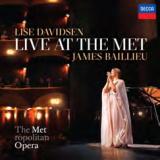
Decca Classics präsentiert Lise Davidsen: Live at the Met - aufgenommen während des bahnbrechenden
Soloauftritts der Sopranistin an der Metropolitan Opera im September 2023.
„Es kommt selten vor, dass die Met einen Künstler zu einem Solokonzert in ihrem Auditorium mit 3.800
Plätzen einlädt. Und noch seltener ist es, dass diese Sängerin ihr Debüt in New York City gibt. Aber
Davidsen ist etwas ganz Besonderes: eine echte dramatische Sopranistin.“ (The New York Times). „Keine
Kulissen, keine Kostüme, kein Orchester: Aber die ganze Oper war da.“ so die Zeitung weiter.
Davidsen hat eine enge Beziehung zur Met, wo sie seit ihrem Debüt 2019 regelmäßig in Hauptrollen von
Tschaikowski, Wagner, Strauss, Verdi, Puccini und Beethoven auftritt. „Ich betrachte die Met als mein
zweites Zuhause“, sagt Davidsen. „Aber um so etwas gebeten zu werden, war etwas ganz Besonderes.“
Zu den Höhepunkten zählen Wagners „Dich, teure Halle“ aus Tannhäuser, Amelias Arie aus dem dritten Akt von Verdis ”Un ballo in maschera” und Puccinis „Vissi d’arte“. Dazu kommen Lieder von Schubert
sowie Musik von Grieg und Sibelius als Hommage an Davidsens skandinavische Herkunft.
Die Veröffentlichung folgt auf Davidsens gefeiertes Wagner-Album ”Der fliegende Holländer”, welches den
Gramophone Award 2025 für die beste Opernaufnahme gewann und von Kritikern weltweit hoch gelobt
wurde.
- San Francisco
- Take A Look At Yourself
- Send Me Your Pillow
- She Shot Me Down
- I Love Her
- Old Time Shimmy
- What Do You Say
- Let's Make It
- You Know I Love You
- Big Soul
- Good Rocking Mama
- Onions
- No One Told Me
- Boom Boom
- Thelma
- Process
John Lee Hooker is widely recognised as one of the true giants of the blues, along with Muddy Waters, B.B. King, and Howlin' Wolf. Hooker is often called the "King of the Boogie" and his driving, rhythmic approach to guitar playing has become an integral part of the blues' sound and style that perpetuated the UK's rhythm and blues scene of the '60s. Presented here is one of John Lee Hooker' s finest album, The Big Soul of John Lee Hooker, recorded in Chicago in 1962.
In a career that spanned some forty odd years, a pivotal point of success came with his 1989 album The Healer, which featured collaborations with Carlos Sanatana, Bonnie Raitt, Charlie Musselwhite, and Los Lobas. The album expanded his audience beyond the blues idiom, earning him his highest Billboard album chart success (#62) his first Grammy Award; all of this at the grand-old-age of 73. For those not familiar with Hooker's earlier work, the Big Soul of John Lee Hooker is an excellent starting point.
- 1: This Chain
- 2: T.m.t
- 3: White Lies (Feat. Gut Instinct)
- 4: Predetermined Hate
- 5: Prey Strikes Back
- 6: Truth Revealed
- 7: Self Evident Truth
Tape[14,50 €]
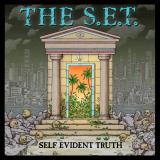
Out of Baltimore, Maryland comes The S.E.T. who are crafting 100% unapologetic hardcore music. Formed between bassist Che (founder of Flatspot Records), guitarist Brady (formerly of Turnstile), and drummer Ryan (formerly of End It), the band started through jam sessions in early 2024. Before they knew it, they had instrumentals for seven songs written and were ready to put lyrics to the tracks, and the search for a vocalist began. Che spotted Tim hopping on stage and grabbing the microphone at Disturbin’ The Peace Festival, invited him to try out for vocalist, and The S.E.T. was then complete.
The S.E.T. will release their debut Self Evident Truth EP, on February 27th through Flatspot Records. It’s 15 minutes of fury and groove, taking cues from Baltimore acts such as Gut Instinct (whose Sebastian Gorgone features on “White Lies”) and Stout and the crossover sounds of New York like Leeway and Judge. Recorded and mixed by Justin Day at New Noise Recording and mastered by Brad Boatright at Audiosiege, the tracks roar with thick bass lines, fast-paced drums, and rage fueled vocals. Lyrics come from a place of candor, expressing the basis of equal rights and defying the propaganda the current administration is spewing.
As The S.E.T. comes into fruition, the band wants to exist as a place to put words to action and come together as a community through both their music and live shows
Out of Baltimore, Maryland comes The S.E.T. who are crafting 100% unapologetic hardcore music. Formed between bassist Che (founder of Flatspot Records), guitarist Brady (formerly of Turnstile), and drummer Ryan (formerly of End It), the band started through jam sessions in early 2024. Before they knew it, they had instrumentals for seven songs written and were ready to put lyrics to the tracks, and the search for a vocalist began. Che spotted Tim hopping on stage and grabbing the microphone at Disturbin’ The Peace Festival, invited him to try out for vocalist, and The S.E.T. was then complete.
The S.E.T. will release their debut Self Evident Truth EP, on February 27th through Flatspot Records. It’s 15 minutes of fury and groove, taking cues from Baltimore acts such as Gut Instinct (whose Sebastian Gorgone features on “White Lies”) and Stout and the crossover sounds of New York like Leeway and Judge. Recorded and mixed by Justin Day at New Noise Recording and mastered by Brad Boatright at Audiosiege, the tracks roar with thick bass lines, fast-paced drums, and rage fueled vocals. Lyrics come from a place of candor, expressing the basis of equal rights and defying the propaganda the current administration is spewing.
As The S.E.T. comes into fruition, the band wants to exist as a place to put words to action and come together as a community through both their music and live shows
- 01: Architettura Industriale
- 02: Fabbrica - I Versione
- 03: Fabbrica - Ii Versione
- 04: Termomeccanica
- 05: Dinamica
- 06: Raffineria
- 07: Dinamica - Ii Versione
- 08: Meccanizzazione Agraria
- 09: Industria Metallurgica
- 10: Chimica Industriale
First-ever official reissue - 180g black vinyl edition
In the late 1960s, a distinctive musical movement began to flourish in Italy—while also gaining momentum abroad, particularly in France and the United Kingdom. Known as library music (or sonorization), this genre consisted of genuine music libraries created specifically to accompany audiovisual productions such as television programs, commercials, documentaries, and films.
Produced under conditions of complete artistic freedom, these recordings often defy clear categorization, as they are not tied to any single musical genre. This creative independence allowed composers—frequently working in total anonymity—to experiment boldly, crafting avant-garde and forward-thinking sounds that, in many cases, anticipated musical trends that would only become widespread years later.
Oronzo De Filippiis known not only for his contributions to library music, but also for being part of the projectThe Braen's MachinealongsideAlessandro Alessandroni, one of the most significant figures in this field.
Meccanizzazione is a fully instrumental album—as is typical of the genre—literally dominated by the distinctive sound of the harpsichord. The record essentially alternates between two main compositional approaches: on one hand, more accessible and "friendly" tracks with a refined jazz-lounge and bossa nova flavor; on the other, darker and more hypnotic pieces, whose repetitive structures vividly evoke the rhythms and mechanical pulse of the industrial world.
We Release JAZZ is very happy to announce the limited vinyl edition of Ill Considered's transcendent new live album Live in Jura, an expansive document of the trio's 2023 performance at Spiegelberg Festival - now available as a double LP with a bonus D-side, housed in a heavyweight sleeve with obi and an original artwork by Vincent de Boer.
Captured in the heights of Saignelégier, Switzerland, in the middle of a pasture overlooking the Jura mountains, Live in Jura bottles the singular Ill Considered live experience at its most open, responsive, and elemental. From Idris Rahman (sax, flute), Liran Donin (bass), and Emre Ramazanoglu (drums), this is deep free improv built from intuition and heart - an ever-evolving conversation of groove, texture, and spirit. Whispered motifs bloom into towering climaxes; earthy bass surges meet shimmering cymbal work; woodwind lines move from meditative invocation to ecstatic release. It is music shaped by the audience, the environment, and the moment : alive, unrepeatable, and deeply organic.
The bonus D-side extends the album's world with a unique ambient composition made from field-recorded organic sounds of the forest surrounding the concert area. Re-composed into a drifting, luminous piece, it features The Voices of the Alpenglow, blurring the boundary between performance and landscape, human gesture and elemental presence.
Ill Considered - known for forging improvised music around simple themes or spontaneously created structures - here reach a new level of sensitivity and power. Live in Jura follows We Release JAZZ's release of Shoals by Ill Considered members Earth and Bones, continuing a line of exploratory, heart-forward music grounded in profound listening and spontaneous creation.
This is the debut release on Superflux — a label out of New York run by DJ Brisket and Tamahori. It’s a dubby, pad-driven, deep house EP from four artists who all lived in the Midwest before landing in Brooklyn.
A1 – “Slow String (original mix)” is a straight-ahead deep house groover from Daniel Chavez, who has releases on Deep Club, Muted Noise, and Sole Aspect. Floaty pads, intricate drums and smart bass programming make for a warm and chunky tune. For fans of Brawther, Alton Miller, Ron Trent
A2 – “Slow String (Adam Raphael Dub)” is a remix from Chavez’s longtime friend and collaborator, Adam Raphael. He injects a heavy dose of West Coast tech-house into the original, like a combination of Bluem, Grayhound, and Tweekin’ for a 2025 audience
B1 – “The Blue Line (fleet.dreams remix)” is from the Mansions resident who also helms his own vinyl label, Vinezza. He takes a really driving and lush focus on this remix which evokes styles of Dana Kelley, Eddie Richards and Terry Francis Jr. He secured the coveted Hardwax “tip” on his solo EP last year, and delivers that level of discerning taste and skill here.
B2 – “The Blue Line (original mix)” is the track from IT-XPO that has anchored the release since day one. A thoughtful way to start the night, or for a soft landing in the morning sun. Heavy Shinichi Atobe and DJ Sprinkles influence here.
- A1: Easyfun - Be Your Usa
- A2: Hannah Diamond - Invisible
- A3: Tommy Cash - Pussy Money Weed
- A4: Felicita - Marzipan (Feat. Caroline Polachek)
- A5: Danny L Harle - Blue Angel (Feat. Clairo)
- B1: Umru & Laura Les - Popular
- B2: Lil Data - Burnnn
- B3: Planet 1999 - Party
- B4: Namasenda - Dare (Am)
- B5: A. G. Cook - Lifeline
- C1: A. G. Cook - Xcxoplex (With Charli Xcx)
- C2: Namasenda - - (Feat. Oklou)
- C3: Caro- - Over U
- C4: Hyd - Skin 2 Skin
- C5: Umru Feat. Tommy Cash & 645Ar - Check1
- D1: Ö - Good Things On The Way
- D2: Felicita & Kero Kero Bonito - Cluck
- D3: Planet 1999 - Crush
- D4: Hannah Diamond - Staring At The Ceiling
- D5: Easyfun - Audio
Like it or not, we switched it up — remixed Lisopylka Records into Lisosmuha. New release, new label.
A1? Every Ukrainian DJ will recognize the source instantly. Late to Emulate sparked the whole LIS001 story, and a ghost of that idea still lives in the first release. Hear it? Numero Cero was meant to be raw, but the atmosphere shaped it into something more deliberate. Hay Rumores? Svzz went fully loco while writing Papay — and you can tell.
Play it loud!
A blend of Metal Indus and Bass Music, VIOLENCE is an ambitious and atypical project produced by Niveau Zero, one of the pioneers of French Bass Music. Composed of Fabio Meschini (Guitar / Ex: As They Burn) , Morgan Sansous (Drums), John Kazadi (Lead Vocal) and Frédéric Garcia aka Niveau Zero ( Machines and Vocal ).
OPUS I', their 1st album (2021), composed in collaboration with choice guests such as Billy Graziadei (Biohazard, Powerflo), Bastien Hennaut (HORSKH) and Code: Pandorum... has frankly succeeded in arousing the enthusiasm of both Metal and Bass Music audiences.
On stage, the band has not been outdone, offering a crescendo of increasingly furious performances over the last year alongside bands like Biohazard, Mass Hysteria, Ten 56, Horskh, Shaargot, Novelist, Revnoir, King Yosef.
- A1: Another Thought (02:16)
- A2: A Little Lost (03:18)
- A3: Home Away From Home (05:12)
- A4: Lucky Cloud (02:16)
- B1: This Is How We Walk On The Moon (04:42)
- B2: Hollow Tree (02:30)
- B3: See Through Love (04:46)
- C1: Keeping Up (06:20)
- C2: In The Light Of The Miracle (06:05)
- C3: Lucky Cloud (Return) (03:00)
- C4: Just A Blip (03:42)
- D1: Me For Real (04:55)
- D2: Losing My Taste For The Night Life (04:34)
- D3: My Tiger, My Timing (05:41)
- D4: A Sudden Chill (02:45)
2026 Repress
Another Thought was the first collection of Arthur Russell’s music to be released after his death in 1992. Released in 1993 on Point Music it marked the beginning of nearly 30 years of work to let the world hear the enormous archive of unreleased recordings Arthur left behind. Be With revisits this first compilation for a new gatefold double vinyl version and a triple-fold digipak CD reissue.
Both versions of Be With’s 2021 reissue of Another Thought have been mastered by Simon Francis and the vinyl cut by Pete Norman. The original artwork has been restored and tweaked at Be With HQ for the gatefold sleeve and the triple-fold digipak, with the essential help of Janette Beckman. Each version comes with an insert reproducing the liner notes and lyrics from the original CD release.
Together with Calling Out Of Context, Soul Jazz’s World of Arthur Russell, and much of the ongoing work of Audika, Another Thought is absolutely essential for even the most casual Arthur Russell collection. In fact we’d argue it’s essential for any fan of non-obvious pop music. This is the only place where you can hear some of Arthur’s most recognisable tunes and it’s an album that absolutely deserves to be kept in press.
We’ll assume that by now you’re all at least a little familiar with the story of Arthur Russell, the farm boy from Iowa who moved to 1970s New York. Arthur Russell the genuine musical genius who died just 40 years old, leaving behind a wealth of music that dwarfed the few 12"s and LPs that were released during his short life.
Although Arthur had been working on an album for Rough Trade during his last years, with the label no-longer operating it was Point Music (Philip Glass and Michael Riesman’s label set up together with Philips) who stepped in to help Arthur’s partner Tom Lee start working out exactly what Arthur had left behind.
Tom suggested that Arthur’s friend Mikel Rouse was the right person to make the first catalogue. Working in Tom and Arthur’s apartment he had only two weeks to go through what turned out to be around 800 tapes.
As Tom explained “at the end of each day he would generally wait for me to come home and I would, to the best of my knowledge, name and identify pieces in question from that day’s work. As he worked Mikel compiled about a dozen cassettes that he thought would present the most finished sounding songs for Don/Point to use. As Don listened he would then suggest and ask me and thus we collaborated on the choices.”
Don is Don Christensen, Another Thought’s producer. With a final selection of songs from recordings made between 1982 and 1990, including sessions with some of Arthur’s regular collaborators Peter Zummo, Steven Hall, Mustafa Ahmed, Elodie Lauten, Julius Eastman, Jennifer Warnes and Joyce Bowden, it was then Don’s job to turn these into a finished album.
Another Thought is a little different from the compilations of Arthur’s music that came out since. In our conversations with Steve Knutson (who founded Audika Records and who manages Arthur’s estate together with Tom), he explained that “more than any project released by Arthur during his lifetime or posthumously by Audika, ‘Another Thought’ is the most worked over. The material was significantly edited and rearranged from the original source tapes”.
If the aim was to release a comprehensive exploration of every facet of Arthur’s music, from the most avant-garde of his avant-garde compositions through to the most disco-not-disco of his disco-not-disco tunes then the project was a spectacular failure. But as a coherent album of non-obvious pop music Another Thought is wonderful.
Starting with the sparse voice-and-cello of the title track, A Little Lost adds some guitar along with the sneaking suspicion that we’re listening to something nowhere near as simple as it first sounds. By the time we get to This Is How We Walk On The Moon - it could be the moment you notice the congas, or the percussion that’s been building behind them, or maybe it’s that blast of trumpet and trombone - we realise we’ve gone from splashing around to being completely submerged in the musical world of Arthur Russell.
From here the album heads off on its journey around the sounds of the left-field contemporary classical music of the time, re-directed towards pop ears, with minor detours through the swirling woozy disco of the half-remembered night before on In The Light Of The Miracle and My Tiger, My Timing. Whether it’s just Arthur, his cello and some bleeps on Just A Blip, or whether he has some vocal help as he does on the bounding Keeping Up, this is difficult music made so, so easy. And through it all is Arthur’s voice and cello. Sometimes drowned in distortion and sometimes clear as a bell, but always there somewhere.
A Sudden Chill finally returns us to the calmer waters we started in and this last track closes the album with a melancholy that’s not surprising given how soon after Arthur’s death the album was put together.
Whilst Another Thought holds together with the consistency of a proper album, there’s still no getting away from the fact that this was put together from audio recorded in different ways, in different places, with different people at different times. Those with keen ears will hear traces of tape hiss, the occasional blown-out note and some digital fuzz, all fingerprints of those original recordings as well as of the 1990s digital equipment that was used to piece Another Thought together.
Add to this Arthur’s obvious pleasure in making music from the sort of sounds that can make microphones, speakers and ears uncomfortable, it’s no surprise that Another Thought isn’t glossy and pristine. Don Christensen’s productions have been careful to not scrub up those original recordings so much that they lose their original vibe, understandable given that Arthur wasn’t around as a guide. We’ve applied a similarly light touch with the mastering for these Be With versions, just working to make sure they sound like they should on both the vinyl and the CD.
Despite the Discogs rumours, Another Thought was never originally released as an LP. So when it came to the sleeve for this Be With vinyl version we took the original CD artwork as a starting point to come up with something that looks like it could have been in the record racks back in 1993.
We have to thank Janette Beckman for helping us reproduce her iconic photograph of Arthur in his newspaper boat hat. One of many photographs she took of Arthur, Janette shot this in her New York studio back in 1986 for a short article in the January ’87 issue of The Face Magazine. Those with eagle-eyes will notice we’ve used an ever-so-slightly different shot from the one that appeared in The Face and then again on the original cover of Another Thought. The original has long since been lost so we’ve worked with what is left in Janette’s archives. And we also have to thank Tom Lee for giving us permission to reproduce his liner notes from the original CD booklet, together with Arthur’s lyrics.
- A1: Give It To Me Baby
- A2: Ghetto Life
- B1: Make Love To Me
- B2: Mr. Policeman
- C1: Super Freak
- C2: Fire And Desire
- D1: Call Me Up
- D2: Below The Funk (Pass The J)
Rick James Blends Brazen Attitude, Fearless Sexuality, and Shrewd Charisma on Street Songs:
Punk-Funk Album Aims for the Hips and Head, Includes the Timeless Hit “Super Freak”
Sourced from the Original Master Tapes and Strictly Limited to 4,000 Numbered Copies:
Mobile Fidelity’s 180g 45RPM 2LP Set Presents 1981 Smash in Audiophile Sound for the First Time
1/4” / 30 IPS analogue master to DSD 256 to analogue console to lathe
“Punk funk” was a relatively unknown concept before 1981. But once Street Songs took the charts by storm that year, the world soon knew about what became Rick James’ signature style. And how. True to its name, Street Songs blends outspoken sexuality, brazen attitude, and edgy commentary amid contagious R&B-fueled arrangements that simultaneously aim for the hips, head, and various nether regions. And it’s never sounded better.
Sourced from the original master tapes, strictly limited to 4,000 numbered copies, pressed at Fidelity Record Pressing, and housed in a Stoughton gatefold jacket, Mobile Fidelity’s 180g 45RPM 2LP set presents James’ platinum-certified effort in audiophile quality for the first time. Playing with crisp dynamics, lively textures, airy headroom, and revealing clarity, this collectible edition of the record that stayed at the No. 1 spot on the R&B Album Charts for 20 weeks invites you to get closer to music that beckons you to turn your space into a private dance floor.
Then again, you’ll likely be so taken by how the taut bass lines, snappy rhythms, and four-on-the-floor beats — all rendered in stunning detail and with full-bodied architecture — come across with such accuracy and presence, you might stay pinned to your seat. On this pressing, the soundstaging, imaging, and lit-fuse energy of Street Songs reach new heights. Everything from the rubbery feel of the guitar lines to the depth of James’ temperature-raising vocals to the scale of the horn charts emerges as if James and his ace session crew set up in your room.
The Buffalo native and his ensemble waste no time getting their message across. On the album-opening “Give It to Me Baby,” James and company lay down a mix of sleek funk and pulsing disco that practically activates the bright lights of a discotheque and stimulates the libido of anyone within earshot. Having reached No. 1 on the Billboard Hot Soul charts, the song is pure sex — and just one of the carnal delights on a record that embraces the subject as fearlessly as James does his identity.
Of course, the most famous of James’ erotic excursions — the timeless “Super Freak” — hit No. 1 on Hot Dance Club Play charts, No. 16 on the Hot 100, and, later, No. 153 on Rolling Stone’s list of the Top 500 Songs of All Time. Bolstered by a quavering keyboard theme and electro riffs, the much-sampled track worms itself inside your muscles with smile-inducing subject matter, gliding vocals, nimble movements, a hot tenor-saxophone solo, and backing vocals by the Temptations.
The iconic Motown group isn’t the only celebrated guest artist on the Grammy-nominated Street Songs. James’ then-labelmate, Stevie Wonder, lends harmonica to the frank sociopolitical narrative on “Mr. Policeman,” a protest tune that also manages to stroll ’n’ strut via simmering organ, staggering brass accents, and James’ gritty vocal performance. In addition to contributing backing vocals on several cuts, Teena Marie turns in one of the album’s signature moments on “Fire and Desire,” a romantic old-school duet with James that impresses with smoothness, sensitivity, and smokiness.
High-profile colleagues aside, James remains the undisputed star, a figure whose leather-and-latex attire, braided hair, and natural swagger made him misunderstood by some in the mainstream and embraced by everyone in the know as a true original. As a testament to his magnetism and skills, his charisma and rawness seemingly seep through every note, whether on the balladic sweep of the risqué “Make Love to Me” or strident, poke-and-prod persuasion of the moonwalking “Call Me Up.”
On the closing “Below the Funk (Pass the J),” an uptempo autobiographical tale that addresses the visionary musician’s second-favorite love, the singer acknowledges his upbringing and inseparable connection with his roots — an homage to where he began and a toast to where he’s gone.
Rick James, keepin’ it real on Street Songs, still as real as it gets.