• 180 GRAM AUDIOPHILE VINYL
• INCLUDES COVER FROM LEE HAZELWOOD’S CLASSIC “THESE BOOTS ARE MADE FOR WALKING”
• FEATURES THE TRACKS “SKINHEAD MOONSTOMP” AND “SKINHEAD GIRL” A.O.
• LIMITED EDITION OF 1000 INDIVIDUALLY NUMBERED COPIES ON SMOKEY COLOURED VINYL
Symarip was a ska and reggae band from the United Kingdom and originating in the late 1960s. The group had built their reputation as Prince Buster's backing band. They are widely marked as one of the first skinhead reggae bands. Symarip recorded only one studio album; Skinhead Moonstomp. An instant classic and it includes fan favorites like "Skinhead Girl", "Skinhead Jamboree", and "Skinhead Moonstomp". Singer and trombone player Roy Ellis was the man behind many of their classics. This is the ultimate party album, with an excellent mixture of ska, reggae, and soul music.
Skinhead Moonstomp is available as a limited edition of 1000 individually numbered copies on smokey coloured vinyl.
Поиск:audio al
Все
Das fünfte Album von Laughing Stock ist eine Reflexion über die Magie der Musik und die Art und Weise, wie Musik den Lauf des Lebens in einem frühen Lebensabschnitt verändern kann. Laughing Stock möchte die Musik annehmen die den Musikern Anfang der 1980er eine neue Welt eröffnete - die Songs, die zu Songs für ihre Zukunft wurden. Dafür haben sie eine Vielzahl von Gästen rekrutiert, die in den Achtzigern populär waren. Vocals von Billy Sherwood (Yes), Colin Bass von Camel und sogar Colin Molding (XTC) sind an Bord. Saxofon von Steinar Børve und ein Horn-Trio unter der Leitung von Tobias Gustum Lindstad veredeln das Album zusätzlich. Es wurde von Jan M Sørensen und der Band produziert und gemischt sowie von Jacob Holm-Lupo gemastert. CD und stark limitierte, weiße LP.
Reviews / Features in Eclipsed, Classic Rock, Rolling Stone, Rocks, Deaf Forever, Metal Hammer, Rock Hard, Die Welt, Audio, Piranha, Break Out, Guitar, Legacy, Slam, Rock City News, Rock It, Gitarre & Bass u. v. a.
Never released before recordings from Logos Foundation live sessions at Logos Foundation, January 3, 1981.
The music is free-improvisation - that is we make our music co-operatively while playing : by listening, reacting, throwing in new ideas, not by following preplanned schemes. At its simplest the group's intention can be said to be to play together as well as possible and to enjoy ourselves while doing so. We are very interested in the result and intend that the audience is as well. As well as the musicians reacting to each other the music itself is pretty reactive to context. In other words room acoustics, background noise, audience response have a strong effect on what happens. This is particularly true of the audience. We have done performances where conversation has broken out with some audience members. There is much to see as well as hear - this is partly to do with the instruments. Together Terry, Steve and David have hundreds, all sizes, all sorts, most colours. They completely cover the floor. Many of these are non-western. The wide range of instruments means that an extremely broad sound spectrum is covered, from sudden bangs to very quiet low notes, from squeaks to normal guitar sounds. This is what fixes the overal group sound.
David Toop: Flute, home-made reeds, percussion Peter Cusack: Guitar Steve Beresford: Piano, Small Instruments Terry Day: Percussion, home-made reeds
Logos Foundation, located in Ghent, is a unique professional organisation for the promotion of new music and audio-related arts by means of new music production, concerts, performances, composition, technological research and other activities related to contemporary music. This organisation has been founded in 1968 by Godfried-Willem Raes.
High Roller Records, black vinyl, ltd 250, 4 page insert, A5 photo card, All audio restored and mastered from vinyl and tape sources by Patrick W. Engel at TEMPLE OF DISHARMONY in October 2021. In den frühen achtziger Jahren war das Londoner East End eine der wichtigsten Keimzellen der glorreichen New Wave Of British Heavy Metal – man denke nur an Acts wie Iron Maiden oder Angel Witch. Das Ruskin Arms spielte für die Evolution der Bewegung eine nicht unwesentliche Rolle, waren es doch die legendären Probeauftritte jeden Donnerstagabend, die den hoffnungsvollsten Bands eine regelmäßige Anstellung im Ruskin sichern konnten. Teil dieser Szene waren auch Dragonfly, eine Gruppe von jungen Musikern, ohne Geld und ohne selbst auferlegte Grenzen, dafür aber mit unbändigem Enthusiasmus. Es dauerte nicht lange, bis die Band anfing, eigene Stücke zu schreiben und sich weit übers Ruskin hinaus einen Namen zu erspielen. Die Frage nach einem eigenen Vinyl wurde in der Folge immer dringlicher. Dieses wurde dann in Form der »Dragonfly E.P.« umgesetzt, eine Auswahl eigener Kompositionen, aufgenommen im Keller einer Zoohandlung ganz in der Nähe des Ruskin Arms. Die in Eigenregie gefertigte EP wurde in einer Auflage von 500 Stück gepresst, die Cover eigenhändig gefaltet sowie zusammengeklebt, und erschien im Jahre 1980. Die Qualität des Materials und das spielerische Können der Musiker machte die »Dragonfly E.P.« zu einer der substanzielleren Veröffentlichungen der NWOBHM, später wiederzuerkennen bei Bands wie Sapphire, Trilogy oder Terraplane. Das wieder erwachte Interesse an der NWOBHM trieb den Preis einer originalen Ausgabe der »Dragonfly E.P.« fortan in schwindelerregende Regionen und fachte zugleich das Interesse nach unveröffentlichtem Material des ausnahmslos in Originalbesetzung agierenden Quartetts an. Das vorliegende Album präsentiert alternative (ältere) Aufnahmen des Songmaterials der »Dragonfly E.P.« und sorgt dafür, dass Dragonfly endlich das breitere Publikum bekommen, das sie von Anfang an verdient gehabt hätten. Cleveres Songwriting, melodische Vocals und messerscharfe Gitarren sind die Schlüsselelemente ihres Sounds.
Le Motel and Bruce Wijn met at school, during a school art trip to Munich. They went separate ways for a long time.
Hailing from Brussels, Le Motel's world is a vortex of sight and sound that takes in the many and varied corners of the planet. As a music producer and film composer his versatility has taken him to festivals and clubs in every direction as naturally as he has ventured out to the less accessible areas of the globe as a field recordist. It's somewhere in between these spaces that Le Motel operates, gathering unique experiences and sounds to channel through his studio.
Bruce Wijn is a Brussels-based guitarist who played in several postrock kind projects such as Sound Film, 52 Commercial Road, or more shoegaze Lazy Sin. These collaborations gave him the opportunity to perform in various locations in Belgium, France, England, and the USA. As a musician, his focus has always been attracted by progressively built rhythmic melodies, which would eventually turn into long reverberated or distorted swells, or the otherway round.
All these experiences brought them both to the idea of scoring movies with different yet similar approaches.
That's how their first collaboration happened as Le Motel was working on the soundtrack of the movie Binti, and invited Bruce Wijn for the track Exode, in 2018. Since then, they've been working on other scoring projects, such as the feature film 'Aller Retour' more recently.
Alongside the movie scoring activities another audiovisual live project was born, in collaboration with Antoine de Schuyter and his mesmerizing images.
This one is more focusing on tape textures, field recordings and glitchy effects in order to build atmospheric tracks that they decided to bring together in a first E.P. 'MAAR'.
'MAAR' is elaborated as a soundtrack for an imaginary journey between cold seas and volcanoes explorations.
From the first echoing sounds of playing kids on the shoreside in the opening track 'La Perche' Le Motel & Bruce Wijn let you slide in a technicolor dreamworld, reverbing slowly innocent childhood memories into a chilled, out of range, future.
'MAAR' dives deep into a kaleidoscopic microcosmos watching Nautilus playing hide and seek with 'Captain Ahab' floating on sonic breaking waves, while seagulls gently spread their wings flying through the breezy and misty clouds of Blankenberge.
Lava vulcanica slowly melts in the sad euphorica of the cold North Sea, crystallizing sounds only Le Motel and Bruce Wijn can deliver.
Ground Groove, the third full-length release from the LA-based, Iranian-American producer and DJ, Maral, begins with an invocation: the sprawling, achingly heavy Feedback Jam opens the floodgates of history. Conventional (linear) spacetime collapses, crushed beneath the track’s lumbering 4/4 heartbeat and successive waves of distortion. As each wave recedes, samples trickle forward in the mix — seeking, perhaps, to fill the void. Voices and instruments rise and fall in uncanny reverse. Overlapping, implied melodies flicker into focus, then flit away. Feedback Jam is at once an initiation ritual, and a thesis statement for the record that follows.
Drawing upon a vast personal archive of Iranian folk, classical, and pop recordings (some sourced from mixtapes made by her parents in the eighties/nineties), Maral presents, on Ground Groove, a further refinement of the signature “folk club” sound she developed as a live DJ— a sound she would later codify on Mahur Club (2019) and Push (2020). By collecting, dissecting, and re/presenting sonic fragments from Iran, Maral practices a kind of dance-floor ethnomusicology. The subject of her inquiry: Iranian
culture and contexts, throughout history and in the present. But, crucially, this inquiry is instantiated within and throughout the body of the listener, whether this listener is dancing in the club, or riding the train, nodding along with headphones on.
Maral speaks of being in collaboration with her samples, treating each as a distinct bandmate, often consulting with an artist’s catalog (or even a single recording) as one would a trusted creative partner. In so-doing, Maral claims to seek to transcend the self. In this regard, her output neatly triangulates contemporary dance and heavy music with much of the traditional religious music that she samples. Broadly speaking, each of these idioms addresses a desire —shared by audience and performer alike—to transcend the self through volume, repetition, and movement.
Having, in her youth, studied the Setar under Nader Majd (the founder of Virginia’s Center for Persian Classical Music), Maral cycled through various genres (ex: punk, emo, dub) in her adolescence and early twenties, all the while expanding her knowledge of, and appreciation for, Iran’s diverse musical traditions during regular summer trips to Tehran. In college, Maral taught herself to make beats with a ripped copy of Ableton (which remains her DAW of choice), eventually transitioning to playing and hosting various club nights. Forever abiding by an autodidactic, DIY impulse to create art and foster community, Maral relocated to Los Angeles in 2013, where she quickly immersed herself in the city’s numerous overlapping music scenes.
Collaboration (beyond sampling) has proven an important component of her process, with notable spoken word contributions from the likes of Lee Scratch Perry and Penny Rimbaud, as well as a 2021 Panda Bear collab track (On Your Way), which the Animal Collective founder co-produced. Maral is equally attentive to the visual components of her records (album art, music videos, etc.), drawing upon the work of peers and friends for inspiration.
Indeed, the genesis of Ground Groove can be traced back to an audio-visual collaboration between Maral and the artist Brenna Murphy, originally commissioned for the 2021 Rewire Festival — a project that would eventually serve as the album’s foundation. Tracks eight through eleven on Ground Groove comprise Maral’s half of this installation, with tracks one through seven composed afterwards, inspired by the fruits of Maral and Murphy’s collaboration. Murphy’s visuals will be released alongside Ground Groove as a visual accompaniment. Additionally, Murphy designed the album’s art, directed the video for the lead single (the aforementioned Feedback Jam), and is featured on track six, Shy Night.
Composed largely on Ableton, Ground Groove features more frequent and more prominent live recordings from Maral (guitar, bass, and vocals) than either Push or Mahar Club. The cult favorite Roland MC-909 groovebox rears its head on Mari’s Groove. Mixed by Trayer Tryon (Hundred Waters) and mastered by Daddy Kev, the attention to sonic quality on Ground Groove constitutes another significant step in Maral’s development as a studio artist.
Ground Groove’s eleven tracks are “grooves” in the obvious sense, in that they are each driven by a persistent, propulsive rhythm, but the album’s title may just as well suggest the glacial passage of time—the scope of human history, in which individual voices, like streams, carve paths (impossibly) through earth and stone, winding their way to the vast sea of the present.
Letztes Jahr traf Gitarrist Julian Lage („einer der schillerndsten Improvisatoren der Welt“ NY TIMES) auf seinem zweiten Blue-Note-Album „View With A Room“ erstmals mit Gitarren-Kollege Bill Frisell zusammen - ein Gipfeltreffen zweier Spitzen-Gitarristen: „Grandioses Album” (SÜDDEUTSCHE ZEITUNG), „großes Gitarrenglück” (FONO FORUM/Jazzalbum des Monats) „souverän tiefenentspannt“ (STEREOPLAY/Audiophile CD des Monats).
Als Nachschlag zu diesem musikalischen Glücksfall erscheint jetzt „The Layers“ mit sechs weiteren LageOriginalen, die während derselben Sessions aufgenommen wurden und wieder eine breite Palette von Gitarrenklängen erkunden, indem Lage und Frisell ihre individuellen 6-Saiten-Sounds nahtlos miteinander verschmelzen.
- 01: Morose Vandal The White-Out Memorial
- 02: Saint Advantage
- 03: A Cast Of Gray On The Arm Lights The Stovetop Pilot
- 04: Loose Jaw
- 05: Ash Wednesday, The Triage
- 06: Sky Blue Above The Gang Violent Motion
- 07: Anxiety Interlude (Feat. Andre Altrez)
- 08: Feral Pet The Ankh The Ticker Wears
- 09: Tomorrow On The Installment Plan, A Debt Unpayable
Emotion Hospice is the debut LP by New York-based sound artist and writer Chaperone on Bedouin Records. Combining layers of doom electronics, dystopian ambient, and manipulated tape loops, Emotion Hospice reflects both the artist's suffering and recovery from addiction, as well as Philadelphia's history of socio-economic decay and misanthropy.
Emotion Hospice was recorded from 2016 to 2019, when Chaperone's David Coccagna lived and worked in his hometown of Philadelphia, a city notoriously known for its poverty, redlined city divisions, and fascist policing tactics. While exploring the sound of the city and the effects of its political and social climate, Coccagna also struggled with and managed to overcome a severe addiction to alcohol, tying further the misaligned nature of the self to the maladjusted world he grew up in that is reflected in the record itself.
Sonic thrills and their destruction is present throughout the record, as Coccagna experiments with the brutal manipulation of bossa nova, varying styles of jazz, hip hop, and rap, using 4-Track tape loops, shortwave radio frequencies, various apps on his iPad, and open source audio editing software. With Emotion Hospice, Chaperone liberates the inherent darkness of the cheerful and poppy music that he samples and transforms it into an extensive, doomy sound of a future that is dystopian, maladroit, suffering, but hopeful about human beings. The album was written and recorded entirely by Coccagna aside from the track featuring New York rapper and producer Andre Altrez, whose establishment of Girard Hall in Philadelphia was a beacon of DIY ethos that became legendary in the city in its own right.
Chaperone's Emotion Hospice is his first release on Bedouin Records. His cassette release Dead Pitbulls Slung On Tired Shoulders was his first outing for Bedouin's now defunct sub-label Bastakiya Tapes in 2017. This initial tape was the catalyst to a working relationship between Coccagna and label operator Salem Rashid as collaborators and colleagues.
Veils Of Transformation 1972 - 1980 is a collection of the earliest works of Gregory Kramer, one of the 20th century masters of textural electronic music. This collection is available on CD and cassette with liner notes from Gregory Kramer and Kaitlyn Aurelia Smith, who first brought this fascinating work to the attention of Important Records.
“Greg is one of the pioneers of electronic music and these pieces are unique opportunities to discover how intricate and dynamic early synthesizers are.” Kaitlyn Aurelia Smith
Kramer developed a musical language focused on continuous transformation of timbre, yielding a continuity of attention. This musical language, formed of timbral change, is a compelling aesthetic in its own right and a source of meditative experience. The four works on this album share a deep sense of order derived not from organizing pitches or rhythms, but from the evolution of timbre itself.
Gregory Kramer (b. 1952) is a pioneering electronic composer, inventor, researcher, teacher and author. In 1975 he co-founded Electronic Musicmobile, a synthesizer ensemble later renamed Electronic Musicmobile, a series of synthesizer concerts in New York from which he formed the Electronic Art Ensemble, a highly regarded all electronic quartet. His work extended to developing synthesizers and related equipment. Kramer also co-founded the not-for-profit arts organization Harvestworks in New York City. He is recognized as the founding figure of the intensely cross-disciplinary field of data sonification. Since 1980, Kramer teaches Buddhist meditation.
The four compositions collected here each represent Kramer’s unique approaches:
The structure of Meditations on 32 Parts of the Body (1978) is derived from the means of its production. Recording 5 people chanting an ancient meditation text, then layering to gradually achieve more than one million voices. The layering was all done using analogue tape recorders. The decomposition of the sound reflects the anomalies of tape machines out of sync, and the build up of artifacts from the audio tape itself, such as uneven response curves and tape hiss, are all engaged as musical materials.
Role (1972) was generated using one complex patch on a large hybrid Buchla 200/100 system. Emerging from a zeitgeist that valued pure synthesis as a combined artistic and technological research. At the time this piece was realized its as exceedingly difficult to produce electronic sounds that were internally complex.
Blue Wave (1980) is built on Kramer’s timbral development technique Veils Of Transformation which allows for disparate timbres to be woven into a continuously developing sound.
Monologue (1977) is a virtuosic performance of a massive patch on a Buchla/Electron Farm hybrid electronic instrument. Built into the patch is a pathway for continuous transformation of voice and voltage-controlled synthesizer. The blunt, raw and sometimes harsh sounds of this piece reflect an attitude prominent among composers that music can, or even should, be difficult, contrary to what’s already been done and, by all means, new.
First time ever on vinyl - limited gatefold edition, double 180-gram
audiophile pressing
Philadelphia- born guitarist KURT ROSENWINKEL is probably best known for his
multiple recordings on the Verve label and collaborations with Gary_Burton,
Human_Feel, Joe Henderson and the Brian Blade Fellowship.INTUIT was his
second album as leader and the only one he recorded for the Criss Cross label.
- A1: Woolf Wordings Of Orlando
- A2: Orlando Et La Tempete Viral Symphony Redux
- A3: Orlando Shoegazer Strides Towards Fiasco
- B1: Rampage At The Capitol Orlando Viral Tempest
- B2: Slow Orlando Et La Tempete Viral Symphony Redux
- B3: Orlando Undone By Scornful Dog Star
- C1: Pour Finir Avec Le Jugement De Dieu Viral Symphony Plague (Groundless Storm) (Groundless Storm)
- C2: Pour Finir Avec Le Jugement De Dieu Viral Symphony Plague (Tempete De Merde) (Tempete De Merde)
- C3: Pour Finir Avec Le Jugement De Dieu Viral Symphony Plague (La Nausee) (La Nausee)
- C4: Pour Finir Avec Le Jugement De Dieu Viral Symphony Plague (World Whirlwind) (World Whirlwind)
- C5: Pour Finir Avec Le Jugement De Dieu Viral Symphony Plague (Cosmic Door) (Cosmic Door)
- C6: Pour Finir Avec Le Jugement De Dieu Viral Symphony Plague (Weep No More) (Weep No More)
- D1: Pour Finir Avec Le Jugement De Dieu Viral Symphony Plague (Heroic Cojones) (Heroic Cojones)
- D2: Pour Finir Avec Le Jugement De Dieu Viral Symphony Plague (Ars Longa Vita Brevis) (Ars Longa Vita Brevis)
Pentiments continues its work spotlighting post-conceptual artist and writer Joseph Nechvatal. They have already dropped a retrospective Selected Sound Works album that spans 1981-2002 and now comes a companion across two slabs of wax that focus on more recent audio works. This is in cahoots with Andrew Deutsch and it makes use of anonymous reading of Virginia Woolf's 'Orlando' as an anchor point around which the "virus-modelled artificial life audio material" from Nechvatal's 2006 piece viral symphOny: the enthrOning is reanimated. The second then uses a rather controversial record performance of Antonin Artaud's radio play To Have Done with the Judgement of God which the artist takes apart and reweaves into something radically new.
"Ela", Dom La Nena's first album, was released in 2013. Co-produced with the complicity of Piers Faccini, the album received the highest praise from the international press (New York Times, NPR, Les Inrocks, Wall Street Journal, etc). On the occasion of the 10th anniversary of its release, here is a reissue of the record, now available on vinyl.
Dom La Nena is a Brazilian singer, cellist, songwriter and producer based in Paris. Having accompanied artists such as Jane Birkin, Jeanne Moreau, Etienne Daho and collaborated with the likes of Marcelo Camelo, Julieta Venegas and Piers Faccini, Dom's solo work has drawn comparisons as disparate as “a young Brian Wilson” (Wall Street Journal), “a bossa Joanna Newsom” (Time Out New York) and “Cat Power’s lost sister” (Pop Dose).
Dom sings in Portuguese, Spanish, French and English. Her lyrics touch upon feelings of longing, melancholy, and nostalgia of a childhood spent living in Brazil, Argentina and France. Performing in a solo capacity alone on stage with her cello, ukulele, electric guitar, keyboard and percussions, Dom employs sophisticated looping techniques, layering vocals and instrumental tracks, building audio soundscapes that create a full band atmosphere in each venue.
Dom’s debut solo album, “Ela”, was released during 2013 and immediately praised by the international music press including the New York Times, Wall Street Journal, Le Figaro, Les Inrockuptibles, Voir, O Globo and many other media outlets. Dom's second album “Soyo”, an internationally flavored collection of indie-folk songs with wandering melodies and lightly layered vocals, was released in 2015 and co-produced with Brazilian musician Marcelo Camelo (Los Hermanos).
Dom's third full length album, titled "Tempo", was self produced and mixed by Noah Georgeson (Devendra Banhart, The Strokes, Rodrigo Amarante) and is scheduled for a spring 2019 worldwide release.
- A1: Atta Frimpong - Bepo So Dua
- A2: Alan Cosmos & His Bam-Baara Soundz - Soca For Your Pleasure
- A3: Ab Crentsil - Mama Dwen Meho
- B1: Dj Lawyer Okyere - Ohia Kannye Ya (Medley)
- B2: Alan Cosmos & His Bam-Baara Soundz - Onua Gyae
- B3: Pope Flyne Ackah - I Think You Are Right (Jepense Que Tu A Raison) (Jepense Que Tu A Raison)
- C1: Atta Frimpong - Yaako
- C2: Pat Thomas - Obae
- C3: Mawuli Decker - Mawu Nafako Nam
- D1: Nana Aboagye Da-Costa - Sikyi (Medley)
- D2: Alan Cosmos & His Bam-Baara Soundz - Yebi/Fontonfrom
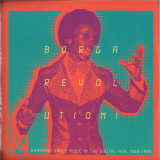
Kalita are proud to unveil the second volume in their "Borga Revolution!" compilation series, focussing on the phenomenon of "Burger Highlife", a crossover of West African melodies with synthesizers, disco and boogie that took over Ghanaian airwaves during the 1980"s and beyond. Featuring both highly sought-after recordings by artists including Atta Frimpong and D.J. Lawyer Okyere, as well as seminal performances by greats such as Pat Thomas, A.B. Crentsil and Alan Cosmos, Kalita once again come to the rescue of audiophiles, DJs and music-lovers alike with "Borga Revolution! - Volume 2". Spread over a double-LP housed in a gatefold sleeve. Accompanied by a 12-page booklet featuring extensive interview-based liner notes on each artist and never-before-seen archival photos.
First time ever on vinyl - limited gatefold edition, 180-gram audiophile
pressing. One of the most highly acclaimed trio albums by New York pianist Bill Charlap,
originally released in 1997 on CD by Criss Cross and now reissued for the very first time on vinyl.
Widely known for his work on the Blue Note and Venus labels, his résumé includes performing with many of the leading artists of our time, ranging from Phil Woods, Gerry Mulligan, Wynton Marsalis, Freddy Cole and Houston Person, to singers Tony Bennett and Barbra Streisand. Charlap's album with Tony Bennett,The Silver Lining, The Songs of Jerome Kernwon them both Best Traditional Pop Vocal Album in the 58th Annual Grammy Awards.
Known also for his interpretations of American popular songs, Charlap he has recorded albums featuring the music of Hoagy Carmichael, Leonard Bernstein and George Gershwin.
Jazz critic Scott Yanow gave All Through The Night 4.5 stars on the online jazz platform AllMusic and described it as a superior modern mainstream set.
Bill Charlap: piano
Peter Washington: bass
Kenny Washington: drums
- 1: Bewitched (Are You Leaving Soon)
- 2: Tonkachi
- 3: Heartbeat
- 4: Scandal Night
- 5: Shirakechimauze
- 6: Tropical Love
- 7: Business Man Pt. 1
- 8: Ah! Soka
- 9: Suiyoubi Madeni Shinitaino
- 10: Kowloon Daily
- 11: Tropical Exposition (Who Done It? Version)
- 12: Boy Meets Girl
- 13: Love Sick
- 14: Cosmic Love
- 15: Pub Casablanca
- 16: Untotooku
Pink Vinyl[67,19 €]
- The third chapter in the acclaimed Pacific Breeze series! - Artwork by renowned illustrator Hiroshi Nagai - Compiled by Yosuke Kitazawa and Mark "Frosty" McNeill (dublab) - Newly remastered audio - 2xLP housed in a deluxe wide spine jacket with full color inner sleeves and custom die-cut OBI - Extensive artist bios by Yosuke Kitazawa // Light in the Attic's Pacific Breeze series has supplied the world's growing legions of Japanese music fans with an expertly curated selection of the most sought-after City Pop recordings-the mesmerizing and nebulous genre of Japanese bubble-era music of the '70s-'80s that encompasses AOR, R&B, jazz fusion, funk, boogie and disco. These familiar sounds are spun through the unique lens of optimistic, cosmopolitan fantasy colored by Japan's affluence at the time. Much of the music has previously been nearly impossible to acquire outside of Japan and continues to captivate listeners with its unique blend of groove-laden escapism, even birthing wholly new genres such as Vaporwave. Pacific Breeze 3: Japanese City Pop, AOR & Boogie 1975-1987 marks the latest chapter in the famed series and features holy grails plus under-the-radar rarities. The collection bursts at the seams to reveal some of the greatest Japanese tracks ever laid to tape, pushing towards the edge of City Pop to reveal glimmers of the next waves of styles to spring forth from the country's creative minds. The appearance of Pizzicato Five hint at the emergence of Shibuya-kei while the influence of hip hop and electro as an emerging global trend are also evident here through the prevalence of heavier programmed drum beats on tracks such as "Heartbeat" by Miho Fujiwara. This volume of Pacific Breeze, like its predecessors, is a female-forward offering with many tracks being voiced by women who would become household names in Japan as actresses and pop idols. Their songs here subvert the norm and brim with an innovative spirit that shatters gender roles in favor of sonic transcendence. Techno-pop classics from Susan, Miharu Koshi and Chiemi Manabe sit alongside sublime funk from Atsuko Nina and Naomi Akimoto while Teresa Noda slides into the mix with a sultry reggae jam. The genre span is stretched wider with hypnotic jazz fusion by Parachute and Hiroyuki Namba, a synthesizer fantasy from Osamu Shoji, and magnetic pop by Makoto Matsushita and Chu Kosaka. Although not front and center, the visionary members of Yellow Magic Orchestra are still very present on Pacific Breeze 3, with Haruomi Hosono, Ryuichi Sakamoto, and Yukihiro Takahashi taking up producer and musician roles on many of these tracks. Pacific Breeze 3 serves up a captivating musical journey that adds an essential chapter to the iconic compilation series.
- 1: Bewitched (Are You Leaving Soon)
- 2: Tonkachi
- 3: Heartbeat
- 4: Scandal Night
- 5: Shirakechimauze
- 6: Tropical Love
- 7: Business Man Pt. 1
- 8: Ah! Soka
- 9: Suiyoubi Madeni Shinitaino
- 10: Kowloon Daily
- 11: Tropical Exposition (Who Done It? Version)
- 12: Boy Meets Girl
- 13: Love Sick
- 14: Cosmic Love
- 15: Pub Casablanca
- 16: Untotooku
Black Vinyl[63,82 €]
- The third chapter in the acclaimed Pacific Breeze series! - Artwork by renowned illustrator Hiroshi Nagai - Compiled by Yosuke Kitazawa and Mark "Frosty" McNeill (dublab) - Newly remastered audio - 2xLP housed in a deluxe wide spine jacket with full color inner sleeves and custom die-cut OBI - Extensive artist bios by Yosuke Kitazawa // Light in the Attic's Pacific Breeze series has supplied the world's growing legions of Japanese music fans with an expertly curated selection of the most sought-after City Pop recordings-the mesmerizing and nebulous genre of Japanese bubble-era music of the '70s-'80s that encompasses AOR, R&B, jazz fusion, funk, boogie and disco. These familiar sounds are spun through the unique lens of optimistic, cosmopolitan fantasy colored by Japan's affluence at the time. Much of the music has previously been nearly impossible to acquire outside of Japan and continues to captivate listeners with its unique blend of groove-laden escapism, even birthing wholly new genres such as Vaporwave. Pacific Breeze 3: Japanese City Pop, AOR & Boogie 1975-1987 marks the latest chapter in the famed series and features holy grails plus under-the-radar rarities. The collection bursts at the seams to reveal some of the greatest Japanese tracks ever laid to tape, pushing towards the edge of City Pop to reveal glimmers of the next waves of styles to spring forth from the country's creative minds. The appearance of Pizzicato Five hint at the emergence of Shibuya-kei while the influence of hip hop and electro as an emerging global trend are also evident here through the prevalence of heavier programmed drum beats on tracks such as "Heartbeat" by Miho Fujiwara. This volume of Pacific Breeze, like its predecessors, is a female-forward offering with many tracks being voiced by women who would become household names in Japan as actresses and pop idols. Their songs here subvert the norm and brim with an innovative spirit that shatters gender roles in favor of sonic transcendence. Techno-pop classics from Susan, Miharu Koshi and Chiemi Manabe sit alongside sublime funk from Atsuko Nina and Naomi Akimoto while Teresa Noda slides into the mix with a sultry reggae jam. The genre span is stretched wider with hypnotic jazz fusion by Parachute and Hiroyuki Namba, a synthesizer fantasy from Osamu Shoji, and magnetic pop by Makoto Matsushita and Chu Kosaka. Although not front and center, the visionary members of Yellow Magic Orchestra are still very present on Pacific Breeze 3, with Haruomi Hosono, Ryuichi Sakamoto, and Yukihiro Takahashi taking up producer and musician roles on many of these tracks. Pacific Breeze 3 serves up a captivating musical journey that adds an essential chapter to the iconic compilation series.
(C40 Cassette) Georgian artist Rezo Glonti's debut on Muscut is the label's first take on far Eastern Europe. "Subtropics" was made during sea voyages between subtropical ports.Delicate sound design and ambient experimentations manifest themselves as an audio excursion of the Black Sea region. Currently, Tbilisi-based Glonti has several albums and EPs under the name and the moniker "Aux Field".