black vinyl in mirrorboard gatefold jacket with die-cut! Much like the New Orleans-born artist who created it, Second Line is an unapologetic genre bender that pushes boundaries, expands possibilities, and shatters expectations. It's more than just an album: Second Line is a cohesive sensory experience that questions traditional ideas of sound, production, and visual aesthetics as they relate to music. Its interlocking parts tell an epic story about the quest for artistic expression, with Dawn describing her project as "a movement to bring pioneering Black women in electronic music to the forefront." She elaborates: "You never see women appreciated as producers and artists alike _ especially Black women in the electronic space. The time is now for us to start recognizing their talent, not only in electronic music but in all genres. I wanna be the reason why a young Black girl from the South can be whoever she wants to be musically, visually, and artistically." Second Line cuts to the chase with its opening suite of dancefloor bangers, immediately displaying Dawn's mastery of layered production and melodic hooks. Second Line treats Louisiana Creole culture, New Orleans bounce, and Southern Swag as elemental, allowing Dawn to weave in and out of house, footwork, R&B, and more. As she says, "I am the genre." The story of Second Line centers on Dawn's persona King Creole, assassin of stereotypes, a Black girl from the South at a crossroads in her artistic career. To move forward, she decides to look back, but where previous album New Breed took influence from her father, Second Line is illuminated by Dawn's mother. Her proud repeated proclamation of "I'm a Creole Girl" introduces the ecstatic dancehall pop of "Jacuzzi," and later, on the cinematic album centerpiece "Mornin | Streetlights," she answers Dawn's question of how many times she has been in love. Intimate conversations like this between the two are interlaced throughout Second Line, giving credence to how the protagonist came to be, and direction to build a lane forward. It's no surprise that King Creole's story parallels Dawn Richard's. As a founding member of Danity Kane, and later with Diddy's Dirty Money, Dawn was able to explore the ins and outs of commercial pop music. As a solo artist, she opted to selfrelease her music. Over the span of five critically acclaimed full-length albums, Dawn has made the message clear that she will not bow down or bend to industry norms. All the while, she's built her resume with enough extracurriculars to make your head spin: Cheerleader for the New Orleans Hornets? Check. Animator for Adult Swim? Check. Owner-operator of a vegan pop-up food truck? Check. Martial arts expert? Check! Second Line embodies the heritage of soul music and the roots of New Orleans, all surrounded by the influences of electronic futurism. "The definition of a Second Line in New Orleans is a celebration of someone's homecoming," says Dawn. "In death and in life, we celebrate the impact of a person's legacy through dance and music. I'm celebrating the death of old views in the industry. The death of boxes and limits. I'm celebrating the homecoming of the Future. The homecoming to the new wave of artists. The emergence of all the King Creoles to come." Dawn Richard is bold, confident, purposeful, and a King throughout Second Line. Are you ready to dance?
Suche:b box
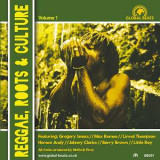
- 1: Horace Andy – Every Tongue Shall Tell
- 2: Horace Andy – Every Tongue Shall Tell Dub
- 3: Linval Thompson – Long, Long Dreadlocks
- 4: Linval Thompson – Long, Long Dreadlocks Dub
- 5: Johnny Clarke – Blood Dunza
- 6: Johnny Clarke – Blood Dunza Dub
- 7: Barry Brown – Fittest Of The Fittest
- 8: Barry Brown – Fittest Of The Fittest Dub
- 9: Johnny Clarke – Declaration Of Rights (Steppas Remix)
- 10: Johnny Clarke – Declaration Of Rights (Steppas Remix) Dub
- 11: Gregory Isaaccs– Motherless Children (Dubplate Mix)
- 12: Gregory Isaaccs– Motherless Children (Dubplate Mix) Dub
- 13: Max Romeo – No Peace (Steppas Remix)
- 14: Max Romeo – No Peace (Steppas Remix) Dub
- 15: Litte Roy – Falling Angels (Dubplate Mix)
- 16: Litte Roy – Falling Angels (Dubplate Mix) Dub
If some of these titles look familiar, it’s because they’re among the most majestic roots and culture songs ever recorded, and by singers whose credentials are beyond question. All tracks feature the original artists and even the actual seventies’ vocal in some cases, but the rhythms have been recreated with today’s sound-systems in mind and are heard at their very best when roaring out of giant speaker boxes, greeted by a forest of raisedhands and with a deejay at the mic.
Producers Mafia & Fluxy include reggae legends Bunny “Striker” Lee and Fat Man among their mentors, and their mastery both in the studio and on stage is unrivalled outside of Jamaica. The way these two brothers play dub will make the hairs on the back of your neck stand up whilst the messages in songs like Every Tongue Shall Tell, Declaration Of Rights, No Peace and Fittest Of The Fittest are relevant as ever but then the music on this album isn’t dated, and is reggae, roots and culture for the ages.
The imaginative talents of writer Neil Gaiman come to vinyl with this collection of three full-cast radio dramas based on his bestselling works. This highly collectible box set presents 5 x 140g gold
vinyl, in three individual sleeves (two gatefolds plus one single LP). Each one features an exclusive sleeve note by Neil Gaiman plus full cast, credits and broadcast details.
A frameable, full-colour print of Neil Gaiman, signed by the author himself, is also included. These are strictly limited to 750 copies.
Stardust, adapted by Dirk Maggs (Sandman, Good Omens) tells the story of Tristran who goes in search of a fallen star and enters the world of Faerie.
Norse Mythology is Gaiman’s retelling of myths populated by gods and monsters, all featuring tricks and trust, fiery endings and new beginnings. Chivalry tells the tale of Mrs Whitaker, who discovers the Holy Grail in a charity shop… The cast for these three productions features the crème de la crème of acting talent: Eleanor
Bron, Diana Rigg, Glenda Jackson, Matthew Beard, Sophie Rundle, Frances Barber, Maggie Steed, Derek Jacobi, Natalie Dormer, Colin Morgan, Nathaniel Martello-White, Kit Harington and many more, plus cameo appearances by Tori Amos and Neil Gaiman. A superb soundscape of music and effects accompanies each one.
- A1: Fallen Through
- A2: Sleep
- A3: Let’s All Go Together
- A4: Wait
- A5: The Only Way
- A6: I Stopped Dancing
- A7: All For Love
- B1: Toys For Boys
- B2: Time
- B3: Vanessa
- B4: Your Body Lies
- B5: My Children
• Marion formed in Manchester in 1994, releasing their debut single on Rough Trade. Signed to London Records, the band found themselves bundled in with the ‘Britpop’ scene, and made their national TV debut by performing ‘Sleep’ on Channel 4’s cult TV show ‘The Word’ in February 1995.
• The band gigged throughout 1995, building up a fan base, and supported Morrissey on his ‘Boxers’ tour.
This World And Body was released in February 1996 and entered the top ten of the UK album chart.
• Demon Records is proud to present This World And Body pressed on 180g heavyweight translucent gold vinyl.
‘Crestone’ is the debut feature written and directed by
Marnie Ellen Hertzler in partnership with Memory.
Hertzler enlisted the pioneering experimental act
Animal Collective to compose the film’s score, a first
for the band.
Marnie Ellen Hertzler on the score: “The town of
Crestone is not only the location of the film, but also
an important character. I wanted a score that was able
to highlight and elevate its importance. There are no
musicians I’d rather work with more on this film, and
no band that can sonically describe a landscape better
than Animal Collective can.”
Set in the desert of Crestone, CO over the course of
eight days, ‘Crestone’ follows a group of SoundCloud
rappers who live in solitude, growing weed and
making music for the internet. When an old friend
arrives to make a movie, reality and fiction begin to
blur.
Animal Collective previously created the audiovisual
album ‘Tangerine Reef’ (2018) in collaboration with
Coral Morphologic, released ‘Transverse Temporal
Gyrus’ (2012) as the music for an installation at the
Guggenheim Museum alongside the visual work of
artist Danny Perez and released the visual album
‘ODDSAC’ (2010), also in collaboration with Danny
Perez. ‘Crestone (Original Score)’ is the band's first
film score.
140g black vinyl LP with colour labels and standard
3mm spined jacket plus digital download card.
Afrosound's mission was to emulate the guitar-heavy tropical sounds emanating from Perú and Ecuador at the time. To add to the hippie vibe, there were plenty of whacky improvised vocal asides (called 'inspiraciones'), plus custom fuzz, wah-wah, flange and echo effects boxes for the guitar and keyboards. A barrage of odd sounding synths, drum machines and other electronic flourishes were also sprinkled in to spice up the proceedings. The dozen tracks on Afrosound's debut long play make for a surprisingly diverse palette from which these Colombian musicians painted their daring portrait of Peruvian cumbia, returning the favor in bold colors that still resonate almost 50 years later. "La danza de los mirlos" kicks off with most famous Afrosound hit of all, 'Caliventura', a genius blend of funk and cumbia. Aside from the cumbia amazónica title tune, there are several other covers including three popular songs by Nelson y Sus Estrellas, plus radically reimagined versions of various Colombian costeño classics published by Fuentes. Mario "Pachanga" provides a sad but still groove-oriented Christmas son montuno / cumbia hybrid while Fruko brings us the bomba-funk ditty 'El chorrillo' and the rocking cumbia andina gem 'Cabeza de chorlito' where Sepúlveda channels Enrique Delgado. Fruko collaborator Hernán "Hercovalle" Colorado Vallejo rounds things out with the melancholic psychedelic cumbia 'Esperando por ti', proving that every tropical party has to have its down side as well. The record was also released in the US, Ecuador, Perú, Panamá, Mexico and Venezuela, and probably had an influence of its own, at least in South America. The cover of this lovingly restored reissue features the artwork for the Peruvian edition, which was licensed and issued by Lima's El Virrey label in 1974. The original Fuentes artwork, with a far more outrageous "cheesecake" image, can be seen on the back cover.
- A1: Oxygene 1
- A2: Oxygene 19
- A3: Rendez-Vous 1
- A4: Millions Of Stars
- B1: Chronology 1
- B2: Oxygene 20
- B3: Equinoxe 2
- B4: Waiting For Cousteau
- B5: The Heart Of Noise (Origin) (Origin)
- C1: Industrial Revolution (Part 2)
- C2: Oxygene 4
- C3: Equinoxe 5
- C4: Oxygene 2
- C5: Zoolookologie
- C6: Bells
- D1: Equinoxe 4
- D2: Magnetic Fields 2
- D3: Rendez-Vous 2 (Laser Harp)
- D4: Rendez-Vous 4
- D5: Chronology 4
- E1: Coachella Opening
- E2: Arpeggiator
- E3: Automatic (With Vince Clarke - Part 1)
- E4: Exit (With Edward Snowden)
- F3: Stardust (With Armin Van Buuren)
- F4: Herbalizer
- F5: Revolutions
- G1: Ethnicolor
- G2: Souvenir Of China
- G3: Blah Blah Cafe
- G4: Music For Supermarkets (Demo Excerpt)
- G5: Roseland/Le Pays De Rose
- G6: La Cage
- G7: Erosmachine
- H1: Hypnose
- H2: The Song Of The Burnt Barns/La Chanson Des Granges Brulees
- H3: Happiness Is A Sad Song
- H4: Aor Bleu
- H5: Last Rendez Vous
- F1: Equinoxe 7
- F2: Oxygene 8
This New Collection Is Released To Celebrate The Electronic Music Pioneer Being At The Forefront Of His Genre For Over 50 Years. This Extensive Double Album Comprises 41 Tracks That Has Jmj Hand Picked Himself. All Songs Have Been Digitally Remastered. Formats Include A Limited Quadruple Deluxe Lp Set, Deluxe Double Cd And A Super Deluxe Limited Fan Box Set. Press Ads, Features And Reviews. Online/social Media Activity. Poster Campaign And Database Mailout.
- Rumble, Young Man, Rumble! - Terence Blanchard
- Sam Cooke Comes To Stage / Copacabana Introduction - One Night In Miami Band
- Tammy - Leslie Odom Jr
- Howl For Me Daddy - Terence Blanchard, Keb’ Mo’ And Tarriona ‘Tank’ Ball
- Do Us All Proud - Terence Blanchard
- I Believe To My Soul - One Night In Miami Band
- Salah Time - Terence Blanchard
- I'm King Of The World! - Terence Blanchard
- Put Me Down Easy - Hampton House - Leslie Odom Jr
- Put Me Down Easy - L.c. Cooke
- Greazee - Billy Preston
- Ain't Yo Stuff Safe Here - Terence Blanchard
- Malcolm Looks Out The Window - Terence Blanchard
- You Send Me - Leslie Odom Jr
- (I Love You) For Sentimental Reasons - Leslie Odom Jr
- Brother, What Is Going On? - Terence Blanchard
- I Wanna Damn Party - Terence Blanchard
- Lonely Teardrops - Jeremy Pope
- Chain Gang - Leslie Odom Jr
- Good Times - Leslie Odom Jr
- A Change Is Gonna Come - Leslie Odom Jr
- Speak Now - Leslie Odom Jr
One Night in Miami is a 2020 American drama film directed by Regina King (in her feature directorial debut), from a screenplay by Kemp Powers, based on his stage play of the same name.
It had its world premiere at the Venice Film Festival on September 7, 2020 and was the first film directed by an African-American woman to be selected in the festival’s history. It received overwhelmingly positive reviews, with critics praising King’s direction, the performances and the writing.
It is scheduled to be released in a limited release on December 25, 2020, followed by digital streaming on Prime Video on January 15, 2021
On one incredible night in 1964, four icons of sports, music, and pop culture gather to celebrate one of the biggest upsets in boxing history. When underdog Cassius Clay, soon to be called Muhammed Ali, (Eli Goree), defeats heavy weight champion Sonny Liston at the Miami Convention Hall, Clay memorialized the event with three of his friends: Malcolm X (Kingsley Ben-Adir), Sam Cooke (Leslie Odom Jr.) and Jim Brown (Aldis Hodge).
Based on the award winning play of the same name, One Night In Miami is a fictional account of the actual night that these formidable figures spent together in the hotel. It looks at the struggles these men faced and the vital role they each played in the civil rights movement and cultural upheaval of the 1960s.
More than 40 years later, their conversations on racial injustice, religion, and personal responsibility still resonate.
Isasa’s fourth LP is a guitar excursion from a skillful, humble guide. Minimal, contemplative songs, rich in atmosphere and warm in spirit.
Some musicians give their name to their first album, signifying introduction. Some hold it in reserve — it took Wire 39 years to get around to calling an LP Wire. But whenever they do so, they are making a statement. For Conrado Isasa, an acoustic guitarist from Madrid, Spain, the decision to call his fourth album Isasa reflects the fact that his music’s relationship to his own identity has evolved. Isasa presents an artist whose work reflects that he knows and accepts where he comes from.
Between 1993 and 2003, he played electric guitar in the hardcore metal band Down For The Count and the post rock combo, A Room With A View. These were collective statements, communications between small groups and a select underground community. After the latter group’s demise, Isasa stepped back from recording, and for a while from guitar playing as well. He spent some time learning to play the trumpet, but was inspired to return to the guitar in 2007 after he heard Geoff Farina play a Mississippi John Hurt song for the encore of a Glorytellers gig. Then came another period of learning, during which he studied the playing of Hurt, John Fahey, Jack Rose, and Glenn Jones.
Performing as Isasa, he made three records, each of which can be heard as confrontation with an artistic challenge. Las Cosas (2015) is between the man and his acoustic guitar; what could he do with his fingers, a slide, six steel strings, and a box of wood? Los Días (2016) faces the broader issue of how to deal with the requirements of the American Primitive guitar style. Like Fahey, Rose, and Jones, Isasa sought to make an album that used a cohesive sequence of guitar and banjo instrumentals to express personal experiences. With its references to the sights, sounds, and tastes one might encounter in Madrid, it is like a poetic diary written with the distance that comes from having mastered a second language. After making that record, Isasa toured parts of the United States, and played at The Thousand Incarnations Of The Rose, a festival that gathered representatives of American Primitive guitar’s past, present, and future in Takoma Park, the town where the style’s original synthesist, John Fahey, was born. Insilio (2019) began to look beyond that style, dealing with Hindustani raga forms and adding other instrumental textures.
And now comes Isasa. The name suggests something very personal, and it’s true that it draws upon Isasa’s closest relationships. Two compositions are either named for or feature the voices of his children, but their presence helps this music to transcend the purely personal. For what could be more universally shared than the joy and love one feels for children? Others invoke concepts — absence, liberty, love, reunion. They may mean one thing to Isasa, and another thing to you, but by sharing his reactions to them, he invites you to recognize yours. Isasa isn’t just using his experiences to tell you about his life; he is using what he knows about life to help us know a little more about ours.
- A1: Stupid Now
- A2: Who Needs To Dream?
- A3: Again And Again
- A4: Old Highs, New Lows
- A5: Return To Dust
- B1: The Silence Between Us
- B2: Shelter Me
- B3: Very Temporary
- B4: Miniature Parade
- B5: Walls In Time
- C1: Life And Times
- C2: The Breach
- C3: City Lights (Days Go By)
- C4: Mm 17
- C5: Argos
- D1: Bad Blood Better
- D2: Wasted World
- D3: Spiraling Down
- D4: I'm Sorry, Baby, But You Can’t Stand In My Light Any More
- D5: Lifetime
- E1: Star Machine
- E2: Silver Age
- E3: The Descent
- E4: Briefest Moment
- F2: Round The City Square
- F3: Angels Rearrange
- F4: Keep Believing
- F5: First Time Joy
- G1: Low Season
- G2: Little Glass Pill
- G3: I Don't Know You Anymore
- G4: Kid With Crooked Face
- G5: Nemeses Are Laughing
- G6: The War
- H1: Forgiveness
- H2: Hey Mr. Grey
- H3: Fire In The City
- H4: Tomorrow Morning
- H5: Let The Beauty Be
- H6: Fix It
- I1: Voices In My Head
- I2: The End Of Things
- I3: Hold On
- I4: You Say You
- I5: Losing Sleep
- I6: Pray For Rain
- Halfway To Pa
- J1: Lucifer And God
- J2: Daddy's Favorite
- J3: Hands Are Tied
- E5: Steam Of Hercules
- J4: Black Confetti
- J5: Losing Time
- J6: Monument
- K1: Sunshine Rock
- K2: What Do You Want Me To Do
- K3: Sunny Love Song
- K4: Thirty Dozen Roses
- K5: The Final Years
- K6: Irrational Poison
- L1: I Fought
- L2: Sin King
- L3: Lost Faith
- L4: Camp Sunshine
- L5: Send Me A Postcard
- L6: Western Sunset
- M1: Dear Rosemary (Foo Fighters)
- M2: Father's Day (Butch Walker)
- M3: I Don't Mind
- F1: Fugue State
Demon Records presents Distortion: 2008-2019, the third in a series of four expansive vinyl box sets chronicling the solo career of legendary American musician Bob Mould.
Bob Mould’s career began in 1979 with the iconic underground punk group Hüsker Dü before forming the beloved alternative rock band Sugar and releasing numerous critically acclaimed solo albums. Volume three in this new series covers the period 2008-2019 and contains many of Bob Mould’s most celebrated recordings including Silver Age (2012), Patch The Sky (2016), and Sunshine Rock (2019).
For Böser Herbst, Thomas Fehlmann returns to the sediment of ages, drawing from a similar lexicon of sounds to that used on 2018’s ‘1929 – Das Jahr Babylon’. Like that album, Böser Herbst was produced as the soundtrack to a documentary made by Volker Heise, ‘Herbst 1929, Schatten Über Babylon’, which offers historical insight to the third season of the television series Babylon Berlin. It adds yet another string to the bow of this most forward-thinking and creative artist, whose history takes in NDW (Palais Schaumburg), techno (3MB) and psychedelic ambience (The Orb), plus a clutch of gorgeous solo albums that explore wide terrain, from the dancefloor through supine home listening to compelling soundtrack work. Fehlmann’s approach here was to ‘capture’ samples of contemporaneous music, “picking up the dirt and dust of original 1920s archive sound and music excerpts and shaping the essence into this selection of tunes,” he recalls. After delivering the material to the editing room, Fehlmann “threw all the pieces up in the air, deliberately lost the overview in consequence, researched the atmospheric thread and assembled it for this album.” That explains the singular nature of the material here, and its ability to sit together so neatly and discretely, as its own entity. For Böser Herbst is a music box of possibilities, shadowed by its historical provenance, but never crudely beholden to it, rather “keeping the references only as a distant nod, a scent.”
It’s certainly an evocative listen, a cornucopia of textural pleasure and sensual, tactile assemblage. The spiralling, psychedelic cycle of “Karnickel” winds its way between the ears like thread to the needle; “Mit Ausblick” immerses the listener in deep, gaseous tones, only to be lifted into the air by the glassy drones of “Umarmt”. “Wunschwechsler” crackles with the unpredictability of weather systems while a guitar-like loop unspools across the horizon. Throughout, you can catch tiny tastes of the source material, but they’re pressed into greater service, Fehlmann using these sources for their evocative capacity and then saturating them with grain and rumble, abstracting outwards. It’s a music of temporal disjuncture and clairvoyant resonance, “speaking with the past – alert, distant and quixotic.”
Für “Böser Herbst“ schürft Thomas Fehlmann tief in den Sedimenten der Zeit und schöpft dabei aus ganz ähnlichen Klangquellen wie auf dem 2018 erschienenen Album “1929 - Das Jahr Babylon“. Auch “Böser Herbst“ wurde als Soundtrack zu der von Volker Heise gedrehten Dokumentation “Herbst 1929, Schatten über Babylon“ produziert, die den historischen Background der dritte Staffel der deutschen Fernsehserie “Babylon Berlin“ beleuchtet und dabei Archivmaterial mit Stimmen unterschiedlichster Zeitzeugen verknüpft. Das neue Album fügt eine weitere Saite zum Bogen dieses überaus voraus denkenden und kreativen Künstlers hinzu, dessen Geschichte NDW (Palais Schaumburg), Techno (3MB) und psychedelischen Ambient (The Orb) umfasst, plus eine Reihe von großartigen Soloalben, die ein weites Terrain erkunden, von der Tanzfläche über entspanntes Hören bis hin zu Soundtracks.
Fehlmanns Herangehensweise auf diesem Album war es, Samples aus jener Zeit "einzufangen", "den Schmutz und Staub der originalen 1920er Archiv-, Sound- und Musikaufnahmen zu sammeln und als Essenz in die einzelnen Tracks einfließen zu lassen", erinnert er sich. Nachdem Fehlmann das Material im Schnittraum abgegeben hatte, "warf er alle Teile in die Luft, verlor dabei absichtlich den Überblick, suchte sich dann einen atmosphärischen roten Faden und setzte alles wieder zusammen." Das erklärt die Einzigartigkeit des vorliegenden Materials und dessen Eigenschaft, sich fein säuberlich und gänzlich unangestrengt zu einer Einheit zusammenzufügen. “Böser Herbst“ ist eine Spieldose voll unbegrenzter musikalischer Möglichkeiten, umspielt von düsteren historischen Quellen ohne darin zu ertrinken – Fehlmann ging es stattdessen darum, "die Referenzen nur wie eine flüchtige Geste, wie eine Ahnung von etwas zu behandeln."
“Böser Herbst“ löst eine Vielzahl an unterschiedlichen Vorstellungen beim Hörer aus, es ist ein wahres Füllhorn an lustvollen Texturen und sinnlicher, taktiler Assemblage. Der spiralförmige, psychedelische Kreisel von "Karnickel" dreht sich in die Ohren wie ein Faden ins Nadelöhr; "Mit Ausblick" lässt den Hörer in tiefe, gasförmige Töne eintauchen, um anschließend von den transparenten Drones von "Umarmt" in die Luft gehoben zu werden. "Wunschwechsler" knistert mit der Unberechenbarkeit eines aufziehenden Unwetters, während sich ein gitarrenartiger Loop am Horizont abzeichnet. Überall kann man winzige Spurenelemente des Ausgangsmaterials erhaschen, aber sie werden in einen größeren Kontext gesetzt; Fehlmann benutzt seine Quellen nur als Mittel zum Zweck, um eine bestimmte Wirkung hervorzurufen, die einzelnen Teilchen werden angereichert mit Struktur und Körper und schließlich abstrahiert wieder ins Außen gesendet. Es ist Musik, an der die Zeit sich bricht und in die Zukunft schaut wie in einen Resonanzraum: Musik, "die mit der Vergangenheit spricht - hellwach, mit aller gebotenen Distanz und voller Rätsel".
- 01: Kangundo D Boys - Mpenzi Maggie
- 02: Kyanganga Boys Band - Ivinda Ya Tene
- 03: Nyeri Honey Boys - Ndikwenda Kwanangwo
- 04: Kangundo D Boys - Mbarak Mwinshehe
- 05: Kirurumo Boys - Mwendwa Wama
- 06: Kali Kali Boys - Ungwana Ni Tabia
- 07: Kirurumo Boys - Njeri
- 08: Nyeri Honey Boys - Nowe Wecuka
- 09: Kyanganga Boys Band - Kyalo Kya Sikimu
- 10: Kali Kali Boys - Mchezo Wa Panya
This album is a celebration of benga and rumba music recorded in Nairobi, Kenya in the early 1980s. The five Kenyan groups chosen all feature "Boys" in their band names in one form or another; a common theme in Kenyan music at that time.
The tracks selected were all released as 7" vinyl singles on the Boxer, Lulus and Hit Parade labels, which were all part of Babu Shah's Audio Productions stable. This is the first time they have been released outside of Kenya.
No Wahala Sounds are proud to bring you these lost musical gems and would like to thank Doug Paterson for digital clean up from the original vinyl.
Due for release on 09 April 2021. Interest for airplay from Tom Ravenscroft and Gideon Coe from BBC 6 Music, DJ Ritu from Resonance FM/SOAS Radio, Roger Hill from BBC Merseyside, Steve Barker from BBC Lancashire, and DJ Debbie Golt from Resonance FM.
New York ravers' family favorite Club Night Club announce their inaugural release as a record label. The first offering comes courtesy of Manchester heavyweight Herron. The meandyou founder and Soup Kitchen owner follows up last year's 'Box Of Swords' EP for Peder Mannerfelt with a gritty four tracker aimed squarely at the dance floor. On 'Lowflow' we see him develop similar sludgy Uk techno mutations to his 2016 CO/R collaboration with Joy Orbison, but this time with more explicit peak time intent. The Hi-Fi, sleazy chug core is ever present, but particularly on the A side, a freneticism of breaks pressure and pummeling sound design is let loose. In keeping with the name of A2's Velcro Spider, the record weaves a complex blend of the synthetic and heartfelt. Stumbling, low slung grooves mutate over the course of each track, quietly building and sustaining a tension the listener is unaware of until all hell breaks loose at the last minute in true drug chug fashion.
“Maestro melodist Christophe Petchanatz (aka Klimperei) and all around music fanatic David Fenech engage remotely in a repetitive exchange of recordings and overdubs on their debut album titled ‘Rainbow de Nuit’, sporadically spanning over the last decade. Evocations of experimental and improvised jazz, chansonesque songs, bluesy folk, and outsider music undulate harmoniously across the record. From music boxes and walkie-talkies down to plastic straws, plucking various stringed instruments such as the charrango and banjo, kazoos and snake-charmer ocarina and flutes, all the way through the sweet accordion and melodica, found and traditional tuned percussion - there is far from a shortage of sound sources on this freakishly inviting record. What germinates as an imaginative and emotional chord progression played by Klimperei, evolves with Fenech layering additional recordings, which would then find their way back home to Klimperei yet again, and so on, and so forth. This recursive compositional and improvisational loop, combined with Fenech’s musique-concrete-like mixing and editing techniques, transforms the acoustic recordings by way of compression, saturation, and reverberation or simple pitch changes - resulting in the duo’s recordings seemingly sound like they may very well be an octet in real time. While the majority of the recordings have been ping-ponged remotely, David and Christophe unite under one roof to record the closing track of the album.
The pieces presented on ‘Rainbow de Nuit’ treat the ears to a carousel ride waltzing through a multiverse made up of surrealist puppet theaters, dramatic film noir act changes, and a mosaic of polyphonic instruments and toys alike. In other words, a score to a fable brought to life with haunting yet charming melodies and occasional hallucinatory voices reminiscent of laughter and infantile epiphanies which we hear on Tarzan en Tasmanie and Madrigal for Lola. This is taken a step further by Fenech, to a brief libretto of incomprehensible tongues on Pocarina. Amid the mysterious and dark (Septième Ciel and Rugit Le Coeur) also lies tender and simple compositions (Rainbow de Nuit and Chevalier Gambette), murky suspenseful melancholy (Levy Attend and Eno Ennio), and casually slipping into pensive psychedelic backdrops (Un Cercueil à Deux Places) - forming a colorful blend of sounds. A world of echoes. A tale of tales. One persistent earworm that you’ll likely be whistling and humming along to on a first listen.”
Fortunately for us, Dmytro Nikolaienko agreed to open up the jewellery boxes of his tape-loop archive for his debut album on Faitiche. What came to light was a collection of dreamy glittering gems, masterfully presented using the compositional possibilities of analogue tape machines. Some may consider a tape machine to be limited as a musical instrument, but Rings makes a convincing case with its sure-handed use of the available parameters – moving tape over the tape head mechanically and manually, cutting loops, manipulating timbre and creating noise by means of saturation. The results are eleven blurred, repetitive, rhythmic patterns that can be understood as an intervention against digital precision, as mechanical irregularities and background noise become musical events.
For those familiar with Nikolaienko’s work, his nostalgic approach here will come as no surprise: born in Ukraine and now based in Estonia, he has chosen a historical medium (that has been enjoying a renaissance for some years now) to record historical-sounding sequences. The way he manages his own back catalogue is similarly archival, documenting the chronology of his tape loops in such a way as to leave no doubt as to their advanced age. And then there are his two wonderful labels Muscut and Shukai, the latter being an archival project releasing electroacoustic obscurities from the Soviet past. Which brings us back full circle …
Recorded at the Staples Centre in Los Angeles, CA, this release marks a first time on standalone vinyl. Originally included in the Selected Works 1972-1999 CD boxed set, the live show includes some of Eagles’ biggest hits featuring “Hotel California”, “Please Come Home for Christmas”, and “Take It to the Limit”.
[a] A1. HOTEL CALIFORNIA [6:57]
[b] A2. VICTIM OF LOVE [5:01]
[c] A3. PEACEFUL EASY FEELING [5:23]
[d] B1. PLEASE COME HOME FOR CHRISTMAS [3:52]
[e] B2. OL’ 55 [5:20]
[f] B3. TAKE IT TO THE LIMIT [4:02]
[g] C1. THOSE SHOES [3:28]
[h] C2. FUNKY NEW YEAR [3:45]
[i] C3. DIRTY LAUNDRY [5:54]
[j] D1. FUNK 49 [3:47]
[k] D2. ALL SHE WANTS TO DO IS DANCE [5:20]
[l] D3. THE BEST OF MY LOVE [5:06]
- A1: Hotel California
- A2: Heartache Tonight
- A3: I Can’t Tell You Why
- B1: The Long Run
- B2: New Kid In Town
- B3: Life’s Been Good
- C1: Seven Bridges Road
- C2: Wasted Time
- C3: Take It To The Limit
- C4: Doolin-Dalton (Reprise Ii)
- C5: Desperado
- D1: Saturday Night
- D2: All Night Long
- D3: Life In The Fast Lane
- D4: Take It Easy
Eagles’ debut live album, featuring live recordings from California venues including The Forum, Santa Monica Civic Auditorium, and Long Beach Arena. These live performances are from the peak of their career, spanning 15 recordings from between 1976 and 1980. The live show includes some of Eagles’ biggest hits featuring “Hotel California”, “Desperado”, and “Take It Easy”.
Originally released in 1980, the album is currently certified gold in the UK and x7 platinum in the US. The release is on 180g black vinyl, contains a poster, and features remastered audio from the Legacy box.
[a] A1. HOTEL CALIFORNIA [6:55]
[b] A2. HEARTACHE TONIGHT [4:35]
[c] A3. I CAN’T TELL YOU WHY [5:24]
[d] B1. THE LONG RUN [5:35]
[e] B2. NEW KID IN TOWN [5:45]
[f] B3. LIFE’S BEEN GOOD [9:38]
[g] C1. SEVEN BRIDGES ROAD [3:25]
[h] C2. WASTED TIME [5:40]
[i] C3. TAKE IT TO THE LIMIT [5:20]
[j] C4. DOOLIN-DALTON (REPRISE II) [0:44]
[k] C5. DESPERADO [4:04]
[l] D1. SATURDAY NIGHT [3:55]
[m] D2. ALL NIGHT LONG [5:40]
[n] D3. LIFE IN THE FAST LANE [5:10]
[o] D4. TAKE IT EASY [5:20]
Superb Pumpin dancefloor killerz !!
Red Transparent edition !
Dancefloor Kicker !
A side it at the Hardcore frontier, defenitly Infrabass style... The flip goes acid speedtek, Exciting.
Last track goes technoid, Banging and spirily ;)
A1 and A2 repress from Engrenage 02
B1 repress from Ratmaztek 01


