With the buzz around her building, Priddy made her biggest splash with the 2021 release of her debut album, The Eternal Rocks Beneath. The 10 self- penned tracks are delivered with a maturity and depth that belie the fact that this is her first full length release. At times tender, at times carrying a darker edge, the stories she weaves are transporting. Not surprising then that Nick Drake, John Martyn, Tunng and Scott Matthews are amongst her many influences.
The album was recorded over a 2-year period at Rebellious Jukebox studios, a little basement studio hidden beneath inner-city Birmingham and presided over by masterful producer Simon Weaver. The ensemble cast of musicians, including a sweeping string section, occasionally cut through by raw electric guitar and drums, as well as Richard March (Pop Will Eat Itself) on double bass and Mikey Kenny on fiddle, enhance Priddy's command of melody and lyricism and provide the perfect backdrop for the feelings of nostalgia and timelessness that underpin the record. Many of the songs were written during Priddy's teenage years and early twenties and reference themes of childhood and distant memories.
The title, 'Eternal Rocks Beneath' reflects this is Priddy's first album; the culmination of her earlier life experiences and the bedrock for whatever follows next.
Search:b flow
For accomplices, Kinsey chose his ace rhythm section from WSL - bassist Hadrien Feraud and drummer Gergo Borlai - and a bold newcomer named Patrick Bartley Jr. on alto saxophone. Kinsey speaks of his group: "Gergo and Hadrien are one of the finest, most indemand rhythm sections playing today. They also have a deep understanding of this music since they both grew up with it - Gergo since he was just five! Patrick is a brilliant improviser who has a deep knowledge and love of straight-ahead jazz but is just as into Japanese video game music. He's what it means to be a musician in 2023 - taking everything you like and allowing it all to unabashedly flow out."
- A1: Samba 00 04:58
- A2: Panorama 00 04:39
- A3: Golfo Mistico 00 04:34
- A4: Open Sky With Tears Of Blue 00 04:56
- A5: Contemporary Lullaby 00 03:05
- A6: Requiem 00 02:55
- B1: Whispers 00 04:19
- B2: Modular Clouds In Rome 00 03:21
- B3: Piano Bells 00 03:30
- B4: Space Call From Mars 00 03:01
- B5: Tuning The Orchestra With Tears Of Blue 00 03:22
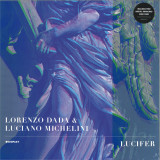
With Lucifer, Kompakt presents an album of rare beauty from two masters of modern music. A family affair, it’s a collaboration between the Italian father-and-son duo of Luciano Michelini and Lorenzo Dada, whose combined histories bring to Lucifer a depth of experience alongside clarity of vision and a finely tuned, neatly developed combined compositional voice. A lovely, beguiling suite of music that combines the electronic and the acoustic, the urban and the pastoral, its gorgeous night-eye vision and tender melancholy sits neatly within the Kompakt universe, while offering the curious listener some rich new perspectives.
There is already plenty to know both artists by. Lorenzo Dada creates across multiple fields – a techno producer and DJ who has already worked with the likes of Jay Haze, Fete, Leo Benassi, and Der, he’s released a small clutch of stylish, smartly designed EPs, and a solo album, Second Life (2018). His complementary background in classical music and composition informs his ensemble project, Tears Of Blue (who appear on Lucifer), where Dada paints with neo-classical tones for a quartet of violin, viola, cello and grand piano, supplemented by electronics for live performance.
Luciano Michelini’s history is yet richer. He may be best known, to many, for his piece “Frolic”, the theme to Larry David’s Curb Your Enthusiasm series; it was also sampled by Snoop Dogg for 2022’s “Crip Ya Enthusiasm”. But there’s much more to Michelini’s story. A successful soundtrack composer, Michelini both studied and taught at the Conservatoro di Santa Cecilia, and worked for RCA from the sixties to the eighties; his soundtracks from this period are gorgeous examples of the form, particularly his work for Il Decamerone Nero (1972), L’Isola Degli Uomini Pesce (1979), and the devastatingly gorgeous Dimensione Donna (1977).
In the eighties, Michelini and his wife Anna Gutling founded the Electronic Music Division studio and academy in Rome, which is where the majority of Lucifer was recorded. Dada reflects on the experience: “We never worked together before, so it was all new for both of us,” with Michelini adding, “I truly love this experience with my son. He’s a talented pianist and composer. I am not very familiar with electronic music nowadays, but we did it fluently.” There’s certainly a familial energy at play through Lucifer, and you can hear how Dada and Michelini, through exploration and experiment, find a shared language, balancing Dada’s tendency toward minimalism, and Michelini’s composerly voice.
Lucifer flows as a suite that interweaves electronic music with acoustic instruments: the lonely sigh of saxophone; Michelini’s lush, verdant piano; the weeping strings of Tears Of Blue (recorded at the studio of Michelini’s friend, the late Maestro, Ennio Morricone). These multiple voices are located within the electronic sighs and swarms from Dada’s kit; there are moments of propulsion, and passages of lambent drift, where the album revels in its tonal sweetness. If it flows so effortlessly, that’s because Lucifer was designed that way, as a suite or a sonata of sorts.
And the title? Dada reflects, “Lucifer was an angel who decided not to be one anymore. The miracle of life is that we can decide what we want to be, even if we are born as angels or vice versa.” This feels somehow apposite: there’s certainly something of the transformative, and the transportive, in Lucifer, a unique family collaboration of rare poetry and sensitivity, where two generations meet in the modern crucible that is the electronic music studio.
2024 Repress
Adana Twins return to Watergate Records with a magnificent three-tracker that begs for a summer dancefloor (but the tracks are that good, they’ll be played for a while to come).
Since their label debut in 2017 with ‘Flower of Cane’, Adana Twins have become firm favourites of the Oberbaumbrücke crew. From handling mix duties on ‘Watergate 25’ to holding down regular gigs at the club prior to 2020, the Hamburg duo always deliver.
‘The Curve’ is their first release on WG since 2019’s cracking remixes of Josh Wink’s ‘Higher State of Consciousness’. The title track is a big bouncy electro cut packed with plenty of groove. A super fun
production sure to bring a smile to your face. ‘Cyrus’ belongs in a motion picture and is epic in composition. It traverses cyborg breaks before moving into a retro key-laden riff, all the while driven by a
powerful ‘Silence / Violence’ vocal. This was made for a big festival moment. ‘Alone’ is the emotional final.
At first propelled by an ‘80s synth and airy pads before a shimmering lead takes control and pushes the track into celestial terrain.
The current lineup of New Haven's long running Mountain Movers (guitarist/vocalist Dan Greene, bassist Rick Omonte, guitarist Kr yssi Battalene, & drummer Ross Menze) have been playing together for over a decade now, making their recorded debut on a slew of singles released from 2011-2013, but it wasn't until 2015's "Death Magic" (released on New Haven label Safety Meeting) that the potential of that iteration of the group became clear; Mountain Movers are a force of nature. The camaraderie & sensitivity to each others playing has only grown over time, cr ystallizing on the group's trio of albums for Trouble In Mind; 2017's eponymous "Mountain Movers" served as a reintroduction of the group to a larger audience, while 2018's "Pink Skies" raged like a group confident in its strengths, and 2020's prescient "World What World" - written & recorded before the world shut down - slightly shifted focus away from the jams & back toward the weight of guitarist/songwriter Dan Greene's poetic tales of magical realism. The band's ninth album "Walking After Dark" finds a happy medium between both aspects of the band's strengths; Greene's lyrical compositions and the group's long-form improvised jams. To those that are tuned in, that feeling of communion is evident in the Movers' playing. The members swap & cycle effortlessly through instruments without missing a beat, utilizing the downtime of lockdown to write & record every jam in their practice space. Those piles of tapes would eventually get edited & sequenced into "Walking After Dark", a tour-de-force double-album that balances fried, stony brilliance with outré excursions of experimental serenity. Consider the opening track "Bodega On My Mind" that ambles in like a road-worn traveller, its lysergic folk strums peppered with acidic lead lines from Battalene's Telecaster, eventually giving way to "The Sun Shines On The Moon, where the group's sizzling guitars are buoyed by Omonte's pillowy bass & Menze's percussion. From there on out, tracks like "Factory Dream" give the listener a taste of The Movers' modus operandi here; a mixture of (more) traditional song craft interspersed between long-form, improvised pieces of modern psychedelia. The group shuffles through instruments; synths, drum machines, auto-harp, various forms of percussion (and whatever else was laying around) as well as the trad guitar/bass/drums configuration to craft a suite of songs that - while not necessarily similar in composition - feel unified in their overall sonic scope. Tracks like the 14-minute "Reclamation Yard", whose deep-space electronic pulse is juxtaposed against side C opener "See The City "s persistent acoustic strum that showcase similar ideas of the `spirituality ' of losing ones self in repetition, but executed differently. In many ways "Walking After Dark"s duality feels like a merger of "On The Beach"-era Neil Young & the collective freak-outs of Amon Düül, taking inspiration in the `incorporeality ' of free music and lacing it with Greene's hazy, haunting lyricism and is an exciting step forward for a band that's already a few steps ahead. "Walking After Dark" is released on black double-vinyl in a full color gatefold jacket & includes an insert with artwork & lyrics by member Dan Greene.
"Who am I to myself? Just one of my impressions" by F. Pessoa
The new album of the Polski Piach trio is titled Anomalia (Anomaly), and is the band's third album.
They play:
Piotr Mełech - bass clarinet
Piotr Domagalski - bassetl
Patryk Zakrocki - acoustic guitar, general vision and care of the band.
After Południe and Północ (South / Noon and North/Midnight - thematically referring to the time of day and night as well as geographical directions), the band recorded a fully acoustic album, raw but brighter than Północ. The songs contain the title anomalies and are narrative, even cinematic. They flow. The music of Polski Piach is a journey, both through the listener's imagination and musical styles.
The album was recorded live in Piotr Zabrodzki's analog studio. The music was recorded on tape and mixed in analogue way.
The cover was designed by Paweł Ryżko using drawings by Patryk Zakrocki.
Released on the band’s own Golden Chariot Records label comes this lovingly rendered reissue of ‘The Decline of British Sea Power’, the band’s debut album, originally released in June 2003 to huge critical acclaim and available now on coloured vinyl for the first time.
Over the course of their 5 studio LPs and three award winning film soundtracks, British Sea Power have become a true British institution: Top 10, Mercury nominated LP, 3 UK silver discs and renowned for their astonishing live shows in unique and unlikely locations – National History Museum, Great Wall of China, Cutty Sark, Cern Hadron Collider, Chelsea Flower show, down a Cornish mine, up in the hills in the highest pub in England, Jodrell Bank and at the John Betjeman centenary with Nick Cave, Barry Humphries, Ronnie Corbet and Prince Charles – as well as hundreds of more traditional sell out tours and festivals around the world.
World, a commemoration of Elephant Gym's 10th anniversary as a band, expands on their signature elements, the combination of which Pitchfork describes “as close to jazz as rock: virtuosity not as a means of showing off, but approaching the sublime.” World also features a host of international and local collaborators, tapping the varied talents of Seiji Kameda (Tokyo Jihen) Shashaa Tirupati, _te, YILE LIN, Hom ShenHao, and the Kaohsiung City Wind Orchestra.
Incubus released their critically acclaimed studio album "Morning View" on October 23, 2001 and was celebrated by fans and the music industry alike. The album went double platinum and spent 60 weeks at number 2 on the Billboard 200.
Now the band is releasing the re-recording of the highly acclaimed double album entitled "Morning View XXIII".
"About 23 years ago, we rented a house by the sea to start an art experiment. The unfamiliar and expansive surroundings helped us find the FLOW state we had been longing for, and the songs that became known as 'Morning View' have since become an integral and important part of our lives," says Brandon Boyd.
"That album helped make our little art experiment called 'Incubus' a way of life, and here we are, some 23 years later, ushering in a new phase of its existence. 'Morning View XXIII' is a re-recording of the 2001 album and is the result of our desire to honor that legacy, but also to reinterpret it as musicians who have played these songs night after night with much love over the last 23 years. See you on the road soon!"
"Du reitest über die Zwickauer Hügel nach Nordosten. Die Lederzügel schneiden sich in deine gefrorenen Hände, während sich heiss-saurer Sod nach oben brennt. Metaphysischer Katerschweiss sticht sich Pore für Pore durch deine Haut, durch ein verblasstes Sargtattoo auf dem Unterarm. Die müden Füße in den NVA-Stiefeln deines Vaters umklammern die Flanken eines dampfenden, grauen Appaloosa, oder ist es doch nur die frisierte Simson S51? Egal, denn eigentlich ist es deine ur-eigene Mind-Machine, in der du dem Ruf der Leere folgend durch die Ruinen der Selbsterkenntnis irrst. Nach Chemnitz - dem San Francisco des ganz kleinen Mannes. Erwarten wird dich dort allerdings nicht Bernd Spier's einfältige Flowertime, sondern Asbest, Eternit und vor allem die Risse, die sich durch ebendiesen ziehen. Genau da verdichten sich die Songs auf L'Appel du Vide's erstem Full-Length "Metro" jedem Leerstand trotzend zu einem 9 Stories hohen Monolithen aus Post-Punk, Death-Rock, Synth- und Darkwave, der einen - einmal erklommen - über jene Genregrenzen hinwegschauen lässt. Ein schwarz-schimmernder Jengaturm aus (East-)German Angst und kompromissloser Innenschau. So viel aufrichtiger wankend, als ein Campino im einstudierten Seitwärts-Taumeltanz der Mitte der Gesellschaft weismachen will, führt er dich weg von den tief hängenden Früchten des epigonalen (Post-)Punkswindles. Hin zu den aufgehenden Blüten echter Musikliebhaberei. Man hat sich festgebissen und ist drangeblieben, hat geschürft und sortiert, die Linernotes gelesen und vor allem eins: den vielen Platten zugehört. Die Schubladen aufgemacht und offen gelassen. Sänger René klagt sich ohne Allüren, zeigefingerfrei und immun gegen jedes Zeitgeistgeheische ins zunächst eigene Herz. Die Gitarre sägt, klirrt und kreischt vor Hunger und ist doch satt. Die Rhythm-Section knurrt und scheppert und bumst sich geradeaus in den Abyss, aus dem auch analoge Synths hier und da auftauchen um kurz Luft zu schnappen. Überhaupt kann man die Instrumente atmen hören, so ehrlich ist der Sound. Gitarrist Flatty hat die Band Anfang 2023 im Studio Gloom, Chemnitz aufgenommen. Doch da ist nicht nur Sachsen und die zu oft beschworenen, modrigen Wurzeln der Hängengebliebenen. Da ist Detroit, Frisco und Los Angeles. Manchester, New York und Portland. Und genau so wie Poison Idea's "Feel the Darkness" (um dann doch mal eine Reminiszenz zu bemühen) beginnt, endet "Metro" nach 37 Minuten Spielzeit - mit nacktem Piano. Dazwischen: eine Verwandtschaft in Wucht und Haltung, nur ohne Metal- und Gepose. Just Power and Void. Und in der Satteltasche ein altes Foto vom Meer, körnig, schwarz weiss und doch alle Farben widerspiegelnd.
Es ist 2021, und eine Pandemie würgt die Welt ab - und niemand scheint Spaß zu haben. Der scheinbar unermüdliche Musikfreak Peter Tägtgren kümmert das wenig, denn er landet einen Volltreffer mit - Entschuldigung für die harte Sprache - einer verdammt eingängigen... naja, Partyhymne.
Wir sprechen natürlich über den Song ?Party in My Head' von Tägtgrens synthinfiziertem Metal-Projekt PAIN. Unser geliebter Planet mag am Ende sein, aber in der Welt von PAIN scheint immer noch nicht viel falsch zu sein, da 2024 schnell im Kalender voranschreitet.
Es kann einfach nicht sein, denn das sehnlich erwartete neue Studioalbum von PAIN, "I Am" ist bald hier - ja, nach acht Jahren des hingebungsvollen Wartens. Das kraftvoll klingende "I Am" ist wirklich eine vielseitige - wenn nicht die vielseitigste - musikalische Rakete in PAINs reicher Diskographie. Die neuen Songs bewegen sich überall mit schweren industriellen Riffs, eindringlichen melancholischen Vibes und groove-gefüllten Rhythmen - ohne Überraschungen natürlich zu vergessen.
Amerikanische Death Metal-Klassiker neu gemastert! Die legendäre Chicagoer Death Metal-Band Oppressor wurde 1991 von Bassist/Sänger Tim King und Gitarrist Adam Zadel gegründet, bald kamen Gitarrist Jim Stopper und Schlagzeuger Tom Schofield hinzu.
Oppressor hat sich neu formiert und spielt wieder live! 1993 nahmen Oppressor zwei Demos auf... und ihr zweites Demo, "As Blood Flows" von 1993, brachte sie unter Vertrag. Dieses Demo war mit über 30 Minuten Spielzeit und einer anständigen Produktion eine sehr starke Veröffentlichung. Im darauffolgenden Jahr wurde das Debütalbum "Solstice of Oppression" veröffentlicht, das von ausgiebigen Tourneen begleitet wurde, aber das Label von Oppressor ging kurz darauf in Konkurs. Um ihren Namen in der Öffentlichkeit zu halten, veröffentlichten Oppressor eine halb Live-, halb Studio-Compilation namens "European Oppression Live/As Blood Flows", Live-Material, das sie auf ihrer europäischen Support-Tour für ihr Debüt gesammelt hatten, und Studiomaterial, das aus dem kompletten "As Blood Flows"-Demo der Band von 1993 bestand.
People's only work in 1971 featuring Outkast's organist Yusuke Hoguchi and guitarist Kimio Mizutani, Adams's Hideaki Takebe, and percussionist Larry Sunaga. Produced by Naoki Tachikawa, it was created with the concept of Buddha + Rock.
It is full of unique psychedelia sounds, such as the sutra chanting "Nam-myoho-renge-kyo" backed by a fuzz guitar, the sound of monk's geta, bells, wooden fish, sitar, etc.
Although it uses a lot of sound effects reminiscent of Buddhism, it doesn't feel like a religious idea, and the work is overall easy to listen to.
In recent years, this album has been highly desired by DJs as a breakbeat material and as a spiritual record.
Church Andrews and Matt Davies weave intricate patterns from Fibonacci sequences on new mini-album, Yucca.
Producer and composer Church Andrews (aka Kirk Barley) and drummer Matt Davies return to explore the outer limits of rhythm on a six-track suite that is at once angular and fluid, natural and systematic. Drawn to the restrictions of working solely with one synth and live drums, the pair found creativity in limitation, developing a compositional dialogue between the sonic timbres of Kirk’s productions and Matt’s percussive practice.
Evoking the primitive yet complex form of the plant from which it takes its name, Yucca features tracks that are built around rhythmic ratios of the Fibonacci sequence. Mirroring spiral patterns exhibited in nature, each track evolves like a cellular structure of its own, from the livewire syntax of ‘Chirp’ and the deconstructed ebb and flow of ‘Ferns’, to the mini-album’s title track, where crisp grooves flit between modulated electronics like fireflies.
“I’ve always been inspired by music that is complex without sounding complex,” Matt explains. He maintains a sense of bounce amid the intricate phrasing and cites drummers Roy Haynes and his grandson Marcus Gilmore as inspirations, alongside sabar drummers from Senegal and Mridangam drumming of South India.
With a shared background in hip-hop and the swung beats of J Dilla and Flying Lotus, Kirk Barley and Matt Davies were also inspired by the minimalism of Terry Riley and the sparse palette of dub techno.
Written and recorded in Lewisham in the spring and summer of 2023, Yucca follows the release of Axis in 2022, with the duo having also performed at festivals such as Rewire and Waking Life, and recorded live sessions for FACT magazine and Worldwide FM.
The third release on Yorkshire-based Odda Recordings, following Kirk Barley’s Marionette and Flaer’s Preludes, Yucca confirms the label’s reputation for championing music on the unstable ground between the organic and the synthetic.
- 1: Life
- 1: 2Soft Summer Breezes
- 1: 3Here's Where I Get Off
- 1: 4Little Daisy
- 1: 5Can You Tell
- 1: 6Why Why Why
- 1: 7Gentle Flying Dove
- 1: 8When Will It End
- 1: 9The Journey
- 1: 0Wounds Heal And Birds Fly Free
- 1: Fall On Me Rain
- 1: 2A Flower For All Seasons
- 1: 3Baby Buggy
- 1: 4Someday
- 1: 5You'll Know The Words
- 1: 6The Time Of The Year Is Sunset
Im Gefolge der Chartstürmer der Zombies, Beatles und Left Banke blühte mit dem Baroque Pop in der zweiten Hälfte der 60er Jahre ein dandyhafter Ansatz des Garagenrocks auf. Inmitten von majestätischen Cembalos, beschwingten Gitarren, melancholischen Orgeln und Mittelschulorchestern fängt "Soft Summer Breezes" mit 16 sanften Momenten weicher Psychedelia den letzten Hauch von Optimismus des Jahrzehnts ein.
The Macks are brothers Josef and Ben Windheim, Sam Fulwiler, Jacob Michael Perris, and Aidan Harrison. In 2022, the band came out with their lockdown project "Rabbit." Their raw and progressive take on rock and roll launched the band towards festivals and tours from Idaho to Mexico City. Now in 2024 The Macks are cutting deep. The band will release The Macks Are A Knife in a dogged pursuit of being the sharpest band from the PNW to date.
The multi dimensional Emcee and Vocalist Yinka, is redefining his sound by releasing a fully deep bass project. The album cover a big space of the urban sound spectrum, featuring Dubstep and Grime fills, UK Garage vibes and futuristic Hip-Hop beats. Yinka is getting in touch with his roots as he started as a Drum & Bass and Jungle MC grinding in clubs and bars in Greece.
This project will make you dance and flow as the veteran Emcee dives in to his inner soul and unfolds his lyrical and vocal skills over hard, space and deep beats.
Diving is released on vinyl by the label Mind The Wax and on all digital platforms by Stay Independent as of May 17th, 2024 and includes 10 tracks.
Die unverbesserlichen Headbanger von LEATHER LUNG lassen die Party steigen! Der Fünfer aus Boston, Massachusetts hat das Flehen seiner enthusiastischen Fangemeinde nach einer vollen Dröhnung Boogie Metal erhört und legt mit "Graveyard Grin" endlich das Debütalbum vor. Die Neuengländer halten mit diesem Kracher aus Stoner Metal, Doom, einer Prise Sludge und einem eingängigen Kick die großen Versprechen, die ihre bisherigen EPs abgegeben haben: Angefangen mit "Reap What You Sow" (2014) und gefolgt von "Lost in Temptation" (2016), "Lonesome, On'ry and Evil" (2019) und "Dive Bar Devil" (2022) haben sich LEATHER LUNG bereits in die Herzen ihrer wachsenden Anhängerschar gespielt. Der wilde Haufen von langjährigen Freunden formierte sich in der Bostoner Punk- und Hardcore-Szene aus reinem Spaß an Doom und Stoner Metal. Anfangs als Vierer unterwegs erspielten sich LEATHER LUNG schnell einen exzellenten Ruf in der lokalen Szene und bald darauf quer durch die USA, zum Beispiel beim DesertFest New York und dem Psycho Las Vegas, sowie über ihre Veröffentlichungen sukzessive auch in Europa. Aufgebrezelt mit einem zweiten Gitarristen sind LEATHER LUNG inzwischen zu fünft und bereit, die Welt mit "Graveside Grin" zu erobern. Die Freaks von der Ostküste können es kaum erwarten, endlich wieder auf die Straße zu kommen, um erstmals eine globale Party zu feiern.
Bruno Berle, the young songwriter and poet originally hailing from Maceió, the capital of Brazil’s Alagoas state, crafts songs that are simple, direct, and full of tender nuance. With his first album No Reino Dos Afetos (which translates to "In the Realm of Affections” and was released in 2022), Berle firmly established himself as a unique and important voice in the burgeoning scene of new Brazilian artists making a global impact, including peers like Ana Frango Elétrico, Tim Bernardes, Bala Desejo, Sessa and more. Now back with his second album, No Reino Dos Afetos 2, he stretches that further.
Bruno Berle’s music lives between two worlds – a traditional Brazilian folk talent steeped in history, and a contemporary, dreamy electronic pop; the result is songwriting that’s genre-bending, intentional, iconoclastic and consuming, spacious and sinewy and singular, a striking reflection of its composer while leaving space for the listener to settle in. The album follows Bruno’s relocation to São Paulo, and the songs are a reflection of his past and present. A rebuke of former categorizations of his work in Brazilian music scenes, and an idea of where his music can move, unfettered.
Berle’s music is purposeful in being a true portrait of himself, and a reflection of the music, art, and fashion scenes he personally moves through. Berle aims to provide an entrypoint for Black queer joy in his music, in his storytelling, in his presence and vision as a creative. For him, it feels subversive to be playing MPB laced with dubstep and lo-fi, a sort of intentional sacrilege, capturing a dialogue of modernity in traditional music.
Berle wrote most of the arrangements and co-produced his new album, Reino Dos Afetos 2 with longtime friend and musical partner Batata Boy, who is also from Maceió; the album was recorded in Rio de Janeiro, Maceió, and São Paulo, his new home, and picks up the conversation begun in 2022 on Berle’s debut album No Reino dos Afetos. Both records are the result of a nonlinear but coherent seven-year music creation process culminating in these albums, holding hands across space and time.
“Tirolirole,” the first single from the record, was released at the end of 2023; sun-soaked rhythms and soft voice coat the song, the lilting refrain of “Tirolirole” throughout – hushed, gentle, but somehow almost tactile, a golden-hour moment unlocked in the mind. “Tirolirole” is a triumphant future classic about the temporality of a blossoming love, with Bruno’s stunning vocal soaring over melodies which ebb and flow like the waters on the Atlantic shore. Of the track, Berle explains: “Despite ‘Tirolirole’ being an expression that evokes my childhood, just like the light words about nature, the harmony, and the poetry are epic, carrying a great hope for love.”
In fact, the guiding theme of No Reino dos Afetos 2 is a relationship, unfolding in the arc of a weekend. It traverses the innocence of an early young love, how that can be formative, can stretch on to take new shapes, or shape you. The album happens at the genesis of meeting someone and falling for them, before the relationship is thrown into overdrive – set in a big city, against a backdrop of major life changes, rising energy, the sound of São Paulo.
Something transcendental emerges in “Dizer Adeus,” with an arrangement that echoes a gospel atmosphere (evangelical and Catholic environments were pivotal to Berle’s upbringing). On “É Só Você Chegar,” piano and flute gracefully intertwine, a dance, while “Quando Penso” skews sparser, the voice-and-guitar minimalism somehow cultivating an entirely different shape – somehow both cozy and melancholy, with the background sound of a rainy day. Coupled with the lo-fi aspects that shape much of the album’s personality in the vocals and the production, No Reino Dos Afetos 2 is meticulously elaborated by Berle’s sonic alchemy, like on the mid-album instrumental “Sonho,” which feels like floating. “It’s the apex. It’s when lovers are sleeping together,” Berle explains of the feeling he wanted to encapsulate in the song.
On “Love Comes Back” Berle interprets Arthur Russell, the late Iowa musician who only reached greater visibility after he died in 1992. “His way of making music is similar to mine,” Berle explains. “He sings in a more fragile way, has more of an experimental way of recording, letting ‘chance’ appear in the final work.”
Even so, Berle doesn’t want his music to be buried in sentimentality – and the purposefulness of his craft serves as a sort of north star. The production, the arrangements, his restraint and intentionality in crafting his songs feel just as vital as their emotional cores. His songwriting is amorphous, fluid, an encompassing genre-bending movement in-and-of-itself, quietly daring. The songs are often in conversation with other works – drinking in fountains as diverse as the filmmaking of Ingmar Bergman, the poetry of Walt Whitman, the rhythm of Djavan, and the painting of Maxwell Alexandre. Musically he weaves together a rich tapestry of Brazilian folk, UK 2-step garage/dub, trip hop and sun soaked west coast songwriters; something akin to the worlds of Milton Nascimento, Arthur Russell, James Blake, Feist, and Sade colliding into one. But even then No Reino Dos Afetos 2 floats separately, a romanticism driven by a simplicity and intimacy, an open-ended possibility, Berle’s singularity as an artist at the helm of the ship.