The new label opens its first chapter with a collaboration between Elisa Batti (label founder) and Isabel Soto, two artists who have been working together for some time. Their debut release balances precision, atmosphere, and texture, bridging club-ready energy with immersive listening experiences.
Founded in March 2026 in Amsterdam, the label reflects Elisa's musical vision, moving from deep, driving techno to experimental and ambient territories. Each release is carefully curated, emphasizing coherence, attention to detail, and long-term artistic impact.
This first record sets the tone for the label's direction, intentional, focused, and defined by a strong musical identity. It's both a statement and a starting point, marking the beginning of a journey that will explore bold sonic landscapes while maintaining clarity and depth.
Release date: March 20, 2026
Written & produced by: Elisa Batti & Isabel Soto
Mastering by:Conor Dalton at GLowcast Mastering
Поиск:b lan 3
Все
Gatefold Sleeve
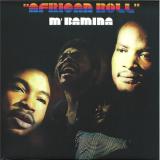
M’Bamina – African Roll (1975)
The story of an album born between Africa, Italy, and the nightclub culture of the 1970s
In the heart of 1970s Italy — a country undergoing profound social change and a music scene just beginning to open itself to distant sounds and cultures — an extraordinary, almost improbable story took shape. It is the story of a group of young African musicians who found their way to Europe, of a Turin nightclub that became a crossroads for communities and experimenters, and of an album which, released in small numbers and largely unnoticed at the time, is now considered a rare jewel of Afro-fusion.
The band called themselves M’Bamina — an ensemble of musicians from Congo, Cameroon, and Benin, who arrived in Italy in the early Seventies. Settling between northern Italy and the Pavia area, they began performing in small clubs and community events, bringing with them a vibrant rhythmic heritage: African polyrhythms, call-and-response vocals, funk-infused bass lines, and Caribbean or Afro-Latin colours absorbed along their musical journeys. Their raw, contagious energy on stage quickly drew attention.
Meanwhile, in Turin, another story was unfolding. There was a venue becoming almost legendary: Voom Voom, one of the city’s liveliest nightclubs, run by Ivo Lunardi. The club attracted an eclectic crowd — students, artists, foreigners, night owls — and Lunardi quickly understood that the dancefloor wasn’t just a place for music, but a melting pot for a new kind of cultural energy. Out of this vibrant atmosphere came his idea: to turn the club’s name into a small independent record label, Voom Voom Music, capable of capturing the spirit of those years and giving voice to unconventional projects.
When Lunardi heard M’Bamina, he immediately sensed that this was the sound he had been searching for: fresh, different from anything circulating in Italy at the time, and capable of blending African tradition with funk and European sensibility. He brought them into the studio.
Production was handled by Lunardi along with Christian Carbaza Michel, while the engineering was entrusted to Danilo Pennone, a young sound technician with a sharp, intuitive ear.
The recording sessions — held in Turin in 1975 — produced a remarkably warm and direct sound. The music feels almost live: grooves rooted in African tradition, but open to funk-rock structures and modern arrangements. It is a natural fusion, never forced. Tracks move between tribal rhythms, funk basslines, light electric guitars, congas and Afro-Latin percussion, with call-and-response vocals and melodies that echo both Congolese tradition and the lineage of Latin jazz. Not by chance, one of the album’s most striking tracks, Watchiwara, reinterprets a Latin standard through M’Bamina’s own rhythmic language.
The album was titled African Roll — a name that was already a statement of intention. It is African music that “rolls,” that moves, adapts, transforms within a new geographic and cultural setting. It is not strictly Afrobeat, nor Congolese rumba, nor Western funk: it is a spontaneous, hybrid blend, shaped more by lived experience than by any calculated aesthetic program.
When African Roll was released, the world around it barely noticed. Distribution was limited, and 1970s Italy had yet to develop a cultural framework for receiving such music. The national music press rarely paid attention to African or “world” productions. The album slipped into silence — though the band’s own story did not.
M’Bamina continued performing across Europe and Africa, even sharing a stage in Cameroon with none other than Manu Dibango. By the late Seventies, they moved to Paris, signed with Fiesta/Decca, and recorded a second LP, Experimental (1978). Meanwhile, the peculiar record they had made in Turin began to resurface quietly among vinyl collectors, Afro-funk enthusiasts, and DJs hunting for forgotten grooves.
That is when the album’s fate began to shift.
Over the decades, African Roll emerged as an almost unique document: a snapshot of an intercultural Italy before the word “intercultural” even existed, a fragment of migrant history, a spontaneous experiment in musical fusion born far from major industry circuits but rich in authenticity. Original copies began commanding high prices on the collector’s market, and the album became recognized as one of the hidden classics of European Afro-fusion from the 1970s.
Today, more than fifty years later, this reissue finally restores visibility and dignity to a project that deserves to be heard, studied, and celebrated. It is not simply an album: it is the testimony of a rare cultural encounter, born in an Italy unaware of how fertile such exchanges would one day become.
It is the story of a visionary producer, an extraordinary band, and a fleeting moment in which music, migration, and nightlife came together to create something genuinely new.
African Roll is — now more than ever — the sound of a bridge: between continents, between eras, between cultures. A record that, after rolling far and wide, has finally come home.
- A1: My Life Is Real
- A2: Git Ready
- A3: N Y. State Of Mind Pt. 3
- B1: Welcome To The Underground
- B2: Madman
- B3: Pause Tapes
- B4: Writers
- C1: Sons (Young Kings)
- C2: It's Time
- C3: Nasty Esco Nasir
- C4: My Story Your Story Feat Az
- D1: Bouquet (To The Ladies)
- D2: Junkie
- D3: Shine Together
- D4: 3Rd Childhood
GRAMMY-prämierte Rap-Ikone Nas und DJ Premier – zwei der einflussreichsten und angesehensten Persönlichkeiten der Hip-Hop-Geschichte – veröffentlichten ihr mit Spannung erwartetes Kollaborationsalbum „Light-Years“ am 12. Dezember digital über Mass Appeal Nach den limitierten Day Ones Editionen gibt es nun die regulären Editionen mit Artwork, ab 20. Februar 2026.
Nach jahrzehntelanger Vorfreude ist „Light-Years“ die Wiedergeburt einer 30-jährigen Zusammenarbeit. Die Partnerschaft von Nas und DJ Premier ist tief in der DNA des Hip-Hop verwurzelt. Ihre Geschichte begann 1994 mit „Illmatic“, das Hits wie „N.Y. State Of Mind“, „Memory Lane“ und „Represent“ hervorbrachte. „Illmatic“ etablierte Nas als Ausnahmetalent und festigte Premiers damals aufstrebende Karriere. Ihre musikalische Chemie vertiefte sich im Laufe des folgenden Jahrzehnts durch Klassiker wie „I Gave You Power“, „2nd Childhood“, „Nas Is Like“ und „N.Y. State Of Mind Pt. II“.
Angeführt von Mass Appeals bahnbrechender Reihe „Legend Has It…“, die einige der wichtigsten und einflussreichsten Hip-Hop-Künstler aller Zeiten feiert und ins Rampenlicht rückt, präsentierte die Reihe ein ganzes Jahr lang historische Veröffentlichungen von Kultur prägenden Künstlern wie Slick Rick, Raekwon, Ghostface Killah, Mobb Deep, Big L und De La Soul. Mit „Light-Years“ liefern Nas und DJ Premier den krönenden Abschluss dieser legendären Reihe, in der ihre unbestreitbare Synergie nach wie vor einzigartig ist.
2006 zierten Nas und DJ Premier das Cover des Scratch Magazine und kündigten ein gemeinsames Projekt an, das die Begeisterung der Fans erneut entfachte und die zwei Jahrzehnte währende Vorfreude beflügelte. Letztes Jahr taten sich Nas und Premier zusammen, um das 30-jährige Jubiläum von „Illmatic“ mit der Veröffentlichung des neuen Tracks „Define My Name“ zu feiern, mit dem sie erstmals ihr wegweisendes Kollaborationsalbum ankündigten.
„Light-Years“ ist ein wahrer Beweis für den Einfluss beider Künstler, ihr Vermächtnis und die Zeitlosigkeit ihrer gemeinsamen Musik.
Arodes & Alessio Cristiano / Super Flu / Moeaike / Martim Rola & Mats Westbroek
Unreleased Records Vinyl Sampler
Unreleased Records is the label founded by Arodes, recognized for its afro-house, melodic, and club-oriented sound within the international electronic music landscape. Through a combination of high-quality productions, a strong and carefully developed artist roster, and an expanding live platform, Unreleased Records positions itself as a forward-thinking imprint that bridges underground credibility with international audience reach, and are now, after much demand, debuting on vinyl, with this standout 4 tracker EP with 3 tried and tested club bangers, and 1 unreleased gem.
So far, “Gwele,” “Don’t Mind,” and “Nothing’s Changed” have already been supported by heavyweights of the scene, including, Ante Perry, Black Coffee, Bluckther, Camilo Franco, Carl Bee, Chus & Ceballos (Ceballos), Cincity, Deer Jade, Djuma Soundsystem, Enoo Napa, Facundo Mohrr, Hyenah, Jonathan Kaspar, Joseph Capriati, Mauricio Brigante, Moeaike, Nicolas Masseyeff, Queen Rami, Sasha Carassi, Simone Vitullo, THEMBA, and Xinobi.
Wolfgang Haffner is one of Europe's most respected jazz drummers, known for his impeccable sense of timing, groove, and atmosphere. Though rooted in jazz, his musical language transcends genre boundaries, guided by pulse and subtle nuance rather than tradition alone. For Cocoon Recordings, he now enters an entirely new dialogue, offering warm, organic reinterpretations that honor the spirit of the source material while opening a fresh sonic horizon. The result is a meeting of two artistic worlds where Sven Väth's timeless energy and Haffner's refined touch flow naturally into a new musical form, an encounter between two artistic universes, merging into something both unexpected and deeply musical.
Fusion is a groove driven piece built around a clear, flowing melody, allowing Haffner to reinterpret it acoustically through a jazz lens. Its straight, driving pulse lets him explore the track's rhythmic and melodic interplay with clarity and nuance.
L'Esperanza, originally a dreamy, trance like track, envelops listeners in strings, filtered downbeats, and a playful synth melody, a perfect canvas for Haffner's warm, organic touch. Its ethereal layers and subtle tension allow him to explore the track's emotional depth while preserving its entrancing charm.
Barbarella, emblematic of Sven Väth's early 90s vision, carries the energy and innovation of a club classic. Haffner's reinterpretation transforms it into a rich, acoustic exploration that honors its hypnotic essence. By emphasizing the track's iconic motifs and underlying drive, and by drawing out the track's essential elements, he bridges its electronic origins with a new, organic perspective.
Together, these three reinterpretations form a cohesive journey that celebrates the timeless essence of Sven Väth's music while revealing a new dimension through Haffner's masterful touch, a release that invites listeners to experience familiar classics in a completely new light.
Jerome Hill, Lukes Anger, Dark Vektor and Computer Madness deliver a no-nonsense 12 Inch strike between Electro, Detroit pressure and machine funk. Punchy drums, icy synth cuts, raw momentum, built for DJs, built for floors. Four producers, four angles, one shared language of body-ready electronics, driven by Detroit energy and sharp-edged Electro.
uper Deception dives into the uncanny beauty within the everyday, drawing inspiration from M.C. Escher’s idea of “super deception”: the art of creating the impossible without illusion. Nelson of the East translates that concept into sound: deep, tactile basslines and intricate percussion twist familiar rhythms into hypnotic new forms. Textures and samples are lifted from their origins and reimagined, creating tracks that feel both ancient and futuristic, physical and dreamlike. The result is an electronic landscape where sound folds in on itself: a timeless, shape-shifting exploration of rhythm, resonance and perception.
Nelson of the East is a Berlin-based sound artist, producer and educator. He operates at the intersection of experimental composition and club culture, shaping his craft both as a music teacher and behind the scenes as an experienced ghost producer.
Artwork & Layout by Alicia Carrera
Arriving twenty-six years after his debut Cell, Particle further sharpens the fractured electronics and muted melodic language explored on 2021’s From Stasis, presenting a crisper, more immediate set of compositions.
Cadoo, also widely known as a founding member of pioneering electronic project Gridlock, has used Dryft as a consistent outlet for his electronic work across decades, bridging early post-industrial IDM with more contemporary, restrained forms.
Long recognized for beat structures that feel precarious, rhythms that seem to strain, erode, and reassemble in real time, he approached Particle with a renewed focus on allowing these patterns to fully resolve. Melodic elements are given a more direct role, actively driving momentum rather than hovering in the margins.
Emphasizing clarity and immediacy, Particle favors tactile sound design and forward-pushing arrangements over density or abstraction. The result is a notably focused Dryft release that functions as an all-encompassing signpost for Cadoo’s electronic output to date, informed by decades of exploration while remaining resolutely forward-looking
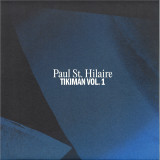
For the first time in more than a decade, Paul St. Hilaire (AKA Tikiman) presents a solo album – 100% Tiki.
Over his 30-plus year career, St. Hilaire has become one of dance music’s quietly legendary figures. Born and raised in Dominica, he moved to Berlin in 1994 and has lent both his voice and his musicianship to some of the most iconic electronic music from the German capital – and beyond. Renowned for his collaborations with Moritz von Oswald and Mark Ernestus (AKA Rhythm & Sound), he has also appeared on records with Deadbeat, Rhauder, Larry Heard aka Mr. Fingers and Stereotyp (G-Stone Recordings), amongst others.
However, few know the extent of St. Hilaire’s compositional and technical mastery. From his home studio in Kreuzberg, which includes an extensive collection of vintage hardware, self-built instruments and notebooks scribbled with endless lyrics, he has created a vast archive of material spanning ambient dub, avant-jazz, lush techno and lovers rock.
Tikiman Vol. 1 is a heady, downtempo tour de force of patois metaphors on education, displacement and personal vs. global histories, as is evident on slippy album opener “Bedroom in My Bag”: Mister, mister / Where are you going? / I’m heading for a faraway land / What are you having in the bag in your hand? / Help us to understand / He said, I’ve got my bedroom in my bag.
Overall, the album’s lyrics reflect on life between Berlin and Dominica, specifically St. Hilaire’s hometown of Grand Bay, where he has worked with various musicians famous for the island’s different genres of carnival music. St. Hilaire himself always favoured the island’s more “discrete” music, developing a sonic synergy between two different geographical strains of groove and minimalism, and combining them with foundational Caribbean mixing techniques, which provide the basis for his songwriting and distinct
baritone.
Tikiman Vol.1 offers a rare insight into St. Hilaire’s complex artistry, from the eyes-down grooves of “Little Way” and the guitar-heavy digi dancehall experiment “Keep Safe,” to the subtle hypnosis of “Ten to One” and the softly crashing synth waves of closer “Three And A Half”, evoking not only beaches but also coasts and borders. It’s a fitting expression of both the breadth of St. Hilaire’s work, as well as his history as one of the few black, Berlin-based artists who, despite remaining largely overlooked, has influenced the city’s electronic music culture since its beginnings.
Credits
Written & Produced by Paul St. Hilaire
Mastered by Stefan Betke
Artwork by Grant Gibson
Kynant Records was founded in 2015 by Richard Akingbehin, a British-Nigerian radio programmer (Refuge Worldwide), music writer and DJ. Originally specialising in deep techno and featuring artists such as Cio D’Or, Terrence Dixon and Donato Dozzy, Kynant has since launched a sub-label Kynant EX which focuses on ambient, dub and experimental electronics.
- A1: Paul St Hilaire & Mala - Like It’s Always Been
- A2: Paul St Hilaire, Aurora Halal & Dj G - Mary Jane Greenfield
- A3: Paul St Hilaire & Cousin - Back Inna Business
- B1: Paul St Hilaire & Priori - Send Them On
- B2: Paul St Hilaire & Shinichi Atobe - Time To Wake Up
- C1: Paul St Hilaire & Batu - Free Your Mind
- C2: Paul St Hilaire & Azu Tiwaline - Let The Night Start
- D1: Paul St Hilaire & Gavsborg - Confidential
- D2: Paul St Hilaire & Russell E.l. Butler - What’s This
Legendary dub techno artist Paul St. Hilaire (AKA Tikiman) announces new collaborative album, marking 10 years of Kynant Records
Building on the success of Paul St. Hilaire’s landmark solo album for Richard Akingbehin’s label Kynant in 2023, w/ The Producers switches up the formula to pair St. Hilaire’s with a different producer on each track. Referencing fellow dub techno pioneers Mark Ernestus & Moritz von Oswald’s acclaimed album w/ The Artists as Rhythm & Sound, St. Hilaire flips the concept to feature as the lone vocalist.
Over the album’s nine tracks, St. Hilaire offers a range of conscious song-writing and headtop musings, such as the spoken-word dread of “What’s This” or the sparse call-to-action of “Send Them On”. The record weaves through all shades of contemporary dub evolutions, showing the vocal range and versatility of St. Hilaire. w/ The Producers is yet another essential record in St. Hilaire’s unmatched discography.
The producers were curated by label owner and DJ Richard Akingbehin to give the new album a future-facing feel and mark 10 years of Kynant Records. Akingbehin sourced beats from luminaries such as Digital Mystikz boss and dubstep trailblazer Mala or elusive Chain Reaction artist Shinichi Atobe. They sit alongside some of the most exciting names in recent electronic music - Batu, Gavsborg, Azu Tiwaline, Priori, Cousin, Russell E.L. Butler, Aurora Halal and DJ G - all of whom bring different elements of dub techno into their productions.
w/ The Producers finds Kynant Records bridging the original voice of dub techno with the genre’s new wave. It’s a statement of intent from the label, which began 10 years ago with deep, hypnotic techno and has veered gradually towards more dubwise sounds
2026 Repress
Trickpony rightfully return with their sensual sophomore record, a six track tip of downtempo anthems elaborating on the sonic blueprint established through Pillow Talk (STEP11). Contemporary trip hop revivalists at the core; the trio specialise in new age pop collages, stripped, subbed and dubbed for your pleasure. With whispered secrets tangled over atmospheric decay and hooks that tug at heartstrings, the trickpony DNA is embedded deep in the musical discourse; “24/7 Heaven” elevates even the most devious to a divine higher place.
From top to tail slung breaks crash like waves, rolling and seeping into opulent synthesis which fills the room. Sometimes music can say a thousand words without a single lyric; Ripple and Trick Trick fixating on textural constructions, layers of harmonic delight working in unison with forward thinking percussion patterns. Angel and No/Direction delve deeper into a more sparse, stripped back landscape; delayed fragments with room to breathe between vocal stylings that will lodge themselves into your memory one word at a time.
Closing with a psychedelic exploration, Memphis Light derails structure formula and drum&bass starts to feel technicolour. With an understated maturity exuding from all angles, STEP17 offers an introspective assortment of illustrious songs ready to reach into your subconscious.
A cult electronic artefact from 1999 resurfaces here as DHS's 'From Outer Space' lands once more on wax. Ben Stokes' project has always thrived on the fringes of breakbeat and acid experimentation. Stretching across 12 minutes, 'From Outerspace' is a patiently unfurling trip built on hypnotic loops, eerie atmospherics and a restless low end that never quite settles. Fairground oddities, UFO signals and disembodied shrieks drift in and out of focus to tease the floor before locking into a rugged, heads-down stride. On the flip, 'DHS Theme 2014' and 'Voodoo Breaks' extend the sampledelic ritual with squelch and understated menace.
2026 Repress
A landmark release for both the label and its founder as Kasra releases his debut solo EP. The Ski Mask EP features 4 tracks of rolling low end and marks the start of a new phase for him to make his mark as an artist as well as DJ.
Kasra says, "After 16 years of running the label I thought it was time I released a body of work of my own. It's quite daunting after all the incredible music the artists have given me to be doing this for the first time. I hope you enjoy it for what it is: raw, honest drum and bass."
New album by SABA ALIZADEH, a groundbreaking voice in contemporary Iranian music who blends classical Persian traditions with avantgarde experimentation.
Born in Tehran in 1983 as son of the world renowned tar and setar virtuoso HOSSEIN ALIZADEH, SABA ALIZADEH established himself not only as a true master on the Iranian spike fiddle kamancheh but one of the groundbreaking voices in contemporary Iranian music, blending classical Persian traditions with avantgarde experimentation. His music, praised by THE WIRE as "a bridge between the ancient and the contemporary", turns sound and image into powerful narratives of memory and resistance. Over the past years, ALIZADEH (who relocated to the Netherlands a few years ago) has appeared at key festivals and venues such as Reeperbahn Festival, CTM, Flow Festival, Philharmonie Berlin, Kölner Philharmonie, solidifying his reputation as a singular live performer.
After the critically acclaimed releases "Scattered Memories" (his international debut, released on Karlrecords in 2019), "I May Never See You Again" (2021) and last year's "Temple of Hope", his new album fascinates again with a unique artistic voice, weaving together centuries-old sonic heritage and the urgency of the present through deeply immersive, meditative landscapes in two epic pieces. "Rituals Of The Last Dawn" may feel like a sad or resigned title (compared to the positively fierce "Temple Of Hope"), but at the same time the highly meditative music provides a good lot of contemplative strength. Appealing to an open-minded "world music" audience as well as fans of current streams of ambient or drone in its most subtle forms, ALIZADEH's latest work is a strongly needed soul food in bitter times. Created on the spot with his musical partners PIETRO CARAMELLI (guitar and electronics on "First Ritual") and LIEW NIYOMKARN (lap steel and electronics on "Last Ritual"), "Rituals Of The Last Dawn" is a pure, unfiltered emotional expression from one of contemporary Iranian music's leading artists.
2024 repress
Lars Huismann makes a quick return to SHDW & Obscure Shape's newly minted Mutual Rytm imprint as he delivers a medley of classic, groove-driven techno productions via his "Sounds From The Past I" EP.
With recent releases via labels such as Slam's iconic Soma, Berlin-based DJ and producer Lars Huismann is quickly growing to become a familiar name of note within today's modern techno landscape. Having featured as one of the artists on the label's debut V/A release in February, with the German set to feature as a regular across the imprint in coming months, he unveils fresh shades to his sound palette on his return to Mutual Rytm with a combination of six slick techno cuts across his "Sounds From The Past I" EP.
The powerful, rolling dynamics of "Surge" open proceedings as Huismann quickly sets his stall, while "Collison" veers into slick, looping territories as the energy and tension are kept tight and high. Next, "Echo" ups the pace as tough kicks meet zipping melodies, filtered chords and looping vocal interjections amongst a medley of flurrying percussion licks, before "Funk Shed" takes cues from its title and showcases a classy blend of classic Detroit-influenced sonics guided by sweeping synths. Title cut "Sounds From The Past I" brings with it flashes of serenity and peace, before erupting and spiralling effortlessly into infectious and captivating drum grooves, before closing the show via the rich yet muscular tones of final offering and digital bonus track "Jackin".
Lars Huismann "Sounds From The Past I" EP drops via Mutual Rytm in March 2022.
UK Balearic boss Pete Herbert has been dropping sounds inspired by his worldly travels for years and now gems from the last 20 years all make it on to this essential long player. These are all sounds for sunny spots, watery retreats and beach bliss-outs with Pete's signature touch everywhere. 'Back To Bahia' is a bubbly and loose house sound, 'Later That Night' has an edge that makes is suited to sundown dancing and 'South Seas' is a horizontal escape, while 'Legzira Sunrise' is dubby downtempo with tender chords that sink you in deep. This is the sort of record that elevates your collection with magical tunes for many different moments.
At the core of the creative process behind “HPC” and “Bor3d” lies meta-irony, a quality that permeates much of today’s digital content landscape.
Both tracks are a deliberate attempt to push the sound toward a barely perceptible absurdity and ironic unseriousness in their interpretation of well-familiar styles of dance club music. It is a play with form, expectation, and recognizability — balancing sincerity with sarcastic exaggeration.
Okay
Okay is built around interruption. Voices, fragments of dialogue, yawns, irritation — people seem to step inside the track uninvited. Someone is bored, someone is annoyed, someone tries to stop the flow entirely. Just like in real life, the process is constantly disrupted. The track reflects the experience of being surrounded by opinions, noise, and skepticism — especially the kind that will never be convinced, no matter what you do. “Okay” becomes a quiet, ironic response to this pressure: not agreement, not approval, but endurance. The track continues anyway.
Tripatura
Tripatura is a fictional creature — a warped echo of cryptid mythology. In this narrative, Tripatura doesn’t simply exist, it hunts. Once it finds you, it drags you into an endless trip with no exit point. Time stretches, perception blurs, and the track itself becomes the trap. Its prolonged, unresolved ending mirrors the experience of being stuck inside a loop that refuses closure. Tripatura doesn’t rush. It lingers, slowly pulling you deeper, until the trip no longer feels temporary.
"Over the past three decades, Philipp Lauer has produced an incredible body of work, deploying a myriad of aliases, both as a solo artist and as a part of collaborative projects. From his hardware-steeped Frankfurt studio Pyramide 2, he has built this catalogue through original material and remix commissions, taking on the full spectrum of electronic music while retaining an unmistakable signature. He combines a hands-on approach to rhythm and composition with a DIY MO and a love of big hooks. The level of expertise at hand seems to facilitate a playfulness that subtly permeates all layers of his work. He's a pop melody natural who just so happens to love fiddling with synthesizers, drum machines, and effects an equal amount. All of these qualities are exemplified on "Embalmed In Martino": Lauer's four-track ode to the Belgian Martino sauce, a spicy tomato-based condiment, and arguably the essential ingredient to top off the namesake raw meat sandwich. On "Embalmed", which makes use of instrumentation that would fit right in on an early eighties Manchester cut, and "Martino", where a sturdy, electroclash flavored arp bass provides the stamina, a slew of big and small riffs easily work their way in, thirsting for our ears. On the other side, "Transactional" combines Miami basslines and similarly electro-fundamental twinkling synth work with a flanger-laced 4/4 beat, while "Don't You Know" features soaring synthwave patterns and the only vocal samples on the EP. Both sport rich arrangements as well, right down to the cowbell overdubs. Lauer's often lauded for his "summery sound". In this light ALT026 lands right on time - yet we might disagree here, as it's suited for all seasons, and all terrains, both the shiny festival grounds and the dim-lit club floors."
- A1: Let's Rock (Title)
- A2: Ev-01 (Opening)
- A3: St-01 (Ancient Castle Stage)
- A4: Pubic Enemy (Battle Theme 1)
- A5: Gm-03 (Divinity Statue)
- A6: Psycho Siren (Mid-Boss Battle Theme)
- A7: Flock Off! (Griffon Appears - Battle Theme)
- A8: Gm-04 (Mission Clear)
- B1: Red-Hot Juice (Phantom Appears - Battle Theme)
- B2: Gm-02 (Continue)
- B3: Mental Machine (Nightmare Battle)
- B4: St-03 (Ocean Floor Stage)
- B5: Ultra Violet (Nelo Angelo Battle Theme)
- B6: Devil Sunday (Sparda's Theme)
- B7: St-02 (Cathedral)
- B8: Ev-03 (Sin Scissors Appear)
- C1: Lock & Load (Original)
- C2: Bloody Bladder (Escape From The Underworld)
- C3: Eva's Theme
- C4: Evil Vacuum (Underworld)
- C5: Super Ultra Violet (Nelo Angelo Appears - Battle Theme 3)
- C6: Ev-19 (Nobody Appears)
- C7: Ev-20 (Nightmare Barrier - Battle Theme)
- C8: Final Penetration (Underworld Stage)
- D3: Legendary Battle V2 (Demon Emperor Mundus Battle 2 - Land)
- D4: St-10 (Demon Emperor Mundus Battle 3 - Underground)
- D5: Ev-30 (Reunion - Too Late)
- D6: Pillow Talk (Ranking Music 1)
- D7: I'm Coming! (Escape)
- D8: Blue Orgasm (Blue Sky)
- D9: Dante & Trish - Seeds Of Love (Ending Credits)
- D10: Gm-06 (Game Over)
- D1: Trish's Theme
- D2: Ev-29 (Mother's Voice - Trish Appears)
- E1: Super Ultra Violet (Nelo Angelo Appears - Battle Theme 3)
- E2: Ev-17 (The Truth)
- E3: Ev-18 (Devil Sword Sparda Acquired)
- E4: Evil Vacuum (Underworld)
- E5: Ev-19 (Nobody Appears)
- E6: Ev-20 (Nightmare Barrier - Battle Theme)
- E7: Ev-21 (Betrayal)
- E8: Ev-22 (Tactics)
- E9: St-09 (God Of The Demon World)
- E10: Final Penetration (Underworld Stage)
- F1: Eva's Theme
- F2: Legendary Battle (Demon Emperor Mundus Battle 1 - Aerial)
- F3: Ev-23 (Demon Emperor Mundus)
- F4: Ev-24 (Avenging Mother)
- F5: Ev-25 (Awakening)
- F6: Ev-26 (Dante Knocked Out Of The Sky)
- F7: Ev-27 (The Collapse Of Mundus)
- F8: Bloody Bladder (Escape From The Underworld)
- F9: Karnival (Ancient Castle At Night Stage - Plasma Appears)
- G1: Lock & Load (Original)
- G2: Ev-28 (Demon Emperor Mundus, Round 2)
- G3: Super Pubic Enemy (Sparda Battle Theme 1)
- G4: S (Sparda Battle Theme 2)
- G5: Pillow Talk Again (Ranking Music 2)
- G6: Anarchy In The U.w. (Underworld Battle Theme)
- G7: Trish's Theme
- G8: Ev-29 (Mother's Voice - Trish Appears)
- H1: Legendary Battle V2 (Demon Emperor Mundus Battle 2 - Land)
- H2: St-10 (Demon Emperor Mundus Battle 3 - Underground)
- H3: Ev-30 (Reunion - Too Late)
- H4: Pillow Talk (Ranking Music 1)
- H5: I'm Coming! (Escape)
- H6: Blue Orgasm (Blue Sky)
- H7: Dante & Trish - Seeds Of Love (Ending Credits)
- H8: Gm-06 (Game Over)
Red+Ochre Vinyl[47,44 €]
Zum 40. Jubiläum des ersten Teils des stylischen Actionspiel-Klassikers DEVIL MAY CRY erscheint der Killer-Soundtrack des Capcom Sound Teams - bekannt für seine Musik zur Resident Evil-Serie - spezielle für 180g Vinyl gemastert. Der OST ist eine genreübergreifende Meisterklasse, die von Rock über Techno zu Ambient und weiteren Paletten wechselt. Erhältlich als 2LP-Format mit 34 Tracks auf transparent-rotem und ockerfarbenem Doppelvinyl, sowie als luxuriöses 4LP-Boxset mit den kompletten 73 Tracks auf schwarzem 4fach-Vinyl.