Hatchback is the alias of Samuel Milton Grawe. Sam creates music that sings of the Cosmos, full of deep resonant tones, glistening arpeggios, lush pads and harmonic motifs. ‘Phaser For The Ocean, Chorus For The Moon’ is his magnum opus, a sprawling masterwork that encompasses ambient, new age and environmental music to wondrous effect. Soaked in Californian consciousness, the album is a balm like no other for these troubled times.
When I first was getting into the creative side of music making in my teens, I was heavily influenced by concept albums like ‘Quadrophenia’ and ‘The Lamb Lies Down on Broadway’, as well as epic pieces that took up an entire side of a record: Pink Floyd’s ‘Echoes’, Yes’ ‘Close To The Edge’, Klaus Schulze’s ‘Nowhere Now Here’, Miles Davis' ‘Shhh/Peaceful’ and ‘He Loved Him Madly’. In the extreme, these ideas coalesced in double albums where each side of each record is occupied by a single title - Yes’ ‘Tales From Topographic Oceans’, and Tangerine Dream’s ‘Zeit’ being primary examples. When I returned to making music after moving back to Northern California in 2020, the first piece I recorded landed around the 20-minute mark, and the idea of creating three other long pieces to realize a full album felt like a natural - if indulgent - goal. From there, each new piece followed sequentially. Four songs. My fourth album. - Sam Grawe
‘Phaser For The Ocean Chorus For The Moon’ is a pure expression, informed by a lifetime of deep listening unbound by algorithms or AI.
These are songs for the sunrise and the sunset - and every colour in between.
[a] 01. And The Walls Became The World All Around [18:53]
[b] 02. Phaser For The Ocean, Chorus For The Moon [21:48]
[c] 03. Other Desert Cities [20:19]
[d] 04. Friendship Fountain [18.33]
Suche:b lan 3
Loud Ambient 2 picks up directly from where Loud Ambient left off. After picking the drum machines back up, we returned to the colourfield ideas that shaped the first record. Rothko remained a key reference, along- side a strong recommendation to spend time with the work of Josef Albers. We did exactly that, and it paid off.
Alongside the music, we created 50 new pieces of artwork for Loud Ambient 2. These became tools rather than decorations. Working this way felt open and rewarding, and brought a real sense of play back into the process. We already understood what a Loud Ambient track could be, so slipping back into that headspace felt natural. The tracks came together quickly, full of energy, movement and that familiar noodle quality.
The creative side landed easily this time. There is some- thing about working with colourfields that frees you up and pushes you further into abstraction. It removes hesitation and keeps the focus on instinct and response.
With the drum machines and synths loaded, we kept our heads down and made the kind of music we want to hear on a dance floor. Loud Ambient 2 is the result.
Love Reaction returns with a new release and unveils the third and final chapter of its vinyl catalogue: ZONE, a series dedicated to club-oriented electronic music. For the occasion, the label welcomes ORA, two seasoned professional musicians rooted in the jazz scene, eager to explore new sonic territories together.
With Common Frequency, the duo unfolds a raw and organic sonic tapestry. Live, they sculpts landscapes in real time using drum machines and synthesizers, unleashing a club energy that is both electric and vibrant. Between analog textures and immersive rhythms, this debut EP asserts a strong and magnetic identity.
,,Hologramm" is the new EP by Schwefelgelb.
Remix contributions by Nastia Reigel and Norbak make it a 5 track Techno heavyweight.
An intriguing combination of positive, joyful atmosphere and gritty, pushy sound aesthetic spans all over the record. "The Show" and its euphorigenic rising stabs appears like what could be transformed into an Euro Dance anthem easily.
Yet the aware and well curated production holds it firmly in the zone of Techno and House underground. Speaking House, here's "In Mein Glas" - a sportive track with an irresistible bounce foiled by a lackadaisical vocal line, which gives it a comic twist.
As "Fieber" keeps the bounce we're getting a little more aggressive again: a delicate distortion, a dominant bass and a groovy drive. In all these 3 original tracks it's the melange of melodic motives, vocal highlights, crispy production as well as versatile creative details, which creates this specific sound that gets you hooked. It is lightness however wrapped in an Industrial musical language.
That said, the remixes proof how a new energy can be revealed by more minimal re-interpretations. Nastia Reigel, getting hands on "The Show", pushes drums and a fresh rhythmic play of vocal chops into the foreground. A sparse break followed by a powerful drop adds a strong climax. Norbak's approach on "In Mein Glas" takes the melodic motive and embeds it into a dubby space, not giving up on the hard-hitting kick.
"Hologramm" will be released on 140 g colored vinyl and digitally, April 10th, on n-PLEX.
2026 Repress !
Black Label #36 is introducing Mladen Solomun to the Compost Black Label Crew. Solomun who was born in the heart of Bosnia, grew up and still lives in Hamburg. Beside his residency at "Uebel & Gefaehrlich" he is the host of Club "DIY" in his chosen hometown Hamburg since five years now. With his first releases on labels such as Diynamic Music, Sonar Kollektiv, Liebe*Detail and Steve Bug's Dessous Label his tracks were played and charted by DJs like Gabriel Ananda, DJ T., Tobi Neumann, Martin Landsky, Laurent Garnier, Tiger Stripes just to name a few.
For his Black Label debut Solomun has built three very deep and organic tracks.
- 1: Nuvole I
- 2: Nuvole Ii
- 3: Nuvole Iii
- 4: Nuvole Iv
- 5: Nuvole Ix
- 6: Nuvole V
- 7: Nuvole Vi
- 8: Nuvole Vii
- 9: Nuvole Viii
- 10: Nuvole X
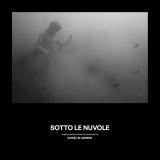
In Gianfranco Rosi’s portrait of Naples, Sotto le Nuvole, the ground shakes periodically. Between Mount Vesuvius and the Tyrrhenian Sea, the fumaroles of the Phlegraean Fields hiss volcanic gas and steam. Below the sleeping volcano, modern day Naples emerges in black and white and fills with voices, with lives. From the traces of history and the concerns of the present, Rosi documents a city immersed in its continuous past, with Daniel Blumberg’s minimal soundscape hovering in a sonic space between liquid and air.
Tasked with creating a soundscape that would suspend space within Rosi’s film, Blumberg called upon the extended technique of saxophonists Seymour Wright and John Butcher to create a gossamer fabric of traces and sounds abstracted from their instruments. Having transitioned from theoretical physics to the saxophone, John Butcher has always deeply considered space in the context of his playing. His concerns are with flow, density and how the saxophone is situated in the living world. Zeroing in on the core sonic properties of the mechanical and acoustic components of the saxophone, Seymour Wright has integrated its every breath, reed vibration, keypad clatter and hissed microtone of his alto into his own, unique improvisational language. In his work with these two seminal players, Blumberg makes his most concentrated soundtrack to date - reinforcing the film's sense of overlapping time and space, and pushing at the limits of experimentation.
Initially recorded in Daniel’s flat in London, Butcher and Wright centre themselves around long, consistent tones, so soft that it seems breath is being gently pulled from the saxophone's bell by an invisible hand. Blumberg himself adds haunting bass harmonica, and recordings of Wright’s launeddas - a traditional and ancient triple pipe polyphonic reed instrument from Sardinia, Italy. Blumberg then travelled to the volcanic region of Baia, next to Pompeii. Once a flourishing classical Roman city loved by Nero, Baia slowly sank under hydrothermal pressure, leaving the city in a kind of geological purgatory. Using specialised geophones and hydrophones, Blumberg took those initial recordings and amplified them underwater, sending them calling out across the ruins of Baia’s mosaics, Nymphaeum statues and villas.
“It was important to me that the music was whispered in the same landscape that Gianfranco has worked for the past three years, so that you can hear the volcanic air gulping, the lapping of the waves, the steam and bubbles popping against John and Seymour’s saxophone breaths – an echo from a suspended time.”
What emerges is deeply melancholic, tender, subtle and right at the edges of audio technology. Submerged in an aquarian mausoleum, the mysterious vibrations of the saxophone and its bell become an echo of an echo, wading from the future into the past. ‘Sotto le Nuvole’ is less a soundtrack than a process of aeration - a sonic puncture in the material of the film which allows its central message to breathe, and a remarkable experiment at the limits of the saxophone’s possibility.
- 1: Glass Bottom Boat
- 2: Paper Screen
- 3: Awhile
- 4: Fog On Mirror Glass
- 5: Old Universe
- 6: Makeshift Room
- 7: Your Dreaming Eyes
- 8: Valley Floor
- 9: Usual Phantom
- 10: Bamboo
Fog On Mirror Glass introduces a new aesthetic amongst Donald Beaman albums. After four albums of varied full-band arrangements, this album emerged as an idea to present solo performances in conversation with full-band work. The bulk of the songs were recorded in the same place they were written: Beaman’s living room. Long time bandmate and producer Kirt Lind set up a makeshift studio at Beaman’s house to record the guitar parts in the same room where they were written, using the same guitars on which they were first played.
Unfurling with a measured pace, the resulting album combines elegiac lyrics with elemental arrangements played with an almost jazz-like reverential expressiveness, calling to mind the works of Cass McCombs, Will Oldham, and Jake Xerxes Fussell. Album opener “Glass Bottom Boat” sets the tone for the album with just Beaman and his guitar – written during the final months of a decade-long stay in New York City, the song was finished upon his arrival back in California. Meanwhile the title track, long a staple in live sets, lands near the middle of the album to recalibrate the mood, featuring the ghostly guitar work of longtime collaborator Ken Lovgren. “Old Universe” lifts things up a bit, propelled by the brushwork of drummer Michael Nalin and the jaunty bass playing of Kirt Lind. Finally, the album ends much the way it began, with Beaman and his guitar on album closer “Bamboo”.
“The dictionary definition of less is more.” - ---- Mojo
“His ability to carve universal empathy from mundane domesticity is remarkable.” - ---- RNR Magazine
“...a collection of evocative scenes and vivid emotions sung to sparse musical arrangements in Beaman’s distinctive sonorous tones” - Americana UK
“...pure and simmering, like a tattoo dedicated to a long lost friend, slightly fading from years in the sun, a memory that will always bring a tear in those quiet reflective moments.” - Psychedelic Baby Magazine
Music From Memory presents inrain, a collaborative project by Rudy Tambala of A.R. Kane and Alison Shaw of Cranes, originally recorded in the early 1990s.
inrain brought together two artists who were at the time shaping distinct yet quietly influential currents within alternative music. Through A.R. Kane, Tambala had helped redefine the possibilities of guitar music, placing atmosphere, abstraction, and emotional ambiguity at its centre in ways that would later resonate across dream pop, shoegaze, trip hop and experimental pop. At the same time, Shaw’s work with Cranes was establishing a singular vocal presence and a deeply intuitive approach to mood and space. inrain emerged at the intersection of these sensibilities.
The project began after Tambala was introduced to Shaw by Geoff Travis, leading to sessions at H.Ark! Studios in Stratford, East London. Working outside the expectations of their primary bands, the pair recorded informally over several months, building songs from minimal foundations. Early sampling technology, drum machines, acoustic guitar, and voice were used sparingly, with arrangements left open and space treated as an active element within the music. Vocals were often improvised, first takes preserved, and the atmosphere of the studio — calm, unhurried — became part of the sound itself.
Originally released in limited form during the early 1990s, the recordings carried subtle traces of the surrounding musical landscape: the low-end experimentation of emerging jungle, dub-influenced rhythmic structures, and a restrained melodic sensibility shaped as much by classical textures as by contemporary underground culture. Though modest in scale, the music feels quietly expansive — intimate, patient, and emotionally direct.
For this release, all tracks have been newly remastered from the original DAT tapes. This edition also includes the additional track 'Biology', written and recorded in 2012
Sound Records proudly presents ‘Morpho’, the debut LP from UK-based producer Benyayer, formerly one-third of celebrated electronic trio Dark Sky. A deeply personal record and a symbolic transition, Morpho captures the emotional and sonic evolution of an artist in metamorphosis.
Having stepped into the solo spotlight following his successful Infiltrator EP, Benyayer (aka Matt) delivers a bold, vinyl release that combines seven previously digital-only tracks with a brand new cut, ‘The Return’, all meticulously curated and pressed for the first time on wax.
Bridging influences from techno, UK bass, Afrofuturism, and electronica, Morpho is a meticulous exploration of rhythm designed to excite, cause chaos, personal reflection and movement. Each track is a raw, rhythmic exploration that draws on his time spent busking on the streets of London with found objects, experimentation with modular synths and years of experience honing his craft as a performer at some of the finest establishments in the electronic music landscape.
This initial vinyl edition is limited to just 300 copies. Designed in collaboration with Harry Cresswell, each sleeve features a deconstructed butterfly motif, laser-cut on both sides of heavy matte stock, paired with a matte-printed inner sleeve and a transparent vinyl disc, making each copy a true collector’s item.
The LP arrives amid support from tastemakers like Gilles Peterson, Benji B, and Tom Ravenscroft (BBC 6 Music), as well as heavyweight artists including Ben UFO, Bicep, Laurent Garnier, Bonobo, and Modeselektor.
Benyayer's new live show, built around these very tools, has already been trailed to great acclaim across Europe, adding a powerful performative dimension to the record. With previous performances at Berghain, Fabric, Glastonbury, MUTEK, Dimensions and Melt Festival. Benyayer's solo trajectory continues to rise with intent, mystery, and a fierce sense of artistic purpose.
Silicon Scally and Fleck E.S.C. need no introduction at this stage. Both artists are veterans not just of Sheffield's Central Processing Unit label but of modern electro as a whole, with the pair having decades of skin in the game at this point. Their new release, a four-track EP entitledSlipwhere Silicon Scally handles the first half and Fleck E.S.C. the second, carries itself with the adventurous confidence of a record made by masters of their craft.
Slipopener 'Phased Array' is exactly the kind of top quality machine-funk tackle you'd expect from this meeting of minds. The beat programming is deliciously tactile from the off, hissing and clanking like machinery in an old Detroit factory. The feel of 'Phased Array' is altered, though, when the chords come in, a series of alternating floating sounds which give the track an altogether eerier feel. When all of this is coupled with the otherworldly synth blurts that periodically force their way to the front of the track, the overall effect is a piece of real depth assembled by an expert practitioner.
'Phased Array' is followed up by 'Stax', another brilliantly propulsive number. Here we find the drum beat - one which is a little reminiscent of that Kraftwerk tune about the numbers, no less - once more offset by some decidedly more shadowy synth work, all while arpeggiated keyboard licks work against an intricate web of basslines, chords and unidentifiable flying synth tones.
Fleck E.S.C. opens theSlipB-side with 'Good Ride', a number where the nudge-wink title is borne out by a track built around looped snippets of sighing vocals. That said, with a bassline that sounds like a blurting old landline telephone, a ghoulish synth lead and all manner of motion-sick breakdowns, the 'ride' in question could just as well be aWipeout-style whizz through hyperspace as anything more suggestive. 'Good Ride' also sets itself apart from the other joints here by showing off a swaying halftime breakdown.
'Intox Remedy',Slip's closer, wraps the EP in a manner which continues some of the trends of the record's earlier tracks - richly tuneful chords, precision-engineered broken beat drum programming and a wide palette of delightfully unusual synth tones are all present and correct. However, there is also something about the chords here which pares back the eeriness of previous joints for a bit more of a wide-eyed, stargazing feel, and as such 'Intox Remedy' sees the record out by placing the listener firmly back in the cosmos.
Tough enough for the dancefloor and intricate enough for home listening, theSlipEP is a fabulous collaboration from two of the most respected voices in the electro game.
This album brings together key tracks from Doug Carn recorded for Black Jazz Records in the 1970s.
Doug Carn is one of the most-important (and least-recognised) forces in the creation of the canon of 'deep and spiritual jazz music' - full of powerfully emotive intensity, consciously-uplifting lyricism and addictively beautiful melodies.
All of his LPs during this period have since achieved cult classic status including 'Infant Eyes', 'Adam's Apple', 'Spirit of the New Land' and 'Revelation'.
Aside from his songwriting and keyboard skills, many of the tracks here feature the stunning and powerful 5-octave range vocals of Jean Carn (later Carne), his wife at the time.
Musicians featured on this album include Alphonse Mouzon, Charles Tolliver, Henry Franklin, Michael Carvin, Walter Booker, Ronnie Laws and others. Aside from Carn’s compositions there are also striking interpretations of music by Lee Morgan, Miles Davis, John Coltrane, McCoy Tyner, Bobby Hutcherson and Wayne Shorter.
Black Jazz became one of the defining labels of independent and conscious jazz music in the 1970s alongside other important labels such as Strata-East and Tribe Records. As well as this Best of Doug Carn release, Soul Jazz Records are also releasing a Best of Black Jazz Records collection at the same time.
Continuing his inspired path into fractalised micro-dub-techno, John Howes lands his Paperclip Minimiser project amongst kindred spirits on Blank Mind. Crooked rhythms and tender machine hums hang in crisply defined virtual space — a gallery of science and soul that follows a natural lineage from the breakthrough years of the clicks n' cuts era by way of UK bass permutations.
Operating out of the UK's North West, Howes has been incubating a singular sound through his ongoing development of intuitive production and performance tools under the Cong Burn banner. The sometime record label and software stamp has a long-standing friendship with Blank Mind—the affinity is easy to hear in their shared exploration of modernist broken techno. Having just released a second album under his Paperclip Minimiser alias for similarly spirited West Coast US lodestar Peak Oil, Topology Transform extends the project's sound world with three tracks carved from the same period of studio orienteering. Free of the constraints of the LP format, these three tracks open up broader possibilities from Howes' customised systems, navigating the outer edges of the Paperclip paradox.
The A side opens on a 150BPM cascade of crunchy percussion and pin-prick ripples, driven by twitchy kinesis while maintaining a light-footed dexterity. If the first track finds its locomotion through double-time intensity, the second track celebrates the space that opens up around half-time pacing — two sides of the same tempo that radiate distinct energies. Conversely, the B side stretches out into an extended ambient repose. The consistency between this beatless excursion and the more propulsive A side speaks to the clarity of Howes' craft—a shimmering, blue-hued pool of advanced sonic treatment from a producer in command of a truly personal studio practice.
Chinaski opens 2026 with SOULMEEX record label exactly where he thrives best: suspended between nostalgia and futurism, melody and motion. Known for his synth-forward language and cinematic instincts, the Berlin-based producer delivers a release that feels both playful and sharply intentional, channeling emotion without sacrificing precision.
Across the EP, Chinaski revisits the spirit of Italo through a contemporary lens, shaping glistening arpeggios, buoyant basslines, elastic grooves and joyful synth stabs into five tracks that move effortlessly between the dancefloor and the imagination. There’s an unmistakable sense of lightness here-music that doesn’t overthink itself, yet is clearly crafted by someone who understands form, tension and release.
Rather than leaning on retro tropes, Chinaski treats dance music as a living, breathing language. The melodies feel familiar but never predictable; the rhythms pulse with warmth and confidence. An unforced sense of freedom runs through the release, inviting repeated listens and late-night moments alike.
With this EP, SOULMEEX sets the tone for 2026 with clarity and purpose, and Chinaski delivers the spell-subtle, melodic, and quietly irresistible.
Presenting the 2nd in the series of Persian remix EPs, following the bumping Dub House remakes from Picasso, the label is joined by Yorkshire’s own young electronic folklore master, a fast-rising name, Miles J Paralysis.
Whereas Picasso took the first Dubplate ‘Space Within Art’, here Miles J delves in to the follow up ‘Smoke Dub’, turning out a selection of dubwise cuts that build on the dark electronics of his excellent debut releases for his Crying Outcast label.
Yorkshire born and based, with a love for the Moors, as well as the teachings of lore, magick and mysticism, this young producer has been emersed in music since a young age, with a penchant of Dub, Hip Hop and Reggae.
Starting with Survival Dub, the anthemic Ragga Dub original morphs into 2 parts, first heading down Paralysis’s alley of dark and brooding production marrying perfect touches of the vocal samples, before the amen break builds the track to the light.
Smoke Mari follows, the languid Digibreaks chugger, utilizing Linval Thompson’s iconic vocals, now comes as a deep meditative Dub excursion. Stripped back to a raw essence, the vocals whirl, while hypnotic keys and dub bass complete the psychedelic mosaic.
There Is No Love is modern dub style, off beat syncopation, reverb, tape delays and heavy vocal sampling all in the mix. The breakbeats of the original are jettisoned for a Dub (Drug) Chug, the atmospherics seeking the dark corners. “These are the last days; can’t you see the sunshine…”
Zatoichi’s Troubles ends the pack, the trip hop, Depth Charge dub bass cut transforms at the mixing desk of Miles J in to Dub Techno territory, haunting, melodic. Miles J’s love of the deeper side of electronic music expanded. Club music but not produced for clubs. Made for the discerning.
Paralysis the Mystery.
The new label R.I.T.M.O. launches its journey with a clear statement of intent: VOID RIFT QUANTUM, a six-episode cosmic voyage by WHITE SOLAR DOG, complemented by two premium remixes from UNIVAC and PROMISING YOUNGSTER. The EP opens with “VOID RIFT QUANTUM” a dark, expansive electro exercise where crushing basslines, syncopated rhythms, and a dialogue between vocoders and acid lines evoke an interplanetary landscape. On “I.N.S.I.D.E.” the intensity ramps up through driving percussion, tribal voices, razor-sharp breaks, and an almost ritual force that propels the body into physical and mental trance.
UNIVAC’s reinterpretation of the title track unleashes his full arsenal: a steely remix of relentless energy that pushes the original into a hard-edged industrial realm, stamped with the unmistakable signature of the Catalan producer. “MOVE YOUR BODY” showcases WHITE SOLAR DOG’s most direct side: classic electro with heavy bass, pads, and bright melodies, where the machine calls the dancefloor to action without compromise. The journey reaches its most ethereal point with “SING TO ME” where a female vocal intertwines with broken rhythms, crystalline atmospheres, and fresh acid incursions—cementing WSD’s personal hallmark: equal parts intensity and spirituality. The release closes with Promising Youngster’s remix, which takes the vocal elements of “SING TO ME” and guides them into a hypnotic state, suspended between the dreamlike and the club. With VOID RIFT QUANTUM, R.I.T.M.O. presents its inaugural catalog, distilling the power of contemporary electro and the otherworldly vision of WHITE SOLAR DOG. A debut that clearly establishes its coordinates: impact, exploration, and progressiveness, introduces itself to the world through an inaugural catalogue that distills the present and future of electro: mysticism, power, and precision.
All covers are handmade. They feature a fluorescent strip along the sides for easy identification, and under black light, the Spanish version of the cover is visible. Each disc contains three handmade inserts: a pop-up of R.I.T.M.O., a template, and a paper synthesizer model based on the actual synthesizers used to create the album (a different one on each disc). Each disc comes in a plastic sleeve.
Klubb Global Groove returns with its third release in the series of hidden gems across the globe.
These four cuts are carefully edited in the spirit of the OG for maximum pleasure on the dance floor.
On the A-side, “Okej, Daddy” delivers a piano-driven SA house heater, while “Kojo” an electronic highlife jam with hypnotic energy. On the flip side, “Tå Dans” a funk-heavy boogie cut with vocal hooks, followed by “Bäbä Groove”—a euro-house curveball for the deep diggers.
Limited release. No repress. No digital.
Move fast—or live with regret.
Shokolokobangoshay was a collaboration between three members of Pogo Ltd. The three of us felt we were crazier than the other members of Pogo Ltd. and decided to work together on the Kosmik 3 album. Robo was worked in the graphics department of NTA Benin. He was an amazing artist, a crazy guy, he was extremely creative, he invented a musical notation language that only he understood. He was amazing, he took me to his place in Asaba and showed me his compositions, he must have had over 500 songs.
Emman Osagie was my floor manager when I was a producer at NTA (Nigerian Television Authority) Benin. We were all on the same wavelength. He was a member of Severe 7, and heavily involved in the Bini music scene working with Ehi Duncan and others. we really enjoyed making Shokolobangoshay, it’s a river of influences, a bit of this, a bit of that, but it is really our thing. The musical ideas we were playing with at the time.
Emmanuel Ogosi. 3rd March 2026.
This record is why I went into reissuing records with Odion. The feeling to sharing records that went under the radar when they were initially released, with a greater audience. Shokolokobangoshay is uniquely Nigerian in a very personal way, it makes references to the societal and political ills that plague us in Africa. It’s title, Shokolokobangoshay, references a play song, kids in Lagos and western Nigerian sing when they play in the streets. Most Nigerians can relate. The music references afro beat, country music, reggae without falling firmly on any side. This is one for the ages. Amazing production, I personally love this record for the free spirit, creativity and excellent song selection. We had to licence it, we just had to. Limited repress only 500 copies.
It is also excellently produced. Big up to all involved, from the Vinyl Rip (James Law, Fidgit Studio, South Africa), to the master production by DJ Simbad (Cape Town, SA) and the cover restoration by Angelo Mitchell (SA). I am so happy to be doing it with the boys in the motherland. Peace and appreciation to all. Special dedication to Mother Tongue for creating a great pressing. Please file under Afro.
Blessings,
Temitope Kogbe, Odion Livingstone
A tribute to Bob the Landlord from Rotterdam. Bob the Landlord became known in Rotterdam after appearing in a documentary about the harbor cafe Willems Kantine. He was a loud and direct landlord who rented small rooms to people around the area. Bob was famous for his strong Rotterdam attitude and the way he spoke to people without filtering his words. One of the most famous moments was when Cowboy Jos asked him for five euros. Bob angrily replied, "Five euros? On your face!" This line later became a well-known quote in Rotterdam. Even though he could be rough and strict, Bob became a memorable character and a small cult figure in the city. 4 tracks on one very special release. A1 by Doctr - Our Minds Belong Together. The long awaited super nu italo hit already played by David Vunk at many festivals and clubs where everyboday is waiting for! A2 by Theo Scuera - Your Virus. Club banger and Dancefloor filler with crazy sexy bassline and pumping rhythm section. Half electro half techno. Endmix legendary by Endrik schroeder. A1 David Vunk and Ben la Desh - Unrealized prophet. Long time friends Ben la Desh and David Vunk team up again with another super deep techno house track, layered analog sequencial prophet 5 synths sound, Erica Perkons drums and fx. All of this comes together in an exciting tech break with space-like sounds. Be prepared for this secret wapon. B2 Patricio Diaz - Come To My Hell A Parisian space house techno track with energetic beats and 90ies vibes. Pure energy. Get your 10000 steps on this one. Hint: Most likely people will already buy this just for the cover. So be quick for this release and don't miss this.
repress !
On his latest offering, &ME is delivering quite the achievement. Co-produced with Black Coffee, the a-side „The Rapture Pt. III” obviously continues the narrative of its predecessors. But unlike in the motion picture business, where sequels tend to be watered down rehashes of the original, those Raptures are just getting better and better.
It’s all here, the dense and gentle build-up, the tender piano lines, the just overwhelming emotion. Safe bet, we’re dealing with a future classic here.
On the flipside you’ll find L.I.F.E, yet another score for the emotive peak of a clubnight. And that tune is brimming with life for sure, be it pulsating within its rhythmic architecture or it’s inhaling and exhaling dynamics. It salutes the children of planet earth and that message
lucidly comes through as it’s written in &ME’s distinctive, but utmost universal sonic language.
- Kofán – El Bejuco Umbilical
- Ensamble Juyungo – Chimborazo
- Llaquiclla – Agua Larga
- Asunción Quiñonez – Bambuco La Katanga
- Juan Luis Restrepo – A Saravino
- Juan Cayambe – Negra Muele Caña
- Rosa Huila – Andarele
- Ensamble Juyungo – Amanece
- Caynamanda Cunangaman – Candela Y Ron
- Llaquiclla – Ceremonia Matrimonial
- Ensamble Juyungo – Patagoré
- Papá Roncón – Sanjuanito Chachi
- Ensamble Juyungo – Llacta Pura
- Llaquiclla – Ritual Emberá
- Osvaldo Lindberg Valencia – Torbellino
- Raúl García Zárate – Kasilla Shungulla
- Ensamble Juyungo – Tren Con Ritmo De Caramba
- Ensamble Juyungo – Caramba Con Ritmo De Tren
- Llaquiclla – El Viaje Del Yagé
- Ensamble Juyungo – Toquesito
- Llaquiclla – Galapago
- Llaquiclla – Carambalante
‘Since the 16th century, the Ecuadorian province of Esmeraldas has been home to a unique Afro-Indigenous culture originating in the integration of the Indigenous Chachi and Nigua peoples with African Maroon communities. Juyungo documents significant Esmeraldan artists and bands playing the Afro-Ecuadorian folklore of the province, as well as including some older field recordings. Based mostly on the marimba, whose origins lie partly in the African balafon, partly in Indigenous percussion instruments, the music is laced with call and response chants, ambient insect and bird noise, the filigree finger-styles of the Andean guitar tradition and the panpipes of the mountains. This is resonant insider roots music at its headiest — the mystic revelation of Esmeraldas, gully deep and lustral.’
- Francis Gooding, The Wire.
The fifth in our series of LPs compiling classic music from Ecuador. Customary Honest Jons runnings: a beautiful gatefold sleeve; superior pressing, with vivid, intimate sound; full-size, sixteen-page booklet, in colour throughout, with detailed, fascinating, bi-lingual notes, and stunning photographs.
The music is transfixing, magical; not like anything else. From start to finish, this album is continuously, profoundly immersive; a kind of journeying, trippy meditation about slavery and cultural resistance, identity and mix, places and spaces, futures and pasts. It’s inscrutable to net-surfing, algorithms, Shuffle. But for a taste try the insurgent marimba roller Agua Largo, jet-propelled by Rosa Huila’s rapturous blend of African spiritualist and Christian chant. ‘Healing music,’ Zakia called it on Gilles Peterson’s BBC show recently. And the ravishing pasillo Kasilla Shungulla — ‘calm your heart’ in the Quichua language — a duet between the Peruvian master-guitarist Raúl García Zárate and viola da gamba by Juan Luis Restrepo from Medellin, recorded in a baroque church in Buzbanza, Colombia.