
également disponible
Black Vinyl[27,10 €]
Black Vinyl[27,10 €]

Rahim Redcar (fka Christine and the Queens) presents his new album “Hopecore”. Collector Transparent Blue Vinyl. Includes “DEEP HOLES”.

Let us introduce you to the legendary drummer, producer, multi-instrumentalist, vocalist, and New England Hall of Famer Hirsh Gardner. In the late 70`s/early 80`s his band New England dazzled record buyers and audiences alike with their own innovative mix of supreme AOR/Melodic Rock. Supporting KISS on the1979Dynasty Tour, New England’s first release ‘Don`t Ever Wanna Lose Ya` broke into the Billboard Top 40. Paul Stanley and Mike Stone (Queen, Asia) produced their debut album.

Six Nine Records Ltd. UK proudly presents a fantastic release from UK’s queen of soul and disco – Ania Garvey! Hailing from Bahamas and now residing in London, Ania is giving us two sublime tracks on one beautiful and shiny 7”, the brand-new tune “Good Love” on top and the exquisite John Morales mix of “Let’s Feel Good on the flip. Certified dancefloor destroyers and a must have for all discerning music lovers, record collectors and DJs. Definitely not to be missed as it is a limited UK press with full colour printed picture cover!

The first vinyl release by the Melbourne Soul / Funk trailblazers The Bamboos in over a year since their 'This Is How You Do It' album and UK / EU tour (which included two sold out nights at London's iconic Jazz Café) is something that guitarist / bandleader Lance Ferguson has wanted to do for many years: a Christmas EP!
This limited edition 7" comes in custom printed knitted Christmas sleeve that will rival even the most garish seasonal woollen jumper.
A side "Wrapt In A Beau" is classic Sweet Soul Bamboos style, recalling fan favourites such as "I Don't Wanna Stop" and "Golden Ticket", with a perfect vocal by The Antipodean Queen Of Soul, Kylie Auldist.
On the flip is the string drenched Funk instrumental "The Bells Of Holly Hill", which kicks off with a crisp breakbeat plus sleigh bells intro.
Paid promo service to Soul / Funk DJs w/wide for radio, club and online incl presenters on key radio stations such as BBC6, FIP France, KCRW.
LANCE FERGUSON "I'm never going to make an Xmas track without putting some sleigh bells in the mix, and you should see some of my yuletide knitwear...but for everyone who celebrates Christmas in the Southern Hemisphere it's something that falls right in the middle of Summer, flying in the face of much of that iconic festive imagery.
With these songs we thought we'd lean into some of those unique things that make a sun-drenched, snow-less festive season special."
Previous Bamboos seven inch pressings sold out straight away, so don't sleep on this.

"This is the time that we, who have benefitted from the Last Poets shouldbe able to say, 'it's the Last Poets. It's them we should be honouring, because we did not honour them for so many years_"
KRS One wasn't just addressing the hip hop fraternity when he uttered
those words by way of introducing the video for Invocation - a poem
written thirty years ago, around the time of the Last Poets' last significant comeback. He was speaking to everyone who's been affected by the word, sound and power issuing from the most revolutionary poetry ever witnessed, and that the Last Poets had introduced to the world outside of Harlem at the dawn of the seventies.
In 2018 the two remaining Last Poets, Abiodun Oyewole and Umar Bin
Hassan, embarked on another memorable return with an album -
Understand What Black Is - that earned favourable comparison with theirseminal works of the past, whilst showcasing their undimmed passion andlyrical brilliance in an entirely new setting - that of reggae music. Trackslike Rain Of Terror ("America is a terrorist") and How Many Bullets demonstrated that they'd lost none of their fire or anger, and their essential raison d'etre remained the same.
"The Last Poets' mission was to pull the people out of the rubble o f their lives," wrote their biographer Kim Green. "They knew, deep down that poetry could save the people - that if black people could see and hear themselves and their struggles through the spoken word, they would be moved to change."
Several years later and the follow-up is now with us. The project started when Tony Allen, the Nigerian master drummer whose unique polyrhythms had driven much of Fela Kuti's best work, dropped by Prince Fatty's Brighton studio and laid down a selection of drum patterns to die for. That was back in 2019, but then the pandemic struck. Once it had passed, the label booked a studio in Brooklyn, where the two Poets voiced four tracks apiece and breathed fresh energy, fire and outrage into some of the most enduring landmarks of their career. Abiodun, who was one of the original Last Poets who'd gathered in East Harlem's Mount Morris Park to celebrate Malcolm X's birthday in May 1968, chose four poems that first appeared on the group's 1970 debut album, called simply The Last Poets. He'd written When The Revolution Comes aged twenty, whilst living in Jamaica, Queens. "We were getting ready for a revolution," he told Green. "There wasn't any question about whether there was going to be one or not. The truth was many of us still saw ourselves as "niggers" and slaves. This was a mindset that had to change if there was ever to be Black Power." He and writer Amiri Baraka were deep in conversation one day when Baraka became distracted by a pretty girl walking by. "You're a gash man," Abiodun told him. The poem inspired by that incident, Gash Man, is revisited on the new album, and exposes the heartless nature of sexual acts shorn of intimacy or affection. "Instead of the vagina being the entrance to heaven," he says, "it too often becomes a gash, an injury, a wound_" Two Little Boys meanwhile, was inspired after seeing two young boys aged around 11 or 12 "stuffing chicken and cornbread down their tasteless mouths, trying to revive shrinking lungs and a wasted mind." They'd walked into Sylvia's soul food restaurant in Harlem, ordered big meals, then bolted them down and run out the door. No one chased after them, knowing that they probably hadn't eaten in days. Fifty years later and children are still going hungry in major cities across America and elsewhere. Abiodun's poem hasn't lost any relevance at all, and neither has New York, New York, The Big Apple. "Although this was written in 1968, New York hasn't changed a bit," he admits, except "today, people just mistake her sickness for fashion." Umar is originally from Akron, Ohio, but had arrived in Harlem in early 1969 after seeing Abiodun and the other Last Poets at a Black Arts Festival in Cleveland. That's where he first witnessed what Amiri Baraka once called "the rhythmic animation of word, poem, image as word- music" - a creative force that redefined the concept of performance poetry and stripped it bare until it became a howl of rage, hurt and anger, saved from destruction by mockery and love for humanity. When Umar's father, who was a musician, was jailed for armed robbery he took to the streets from an early age where he shined shoes and raised whatever money he could to help feed his eight brothers and sisters. By the time he saw the Last Poets he'd joined the Black United Front and was ready to join the struggle. Once in Harlem, Abiodun asked him what he'd learnt in the few weeks since he'd got there. "Niggers are scared of revolution," Umar replied. "Write it down" urged Abiodun. That poem still gives off searing heat more than fifty years later. In Umar's own words, "it became a prayer, a call to arms, a spiritual pond to bathe and cleanse in because niggers are not just vile and disgusting and shiftless. Niggers are human beings lost in someone else's system of values and morals." And there you have it. It's not just race or religion that hold us back, but an economic system that keeps millions in poverty and living in fear - a system born from political choice and that's now become so entrenched, so bloated on its own success that it's put mankind in mortal danger. It was many black people's acceptance of the status quo that inspired Just Because, which like Niggers Are Scared Of Revolution, was included on that seminal first album. Along with their revolutionary rhetoric, it was the Last Poets' use of the "n word" that proved so shocking, but it would be wrong to suggest that they reclaimed it, since it never belonged to black people in the first place. There's never any hiding place when it comes to the Last Poets. They use words like weapons, and that force all who listen to decide who they are and where they stand. Umar's two remaining tracks find him revisiting poems first unleashed on the Poets' second album This Is Madness! Abiodun had left for North Carolina by then where he became more deeply enmeshed in revolutionary activities and spent almost four years in jail for armed robbery after attempting to seize funds related to the Klu Klux Klan. Meanwhile, the 21 year old Umar was squatting in Brooklyn and had developed close ties with the Dar-ul Islam Movement. A longing for purity and time-honoured spiritual values underpins Related to What, whilst This Is Madness is a call for freedom "by any means necessary," and that paints a feverish landscape peopled by prominent black leaders but that quickly descends into chaos. "All my dreams have been turned into psychedelic nightmares," he wails, over a groove now powered by Tony Allen's ferocious drumming. Those sessions lasted just two days, and we can only imagine the atmosphere in that room as the hip hop godfathers exchanged the conga drums of Harlem for the explosive sounds of authentic Afrobeat. Once they'd finished, the recordings and momentum returned to Prince Fatty's studio, since relocated from Brighton to SE London. This was stage three of the project, and who better to fill out the rhythm tracks than two key musicians from Seun Anikulapo Kuti's band Egypt 80? Enter guitarist Akinola Adio Oyebola and bassist Kunle Justice, who upon hearing Allen's trademark grooves exclaimed, "oh, the Father_ we are home!" Such joy and enthusiasm resulted in the perfect fusion of Nigerian Afrobeat and revolutionary poetry, but the vision for the album wasn't yet complete. He wanted to create a new kind of soundscape - one that reunited the Poets with the progressive jazz movement they'd once shared with musicians like Sun Ra and Pharoah Sanders. It was at that point they recruited exciting jazz talents based in the UK like Joe Armon Jones from Mercury Prize winners Ezra Collective, also widely acclaimed producer/remixer and keyboard player Kaidi Tatham, who's been likened to Herbie Hancock, and British jazz legend Courtney Pine, whose genius on the saxophone and influence on the UK's now vibrant jazz scene is beyond question. The instrumental tracks on Africanism are in many ways as revelatory and exciting as the Last Poets' own. It's important to remember that the kaleidoscope of styles and influences we're presented with here aren't the result of sampling but were played "live" by musicians responding to sounds made by other musicians. That's where the magic comes from, aided by Prince Fatty's peerless mixing which allows us to hear everything with such clarity. Music fans today have grown accustomed to listening to all kinds of different genres. Their tastes have never been so broad or all- encompassing, and so the music on this new Last Poets' album is as groundbreaking as their lyrics, and perfectly suited to the era that we're now living in. John Masouri

"_Syd Barrett fronting Queens Of The Stone Age- surefooted, inventive and buzzing with surprises." - The Guardian "A refreshingly bold alt-rock sound." Alfitude NJ White - aka WHITEY - explodes out of the shadows with the announcement of his highly anticipated double LP MENTAL RADIO, out on 3rd October 2024. Pulling in influences from across decades of sound and putting it through the Whitey blender to create something musically fresh, MENTAL RADIO is an album that in turn is furious, raw, amused, politically razor sharp and poignant... a satirical take on 21st Century life, a musical pop art collage. As an individual, Whitey prefers to speak via his work, and has eluded all interviews for well over a decade - leading one journalist to describe him as 'the musical equivalent of Bigfoot'. Despite this elusive stance, his music continues to rack up many millions of plays and draw fans from all ages across the globe. Across a string of acclaimed albums, Whitey's music has made its mark, from rock'n'roll clubs to electronic dance floors, fashion catwalks to movie soundtracks, television to computer games, from Breaking Bad and the Sopranos to Grand Theft Auto. Whitey has built a strange home in the shadows between mainstream entertainment and the vanishing underground, an outsider who celebrates his outsider ethos in his work- and yet whose music is embraced by both popular and alternative culture. Whitey is a prominent spokesperson for independent music - his viral letter about 'fair fees for artists' was shared 500,000+ times; and made Newsweek, The Times, BBC Worldwide and the front editorial of Music Week. Whitey's back catalogue has previously received praise from the likes of The Independent, The Guardian, Record Collector, Uncut and Rock Sound to name a few. Available as a Double Vinyl LP, CD and cassette through NO! LABEL, published globally by Mute Song and repped for live by William Morris Entertainment- this is set to be a benchmark album of 2024. Housed in a Gatefold Sleeve (Gloss Finish plus Silver Foil Trim) Including two Printed Inner Sleeves (Gloss Finish).


Kevin Parrot, Brian McGladdery, Roger Tweedale, Gary McDougall and Tony Bamforth formed Samsun at the beginning of 1969. After several tours abroad they came to the attention of Geoff Gill (ex-The Smoke), Wil Malone (ex-Orange Bicycle) and Cliff Wade (ex-Fickle Pickle). They spent a week at Morgan Studios recording an entire album but only three songs were released for the Dutch and UK markets. A few years later, the band rebranded as Oscar.
Buried until now in the vaults, Samsun's self titled album finally emerges blinking into the daylight a mere 52 years after it was recorded to provide yet another missing piece of the seemingly forever incomplete Morgan jigsaw. Taken from the original master-tapes, it provides yet more evidence that, during a five-year period in the late Sixties/early Seventies, the in-house Morgan team was as productive as any similar-sized British pop collective. Available on both vinyl and CD with comprehensive sleeve notes.

The Invisible Road: Original Recordings, 1985–1990 compiles an unheard, previously unreleased body of recordings by Sussan Deyhim and Richard Horowitz, dissidents from diametric backgrounds who met during the heady days of Downtown New York in the 1980s. This collection reveals the creative and life partners’ radical shared vision of avant-garde pop in all of its boundary pushing freedom, combining Deyhim’s singular approach to vocalization, Horowitz’s invention of new musical languages, and touchstones of traditional music from around the world, creating a new music that ultimately retains a voice entirely its own. Despite their difference in backgrounds and respective journeys, at the time of their meeting in the early 1980s in New York City, Sussan Deyhim and Richard Horowitz were both products of the search for freedom and understanding (and resultant awakenings) that swept the globe and helped culturally define the late 1960s and 70s. Deyhim, born and raised in Tehran, spent her teens dancing with Iran’s Pars National Ballet company, performing weekly on Iranian national television, and travelling her home country studying with master folk musicians and dancers, before relocating to Belgium and joining Maurice Béjart’s prestigious Béjart Ballet of the 20th Century. Horowitz, born and raised in Buffalo, New York, had spent much of the decade before abroad, first departing for Paris under the shadows of the Vietnam War, where he studied piano, Eastern philosophy, and became entrenched the city’s free jazz scene, playing with the likes of Steve Lacy, Anthony Braxton, and Alan Silva, before embarking south to Morocco where his friendship with Paul Bowles helped cultivate a deep passion for the country’s musical traditions and a shift in his musical practice.
The pair met by chance sometime in 1981 at Noise New York, a small studio on West 34th Street founded by the musician and recording engineer, Frank Eaton, as a utopian creative laboratory that beckoned artists and bands like Arthur Russell, Christian Marclay, Liquid Liquid and Butthole Surfers into its orbit. Both artists had recently relocated to the city, Horowitz having recently released his debut album, Oblique Sequences (Solo Nai Improvisations), on the legendary Paris based imprint Shandar, and fallen in with members of New York avant-garde like La Monte Young, Jon Hassell, David Byrne, and Brian Eno, and Deyhim having begun to more actively incorporate singing into her practice, notably recording a vocal score for choreography she was doing at La MaMa Experimental Theatre.
Initially bonding over a cassette tape of field recordings made by Paul Bowles that had been given to mutual friend and writer Brian Cullman (seeking answers for Ornette Coleman’s question “what is the sound of sound”), their earliest collaboration was documented on Horowitz’s 1981 album, Eros In Arabia, with Deyhim contributing vocals to the track “Queen Of Saba.” Over the coming years, their deep connection would routinely gravitate them into the studio, culminating in the body of recordings that would appear on their 1986 album for Crammed Discs, Desert Equations: Azax Attra. Unknown to nearly all but the artists, laying in wait over the decades on numerous multi-track and stereo reels, DAT tapes, and reference cassettes, were a vast array of recordings made by Deyhim and Horowitz bookending Desert Equations. The 13 pieces represented on The Invisible Road: Original Recordings, 1985–1990 were recorded largely between Noise New York and Daylight Studio in Brussels, during a period that Deyhim describes the partnership between herself and Horowitz’s as seeking a music “free of any specific cultural reference, with a personal musical signature,” blossoming into a body of sonority that embraced the energy of contemporary boundary pushing pop and the avant garde, filtered through their mutual love and study of various musical traditions from across the globe and deep engagement with the ideas and tactics of experimental music.
Undeniably rooted in Horowitz’s study of the North Africa ney and the music of the Berber and Gnawa cultures during his time in Morocco, Deyhim’s deep engagement with the folk traditions of Iran, and the couple’s immersion in the interconnected Downtown underground music scenes, each piece on The Invisible Road offers its own vision creative and cultural hybridity. Deyhim sings in both English and Farsi, as well as a composite tongue that she developed by drawing upon numerous indigenous vocal techniques from around the world, intuitively responding to Horowitz’s simultaneous sound syntax forming and combining a wide range synthetic and acoustic instrumentation, and experimental tape techniques, within a visionary series of free-standing expressions.

Deluxe Edition = "Queen's Tassel Pink" Vinyl + bonus 7". Video Age make breezy and timeless songs that are so ineable, they can only be the result of a decades-long friendship and songwriting partnership. Across four albums, Ross Farbe and Ray Micarelli have gleefully worn their influences on their sleeve, writing inviting tunes that reference sounds ranging from disco to pop and indie rock. On their latest LP, Away From The Castle, the New Orleans duo have strayed from nostalgia and instead have honed their own unique musicality, making songs that sound like themselves with a taste of inspiration from classic singer-songwriters of the 60s and 70s. The album is a testament to the possibilities that come from getting out of your comfort zone, the freedom of writing vulnerably and unselfconsciously, and the joys of getting to work with your closest companions. After releasing and eventually touring their critically-acclaimed third album Pleasure Line in 2020, Farbe and Micarelli sought inspiration for their next project through collaboration. They worked with Drugdealer on his album Hiding In Plain Sight, Micarelli gigged throughout New Orleans' jazz and blues scenes, and Farbe recorded local artists at his home studio, most recently producing Esther Rose's new album Safe to Run. Feeling refreshed, they rented a cabin in Eunice, Louisiana with touring members Nick Corson and Duncan Troast, where they spent eight days in August 2022 jamming, cooking and writing together. Through this process, Video Age have made their best collection of tracks to date by perfectly alchemizing their influences and experiences into a record still tinged with nostalgia, but moving towards a more succinct and authentic voice. Away From The Castle is a document of a band having fun and rediscovering their love for making music together, but it's also their most honest and personal work yet-Video Age distilled to its purest form.

J. Written has been preparing for this moment almost his entire life. From early on he has been writing. You might even say he was obsessed with writing. It did not matter what he was writing, he just felt compelled to write. Hence the name Written.
Born on January 18, 1994 (yes, he will gladly accept birthday greetings!) in the Payne Land neighborhood of Kingston, Jamaica, J. Written entered this world as Jason Rasheed Wright. Due to certain financial instability in his family they had moved around a bit to various locations within the Kingston area. His parents, wanting him to be safe, encouraged him to be at home with his two sisters and to occupy his time at home he began to write. And write and write. And write some more.
He would write daily journals and even create newspaper articles written on the walls of their home. This creative outlet gave way to writing poems, speeches and essays while a student in high school. At 16 he started a dance trope known as the ACEZ dancers who were quite popular around Kingston.
He was then drawn to music around age 18 and began to create beats at a studio in Trench Town. He became part of the Trench Town community and is still very connected with the people there. His drive to write songs became his new medium for expressing himself. And this has led to him being recorded for various producers and included in the song “Fear To Understand” with Albarosie. Other songs and music videos followed and J. Written was brought to the attention of reggae producer Doctor Dread.
“When I first saw a video with J. Written and began to listen to more of his songs I knew this was a unique artist with a special vibe and a knack for writing interesting songs” says Doctor Dread. So he came to Jamaica and produced a first album “Kaleidoscope” for J. Written which is due for release in late 2024.
“My mission is to be active and positive. Not to confirm with the norm. To sometimes make people feel uncomfortable with issues impacting our community and society at large. To give thought to what is happening in the world and presently around us”. J. Written has made his intentions clear and it is revealed through his music.
And of special note is that J. Written has a role in the Bob Marley movie “One Love” as Junior Braithwaite, a member of the early Wailers in the scene when the young Wailers first come to audition for Coxsone Dodd of Studio One.
The future is bright for J. Written. He is creating music and lyrics as a constant in his life. And now the world will be able to share in his vision of creative expression.

Die Debut-EP ,Kingdom of Decay" umreißt in vier Songs alle Stilwelten, aus denen Silverships aus Hamburg ihre Inspirationen schöpfen. Der Desert Rock der 90er und 2000er bildet das Fundament des Trios. Viele Spuren von Queens Of The Stone Age finden sich in den Songs wieder, in den brachialen Passagen fühlt man sich an Kyuss erinnert. Auch Klangmalereien der 70er Jahre Pink Floyd tauchen immer wieder auf. Psych-Poppige Momente der frühen Tame Impala werden abgelöst von düsterer, fast beklemmender Atmosphäre, die den Vibe von The Doors einfängt und sich auch als Soundtrack eines noch zu drehenden Films wohlfühlen würde. Charakteristisch für die Band ist neben opulenten Arrangements und abwechslungsreichem Songwriting die Liebe zu B-Parts, die die Songs mit vielen Ausrufezeichen beenden. Hinter der kraftvollen Produktion steckt Hauke Albrecht, der mit Mountain Witch den letzten größeren Stoner Export aus Hamburg produzierte. Für das Artwork konnte die Band BEWITCHED Graphics bzw. Benjamin Nickel gewinnen, der mit seinen psychedelischen Arbeiten z. B. schon das Reeperbahn Festival versorgt hat.

Coloured[43,07 €]
"Folklore and Superstition is the second album by American band Black Stone Cherry. The album charted in several lists and peaked in the US Billboard 200 at place 28. Black Stone Cherry's sound still owes as much to Alice in Chains as it does to Molly Hatchet or Lynyrd Skynyrd. The production for this one was in the capable hands of Bob Marlette (Alice Cooper, Ozzy Osbourne, Lynyrd Skynyrd o.a.).
Folklore and Superstition is available as a limited edition of 1000 individually numbered copies on green coloured vinyl and includes a 8-page booklet. "

"In Game of Thrones Season 5, nine noble families fight for control of the mythical land of Westeros. Political and sexual intrigue is pervasive. Robert Baratheon, King of Westeros, asks his old friend Eddard, Lord Stark, to serve as Hand of the King, or highest official. Secretly warned that the previous Hand was assassinated, Eddard accepts in order to investigate further. Meanwhile the Queen's family, the Lannisters, may be hatching a plot to take power. Across the sea, the last members of the previous and deposed ruling family, the Targaryens, are also scheming to regain the throne. The friction between the houses Stark, Lannister, Baratheon and Targaryen and with the remaining great houses Greyjoy, Tully, Arryn,Tyrell and Martell leads to a full-scale war. All while a very ancient evil awakens in the farthest north. Amidst the war and political confusion, a neglected military order of misfits, the Night's Watch, is all that stands between the realms of men and icy horrors beyond. Game of Thrones has always featured excellent music. The opening theme is practically iconic at this point, having been played and covered so many times. Composer Ramin Djawadi’s heavy, atmospheric tunes have always helped set the mood, no matter what tone the show is going for at any given time. Game of Thrones Season 5 (Music From The HBO® Series) is available as a limited edition of 750 numbered copies on translucent red coloured vinyl and includes an insert."

Released in 1974, "Lotus" by Santana is a landmark live album showcasing the band's incredible fusion of rock, jazz, and Latin music. Recorded during their Japan tour, the album features Carlos Santana's signature guitar work and the band’s dynamic improvisations. "Lotus" captures performances from Tokyo, presenting a mix of Santana's classic hits and extended jams, including tracks like "Toussaint L'Overture" and "Oye Como Va." Known for its energetic solos and vibrant rhythms, the album highlights Santana’s ability to blend diverse musical influences into a cohesive, powerful sound. The 1974 release is praised for its high-quality sound and passionate performances, solidifying Santana’s reputation as a pioneering force in rock and Latin music. For fans and collectors, "Lotus" remains a quintessential representation of Santana’s live prowess and innovative spirit. Lotus is a limited edition of 1500 copies on translucent yellow coloured vinyl.


"Folklore and Superstition is the second album by American band Black Stone Cherry. The album charted in several lists and peaked in the US Billboard 200 at place 28. Black Stone Cherry's sound still owes as much to Alice in Chains as it does to Molly Hatchet or Lynyrd Skynyrd. The production for this one was in the capable hands of Bob Marlette (Alice Cooper, Ozzy Osbourne, Lynyrd Skynyrd o.a.).
Folklore and Superstition is available as a limited edition of 1000 individually numbered copies on green coloured vinyl and includes a 8-page booklet. "

In Game of Thrones Season 5, nine noble families fight for control of the mythical land of Westeros. Political and sexual intrigue is pervasive. Robert Baratheon, King of Westeros, asks his old friend Eddard, Lord Stark, to serve as Hand of the King, or highest official. Secretly warned that the previous Hand was assassinated, Eddard accepts in order to investigate further.
Meanwhile the Queen’s family, the Lannisters, may be hatching a plot to take power. Across the sea, the last members of the previous and deposed ruling family, the Targaryens, are also scheming to regain the throne. The friction between the houses Stark, Lannister, Baratheon and Targaryen and with the remaining great houses Greyjoy, Tully, Arryn,Tyrell and Martell leads to a full-scale war.
All while a very ancient evil awakens in the farthest north. Amidst the war and political confusion, a neglected military order of misfits, the Night’s Watch, is all that stands between the realms of men and icy horrors beyond.
Game of Thrones has always featured excellent music. The opening theme is practically iconic at this point, having been played and covered so many times. Composer Ramin Djawadi’s heavy,
atmospheric tunes have always helped set the mood, no matter what tone the show is going for at any given time.
Game of Thrones Season 5 (Music From The HBO® Series) is available as a limited edition of 750 numbered copies on translucent red coloured vinyl and includes an insert.
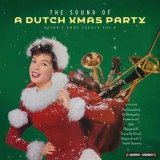
Oscar Smit (DJ Oscar) has been a fan and collector of, especially the latest, Christmas music
since the 1980s. As a connoisseur, he is invited almost annually by the national Dutch radio.
As a journalist, he writes for the Christmas blog Christmas A Go Go and music magazine
OOR.
“Nowadays, there are many young acts active in the Dutch underground scene that I find
original and good. I enjoy their concerts, which usually take place in small clubs. Being a
huge fan of Christmas music, I got the idea to ask a couple of my favorite young artists to
record a contemporary Christmas song. They could do this with complete freedom. Dutch
electro-garage duo De Delegatie chose to cover a song by Daniel Lohues (singer of Skik) and
Herman Finkers from 2009. The choice of the Haarlem electro-wave band Dorpsstraat 3
goes even further back. In 1976, Dutch ‘volks’singer Andre Hazes had his very first hit with
this Christmas song. The Amsterdam punky female trio Earwurms recorded a contemporary
and adapted version of ‘Jingle Bells’. Schlager punk trio Yodel Queen also includes two
women. They provide an impression of a flexitarian at the Christmas dinner. Both girl bands
are appearing on vinyl for the first time. XA4 is Xavier Boot. He has already released an
album on Philip Glass’s label and treats us here to minimal Christmas music. In contrast,
there is the maximal danceable dark-electro from the Amsterdammer Raderkraft. He has
already released a few records and is quite well-known abroad. On this record, Stippenlift,
a one-man project from Amsterdam, has the most experience with Christmas music. Every
year, he writes a new Dutch-language track, usually sad or melancholic in tone. This very
danceable song sounds optimistic for his standards. Truus de Groot is a category of her
own. She has been making music since the early eighties, in bands like Nasmak or Plus
Instruments. She is still active and proves that you can still make urgent music after such a
long time. She is an example for many young musicians. Her song is a variant of the music
from the timeless Charlie Brown Christmas film.” — Oscar Smit.
