Whether she’s channeling emo, pop or techno, Scott really just makes music the way she wants to hear it—whether that’s making percussion sound bolder, speeding up the tempo or maximizing the best part of the song. And as for songwriting, her dark humor and sharp social critiques are just as much a passionate display of her feelings as her pleas to be loved and understood. Her quips may be ~extremely online~, but the way she condenses complex emotions into playful, meaningful dialogues is universal. Scott released an EP titled Hazards in August of 2021, which strikes a balance between the musical styles she’s explored previously, including distorted pop and scratchy guitar songs. The EP contains three brand new tracks, plus updated versions of songs Scott wrote before Public Void and most of The Junkyard 2. “I hope that fans of my previous albums will each find their tastes represented in Hazards,” Scott says.
Cerca:b say
- 1: Now It's On (Cassette Demo)
- 2: Yeah Is What We Had (Cassette Demo)
- 3: I'm On Standby (Cassette Demo)
- 4: Passed Out In A Datsun (Cassette Demo)
- 5: The Go In The Go-For-It (Cassette Demo)
- 6: Stray Dog And The Chocolate Karaoke
- 7: The Group Who Couldn't Say (Cassette Demo)
- 8: Ok With My Decay (Cassette Demo)
- 9: Lost On Yer Merry Way (Cassette Demo)
- 10: The Warming Sun (Cassette Demo)
- 11: El Caminos In The West (Cassette Demo)
- 12: The Final Push To The Sum (Cassette Demo)
"Sumday is all glorious, throbbing heart." - PITCHFORK "the band also reaffirms a gift for creating melancholic melodies that are surprisingly sturdy and self-assured." - ENTERTAINMENT WEEKLY "cool indie-rockers make a summer blockbuster." - SPIN Complete 4-track demo version of Sumday recorded by Jason Lytle Available for the first time as part of the Sumday 20th anniversary
Mike Viola is a producer, musician, songwriter and singer. Viola may be best known for his work with Panic! at the Disco, Andrew Bird, Ryan Adams, Jenny Lewis and Mandy Moore, but his solo career stands on its own starting with a number of acclaimed records as the leader of New York based cult favourite Candy Butchers and 7 critically adored Mike Viola records. His original music has been featured on soundtracks for movies such as That Thing You Do!, Walk Hard: The Dewey Cox Story and Get Him to the Greek. Decades into his career his music continues to resonate with and inspire new generations of musicians and music lovers. Viola is cranking out more music than ever including the fan favorites; “The American Egypt” from 2019 and “Godmuffin” from 2021. Paul McCarthy was recorded over the summer of 2022 on 1/2” tape at “Barebones”, Viola’s home studio in Los Angeles. Joined by his friends Jake Sinclair on bass and Brendon Urie on drums. Viola says, “I set out to make a sonic monster using the legs of James Gang Rides Again, the heart of Black Sabbath Paranoid, with my kid brain inside my greying middle aged head on top. I’ve hit a point in my life where instinct has taken the reins fully, logic now waits in the wings to sweep up the stage and pay the taxi fare home. This album is the result of committing to this path fully and laughing all the way.” Viola will support the album release with his first tour in over a decade with dates in Europe and the US in Winter/Spring 2023, and more dates to follow later in 2023.
Fourth release featuring Scott McCaughey (The Minus 5/Young Fresh Fellows), Steve Wynn (The Dream Syndicate), Peter Buck and Mike Mills (R.E.M.) and Linda Pitmon (Filthy Friends) Produced by Mitch Easter (R.E.M., Let’s Active) Featuring the singles “Journeyman” and the title track Available on CD, Digital, and as a double LP (with etched 4th side) On tour starting in August! In 2008 they busted out of the box and easily reached first with their Frozen Ropes And Dying Quails. The Baseball Project was on base and immediately posed a threat to go further. In 2011, they moved on to second with some wildness aptly called High And Inside. They were halfway home. Three years later in 2014, the quintet of Big Stars moved on down the line to the aptly titled 3rd, an epic double dip delight of craftsmanship and savvy. And there they stayed. For 9 long years at the hot corner, but we’re happy to say that The Baseball Project is finally coming home, scoring big and touching ‘em all with their fourth album Grand Salami Time!
Say no more. You're safe now. We got medicine for you: a joint EP by Ubahnrider and Quimbie with five dynamic pieces of electronic music. Prancing around you with flags waving, seducing with a foolish wink of our smokey eyes.
What will it do to you? Shoot you to the Moon? Transform everything into strange patterns and colours you haven't tasted yet? Result in a Cosmic Smash? Don't resist - relax. You're going on a billion year trip to love.
Fleetwood Mac is the tenth studio album by British-American rock band Fleetwood Mac, released on 11 July 1970. This was the first Fleetwood Mac album with Lindsey Buckingham as guitarist and Stevie Nicks as vocalist, after Bob Welch departed the band in late 1974.
The album peaked at number one on the US Billboard 200 chart dated 4 September 1976, 58 weeks after entering the chart, and spawned three top-twenty singles: "Over My Head", "Rhiannon", and "Say You Love Me", the last two falling just short of the top ten, both at number 11.
Debut album recorded for launch of new record label by award-winning mastering engineer Kevin Gray!
Recorded all-analogue/all-tube at Gray's new studio, Cohearent Recording, for Cohearent Records!
Shapes and Sound from jazz saxophonist Kirsten Edkins is the debut LP release from Cohearent Records — the new record label companion to famed mastering engineer Kevin Gray's latest enterprise, an all-valve (vacuum tube) recording studio (Cohearent Recording) adjoining his home-based mastering facility in California.
"It's the 'essence of an era' we are trying to recapture with today's musicians, not the sound of specific spaces, engineers or recordings," Gray told music reviewer Michael Fremer.
This album was produced all-analogue/all-tube at Gray's Cohearent Recording on December 10 and 11, 2021. Dave Connor produced, while Gray and Ryan Wirthlin co-engineered. Edkins on sax was joined by Gerald Clayton (courtesy of Blue Note) on piano, Ahmet Turkmenoglu on bass, Lemar Guillary on trombone and Chris Wabich on drums.
Edkins, a composer and saxophonist from Los Angeles, graduated from Eastman School of Music on scholarship. She studied composition and arranging with Bill Dobbins, as well as Walt Weiskopf and the legendary Ray Ricker. Before her time at Eastman she studied with Bob Sheppard, a jazz recording artist and woodwind specialist. Edkins is a sought-after improviser who has performed with Arturo Sandoval (Al "Tootie" Heath), Tim Hagans, Clay Jenkins, John Beasley, and Geoffrey Keezer.
She has performed with the Clare Fischer Big Band, Bill Holman Big Band, Bernie Dresel Big Band (The BBB), Sara Gazarek and others. She's appeard on television shows such as American Idol, Duets, Knight Rider, Glee, and Bones, plus The Tonight Show. She's also a music educator whose associations include Cal State Fullerton, Stanford Jazz Workshop, Saddleback College and Golden West College. She also direct the American Jazz Institute's community outreach program and teaches saxophone at Occidental College in Eagle Rock.
The album is an excellent showcase for Gray's new recording studio. Cohearent Recording was born from Gray's relentless passion to create the best sound recordings. It was that passion that has inspired Gray's long career cutting lacquers for such noted labels as Blue Note, Music Matters and Analogue Productions.
He spent 15 years building gear for the project. "I had a novel idea: In order to get the vintage sound we all love, (I'd) design and build an all-valve (vacuum tube) recording system from microphones through to the disc cutting head, NO transistors or IC's anywhere in the signal path. That took much longer than anticipated but it is finally complete."
Gray was inspired to use his own living room as the studio space when he realized it was similar in size and shape to legendary jazz recording engineer Rudy Van Gelder's Hackensack N.J. parents' home. Many classic jazz albums were recorded there by Gelder.
Some of the same microphones used on those earlier Gelder recordings are in use in Gray's setup. The custom vaccum tube electronics are different and for Shapes and Sound Gray used a tube-based Studer C37 rather than an Ampex.
Gelder's Hackensack recordings for both Blue Note and Prestige, Gray says, are "some of my favourite jazz records, and they are also exceptionally good sonically."
In the quiet surrounding the pandemic, Madeline Kenney made sonic sketches in the basement studio she shared with her then-partner. She arranged phrases that called her—the sharp knife of a synth cutting a path along a blooming arpeggio, drums stuttering firm and tight. Working this way, she amassed a collection of songs she had no particular aims for. Some formed her 2021 EP Summer Quarter, others languished.
But in 2022, Kenney’s partner left suddenly and without warning, plunging her into the solitary act of untangling what happened. In the wake of her ensuing depression, she revisited these songs and found in them something prescient. She’d already laid the foundation for A New Reality Mind.
That her relationship’s end came without warning is only half true, though. The warnings were in the feelings and fears that inspired Kenney’s critically-acclaimed third album, Sucker’s Lunch (2020), which was co-produced by Jenn Wasner (Flock of Dimes) and centered around the idea of flinging oneself freely into the seemingly-assured destruction of new love, come what may.
If sonically Sucker’s Lunch was letting yourself be pulled into the warm bath of a good story, A New Reality Mind reflects the harsh light of truth coming to break the spell. But as sobering as morning light can be, there’s brilliance to it, too. To see in the clarity of day is a gift. A revolution. Rather than reckoning with love lost, the songs on A New Reality Mind grapple with the self that chose to fall. “I guess I only needed to look twice / Reflected in my attitude, my constant compromise,” Kenney sings on “Red Emotion,” the musical landscape screeching and gasping around her observations of how she made herself small to keep the dream of love alive.
These notions of sight and vision pervade the record as Kenney stands before the infinity mirror of selves she’s been to preserve bonds in her life. On “I Drew a Line,” Kenney contends with the stories she’s told herself to keep plodding along, and the way those stories shape her perceived reality. She invokes John Berger’s Ways of Seeing—“Everything around the image is part of its meaning,” we hear him say. “Everything around it confirms and consolidates its meaning.” Here, Kenney isn’t interested in shaming herself for being carried away by the fantasies of the heart, but rather in investigating the unavoidably human propensity to do so. “I, like everyone else, am muddling through my most ordinary disaster of a life,” she acknowledges, a sentiment which reverberates through album opener “Plain Boring Disaster.” “I don’t need to start again,” she sings at the song’s close. “But I can change when it ends.” We may all be doomed to repetitive, ordinary heartbreaks, Kenney realizes, but at least we can cultivate a capacity to witness our missteps and build new realities for ourselves.
This is Kenney’s most expansive work, while also her most solitary. Produced and recorded alone in her basement, these songs are manifestations of what it feels like to be transformed by pain. Textures collide and collude; sonic ornaments emerge and dissipate capriciously; saxophones soar untamed, as on the 80s pop elegy to self-sacrifice, “Reality Mind”. These songs beg you to dance, then pull the rug out from under you once you’ve caught the beat, leaving you dizzy like the whiplash of love’s end.
But in the propulsive power of A New Reality Mind, there’s also acceptance, self-forgiveness, and a willingness to move forward into life, with all its ways of making a sucker of you. “That way of living, I’m over it,” Kenney declares of the habits that hold her back on “Superficial Conversation”. “I do not need to be reminded of what I did,” she assures, the song opening wide and beaming, like a smile expanding to taste a new breath of air.
- 1: Home
- 2: Prana 10:9
- 3: Holy 0:58
- 4: Amok
- 5: Open
- 6: Game Over
When I first heard Natalie Rose LeBrecht's time-suspending, air-ionizing music, more than twenty years ago, I thought "this kid is on to something." She's been proving that thought right ever since. Her recordings, from the teenage 4-track tapes she made as Greenpot Bluepot to the recent albums under her own name, have been fascinating dispatches from her progressively deeper dives into her gorgeous, weird, wildly idiomatic aesthetic. Holy Prana Open Game is a jewel of intensely personal cosmic music, created through a remarkable process of openness, craftiness, addition and subtraction. It belongs to a tradition of albums that document a rich, meditative sound as it rises up to join the world outside its creators' minds: Alice Coltrane's Universal Consciousness, Harmonia's Musik von Harmonia, Philip Glass's North Star, Talk Talk's Laughing Stock.
"Meditative" is specifically the idea here: Holy Prana Open Game had its origins in the fourteen days LeBrecht spent silently meditating in her home's small music room in the summer of 2019. "I came out of that bursting with the will to create new music," she says, and she created it sound-first. LeBrecht taught herself to program an analog synthesizer's timbres from scratch, and built a new set of glacial, heady compositions out of them, eventually singing to accompany the keyboard parts she was playing.
Then she closed her eyes at her computer, "let my mind be clear and open, imagined light pouring down through me, and began auto-writing to my memory of the music playing through my mind. Most of the lyrics emerged this way, and then I used my conscious mind to refine them a bit at the end." One other song came along with LeBrecht's new pieces, a cover that seems wildly unlikely from the outside and makes total sense in its context: it's a version of Atoms for Peace's "Amok" (which had been created by improvisation and editing, too), mutated into her own idiolect.
In early March of 2020, LeBrecht recorded Holy Prana Open Game's analog synth parts with Martin Bisi at his studio in Brooklyn--and then the world shut down. As you may have gathered, LeBrecht is very much a spiritual, head-in-the-stars type. She is also extremely hardcore, and if making the art she wants to make means doing things the hard way, she cracks her knuckles and gets down to it. Within weeks, she had taught herself how to record, mix and edit with a digital audio workstation. She recorded her vocal parts (sometimes multi-tracked into a radiant choir) at home, assembled a rough mix of the album, and sent it off to her collaborators.
LeBrecht spent some years studying with and assisting La Monte Young and Marian Zazeela at their legendary sound-and-light installation, the Dream House. As with their work, her singular, precisely focused vision is shored up by its openness to artistic voices beyond her own. For Holy Prana Open Game, she worked with the Australian guitarist Mick Turner and drummer Jim White (both of Dirty Three, the Tren Brothers and innumerable other projects), as well as woodwind player David Lackner, a longtime presence on her recordings.
Turner and White have been playing together in one context or another since 1985; in the summer of 2020, they were only blocks from each other in Melbourne, Australia, whose strict lockdown meant they couldn't meet up to record together. So both of them, as well as Lackner, recorded their improvisational additions to LeBrecht's rough mixes individually, often without hearing each other's contributions. "I had asked them to play as much as they could on each track," she says, "and told them that I would edit it all down in post, so I had a lot of source material of theirs to work with."
LeBrecht arranged and edited the recordings from all four of their homes to flow together like breath across the duration of her suite. Prana, one of the album's central conceits, is in fact the Sanskrit word for breath, with the connotation of the breath of life. Like LeBrecht's music, prana flows at its own pace, and demands stillness to take in fully--but it's also subtly playful and surprising, a force that can be as light as air or as immersive as the atmosphere itself.
- A1: The Language Of Love Ft Adam Evald, Антоха Мс
- A2: Strong Accent Ft Curly Castro, Sindysman, Lovvlovver
- A3: Forget, Forgive Ft Mishinuki
- A4: Ingen Förstår Ft Adam Evald, Ni!
- A5: The Closing Shift At The Jazz Cafe Ft Jimi Tenor, Starving Yet Full, Ÿorik, Mak Glonti
- A6: Breed Ft Ÿorik
- A7: Praise This Ft Sindysman
- B1: In The Mood For Dub (Memories Of Love) Ft Mishinuki
- B2: Light Ft Fotiniya
- B3: Obey (Reprise) Ft Mishinuki
- B4: Kabwato Ft Budūchi, Ni!, Lipelis
- B5: Magic Mystery Tour Ft Adam Evald
- B6: Track 04 (りんロゴ) Ft Jimi Tenor, Fotiniya, Rich Thair
- B7: The Sun Is Still Up Ft Noteless, Adam Evald, Saya Siiang, Alina Royz, Katya Panterrra
Green Monster, the 4th Kito Jempere studio album is a journey through love, interconnectedness and creative freedom, bound together by musical friendship that breaks through walls, borders, languages and shapes; accumulated over a celebrated twenty year career and ten years of Kito Jempere.
Over fourteen tracks Kito teams up with over 26 artists from all over the world: a range of talented artists including Warp records artist Jimi Tenor, Red Snapper drummer Rich Thair, Azari & III ex-vocalist Starving Yet Full, L.I.E.S. records Lipelis (on bass), Curly Castro and SINDYSMAN. The album blends hip-hop, free-flowing jazz and world-building soundscapes into a piece dedicated to Kito’s musical roots; marrying multiple artforms, cultural influences and international artists into a body of work that feels deeply personal, healing and detailed. The accompanying artwork is a world created by Kito made using Midjourney prompt, connecting the albums audio world with visible objects — both vinyl and CD will contain booklets with lyrics and the visual world of Green Monster.
Kito describes the album ‘like getting Ennio Morricone, Weezer, The Beatles, Oneothrix Point Never, Eduard Artemiev, Jaga Jazzist, Massive Attack, Fugazi, Jimi Tenor, Hans Zimmer, Radiohead, John Cage and Aphex Twin all together, then collaborating with movie-directors Wes Anderson, David Lynch, Dziga Vertov and Andrei Tarkovskiy.’ Used as a metaphor to help create his album.
Worldwide pressing of 300 copies.
Ursa Major Moving Group, the solo alias of singer and composer Ursula Russell, announces her self-titled debut album, due out June 9th via Faith & Industry Records.
Known for her mesmeric drumming for Snapped Ankles, Alabaster DePlume, Drop Out Venus and Blue House, the album showcases the London-based artist’s stylistic and instrumental virtuosity - she played all instruments herself - on an intense, dynamic and intimate musical journal that shifts between delicate folk, stirring indie rock, flamboyant chamber pop and angular post-punk styles.
Its complex themes reflect a multihued blend of musical styles that recall artists as diverse as The Pixies, Talking Heads, Joni Mitchell, Arthur Russell and Julia Holter. Having built a reputation for her brilliance of musicianship as a band member, Ursa Major Moving Group sees Ursula establishing herself as a solo artist of brilliant, open-hearted originality.
Amongst the album’s many highlights is the driving, emotive opening track, Reverse Invisible, which dives into memories of childhood alienation .The winsome Goodbye George, which finds Ursula’s delicate vocals and acoustic guitars melding with Alabaster DePlume’s Ethio-jazz saxophones, delves back into her childhood.
Ursa Major Moving Group play End of the Road Festival 2023.
- A1: Air Like Breath Feat. Yeo Limone
- A2: Gastown
- A3: You Got It
- A4: Sing To It Feat. Nah Eto
- B1: Albany Road
- B2: Steal Cap Beanie
- B3: Hyroglifics & Deft - Two For Two
- B4: Air Max Flow Feat. Black Josh
- C1: Belief Feat. Feux
- C2: Burnt Tongues
- C3: Juggin
- C4: Hotwire Feat. Lyza Jane
- D1: I'll Wait, I Guess
- D2: Late Ones
- D3: Telfar
- D4: Lacklustre
"Good things come to those who wait", says Matt Harris aka Hyroglifics about the theme of his debut album, 'I'll Wait, I Guess', a personal journey to hope and healing reflected through 16 tracks of ever-evolving music and the stories that lie within them. "I believe that good things happen with time, however, I also wanted this album to depict the realities of waiting for something and how seemingly hopeless it may seem at times".
After committing to music full time after getting picked up by RBMA for 2016's Montreal academy, Hyroglifics has released key tracks and EPs on Critical Music, 20/20 LDN, Hooversound, and System. Written and recorded in Bristol before sessions in London and Los Angeles, where he now lives, 'I'll Wait, I Guess' is his most diverse body of work so far. Though led by the detailed drum and bass he's best known for, the album also includes tracks leaning towards grime, half-time, hip hop, techno and ambient music.
"I really wanted to create something that shows my range as a producer and artist", Hyroglifics explains. "My taste is always evolving, so it's hard to pin down a specific 'sound', as I really enjoy exploring the process of trying to create hybrids of genres."
Black Truffle is pleased to announce Symphony No. 107 –The Bard, a previously unheard archival recording of the legendary improvising ensemble MEV (Musica Elettronica Viva), captured in concert at Bard College, New York in 2012. Formed by a group of American expat composers in Rome in 1966, the MEV ensemble played an important role in the development of free improvisation, bridging the live electronics tradition begun by Cage and Tudor and the high-energy squall of free jazz. Early recordings like Spacecraft or The Sound Pool unleash volleys of metal and glass amplified with contact microphones, howling winds, primitive synthesizer bleep and raucous audience participation, the intensity of which puts much later ‘noise’ to shame. In later decades, the ensemble would go through many iterations, often including legendary free players like Steve Lacy and George Lewis. In its final years, MEV settled into the core trio of founding members heard here: Alvin Curran, Frederic Rzewski, and Richard Teitelbaum, using piano, electronics, and small instruments.
Curran, Rzewski, and Teitelbaum were life-long friends blessed, as Curran says, with ‘incompatible personalities’: major figures in the post-Cagean experimental tradition, they explored countless divergent and even contradictory paths as composers and performers, from agitprop songs to brainwave-controlled synthesis. MEV is the sound of these three personalities coming together, their contributions radically individual yet attaining a state of ‘fundamental unity’ that Rzewski, in a text written in the collective’s earliest years, defined as the ‘final goal of improvisation’. Of course, listeners familiar with aspect of the trio’s individual works might hazard some guesses about who is doing what: the crisp piano figures are probably Rzewski’s, the cut-up hip-hop samples most likely Curran’s, the sliding, squelching synth possibly Teitelbaum’s. But often these identities are dissolved in a constantly shifting hall of mirrors, the listener unable to tell which of these pianos is live and which is a sample of a past virtuoso, or whether a horn blast derives from ethnographic documentation or Curran cutting loose on Shofar. The two side-long sets here occupy a similar terrain of constantly shifting texture and instrumentation, unexpected interruptions, and moments of sudden beauty. The first set is sparser, at times almost ominous, as a bell repeatedly sounds across wheezing harmonica, seasick orchestral textures, and creaking wood, making room for episodes of yodelling and delicate prepared piano before exploding into a storm of buzzing synth and piano fragments. The second set is more frenetic, moving rapidly across centuries and continents: cars crash into post-serial piano pointillism, wailing voices collide with chopped and screwed hip-hop samples, Hollywood strings are buried under layers of electronic gurgles. The performance slows in its final moments, making way for a sampled voice repeating the phrase ‘protest and the good of the world’, reminding us that MEV’s idea of freedom was always more than musical. Symphony No. 107 –The Bard is a beautifully recorded example of the endlessly multi-layered later MEV sound, accompanied by new liner notes by Alvin Curran (now the only surviving member of the group) and a selection of previously unseen photographs from across the many decades of the group’s activity. Arriving in an elegant sleeve bearing a beautiful photograph by Francis Zhou of the Olin Hall at Bard College where the concert was recorded, this is an essential document from a major group in the history of experimental music. As Rzewski wrote, this music is ‘like life, unpredictable, sometimes making sense, mostly not’.
Robin Saville - one half of the influential duo ISAN - returns to Morr Music with »Lore«, his fourth solo album to date. After 2020’s »Build A Diorama«, the British musician takes his love for field recordings, whirring pads, hovering bells and subtle electronics further, adding extra depth to both his sonic palette and his storytelling, focussing on biological diversity and its implications for human life.
For many years now, ›look and listen‹ has been Robin Saville's motto on his regular environmental explorations. The avid ambler does not just enjoy being out and about in nature; it is an important inspiration for his creative work as well. Sounds, smells, colours and even soil properties add to the experience. Equipped with a microphone and a recording device, Saville documents his strolls, using these recordings as a base for his compositions. »The field recordings on the album were made very locally this time, for obvious reasons,« he says. Welcome to the sonic landscape of the UK's East Anglia.
»Judith Avenue«, the opening track, is a great example of how Saville evolved his perspective on the sounds of nature: »It is a residential street, fading into a scrubby, wild landscape. There, I made a recording of nightingales at dusk. Such romantic birds! The males fly here from Africa a couple of weeks ahead of the females. They find a good territory, and at dusk, when all the other birds are going quiet, they start to sing to tempt the females down from their migratory flight paths. This has happened for thousands of years. However, the patch of ground where I made the recordings is earmarked for development and I don't suppose it'll happen there again. The recordings therefore become part of the history of that place, the lore.«
Recording the sounds of nature and enriching them with electronic sorcery, Saville is not only a documenting preservationist; he also translates these recordings into meaningful musical miniatures. Building on the soundscapes that marked his previous LP »Build A Diorama«, »Lore« is dominated by both open-hearted melancholy and more upbeat rhythms. But even when the music sounds quirky and loose, there is always deeper meaning. The album is characterised by an ever present melancholy about the threatening loss of living spaces, and a celebration of their beauty. This simultaneity turns the tracks into existential meditations about our human habitat. Saville enriches our lives musically by addressing the very issues we often ignore. At the same time, he becomes an agent of hope and change. Moving between light and dark, »Lore« is a musical allegory of where we stand today.
»The album is a document of places and times and while it is certainly a celebration of those things, it is also a record of things we are losing. That's how interaction with nature feels to me nowadays: something precious and amazing, but with an underlying sadness about the destructive relationship that humanity seems inevitably to have with the world around it.«
Let's not lose any more things.
Sunna Margrét releases 'Five Songs for Swimming' out on No Salad Records. It is the first release since her award winning EP 'Art of History' that won the annual Kraumur award in 2019 and was twice nominated at the Iceland Music Awards for best song and best album of the year.
'Five Songs for Swimming' includes 5 original songs and a cover. They follow a continuous thread of water and flow and yet Sunna Margre?t keeps close to her influences of bizarre human interactions, present in her lyrics throughout the EP and borrowing the words of New York legends the Feelies on the last song 'When To Go' cover.
It is safe to say that the new release comes to life after loss occurs. This composition of music and lyrics is written in memory of Sunna Margre?t's grandmother, Unnur A?gu?stsdo?ttir, who passed away in February 2021. She was a swimmer in her early life, a champion in Iceland in the 40's, as well as a soprano singer, teacher, bird lover and lifelong inspiration.
...And I Mean It is an amalgam of girl group, new wave, blues, pop, and folk-rock by Genya Ravan. To hear her exquisite voice on "Night Owl" soaring above her own backing vocals is intense, imagine Etta James backed by the Sex Pistols doing a rock version of "Earth Angel." Of all Ravan's work, ...And I Mean It is possibly the most concise and picture-perfect statement of what the woman is musically about. A girl group pioneer who worked with Richard Perry prior to his finding the Pointer Sisters groove, there is no doubt Ravan influenced that major producer, and his work did the same for her. "Pedal to the Medal" is high-end treble rock before it came into vogue. This is the other side of Siren, the album Genya produced for Ronnie Spector, with more emphasis on a good-time rocking party. "I'm Wired, Wired, Wired" is a rock & roll anthem for people who burn the candle at both ends, while "I Won't Sleep on the Wet Spot" embodies the unbridled sexuality of this album. The music crunches while Ravan uses her voice, her production skills, and her legacy to create something far removed from her days in Ten Wheel Drive. The horns are replaced by searing guitars and Charlie Giordano's magical piano work. The sound of the keyboard and its erratic splashes really are key to "I Won't Sleep on the Wet Spot," while the guitar and bass battle it out. "Steve...," on the other hand, is Goldie & the Gingerbreads ten years after. This Ravan/Conrad Taylor composition was the 45 from the album, and it has "hit" written all over it. 20th Century just didn't have the right mechanisms in place to get some of the great music they put out on radio, such a pity as Harriet Schock, Randy Edelman, and the fake soundtrack for All This and World War II (a Beatles tribute album) contained songs that should have been big hits. What did hit off this album, on FM radio as an album track, is the brilliant duet by Ian Hunter and Ravan, the subtle and folky "Junkman." Released on Hunter's excellent Once Bitten Twice Shy CD on Legacy in 2000, the song and the performance are timeless. Ravan once said: "I was asleep with the tv on, and was saying to myself...that's my voice...that's my song...that's me! I woke up to find "Junkman" on TV in a film." The song got placed in a cable movie without the producer's knowledge! "Junkman" was a sound not heard on FM radio prior to its release, much like MTV's "unplugged" versions of songs, but it is more unplugged than most of this material -- take the rocked-out version of Motown that is the cover of Marvin Gaye's "Stubborn Kinda Girl," or the Springsteen-style blast that is "It's Me," a tune Springsteen should cover.
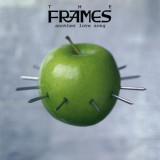
"Another Love Song - The Frames are an Irish indie rock band formed in Dublin in 1990. The band is known for their passionate and emotive sound, which blends elements of rock, folk, and traditional Irish music. Over the years, they have released several critically acclaimed albums, including ""Another Love Song,"" which is widely regarded as one of their most influential works.
""Another Love Song"" was released in 1991 and marked a turning point in the band's career. The album featured a raw, stripped-down sound that was a departure from their earlier, more polished work. The songs on the album were deeply personal and introspective, exploring themes of love, loss, and the complexities of human relationships. The album's title track, ""Another Love Song,"" became an instant classic, showcasing the band's signature sound with its driving rhythms and soaring vocals. The song's bittersweet lyrics and haunting melody struck a chord with listeners and quickly became a fan favourite.
In addition to ""Another Love Song,"" the album features several other standout tracks, including ""Say It to Me Now,"" ""The Dancer,"" and ""Downhill."" Each song on the album showcases the band's dynamic musicianship and poetic lyricism, earning the album a reputation as a seminal work in the Irish indie rock scene. Over the years, The Frames have continued to evolve and innovate, releasing several more critically acclaimed albums and earning a dedicated following of fans around the world. With their unique blend of raw emotion and musical artistry, The Frames continue to inspire and captivate audiences with their powerful, soulful music.
Fitzcarraldo - ""Fitzcarraldo"" is the sixth studio album by the Irish rock band The Frames, released in 1995. The album marked a significant departure from the band's earlier work, with a more experimental sound that blended rock, folk, and experimental elements.
The album takes its name from the Werner Herzog film of the same name, which tells the story of a man who attempts to build an opera house in the Amazon jungle. This theme of ambition and perseverance in the face of adversity runs throughout the album, as frontman Glen Hansard explores themes of love, loss, and the human experience. The album opens with the hauntingly beautiful track ""Revelate,"" which sets the tone for the rest of the album with its soaring vocals and intricate guitar work. From there, the album takes the listener on a journey through a diverse range of sounds and emotions, from the upbeat rock of ""What Happens When the Heart Just Stops"" to the melancholic balladry of ""Fitzcarraldo.""
One of the standout tracks on the album is ""Lay Me Down,"" a tender and heartfelt ballad that showcases Hansard's powerful vocals and poetic lyricism. The song has become a fan favourite and is often performed live by the band. Another highlight of the album is the epic nine-minute track ""Fitzcarraldo,"" which features lush instrumentation and intricate guitar work. The song is a tribute to the film of the same name and explores themes of ambition and determination in the face of seemingly insurmountable obstacles.
Overall, ""Fitzcarraldo"" is a powerful and deeply personal album that showcases The Frames at their most ambitious and experimental. With its diverse range of sounds and emotions, the album remains a fan favourite and a landmark in the Irish rock canon.
Dance the Devil
Dance the Devil is the fourth studio album by the Irish rock band, The Frames. Released in 1999, it marked a significant departure from the band's earlier sound and was a critical and commercial success.
The album features 10 tracks, including the hit single ""Pavement Tune,"" which received extensive radio play and helped to propel The Frames to greater prominence in the music industry. Dance the Devil showcases the band's versatility and musical prowess, blending elements of rock, folk, and pop to create a unique and compelling sound. The lyrics are introspective and poetic, exploring themes of love, loss, and self-discovery.
Produced by Steve Albini, the album was recorded in just five days, giving it a raw and unpolished feel that perfectly captures the energy and passion of The Frames' live performances.
Dance the Devil remains a beloved album among fans of Irish music and continues to inspire new generations of musicians. Its enduring popularity is a testament to the artistry and vision of The Frames and their commitment to pushing the boundaries of what is possible in rock music.
"
"Another Love Song - The Frames are an Irish indie rock band formed in Dublin in 1990. The band is known for their passionate and emotive sound, which blends elements of rock, folk, and traditional Irish music. Over the years, they have released several critically acclaimed albums, including ""Another Love Song,"" which is widely regarded as one of their most influential works.
""Another Love Song"" was released in 1991 and marked a turning point in the band's career. The album featured a raw, stripped-down sound that was a departure from their earlier, more polished work. The songs on the album were deeply personal and introspective, exploring themes of love, loss, and the complexities of human relationships. The album's title track, ""Another Love Song,"" became an instant classic, showcasing the band's signature sound with its driving rhythms and soaring vocals. The song's bittersweet lyrics and haunting melody struck a chord with listeners and quickly became a fan favourite.
In addition to ""Another Love Song,"" the album features several other standout tracks, including ""Say It to Me Now,"" ""The Dancer,"" and ""Downhill."" Each song on the album showcases the band's dynamic musicianship and poetic lyricism, earning the album a reputation as a seminal work in the Irish indie rock scene. Over the years, The Frames have continued to evolve and innovate, releasing several more critically acclaimed albums and earning a dedicated following of fans around the world. With their unique blend of raw emotion and musical artistry, The Frames continue to inspire and captivate audiences with their powerful, soulful music.
Fitzcarraldo - ""Fitzcarraldo"" is the sixth studio album by the Irish rock band The Frames, released in 1995. The album marked a significant departure from the band's earlier work, with a more experimental sound that blended rock, folk, and experimental elements.
The album takes its name from the Werner Herzog film of the same name, which tells the story of a man who attempts to build an opera house in the Amazon jungle. This theme of ambition and perseverance in the face of adversity runs throughout the album, as frontman Glen Hansard explores themes of love, loss, and the human experience. The album opens with the hauntingly beautiful track ""Revelate,"" which sets the tone for the rest of the album with its soaring vocals and intricate guitar work. From there, the album takes the listener on a journey through a diverse range of sounds and emotions, from the upbeat rock of ""What Happens When the Heart Just Stops"" to the melancholic balladry of ""Fitzcarraldo.""
One of the standout tracks on the album is ""Lay Me Down,"" a tender and heartfelt ballad that showcases Hansard's powerful vocals and poetic lyricism. The song has become a fan favourite and is often performed live by the band. Another highlight of the album is the epic nine-minute track ""Fitzcarraldo,"" which features lush instrumentation and intricate guitar work. The song is a tribute to the film of the same name and explores themes of ambition and determination in the face of seemingly insurmountable obstacles.
Overall, ""Fitzcarraldo"" is a powerful and deeply personal album that showcases The Frames at their most ambitious and experimental. With its diverse range of sounds and emotions, the album remains a fan favourite and a landmark in the Irish rock canon.
Dance the Devil
Dance the Devil is the fourth studio album by the Irish rock band, The Frames. Released in 1999, it marked a significant departure from the band's earlier sound and was a critical and commercial success.
The album features 10 tracks, including the hit single ""Pavement Tune,"" which received extensive radio play and helped to propel The Frames to greater prominence in the music industry. Dance the Devil showcases the band's versatility and musical prowess, blending elements of rock, folk, and pop to create a unique and compelling sound. The lyrics are introspective and poetic, exploring themes of love, loss, and self-discovery.
Produced by Steve Albini, the album was recorded in just five days, giving it a raw and unpolished feel that perfectly captures the energy and passion of The Frames' live performances.
Dance the Devil remains a beloved album among fans of Irish music and continues to inspire new generations of musicians. Its enduring popularity is a testament to the artistry and vision of The Frames and their commitment to pushing the boundaries of what is possible in rock music.
"