On his new album All Cylinders, Yves Jarvis expresses a brazen songcraft and pure musicianship. 11 tracks he played himself, without a single additional contributor, transforming his now four-time-Polaris-nominated vision into the stuff of verses and choruses, hooks and hits, vibrating like a cosmic anthropology. Whereas once he had fetishized analog tape, now Jarvis appreciated the value of working without any such preciousness: much of All Cylinders was recorded on bare-bones Audacity, sans plugins, channeling the spirit of Paul McCartney’s II.
Jarvis is an omnivore, and All Cylinders smashes together a stunning array of influences: Serge Gainsbourg, Judee Sill, Sheryl Crow, Captain Beefheart, Jackson Browne, Throbbing Gristle, Ray Charles, Brian Eno, Fleetwood Mac… All distilled into tunes that feel like taking sips from a cup, or drags from a cigarette. Vivid and self-contained songs that are just two or three minutes long. “I feel like this is the least contrived thing I’ve ever done,” Jarvis declares. Lyrics that matter. Vocals up front, where people will actually hear them. “If something’s true to you,” he explains, “it’s probably true to a million other people.”
The first run of All Cylinders on limited edition vinyl sold out, leading to this highly anticipated second pressing. This edition includes 4 bonus tracks from the forthcoming deluxe release, making it an essential piece for fans and collectors alike. Originally released via In Real Life to critical acclaim from Pitchfork, Financial Times, NPR, Aquarium Drunkard, Far Out Magazine, New Noise, Out Front, KCRW, RANGE, Atwood Magazine, The Luna Collective, Billboard Canada, The Fader, Blamo! Podcast, Stereogum, and Guitar World.
Search:b stereo
Georgette Sayegh & Melhem Barakat – Belghi Kull Mawaidi & Instrumental:
Finally, hopping across from Egypt to Lebanon for this infectious number, Georgette Sayegh delivers what some consider her magnum opus in a captivating duet together with Melhem Barakat, and on the flipside a stripped-down instrumental version that’s equally catchy.
Georgette Sayegh is a legendary Lebanese singer and actress known for her tender and dulcet voice that echoed the grace and beauty of the inimitable Fairuz yet carried its own unique warmth. Her passion for collecting vinyl at an early age formed her eclectic musical palette, and she eventually caught the eyes of the Rahbani brothers and played the lead role in a monthly play written by Fairuz’s son, Ziad. Georgette’s household classic "Yay Yay Ya Nassini” shot her to stardom across the Arab world in the 1970’s, and till this day carries the exact same nostalgia of a Lebanese summertime anthem – flirtatious, jolly, and unfettered. In Belghi Kull Mawaidi (I cancel all my appointments), Sayegh’s voice entwines with compatriot and fellow household staple, Melhem Barakat in an emotional display of longing and depth - her voice delicate yet powerful, effortlessly blending with Barakat's commanding baritone.
The instrumental version on the flipside (surprisingly a stereo mix) reveals a highly catchy arrangement that is lush and emotive, driven by strings that glide smoothly through the melody, while brass instruments add a touch of drama. The rhythm section, punctuated by a steady percussion, anchors the track, allowing the interplay of instruments to build a sense of urgency and longing, accurately reflecting the struggles and emotional resilience that defined Sayegh’s own life.
This reissue, remastered with painstaking care, brings both versions of Belghi Kull Mawaidi back to life, making it an essential addition to any avid listener, DJ or collector’s shelf. It captures the timeless beauty of two of Lebanon's most cherished musical icons, their voices and instruments merging to create a track that resonates through the ages.
Muhammad Al-Najjar
London, April 2025
credits
Audio restoration and vinyl mastering: Colin Young
Lacquer cut: Timmion cutting lab
Sleeve and label artwork: Grotezk Studio
Under License of Voix de L'Orient
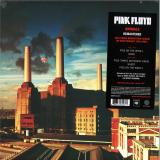
Im Januar 1977 veröffentlichten Pink Floyd ihr zehntes Studioalbum „Animals“. Das Werk eroberte Platz 1 der deutschen Charts, gilt als eines ihrer besten – und es wird nun, 45 Jahre später, als Deluxe Gatefold, CD, LP und Blu-ray wiederveröffentlicht. Zum ersten Mal überhaupt wird das Album in 5.1 Surround-Sound zu hören sein. Die einzelnen Versionen werden ab dem 16. September 2022 erhältlich sein, die Deluxe-Version folgt am 7. Oktober.
Pink Floyd – David Gilmour, Nick Mason, Roger Waters und Richard Wright – nahmen „Animals“ 1976 und Anfang 1977 in den bandeigenen Britannia Row Studios in London auf und produzierten auch selbst.
„Animals 2018 Remix“ wird als CD, LP (mit Klapphüllen-Artwork), Blu-Ray und als Deluxe-Gatefold-Format veröffentlicht. Die Deluxe-Gatefold-Version beinhaltet eine LP, CD, Audio-Blu-Ray, Audio-DVD und ein 32-seitiges Booklet. Die Audio-Blu-Ray und -DVD enthalten den Remix von 2018 in Stereo, in 5.1 Surround (beide von James Guthrie) und den ursprünglichen Stereo-Mix von 1977. Das 32-seitige Booklet gewährt mit selten gezeigten Fotos einen Blick hinter die Kulissen des Shootings für die Plattenhülle sowie Live-Bilder und Memorabilia. Das Album-Artwork wurde für diese Veröffentlichung mit einem zeitgemäßen Motiv neu interpretiert.
„Animals“ ist ein Konzeptalbum, das sich kritisch mit den sozialpolitischen Verhältnissen im Großbritannien der mittleren 1970er-Jahre auseinandersetzt und damit eine Abkehr vom Stil der früheren Arbeiten der Band markierte. Aus einer Ansammlung ursprünglich nicht miteinander zusammenhängender Songs entwickelten Pink Floyd ein Konzept, das den offenkundigen sozialen und moralischen Verfall der Gesellschaft beschreibt. Inspiriert von George Orwells „Farm der Tiere“, verbildlichen sie die menschliche Natur mit einer Analogie zum Tierreich und teilen die Menschen in drei Klassen von Tieren ein: Die Schweine stehen an der Spitze der sozialen Kette, die Schafe tun als hirnlose Herde, was man ihnen sagt, und die Hunde sind die Geschäftsbosse, die sich am Profit und ihrer Macht über andere schamlos bereichern. Seit 1977 ist viel Zeit vergangen – und dann wieder gar nicht, denn die Erzählung des Albums hat als Kommentar auf unsere gesellschaftliche und wirtschaftliche Situation nichts von ihrer Aktualität verloren.
Das berühmte Cover von „Animals“ zeigt ein aufblasbares Schwein (heute bekannt als Algie), das in luftigen Höhen zwischen zwei Schornsteinen der Battersea Power Station in London schwebt. Die Idee für das Cover kam von Roger Waters, die Umsetzung übernahm der langjährigen Kreativpartner der Band, Storm Thorgerson von Hipgnosis Studios. Für die jetzige Neuveröffentlichung wurde das Artwork von Storms Hipgnosis-Partner Aubrey „Po“ Powell für die heutige Zeit neu gestaltet. Basierend auf neuen Aufnahmen des Gebäudes während der jüngsten Umgestaltungsarbeiten (das ehemalige Kraftwerk wird für die kulturelle und gewerbliche Nutzung umgebaut, gestaltet von Frank Gehry und Norman Foster), experimentierte Po mit neuen Blickwinkeln und erschuf einige beeindruckende neue Varianten des berühmten Originals. Po dazu: „Das Original-Albumcover von 1977 ist ikonisch und steht so sehr für sich, dass ich eine Menge Respekt davor hatte, ihm ein Update zu verpassen. Doch Hipgnosis nahm die Gelegenheit zum Anlass, das Motiv neu zu fotografieren und damit eine sich verändernde Welt widerzuspiegeln. Durch den Einsatz moderner digitaler Färbetechniken konnte ich Pink Floyds düstere Botschaft des moralischen Verfalls beibehalten, und auch die Orwellsche Tier-Analogie in Form des Schweins Algie lebt in dem neuen Artwork fort.“
Pink Floyds „Animals 2018 Remix” kann ab jetzt hier vorbestellt werden.
Spandau Ballet, one of the most influential bands in British music, announce the release of their definitive early years collection, "Everything Is Now – Vol 1: 1978-1982" - a comprehensive 9-disc box set featuring their groundbreaking first two albums alongside a wealth of previously unavailable material. It includes a beautiful 44 page book with original photos from fellow Blitz Kid Graham Smith and new commentary from the whole band.
Released September 12th on Parlophone, this meticulously curated collection captures the band's origins and meteoric rise from Blitz Club favourites to chart-topping innovators. The set includes their seminal albums "Journeys To Glory" (1981) and "Diamond" (1982) on vinyl, plus six CDs of singles, remixes, BBC sessions, demos, and a Blu-ray of Dolby Atmos mixes, videos and rare live footage.
This collection showcases the band's evolution through their formative and revolutionary period, from the electronic-infused new wave of early singles like "To Cut A Long Story Short" and "The Freeze" to the funk-influenced sophistication of "Chant No. 1" and "Instinction." They were simply the most cutting edge, futuristic band in the world, at the centre of a creative scene that defined the 1980s.
This box set features all the band's early classics including "To Cut A Long Story Short," "Chant No. 1," "Muscle Bound," "Paint Me Down," “Instinction” and "She Loved Like Diamond," and presents multiple versions of tracks that trace their development from initial demos to extended 12" club mixes.
The Blu-ray component includes Dolby Atmos and stereo remixes by acclaimed producer Steven Wilson, alongside original music videos, BBC TV appearances and the complete 56-minute concert from New York's Underground Club in 1981.
"Everything Is Now – Vol 1: 1978-1982" stands as the definitive document of Spandau Ballet's revolutionary early period, when they helped define the sound and style of a generation.
CD1: Journeys To Glory Era Singles, Remixes & Versions
CD2: Diamond Era Singles, Remixes & Versions
CD3: Diamond – 12” Singles Box Set
CD4: BBC Session 1981 / BBC In Concert Bournemouth 1982
CD5: BBC In Concert Paris Theatre 1982
CD6: Demos
Blu-Ray (Disc 7): Dolby Atmos, Promos & Extras
LP1 (Disc 8): Journeys To Glory
LP2 (Disc 9): Diamond
- A1: Malavoi - Te Traigo Guajira
- A2: Los Caraibes - Donde
- A3: Tropicana - Amor En Chachacha
- A4: Ryco Jazz - Wachi Wara
- A5: Eugene Balthazar - Dap Pignan
- A6: Roger Jaffort - Oye Mi Consejo
- A7: Les Kings - Oriza
- B1: Les Supers Jaguars - Tatalibaba
- B2: Super Combo De Pointe A Pitre - Serrana
- B3: L'ensemble Abricot - Se Quedo Boogaloo
- B4: Henri Guedon - Bilonga
- B5: Les Aiglons - Pensando En Ti
- B6: Los Martiniquenos - Caterate
In Guadeloupe, many people think that jazz and ka music are like a ring and a finger. To some extent, the same could be said about so called Latin music and the music played in the French West Indies.
Both aesthetics were born in the Caribbean and bear so many connections that they can easily be considered cousins. In constant dialogue, there are lots of examples of their fruitful alliance and have been for a while. The English country dance that used to be practiced in European lounges came to be called kadrille in Martinique and contradanza in Cuba. They both featured additional percussion instruments inherited from the transatlantic deportation. Drawing from shared feelings about the same traumatized identity – later to be creolized – it would be hard not to assume that they were meant to inspire each other. The golden age of the orchestras that graced the Pigalle nights during the interwar period further proves the point. As soon as the 1930s, Havana-born Don Barreto naturally mixed danzón and biguine music in a combo based at Melody's Bar. In the following decade, Félix Valvert, a conductor who was born and raised in Basse-Terre in Guadelupe, also worked wonders in Montparnasse with La Coupole, which was an orchestra made up of eclectic musicians. Afro- Caribbean performers of various origins were often hired on rhythm and brass sections in jazz bands, which used to enliven the typical French balls of the capital. In the 1930s and onwards, Rico’s Creole Band was one of them.
Martinican violinist-clarinettist Ernest Léardée, who would become the king of biguine music as well as the main figure of French Uncle Ben's TV commercials (a dark stigma of post-colonial stereotypes), had musicians from the whole Caribbean sphere play at his Bal Blomet – and they all enchanted "ces Zazous-là" (according the words of Léardée's biguine-calypso piece). In les Antilles (French for French West Indies), music history started to speed up in the 1950s, when trade expanded and radio stations grew bigger. The Guadelupean and Martiniquais youth tuned in their old galena radio sets to South American and Caribbean music. As for the women traders, les pacotilleuses, they bought and sold goods across different islands (the "passing of items through various hands" was thought to be most pleasurable) and brought back countless sounds in their luggage. Such was the case of Madame Balthazar, who once returned from Puerto Rico with the first 45rpm and 33rpm to ever enter Martinique.
Out of this adventure was created the famous Martinican label La Maison des Merengues, a music business she opened and undertook with her husband and which proved to be a major landmark. At the end of the 1950s, in Puerto Rico, Marius Cultier competed in the Piano International Contest playing a version of Monk's Round 'Midnight. He won the first prize and this distinction foreshadowed everything that was to come. Cultier, the heretic Monk of jazz, was quickly praised for writing superb melodies, always tinged with a twist that conferred a unique sound to his music. It didn't take long for the gifted self-taught musician to get to play with Los Cubanos, making a name for himself thanks to his impressive maestria on merengues.
The rest is history. Besides, in the late 1950s, Frantz Charles-Denis, born into the upper middle class in Saint-Pierre and better known by his first name Francisco, went back home after working at La Cabane Cubaine – a club located rue Fontaine where he had caught the Latin fever. Francisco's music was therefore heavily marked by his Cuban cousins' influence, which gave the combos he led a specific style and also led to renewal. Things were swinging hard in La Savane, located in the main square in Fort-de-France. He set up the Shango club close by and tested out the biguine lélé there, a new music formula spiced up with Latin rhythms. Soon afterwards, fate had him fly to Puerto Rico and Venezuela.
As for percussionist Henri Guédon (percussions were only a part of his many talents), he was born in Fort-de-France in May 22nd 1944, the day marking the celebration of the abolition of slavery. As an old man, he could remember that in " his father's Teppaz, a lot of hectic 6/8 music was constantly playing...". In the opening lines of his Lettre à Dizzy, a small illustrated collection of writings published by Del Arco, he highlighted the huge impact that cubop had on him as a teenage boy, around 1960. He eventually turned out to be the lider maximo in La Contesta, a big band steeped in Latin jazz. He was also the one who originated the word zouk to describe music which brought the sound of the New York barrio to Paris. It was the culmination of a journey that started in Sainte-Marie: "a mythical place for bélé, the equivalent of Cuban guaguancó". In the early 1960s, the tertiary economy developed to the detriment of agriculture. Yet rural life was where roots music emerged in Martinique and in Guadeloupe.
Record companies played a major part in the process of Latin versions sweeping across the islands – before reaching everywhere else. Producer Célini, boss of the great Aux Ondes label, and Marcel Mavounzy, both the head of Émeraude records - a firm which was founded in 1953 - as well as the brother of famous saxophonist Robert Mavounzy, were big names to bear in mind. Although there were many of them - all of whom are featured on this record - Henri Debs was definitely the major figure in the recording adventure. He proved to be so influential that he even got compared to Berry Gordy. In the mid 1950s, when he acquired his first Teppaz, he worked on his first compositions: a bolero and a chachacha. Then, he became the one man who made people discover Caribbean music, from calypso to merengue. He was among the first ones to rush out to San Juan, Puerto Rico, to buy records and distribute them through a store run by one of his brothers in Fort-de-France. He had members of the Fania All Star come and perform there, which he was madly proud about. He was also the first one to pay attention to Haitian music, such as compas direct and various other rhythms which would soon flood the market. As a result, many of the combos hitting his legendary studio would end up boosted by widespread "Afro-Latin" rhythms. However, he never denied his identity: gwo ka drums were given a major role, although they were instruments which had long been banned from the "official" music spheres. The present selection bears witness to such a creative swarming. Here are fourteen tracks of untimely yet unprecedented cross-fertilization: all types of music rooted in the Creole archipelago have found their way, whatsoever, to the tracklisting. Whether originating from the city or being more rural, they all go back to what Edouard Glissant, in an interview about the place of West Indian music in the Afro-American scope, called "the trace of singing, the one which got erased by slavery." "It is so in jazz, but also in reggae, calypso, biguine, salsa... This trace also manifests through the drums, whether Guadelupean, Dominican, Jamaican or Cuban... None of them being quite the same. They all point to the idea of a trace, seeking it out and connecting to each other through it. This is the hallmark of the African diaspora: its ability to create something new, in relation to itself, out of a trace. It may be the memory of a rhythm, the crafting of a drum, a means of expression which doesn't resort to an old language but to the modalities of it." The opening track features one of the emblematic orchestras of this aesthetic identity, criscrossing many music types from the archipelago. The 1974 Ray Barretto guajira – Ray Barretto was a major New York drummer influenced by Charlie Parker and Chano Pozzo – is magnificently performed by Malavoi, a legendary Fayolais group (i.e from Fort-de-France). Additionally, the compilation ends on a piece by Los Martiniqueños de Francisco. It symbolically closes the circle as it is a genuine potomitan of Martinique culture which also functions as a tireless campaigner for Afro-Caribbean music. Practicing the danmyé rounds (a kind of capoeiria) to the rhythm of the bèlè drum, it delivers a terrific Caterete, a kind of champeta of Afro- Colombian obedience which was originally composed by Colombian Fabián Ramón Veloz Fernández for the group Wgenda Kenya. The icing on the cake is Brazilian Marku Ribas, who found refuge in Martinique in the early 1970s, bringing his singing to the last trance-inducing track. These two "versions" convey the whole tone of a selection composed of rarities and classics of the tropicalized genre, swarming with tonic accents and convoluted rhythms. It is the sort of cocktail that the West Indians never failed to spice up with their own ingredients. For instance, the Los Caraïbes cover of Dónde, a famous Cuban theme composed by producer Ernesto Duarte Brito, has a typical violin and features renowned Martinique singer Joby Valente and his piquant voice.
The track used to be – or so we think – their only existing 45rpm. The meaningful Amor en chachachá by L'Ensemble Tropicana, a band which included Haitian musicians among whom was composer and leader Michel Desgrotte, also recalls how Latin music was pervasive in the tropics in the mid-1960s. They were the ones keeping people dancing at Le Cocoteraie in Guadelupe and La Bananeraie in Martinique. Around the same time, another "foreign" band, Congolese Freddy Mars N'Kounkou's Ryco Jazz, achieved some success on both islands by covering Latin jazz classics – such as their adaptation of Wachi Wara, a "soul sauce" by Dizzy Gillespie and Chano Pozo whose interweaving of strings and percussions can have anyone hit the dancefloor. How can you resist Dap Pinian indeed, a powerful guaguancó by Eugene Balthazar, performed by the Tropicana Orchestra and published by the Martinique-founded La Maison des Merengues? It also acts as a symbol of the maelstrom at work. Going by the name Paco et L'orchestre Cachunga, Roger Jaffory used to play guaguancó too: his Fania-inspired Oye mi consejo is one example of his style. Baila!!!!! Dancing was also one of the Kings' focus points. Oriza is a Puerto Rican bomba and a "classic" originally composed by Nuevayorquino trumpeter Ernie Agosto, which reserves major space for brasses, giving it a special sheen.
Emerging from the New York barrios crucible was also La Perfecta, a Martinique group originating from Trinidad, whose name directly references the totemic Eddie Palmieri figure as well as his own band, also called La Perfecta. Here they borrow Toumbadora from Colombian producer and composer Efraín Lancheros and interpret it by emphasizing percussions, which set fire to the track even more than the wind instruments. The same goes for Martinique's Super Jaguars, who use Tatalibaba – a composition by Cuban guitarist Florencio "Picolo" Santana which was made famous by Celia Cruz & La Sonora Matencera – as a pretext for sending their cadences into a frenzy. In a more typically salsa vein, the Super Combo, a famous Guadelupean orchestra from Pointe-Noire that was formed around the Desplan family and had Roger Plonquitte and Elie Bianay on board, adapt Serana, a theme by Roberto Angleró Pepín, a Puerto Rican composer, singer and musician also known for his song Soy Boricua. Here again, their vision comes close to surpassing the original. In the 1970s, L'Ensemble Abricot provided a handful of tracks of different syles, hence reaching the pinnacle of the art of achieving variety and giving pleasure. They played boleros, biguines, compas direct, guaguancó and even a good old boogaloo - the type they wanted to keep close to their hearts for ever, "pour toujours", as they sang along together in one of their songs. Léon Bertide's Martinican ensemble excelled at the boogaloo which had been composed by Puerto Rican saxophonist Hector Santos for the legendary El Gran Combo.
Three years later, in 1972, Henri Guédon, with the help of Paul Rosine on the vibraphone, tackled the Bilongo made famous by Eddie Palmieri. Such a classic!!!!! And so were the Aiglons, the band from Guadelupe: choosing to execute Pensando en tí, a composition by Dominican Aniceto Batista, on a cooler tempo than the original, they noticeably used a wonderfully (un)tuned keyboard in place of the accordion. On the high-value collectible single – the first one released by Les Aiglons under the Duli Disc label – there is a sticker classifying the track under the generic name "Afro". Now that is what we call a symbol. Jacques Denis
- Pax
- Lost Signals
- From Utsira
- Agf
- Den Hopsack
- Koen's Theme
- Vangen
- From Etne To The Edge Of Space
Les Dunes is an alternative band from Haugesund, Norway. Consisting of members from bands like The Low Frequency in Stereo, Undergrünnen, Lumen Drones, Helldorado and Action & Tension & Space. The band consists of Per Andreas Haftorsen on guitar, Morten Jackman on drums and Per Steinar Lie on bass. The result reminds of the fantastic slow-core era bands of the 90ies, like Codeine who create their own version of Explosions In The Sky songs or like Per Steinar Lie claims "it feels like the vibe of the early days of The Low Frequency in Stereo". The music is rooted in a thought of a long freeway drive at night where time stops and the mind flows.
"David Oistrachs legendäres Album erstmals in Stereo auf Vinyl:
Dieses ikonische Album, ein Meilenstein in der Diskografie David Oistrachs, präsentiert zwei Eckpfeiler des Violinrepertoires: Tartinis Teufels-Triller-Sonate und Mozarts Violinsonate in B-Dur, KV 454. Seit langem für seine interpretatorische Tiefe und technische Brillanz gefeiert, hat sich diese Aufnahme zu einem begehrten Sammlerstück entwickelt. Zum ersten Mal ist dieses Album nun in Stereo auf Vinyl erhältlich. Es wurde 2024 sorgfältig von den Originalbändern für die Oistrach-Warner Classics- Edition neu gemastert. Als besonderes Highlight enthält diese Veröffentlichung zudem Debussys Clair de lune aus Oistrachs Album Encores, das die Vielseitigkeit des Künstlers unterstreicht."
„A Danger to Ourselves“, das neue Album von Lucrecia Dalt, erscheint am 5. September 2025 bei RVNG Intl. und ist eine gewagte und doch intime Reflexion über die ungefilterten Komplexitäten menschlicher Beziehungen. Ohne die fiktiven Erzählungen der letzten Alben der Künstlerin kommt „A Danger to Ourselves“ von einem Ort der emotionalen Aufrichtigkeit. Dalts Stimme steht im Mittelpunkt und wird von einer üppigen akustischen Orchestrierung, perkussiven Instrumenten und einer Reihe hochkarätiger Mitstreiter unterstützt, die sich wie ein tiefes persönliches Gespräch entwickeln.
Die in Pereira, Kolumbien, geborene Dalt wuchs in einer musikbegeisterten Familie auf, die sie im Alter von neun Jahren dazu ermutigte, eine Gitarre in die Hand zu nehmen. Dalt folgte diesem kreativen Impuls, war fasziniert von computergestützter Produktion und verließ eine aufkeimende Karriere als Bauingenieurin, zog von Medellín nach Barcelona und schließlich nach Berlin, wo sie ihren unverwechselbaren, abenteuerlichen Sound entwickelte. Mit „Anticlines“ (2018) und „No era sólida“ (2020) und vor allem mit „¡Ay!“, Dalts bahnbrechendem Sci-Fi-Bolero-Album von 2022, hat sich ihre Arbeit auf immer anspruchsvolleres Terrain begeben. Auf dem Weg dorthin hat Dalt ihre Praxis auf die Vertonung von Filmen wie „On Becoming a Guinea Fowl“ (2024), die HBO-Serie „The Baby“ (2022) und den bevorstehenden psychologischen Horrorfilm „Rabbit Trap“ ausgeweitet, während sie Klanginstallationen und Performances kreiert, die ihre leuchtenden Modulationen und ihren unverwechselbaren, sich entwickelnden stimmlichen Ansatz zur Schau stellen. „A Danger to Ourselves“ entstand aus fragmentarischen Erklärungen, die Dalt aufschrieb, während sie das Leben auf der Tournee von „¡Ay!“ und die prägenden Momente einer neuen Beziehung meisterte. Im Januar 2024 begann sie, diese intimen Fragmente zu musikalischen Kompositionen zu kristallisieren, die allmählich zu einer zielgerichteten Konstellation von Songs wurden. Die Klangarchitektur des Albums basiert auf dynamischen Drum-Loops, die von Alex Lázaro beigesteuert werden, dessen perkussives Rückgrat wie bei „¡Ay!“ zur Leinwand für Dalts vielschichtigen Gesang wurde. Anstatt konventionellen melodischen Strukturen zu folgen, erzeugt das Album Musikalität durch das Zusammenspiel von Basslinien, Rhythmen und kompositorischem Design. „A Danger to Ourselves“ offenbart Dalts kompromissloses Streben nach klanglicher Klarheit, bei dem kühne Produktionsentscheidungen und sorgfältige Aufnahmetechniken Stimme und Instrument mit neuer Tiefe und Strahlkraft harmonieren lassen. „A Danger to Ourselves“ ist eindeutig anti-konzeptionell und ein poetischer Instinkt, mit dem Dalt den Fokus auf die Musik selbst lenkt, indem er Stimmen verwendet, die über die Parameter der Songs hinaus schwingen, und die perlenden Echos der ursprünglichen, romantischen Erregung beobachtet. Dalts klare Aufmerksamkeit für Details ist in jedem Takt spürbar, eine Hingabe, die sich in konzentrischen Kreisen dreht und ein Feld bildet, das das Persönliche und das Ätherische vereint. Das Album basiert auf intuitiven Experimenten und nutzt einfache Gesten und komplexe Kompositionen, um wandernde Linien zu weben, wie in „Divina“, das sich zwischen Spanisch und Englisch durch elastische Klanglandschaften bewegt. Der Titel des Albums geht auf David Sylvians Text „cosa rara“ zurück, der die Zerbrechlichkeit des Lebens, die Schwingungen der Liebe und die treibende Sehnsucht nach dem Wundersamen symbolisiert. „A Danger to Ourselves“ spiegelt diese transzendenten Zustände wider, indem es die Komplexität menschlicher Verstrickungen und den Wunsch nach Befreiung von Dopaminspiralen und gewöhnlichen Pfaden hin zu einer offeneren inneren Welt widerspiegelt. Sylvian selbst hat auf „A Danger to Ourselves“ eine Doppelrolle als Co-Produzent und Musiker gespielt. Es ist eine kollaborative Collage mit Beiträgen zahlreicher gefeierter Künstler. Weitere Kollaborationen ziehen sich durch das gesamte Album: Juana Molina ist Co-Autorin und Interpretin von „The Common Reader“, Camille Mandoki singt bei „Caes“, Cyrus Campbell spielt den grundlegenden Elektro- und Kontrabass, und Eliana Joy steuert bei mehreren Stücken Hintergrundgesang und Streicherarrangements bei. In den leuchtenden Tiefen von „A Danger to Ourselves“ inszeniert Dalt eine tiefgreifende Metamorphose, bei der das Persönliche durch klangliche Alchemie zum Universellen wird. Dieses Album ist sowohl Höhepunkt als auch Aufbruch - ein Portal, an dem ihre früheren experimentellen Reisen zu etwas verblüffend Intimem und doch Expansivem zusammenlaufen. Das Album ist ein Netz emotionaler Offenbarungen, jede Komposition ein präziser Indikator für Verletzlichkeit, in der Dalts Stimme eine Offenbarung in neuen harmonischen Gefilden verkörpert. Dalt hat ein lebendiges Dokument der Intuition jenseits konventioneller Grenzen geschaffen, das den Weg in Bereiche eröffnet, in denen die Musik sowohl Spiegel als auch Fenster ist.
Für Fans von PJ Harvey, Broadcast, St. Vincent, ML Buch, Stereolab, Cate LeBon, Aldous Harding, Mabe Fratti, Dry Cleaning, Juana Molina
- Wedding In The Park
- Work From Smoke
- Parenthetically
- Every Five Miles
- Thos. Dudly Ah! Old Must Dye
- Is That A Rifle When It Rains?
- The C In Cake
- The Wrong Soundings
Gastr del Sol"s second album returns at last to the vinyl format - its first physical manifestation in well over a decade. Once again, a drop of the needle may ignite any number of queries, summed simply in one: What IS this music? Such is the potent energy of Crookt, Crackt, or Fly, retaining its otherworldly qualities some 32 years and countless musical movements since. Crookt, Crackt, or Fly expands upon The Serpentine Similar"s minimalist stance in unexpected ways, imposing further austerity in the soundscape but for an unpredictable expansive quantity periodically overflowing, waves of blood sluicing through the elevator doors. This is partially due to a change within the group dynamic: the departure of bassist Ken "Bundy" Brown and the arrival of a new partner for guitarist and singer David Grubbs - guitarist and sound fuckerer Jim O"Rourke. O"Rourke"s initial work with Gastr involved editing and recomposing recordings of the Grubbs-Brown-&-sometimes-John-McEntire lineup, producing an utterly outré collage of cut-ups and other types of tape processing. This became the "20 Songs Less" single, after which he was invited to play with the group. It was a time of flux; Brown recalls playing a Gastr show at the Metro around this time featuring himself, John McEntire, Grubbs and O"Rourke - and one of the pieces played was a Tortoise song! Throughout these shifts, Gastr del Sol"s music was never less than fully considered and composed, even in moments redolent with the suggestion of the random and the non-sequitur. Grubbs and O"Rourke made no attempt to replicate Serpentine"s arrangement of thick, scaly drones and hypnotic song-visions in their own partnership, finding Crookt, Crackt,"s sound instead in spiny, gamelan-like interactions between their (mostly acoustic) guitars, played precisely in and out of formation with bright, fleet-fingered abandon. O"Rourke"s fondness for field recordings and his capacity for tape manipulation intersected with Grubbs" sensibilities, edifying his evolving song style: written with increased sharpness and sly surreal humor, sung closer to silence. Halfway into "Work from Smoke", the sudden collapse of the sound-walls around us signals Crookt, Crackt"s major departure. From the thicket of guitars, a swell of drones and free-jazz squeals, made up of bass clarinet, vibraphone and organ, pulls the listener into an entirely other acoustic space. "Every Five Miles" derails in similarly tactile fashion: a guitar duet boils up thunderously, then fragments and spirals apart. As a free electric guitar part crops up, improbably holding the center, the acoustic space around it continues to disintegrate in ambient stereo. A wedding of folk music idioms to classical, improvised and modern compositional modes (including Gastr"s own formative post-punk mode), Crookt, Crackt, or Fly is a song-based reality steadily giving way to its alternative alchemies playing out within.
Am 28. Februar 2025 machen Stereolab sieben Studioalben erneut als 2LP-Formate erhältlich. Diese verwenden dieselben Remaster wie die erweiterten Vinylausgaben von 2019, die von Bo Kondren bei Calyx Mastering von den Original-1/2-Zoll-Bändern unter der Aufsicht von Tim Gane (Stereolab) geschnitten wurden, jedoch ohne das Bonusmaterial der 3LP-Versionen (die inzwischen eingestellt wurden). Die Idee dahinter besteht darin, Fans und Läden kostengünstigere Formate dieser begehrten Alben zur Verfügung zu stellen. Jede Platte wird im 5 mm dicken Cover mit bedruckten Innenhüllen und einer schützenden PVC-Aussentasche geliefert.
Die Alben:
1. Transient Random-Noise Bursts With Announcements (1993)
2. Mars Audiac Quintet (1994)
3. Emperor Tomato Ketchup (1996)
4. Dots And Loops (1997)
5. Cobra And Phases Group Play Voltage In The Milky Night (1999)
6. Sound-Dust (2001)
7. Margerine Eclipse (2004)
- 1: Pennies From Heaven
- 2: Sugar Blues
- 3: Finger Filibuster
- 4: Little Jazz
- 5: Jive At Five
- 6: Ciribiribin
- 7: I Can't Get Started
- 8: I Don't Wanna Be Kissed
Released in 1989 by the noted audiophile label Chesky Records, Portraits is a testament to the prodigious talent of the legendary trumpeter, flugelhornist, and jazz educator Clark Terry.
The first of four albums for the Chesky label, Portraits was recorded when the St. Louis-born hornblower, then 68 years old, was a much-venerated jazz elder. By then, he had 35 albums under his belt and boasted a resume that included stellar collaborations with Duke Ellington, Charles Mingus, Quincy Jones, and Dizzy Gillespie.
For Portraits, produced by David Chesky, Terry assembled a quartet comprising pianist Don Friedman, bassist Victor Gaskin, and drummer Lewis Nash. With Terry alternating between flugelhorn and muted trumpet while also showing off his chops as an occasional vocalist, the quartet breezes through a blend of familiar jazz standards, like 'Pennies From Heaven,' and Terry's hard-driving original tune, 'Finger Filibuster,' where he shows off his athletic scat singing.
Other highlights include the Louis Armstrong favorite 'When It's Sleepy Time Down South' and 'Sugar Blues,' a nostalgic nod to New Orleans jazz. The album is reissued on 180g One Step Pressing Vinyl LP and SACD Hybrid Stereo.
2025 Repress! Very Limited!!
Chances are, you've heard this new offering by &ME before. He installed it within his last touring months as one of his most sought after and unsuccessfully shazamed set-highlights. And then again, you know the source material, he is taking on, Westbam's 2013 classic "You Need The Drugs" featuring Psychedelic Fur's own Richard Butler.
While the original is the utmost hymnal embodiment of that desolate, yet somewhat glorious afterhour exhaustion, many of us know all too well, &ME's take comes off as a preservation of that intense emotive sentiment of the tune in conjunction with an amplified floor-suited effectiveness. It shows in the beat, flexing a bit more muscle, in that simplified and more present bassline and in the overall dynamic arrangement. &ME takes the tune out of the car stereo of a 7 am cab-ride back into the club, right on a sweat-drenched and jam packed dancefloor, so to say.
”Die Musik hat den Schwung und die unverschämte Lyrik von Keith Jarretts besten Werken”, schrieb das
Magazin Stereophile in einer begeisterten Besprechung über die erste Auswahl von Stücken der intimen
Live-Aufnahme im Deer Head Inn, die Jarretts spontane und rückblickend historische Rückkehr an den
Ort seiner frühen Jahre in Pennsylvania an der Seite von Gary Peacock und Paul Motian festhält. Die
zweite Veröffentlichung mit dem Titel The Old Country, 30 Jahre nach der ersten Auskopplung im Jahr
2024 erschien, wurde ebenso hochgepriesen – ”songbasierte Jazz-imagination in ihrer besten Form”, so The
Guardian. Hier werden beide Alben kombiniert und zum allerersten Mal auf Vinyl veröffentlicht, verteilt auf
vier LPs in zwei Tip-on-Klappcovern und von einem Deluxe-Schuber umfasst: The Complete Recordings.
Das Box-Set ist strikt limitiert – eine zweite Auflage dieser Edition wird es nicht geben. Keith Jarrett: “I
think you can hear on this tape what jazz is all about”
sferic land a debut album of thizzing and blown-out ambient trap x dub techno vapours from XTCLVR.
Produced under trying circumstances, Ukraine’s XTCLVR wrests an escapist sense of hazed beauty on a compelling maiden voyage for bleary-eyed specialists sferic, written and recorded during long nights under curfew and occasional shelling. Vocals are there, but mostly unintelligible, disrupted by a persistent offbeat churn and fragmentary instability, a paradoxically lush but anxious sound that reflects broader butterfly effects of war and its ripples of socio-economic fuckery on one level, and simply a trippy soundtrack to the afters on another.
Ten smudged shots unfurl across a 3D stereo space in gyring and shearing motion, cryptically shielding and scrambling a message meant to be deciphered by your sixth senses. A vocoder is diffused in aerosolised designs on the rugged lean of ‘Perspective’, setting up a chain reaction that buckles to more fraught feels on ‘Allergen’ and the ruptured raptures of a ‘Storm Shadow’ recalling Nazar’s recent sound design spheres for Hyperdub.
BSW948 lends nervous bars laced into the warped matrix of ’Night Shift Cut’, and OB3TH perfuses the iridescent dub techno of ‘The Wise Mystical Tree’, whilst Indy lends to the ambient drill of ‘Acid Flavour’, and closer ‘Dead Smoke’ perhaps best betrays, even if metaphorically, a feeling of psychic distress in its dank, submerged mire.
- Acid Sweet Happening
- Awareness For Fun
- Scent Sample Feed
- Sonic Seller Song
- Fake Calm Existing
- Lovely Kill Smile
- Happy Frown Styles
Eine Band, die so laut spielte, dass ihre gesamte Fangemeinde taub wurde und nie wieder über sie sprach. Super Static Fever wurde 1993 im Vorort von San Jose, Kalifornien, gegründet und spielte in den kurzen zwei Jahren ihres Bestehens nur eine Handvoll Gigs, bei denen sie die Zuschauer mit einer Tinnitus verursachenden Wah-Wah-Wand aus Marshall-gestapelter Verzerrung bestraften. Ihr Sound war eine Mischung aus Melvins-esque Sludge, dem melodischen Crunch von Swervedriver und der Vorliebe von Black Flag für Lautstärke, wie man sie aus der Stereoanlage eines 1985er Ford Econoline hört. Unvollendete Bänder von zwei ohrenbetäubenden Sessions sind alles, was die folgenden 25 Jahre seit ihrer gleichgültigen Auflösung überlebt hat, gemischt von dem anspruchsvollen Steve Albini als einzige Bedingung der Band für die Wiederveröffentlichung. Die Verpackung riecht nach der computerverkrüppelten D.I.Y.-Ästhetik der 90er Jahre, mit VHS Unschärfe und undurchsichtigem weißem Raster auf Spanplatten. Eine Platte, die es gerade noch so gibt und wahrscheinlich auch nicht geben sollte.
- To Crawl Inside
- Downer Surrounded By Uppers
- Knelt
- Nobody Wants To Party With Us
- M.b.o.t.w.o
- You Took Everything
- Self-Surgery
- Mrs. Piss
Mrs. Piss is a new collaboration between Chelsea Wolfe and Jess Gowrie . Drawing on their collective rock, metal, and industrial influences, the project began while the two were touring around together during Wolfe's Hiss Spun album in 2017. The result is their debut album Self-Surgery, which was recorded at The Dock Studio in Sacramento, CA and in Wolfe's home studio, The Canyon. These songs feel more urgent and visceral than anything either of them has created before: heaviness spurred on by punk spirit. Chelsea Wolfe (vocals, guitar): "Working on this project brought Jess and I so much closer as songwriters and production partners, after reuniting as friends and bandmates. It was freeing and fun to channel some wild energies that I don't typically put into my own music. We tried not to overthink the songs as we were writing them, but at the same time we did consciously put a lot into crafting them into our own weird sonic vision. This project was a chance for us to do things our own way, on our own terms, and we plan to invite more womxn musicians along for future Mrs. Piss recordings." CW Jess Gowrie (drums, guitar, bass, programming): "To me, Mrs. Piss represents a musical chemistry cut short long ago that now gets a second chance. Creating with Chelsea has always been very liberating for me, and we both push each other to try new things: anything and everything. Both of us have grown so much as writers and musicians since our first band together (Red Host), and with the journeys we had to take separately to get there, we both have so much more to say; so much more pain and anger to express. That said, we also had a lot of fun doing it, not to mention how freeing it is to not give a f-k and to just create." JG "Doomy chugs, ethereal vocals and massive distortion sounds are the order of the day, summoning the menacing timbres that fueled Wolfe's Abyss and Hiss Spun records" GUITAR WORLD "a grungy, sludgy new project that defies expectations" REVOLVER "Together, they make a grandly grungy noise - something bigger and more anthemic than what we're used to hearing from Wolfe" STEREOGUM "urgent and abrasive" CONSEQUENCE OF SOUND " thundering tracks that sound as if they had diliberately set about to destroy a roomful of amplifiers" BLACKBOOK
Donald Byrd’s 1974 R&B-Funk fusion masterpiece Stepping Into Tomorrow was the third album the trumpet legend made in collaboration with visionary producer Larry Mizell. Featuring the standout title track and “Think Twice,” the album became a touchstone for future hip-hop generations and featured Gary Bartz, Fonce Mizell, Chuck Rainey, Harvey Mason, and others. This Blue Note Classic Vinyl Edition is stereo, all-analog, mastered by Kevin Gray from the original master tapes, and pressed on 180g vinyl at Optimal.
The Vestige is the first fruit of a new intergenerational collaboration between Giuseppe Ielasi, a quietly prolific key contributor to the European experimental music scene for over twenty years, and Jack Sheen, a young composer-conductor-sound artist from Manchester whose recent projects have seen him moving seamlessly from enigmatic chamber music composition and installations to conducting the London Symphony Orchestra. Their materials and working methods differ significantly, with Ielasi having focussed for many years on electro-acoustic techniques alongside his ongoing commitment to the guitar, and Sheen primarily composing for traditional instruments. More important, though, is what they share: a fascination with what Sheen calls “mysterious, liminal musical material,” using irregular repetition and cyclical forms to create structures at once alive with activity and almost static, as well as a rigorous exploration of spatial diffusion and the interaction of sound event and environment. Working individually with a library of acoustic instrument sounds from Sheen’s recent projects and Ielasi’s guitar, the pair eventually met for several days at Ielasi’s home studio in Monza, sculpting the fourteen pieces that make up The Vestige. Like Ielasi and Sheen’s solo works, the record shows an exquisite attention to details of sequencing and pacing, the sound palette and compositional approach consistent throughout while each piece asserts its own identity. The twenty-five seconds of the opening piece serve as an entrée into the record’s distinctive world of sound: repeated chirps fluctuate in volume as they move across the stereo spectrum, woven between strangled snatches of string glissando against a backdrop of percussive ticks, long tones, and white noise. Across the remaining thirteen pieces, Ielasi and Sheen sketch further dimensions of the ambiguous space, where distinctions between pitch and noise, repetition and irregularity, electronic and acoustic remain pointedly unclear. As the record’s title suggests, the origins of the sounds we hear have become remote: while at moments we get flashes of timbres and attacks that could come from wind instruments, bowed strings, or prepared guitar, these remain vestigial traces, glimpsed through a veil of shifting white noise textures. These textures are themselves difficult to trace, suggesting artefacts of the recording process, electronic synthesis, amplified room sound, rubbed instruments or objects. The Vestige shows an unusual degree of attention to frequency range as a compositional tool, something it shares with the hyper-subtle variations of Ielasi’s electroacoustic works and the deliberately ‘unbalanced’ midrange-heavy ensemble of Sheen’s Sub. Here, movement between episodes is as much about adding or removing a frequency band as it is about changes in density, harmonic content, or instrumental texture. Tracks are marked by the sudden appearance of subbass or exaggeration of high frequencies in otherwise similar material, contributing to our sense that these fourteen pieces are like different views on a scene that we can never quite see clearly. While calling up a range of past music, from the early works of Rolf Julius to Simha Arom’s recordings of layered polyrhythms embedded in the background sounds of central African villages to the temporal distortions and layered hiss of DJ Screw, the alluring and disconcerting world of The Vestige is entirely its own.
- A1: Too Much Sake
- A2: Sayanora Blues
- B1: The Tokyo Blues
- B2: Cherry Blossom
- B3: Ah! So
Horace Silver’s 1962 tour of Japan had a deep impact on the pianist who dedicated his album The Tokyo Blues to his Japanese fans. With his quintet of Blue Mitchell, Junior Cook, Gene Taylor, and John Harris Jr., Silver combined a “Japanese feeling in the melodies with the Latin feeling in the rhythms.” This stereo Tone Poet Vinyl Edition was produced by Joe Harley, mastered by Kevin Gray from the original analog master tapes, pressed on 180g vinyl at RTI, and packaged in a deluxe gatefold tip-on jacket.
Naarm/Melbourne-based rock powerhouse Shepparton Airplane are thrilled to announce the upcoming release of their fourth album, Forecast, set for release on August 8th via Wing Sing Records.
The highly anticipated follow-up to their critically acclaimed 2020 LP, Sharks, Forecast marks a compelling evolution for the band, leaning into a more song-oriented approach while still retaining the raw energy their live shows are celebrated for. While previous albums embraced extended jams, Forecast showcases a collection of more traditionally structured songs, with only one instrumental track, the epic slow-burner "Thursday, Simply."
Forecast was written during the endless Melbourne lockdowns, however the music maintains a surprisingly hopeful and, at times, pop-influenced direction.
Lyrically, Forecast delves into the darker facets of the human experience - isolation and introspection - exploring everyday interactions in tracks like "Saw You Coming," "Scribbles and Noises," and "Someone To Blame." These sit alongside apocalyptic observations in songs such as "Forecast," "Septic Dream," and "Hell No," as well as fictional narratives like the tale of a disenfranchised battler in "Angry" and the tragic seafaring love story in "Heaven Will Take Us In." Adding a touch of levity is "Stereo Youth," described by the band as possibly their most feel-good tune to Date.
Forecast promises to impress fans of outsider guitar-driven sounds and followers of the band members' other projects. Ultimately, the album reaffirms that raw, honest, loud rock'n'roll is alive and well in Naarm/Melbourne, Australia.