VERVE ACOUSTIC SOUNDS SERIE: Stereo, komplett analog von Ryan K. Smith bei Sterling Sound von
den Originalbändern gemastert, QPR-Pressung (180 g), stabiles Tip-On-Gatefold (Stoughton Printing),
wattierte Innenhülle.
Mit seinem schwerelosen und luftigen Ton revolutionierte Gerry Mulligan in der Cool-Jazz-Ära das Image des Baritonsaxofons und trug so maßgeblich dazu bei, es als Soloinstrument zu emanzipieren. Bevor
Mulligan 1960 seine Concert Jazz Band gründete, spielte er eine Reihe sehr populärer Alben ein, bei
denen andere große Saxofonisten wie Lee Konitz, Stan Getz, Paul Desmond und Johnny Hodges seine
“Sparrings”-Partner waren. Zu einem besonderen historischen Treffen kam es 1959 mit dem legendären
Swing-Tenoristen Ben Webster. Für den US-amerikanische Radiosender NPR ist es “ein klassisches Album
zweier Giganten”, das in keiner Jazzsammlung fehlen sollte
quête:b stereo
Psalms Of Yellow House“ folgt auf das 2020 erschienene Projekt, „Mania/ Post Mania“, das von BIRP.fm, Indie Shuffle, Maison Kitsuné und Stereofox gelobt wurde. Wie bereits erwähnt, arbeitete Yellow House mit ODESZA an der im letzten Jahr erschienenen EP, „Flaws In Our Design“, einer verträumten, transformativen Verschmelzung von Yellow House' psychedelischem Alterna-Folk und ODESZAs epischen, symphonischen Kompositionen, die von Dancing Astronaut sowie American Songwriter - die die EP als „atemberaubende, kopfnickende neue Traummusik“ beschrieben - gelobt wurde. Die EP brachte Yellow House auch den Einstieg in die Billboard Hot Dance/ Electronic Songs Charts mit der Leadsingle, „Heavier“.
The opening track to the Alan Parsons Project’s Eye in the Sky remains the most recognized instrumental in sports—fanfare inseparably tied with introducing NBA legend Michael Jordan and his six-time world-champion Chicago Bulls mates before games, and still used by many teams as an energy-raising prelude. Indeed, the subdued grandiosity, cosmic bluster, and lights-out wonder of “Sirius” sets the table for the band’s smash 1982 album, whose hallmark smoothness, lushness, and balance extend to the music’s exquisite song writing, dreamy emotions, and underlying orchestral scope. Credit for the record’s craft, cohesiveness, and accessibility also falls to Alan Parsons and creative partner Eric Woolfson’s knack for recruiting session pros that translate their visions with unquestioned feeling—particularly, vocalists who include former Zombie leader Colin Blunstone and soul singer Lenny Zakatek.
Mastered from the original master tapes, Mobile Fidelity’s RTI pressed 180g 45RPM 2LP version of Eye in the Sky features succulent warmth, magnificent balance, low-end heft, and see-through transparency that take you into the studio with Parsons at Abbey Road Studios. Each note seems perfectly placed, every sequence painstakingly considered. Boasting front-to- back depth, concert-hall-level separation, realistic presence, and bang-on accuracy. This release will test the capabilities of the world’s finest stereo systems. There’s more information, more texture, more nuance— more of everything to be experienced. British progressive rock would never again sound so sophisticated, suave, or steady.
Rotary mixer with 3-band frequency isolator, VCR filter and FX loop
Filter section with resonance and sweep control for creative sound shaping 3-band master frequency isolator with vintage ALPS potentiometers (Blue Velvet RK27) Kill cut feature allows DJs to completely remove low, mid and high frequencies for amazing mixing
2 stereo input channels with gain control, clip LED, 3-way equalizer, FX Send and phono/line switching
2 microphone input channels with gain control, 2-way equalizer on air switch
2 effects send/return paths
Dual analog VU meter
Direct outputs for Timecode applications
High-grade components ensure long life and excellent sound quality
Booth output with separate 2-way equalizer and level control
Record output, independent of the master
Fully assignable VCA crossfader with adjustable curve
Outputs: master and booth (XLR/RCA L/R), record (RCA L/R), master insert send/return (RCA L/R), FX in/out (stereo jack)
Desktop console housing
TECHNICAL SPECIFICATIONS
Power supply: 100-240 V AC, 50/60 Hz
Power consumption: 15 W
Protection class: Protection class I
Power connection: Mains input via IEC connector (M) mounting version power supply cord with safety plug (provided)
Frequency range: 20 - 20000 Hz
S/N ratio: >100 dB
THD: 100 dB
Klirrfaktor: <0,05 % bei 1 kHz
Gain: Line -12 dB bis +12 dB
Phono -40 dB bis +5 dB
FX 20 dB
Mikrofon 55 dB
DJ Filter: Zuweisbar: LPF, HPF,
Isolator: Master Gain:- ∞ bis +9
Low/Mid 300 Hz, 18db/Okt , Butterworth
Mid/High 4000 Hz, 18db/Okt , Butterworth
Steuerelemente: Netzschalter, Quellen-Umschalter, Crossfader, Crossfader-Wahlschalter, Crossfade-Curve Schalter; Cue-Mix-Split-Funktion, Klangregelung
Status LED: Power, Masterpegelanzeige, Clip, CUE
Anschlüsse: Eingang: Line über 2 x Stereo-Cinch
Eingang: Line/Phono über 2 x Stereo-Cinch
Eingang: Mikrofon über 1 x 3-pol XLR/6,35mm Klinke (W) Kombibuchse Einbauversion
Eingang: AUX Returns über 2 x 6,3-mm-Klinke (sym.)
Ausgang: Timecode über 2 x Stereo-Cinch
Ausgang: Kopfhörer über 2 x 6,3 mm Klinkenbuchse (stereo) Einbauversion
Ausgang: Kopfhörer über 1 x 3,5 mm Klinkenbuchse (stereo) Einbauversion
Ausgang: Rec. über 1 x Stereo-Cinch
Ausgang: Booth über 2 x 3-pol XLR
Ausgang: Booth über 1 x Stereo-Cinch
Ausgang: Master über 2 x 3-pol XLR
Ausgang: Master über 1 x Stereo-Cinch
Ausgang: AUX sends über 2 x 6,3-mm-Klinke (sym.)
Kanäle: Eingangskanal: 2 x Stereo mit Line-Line/Phono Schalter über Cinch, Kanalregelung über Rotary-Drehregler, Regler 3-Band EQ, Quellen-Umschalter, Gainregler, CUE-Schalter, FX Routing Schalter
Mikrofonkanal: 1 x Mono über Kombibuchse (XLR/KLINKE), Kanalregelung über Rotary-Drehregler, Regler 2-Band EQ, ON AIR Schalter
Master-Ausgang: 1 x Stereo über XLR oder Cinch, Kanalregelung über Rotary-Drehregler
Booth-Ausgang: 1 x Stereo über XLR oder Cinch, Kanalregelung über Rotary-Drehregler, Regler 2-Band EQ
Rec. Ausgang: 1 x Stereo über Cinch, Kanalregelung über Rotary-Drehregler
Kopfhörer-Ausgang: Stereo über Klinke, Kanalregelung über Rotary-Drehregler
Max. Pegel: Ausgang: +21 dBu
Material: Metall; Aluminium
Gehäusebauform: Tischpultgehäuse
Maße: Breite: 45 cm
Tiefe: 26 cm
Höhe: 16 cm
Gewicht: 5,50 kg
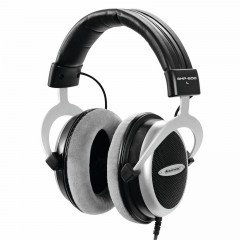
Hi-fi stereo headphones
Half-open, circumaural, dynamic stereo headphones
A powerful 53 mm neodymium magnet and a very lightweight aluminum voice coil provide for excellent sound
Well-padded, adjustable aluminum headband
Comfortable velour ear pads
Optimal wearer-comfort due to single OFC cable
Gold-plated 3.5 mm stereo jack with 6.3 mm adapter
Incl. velour bag for safe transportation
Frequency range: 15 - 28000 Hz
Max. SPL: 93 dB
Rated power: 600 mW
Cable length: 3 m
Impedance: 60 Ohm
Connector type: 6.3 mm jack (stereo); 3.5 mm jack (stereo)
Connections: Headphones via 6.3 mm jack (stereo)
Headphones via 3.5 mm jack (stereo)
Speakers: (2") approx. 5 cm with Neodymiummagnet
Transducer type: Dynamic
Type (Headphones): Half open, earenclosing
Weight: 0.39 kg
There are two versions of Perennial: the adventurous art-punk modernists, layering British Invasion pop, 60s soul, 90s Dischord post-hardcore, electronic music, and free-jazz, and the live three-piece whose bombastic 20 minute sets have become a “must-see” in the New England music scene. What started in 2015 as an all-encompassing art project has since grown into an honest-to-goodness word-of-mouth phenomenon, with over 300 shows played in the last six years (including shows with Guerilla Toss, Bully, Calvin Johnson, Jon Spencer, Sheer Mag, Teenage Halloween, and Downtown Boys) and multiple pressings of both of their full-length records. Perennial formed the band they always wanted to hear, and when they play, they're the band they always wanted to see. Perennial’s breakthrough 2022 LP, In The Midnight Hour, was their first time working with producer Chris Teti (The World Is A Beautiful Place & I Am No Longer Afraid To Die), a collaboration that garnered rave reviews from BrooklynVegan, Under The Radar, Post-Trash, Pop Matters, NPR Music and more, and marked a new creative benchmark. Feeling inspired, the band once again worked with Teti on 2023’s 7” EP The Leaves Of Autumn Symmetry, which earned more high praise from Stereogum, Paste, Consequence, Alternative Press, and Bandcamp Daily. Their latest release is the adventurous, experimental mod punk LP Art History, available June 7 via Ernest Jenning Record Co. and Safe Suburban Home.
Following a ten-year hiatus, multi-instrumentalists Rafael Anton Irisarri and Benoît Pioulard return with »How to Color a Thousand Mistakes«, their third LP together as Orcas. Building on the electronic minimalism of »Orcas« (2012) and the Twin Peaks-inspired haze of »Yearling« (2014), the duo have expanded their sound and vision into a full-spectrum ensemble.
In the time since their last major collaboration, Irisarri and Pioulard have done plenty on their own, while also traversing significant life changes: relocation from Seattle to New York, separation and divorce, illness, hospitalizations, and the loss of siblings, parents, and friends. Yet from these tribulations, they gleaned inspiration to reconstruct their lives, creating music with new collaborators and partners. Recorded in a variety of studios and cities including Brooklyn, Cambridge, Oxford, Seattle, and upstate New York, the resulting album, under the tutelage of UK producer James Brown (Arctic Monkeys, Kevin Shields, Nine Inch Nails), is a patiently-crafted beast, equally inspired by impressionism, British new wave, and dream pop.
With Irisarri’s guidance and Brown’s encouragement, Pioulard brings his velvety voice to its harmonized peak on songs like »Wrong Way to Fall« and the Durutti Column-indebted »Fare«. Where his most recent solo albums for Morr Music (»Sylva« and »Eidetic«) navigated foggy forests of ambient pop and stacked tape loops, here his characteristic blur shifts into focus with a unique degree of clarity and confidence. »How fare against balance do I / Navigate my errors?«, Pioulard sings in a heartbreaking tenor, echoing the album’s broader themes of introspection, grief, loss, trial and trauma.
Lead single, »Riptide«, is a summary of Pioulard’s life changes and personal upheavals in the past decade, »flitting eastward toward a yen deep in the past« and learning to glide through the tumult of ocean waves, as a metaphor for the punches one takes in pursuit of grace. Its towering, key-changing midsection arrives with the monumental drumming of Slowdive’s Simon Scott, a long-time friend and cohort who appears on most songs in the set. Scott’s quintessentially English, jazzier approach offers a balance of force and restraint as the backdrop for Irisarri’s majestic guitars, analog synth lines, and Martin Heyne’s Fender Rhodes counterpoints.
Second single, »Next Life«, began as a sketch by Scott, and reached its final form in the hands of Pioulard and Irisarri, at a point that each had endured major concurrent losses, finding a commonality in the need to gaze over the horizon while acknowledging the unavoidable bittersweetness of letting go – not only of people, but of routines, places, and expectations. It’s one of Orcas’ most nuanced pieces, with a mid-tempo, sunset glow that unfolds into a sparkling, slide-guitar finale as it disappears in the rear view.
On third-act highlight, »Bruise«, Scott is doubled on the drum kit by MONO’s Dahm Majuri Cipolla, whose Liebezeit-influenced metronomy anchors a nimble bass groove from Andrew Tasselmyer (of Hotel Neon), and some of the album's most syncopated, spaced-out interplay, courtesy of Puerto Rican guitar player Orlando Méndez (a childhood friend of Irisarri’s). Originally a droney, fingerpicked guitar demo, »Bruise« is the most storied composition here, having gone through almost a dozen versions and lyrical edits, with Brown distilling hours of improvised performances into the final arrangement.
Throughout »How to Color a Thousand Mistakes«, Irisarri uses his deep well of production experience to paint the stereo field with meticulously designed textures, exemplified on the slow burn of »Heaven’s Despite« and the heady rush of »Swells«. As a mixing and mastering engineer with Black Knoll, he has built a client list that reads as a who’s-who of modern, forward-thinking composition, including Temporary Residence, All Saints Records, and Ghostly International, among many others.
As with previous collaborations, Irisarri and Pioulard bring disparate styles and specialties to the table, but with an interpersonal dynamic that transcends friendship into brotherhood, their open-minded workflow and mutual respect are evident at every turn. »How to Color a Thousand Mistakes« brims with tight, complex art rock songwriting, masterful production, and sonic versatility, informed by a plethora of genres and tonal hues. The title might promise answers, but the gravitational center of the album is the dawning realization that, as you reckon with the infinite whims of the cosmos, there could be none.
Sonor Music Editions presents this restored issue of Maestro Sandro Brugnolini's Overground. This elusive masterpiece in library music captures the most impressive work, alongside Underground (1970), of the Italian composer and alto sax player.
Sandro Brugnolini was a prominent member of the Modern Jazz Gang, a famous Italian jazz group, during the 1950s and 60s, which also included Amedeo Tommasi, Cicci Santucci, and Enzo Scoppa. The group was active from 1956 to 1965 and produced some remarkable albums such as Miles Before And After (1960) and the original soundtrack from Gli Arcangeli (1962), which featured the renowned American jazz singer, Helen Merrill. Subsequently, he recorded many of the genre's most iconic releases, including Feelings (1974), albeit uncredited, and ventured into Psychedelic Lounge Funk and Progressive Jazz Beat tunes.
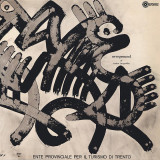
Overground was released on Sincro Edizioni Musicali in 1970 as the soundtrack to Enrico Moscatelli and Mario Rigoni's documentary Persuasione, commissioned by Ente Provinciale Per Il Turismo Di Trento, a local tourism board in Italy, with music composed by Sandro Brugnolini and Luigi Malatesta featuring some of the best musicians in Italy at the time like Angelo Baroncini and Silvano Chimento on guitars, Giorgio Carnini on piano and organ, Enzo Restuccia on drums, and Giovanni Tommaso on bass and effects. The music spans from underground Psychedelic Prog. Rock with swirling organs, trippy effects, and distorted fuzz guitars to sophisticated Lounge grooves with Avant-garde orchestrations.
The music has been transferred and remastered from the original master tapes. It has been lacquer cut in stereo by Jukka Sarapää at Timmion Cutting and packed in a thick cardboard sleeve featuring a fully restored painting by Umberto Mastroianni licensed by Centro Studi dell’Opera di Umberto Mastroianni
BLUE NOTE CLASSIC VINYL EDITION: Mono (Thad Jones) bzw. Stereo (Clifford Jordan), von Kevin Gray gemastert, bei Optimal auf 180g-Vinyl gepresst, im Single-Sleeve.
Der 1986 gestorbene Trompeter Thad Jones ist Jazzfans vor allem durch seine großartigen Arbeiten mit dem Count Basie Orchestra (dem er als Solist, Arrangeur und Komponist von 1954 bis 1963 angehörte) und seinem eigenen Thad Jones/Mel Lewis Orchestra in Erinnerung. Doch er konnte sich auch als Leader kleinerer Ensembles immer wieder glänzend in Szene setzen. Und nirgends besser als auf dem 1956 mit einem All-Star-Quintett aufgenommenen Album “The Magnificent Thad Jones”, mit dem sich der Trompeter endgültig als einer der führenden Musiker und Komponisten des modernen Jazz etablierte.
Als Clifford Jordan 1957 nach New York zog, um im Quintett von Max Roach Sonny Rollins zu ersetzen, eilte ihm der Ruf voraus, eines der größten Chicagoer Talente auf dem Tenorsaxofon zu sein. Noch
im Jahr seiner Ankunft erhielt der 25-Jährige die Chance, drei Alben für Blue Note einzuspielen, auf denen er sein Können unter Beweis stellte. Auf “Cliff Craft”, einer wunderbar entspannten Quintett-Aufnahme, präsentierte Jordan neben drei eigenen Kompositionen auch exzellent interpretierte Klassiker von Charlie Parker, Dizzy Gillespie und Duke Ellington.
BLUE NOTE CLASSIC VINYL EDITION: Mono (Thad Jones) bzw. Stereo (Clifford Jordan), von Kevin Gray gemastert, bei Optimal auf 180g-Vinyl gepresst, im Single-Sleeve.
Der 1986 gestorbene Trompeter Thad Jones ist Jazzfans vor allem durch seine großartigen Arbeiten mit dem Count Basie Orchestra (dem er als Solist, Arrangeur und Komponist von 1954 bis 1963 angehörte) und seinem eigenen Thad Jones/Mel Lewis Orchestra in Erinnerung. Doch er konnte sich auch als Leader kleinerer Ensembles immer wieder glänzend in Szene setzen. Und nirgends besser als auf dem 1956 mit einem All-Star-Quintett aufgenommenen Album “The Magnificent Thad Jones”, mit dem sich der Trompeter endgültig als einer der führenden Musiker und Komponisten des modernen Jazz etablierte.
Als Clifford Jordan 1957 nach New York zog, um im Quintett von Max Roach Sonny Rollins zu ersetzen, eilte ihm der Ruf voraus, eines der größten Chicagoer Talente auf dem Tenorsaxofon zu sein. Noch
im Jahr seiner Ankunft erhielt der 25-Jährige die Chance, drei Alben für Blue Note einzuspielen, auf denen er sein Können unter Beweis stellte. Auf “Cliff Craft”, einer wunderbar entspannten Quintett-Aufnahme, präsentierte Jordan neben drei eigenen Kompositionen auch exzellent interpretierte Klassiker von Charlie Parker, Dizzy Gillespie und Duke Ellington.
Stereometrix is given the responsibility of taking care of the first release from the new label Tread A Measure and boy does he come through. His cultured Fall EP is a deep exploration of liquid techno landscapes that draw on cosmic energy, psychedelic colours and evolving synth patterns to melt your mind whether in the club or at home. There are downbeat and melancholic cuts like 'Fall', serene and soulful percolators like 'IO' and twisted sonics for afterparty freakouts like 'A2', while 'Glitch' is a collage of ghostly sounds and warped pads to close out this top-class EP.
Here at Mr Bongo we have been inundated with people asking us to reissue this release. Ana Frango Elétrico's petit cult classic masterpiece 'Little Electric Chicken Heart' from 2019, which was only ever released on vinyl and CD in Brazil and Japan, has fast become a collector's item.
Well received by fans, DJs, and reviewers on release, The Needle Drop expressed "Ana Frango Elétrico's authentically vintage fusion of chamber pop, rock, samba and jazz is a real blast!" listing it as one of its Top 50 Albums of 2019. The album's reputation has been slowly building ever since, gaining a Latin Grammy nomination in 2020, and now solidly cementing itself as a gem of contemporary Brazilian music.
Across the albums nine tracks, Ana blends elements and influences from MPB, Tropicália, indie rock, punk and pop, forging them together with a sumptuous dose of her signature style. The finesse of 'Saudade' kicks off the LP, one of Ana's most known tracks to a non-Brazilian audience. A sublime opener, beginning with a spellbinding piano solo before transcending into a beautiful dream-laden slice of warmth, complete with luscious jazzy horns and deft vocal delivery. ‘Promessa e previsões’ follows, the only track on the album not to be written by Ana, instead being penned by Chico França. It’s a swelling and sweeping twilight groover, building and breaking across absorbing peaks.
Other highlights on the album include the anthemic 'Chocolate', which was a firm favourite with a packed sing-along crowd when we heard Ana perform it live. Elsewhere, 'Se No Cinema' hits with its quirky allure, charm and catchy melodies before transforming into a carnival spirit.
Tapping into the richness of Brazil’s new wave of musical energy, the album also includes a heavyweight lineup of collaborations with artists such as Dora Morelenbaum (Bala Desejo), Tim Bernardes, Antonio Neves and Guilherme Lirio to name but a few.
A short, sweet and refreshing record, that leaves nothing to waste, marrying playful ideas with poignant themes. 'Little Electric Chicken Heart' is a future classic and will beguile fans of ‘70s Brazilian recordings, Gal Costa, Mac DeMarco, Stereolab, Superorganism, Caetano Veloso and more.
In 1971, Atlantic Records released a pair of Dusty Springfield singles produced by the legendary songwriter/producer Jeff Barry (one-time songwriting and romantic partner of Ellie Greenwich, and author of too many hits to name): “Haunted”/”Nothing Is Forever” and “I Believe In You”/”Someone Who Cares.” A restless Dusty, freshly relocating to America from her native England, then departed the label and left an additional 9 songs recorded with Barry in the can, where they stayed until Rhino issued one track, “Faithful” (in mono), as a bonus track on the 1990s CD release of Dusty’s 1970 Atlantic album A Brand New Me. The other tracks didn’t surface until a subsequent deluxe reissue of Dusty’s landmark 1969 album Dusty in Memphis included them as bonus cuts.
Then, reissue producer Jim Pierson—who tracked down the missing masters after being lost for over two decades —assembled Dusty’s Barry-produced masters and put them together in a single package for the first time to create the third Dusty Springfield Atlantic Records album as planned in 1971. Real Gone Music’s release of Faithful on LP presents these historic Barry-Springfield collaborations exactly as they were originally intended to be heard, with the 12 tracks meant for the album release out on vinyl over 50 years later. All tracks are in stereo, while the liner notes on the new gatefold spread, penned by The Second Disc’s Joe Marchese, feature a number of rarely-seen photos of the legendary singer. These stunning pop, soul and gospel flavored selections showcase the iconic singer at the height of her vocal magic. A missing/ jumbled part of Dusty’s august recorded legacy, finally set right and available in its intended format. Out on metallic gold and purple “royalty” vinyl as befitting The Queen of Blue-Eyed Soul…limited to 1500 copies!
VERVE ACOUSTIC SOUNDS SERIE: Stereo, komplett analog von Ryan K. Smith bei Sterling Sound von
den Originalbändern gemastert, QPR-Pressung (180 g), stabiles Tip-On-Gatefold (Stoughton Printing),
wattierte Innenhülle.
Als Altsaxofonist Sonny Stitt Anfang der 1940er seine Karriere begann, wurde er von manchen Kritikern zu Unrecht als Charlie-Parker-Klon abgestempelt. Dass er tatsächlich ein ganz eigenes Profil besaß,
bewies er schon bald mit Aufnahmen, auf denen er als Tenor- oder sogar Baritonsaxofonist zu hören war.
Für “Blows The Blues” griff er 1959 aber wieder ausschließlich zum Altsaxofon. Der Titel des Albums
ist dabei Programm: mit seinem exzellenten und bestens eingespielten Quartett präsentiert Stitt hier acht
großartige Nummern (sechs davon aus eigener Feder) in unterschiedlichen Blues-Schattierungen.
Top-Mixtape-Collage von Death Is Not The End mit Auszügen aus Soundsystem-Tapes aus Manchesters berühmter Street-Soul-Szene der späten 1980er bis Mitte der 1990er Jahre. Jetzt auch auf Vinyl. Cut-Up-DIY-Kassettenaufnahmen von Broadway, Stereo Dan & Soul Control, die von 1988 bis 1996 bei Dance- und Blues-Partys in Süd- und Zentral-Manchester auflegten
Wayne Shorter’s mesmerizing 1970 album Odyssey of Iska was the last release of the saxophonist’s early Blue Note period. The album was a tribute to his daughter Iska which found Shorter continuing his own unique explorations into fusion having just left Miles Davis to form his band Weather Report. This stereo Tone Poet Vinyl Edition was produced by Joe Harley, mastered by Kevin Gray from the original analog master tapes, pressed on 180g vinyl at RTI, and packaged in a deluxe tip-on jacket.
Rain/Water is the fourth album by Tokyo's Kariu Kenji. Following 2021's Sekai, also on Bruit Direct Disques, rain/water is a gorgeous haze of song, a modern driftwork that's creatively rich, and full of fleeting sensation. These twelve lush pop songs point in multiple directions, outwards to bossa nova, modern R&B and soul, ambient bliss-outs, city pop confections, and electronica. But rain/water also has a sly experimentalism at its core, the kind of experimentation that doesn't need to call attention to itself, but that exists 'between the cracks' of the songs - in small, curious gestures of arrangement, in a sudden twist in melody, or an unexpected detour in a song's narrative. In this way, they share something of the stylistic free range in other great recent avant-pop moments - think, perhaps, of the music of Maher Shalal Hash Baz; Stereolab's more late-night, hermetic moments, or High Llamas' recent Hey Panda.
Una Magnum Special Per Tony Saitta (aka. Blazing Magnum: Strange Shadows In An Empty Room)> is a cop movie directed in year 1976 by Alberto De Martino and starring Stuart Whitman, Martin Landau, Tisa Farrow, and Gayle Hunnicutt. It was co-produced by Italy and Canada. An Ottawa police captain searches for the person who poisoned his sister, who was attending the university in Montreal. Later on, he desperately starts to use his own brutal methods to find the killer, but the truth turns out to be something different than what he had expected.
Trovajoli has composed and conducted a score that elegantly occupies a place of all respect in the Cops/Giallo movies’ scoring. The score alternates between action-driven funky music to nostalgic/romantic music in a reflection of the two dimensions of the protagonist: his cop job full of tasks and his private life full of sadness, but he becomes the superhero of the story by taking vengeance against those who hurt him by killing his beloved sister, and ultimately discovering the unexpected truth. For this vinyl album the original record master in stereo sound was used, restored and remastered to the highest quality. More or less the music in the movie is featured on this album, prepared for release by the composer himself for a very fine listening experience. Enjoy a half-hour with Armando Trovajoli and his cool sound!
Following the release of the celebrated Fugazi (Deluxe Edition), Marillion’s second studio album will be released on 1LP featuring the brand-new 2021 remixed stereo versions by Andy Bradfield and Avril Mackintosh. Originally released in 1984, Fugazi went on to be certified Gold and reach number 5 in the UK albums charts. The classic album spawned two singles Assassing and Punch & Judy, both reaching #22 and #29 on the UK singles charts respectively.
Im Rahmen der BLUE NOTE CLASSIC VINYL EDITION erscheinen in der neuesten Staffel zwei moderne Klassiker. Beide Alben gab es bisher nicht auf Vinyl und diese Doppel-LPs enthalten nun auch die bislang nur in Japan veröffentlichen Bonustracks . Stereo, von Kevin Gray von den Original-Masterbändern gemastert, bei Optimal auf 180g-Vinyl gepresst, Gatefold-Sleeves. Nachdem er zuvor auf drei Blue-Note-Alben des Trompeters Terence Blanchard auf sich aufmerksam gemacht hatte, erhielt Pianist Aaron Parks 2008 die Chance, mit “Invisible Cinema” sein erstes eigenes Album für das Label einspielen. Zu hören ist er hier mit einem exzellenten Quartett und einem Programm von durchweg eigenen Kompositionen, die allerdings musikalische Einflüsse von Wayne Shorter bis Radiohead verraten. Jetzt erscheint “Invisible Cinema” zum ersten Mal als Doppelalbum auf Vinyl. Mit “Ten”, seinem achten Album für Blue Note, feierte der Pianist Jason Moran 2010 das zehnjährige Jubiläum seines Trios The Bandwagon. Das noch heute in unveränderter Besetzung spielende Trio hat - ähnlich wie z.B. The Bad Plus oder das Robert Glasper Trio - das Image des klassischen Piano-Trios radikal modernisiert. Auf “Ten”, das nun erstmals als Doppelalbum auf Vinyl veröffentlicht wird, bietet The Bandwagon neben Originalen von Moran auch einzigartige Interpretationen von Stücken aus der Feder von Thelonious Monk, Jaki Byard und Conlon Nancarrow.