Country Girl marked a distinct sonic shift with the band, as the EP was the first group of songs written in their new home in rural Massachusetts. The novel isolation of the Northeast gave Jae and Augustus plenty of time to write and explore new sounds, while reminiscing about their time in the south. The move also put the band within driving distance of New York City which was another important factor in their progression. The band attributes partial influence on Country Girl EP to their frequent shows in Manhattan and Brooklyn. Playing parties like Nothing Changes and Lost Enterprises gave them access to a vibrant new music community. From industrial to noise table techno, the band was enamored by the raw sound and fearless attitude of the artists and crowds alike. The sound of Country Girl is defined by these two worlds that the band existed within - their quiet, modest life in small town Massachusetts and their speedfueled weekends in New York. Country Girl Uncut includes the complete track list of songs from this time period. The album is out on the band’s imprint “Nude Club” on digital, cd, tape, and vinyl formats.
Cerca:b vision
- A1: Rock This Mother
- A2: Talk To Me Girl
- A3: You Can Find Me
- A4: Check This Out
- A5: Jesus Going To Clean House
- A6: Hope You Understood
- A7: Is It What You Want
- A8: Love Is Everlasting
- A9: This Is Hip-Hop Art
- A10: Opposite Of Love
- A11: Do You Know What I Mean
- B1: Saving All My Love For You
- B2: Look Out Here I Come
- B3: Girl You Always Talking
- B4: Have A Great Day
- B5: Take My Hand
- B6: I Need Your Love
- B7: Your Town
- B8: Talk Around Town
- B9: Booty Head/Take A Little Walk
- B10: I Love My Mama
- B11: I Never Found Anyone Like You
Vinyl LP[23,49 €]
As the sun sets on a quaint East Nashville house, a young man bares a piece of his soul. Facing the camera, sporting a silky suit jacket/shirt/slacks/fingerless gloves ensemble that announces "singer" before he's even opened his mouth, Lee Tracy Johnson settles onto his stage, the front yard. He sways to the dirge-like drum machine pulse of a synth-soaked slow jam, extends his arms as if gaining his balance, and croons in affecting, fragile earnest, "I need your love… oh baby…"
Dogs in the yard next door begin barking. A mysterious cardboard robot figure, beamed in from galaxies unknown and affixed to a tree, is less vocal. Lee doesn't acknowledge either's presence. He's busy feeling it, arms and hands gesticulating. His voice rises in falsetto over the now-quiet dogs, over the ambient noise from the street that seeps into the handheld camcorder's microphone, over the recording of his own voice played back from a boombox off-camera. After six minutes the single, continuous shot ends. In this intimate creative universe there are no re-takes. There are many more music videos to shoot, and as Lee later puts it, "The first time you do it is actually the best. Because you can never get that again. You expressing yourself from within."
"I Need Your Love" dates from a lost heyday. From some time in the '80s or early '90s, when Lee Tracy (as he was known in performance) and his music partner/producer/manager Isaac Manning committed hours upon hours of their sonic and visual ideas to tape. Embracing drum machines and synthesizers – electronics that made their personal futurism palpable – they recorded exclusively at home, live in a room into a simple cassette deck. Soul, funk, electro and new wave informed their songs, yet Lee and Isaac eschewed the confinement of conventional categories and genres, preferring to let experimentation guide them.
"Anytime somebody put out a new record they had the same instruments or the same sound," explains Isaac. "So I basically wanted to find something that's really gonna stand out away from all of the rest of 'em." Their ethos meant that every idea they came up with was at least worth trying: echoed out half-rapped exhortations over frantic techno-style beats, gospel synth soul, modal electro-funk, oddball pop reinterpretations, emo AOR balladry, nods to Prince and the Fat Boys, or arrangements that might collapse mid-song into a mess of arcade game-ish blips before rallying to reach the finish line. All of it conjoined by consistent tape hiss, and most vitally, Lee's chameleonic voice, which managed to wildly shape shift and still evoke something sincere – whether toggling between falsetto and tenor exalting Jesus's return, or punctuating a melismatic romantic adlib with a succinct, "We all know how it feels to be alone."
"People think we went to a studio," says Isaac derisively. "We never went to no studio. We didn't have the money to go to no studio! We did this stuff at home. I shot videos in my front yard with whatever we could to get things together." Sometimes Isaac would just put on an instrumental record, be it "Planet Rock" or "Don't Cry For Me Argentina" (from Evita), press "record," and let Lee improvise over it, yielding peculiar love songs, would-be patriotic anthems, or Elvis Presley or Marilyn Monroe tributes. Technical limitations and a lack of professional polish never dissuaded them. They believed they were onto something.
"That struggle," Isaac says, "made that sound sound good to me."
In the parlance of modern music criticism Lee and Isaac's dizzying DIY efforts would inevitably be described as "outsider." But "outsider" carries the burden of untold additional layers of meaning if you're Black and from the South, creating on a budget, and trying to get someone, anyone within the country music capital of the world to take your vision seriously. "What category should we put it in?" Isaac asks rhetorically. "I don't know. All I know is feeling. I ain't gonna name it nothing. It's music. If it grabs your soul and touch your heart that's what it basically is supposed to do."
=
Born in 1963, the baby boy of nine siblings, Lee Tracy spent his earliest years living amidst the shotgun houses on Nashville's south side. "We was poor, man!" he says, recalling the outhouse his family used for a bathroom and the blocks of ice they kept in the kitchen to chill perishables. "But I actually don't think I really realized I was in poverty until I got grown and started thinking about it." Lee's mom worked at the Holiday Inn; his dad did whatever he had to do, from selling fruit from a horse drawn cart to bootlegging. "We didn't have much," Lee continues, "but my mother and my father got us the things we needed, the clothes on our back." By the end of the decade with the city's urban renewal programs razing entire neighborhoods to accommodate construction of the Interstate, the family moved to Edgehill Projects. Lee remembers music and art as a constant source of inspiration for he and his brothers and sisters – especially after seeing the Jackson 5 perform on Ed Sullivan. "As a small child I just knew that was what I wanted to do."
His older brother Don began musically mentoring him, introducing Lee to a variety of instruments and sounds. "He would never play one particular type of music, like R&B," says Lee. "I was surrounded by jazz, hard rock and roll, easy listening, gospel, reggae, country music; I mean I was a sponge absorbing all of that." Lee taught himself to play drums by beating on cardboard boxes, gaining a rep around the way for his timekeeping, and his singing voice. Emulating his favorites, Earth Wind & Fire and Cameo, he formed groups with other kids with era-evocative band names like Concept and TNT Connection, and emerged as the leader of disciplined rehearsals. "I made them practice," says Lee. "We practiced and practiced and practiced. Because I wanted that perfection." By high school the most accomplished of these bands would take top prize in a prominent local talent show. It was a big moment for Lee, and he felt ready to take things to the next level. But his band-mates had other ideas.
"I don't know what happened," he says, still miffed at the memory. "It must have blew they mind after we won and people started showing notice, because it's like everybody quit! I was like, where the hell did everybody go?" Lee had always made a point of interrogating prospective musicians about their intentions before joining his groups: were they really serious or just looking for a way to pick up girls? Now he understood even more the importance of finding a collaborator just as committed to the music as he was.
=
Isaac Manning had spent much of his life immersed in music and the arts – singing in the church choir with his family on Nashville's north side, writing, painting, dancing, and working various gigs within the entertainment industry. After serving in the armed forces, in the early '70s he ran The Teenage Place, a music and performance venue that catered to the local youth. But he was forced out of town when word of one of his recreational routines created a stir beyond the safe haven of his bohemian circles.
"I was growing marijuana," Isaac explains. "It wasn't no business, I was smoking it myself… I would put marijuana in scrambled eggs, cornbread and stuff." His weed use originated as a form of self-medication to combat severe tooth pain. But when he began sharing it with some of the other young people he hung out with, some of who just so happened to be the kids of Nashville politicians, the cops came calling. "When I got busted," he remembers, "they were talking about how they were gonna get rid of me because they didn't want me saying nothing about they children because of the politics and stuff. So I got my family, took two raggedy cars, and left Nashville and went to Vegas."
Out in the desert, Isaac happened to meet Chubby Checker of "The Twist" fame while the singer was gigging at The Flamingo. Impressed by Isaac's zeal, Checker invited him to go on the road with him as his tour manager/roadie/valet. The experience gave Isaac a window into a part of the entertainment world he'd never encountered – a glimpse of what a true pop act's audience looked like. "Chubby Checker, none of his shows were played for Black folks," he remembers. "All his gigs were done at high-class white people areas." Returning home after a few years with Chubby, Isaac was properly motivated to make it in Music City. He began writing songs and scouting around Nashville for local talent anywhere he could find it with an expressed goal: "Find someone who can deliver your songs the way you want 'em delivered and make people feel what you want them to feel."
One day while walking through Edgehill Projects Isaac heard someone playing the drums in a way that made him stop and take notice. "The music was so tight, just the drums made me feel like, oh I'm-a find this person," he recalls. "So I circled through the projects until I found who it was.
"That's how I met him – Lee Tracy. When I found him and he started singing and stuff, I said, ohhh, this is somebody different."
=
Theirs was a true complementary partnership: young Lee possessed the raw talent, the older Isaac the belief. "He's really the only one besides my brother and my family that really seen the potential in me," says Lee. "He made me see that I could do it."
Isaac long being a night owl, his house also made for a fertile collaborative environment – a space where there always seemed to be a new piece of his visual art on display: paintings, illustrations, and dolls and figures (including an enigmatic cardboard robot). Lee and Issac would hang out together and talk, listen to music, conjure ideas, and smoke the herb Isaac had resumed growing in his yard. "It got to where I could trust him, he could trust me," Isaac says of their bond. They also worked together for hours on drawings, spreading larges rolls of paper on the walls and sketching faces with abstract patterns and imagery: alien-like beings, tri-horned horse heads, inverted Janus-like characters where one visage blurred into the other.
Soon it became apparent that they didn't need other collaborators; self-sufficiency was the natural way forward. At Isaac's behest Lee, already fed up with dealing with band musicians, began playing around with a poly-sonic Yamaha keyboard at the local music store. "It had everything on it – trumpet, bass, drums, organ," remembers Lee. "And that's when I started recording my own stuff."
The technology afforded Lee the flexibility and independence he craved, setting him on a path other bedroom musicians and producers around the world were simultaneously following through the '80s into the early '90s. Saving up money from day jobs, he eventually supplemented the Yamaha Isaac had gotten him with Roland and Casio drum machines and a Moog. Lee was living in an apartment in Hillside at that point caring for his dad, who'd been partially paralyzed since early in life. In the evenings up in his second floor room, the music put him in a zone where he could tune out everything and lose himself in his ideas.
"Oh I loved it," he recalls. "I would really experiment with the instruments and use a lot of different sound effects. I was looking for something nobody else had. I wanted something totally different. And once I found the sound I was looking for, I would just smoke me a good joint and just let it go, hit the record button." More potent a creative stimulant than even Isaac's weed was the holistic flow and spontaneity of recording. Between sessions at Isaac's place and Lee's apartment, their volume of output quickly ballooned.
"We was always recording," says Lee. "That's why we have so much music. Even when I went to Isaac's and we start creating, I get home, my mind is racing, I gotta start creating, creating, creating. I remember there were times when I took a 90-minute tape from front to back and just filled it up."
"We never practiced," says Isaac. "See, that was just so odd about the whole thing. I could relate to him, and tell him about the songs I had ideas for and everything and stuff. And then he would bring it back or whatever, and we'd get together and put it down." Once the taskmaster hell bent on rehearsing, Lee had flipped a full 180. Perfection was no longer an aspiration, but the enemy of inspiration.
"I seen where practicing and practicing got me," says Lee. "A lot of musicians you get to playing and they gotta stop, they have to analyze the music. But while you analyzing you losing a lot of the greatness of what you creating. Stop analyzing what you play, just play! And it'll all take shape."
=
"I hope you understood the beginning of the record because this was invented from a dream I had today… (You tell me, I'll tell you, we'll figure it out together)" – Lee Tracy and Isaac Manning, "Hope You Understand"
Lee lets loose a maniacal cackle when he acknowledges that the material that he and Isaac recorded was by anyone's estimation pretty out there. It's the same laugh that commences "Hope You Understand" – a chaotic transmission that encapsulates the duality at the heart of their music: a stated desire to reach people and a compulsion to go as leftfield as they saw fit.
"We just did it," says Lee. "We cut the music on and cut loose. I don't sit around and write. I do it by listening, get a feeling, play the music, and the lyrics and stuff just come out of me."
The approach proved adaptable to interpreting other artists' material. While recording a cover of Whitney Houston's pop ballad "Saving All My Love For You," Lee played Whitney's version in his headphones as he laid down his own vocals – partially following the lyrics, partially using them as a departure point. The end result is barely recognizable compared with the original, Lee and Isaac having switched up the time signature and reinvented the melody along the way towards morphing a slick mainstream radio standard into something that sounds solely their own.
"I really used that song to get me started," says Lee. "Then I said, well I need something else, something is missing. Something just came over me. That's when I came up with 'Is It What You Want.'"
The song would become the centerpiece of Lee and Isaac's repertoire. Pushed along by a percolating metronomic Rhythm King style beat somewhere between a military march and a samba, "Is It What You Want" finds Lee pleading the sincerity of his commitment to a potential love interest embellished by vocal tics and hiccups subtlely reminiscent of his childhood hero MJ. Absent chord changes, only synth riffs gliding in and out like apparitions, the song achieves a lingering lo-fi power that leaves you feeling like it's still playing, somewhere, even after the fade out.
"I don't know, it's like a real spiritual song," Lee reflects. "But it's not just spiritual. To me the more I listen to it it's like about everything that you do in your everyday life, period. Is it what you want? Do you want a car or you don't want a car? Do you want Jesus or do you want the Devil? It's basically asking you the question. Can't nobody answer the question but you yourself."
In 1989 Lee won a lawsuit stemming from injuries sustained from a fight he'd gotten into. He took part of the settlement money and with Isaac pressed up "Saving All My Love For You" b/w "Is It What You Want" as a 45 single. Isaac christened the label One Chance Records. "Because that's all we wanted," he says with a laugh, "one chance."
Isaac sent the record out to radio stations and major labels, hoping for it to make enough noise to get picked up nationally. But the response he and Lee were hoping for never materialized. According to Isaac the closest the single got to getting played on the radio is when a disk jock from a local station made a highly unusual announcement on air: "The dude said on the radio, 107.5 – 'We are not gonna play 'Is It What You Want.' We cracked up! Wow, that's deep.
"It was a whole racist thing that was going on," he reflects. "So we just looked over and kept on going. That was it. That was about the way it goes… If you were Black and you were living in Nashville and stuff, that's the way you got treated." Isaac already knew as much from all the times he'd brought he and Lee's tapes (even their cache of country music tunes) over to Music Row to try to drum up interest to no avail.
"Isaac, he really worked his ass off," says Lee. "He probably been to every record place down on Music Row." Nashville's famed recording and music business corridor wasn't but a few blocks from where Lee grew up. Close enough, he remembers, for him to ride his bike along its back alleys and stumble upon the occasional random treasure, like a discarded box of harmonicas. Getting in through the front door, however, still felt a world away.
"I just don't think at the time our music fell into a category for them," he concedes. "It was before its time."
=
Lee stopped making music some time in the latter part of the '90s, around the time his mom passed away and life became increasingly tough to manage. "When my mother died I had a nervous breakdown," he says, "So I shut down for a long time. I was in such a sadness frame of mind. That's why nobody seen me. I had just disappeared off the map." He fell out of touch with Isaac, and in an indication of just how bad things had gotten for him, lost track of all the recordings they'd made together. Music became a distant memory.
Fortunately, Isaac kept the faith. In a self-published collection of his poetry – paeans to some of his favorite entertainment and public figures entitled Friends and Dick Clark – he'd written that he believed "music has a life of its own." But his prescience and presence of mind were truly manifested in the fact that he kept an archive of he and Lee's work. As perfectly imperfect as "Is It What You Want" now sounds in a post-Personal Space world, Lee and Isaac's lone official release was in fact just a taste. The bulk of the Is It What You Want album is culled from the pair's essentially unheard home recordings – complete songs, half-realized experiments, Isaac's blue monologues and pronouncements et al – compiled, mixed and programmed in the loose and impulsive creative spirit of their regular get-togethers from decades ago. The rest of us, it seems, may have finally caught up to them.
On the prospect of at long last reaching a wider audience, Isaac says simply, "I been trying for a long time, it feels good." Ever the survivor, he adds, "The only way I know how to make it to the top is to keep climbing. If one leg break on the ladder, hey, you gotta fix it and keep on going… That's where I be at. I'll kill death to make it out there."
For Lee it all feels akin to a personal resurrection: "It's like I was in a tomb and the tomb was opened and I'm back… Man, it feels so great. I feel like I'm gonna jump out of my skin." Success at this stage of his life, he realizes, probably means something different than what it did back when he was singing and dancing in Isaac's front yard. "What I really mean by 'making it,'" he explains isn't just the music being heard but, "the story being told."
Occasionally Lee will pull up "Is It What You Want" on YouTube on his phone, put on his headphones, and listen. He remembers the first time he heard his recorded voice. How surreal it was, how he thought to himself, "Is that really me?" What would he say to that younger version of himself now?
"I would probably tell myself, hang in there, don't give up. Keep striving for the goal. And everything will work out."
Despite what's printed on the record label, sometimes you do get more than one chance.
Italian duo Agents Of Time have been incredibly busy over the past few years, from releasing a string of classic singles – including their recent single for Afterlife, “The Mirage”, which earned more than five million views on Instagram – to remixing The Weeknd’s “Take My Breath”, which appeared on his recent Dawn FM (Alternative World). But the biggest news is here now – their second album, Universo, is ready. Elevating their trademark melodic techno with an exquisite pop-ness, Universo has found its ideal home with Kompakt, following their Music Made Paradise 2020 debut EP for the label. It’s a meeting of minds that makes perfect sense.
Andrea Di Ceglie and Luigi Tutolo, the two members of Agents Of Time, used their time during the pandemic to work on Universo, an album loosely conceptualised around their ‘personal universo’, a manifestation of the world Di Ceglie and Tutolo built both within and around their studio. This accounts for the sparkle and brightness of Universo – it’s full of personality, vim and vigour, the duo experimenting with their music, exploring its furthest corners. If you come to Universo expecting just another album of melodic techno, get ready to be pleasantly surprised – there’s a whole lot more going on here, and it’s all equally compelling.
After a typically poetic opening gesture – the swirling, synaesthetic, self-titled intro track – expectations are immediately blindsided with the two-step pop of “Fallin’”, sung with gentle clarity by guest Audrey Janssens, a dream of a song that harks back to the glory days of early ‘00s UK garage. “Interstellar Cowboy” is a confident, lithe, disco-fied strut; the gentle minor-key piano of “Liquid Fantasy” spirals into a gorgeously melancholy techno-pop epic, Vicky Who?’s voice rich with yearning. Janssens also reappears on the electro-swirl of “Poison”; “Dream Vision” revisits their single “The Mirage”, soft with sweeping strings, loaded with drama; “Part Of Life” sashays into view with a schaffel-stomp.
This rich variety throws the more dancefloor-focused tracks, like “Ciao”, into even starker relief – they’re more decisive, streamlined, yet rich with detail, chugging, Moroder-esque bass meeting strobe-lit synths that fire melodies out into the firmament. Universo feels texturally dense, but it still breathes, its sounds so tactile you want to reach out and grab them, its tunes so seductive you can’t get them out of your head. Universo is a fiercely beautiful album, brave in its spirit, a perfectly poised meeting-point of pop melody and stylish, lush techno: Agents Of Time in excelsis.
Das italienische Duo Agents Of Time war in den letzten Jahren unglaublich fleißig, von der Veröffentlichung einer Reihe klassischer Singles - darunter ihre jüngster Beitrag für Afterlife, "The Mirage", der mehr als fünf Millionen Aufrufe auf Instagram erhielt - bis hin zum Remix von The Weeknds "Take My Breath", der auf dessen aktuellen Album “Dawn FM (Alternative World)” erschien. Aber die bahnbrechendeste Neuigkeit ist erst jetzt endlich da - ihr zweites Album "Universo" ist fertig! “Universo" verbindet ihr Markenzeichen, melodischen Techno, mit einer besonderen Pop-Haltung und findet nach der EP "Music Made Paradise 2020" sein ideales Zuhause bei Kompakt. Eine Seelenverwandtschaft, die absolut Sinn macht.
Andrea Di Ceglie und Luigi Tutolo, die beiden Mitglieder von Agents Of Time, nutzten die Zeit während der Pandemie, um an "Universo" zu arbeiten, einem Album, das lose um ihr "persönliches Universum" herum konzipiert ist, eine Manifestation der Welt, die Di Ceglie und Tutolo in und um ihr Studio herum aufgebaut haben. Das macht den besonderen Glanz und die strahlende Helligkeit von "Universo" aus - es strotzt nur so von Persönlichkeit, Elan und Kraft, das Duo experimentiert mit Musik und erkundet auch noch deren entfernteste Ecken. Wer bei "Universo" nur ein weiteres Album mit melodischem Techno erwartet, wird angenehm überrascht sein - hier ist viel mehr los, und alles ist gleichermaßen spannend.
Nach einer poetischen Eröffnungsgeste - dem wirbelnden, synästhetischen, selbstbetitelten Intro-Track - werden mit dem 2-Step-Pop von “Fallin” alle Erwartungen sofort über den Haufen geworfen. Mit sanfter Klarheit von Gastsängerin Audrey Janssens gesungen, ist “Fallin” ein Traum von einem Song, der an die großen Zeiten von UK-Garage in den frühen 00er Jahre erinnert. "Interstellar Cowboy" ist ein selbstbewusstes, geschmeidig über den Laufsteg stolzierender Disco-Track; das sanfte Moll-Klavier von "Liquid Fantasy" entwickelt sich zu einem wunderbar melancholischen Techno-Pop-Epos, mit Vicky Who?’s Stimme voller Sehnsucht . Danach taucht auch Janssens Gesang auf dem Elektro-Wirbel von "Poison" wieder auf; "Dream Vision" greift die Single "The Mirage" auf, sanft und mit schwungvollen Streichern, voller Dramatik; "Part Of Life" dagegen ist ein echter Schaffel-Stomp.
All der Abwechslungsreichtum lässt eher tanzflächenorientierte Tracks wie "Ciao" noch deutlicher hervortreten - sie wirken noch entschlossener, stromlinienförmiger und dennoch reich an Details, pluckernde, Moroder-eske Bässe treffen auf stroboskopisch blitzende Synths, von denen aus die Melodien ins Firmament schießen. “Universo” fühlt sich textlich dicht an, aber es atmet trotzdem, seine Klänge sind so greifbar, dass man sie anfassen möchte, seine Melodien so verführerisch, dass man sie nicht mehr aus dem Kopf bekommt. “Universo” ist ein wunderschönes, mutiges Album, ein perfekter Treffpunkt von Pop-Melodien und stilvollem Techno: Agents Of Time in excelsis.
- A1: Funny How Time Slips Away
- A2: Ramblin’ Man
- A3: Gimme That Old Time Religion
- A4: I Walk On Guilded Splinters
- A5: I’m So Lonesome I Could Cry
- B1: End Of The Line
- B2: Holy Water
- B3: Sleeping Dogs Best Left Alone
- B4: Give Myself A Good Talkin’ To
- B5: Guess Things Happen That Way
Over the course of his six-decade-long career, Dr. John embodied a near-mythic multitude of musical identities: global ambassador of New Orleans funk and jazz and R&B, visionary bluesman, rock and roll innovator, one-time top 10 hitmaker, self-anointed and massively revered high priest of psychedelic voodoo. On Things Happen That Way, the six-time Grammy-winning Rock & Roll Hall of Famer otherwise known as Malcolm John “Mac” Rebennack Jr. reveals yet another dimension of his cosmically vast musicality: a lifelong affinity for classic country & western, whose songs he first encountered via the 78 rpm records frequently spun at his father’s electronics shop. Things Happen That Way arrives as the latest and final studio album from an artist who remained wholly unpredictable, alchemizing the charmed simplicity of traditional country into a wildly enchanting body of work.
Things Happen That Way marks the fulfillment of a longtime goal of the legendary singer/songwriter/pianist, who first began plotting a country inspired album decades ago. In bringing his album’s songs to life, Dr. John drew on a lineup of musicians befitting of a universally beloved luminary who worked with the likes of Van Morrison, the Rolling Stones, B.B. King, Etta James, and artists as diverse as Aretha Franklin, Ringo Starr, and Eric Clapton. Along with an elite cadre of New Orleans session players, the album’s personnel include icons Willie Nelson and Aaron Neville, as well as label mate singer/songwriter Katie Pruitt and country-rock powerhouse Lukas Nelson & Promise Of The Real. True to an artist whose music “transcended race and cultural divides”—as Black Keys frontman Dan Auerbach proclaimed in presenting Dr. John his lifetime achievement award at the Americana Music Association Honors and Awards in 2013—Things Happen That Way reflects both a rich sense of history and a boundless passion for defying expectation.
Marked by resilience, maturity, and the optimistic joy of a creative resurgence, Pat Green’s Miles and Miles of You is the work of an icon reclaiming ground only he himself could have ceded. Ten fresh tracks feel like the spiritual exhale of a celebrated troubadour, taking fans on a journey to the other side of turmoil… and to a place where the old ways feel new again.
Credited as one of Texas country’s modern-era founding fathers, Green has traveled many roads in the 25 years since his debut album, Dancehall Dreamer. A Grammy nominated singer-songwriter with a restless creative spirit, his career has gone beyond the bounds of a “country star” to include the work of a painter, sculptor, philanthropist, family man and more. But one constant has remained – his vision.
Green’s 14th album overall, Miles and Miles of You is also his first in nearly seven years – since his inspiration-first writing style means he won’t force a song into existence. But that philosophy also makes it possible for a whole album to arrive in a dam-burst of expression, and Green now calls Miles and Miles of You an “effortless” project.
“It was just so smooth and natural,” he says. “I write the song when it comes, and it was like ‘Man, we’re on a roll.’”
Recorded outside Austin with producer Dwight Baker (Bob Schneider, Josh Abbott Band), more of that story is revealed with each track, as Green and his band mirrored the loose vibe of the songwriting with country balladry, dancehall energy, soul-baring reflection and at times, a swampy blues strut. “The older you get, you just have more to think about,” he says. “So that’s
what this record is – a guy with more to think about, coming through a hard time and into something as fun and beautiful as creation. I’m just gonna take the ball and run with it.”
DUBFIRE ANNOUNCES HIS DEBUT SOLO ALBUM ON HIS SCI+TEC IMPRINT
With a career spanning over 3 decades, Dubfire has achieved global success as an artist with relentless drive, talent, and intuition. Pioneering commercial notoriety came initially as one half of the Grammy award (2001) winning duo Deep Dish, before embarking on a truly groundbreaking solo career in 2007. A career filled with timeless tracks include his early works ‘Ribcage’ (2007), ‘Emissions (2007), ‘Roadkill’ (2007) and the highly acclaimed ‘Exit’ (2014) a debut collaboration with Kiss Kitten. Collaborative work highlights include Luke Slater, Moscoman, Oliver Huntemann, Chris Liebing, Tiga and co-producing two tracks on the legendary Underworld’s ‘Barking’ album. A true artist, he has always been heavily invested in exploring boundaries or audio and visual technologies, which he displayed more than ever with his HYBRID show. A two-year world tour with a goal to reinvent the concert experience in 2015, also became his muse for his retrospective album ‘A Decade Of Dubfire’. A collection of all his biggest tracks and remixes from the last decade, released in 2017. It may come as a surprise to many, with so many landmark releases, that Ali ‘Dubfire’ Shirazinia hasn't yet released a totally solo album, until now.
EVOLV is an 11-track visionary into the mind of Dubfire to be released on his long-standing label SCI+TEC. It’s concept? The journey of the ‘hybrid’ being and its evolution, which kicks off with ‘Dark Matter’ and ‘Dust & Gas’ set a brooding atmosphere. The rougher percussion, and eerie lead in ‘Dark Matter’ is accompanied by a stripped back sound and glitchy vocals sitting in a spaced-out atmosphere in ‘Dust & Gas’. Its deep and minimal drum work is exceptional. ‘Escape’, a deep, dark and pulsating track that sets the tone for the body of work on the album. Coupled with ‘Elevation’ and it’s understated arpNew Release Information and crisp percussion for the second single. ‘Bottom Dweller’ give you two different versions, the original is straight forward, yet effective for a late-night head down cut, where the ‘Meltdown Mix’ takes a minimal path, and faster pace. ‘Swerve’ sees Dubfire return to that stripped back sound with heavy swinging
percussion, a landmark and much-loved element in his music. Sonically, the journey so far has been like a dystopian landscape, but ‘Decent’ brings a kaleidoscope of colour and sound before dropping into the ‘CHALLNGR’ duo. ‘CHALLNGR 1.1’ is perhaps the most contemporary track on the album. Dubfire picks up the rhythm for a full-on dancefloor focused track. It’s no-nonsense techno at its best, with heaps of pure energy. Two versions appear on the album, ‘CHALLNGR 1.2’ retains the BPM but reigns in the percussion with a snappier approach and a more euphoric warped effect. Closing out, is a special digital only track ‘The Bells Tolls’. This one drives the energy back to ground level, into a more unsettling and mysterious end to a killer 11 track debut album. The music will also be accompanied by a new audio-visual show from the revered DubLab team based in Portugal. Test shows at DGTL (Amsterdam),
Caprices (Crans-Montana) and in Sofia between 2018 and 2019 had created lots of buzz just before the COVID-19 pandemic shut the world down for two years. But now the stage is firmly set for the new album
and live shows. As music evolves, so does Dubfire. EVOLV is a special project from this pioneering producer showing his interpretation of techno in his own unique vision.
Following on from last year’s acclaimed Sylva Sylvarum, the epic double LP from Ora Clementi (her collaborative project with James Rushford), crys cole returns to Black Truffle with Other Meetings. Originally commissioned and released on cassette by Boomkat Editions in 2021, Other Meetings is a major addition to the body of carefully hewn solo work cole has released over the last decade, offering up two side-long suites of her radically intimate approach to sound. After many years dominated by touring and travel, cole found herself in lockdown in her Berlin apartment, working in a limited space with minimal equipment. Digging through archives of recordings taken overseas and exploring the sonic potential hidden in the objects surrounding her (including a coffee pot and a vase of dying flowers), she crafted what in her liner notes she calls ‘an internal dérive, a journey that drifted through many places without a defining compass’. Totalling over 50 minutes, the two pieces unfold at an unhurried pace, each containing four individually titled subsections. Beginning with a sequence of the highly amplified small sounds characteristic of much of cole’s work, the opening moments of ‘The time between two durations of sleep’ are underpinned by a gentle rocking motion, weaving together contact mic crunch, metallic resonance, glimpses of bird song, and isolated drum machine hits, the sonic space expanding and contracting as focus moves between elements. Briefly side-lined by a tactile but unplaceable sizzling, this complex weave of voices then returns in a kind of dubbed-out ‘version’, the percussive accents echoing around the stereo space. In one of the record’s most beautiful and unexpected moments, these sounds are joined by a sparse melodic line performed on a broken 1980s digital synth, the vaguely New Age timbres being taken on a long, tonally ambiguous wander. Cole’s immersion in memories of travel comes to the fore in the final section of the first side, titled ‘Wat Paknam’ after a royal temple in Bangkok, where snatches of voices, ringing bells and distant waves of chanting blur together with synth tones into an increasingly abstracted wave of sound. The second side, ‘Slices of cake’, opens in a similarly hallucinatory outdoor space of echoing bird song and liquified traffic before abruptly zooming in on a microscopic world of subtly processed and highly amplified objects, explored with a starkness and quiet insistence that calls to mind the fringe not-quite-concrète of outsiders like Paul A.R. Timmermans or Knud Viktor, whose obsessive interrogation of dripping water might also serve as a point of reference for the following sub-section, the aptly titled ‘magischer Abfluss’ (magic drain).
While Other Meetings develops many aspects of cole’s previous work – the hyper-magnification of small gestures, the unsettling edits and fades partly inspired by hypnagogic states, the location recordings smeared into oneiric haze – it is almost as if these pieces are somehow songs, the remnants of an evaporated music of which nothing remains except isolated hits from a synthetic drum, a handful of notes, or simply a duration of emptied atmosphere. Radically reductive yet deeply musical, Other Meetings is a major work from an artist driven by an uncompromising and idiosyncratic vision.
Presented with an inner sleeve with photos and liner notes from the composer and remastered audio.
- 1: They Quiet The Room
- 2: Building A Swing
- 3: Whatever Fits Together
- 4: Whistle Of The Dead
- 5: Lullaby In February
- 6: Pass Through Me
- 7: Could It Be The Way I Look At Everything?
- 8: Outside, Playing
- 9: It's Like A Secret
- 10: Sticker
- 11: Window Somewhere
- 12: (Secret Instrumental)
- 13: Quiet The Room
- 14: You Are My House
Black Vinyl[21,81 €]
Der Grundstein für "Quiet The Room" wurde vor zwei Jahren gelegt, als Helen Ballentine einen Song gleichen Namens komponierte und aufnahm. Im Gegensatz zu den meisten anderen Songs von SKULLCRUSHER wurde dieser auf dem Klavier geschrieben, dem erklärten Instrument ihrer Kindheit. Während Ballentine im Sommer 2021 den Rest des Albums schrieb, flogen ihr Visionen aus ihrer Jugend zu, wie die Fledermäuse vom Dachboden, während sie in der schwülen, stickigen Hitze durch ihre Wohnung in Los Angeles lief. Das Bild eines Hauses entstand in Ballentines Kopf, als sie die innere Welt ihrer Songs mit den äußeren Räumen, die sie jetzt umgab, zusammenfügte. Sie dachte dabei viel an ihre Kindheit in Mount Vernon, NY, die sie als größte Inspiration für die Platte bezeichnet. "It's like layers of tracing paper, like someone is trying to make a drawing and you're seeing the entire process", sagt Ballentine über die Entstehung des Albums. Bei der Durchsicht älterer Heimvideos fielen ihr die scheinbar harmlosen Aufnahmen auf, die durch das Fenster gemacht wurden und sie am Klavier oder beim Spaziergang im Garten zeigten. Versteckte Bedeutungen, die über die Ränder der Bilder hinausgingen, eine sich abzeichnende Dunkelheit, die außerhalb des Blickfelds schwebte (ihre Eltern stritten sich, waren auf dem Weg zur Scheidung usw.). Das Haus schaffte es nicht länger, sie alle unter einem Dach zu beherbergen. Ballentine versucht nicht auf "Quiet The Room" die oft zitierte Unschuld der Kindheit einzufangen, sondern will diese in ihrer intensiven Komplexität darstellen. Das Ergebnis ist ein atemberaubendes wie leise bewegendes Werk geworden, das die Reisen widerspiegelt, die wir durch unsere körperlichen und geistigen Sphären unternehmen, um uns der Welt zu präsentieren.
Before 2020, Ocean Alley could have broken. The six-piece had spent two years touring relentlessly off-the-back of their breakthrough record Chiaroscuro, spending months on the road and away from their loved ones, on the brink of burnout. Then the world shut down. And although there was a universal experience of suffering and isolation during ex-tensive lockdowns, Ocean Alley found themselves gifted with a forced break - where time slowed down and they could be with their loved ones, while also finding space to recon-nect with themselves. This luxury of time allowed experimentation in new ways for the band, who since inception had always felt their way through the music with communal jam sessions. It was uncharted territory for the group who for the first time operated as a bedroom band - particularly frontman Baden Donegal who revealed that a number of tracks on their upcoming fourth album Low Altitude Living started as “shitty GarageBand demos” he recorded solo at the beginning of lockdown. When comparing the creative process of their three previous full-lengths - the ARIA-nominated Lonely Diamond (2020), their Gold-certified breakthrough Chiaroscuro (2018) and self-assured debut Lost Tropics (2016) - this in itself was the big-gest difference.y
Finnish Disco and Electronic Music from Private Pressings and Unreleased Tapes 1980–1991
Hot on the sold-out heels of the three previous Svart-issued early 80’s synth pop and underground electronic music compilations (Satan in Love, Dance For Your Life, Cold War On The Rocks comes the last part of the quadrilogy: Black Hole, that reaches the final frontier of collectable cult synth disco music: privately released and completely unreleased music from 40 years ago. Black Hole has been again compiled by Mikko Mattlar, whose encyclopedic knowledge in the field of Finnish electronic music produces 20 cuts of electro-cult has helped him dig up 20 cuts of rare groove from obscure regional compilation records, seven inches of which only a test pressing exists, demo tapes and privately financed singles. Stylistically the compilation moves from 1979 disco funk as performed by Peak Funktion on their unreleased record to homebrewed synth visions by late 80’s bedroom wizards. Interesting curiosities among the 20 tracks include the riveting dance number by Jarkko Väljä, who received some fame back in the day as a Michael Jackson impersonator, and released one 7” single, that has become an expensive rarity. Another thing you wouldn’t believe existed at all if it wasn’t included here is “Israel Is Real” by We, a short-lived gospel vocal quartet, accompanied here by a drum machine and a synthesizer, which makes for an unforgettable and surprisingly catchy four minute piece of underground gospel disco from 1983. The compilation Black Hole – Finnish Disco and Electronic Music From Private Pressings and Unreleased Tapes 1979-1991 will be released by Svart Records on double vinyl and CD on October 14th.
- A1: Splashscreen 01
- A2: Welcome To Blackreef
- A3: Menu - Break The Loop
- A4: Karl's Bay
- A5: The Revenant (By Frank Spicer)
- B1: Updaam
- B2: Colt Win
- B3: Anonymous (Aleksis Dorsey)
- B4: Invasion Started
- B5: Ubiquity (Wenjie Evans)
- B6: Julianna Win
- C1: Fristad Rock
- C2: A Band Apart (Frank Spicer)
- C3: Rocket Man
- C4: Ode To Somewhere (By Frank Spicer)
- D1: The Complex
- D2: Eternal Deathwish
- D3: Final Confrontation
- D4: Déjà Vu
The visionaries at Bethesda, Arkane and Laced are bringing the twisted ’60s soundtrack for award-winning looper-shooter DEATHLOOP to wax.
The complete 59-track soundtrack has been specially mastered for vinyl and will be pressed onto heavyweight discs. These will come in spined inner sleeves housed in a rigid board slipcase. Tracklist curation and stunning original sleeve artwork is by the team at Arkane Lyon.
This Standard Edition quadruple LP box set features traditional black discs.
Lead composer Tom Salta has built an enviable credits list, with entries in the Prince of Persia, Tom Clancy and Halo universes to his name. For DEATHLOOP’s original score, he immersed himself in the music of Jimi Hendrix, Pink Floyd, Nelson Riddle and a host of other late-’60s influences. Layers of period-appropriate organs, synths and other instruments (including Rhodes, Wurlitzer and Hammond B3) help maintain the tension as Colt picks off Eternalists from the shadows. As things get dicey, or Julianna intervenes with extreme prejudice, tracks explode into furious guitar and drum grooves that propel the zany, supernaturally enhanced gunplay.
Ross Tregenza’s multi-genre diegetic cues perfectly complement the psycho-sophisticate stylings of Blackreef’s artistically aspirational inhabitants, while songwriter Erich Talaba and singer Jeff Cummings brought to life the vicious visionary Frank Spicer with catchy in-universe songs. Music agency Sencit teamed up with powerful yet soulful vocalists for trailer and credits songs, including Bond-ish banger “Déjà Vu” (featuring FJØRA), “Pitch Black” (featuring Lady Blackbird) and “Down the Rabbit Hole” (featuring Samantha Howard & Haqq.)
Trumpeter, producer and composer Rory Simmons summons his
iconoclastic musical vision on the genre-blurring Monocled Man album,
'Ex Voto'
Here, the omni-appreciative trio (Simmons, Chris Montague and Jon Scott) travel
down a groove- adjacent pathway in search of solemn industrial
soundscapes.Simmons' cultural inquisitiveness forms a treasure-trove of musical
touchstones, which he uses to sculpt a sound that's truly his own. 'Ex Voto' ('an
offer given in order to fulfil a vow') represents another idiosyncratic journey, this
time inspired by Victorian novelist Samuel Butler and his work of the same name.
The themes found in both Ex Voto and Butler's magnum opus Erewhon punctuate
the album, as the trio conjure visceral musical excitement from base ideas on
dystopia and politics.
'Ex Voto' is an opportunity for Monocled Man to tread new ground. Close
collaboration between Simmons and Scott prompted a creative shift with more
emphasis on both groove and production value. "A lot of the touchstones for the
record are cinematic, ambient, industrial soundscapes," Simmons explains. "I still
wanted it to sound English too, whilst tipping European noir."
"I wanted to make a record that was darkly cinematic and ambient but with big
washes of industrial sound," Simmons says. "I didn't want to make a record based
on how I would play it live, I wanted to make something I could sculpt, and create
something really original." Simmons continues to find new ground through his
thought-provoking, uncategorizable music.
Rory Simmons: trumpet/flugelhorn electronics/synths
Chris Montague: electric guitar acoustic guitar
Jon Scott: drums
Consisting of a single massive song in 12 individual parts, plus pulse
quickening overture and truly grand finale, La Luna is an unprecedented
artistic achievement by one of contemporary music's most ambitious and
consistently surprising practitioners
Daniel Romano sets his visionary poetry to exuberant tune - It is epic,
immaculately and extravagantly arranged, and truly cinematic (a full length film of
La Luna starring fellow You've Changed Records recording artist Julie Doiron in
the lead role will debut in the fall of 2022.)
La Luna is a hymnal or scroll for modern seekers, brought to life by the
impeccably skilled Outfit, with swagger and joy, including star turns on lead
vocals by Julianna Riolino, and newest member Carson McHone (Merge Records)
in addition to Daniel's own powerful vocals. Transcendently melodic, undeniably
classic and shockingly contemporary, La Luna synthesizes teachings from the
sacred texts of rock and roll and psychedelic-folk (Beatles, Fairport Convention,
even the Stones, Queen….) into a new testament for a new time.
La Luna arrives in a beautiful double- tip- on gatefold jacket, featuring original
artwork by Daniel Romano and the full verse and measure of the lyrics.
In the kitchen of the Byron Bay home of Winston McCall stands a
refrigerator, adorned on one side by a quote from Tom Waits: "I want
beautiful melodies telling me terrible things."This, the PARKWAY DRIVE
vocalist says, is a pretty good summation of himself
It holds true, too, as one of the guiding principles behind Darker Still, the seventh
full- length album to be born of this picturesque and serene corner of northeastern NSW, Australia, and the defining musical statement to date from one of
modern metal's most revered bands.Darker Still, McCall says, is the vision he and
his bandmates – guitarists Jeff Ling and Luke Kilpatrick, bassist Jia O'Connor
and drummer Ben Gordon – have held in their mind's eye since a misfit group of
friends first convened in their parents' basements and backyards in 2003. The
journey to reach this moment has seen Parkway evolve from metal underdogs to
festival- headlining behemoth, off the back of close to 20 gruelling years, six
critically and commercially acclaimed studio albums (all of which achieving Gold
status in their home nation), three documentaries, one live album, and many,
many thousands of shows.
While Darker Still remains irrefutably PARKWAY DRIVE, it finds the band sonically
standing shoulder to shoulder with rock and metal's greats – Metallica, Pantera,
Machine Head, Guns N' Roses – as much as it does their metalcore
contemporaries. "I wanted a classic guitar tone for this record," explains Ling, who
credits much of his inspiration to the connection his riffs have with a crowd in a
live setting.
Emerging from the darkness of the past few years, this is the true face of
PARKWAY DRIVE: redefined and resolute, focused in mind and defiant in spirit.
Heady with hooks and unforgettable melodies, gliding on deeply danceable grooves, always with Air Waves’ innate compassion, concision and uncanny pop sense shining throughout. A masterpiece that’s beautifully simple, instantly accessible and entirely addictive. Featuring Cass Mccombs, Skyler Skjelset (Fleet Foxes, Beach House), Luke Temple, Brian Betancourt (Hospitality, Sam Evian), Rina Mushonga, Frankie Cosmos, Lispector, David Christian, Ethan Sass, and Ben Florencio. ‘The Dance’ has waited three years to see the light of day and it comes to us now, blinking, smiling in the widening light of 2022 feeling more needed and necessary but also more joyous than ever before. It’s both a snapshot of these songs as they were recorded but crucially, in the intervening time those songs have had additional arrangements crafted by Nicole, created remotely and virtually, with a few like-minded collaborators. The result is simultaneously Air Waves freshest, most spontaneous yet finessed album yet. Nicole Schneit released their first independent album in 2009 under the Air Waves moniker, a name inspired by a Guided By Voices song - subsequent albums like 2010’s ‘Dungeon Dots’ (which featured a guest vocal from fellow Brooklynite Sharon Van Etten), 2015’s ‘Parting Glances’ and 2017’s stunning ‘Warrior’ crystallised Schneit’s vision of loose-but-focused, convivial but startling pop. ‘The Dance’ continues that trajectory but finds Schneit opening up their music to a more fluid sense of space and movement, while keeping their lyrical eye between the personal and the political, from the specific to the universal with a haiku-like directness and suggestion. You won’t find a better soundtrack for the solidarity, strength, romance and movement we all need right now than ‘The Dance’ - Air Waves’ best album yet // “There is a rawness, both musical and emotional, proving that the simplest ways to communicate feelings are sometimes the most effective” Pitchfork // “More varied and ambitious than ever” Stereogum // Track List A1 The Roof (feat. Luke Temple & Rina Mushonga) A2 The Dance A3 Star Earring (feat. Lispector) A4 Alien (feat. Cass McCombs) B1 Black Metal Demon (feat. Frankie Cosmos & Merce Lemon) B2 Treehouse B3 Wait B4 The Light B5 Peer Peer
The 'Privacy Angels' dwell in a liminal zone, a folk magical world sprawling within some remote nodes of the digital universe. An a-chronic plane of contradictions in which the spiritual and the machinic exist in a contrast that, instead of leading to mutual annihilation or subjugation, produces weird forms of life and uncanny forms of beauty. Like flowers sprouting from glitching fluxes of data transmissions, in the corrupted memory of a heavenly landscape. It is the vision of Italian (though London-based) musician and multidisciplinary artist Nicola Tirabasso, channeled through his usual musical avatar VISIO, a dimension he came in contact with while retreating in his native Sibillini Mountains in Marche, central Italy. A type of forced hermitage dictated by the global pandemic and whose idyllic premises were constantly unbalanced and contaminated by the constant presence of the digital world. But again, it is by means of this contrast that art is born. While channeling the magic, the fables and even the superstitions the locals have imbued the region with, Tirabasso developed them into audial spirits of electronic abstraction. A juxtaposition of mystic retreat and information-age alienation that, for some brief, ineffable and baffling moments, seemed to make him able to hear the angels. The album itself is a collection of digitally broken folk songs and logarithmic chants of praise. Acoustic instruments are broken down, replicated and re-materialization, while computer-generated ghosts and synthetic tones are allowed to exist and resonate in ancient spaces. Most of the actual recordings have been in fact made at desecrated XVI church in a town near Montappone, not far from the birth place of XX century painter Osvaldo Licini, whose influence echoes all throughout the region. Licini’s idiosyncratic mix of primitivism, futurism and orphic realism similarly echoes all throughout the record, with VISIO even paying tribute to his painting ‘Angelo Ribelle’ in titling one of the tracks. Collaborations made in person and through file-swaps have traversed the album’s conception and enrich its palette by presenting different versions of reality. Haunter co-founder Daniele Guerrini (Heith) co-produced every track with Tirabasso and gave a fundamental contribution to the album’s final form. Elsewhere, City and Kenichi Iwasa evoke their own privacy angels and let them dance with VISIO’s. Be it, in the depths of the earth or in the dissolution of a digital cloud, it is just as possible to (un)know the divine. Genre: Electronic / Experimental Listen: Track list: 1. Moonchild 2. Extasi Exile 3. Youth Grows Forever 4. Untitled X 5. Blessed Mystery 6. Years Of Silence 7. angelo ribelle
FLASH'S debut album is an unassuming hi-energy primitive punk breath of fresh air. Hailing from all over the Gipuzkoan coast their debut LP is far from being the members first rodeo, with too many bands and activities to bore you with. FLASH comes at you as a fully formed band who know what they want and know how to get it. Sonically FLASH takes equally from their local legends LA PERRERA, fuckwave visionary MOPO MOGO, the pop-edge hardcore of ZERO BOYS, and the weird punk to come out of the Midwest in the last few years to create a truly magic record without a second of filler. With lyrics sung in both Spanish and their basque fishing hometown slang their attitude comes across loud and clear. Monotony, authority, armies of has-beens, and conformist punks get a pounding, while self-doubt, anxiety, and an ode to our dear punk also get a lyric share. All-in-all eleven tracks of radical, critical, wild and humble timeless punk rock which will leave you wanting more with each play. FLASH LP was recorded and mixed by Aritz Aranburu who besides playing guitar and writing some of the lyrics also took care of the album design with mastering by Maxime Smadja. Genre: Alternative / Punk & Hardcore
Track list: 1. Nazkauta Nitxiok 2. Antitodo 3. Sentencia 4. Bihotz Gorrak 5. Ansiedad 6. Incontrolable 7. Saco De Arena 8. Mundua Neria Dek 9. Polizi Zikina 10. Herri Hau 11. Querido Punk
Hailing from Asheville, North Carolina, Town Mountain is the sum of all its
vast and intricate influences — this bastion of alt-country rebellion and
honky-tonk attitude pushed through the hardscrabble Southern
Appalachian lens of its origin
With their latest album, Lines in the Levee, Town Mountain creates a collage of
sound and scope within the same template of freedom found in the round-robin
fashion of the musical institution that is The Band — a solidarity also found in the
incendiary live shows Town Mountain is now revered for from coast-to-coast, this
devil-may-care gang of strings and swagger.Recorded at Ronnie's Place (part of
the Sound Stage Studios) on Music Row in the heart of Nashville, Lines in the
Levee is a bona fide workshop in the seamless blend of Americana, country,
bluegrass and folk roots — this crossroads of deep influences and cultivated
visions each member of Town Mountain brings to the table.
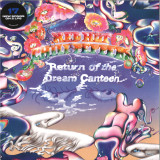
Red Hot Chili Peppers announce their brand new studio album, Return of the Dream Canteen which will be released October 14th on Warner Records. The surprise announcement was dropped at Denver’s Empower Field to rapturous response as the North American leg of their critically and commercially acclaimed global stadium tour kicked off.
The news of Return of the Dream Canteen's imminent release marks the band’s second album of 2022, hot on the heels of the platinum-selling chart topper Unlimited Love which was released in April debuting at #1 in the UK. It will also be the band's second Rick Rubin produced album of 2022, and reinforces their reputation as a band at their absolute peak, riding the crest of an undeniable creative wave.
Continuing to win over audiences across the generations, the band performed a run of sold-out UK/EU dates earlier this year, including two nights at London Stadium. "A scorching European touch-down from the California legends" – CLASH
We went in search of ourselves as the band that we have somehow always been. Just for the fun of it we jammed and learned some old songs. Before long we started the mysterious process of building new songs. A beautiful bit of chemistry meddling that had befriended us hundreds of times along the way. Once we found that slip stream of sound and vision, we just kept mining. With time turned into an elastic waist band of oversized underwear, we had no reason to stop writing and rocking. It felt like a dream. When all was said and done, our moody love for each other and the magic of music had gifted us with more songs than we knew what to do with. Well we figured it out. 2 double albums released back to back. The second of which is easily as meaningful as the first or should that be reversed. 'Return of the Dream Canteen' is everything we are and ever dreamed of being. It’s packed. Made with the blood of our hearts, yours truly, the Red Hot Chili Peppers.
One of Manchester's most promising yung producers follows a striking debut EP for Visionist's Lost Codes with two sweeter, pop-wise instrumentals for Saturate!Records. Orbiting a sound somewhere between Zomby, Jamie xx, Fantastic Mr Fox and Visionist, his 'Cycles' EP stands him out from the crowd thanks to eloquent melodic arrangements and a unique groove poised on the cusp of UK house and garage-pop. A-side, 'Solar' synchs minor key bell harmonies with the craftiest, staggered drums, and B-side 'Lunar' clocks glassy keys reminding of the hook from 'Xe2' with deftly textured, glancing percussion for that same sorta feminine pressure that Zomby does so well.