White Vinyl 10"
A new release this winter marks a landmark moment in an important musical story. Way back in little 2009, the label hfn music was born in Hamburg, and made its introduction to the world with the release of the Trentemøller compilation Harbour Boat Trips: 01 Copenhagen.
Founder Tobias Lampe wanted to start a label that was more broad in scope than his previous, more electronic-focused projects, and the compilation provided the perfect opportunity to launch one. In the 10 years since then, the label has survived the whirlpool waters of the early 21st century’s constantly changing music industry, and released everything from pop to art-punk, with artists ranging from New York to the Faroe Islands.
Now, they’re about to put out their 100th release. Fittingly, given the label’s focus on new and innovative music, and the historic aspect of the release, hfn100 sees one of hfn’s best songs of 2019 put into the hands of the man it all started with, Anders Trentemøller. His Danish compatriots Blaue Blume’s new album Bell Of Wool is one of hfn’s standout releases this year, and so hfn100 sees Trentemøller remix one of that record’s standout tracks, the fragile, but soaring “Lovable”.
In Blaue Blume’s original, “Lovable” is an airy, tormented song, a gossamer-delicate composition that carefully stitches together layers and layers of shining synths that gradually build up and up into a peak, before crashing into a subtle beat, a musical journey that mirrors vocalist Jonas Smith’s trip from anguish to numbness. Whereas the original’s music sounds woven together from light, Trentemøller takes it into darker territory. He hooks the song to a harsh, sparse beat leaving Smith’s vocals bare and isolated in the burnt-out, dystopic musical landscape he creates.
Trentemøller mirrors the original’s careful building up, adding new elements to fill in the song’s sound, before it collapses into a tough, noir disco groove. It’s a perfectly realised remix – Trentemøller keeps the original song’s skeleton and soul, but fills in the space with sonic touches that could be no one else’s but his.Ultimately, it’s a fitting song for hfn’s hundredth release. For a label that’s always been a platform for its boundary-pushing artists, a collaboration between two of them, that sees an already innovative song pushed into a bold new shape is the perfect way for hfn to step into the next 100 releases..
quête:bäs noir
Samuel Rohrer CONTINUAL DECENTERING With his Arjunamusic label and a growing catalog of categorydefying releases, Samuel Rohrer continues to quietly, yet confidently, make a name for himself as a genuinely unique Gigure within the European electronic music realm. In the current era, talk of blurring boundaries between musical genres and attitudes is more the rule than the exception, but not always something done with any degree of success. Rohrer is one of those rare alchemical explorers to have truly created a hybrid which is all his own, one that does not just exist to melt distinctions for its own sake, but is a natural result of years of experimentation with both the determination of electronic music and the ludic spirit of ‘free improvisation.’ On his newest offering, Continual Decentering, this vision is applied to a set of mostly in real time (live) performed explorations. In keeping with his many years’ worth of fruitful collaborations, the tonal palette on this new record is one that is expectedly rich for those familiar with his work, yet still surprising in terms of how exactly the differing tonal colors come together. Representative tracks like Spondee and The Fringe are brimming with dub pulses, noir shivers and blooming timbral variations that are in many places carefully isolated / focused and in other places blended together in vivid fusions. In terms of the emotional atmosphere created here, the pensive and questioning tone hearkens back to the ‘wide open’ state of electronic music in the mid-late 1990s, yet with a greater clarity and maturity of vision that makes this music feel like a possible answer to aesthetic questions being raised at that time. As with Rohrer’s most recent solo work, like the Range of Regularity LP, Continual Decentering showcases the artist’s skill in turning the drum kit into a lead instrument. While the term “lead instrument” denotes a kind of exuberant “Glash,” or a clear separation from the rest of the voices in an ensemble, we can take the term to mean something different throughout this listening program of 13 short vignettes: that is to say, everything else within the audible environment exists to complement the character of the percussive playing rather than to stand apart from it. It helps that Rohrer has, in fact, developed a unique and complex hybrid system in which drum hits trigger modular synthesizer processes, the use of which makes for an incredibly fluid response time between distinct sonic events. In contrast to the previous Range... LP, this new offering is propelled less by interlacing threads of intensity and more by a shared sense of deep listening. As displayed on pieces like All Too Human, there is a profound sense of attention to silences or thoughtful pauses that maybe hints at another crucial aspect of Rohrer’s style: over the course of this program, we tend to hear the player not only playing but listening, an activity which makes perfect sense given the sense of instrumental dialogue already mentioned. All of the above come together to give Continual Decentering a “live”-ness that will easily translate from recorded document to dynamic performance.
A record to be enjoyed to its very last second AM Jazz is set to place this songwriter where he just might, finally, receive the recognition he deserves; from unsung hero to a truly worthy candidate for being called up to join the City of Manchester’s ranks of great musical icons. Whether you prefer to know him as Mr. Roberts or simply call him Al, it’s time to become acquainted with the real Jim Noir.
Tossing his bowler onto the hat stand and sliding on his slippers, AM Jazz sees ‘Jim’ putting his feet up whilst Alan Roberts takes the lead. A creative masterpiece for the record player and the mantlepiece, it’s a multi-layered album that features close friends including those dearly departed, and is his truest record to date, by a songwriter painting his own hypnotic Portrait of the Artist as a Young Man.
“I haven’t 'felt' like Jim Noir for a long time. I’m not sure I ever did; it was a construct of other people’s imaginations,” reveals Al. “AM Jazz is definitely the kind of music I make generally. It harks back to when I started making music years ago and didn’t worry about capturing a particular style. It will be nice to show people more of that.
It's the best album I've written; real hypnotic minimalism, the good stuff!” 15 years since he recorded the first ever 'Jim Noir' EP, AM
Jazz is the record all Noirheads won’t be surprised Al had inside him.
Letting the Beatlesesque stylings of his most recent album Finnish Line be (5 years ago no less), AM Jazz suits the Noir repertoire of his catalogue so far and is another homegrown offering which sees the Daveyhulme composer tinkering in his suburban Manchester studio once more, with the magic of his computer work sorcery, analog and tape recordings.
“For this I went back to the slightly more haphazard way I wrote my first album, Tower Of Love, wherein I’d use things in front of me, or a bit wrong like headphones for a microphone, to make the most Hi-Fi Lo-fi album ever.”
Whilst a brief disappearance of Jim’s online persona may have provoked bleak theories as to his whereabouts, Al had little time for digital distraction. Whilst writing and creating with friends, he has worked on electronic pet project, FAX with former Alfie guitarist, Ian Smith, and the vintage analogue house meets electro sound of his own solo EP Granada Personnel Recovery, as well as producing local band, Shaking Chainsor, and helping long-time musical colleague, Aidan Smith with his long-awaited 'The Planets' project; “I’ve been writing in dribs and drabs when I feel like it,” Al says. “I used to write all day everyday but it’s a lot harder now I’m (feeling) over 100 years old.” Never not sonically exploring or being inspired by the sounds around him, there was even a red-carpet moment when he appeared as a film premier guest after a couple of his songs were selected for the OST of director Jason Wingard’s film Eaten By Lions.
Performing all AM Jazz’s instrumental parts himself but also, at the right moment, bringing in present and past pals along the way, sexy lounge song, ‘Hexagons’ features 'Phil Anderson' and Mark Williamson singing and playing “legendary OTT guitar solo” respectively. Meanwhile the orchestration of ‘Peppergone’ waltzes like a beautifully romantic ode to Beethoven’s Moonlight Sonata – a tribute to dearly departed best friend 'Batfinks' who originally wrote the chords in his song 'Peppercorn.' “I hope he doesn’t think it’s shit,” Al jests. Listen closely and you may even find a few unsuspecting celebrity guest appearances as, perhaps, it could be the very first album to feature soundbites of podcasts sneaking onto the recordings. “I will have a podcast on if I’m recording; Adam Buxton, Athletico Mince, Frank Skinner or Richard Herring… I’m sure some mics will have picked them up, like in the old Tower of Love days,” he says referring to his breakout debut.
Culled from around 50 tunes AM Jazz moves like the time of the day, from dawn to night, stirring from the pop of ‘Good Mood’ and ‘Upside Down’s Beta Band groove. “As the album was playing, I imagined this smoky backstreet with all those neon signs outside clubs at about 4am,” Al says. Mellow ‘TOL Circle’ is like Percy Faith’s Theme From A Summer Place synthesized, capturing the style of TV library music or movie soundtrack obscurity that has always stirred Al’s curiosity, and the album plunges into a vast chasm of instrumental exploration with ‘Mystermoods,’ visiting Japan’s funky synth whiz duo Testpattern and Hakabashi Sakamoto. Darkening and deepening in intensity, ‘Eggshell’ is like an undiscovered gem from Angelo Badalamenti’s cutting room floor, the Panda Bear shimmer of ‘Lander’ is where blissful positivity and sadness meet, about another of his friends who left the world too young. “By the album’s close, its nearly time to let go and enter the ether,” he says of the album’s story. “Like one would do when they take their final sigh on this earth.”
French duo Double Mixte bring their digital thunderstorm of neon lit noire to the Italians Do It Better family on their debut EP. Mixed and produced by label head Johnny Jewel, Romance Noire opens the door to a new wave of Italians Do It Better artists coming in 2019.
Fresh Blood. New Tears. The title track arpeggiates and boils as waves of bass flow beneath. Rhythms are carried to the ceiling by a searing cascade of disintegrating color. A heavy backbeat anchors Clara Apolit’s poetry, ready to wear for a night in the face of oblivion.
The cinematic “Arlette” is a call for discovery through a darkness lit only by the glare of headlights in digital rain. Through all of this, Thomas Maan’s incantations search for the lonely, lost in the void of electronic fog. “November” finds in Clara an Anglophonic chanteuse, meditating on the cycles of time.
A blend of suspended sound and an uncertain melody contracts and expands before dissolving. Romance Noire is art that both contemplates and tanscends time’s firm grip. It’s a filmic journey inducing a vague sense of future nostalgia. Happy Valentine’s Day. Double Mixte is Clara Apolit and Thomas Maan.
The duo met in Paris and there was an immediate pull to create music together. They pooled their combined interest in powerful narrative & dark 70’s French film music to write lyrically vivid songs. In 2017, Thomas reached out to Johnny Jewel for what soon became a collaboration that expanded their vision into a haunting debut EP, out today on Italians Do It Better.
- A1: Sul Ponte Di Istanbul
- A2: Notte Cromatica
- A3: Meditazione Melodica
- A4: Fuga In Svizzera
- A5: Balletto Col Morto
- A6: Troppo Triste Per Essere Allegro
- A7: Caduta E Ripresa
- A8: Fuga In Svizzera 2
- A9: Jazzetto Classico
- B1: Jazzetto Moderno
- B2: Meditazione Melodica 2
- B3: Fox Astratto
- B4: Affresco Con Bambino
- B5: Fox Astratto 2
- B6: Troppo Triste Per Essere Allegro 2
- B7: Shake Del Giudice
- B8: Tempo Di Marcia Con Bambino
... Finally on Vinyl !
One of the most sought after and mysterious scores by the Maestro ENNIO MORRICONE! With the help of the magical voice of Edda Dell’Orso (Sul Ponte di Istambul) this score follows the steps of the most famous soundtracks composed by the Maestro combining melancholic melodies with wild funky tunes as the brilliant “Shake del Giudice”. END OF THE GAME (also known as IL GIUDICE E IL SUO BOIA aka ASSASSINIO SUL PONTE aka DER RICHTER UND SEIN HENKER) is a 1975 cult noir movie starring the great John Voigt and Jacqueline Bisset.
Discodromo are delighted to present a three-vinyl compilation to celebrate the 10th birthday of their Berlin party 'CockTail d'Amore'. The compilation features the sound that best envisions the party and its evolution throughout its first D102-decade.
This vinyl features the sound of the Cosmic Hole, a room dedicated to downtempo psychedelia. CPI, the name behind Marc PiNol and Hugo Capablanca's collaborative project, launches this record with a hypnotic acid ballad named Mount Anal: for a late night slow-mo dance experience.
Synth-noir melodies are brought by two label aficionados, Juan Ramos and Kris Baha, while Honeysoundsystem's Bezier journeys to a One Thousand and One Nights soundscape with his Starpoint.
Hot off the heels of Aluxes, his 2018 Lumière Noire debut EP, young Mexican DJ/producer Iñigo
Vontier is inviting Chloé's label on a trip to the far corners of the body & mind with an album of
demented grooves, psychedelic take-offs and imaginary comic strips of mystical rituals. A
bewitching debut full-length. Mexicans may never possess the sonic science of the Germans,
the hedonistic madness of the English or the gift for synthesis of the French, but, as proven by
Iñigo Vontier's first full-length for Lumière Noire, their universe is much more exciting than
anyone would have ever thought.
The DJ/producer fully asserts his origins by brandishing the album’s title "El Hijo del Maiz" ("the
son of the corn") almost as an emblem: "in Mexico, corn is eaten daily. It has long been defined
as 'the gold of America', and I consider all Mexicans as children of corn". A spiritual and
embodied vision Iñigo's first Lumière Noire release, the four-track Aluxes, set the tone of the
young talent's distinctive interpretation of dark disco, which creeps up on the dancefloor from its
iconoclastic side. The two tracks and two remixes (one by Flügel, the other by Inigo himself)
featured on the 12" for lead single "Xu Xu" (featuring Red Axes-affiliate Xen's irrelevant vocals)
was a full-bodied confirmation that Vontier sees the dancefloor as an arena for the occult –
whether from the peoples of the equatorial jungle, the Middle East or, even from indocile
machines. But, while the spiritual element seems part and parcel of the Jalisco native’s output, it
is in no way the only ingredient of this first long-player: "this album best reflects my own vision
and spirituality, and the way I feel it" he says.
Whether contemplative or frenetic, the collection of tracks that make up “El Hijo Del Maiz” takes
the kitchen sink and throws it out the window: languid rhythms, haunted vocals, and mysterious
percussion fuel a discombobulated house set that scrambles the listener's five senses, leaving
one disoriented and exposed to the vagaries of vertigo. Following the demented, dystopian “Xu
Xu” EP, which explored an imaginary jungle that harbored Mayan and Egyptian pyramids,
Middle Eastern accents are once more present in the off-kilter “Bo Ni Ke” and its Japaneseinfluenced vocal trickery, which Moroccan flutes à la Jajouka transform into a feverish trance.
With the following three tracks, Iñigo Vontier raises himself to the same level of excellence as
the Pachanga duo (of which pride of the Mexican scene Rebolledo, is also known as a prolific
artisan of deconstruction): “Awaken”'s slumbering voice, heard as through the veil of hypnosis,
slowly introduces a techno beat which, as in follow-up “Time”, literally brings the listener to a
levitative state. In a housier vein, yet continuing in the same psychedelic, 90s-infused spirit,
“Don’t Go Back” disrupts the genre’s usual signatures with an out-of-tune keyboard that is
becoming the artist's trademark, destabilizing the listener into a drunken vertigo, with a good
helping of sexiness: "I think the sexy dimension definitely brings a kind of magic to music," says
Vontier. “I'm sure I felt this magic during my DJ sets, and I like to think that sorcerers use this
element in their practices. I might consider myself a bit of a sorcerer when I take over the DJ
booth, by the way." A mood and sound that can once again be found – in a quieter, more
bucolic version – on “Chiquitita” (feat. the flute stylings of pioneer DJ Rocca, now a partner of
cosmic disco legend Daniele Baldelli). The more cinematic, fast-paced and dreamy beat of the
no less captivating “Little Monster” might evoke the mischievous spirit of the Mayas' minor
mythological creatures, while ode to the magical herb Marijuana (feat Thomass Jackson)
proudly tramples into the debate that such a provocative title inevitably provokes: "psychedelic
drugs are powerful tools to reach a higher level of consciousness about what surrounds us, but
we must learn how to complete this psychic journey by ourselves, notably through meditation
and love.
In the end, El Hijo del Maiz is an album-length confirmation of Iñigo Vontier's uniqueness, and
his adherence to Lumière Noire's policy of letting artists fully express their vision – while letting
their passions guide their idiosyncrasies and explorations of innovative electronic signatures
‘Still Strange’ reaches back into the prized loft tapes of Jeff Sharp aka Orior following the revelatory discovery of his overlooked early ‘80s gems on 2016’s ‘Strange Dream’ collection, as coaxed out by
DDS dons Miles Whittaker and Sean Canty.
Huddling another sublime, dusty set of analogue tapes freshly baked and remarkably well-restored by Andy Popplewell, ’Still Strange’ contains four gorgeous flashbacks to the era 1979-1983
surrounding and even pre-dating ‘Strange Beauty’, and then shifts focus to recordings that Orior made around the early ‘90s.
As with its predecessor, Orior is not alone on the material in ’Still Strange.’ From those feted early tapes we find Phil Hollis returning to lend jagged guitar on the drum machine sizzle of ‘Feels Like
Summer’, while the mysterious synth player New Cross John makes vital contribution to ‘Invium.’
Along with the aching synth sigh of ‘To Return’, which pre-dated all of these recordings, and the nine minutes of haunting bedsit strums in ‘Larbico Alt Mix’ which came from the first batch, the
early material is all arguably worth the price of admission alone for seekers of lost synth treasures - really this stuff is just so good..
However, the album’s other six tracks expand knowledge of Orior’s work into the ‘90s and also contain some extraordinary material. Salvaged from further loft tapes found in various states of degradation, and subsequently mixed down between London’s Goldsmiths College and Miles Whittaker’s Whalley Range attic (and elsewhere), they are decidedly more blunt and gloaming, especially in the Deathprod-like ‘Under Shadow’ and the near static witching hour ambience of ‘Endless’, while shorter vignettes such as ‘Unknown Future’, ‘Gothic’ and ‘Another’ point to pre-echoes of BoC’s crepuscular scapes and even Bladerunner-esque sci-fi noir soundscapes
NecareDiskoEP is the debut original release from, Thomaas Banks and also the first release on his own imprint, Sinahti.
The 4 track EP delves into his love for EBM & the slower side of Techno. NecareDisko rocks with low slung future vibes. Gnarly metallic synths and apocalyptic Vatican orchestration meld with a rolling beat to provide a sleek burner with plenty of grind and glimmer.
VitalClaret ups the tempo with a rousing trip to the chasm edge. Ring modulated arpeggiated leads clash with insistent embers of modular rebellion.
A background hum rises throughout to reach a punishing crescendo. TYVYT-IYTYIon the first remix of the EP’s title track and he pushes the swamp funk button for a syncopated noise workout, with a hot as hell detuned noir melody around the halfway mark. Magma!
The EP closes with a loose open electro remix of Necare Disko from Hymns. Open and lighter than the rest of the EP, nevertheless it still has a taut, Germanic vibe with distorted bass funk dueling
hard towards the end.
Based in Munich, Germany, the producer, part-time DJ and Permanent Vacation label co-head Tom Bioly aka TB delivers new romantics, inspired by influences like The Cure’s „The Holy Hour“, Boards of Canada’s late 90s electronica, Miami Vice tropic percussion and Angelo Badalamenti’s Twin Peaks. Acid drops, string distortions, lushed melody bits, hushed robo vox and washed space guitars are being layered and sprinkled over machine beats and disco drums.
TB’s first release "Invitation To Love" made it on John Talabot's vinyl-only Hiverned 10" imprint and was voted amongst the best 10" releases by UK Fact magazine. GROOVE magazine wrote "..entirely superb..“, about the follow-up EP "City Girl" on Permanent Vacation, of which the title track has been licensed to the independent film „All These Sleepless Nights“ by director Michal Marczak.
In 2017 TB followed with “Heartbreak Hotel“, a double twelve-inch release with eight tracks of melancholic dance noir set in smoke-filled darkness. In 2018 he followed with the „Night Heat“ single, of which a RMXD EP with contributions by Gerd Janson, Sascha Funke, DJ Hotel and Bostro Pesopeo came out earlier this year.
‘Rain, spit, ice, neon, plants, steam, mercury and soil. This is dream music categorised by a language of senses; visual, poetic, and abstract sound that draws on techno and dub ambient.
‘Somewhere between pastoral impressionism and cyber-noir, its surface evokes the tensions of a fluctuating, fizzing atmosphere, pictures emerging and dissolving in the mind’s eye. Thick layers of field recording flood tracks fabricated from erratic, oddly distanced rhythm.
‘The sensation whilst listening is not unlike hearing the world from a place within the body; swimming in the bloodstream, cutting through the turbulent landscape secure in a metal tube.
‘Or being over-exposed to lushly textured environments with the anatomy far receded; an out-of-body experience where subtler senses are heightened and the landscape begins to take on surreal qualities.’
“Jay Glass Dubs is back on Berceuse Heroique after his inaugural release and this time he is going straight for the jugular. Jay Glass took a small break from the 80's experimental pop of The Safest Dub and he invoked the spirits of German Kosmische Musik and the studio insanity of African Head Charge. Film Noir vibes are mixed with the greek ancient tragedies, leaving the Apollonian aesthetics of his last release and going for a darker, denser and completely Dionysian approach for this one. Medea meets Touch Of Evil. Harmonia and young Adrian Sherwood are getting loose on some pentatonic Greek Traditional music from Epirus. Jay did it again and we are very happy to release this one.”
Nord Noir spins a tale as much as it paints a sonic landscape. Its progenitor Toh Imago took the time to sharpen his artistic chops under a few different guises, resisting the 21st-century affliction that is instant gratification at all costs, ultimately spending over 18 months to develop the narrative arc underlying his first opus. Using the historical context of the north of France's proletariat past, he created a dense, hypnotic, haunted album that will sit comfortable alongside the works of Daniel Avery, Efdemin and Blawan.
Director Amanda Kramer’s prompts for composer Ben Babbitt’s soundtrack to her enigmatic film Paris Window read like magnetic fridge poetry – “warped ambient bumper muzak tension” – but the results skew closer to some hypnagogic contemporary noir: lulling, low-lit, and laced with lingering dread. Electronics, strings, and percussion swoon and seethe in heady mirages of dreams and delirium, romance and menace. The narrative it accompanies is equally opaque and out of time: two eccentric siblings psychologically unravel through divergent fixations, one obsessed with the hypnotic infomercials of a mysterious self-help institute while the other falls in love with an ambiguous doppelganger.
Babbitt’s background scoring experiential video games (Kentucky Route Zero) and collaborating with exploratory songwriters (Angel Olsen, Weyes Blood, Eartheater) is evident in his versatility and finesse, flowing fluidly between minimal and maximal modes. Like all dynamic film music, the pieces weave a story of their own. Serene synthetic swells decay into murmuring television static and eerie vocal fragments; close-mic’d drones turn acidic then claustrophobic, mirroring sleep paralysis transformed into panic. Babbitt builds a window into a surreal world, seen through shadows and smeared, street-lit glass.
Over the years Kid Loco has become a reference in the French electronic music landscape. Firstly, known for being an activist in the French underground music scene, he cofounded Bondage Records in 1982. With Bondage Records, he introduced several bands to the French alternative music scene like Bérurier Noir, Ludwig Von 88 or Washington Dead Cats. Alongside his activity of label manager, he composed and released under the name of Kid Bravo, an experimental music at the crossroads of rock and electronic. Astonished by the beginnings of the instrumental hip-hop of DJ Shadows, Jean-Yves Prieur aka Kid Loco experimented new ways of composing music with the sample technic in his own studio near Orly. This new musical adventure led to the birth of a mini album Blues Project released in 1996 on Yellow Productions.
Exploring further his own psychedelic universe, he released his first album A Grand Love Story in 1997 under the name of Kid Loco. Acclaimed both by the French and international music review, “A Grand Love Story” established itself as an iconic album of the trip-hop and electronic music scene. During the two years following its release, Kid Loco continued to invent his own musical universe nurtured by multiples influences. In 1999, he released Jesus Life For Children Under 12 Inches, an album featuring thirty remixes he composed for French and international artists (Pulp, Talvin Singh etc.) as well as his mixed compilation for the famous DJ KICKS collection released on the German electronic music label, !K7.
After a first European tour, Kid Loco returned to his studio, nicknamed “The Lafayette Velvet Basement” and composed his second album Kill Your Darlings released in 2001. Compared to his previous compositions, Kill Your Darlings features more tracks without sampled vocals. Eager to explore new musical horizons, Kid Loco produced in 2004 the original soundtrack of the American movie The Graffiti Artist directed by James Bolton (Narrative Feature Sound Award – Austin Film Festival 2003). Cruising to new musical galaxies, Kid Loco continued to compose and released the album Party Animals & Disco Biscuits in 2009 followed in 2011 by the album Confessions Of A Belladonna Eater. In addition of his albums, Kid Loco continued to experiment with the production of compilations celebrating the trip-hop music with “Trip-Hop Classics” released in 2010 followed by a second opus released in 2013 on Wagram Music.
2019 marks the return of Kid Loco with his track Here Comes The Munchies selected in the original soundtrack of the show Vernon Subutex (Canal +), the vinyl reedition of his cult album A Grand Love Story and for the first time the digital release of the album Confessions Of A Belladonna Eater with exclusive remixes.
Mais Alors !!?... c’est à l’envers is the first release of new French Label ICI BIENTÔT (Here Soon ...), launched by Paris Fleamarket’s Record Shop, Geminicricket. On the Menu... Suspended Time,
Unsung Heroes, Hidden Records and Next Door Marvels.
In 1983, NEF released their first and only album, Mais Alors !!?... c’est à l’envers. At that point, the band already had a long history, interwoven with that of various musical trends and alternative
movements from the late sixties to the early eighties. That’s certainly what makes this record so special and able to conciliate such different worlds as Electronic Prog, Film Score, New Wave …
The band’s destiny was most certainly tied to their native region, the South of France, an idyllic environment that attracted a number of musicians during the 1970s, allowing the group to attend many
concerts or share the bill with several groups that have gone on to become well known: Can, Ash Ra Tempel, Magma, Catherine Ribeiro, Zao, Chêne Noir, Art Zoyd …
Founded in 1975 by Richard Lorenzi, NEF started as a kind of Free Rock band with multiple influences, going from Prog to Musique Concrete, in which any method of making sound, any way of
bringing out sounds was good … 2 musicians and a photographer, full member of the band who was projecting slides over the music and influenced their dreamlike universe. In 1978, Vincent Tronc came on board with his keyboards and synths. While the group had been influenced by electroacoustic techniques until then, Vincent broadened NEF’s horizons, bringing in a host of new influences: Ash Ra Tempel, Kraftwerk, Klaus Schulze … the beginnings of electronic music. When the album is recorded in 1983, new directions were taken and changed NEF’s usual sound.
First, the idea of playing the accordion, clearly not a common thing and a new Drum Machine, the Roland CJ-5000. Pressed the day a figure of French Chanson died, NEF’s pressing is botched up, a
good part of the records were unusable since the records came out totally warped. Then, at the end of the eighties the small stock of remaining records is lost in the sadly famous flood of Nîmes. 2000
records had been pressed, but very few survived! All the more reason to reissue Mais Alors !!?... c’est à l’envers, an unsung record, free and multifaceted, a quirky and daring musical ovni, transcending eras and genres, between synthetic
Krautrock and Film Score, reminiscent of NEU! (with a red nose), François de Roubaix and Pascal Comelade.
Trentemøller returns with his fifth studio album 'Obverse' in September 2019! Anders Trentemøller is a well-known multi-instrumentalist, but perhaps the one he’s most adept at is the studio itself. 'Obverse' is the result of him expanding that skill even further. 'Obverse' often feels like an instrumental album because it started life as one, the driving philosophy being “what if the pressure of having to perform these songs live is removed entirely?” Granting yourself the freedom to chase down every idea a studio offers comes with privileges. What happens when you reverse a synth part mid-verse? Why not send an entire track through a faulty distortion pedal? Inspiration reveals itself in a variety of forms and, before long, a simple chord progression contorts into something entirely new. It’s a work method that yielded great results for the legendary German Kosmiche/Motorik experimentalists of the 1970’s. Intentional or not, 'Obverse' embodies more than a little of that spirit without even a hint of pastiche.
So it only makes sense that 'Obverse' would stray from its original roadmap. In due time, half of the nascent compositions featured singers, including Lina Tullgren, Lisbet Fritze, and jennylee, of Warpaint, another band deeply influenced by dream pop. While 'Obverse' was born from a different work ethic than previous efforts, it also continues an arc that started in 2006. Each successive effort has represented a logical next step beyond the album before, and 'Obverse' absolutely picks up where Fixion left off.
For the past decade Trentemøller has been perfecting this form of sonic chiaroscuro to conjure up images of severe landscapes, and to mirror the Scandinavian climate, where half the year the sun barely sets, and the other it barely tops the horizon. While there has been a film noir element in his previous work, 'Obverse' is the first time each song has felt like a collection of pocket soundtracks.
By fusing together a love of dream pop, dark synth-based music, film scores, and a deep connection with the stark Nordic panoramas, Anders has created an inimitable language. Ultimately 'Obverse' resides in a genre all its own.
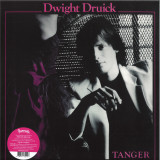
Dwight Druick’s born in Montreal to a professional gambler and an ex-Radio City Rockette. One of five children, he grew up in a family buoyed by music and beleaguered by the vagaries of miscalculated risk. After attaining a McGill University bachelor’s degree in Art
History, Dwight fully embraced both music and risk by traveling to London, where he signed a contract with Pye Records and Joe Cocker’s management company. The ensuing record,
Druick & Lorange was released to critical acclaim and relative success. After returning to Canada, Dwight recorded two albums with Phil Vyvial: Midnight and Minuit. Recorded with the Muscle Shoals Rhythm Section in Alabama, the duo’s work achieved airplay success in Quebec and across Canada. Dwight subsequently released his first French language solo album, Tanger, released in 1980 by the Canadian label, Bobinason.
Today quite hard to find in its original version, Tanger is first of all an incredibly solid album, clearly underrated and deserving more credit. Mostly known by collectors and DJs for the
stunning cover of Toto’s classic hit, “Georgy Porgy”, which was produced and arranged with the help of George Thurston (Boule Noire), it includes many other tasty titles, with amongst
them another fine rendition of “Open Your Eyes” by The Doobie Brothers. In fact, with its brilliant mix of Modern-Soul, Disco and AOR styles, the whole album is already considered
by many connoisseurs as a classic, and clearly a must have for anyone enjoying this musical blend. Never reissued on vinyl until now, there was not much more needed at Favorite Recordings
to make it happened. Officially licensed to Dwight Druick, who was unfortunately not able to provide the original tapes, Tanger has been perfectly restored and remastered by Frank Merritt, at The Carvery, London. CD and digital edition will also come with “Georgy Porgy (Version Disco)” as a bonus track.
Swedish composer and multimedia artist Marcus Fjellström's debut Miasmah release follows two critically acclaimed full length albums on Lampse (2006's 'Gebrauchsmusik' and 2005's 'Exercises In Estrangement'). In addition Marcus has had several commissioned works requested, leading to him working with, among others, the Swedish Royal Ballet, the Scottish Chamber Orchestra, numerous ensembles, soloists and filmmakers including 'Salad Fingers' creator David Firth. Currently based in Berlin, Fjellström's compositions often combine aspects of modern classical composition and arrangement and more avant forms of music, be that acoustic or electronic.
'Schattenspieler' (which translates as 'Shadowplayer') takes the form of eleven compositions which explore ambience and melody, texture and silence. Haunting synth and orchestral instrument-based audio constructions, flowing from one moment to the next - the fleeting ghosts of Fjellström's melodies rise, only to be buried under a claustrophobic clutter of percussion and creaking background noise. These pieces do indeed feel like you're listening to something more implied than obviously stated, as if Fjellström wants only to expose us to the shadow of the music - the implication being perhaps a more terrifying experience than to be confronted outright…listen to 'Schattenspieler' and you may find your mind starts to play tricks on you…
The undeniably Angelo Badalamenti-esque descending synth strings of opening track 'The Disjointed', lay the foundations for Fjellström's 'Schattenspieler' album; music resting somewhere between the unsettling horror soundtracks of Jerry Goldsmith, the elevating melodies of Cliff Martinez, and the subtle audio constructions of Miasmah label mates Kreng and Jacaszek. Marcus' wide ranging abilities in composition and his willingness to let go of accepted form and function makes 'Schattenspieler' a perfect choice of release for the Miasmah label. The suspense laden 'Antichrist Architechture Management', with its harrowing and tense undertones, weaving synth lines and a wash of static hiss and flicker, is a particular standout track. Despite it's a strangely oppressive sound, shafts of light grace 'Schattenspieler'; pieces such as 'Untitled 090616' find gorgeous melodies are boxed in by unsettling arrangements and sparse background ambience. There is a coldness to many of these compositions - not without emotion, but somehow remorseless. 'Schattenspieler' is, for the main part, a defiantly bleak journey.
Vinyl edition ltd. to 300 copies, purple vinyl, incl. 8-page 12" booklet with drawings by Marcus Fjellström.