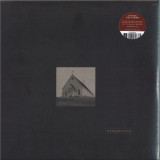
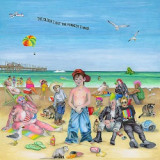
In conjunction with the publication, by Hachette Books, of Truckload of Art: The Life and Work of Terry Allen, an authorized biography by Brendan Greaves of Paradise of Bachelors, Gonna California imagines an alternate reality where Allen's long-lost first studio recordings, captured with a full band in LA in 1968, saw a proper release. (Instead nearly the entire pressing was destroyed by a fire set by the so-called "Hollywood Arsonist," and remaining copies were repurposed in artworks.) This first-ever (re)issue edition, limited to 500 copies, features recently rediscovered and remastered early (and superior) mixes of both songs; the original liner notes by Allen; an excerpt from the book; a lyrics insert; and Allen's contemporaneous visual art in an arresting gatefold jacket. No veteran country songwriter sounds more attuned to the national mood. His songs still feel like little guidebooks for staring down a harsh universe. - The Washington Post
Suche:bachelor
»Sound of Matter« is the debut album by Romanian sound artist and composer Simina Oprescu. The two pieces draw on research conducted with 15 historical church bells at the Märkisches Museum and the Stadtmuseum Berlin. After the artist had presented the results of her studies of the connection between matter and harmony in the form of a multi-channel installation, she has translated the underlying approach of this site-specific work into an album that unfolds slowly, consistently setting in motion subtle tonal changes that continuously change the mood of the two pieces. »Sound of Matter« is both minimalist and maximalist, creating an infinitely rich and multi-layered dronescape that modestly invites its audience to get lost in the sonic experience.
Oprescu has been fascinated by church bells since her childhood spent in Transilvania since the instruments were shrouded in mystery, as she explains in an in-depth essay that accompanies the album. Having received a Bachelor’s degree at UNArte in Bucharest and after studying at the Royal Conservatory of Mons in Belgium, Oprescu enrolled at Berlin’s Universität der Künste for an M.A. in Sound Studies and Sonic Arts. She started working with the archive of the Märkisches Museum, which included 15 historical church bells that were built between the 15th and the early 19th century.
Since every bell sounds different according to its shape, material, and density, Oprescu abstracted these qualities in the formula f = K1t/d^2√E/s(1-m^2). This enabled her to recreate the harmonic tone of the individual bells with Max/MSP. She then composed a piece with semi-overlayed tones, i.e. overlapping frequencies. Naturally, this resulted in a beating effect that provided the music with a sense of urgency, though the five second-long natural reverb of the Märkisches Museum’s Große Halle turned it into a »warm blanket of sound,« as the artist herself puts it. This is perfectly recreated on »Sound of Matter« due to the music being presented in mono, bringing out the intrinsic movement of the beatings with more nuance than a stereo version would.
»Sound of Matter« feels warm and welcoming even when different frequencies seem to create friction between each other or when the subtle beating effects turn into throbbing rhythms, like at the end of the record. It manages to explore both Oprescu’s personal fascination with church bells and psychological and psychoacoustic questions relating to them as well as philosophical issues connected with them. This music is profoundly physical, but also intellectually stimulating—perfectly at home in the catalog of the Swiss Hallow Ground label between records by Kali Malone, Lawrence English, or Siavash Amini.
The booklet features an in-depth essay on church bells by Simina Oprescu.
From out of nowhere - if nowhere is the febrile, warped and twilit imagination of Julia McFarlane - comes Whoopee, the second album by J.McFarlane’s Reality Guest. Whoopee is an esoteric, kaleidoscopic movie in music form directed by Julia McFarlane and co-conspirator Thomas Kernot. Full of life, breakbeats and smokey vignettes on the fragile nature of interpersonal relationships, Whoopee is a stylistic evolution from everything McFarlane has done before. Surreal, beautiful in parts and replete with the aching wisdom McFarlane’s songwriting has always promised, this Reality Guest pulls back the curtain on a whole scene of naked truth. Recorded in Melbourne in bursts since the release of 2019’s Ta Da, Whoopee features a new sound palette and band member in Kernot. The duo dive deep into electronic pop tropes, mining digital synths, samples, breakbeats and deep bass grooves, largely dispensing with live instrumentation. If Ta Da took twists and turns with your expectations, offering a Dada-ist, monochromatic take on pop music, Whoopee is McFarlane’s subterranean love-sick pinks, reds, greens, purples and blues. Becoming something of a tradition, the album starts with an instrumental intro pilfered from a 90s’ spy film or cinema intro music, puffing up the listener for the heart-squeezing bathos of Full Stops. Over a bleary backdrop of walking bass lines, jazz- inflected keys and smoked-out atmosphere, McFarlane’s poetry narrates the fragile state of a relationship: “You put a full stop where I thought there’d be a comma, I want the story to continue even with all the drama.” Over a palpable pain, the narrator is revelling in the drama of a relationship, addicted to tumult and heightened emotion. On Sensory, a space age bachelor lounge pad ballad, the converse state of the previous song is explored, here the narrator is battling the numbness of being out of the drama, stuck in a sensory-deprivation tank, anaesthesized and battling to emerge from the fog. Wrong Planet explores an otherworldly pop music, hewing a bright hook out of a sense of confusion. A bona-fide, sing-along chorus bursts out of the narrator musing on the absurdity of existing in this reality. It speaks of one of Julia McFarlane’s main talents, her knack of inspecting human relationships and states with a clear perspective, like an alien visiting Earth and realising everything we are is really, really strange. Whoopee is both more accessible than previous Reality Guest work and somehow more obfuscated. Where the production on Ta Da was dry, sharp and strange, this Reality Guest is blurred, almost smeared with the effluvium of 90s+00s culture and existence. Through it all, it’s hard to deny the undeniable pull of the songs. Precious Boy carries on the lounge theme with a whole sampler of cut up sounds fading in and out of the haze as McFarlane’s voice is right up to the speaker cooing and free- associating, maybe in love or maybe in confusion... maybe they’re the same thing? Sometimes the listener is invited to just bathe in the tone of the vocal, as on Apocalypse, where the texture and timbre of the vocal is luxurious, bathing in piano tinkles and double bass throb. On lead single Slinky, a cut up beat reminiscent of Washingtonian Go-Go drum patterns leads, the song slipping through your fingers, elusive and presenting sound as pure pleasure. Closer Caviar jumps back into the broken breakbeats of a surreal funk, fuelled by the sensory pleasure of the music, a hedonistic whirl in rapture, the narrator now living life to the fullest in all its giddy heights and deep troughs. This is the album’s main character fully-actualised and in the terrible, beautiful moment.
On Imitation o f War, songwriter and guitarist Kayla Cohen advances Itasca into rockier terrain, with a suite of smoky nocturnes and uneasy idylls surveying, with refreshing urgency, mythologies and psychologies both classical and personal. Co-produced by Robbie Cody (Wand, Behavior), these ten sturdy set-pieces represent the loosest, leanest, and most smolderingly electric guitar-forward recordings of Cohen's deepening catalog.
In Celtic mythology, Clota was the patron Goddess of the River Clyde. "Almost all the rivers of Scotland were abodes of goddesses, but about many of them there are no surviving stories. The goddess of the Clyde was ‘the purifying one’.. " Donald MacKenzie 'Wonder Tales from Scottish Myth and Legend' (1917) Following the warmly received 'An Garradh', and 'Tarbolton Bachelors Club', Steven Anderson (Letters From Mouse) returns to Subexotic with another emotionally inquisitive, fascinating psycho-geographical work. Although very little is known about the goddess Clota, Anderson intuitively understands the River Clyde provides a rich landscape to explore her legacy. Dominating its environment, and steeped in ancient and modern historical significance, 'Clota' simultaneously reflects on what is, and what has been. Through deft application of modular synthesis, Anderson's trademark ability to weave extraordinary musical dialogues with time and place, conjures new life into this long-forgotten deity.
Die New Visionaries sind der in Großbritannien lebende australische Künstler Joel Sarakula und der niederländische Musiker Phil Martin. Ihr fesselndes Neo-Soul-Debüt 'Roadmaps' lässt den Hörer in eine Klangexpedition eintauchen, bei der Grenzen verwischen und sich zeitgenössische Elemente mit Anspielungen auf musikalische Pioniere zu einem charakteristischen Sound für Soul-Enthusiasten, Filmgrooves-Liebhaber und Musikentdecker verbinden. Trotz Phils Engagement in der europäischen Soul/Funk-Szene und Joels Neigung zum Soul-Pop ist ihre gemeinsame Affinität zu modernen Instrumentalbands (Khruangbin, Calibro 35, Air El Michels Affair) und klassischen Einflüssen (David Axelrod, KPM Library Series) massgebend.
The debut recording by Setting, a trio comprising Nathan Bowles (solo/trio, Pelt, Black Twig Pickers); Jaime Fennelly (Mind Over Mirrors, Peeesseye); and Joe Westerlund (solo, Califone, Sylvan Esso, Jake Xerxes Fussell). Deluxe LP edition features 140g black virgin vinyl and a reverse board jacket with art by Timothy Breen. Deluxe CD edition features a gatefold jacket with art by Timothy Breen. RIYL: Popol Vuh, Brian Eno’s Ambient 4, Harmonia, The Necks. Setting, befitting its name which can be read as noun or verb, and simultaneously suggests the sun, or any star in the firmament from our earthbound perspective; a story and its surroundings, its scenic context or mise en scène; or a psychedelic experience, as in the prescription to mind one’s “set and setting” arose outdoors, uncontained and unconstrained by architecture. The group’s debut recording Shone a Rainbow Light On traverses textural, phosphorescent topography with a certified organic folk-engine. Kosmische correspondences are inevitable and valid, but also somewhat deceptive, given this meditative music’s terrestrial rootedness in the familiar natural world, more in native humus and humidity than in outer space. Fuelled by a vibratory hybrid of acoustic and electronic instrumentation, these four stately longform pieces sound like a UFO slowly sinking into a peat bog (or, as we call it in North Carolina, a pocosin). An instrumental trio comprising Nathan Bowles (solo/trio, Pelt, Black Twig Pickers) on strings, keys, and percussion; Jaime Fennelly (Mind Over Mirrors, Peeesseye) on harmoniums, synthesizers, and piano zither; and Joe Westerlund (solo, Califone, Sylvan Esso, Jake Xerxes Fussell) on drums, percussion, and metallophones, Setting established its own setting and found its footing in regularly scheduled improvisational sessions outside Westerlund’s home in Durham, North Carolina, beginning in 2021. The three players began as two, in the context of occasional Bowles and Westerlund percussion duo performances dating back to 2018. Fennelly provided the initial impetus to gather and play together with intentionality and discipline, as well as an harmonic adhesive and thickening agent in the grain and gravity of his harmonium and synthesizer. As always, Bowles’s background as a pianist and drummer informs his approach to banjo, imparting a woodiness, a piney verticality and resinous tang. Westerlund’s training with Milford Graves is apparent in his polyrhythmic flow and its correspondences to human circulatory and corporeal rhythms. They recorded their collective discoveries with engineer Nick Broste in the spring of 2022.The record begins, like the group’s name, and like the language of its unique instrumental interplay, with ambiguous grammar: “We Center,” the first and longest track at thirteen and a half minutes, builds patiently to a percolating climax of tidal heaving, with ceremonial connotations. “Zoetropics,” the shortest piece, follows, offering a more diaphanous counterpoint to the density of its predecessor. The zithery, shivering “A Sun Harp,” its title redolent of Sun Ra, showcases Westerlund’s unfettered drumming, which skitters restlessly until anchored, at its conclusion, by a minor bass progression. Finally, “Fog Glossaries” exhales through the maritime and meteorological evocations of its title, distant buoys clanging. Although certainly elements and strategies of so-called ambient and drone musical traditions are invoked and deployed, those diffuse terms feel inadequate to describe everything else happening here: the devotional valences, the minimalist rigor, and even submarine jazz inclinations perceptible beneath the surface. Throughout this four-movement program, which invites deep listening, it is often difficult to differentiate individual instruments from the massed choir of the group’s unified sonic presence. At times what sound like field recordings cicadas, birds, wind, water splash out of this slow but powerful current, only to be revealed as overtones produced by harmonium, banjo, or cymbals. Setting’s sound is fundamentally synthetic in the sense of synthesis, not artifice—in a manner remarkable for its almost entirely acoustic arsenal of instrumentation, often registering as the product of a single alien technology, perhaps the rainbow lights of that bog-marooned UFO. (“Setting,” of course, can also refer to a machine’s variable operational amplitude its temperature, volume, speed, elevation, etc.) Sometimes the most seemingly extraterrestrial lifeforms are in fact our unfamiliar earthbound neighbors. Despite the destruction of many such habitats, the coastal plains of eastern, tidewater North Carolina is home to more pocosins freshwater, evergreen wetlands with deep, acidic, sandy, peat soils than anywhere else in the world. These threatened peat-bog ecosystems are the only native environment to sustain the carnivorous Venus flytrap, among other oddities. The sonic ecosystem of Setting similarly deep, acidic, and boggy contains equivalent wonders, savage and delicate, for listeners willing to take the time to sink.
'AVANT TRASH' ist der programmatische Titel des Debütalbums der Cousines like Shit.
Mit ihren kritischen Punchlines verlautbaren die Cousinen ihre Beobachtungen zu Gesellschaft und dem Paradoxon Mensch. In Tracks wie 'Barbie', 'Vivid Sassy' oder 'Bachelorette' kann man sich wiederfinden, ertappt fühlen, oder man muss schlicht schmunzeln, wenn einem die Komik gewisser menschlicher Verhaltensmuster bewusst wird. Mit der Wahl des Titels 'AVANT TRASH' kreieren die Cousinen nicht weniger als ein eigenes Genre für sich, für ihren unverkennbaren Stil, textfokussiert und untermalt von simplen, aber eingängigen Melodien.
With his sophomore full-length album, Born Hot, Chris Farren paired polished, up-beat pop songs with lyrics full of self-examination and insecurity, all while developing a newfound sense of humor when it came to promoting himself. Stereogum called it “a tongue-in-cheek exploration of ideas of confidence and self-loathing," while The Atlantic featured it on their “Best Albums of 2019” list.
On his third full-length album, Doom Singer, Farren injects his latest work with a newfound sense of power and cohesion. Collaborating for the first time with outside drummer Frankie Impastato (Macseal), Farren's songs take on a whole new dimensionality, with Impastato's live drums bringing a fresh spontaneity to the tracks. Doom Singer marks another significant milestone in Farren's career as it is the first time he collaborated with a producer, multi-instrumentalist Melina Duterte (Jay Som, Bachelor, Routine). Her masterful production experience adds a layer of sophistication to Farren's sound, creating a rich and multi- dimensional sonic landscape that takes his music to new heights. With Duterte's keen ear and meticulous attention to detail, the album resonates with a level of clarity and depth that showcases Farren's songwriting and vocal abilities in a whole new light.
Chris Farren’s music has been praised in outlets such as MTV, Stereogum, and The Atlantic, who describes his music as having “bright-eyed hooks, sparkly orchestration, and tight songwriting.” With numerous world tours alongside artists such as Jeff Rosenstock, The Gaslight Anthem, Laura Stevenson, and others, Farren has been building a dedicated following of fans who connect with his introspective lyrics and infectious pop sensibilities.
Mike Cooper wrote his final songwriter record, a suite of gloaming glam-rock anthems performed with a spiritual jazz trio, while living on the Costa Tropical of Granada, Spain, an era when he was considering retiring from music altogether. A chance encounter and a last-ditch record deal convinced him to make one last album, which he recorded in 1974 at Pathway Studios in London, with “The Greatest Rock and Roll Band in the World,” featuring the inventive South African jazz rhythm section of Louis Moholo and Harry Miller with UK saxophonist Mike Osborne. This first-ever reissue includes a bonus CD of Milan Live Acoustic 2018, a previously unreleased solo set that represents Cooper’s return, after forty-four years pursuing free improvisation and electronics, to a new, deconstructed approach to singing, steel guitar, and songcraft. The deluxe LP+CD edition also features a six-panel insert with additional artwork and an essay by the artist about both records. The deluxe 2xCD gatefold edition features an eight-panel version of the same insert. In the wake of his magisterial triptych of early 1970s avant-folk-rock records Trout Steel (1970), Places I Know (1971), and The Machine Gun Co. (1972) the British songwriter, guitarist, and fledgling improviser Mike Cooper retreated to the Costa Tropical of Granada, Spain. With no prospects for touring or recording again, his fiery band the Machine Gun Co. had disintegrated. Cooper sets the scene in his liner notes of the first-ever reissue of his unjustly forgotten next album Life and Death in Paradise (1974): No one came running with offers of fame and riches, and we fell apart, and I left the country and headed for the beach, disillusioned and a bit disorientated musically. I went to Almuñécar in Andalusia, a place I had been going since 1969, because a painter friend from Reading, Rowland Fade who made the collage in the gatefold of my earlier album Trout Steel had moved there in 1968. It was in this synthetic coastal “paradise,” unmoored and adrift, considering retiring from music altogether, that he began tentatively writing new songs. A chance encounter with producer Tony Hall, who offered Cooper a last-ditch record deal on Hall’s nascent Fresh Air label, convinced him to make one last album with the stipulation that he could assemble what he called “The Greatest Rock and Roll Band in the World.” I told Tony that I would do it if I could hire some of my South African jazz musician friends that I had used on my Pye/Dawn albums and some friends from Reading that I still knew and admired. I called up Harry Miller, Louis Moholo, and Mike Osborne, who were in fact a trio at the time … and several local Reading heroes, including the singer-songwriter Terry Clarke. The result, recorded live with minimal overdubbing at Pathway Studios in London, was Life and Death in Paradise, an utterly singular suite of gloaming glam-rock anthems performed with a spiritual jazz trio comprising the inventive South African jazz rhythm section of Moholo and Miller with UK saxophonist Osborne. Unlike anything else in Cooper’s extensive catalog. Fresh Air fizzled, and Life and Death became Cooper’s final record as a songwriter, having pushed the form as far as he could. Drifting north from Spain back to the UK, he fell into the scene of the London Musicians Collective (LMC) including Paul Burwell, David Toop, and saxophonist Lol Coxhill, Cooper’s bandmate in the Recedents and fully embraced free improvisation. He was still, however, interested in singing and lyrics, so, influenced by Tom Phillips, William Burroughs, and Brion Gysin, he began experimenting with text collage and cut-up techniques, arriving at his own hybrid compositional strategy for improvisatory songs. The previously unreleased solo set Milan Live Acoustic 2018 represents Cooper’s return, after more than four decades pursuing free improvisation and electronics, to a new, deconstructed approach to singing, lap steel guitar, and songcraft. Presented here together with Life and Death in Paradise, the two records provide fascinating bookends to Mike Cooper’s long, mercurial, and pioneering practice as a songmaker.
- A1: Right Here Feat Tiki Taane & Marvel Cinema & Matt View
- A2: Fly Feat Keeno
- A3: Higher Times Feat Bass Brothers
- B1: Heading Home Feat Paul T & Edward Oberon
- B2: Reminder Feat Makoto & A-Sides & Sofi Mar
- B3: Night Train Feat Nymfo & Mc Mota
- C1: Good Enough Feat Command Strange & Riya
- C2: Get Around Feat Bachelors Of Science
- C3: Sleep Collector Feat John B
- D1: Wish You Were Here Feat Seba & Emily Harkness
- D2: Freak Out Feat Mndscp
- D3: Lonely Heart Feat Phil Osophy
blue marbled vinyl
After the release of 'Right Here' in Summer 22, Fava returns with his debut LP "Lifetracks". With plenty of releases and memorable performances under his belt, Fava is taking the next step with this 16 track album.
Fava is a true SUNANDBASS veteran and family member; always one to bring positive energy and raw entertainment to his sets.
Each of the 16 tracks on "Lifetracks" tells its own story, inspired by Fava's life, the pandemic, politics, nature, and the daily emotional rollercoaster that is life. The album features collaborations with top DJs and producers, offering a musical snapshot of significant moments, places, and relationships that have shaped Fava's journey
Defamator is the long-time-coming debut project of 24-year-old Chloe Gallardo. It tells a story of betrayal in love and friendship and the painful reality of overcoming love lost and former heartbreak.
Drawing influences from artists such as Broadcast, Grouper & My Bloody Valentine Gallardo adds her own haunting, folk-style vocals and hyper-specific lyrics to create a sonic unique to her. A style that she describes in her words as “dark shoegaze bedroom indie pop”.
Album opener “Bloodline” epitomises this bittersweet modus operandi. 15 seconds into its dainty acoustic strum , Gallardo adamantly sulks “I’m fucked up” - the salvo of a lyric about feeling like a family disappointment. As the track lifts up into a cascading gaze-pop rush, recalling the likes of Bachelor and Snail Mail, we’re blessed with a pristine elegance that belies the song’s raging core.
“I have always written music this way.”, she says of this fundamental contradiction. “It’s funny because I try so hard to write darker sounding songs and they always come out way too pretty. So, I’ve resorted to writing the most gut-wrenching and intense lyrics to compensate.”
Written mostly during peak-pandemic times in Gallardo’s bedroom - (“you can hear how scared and alone I was.”) - the songs that made their way onto Defamator arose from a concerted period of healing. Drawing from the teachings of therapy, the songwriting process gave her the means to channel some deeply entrenched emotional scars.
This venting of anger is implicit throughout the record. The album’s title - Gallardo’s own neologism - uses the concepts of “defamation” and “defamatory speech” to innovate a kind of pejorative accusation. As a result, it is like we are actively listening to Gallardo forcefully take command of her past. Of the title track she explains: “The song Defamator is about someone who spoke untruthful things about me in order to manipulate me and the way people perceived me and I felt that was an underlying theme in most of the album.”
Recorded at Jazzcat Studios in Long Beach California with Jonny Bell (Hanni El Khatib, Adult Books, etc.) Defamator marks Gallardo’s first time in a “legitimate recording studio”. And it shows. Bell’s production is vital moving part here. There’s more stripped back affairs - ‘There Will Be Blood”; ”The Way’ - songs which gently seethe and purr like Grouper’s spectral dream-pop; Gallardo’s fluttering folk-ish voice gloriously pushed to forefront.
First-ever reissue of the 1988 album. Gatefold LP includes new and restored artwork and a chapbook, featuring forty-eight pages of lyrics, essays, photographs, and Gordon's extraordinary drawings for each song. The Choctaw, Assiniboine, and Texan poet, journalist, visual artist, American Indian Movement activist, and musician Roxy Gordon (First Coyote Boy) (1945-2000) was above all a storyteller, known primarily as a writer of inimitable style and unvarnished candor, whose wide-ranging work encompassed poetry, short fiction, essays, memoirs, journalism, and criticism. Over the course of his career he recorded six albums, wrote six books, and published hundreds of shorter texts in outlets ranging from Rolling Stone and The Village Voice to the Coleman Chronicle and Democrat-Voice, in addition to founding and operating, with his wife Judy Gordon, Wowapi Press and the underground country music journal Picking Up the Tempo. Along the way he cultivated close friendships with fellow Texan songwriters such as Lubbockites Terry Allen, Butch Hancock, and Tommy X. Hancock, as well as Ray Wylie Hubbard, Billy Joe Shaver, and, most famously, Townes Van Zandt, whom he called his brother. Although his work covered a vast array of topics exploring strata personal, local, global, and cosmic alike, Gordon's primary subject as a writer, musician, and visual artist was always American Indian culture, specifically the ways it collided and coexisted with European American culture in the South and West-and within the context of his own life and braided identity. The ten songs on Crazy Horse Never Died, his first officially released and distributed album, were recorded in Dallas in 1988. "Songs" is perhaps an imprecise taxonomy for what Roxy captured on this and his other albums, all of which remain out of print or were released in instantly obscure limited editions of homebrew cassettes and CD-R's. (Paradise of Bachelors plans to reissue remastered, expanded editions of his catalog; Crazy Horse is the first.) He only occasionally attempted to sing, and his musical recordings are primarily corollaries of, and vehicles for, his poems. His sharp West Texan drawl, tinged by formative years of reservation living in Montana and unmistakable once you hear it-high, lonesome, flat, and cold-blooded as a bare rusty blade-instead patiently unfurls in skewed sheets of anecdotal verse and discursive narrative rants. Although Gordon's music at times incorporated powwow style drumming, fiddling, or unaccompanied ballad singing, the majority of it hews to an idiosyncratic spoken word style, accompanied by atmospheric, sometimes synth-damaged country-rock that skirts ambient textures and postpunk deconstructions. His songs are essentially recitations over backing tracks of finger picked guitars, rubbery washtub bass, and buzzing, oscillating keyboards. On the stark yellow and red jacket of Crazy Horse, which he designed himself, Gordon describes these recordings as innately ambivalent in terms of form, content, and identity: These are poems and/or songs about the American West, white and Indian. My life has been Indian and/or white. Maybe there's not a lot of difference-maybe. I guess that's mostly according to which white person or which Indian you're talking about. That's probably what this album's about. Crazy Horse Never Died comprises songs that span the personal and political arcs of his writing practice and the poles of his native and white ancestries.
- A1: It Was Meant To Be
- A2: Young Mike And Chris Floating Free
- A3: 90S Mike And Chris On The Porch
- A4: Mike And Chris Leave For Their First Tour
- A5: Mike At Chris' Bachelor Party In Rosarito
- B1: Mike, Chris And Too Many Aeroplanes
- B2: Prelude To Pain
- B3: The Bell Tolls For People Under The Stairs
- B4: Midnight January 29Th, The Mothership Comes For Mike
- B5: Survivor Syndrome
Als Thes Ones langjähriger musikalischer Partner bei People Under The Stairs 2021 plötzlich starb, wandte er sich nach innen, um ein Werk über Trauer, Verlust und Erlösung zu schaffen. In dieser ehrgeizigen instrumentalen Elegie erzählt Thes One die Geschichte ihres gemeinsamen Lebens, indem er Double Ks Lieblingssongs in einem dicht geschichteten Mosaik aus Jazz, Beats und Psychedelia covert. Mit einer Besetzung aus renommierten Musikern aus der ganzen Welt Kat 010, Headnodic, Mikhail Galkin, Paul 'Chop' Caruso und Saint Ezekiel ist diese letzte Fußnote sowohl ein Abschiedsgeschenk an die Fans als auch ein Liebesbrief an einen verlorenen Freund.
"Bernhard von Siluh Records hat mich gebeten, einen Hype-Text über die neue BAD WEED-Platte zu formulieren, und ich fühlte mich zunächst geschmeichelt, hatte dann aber doch Zweifel... Wie kann ich euch dieses Powerpop-Juwel in wenigen Worten erklären und näher bringen? Es ist nicht nur das übliche Jangle-Pop-Ding oder noch schlimmer, nicht etwas, das man heutzutage "Garage-Punk" nennt, nein, Sir! Es ist echter Powerpop im Stil der 70er Jahre, aber wie mein Chef immer zu sagen pflegt: Man kann den Leuten nicht erzählen, wie großartig eine Powerpop-Platte ist - man muss sie sich anhören, am besten mit einem Getränk der Wahl in der Hand, und bald wird sie ihre Besonderheit enthüllen (oder auch nicht). Was liebe ich an BAD WEED, außer der Tatsache, dass sie die hübschesten Jungs der Welt sind, die - nachdem sie 20 Jahre lang in verschiedenen Bands gespielt haben - endlich gelernt haben, ihre Instrumente zu spielen? Es sind die Songs! Es geht nur um die Songs! Die erste Single aus dem Jahr 2015 war etwas anderes, man kann es sogar Garagenpop nennen, ihr Debütalbum vor ein paar Jahren und etwa 100 Shows später war nur der Anfang, hier ist ihr zweites Album mit dem schlichten Titel "II", das Talent, Songwriting-Fähigkeiten und Pop-Handwerkskunst zeigt! Einige dieser 12 Originalsongs erinnern mich an Alben/Bands, die längst vergessen sind, wie z.B. "If you ever pt. 1" könnte eine frühe THE FRESHIES-Single sein, "Breaking Lines" könnte von einer RUDI-Setlist sein oder "Who's gonna love me" klingt wie einer dieser THE COLD-Ohrwürmer. Die meisten Songs haben diesen 80er-Jahre-UK-Indie-Punk-Vibe, der direkt in mein Gehirn und mein Herz geht! Sie haben sogar die Frechheit, TOWNES VAN ZANDT zu covern - und schaffen es, dass es nicht so deprimierend klingt wie das Original, nur ein bisschen traurig vielleicht. Zu behaupten, dies sei ein Wohlfühlalbum, ist nicht ganz richtig, so einfach ist es nicht. Es ist eine Platte, die Lust macht, die Band in einem kleinen Club live zu sehen, eine Platte, die einen einfach lächeln lässt und an gute Zeiten erinnert. BAD WEED ist eine Band für die Hosentasche, eine Band, die man liebt und von der man Freunden erzählen möchte, aber nicht zu vielen, denn die Band sollte klein und in der Hosentasche bleiben und nicht in den Playlists von jedem Tom, Dick und Harry vorkommen_" (Elmar / Bachelor Records) "Debüt-Scheiblette von Wiens Blitzpopgroup. Mitreißender Powerpop-Punk mit ganz viel early UK- vs semi-modern Texas-Sound in den Venen. Buzzcocks , Exploding Hearts, The Jam, Bad Sports, Marked Men, .... Schweine-tight gespielte, tolle Melodien, die einen sofort abholen, bissi Saxophon hier und Orgel da!! Die Platte strotzt vor Energie und Spielfreude, findet einen steilen Breakeven zwischen Witz, Charme und Klassenbewusstsein. Stark!" (FLIGHT13)
ZEHRA is proud to present the debut album ISTEHLAL by the MOHAMAD ZATARI TRIO, consisting of musicians from Syria, Iran & India. The trio merges traditional Middle Eastern sounds with contemporary vibes incl. interpretations of Hossein Alizadeh & Riad Al-Sunbati classics.
In a contemporary globalised world where music has lost its borders and is fighting a constant – yet particular – stream of Western commodification, the Mohamad Zatari Trio stands out as an original cultural artefact, aiming at transcending the boundaries between different music worlds.
Founded in 2019 the ensemble had its first public appearance in 2020 at the Outernational Virtual Festival. Comprising the performers Sara Eslami (Iran) on tar, Avadhut Kasinadhuni (India / Romania) on tabla and Mohamad Zatari (Syria) on oud.
Their debut ISTEHLAL plunges into its own aesthetics, politics and sound intricacies and represents the combined efforts of three musicians hailing from different, yet deeply rooted cultures. Over the course of eleven songs, the album transcends stylistic, ideologic and
geographic boundaries and reflects on the human condition in an interconnected and interrelated technological world. The repertoire includes not only original compositions in different stylistics
but also rearranged traditional pieces by influential composers Riad Al Sunbati (Egypt) and Hossein Alizadeh (Iran).
The Mohamad Zatari Trio introduces itself as a strong new voice within a new generation of young musicians that carry the musical heritage of great masters like Ravi Shankar, Nusrat Fateh Ali Khan or Zakir Hussain with a fresh and contemporary approach.
Mohamad Zatari is a composer and oud player from Aleppo, Syria, currently based in Bucharest, Romania. His artistic effort is devoted to deconstructing stereotypes and blending various musical genres. He has been taught traditional and regional music by Tarek Al-Sayed,
and has a Bachelor in classical composition at the National University of Music Bucharest (2021). His compositions were used for short films as well as educational courses. He performed in various ensembles and groups, in countries such as Syria, Romania, Hungary, Germany, Italy
and Austria.
Sara Eslami is an Iranian composer, tar and setar instrumentalist and improviser. She has a bachelor's in musical Performing at the Tehran University of Arts (2011).
Romanian/Indian Avadhut Kasinadhuni has a Master in Musical Performing / Violin at the National University of Music Bucharest (2022) and started studying tabla intermittently in India with Prof. Kamal Kant (2008) and Prof. Durjay Bhaumik (2017).
Credits:
Recorded by Alexandru Zaharencu at Avanpost media, Bucharest, Romania
on 29th & 30th January 2022
Mixed by Dirk Dresselhaus at ZONE, Berlin, Feb. 2022.
Mastering & lacquer cut by Anne Taegert at D&M.
Marvin Tate's D-Settlement were Chicago's best-kept secret: a
trailblazing, diverse band mixing R&B, soul, punk and funk with biting wit
and political commentary
Led by Marvin Tate - a poet, artist, playwright and raconteur who wore pipe
cleaners in his hair - and backed up by a dynamic cast of characters, their
concerts were the stuff of legend. They stole the show from acts like Antibalas
and Bernie Worrell. They addressed transgender rights, gentrification and gun
violence before they were trendy. But if you wanted to hear their music, they were
out of luck. Until now. American Dreams Records presents Marvin Tate's DSettlement: a deluxe 4xLP/3xCD box set, designed by Field of Grass (Numero
Group, Paradise of Bachelors), collecting their three albums with an oral history
book of the band. If you like Angel Bat Dawid, Theaster Gates, avery r. young -
here's the blueprint.
- A1: Heroes 2 : 10
- A2: La Face B 4 : 36 Feat. Catsuko
- A3: Lana 0 : 48
- A4: M.a.d 2 : 04
- A5: Looking For Richard 1 : 57
- A6: Les Elus 2 : 06
- A7: Breakfast Twins 0 : 39
- A8: The Setup 1 : 18
- A9: Living Hell 3 : 50
- A10: Amant Secret Feat. Catsuko 2 : 43
- B1: Funeral 0 : 37
- B2: Transall 0 : 40
- B3: Ambulance 1 : 02
- B4: Fontaine 0 : 59
- B5: Bachelor Party 1 : 22
- B6: Nillipolis 1 : 34
- B7: Sexy Gangster Feat. Catsuko 2 : 20
- B8: Delphine 0 : 45
- B9: Undercover 1 : 38
- B10: Accroche-Toi Petite 1 : 18
- B11: Il A Réussi 3 : 10
- B12: Ceremonie 2 : 00
- B13: Ceremonie Finale 2 : 00
- B14: Howard 1 : 18
Repress in soon, note new price. RIYL Steve Gunn, Hiss Golden Messenger, Ryley Walker, Itasca, Bill Callahan, Kurt Vile, Angel Olsen. “Timeless ... Measured, perceptive storytelling. A singer with an unmistakable and communicative voice, able to convey hope and hurt with equal clarity.” Pitchfork / “She writes literate songs with unusual precision and sings them in an understated, open-hearted way that lends good poetry the directness of conversation.” Uncut / On her fourth album as The Weather Station, Tamara Lindeman reinvents, and more deeply roots, her extraordinary, acclaimed songcraft, framing her precisely detailed, exquisitely wrought prose-poem narratives in bolder and more cinematic musical settings. The result is her most sonically direct and emotionally candid statement to date. The Weather Station is her most direct and candid record, and the first one to include tracks one might characterize as pop songs. Throughout, the record grapples with some of the darkest material Lindeman has yet approached: it is, according to her, the first album on which she touches on her personal experiences of mental illness. And yet the gesture inherent to the record is one of unflinching embrace. Despite it all, the characters “fall down laughing, effervescent, and all over nothing, all over nothing.” “Well, I guess I got the hang of it” she sings wryly, “the impossible.” By saying more than ever before, The Weather Station seeks to reveal the unnamable, the unsayable void that lies beneath language and relationships. It’s willfully messy and ardent and hungry. Tracks : A1 Free A2 Thirty A3 You and I (on the Other Side of the World) A4 Kept It All to Myself A5 Impossible B1 Power B2 Complicit B3 Black Flies B4 I Don’t Know What to Say B5 In an Hour B6 The Most Dangerous Thing About You
“Who Do You Love The Most?” is the young trio’s third album in just over four years, and continues in the tradition of their two previous efforts; beautiful and evocative melodies, rich on harmonies, often rhythmically complex textures and a typically folk-like Scandinavian character with the occasional gospel feel. The album’s 10 songs are all Mulelid originals, except for a gripping cover of Judee Sill’s The Archetypical Man. Two of the originals are the trio’s versions of songs that first appeared on the pianist’s much lauded solo piano album (“Piano”) from last year. Kjetil André Mulelid (31) comes across as an exceptionally mature pianist and composer. The trio’s 2017 debut “Not Nearly Enough To Buy A House” received wide international acclaim, with writers most typically mentioning Keith Jarrett and Bill Evans. The praise continued for 2019’s follow-up “What You Thought Was Home”, with the Jazz Journal giving it a 5/5 rating and calling it “some of the most captivating music I´ve heard in quite some while”. All About Jazz noted the maturity of the work, feeling like coming from three well-seasoned pros. Mulelid grew up in the small village of Hurdal, and started playing the piano when he was nine, after hearing Chopin on the stereo. Later he did a bachelor degree in jazz performance at NTNU in Trondheim, blessed with top teachers such as Erling Aksdal, Vigleik Storaas and Espen Berg. He is also a member of jazz quartet Wako. Bjørn Marius Hegge (33) has been making waves on the Norwegian jazz scene lately, with his quintet’s debut album "Hegge" winning a Norwegian Grammy. He has his own trio as well, with pianist Oscar Grönberg and young drummer ace Hans Hulbækmo (Moskus). In 2019 he released "Ideas" with Axel Dörner, Rudi Mahall, Håvard Wiik and Hans Hulbækmo. Andreas Skår Winther (30) is, like the other two, a "product" of the fertile milieu at the Trondheim Conservatory of Music. His discography includes "Left Exit, Mr. K" with Michael Duch & Klaus Holm (Clean Feed) and Megalodon Collective (Gigafon). Tracklist 1. Paul 2. Endless 3. The Road 4. Remembering 5. Point Of View 6. The Archetypal Man 7. For You I’ll Do Anything 8. Imagine Your Front Door 9. Gospel 10. Morning Song
The Older I Get, the Funnier I Was, which follows Thomas’ brilliant 2020 HBO special The Golden One and his Can't Believe You're Happy Here EP released earlier this year, surveys a range of emotion and offers a broad sonic palette, moving between pop punk, electro, and the obvious influence of the singer-songwriters he grew up listening to in early childhood. It conjures the ennui of Bright Eyes alongside the barefaced storytelling of John Prine, the overstuffed lists of Fred Thomas with the lackadaisical humor of Colleen Green, among many others.
Thomas attributes the dexterity of the record to Duterte, who recorded and engineered most of it in addition to serving up plenty of encouragement when Thomas got down on the process. “As a comic, I used to test out new songs during sets to see if the funny bits were hitting, but since I wrote this in isolation I ended up writing lyrics and worrying less about making jokes,” Thomas says. That said, the album’s plenty funny. Stand-out and lead single “Rigamarole” opens with a Thomas-voiced infomercial that recalls his oft-cited lookalike Jim Carrey as the Grinch, before launching into a buoyant pop song about being depressed.
Whitmer Thomas will admit that when he traveled home to small town Gulf Shores, Alabama to record his HBO stand-up special, The Golden One, he expected to be greeted as a returning hero, a conquering king, or at minimum, a guy with a moderately successful career as an entertainer in Los Angeles. “I expected a big welcome home, open arms, but when I went back I realized: nobody fucking knows me. Nobody remembers me,” Thomas says. “In the years I’d been performing that show, I’d been romanticizing my childhood in this mythologized place, but the visit made me see that I’m not really from there anymore.”
The sense of alienation compounded when Thomas recognized how few people in town remembered his mom, to whom The Golden One is dedicated and largely about. Thomas grew up watching her perform with her twin sister at the legendary Flora-Bama Lounge, where he set the special, and still counts her as one of his musical influences. His new album, The Older I Get, the Funnier I Was, isn’t overtly about his mom, her presence is deeply felt throughout. While in Gulf Shores, Thomas discovered dozens of her old recordings, all of which had been wrecked by Katrina, but upon returning to LA, Thomas paid “a fancy place in Hollywood” to fix the tapes and hired Melina Duterte (Jay Som, Bachelor, Routine) to mix them. The two struck up a collaborative friendship, and Thomas had the sound of his mom’s voice back. “I was listening to songs she recorded when she was about my age, just these heartfelt, sweet Americana songs,” he says. “I decided then that I wanted to lose the Ian Curtis voice I always sing with; I wanted to do what came naturally, because my mom always sounded like herself, even when she was singing some cheesy reggae song about, like, Jamaica.”
Thus he went into The Older I Get, the Funnier I Was knowing it was time to retire his darkwave persona, and leaning into his natural, chirpier voice, which he says sounds “like a 12-year-old’s.” It makes sense: much of the album chronicles what Thomas calls “being a kid and feeling like you have no control and overcompensating by being annoying.” “So much of the album is about witnessing drug and alcohol addiction as a kid and seeing what it does to people, but also realizing that there's nothing you can do about it,” Thomas says. It’s familiar territory (see: “Partied to Death”) but the methodology is different this time around; true to its title, The Older I Get, the Funnier I Was isn’t always looking for laughs. Thomas might’ve left his hometown behind, but his kid self is still tagging along, a Peter Pan shadow he can’t untether himself from. The first line he sings on The Older I Get, the Funnier I Was is: “There should be a room at every party where you can just sit and watch a movie.” Find a 12-year-old who wouldn’t say the same.
Based in Winnipeg, Manitoba, an "inland island that floats on infinite
prairie ground," Living Hour has always been a band that's thrived in
seclusion.Helping to foster a thriving local community, and taking
inspiration from the faces and places of their hometown, the band have
always been motivated by the belief that their own music only gets more
interesting when it includes other voices
For their new album, Living Hour called upon friends from near and far.
The result is "Someday Is Today", the band's third full-length effort and the muchanticipated follow- up to their 2019 "Softer Faces" LP, acclaimed by the likes of
NPR, Stereogum, Paste, Vice, Bandcamp, and more. On "Someday Is Today", the
group's sound is collaborated with a variety of drummers including Jason Tait
(The Weakerthans, Broken Social Scene) and is fleshed out further with the help
of three producers: Melina Duterte (Jay Som, Bachelor, Chastity Belt), Jonathan
Schenke (Parquet Courts, Snail Mail, The Drums), and Samur Khouja (Cate le Bon,
Deerhunter, Regina Spektor) all of whom impart their own backgrounds on the
album's finished glow.
"Someday Is Today" is Living Hour at their most pensive and longing. It was
recorded over seven straight days during the dark depths of a Manitoba winter,
with the band cocooned in the sounds they were making as the temperature hit
-30 outside the door. The album thrives by keeping just enough connection
across its varied palettes to feel like one cohesive world. Whether it's the album's
soft and gorgeous harmonies or the captured sound of wind tubes being swung
above their heads, the songs here feel bound by something bigger than
themselves; an energy that flourished in spite of it all, a human connection that
grips just strongly enough even when pushed to its frayed, unreachable extremes.
In 2002, New York producer Ursula 1000 released his groundbreaking, genre-busting album Kinda' Kinky, meshing groovy retro sampladelic licks with modern breaks and beats. For its 20th anniversary this year, Ursula revisits the 60's swinging London mod shaking title track with his own 2022 redux. UK breakbeat master A.Skillz remixes the flipside into a relentless, giggling funky disco monster! The cover design is by world renowned space-age bachelor pad artist Shag.
- A1: Charles Aznavour - Parce Que Tu Crois
- A2: Joe Simon - Before The Night Is Over
- A3: Ray Charles - I Got A Woman
- A4: Timmy Thomas - Why Can't We Live Together
- A5: Vera Hall - Trouble So Hard
- B1: Bob & Earl - Harlem Shuffle
- B2: Syl Johnson - I Hate I Walked Away
- B3: Dusty Springfield - Son Of A Preacher Man
- B4: The Persuasions - Good Times
- B5: Johnny Mathis - Come To Me
- B6: Millie Jackson - All The Way Lover
- C1: Etta James - Something's Got A Hold Of Me
- C2: C.b. & The Ten Others With Axes - Rosie
- C3: Bobby Bland - (If Loving You Is Wrong) I Don't Want To Be Right - Album Version
- C4: Bobby Caldwell - Open Your Eyes
- C5: Boom Clap Bachelors - Tiden Flyver
- C6: Galt Macdermot - Coffee Cold
- D1: Gene Chandler - Duke Of Earl
- D2: Marva Whitney - It's My Thing (You Can't Tell Me Who To Sock It To)
- D3: Joe Simon - Walking Down Lonely Street
- D4: Lowrell - Mellow Mellow (Right On)
Something's happening in country music. Newer artists and younger audiences are embracing instrumentation, vocal stylings and song structures long thought drowned in the ocean of slick, snap-track productions. Not easily dismissed as merely regional or a novelty throwback, the trend could be on its way to full-blown movement. If so, Kimberly Kelly's Show Dog Nashville debut album may prove to be the clarion call. Either way ... she's not asking. I'll Tell You What's Gonna Happen is more than her (abbreviated) album title, more than a reference to her connection with a Country Music Hall of Famer, and much more than a historical footnote. Rather, it's a statement of musical confidence earned the only way that happens: talent, work ethic, experience, vulnerability, and courage. For Kelly, it's all of a piece. "I like to think of it as a sub-genre of country music called 'country music,'" she says with a wink. A native of Lorena, Texas, Kelly has multiple connections to the Nashville industry. She has also been unafraid to defy convention. "This is not my first rodeo," she says of her label debut. "I worked really hard in Texas before I came to Nashville. I wrote songs, put out records, did a radio tour, and played every weekend while earning a Master's degree. They say don't have a 'plan B,' but I watched my mom struggle to get that next level of pay. My mom earned her bachelor's degree when she was 60, so school was important to me to know I could take care of myself.
- A1: Toxic Shock - Big Print
- A2: This
- A3: The Happy Medium
- A4: Nothing But Trouble
- A5: The Bending End
- A6: Lower Than Ever
- B1: Insurance
- B2: Why’s Of Acknowledgement
- B3: Bachelor Land
- B4: Crafty Fag
- B5: Ponces All
- C1: How To Age
- C2: Urban Ospreys
- C3: Cakehole
- D1: The Crunch
- D2: All Talk
- D3: Look Satisfied
- D4: Not Man Enough
- D5: Bachelor Land
Back on vinyl for the first time in 3 decades, Hysterics is pressed on double silver vinyl LP. As essential vinyl reissue from the recently revived King Rocker stars. Following the release of the critically acclaimed King Rocker documentary (staring Stewart Lee), Robert Lloyd’s cult post-punk are selling out tours and receiving the long-overdue recognition they deserve. Long out of print, rarity-packed deluxe edition of their second album is a worthy follow-up to that of their debut and a harbinger of great things to come.
RIYL: David Byrne, Guy Clark, Bob Dylan, The Flatlanders, Randy Newman, John Prine, Lucinda Williams, Townes Van Zandt. The first-ever vinyl reissue of Allen’s manifold, moving fourth album, remastered from the original analog tapes. Deluxe LP edition features 140g virgin vinyl; a gatefold jacket, inner sleeve with restored, new, and alternate art and photos by Terry and Jo Harvey Allen and friends, insert with lyrics and original notes & DL. Deluxe CD edition features a trifold jacket & inner sleeve. On his manifold fourth album, acclaimed songwriter and visual artist Terry Allen contemplates kinship the ways sex and violence stitch and sever the ties of family, faith, and society with skewering satire and affection alike. Bloodlines compiles thematically related but disparate recordings from miscellaneous sources both theatrical and historical: two songs written for plays; two full-band reprises of selections from Juarez; the irreverent hellfire-hitchhiker-on-highway ballad “Gimme a Ride to Heaven Boy” (featuring Joe Ely); and the poignant eponymous ode to the arteries of ancestry and landscape (the debut recording of eight year-old Natalie Maines, later covered by Lucinda Williams). Since 1970, when they met in Allen’s studio in his hometown of Lubbock, Texas, one of songwriter and visual artist Terry Allen’s great foils and friends was the sometimes cantankerous but always brilliant art critic and writer Dave Hickey, with whom he sparred on topics musical, visual, and beyond (and to whom this reissue is dedicated in memoriam, in the wake of his passing in 2021.) Hickey, a fellow Texan paddling against the currents of the hermetic New York centric art world, was an accomplished songwriter in his own right, and he and Terry pushed each other to refine their respective practices. In 1983, the two were thick as thieves brothers in blood and Hickey’s wry but big-hearted presence haunts the history and periphery of Bloodlines, the album Terry released in June of that year. Hickey’s commercial doubts notwithstanding, critical recognition was not in short demand. In a 1984 review of Bloodlines, the L.A. Herald Examiner called Allen “one of the most compelling American songwriters working today … making the most unique art-pop of our time,” elsewhere comparing him not only to Moon Mullican and Jerry Lee Lewis, but also to the Velvet Underground and Philip Glass (probably the first time that unlikely quartet ever appeared together in one sentence). In 1983, against all odds, such sentiments were growing in underground prominence, as Allen’s records gained a fanatical word-of-mouth following they weren’t easy to find in those days. Recorded piecemeal at Caldwell Studios in Lubbock, in sessions spanning August 1982 through January 1983, Terry self-released it, like all his previous records, on his own Fate Records imprint. Despite his frustration with the protracted timeline and some anxiety about the correspondingly higher budget, the production on Bloodlines courtesy, once again, of master guitarist Lloyd Maines is slicker, cleaner, and more dynamic than prior efforts, and it reached a broader audience than ever before. UK label Making Waves reissued it in 1985, facilitating semi-reliable European distribution for the first time as well as a 1986 UK tour, on which the great BJ Cole filled in for Lloyd on pedal steel. No veteran country songwriter sounds more attuned to the national mood. His songs still feel like little guidebooks for staring down a harsh universe. – The Washington Post // It has always been a fool’s errand to frame Allen in terms of other artists there was nobody like him before he showed up, and the subsequent 40 years have been equally light on plausible peers. Uncut
This first-ever vinyl reissue, remastered from the original analog tapes, includes a gatefold jacket and inner sleeve with restored, new, and alternate art and photos by Terry and Jo Harvey Allen; an insert with lyrics, original notes, and Terry’s letter to H.C. Westermann about the songs; and a high-res download code. Deluxe CD edition features a trifold jacket and inner sleeve. Recorded exactly two years after acclaimed visual artist and songwriter Terry Allen’s masterpiece Lubbock (on everything), the feral follow-up Smokin the Dummy is less conceptually focused but more sonically and stylistically unified than its predecessor it’s also rougher and rowdier, wilder and more wired, and altogether more menacingly rock and roll. Following the 1973 Whitney Biennial, in which songwriter and visual artist Terry Allen and fellow iconic artist Horace Clifford “Cliff” Westermann both exhibited, Allen maintained a lively long-distance correspondence and exchange of artworks and music with Westermann, whose singular and highly influential art he admired enormously. In a February 1981 letter to his friend and mentor, written shortly after the late 1980 release of his third album Smokin the Dummy, while he and his family were living in Fresno, California, Terry explains the genesis of the album title: Westermann died shortly after receiving this letter, enclosed with a Smokin the Dummy LP, the minimalist black jacket of which Allen suggested that Cliff fold into a jaunty cardboard hat if he didn’t like the music. That response was unlikely, since Westermann loved Terry’s music, calling his debut record Juarez (1975) “the finest, most honest and heartfelt piece of music I ever heard.” The Panhandle Mystery Band had only recently coalesced during those 1978 Lubbock sessions, Lloyd Maines’s first foray into production. Through 1979, they honed their sound and tightened their arrangements with a series of periodic performances beyond Allen’s regular art-world circuit, including memorable record release concerts in Lubbock, Chicago, L.A., and Kansas City. Terry sought to harness the high-octane power of this now well-oiled collective engine to overdrive his songs into rawer and rockier off-road territory. His first album to share top billing with the Panhandle Mystery Band, Dummy documents a ferocious new band in fully telepathic, tornado-fueled flight, refining its caliber, increasing its range, and never looking down. Alongside the stalwart Maines brothers co-producer, guitarist, and all-rounder Lloyd, bassist Kenny, and drummer Donnie and mainstay Richard Bowden (who here contributes not only fiddle but also mandolin, cello, and “truck noise theory,” the big-rig doppler effect of Lloyd’s steel on “Roll Truck Roll”), new addition Jesse Taylor supplies blistering lead guitar, on loan from Joe Ely (who plays harmonica here). Jesse’s kinetic blues lines and penchant for extreme volume were instrumental in pushing these recordings into brisker tempos and tougher attitudes. Terry was feverish for several studio days, suffering from a bad flu and sweating through his clothes, which partially explains the literally febrile edge to his performances, rendered largely in a perma-growl. (By this point, he was regularly breaking piano pedals with his heavy-booted stomp.) Like the album title itself, the songs on Smokin the Dummy ring various demented bells. The tracks rifle through Terry’s assorted Obsessions especially the potential energy and escape of the open road, elevated here to an ecstatic, prayerful pitch and are populated by a cast of crooked characters: truckers, truck-stop waitresses, convicts, cokeheads, speed freaks, greasers, holy rollers, rodeo riders, dancehall cheaters, and sacrificial prairie dogs, sinners seeking some small reprieve, any fugitive moment of grace. A reigning deity of a certain kind of country music since the mid-70s. – The New York Times // The kind of singular American artist who expresses the fundamental weirdness of his country. – The Wire
- A1: The Beach Boys - Surfin' Safari
- A2: The Ventures - Walk, Don't Run
- A3: The Revels Feat Barbara Adkins - Church Key
- A4: The Pharaohs - Dennis The Menace
- A5: Ramrods - (Ghost) Riders In The Sky
- A6: The Jesters - The Jester Jump
- A7: The Astronauts - Come Along Baby
- A8: Bert Weedon - Guitar Boogie Shuffle
- A9: Santo & Johnny - Sleep Walk
- B1: The Champs - Lowdown
- B2: The Fireballs - Vaquero
- B3: The Cheyennes - Tomahawk
- B4: Brian Bentley & The Bachelors - Caramba
- B5: Ray Ethier - President's Walk
- B6: The Vampires - Clap Trap
- B7: The Rockets Band - Countdown
- B8: The Rockin' Rebels - Wild Weekend
- B9: The Feenades - Theme From Leningrad
03[18,28 €]
THE BEST OF SURF MUSIC IN AN EXCLUSIVE 3 VINYL COLLECTION ! BETWEEN CLASSICS AND RARITIES, BE CARRIED AWAY BY THE WAVE OF SURF ROCK !
Håvard Nordberg Funderud - guitar and 12-string guitar Lauritz Heitmann Skeidsvoll - saxophone Martin Heggli Mellem - drums Karl Erik Hornsdalsveen - double bass Henriette Eilertsen - flute Back in 2020, Kafé Hærverk, Oslo's live hotspot for a wide range of jazz and experimental music invited Master Oogway to do monthly concerts from August to December, bringing along a guest for each occasion. Two had to be moved to 2021 due to Covid restrictions, but the other three were recorded for possible use later. Initially we thought about doing a "best of" from all of the recordings, but after further listening it soon dawned on us that the concert with Henriette was nothing less than magical. To make room for the 45 minute vinyl edition, we had to drop one of the five pieces that were played on the night, and also make two minor edits. Other than that, this is what was played, there are no overdubs or cosmetic treatments. The album was brilliantly mixed in Athletic Sound by Dag Erik Johansen. Henriette Eilertsen (28) is part of the fertile and exciting environment around the Motvind label, and a member of Billy Meier and Andreas Roysum Ensemble. She released her solo debut "Poems For Flute" on Motvind in 2021.Håvard Nordberg Funderud (28) finished his bachelor at the Norwegian Academy of Music in 2018 and also studied in Gothenburg and Copenhagen. He is involved in several projects, Master Oogway being his priority. Lauritz Lyster Skeidsvoll (28) and Karl Erik Horndalsveen (27) are both educated from the same academy in Oslo as Håvard, while Martin Heggli Mellem (25) is educated from the jazz program at NTNU in Trondheim."Happy Village" is Master Oogway's third album, their second on Rune Grammofon. The music on the previous outing two years ago ("Earth And Other Worlds") was all written by Håvard, while the music on "Happy Village" is written by Karl Erik, one track co-written with Håvard. "Happy Village" finds the band in a more lyrical and exuberant mood than before, in no small part due to Henriette's beautiful contributions.
Deluxe LP features 140g virgin vinyl; heavy-duty board jacket, artwork by Art Rosenbaum + DL. RIYL: Bob Dylan, John Prine, Townes Van Zandt, Ry Cooder, Michael Chapman, Michael Hurley, The Youngbloods & Bonnie “Prince” Billy. Jake Xerxes Fussell’s 4th album finds the acclaimed folksong interpreter, guitarist, and singer navigating fresh sonic and compositional landscapes on the most conceptually focused, breathtakingly rendered, and enigmatically poignant record of his wondrous catalog. Produced by James Elkington and featuring formidable players both familiar (Casey Toll, Libby Rodenbough) and new (Joe Westerlund, Bonnie “Prince” Billy), it includes Jake’s first original compositions; atmospheric arrangements with pedal steel, horns, and strings. One of the most striking and strangely moving moments on Jake Xerxes Fussell’s gorgeous Good and Green Again an album, his fourth and most recent, replete with such dazzling moments arrives at its very end, with the brief words to the final song “Washington.” “General Washington/Noblest of men/His house, his horse, his cherry tree, and him,” Fussell sings, after a hushed introductory passage in which his trademark percussively fingerpicked Telecaster converses lacily with James Elkington’s parlor piano. That’s the entire lyrical content of the song, which proceeds to float away on orchestral clouds of French horn, trumpet, and strings, until it simply stops, suddenly evaporating, vanishing with no fade or trace, no resolution to its sorrowful minor-key chord progression, just silence and stillness and stark presidential absence. It feels like the end of a film, or the cold departure of a ghost, and is unlike anything else Jake has recorded. In all his work Jake humanizes his material with his own profound curatorial and interpretive gifts, unmooring stories and melodies from their specific eras and origins and setting them adrift in our own waterways. The robust burr of his voice, which periodically melts and catches at a particularly tender turn of phrase, and the swung rhythmic undertow of exquisite, seemingly effortless guitar-playing here he plays more acoustic than ever before pull new valences of meaning from ostensibly antique songs and subjects. On Good and Green Again, Jake not only ventures beyond his established mastery of songcatching and songmaking into songwriting, but likewise navigates fresh sonic and compositional landscapes, going green with lusher, more atmospheric and ambitious arrangements. The result is the most conceptually focused, breathtakingly rendered, and enigmatically poignant record of his wondrous catalog. It’s also his most deliberately premeditated album, representing his fruitful return to a producer partnership after two self-produced projects, What in the Natural World (2017) and Out of Sight (2019) (William Tyler produced his friend’s self-titled 2015 debut.) This time James Elkington produced and played a panoply of instruments, bringing to Jake’s arcane song choices his own peerless sense of harmony and orchestration, balance and dramatic tension. The pair enlisted a group of formidable players including regular bandmembers Casey Toll (Mt. Moriah, Nathan Bowles) on upright bass, Libby Rodenbough (Mipso) on strings, and Nathan Golub on pedal steel. They were joined by welcome newcomers Joe Westerlund (Megafaun, Califone) on drums, Joseph Decosimo on fiddle, Anna Jacobson on brass, and veteran collaborator and avowed Fussell fan Bonnie “Prince” Billy, who contributes additional vocals. Album opener “Love Farewell” (featuring some beautiful singing by Bonnie “Prince” Billy), an elliptical tale of the folly of war, set to the world’s most heartbreaking goodbye march for a lover left behind. “Carriebelle” and “Breast of Glass” each similarly concerns, in its own way, romantic love and leavings. All three songs highlight Jacobson’s diaphanous, understated brass parts, tying them together in a true lover’s knot. “Rolling Mills Are Burning Down,” with its distant keening strings and capacious sense of space, observes and mourns the loss of work and community in the wake of elemental disaster. Nine-minute tour de force “The Golden Willow Tree,” the sole explicitly narrative song herein, is a hypnotic, minimalist rendering of a tragic maritime ballad about scuttling an enemy ship in exchange for wealth and glory and a captain’s inevitable betrayal. “Fussell is creating his own legacy within the long lineage of traditional folk musicians and storytellers that have come before him.” The New York Times // “So elegant … It’s relaxing in the way that pondering a Zen koan is relaxing, and sweet in the way that the wounded, honey-voiced blues of Mississippi John Hurt are sweet.” Pitchfork // “Music that resides at the seams of Appalachia and the cosmos.”
- A1: Living Doll 2:38
- A2: The Young Ones 3:13
- A3: Travellin' Light 2:37
- A4: The Next Time 2:58
- A5: Bachelor Boy 2:02
- A6: Fall In Love With You 2:31
- A7: Mean Streak 2:00
- A8: High Class Baby 2:10
- A9: Do You Wanna Dance 2:16
- A10: Little Things Mean A Lot 2:35
- B1: Theme For A Dream 2:06
- B2: Please Don't Tease 3:00
- B3: I Love You 2:03
- B4: A Girl Like You 2:31
- B5: Too Much 2:13
- B6: Move It 2:07
- B7: Apron Strings 2:34
- B8: I Gotta Know 2:37
- B9: Twenty Flight Rock 1:45
- B10: I'm Walking 1:50
„Sounds like Burial who listened to Psychic TV instead of UK Garage. For me the best Pudel Produk-te so far, I'm thrilled. And you know me, I find a lot of things good, but only super cool super cool, best Pudel Produkte ever. How did you find them, do they come from Mainz or the surrounding area or what? Top record, I would also like to have it on vinyl for grandpa's cupboard“.
// Superdefekt
„The record sounds great!
This is the MFOC record, you can't get more MFOC than this.
Every track is awesome !!!!! It's on rotation here :))))"
// Rvds
„The Masterpiece, can only be topped by the Volume 2!"
// Ralf Köster
More records from VA
Switch view
Switch view
Various Artists
Less Popular Than Cats
Verdant
12"
pre-sale
Wunschliste
14,99 €
Buy
Various Artists
DOING IT IN LAGOS
soundway
3LP
pre-sale
Wunschliste
22,99 €
Buy
Various Artists
Visitors Vol.1
Alien Imprints
12"
pre-sale
Wunschliste
8,69 €
Buy
Various Artists
Life’s Better With Disco Album Sampler
z records
12"
pre-sale
Wunschliste
8,99 €
Buy
Various Artists
Buena Onda - Balearic Beats 2021 - Sampler Due
Hell Yeah Recordings
12"
pre-sale
Wunschliste
9,72 €
Buy
Various Artists
América Invertida
vampisoul
LP
pre-sale
Wunschliste
15,99 €
Buy
More records from label Pudel Produkte
Switch view
Switch view
VA – Remix EP
W/ rmxs by Plaid, Lowfish, John T. Gast ..
Pudel Produkte
12" Excl
backorder
Wunschliste
8,99 €
Buy
Rosaceae
DNA (LP)
Pudel Produkte
LP Excl
backorder
Wunschliste
10,49 €
Buy
Cosmic Cars
Cosmic Cars
Pudel Produkte
12" Excl
backorder
Wunschliste
6,79 €
Buy
quadratschulz
quadratschulz Remixes EP
Pudel Produkte
12" Excl
backorder
Wunschliste
6,79 €
Buy
quadratschulz
Pudel Produkte 33
Pudel Produkte
12" Excl
backorder
Wunschliste
6,79 €
Buy
Death Circuit
Teeparty am Waldbrand (feat. Raf & Das Bo)
Pudel Produkte
12" Excl
backorder
Wunschliste
6,79 €
Buy
Word and Sound
top of page
2step/garage
Acapella
Acid House
Afrobeat
Alternative/Electronic
Ambient/Balearic/Kraut/Electro
Breaks
Chicago House
Classics
Cosmic Disco/Italo Disco
Deephouse
Detroit House
Detroit Techno
Disco
Dope Beat/Hip Hop
Drum + Bass
Dub/Reggae
Dubstep
Eclectic
Electro
Electrobass
Electronica
Funk
House
House / Techno
Indie/Altern/Electronic
Minimal
NouvelleRaveElectrAvantg
Nu Jazz
Pop
Pop
PostRockNouvelleVague
Salsa
Soul/Funk
Space Disco/House
Tech-House
techhouse
Techno
techno / minimal
Trip Hop/Headz
UrbanHipHopBeatesque
World Music
#1149
Getting started - FAQ
Our team - Who we are
Kontakt - Contact us
Jobs
Allgemeine Geschäftsbedingungen - Terms and conditions
Datenschutzerklärung - Data Privacy Statement
Impressum - Imprint
The use of this website signifies your agreement to the Terms of Service. Word And Sound © 2021
International power duo Dasom Baek (traditional Korean flutes) and Violeta García (cello) present their debut album. is the sound of two leading composers and improvisers pushing their instruments to the technical and creative limit, then beyond into places unnavigated, futuristic and often haunting.
Dasom and Violeta tussle with playful and at times brutal mastery between passages of sparse melody, acrobatic percussion and harmonic drift, while interjecting voices fracture and reassemble into intimate, improbable forms. It is hard to imagine an album more abundant in ideas and motifs, all atomised as soon as they are brought to life. The effect is a tapestry of rugged spirits - moving, and at times just plain beautiful.
Recommended for fans of Okkyung Lee, John Butcher, Messiaen, or Ernst Reijseger.
Dasom Baek is a composer, improviser and performer of traditional Korean instruments, mainly Daegeum, Sogeum. Dasom pursues ground-breaking and modern music rooted in traditional Korean instrumental performance. She is a Certified Master of Important Intangible Cultural Asset, no.45. She has achieved Bachelor's and Master's degrees from the Korea National University of Arts, and is currently undertaking a PhD course at Seoul National University. She has also represented Korea at the International Flute Festival. In 2019 she was selected as a fellow for the OMI Music residency in New York, collaborating with various genres of musicians from different countries. In 2020, she released her debut album, titled . In 2021 she was selected as a showcase artist at SXSW Festival.
Violeta García is a cellist, improviser and composer born in 1990 in San Nicolás de los Arroyos, Buenos Aires, Argentina. She studied at the Conservatory Astor Piazolla, and holds a degree in Composition from the Conservatory Manuel de Falla, with Ricardo Capellano. She also has a degree in Musical Arts, specialising in violoncello, from the Universidad Nacional of Arts (U.N.A).
Mega Bog (der kosmopolitische Moniker der Musikerin/Künstlerin Erin Birgy) wendet sich von von der schwülen Atmosphäre der Grünlilien-Plantage des Vorgängeralbums "Dolphine" (2019) ab und bringt uns mit "Life, And Another" zurück auf unseren Heimatplaneten, in den dünnen Luftdruck eines Wüstentals, wo die vierzehn Songs geschrieben und wie Steine in der Landschaft verstreut wurden, jeder einzelne ein kostbares Juwel, das Birgy gemeißelt hat. Es ist eine weitere fantastische Off-World-Übertragung und ihr bisher anspruchsvollstes, forschendstes und zugänglichstes Statement. "Life, And Another" inszeniert ein halb-fiktionalisiertes Drama im Inneren des Ichs, mit Szenen kollektiver Sehnsucht auf der Bowlingbahn, Auseinandersetzungen über eine aufgeblähte Erinnerung außerhalb der Bar und einsamen Kreisen auf der Terrasse, die in sturer Ehrfurcht über den Hof hinausschauen. Diese Erinnerungen, sowohl aus der Vergangenheit als auch aus der Zukunft, sprudeln das ganze Album hindurch und präsentieren ihre Charaktere als neue Einträge in das Mega Bog Book of Symbols. Zusammen mit dem Co-Produzenten, Tontechniker und Perkussionisten James Krivchenia (BIG THIEF) lebte Erin Birgy in einer kleinen Hütte in der Nähe des Rio Grande und war zwischen ihren Tourneeplänen oft allein. In diesen Isolationen erlebte sie den teilweisen Verlust des "bekannten" Selbst inmitten der Weite. Aufgenommen in mehreren Sessions in verschiedenen Studios enthält "Life, And Another" instrumentale Beiträge von langjährigen und neuen Mitstreitern, darunter Aaron Otheim, Zach Burba, Will Segerstrom, Matt Bachmann, Andrew Dorset von Lake, James Krivchenia von Big Thief, Meg Duffy von Hand Habits, Jade Tcimpidis, Alex Liebman und die Co-Engineers Geoff Treager und Phil Hartunian. Ihre Hörer wissen inzwischen, dass sie MEGA BOG vertrauen können, dass sie kontinuierlich in tiefere und wildere, spirituelle Pop-Gefilde geführt werden. Flirrende Piano-Glissandi, eindringliche psychische Hintergrundstimmen und Tequila-inspirierte Improvisationen schleichen und kriechen über die dunkle Nacht-der-Seele-Rock'n'Roll-Traumlandschaft, bevor sie verschwinden, um Platz zu machen für Beschwörungen von stiller Klarheit und lebendig-atmenden Instrumentalpassagen. In "Life, And Another" verwandelt Mega Bog die brutale Schwere der Welt in den kollektiven Kampf des Lebens.
A deep dive into the one of most collectable jazz catalogues in the world, a selection of some of the rarest and most sought-after recordings from the 60s and 70s, a time when British jazz began to find its own identity. Drawn from the iconic labels of Decca, Deram, Argo, EMI Columbia/Lansdowne Series, Fontana, Mercury, & Philips. Kenny Wheeler was born Canada in 1930 and, with encouragement from his father - himself a trombone player - began playing trumpet at age 12. After studying at Toronto’s Royal Conservatory, he arrived in London in 1952, his playing enveloped in the sounds of Miles Davis, Booker Little, and Fats Navarro. In 1959, Wheeler joined the Johnny Dankworth Orchestra and stayed there until 1963, although he returned frequently for shows and other projects in the years that followed. He quickly become a distinguished soloist in the Orchestra and appeared on Dankworth’s key sixties albums. Wheeler met and played with the rising artists of London’s free jazz scene. Players such as Trevor Watts, Derek Bailey, and Evan Parker, musicians who would challenge the conventions of the day, eschewing formal composition and structure to embark on group improvisation. For a musician thoroughly schooled in all the conventions of charts and dance bands as Wheeler was, this was a radical departure. Wheeler’s contributions proved his ample flexibility and showed he was capable of inhabiting both the free environment and the more formal and controlled settings of a big band and orchestra. This was shown most clearly on his debut album, Windmill Tilter, recorded for Fontana with the John Dankworth Orchestra. The album features a young John McLaughlin on guitar along with bassist Dave Holland and a roster of talented and well respected musicians playing on one of the greatest modern jazz big band and orchestral albums.
- A1: Banana Peel Samba
- A2: Thrasher In The Fastlane
- A3: Girl In The Random Dark
- A4: Una Noche En Tijuana
- A5: Satellite Samba
- A6: Space Jazz From Spazzmotica
- A7: Nu Roman Tek Ride
- B1: Weird Thrash Hop
- B2: World Of End
- B3: The Serious Metal Question
- B4: The Salsatronic Theme
- B5: Funky Spy Suite
- B6: Theme Of The Heroine
- B7: Hummn' With Mr Synth
Original compositions for virtual game music recorded in 1995 by Los Microwaves founder David Javelosa. That period in the 90s was one of rare times that Los Angeles was sort of a fun. You'd go somewhere for a drink and hear the late 1950s-early 1960s quirky instrumental pop that became known that year by the "Space Age Bachelor Pad Music" sobriquet. Many of the 14 tracks you are ideally hearing now for the first time were inspired by that long-gone cocktail-glass-shaped crack in time. Made in a tiny Santa Monica studio, surrounded by bits and pieces of torn-apart game consoles, trashed Casios and forgotten keyboards, inventing this set of ephemeral computer-generated sounds. Javelosa remembers what begat the tunes. Thrasher in the Fast Lane, inspired by driving on Bay Area freeways, fast, after hours, an Astor Piazzolla melody blowing with the wind, a party in Mexico City, an exotic perfume, Chet Baker in the background. He's always been fascinated by the concept of computer-generated jazz – still is. The sound of uncertainty, musical cut 'n' paste, excitement when something occurs that maybe has never happened before.
RSD 2021 TITLE
Vinyl colourway will be Opaque Galaxy - Tangerine + Aqua
The debut album from Willie Jones, Right Now, features previously released singles “Windows Down,” “Bachelorettes on Broadway”, and his latest, “Down For It” featuring T.I. — an updated rendition of the original, which have accumulated more than 20 million streams across all platforms. The new track was featured on Pandora’s Country Rap, Apple’s New Music Daily, Country Risers and others, and it was the cover of TIDAL’s Rap & Country playlist. Jones has more than one million followers across his socials and recently debuted his own Apple Music show called “The Cross Roads Radio.”
Debut solo album by the Red River Dialect songwriter. Recorded at the Hotel2Tango, Montreal, by Howard Bilerman. Featuring Thor Harris (Swans, Thor & Friends, Shearwater) on drums and Thierry Amar (GYBE!, ASMZ) on bass, with guest appearances from Tom Relleen (RIP) (Tomaga, Melos Kalpa), Catrin Vincent (Another Sky) and Coral Rose (The Silver Field, Red River Dialect).
David has written five critically acclaimed collections of songs under the Red River Dialect name. The last two albums (released by Paradise of Bachelors) achieved a glowing Pitchfork review and a Folk Album of the Month award from the Guardian. Selected press below.
“Folk Album of the Month. Alert, anti-colonialist folk. Songwriter David Morris brings alternate seduction and disquiet on this worldly album steeped in the British landscape... a wide-eyed, curious creature, willingly alert to the world.” – 4/5 The Guardian
“Animated with a new intensity, the Cornwall band’s fifth album may be its most ingenious and immersive mix of folk and rock yet. It’s also Morris’ most compelling set of songs. He invests small sensations with outsize power, finding joy in sensory pleasures as well as in the mystical inquests that music allows. Even as the record is steeped in the long history of British folk music, that balance of the tactile and the spiritual anchors these songs in the present moment.” – Pitchfork
“The most underrated folk-rock band in Britain. The idea of them as a Cornish-born, Buddhist-inclined Waterboys is more potent than ever. Their fifth album of elementally-battered, rueful and rousing folk-rock ... is as stirringly anthemic as they've managed thus far.” – MOJO
“A beguilingly atmospheric record… imagine Steve Gunn transplanted to Kernow.” – Clash
“Gorgeous and moving, anchored by the heft of the physical but reaching for more. The epic spareness, the way it manages to be both still and an enveloping swirl, reminds me most of Talk Talk. There’s a prayerful intensity to the quiet bits, a listening, wondering awe, that makes the rock payoffs more powerful. The album works as a restless, searching, gorgeous whole. Morris and his band have never been better.” – Dusted
“It’s not often that a band comes along and over the course of nine songs both plays to the tradition and stands it on its ear. RRD has taken the challenge of playing with reckless abandon to heart, generating an album that stands on the shoulder of giants showing no fear.” Folk Radio
Monastic Love Songs continues the tradition that David has established over the course of five albums with Red River Dialect: using a song cycle to articulate a relationship with inner and outer landscapes, inspired by the Taoist approach of observing the movement of the heavens in order to understand the cosmos within, and vice versa. The joyful closing track Inner Smile was initially written as a poem of thanks to his Tai Chi teacher Hollis and takes its name from a Taoist practice.
The songs were written during the final weeks of a nine-month retreat at Gampo Abbey, a Buddhist monastery in Nova Scotia where David took ordination as Buddhist monk. The album title is sincere, with a little tongue-in-cheek. The songs mostly explore human relationships within the community, with outliers: Gone Beyond shimmers with cosmic devotion, in Rhododendron a reverie grows from the shadow of a flower. Steadfast concerns the love to be found beyond the urge to like and be liked, when you can’t avoid that difficult person. Leonard Cohen, on his six years living in a monastery:
“You know, there’s a Zen saying: ‘Like pebbles in a bag, the monks polish one another.’
David considers this album to be a follow up to 2015’s Tender Gold and Gentle Blue. The cover of that lp featured an image of him on top of Skellig Michael, in the years before the island was made famous as the home of the Jedi. He considers the visit to that abandoned Celtic monastic site to be one of the influences that stirred up his motivation. Skeleton Key speaks of what was given up to go, and what he was giving up to leave, referencing the Tibetan concept of the ‘bardo of becoming’.
The album came about through a series of fortunate encounters. David’s friend Tom Relleen visited him at the Abbey in May 2019, mentioning a postponed plan to visit the Hotel2Tango. A spark was sown: this studio had long figured in David’s imagination. Many of the releases on Constellation Records, which he had become a die-hard fan of in his teens, were recorded there. Tom contributed some Buchla synthesizer to the opener New Safe, which concerns healing in emptiness and light.
In May David was given permission by the senior monastics to acquire a guitar, which was swiftly baptised as “Malibu Barbie”. Having let the identity of being a songwriter loosen up, not playing an instrument in six months, he was unsure what would happen. In the single hour he was permitted to practice each day, songs began to cascade. The first, Purple Gold, concerns a reacquaintance with first love. David wrote to the Hotel2Tango asking if they had any days available in mid-July?
Engineer and studio co-owner Howard Bilerman replied that they did, and a date was set. Did Howard know any local drummers or bass players who might do a session? He did, too many to choose from, what kind of style? David decided to ask for his ideal: did Thierry from Godspeed ever do sessions? Howard sent him the demos. Thierry was up for it. On the day he went deep into the cover of traditional song Rosemary Lane, his double bass singing on this and on Circus Wagon.
David asked if there were any local drummers he would recommend? Thierry said “many, what style?” David tried his luck again, “two of my favourite drummers are Thor Harris and Jim White.” Thierry said let’s invite them. Thor, having met David a decade earlier, flew from Austin to Montreal for that July day in the studio. Nine months of watching thoughts come and go in meditation helped David recognise this as an opportunity to practice enjoying the day without expectations.
He is, however, grateful that this album came out the way it did, channelling some of what it was like to live those nine months in a monastery overlooking the Gulf of St Lawrence, frozen and flowing.
Mixed by Jimmy Robertson at SNAFU, London, mastered by DenisBlackham.