Fera’s trajectory sticks out like a sore thumb, you need to invest time, carefully divided between body & mind, to truly take a deep dive into his audacious output. After the acclaimed ‘Stupidamutaforma’ and ‘Corpo Senza Carne’, Fera is back with ‘Psiche Liberata’, an oblique, imperfect and broken record, in other words, exactly the type of magical voyage you want to be on. The mind, finally liberated.
Fera is Andrea De Franco, electronic composer from Southern Italy now residing in Bologna, also known for his work as visual artist/designer and member of the Undicesimacasa collective. His musical cosmos is profound and imaginative, intergalactic atmospheres that condense fragmented IDM, scintillating textures, distorted synthscapes, crunchy technoid rhythms and swirling abstractions that weave gently, sometimes moody and stark, more often celestial and awe-inspiring.
Mixed in Berlin by Steve Scanu ‘Psiche Liberata’ encapsulates Fera’s dense and intricate thought process in contrast with his simple and direct approach to writing and recording that finds its more natural output in his rapturous live sets where a mono signal runs through a few analog pedals transforming instantly into menacing alien grooves and fluid ecstasis.
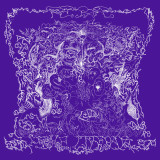
Like ‘Psiche Liberata’s artwork, hand-drawn by Fera, every detailed miniature leads to a single cell of sound, tracks collide against each other in a psychotic kaleidoscope where every safe space is confronted with subsequent noise, alterations or interruptions. The black terror of ‘Celestial Anacusma’ is followed by the space-jazz banquet of ‘Milk Tears In The Hug Chamber’ doped up cyber Sun Ra extravaganza featuring Laura Agnusdei and Luigi Monteanni (Artetetra) on saxophones and flutes; ‘Silenzio Solare’ sprinkles Mille Plateaux era minimalism all over hallucinations, while ‘Diluvia’ crosses industrial acid with perpetual motion; title track ‘Psiche Liberata’ murmurs mechanically, a downtempo drifter for the wide-eyed 7AM comedown: ‘Simulacrima’ melts Boards Of Canada’s mellow pastoralism with dystopian meta-level dreamland and ‘Riposa’ showcases an overwhelming melancholy executed with elegance in a slo-mo world where the ineffable transcends notions of ambient and becomes a warm embrace.
Created on a Monotribe, MS20 & Volca Sample/fm, ‘Psiche Liberata’s velvet heaviness was achieved by re-amping many of the instruments through a Leslie Rotary Speaker and a reel-to-reel Telefunken. Fera’s sonic tapestry is in constant flux, underlying themes of love longing and affection run through the record but in a turbulent, volcanic, unleashed fashion, almost on the brink of utter noise or complete silence, reminding us that this is an artist like no other amidst the ever changing electronic scene. These are transmissions from the gutter, where the inevitable meets the unattainable and collapses.
"Fera’s tarnished materials are destined for ruin; “Stupida,” full of longing and regret, sounds like an elegy for a fallen world." Pitchfork
"A cut of dark magic that fits like a glove to overcast days, wild winds and lashing rains. Insistent, the treacle-thick bassline oozes out, soaking the space between the melancholic synth lines." Inverted Audio
"The songs on Stupidamutaforma feel hypnotizing...it establishes De Franco as a composer who uses space and time to create a set of rich, immersive works." Bandcamp 'Album Of The Day'
Cerca:back in time
- A1: The Original Way (Feat. Freddie Foxxx)
- A2: Duck Down
- A3: Drug Dealer • A4. Like A Throttle
- B1: Build And Destroy
- B2: Ruff Ruff (Feat. Freddie Foxxx)
- B3: 13 And Good
- B4: Poisonous Products
- C1: Questions And Answers
- C2: Say Gal
- C3: We In There
- C4: Sex And Violence
- D1: How Not To Get Jerked
- D2: Who Are The Pimps?
- D3: The Real Holy Place
- D4: 13 And Good (Remix)
In the early 1990s gangsta rap was becoming more popular. KRS-One took to the mic and continued to write socially conscious raps resulting in the hard-hitting 1992 album Sex And Violence which would be the fifth and final studio album under the Boogie Down Productions name. Produced by KRS-One, Pal Joey, Kenny Parker, D-Square, and Prince Paul, the album explores the darkest sides of the American urban landscape and psyche, with KRS as narrator, detailing all sides of the matrix. While singles like the alarming drum-driven "Duck Down" and the funky-as-hell "We In There" got most of the attention in ‘92, the deeper sequence reveals plenty of additional gems: the history lesson of the dark and dusty "Drug Dealer"; "Ruff Ruff", with scowling MC favorite Freddie Foxxx (aka Bumpy Knuckles); the grooving "Questions and Answers," and the frantic record industry track "How Not To Get Jerked." The album kicks off with an intro skit featuring KRS-One as a DJ in panic needing vinyl which at the time was a dying format while cassettes and CDs became the dominant format. Thirty-two years later vinyl DJs and Hip-Hop vinyl collectors no longer need to panic. Get On Down in partnership with Sony Music's CERTIFIED is proud to bring back to vinyl this underrated gem in the BDP catalog. Featuring one of the dopest album covers by American artist Robert Williams, Sex and Violence is pressed on colored vinyl and packaged in a gatefold jacket with full lyrics.
Specially prepared liner notes by renowned music writer Brian Morton.
By 1955, Sinatra's ubiquitous presence as an entertainer had completely abolished all memories of his struggles in the early '50s. He began the year by touring Australia for the first time, and less than a week after returning, he would be back in Capitol's KHJ Studios to begin recording one of his most treasured albums, In the Wee Small Hours , a concept album which would enter the Billboardcharts on May 28, 1955. It would rise to #2 and remain on the chart for a total of 33 weeks and in 1984 it was inducted into the Grammy Hall of Fame.
"One great talent who has had the recognition he deserved is Frank Sinatra. There's nobody in the world like Frank, and I have great admiration for a whole bunch of singers. He was as great when he retired as he was twenty years earlier. When you've got it, you've got it--that's it." - Buddy Rich
Greg 'Stakehouse' Prevosts Karriere ist eng als Frontman der Chesterfield Kings verbunden, aber seine Geschichte beginnt und endet nicht mit dieser Band. Seine Anfänge liegen in den Siebzigern als Sänger und Gitarrist in Combos wie Dr Electro & His Psychedelic Retards, Tar Babies, Distorted Levels, Cutdowns (dokumentiert auf der Prevost-Compilation Violence Vintage). Der hochkarätige Songwriter und einer der coolsten R&R-Sänger aller Zeiten kehrt nun mit seinem vierten Solowerk "After The Wars" zurück. Greg befindet sich in einem Zustand der Gnade. Nach der guten Resonanz auf sein drittes Werk (das akustische, gefühlvolle "Songs For These Times") kehrt unser Mann jetzt mit einem neuen, opulenteren Album unter dem Arm zurück. Und es steckt voller Überraschungen und Kollaborationen - mehr denn je, immer noch ein erstklassiger Songwriter und einer der coolsten R&R-Sänger überhaupt. Auf "After The Wars" finden sich wahre Folk-Rock-Wunder, stilvoller Barock-Pop und Psychedelia, Country, Blues, Gospel und natürlich Rock'n'Roll pur. Dies ist ein Festival des guten Geschmacks in Form von Songs mit glänzenden 12-saitigen Gitarren, plüschiger Akustik, ausgefeilten Gesangsharmonien, klagenden Harfen und hypnotischen Arrangements mit Cello, Klavier und Orgel, Steel Guitar und vielem mehr! All dies, abgerundet mit einer einfach perfekten Produktion, macht "After The Wars" zu Greg 'Stackhouse' Prevosts bisher abwechslungsreichstem, vollständigstem...und bestem Album. Checkt dies und auch den Backkatalog! Für Fans von Stiv, Johnny, David, Nikki, Dave, Epic, Tyla, Dead Boys/Lords Of The New Church, New York Dolls, Jacobites, Dog's Damour, Jagger/Richards, Woods/Stewart... Vinyl klassisch schwarz, CD mit einem Extratrack!
80s alt country punk outfit, Lone Justice, with Maria McKee, Ryan Hedgecock, Marvin Etzioni and Don Heffington are in full flight with the release of a brand new 7". Taken from their forthcoming album, Viva Lone Justice, 'Teenage Kicks' is a rambunctious slice of punk angst that sounds like it was recorded in one take. It's a timeless anthem with a joyous riff that explodes into a hail of feedback. A favour returned as Maria McKee, the songwriter of Feargal Sharkey's only solo hit 'A Good Heart', Lone Justice cover The Undertones' Peel-approved favourite with the artwork of the single being a nod to the original. "As much as we loved Merle Haggard, George Jones, and many other authentic hard core Country artists, we were also deeply impacted by Punk; from the Velvet Underground (we were playing "Sweet Jane" live as early as 1983) to the MC5 ("Sister Ann" is on the album "Viva Lone Justice")." Backed with 'Nothing Can Stop My Loving You' that's cut with a wild, squeezebox-powered interpretation of the George Jones and Roger Miller country stomp. "Speaking of George Jones, here's one written by George Jones and Roger Miller. Two of our favorites! We played this song at nearly every show starting in 1983. This ragged and right live recording captures the fire from a sold out show at The Palace in Los Angeles and features Jo-El Sonnier on lead accordion documenting the only time Sonnier played with LJ. "Nothing Can Stop My Loving You" is the only live track on Viva Lone Justice." // "A roots rock band that took Los Angeles by storm in the 80s and developed a smaller but deeply enthusiastic following outside the Golden State
At the muddy miracle that was Woodstock, the most miraculous performance just might have been Jefferson Airplane’s. The band had been one of the first to sign on for the festival, their imprimatur prompting many other acts to hop on board, and their stature had landed them a coveted headlining slot closing Saturday night’s schedule. But, as the torrential downpours and the unexpected crush of half a million people kept on delaying their set, the chances of putting on anything approaching a quality performance seemed to diminish.
According to Paul Kantner, “We were supposed to go on at 10:30 at night and we’d been up and down about four or five times on acid that night, getting ready to go on, and then everything was delayed for whatever reasons. So, we didn’t get on until like 7:00 the next morning and everybody was pretty much burned out.” Kantner’s protestations to the contrary, the Airplane (with guest pianist Nicky Hopkins in tow) played a scorching two-hour set that defied the elements and the circumstances. Grace Slick led the charge as the band plunged into a frenetic version of Fred Neil’s “The Other Side of This Life”: “Alright, friends, you have seen the heavy groups. Now you will see morning maniac music. Believe me, yeah. It’s a new dawn!” What followed was an adventuresome (and surprisingly tight) set that not only featured the band’s big hits like “White Rabbit” and “Somebody to Love” but also premiered songs from the Volunteers album that was still three months away from being released, including a 21-minute version of “Wooden Ships!” Indeed, about the only members of the crew who weren’t up to snuff were the ones filming the concert documentary, which explains why the Airplane is not one of the acts that commonly come to mind when thinking about Woodstock; they didn’t appear in the film due to subpar footage, and only one of their songs (“Volunteers”) was included the chart-topping 3-LP Woodstock release.
Now, Real Gone Music is proud to present Jefferson Airplane’s complete Woodstock performance. The 3-LP set comes inside a gorgeous, double-gatefold jacket sporting photos of the band at Woodstock, most of them taken by the legendary Henry Diltz; liner notes by folk-rock guru Richie Unterberger complete the package. Pressed in iridescent, “clouds breaking” blue for its 55th anniversary, this release makes a convincing claim that Jefferson Airplane’s Woodstock performance ranks right up there with those of Jimi, Sly, and Santana as a festival highlight. Limited to 1000 copies!
Step into a world where authenticity meets emotional resonance with Maxo's 2018 album, "Smile," produced by the mastermind Lastnamedavid. This release marks the genesis of a new era, a departure from prevailing trends, and an introduction to the genuine artistry of Maxo.
"Smile" is a testament to Maxo's effortless storytelling and emotional delivery, setting a refreshing tone in the contemporary music landscape. Lastnamedavid's soulful production serves as the perfect backdrop, creating a sound that is as real as the content it supports. The album captures a range of emotions, painting a vivid picture of Maxo's journey through the realms of honesty, youthfulness, troubles, and hope.
From the reflective "Same Hoodie Since ‘05," a sobering exploration of identity and roots, to the anti-romantic ballad "Evelyn," Maxo invites listeners to join him on a personal and introspective journey. "Smile" serves as a reminder, not just to Maxo but to an entire generation, to appreciate every situation, irrespective of the circumstances.
The project features a notable collaboration with Sharp, adding an extra layer of depth to the already rich tapestry of "Smile." As Maxo unfolds his narrative, the synergy between his lyrical prowess and Lastnamedavid's production creates a sound that is not just music but an authentic expression of self.
"Smile" is more than an album; it's a sonic exploration of the human experience, capturing the essence of Maxo's voice and vision. In a world of fleeting trends, Maxo and Lastnamedavid deliver a timeless record that resonates with honesty, making "Smile" a standout release in the musical landscape of 2018.
Collaboration between Kilbey (The Church) and Kearns (Cactus World News), compiling before unfinished recordigs from late 1990s up to 2016. Initially issued as a 500 run CD available by mail order only in 2016, this is the very first time being released through global distribution, packaged in deluxe gatefold sleeve and containing two unreleased bonus tracks. Kilbey's The Church have returned to a high-profile status with both current albums 'The Hypnogogue' & "Ezra..." being critically acclaimed globally. The two new bonus songs are tracks 11 and 12, which were recorded in 2022. Kilbey and Kearns dive deep into atmospheric soundscapes and vocals and mysterious, yet revealing lyrics as Speed of the Stars. Easy Action will be issuing Steve Kilbey's solo and collaboration albums over the coming years.
HLZhas comes correct with his debut solo single on Utopia Music.
For true drum & bass enthusiasts, Emilio Dimitri akaHLZ's name should already be on your radar. These tracks offer creativity and integrity, pushing the boundaries of his own respected style within the genre and nodding to times past with a modern update.
"Black Core" kicks things off with its icy break workouts, featuring raw, rasping drums with an industrial edge. It's not a high-speed roller but rather a sneaky creeper that satisfies those who want intricate beats backed with nightmarish overtones.
With "Arcane,"HLZtakes us on a journey of pure pressure in the way he knows best, stepping rhythms, stabbing yet gut-punching bass design, working in tandem with groovy tablas, clever fx builds, topped with lush euphoric pad work, 170 in the truest form.
Vibes player Johnny Lytle was one of the heroes of the early acid jazz club circuit, with his cut 'Selim' being an anthem of the scene.
The Ohio born player had made his name at Riverside where his 1965 album "The Village Caller" made him a star. When Riverside ceased trading, owner Orrin Keepnews collaborated with Lytle on two albums which came out on the Detroit label, Tuba
Ace reissued the first album “The Loop” last year (HIQLP 115). We are delighted to now put out the second, “New And Groovy”. The line-up features Milt Harris (organ) Wynton Kelly (piano), George Duvivier (bass) “Peppy” Hinnant or Jimmy Cobb (drums) Montego Joe (congas) and Lytle on vibes. The band power through a selection of original material such as ‘The Snapper’, ‘The Pulpit’ and ‘Screamin’ Loud’. The album also contains Lytle’s radical reworking of Miles Davis' 'Miles' which Lytle retitles 'Selim'. With poor distribution, “New And Groovy” barely made it to the shops back in 1967 and was ignored for twenty years until DJs such as Bob Jones and Gilles Peterson started playing it in the 80s making it a sought-after LP.
The popularity of “New And Groovy” has remained, and this is first time it has been legally reissued on vinyl. “Snapper one up…!”
Smooth as a dry martini and equally intoxicating, Chantal Chamberland's "Dripping Indigo" cements her role as one of the best interpreters of classic song book favorites Two factors set Chamberland's music apart from the pack. First, the
arrangements are slow and sexy relying on a small jazz ensemble for backing (piano, sax, bass light rhythm). Secondly is her luscious voice, which caresses the listener with a breathy purr throughout the album. With a repertoire that features "Smoke Gets In Your Eyes", "Bewitched, Bothered & Bewildered" and "How Deep Is Your Love", the album slowly seduces with its corner jazz club ambiance and torch singer grace. This is re-release is a part of the evosound 20th Anniversary special collection. The album will be available on vinyl for the first time, as a 180g double transparent purple LP.
When imbued with real emotive powers, they have the capacity to elevate and transport. We become lost in romance or reverie. This second orchestral collaboration between iconic Swiss trumpeter Franco Ambrosetti and two- time, Grammy-winning arranger Alan Broadbent takes us there. The album title is an apt description of Franco's approach to each golden note he plays on flugelhorn. Backed by an all- star group of pianist Broadbent, guitarist
John Scofield, bassist Scott Colley and drummer Peter Erskine, along with a 29- piece orchestra arranged and conducted by Broadbent, Ambrosetti pulls heartstrings on a program of four originals and four well-chosen covers
2024 Repress
Vinyl Only
Originally released on Southampton label Adrenalin Records run by Stu J. Stu J was a big shaker in the south coast rave industry in the early 90’s and played at all the top clubs in the area including Sterns, Kevins House and Madisons. It was Madisons though that he had the biggest impact, leaving a long-lasting legacy to this day. It was at this venue that Stu J caned this 12” which would later become an anthem at raves up and down the country in 1991 and 1992.
KZ1 was from Eastleigh, just outside of Southampton and this was his only release, though he did remix 3rd Rail on Delirious Recordings the following year (repressed in 2019 Vinyl fanatiks – VFS008). At the same time, he was a writer for Blaze, Wax and Hit The Decks magazines as well as a reviewer of rave releases at Mixmag. On top of that, he was Fantazia’s official photographer during this era. But he then disappeared from the industry, leaving this handstamped white label release as his only legacy, until now.
Repressed on 180g heavyweight vinyl. Take a trip back to 1991 and the high energy that was the UK rave scene.
B2 Recordings is back with a second release that is every bit as good as the first. This one comes from Reece Johnson and is a joyous mix of uplifting disco sounds with a timeless edge. 'Comin' In Hot' is a lose-limbed opener with percussive edgy and low-slung drums topped off with dazzling chords. 'Glass Heart' then brings the funk with more expert looseness and this time some hooky and soulful vocals. 'Sup America' keeps the party rolling with instrumental disco brilliance and a Spanish vocal to add real heat while 'Feelin' The Beat' and 'Got To Be Free' close out with higher tempos but no less class.
2024 repress
Isle Of Jura go back to 1976 to resurrect 'Anambra', the jewel in the crown of Dub, Soul & Funk outfit Ozo. 'Anambra' is something of a classic, a unique song that's slow, ritualistic and spiritual, mixing African & Nyabinghi drumming with a Buddhist Sanskrit mantra 'Om Mani Padme Hum'. An alternate version 'Anambra River' appears for the first time on the same 12'.
Marking sixty years of Bossa Nova, and twenty years since Marcos Valle’s first release for Far Out Recordings, what better time to bring back this era-defining classic from the Brazilian master composer?
Throughout his astounding six-decade career, infiltrating pop, bossa nova, samba, delicate psychedelia, jazz and funk, Marcos Valle has consistently shown a dogged determination to transcend the traditions and structures of bossa nova, whilst never veering away from the movement’s inherent, fundamental spirit. To some extent, his epithet ‘the original Rio beach boy’ is a handy one: it reflects the origin and character of his often sun-soaked sound, but expounding his importance in the lineage of Brazilian music, he is more discerningly known as ‘the renaissance man of Brazilian pop’. He is indeed one the very greatest and most important composers, arrangers, writers and performers in Brazil.
Up until Nova Bossa Nova, Marcos Valle hadn’t released an album for well over a decade. After 1983, he resented the way the music industry had changed with commercialisation and new demands curtailing his creative freedom. This was until 1994 when Marcos met Far Out boss Joe Davis and they recorded a track for Far Out’s first Friends From Rio album. This new collaborative partnership resulted in a new solo album, which commenced recording in 1996.
Nova Bossa Nova brought Marcos bouncing back into the 90s, slotting nicely in place alongside the acid jazz movement as well as a voracious new demand for Brazilian music on dancefloors from London to Tokyo. It was witnessing the London club scene’s growing appetite for Brazilian music, as well as a lack of new sounds coming out of Brazil at the time, that a young Joe Davis put in a proposal to record a new album with one of his musical idols. Joe wanted to facilitate an album which would combine the latest technologies and production techniques, with live to analogue tape recording: a Marcos Valle album tailor-made for London’s clubs. Always open to modern influences and possibilities, Marcos agreed to the project, and Joe and his production partner Roc Hunter flew to Rio in ‘96. The record wasn’t released until ’98, as the original ½ inch tapes were stolen from Far Out’s London studio, meaning parts of the album had to be re-recorded.
Nova Bossa Nova was unveiled at the peak of the of the Brazilian movement, the record would also prove to be something of a revolution, inspiring a new generation of artists like Bebel Gilberto, Sabrina Malheiros, Da Lata and Bossacucanova, who continued to fuse Brazilian influences with modern electronic sounds.
PRZ comes to Sync 24's Cultivated Electronics with his first double Album ''Lost Art''. In the ever-evolving realm of electronic music, where sonic innovation is the currency, PRZ (Gal Perez) emerges as a luminary, crafting sonic landscapes with a distinct style that blends intricate rhythms, ethereal melodies and pulsating beats. As a producer, DJ and co-founder of the Chateau Royal label and Pluto Junkies member, PRZ has spent the last decade shaping his sound and releasing tracks on some of dance music's most respected labels including Clone West Coast Series and Hilltown Disco. With a boundless imagination and unwavering commitment to sonic exploration, his ''Lost Art'' release is a fully-formed album rather than just a collection of tracks, opening with the atmospheric intro of ''Introvert'', before the playful sonic antics of tracks like ''Lazerton'', ''Lost Art'' and ''Voice Over''. Other tracks bring pure Electro darkness like ''Velocity Shift'' alongside the ElectroTechno of ''Time To Decide'', the EBM-esque ''Azaya'' or the retro funk of ''Back From 89'' - all primed for dance floors, before closing on the melancholy ''Miss You''.
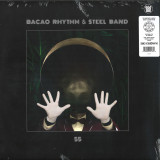
Shrouded in mystery, hailing from Hamburg, Germany, Bacao Rhythm & Steel Band (BRSB) releases their long awaited debut “55” on Brooklyn’s own Big Crown Records. Long time multi-instrumentalist and band leader Bjorn Wagner spent a few months in Trinidad & Tobago where he became fascinated with Steel Drums. His initial intrigue with local steel pan music culture led him to learning the instrument both through help of local players and on his own. After he became proficient on the pans Bjorn had his own instrument built from a used oil barrel by legendary pan man Louis C. Smith. Upon returning home to Germany, Bjorn set out to blend the Tropical Steel into his already sharply honed Funk, Soul, and Hip-Hop sensibilities. The outcome is an updated take on a classic format, a truly unique sound. Their first two recordings were covers of The Meters “Look A-Py-Py” & “Ease Back” which they self-released on a 45. Looking back on these two sides you can tell they were just getting their chops up for what was to come next. This is evidenced by how all hell broke loose when they went on to cover 50 Cent’s hit PIMP taking the DJ and vinyl collecting communities by storm. Many people thought the recording was the original sample and probably still do to this day when it is played. The original Mocambo pressing sold out quickly and is now a collector’s item fetching heavy prices when it changes hands. It was this tune that made the introduction between Bjorn and Danny Akalepse of Big Crown. They immediately hit it off and started making plans to do a full length project with the band. Keeping in the tradition of Steel Drum records, 55 is a journey through re-interpolations and covers with an updated approach, pushing Steel Pan music to uncharted territory. Flawlessly bringing previously untouched genres into the steel pan cannon ranging from Underground Hip Hop tunes to staple Funk tracks and some of all that falls in between. BRSB’s 55 is reinvigorating tunes both well-known and helping to shed some light on tunes still largely undiscovered. However, some of the strongest tunes on the album are original compositions, from spaced out Disco vibes on “Beetham Highway Ride” and “Port Of Spain Hustle” to the ugly face inspiring drums of “Laventille Road March”. Recorded to analog 8 track tape at The Mocambo Studios in Hamburg, 55 is a gritty, punchy journey in sound drawing on music from around the world, using production aesthetics from across both eras and genres, all coming together seamlessly. If the 45s that have already come out on Mocambo, Plane Jane, and Truth & Soul are an indication, this full length is going to be a staple to both casual listeners and Disc Jockeys alik
Yogisoul returns with his first album in 8 years, a timeless throwback offering & an instant classic that will leave you wondering if you somehow missed this record reminiscent of 90’s West Coast Rap. It’s that blunt rolling record, with deep G-Funk grooves, skits, and raps provided by US-based rapper Woof. A record inspired by the albums Yogisoul grew up listening to. A combination of his imagination of the West Coast California landscape portrayed by 90’s records on Death Row Records, and the real-life experiences of California-based rapper, Woof.
The first track they worked on - “94 Heavy - wastes no time setting a vibe and transporting you back to 1994. It’s an undeniable head nodder, with smooth horns & deep synth bass that will leave no question about the record's low-end power, and a dope drum swing.
Other notable tracks on the record are “Comin Thru”, which is a braggadocious, G-Funk, banger! It contains all the ingredients to classic West Coast Rap albums. A smooth beat for Woof to weave in and out of, talkbox, scratches in the hook, and samples of legendary Los Angeles voices. A track that will make you feel like you should have a forty and a doobie nearby.
The title track, “Let the Dopeness Begin”, the self-titled track on the album is an homage to the West Coast Classics radio station on GTA: San Andreas. A cruise with the windows down & a jam that slaps!
Marking its first decade of activity, Blume returns with the first ever vinyl reissue of the seminal “New Music for Electronic and Recorded Media”, from 1977, the third and final instalment in a suite of releases that includes James Tenney’s “Postal Pieces” and Ben Vida’s “Vocal Trio”. Unquestionably among the most important collections of experimental music to emerge during the 20th Century, “New Music for Electronic and Recorded Media” is the original feminist presentation in its context, releasing the work of Johanna M. Beyer, Annea Lockwood, Pauline Oliveros, Laurie Spiegel, Megan Roberts, Ruth Anderson, and Laurie Anderson under its collective banner. Includes newly commissioned liner notes by Jennifer Lucy Allen and Bradford Bailey.
Since its founding back in 2014, Blume has carved a unique place in cultural landscape, issuing free standing works, spanning the historical and contemporary, that represent singular gestures of creativity within the field of experimental sound. Joining their broad efforts in building networks of context and understanding that already includes the efforts of efforts of Werner Durand, Sarah Hennies, Bruce Nauman, John Butcher, Jocy de Oliveira, Mary Jane Leach, Valentina Magaletti, Alvin Curran, Julius Eastman, Alvin Lucier, and others, Blume delivers their third release in their first suite of releases for 2024, the fist ever vinyl reissue of the seminal “New Music for Electronic and Recorded Media” compilation, originally issued by Thomas Buckner's 1750 Arch Records in 1977. Out of print for decades on vinyl and arguably the most important feminist statement in the history of experimental music, illuminating the work of Johanna M. Beyer, Annea Lockwood, Pauline Oliveros, Laurie Spiegel, Megan Robert, Ruth Anderson, and Laurie Anderson - in a number of cases representing their recording debuts - during a crucial moment in the history of experimental music. Blume’s brand new edition - complete with newly commissioned liner notes by Jennifer Lucy Allen and Bradford Bailey, as well as reproducing Charles Amirkhanian’s original accompanying text - radically shifts perceptions of the past and present day with its truly revolutionary sounds.
Issued by Thomas Buckner's 1750 Arch Records in 1977, and out of print nearly the entire time since, “New Music for Electronic and Recorded Media” can be understood within two simple frameworks. On one hand, it is an astounding document of the landscape of experimental music toward the end of the 1970s. On the other, it is a historically significant feminist statement, being the first collection of experimental music entirely dedicated to female composers, a number of whom were grossly under-celebrated at the time, but have since gone on to be regarded as among the most important composers of their generation.
The eight pieces gathered by “New Music for Electronic and Recorded Media” - Johanna M. Beyer’s “Music of the Spheres”, Annea Lockwood’s “World Rhythms”, Pauline Oliveros’ “Bye Bye Butterfly”, Laurie Spiegel’s “Appalachian Grove I”, Megan Roberts’ “I Could Sit Here All Day”, Ruth Anderson’s “Points”, and Laurie Anderson’s “New York Social Life” and “Time To Go (For Diego)” - might be regarded as the first cohesive vision of alternate proximity or expression of experimental music to what has always been a frustratingly male dominated environment, and to the tropes, temperaments, and sensibilities that have been historically perceived to define it. It is an expanded vision of truth. While the presence of feminine sensibilities and temperaments in experimental music, however they may present themselves, were anything but new in 1977, “New Music for Electronic and Recorded Media” was the first opportunity, beyond the temporal limitations of live performance, to view them collectively, rather than as individualised expressions within a larger body of similar gestures (as was the case of Oliveros’ inclusion in Odyssey’s 1967 “New Sounds In Electronic Music” and “Extended Voices” compilations) where they might be confused for something else; to regard and celebrate a radical notion of feminine sonority for its unique characteristics and through its interrelations.
While its historical significance and groundbreaking nature can not be debated in its totality, nearly half a century on “New Music for Electronic and Recorded Media” remains compelling in both its musicality and the palpable sense of its lasting influence. Every composition across the album’s two sides is not only engrossing and deeply compelling - feeling as fresh and relevant as the day it was laid to tape - but clearly tangible in their lasting influence. Viewed in context, the album’s eight works feel like breath of fresh air when compared to much of what came before, and laid the groundwork for much of what was to come, introducing a new, often more holistic temperament and more sensitive and inclusive sensibility into the landscape of experimental music.
Particularly in the case of Annea Lockwood, Pauline Oliveros, Laurie Spiegel, Ruth Anderson, and Laurie Anderson, it's hard to throw ourselves back in time and imagine a moment when these composers rested in a fairly marginalised corner of the creative landscape. Blume’s brand new edition of “New Music for Electronic and Recorded Media” - complete with newly commissioned liner notes by Jennifer Lucy Allen and Bradford Bailey, as well as reproducing Charles Amirkhanian’s original accompanying text - brings us back to this confounding moment and points us toward a crucial moment of change set forth by these incredible composers and their sounds. Absolutely seminal and not to be missed.