Leila Gamal’s ‘Abaleeh Abalingi’
At the height of Pan-Arabism, when the United Arab Republic fused Egypt and Syria in a fleeting but bold experiment, a new wave of popular music was emerging—vibrant, infectious, and universally danceable. Among its lesser-known stars was actress Leila Gamal, whose voice—delicate yet rich with longing—embodied the golden era of Egyptian cinema. Born in Alexandria to Syrian roots, Gamal’s vocals were a magnetic blend of sweetness and passion, with a timeless allure that echoed the silver-screen sweethearts of her time.
Abaleeh Abalingi pulses with the hypnotic drive of funky organ riffs, reminiscent of the blind visionary Ammar El Sheriyi, creating a sound both cinematic and undeniably catchy. The delicate lyrics by Khairi Fouad place the track firmly in the lineage of the Middle East’s most iconic pop divas, from Angham to Nawal El-Zoughbi who he subsequently wrote for. This reissue, lovingly remastered, brings this long-lost gem back to life, where it belongs—spinning on turntables, teasing dance floors, and transporting listeners to Egypt in the late sixties.
Adel Osman’s “Oriental Eyes”
Oriental Eyes captures the essence of the 60s Egyptian Franco-Arab movement, blending Western (often jazz) influences with Arabic melodies to mesh mystique with sensuality. Osman’s commanding yet delicate vocals deliver the bilingual lyrics with captivating sincerity, his voice effortlessly gliding over the swells of the arrangement. The trumpet, possibly connecting him to Zaki Osman of Salah Ragab’s legendary Cairo Jazz Band, adds a layer of flair, enriching the track’s Tarantino-esque eclecticism. Now remastered, ‘Oriental Eyes’ is not only a nostalgic gem but a timeless reminder of the boundary-defying spirit that defined the 1960s musical landscape.
Given the ongoing war efforts against Israel, this record wasn’t pressed by Sono Cairo till much later in 1975 once Egypt had recaptured the Sinai and restored national pride. Sono Cairo (Sawt el-Qahira) was the first Arab-owned and by far the largest record label in the Middle East, amassing an unmatched catalogue of music. With exclusive rights over much of Umm Kulthum’s works, Sono Cairo played a crucial role in disseminating the sounds of Arab Nationalism and projecting Egypt’s soft power across the region.
Muhammad Al-Najjar
London, April 2025
credits
Audio restoration and vinyl mastering: Colin Young
Lacquer cut: Timmion cutting lab
Sleeve and label artwork: Grotezk Studio
Under License of Sono Cairo
Buscar:back on track
Bodhi, the Cardiff-based production team, return to Hotflush Recordings with a follow-up to last year’s standout Laurus Ascending extended play.
Having emerged in 2012 with a slew of breathlessly-received edits and subsequent releases on labels including Future Classic and Rinse, the pair took a 4-year hiatus in 2017, returning with an invigorated sound in 2022. Recent releases on Hotflush and dh2 have brought the duo back to the forefront of the UK’s cutting edge music scene.
‘Corrupta’ is six tracks of bass-inflected, garage-influenced beat science. Opener ‘dwndwn’ sets the stage with a genuine wtf beat-drop moment. That vibe is continued on the shuffling ‘Silian Rail’.
Dancefloor smasher ‘Okinobi’ is a hat-tip to the recent Speed Garage revival, while T.O.P. is a classic slice of 2-step bassline pressure. Bodhi’s techno influences are also present with electro breaks hybrid of ‘Without You’ and the 8am Berghain vibes of ‘Bellcurve’.
This is another long-form statement of intent from some of the most inventive club producers in the game right now.
Support from Jamie xx, Lee Gamble, I.Jordan, dBridge, Machinedrum, DJ Haus +++
Percussive P (who has previously released on the label with FR037 & our remix on THCFR001) is a top quality producer who I wish had more music/releases out there. I used to play a tune of his called "Gunsmith" a lot in sets, as well as a lot of his collabs with Kid Lib which I was a big fan of. I'd previously collaborated with him on a tune for Dublinquents a few years ago and I was quite keen on doing a new collaboration with him for Meeting Of The Minds, so he sent me some tracks he had started, I picked my favourite to work on and that led to "Impatience".
Fluid Haunts is a solid producer who I was familiar with, but it wasn't until his music was drilled into my head by Dwarde who was playing a few select tunes from him in every single b2b set we had together, that I started to really appreciate his skills. Dwarde would play "Not Your Ordinary Love Song" without fail, in any given moment and time, and it would always get a great reaction from the crowd, so I had to get in touch to see if he'd be up for working with me & thankfully he was! We ended up making "Pineapple Soup" together & I can't remember why it's called that, I think he named the tune ????
Hobzee is one half of Silent Dust (him & Zyon Base) & I used to chat regularly with him and trade music with him on AOL Instant Messenger (showing my age here!) a long while back. He got back in touch with me about wanting to work on music together and he had an early version of "Sunspots" done. It was very promising sounding so I was quite keen to get involved with him on it and I'm grateful that I was able to get him on Future Retro London after many many years of IM chats!
Usually, I limit my collaborations on Meeting Of The Minds to producers that are fairly established and already somewhat known to other people, but for those who don't know who Eff is, she is a potentially familiar face to anyone who has attended a Future Retro London event, as she has been on the door for every single one. One day after a Distant Planet event in Bristol, she mentioned to me that she had an idea for a track inspired by a PFM tune and she already had the title in mind for it, which is "Wavebreak". I was curious about how this would sound in reality, so we met up to work on the tune & she said it was pretty much like how she had envisioned it & I liked how it sounded, so I thought it would be worth putting out on a future Meeting Of The Minds release, which ended up being this one.
Big up to all the artists involved on this edition of Meeting Of The Minds, it's quite a long and arduous task putting together each one, which is why there was such a gap between Vol. 9 & 10 and Vol. 11 & 12. I plan on getting the series back into something more regularly occurring, so hopefully I can actually stick to that plan!
Battery 03 are back with their second repress via Vinyl Fanatiks - the original of this came out as a white label only in 1993 with the catalogue number CASH002 via the guys record shop Dance Bass Records.
Nameless till now - The tracks are Hands 3000 with Joyous Days on the flipside.
Teresa Rotschopf, a musician and composer from Vienna, presents her second solo album, »Currents and Orders« – a radical, delicate, yet grandiose sonic journey between experimental pop, new music, and improvised composition. The album will be presented live on August 27 as part of the »Pop-Kultur« festival (silent green, Berlin) and at the »ORF RadioKulturhaus« (Vienna) on 12 September.
»Currents and Orders« was recorded in an unusual location: a stalactite cave in Styria, Austria. Together with a small group of musicians (Maria Gstättner: bassoon, contraforte; Alex Kranabetter: tuba, trumpet, French horn; Patrick Dunst: saxophone, duduk; Florian Klinger: marimba, vibraphone, glockenspiel, cymbals, gong, stalactite; Patrick Pulsinger: gong, stalactite; Ulrich Schleicher: gong) and in co-production with Patrick Pulsinger, Rotschopf recorded the album in June 2023 – deep underground, far from daylight, but all the closer to archaic sounds and resonances.
The cave becomes not only an acoustic stage, but also a symbolic space of memory, retreat, and transformation. The album comprises four pieces – including two large-scale tracks:
- the opening, mantra-like title track »Currents and Orders« (over 10 minutes)
- the final, free-jazz, expressive »I Open My Gates (for You)« (over 20 minutes)
With a minimalist structure, choral voices, vibraphone, percussion, and wind instruments, fragile yet powerful soundscapes emerge, whose spatial depth is also palpable through the cave reverberation.
Rotschopf first developed the desire to record in a cave in the summer of 2022. What began as a visual and sonic image became a concrete project – supported by the Austrian Cave Association. In June 2023, Rotschopf and her musicians spent three days in a cave in the Styrian forest. Almost a kilometer of cable was laid, and equipment and instruments were carried deep underground. Rotschopf describes the recording situation as a kind of return to herself: »I descended into this cave, as if I could descend into myself, into my own womb ... What we did in the cave could just as easily be called ›recording music,‹ but it could also be called ›remembering‹ – remembering the earth, the cave, and humanity.«
»Currents and Orders« is an album like a ritual: haunting, atmospheric, bold in its form, and deeply rooted in both physical and emotional space. Music that takes its time, uses space, and pushes boundaries.
The pre-release single »O Please My Soul (Rest On My Back)« (release: July 17, 2025) is accompanied by a striking music video shot by Antoinette Zwirchmayr on 16mm film: Teresa Rotschopf holds a real owl in her hand – an image that is as magical as it is enigmatic.
Label owner Martin Hossbach read a review of Rotschopf's first solo album, »Messiah,« in 2018 and contacted the artist. Joint releases followed, including a drone album on the sub-label Martin Hossbach Score and a Pet Shop Boys cover version on Martin Hossbach Cover.
Teresa Rotschopf, Musikerin und Komponistin aus Wien, präsentiert mit »Currents and Orders« ihr zweites Soloalbum – eine radikale, zarte und zugleich groß angelegte Klangreise zwischen experimentellem Pop, Neuer Musik und improvisierter Komposition. Das Album wird am 27.8. im Rahmen des Festivals »Pop-Kultur« (silent green, Berlin) und am 12.9. im »ORF RadioKulturhaus« (Wien) live vorgestellt.
»Currents and Orders« entstand an einem ungewöhnlichen Ort: in einer Tropfsteinhöhle in der Steiermark, Österreich. Gemeinsam mit einer kleinen Gruppe von Musiker:innen (Maria Gstättner: Fagott, Kontraforte; Alex Kranabetter: Tuba, Trompete, Waldhorn; Patrick Dunst: Saxophon, Duduk; Florian Klinger: Marimbaphon, Vibraphon, Glockenspiel, Becken, Gong, Stalakmit; Patrick Pulsinger: Gong, Stalakmit; Ulrich Schleicher: Gong) und in Ko-Produktion mit Patrick Pulsinger nahm Rotschopf das Album im Juni 2023 auf – tief unter der Erde, fern von Tageslicht, dafür umso näher an archaischen Klängen und Resonanzen.
Die Höhle wird nicht nur zur akustischen Bühne, sondern auch zum symbolischen Raum der Erinnerung, des Rückzugs, der Transformation. So umfasst das Album vier Stücke – darunter zwei großformatige Tracks: - das eröffnende mantraartige Titelstück »Currents and Orders« (über 10 Minuten) - das finale, free-jazzig-expressive »I Open My Gates (For You)« (über 20 Minuten)
Mit minimalistischer Struktur, Chorstimmen, Vibraphon, Schlag- und Blasinstrumenten entstehen fragile und zugleich mächtige Klangwelten, deren räumliche Tiefe auch durch den Höhlenhall spürbar wird.
Der Wunsch, in einer Höhle aufzunehmen, kam Rotschopf im Sommer 2022. Was als visuelles und klangliches Bild begann, wurde zu einem konkreten Vorhaben – unterstützt vom Österreichischen Höhlenverein. Im Juni 2023 begab sich Rotschopf mit ihren Musiker:innen drei Tage lang in eine Höhle im steirischen Wald. Fast ein Kilometer Kabel wurde verlegt, Equipment und Instrumente tief unter die Erde getragen. Rotschopf beschreibt die Aufnahmesituation als eine Art Rückkehr in sich selbst: »Ich stieg in diese Höhle hinab, so als ob ich in mich selbst hinabsteigen könnte, in meinen eigenen Schoß [...] Was wir in der Höhle taten, könnte man ›Musik aufnehmen‹ nennen, genauso gut aber auch ›Erinnern‹ – Erinnern von Erde, Höhle und Menschsein.«
Currents and Orders ist ein Album wie ein Ritual: eindringlich, atmosphärisch, mutig in der Form und tief verwurzelt im physischen wie emotionalen Raum. Musik, die sich Zeit nimmt, Raum nutzt und Grenzen sprengt.
Die Vorab-Single »O Please My Soul (Rest On My Back)« (VÖ: 17.7.205) wird begleitet von einem eindrücklichen Musikvideo, das Antoinette Zwirchmayr auf 16mm-Film drehte: Teresa Rotschopf hält darin eine echte Eule auf ihrer Hand – ein Bild, das genauso magisch wie rätselhaft wirkt.
Labelbetreiber Martin Hossbach las im Jahr 2018 eine Rezension des ersten Rotschopf-Soloalbums »Messiah« und nahm Kontakt zu der Künstlerin auf. Es folgten gemeinsame Veröffentlichungen – etwa ein Drone-Album auf dem Sub-Label Martin Hossbach Score und eine Pet-Shop-Boys-Coverversion auf Martin Hossbach Cover.
"Eternal Life EP" is a double A-side release featuring two mixes of the title track by father-daughter duo, Floorplan alongside two new solo tracks by Robert Hood.
The glorious "Eternal Life" is an infectious track to raise the roof as only Floorplan can, whether it's Lyric and Robert's tough House A1 version or the more stripped back Mix 2. Flipping to the AA-side Robert delivers his signature "real" minimal Techno sound on the shimmering "God Flow" before closing out with the darker tones of "The Throne". It's an essential release that can take you all the way from daytime festival fields through to late night warehouse dance floors on one EP.
Floorplan x Robert Hood "Eternal Life EP" will follow the vinyl release of Robert Hood's "Art Project EP" which will hit record stores from 13 June.
- Roadwork Rappin' - Main
- Roadwork Rappin' - Instrumental
After delighting fans of all ages with the surprise children's hit "Long Legged Larry," underground hip-hop icon Aesop Rock returns with "Roadwork Rappin'," a joyful ode to construction vehicles and the kids who love them. Inspired by the fascination many children have with bulldozers, front loaders, and cranes, the track delivers clever rhymes and vivid descriptions in classic Aesop fashion_this time with a whimsical twist. Over a minimal beat with a bouncing bass line that evokes the lumbering roll of oversized construction tires, Aesop celebrates the sights and sounds of work zones, bringing dump trucks and backhoes to life with vivid wordplay. The song is part educational, part imaginative world-building, capturing the wonder of watching giant machines reshape our surroundings. What makes it shine is Aesop's funny and wildly specific wit, packaged in a format that's approachable for younger listeners but still rewarding for longtime fans. With "Roadwork Rappin'," Aesop continues to expand his creative universe in unexpected ways, proving once again that his pen knows no bounds. Whether it's blaring from a car seat playlist or sparking nostalgia in adults who once chased garbage trucks down the block, this track is a joyful celebration of curiosity, machinery, and the poetry hiding in plain sight.
Unmistakable are the sonic experiments of Spanish alchemist ORBE; with this fresh release on Token. ORBE's iconically viscous textures and impactful percussion weasel their way into 'Ascender' for a deeper release on Kr!z's label. Thick, brooding atmospheres drive these tracks into stories of pursuit and escape throughout its four tracks.
A slick, pulsating low end in 'Flashback' stands out as a first impression for an imposing EP. Electric leads zip by for maximum psychosis; he's known for his uncompromising dissonance and drive. A staple of the Spanish scene, ORBE bites down hard on deep and hypnotic techno to resonate through concrete warehouses. This jagged edge to club music continues through 'W9Y' - a more drum-forward cut with noisy transitions and breathable synthwork. Sharper stabs occupy this space as opposed to the track's predecessor and tension is maintained with a lingering pad in the background. A meditative conclusion for the A side, ORBE quickly shifts his attention in the titletrack 'Ascender'. Emphasizing tone and tune on the kick, the lead comes with confrontation. Rolling through shifting hats, the producer brings boiling tension through minimal arrangement and the weight of his sound design - a skillset only the most seasoned artists can claim. To close things out, 'Break Nation' does just that - cutting off the traditional four/four rhythm and instead presenting itself as a bass stepper. With ORBE's classic unison packed synths, this dweller presents a whole other perspective on 'Ascender'. A hybrid of influences and yet still destined for the techno dancefloor, this breath of fresh air serves as deep dive into the subconscious for an eyes-closed experience.
Mwandishi is one of Herbie Hancock's first departures from his traditional jazz sounds. The album which was recorded in a single session on New Year's Eve is a much more spacier effort compared to his earlier works, created by Hancock's us of electronic effects devices. His sextet is the most progressive ensemble he played with and he took the next step in the future of jazz. The music on Mwandishi is beautifully atmospheric and the long tracks leave plenty of space for improvisations by the group. A fantastic recording with sonic layers of earth, existence and expression.
Herbie Hancock is one of the most prolific jazz pianists of the 20th century. A child prodigy, he played with the greats such as Donald Byrd and Miles Davis. As he was a bit of a geek, he enjoyed gadgets & buttons and he was one of the first to embrace and master the electric piano, but he always stayed true to the acoustic sound. In fact, he always bounced back and forth between his electronic and acoustic sound, touching upon almost every development in R&B, Funk and Jazz while retaining an original and distinctive voice.
Continuing the sensational Spring Revisited series - Acid Jazz presents a new 12” release – Fatback Band: ‘Night Fever (Kenny Dope Mix)’ / ‘(Hey) I Feel Real Good (DJ Spinna Refreak). Spring Revisited is an exciting and unique mix project that explores the musical legacy of legendary New York label Spring Records, with a series of new mixes from top mix artists, using the original masters. Fatback Band are a disco/funk group that were at the peak of their success in the ’70s, and they were one of Spring Records’ most iconic artists. This is the second release in the series featuring the band’s classic work. ‘Night Fever’ is an electro-disco track released in 1976.
Keeping the soulful vocal and strings from the original, house legend Kenny Dope beefs up a looped section of the percussion that forms the backbone of his version. He lifts the tempo and creates a DJ friendly version, while keeping the improvised feel of the original. This rough and ready remix has the kind of bumping groove that’s infectious on a dance floor. On the flip, DJ Spinna gives a new take on the Fatback’s ‘(Hey) I Feel Real Good’. Presented in the signature Spring Revisited house-bag, looking as if it were hand delivered to you from a 1970s record pool.
Limited edition…
Backspin's new release comes from Obscure Shape, delivering a deep and versatile techno EP that lives up to its title: 'Zwei Gesichter' (German for 'Two Faces'). Across five tracks, the EP explores the tension between raw force and emotional depth, marrying the label's Hardgroove roots with a more introspective edge.
The A-side presents Obscure Shape's first face: It opens with 'Zwei Seiten', a no-frills banger that hits with immediacy and drive. 'Im Angesicht Der Zeit', the single, leans into groove and movement, offering a more fluid, time-aware flow. 'Die Haut In Der Ich Wohne' pares things back into a minimalistic, loopinghypnosis, evoking the idea of inhabiting one's own skin. On the B-side, presenting the producer's second face, 'Spuren Des Werdens' features producer AMIYE and introduces more melody and saw synths, a reflection on growth and transformation. The closer, 'Von Hoffnung Getragen' - also a collaboration with AMIYE - lifts off with ethereal vocals and a bouncing rhythm, embodying the hope that carries us forward.
With the 'Zwei Gesichter' EP, Obscure Shape crafts a powerful narrative through groove, form and feeling, perfectly aligned with Backspin's evolving reinterpretation of early 2000s techno.
Le Le - the electronic cult trio of Piet Parra, Rimer London, and Pepijn Lanen (Faberyayo) - brings together their finest work on a double LP for the very first time. Great Stuff is a carefully curated selection of their most beloved tracks, newly remastered for this release. From dance floor classics like Breakfast to eccentric pop gems like Skinny Jeans, Great Stuff showcases why Le Le has held a unique place in the Dutch music and art scene since their debut. Now available for the first time on double LP - a must-have for fans and collectors alike.
Bushbaby's mixtape, 'EVERY TIME', is a statement piece from one of the UK's most exciting club producers.
Known for blending UKG, house, and raw rave energy, this 10-track project showcases the full scope of his sound.
The mixtape lands off the back of a huge 12 months. 'Shake and Slide' went viral on socials, 'Feel The Rush' showed his melodic side, and his DJ sets have lit up dancefloors across the UK, Europe, USA and Australia. With major support from Four Tet, Disclosure, Danny Howard, Chris Stussy, bullet tooth, DJ Seinfeld, NOTION, Y U QT, Ben UFO, Diffrent, Hamdi, Interplanetary Criminal and Sammy Virji, Bushbaby is leading a new wave.
Pressed to vinyl and backed by a full world tour, 'EVERY TIME' marks the start of a new chapter.
Transparent green vinyl. After an uncomfortably long five-year hiatus-likely spent arguing about time signatures, chord progressions, and who forgot to bring snacks to rehearsals-Glutton is finally back. The beloved (by at least a few people) trio is ready to unleash their questionable wisdom upon an unsuspecting world with their upcoming album: "Skiva heter Vishnu!" On their latest outing, Glutton boldly ditches vocals (likely realizing that nobody was really listening to their lyrics anyway) and commits fully to an instrumental format. This time around, it's only guitar, bass, and drums-because who needs keyboards or vocalists when you have enough distortion pedals and élan? Guitarist Eirik Orevik Aadland (Spurv), bassist Ola Mile Bruland (Actionfredag, Jordsjo), and drummer Jonas Eide Hollund (Mt. Mélodie) clearly didn't bother to consider commercial viability while crafting this sonic oddity, delivering tracks like "Hallux Valgus," "Orkensur," and "Rematusenogennatt" with absurd seriousness and delightfully misplaced confidence. Expect a reckless fusion of punk attitude, jazz complexity, and prog rock pretentiousness, presented with complete sincerity and zero self-awareness (well, almost zero). Each track is carefully constructed to give the illusion of a band deeply serious about their art, while simultaneously admitting that they may have no idea what they're doing. Whether you're a sophisticated music connoisseur with an ear for complexity, or just someone who enjoys pretending to appreciate weird music, Glutton's latest record promises to be precisely the type of organized hotchpotch you didn't realize your life was lacking. "Skiva heter Vishnu!" - because of course it does.
To celebrate 10 years of Medusa Outdoor, the renowned Belgian collective presents a unique various LP with international quality techno tracks from Ida Engberg, Petter B, Radio Slave, Progression and many more. The tracks were selected with passion by Medusa Outdoor residents Michael Forzza and Jochen Robberecht who both contributed an unreleased new track, especially for this exclusive anniversary album. The various LP is housed in a beautiful hand-numbered gatefold sleeve. Only 500 copies were pressed in Berlin.
- Copa, Raya, Paliza
- Es Un Buen Da
Valencia-based band Wau y Los Arrrghs!!! is made up of five punk rock hooligans as raw and real as chaos itself _ led by one of the wildest frontmen around, Juanito Wau. Yes, there's garage rock here, no doubt _ but you'll also find blasts of punk, rock 'n' roll, pop, and even a splash of surf. This joint release with Slovenly Records brings back two anthemic tracks from Spain's undisputed kings of garage punk! Originally produced by Jorge Explosion over a decade ago, "Copa, raya, paliza" and "Es un buen día" are guaranteed party-starters no garage DJ should be without. Pressed on neon pink vinyl.
- A1: Something In My Eye – The Acid Jazz Orchestra Featuring Sherine
- A2: Samba De Flora (Original Full Length Version) – Romero Bros
- A3: Tambores Da Vida (Drums Of Life) – Chris Bangs
- A4: Coconut Rock – Soul Revivers Featuring Sheila Maurice-Grey And Anoushka
- A5: Rocksteady – Brand New Heavies
- B1: Crucifix Lane – Matt Berry
- B2: Thinkin’ About You – Carmy Love
- B3: Beggin’ – Bdq
- B4: This Is Day One – Earth-O-Naut
- B5: That’s About The Time (I Fell In Love With You) – Quiet Fire
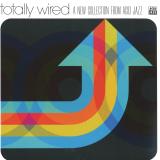
We are excited to announce the return of the iconic Totally Wired series with a brand new collection on LP and CD. The first 50 orders will include a special art print of the artwork. We are also doing a limited edition T-shirt to celebrate this milestone!
In 1988 Acid Jazz released its first compilation album ‘Totally Wired: A Collection From Acid Jazz Records’. Compiled by Eddie Piller and Gilles Peterson it collated 11 tracks that summed up the early days of our scene, mixing new label signings, cool new records being played in our clubs and a couple of oldies. It sold well to the then small scene and set the template for a series, that in the wake of the international success of The Brand New Heavies, Jamiroquai, The James Taylor Quartet and others exploded. By the time that Volume 5 appeared, we were selling tens of thousands of copies, with major label artists vying for inclusion.
By that point ‘Totally Wired’ was a phenomenon, that sign-posted changes in both the directions of new music, but of the oldies that were played on the scene. It gave DJs new tunes to play and soundtracked 1000s of Cafés and bars the world over in the age of the CD. It was largely retired at the end of the 90s and as times changed.
Over the years we have been asked to return to the scene of the crime, but it has never quite felt right, until now. With vinyl back, and the need for easy to digest compilations becoming neccessary in the chaos of streaming’s ‘I can listen to anything I want, but can’t think what that might be’ is evident, but also we are feeling excited about where Acid Jazz is right now. New artists on the label are making great records, Matt Berry has a Top thirty album, and The Brand New Heavies are headlining the Royal Albert Hall. It’s easy to make an exciting album when that is happening.
So we are releasing “Totally Wired: A New Collection From Acid Jazz” and treating it like the important milestone that it is. From the Acid Jazz sid we have new and exclusive recordings by Matt Berry, Chris Bangs and new signings Earth-o-Naut and Quiet Fire, there is also a recent white label only 45 cut by the Soul Revivers – released ahead of their new album due this Autumn and featuring Kokoroko’s Shiela Maurice-Grey and Anoushka Nanguy. For the oldies we have dug deep into our own archives to bring you the Acid Jazz Orchestra’s version of Corduroy’s ‘Something In My Eye’ and The Brand New Heavies astounding funk take of Aretha Franklin’s ‘Rock Steady’. These are all joined by recent scene records by Carmy Love – one of the greatest voices in the UK – The Romero Brothers, and BDQ, carrying the series onwards at last.
- A1: Malavoi - Te Traigo Guajira
- A2: Los Caraibes - Donde
- A3: Tropicana - Amor En Chachacha
- A4: Ryco Jazz - Wachi Wara
- A5: Eugene Balthazar - Dap Pignan
- A6: Roger Jaffort - Oye Mi Consejo
- A7: Les Kings - Oriza
- B1: Les Supers Jaguars - Tatalibaba
- B2: Super Combo De Pointe A Pitre - Serrana
- B3: L'ensemble Abricot - Se Quedo Boogaloo
- B4: Henri Guedon - Bilonga
- B5: Les Aiglons - Pensando En Ti
- B6: Los Martiniquenos - Caterate
In Guadeloupe, many people think that jazz and ka music are like a ring and a finger. To some extent, the same could be said about so called Latin music and the music played in the French West Indies.
Both aesthetics were born in the Caribbean and bear so many connections that they can easily be considered cousins. In constant dialogue, there are lots of examples of their fruitful alliance and have been for a while. The English country dance that used to be practiced in European lounges came to be called kadrille in Martinique and contradanza in Cuba. They both featured additional percussion instruments inherited from the transatlantic deportation. Drawing from shared feelings about the same traumatized identity – later to be creolized – it would be hard not to assume that they were meant to inspire each other. The golden age of the orchestras that graced the Pigalle nights during the interwar period further proves the point. As soon as the 1930s, Havana-born Don Barreto naturally mixed danzón and biguine music in a combo based at Melody's Bar. In the following decade, Félix Valvert, a conductor who was born and raised in Basse-Terre in Guadelupe, also worked wonders in Montparnasse with La Coupole, which was an orchestra made up of eclectic musicians. Afro- Caribbean performers of various origins were often hired on rhythm and brass sections in jazz bands, which used to enliven the typical French balls of the capital. In the 1930s and onwards, Rico’s Creole Band was one of them.
Martinican violinist-clarinettist Ernest Léardée, who would become the king of biguine music as well as the main figure of French Uncle Ben's TV commercials (a dark stigma of post-colonial stereotypes), had musicians from the whole Caribbean sphere play at his Bal Blomet – and they all enchanted "ces Zazous-là" (according the words of Léardée's biguine-calypso piece). In les Antilles (French for French West Indies), music history started to speed up in the 1950s, when trade expanded and radio stations grew bigger. The Guadelupean and Martiniquais youth tuned in their old galena radio sets to South American and Caribbean music. As for the women traders, les pacotilleuses, they bought and sold goods across different islands (the "passing of items through various hands" was thought to be most pleasurable) and brought back countless sounds in their luggage. Such was the case of Madame Balthazar, who once returned from Puerto Rico with the first 45rpm and 33rpm to ever enter Martinique.
Out of this adventure was created the famous Martinican label La Maison des Merengues, a music business she opened and undertook with her husband and which proved to be a major landmark. At the end of the 1950s, in Puerto Rico, Marius Cultier competed in the Piano International Contest playing a version of Monk's Round 'Midnight. He won the first prize and this distinction foreshadowed everything that was to come. Cultier, the heretic Monk of jazz, was quickly praised for writing superb melodies, always tinged with a twist that conferred a unique sound to his music. It didn't take long for the gifted self-taught musician to get to play with Los Cubanos, making a name for himself thanks to his impressive maestria on merengues.
The rest is history. Besides, in the late 1950s, Frantz Charles-Denis, born into the upper middle class in Saint-Pierre and better known by his first name Francisco, went back home after working at La Cabane Cubaine – a club located rue Fontaine where he had caught the Latin fever. Francisco's music was therefore heavily marked by his Cuban cousins' influence, which gave the combos he led a specific style and also led to renewal. Things were swinging hard in La Savane, located in the main square in Fort-de-France. He set up the Shango club close by and tested out the biguine lélé there, a new music formula spiced up with Latin rhythms. Soon afterwards, fate had him fly to Puerto Rico and Venezuela.
As for percussionist Henri Guédon (percussions were only a part of his many talents), he was born in Fort-de-France in May 22nd 1944, the day marking the celebration of the abolition of slavery. As an old man, he could remember that in " his father's Teppaz, a lot of hectic 6/8 music was constantly playing...". In the opening lines of his Lettre à Dizzy, a small illustrated collection of writings published by Del Arco, he highlighted the huge impact that cubop had on him as a teenage boy, around 1960. He eventually turned out to be the lider maximo in La Contesta, a big band steeped in Latin jazz. He was also the one who originated the word zouk to describe music which brought the sound of the New York barrio to Paris. It was the culmination of a journey that started in Sainte-Marie: "a mythical place for bélé, the equivalent of Cuban guaguancó". In the early 1960s, the tertiary economy developed to the detriment of agriculture. Yet rural life was where roots music emerged in Martinique and in Guadeloupe.
Record companies played a major part in the process of Latin versions sweeping across the islands – before reaching everywhere else. Producer Célini, boss of the great Aux Ondes label, and Marcel Mavounzy, both the head of Émeraude records - a firm which was founded in 1953 - as well as the brother of famous saxophonist Robert Mavounzy, were big names to bear in mind. Although there were many of them - all of whom are featured on this record - Henri Debs was definitely the major figure in the recording adventure. He proved to be so influential that he even got compared to Berry Gordy. In the mid 1950s, when he acquired his first Teppaz, he worked on his first compositions: a bolero and a chachacha. Then, he became the one man who made people discover Caribbean music, from calypso to merengue. He was among the first ones to rush out to San Juan, Puerto Rico, to buy records and distribute them through a store run by one of his brothers in Fort-de-France. He had members of the Fania All Star come and perform there, which he was madly proud about. He was also the first one to pay attention to Haitian music, such as compas direct and various other rhythms which would soon flood the market. As a result, many of the combos hitting his legendary studio would end up boosted by widespread "Afro-Latin" rhythms. However, he never denied his identity: gwo ka drums were given a major role, although they were instruments which had long been banned from the "official" music spheres. The present selection bears witness to such a creative swarming. Here are fourteen tracks of untimely yet unprecedented cross-fertilization: all types of music rooted in the Creole archipelago have found their way, whatsoever, to the tracklisting. Whether originating from the city or being more rural, they all go back to what Edouard Glissant, in an interview about the place of West Indian music in the Afro-American scope, called "the trace of singing, the one which got erased by slavery." "It is so in jazz, but also in reggae, calypso, biguine, salsa... This trace also manifests through the drums, whether Guadelupean, Dominican, Jamaican or Cuban... None of them being quite the same. They all point to the idea of a trace, seeking it out and connecting to each other through it. This is the hallmark of the African diaspora: its ability to create something new, in relation to itself, out of a trace. It may be the memory of a rhythm, the crafting of a drum, a means of expression which doesn't resort to an old language but to the modalities of it." The opening track features one of the emblematic orchestras of this aesthetic identity, criscrossing many music types from the archipelago. The 1974 Ray Barretto guajira – Ray Barretto was a major New York drummer influenced by Charlie Parker and Chano Pozzo – is magnificently performed by Malavoi, a legendary Fayolais group (i.e from Fort-de-France). Additionally, the compilation ends on a piece by Los Martiniqueños de Francisco. It symbolically closes the circle as it is a genuine potomitan of Martinique culture which also functions as a tireless campaigner for Afro-Caribbean music. Practicing the danmyé rounds (a kind of capoeiria) to the rhythm of the bèlè drum, it delivers a terrific Caterete, a kind of champeta of Afro- Colombian obedience which was originally composed by Colombian Fabián Ramón Veloz Fernández for the group Wgenda Kenya. The icing on the cake is Brazilian Marku Ribas, who found refuge in Martinique in the early 1970s, bringing his singing to the last trance-inducing track. These two "versions" convey the whole tone of a selection composed of rarities and classics of the tropicalized genre, swarming with tonic accents and convoluted rhythms. It is the sort of cocktail that the West Indians never failed to spice up with their own ingredients. For instance, the Los Caraïbes cover of Dónde, a famous Cuban theme composed by producer Ernesto Duarte Brito, has a typical violin and features renowned Martinique singer Joby Valente and his piquant voice.
The track used to be – or so we think – their only existing 45rpm. The meaningful Amor en chachachá by L'Ensemble Tropicana, a band which included Haitian musicians among whom was composer and leader Michel Desgrotte, also recalls how Latin music was pervasive in the tropics in the mid-1960s. They were the ones keeping people dancing at Le Cocoteraie in Guadelupe and La Bananeraie in Martinique. Around the same time, another "foreign" band, Congolese Freddy Mars N'Kounkou's Ryco Jazz, achieved some success on both islands by covering Latin jazz classics – such as their adaptation of Wachi Wara, a "soul sauce" by Dizzy Gillespie and Chano Pozo whose interweaving of strings and percussions can have anyone hit the dancefloor. How can you resist Dap Pinian indeed, a powerful guaguancó by Eugene Balthazar, performed by the Tropicana Orchestra and published by the Martinique-founded La Maison des Merengues? It also acts as a symbol of the maelstrom at work. Going by the name Paco et L'orchestre Cachunga, Roger Jaffory used to play guaguancó too: his Fania-inspired Oye mi consejo is one example of his style. Baila!!!!! Dancing was also one of the Kings' focus points. Oriza is a Puerto Rican bomba and a "classic" originally composed by Nuevayorquino trumpeter Ernie Agosto, which reserves major space for brasses, giving it a special sheen.
Emerging from the New York barrios crucible was also La Perfecta, a Martinique group originating from Trinidad, whose name directly references the totemic Eddie Palmieri figure as well as his own band, also called La Perfecta. Here they borrow Toumbadora from Colombian producer and composer Efraín Lancheros and interpret it by emphasizing percussions, which set fire to the track even more than the wind instruments. The same goes for Martinique's Super Jaguars, who use Tatalibaba – a composition by Cuban guitarist Florencio "Picolo" Santana which was made famous by Celia Cruz & La Sonora Matencera – as a pretext for sending their cadences into a frenzy. In a more typically salsa vein, the Super Combo, a famous Guadelupean orchestra from Pointe-Noire that was formed around the Desplan family and had Roger Plonquitte and Elie Bianay on board, adapt Serana, a theme by Roberto Angleró Pepín, a Puerto Rican composer, singer and musician also known for his song Soy Boricua. Here again, their vision comes close to surpassing the original. In the 1970s, L'Ensemble Abricot provided a handful of tracks of different syles, hence reaching the pinnacle of the art of achieving variety and giving pleasure. They played boleros, biguines, compas direct, guaguancó and even a good old boogaloo - the type they wanted to keep close to their hearts for ever, "pour toujours", as they sang along together in one of their songs. Léon Bertide's Martinican ensemble excelled at the boogaloo which had been composed by Puerto Rican saxophonist Hector Santos for the legendary El Gran Combo.
Three years later, in 1972, Henri Guédon, with the help of Paul Rosine on the vibraphone, tackled the Bilongo made famous by Eddie Palmieri. Such a classic!!!!! And so were the Aiglons, the band from Guadelupe: choosing to execute Pensando en tí, a composition by Dominican Aniceto Batista, on a cooler tempo than the original, they noticeably used a wonderfully (un)tuned keyboard in place of the accordion. On the high-value collectible single – the first one released by Les Aiglons under the Duli Disc label – there is a sticker classifying the track under the generic name "Afro". Now that is what we call a symbol. Jacques Denis
- A1: Time Or Tide
- B1: I Loved And I Lost
Occasionally, one experiences serendipitous events in life. On the 13th of July this year, I received a message from Tim Trapnell, who had discovered an unknown 60’s track on YouTube and expressed his admiration for its exceptional quality. Intrigued by the message, I clicked on the link and was immediately captivated by the musical composition. Within minutes, I embarked on a quest to uncover more information about the band and the particular track. On the 16th of July, only three days after, I’ve received a message from Jim Bojorquez (aka JC), the lead vocalist of the Baron of Soul, “Hello Yann, I was delighted to hear that you have discovered and enjoyed my original composition, ‘Time or vs Tide.’ It was written by myself and Clark Baldwin. that the recording was performed live and this song was never released in any format back in the day. I have reached out to Jim Bojorquez the next day and we spent a considerable amount of time conversing via video chat about his illustrious 60-year music career as an artist in San Jose, California.
I proposed to Jim that I could release two songs from The Barons of Soul through Epsilon Record Co. I re-mastered both songs and made a deal with Jimmie that same day. So today, I am so pleased to present these two previously unissued tracks. "Time or Tide" is a powerful uptempo piece featuring an exceptional brass section and a Hammond B3. The vocals are exceptionally punchy and catchy, ensuring an unforgettable listening experience. "I Loved and I Lost” is a remarkable take of the Impressions classic written by Curtis Mayfield’s If you are an enthusiast of 60s uptempo music like Tim and myself, then this new and exceptional 45 is an absolute must-listen and must have!
Following a sold-out UK tour, Factory Floor return to Phantasy with a new single, ‘Tell Me’.
As propulsive and direct as anything the cult UK electronic group has ever released, ‘Tell Me’ continues to perfect the dynamic in the band’s current lineup of Gabe Gurnsey, Nik Colk Void, and Joe Ward, with additional drum tracking by Stephen Morris of New Order. Situated between the sonic promise of enduring indie culture, yet naturally imbued with the band’s relentless forward-thinking ethos. Throughout, Colk Void’s inquisitive vocal guides the listener through an elastic square-wave bass groove that forms the rhythmic backbone to Tell Me, before Gurnsey and Ward's frenetic drumming breakdown rains with pure abandon, exemplifying the band’s personal alchemy between genre, scenes, human, and machine.
‘Tell Me’ arrives digitally and on limited 12” vinyl, housed in a riso-print sleeve, backed with an extended mix for dance floor play. There will also be a limited Rough Trade exclusive vinyl edition featuring an alternate sleeve.