Readers of encyclopedic tomes are obviously familiar with exploding animals – there are numerous reports of torn-apart toads (even in Hamburg, Germany!), actual ants exploding altruistically – but humans that decide to jointly detonate, and with no harm done, that’s rare: Kobe’s own o'summer vacation are unique (and volatile) like that, and they’re back to light the fuse for the second time, presenting 13 more musical quarter sticks that have already blown up venues in Europe and Japan.
“Keep it lean, keep it mean,” they say, and that’s what this band loves to take to the extreme: breakneck concision and collective combustion meet freeform noise punk hazards on o'summer vacation's second (not quite) full-length – as the Kobe-based three-piece’s “Electronic Eye” is set to arrive on October 11, 2024. Following a bunch of trips to Berlin, Munich etc., the Japanese fire starters have found a new home with Alien Transistor, and it’s the perfect launch pad for their latest set of guitarless pyrotechnics. Going right for max q (maximum dynamic pressure), “Electronic Eye” is (unlike those Starships) actually supposed to explode right after lift-off ;)
Even though there have been some line-up changes since the group recorded its sophomore album, the energy caught by producer Shinji Masuko (DMBQ, Boredoms) is still unmatched: a very physical and hard-knocking barrage of mosh-inducing madness that leaves you speechless + inevitably twitching towards the pit. Mastering was done by Masaki Oshima aka Watchman (Melt-Banana).
Opening with sizzling hi-hats and heavy ripples of breathless bass, singer Ami presents a non-sequitur kind of lullaby over the math rock-style interlocutions of “宿痾 (Shuku - A)” – which at 6+ minutes makes up more than a quarter of the album. A shapeshifting frenzy of voice (Ami), unbridled, pedal-powered bassline insanity (Mikkki, formerly Mikiiiii), and hot-blooded drums (Manu, meanwhile replaced by Karry), the album features mosh-inducing blows (previously released “Luna,” “Anti Christ 大体 Super Star”), 30-sec mini noise punk anthems (“竦(shou)”, “Days Go By Fast”), and continues to surf at breakneck pace up and down scales (“@ The”), which often feels like catharsis served with a hammer (“Ultra”). Whereas some tracks are bigger more song-y than others (“Song#2,” that full-throttle “Poodle”), “Vs I” is on time like Tierra Whack (exactly 60 seconds of pick-grinding action), and “Rage” indeed feels like Zack is about to join the party – only to see Ami wipe the floor with pure onomatopoetic fire. Finally, “Aloooooone” and “Humming” (that opening lilt!) are sure going to be live favorites, shifting up and down via hardcore speeds and various break-downs.
Quite hotheaded and terminating things on a high note, o'summer vacation point out that the quick-fire lyrics of their “songs have no meaning. It’s called onomatopoeia in English. Ami, our vocalist, does not like to communicate her thoughts through her music.” Although she considers her contribution “a part of the instrumentation,” they still have strong messages and concerns (unrest, discontent, willingness to shake, wake up, enliven anyone near the audible bomb crater): “That doesn’t mean we don’t have a point of view, but we choose to express ourselves through sound rather than words. Generally, but not exclusively, we are anti-racism, anti-war, gender-free, angry at the companies we work for and their bosses, etc., which are very common sentiments held by so-called rock bands.”
It’s only three ingredients, just like sonic gunpowder: bass, drums, voice – but they tend to explode a few bars into each new track. In a perfect world, there’d be giant colorful clouds of dust gracing the sky over each venue they descend upon.
Suche:bar musica
It is summer dawn . . . and you are alone. Here is music for your strange mood. The piano starts the first track, slow tempo beat, a strict beat, a swinging beat. Lillemor—here minor harmonies give the tune a rural, romantic feeling of some place in Spain or France. The tempo changes to medium fast—the flute solos. Light phrasing contrasts beautifully to the earthy, swinging beat of the rhythm section and the repeating piano figures. The trombone adds a new color, a counterpoint of sound and phrasing, backed by the pulsating beat of this wonderful rhythm and the driving piano. Summer dawn . . . This music has more to offer, because it shows the personality of Sahib Shihab at its best. Sahib is a universal musician who reflects musical experiences in jazz since the end of the thirties. He lived through the important periods of modern jazz with his heart and mind wide open toward everything that was good music, regardless of being termed "Mainstream", "Bop", "Cool", "Westcoast", "Eastcoast", "Hard Bop'', et cetera. When you listen closely to his music, you will find traces of all these, but they are immersed in his deep musicianship and his true jazz personality. Sahib Shihab's background reads like the record of a master of advanced studies. Furthermore he played and collaborated with the coolest jazz musician of that period. Above all let's name Budd Johnson, Theolonius Monk, Tadd Dameron, Milt Jackson, Dizzy Gillespie, Illinois Jaquet, Elmer Snowden, Luther Henderson, Larry Noble, Fletcher Henderson, Roy Eldridge. In his early professional years, Sahib was heard mostly on alto sax; later, more often on baritone sax and flute. Today, his name is inseparably connected with these two instruments. The unity of his jazz performances is not alone bound up with the com¬positions and the arrangements of Sahib Shihab, though in their understated simplicity they have a melodic beauty that is seldom found in jazz of today. The rhythmical subtleties add to the overall qualities of being relaxed vehicles for free-blowing, but there is an immediacy that you hear and feel every moment when listening which defies analysis. The playing of the rhythm section helps greatly to promote the sense of flux and contrasting constant renewal that makes listening to this record so invigorating an experience. Well, this is no surprise, with Kenny Clarke as the nucleus of the rhythm group. Kenny 'Klook' Clarke is a major figure and contributor in jazz, one of the founders of modern jazz, and is ranked as one of the all-time great drummers. He influenced a whole generation of musicians with his playing, though living in Paris since the middle of the fifties somewhat dimmed his name to the general American public. Nevertheless, his name alone will assure a connoisseur to expect top class musical experiences. Talking of the rhythm section we have to name Jimmy Woode's bass, which together with Kenny's drumming, is the driving force for the group and the reliable harmonic anchor for the improvisors. By the way, Jimmy has been with the Duke quite a while, and this alone is an award for extraordinary craftsmanship and artistry. The good sounding rhythm with its full-bodied color is also a result of the added bongos of Joe Harris, who manages to stay out of the way of the players—a quality not often found with drummers—but his playing is felt through the set. There are two members of the group not yet mentioned. Two Europeans, pianist-composer-arranger Francy Boland from Belgium, and trombonist Ake Persson from Sweden. Francy Boland this time is a sideman, though normally he is a leader of recording sessions, both as composer-arranger and as musical director of the band. In the fifties he was in the States writing arrangements for different name-bands, such as Basie and Goodman. In Europe, he is famous for his swinging modern big band arrangements; and his inventiveness as a writer is reflected in his piano playing. He has the talent of using the right dynamic approach every moment, thus making his playing helpful to soloists and interesting for listeners as well. Ake Persson has been Scandinavia's out-standing trombone player for about ten years. There are only a few trombonists in Europe who might match his talents at times, but they lack the consistency of his playing. He is impressive, whether playing in a big band, or whether main soloist in his own small groups. American musicians love the sound of his slide trombone and his easily flowing romantic improvisations, so he often joins American name-bands as they travel in Europe. The music speaks alone . . . , we said it before. You have your soul to feel the beauty, to follow lines and structure, and to enjoy the spiritual excitement. Whether you enjoy the flowing, easy sounding theme of "Please Don't Leave Me", or the climaxing piano solo in the same piece—the bass solo in "Waltz For Seth" or the swinging baritone sax—listen to the first bars of this solo and pay attention to Kenny. Whether you listen to "Campi's Idea", (named after Gigi Campi, the well known Cologne jazz enthusiast who organized this recording) with the romantic flute solo of Sahib, the interesting tempo changes, the piano comping, the moving trombone solo; or to the up-tempo "Herr Fixit", with the cooking Kenny and humorous, driving flute solo, you know that these six musicians where in the right mood, in the right stimulating surroundings to feel what we all feel when it's: SUMMER DAWN.
Dawn Richard and Spencer Zahn share a common collaborative ethos, a genuine sense of musical curiosity, and a cosmopolitan eagerness to escape the conventions of genre. That shared vision first brought them together on 2022's Pigments_icy and warm, stripped-down and grand, familiar and otherworldly_and now it has reunited them for Quiet in a World Full of Noise. By turns intimate, soul-baring, spectral, and startling, Quiet in a World Full of Noise blends atmospheric and orchestral soundscapes with mellifluous soul, jazz, and journalistic vocalizing_driving it all home with stark, confessional lyricism. The new album finds Richard at her most raw and exposed. This year, Richard's musician father experienced mini strokes while being diagnosed with cancer; and last year, her cousin Cisco was fatally shot seven times in New Orleans. Richard channels the emotional impact of these traumatic experiences of loss into her lyrics and vocal performances, which are left bare and human here, raw and unprocessed across the album. Quiet expands the definitions of what constitutes progressive, avant-garde R&B by rewriting them altogether. On paper, Richard and Zahn's audacious, impressionistic musical collaborations feel like a surprising match. Richard, a New Orleans-reared visionary, has had an improbable journey from late 2000s reality television and mainstream pop with girl group Danity Kane to become one of the most prolific, experimental, and visible indie R&B singer-songwriters of the last decade and a half, with seven solo albums under her belt. Zahn is an East Coast-raised multi-instrumentalist and composer working at the intersections of jazz, Americana, classical, and ambient pop. His growing solo discography includes People of the Dawn, Sunday Painter, Pale Horizon, and Statues I & II, as well as the duo's first release, Pigments. "Pigments was one of the best projects I've ever made," Richard says, "and the furthest I've ever been pushed as an artist." The album was a critical hit, hailed as Best New Music by Pitchfork and receiving praise from Stereogum as Album of the Week, NPR Music, Bandcamp Daily, The Fader, Bitter Southerner, and Edition, among many other publications. The making of its follow-up, Quiet in a World Full of Noise, began in 2023 in upstate New York. Fresh from a break-up, Zahn sat at his piano and poured himself into writing and recording instrumental compositions. "I wrote all these stream-of-consciousness pieces on piano, and they were eerie, spacious piano tracks," he said. He used a piano that had been unconventionally tuned to the room rather than to standard pitch. These oddly-tuned, eerie instrumental recordings were never intended to be an album. Six months later, he listened to the recordings again and sent them to Richard who immediately recognized their potential and said, "Oh, this is the next album." Richard went into the studio the next day and wrote and recorded melodies and lyrics to Zahn's piano recordings. Zahn brought in gifted musicians like Bryan Senti on strings (violin, viola, and violoncello da spalla) and CJ Camerieri on brass (French horn, flugelhorn, and trumpet). In some cases, like on the track "Life in Numbers," Zahn used only the original first-take piano recording and scratch vocal, resulting in an intimate close-up of both Richard and Zahn.
Dawn Richard and Spencer Zahn share a common collaborative ethos, a genuine sense of musical curiosity, and a cosmopolitan eagerness to escape the conventions of genre. That shared vision first brought them together on 2022’s Pigments icy and warm, stripped-down and grand, familiar and otherworldly and now it has reunited them for Quiet in a World Full of Noise. By turns intimate, soul-baring, spectral, and startling, Quiet in a World Full of Noise blends atmospheric and orchestral soundscapes with mellifluous soul, jazz, and journalistic vocalizing driving it all home with stark, confessional lyricism. The new album finds Richard at her most raw and exposed. This year, Richard’s musician father experienced mini strokes while being diagnosed with cancer; and last year, her cousin Cisco was fatally shot seven times in New Orleans. Richard channels the emotional impact of these traumatic experiences of loss into her lyrics and vocal performances, which are left bare and human here, raw and unprocessed across the album. Quiet expands the definitions of what constitutes progressive, avant-garde R&B by rewriting them altogether. On paper, Richard and Zahn’s audacious, impressionistic musical collaborations feel like a surprising match. Richard, a New Orleans–reared visionary, has had an improbable journey from late 2000s reality television and mainstream pop with girl group Danity Kane to become one of the most prolific, experimental, and visible indie R&B singer-songwriters of the last decade and a half, with seven solo albums under her belt. Zahn is an East Coast–raised multi-instrumentalist and composer working at the intersections of jazz, Americana, classical, and ambient pop. His growing solo discography includes People of the Dawn, Sunday Painter, Pale Horizon, and Statues I & II, as well as the duo’s first release, Pigments. “Pigments was one of the best projects I’ve ever made,” Richard says, “and the furthest I’ve ever been pushed as an artist.” The album was a critical hit, hailed as Best New Music by Pitchfork and receiving praise from Stereogum as Album of the Week, NPR Music, Bandcamp Daily, The Fader, Bitter Southerner, and Edition, among many other publications. The making of its follow-up, Quiet in a World Full of Noise, began in 2023 in upstate New York. Fresh from a break-up, Zahn sat at his piano and poured himself into writing and recording instrumental compositions. “I wrote all these stream-of-consciousness pieces on piano, and they were eerie, spacious piano tracks,” he said. He used a piano that had been unconventionally tuned to the room rather than to standard pitch. These oddly-tuned, eerie instrumental recordings were never intended to be an album. Six months later, he listened to the recordings again and sent them to Richard who immediately recognized their potential and said, “Oh, this is the next album.” Richard went into the studio the next day and wrote and recorded melodies and lyrics to Zahn’s piano recordings. Zahn brought in gifted musicians like Bryan Senti on strings (violin, viola, and violoncello da spalla) and CJ Camerieri on brass (French horn, flugelhorn, and trumpet). In some cases, like on the track “Life in Numbers,” Zahn used only the original first-take piano recording and scratch vocal, resulting in an intimate close-up of both Richard and Zahn.
“Everything here is a gem. Neneh triumphs with a seamless and unorthodox blend of hip-hop, R&B, dance music, and pop” 4 ½/5 Allmusic
Coloured vinyl reissue of Neneh’s second album – first UK reissue on vinyl since its release in 1992. On release the album gained favourable reviews (4/5 in both Q and Rolling Stone) with Allmusic labelling the album “magnificent and risk-taking”.
The singles “Money Love” and “Buddy X” charted internationally with album track “Trout” featuring Michael Stipe and receiving heavy airplay on US alternative radio. Portishead’s Geoff Barrow co-wrote and co-produced “Somedays” and “Move with Me” appeared on the soundtrack of the 1993 Sharon Stone film Sliver.
The Swedish-born, UK-based artist started her musical career in The Slits going on to gain global recognition as a solo artist with her 1988 single ‘Buffalo Stance’ from the album “Raw Like Sushi’. Always irreverent, unpredictable and stylish, she has now released five studio albums and collaborated with Peter Gabriel, Massive Attack, Michael Stipe, Lenny Kravitz, Geoff Barrow and Four Tet, won two Brit Awards and been nominated for a Grammy.
The Congos were formed by Cedric Myton (born 1947 St Catherine, Jamaica) and Roydel ‘Roy’ Johnson (born 1943 Hanover, Jamaica), around the mid-seventies, a time when the Rasta message coming out of Kingston and other pockets of the Jamaican Island was at its most prominent. Cedric Myton’s singing career began back in the rocksteady era in Reggae’s musical story.
He formed the ‘Tartans’ group taking lead vocal duties alongside Devon Russell, Prince Lincoln Thompson and Lindbergh Lewis. They cut ‘Dance All Night’ (1967) and ‘Coming On Strong’ (1968). The line-up reduced to a two piece, Cedric and Devon Russell, when tracks like ‘What a Sin Thing’ and ‘Short Up Dress’ were cut. This line-up became the Royal Rasses, Cedric formed The Congos, on meeting Roydel Johnson. Roydel previously sang as a member of Ras Michael and the Sons of Negas, cutting such tracks as ’Go To Zion’ (1973). As we can see Cedric’s and Roydel’s Rasta roots were firmly in place by the time they had formed The Congos sometimes called ‘The Congoes’.
The Congos possess what all bands look for,that unique sound that draws the listener to them.Lead singer Cedric Myton’s style and phasing, with his distinctive Falsetto voice makes this just the case.Built on a foundation of classic rhythms and with the aid of then Producer, Lee Perry, the groups statement of intent was laid down with one succinct message. The Congos mighty 1977 ‘Heart of the Congos’ album, is quite simply one of the best reggae albums ever recorded.
Producer Lee Perry had wanted to record a classic Jamaican vocal group in his newly built Black Ark Studio. The voice of Watty Burnett was added at the time to cover baritone vocal duties. The studio after various changes in equipment etc. was finally finding its way. A sound built in Lee Perry’s back yard in Cardiff Crescent, Washington Gardens, Kingston, but existing until then in Mr Lee Perry’s mind. The album they cut would be the defining group release to come out of The Black Ark studios, when the vital elements, vibes, musicians, songs and singing would gel to form ‘Heart Of The Congos’. Come the time of it’s release 1977, Lee Perry was in dispute with Island Records and opted to release the record on his own ‘Black Art’ label. Without the high-profile push of a major label, the record undersold and caused a split between producer and band. Under different circumstances maybe this album would be sitting in thousands of homes alongside the Bob Marley, Culture, Burning Spear releases. Cedric Myton went on to release albums with the French arm of the CBS label and Roy Johnson records and tours as Congo Ashanti Roy.
Cedric Myton the central force carries on the mantle of the Congos and we at Kingston Sounds are proud to pick up the story with another set of vocal statements, which sees Cedric cut some of his finest tunes. Helped along by another reggae legend Brent Dowe, lead singer of the Melodians (Rivers of Babylon), over some classic 1970’s rhythms. Yet again we find that magic formula of strong statements working alongside classic rhythms making the balance work. The Rasta message is still strong on modern classics like ‘King Rastafari Is His Name’, ‘Rasta Congo Man’ and the injustices of the world dissected in tunes ‘Some A Thief’, ‘Watch & Pray’ and the prophetical, ‘Citizen Of The World’.
Once touched by magic it does not fade away, but resurfaces as it has with what we believe to be some of the Congos most heartfelt and meaningful set of songs ...... Let the feast begin.
Dame Area's highly anticipated fourth studio album, "Toda la verdad sobre Dame Area" ("The Whole Truth about Dame Area"), a collaboration with the renowned labels Mannequin Records and Humo Records.
Formed in 2017 within the vibrant underground scene of Barcelona's Màgia Roja club, Dame Area comprises the Italian-Catalan duo Silvia Konstance and Viktor Lux Crux. They fuse industrial-tribal polyrhythms with minimalist synth basslines, drawing profound inspiration from avant-garde masters such as Esplendor Geometrico, Throbbing Gristle, Suicide, Einstürzende Neubauten, Can, Coil, Swans, Big Black, and Wolf Eyes.
This record represents a new phase in Dame Area's discography. It's a big step up in terms of sound, composition and ideas. This record it's the perfect representation of what they have been playing live the last three years and what most people know them for. Also it serves as a companion piece to 2022’s Toda la mentira sobre Dame Area ("All The Lies About Dame Area"), which had a stronger focus on melody, while this latest record is more aggressive and industrial-influenced, with a greater emphasis on percussion.
Tracks like the Suicide-influenced "Si no es hoy cuando es" and "Sempre Cambiare" are an onslaught of industrialism and experimentalism—formidable, volatile, and unpredictable avant-garde subversion. Silvia explains, "One of our biggest influences is doing what our influences wouldn't do. We're more into dynamics and structures atypical of electronic music, with changes in time signatures, starts and stops, and dynamics more typical of rock music. We use any musical idea from any genre. Some songs on the album are based on flamenco rhythms, others influenced by '60s experimental pop, heavy metal, or contemporary electronic music."
The confrontational "Vengo dall'aldilà" accelerates with heavy percussion, while "Tu me hiciste creer" builds into a rhythmic, transcendent noise of yelled vocals and hypnotic beats. Viktor adds, "This song took us more time to complete than any other we have recorded. It was a very organic process, evolving slowly from some instrumental percussive stuff we were doing live. Then we started using feedback as a rhythmic element (through a metallic sheet), and this was the first song where we incorporated this element, typical of noise-rock and experimental rock."
Elsewhere, "Esto Es Nuestro Ruido" represents a manic, eclectic form of contemporary industrial music, post-punk, and EBM. Silvia notes, "It's the first album we recorded outside a studio. Although we've been playing live with metallic percussion and floor tom from the very start, in the studio, with some exceptions, it was mostly sample-based until now. On Toda la verdad sobre Dame Area, all drums and almost all metallic percussion have been recorded live."
With a growing reputation as one of the best live bands around since their inception, Dame Area has toured extensively across Europe, performing at renowned festivals like Atonal, CTM, Nuits Sonores, Dour, and Fusion, as well as legendary clubs such as Berghain, Tresor, Apolo, and Spook Factory.
Recorded at Sol de Sants Studios and Estudio Hermetic between August and November 2023
Silvia Konstance: vocals, synths, percussions, electronics, production
Viktor L. Crux: synths, drums, percussions, electronics, production
Mixing and additional production by Guillermo Sánchez Rojo
Mastering by Paul Mac at Hardgroove Mastering
Designed by Leo Sousa
Photography by Fabio Calabretta
Photo concept by Dame Area
- A1: Quiero Emborracharme 03 59
- A2: Caminando De La Mano 03 44
- A3: Hoy Te Toca Sufrir 03 39
- A4: Mi Barrio 02 52
- A5: Reina De Mi Corazón 03 22
- A6: Lindas Mujeres 03 19
- B1: Recuerdos 03 19
- B2: Solo Me Has Dejado 02 55
- B3: Un Recuerdo Para Ti 02 54
- B4: Amor No Me Dejes 03 19
- B5: Chanchullo 03 16
- B6: Romeo Y Julieta 02 55
In the story of Los Sanders, many sources can be found to understand the emergence of “chicha”, a style associated with the life of migrants in the city that saw its heyday in the 1980s, but also to understand the connections between youth music, “new ola”, and rock with tropical rhythms.
Los Sanders serve as a bridge between periods and styles, and their ability to adapt to musical genres and reinvent them has given them a unique style. Los Sanders de Ñaña reflect a Lima that was transforming, giving way to a new face and a new urban soundtrack.
In the universe of Peruvian tropical music, one can distinguish a wide variety of styles. One of the most unique is known as the “carretero” style, also referred to as the “Carretera Central” sound, which alludes to the sound developed by a series of musical groups that became known during the 1970s in the areas surrounding this major highway. At that time, this area received a large influx of migrants from the provinces who came to the capital in search of a better future. The initiators of this carretero style were Los Sanders de Ñaña, and following them, other groups emerged, not only creating a unique style but also establishing a circuit.
LTD BLOOD-SPLATTER VINYL W/ LYRIC BOOKLET & CUT OUT MASK JEWEL CASE CD W/ LYRIC BOOKLET Just in time for Halloween. Zombina and the Skeletones are returning from the dead to bring you their first full-length album in ten years ‘The Call of Zombina’. The Band Under Your BedTM returned to the studio (or in this case a creepy old church in Liverpool) to make their first album in ten years, with Stephen Cole from the avant garde “post-music” act a.P.At.T producing. ‘The Call Of Zombina’ is Hammer Horror melodrama as art-therapy, the pank roots of goth-rock meets the strings and harpsichords of baroque. ‘The Call Of Zombina’ seeks to mirror the clamic portmantean horror of ‘The House That Dripped Blood’ or ‘Asylum’, with each track telling its own self-contained story. Musically it’s death rock/ baroque, Joe Meek and James Bernard meets The Damned uptown. Lyrically, the schlocky Americanistas of old have been eschewed in favour of the no less pulpy vernacu lar of Pan Classics paperbacks... and of course the whole thing was recorded in an old spooky church, to captare some of that creaky atmosphere and gigantic reverb.
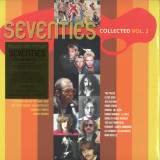
- A1: Queen - Somebody To Love
- A2: Billy Joel - Movin' Out (Anthony's Song) (Anthony's Song)
- A3: Little River Band - Help Is On Its Way
- A4: Blondie - Atomic
- A5: 10Cc - Dreadlock Holiday
- A6: The Allman Brothers Band - Ramblin' Man
- B1: Paul Mccartney & Wings - Mrs Vandebilt
- B2: Lou Reed - Vicious
- B3: Ike & Tina Turner - Workin' Together
- B4: Thin Lizzy - Dancing In The Moonlight (It's Caught Me In Its Spotlight)
- B5: Free - Wishing Well
- B6: Grace Jones - La Vie En Rose
- B7: Bachman-Turner Overdrive - You Ain't Seen Nothing Yet
- C1: The Moody Blues - Question
- C2: Rodriguez - Sugar Man
- C3: Patti Smith Group - Dancing Barefoot
- C4: Roxy Music - Dance Away
- C5: Mcguinn, Clark & Hillman - Don't You Write Her Off
- C6: Elkie Brooks - Pearl's A Singer
- C7: Rush - Closer To The Heart
- D1: Three Dog Night - Mama Told Me (Not To Come) (Not To Come)
- D2: Gerry Rafferty - Right Down The Line
- D3: Dobie Gray - Drift Away
- D4: Minnie Riperton - Les Fleurs
- D7: Leon Russell - A Song For You
- D5: The Brothers Johnson - Strawberry Letter 23
- D6: Big Star - Thirteen
Vol.1[39,87 €]
The Decades Collected compilations are part of the Collected compilation series, which is a collaboration between Universal Music and Music On Vinyl. The compilations bring together the biggest names of each decade, combined with forgotten hits and less discovered gems, giving the listener an experience of listening to their favourite tunes while uncovering new musical grounds at the same time.
As the 21st century was born, so Kreator underwent what was nothing less than a seismic creative rebirth. By this time, the iconic German band had released nine studio albums in the 1980s and '90s, which had established them as one of the most important metal names of these decades.In the first period, they had helped to shape and pioneer the thrash scene through such releases as 'Pleasure To Kill' (1986), 'Terrible Certainty' ('87) and 'Extreme Aggression' ('89). During the following decade, the band had opened up exciting horizons of experimentation on albums like 'Coma Of Souls' (1990), 'Renewal' ('92) and 'Endorama' ('99).
Now, though, it was time to move into a fresh era, as vocalist/guitarist Mille Petrozza explains.
“During the 1990s, we were definitely experimenting with what the band were doing. But (drummer) Ventor and I decided that for this album – our first of the new millennium – we wanted to go back to the sort of sound that we had at the start of Kreator. In other words, to get back to the reason why we began the band in the first place.”
There was also new guitarist introduced, as Sami Yli-Sirniö (who had made his reputation with Finnish band Waltari) took over from Tommy Vetterli. The latter (also known as Tommy T. Baron) had joined in 1996 and played on the 'Oucast' (1997) and 'Endorama' albums.
The producer for this album was Andy Sneap, who was now making a name for himself as one of the pre-eminent masters of this art in the modern metal world.“I had known and liked Andy since the days he had been the guitarist in Sabbat, as they were signed to Noise Records as Kreator were on that label. He was our first choice to work on this new project. I liked what he'd done for Testament on their album 'The Gathering' (released in 1999). He had given them a sound they'd never had before, and that really was what we were after. It was natural and organic, and also very modern. I remember phoning him at his Backstage Studios in England (Ripley in Derbyshire). And Warrel Dane, the vocalist in Nevermore, answered. Andy was producing their new album at the time ('Dead Heart In A Dead World', 2000). And when I heard this, again I was very impressed. So, I was delighted when he agreed to produce the new Kreator album.”
The album title came from something Petrozza had read. “In a book I came across a comment that John F. Kennedy said (in 1962). This was: "Those who make peaceful revolution impossible will make violent revolution inevitable”. I thought 'Violent Revolution' would make a good title for an album. So, I kept it in my mind for this record. I think 'Violent Revolution' is a title that makes a real impact.”
One interesting aspect of the track listing was that the 52 second instrumental 'The Patriarch' actually came after the opening song 'Reconquering The Throne'. Fans might have been expected that it would have opened the album. But for Petrozza, there was a logical reason for this not to happen. “We really wanted to lead off with a thrashing track, to show everyone what we were now doing musically. After 'Endorama', it was important that everyone should recognise this was a new era for Kreator.”
'Violent Revolution' is without question an excellent album. While in some ways it does hark back to the glories of the band's earlier days, nonetheless it does not sound at all nostalgic. The performances and production values are very much part of the contemporary era, and the strength of the compositions themselves are of the highest values. Rising to the challenge offered by a new generation of ambitious metal bands, Kreator proved they were far from being a spent force. Unlike so many of their peers, here was a band who still had so much creativity to offer, and were also clearly excited themselves by what they were doing. And when you hear the band themselves enjoying the entire process, then you know this is a bona fide revitalisation.
It took four years for The Lumineers to follow up their platinum-plus, multi-Grammy-nominated, self-titled debut. Cleopatra proves Schultz and Fraites - along with cellist/vocalist Neyla Pekarek- are neither taking their good fortune for granted, nor sitting back on their laurels. With the help of producer Simone Felice (The Felice Brothers, The Avett Brothers), the man Wesley calls "our shaman," the band ensconced themselves in Clubhouse, a recording studio high atop a hill in rural Rhinebeck, N.Y., not far from Woodstock. The Lumineers then set about trying to make musical sense of their three-year-plus roller coaster ride. Their skill at setting a visual story to music comes through amidst the delicate, deceptively simple acoustic soundscapes. This time, though, bassist Byron Isaac provides a firm, low-end on the apocalyptic opener "Sleep on the Floor," a ghostly tune about getting out of town before the "subways flood and the bridges break." It's a densely packed, cinematic song that echoes Bruce Springsteen's "Atlantic City" and John Steinbeck's East of Eden. Cleopatra also deals with what Wesley terms "the elephant in the room," the band's success and the way it can sometimes put a target on your back. The syncopated piano rolls in "Ophelia" , the organic sound of fingers squeaking on guitar strings in "Angela" and the Faustian bargain described in "My Eyes" consider the perils of getting what you wish for, with everyone knowing your name, and your songs. The band had total artistic freedom in writing and recording the album, so Wesley and Jer pushed the envelope. "We continue to make the kind of records we want to," says Wesley. "We believe in this music. It's a true labor of love. We just want to keep reaching more people with our songs." Given the evidence on The Lumineers' sophomore album Cleopatra, that shouldn't be a problem.
ER gladly welcomes Juan Barraco aka Bunda to our catalog. Bunda is an Uruguayan producer/live performer who’s been linked to music since a young age through a classical approach with a later interest into electronic music production.
Origen EP is his debut vinyl release delivering a solid four-tracks record: dancefloor-oriented pieces on each side’s first half and two downtempo tracks as second choices.
A1 ‘No hay salida’ is a proper dancefloor piece featuring a stomper and sticky kick drum along with a non-stop bassline hypnotic pulse. A2 ‘9º Mandamiento’ features a different sound landscape with a hint of Arabic melodies in synths and basslines programming.
On the flip side B1 ‘Stardust’ crafts a more sci-fi-bleepy grooving Techno sound while keeping an hypnotical atmosphere all along. Bunda shows a different facet in B2 with ‘Xep Nuit’, where he shows his skills and creativity in musical composition and sound picking.
- A1: Intro/Love (Feat Coco Maria)
- A2: Casa Loca (Feat Baldo Verdú)
- A3: The Cheeky One (Feat Coco Maria)
- A4: Cachetón
- A5: Sabrohito (Feat Coco Maria)
- A6: Gwely & Môr (Feat Elan Rhys)
- A7: Vamonos! (Feat Coco Maria)
- A8: El Cañon (Feat Baldo Verdú)
- A9: The Mountains Of The Mind (Feat Coco Maria)
- A10: Padre Tiempo (Feat Luzmira Zerpa)
- B1: El Konto (Feat Coco Maria)
- B2: Esa Tristeza (Feat Nina Miranda &Amp; Little Barrie)
- B3: Bom Dia! (Feat Coco Maria)
- B4: Oh Minha Querida (Feat +2`S)
- B5: A Secret Rendez-Vous (Feat Coco Maria)
- B6: Sempre Amor (Feat Elan Rhys)
- B7: For All The Side Chicos & Chicas (Feat Coco Maria)
- B8: Maybe Man (Feat Silvia Machete)
- B9: Hay Esperanza (Feat Coco Maria)
- B10: She`s In L A. (Feat. Young Gun Silver Fox)
- B11: Todo Chévere (Feat Baldo Verdú, Coco Maria & Don Leisure)
By it's very nature "Radio Chevére", the new album by Rio 18 and their host of guests cannot be categorized simply: at once both a Latin mixtape and a radio show, it's also an internationalist love letter, an offering to the goddess of Tropical Music and all that it encompasses. Ambitious, yes. Foolhardy, possibly. But sincere, committed and FUNKY? Definitely.
With the voice of guest DJ Coco Maria as our guide, "Radio Chévere" takes us on a journey through myriad musical styles and stories. Stopping off at Uruguay, Brazil, Venezuela, Colombia, Mexico, California, New York and countless other sonic destinations via Samba, Salsa, Funk, Cumbia, Joropo, Disco, Psychedelic and Electronic stylings, "Radio Chévere" is also a musical metaphor for migration - a journey from one continent, one life to another.
This album features songs in no less than four languages (Spanish, Portuguese, Welsh and English) and includes collaborations with Brazilian legends the +2's (Moreno Veloso, Kassin and Domenico Lancellotti) on the tender samba ballad, "Oh Minha Querida", transatlantic Yacht Rock gods Young Gun Silver Fox ("She's In LA"), "Sao Paulo's finest" Silvia Machete on the sweaty funk "Maybe Man" and Venezuelan Llanera and Joropo queen Luzmira Zerpa sings "Padre Tiempo", set to an incessant Afro-Venezuelan pulse. Why this torrent of eclectica now? Having recorded three albums in Welsh, predominantly inspired by Brazilian music, Rio 18 founder, Carwyn Ellis had a hard time following 2021's "Yn Rio": "We'd made a concept album with an orchestra. How do you follow that?" he says. "So I retreated to my laboratory, learned as much new music as I could, started learning Spanish too, and ended up writing tunes in a bunch of languages and styles, all of which reflected things I've learned or experienced over the last couple of years."
Since the group's inception in 2018, on the suggestion of Chrissie Hynde when he toured South America as a member of the Pretenders, Carwyn has been on a voyage of musical discovery through the styles of that continent. And in those five years he learnt a lot! But in a radical new move, Carwyn has stepped back from the mic, preferring to focus on writing and producing, handing over the vocal duties to band members Baldo Verdu (Venezuela) and Elan Rhys (Wales) plus a host of collaborators. "They can sing and express what I'm feeling so much better than I can, and both Elan and Baldo bring an authenticity and strength to our songs that surprise and elevate me. Collaborating with so many other inspiring artists on this album has helped us to grow and assimilate more styles - we're halfway through our next album already."
Rio 18 is an internationalist collective with Celtic and Latin roots and love at their core. With eye popping carnivalesque cover art by the brilliant Colombian graphic artist, Yoda, "Radio Chévere" is both timely and timeless.
- Battle Of The Dancers Introduction
- Feelin' Alright
- Let's Go For Sunshine
- Fool Of Your Nation
- Robot Pigeons' Anthem
- Super Hyper Wonder Pigeon
- I'm Just A Pigeon
- Feathers And Gold
- Leaving The Nest
- I Welcome Mindfulness
- Spread Your Love
- The Queen Of The Queens
- A Feathered Dragon
- Rebel Driving Pigeons
- Searching For A Battle
- Silver King
- Coo Coo Coo
- Big Pigeon's Club
- King Coo
- To The Sky With You
- The Birds Of The People
- A Winter In The Sancy
- Move Your Feathers, Baby
- The Star Of The Night
- Preparing For The Battle
- Bourrée Auvergnate
- All Pigeons On Deck!
- Tranquillity To Sky
- The Headbangers' Anthem
- The Feather Highway
- The Bird Gods
- Gaspard Feat The Marquis
- Coo-Coon
- Pigeonosaur
- Peaceful Sky
- P'tit Pigeon
- Pixel Vs Real Life
- Your Own Way
- Live At The Grey Note
- Claws And Beaks
- Lost In Space
- Yeah For All Pigeons
- Pigeon Zombie
- Savannah Crumbs
- No Crumbs
- Cooing In The Sun
- Hatched In The '60S
- Spy-Geon
- Migration With Flamingos
- Pigey Vs Evil Coo
- A Far West Dance
- Pigeon's Full Capacity
- Battle Of The Dancers Outro
- Little Peckie
Coke Bottle Green & Transparent Orange Vinyl. This soundtrack features 54 tracks from the game "Headbangers - Battle of the Dancers", the latest game mode in "Headbangers: Rhythm Royale". This exceptionally diverse album was entirely composed and performed by Charles Bardin and Valentin Ducloux, with additional vocals by Priscilla Cucciniello on several tracks. Get ready to ruffle your feathers to the rhythm of all these pigeon-themed songs! Composer Charles Bardin: "With Battle of the Dancers, we wanted to create the most varied soundtrack in the history of video games. This was our intention from the very beginning. The 54 tracks on this album draw their inspiration from a wide range of musical styles: rock, funk, electro, pop, folk, reggae, punk and many more. We conceived this soundtrack as a tribute to music in all its diversity, all combined with silly lyrics about our pigeon friends."
What an unbelievable record. From the wild cover to the iconic breakbeats, Roots from Ian Carr’s Nucleus is one of the dopest albums we know. This is seriously thick, funky-prog jazz-rock heaven. Originally released on Vertigo in 1973, other than a couple of versions at the time for other territories, Roots was never re-pressed since so it’s gone on to become another one of those impossible to find records.
Maybe it was a little too out there for the time, but it’s aged very, very well indeed and this Be With re-issue, re-mastered from the original analogue tapes, shows off just why this deserves to be back in press.
Genius trumpeter and visionary composer Ian Carr was one of the most respected British musicians of his era. He was a true pioneer and saw the potential in fusing the worlds of jazz with rock, just as Miles Davis and The Tony Williams Lifetime did in the US. In late 1969, following the demise of the Rendell-Carr quintet, and tiring of British jazz, Carr assembled the legendary Nucleus. Regarding music as a continuous process, Nucleus refused to “recognise rigid boundaries” and worked on delivering what they saw as a “total musical experience”. We can get behind that.
Under bandleader Carr, Nucleus existed as a fluid line-up of inventive, skilled musicians. This constant evolution and revolution was all part of the continuous musical exploration and discovery that took jazz to new levels.
Working together with producer Fritz Fryer and engineer Roger Wake, the seven compositions by Carr, Brian Smith and Dave MacRae that make up Roots flirt with perfection, and Nucleus at that time made up of the cream of 1970s UK jazz with Brian Smith on tenor saxophones and flutes, Dave MacRae on piano and electric piano, Jocelyn Pitchen on guitar, Roger Sutton on bass, both Clive Thacker and Aureo De Souza on drums and percussion, Joy Yates delivering the vocals and of course Carr on trumpet.
The spellbinding title track immediately renders the album indispensable. Riding the illest of loping breakbeats, “Roots” is low-slung, doped-out heist-funk. An absolute monster. If it sounds familiar then that’s likely down to it being sampled by Madlib for Lootpack and Quasimoto’s “Loop Digga”, as well as by a whole host of beat manipulators. “Roots” conjures prime instrumental hip-hop / beat music, only 20 years ahead of its time. Truly, these are the roots. Through sinuous bass, twinkling keys and a hypnotic guitar riff, a smoky brass motif weaves its way into a gloriously deep haze around Carr’s solos. “Roots” is over 9 minutes long, but there’s not a single wasted second, not surprising given that this is a condensed version of an originally 40 minute long commissioned composition.
The soothing vocal fusion delight of “Images” follows. Meticulously constructed, with gorgeous flute work from Brian Smith, with Joy Yates’ silky vocals and Dave MacRae’s Rhodes never sounding better. The cool, driving “Caliban” closes out the first side. Originally the third movement in a four part commission to celebrate Shakespeare’s birthday it stands up on its own, all robust rhythms and blended brass. Keyboard colour and Carr’s trumpet are splashed across the funk drums and basslines (and there’s even some bamboo flute). This really is fusion: the elements of jazz and rock coming together in beautifully synthesis.
Side two opens in riotous fashion with the short, thrilling samba of “Wapatiti”. Next up, “Capricorn” forms a smoothed-out, jazzy constellation. Mellow and dreamy, its twinkling percussion and languid horns slowly build the vibe before head-nod drums and a killer bassline enter the fray. With a distinct heaviness that Black Sabbath would’ve envied, “Odokamona” is a venomous slice of riff-soaked jazz metal (yes, you read that right), elevated by Carr’s wah-wah horns.
The album closes with MacRae’s exceptionally cosmic “Southern Roots and Celebration”. Very much in conversation with Weather Report, it opens as a languorous, spiritual jazz of chiming keys and serene guitar that turns slowly, gorgeously into a mid-paced, brass-laced banger. It’s another sure-fire party starter and the sound of the band having a righteous blast, building an ecstatic chaos that ends with Yates screaming.
And of course we need to talk about Keith Davis’ cover for Roots. Perhaps the coolest record cover of all time? Certainly one of the most bonkers. Just your run-of-the-mill high-gloss, acid-tinged airbrush dystopian/utopian living-room party scene. Consider this your chemical flashback trigger warning.
Front-and-centre the hip-to-death green robot holds court with their giant ball of yellow barbwire wool, hooked up to… something(?) being teased out from under the stairs (probably best not to ask). A thoroughly zoned-out, long-legged Pop Art party-goer lounges half-plugged in to the painting behind her as a pair of legs flail into shot from the the top of the stairs opposite. We won’t even begin to guess what the chap’s up to in the middle, but the view out of the windows is rather nice, and someone’s already got the hoover out ready to tidy up. All of the Nucleus sleeves are something special, but this particular one? Crikey.
This Be With edition of Roots has been re-mastered from the original Vertigo master tapes, Simon Francis’ mastering working together with Pete Norman’s cut to weave their usual magic with these wonderful recordings. The crazy cover has been restored at Be With HQ as the finishing touch to this long overdue re-issue.
Aesthetically, Ed Schrader’s Music Beat hates to tread water. At the same time, the Baltimore-based two-piece of vocalist Ed Schrader and bassist Devlin Rice won’t force their songs to fit a preconceived style. “The next album’s always gotta be different from the last one. We’re different people from record to record. So, writing authentically to ourselves will always bring our work to a place that we haven’t been to yet,” Rice said. Schrader added, “We’re terrified of turning into AC/DC. We never want to be married to one scene or time or sound. We want to be the Boba Fett of bands! Constantly altering the way in which we make records has been pretty key in that process.”
For Orchestra Hits, the band’s latest, that alteration was welcoming longtime musical comrade Dylan Going into the fold as a co-writer and co-producer. A songwriter in his own right, a guitar sideman for ESMB on their last two tours, and a collaborator with Rice in the noise riffage band Mandate, Going had both a unique vision and an intimate familiarity with the ESMB vibe.
“Dylan came to every show we’ve ever played in New York—no matter how weird it was,” Schrader said. “He’d be standing there ready to move an amp or feed us barbecued cactus after the gig and toss on some Golden Girls so we could decompress. It felt like family as soon as we began working, but I honestly had no idea how damn good he was at tossing out these hooks.”
According to Schrader, the songs “just poured out of us” over the course of a highly caffeinated three-day weekend in a tiny room in Devlin’s house while his cat, Sandy Goose, screamed continually. “It was like three kids hiding from the world to get into some lovely mischief,” they said. The lack of external pressure in the process gives Orchestra Hits an almost paradoxical vibe. For all of the album’s layers, that mix live and sequenced instruments, it never loses the raw energy of a small handful of friends in the same room plugging in, cranking up, and playing until they pass out.
Lyrically, the album finds Schrader, now 45, meditating on experiences in their youth to make sense of the present moment. “We are not into the garden,” Schrader wails on the relentless “Roman Candle,” a song about the sad debacle of Woodstock ’99, and a direct response to Joni Mitchell’s “Woodstock,” a utopian ode to hippie idealism. A 19-year-old Schrader, having snuck into Woodstock ’99 through a hole in the fence, was there the night members of the crowd used candles intended for a vigil for victims of the Columbine High School massacre to set fires all over the grounds. Even before the fires, Schrader remembered feeling disconnected from the music, the nostalgic cash grab, and the meatheads in the crowd. After watching a press tower collapse, they boarded a random shuttle bus and were dropped off near a Denny’s. “It was a far cry from the Garden of Eden,” Schrader said. “That experience defined what I didn’t want to be a part of, and yet America is more like Woodstock ’99 than ever.”
With percolating synthesizer arpeggios, and climbing bass grooves, “IDKS” is the album’s dance-floor slapper. “’IDKS’ is a funny one,” Schrader said. “We already had a pretty satisfying suite of songs when Dylan was packing up to head back to New York, but he missed the train because of a freak snowstorm. Realizing he’d be stuck in town another day, he says to me, ‘Here’s this other weird thing I have.’ It was ‘IDKS.’ The hooks were so good I felt like Homer Simpson at a free donut convention. I just dove right in, and we cranked that baby out in like 20 minutes.”
Lyrically, “IDKS” is a letter from the true self to public-facing self. “It’s an angry song,” Schrader said. “Because the public-facing self is always looking for an easy escape, but it forces the true self into a cage. I honestly thought my lyrics were corny and was about to change them, but Dylan was digging it just the way it was. So that’s what you hear.”
With the soaring “Daylight Commander,” the band went against all of their musty-basement-bred instincts. “I went full High School Musical with the vocals,” Schrader said. “At first it felt almost embarrassing, but I remember reading somewhere that Bowie recommended always floating a little bit above your comfort zone, and that’s what we did here.” The song is part exercise in absurdity and part pop Trojan horse. “If ever we had a ‘Shiny Happy People’ moment, I guess this is it,” Schrader said.
Île Flottante is Mr. Beatnick´s 5th album, following 2023’s Joy In Variation (including the notorious cover of Love on a Real Train) and his well-received off-beat collaboration with London-based avant-garde agitator Richard Greenan – Coasty – this is his first contribution to the International Feel trademark. Probably best known for some big deep house revivalist tunes circa 2013 on the now dormant Don’t Be Afraid record label, Beatnick now converts that aural quality and dimensionality into the Balearic system.
Île Flottante takes its name from the tastiest French pudding of Mr. Beatnick’s childhood holidays. The name, also a jeux de mots - floating island - hinting at the album’s inspirations and sense of identity, as a danceable soundtrack to a fictional island. Explored with high intensity and over a yearlong process, the sounds of the well-worn, but never failing Balearic universes were a mind expanding influence. Think of genre staples like Software, Manuel Goettsching, Mark Barrott, Len Leise, Don Carlos, Gaussian Curve, Joan Bibiloni or Yasuaki Shimuzu.
„I spent a year listening to a lot of synthesized island music, and marveling at the many twinkling wonders of the Balearic musical universe. Struck by a sense of belonging that had often eluded me on my musical journey thus far, as the weirdo at the back of the club who had orbited many scenes for 20 years, but never felt like I fitted in, I found music that made me feel like I had come home. The songs that came out of this process are presented in the order that they were written - an open book of ocean hymns, honest and spoken from the heart.“
Île Flottante tries its very hardest to avoid being any one thing in particular. At one point, it is a gentle beach walk accompanied by polyrhythmic drum plod and flourishes of Guzheng. At another, the infamous James Yancey septuplet swing is repurposed against a marimba melody that wouldn’t be out of place in one of Link’s forest adventures.
Elsewhere, there are the bellows of distant whales, touches of Italian dream house and a splash of vintage madchester, all working to create a space that feels both familiar and loaded with well worn tropes, but with its own quirky sense of personality, facets which are often attributed to Mr. Beatnick’s holistic b-boy approach. This is his understanding of a Balearic (b-boy) stance. Just with a float instead of a freeze.
"“Few artists combine the thrills of danceable pop with a higher purpose, but that's exactly what Israeli singer Noga Erez does”
– NPR Music
“One of Israel’s few breakthrough indie stars… and one of the country’s most hyped artists”
– The Guardian
July 17, 2024 (New York, NY): Today, alt-pop singer, rapper & multi-hyphenate Noga Erez debuts her brand new single and accompanying music video entitled “AYAYAY” featuring sensational Argentinian rapper Dillom, out via Neon Gold/Atlantic Records. The track marks the latest single off Erez’s highly-anticipated, third studio album THE VANDALIST out Friday, September 20.
“AYAYAY” sees Erez and partner ROUSSO dabble in the world of reggaeton, layering her dynamic and wide-ranging vocals with lyrically packed bars, over a frenetic house beat. The sexy, tropical track emblemizes the romantic appeal of the “papí azucar” (“sugar daddy”) along with extravagant living from both the male (provided by Dillom through a brilliantly crafted verse) and female perspectives, the desire to maintain it, and the self-imposed expectation to chase it when a relationship doesn’t live up to standards. Directed by Erez & ROUSSO, the music video for the track, filmed almost entirely through a kaleidoscope lens DIY-style, is brimming with personality as Erez lives her best life.
THE VANDALIST is a satirical, yet confessional look at real and online life, the project arrives brimful of monster tunes, intricate production, wit, charm and attitude, representing a significant leap from her previous work, expanding her emotional range from sultry to savage, and demonstrating even greater ambition with quickfire lyrics, broadened vocal styles, and the elaborate backing crafted with partner and producer ORI ROUSSO. THE VANDALIST primes Noga for yet another evolution in her musical journey, which is set to resonate strongly with listeners everywhere.
Recently released singles include “PC People (feat. ROUSSO),” along with title track “Vandalist,” and “Come Back Home,” all of which are joined by official “Against The Machine (Live)” performance videos, streaming now at YouTube
"