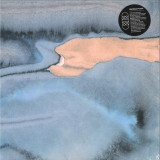
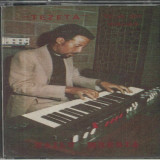
BARBARA JEAN ACKLIN was working as a receptionist at Brunswick Records in 1966 when she co-wrote “Whispers (Getting Louder)” which became one of Jackie Wilson’s biggest hits and secured her a recording contract with the label. In 1968 she hit with “Love Makes A Woman” peaking at #15 on the Billboard pop chart. “Am I The Same Girl” followed in ’69 barely breaking the Hot 100. Dusty Springfield covered the song later that year giving the singer her final chart hit, peaking at #43 in the UK. Salena Jones cut a credible jazzy interpretation in 1970 and the British pop group Swing Out Sister scored a #21 UK hit in 1992 after first hearing the song in a Manchester Northern Soul club.
Brunswick producer Carl Davis was inspired to remove Acklin’s vocal and replace it with a piano solo shortly after the original release. He called the instrumental “Soulf Strut” and attributed it to Young-Holt Unlimited providing them with a #3 hit in the USA.
Buscar:bare
Charlie Parr’s album, ‘Last of the Better Days Ahead’, is a collection of
powerful new songs about how one looks back on a life lived, as well as
forward on what’s still to come.
Its spare production foregrounds Parr’s poetic lyricism, his expressive, gritty
voice ringing clear over deft acoustic guitar playing that references folk and
blues motifs in Parr’s own exploratory, idiosyncratic style.
When it comes to what it all means, Parr says it best: “Last of the Better Days
Ahead is a way for me to refer to the times I’m living in. I’m getting on in years,
experiencing a shift in perspective that was once described by my mom as ‘a
time when we turn from gazing into the future to gazing back at the past, as
if we’re adrift in the current, slowly turning around.’ Some songs came from
meditations on the fact that the portion of our brain devoted to memory is also
the portion responsible for imagination, and what that entails for the collected
experiences that we refer to as our lives.
Other songs are cultivated primarily from the imagination, but also contain
memories of what may be a real landscape, or at least one inspired by vivid dreaming. The album represents one full rotation of the boat in which we
are adrift looking ahead for a last look at the better days to come, then being
turned around to see the leading edge of the past as it fades into the foggy
dreamscape of our real and imagined histories.”
“Like John Hartford jamming with St Francis of Assisi, Parr strikes a fine balance between immense generosity toward humanity and barely contained
outrage towards humanity’s tendency towards coldness and conformity.” 8/10
Uncut
“Hypnotic stories of low-key endurance and universal questions, like Raymond
Carver’s fiction set to a louch, crystal-clear soundtrack” **** Mojo
- A1: Levitate
- A2: Zoom Zoom
- A3: The Bride Will Return
- A4: Space Dance
- A5: Barefoot On Mars
- B1: Rhythm In The House
- B2: Summer Of Love
- B3: Monkeys
- B4: Kill The Rage
- B5: Take Me Home
For over a year one of the most watched ‘YouTubers’ and internet sensations has been Toyah Willcox. Toyah’s ‘Sunday Lunch’ performances with Robert Fripp and weekend broadcasts have been seen by 38 million. Simultaneous to creating consistently unique online videos, Toyah made the album Posh Pop with her long-term songwriting partner Simon Darlow. Posh Pop is a strong collection of infectious and affirmative pop songs that are as joyous as they are
reflective, from the cosmic groove of “Space Dance”, to the sun kissed anthem of unity “Summer Of Love”. The album is crafted with evocative storytelling and musicianship from Toyah, Simon Darlow
(guitars, keyboards, cello), Bobby Willcox (guitar) and Jeremy Stacey (drums). Posh Pop opens with the energy-burst of “Levitate” and leads the listener on a journey that climaxes in the soaring, intergalactic-tinged “Take Me Home”. The album was inspired by the world we find ourselves in today and touches on the ever-present desire to be ‘famous for fifteen minutes’ a la Andy Warhol, escaping the everyday, but above all staying connected to humankind beyond computer screens and geography. Produced by Simon Darlow, Posh Pop is Toyah’s first brand new studio solo album since 2008 and twenty-fifth album since 1979.
LA-based rockers The Bronx return for their sixth studio album 'Bronx VI' which comes out worldwide on Cooking Vinyl August 27th. Bronx VI builds on the legacy The Bronx has established in its near two-decade existence, but which definitely proves the door to what’s next has not just been kicked down, but chopped up and burned to a cinder. Yes, the first four tracks – “White Shadow”, “Superbloom”, “Watering The Well” and “Curb Feelers” – bristles with the wild and untamed energy that’s defined the band from the off, but then – all of a sudden, as “Peace Pipe” kicks in – the pace and mood shifts to something a little less aggressive. Elsewhere, “Mexican Summer” and its (relatively) chilled-out mariachi vibes serve as an homage to the band’s alter-ego, Mariachi El Bronx (and was written while that incarnation of the band was on tour), while fatalistic closer “Participation Trophy” masks the Caughthran’s existential dread behind searing riffs and a catchy, defiant and exuberant melody. “The feelings I got when writing for this sixth record is the same type of feeling I got writing “Heart Attack American”. It all comes from the same place and it’s all still 100% genuine and real. Believe me – I’m still feeling the raw emotion that I felt when this band first started. That’s just who I am, that’s who we are as people. You can’t fake stuff like that when it comes to music or art. You have to stay connected. You’ve just got to be real” - Matt Caughthran, vocalist. Bronx VI was produced by Joe Baressi (Melvins, Tool, Bad Religion).
Alex Nemec (Mirabilis Label Boss / Tronic / Bush Records) & Nik Feral (Dynamic Reflection / Stahlplatten) gave us the labels best selling release of 2020 and so we follow up with a all star remix EP featuring Barem (Minus / Sci+Tec), Simon Baker (Get Physical / Cocoon / Rekids), Iain Taylor (Dirtybird / Balance / Rejekt Music Boss) alongside a previously unreleased rework of original track Ultra from last year’s release.
Early DJ support from Apollonia, Marco Carola, Davide Squillace, Butch, Cristian Varela, Tim Green, Michel De Hey, Tomasz Guiddo, Anderson Noise, Dave Angel with radio plays from Kiss FM, Ibiza Radio 1, Ibiza Global Radio, Ibiza Sonica Radio, Warm FM, Eldarado FM, Dance TV, Dancetrippin TV, Pioneer DJ Radio, Datatransmission Radio and Digitally Imported Radio Belgium.
With or without a drink in hand, moderate temperature, no need to jump into the wet. One night AT the pool, not inside. Palm trees or succulents - not far from here, the vegetation has adapted to the situation. A soft rustling: Possibly crickets, probably also the wind. No traffic and certainly no civilization, which right now would probably only disturb with its long agenda of responsibilities. HYPNOSIS AND MUD - Healing hypnosis, healing mud. The half-frustrating, half-liberating feeling of saturated soil between the toes. A state of inner peace. Instead of a voice, you hear primitivist percussive explorations. A groping and grasping of the bare feet, with delicate toes. Abstraction is followed by the concrete: a walk through the ORCHIDEENGARTEN RUSE, an orchid garden close to the Bulgarian town and not far from the Romanian border. Digitally, but not unreal. Perhaps even better than reality - anyone can do that. The (unofficial) soundtrack to this would not only make the Canadian composer Mort Garson happy. A lady‘s shoe kindly looks at us. If you turn around, you arrive on the other side: A LINE HAS TWO SIDES. Conundrum-like images, dissolved one-dimensionality. Candid narrative ambiance. A clarinet calls to duty. Civilization and traffic after all? SUNBEAMS ON YOUR CAR. Urgency, a clamor of voices - both in their best form. Yet again – the clarinet, the blunt reality: ONE NIGHT AT THE POOL. We are still standing here, we probably never left. A three-part journey – with delicate transitions. Three destinations: Now forever united. Dissonant and yet pensive. In the far distance the advertisement for the collected works of Meredith Monk. Hair erect, the little skin nerves contract, goosebumps - at last!
’Angelo lost his shit over it. Aaliyah’s 3rd favourite track of all time is on it. David Bowie rocked up with it to a TV interview, declaring it “the most exciting sound of contemporary soul music”.
In 1996, Lewis Taylor released his self-titled masterpiece. A true modern classic, it’s an album that was years ahead of its time. Forget 25 years ago, it could easily have been made in 2021. An effortless blend of neo-soul, sophisticated pop, smart grooves and laid-back white funk, it enjoyed rapturous reviews from critics and music legends alike. But the album never managed to make an impact and given what was likely a token vinyl release at the time, the original records have long since been near-impossible to find. Lewis Taylor’s Lewis Taylor remains a holy relic for some and criminally unknown to most.
Lewis Taylor’s impeccable influences created a dazzling sonic palette: the LP as a whole suggests the visionary brilliance of Prince; the vocal stylings evoke the yearning power of Marvin Gaye; the effortless guitar playing shares the virtuosity of Jimi Hendrix; the haunting tones conjure Tricky; the innovative production and engineering invite comparisons to studio mavericks like Todd Rundgren and Brian Eno; the multi-layered, complex harmonies flash on Pet Sounds-era Brian Wilson; the dark, drama is reminiscent of both Scott Walker and Stevie Wonder; the complex arrangements create textures and moods with the feel of Shuggie Otis on Inspiration Information; the bold experimentation is akin to progressive artists like Faust and Tangerine Dream; the atmosphere is in conversation with Jeff Buckley’s Grace… and we could go on. That might all sound like marketing hyperbole, but not as far as Be With is concerned. It is a genuine wonder how an album this good could’ve passed so many people by.
But despite all the reference points, the similarities are really only skin-deep because the album sounds truly original. It occupies its own distinct, strange universe that feels dark and brooding one moment, bright and joyous the next. Ultimately, Taylor sounds like Taylor.
Although you wouldn’t know it from the credits, the album wasn’t the work of Lewis alone. Sabina Smyth gets an executive producer credit on the original sleeve, but in fact she worked with Lewis on the production and arrangements, did a lot of the backing vocals and she co-wrote Track, Song, Lucky and Damn with Lewis.
Lewis clarified all this in a Soul Jones interview with Dan Dodds in 2016. He explains how not giving Sabina the credit she was due at the time was an unfortunate consequence of where his head was at and he’s now trying to set the record straight.
Together they created an exquisite and sensually-charged record, with a freshness to the writing that makes the songs catchy, melodic-yet-deep and sometimes even funky. The music is predominantly guitar-led and a mixture of organs and synths, live drum loops and electronic percussion make for a sort of modern soul backing orchestra.
On the surface the album is gorgeously laidback, but beneath the lush, sometimes slick, production there’s a murkiness in the seriously gritty funk/hip-hop instrumentation. Lewis Taylor can be a claustrophobic listen. Even its one-word, often seemingly throw-away track titles add to the sense of unease. In its most positive moments, there’s still a sense that things aren’t quite right. The magic comes from this compelling tension.
The languid, strutting “Lucky” is a sensational opening statement. Sinuous electric guitar winds around the shaking percussion with a killer bass line rattling your bones, and Lewis’s voice is sublime. Its six-and-a-half unhurried minutes manage to distill the work of Marvin, Al Green and Bobby Womack because yes, it’s *that* good. Up next is the tough, dusty drum and jazzy, unsettling psych-guitar workout of “Bittersweet”. Aaliyah described it the “perfect song”, which says it all. By turns loping and soaring, tightly coiled and blasting free, 25 years on its discordant, swaggering majesty still sounds like future R&B.
The swinging, blue-eyed funk of “Whoever” oozes sophisticated sunshine soul for hazy days before “Track” sweeps in. The music tries to lift us up, beyond the reach of the vocals trying to drag us back down as Taylor sings “my mood is black as the darkest cloud”. The spare, dubby electro-soul of “Song” closes out the first half of the album with barely contained dread as it creeps towards the lush, synth-heavy coda.
The smouldering “Betterlove” eases us into the second half, coming on like a languorous response to the call of “Brown Sugar”, before sliding into the shuffling, softly-rocking “How”. Somehow the remarkable “Right” manages to both warm things up and smooth things out even more. Taut yet luxurious, it’s definitely not wrong.
“Damn” was to have been the album’s title track and you might also be able to hear its influence on D’Angelo’s Voodoo, maybe most obviously in the chaotic closing moments of “Untitled (How Does It Feel)”. Building to a screeching wall of noise that suddenly cuts dead, “Damn” sounds like the natural end to the album, with the celestial a cappella “Spirit” serving as a heavenly reprise.
When it came to the sleeve, art director Cally Callomon heard Taylor’s music as “sideways off-camera glances at a plethora of influences he had” and wanted to interpret that visually: “I went off into night-time London to see if I could find his song titles in off-beam low-fidelity photographs. I even found a shop called Lewis Taylor”. With a slide for each of the album’s ten tracks, nine of them are on the inner sleeve and the slide for “Damn” makes the front cover. It should’ve been the album’s title, but concerns over distribution in the US scuppered this.
One of UK soul’s most fascinating artists, Andrew Lewis Taylor is an enigmatic figure and a hugely under-appreciated talent. A prodigious multi-instrumentalist who got his start touring with heavy blues/psych outfit the Edgar Broughton Band, he released two albums of psychedelic-rock as Sheriff Jack before Island signed him on the strength of a demo alone. But Taylor was destined to be one of those artists unable (or unwilling) to be pigeonholed and despite the best efforts of Island’s publicity department the music never sold in the quantities it needed to or deserved to. Island eventually let him go in the early 2000s and in June 2006, Lewis Taylor retired from music.
Typical for the mid-90s, this CD-length album was squeezed onto a single LP for its original vinyl release. Simon Francis’s fresh vinyl mastering now spreads out the ten tracks over a double LP so nothing is compromised. And as usual, the records have been cut by Pete Norman and pressed at Record Industry. The original artwork has been restored at Be With HQ and subtly re-worked to work as a double.
This sprawling psychedelic soul opus really is a forgotten should-be-classic. We know that there are those of you who know, and as for the rest of you, we’re a bit jealous that you’re getting to hear Lewis Taylor for the first time.
MEDWAY GARAGE UPSTARTS! 2nd LP! The Shadracks are a three-piece rock n’ roll group hailing from Medway, Kent. With timeless and expert precision the Shadracks play from 37.3 years in the past 33.7 years into the future. The actual origins of the group date back even further with their cultural appropriation of Babylonian 'Rhythm and Punk. A mere 3 years ago Huddie Shadrack and Elisa Abednego had a brief encounter in deserted parkland. Discovering sheared an interest in vacant park benches, herbaceous borders and beat music it became paramount that they form a group - and quickly. After the release of there self titled debut LP, a subsequent live BBC 6Music session for Marc Riley and a fast selling EP, Elle Meshack retired from The Shadracks to peruse a career as a Poly Styrene impersonator aboard a Tahitian cruise liner: SS Honolulu Baby. Fortunately for the bass bereft Shadracks an advert placed in the window of a local stationers was answered by a certain Rhys ‘King Nebuchadnezzar’ Webb. A meeting issued and after proclaiming "Oh merciful Marduck, may the house that I have built endure forever” Their followed a two-hour induction ceremony (in which to learn all the new tracks for their forthcoming long player From Human Like Forms and Webb, for it was he, was sworn into The Shadracks fraternity. From Human Like Forms sees The Shadracks achieving giddy new heights in their song writing and performing abilities - pushing their ancient sound 3.7 years ahead of the current lunar time module. Councillor Duxbury. 2021
There has always been a Reggae inuence in the music of El Michels Affair. From their cover of "Hung Up On My Baby" done in a Reggae style, to the general sound and approach that permeates Leon's production style. While recording Bailey's 2020 Ekundayo album, they did some straight forward reggae tunes inspired by different eras alongside some modern R&B tracks that would t more comfortably next to Frank Ocean than Jacob Miller. It is this same notion that old and new can live so comfortably together that birthed the idea of Ekundayo Inversions. Traditional dub came out of reggae in the late 60s and early 70s when pioneers like King Tubby and Lee Perry started taking the multi track recordings of songs and running them back through the board adding effects and additional instrumentation. These recordings are called "dubs" or "versions" and are typically instrumentals with ourishes of vocals from the original tracks. El Michels decided to use the blueprints left behind and make something using the inuences of today. He wound up straying so far from the traditional format that it didn't seem right to use the word `Dub', hence Ekundayo Inversions. All the songs are tied together by WhatsApp messages between Leon and Liam that perfectly narrate the story of this record and their working relationship. One of the highlights on Ekundayo Inversions is a guest appearance from the legendary Lee "Scratch" Perry on the "Ugly Truth" version. L$P switches between singing and talking, proclaiming his powers one minute and playing with the track's title the next. On "Awkward take. 2" Leon takes one of the most experimental songs from Ekundayo and actually straightens it out. A track that once seemed to be oating in space has now been anchored by the addition of drums and bass. "Faded", a version of "Paper Tiger", is given the full EMA treatment with the addition of emotive horns over an uncomfortably sparse rhythm track peppered with Liam's voice drenched in delay and echo. "Champions" features a verse from Black Thought of The Roots and halfway through, El Michels sends the rhythm section 50 years back. At the end of the day, Ekundayo Inversions is a testament to how strong the original songs are. Whether they're in a R&B style, reggae style, stripped down to their bare bones, or loaded with production, the songs will move you.
After the exploration of snowy mountains of Alpestres, released on Hands in the Dark in 2018, French composer Matthias Puech ventures into new territories, sketching a cartography of the invisible where the journey, in chiaroscuro, is announced as a rite of passage. A Geography of Absence, as introspective as unpredictable, immerses the listener into a unique sensory whirlwind where organic matter becomes almost palpable. A researcher in theoretical computer science and an engineer at GRM, Matthias Puech constructs a dialog between synthetic music and field recording, capturing sounds that surround him and creating his own sonic language with the help of synthesizers he designs and develops; notably the Oscillator Ensemble and the Tapographic Delay, made by the American company 4ms.
Composed during a moment marked by ordeal and mourning, A Geography of Absence retraces an inner journey where the physicality of sound leads the listener into an initiatory tunnel filled with apparitions, ghosts, visions. With sound oscillations as a navigational map, we progress, step by step, through the meanders of an unknown world, dazzled by the prospect of a new synthetic horizon, an electronic biotope teeming with life and incarnations. Playing with time, space and matter in an approach similar to that of musique concrète, Matthias Puech combines ambient and noise, floating sounds and electroacoustic experimentations, thus shaking up our listening perspective, which finds itself walking through a parallel universe, strata after strata, sequence after sequence.
The trip begins with “Hollow”, as if on board a night train travelling at full speed through ghost towns. Or is it a spaceship? Removed from their original habitat, sounds – picked up during walks or moduled by synths – are free to be interpreted differently by everyone, according to the memories that shape us. Granular and metallic, this first piece takes us to an elsewhere in orbit. "Work Song" is built around the pulsation of the void, of space, where strange creatures and liquid emanations abound. We become fetus, cocoon coiled in the placenta, heart beating to the rhythm of the gooey choreography of the human body. "Chrysalis" awakens the racket that lies dormant in us, when the skin changes, when the transition takes place. One seems to recognize certain sounds stemming from nature but they could also be mirages, imitating reality to render the barely perceptible engulfing. “Tunnel Vision” brings out a herd of haunted bells, slowly swelling in a pastoral maelstrom, ending in a deafening buzz. Further on, the chirping of an animatronic bird mixes with the hooting of an owl: "A Faint Beacon" invokes a nocturnal vigil that mixes the crackling of a fire and icy gusts of wind blowing everything away. Like an epic, sucking the listener into the breach of a black hole in the center of the Milky Way, it's up to "Homeostasis" to conclude in the high spheres and contemplative vapors, where the balance of dawn announces a rebirth.
A Geography of Absence is a meticulous and sensitive piece that constructs a delicate symphony of extremes, between introspection and desire for the unknown. Accompanied by the ink work of the artist Léa Neuville, whose folds of prints sketch this imaginary atlas, Matthias Puech becomes a narrator of mental adventures. And succeeds once again in transcending reality to dig a path to the unspeakable.
Andre Navarra,Josef Suk,Czech Philharmonic Orchestra
BRAHMS: CONCERTO FOR VIOLIN, CELLO AND ORCHESTRA
This LP is extracted from the CD “Cello” box set which received rave
reviews. Awarded the first prize at the Conservatoire de Paris by
unanimous decision of the jury when he was only 13, Andre Navarra was
barely 20 years old when his soloist career began, taking him across Europe
as he performed with the finest orchestras to play all the concertos
of the repertoire.
Navarra took first prize at the Vienna International Competition in 1937. But
the war put a temporary obstacle in the way of his ascension. Unlike some of
his fellow musicians, he refused to collaborate with the occupiers and he took
refuge behind his music stand, playing as an ordinary member of the Paris Opera orchestra. From 1945 onwards, he could again be heard in the capitals of
Europe, conducted by the likes of Munch, Paray and Barbirolli, and later Mehta,
Ristenpart and Ancerl.
A parallel career opened up for him: teaching. He taught in Paris, Sienna, SaintJean-de-Luz, Nice, London, Vienna, Sion and Detmold. His mastery of the bow
was unique: he borrowed the technique used by violinists. It revolutionized
the method of cello playing, bringing roundedness, sensitivity and strength. He
pursued his two callings with equal intensity, one career enriching the other, as
this collection shows so clearly.
He approached every repertory with the same passion: contemporaries such
as Jolivet and Schmitt; classics such as Bach, Boccherini and Haydn; romantics
such as Dvorak, Brahms, Schumann, Bruch and Bloch; and early 20th century
composers such as Prokofiev, Kodaly and Martin.
Navarra died under the Tuscan sun that was so dear to him, his legacy a school
of cello playing that is unique in the world and whose technique and phrasing can still be recognized in the playing of those who use it, from Heinrich
Schiff, Frederic Lodeon, Philippe Muller, Roland Pidoux, Marcel Bardon, Rene
Benedetti, Anne Gastinel, Valentin Erben, Dominique de Williencourt, Marcio
Carneiro, Yvan Chiffoleau and Christophe Coin to Gautier Capu on, Yan Levionnois, Xavier Phillips, Taeguk Mun, Victor Julien-Laferriere and Bruno Philippe.
His perpetual, intense energy notwithstanding, Navarra leaves us with the image of a warm-hearted, unassuming man, who could, after a day alone with his
cello, invite his students on the spur of the moment to fun-filled spaghetti parties. Pablo Casals, who admired Navarra’s free spirit, said to him at a competition in Mexico City, “Ah, there you are, Andre. The man who never comes when
I invite him. I thought you were afraid of me. But no, the cello is your only love.”
The third release from Fred Laird was recorded during the period June 2020 and January 2021 on 24trk home studio recording. It is also the first album recorded purely as a solo artist with the occasional guest and draws more from a roots style music (trad it isn’t) than previous more psychedelic releases.
‘Inspiration for the album came from listening to the self-recorded primal music of Hasil Adkins and the first solo Link Wray album for Polydor. The idea of these guys just doing what they wanted back of beyond seemed more akin to me sat in a box room during lockdown feeding off a diet of Billy Chong Kung Fu horror flicks, David Lynch, Noir crime movies, Jean Cocteau and the works of Yukio Mishima.
Musically the sound draws from early Bad Seeds or Crime and the City Solution, Gallon Drunk, Bohren and Der Club of Gore, The Cramps, Hasil Adkins and various other trash inspired twilight creatures. I also wanted to try and create that spooky organ sound that dominates the midnight movie classic ‘Carnival Of Souls’, so there’s quite a lot of organ and piano going on. I also got my hands on a baritone guitar to give the songs more of a deep growly twang!
Vocals are provided by Daisy Atkinson for the Jean Cocteau dedication ‘Orphee’ which is the nearest thing to a pop song on the album and the echoey almost Sister Lover’s sound of the title track. I got sick of my own shit voice and I just thought a female voice would give it a more fragile ethereal vibe.
Mike Blatchford provides formidable saxophone to the album’s last three tracks which were recorded on his mobile phone 300 miles away and synched into the music. The big blasted swing blues of ‘The Big Duvall’ is a dedication to Andy Duvall of Carlton Melton – a big guy who needed a big song. Who knows how big the song could have been in a proper studio. I could have dedicated it to John Wayne but Wayne couldn’t chop down trees with his bare hands like Andy can….’
In celebration of the 20th Anniversary of the release of
legendary singer / guitarist Thalia Zedek’s ‘Been Here
and Gone’, Thrill Jockey are proud to present the
album on vinyl for the very first time, remastered by
Sarah Register.
Thalia Zedek has been one of the most enduring rock
musicians of the past four decades. From her
auspicious beginnings in bands Uzi, Live Skull and
Dangerous Birds to her wider recognition in Come,
Zedek established herself as a singular voice accruing
accolades from critics and contemporaries including J.
Mascis, Kurt Cobain and Bob Mould.
‘Been Here and Gone’, her debut solo release,
originally released on Matador in 2001 on CD, marked
a turning point in Zedek’s music. As Come were
coming to a close, Zedek began exploring writing and
performing as a solo artist, eventually backed by violist
David Curry, pianist Mel Lederman (both went on to
perform with Zedek for two decades), as well as former
Come bandmates Chris Brokaw and Daniel Coughlin.
The idiosyncrasies of her voice were laid bare for the
first time, revealing an even greater depth to her
unique songwriting. The more spacious and rich
arrangements sprawl and whisper with powerful
vulnerability.
Deluxe packaging featuring photos of the recording
session on the inner sleeve. Includes digital download
card.
Multi-instrumentalist/vocalist Dan Friel is unrivaled in his capacity to inject blistering noise and energy into ferocious pop songs. A champion and mainstay of the NYC underground, Friel the has played alongside the likes of Lightning Bolt and Black Dice as well collaborated with acclaimed string quartet ETHEL. Upper Wilds channels Friel's unbreakably ebullient spirit into mountainous rock music dripping with molten fuzz. The trio's exploration of the interstellar expands in parallel to their increasing levels of bombast and precision. Venus synthesizes the experimentation of debut Guitar Module 2017 and the thunder of 2018's Mars into ten lean chunks of cosmic rock laden with scorching hooks. On Venus, Upper Wilds rocket lovestruck anthems centered around the planet named for the Roman goddess of love at full tilt from the moment "Love Song #1" makes liftoff. The album's incendiary opening trilogy crashes with a relentless vigor and addictive melodies. The rhythm section of bassist Jason Binnick (who also mixed the album) and drummer Jeff Ottenbacher tear through off-kilter riffs that pound with meteoric impact. Friel's guitar sputters and froths beneath his voice before soaring into frenetic leads that pack every moment with powerful melody. Alien croons and glitching spasms spill out of Friel's wild, filtered humming, amplified into oblivion. Venus' few moments of respite lay bare the raw efficiency and beauty of Friel's songwriting, like transmissions home to loved ones thousands of miles away slipping through the crackle and chaos of space. Venus traverses the havoc, mystery, and joy of humanity's countless follies in both space and love. Both cosmic and human, Venus is a deeply affecting celebration of the wonders of what is beyond comprehension internally and externally. Upper Wilds' Venus is an exhilarating odyssey of tremendous exuberance and a testament to human resilience in the face of the unknown.
In celebration of the 20th anniversary of the release legendary singer/ guitarist Thalia Zedek's Been Here and Gone, Thrill Jockey is proud to present the album unlike it has ever been heard before: on vinyl, re-mastered by Sarah Register. Thalia Zedek has been one of the most enduring rock musicians of the past four decades. From her auspicious beginnings in bands Uzi, Live Skull, and Dangerous Birds to her wider recognition in Come, Zedek established herself as a singular voice accruing accolades from critics and contemporaries including J. Mascis, Kurt Cobain, and Bob Mould. Been Here and Gone, her debut solo release originally released on Matador in 2001 on CD, marked a turning point in Zedek's music. As Come was coming to a close, Zedek began exploring writing and performing as a solo artist, eventually backed by violist David Curry, pianist Mel Lederman (both of which went on to perform with Zedek for two decades), as well as former Come bandmates Chris Brokaw and Daniel Coughlin. The idiosyncrasies of her voice were laid bare for the first time, revealing an even greater depth to her unique songwriting. The more spacious and rich arrangements sprawl and whisper with powerful vulnerability. "There was definitely something magical about the making of Been Here and Gone," says Zedek. "I'm not sure if it was because it was made at a studio called Higher Power in a recently desanctified church in Stuyvesant, NY, or if it was because it was the end of a century, not to mention a millennium, the end of a decade of being in Come, the longest running band I'd had up to that point, and the end of 5 years of unhappy breakups and tumultuous relationships in my personal life." The eleven tracks that comprise Been Here and Gone embody that tension of uncertainty with a hopeful edge of renewal. Zedek's indelible resilience lifts even the somberest laments into triumphs. Even on the album's three cover tunes, including a haunting rendition of Leonard Cohen's "Dance Me to the End of Love," Zedek's voice and guitar color every note with raw emotion, making each passing gesture personal. Been Here and Gone channels the thunder and roar of Zedek's past into a fragile magnificence.
From their genesis as members of the Venus club in-house band in the early 70s, Hailu Mergia and the Walias Band were at the forefront of the musical revolution during an era where modern instruments and foreign styles superseded the traditional fare to become the staple sound of Ethiopia. No one would argue that the Walias were the trailblazing powerhouse of modern Ethiopian music. They were the first band to form independently without affiliation to a theatre house, a club or a hotel; unprecedented and risky as they had to raise all funding for expenses by themselves including buying equipment. They were the first to release full instrumental albums, considered to be commercially unviable at the time. They opened their own recording studio, with band members Melake Gebre and Mahmoud Aman doubling as technical buffs during sessions. They were also the first independent band to tour abroad. In short, they were the pioneers every band tried to emulate; some more successfully than others.
Odds are, any Ethiopian over the age of 35 who had access to TV or radio by the early 90s, will instantly recognize the sound of Walias. What is not a given is, how many would actually identify the band itself. Barely a day went by without hearing the Walias either in the background on radio or as an accompaniment to various programs on TV.
This Tezeta album, the band’s second recording, released in 1975, is one of those that have been impossible to find for nearly three decades. Sourced by Awesome Tapes From Africa and expertly remastered by Jessica Thompson, its unique and funky renditions of standards and popular songs of the day are so quintessentially Walias, flavorful and evocative. Hailu's melodic organ, unashamedly front and center in every track, makes even the complex pieces accessible.
Profoundly engaging; it's an immersive trip down memory lane for those of us getting reacquainted with it, while also an enthralling and gratifying experience for fresh ears.
Virtually unknown recording outside Ethiopia.
Documents Mergia & Walias legendary early period.
Follow-up to reissue of hugely popular seminal Ethiopian instrumentals LP Tche Belew (ATFA012)
Cassette-only, released in 1975 on the band’s in-house label to fund their record store.
Beautifully-rendered instrumentals of classic Ethiopian standards.
Reissue for John Joseph’s own all-star group 2017 debut album
At its purest, there is little that can match the visceral thrill and empowering spirit of hardcore. As front-man of New York City hardcore kings Cro-Mags, this is something John Joseph knows very well, and with Up In Arms, he and his Bloodclot compatriots deliver a furious collection that hits hard on every level. "In this band we're doing what each of us have always done: give it our all," he states plainly. "We work hard, and we have a lot to say. Look around the planet - people are fed up with the corrupt ruling class. They destroy the planet and kill millions for profit, and the formula for our response is simple: Anger + applied knowledge = results. Don't just bitch. Change it."
The results reflect the roots and passions of the individual members. Danzig/Murphy's Law guitarist Todd Youth was the first piece of the puzzle. "We've always talked about doing this record together, Todd had songs written and I had notebooks full of lyrics. In late September 2015, I went out to LA to do a triathlon and injured my calf muscle, so I couldn't race, and Todd said he could get some studio time. So, we went in and cut the demo. While there are things we may perceive as a negative in our lives, in fact the universe has a bigger plan, and that experience ultimately resulted in the record." Having been friends with Queens Of The Stone Age and Danzig powerhouse drummer Joey Castillo for three decades, the two musicians had long admired each other's work, and their collaboration has been a long time coming. Following Castillo's suggestion of bringing in Nick Oliveri (Queens Of The Stone Age/The Dwarves) to handle bass duties, the lineup was complete. The songs that comprise Up In Arms manifested after the quartet plugged in and let the music speak for them. "We didn't decide to try to play anything, these are the songs that happened when we started jamming, and I love this band because there are no egos involved. Our goal is to make the best music possible, period. I love it when those guys contribute with melodies, etc., and I've even helped with some of the arrangements. Because we all think alike, our lyrics deal with the issues of the day, and that makes for better songs."
Every track on Up In Arms lives up to the rallying cry of the album's title - the bursts of high energy hardcore act as the perfect accompaniment to Joseph setting his sights on injustice and the seemingly endless flaws of the contemporary world. The breakneck thrashing of "Slow Kill Genocide" is an anthem for everyone sickened by those responsible for "killing the planet and all its inhabitants through industry and war. They're fucking maniacs and must be stopped." The suitably titled "Manic" attacks with bared fangs, Joseph making it clear that you can only push someone so far before they will react with violence - a call to arms for the disenfranchised who want tomorrow's world to be better than today's. Tracked at NRG in Los Angeles, the raw, old-school production that leaps out from the speaker comes courtesy of producer Zeuss (Hatebreed, Revocation), and the record was mixed by Kyle McAulay at NRG. From the moment the opening title track explodes to life, it's clear that everyone involved is having a blast and playing from the heart, and that this is no frills / no bullshit music at its most passionate - every song evoking mental images of utter chaos in a heaving mosh pit.
For anyone approaching the album for the first time, Joseph has only this to say: "Turn the volume way the fuck up!" And with plans to tour everywhere, Bloodclot will be getting in a lot of faces in 2017 and beyond. "We are already writing material and the next album is in the works. But, for now, all we want is to hit the stage to support 'Up in Arms', and every single night leave every ounce of ourselves up there."
Summer has arrived and with it our first club release in ages, a high energy burner by KΣITO from Tokyo, Japan. We are more than excited to welcome this talented MPC finger drummer Keito Suzuki to fiery post-lockdown dance floors. He draws inspiration from the South African Gqom and percussive music, and in his own stately way he merges big room intensity with an experimental explosion of weirdness. Expect bare bones techno, full of earworm hooks. Tolouse Low Trax and Kӣr complement this record with a bunch of psychedelic remixes, creating a great balanced journey.
Artwork by Marta Marinotti.
This release is represented by Luxus Varta, where his solid electro has been mixed with a flavour of experimentalism. If you are ready to stop the time, don't be scared to immerse.
Vinyl only.
Tape Crackers: An Oral History Of Jungle Pirate Radio. Rollo Jackson is a London-based filmmaker who grew up immersed in the city's dance music culture of the mid-90's. His films, whether for the likes of Hot Chip, Man Like Me, or Warp Records bare the traits of someone whose formative years were spent clad in the brash hues of a Versace print shirt and the bright white of a fresh pair of Reeboks. Whatever his subject, the spirit of too many late nights spent doing homework to the crackling sounds of pirate radio, or of weekends spent in booming, sweaty warehouses on the outskirts of London is always threaded throughout. Rollo presents a documentary DVD entitled Tape Crackers, an oral history of Jungle music and an affectionate, touching, and, at times, incredibly funny, tale of bedroom obsessiveness. Told through Michael Finch's tape collection which he recorded while growing up in Islington, North London, it's also an untold (or more accurately unheard) history of UK underground music of the last 10 years - Jungle, Garage and Grime are all knitted into the story through the MCs and DJs who manned the decks and mics. Movers of the underground today such as Riko Dan and B Live are on some of the tapes played in the film. The D90s might be dusty but this music still sounds ultra-crisp. Warning, may contain: late days of Dream FM, middle days of Kool FM/MC Ruff and DJ Uproar on Dream FM/MC Fize and DJ Swiftly/Riko Dan on Pressure FM/Evil B on Rude FM/DJ Target and Maxwell D on Rinse FM/DJ Brockie, MC Five-O and MC Moose on Kool FM in 1993/DJ SL with Strings, Koji and Flinty Badman (Ragga Twins) + Demon Rockers.