Hot summer rain hits the cracked pavement in uneven rhythms. A neon sign flickers above a café that never seems to close, its warm white light reflected in the wet ground like a fever dream. The air smells of summer and the world hums with an easy tone, as if the city itself is holding its breath. A light flooded film noir-ish scene, that needs a soundtrack like "POOL JAMS", the new album of INIT, the Berlin based duo, that already caused quite a stir with their albums for Hivern Discs and Optimo Music. This time, they bring their latest creations out on R.i.O. - a label, with whom they are deeply associated. Their fourth longplayer is a playful one. One that brings trip hopping feelings. That has r'n'b grace, without catering regular trademarks of the genre. Dub, trance, drone, is all there too. Yet, nothing is present in pure definition. Rather suggested, interwoven, or newly twisted in a songwriting style, that haunts and seduces. On top the voice of Nadia D'Alò dances, steps and hums tempting to the grooves she created with her partner in crime Benedikt Frey. Together they fashioned a record, that, as INIT puts it, is "some kind of old photo from an old dry empty pool that got faded by sunlight ". A dreamy, sunny piece of song art, made for endless smoky LA freeway drives, and other adventures that seek for infinite riddance. You can dream it. You can trance it. You can't escape it, as soon as it rotates in your dream device for sound and vision.
Buscar:bas noir
TAMTEN, the master storyteller behind the synthesizers, extends his invitation to every curious listener to ponder the same questions that haunt him throughout his peculiar career: what impacts the sound of an era? How are we shaped by what we hear and see? Do we channel our collective feelings of longing and desire for higher purpose in accord or in opposition to major historical and political forces?
On "Wschodnia Fala: The Reimagined Vision of Eastern-European Wave Music" TAMTEN takes us on a kaleidoscopic voyage through a parallel universe where the symbols and echoes of days gone by are so much more than just archived exhibits of nostalgia. Through an array of meticulous, cut & paste rearrangements, the Warsaw-based artist manages to animate yet another fantastic world of "what could be", following his more apocalyptical take on the previous LP.
There is boldness in every aspect of the release. The saga-like story unfolds evoking the excitement of seashore autobahn ride, thrills of long-forgotten discotheque nights, rush of obsessive romance and intriguing, noir-inspired drama of introspection. The analogies between Polish wave music (with nods to Aya RL, Republika, Klaus Mittfoch, Papa Dance or even Bajm) and global disco-era top chart phenomenons like Kraftwerk, Grace Jones, Giorgio Moroder and Duran Duran, could spark hour-long musicology debates. The melodies and harmonies heard on the album resemble compositions everybody knows but also sound completely new and exhilarating, just as western music clips experienced for the first time behind the Iron Curtain and then collected compulsively on VHS tapes. The feeling of the author's frenetic attempt to capture sensations, memories, artifacts and ideas never escapes the listener till the very last minute of the recording.
"Wschodnia Fala" could pass for an eerie, anonymous late 80s lost-and-found cassette mixtape unearthed on any of the Berlin Wall's sides, if it wasn't for its crystal-clear, contemporary production value and the fluent, educated use of samples ranging from bizarre and opaque to deliberately retro-pop-influenced. Those elaborate winks of the eye for those in the know are already TAMTEN's trademark and they reflect his long-standing fascination with the dancefloor anthropology rather than just the dancefloor itself. Even though never leaning towards formulaic, easy-to-mix, club-ready stompers, his ideas are still groovy enough to make anyone move.
The album strives for some sort of unattainable totality - it's a ticket to a seance, an experience, a rite. It is a chance to time travel and dance with your ancestors in a glass labyrinth on acid or to watch an 80s teenage adventure, coming-of-age, road cruising film in the cinema of your imagination with only a soundtrack provided. A "the best of" CD compilation of hits from a childhood we remember from a different timeline. A comic book sketch, a diary of an archivist, an elegy for the times that never were and a party you wish you could go to right now. The adventure is always different with another listen.
Step in. Close your eyes. Reimagine.
Embrace the wave
2025 Repress
Tobias Bernstrup is a contemporary musician and video artist born 1970 in Gothenburg, Sweden. He received an MFA from Royal College University of Fine Arts Stockholm in 1998. Using the visual language of pop culture, video games, sci-fi, classicism and gothic noir, he has created a stage persona with notorious live performances. Dressed in elaborate costumes of skin-tight rubber suits and fetish gear, Tobias' external appearance is androgynous. He raises questions about representation of identity, the body and physical space in both virtual and non-virtual realities. Between 1997 and 1998 he self-released two limited CD-R EPs. In 2002 his debut album 'Re-Animate Me' was released by Tonight Records followed by two limited 12' singles for the song 27' and the Italian version Ventisette'.
.
27' is a 5-song EP collecting 4 different mixes of the title track plus one unreleased song from the 'Re-Animate Me' recording sessions. The material on this EP is closely connected with the world of computer games which Bernstrup also inhabits. Bernstrup's music is influenced by 1980s Italo disco and synth pop, reminiscent of Kraftwerk, Depeche Mode and Ken Lazlo. On the A-side is the original mix at 115 bpm followed by the Lazer Mix set to an faster beat and additional arpeggiations and heavier bass drum beats. Lyrically the song tells the story of a good looking 27-year old boy from a small town searching for love with any man who can spoil him. On the B-side are both the vocal and instrumental of Ventisette', the Italian translation of the song 27.' Both versions of Ventisette' are stripped back compared to the A-side but keep the melodies in tact. Also released for the first time ever is the demo Dirty Money' a Pet Shop Boys influenced song about male prostitutes ready for a night out working the streets.
All songs have been remastered for vinyl by George Horn at Fantasy Studios. For the jacket Eloise Leigh transformed the original portrait of Tobias into a Warhol-like painted polaroid with a striking likeness to Liza Minelli with blue eye shadow and red lipstick. Each copy includes a photo postcard with lyrics and notes. I would rather create alternative routes to experiencing and understanding the world, understanding what it means to be human today,' says Bernstrup. We are more artificial than we want to admit.'
- Shiva Interfere (9:10)
- Ion Storm (4:20)
- Magic (1:35)
- Regno Potiri (10:20)
- Carpet Bombing (2:25)
- Final Conquest (5:59)
- Logic (1:01)
- Sonar Bliss (7:39)
- Completion (6:32)
- Outro (1:30)
To fans of black metal, Dødheimsgard need no introduction, being one of the great purveyors of the Norwegian Black Metal creative evolution.
The band was formed in 1994 by Aldrahn (Thorns) and Vicotnik (Ved Buens Ende). The early incarnation was that of a raw and at often melodic black metal band, with their debut album also featuring Fenriz of Darkthrone on bass. In recent years, Dodheimsgard has become known for its eclectic musical ventures and poignant mood shifts, with a less chaotic, more considered approach compared to their earliest works. Following the 'Kronet til Konge' and 'Monumental Possession' opuses, there was a shift in direction as demonstrated on 1998's 'Satanic Art' EP and by Dødheimsgard's third album, 666 International, Vicotnik had taken over a lot of the writing duties, with DHG's style becoming more technical yet ferocious black metal, with strong experimental ideas and industrial elements.
Vicotnik's riffs were inspired by cult bands such as Thorns and perfectly entwined with Aldrahn's delightfully twisted lyrics and immense vocals to create something truly unique. In its 666 International incarnation, DHG (as they were later to be known) featured a line- up of well- respected Norwegian musicians including Czral (Aura Noir, Ved Buens Ends, Virus), Apollyon (Aura Noir, Immortal), plus Mr Magic Logic (Fleurety) on keyboards, as the album was constructed over a period of time. All in all, 666 International is rightly regarded as a highly influential masterpiece of avant-garde metal by many since its release in 1999.
L.A. Witch haben schon immer eine Aura müheloser Coolness ausgestrahlt, sei es in Form des Americana Noir und des lakonischen Back-to-Basics-Rock'n'Roll ihres selbstbetitelten Debüts oder des glühend strengen Abenteurertums ihres zweiten Albums "Play With Fire". Die Band - bestehend aus Sade Sanchez (Gitarre/Gesang), Irita Pai (Bass) und Ellie English (Schlagzeug) - begann als informelle Angelegenheit, aber die schwülen und betörenden, von Hall umhüllten Songs, die sie schufen, fanden beim Publikum Anklang und brachten das Projekt über den isolierten Raum von Freunden und Gleichgesinnten in Südkalifornien hinaus in die weite Welt. Auf ihrem neuesten Album "DOGGOD" geht das Trio über die bisherigen kreativen und geografischen Grenzen hinaus - das Material wurde in Paris produziert und die Tracks im Motorbass Studio in der Rue de Martyrs aufgenommen. "DOGGOD" erkundet ein breiteres klangliches Terrain, setzt ein größeres Arsenal an Sounds ein und erforscht größere existenzielle und kosmische Themen, ohne dabei den für die Band typischen Sinn für das Verbotene, das Verlassene und die Vorahnung zu verlieren. "DOGGOD" ist ein Weg, das universelle Rätsel der spirituellen Natur von Liebe und Hingabe anzugehen. "Ich habe das Gefühl, eine Art Dienerin oder Sklavin der Liebe zu sein", sagt Sanchez. "Ich bin bereit, für die Liebe zu sterben, indem ich ihr diene, für sie leide oder nach ihr suche - so wie ein treuer, ergebener Diensthund es tun würde." Der Titel des Albums ist ein Palindrom, das DOG und GOD zusammenfasst - eine Verherrlichung des Unterwürfigen und eine Subversion des Göttlichen. Es ist eine Anspielung auf die Reinheit von Hunden und eine Anerkennung ihrer bedingungslosen Liebe und ihres beschützenden Wesens, die im Widerspruch zu den verschiedenen abwertenden Assoziationen stehen, die mit dieser Spezies verbunden werden. "Es gibt diese symbolische Verbindung zwischen Frauen und Hunden, die die untergeordnete Stellung der Frau in der Gesellschaft zum Ausdruck bringt", erklärt Sanchez. "Und alles, was solche göttlichen Eigenschaften verkörpert, hat es nicht verdient, als Schimpfwort benutzt zu werden." Diese widersprüchlichen Erkundungen von Liebe und Unterwerfung manifestieren sich in der sanften und rauchigen Garagerock-Alchemie der Band, mit einer neu entdeckten Nutzung der disziplinierten Zurückhaltung und eisigen Instrumentierung des Post-Punk. Der Album-Opener "Icicle" zeigt, wie L.A. Witch aus dem Proto-Punk, der Psychedelia und den düsteren Riffs der 70er Jahre in die von Refrains durchtränkten Gitarren und den verlorenen Minimalismus von Joy Division und den frühen The Cure reist. Es wird eine Parallele zwischen romantischem Selbstmord und Märtyrertum gezogen, die sich im zweiten Song, "Kiss Me Deep", fortsetzt. Hier beschreibt Sanchez eine Liebe, die so rein ist, dass sie die Zeit übersteigt und sich über mehrere Leben erstreckt. Es ist ein Lied über Leidenschaft, vorgetragen mit dem weltlichen und verletzten Stoizismus der frühen Goth-Pioniere. Von dort aus geht die Band zur Leadsingle "777" über, einem Song über Hingabe bis hin zum Tod. Ein treibender Beat, ein treibendes, verzerrtes Riff und Sanchez' ätherischer Gesang vereinen sich zu einem Song, der sowohl düster in seinem Fatalismus als auch sinnlich in seiner treuen Leidenschaft ist. Auf dem gesamten Album "DOGGOD" weichen L.A. Witch nie von ihrer Muse ab. In "I Hunt You Pray" legt Pai einen hypnotischen Basslauf hin, während English einen zyklischen Krautrock-Groove einsetzt und Sanchez das Bild eines verlassenen Hundes am Straßenrand malt, der allein in der Nacht ist und sowohl als Jäger als auch als Gejagter lebt. Auf "Eyes of Love" macht sich die Band die meditativen Mid-Tempo-Wiederholungen, dekonstruierten Akkorde und esoterischen Betrachtungen über Liebe, Tod und Spiritualität zunutze, die Lungfish zu einer so beliebten Band gemacht haben. Es unterstreicht die Parallele zwischen der unerschütterlichen Liebe in den Augen eines Hundes und der Selbstaufopferung eines Erlösers. Auf "The Lines" nimmt die Band den treibenden Puls des Post-Punk und fügt dem Mix eine Extraportion Chorus hinzu. "Chorus ist ein moderner Effekt, der auf der Idee beruht, die leichten Tonhöhenunterschiede eines Chors nachzubilden. Es gibt eine schimmernde Qualität, die uns zurück zu diesem spirituellen, göttlichen Gefühl bringt", erklärt Sanchez. Gepaart mit dem Einsatz von Orgel und einer grüblerischen Moll-Melodie, beschwört der Song gleichzeitig das Heilige und das Sakrileg. Der Titeltrack "DOGGOD" hat vielleicht die größte Ähnlichkeit mit dem Material des Vorgängeralbums "Play With Fire", in den schlanken und gemeinen Gitarren auf eine raue Rhythmusgruppe und verträumten Gesang treffen. Aber während ihr vorheriges Album ein Aufruf war, seinen eigenen Weg zu gehen, bleibt "DOGGOD" dem "Bis dass der Tod uns scheidet"-Thema des Albums treu und geht sogar so weit, ein Maß an Unterwerfung zu beschreiben, das in gefährliche und ungesunde Gefilde übergeht, wobei Sanchez singt "hang me on a leash / `til I wait for my release". Letztendlich ist "DOGGOD" eine perfekte Verkörperung des Ansatzes von L.A. Witch. Es ist gleichzeitig romantisch und bedrohlich, ehrfürchtig und profan, eine Feier und ein Klagelied. Es spannt den Bogen zwischen Vergangenheit und Gegenwart, indem es vertraute Klänge aufgreift und sie für die Jetztzeit aufbereitet. Aber es läutet auch eine neue Ära für die Band ein, die über die Kodachrome-Erinnerungen an das Amerika der Jahrhundertmitte hinausgeht und tiefer in den mittelalterlichen und gotischen Energien von Paris und darüber hinaus gräbt, während sie gleichzeitig ein besudeltes Herz erforscht.
- Get Shot
- Below The Clouds
- December 26Th (Skit)
- Brooklyn Heights
- Certified (Feat. Coast Contra)
- Cartunes (Skit)
- Hero (Feat. Inspectah Deck)
- Life Music (Feat. Stricklin & Speech Of Arrested Development)
- Below The Clouds (Feat. Blu)
- St. Roberts (Skit)
- Heat Of The Moment (Feat. Pav Bundy)
- Jordan Theory
- Money Problems (Feat. Chè Noir)
- Scarborough (Skit)
- P.p.e
- Outside In (Feat. C-Red & E Smitty)
- Connections
- Plant Based
- December 25Th (Skit)
- All I Want (Feat. Wordsworth)
- Below The Clouds
- Al Dente (Pt.1)
As we saw with their debut release "Breukelen Story", Masta Ace & Marco Polo once again drop a deluxe edition of their sophomore LP "Richmond Hill". This new version includes 4 bonus tracks not previously available on the album—three remixes (one featuring Talib Kweli) and one brand new song from Ace & Marco.
"Richmond Hill", the highly anticipated follow up to Masta Ace and Marco Polo's "Breukelen Story", is inspired by Marco's childhood in the titular neighborhood, a small town in Ontario, just outside of Toronto. Between interstitials about Marco's passion for hip-hop and cartoons, his struggle with addiction, and the support of his parents, Marco Polo and Masta Ace tackle the issues of the day head-on with clarity, the rapper using his decades-worth of rapping experience to slice through the producer's warm soul samples and crisp percussion. A cinematic journey that explores how the past echoes through the present, the album welcomes guest appearances from notable names from all eras of rap history, including Inspectah Deck, Coast Contra, Blu, Che Noir, Speech of Arrested Development, Masta Ace's longtime collaborators Stricklin and Wordsworth, and many more.
s Below The Clouds [Remix] (feat. Talib Kweli)
[u] Get Shot [Marco Polo Remix]
[v] Below The Clouds [Roselle Remix] (feat. Blu)
[s] Below The Clouds [Remix] (feat. Talib Kweli)
[u] Get Shot [Marco Polo Remix]
[v] Below The Clouds [Roselle Remix] (feat. Blu)
The vinyl is a collaboration between two indie labels KXNTRAST and U JAZZ ME.
The record was pressed on 180g vinyl with printed innersleeve.
HER NAME WAS YUMI is the title of hoshii's second studio album, created by saxophonist Kuba Więcek in late 2022. On this album, the musicians deliberately free themselves from the burden of European music genres, exploring sounds that carry a spark of hope and a free spirit. In the musical layer, they focus on deep synthesizer basslines, intensification of electronic sounds and an extensive layer of samples, redefining their approach to composition.
The album title refers to YUMI (夢美 - from Japanese "beautiful dream") - a friend of hoshii who brings him to Earth when he feels tired of life on the distant planet Versus. However, even among earthly sounds, loneliness becomes inevitable. At the right moment, YUMI, overcome with longing, decides to fly and find her friend.
HER NAME WAS YUMI is a musical journey full of experiment, freedom and a new sonic identity. The album shows hoshii in a new version - even more conscious, bold and not limited by genre frames.
Kuba Więcek - alto saxophone, electronics
Grzegorz Tarwid - synthesizers
Max Mucha - bass guitar, synthesizers
Miłosz Berdzik - drums, glockenspiel
In his sixth and latest album “New African Orleans”, released by ENJA and Yellow Bird, bass guitarist and composer Alune Wade explores the multiple junctions between his native West African rhythms, the Afrobeat and juju rhythms from Lagos and the brass band repertoire immortalized in New Orleans. “I’m exploring a world that goes from my roots to the lost branches on the other side of the Atlantic,” explains the musician from Senegal. He has whittled down around 50 compositions – both original and standards - to a dozen which Alune recorded in Paris, Dakar, Lagos and New Orleans. “The idea first came to me during the Jazz à Gorée festival I organized back in 2014,” he explains. “It had me reflect on the notion of reversing the musical trip most people take from the United States to the African continent. I wanted to set out westward and begin a musical conversation with the best artists, both in Nigeria and the US.”
To achieve this, Wade has invited top artists from both sides of the Atlantic, including the Nigerian talking drummer Olaore Muyiwa Ayandeji, the percussionist Weedie Braimah and the jazz drummer Herlin Riley from New Orleans. The musical inspirations are equally transatlantic, ranging from Dr. John to Manu Dibango and Charlie Parker. But the 45-year-old also pays homage to his father who was a brass band star in his native Senegal back in the Sixties.
BACKGROUND
We only have a partial idea of the birth and remarkable development of the music born of the transatlantic slave trade. From Malinke ballads to Cuban son, from call-and-response patterns to field hollers and hip-hop, Yoruba rhythms to Argentinian tango, from Angolan percussions to the New Orleans brass band sounds… all have roots in Africa and a shackled migration that lasted four centuries. No more so than Congo Square in the Louisiana capital. In 2024, we mark the 300th anniversary of the implementation of the Code Noir which “gave enslaved Africans Sundays off to dance”. A drop in the ocean, but one which shows the importance of culture as a lifebuoy against this barbaric trade. As the Guadeloupian writer Daniel Maximin once claimed: “Our music guided us from the scream to the song, from dragging our chains to dancing.”
- Nightside Of Damascus
- Staring Eyes
- Ha Illan Ha Hizon Trian Adohi
- Path Of The Bellator
- Igul
- Red Apocalypse
- Zodamran Nox
- Pan Noctifer
- Reviving Tehom
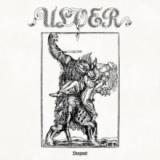
Aus der griechischen Black-Metal-Bastion Athen kommen Eleventh Ray mit Klageliedern, die schon seit fast einem Jahrzehnt auf sich warten lassen. Die okkulten Darbietungen in der unheiligen Hülle von Reviving Tehom beschwören den Geist von Celtic Frost, Sodom, den 90er-Jahre-Taten des großen Magus Wampyr Daoloth (Necromantia, Rotting Christ, Thou Art Lord) und natürlich Therions 1993er Symphony Masses: Ho Drakon Ho Megas Album.
Die Saat für Eleventh Ray wurde von Material gesät, das einst für die Black-Metal-Kraft von Serpent Noir geschaffen wurde, deren wechselnde Tonalität Gitarrist Y.K. dazu veranlasste, das besagte Material für einen späteren Zweck zu vergraben. Eine Entscheidung, die erst 2022 durch ein verheerendes Probedemo Früchte trug, das das Interesse von Dark Descent Records weckte.
„Eleventh Ray ist eine völlig neue, autonome Einheit, für die wir mit voller Kraft arbeiten wollen, und KEIN einmaliges Projekt aus Serpent Noir-Überbleibseln“, erklärt Y.K. “Wie alle meine Projekte ist auch Eleventh Ray tief in der Dark Magic und der Typhonian Alchemy verwurzelt."
- Nightside Of Damascus
- Staring Eyes
- Ha Illan Ha Hizon Trian Adohi
- Path Of The Bellator
- Igul
- Red Apocalypse
- Zodamran Nox
- Pan Noctifer
- Reviving Tehom
Aus der griechischen Black-Metal-Bastion Athen kommen Eleventh Ray mit Klageliedern, die schon seit fast einem Jahrzehnt auf sich warten lassen. Die okkulten Darbietungen in der unheiligen Hülle von Reviving Tehom beschwören den Geist von Celtic Frost, Sodom, den 90er-Jahre-Taten des großen Magus Wampyr Daoloth (Necromantia, Rotting Christ, Thou Art Lord) und natürlich Therions 1993er Symphony Masses: Ho Drakon Ho Megas Album.
Die Saat für Eleventh Ray wurde von Material gesät, das einst für die Black-Metal-Kraft von Serpent Noir geschaffen wurde, deren wechselnde Tonalität Gitarrist Y.K. dazu veranlasste, das besagte Material für einen späteren Zweck zu vergraben. Eine Entscheidung, die erst 2022 durch ein verheerendes Probedemo Früchte trug, das das Interesse von Dark Descent Records weckte.
„Eleventh Ray ist eine völlig neue, autonome Einheit, für die wir mit voller Kraft arbeiten wollen, und KEIN einmaliges Projekt aus Serpent Noir-Überbleibseln“, erklärt Y.K. “Wie alle meine Projekte ist auch Eleventh Ray tief in der Dark Magic und der Typhonian Alchemy verwurzelt."
Emerging from the Minneapolis underground and heading straight towards the sky, IE arrive on Quindi with a full-length album of sparkling, sophisticated wonder. Touching on kosmische grandeur, Riley-esque cyclical patterns, lounge pop and dubbed out psychedelia, the five-piece allow their songs to unfurl with a natural, hypnotic elegance which can take many different forms.
There's a loose, live quality to the recordings IE's members commit to record, which reflects their steady presence gigging in Minneapolis and the surrounding area. Since putting out their first release in 2016, they've glided from drone and synth-led jam band ambience (2018's Pome) to strung out, stoner-tinted slowcore (on 2023's outstanding Junk Body). For Reverse Earth they strike a smoky note that wraps itself around your skull across extended run times that evolve with a meditative poise.
From the deceptively driving 4/4 thrum of the opening title track through 'Divination Bag's snaking tryptamine mantras on to 'Simplify's slow and smouldering indie-soul, IE's sound is bathed in a sumptuous warm glow that rounds out the lows and the mids, creating a nocturnal shroud in which their nebulous song structures can feel deliciously endless.
Meredith Gill's drums provide rolling and tumbling undercurrents for the slowly shifting phases of the instrumental players, as Michael Gallope and Travis Workman trade keyboard parts and Workman and Sam Molstad chop and pick at their six-strings. Atop the thrum of her bass, Mariel Oliviera's vocal adapts to the scenery, from a distant, dreamlike siren song on 'Reverse Earth' to a spoken word meditation on 'Babel'.
There's space in each track for every instrument to cut through and have its moment, from a spiralling key vamp to a chicken-scratch guitar flex. The gently twisting, head-feeding groove exercises of the first four tracks give way to a slow and powerful march on 'Dark Rome', closing the record on a noirish anti-ballad fit to peal out in the closing slot at Twin Peaks' Roadhouse (circa season three).
As much as the tracks teem with composition, musicianship, and production to savor, a sound like IE's has a soporific quality that soaks in unconsciously. It's an evocative portal where the band feel as if they could just play on each piece ad infinitum - where the time itself seems to dislodge from its moorings.
- Nautilus
- Maria También
- Let's Grow
- Pimp (Version)
- Look Out (Here I Come)
- Great To Be Here
- Juicy Fruit
- 8: Th Wonder
- Murkit Gem
- All For The Cash
- Kaiso Noir
- Guess Who's Back
- Giana Sisters
Bacao Rhythm & Steel Band, das mysteriöse Steel-Pan-Outfit aus Hamburg, machte 2024 von sich reden, als der französische Film „Anatomy of a Fall“ einen Oscar für das beste Originaldrehbuch gewann. Bacaos Cover von 50 Cents „PIMP“ war prominent in dem Film vertreten und spielte eine so große Rolle in der Handlung, dass es zum Synonym für den Erfolg des Films wurde. Später sorgten sie dafür, dass bei der Oscar-Verleihung zum ersten Mal Steel Pans im Orchestergraben auftauchten, um die Melodie zu spielen, als die Regisseurin Justine Triet die Bühne betrat, um den Preis entgegenzunehmen. All dies brachte Bacao eine Menge neuer Fans und ließ die Streaming-Zahlen von „PIMP“ auf weit über 40 Millionen steigen. Der Song erschien erstmals 2008 auf dem eigenen Mocambo-Imprint von Bandleader Bjorn Wagner und wird oft mit dem Original-Sample verwechselt, aus dem 50 Cent seinen Hit gemacht hat. Abgesehen von den Auszeichnungen und internationalem Ruhm ist „PIMP“ buchstäblich nur die Spitze des Eisbergs von Bacao. Mit vier Alben und einem großen Stapel 7"-Singles, die zu Grundnahrungsmitteln für DJs auf der ganzen Welt geworden sind, sind sie, seit sie bei Big Crown unter Vertrag stehen, sehr produktiv gewesen. Trotz der ständigen Veröffentlichungen und des umfangreichen Katalogs hat jede Aufnahmesession mehr Früchte getragen, als auf ein Album passen, so dass mehr als nur eine Handvoll Songs im Tresor lagert. „Big Crown Vaults Vol. 4“ gibt den meisten dieser Stücke eine angemessene Pressung und Veröffentlichung. Das Album beginnt mit ihrer Coverversion des Bob James Klassikers „Nautilus“, ein „Must Have“ für alle Hip-Hop- und Breakbeat-Fans. Sie bleiben auf dem Gaspedal und geben dem Khruangbin-Klassiker „Maria También“ die BRSB-Behandlung mit ihren charakteristischen basslastigen Drums, die die Energie des Stücks in eine völlig neue Dimension bringen. Berühmt dafür, bei der Neuinterpretation von Material tief in den Kisten zu wühlen, nehmen sie sich als nächstes den von J Dilla produzierten Royce Da 5'9"' Track ‚Let's Grow‘ vor. Dann gibt es „PIMP (Version)“, ursprünglich die B-Seite der Erstpressung von „PIMP“, auf der sie ihrer Originalaufnahme eine ordentliche Dub-Behandlung mit Melodica und Bandecho verpassen. Sie erhöhen das Tempo und den Funk mit „Great To Be Here“ von den Jackson 5 und tauchen mit dem Billy-Jones-Tanzflächenbrenner „Lookout Baby (Here I Come)“ wieder tief in die Dunkelheit ein. Während ein Teil des Reizes eines neuen Bacao Rhythm & Steel Band-Albums darin besteht, herauszufinden, welche Coversongs sie aufnehmen werden, ist es ebenso faszinierend zu sehen, welche originellen Melodien sie ausgearbeitet haben. „BCR Vaults Vol. 4“ enthält zwar nur ein einziges Original, „Kaiso Noir“, aber es ist ein Up-Tempo-Kracher, der wie eine Mischung aus einem B-Boy-Break und einem James-Bond-Score klingt. Diese Sammlung von Songs umfasst den Zeitraum von 2008 bis 2023 und lässt eine Vielzahl von Genres von Hip-Hop über Jazz bis hin zu Soul und Pop durch die Bacao-Linse laufen. Die Band arbeitet bereits an ihrem 5. Studioalbum, und diese Zusammenstellung dürfte die perfekte Überbrückung für die Fans sein, bis es erscheint.
Ziúr lines up with The Tapeworm for an exclusive cassette-only release featuring Kenichi Iwasa, exploring the electroacoustic realms.
Invited to perform solo at Tarek Atoui's performance series at Kunsthaus Bregenz in October 2024, Ziúr decided to write a new piece for the occasion. This composition, 'Turn Liquid Into Dust', was then performed within the framework of Tarek Atoui's 'Waters' Witness' exhibition as an 8-channel spacial audio piece, transmitting sounds through the installation's structure – metal bars, stones, compost piles… Composed in London in autumn 2024, its principal source of sonic material is recordings of Atoui's instruments which Ziúr had recorded in his studio in Paris during the summer of 2024. In addition, she invited the Japanese woodwind player and virtuoso Kenichi Iwasa to join on all pieces, his contribution providing a binding element, tying the pieces together.
Opener 'A Cold Drip' consists solely of Iwasa's spectral squalls. The tense noir drone of 'Long Call' features a string instrument built by Atoui. For the airy yet dense title track, Ziúr recorded an organ named The Reed Box, with Iwasa floating atop its smoggy soundbed. Closer 'Chips 'n' Crumbles' echos and reverberates with the rattles of household items Ziúr found around her home.
Driven by a relentless appetite for boundless experimentation, Ziúr has been subverting expectations since she was a teenager, corkscrewing through hardcore, metal and punk before veering towards electronic music's turbulent fringes. She produces just like she DJs, gathering a wide variety of ingredients and figuring out the most intriguing, unexpected ways to simmer them into a coherent narrative that helps listeners synchronize the conflicting messages that surround them. Genre isn't a fixed point for Ziúr, but a colour in a vast palette that stretches across history and borders, helping illustrate music that's powerfully subversive. Her The Tapeworm edition follows acclaimed recordings for Planet Mu, PAN, Objects Limited and Hakuna Kulala.
Kenichi Iwasa is a London-based improviser and multidisciplinary artist from Japan, also known for his legendary Krautrock Karaoke night as well as collaborations with visual artists and musicians such as Beatrice Dillon, Maxwell Sterling and Linder Sterling. He currently performs with Naima Karlsson under the name Exotic Sin.
“Growing up has always been a solitary journey, marked by forward-looking anticipation, anxiety, unripe potential, aspirations, and closures.”
London based Chinese composer and multi-instrumentalist Li Yilei returns to Métron Records with NONAGE, their second full length release following 2021’s OF. An introspective reflection on the journey through childhood, this new work brings together samples from old Chinese TV shows, mechanical children’s toys and an array of acoustic and electronic instruments - some of which were designed and built by Li themselves.
The Chinese title for "NONAGE" is "垂髫", which translates to “childhood” or “disheveled hair”, and refers to the carefree phase of life when children let their hair down, both figuratively and literally. For Li, nonage is a place that they always revisit - to learn about fear and fearlessness, love and despair, grief and glee, curiosity and mistakes.
“I remember pressing piano keys like touching flowers, reading scores like looking at paintings, writing like how I would talk to myself, greeting death like how I would greet life.”
Initially conceived as an archiving project, the record retraces and reimagines fractions of Li’s childhood memories through smell, location and colour, and brings to life the lingering feelings that remain into adulthood.
Compositions are built around a variety of unusual sources: damaged instruments such as a toy piano, a hand cranked music box, bird whistles, a broken accordion and anything else Li could find that evoked nascent recollections. Interspersed throughout are samples from Li’s childhood piano jams, moments of contemplative transmigration where previous incarnations of self and memory meet the present.
The debut album from CEM, 'FORMA' was developed as a soundtrack to Mauro Ventura’s series of "action painting performances" and uses various bell sounds (cowbells, doorbells, Shinto bells, singing bowls) to pick out anxious giallo sequences and heaving Dadaist formations.
CEM's best known for pneumatic DJ sets that have propped up Berlin's queer underground for a decade at this point, but don't expect to find any vaped darkroom tek on 'FORMA'. Each of the six compositions were commissioned for Ventura’s performative installation at Volksbühne in 2022, and CEM opted to represent the piece's themes of labor and repetition by sampling an arsenal of bells and metal objects that anchor his varying widescreen vignettes. 'The Calling' is a relatively subtle introduction, establishing the space with double bass drones and ratcheting digitally altered chimes - it's 'Bells Corrupt' that cements CEM's concept more righteously, harking back to Goblin's iconic 'Suspiria' score without pastiching any of its Italo-prog themes. Cycling ritualistic bell loops with squashed, industrial-strength thuds and granulised laptop belches, CEM silhouettes the tension and the vivid color of Argento's film, chrome plating the result.
'An Industrial Satire' is even more convincing; this one takes its cues from legendary German sound artist Limpe Fuchs, and the first part integrates scraped, alien resonances with CEM's loping industrial rhythms and squelchy EBM bassline. The real shift occurs in the second part, when CEM's choppy electroacoustic minimalism falls away to unlock his rolling hand drum performance, that he matches with a ghaita sample lifted from the Master Musicians of Joujouka's 1971 album with Brian Jones. With the future-facing deconstructions a memory, 'Statue Garden' beds reedy organ drones in eerie gallery ambiance, and closer 'The New Sincerity Test' finds Lithuanian performance artist Gertrūda Gilytė skewering the wellness industrial complex over nauseous subsonic oscillations and scratchy noise.
L.A. Witch haben schon immer eine Aura müheloser Coolness ausgestrahlt, sei es in Form des Americana Noir und des lakonischen Back-to-Basics-Rock'n'Roll ihres selbstbetitelten Debüts oder des glühend strengen Abenteurertums ihres zweiten Albums "Play With Fire". Die Band - bestehend aus Sade Sanchez (Gitarre/Gesang), Irita Pai (Bass) und Ellie English (Schlagzeug) - begann als informelle Angelegenheit, aber die schwülen und betörenden, von Hall umhüllten Songs, die sie schufen, fanden beim Publikum Anklang und brachten das Projekt über den isolierten Raum von Freunden und Gleichgesinnten in Südkalifornien hinaus in die weite Welt. Auf ihrem neuesten Album "DOGGOD" geht das Trio über die bisherigen kreativen und geografischen Grenzen hinaus - das Material wurde in Paris produziert und die Tracks im Motorbass Studio in der Rue de Martyrs aufgenommen. "DOGGOD" erkundet ein breiteres klangliches Terrain, setzt ein größeres Arsenal an Sounds ein und erforscht größere existenzielle und kosmische Themen, ohne dabei den für die Band typischen Sinn für das Verbotene, das Verlassene und die Vorahnung zu verlieren. "DOGGOD" ist ein Weg, das universelle Rätsel der spirituellen Natur von Liebe und Hingabe anzugehen. "Ich habe das Gefühl, eine Art Dienerin oder Sklavin der Liebe zu sein", sagt Sanchez. "Ich bin bereit, für die Liebe zu sterben, indem ich ihr diene, für sie leide oder nach ihr suche - so wie ein treuer, ergebener Diensthund es tun würde." Der Titel des Albums ist ein Palindrom, das DOG und GOD zusammenfasst - eine Verherrlichung des Unterwürfigen und eine Subversion des Göttlichen. Es ist eine Anspielung auf die Reinheit von Hunden und eine Anerkennung ihrer bedingungslosen Liebe und ihres beschützenden Wesens, die im Widerspruch zu den verschiedenen abwertenden Assoziationen stehen, die mit dieser Spezies verbunden werden. "Es gibt diese symbolische Verbindung zwischen Frauen und Hunden, die die untergeordnete Stellung der Frau in der Gesellschaft zum Ausdruck bringt", erklärt Sanchez. "Und alles, was solche göttlichen Eigenschaften verkörpert, hat es nicht verdient, als Schimpfwort benutzt zu werden." Diese widersprüchlichen Erkundungen von Liebe und Unterwerfung manifestieren sich in der sanften und rauchigen Garagerock-Alchemie der Band, mit einer neu entdeckten Nutzung der disziplinierten Zurückhaltung und eisigen Instrumentierung des Post-Punk. Der Album-Opener "Icicle" zeigt, wie L.A. Witch aus dem Proto-Punk, der Psychedelia und den düsteren Riffs der 70er Jahre in die von Refrains durchtränkten Gitarren und den verlorenen Minimalismus von Joy Division und den frühen The Cure reist. Es wird eine Parallele zwischen romantischem Selbstmord und Märtyrertum gezogen, die sich im zweiten Song, "Kiss Me Deep", fortsetzt. Hier beschreibt Sanchez eine Liebe, die so rein ist, dass sie die Zeit übersteigt und sich über mehrere Leben erstreckt. Es ist ein Lied über Leidenschaft, vorgetragen mit dem weltlichen und verletzten Stoizismus der frühen Goth-Pioniere. Von dort aus geht die Band zur Leadsingle "777" über, einem Song über Hingabe bis hin zum Tod. Ein treibender Beat, ein treibendes, verzerrtes Riff und Sanchez' ätherischer Gesang vereinen sich zu einem Song, der sowohl düster in seinem Fatalismus als auch sinnlich in seiner treuen Leidenschaft ist. Auf dem gesamten Album "DOGGOD" weichen L.A. Witch nie von ihrer Muse ab. In "I Hunt You Pray" legt Pai einen hypnotischen Basslauf hin, während English einen zyklischen Krautrock-Groove einsetzt und Sanchez das Bild eines verlassenen Hundes am Straßenrand malt, der allein in der Nacht ist und sowohl als Jäger als auch als Gejagter lebt. Auf "Eyes of Love" macht sich die Band die meditativen Mid-Tempo-Wiederholungen, dekonstruierten Akkorde und esoterischen Betrachtungen über Liebe, Tod und Spiritualität zunutze, die Lungfish zu einer so beliebten Band gemacht haben. Es unterstreicht die Parallele zwischen der unerschütterlichen Liebe in den Augen eines Hundes und der Selbstaufopferung eines Erlösers. Auf "The Lines" nimmt die Band den treibenden Puls des Post-Punk und fügt dem Mix eine Extraportion Chorus hinzu. "Chorus ist ein moderner Effekt, der auf der Idee beruht, die leichten Tonhöhenunterschiede eines Chors nachzubilden. Es gibt eine schimmernde Qualität, die uns zurück zu diesem spirituellen, göttlichen Gefühl bringt", erklärt Sanchez. Gepaart mit dem Einsatz von Orgel und einer grüblerischen Moll-Melodie, beschwört der Song gleichzeitig das Heilige und das Sakrileg. Der Titeltrack "DOGGOD" hat vielleicht die größte Ähnlichkeit mit dem Material des Vorgängeralbums "Play With Fire", in den schlanken und gemeinen Gitarren auf eine raue Rhythmusgruppe und verträumten Gesang treffen. Aber während ihr vorheriges Album ein Aufruf war, seinen eigenen Weg zu gehen, bleibt "DOGGOD" dem "Bis dass der Tod uns scheidet"-Thema des Albums treu und geht sogar so weit, ein Maß an Unterwerfung zu beschreiben, das in gefährliche und ungesunde Gefilde übergeht, wobei Sanchez singt "hang me on a leash / `til I wait for my release". Letztendlich ist "DOGGOD" eine perfekte Verkörperung des Ansatzes von L.A. Witch. Es ist gleichzeitig romantisch und bedrohlich, ehrfürchtig und profan, eine Feier und ein Klagelied. Es spannt den Bogen zwischen Vergangenheit und Gegenwart, indem es vertraute Klänge aufgreift und sie für die Jetztzeit aufbereitet. Aber es läutet auch eine neue Ära für die Band ein, die über die Kodachrome-Erinnerungen an das Amerika der Jahrhundertmitte hinausgeht und tiefer in den mittelalterlichen und gotischen Energien von Paris und darüber hinaus gräbt, während sie gleichzeitig ein besudeltes Herz erforscht.
Enigmatic producer ANiML returns to the freeform Los Angeles-based label StrataSonic to release a six-track mini album, Star Walk. The new body of work, which comes alongside a new music video for “Bruv” (directed by Spanish visual artist YZA Voku), is out now.
Picking up where ANiML left off with “Breather” and “Bruv,” Star Walk elaborates further on that woozy-yet-sophisticated psychedelia, materializing as cinematic trip-hop, cavernous dub, and other unique genre concoctions across its six tracks. “Cherry,” with its free-spirited, delay-soaked guitar riffs, depicts a colorful, post-rock-inspired soundscape. “BabyD,” in step with “Bruv,” features a mischievous marimba melody among ghostly vocal samples, a punchy drumkit, and a slackened bassline.
These scenes are brought to life thanks to YZA Voku, a groundbreaking visual artist who is at the forefront of AI-assisted filmmaking in the animation space (see his work for The Weeknd, Swedish House Mafia, Hï Ibiza, and XG). The new music video for “Bruv,” out today, unfolds in stark black, white, and red, evoking a noir-inspired aesthetic steeped in mystery and intrigue. Shadowy figures move rhythmically through dimly lit alleys and smoke-filled ballrooms, blending calculated steps with hypnotic dance sequences.
The production blended real-life recordings with digital effects like blur, negatives, masks, analog textures, and AI-driven transformations using Runway’s video-to-video tools. AI-generated sequences created with Midjourney and Runway were merged to contrast real footage with synthetic imagery. This type of work is a rejection that AI is simply used as a shortcut in art and comes at a time when musicians are beginning to embrace such tools for the visual components of their products.
- You (The Feral Human Thunderstorm)
- One Of The Dreamers
- I Was There
- From The Ashes Of Our Age
- Father
- Calliope
- Your Beloved Hollywood
- Believe In Something
Die Berliner Post-Punk-Band The Underground Youth um den Musiker und Autor Craig Dyer meldet sich mit ihrem zwölften Studioalbum „Décollage“
zurück. Das von Dyer selbst geschriebene, aufgenommene und produzierte Album ist eine Übung in künstlerischer Dekonstruktion, sowohl im Namen
als auch in der Form, und markiert eine entscheidende musikalische Wende. „Décollage ist die Kunst, ein Bild zu erschaffen, indem man Teile eines
bereits existierenden Werks herausreißt, abreißt oder entfernt. Meine Idee war es, diese Technik auf die Musik anzuwenden“, erklärt er. „Ich baute
Wände aus statisch überzogenen Hip-Hop-Drum-Samples, Schichten von Streicherarrangements im Stil von Lee Hazlewood und von Serge Gainsbourg
inspirierten Mellotron-Melodien auf, dann begann ich, diese schönen, chaotischen Wände aus Lärm abzureißen und legte einen neuen Sound für The
Underground Youth frei.“
Von Momenten geisterhaften Minimalismus bis hin zu ausladenden Crescendos aus Lärm und Melodie haben die Songs hier eine schattenhafte,
traumhafte Qualität. Neben Dyer besteht The Underground Youth aus der Schlagzeugerin und bildenden Künstlerin Olya Dyer, dem Gitarristen
Leonard Kaage (der auch bei der Postproduktion des Albums mitwirkte) und der Bassistin Samira Zahidi. Ursprünglich als Soloprojekt von Dyer im Jahr
2008 gegründet, hat die Band inzwischen 11 - mittlerweile 12 - Studioalben und 4 EPs veröffentlicht und dabei einen einzigartigen Sound entwickelt,
der im Laufe der Jahre von cineastischer Lo-Fi-Psychedelia über rauen, melancholischen Post-Punk bis hin zu Gothic-Folk-Noir reichte.
Another foggy day in Yorkshire. A steel grey sky. Raindrops tracing one another down the windowpane. Kirk Barley sits in his studio and assembles compositions from scraps of found sound and live instrumentation. Melodies swell, withdraw and repeat like waves. Time slows. Accelerates. Slows again. The light bends, tweaked at the edges. Twisted by rhythms that never quite resolve.
Written, recorded and produced by Barley in Yorkshire in early 2024, Lux picks up where 2023 LP Marionette leaves off, conjuring a mystical, reflective space between formal minimalism and sonic imaginaries of northern landscapes.
And yet, where Marionette relied at times on more recognisable field recordings, Lux leans into Barley’s skill as an instrumentalist and sound designer, working from a palette of short samples and utilising a variety of alternate tuning systems to build, layer and coax his compositions into being. Most evident on tracks ‘Vita’, ‘Sprite’ and ‘Descendent’, these tunings create an otherworldly harmonic language that is easier to perceive than describe.
Alongside more familiar instruments of guitar, bass, drums, organ and clarinet, here Barley draws on plastic saxophones and bells, and recordings of glass, wood and metal sound objects to provide the organic matter. Rather than directly representative of the natural world, Lux enters into a dialogue with it which, like the grasses and flowers of the album’s cover, exists somewhere between reality and artifice.
On album opener ‘Cache’, Barley constructs his own sense of time from a recording of an umbrella crank, a sparse and spectral piece which hints at memories embedded in the track’s title. Introspection blossoms into new life on ‘Vita’, crumpling again into the percussive ambience of ‘Verre’. A track that takes its harmonic lead from the clinks of glass, it features Barley’s long-time collaborator Matt Davies on drums, whose nuanced, tonally sensitive playing gives ‘Verre’ a fizzing, ice-like quality.
There are several moments where Lux picks up on themes Barley explored under electronic moniker Church Andrews on recent works with Davies, stretching and distorting temporalities most explicitly on ‘Descendent’, whose ritualistic air unfurls around a pattern in exponential decline.
Embracing the surrealism Barley absorbed over years watching classic film noir and the works of David Lynch and Federico Fellini, Lux wends its way through the enchanted sound worlds of ‘Sprite’ and ‘Balanced’ before arriving at the album’s title track.
An expression of his recent experiments in live, prepared guitar, ‘Lux’ brings the album back to earth, returning us to the room where the rain has stopped, the clouds have parted, and the soft warmth of the spring sun is pouring in through the open window.
FIRST TIME EVER ON LP
LIMITED EDITION CLEAR VINYL - ONLY 1000 UNITS PRESSED
COMPACT DISC BACK IN PRINT FOR THE FIRST TIME IN 10 YEARS - Now On 8 Panel Digi-Pak
FINAL SMITHEREENS ALBUM WITH ORIGINAL LEAD SINGER PAT DiNIZIO
PRODUCED BY DON DIXEN (REM, GIN BLOSSOMS, MARSHALL CRENSHAW)
“Crushing chronic chords with the dyne-rhythm section to fuel it all, are not only still here, but stronger than ever”. No Depression
"Everything in Smithereens' world is like a film noir shot in psychedelic colors. But this New Jersey band has a talent for creating fresh variations that prevent dust or mist from clouding their music. "Smithereens 2011" reaches a peak with the song that opens the album, the sour-tempered yet utterly transporting "Sorry.” Ken Tucker, NPR
"Wholly satisfying blast of classic Smithereens songcraft and melodicism, colored with Pat DiNizio’s impassioned vocals, Jim Babjak’s thick-toned, stinging guitar, Dennis Diken’s imaginative, powerful drum work and Severo “The Thrilla” Jornacion’s stylish bass. The entire collection sounds like a return to The Smithereens’ mid-to-late ’80s glory years, both song and performance-wise.” GOLDMINE MAGAZINE
“And 2011’s songs – the songs! – vintage! Picks up where Green Thoughts left off. Pop Dose
- A1: Kavinsky - Testarossa Autodrive
- A2: Idrissi - Visitors
- A3: A L.i.s.o.n - Space Echo
- A4: Calling Marian - Le Premier Jour
- A5: Vhs Dreams - Nightdrive
- B1: Giorgio Moroder - I Wanna Rock You (Shakedown Mix)
- B2: Nina - Beyond Memory
- B3: Melezz - Neon Escapism - Edit
- B4: Emil Rootmayer - Recall
- B5: Double Mixte - Romance Noire
- B6: Solitaires - Voyage À La Mer (Shuttle Remix)
- C1: Thomas Barrandon - Fragment
- C2: Neon Nox - Fahrenheit
- C3: Orion - Time For Crime
- C4: Desire - Black Latex
- C5: The Toxic Avenger - Sorcery
- D1: Artofdisco / Accident In Paradise - Don't Be Late
- D2: Lau & Droïd Bishop - Stunning (Droid Bishop Remix)
- D3: Sunglasses Kid - Graduation
- D4: Viq - Last Path
- D5: Bunny X & Marvel83' - Nyc Sunrise
- D6: Adieu Aru - Release
Listen to all the pearls of Electronic Music withe the releases dedicated to House, Techno & Drum"n"Bass, sélected by the REXCLUB in a doble vinyl collection ! DISCOVER THE NEW VOLUME OF THE REX CLUB COLLECTION : THE DOUBLE VINYL DRUM"N"BASS With : Roni Size * DJ Gilb"r * Phume * Goldie * Tek 9 * Special Request * Rockwall * Aquarian * LU2K * ...
- A1: Hit Man
- A2: You're Billy
- A3: Animal Abandon
- A4: Madison
- A5: Cabbage Alley
- A6: It's So Weird
- B1: We Don't Have A Choice
- B2: A Personal Attack
- B3: Superego
- B4: Not Technically Divorced
- B5: What's Our Story?
- B6: All Pie Is Good Pie
Mutant, in partnership with Netflix, are proud to present Graham Raynold’s score to Richard Linklater’s film HIT MAN.
A Romantic Comedy Noir, loosely based on the true story of a nebbish philosophy professor named Gary Johnson who moonlighted as an undercover police officer, HIT MAN is Richard Linklater and Glen Powell’s meditation on identity. Linklater, a filmmaker who has shapeshifted many times over his storied three decades of storytelling, has reteamed with his frequent music collaborator Graham Reynolds, to produce a jazzy, romantic, dark, and playful score.
Reynolds has worked in each of these modes before with Linklater, but never all at the same time. It stands defiant in contrast the version of the Gary that we meet at the beginning of the film - allowing the character to meet the score on its level by the time we approach the twisted finale. This score proves that genre, like identity, can be a limitation placed on both films and film music.
This physical release is limited to 500 copies worldwide, and features a forward by Graham Reynolds and packaging designed by Mutant co-founder Mo Shafeek.
- A1: S.i.v.a 01 31
- A2: Galassia M81 04 35
- A3: L'abeille Pourpre 04 31 Video
- A4: Miami 2064 06 09
- A5: L'uomo E La Natura (Part 1) Una Melodia, I Miei Ricordi 04 16
- B1: Dernier Stop Avant Neptune 06 55
- B2: Mer Méditerranée 03 51
- B3: The End Of Capitalism 03 49
- B4: La Terre C'est L'espace 04 29
- B5: L'uomo E La Natura (Part 2) Sogni E Realta 03 25
Emmanuel Mario returns to Karaoke Kalk with his third album under his Astrobal moniker for the Berlin-based imprint. »L’uomo e la natura« (»Man and Nature«) sees the prolific drummer and producer, who has worked with artists such as Laetitia Sadier and label mate Pink Shabab, take a different musical route than before. The French electronic music composer pays homage to the spirit of library music while also making concessions to different strains of pop and even classical music. With only two of the ten songs putting words to the music, »L’uomo e la natura« is a masterful exercise in the evocation of atmospheres: expressing much while saying very little outright—show, don’t tell.
The album was born out of a desire to push the envelope. »I wanted to make music that was both pop and ambitious in its chord progressions as well as surprising in its construction,« explains the Paris-based artist. Taking inspiration from library music artists such as Alessandro Alessandroni or Bruno Nicolai as well as the more cosmic strains of electronic instrumental music, he strove »to create a soundtrack that would immediately bring to mind outer space.« The first of the three singles released ahead of the full album, »L’abeille pourpre,« captures this spirit with funky rhythms and an overjoyed interplay of different melodies, all tied together by wordless yet terminally catchy vocals.
The second single, »Miami 2064,« traverses through many different moods in its six-minute run-time: Starting off as neo-noir synth-wave piece, it then proceeds to pay its dues to the masters of the cosmic music tradition such as Tangerine Dream or, of course, Jean-Michel Jarre before slowly descending back to Earth with guitars and dreamy synthetic vocals, playfully punctuated by a plethora of wistful melodies. It is the perfect encapsulation of the open-ended approach Mario follows throughout the entire album, taking full creative licence in regards to songwriting and arrangements. »I wanted to surprise myself,« he shrugs. He succeeded.
»L’uomo e la natura« rewards multiple listens not only emotionally, but also intellectually. »I also wanted to talk about politics and ecology, because it’s impossible not to,« Mario notes. Some of the track titles express this more openly than others and the two title tracks sung by Mario and Nina Savary use French and Italian lyrics, respectively. However, as a whole the album leaves things open to interpretation. Does »The End of Capitalism« sound elegiac or triumphant? And what do you actually make of this musical vision of the Floridian metropolis, whose mere existence is threatened by climate change already today, four decades from now? Mario doesn’t necessarily answer these questions—he doesn’t tell, he shows.
There are some parties that create new movements... or awake a movement shall i say...
here are musicians you can hear in such parties !!
Big experimental and core collaboration (more than compilation...).
SUPERB !
Rauelsson's third solo album for Sonic Pieces focuses on simplicity and minimalism. It recalibrates his love for ambient with an austere approach that conjures an atmosphere of silence and solitude. On Niu, the artist has traded his craft for shimmering layers of sound clusters and electronic editing in favor of a predominantly raw and acoustic recording.
Recorded primarily in Sofia and Berlin and mixed at Saal 3 of Funkhaus Berlin, Niu presents a 9-song journey that includes orchestral compositions, delicate synth miniatures, and sparse brass and woodwind drones with room for spoken word and a hint of psychedelic noir fable. The result is an album that, despite the eclectic choice of instrumentation, paints a landscape of spiritual clarity; an album that without being typically classical, still feels like a classical album. Three themes vary across the 9 pieces, starting with the purely orchestral "Prelude No. 7" before moving on to airy synth bass arpeggio and pedal steel. With more changing instruments, Raúl next takes us into a fairytale flute composition with guest flutist Heather Woods Broderick and brass vibrations by the trio Zinc & Copper. Finally, Katrine Grarup Elbo recites a poem by Raúl, ending the piece on a somber but beautiful note. The rest of the album continues in this vein, creating a unique sound that surprises the listener at every turn. Niu is a real departure from the artist's previous works in both scope and musicality. Everything was recorded without overdubs and with only minimal editing, trying to preserve the feeling of music coming from a room where musicians play live. Overall, this is music that finds comfort in movement as much as in pause and silence; music in which tenderness and tension exist in the same gesture.
The album also follows a certain mysticism with its poetic interludes, alternate track lists and titles like "Podium Of Riddles", "A Keyhole-Shaped Island" and "Ceramic Swallows, Set Of 3". Perhaps, given enough time, a hidden meaning or a new perception will be revealed. Niu is also set to be expanded into an art book, containing poems and photographs by Raúl, as well as an exhibition. Perhaps the key lies somewhere in there.
Jacob Long’s fourth full-length for Kranky began as a notion to reimagine Earthen Sea as a “piano trio,” inspired by a year-long immersion in the ECM label catalog, but the compositions soon grew more complex.
Elements were chopped and resampled, then layered with bass, drums, percussion, and additional keys. The result is a fusion of live band acoustics and downtempo loops, sculpted into nine smoke-and-mirror dubs of fractured jazz, soft-focus noir, and trip-hop dust: Recollection.
Like the title implies, Long’s playing and production share a mood of pensive movement, shuffling and rippling like uncertain memories at strange hours.
From looming fog (“Present Day,” “Neon Ruins”) and shadowy breaks (“Another Space,” “Cloudy Vagueness”) to rosy glows (“Clear Photograph”) and smeared reverie (“White Sky”), Recollection deftly wields its palette of gradient color and subdued states of beauty.
His is a music of reduction and reflection, kinetic but oblique, attuned to the silhouettes of sound.
As Odysee celebrates its 30th anniversary, the label’s original founder Atila Kemal (T-Mirage) steps up to deliver this jaw-dropping E.P.
In 1994, Tilla was just 17 years old, and an integral part of the original St Albans collective that comprised Jim Baker & Phil Aslett (Source Direct) and Rupert Parkes (Photek), when he set up the Odysee imprint and released the first Source Direct record (Future London/Shimmer). With a follow-up release from Photek (Phaze 1/Try A Style) and a second from Source Direct, the profile of the label began to grow exponentially.
It was the 3 Mirage releases however that really put the label on the map. These tracks were engineered by Jim Baker but heavily co-produced by Tilla himself with a major focus on his keen ear for dark 70’s Noire samples and eerie abstract electronica pitted against soulful R&B vocals. In hindsight, the impact of this rather different soundscape on the Source Direct material that followed is unmistakable.
The A side track Dark Rhodes is a showcase of T-Mirage’s production skillsets. From the opening atmosphere of utter menace and spacious percussion, to the trademark call and response between the different breaks and speaker shaking subs; this track will take the listener straight back to that infamous dark 1995/6 sound that emerged from both the Odysee & Source Direct studios. What is particularly noticeable is the distinctive pairing of sets of samples to form unique sections within the piece, whilst maintaining the consistent rolling energy of the drums & bass. This was a clear stylistic trait the earlier tracks like Feel My Dreams, and is very much on display in Dark Rhodes; leaving us in no doubt that we are listening to the work of one of the OG St Albans Jungle masters!
One of the most important aspects of each Odysee release was to demonstrate versatility on the B side tunes. As a label that was an important part of the mid 90’s Atmospheric scene, it would be remiss not to revisit that style on this seminal E.P. The first of the two B-side tracks is the incredible Existence.
Everything about this piece is a pure distillation of Tilla’s musical style; from the intricacy of the break work and the depth of the subs, to the masterful dovetailing of the 70’s Noire and Jazz samples that build a cohesive arrangement drawing the listener deeper into the tune’s narrative- “A piece of music that’s just a pure expression.... A celebration of existence!” There is no need to re-invent the wheel, or to force groundbreaking new tricks when the strength of this classic sound is so overwhelmingly persuasive!
With the final track Flawless, Tilla delivers an absolute heart-breaker of a tune that rivals the very best of the original Odysee & SD B-sides. Misty-eyed pads and Jazzy rides launch the crisp rolling Think breaks. The deep melodic sub line and haunting guitar riffs draw the listener in, then hold the listener in suspense for a moment before dropping down in the body of the track. The gorgeous guitar motifs are paired with achingly gorgeous vocal ad-libs and avant-garde electronica, emerging orchestral flutters with that unmistakable 70’s Noire flavour. Once again it is
Tilla’s ear for those ‘special sounds’ that really sets this track apart, and as if that wasn’t enough, some 4 minutes down the track Flawless nonchalantly unveils another primary motif; well worthy in of itself of being the tracks centrepiece!
Absolutely stunning heritage-style Atmospheric Jungle at its finest!
- 1: Peach Blossom Paradise
- 2: Demon Cicadas In The Night
- 3: The Cold Curve
- 4: Saying Yes To Everything
- 5: Lighthouse
- 6: Revisionist Mystery
- 7: The Meander
- 8: The Wheel Of Persuasion
- 9: Another Tomorrow
- 10: Common Exotic
Prairiewolf make easy listening music for an age of fracture. They almost do it in spite of themselves. No one can seriously question the head music bona fides of the members of this Colorado-based trio.
Guitarist Stefan Beck has already assembled a formidable discography of jewel-toned guitar zone-outs under his Golden Brown moniker. And keyboardist and guitarist Jeremy Erwin and bassist Tyler Wilcox have both made their reputations as chroniclers of the vast world of out-music. Erwin helms the indispensable Heat Warps blog, a performance-by-performance archive of Miles Davis’s labyrinthine electric period. And Wilcox has been covering the ragged edges of psychedelia and experimental rock at Aquarium Drunkard and other publications, not to mention his own virtual basement for heads, the great bootleg blog Doom and Gloom from the Tomb.
These guys come by it honestly. And yet, given their backgrounds, Prairiewolf’s self-titled debut last spring was remarkably free of face-melters, brown acid blowouts, and ascendant spiritual jazz odysseys. Instead, they dropped a record of beautiful, elegant, low-key cosmic groovers that sounded like the piped-in background music to a resort hotel on Jupiter. It was an unlikely psychedelia, brocaded with mid-twentieth century sonic threading from the hi-fi era: vintage synthesizers, smears of spaghetti western, luxe tropical details, the faint schmaltz of space age pop. Imagine something like a Harmonia residency in the airport lounge. And yet somehow it all worked brilliantly. Prairiewolf became last summer’s cool-down standard. After a year woodshedding around Colorado’s Front Range region, the Prairiewolf boys have fired up their trusty Korg SR-120 drum machine for another outstanding collection of suborbital exotica. The appropriately titled Deep Time operates in its own chronology, unspooling at its unhurried pace. All its incongruous period and stylistic references—the new age pulses, Hawaiian steel, shaggy hippie rambles, lysergic guitar spirals, and orchestral synthesizer flourishes—float atop the album’s own singular temporality. Deep Time makes its own time.
From the moment Beck folds his slide guitar, origami-like, into a sound resembling the call of gulls on the tranquil album opener, “Peach Blossom Paradise,” there is a sense of departure from everyday life. The shimmering “Lighthouse” has a similar sunbaked nonchalance, like an afternoon passed day-drinking in a seaside bar. That they named their lush, kaleidoscopic downtempo track “The Meander” pretty much says it all. The ranging, propulsive “Saying Yes to Everything” seems like a nod in the direction of Rose City Band’s brand of wookie krautrock. And the motorik noir of “Demon Cicadas in the Night” also goes hard. Beck and Erwin’s intertwined guitar jam on the eerie album standout “The Cold Curve” evolves into something that sounds like primitive computer music. A genteel bassline from Wilcox on another album highlight, “Revisionist Mystery,” sets the stage for a loopy space jazz turn from guest clarinettist Matt Loewen of Rayonism. The title of post-rock cowboy tune “Another Tomorrow” might refer to the alternative future that so many critics heard in the music of Prairiewolf’s first album. Or it might simply refer to the persistence of time, however deep. Either way,
I’m thankful for the way Prairiewolf make each of their tunes a little oasis or sanctuary, each subsisting according to its own crystalline little logic for a few minutes. It is no simple task to filter out the omnipresent anger and anxiety of everyday life these days. But Prairiewolf are out here making it seem easy.
Brent S. Sirota
- Prince Des Ténèbres
- L'horloge
- L'ange Noir
- Les Enfants De L'ombre
- Le Fils De Satan
- Condamné
- Le Masque De Fer
- Apocalypse
Splatter Vinyl[27,52 €]
Als Malédiction 2001 ihr Album „Condamnés“ bei Brennus Music herausbrachte (damals ausschließlich auf CD), waren die Reaktionen der Medien und des harten Kerns der Fans begeistert. Da jedoch der traditionelle Heavy Metal zu Beginn des neuen Jahrtausends eine schwierige Phase durchlief, erhielt die Band nie die Anerkennung, die sie verdient hätte, und löste sich einige Jahre später nach dem zweiten Album „Esclave Du Vice“ (2004) auf. Die aus dem nordfranzösischen Laon stammenden Sylvain Mollard (Gitarre/Gesang), Mathieu Poulain (Gitarre), Olivier Messaoui (Bass) und Nicolas Mollard (Schlagzeug) fanden sich ursprünglich im September 1997 zusammen. Anfangs mit einem Repertoire von Coverversionen von Megadeth, Judas Priest und Iron Maiden, konzentrierten sie sich bald auf das Schreiben von eigenem Material (gesungen auf Französisch). Im November desselben Jahres nahmen die vier in aller Eile (während einer zweitägigen Session) ihr erstes Demotape auf, das aus fünf Titeln bestand. Angespornt durch die positiven Reaktionen der Musikpresse beschlossen Malédiction, die fünf Songs des Demotapes zwischen dem 15. und 24. Januar 2021 im Studio Val D'Orge neu aufzunehmen. Zwei brandneue Eigenkompositionen sowie eine Coverversion von „Les Enfants De L'Ombre“ (von ADX) wurden hinzugefügt, und das französische Label Brennus Music entschied sich folgerichtig, das Album auf Compact Disc zu veröffentlichen. Musikalisch stehen Songs wie „Le Fils De Satan“, „Le Masque De Fer“ oder „L'Ange Noir“ in der Tradition von Blasphème, Sortilège oder eben ADX. Das Material fällt in die Kategorie Mid-Tempo Heavy Metal, mit galoppierenden Riffs und eingängigen Melodien. Sänger Sylvain Mollard macht mit seinem melodischen Gesangsstil einen wirklich guten Job, ebenso wie Lead-Gitarrist Mathieu Poulain, der ganz offensichtlich viel Randy Rhoads gehört hatte, bevor er das Aufnahmestudio betrat. Leider löste sich die vielversprechende Band irgendwann in der zweiten Hälfte der 2000er Jahre aus Frustration über die mangelnde öffentliche Unterstützung und die fehlende Unterstützung durch das Label auf. Nun ist High Roller stolz darauf, die ultimative Ausgabe dieses unentdeckten französischen Metal-Juwels zu präsentieren. „Condamnés“ steht sicherlich auf einer Stufe mit den besten Werken von Bands wie Sortilège, Killers, Attentat Rock oder High Power.
Introducing ‘SONGS ABOUT THE SUN’ by ELWD. The London-based producer, commonly known for his signature sample style blended with live instrumentation, presents six new beats. Inspired by how the sun has always been a constant throughout his life and the nostalgia of a time when life seemed carefree, he unveils a new powerful and vitamin D-infused sound. ‘COSMIC CHAMELEON’ is a house gem that blends Balearic vibes with jazzy instrumentation, making it the perfect song to accompany a sunny, carefree day.
LA SACREE GROLE is a tale by the TAMERANTONG company, set to music by LUDWIG VON 88.
TAMERANTONG! is a theatre company based in Mantes-la-Jolie, Paris-Belleville and Saint-Denis that puts on shows with children and young people from these neighbourhoods.
LUDWIG VON 88, road companions of the great hours of alternative rock (Bérurier Noir, Parabellum...) is also the only rock band capable of rhyming in ‘ong’.
TAMERANTONG! had long been plundering their repertoire for their shows. In retaliation, the Ludwigs decided to compose the soundtrack to ‘La Sacrée Grôle’: a Gallic legend told and sung by twenty kids from Paris-Belleville.
In the heart of the land of the Arvernes, reigns a valiant free people. Their village lies on the edge of a dreadful forest where no one ever ventures. But the time has come for all the peoples of Gaul to enter the fearsome forest and set off in search of the Sacred Pole!
La Sacrée Grôle premiered at Paris-Belleville and was performed from 1996 to 1998 in Paris (Café de la Danse, Palace, Trianon, Café Éphémère / Les Halles), Mantes-la-Jolie, Briançon, Rouen (Festival Débarquement Jeunes) and Montreal/Quebec.
This record, released for the first time on vinyl by the Archives de la Zone Mondiale label, includes 7 previously unreleased songs by LUDWIG VON 88.
Following releases on Sähkö Recordings and The Trilogy Tapes, "Fever of the World" is the Soda Gong debut by Memotone, the nom de plume of UK-based multi-instrumentalist Will Yates. As a collection, it is both intimate and expansive, like the feeling of gathering one's thoughts before setting off on a long journey or committing to an irrevocable course of action. Throughout, Yates' talents as both player and sound designer are on full display, as are the sonic signatures that have come to characterize the Memotone catalog: low-lit, ECM-inflected noir; evasive and evolving loop-based accretions; and mellifluous mosaics of keys, guitar, reeds, and percussion. It is patient and focused music, built around production techniques and compositional ideas that have been perfected both in studio and in live performance over a period of several years. "Catherine, On Fire" sets the scene, one of two languid, longform selections, and develops slowly from a spare, harmonic-laden guitar loop into a bed of rippling textural ambience and woozy clarinet filigree. Later, "The Bus" and "When the Bakery Has What You Want and It's Cheap" conjure images of rain-streaked windows, fanciful baked confections, and grey skies broken finally by sunlight. Warm, generous, and comfortable in its own skin, this is music that reminds us that when it feels easy to resign ourselves to world weariness, we should pause for a moment and listen to the rustle of the leaves. The wind knows not to linger.
Call for Winter II: Resonance is the new album from Daniel Herskedal and the second album, as part of his solo project Call forWinter. A musician and composer who is meticulously crafting a sound of his own blending Tuba, bass trumpet with classical,world and improvised music, Call for Winter II :Resonance is a profound statement, aptly titled, depicting his expansive vision,ambition as much as the influence of the stark, breathtaking expanse of the Norwegian valley and landscape—an ever-presentmuse in Herskedal's work. Following the thematic and sonic footsteps of his first "Call for Winter" album, which expanded upon"The Mistral Noir" from his 2015 album "Slow Eastbound Train," Herskedal dives deeper in "Resonance." Here, he layers hissignature instruments with even greater emotional gravity and artistic conviction, crafting a soundscape that is both expansiveand introspective.
"My Lover The Killer" is the latest collaboration between Lydia Lunch and Marc Hurtado. They first worked together on the 'Sexodrone' track of the Etant Donnés's album "Re-Up" in 1999. Featuring Terry Edwards (Gallon Drunk), Ian White (Gallon Drunk), Mark Cunningham, We Are Birds of Paradise, David Lackner. "My Lover The Killer" is a collaborative project with Marc Hurtado. What began as a loose musical concept in the summer of 2012 became a prophecy written in blood by November of the same year. "My Lover The Killer" is a late night noir confessional. Sinister, sexy and mysterious, the music slithers, erupts and caresses the seductive vocals as they relay twisted tales rife with innuendo, promises and threats. The text is based on the murder/suicide of an ex-lover whom I had recently contacted for the first time in over a decade. Caught in the early fall hurricane which leveled the East Coast of America while enroute to Los Angeles, I had sent an invitation proposing that we meet for drinks. Two days later, during a alcohol fueled fight with his girlfriend about whether or not he should come to see me, he shot and killed her, called the police, turned the gun on himself, and died the next day on his 55th birthday. A tragic event, which "My Lover The Killer" attempts to make sense of. Each song is a rumination on the frightening effects of a mad love spun out of control and the haunting remnants of a lover who still stalks from beyond the grave.
Samosa Records cranks up the summer groove with another sizzling release in the outstanding (Re) Funk+Head series – a collection of juicy tracks from the Samosa back-catalogue selected and re-edited by the man himself, De Gama.
This sumptuous vinyl cut of ITALO Funk and Boogie kicks off with Mexico’s finest, The Funk District and the enigmatic ‘La Rapina’. This is pure, unfiltered Funk District chemistry from the first bar. Snake hips guitar, rolling bass and that super-solid 4-4-4 beat pound into your consciousness whilst the hypnotic chant and Latino-infused vocal tempt you into sin.
Next up on the A-side is Samosa head honcho DeGama and his deliciously refreshing ‘Piňa Colada’ - a new edit of the original 2011 version never previously released on Samosa. And what a mystery box it is. Tight beats, punchy bass, looped synth and house-tinged high-hat lead us to a haunting, melodic vocal breakdown. There’s a subtle Afro flavour to this one, definitely for sipping cocktails in a hammock or Caribbean beach bar.
On Side B Italian Maestro Paul Older takes the beats down several notches with the explosive ‘Daboom’ – the DeGama Re-Groove of Paul’s first vinyl release way back in 2019. This is a straight up, mid-tempo peacock strut down Funksville Boulevard. Possibly wearing a Zoot Suit. Imagine having breakfast with Herbie Hancock and you might get an idea of just how funky this tune is. He’s passing you the eggs and you’re buttering the toast.
The last track sees DeGama delve into his dark magic box for the mind-melting, film noir themed ‘Higher’. The tempo is scaled right back to 92bpm for this portrait of pain, joy, lust and hallucinogenic dreams. ‘Higher’ reveals a side of DeGama that we know lurks in there, but only sometimes makes it to the surface. Smokey, sassy and sultry, this is definitely one for the dimly-lit after party.
The latest episode in the (Re) Funk+Head has set the Samosa bar even higher. This simply has to be in your summer record box and don’t you dare leave home without it.
"Direct heir to the fusions of Maloya rhythms from Réunion Island, like Alain Peters, Danyel Waro, René Lacaille... Bonbon Vodou is the sweet and sour confectionery concocted by Oriane Lacaille and JereM Boucris. Bathed in the sweetness of clear voices and carried by a devastating groove, Bonbon Vodou distills joy and propagates a trance wave.
Bonbon Vodou renews in French and Reunion Creole the melodic-fantastic marriage of grouple (couple group) Areski B./B. Fountain.
On her unique mini-drums, Oriane makes bodies shake to the pulsations of the Island of Meeting. JereM, with his oil can body guitar and North African reminiscences, hybridizes these rhythms of heady melodies.
The creoleness of Bonbon Vodou is expressed in a bonfire, which summons Brassens in choir as well as the explosive ternary of the Indian Ocean. To make this fire crackle a little more, the duo joins in a fantasized “side band”: the Piment Piment, three captivating musicians for an enhanced Bonbon Vodou formula. Roland Seilhes: the pied-noir blanc-bec at the hips (sax, clarinets and flute) Juliette Minvielle: the aerial wildness of Béarn (string drum, keyboards and percussion) Yann-Lou Bertrand: Panam ivory (bass, flute, trumpet, percussion)
Bonbon Vodou as a quintet explores even more deeply maloya and the mosaic of swaying and telluric rhythms gleaned from the four cardinal points.
If the duo adopted the Creole spelling of AFRODIZIAK it is because it extends the very real dream of their African roots.
Singing about the beauty of crossbreeding and the harshness of metic life.
The quest for hidden treasure, the lives of migrations and island lives are imbued with it.
“Bonbon Vodou sides with the practices of enchantment” Vinciane Despret "
* The title Afrodisiak quotes “We love life as much as possible” by Palestinian poet Mahmoud Darwish
- Dance With The Devil
- Tiny Bard
- Celestial Dust
- Little Ghost In The Room
- Toil And Trouble
- The Red Room
- Lady Peregrine's Concubine
- Spirit Of The Forest
- Bête Noire
- Long Kiss Goodnight
- Thieves Fools And Crows
- Midnight View
- (Japanese Doll)
- Ladies Of The Road (King Crimson)
- Dirty (Johnny Winter)
- Dance With The Devil (5.1 Mix)
- Tiny Bard (5.1 Mix)
- Celestial Dust (5.1 Mix)
- Little Ghost In The Room (5.1 Mix)
- Toil And Trouble (5.1 Mix)
- The Red Room (5.1 Mix)
- Lady Peregrine's Concubine (5.1 Mix)
- Spirit Of The Forest (5.1 Mix)
- Bête Noire (5.1 Mix)
- Long Kiss Goodnight (5.1 Mix)
- Thieves Fools And Crows (5.1 Mix)
- Midnight View (5.1 Mix)
- (Japanese Doll) (5.1 Mix)
2x12"[42,65 €]
Netherworld Double Gatefold Vinyl in 'Celestial Dust' transparent gold CD / DVD - 5.1 Surround mixed by Jakko M. Jakszyk: 'Storybook' Edition 'Ladies' Double A-Side 7" Single - Ladies Of The Road / Dirty (Black Vinyl) Netherworld A6 illustrated 'Little Stories' book All housed in a Black Textured Box with Gold Hot Foil Embossing Netherworld marks a considerable step onwards from the territory that Louise Patricia Crane explored on her debut long player Deep Blue, crafting audial landscapes that go further into both inner and outer space; hallucinatory and surrealistic yet also grittier and more direct. For all that this stemmed in part from early Genesis and The Beatles, Netherworld also sits in alignment with the luxurious but oddly intimate realm of modern classics, by the likes of Tears For Fears, Tori Amos and Joni Mitchell, with passionate intensity set in a bold, cinematic vista. In realising these romantic and expansive visions, Crane not only wrote or co-wrote the entire album, but arranged, co-produced and played a wide variety of instruments on it. Yet as a supporting cast, she has surrounded herself with a formidable selection of mercurial contributors. Once again, Jakko M. Jakszyk (King Crimson) brings his fiery and mellifluous solo guitar work, as well as contributing backing vocals, keyboards and co-production. Elsewhere, the flute soliloquies of Tiny Bard are the work of Jethro Tull's Ian Andersonwhile saxophone duties are handled by Mel Collins, whose work with King Crimson marks only one chapter in an incredibly storied life in music. Providing violin and viola across the stylistic expanse of the album, Shir-Ran Yinon (New Model Army / Eluveitie) returns as a collaborator. The rhythm section for the lion's share of the record consists of the dream team of Tony Levin (King Crimson / Peter Gabriel) and Gary Husband (John McLaughlin / Billy Cobham / Allan Holdsworth) with Nick Beggs stepping in on bass for Dance With The Devil and upright bass on Long Kiss Goodnight. Crucially however, even amidst this kind of company, Louise's voice and vision is never remotely overshadowed_with the talents on offer only serving to make the backdrop to her songs still more vivid, sharp and intense.
"The Red Room Crystal-Ruby Splatter Vinyl". Netherworld marks a considerable step onwards from the territory that Louise Patricia Crane explored on her debut long player Deep Blue, crafting audial landscapes that go further into both inner and outer space; hallucinatory and surrealistic yet also grittier and more direct. For all that this stemmed in part from early Genesis and The Beatles, Netherworld also sits in alignment with the luxurious but oddly intimate realm of modern classics, by the likes of Tears For Fears, Tori Amos and Joni Mitchell, with passionate intensity set in a bold, cinematic vista. In realising these romantic and expansive visions, Crane not only wrote or co-wrote the entire album, but arranged, co-produced and played a wide variety of instruments on it. Yet as a supporting cast, she has surrounded herself with a formidable selection of mercurial contributors. Once again, Jakko M. Jakszyk (King Crimson) brings his fiery and mellifluous solo guitar work, as well as contributing backing vocals, keyboards and co-production. Elsewhere, the flute soliloquies of Tiny Bard are the work of Jethro Tull's Ian Andersonwhile saxophone duties are handled by Mel Collins, whose work with King Crimson marks only one chapter in an incredibly storied life in music. Providing violin and viola across the stylistic expanse of the album, Shir-Ran Yinon (New Model Army / Eluveitie) returns as a collaborator. The rhythm section for the lion's share of the record consists of the dream team of Tony Levin (King Crimson / Peter Gabriel) and Gary Husband (John McLaughlin / Billy Cobham / Allan Holdsworth) with Nick Beggs stepping in on bass for Dance With The Devil and upright bass on Long Kiss Goodnight. Crucially however, even amidst this kind of company, Louise's voice and vision is never remotely overshadowed-with the talents on offer only serving to make the backdrop to her songs still more vivid, sharp and intense. In as much as Netherworld is a work that exists on a lineage of progressive music and the visionary artists who've expanded their boundaries of exploration to form sound-worlds as big as their imagination, it's also a work of magical realism in the tradition of Pan's Labyrinth, The Company Of Wolves or the work of Gabriel Garcia Marquez and Haruki Murakami-in which the supernatural and otherworldly, lead to a shortcut to the essence of being human. In this World, Louise Patricia Crane is our Storyteller.