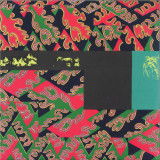
London-based musician Harriet Zoe Pittard aka Zoee has been described as an artist who writes 'personal pop for people who don't fit in' (Huck Magazine). Previously, Zoee has released singles through Ryan Hemworth's 'Secret Songs' imprint and Vegyn's label Plz Make It Ruins, as well as guesting as a vocalist on tracks with Hot Chip's Joe Goddard and with hyper-pop collective PC Music.Over the past two years Zoee has taken some time to nurture her voice and her sound. Her debut album 'Flaw Flower' is due on June 25th. 'Flaw Flower' is an honest and vulnerable glimpse into Zoee's interior world, a world she creates through marrying her real-life phone notes with imagery taken from modern works of literature such as "The Flowering Corpse" by Djuna Barnes, Sylvia Plath's "A Winter Ship" and Maggie Nelson's "Bluets". Through these 11 new songs, Zoee delves deep into her own emotional life, combining aspects of the everyday with the surreal in order to uncover the beauty found in being flawed. The record nods to the avant pop of the 80s, an era that Zoee has always been drawn to thanks to the expressive and trailblazing music of women including Anne Clark, Joan Armatrading, Cyndi Lauper, Rose McDowall and Anna Domino. The album is characterised by a mix of hi-fi and lo-fi instrumentation. 'The Loft' features a free jazz solo from acclaimed experimental saxophonist Ben Vince alongside stock GarageBand synths. 'Host' combines home demo backing vocals with an elaborate baby grand piano solo. Zoee sources foley sounds from YouTube and pulls from her own domestic field recordings, such as a microwave buzzing in 'Microwave' and a shower running in 'Evening Primrose', often using these sounds as the starting point for the songs. Maintaining intimate bedroom elements whilst developing a more expansive band sound, felt integral to the project, since that's where Zoee's writing process often starts, sat on her bed with her laptop and midi keyboard. Writing for the album began in October 2018 when Zoee started working closely again with friend and long-term musical collaborator Rowan Martin. As the material for the record began to take shape the writing and recording process also evolved with the addition of bassist Kyrone Oak and keys player Laura Norman, as well as contributions from Ben Vince and London pop artist Saint Torrente. "I feel like the songs on this album took me deeper into myself, the sad song that I thought was about a boy is still about that but it's also about loss, about self-determination, about not losing hope, about memory, about domesticity, about detachment, about my dad, about my mum, about change, about feeling incredibly alone, about growing up."
Поиск:bass collective
Все
Here’s a monster of its own. Not to be confused with Trevor Jackson early 2000 project (even if the british producer has obviously been informed by post-punk, dub, post-industrial and the likes) Playgroup was more than anything a collective, based somewhere around Bristol and London. Drummer Bruce Smith was the key figure behind the project. Neneh Cherry husband and fabulous motorik force for The Pop Group, The Slits, New Age Steppers, African Head Charge and – more recently - Public Image Limited, Bruce brought the post-punk aura into the realm of controlled chaos with several partners in crime.
Playgroup is the so-called English version of Jamaican dub, informed by the industrial revolution and the studio wizardy of On U Sound acolytes. Crucial Tony (Creation Rebel, Dub Syndicate, Singers & Players) on bass and guitars, Sean Oliver (New Age Steppers, Rip Rig & Panic) on guitar, the almighty Style Scott (Creation Rebel, Dub Syndicate, New Age Steppers) on drums and percussionists Eskimo (African Head Charge, Creation Rebel, Mark Stewart And The Maffia) and Bonjo I (African Head Charge) are among the main conspirators here. Produced by none else tham Adrian Sherwwod Epic Sound Battles Chaper One still resonates with its original dark humor and guerrilla warfare tactics.
- A1: Axumites Feat Booker Gee & Lone Ark
- A2: Out In The Rain Feat Booker Gee
- A3: Never Too Much Feat Leo Carmichael
- A4: Matumbee Feat Booker Gee & Blundetto
- B1: Faith Feat Booker Gee & Lone Ark
- B2: I Want You (Sly & Robbie Remix) With Leo Carmichael
- B3: Cool Down Feat Booker Gee & Blundetto
- B4: Greedy G Feat Booker Gee
Since first emerging in the latter half of the noughties, Guillaume Metenier’s Soul Sugar project has evolved considerably. Initially a trio built around the virtuoso organist’s love of ‘60s and ‘70s soul-jazz and Hammond funk – Metenier studied under jazz organ legend Dr Lonnie Smith – Soul Sugar is now a collaborative collective that draws just as much influence from classic Jamaican dub and reggae as the works of Jimmy Smith and Jimmy McGriff.
The outfit’s musical evolution comes into sharp focus on Excursions in Soul, Reggae, Funk & Dub, a collection of hard-to-find tracks that have been released at different points, and on different vinyl formats, over the last three years. Taken as a whole, the set offers a stunning snapshot of Soul Sugar’s rapidly expanding catalogue of classics. Metenier is once again at the controls but this time round Soul Sugar’s cast list of contributing musicians includes Sly & Robbie, Blundetto, Lone Ark, Slikk Tim, Thomas Naim and honey-voiced soul singer Leo Carmichael. Metenier also stars as a musician, providing lively and ear-catching organ solos under his now familiar Booker Gee alias.
What’s most noticeable from the off is the richness of the reggae riddims, the warmness of the instrumentation and the effortlessly soulful nature of the music. This is particularly evident on the collective’s stunning covers of Luther Vandross’s "Never Too Much" and Marvin Gaye’s "I Want You": effortlessly sunny and life-affirming interpretations that re-imagine the tracks as sumptuous slabs of reggae-soul and provide a platform for Leo Carmichael’s inspiring and comforting voice. Metenier and friends’ take on dub reggae – toasty, authentically bass-heavy and seeped in analogue effects – can also be admired on "Matumbee" and "Cool Down", the latter a digi-dub influenced affair rich in colourful synths sounds, echoing delay trails and sub-bass so deep it will rattle your teeth. Both also contain lusciously jazzy guitar licks and some incredible keys-work from Metenier.The guiding hand of Spanish multi-instrumentalist and producer Lone Ark can be heard on album opener "Aximites" – think Lee ‘Scratch’ Perry producing Jimmy Smith – and "Faith", an expertly breezy concoction that sports Jackie Mittoo-esque Hammond B3 solos from Metenier over a luscious backing track that sounds like something that may have emerged from Studio One in the mid 1970s. The collective’s love of Studio One is explored further on a sweaty, reggae-funk cover of "Greedy" that features fabulous drums, bass and guitar from Slikk Tim, while "Out In The Rain" is an authentically sparse, spaced-out dub number laden with fluid instrument solos and devilishly heavy riddim.
Part compilation, part artist album, part collaborative celebration of dub-soul fusion, Excursions in Soul, Reggae, Funk & Dub is the strongest statement yet of who Soul Sugar are, and where they’re going.
Audio visual sculptor Kero operates the multidisciplinary arts collective Detroit Underground record label and continues to produce bit crushed experimental electronic music with over two decades under his belt.
Demo Vectors showcases Kero's sonic range—bouncing back and forth between IDM fractures, broken electro shapes and an all around low-end forcefield. Splicing machined modular tunes with syncopated rhythms and Detroit-inspired slivers, Kero's fingerprints can be found on imprints like Blueprint, Wild oats, Ghostly International, Shitkatapult, Semantica, Touchin' Bass, BPitch Control, and many others.
Using different studio setups from 1998 to 2021, Demo Vectors culminated from many different locations including Detroit, Windsor, Barcelona, Berlin and Los Angeles and reveals Kero's curriculum vitae packaged in a 60 minute robust collection.
The downtempo groove of "ABSTR_B&B" offers a classic bricolage of collapsed mechanical percussion straight from the foundry as the definitive sound design and glitchy bits of "BLISS" take shape. Fluid robotics and bass jabs progress on "GROUNDZEROBACK" pushing each pixel to their breaking point. You'll also find stark industrial elements on tracks like "PREFREAK.EPS" and spastic acid on "COMOFFICE-1" displaying the wide angle lens Kero employs to capture improvised dark drill'n bass techniques with a Squarepusher sheen. From the slow burning "PILL'LATHE2" humming its way across laid back digitized acrobatics to the aptly titled "COLOR_CUB" that clicks, cuts and collects subtle low frequency modulations, Demo Vectors is a tightly compacted and forward thinking IDM album.
Sandblasted electronics mixed with shattered glass and corrosive blips'n bleeps, Demo Vectors acts as Kero's raison d'etre as each piece eclipses itself.
Helsinki-based US bassist Nathan Francis steps up as a bandleader with his debut project Nathan Francis Quartet. Together with a grade-A cast of Finnish musicians, the four-piece presents some of Nathan's favorite tunes from the standard repertoire (J.Hicks, C. McBee & J. Coltrane) as well as original compositions from members of the group. As Nathan puts it, "in terms of compositions, the group acts somewhat like a collective. We play compositions of each member but with an energy and interpretation that belongs completely to the moment."
Francis' debut album features the Finnish jazz legend Eero Koivistoinen on tenor saxophone. "Eero has given immensely to the jazz scene here in Finland and abroad. He carries a sound that is so deep and intense. I feel he is the perfect fit for this band", the young bassist explains. Koivistoinen has also composed two songs for the album, the soulful opening track Minor Solution and the bluesy track entitled Late Show. Markus Niittynen plays the piano and drummer Aleksi Heinola mans the drum seat. The former has also composed the album's third track Crystal Clear and the latter is well known as the inspired leader of his own quintet.
Now settled in Helsinki, and matriculating at the Sibelius Academy, Nathan is ready to release his debut LP. Nathan's primary wish was to form a "cross generational band as a tribute to his musical ancestors", a testament to the character of this young jazz musician. In his own words, Nathan says "meeting Finnish jazz legend, Eero
Koivistoinen, sealed the deal", and this eloquent musical project came to its fruition at the studios of the Sibelius Academy.
Excelsior! It’s the hail of yore that one should go ever onward and upward. And so, fittingly Onwards and Downwards is the occultist Swedish band Alastor’s clever call to arms... and also a reflection of our collective dark state of mind these days.
“If our last album Slave to the Grave were about death, this record is more about madness,” says guitarist Hampus Sandell. “You can look at the whole record as one person’s gradual slip into insanity. An ongoing nightmare without end. It also sums up the state of the world around us as this year has clearly shown.”
Alastor is heavy doom rock for the wicked and depraved. Drenched in heavy, distorted darkness and steeped in occult horror that will make your skin crawl and ears cry sweet tears of blood, the band is revitalized in 2021 with meticulously crafted songs and new drummer Jim Nordström bringing a hard-hitting and precise energy.
“It’s a more focused record but at the same time it’s more personal and naked. More raw emotion and pain,” Hampus says. The band recorded the album with the help of Joona Hassinen of Studio Underjord, who has helped with mixing since their ”Blood on Satan’s Claw” EP in 2017. Christoffer Karlsson of The Dahmers also assisted with overdubs and encouraged the band to demo the material early on, aiding in the album’s more deliberate and tighter feel.
From the first note of opener “The Killer In My Skull” the guitars are far thicker and out front than ever, and Nordström pummels the snare and kick like a young Dave Grohl. Bassist/vocalist Robin Arnryd’s chorus-drenched voice soars above it all like a one-man choir, at times harmonizing beautifully with shimmering Hammond organ notes. Nary a moment is wasted on the droning navel-gazing of lesser bands. Particularly, the driving anthem “Death Cult” which sounds like it would fit comfortably on QOTSA’s Songs For The Deaf, though there’s considerably more heft here. The title track pays its due to the Devil’s tritone in a marvelously woven framework of intertwining melodies befitting the album’s theme of descent into madness.
The quartet released its epic 3-song debut album Black Magic in early 2017 via Twin Earth Records, followed by the 2-track “Blood On Satan’s Claw” EP on Halloween the same year. Joining forces with RidingEasy Records in 2018, Alastor summoned the 7-track hateful gospel Slave To The Grave, which was packed with dynamic twists and turns, and funereal girth. It was met with considerable praise, setting the stage for the band’s greatest step onward (and upward... or downward, depending on your preferences.)
Excelsior! It’s the hail of yore that one should go ever onward and upward. And so, fittingly Onwards and Downwards is the occultist Swedish band Alastor’s clever call to arms... and also a reflection of our collective dark state of mind these days.
“If our last album Slave to the Grave were about death, this record is more about madness,” says guitarist Hampus Sandell. “You can look at the whole record as one person’s gradual slip into insanity. An ongoing nightmare without end. It also sums up the state of the world around us as this year has clearly shown.”
Alastor is heavy doom rock for the wicked and depraved. Drenched in heavy, distorted darkness and steeped in occult horror that will make your skin crawl and ears cry sweet tears of blood, the band is revitalized in 2021 with meticulously crafted songs and new drummer Jim Nordström bringing a hard-hitting and precise energy.
“It’s a more focused record but at the same time it’s more personal and naked. More raw emotion and pain,” Hampus says. The band recorded the album with the help of Joona Hassinen of Studio Underjord, who has helped with mixing since their ”Blood on Satan’s Claw” EP in 2017. Christoffer Karlsson of The Dahmers also assisted with overdubs and encouraged the band to demo the material early on, aiding in the album’s more deliberate and tighter feel.
From the first note of opener “The Killer In My Skull” the guitars are far thicker and out front than ever, and Nordström pummels the snare and kick like a young Dave Grohl. Bassist/vocalist Robin Arnryd’s chorus-drenched voice soars above it all like a one-man choir, at times harmonizing beautifully with shimmering Hammond organ notes. Nary a moment is wasted on the droning navel-gazing of lesser bands. Particularly, the driving anthem “Death Cult” which sounds like it would fit comfortably on QOTSA’s Songs For The Deaf, though there’s considerably more heft here. The title track pays its due to the Devil’s tritone in a marvelously woven framework of intertwining melodies befitting the album’s theme of descent into madness.
The quartet released its epic 3-song debut album Black Magic in early 2017 via Twin Earth Records, followed by the 2-track “Blood On Satan’s Claw” EP on Halloween the same year. Joining forces with RidingEasy Records in 2018, Alastor summoned the 7-track hateful gospel Slave To The Grave, which was packed with dynamic twists and turns, and funereal girth. It was met with considerable praise, setting the stage for the band’s greatest step onward (and upward... or downward, depending on your preferences.)
Nashville underground trio YAUTJA make their Relapse Records debut with their highly anticipated new album, "The Lurch". YAUTJA's new album amalgamates metal, punk and noise rock into a ferocious hybrid that has propelled them from the obscurity of the American South onto the international stage. Recorded by Scott Evans at the legendary Steve Albini's Electrical Audio studio in Chicago, "The Lurch" marks another step forward for the innovative band. From the opening roar of “A Killing Joke” and the ominous noise waves of “Undesirables” to the churning cannonade of “Before the Foal,” "The Lurch" conveys the personal frustrations and sociopolitical observations of its creators. “We’ve got our bubble of friends and artists and businesses, but you drive 30 minutes out of town and you see rebel flags or people wearing t-shirts that say, ‘Redneck Lives Matter,’” bassist/vocalist Kayhan Vaziri explains. “So there’s a lot of frustration there, and the lyrics pertain to that.” Elsewhere on the album, tracks such as "Tethered" and "Wired Depths," discuss the various technologies and systems in place befalling the great populace. Rampant displacement of local communities fuels Vaziri's opening screams in the track aptly titled “Catastrophic” - “Forced under society!” Featuring members of several other musical projects including Thou, Coliseum, Mutilation Rites and more, YAUTJA's collective experiences across the underground and experimental subgenres drive their unique sound. The band's palpable malaise, malcontent, and sharpened edges are matched by the album's production - the attack of noisy, whirring guitars constantly veering on dissonance are met with a destructive, mangled low end, as they march on to some of the most creative drumming in the genre. "The Lurch" showcases a band that is daring, experimental, and unrelenting.
A singular group of ?experts? issues a notice of extraordinary urgency in the vicinity of various atmospheric phenomena, which are partially localized and, above all, of high intensity. Yet the sun shines with strength over the Neapolitan favela. ?Allerta Meteo? is the first album of sparkling sonics by The Funkin? Machine Collective and the newest release of Periodica Records? Pegaso Series, comprising a cross-section of jazz and funk sounds, with bright colors that are good for any season, whether rain or shine. The voice of Andres Balbucea - the binding soul of the opera - is supported by the unmistakable flow of Speaker Cenzou during the vibrant ''L'ora d'o Groove'', accompanied by the performances of Roberto Porzio on the synthesizers, Alessio Pignorio and Riccardo Betteghella on the guitars, Vincenzo Lamagna bass guitar, Andrea De Fazio drums, Paolo Bianconcini on percussions, and the extraordinary participation of Pietro Santangelo in the cinematic ''Django'' and Jeroen Verberne on Trombone in ''Rafiki''. An authentic wave of warm notes destined to overwhelm the most observant listener, the first hour followers and all the citizens.
Wah Wah 45s make a welcome return to the world of re-issues. Having started out over two decades ago releasing dance floor funk from Benny Poole, Cheyenne Fowler and The Googie Rene Combo, and later re-releasing obscure Kompa-funk from Haitian pianist Henri Pierre Noel, they now turn their attention to an overlooked early 90s acoustic soul gem.
About thirty years ago, music teacher and budding producer Alex Boyesen found himself working as part of the Haringey Music Workshop - a community programme and outreach project funded by the local council in Haringey, North London (coincidentally the area in which the Wah Wah head office is now based!).
"Anyone could come and get lessons for free - ranging from piano, sax, guitar, drums, bass, singing and workshops including choral, jazz band and more." Alex Boyesen
It was during that time that Alex came across a young Sam Edwards.
"One day I went into one of the rehearsal rooms and there, by herself, was this girl playing a piano and singing. It was the most incredible voice I had ever heard."
Before long, the pair were playing all over London as a duo with Alex on guitar and Sam on vocals.
"Sam had never had professional training, she was simply an utter natural."
The Haringey Music workshop was connected with other projects in the borough, in particular a community project called the Selby Centre. Here they ran training programs for young people and one of these was a music business course. The idea was that they found an artist, recorded them and then promoted them. One way or the other they ended up picking Alex and Sam to be on their roster.
"My good friend Nixon Rosembert was brought in to oversee the recordings and they hired the Islington Music Workshop to do the recording. We got musicians from the Haringey Music Workshop to play on the sessions and spent a day recording two songs -American CarsandLife. The training workshop had created a label called Progression Music and out the record went."
Three decades later and out of the blue Alex started to get interest again in the record he'd almost forgotten about all those years ago. It had become something of a sought after gem on Discogs, and there seemed to be an interest in that 'acoustic soul' sound once again.
"I got three people asking if they could re-release it and finally here we are with Wah Wah 45s doing the business after all these years."
It was Hospital Records and Wah Wah 45s founder, Chris Goss, who first brought the idea of releasing this record to the table.
"This is a really special record for me, picked up 30 years ago, from a young James Lavelle at Honest Jon's in Ladbroke Grove. Sam Edwards would go on to perform and write songs with North London's Izit, the acid jazz collective fronted by Tony Colman - with whom I have built a music company, these past 25 years. Alex Boyeson worked with Tony at the Haringey Arts Project, who produced a one-off vinyl release of Alex's two compositions back in 1991. Thanks to Alex and Tony, we have been able to clean-up the original audio, uncover photos and lyric sheets to present, with real love and affection, these two lost gems from a bygone era." Chris Goss, Feb 2021.
The project was then expanded by Dom Servini, who got heavy disco legend Ashley Beedle and co-label owner and erstwhile producer Adam Scrimshire in to take on remix duties.
"When approached by Dom Servini to reworkAmerican CarsI had no idea about the history of the original song. After a good listen myself and studio partner Darren Morris set to work and all I can say that it was a lovely experience keeping the vibe of the original but giving it a spaced out feel in true Afrikanz On Marz fashion." Ashley Beedle, Feb 2021.
"Remixing without multi-tracks always brings a bunch of challenges, getting the balance between the bass and drums in the original and what you want to do with your own version. The song really dictates certain things to you.
But it was such a pleasure to explore that with this beautiful song and vocal performance. So many ways to approach it. I just wanted to draw out more of the melancholy in the original and make it an absorbing experience." Adam Scrimshire, Feb 2021.
Perhaps the last word should be given to Alex himself, who's very much enjoying the new lease of life that his music with Sam is getting.
"As I write this we are trying to locate her, she's somewhere singing something, that's all she ever did. Thanks for being part of my life Sam and I am so glad that this small bit of that time is being remembered." Alex Boyesen, Feb 2021.
Toronto’s infamous psychedelic multimedia collective, Intersystems, make a surprise return with a new full-length LP, #IV. Coming via Waveshaper Media, #IV is Intersystems’ first new material since 1968! Intersystems’ pioneering avant/electronic music sounded positively alien in the 1960s, and more than 50 years later, this latest body of work sounds just as otherworldly.
When they arrived on the scene in the late 1960s, Intersystems stood out from their peers. Comprised of architect Dik Zander, light sculptor Michael Hayden, poet Blake Parker, and musician John Mills-Cockell (of Syrinx, Kensington Market and more), the group mounted groundbreaking pan-sensory events and released a trilogy of defiantly disorienting records.
Where more conventional purveyors of sonic psychedelia were content with fuzztone guitar and orientalist tropes, Intersystems managed to approximate the full psychedelic experience in all its euphoric wonder and terror. Initially wrangling homespun gadgetry, feverishly spliced-together tapes, and mutant beat poetry, Intersystems were also among the very first to deploy a Moog Synthesizer; their Moog modular system was the first to be imported into Canada. Intersystems’ three vinyl LP recordings, meanwhile, justifiably became coveted collector's items given their scarce quantity and singular unsettling vision.
The reissue of Intersystems’ full discography in 2015 prompted acclaim from a number of major outlets. Among them, PopMatters hailed the set as "one of those great lost recordings (three of 'em actually) that comes from the lysergic era..." Mills-Cockell’s work in Syrinx has also been reissued to great acclaim in recent years.
Fifty-plus years after their 1968 album Free Psychedelic Poster Inside, Hayden and Mills-Cockell decided to revive the long-dormant project with a series of sessions at Hamilton's storied Grant Avenue Studio. The resultant music remains remarkably congruent with the project's original vision while clearly emerging from the present moment. With original poet/lyricist Blake Parker now deceased, Hayden and Mills-Cockell made the counterintuitive (yet strangely apt) decision to render Parker's words electronically. As the computer-synthesized voice alternates between an eerily life-like delivery and slurred cybernetic faltering, it brings a new dystopian tint to the group's anxious surrealism. Taking cues from its predecessor, Free Psychedelic Poster Inside, a modular Moog Synthesizer system is the primary instrument, yet here it offers a dynamic blend of different sonorities: barbed wire basslines, Subotnickesque chirping, gestural plumes of colour and percussive filigree.
While the group cut their teeth in the 1960s, make no mistake these new Intersystems recordings aren't a “comeback" or an attempt to rehash the "good old days". What one hears instead is the sound of Mills-Cockell and Hayden re-energizing the project, bringing with them the myriad experience they’ve accumulated in the intervening 50 years. These aural concoctions—no less perplexing than their 1960s predecessors—build upon the Intersystems foundation but very decidedly reside in the present moment, reminding listeners of just how forward-looking this group was in the first place.
Crumb’s second album, Ice Melt, takes its name from the coarse blend of salts that you can buy from your local hardware store for $9.99. When sprinkled on your wintry steps, this mixture absorbs water and gives off heat, transforming the ice into a viscous, briney
slush and, eventually, nothing at all. Beginning with the dynamic chaos of “Up & Down,” and ending with Crumb’s closest thing to a lullaby, Ice Melt’ s ten tracks combine, like ice sculptures melting into a glistening puddle.
From the start, the group knew that cohesion was best achieved through plumbing their individual strengths— frontwoman Lila Ramani’s earliest songwriting, which catalyzed the group’s first two EPs; Bri Aronow’s knack for building (dis)affecting soundscapes; the hypnotic grounding of Jonathan Gilad’s drums, a Crumb mainstay; and Jesse Brotter’s distinctive bass playing, which subtly traces Ramani’s vocal melodies while providing an unrelenting pulse. These collective skills make Crumb a project of independent self-discovery, four creative minds converging around an idea that is always shifting and reforming.
Convening in Los Angeles to work with producer Jonathan Rado, Crumb tapped into atmosphere-creation like never before, building experimental compositions that are at turns head-nodding and surrealist, energetic and euphoric. Ramani characterizes the album as a “return back down to earth,” a deeply felt examination of “real substances and beings that live on this planet.” It is also the cultivation of road-worn musicians exploring brand-new sounds and thematic concepts, pushing themselves into territory they could never have anticipated five years ago.
Crumb’s second album, Ice Melt, takes its name from the coarse blend of salts that you can buy from your local hardware store for $9.99. When sprinkled on your wintry steps, this mixture absorbs water and gives off heat, transforming the ice into a viscous, briney
slush and, eventually, nothing at all. Beginning with the dynamic chaos of “Up & Down,” and ending with Crumb’s closest thing to a lullaby, Ice Melt’ s ten tracks combine, like ice sculptures melting into a glistening puddle.
From the start, the group knew that cohesion was best achieved through plumbing their individual strengths— frontwoman Lila Ramani’s earliest songwriting, which catalyzed the group’s first two EPs; Bri Aronow’s knack for building (dis)affecting soundscapes; the hypnotic grounding of Jonathan Gilad’s drums, a Crumb mainstay; and Jesse Brotter’s distinctive bass playing, which subtly traces Ramani’s vocal melodies while providing an unrelenting pulse. These collective skills make Crumb a project of independent self-discovery, four creative minds converging around an idea that is always shifting and reforming.
Convening in Los Angeles to work with producer Jonathan Rado, Crumb tapped into atmosphere-creation like never before, building experimental compositions that are at turns head-nodding and surrealist, energetic and euphoric. Ramani characterizes the album as a “return back down to earth,” a deeply felt examination of “real substances and beings that live on this planet.” It is also the cultivation of road-worn musicians exploring brand-new sounds and thematic concepts, pushing themselves into territory they could never have anticipated five years ago.
Rich in musical associations yet utterly singular in its voice, joyous with an inner tranquility, the music of Natural Information Society is unlike any other being made today. Their sixth album in eleven years for eremite records, descension (Out of Our Constrictions) is the first to be recorded live, featuring a set from London’s Cafe OTO with veteran English free-improv great Evan Parker, & the first to feature just one extended composition. The 75-minute performance, inspired by the galvanizing presence of Parker, is a sustained bacchanalia of collective ecstasy. You could call it their party album.
This was the second time Parker played with NIS. Joshua Abrams: “Both times we played compositions with Evan in mind. I don’t tell Evan anything. He’s a free agent.”
The music is focused & malleable, energized & even-keeled, drawing on concepts of ensemble playing common to musics from many locations & eras without any one specific aesthetic realization completely defining it.
“The rhythms that Mikel plays are not an exact reference to Chicago house, but that’s in there,” Abrams says. “I like to take a cyclic view of music history, can we take that four-on-the-floor, & consider how it connects to swing-era music? Can we articulate a through line? I dee-jayed for years in Chicago & lessons I learned from playing records for dancing inform how I think about the group’s music. The listener can make connections to aspects of soul music, electronic music, minimalism, traditional folk musics, & other musics of the diaspora as well. It’s about these aspects coming together. I don’t need to mimic something, I need to embody it to get to the spirit, to get to the living thing.”
For jazz fans, the sound of Parker’s soprano & Jason Stein’s bass clarinet might evoke Coltrane & Dolphy, even though they didn’t necessarily set out to do that & they play with complete individuality. Abrams sees a bridge to the historical precedent, too. “Since we first met in the 1990s, one of the things that Evan and I connected on was Coltrane’s music,” he says. “I hoped that we would tap into that sound world intuitively. In this case, I think that level of evocation adds another layer of depth, versus a layer of reference.”
Indeed, this is a performance in which the connections among the ensemble & the creative tension between improvisation and composition build into a complex mesh of associations & interactions. While the band confines itself to the territory mapped out by Abrams’ composition, they are remarkably attentive & responsive, making adjustments to Parker’s improvisations. When Parker’s intricate patterns of notes interweave with the band, the parts reinforce one another & the music rockets upward. Sometimes, Parker’s lines are cradled by the group’s gentle pulse & an unearthly lyrical balance is struck.
Drummer Mikel Patrick Avery is locked-in, playing with hellacious long-form discipline, feel & responsiveness. Jason Stein’s animated, vocalized bass clarinet weaves in & out with Lisa Alvarado’s harmonium to state the piece’s thematic material; the pulsing tremolo on the harmonium brings a Spacemen 3 vibe to the party. Abrams ties together melody & rhythm on guimbri, a presence that leads without seeming to. Like his bandmates, he shifts modes of playing frequently, improvising & then returning to the composed structure.
“As specific as the composition is, the goal is to internalize it & mix it up,” Abrams says. “The idea is to get so comfortable that we can make spontaneous changes, find new routes of activity, stasis & byways every gig. It’s like a web we’re spinning. If someone makes a move, we all aim to be aware of it, make room for it. Experiencing & listening is what it’s about, & Evan supercharges that.”
& “supercharged” is the word for this album. With Parker further opening up their music, descension (Out of Our Constrictions) is the sound of Natural Information Society growing both more disciplined and freer, one of the great bands of its time on a deep run.
Aguirre edition: Mastered by Helge Sten, Audio Virus, Oslo. Lacquers by Dubplates & Mastering. Liner Notes by Theaster Gates. LPs pressed on premium audiophile-quality vinyl at Pallas Records. US 2xLP edition available thru Eremite records.
Surrender is the debut full length from DJ, producer, and songwriter Endgame. Stepping out for the first time as a vocalist, and lyricist, Surrender is his most ambitious and vulnerable work to date; a striking statement of intent, with moments of beauty and brutality. Endgame has carved an iconoclastic niche in club culture. Breaking into the scene as co-founder of the legendary collective Bala Club, and resident of the radical club-night Endless. Whilst continuing almost a decade hosting his infamous NTS radio show (and now label) Precious Metals, he has forged a path against the tide of formulaic club music. A visionary DJ and producer, Surrender sees Endgame continue this trajectory, with a project that both amplifies the ferocious club constructions he's known for, whilst making space to open up wounded memories and with sombre unfeigned requiems. Having previously released records on Hyperdub, PTP, Golden Mist and Infinite Machine, Endgame's first release on his own Precious Metals imprint, is him at his most reflective. Surrender is a deeply personal record, about loss and finding meaning in despair. Death is a prevailing theme, with the passing of his father a totemic subject. The recollection of his father's torturous final moments leaves him to mournfully contemplate temporality. Using this sense of anguish, he blurs reality-creating a world where angels and demons are among us in a decaying cityscape; akin to the work of Todd McFarlane. The opener Faithless, propels us into this world, with the slow build of industrial precision amidst the sombre build of harsh melodic synths. We descend deeper into this vision with Barbed Heart, featuring a defining vocal from scene staple and long time collaborator Yayoyanoh, as 808's and skittering hi hats ricochet off one another beneath his bass driven vocal. No Heroes continues our journey into the unknown with a chaotic rush of acidic riffs, pounding percussion, and a reference to the brutalist anthem from hardcore punk band Converge (where the track borrows its name). Requiem acts as the turning point of the record as Endgame steps into the foreground as a vocalist. As the name suggests, this lament is a sombre reflection of grief; its minimalist instrumental allows Endgame's haunted verse to rise into the foreground, like an apparition amidst the smoke in the depths of a dimly lit club. The dark clouds fade into the distance in Exhumed, as the elegant melancholic vocal of Bala Club affiliate and gifted vocalist Organ Tapes reflects off Endgame's sanguine verses bringing hope into the heartfelt instrumental filled with melodic flourishes and bass-bin rattling subs. The thematic haze thickens in Abyss, as the pulsating and doom laden instrumental interweaves with Endgame's sepulchral vocal. Like a message from the void, his words act as an agnostic hymn that pulls apart his sense of self. The contrast of his plaintive verse with the intensity of the instrumental creates a contrast that is symbolic of the record itself, a duality that presents moments of soft reflection against a severe sonic palette to create moments of transcendence.
- A1: Pilot: The Fire
- A2: Will I Remember To Remember?
- A3: My New Foster Parents
- A4: No Friends, Just Visions
- A5: Her Love Interest
- A6: His Love Interest
- A7: The Future Is Bright, The Future Is Orange
- B1: I, Robot?
- B2: The Ballad Of Loss And Self-Doubt
- B3: The Domestic Accomplices
- B4: Mastering My Powers
- B5: Infinite Versions Of Myself, Same Old House Fire
- B6: Let’s Run Into The Flames Together
- B7: Epic Plot Twist: Extinguished
For Fans Of: The Burning Hell; Belle & Sebastian; Iron & Wine.
Following swiftly on from last year’s Tiny Men Parts EP, Quiet Marauder re-enter the sonic fray with their latest Bubblewrap Collective long-player, The Gift, on 9th April 2021. Taking a strong divergence from the bombastic pop-punk of its predecessor, The Gift sees backing vocalist Kadesha Drija step to the foreground for the majority of the album, standing afront a richly crafted, multi-instrumental acoustic-folk backdrop.
Recorded pre-pandemic, January 2020, in The Burning Hell’s (Canada) pop-up Snowbird Studios, aka an art deco villa in Riofreddo, near Rome (Italy), this release marks another chapter in the ongoing international collaboration between the bands. For this album, Quiet Marauder’s (Wales) contributions of acoustic guitar, bass, trumpet and layered lead and backing vocals are granted further textural depth from their Canadian counterparts. These include minimalist harmonic splashes of flute, piano, organ (Jake Nicoll), electric guitar, bouzouki (Darren Browne) and bass clarinet (Ariel Sharratt).
Returning to the conceptual songwriting approach of previous releases MEN and The Crack And What It Meant, The Gift charts the narrative of a troubled teenage girl (Willow) haunted by visions of a mysterious house fire. Willow’s path is traced through well-meaning foster parents, teenage love interests, time-bending superpowers, distrust of domestic appliances and, ultimately, her own memories; covering themes of self-identity and the fallibility of human recall. Though the album marks a more overtly serious tone for the band, the sensitive subject matter is delicately handled through their trademark low-key, observational and, sometimes, darkly humorous lyrics.
Hell Yeah welcomes the Italian musical collective Aura Safari for a debut EP on the label.
The band, who are at the forefront of a new Italian fusion sound that blends jazz-funk, electronic and world sounds, is made up of acclaimed house devotee Nicholas Iammatteo, plus Alessandro Deledda, Lorenzo Lavoratori, Daniele Melloni and Andrea Moretti. They contributed a standout track to the Buena Onda - Balearic Beats compilation last year as well as releasing a full length LP on UK label Church to critical acclaim.
Opener 'Dreams of Music' is a lush, new age groove with rich musicality, wind instruments and live drums all glowing warmly as you roll into sundown. 'Oasis' then sinks into a reflective mood, with lazy drums and sensuous late night chords sounding like Roy Ayers all loved up and super stoned. The noodling keys really melt your heart before the excellent 'Slow Divers' pairs more majestic bass riffs with wet claps and splashing cymbals as a wandering lead drifts up to the heavens. It has a dubby swagger to it that is superbly subtle.
Closing out the EP 'Libra', is a heartwarming, slow motion, jazz-funk fusion packed with detail and life affirming synth playing.
These are gloriously heartfelt tracks that showcase this collective's supreme musical ability as well as their unquestionable understanding of jazz, funk and soul, past, present and future.
The Brussels based trio Don Kapot released their first EP on Mr. Nakayasi Records in 2018. They recently teamed up with the Belgian jazz / not jazz label W.E.R.F. records, with whom they released a limited edition cassette "Don Kaset" in October 2020. On March 26th they proudly present the release of a new full album: Hooligan. The album contains seven collectively written songs and takes the listener on an adventurous instrumental journey full of steaming grooves, unbridled joy in the game and humour. The album can be heard as a completely unhinged and idiosyncratic mix of punk, jazz, afrobeat and all this with a hint of spirituality.
After playing and touring together in Oghene Kologbo's band for a while, drummer Jacob Warmenbol and bassist Giotis Damianidis decided to join forces with baritone saxophonist Viktor Perdieus and Don Kapot was born in 2016. From joint improvisations, own compositions quickly emerged which blended the different musical backgrounds of each band member. It soon became clear that this musical cocktail would effortlessly break through all genre walls and that Don Kapot has as much in common with experimental rock bands like Deerhoof or King Gizzard & The Lizard Wizard as with adventurous jazz trios like those of Ornette Coleman. Influences from afrobeat, punk and krautrock are some of the main ingredients of this adventurous trio.
From Tumaco, in the deep pacific coast of Colombia, Plu con Pla carries forward essential styles such as Bunde and Currulao, which were created by the African diaspora in response to the realities of life in this coastal jungle territory. The musical language of the South Pacific region is traditionally interpreted with a marimba handmade from the wood of the Chontaduro palm tree and resonating tubes of Guadua (similar to bamboo), a large, two-sided bass drum called the bombo, two slender, high-pitched drums called cununos, and cylindrical shaker called a guasá, along with powerful call and response vocals. Plu con Pla brings a mastery of this language and repertoire together with an urgency of exploration and growth, incorporating hard-hitting urban styles such as Hip Hop and Reggae into their expression, and bringing Bass, Drum Set, Keys, and more into the mix. True to their roots, collective process and social justice consciousness is central to both their music and their actions, with lyrics that address hard themes such as racism and civil war, and a continuing commitment to teaching, leading workshops and accompanying the peace process in Colombia.
Saturations is a composition by Danish multidisciplinary artist Niels Lyhne Løkkegaard, and features a clarinet choir consisting of 19(!) clarinet players.
Niels Lyhne Løkkegaard (b. 1979) considers his work to be a basic research in realities working within the domains of imaginary & physical sound as well as other non-sonic media, and since 2012 Niels Lyhne Løkkegaard has experimented with creating music that lets the instruments transcend their inherent sonic norms and reappear in another form by way of multiplication of sound.
His work with multiplication of sound has led to numerous compositions in which one instrument is multiplied a number of times: One piece is written for 9 pianos, another for 10 hi-hats and yet another for countless triangles and so on.
The multiplication brings out bodily timbral phenomena, interference of sound waves and vibrations, and brings out what Niels Lyhne Løkkegaard calls the sound’s potential of transformation. He describes this as the quality in a musical piece, when you no longer hear recognizable instruments, but instead the individual sound, as well as the individual musician, is dissolved into the collective sound.
A sonic as well as human synthesis.
He explains the concept of this sound as follows:
“Imagine you enter a room with vibrant acoustics, such as a cafe full of people having conversations, and when you’re close to those conversations you hear the language and understand the words. If you step away from the tables, however, and stand in the doorway, you begin to loose the ability to distinguish the words from one another. Now instead of hearing the individual conversations, melts all the conversations together, and transform into a one new sound. A sound of people without words and language. Just as when you hear a group of geese squawk, or the wind in tree tops, a kind of nature given sound of people. Once the language is dissolved and the words stop making sense, what is left, is the sound."
The work of NLL has been presented at a variety of different venues and museums such as MoMA (NY - as a part of the René Magritte exhibition The Mystery of the Ordinary, 2013), Imaginary West Indies (Overgaden Copenhagen, 2017), ISCM (Vancouver, 2017), Radiophrenia (Glasgow’s Centre for Contemporary Arts, 2017), CPH:DOX (Copenhagen, 2017), Roskilde Festival (2017), Harpa (Reykjavik, 2017), G((o))ng Tomorrow Festival (Copenhagen 2016, 2018), Nordic Music Days (Norway, 2019), Akusmata (SF, 2020) and his works has been released on labels such as Topos (DK), Archive Officielle (CA) and Important Records (US). NLL is associate professor at RMC in Copenhagen, and has given lectures at the California Institute of the Arts (CalArts), Goldsmiths University of London a.o.p. NLL has been awarded with several prizes a.o. from the Danish Art Foundation and the Sonning Foundation.